Watersysteem Eindhoven
burolubbers.nl/
2026 Landscape and Architecture / 2026 Residential Parks / Netherlands / Built in 2024 /

![It is a remarkable experience when you step out of the lift on the upper floors of the Veemgebouw and find yourself in a green courtyard. For a moment, you forget you are high above the ground. This experience is the result of creating a special rooftop garden as an extension to the Veemgebouw on […]](https://landezine-award.com/wp-content/uploads/2026/04/00_Hero-image-Veemgebouw-408x600.jpeg "Veemgebouw")
![What used to be a gloomy, grey traffic area at the back of the railway station is now a lively city square that functions as a new urban link in the city center of Hengelo. Its exuberant vegetation and state-of-the-art skate park set it apart from other railway station squares in the Netherlands. The Industrieplein […]](https://landezine-award.com/wp-content/uploads/2021/04/Buro-Lubbers-Industrieplein-Hengelo-1-600x400.jpg "Industrieplein Hengelo")
![Buro Lubbers is a design studio for landscape architecture, urban development and the design of public space. Since 1993 the studio has been designing projects at all scale levels, for both private and public commissioners. The studio’s projects are characterised by a multidisciplinary approach, innovative expertise, sharp analysis, a sturdy and poetic expression and a […]](https://landezine-award.com/wp-content/uploads/2017/05/BL_Groepsfoto-2-600x361.jpg "Buro Lubbers")
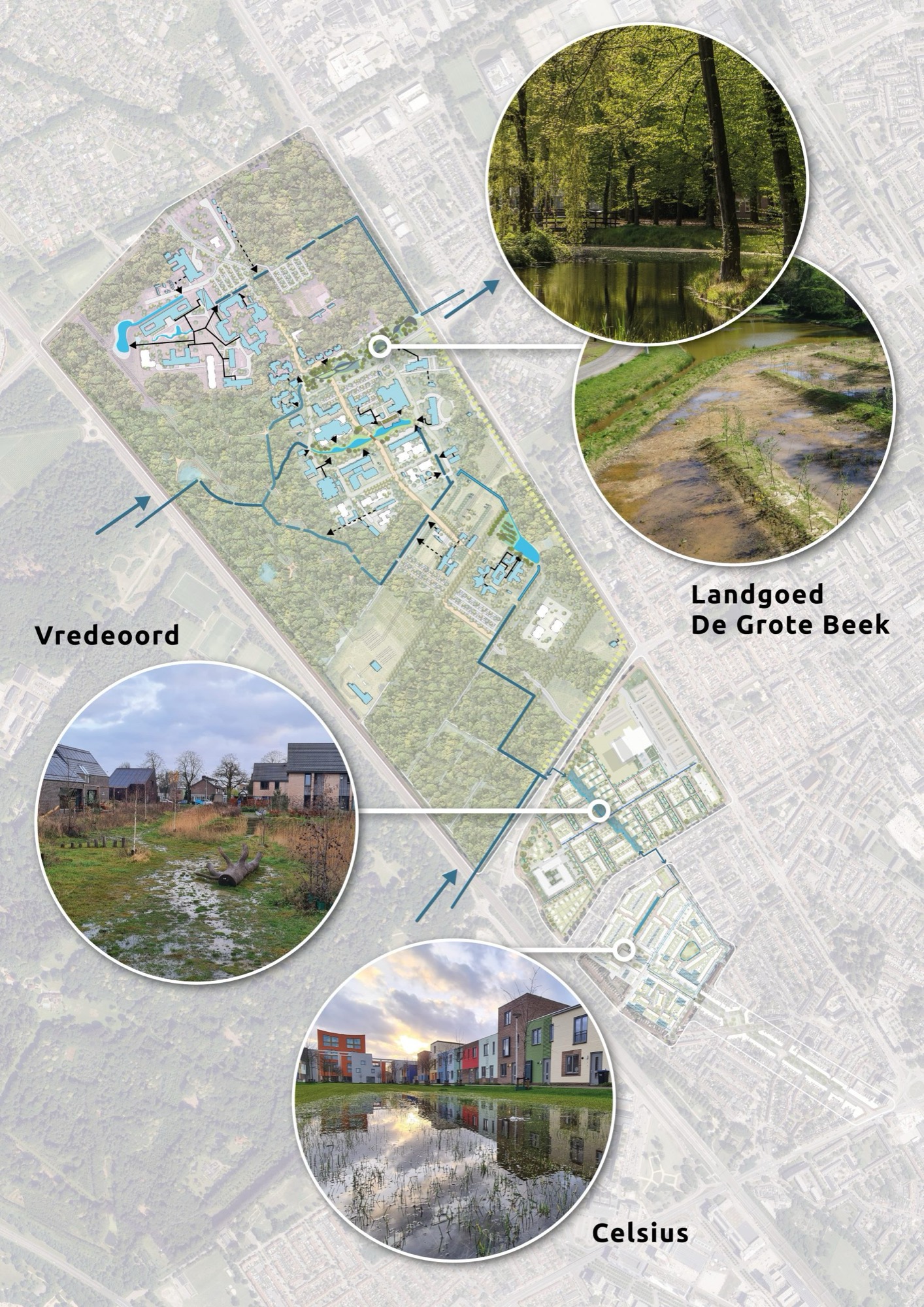
In Eindhoven, an innovative stormwater management system has been realised that demonstrates how today’s complex water challenges can be addressed through an integrated, cross-project approach involving multiple stakeholders. Across the districts of Celsius, Vredeoord and De Grote Beek, one coherent water system has been designed and embedded within architecture, urban design and landscape.
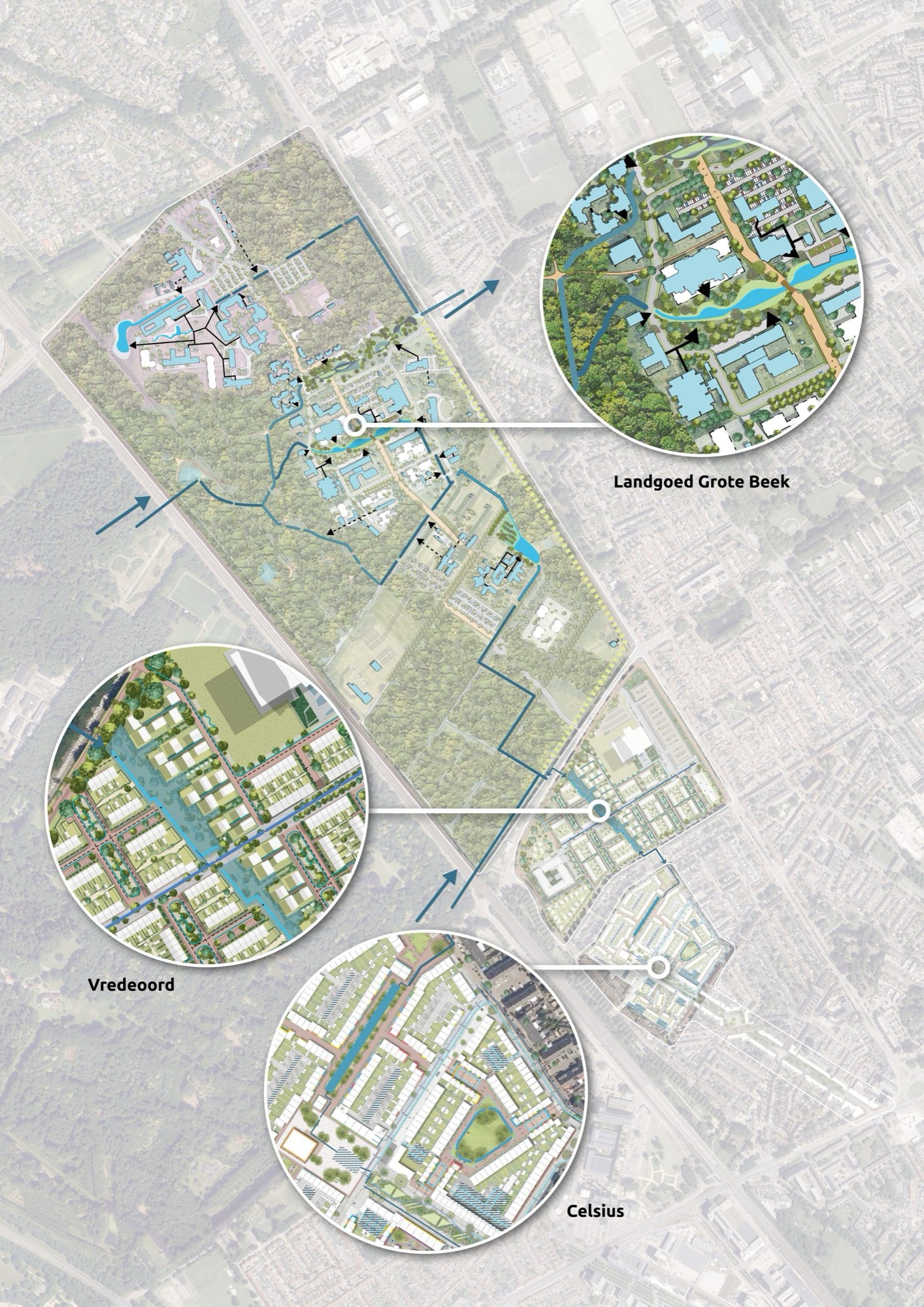
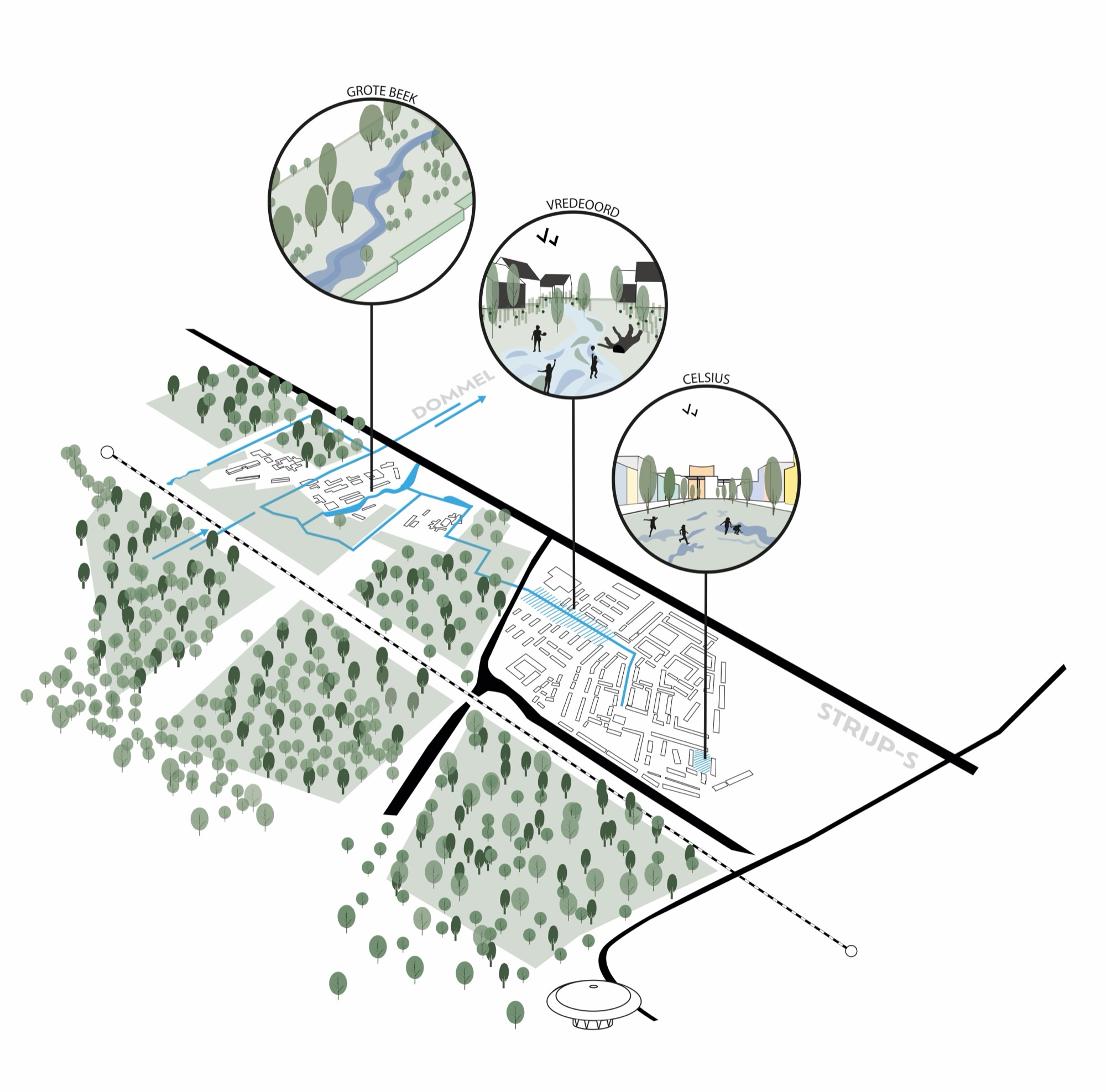
The final phase of the system was completed in spring 2024 on the GGzE estate of De Grote Beek. With this last intervention, the larger network is now fully connected to the stream landscape. A raindrop that falls on one of the rooftops in Celsius can now travel through Celsius, Vredeoord and De Grote Beek before eventually reaching the river Dommel near Son en Breugel unless it infiltrates into the soil along the way.
The journey of a raindrop reveals how the system works spatially and experientially. In Celsius, rainwater is collected from rooftops through open gutters integrated into façades and pergola structures. Water flows across gently sloped surfaces towards planted infiltration zones and wadis. During heavy rainfall, excess water is discharged into the so-called “Blue Vein”: an underground stormwater network that connects the different water systems in Celsius and transports clean rainwater towards Vredeoord.
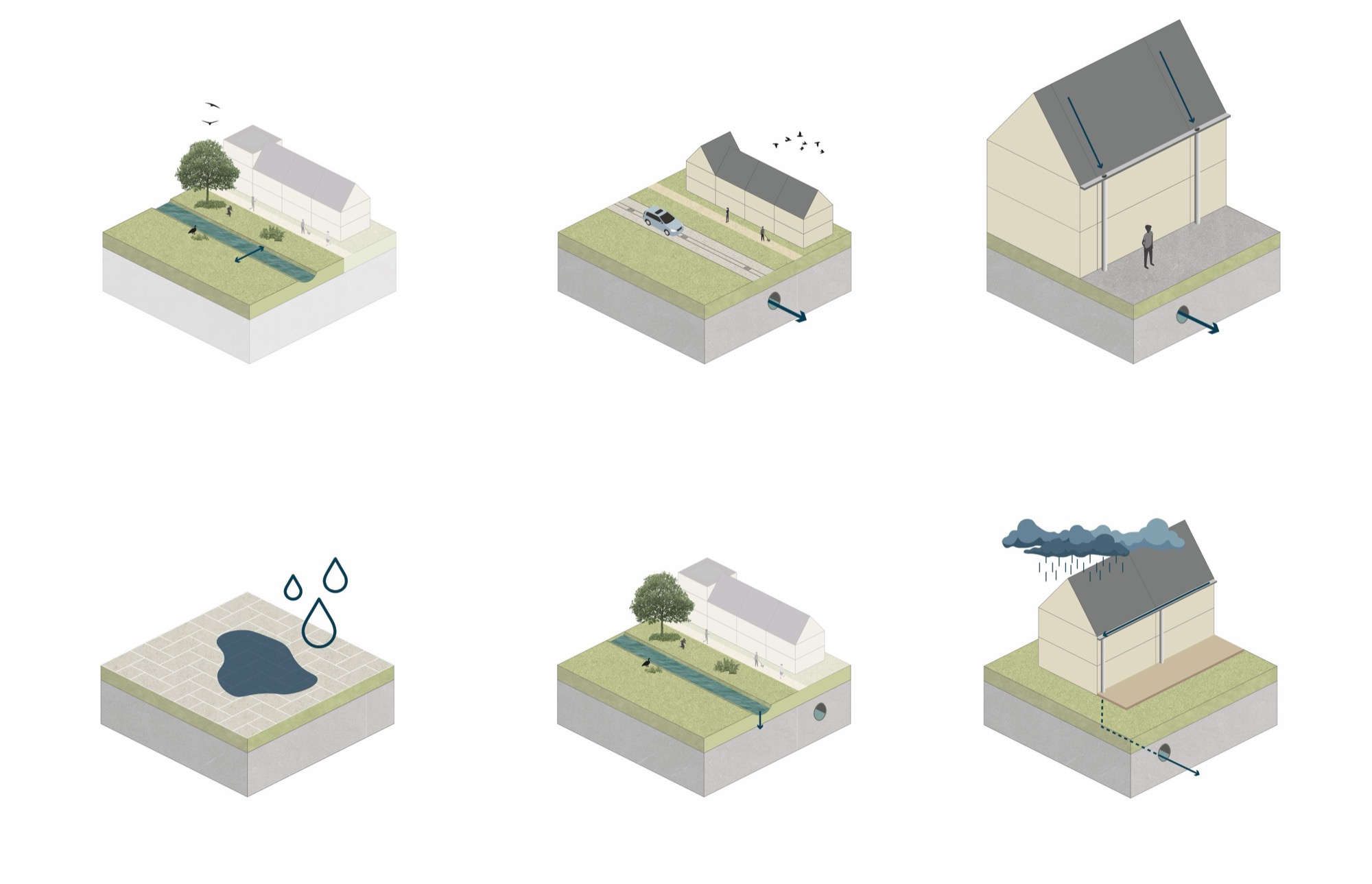
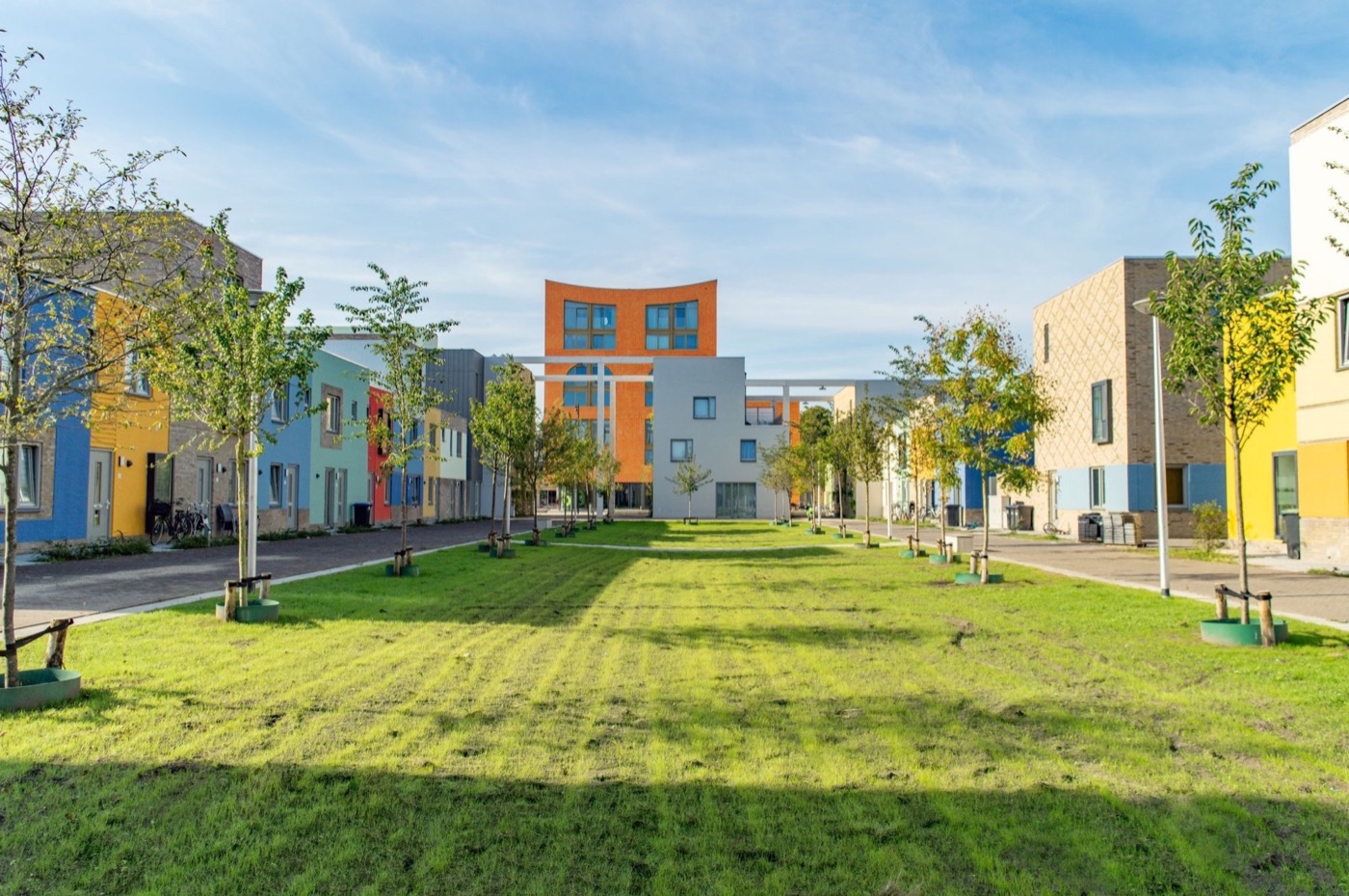
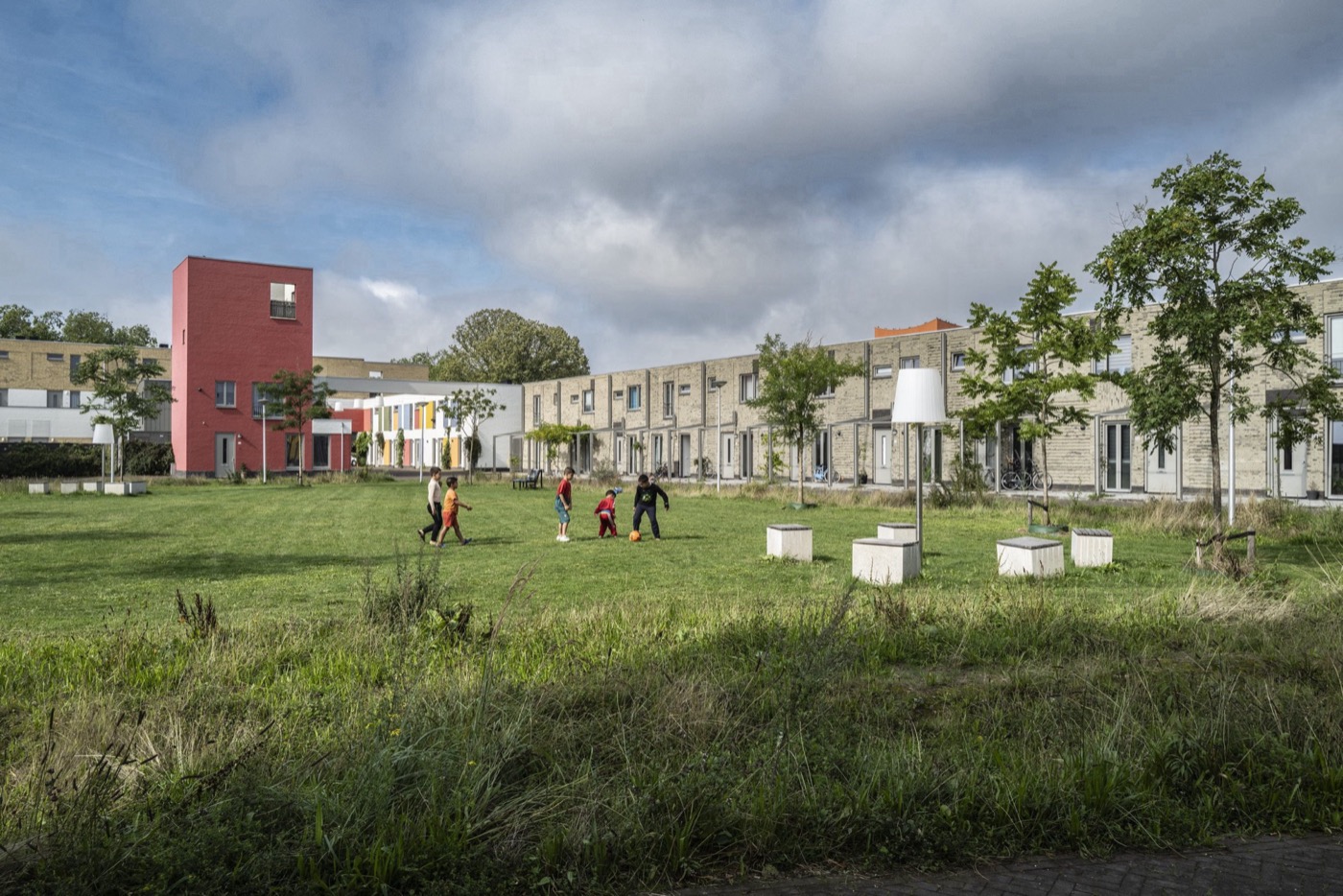
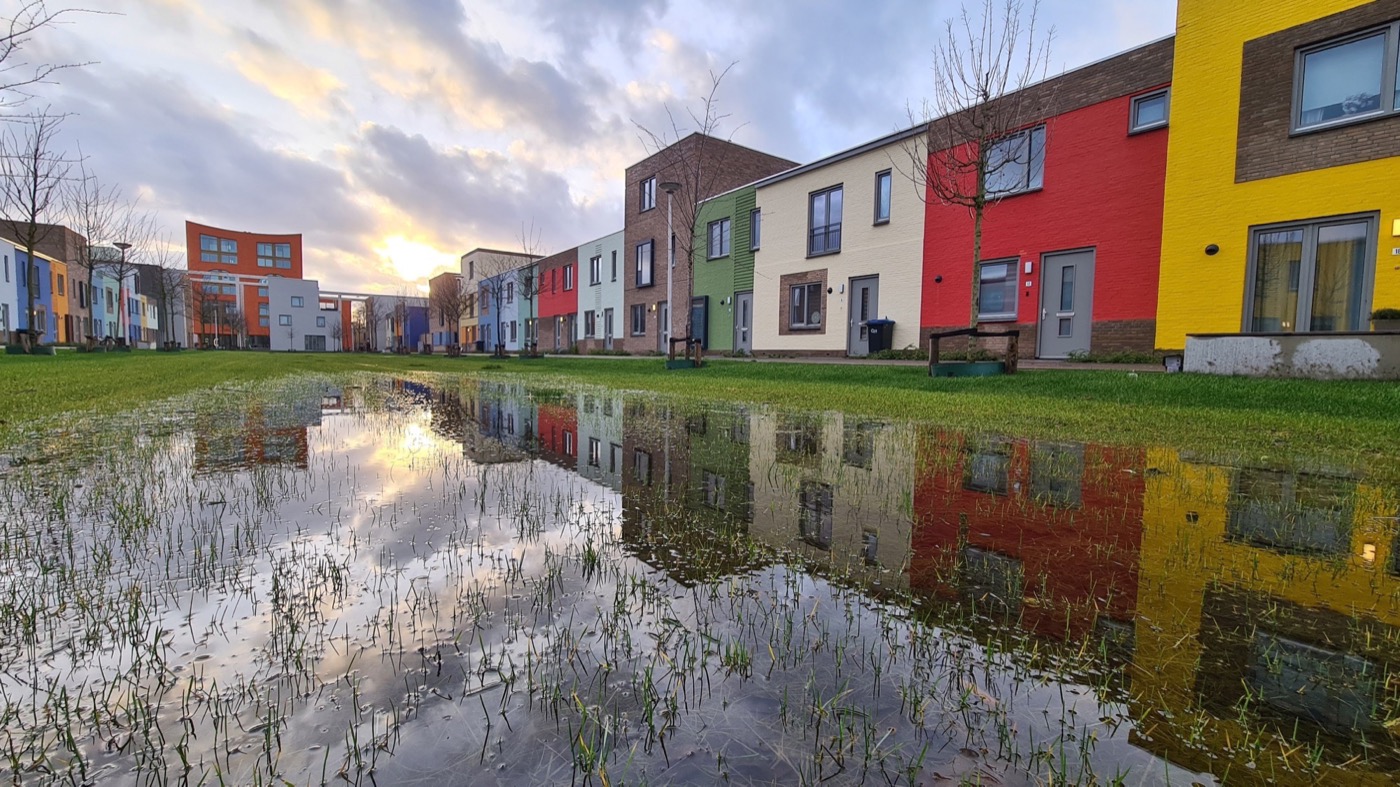
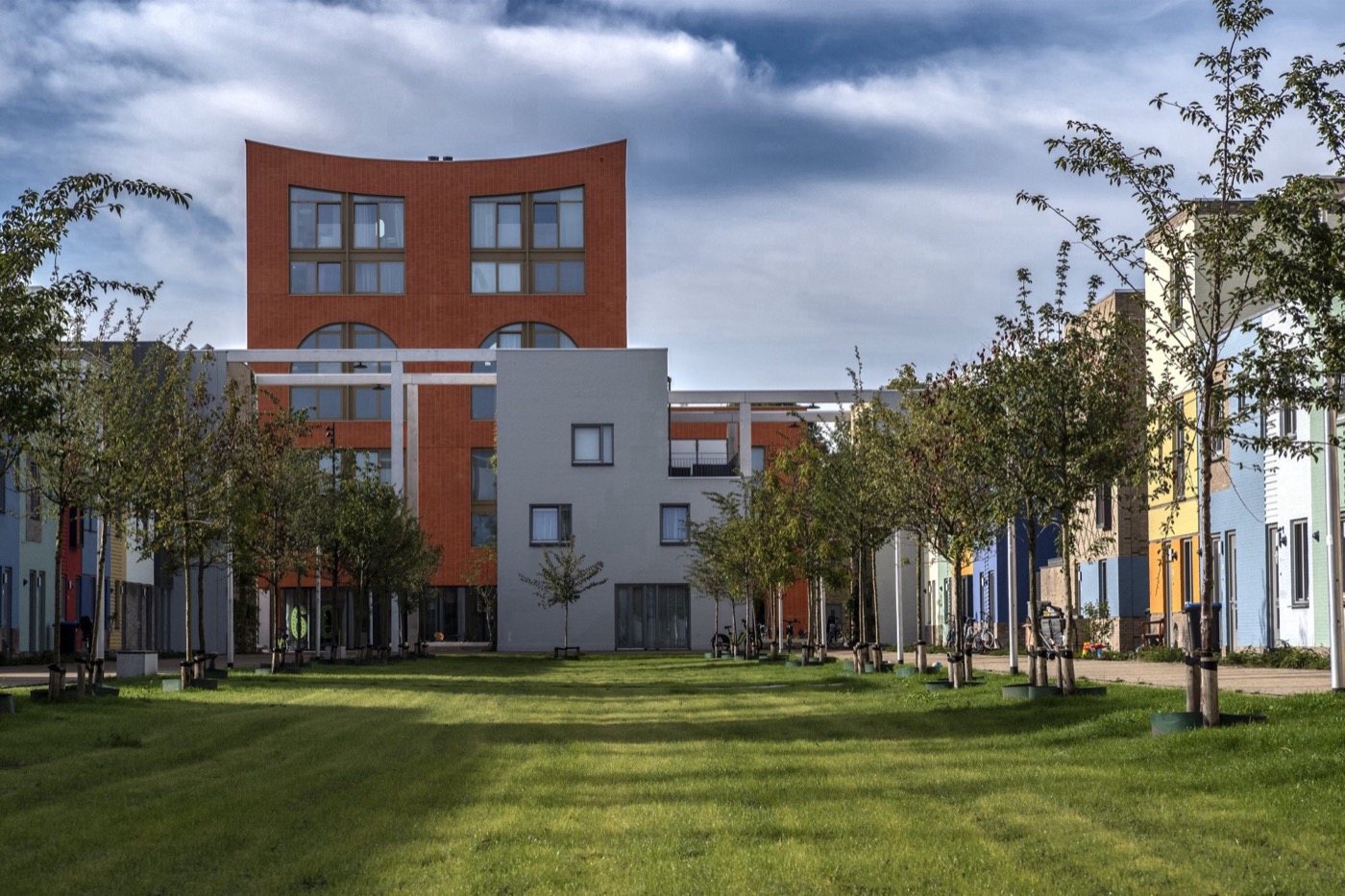
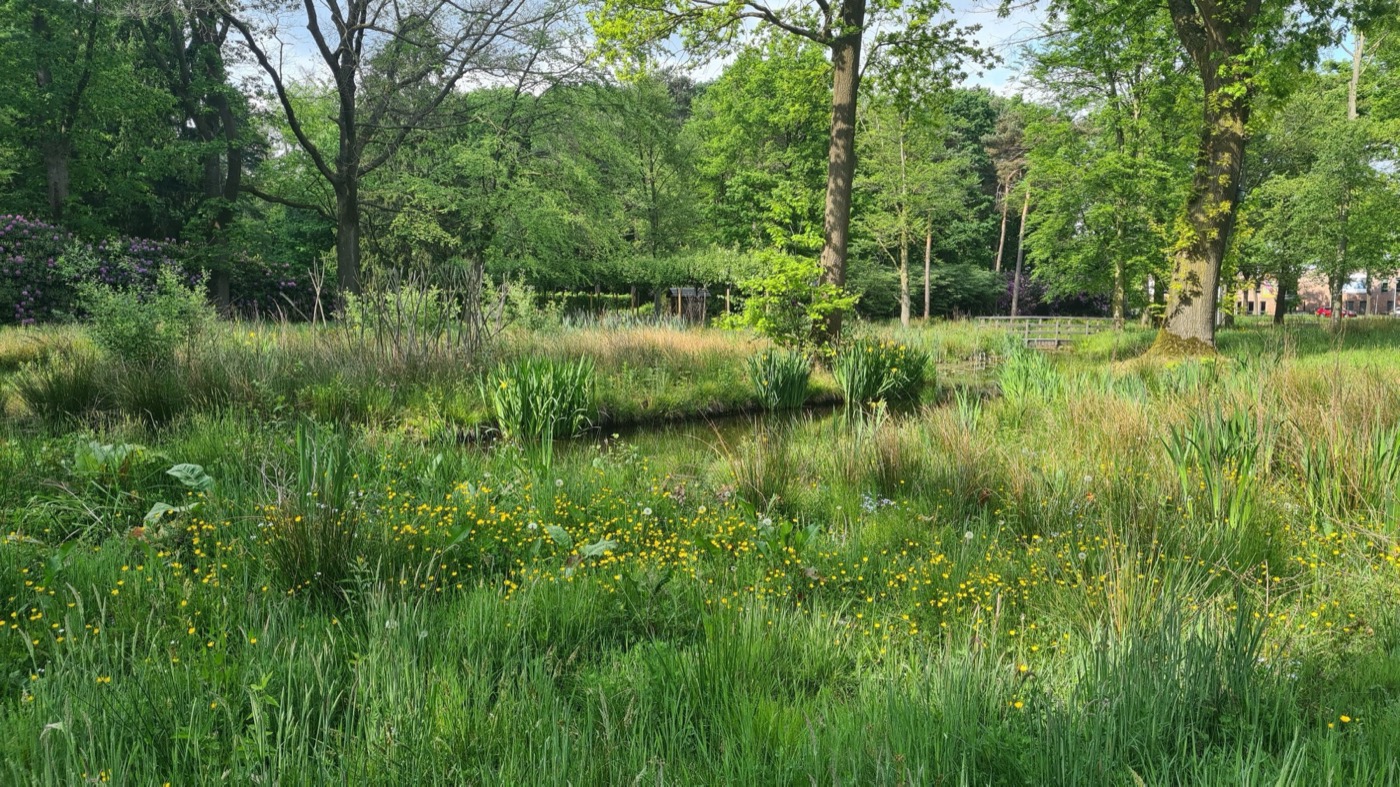
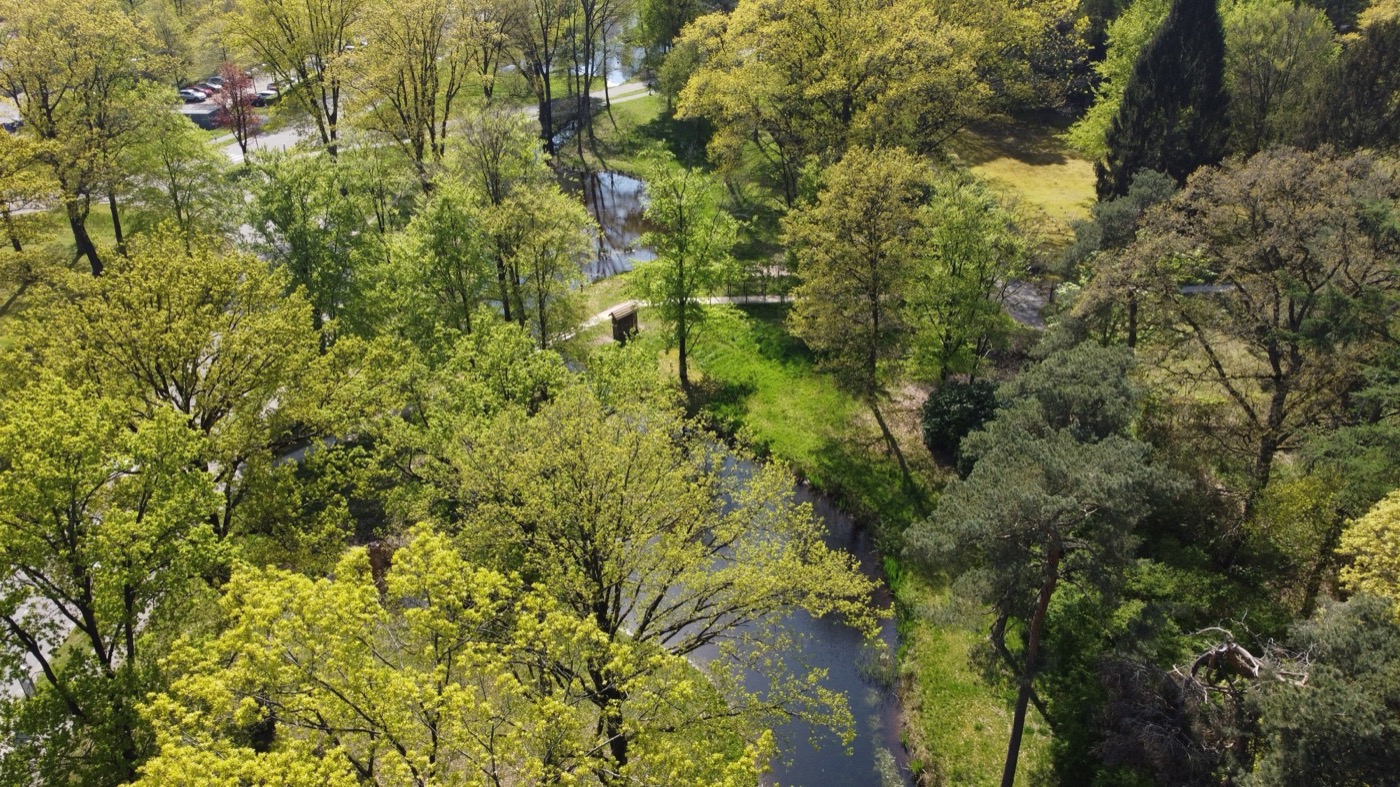
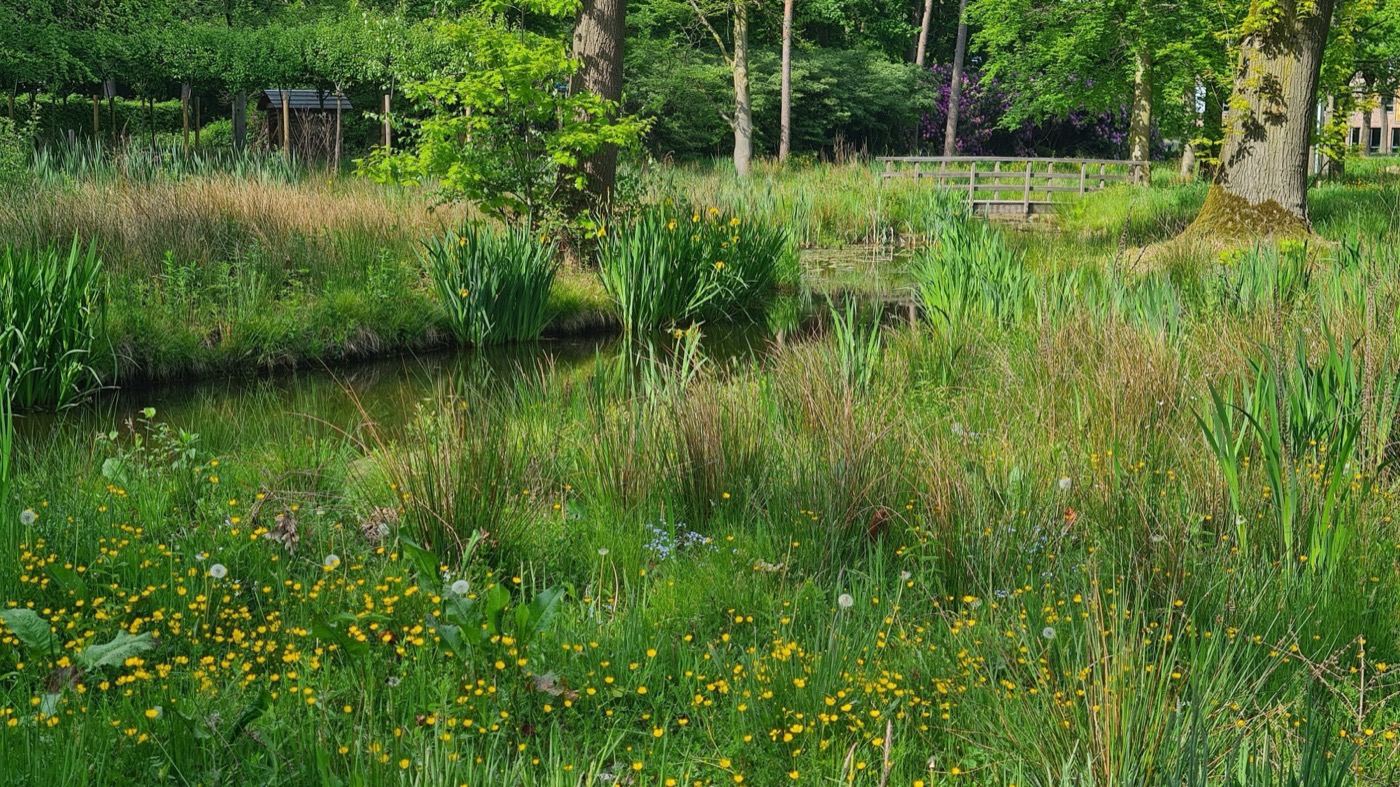
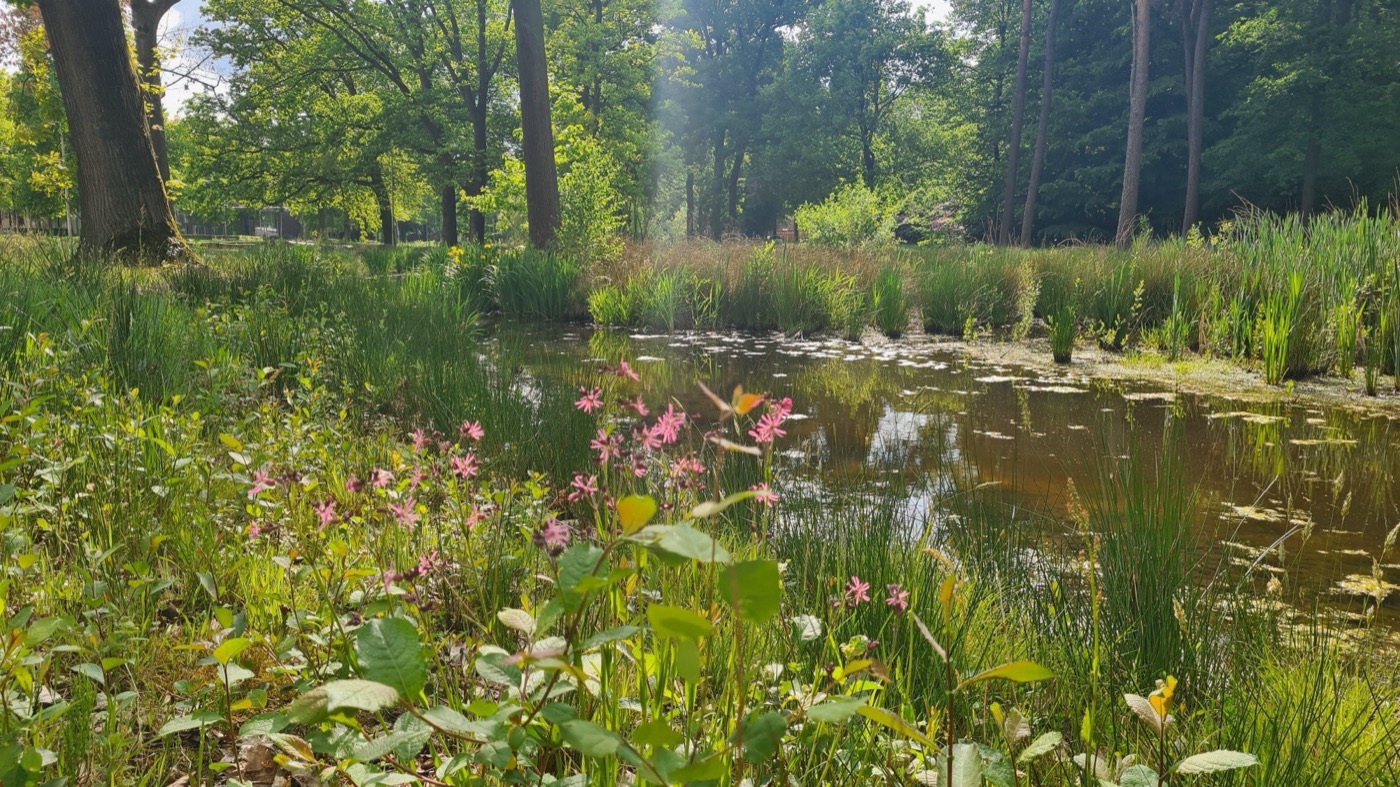
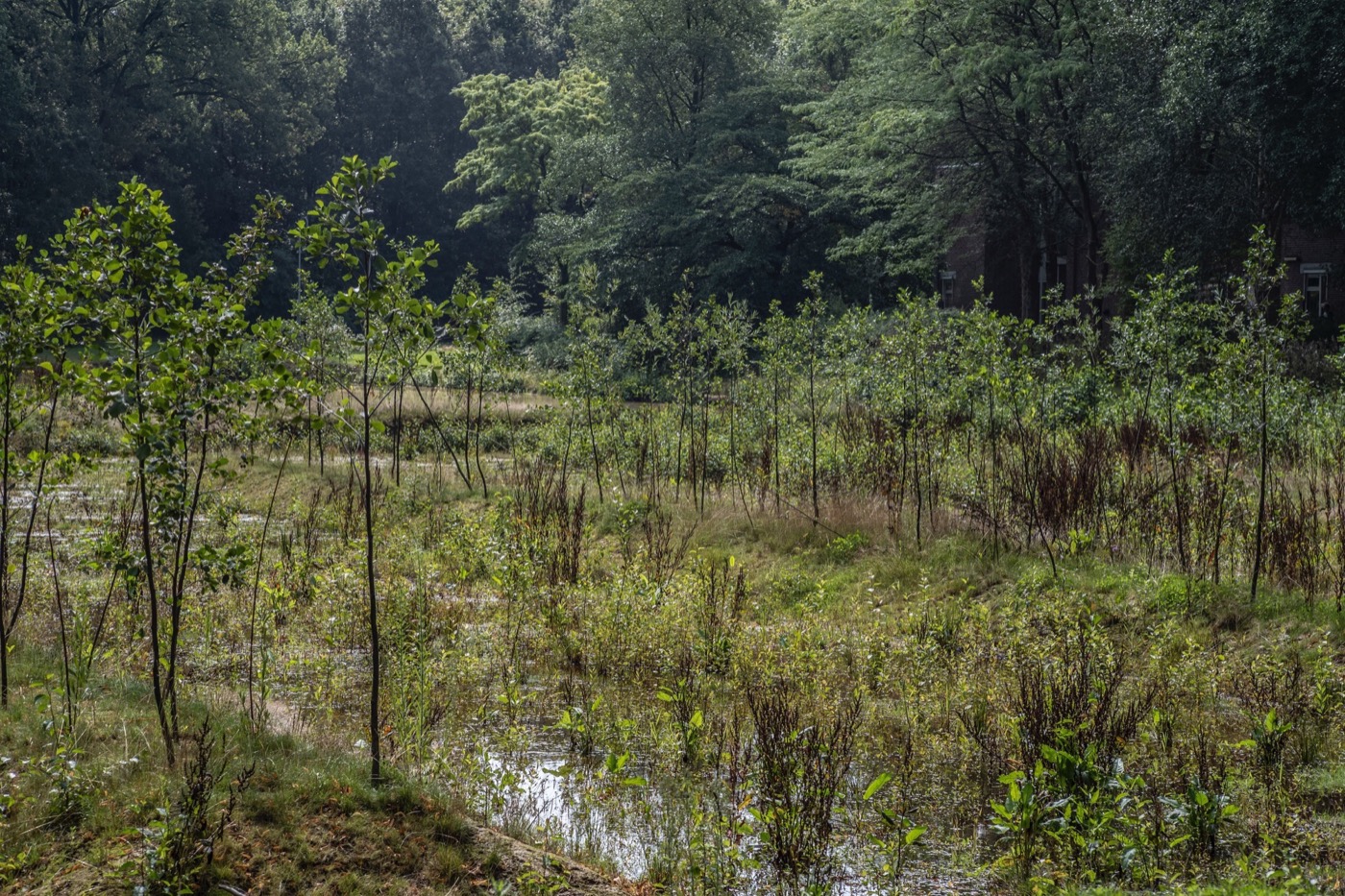
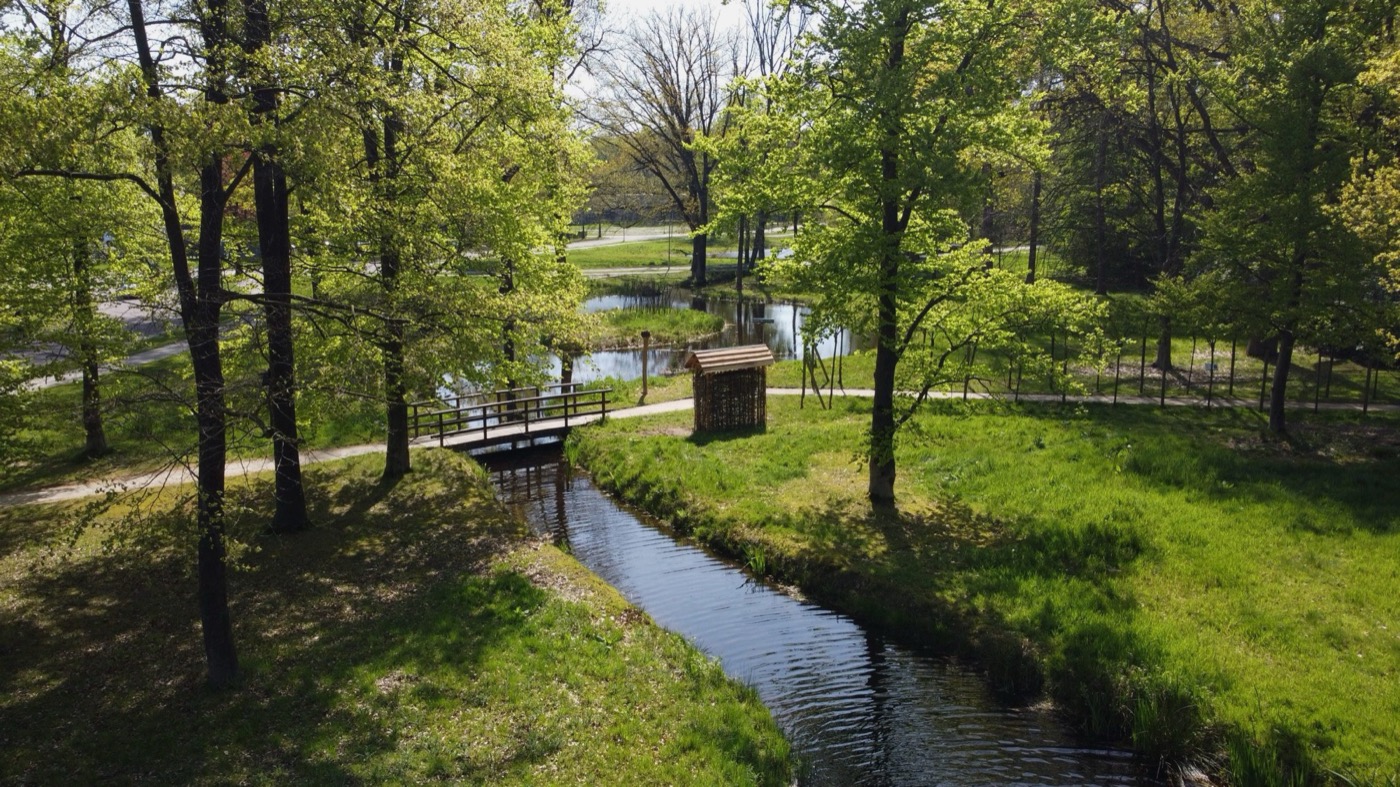
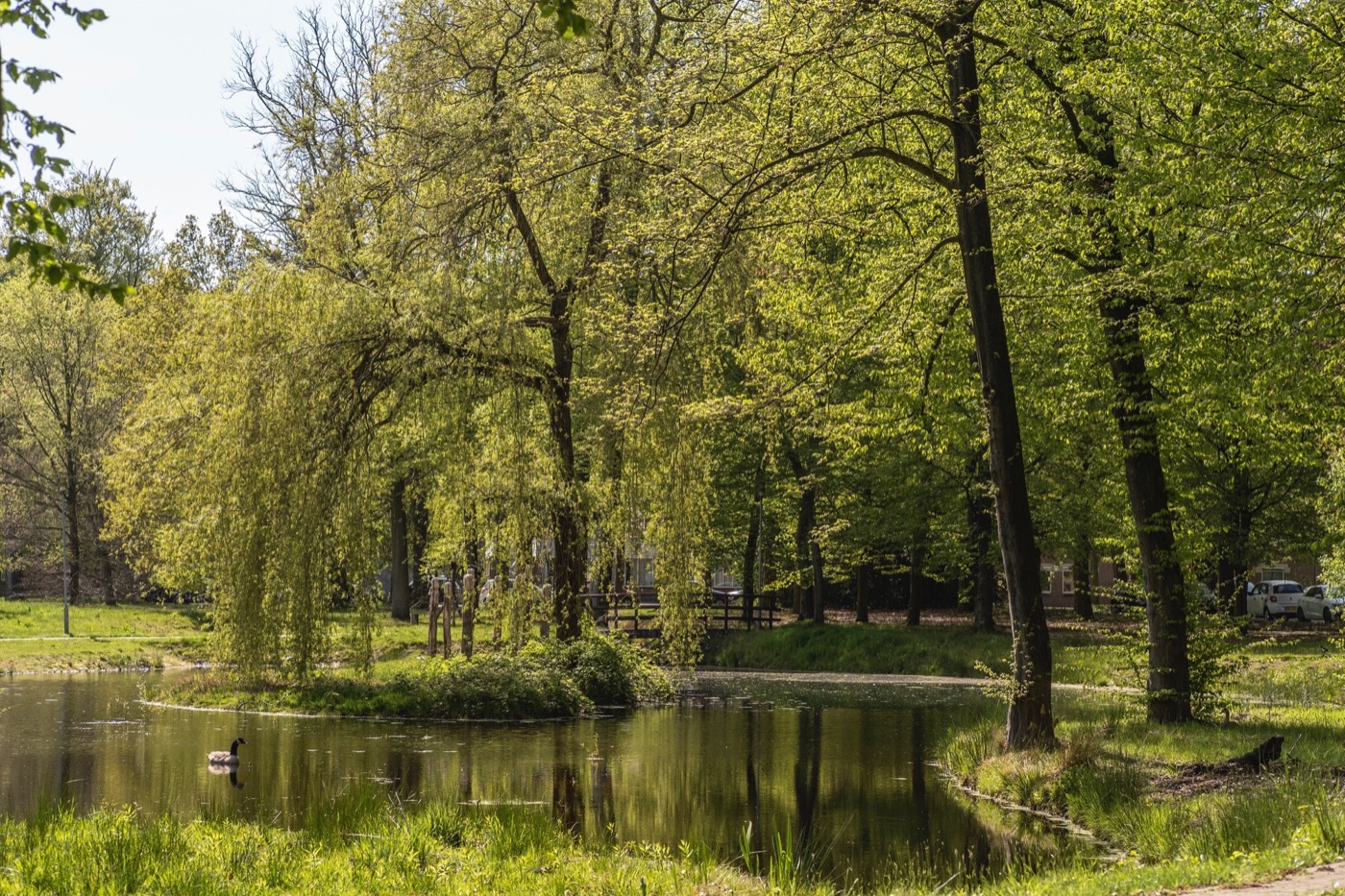
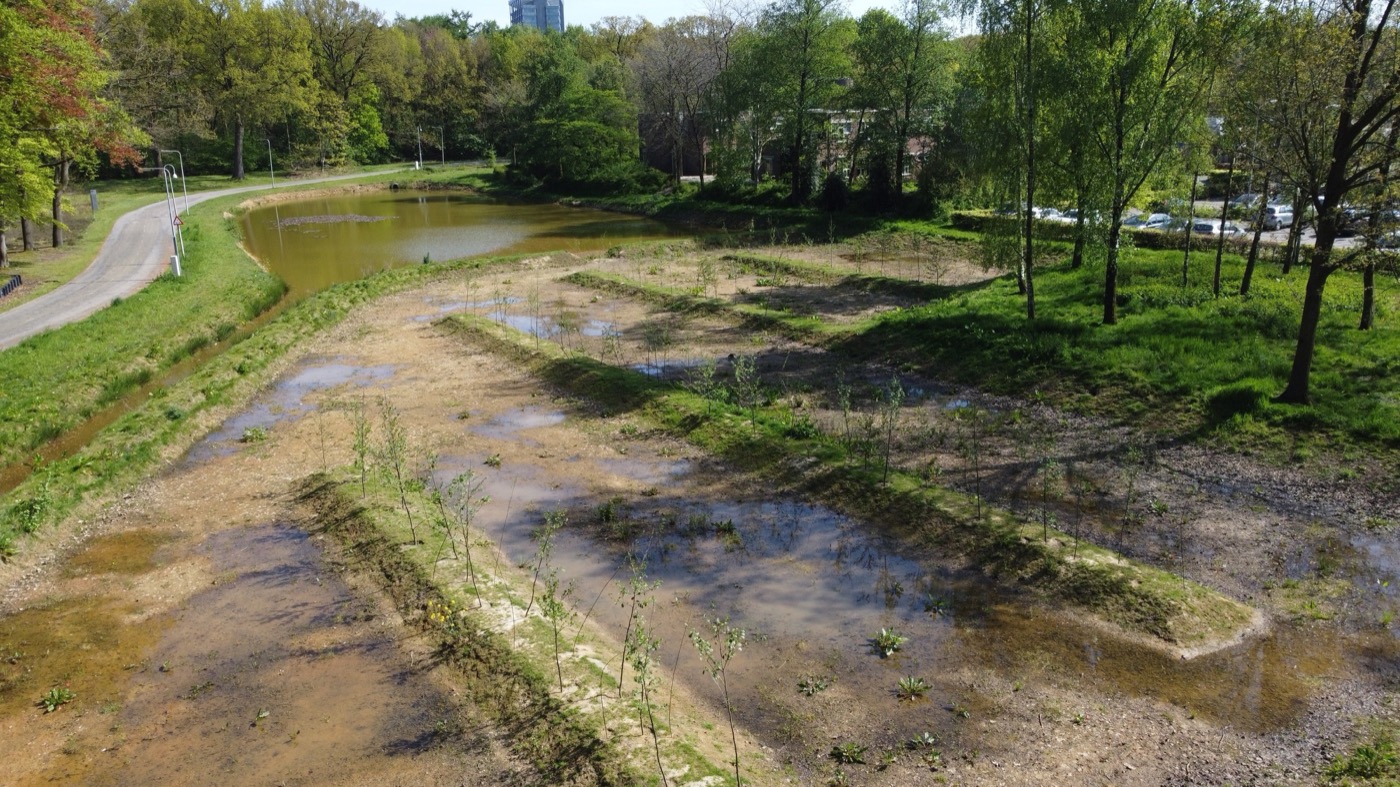
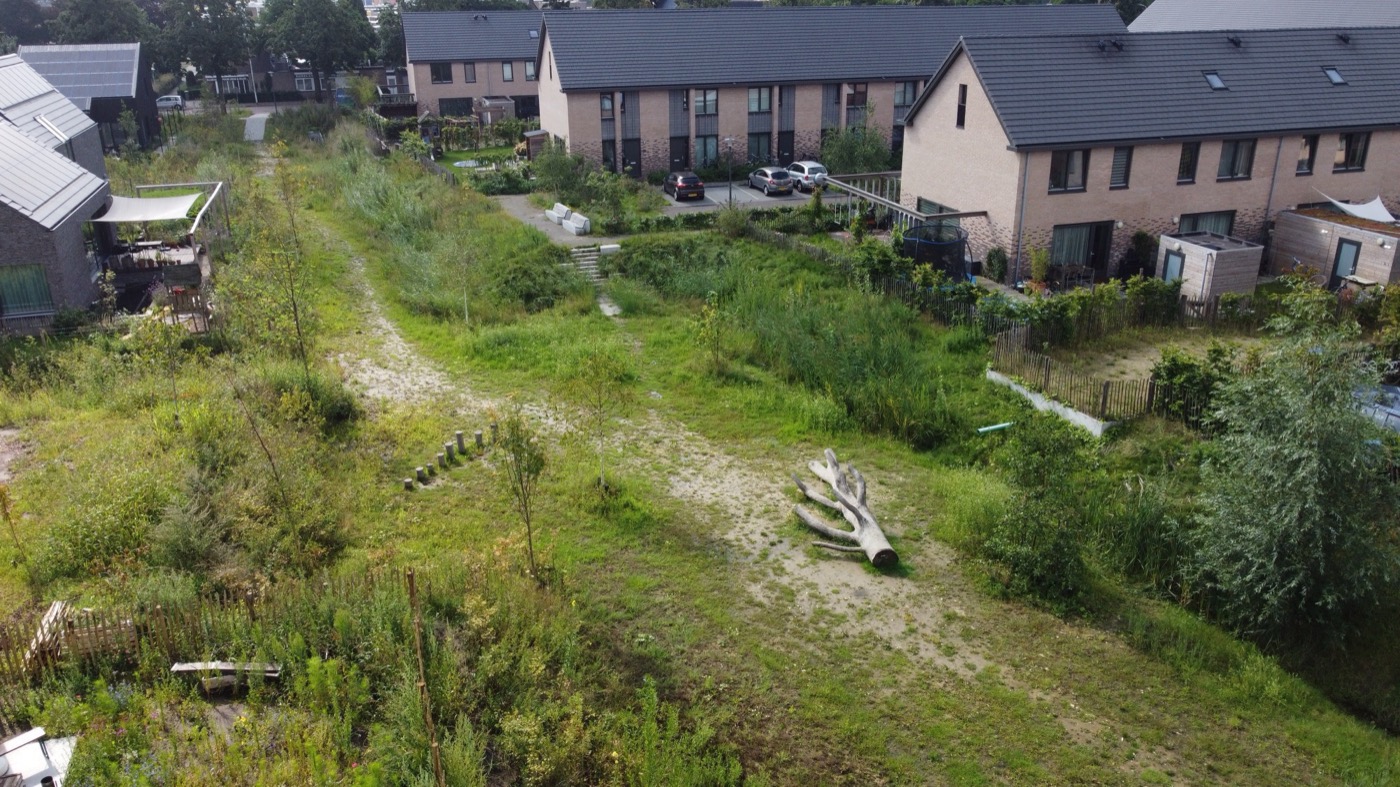
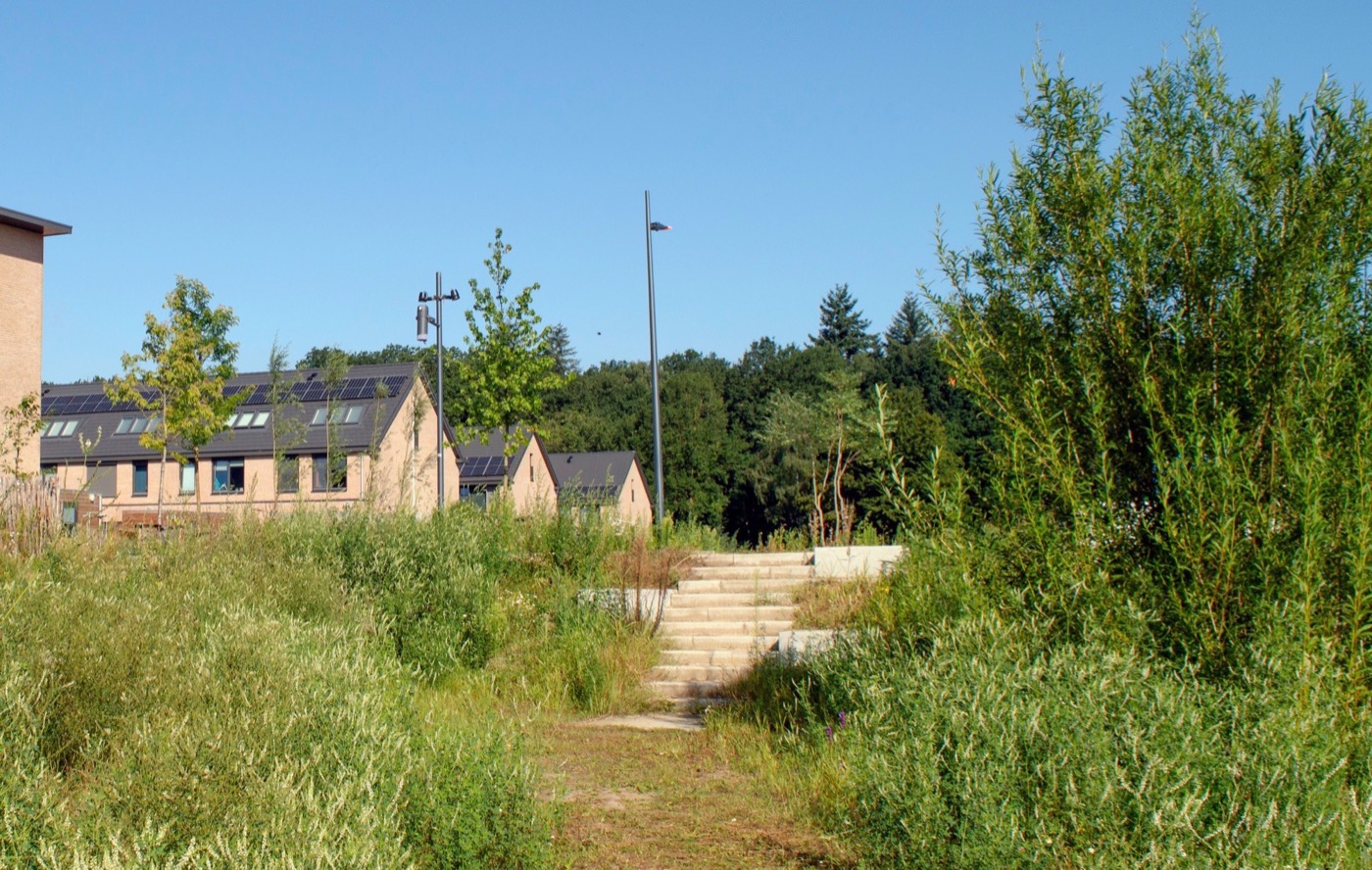
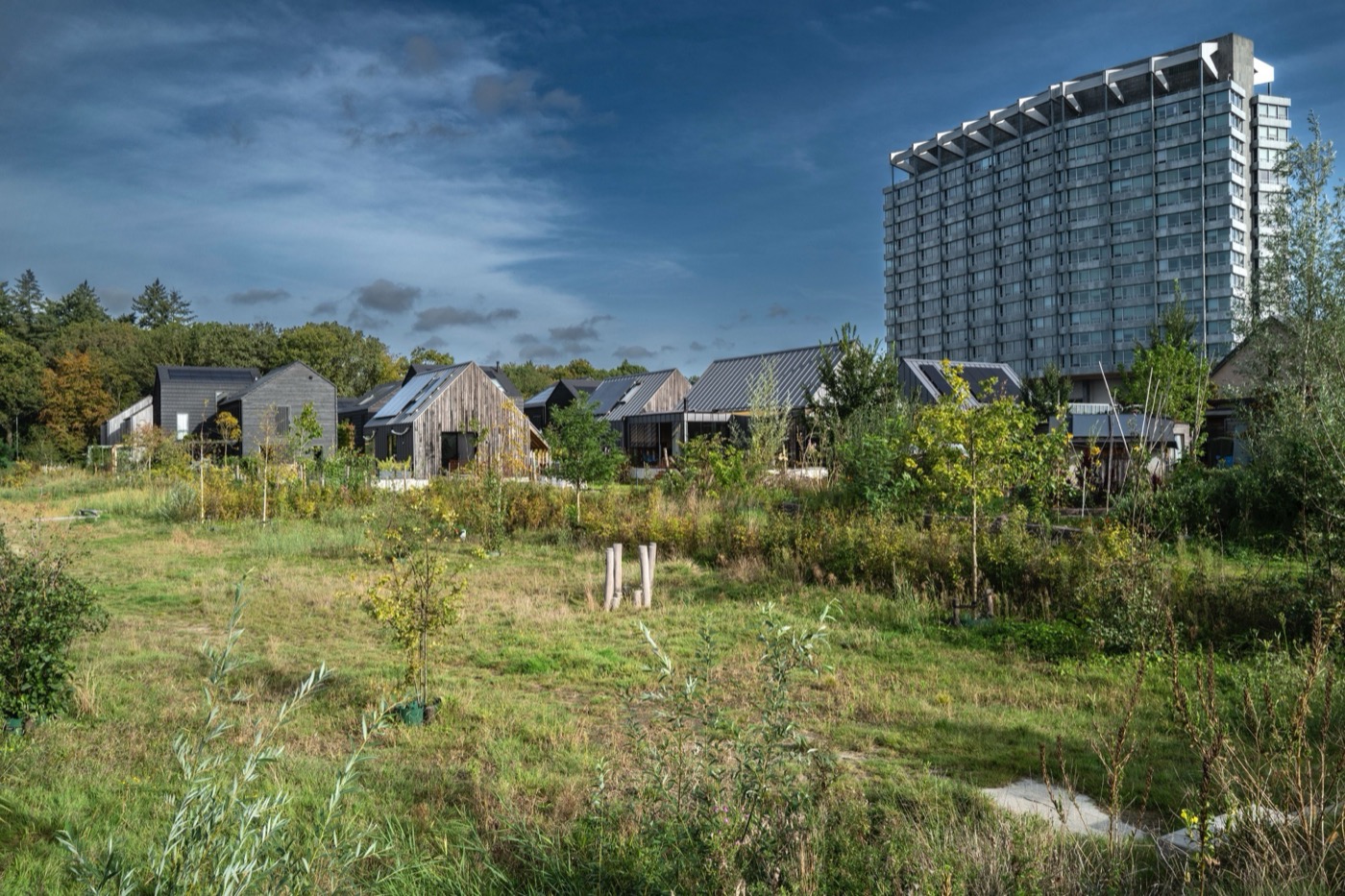
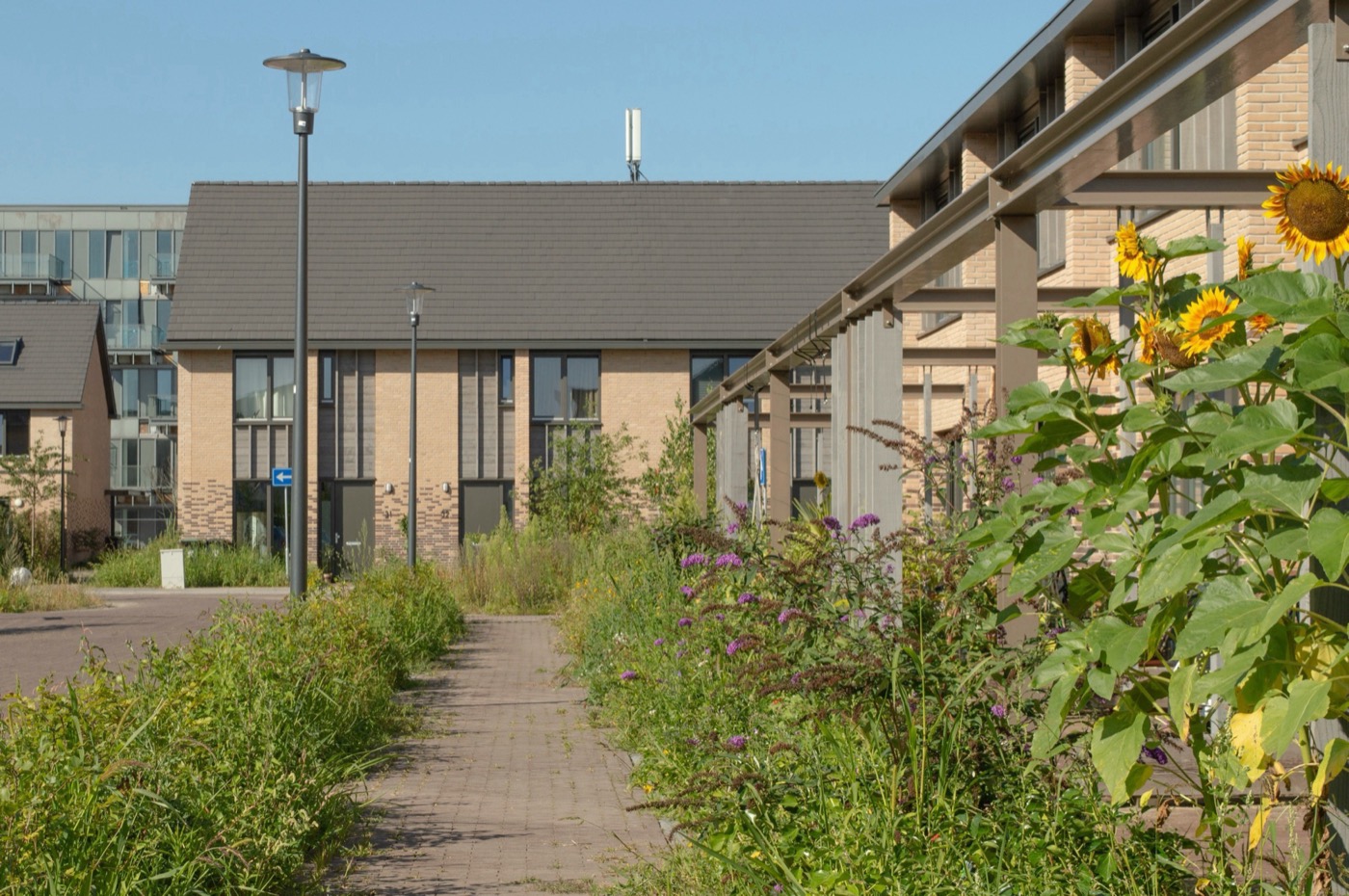
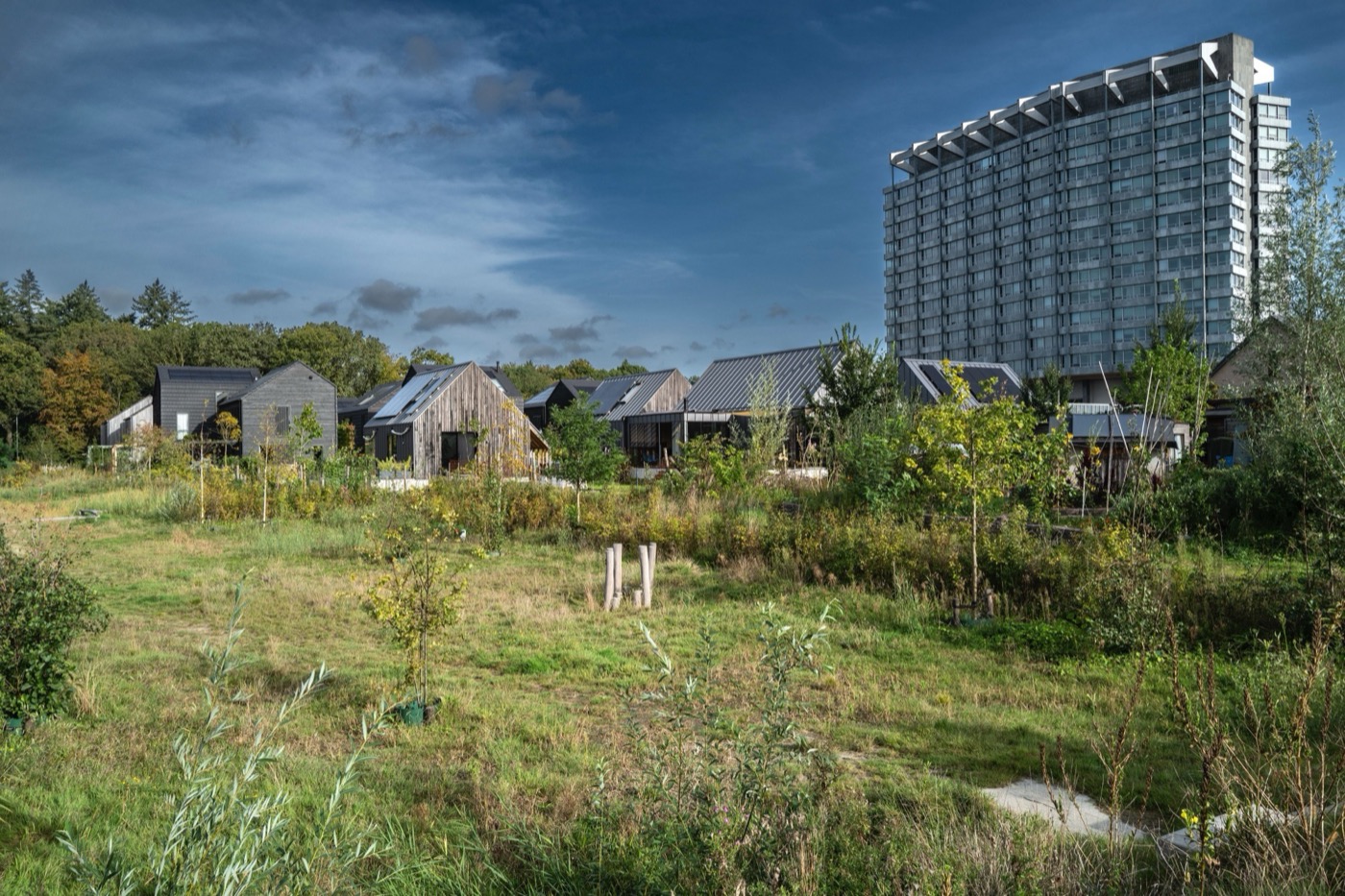
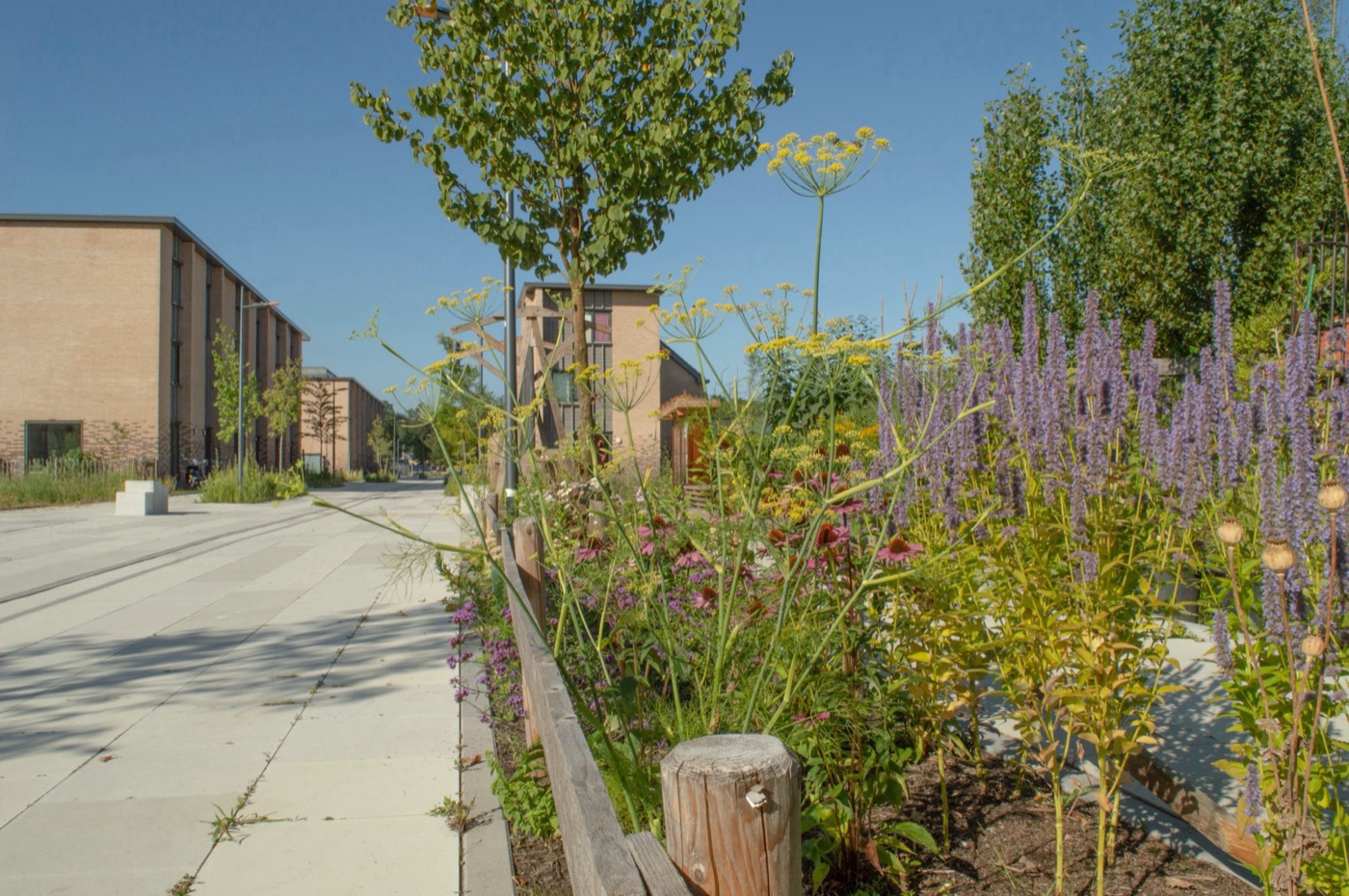
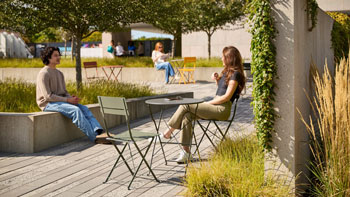
Celsius was once a neighbourhood characterised by socioeconomic challenges, outdated housing and heavily paved streets. Following its transformation, it has become a green residential district with generous public spaces. BURO LUBBERS, together with Tarra Architecture and Urbanism, designed the masterplan and urban framework. Water management became an integral part of the spatial design. Each development phase introduced stricter water storage requirements and new retention solutions.
In Vredeoord, a former Philips office campus was transformed into a residential neighbourhood that forms a transition between the city and the surrounding landscape. BURO LUBBERS designed both the urban plan and landscape framework. The area is structured around strong green corridors, tree-lined streets and a central car-free public space.
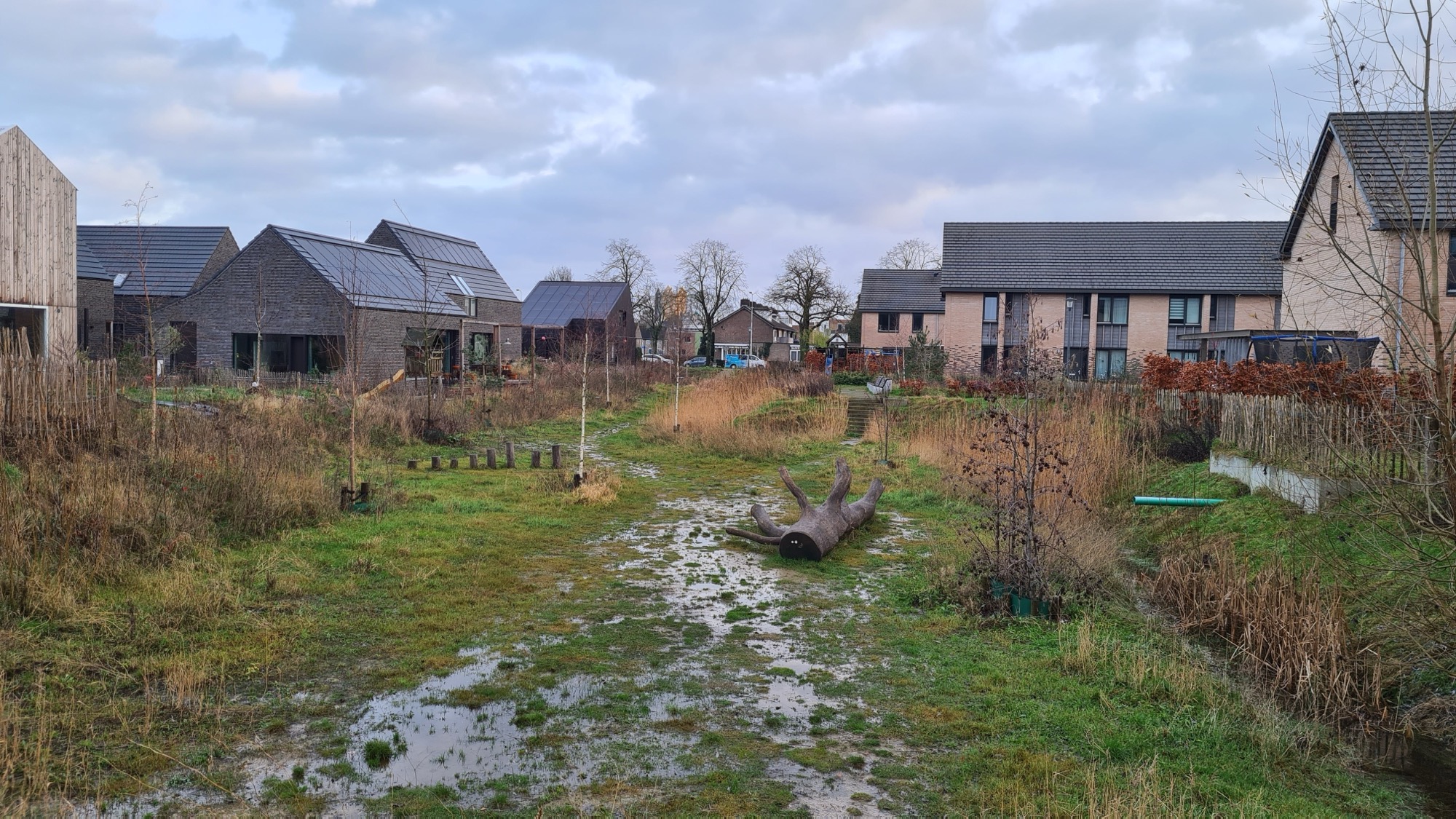
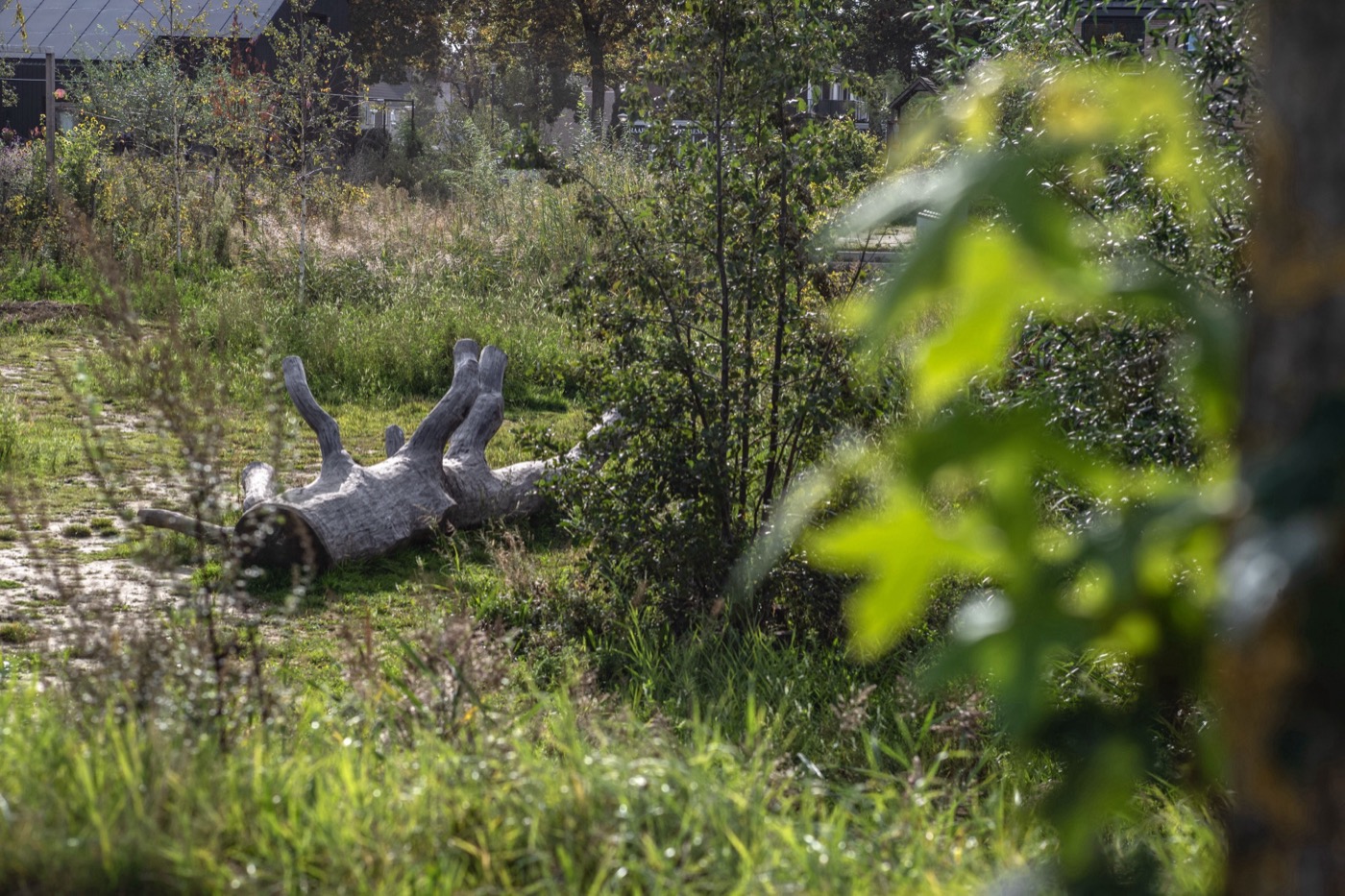
At the heart of the district lies the Dreef: a lowered landscape zone with rough vegetation, play elements and water retention capacity. During dry periods, it functions as a landscape for walking and play. During heavy rainfall, the Dreef temporarily stores water, allowing it to infiltrate gradually or overflow towards De Grote Beek. Because the terrain varies in height, only the lowest sections fill first, while higher areas remain accessible most of the year.
At De Grote Beek, the water system becomes part of a broader ecological and therapeutic landscape. The historic estate of the GGzE mental healthcare institution was redesigned to create a safer, greener and more open environment connected to the city. BURO LUBBERS and Tarra Architecture and Urbanism developed the masterplan, while BURO LUBBERS designed the landscape and water system.
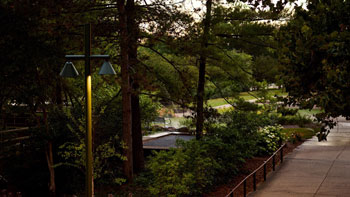
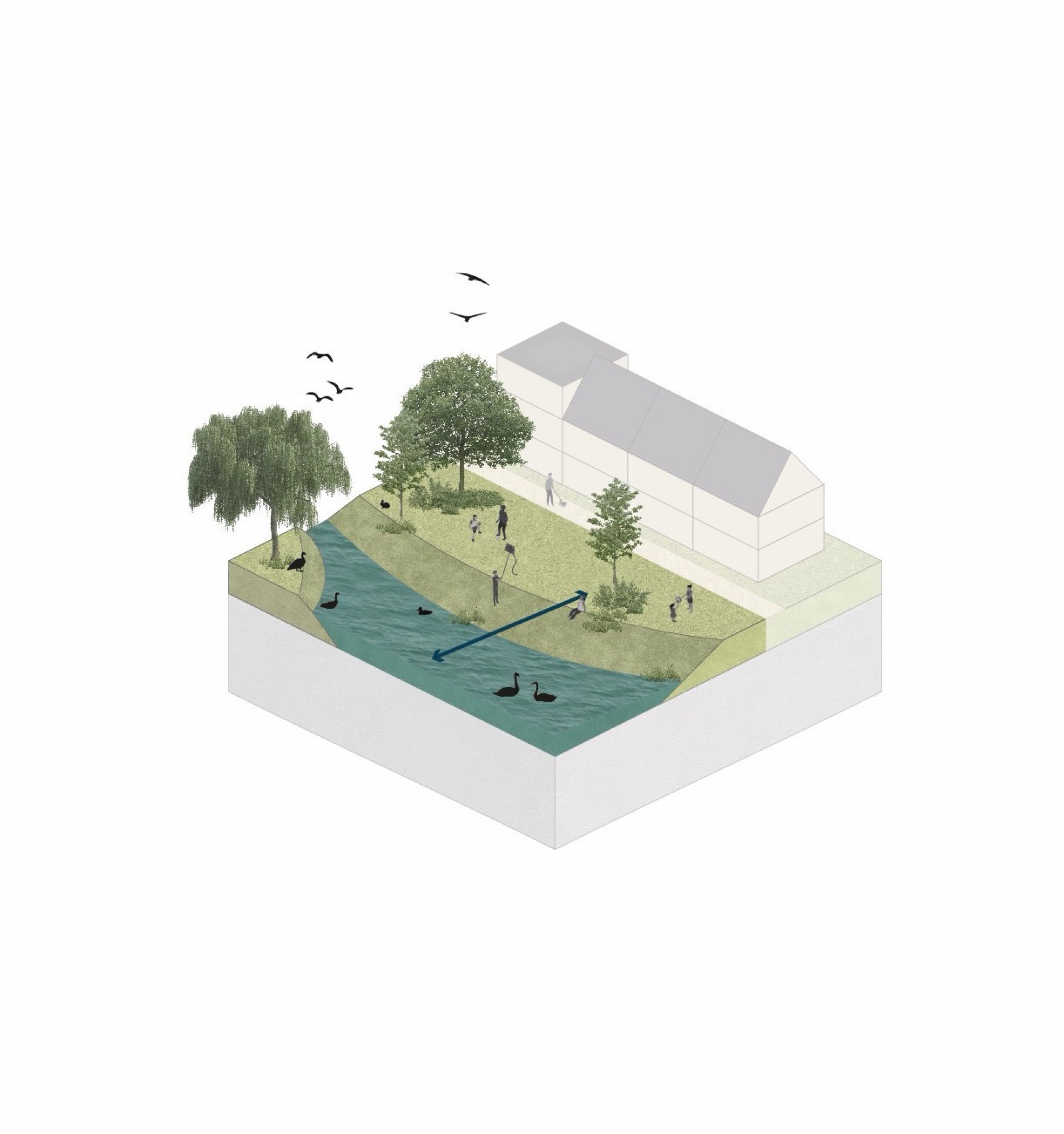
Historically, most water bypassed the estate through underground pipes. The new design restores the stream as a visible and living landscape element. Rainwater from the entire estate is now directed towards the Grote Beek, while areas previously connected to the sewer system have been disconnected. Water retention basins are carefully integrated within heathland, park woodland and the historic rabatten landscape. Ecological banks allow infiltration while strengthening biodiversity.
The system combines technical water management with ecological and social value. Visible water flows, biodiverse planting and accessible landscapes make water part of daily life.
Collaboration between many parties was essential to realise the system. The Municipality of Eindhoven and the regional water authority recognised the potential of restoring the historic stream landscape and connecting it to surrounding urban developments. Together with clients Trudo and GGzE, engineers RA+, ecologists and contractors, an integrated system was developed that combines climate adaptation, biodiversity and spatial quality.
The heavy rainfall events of autumn 2023 and spring 2024 formed the first major stress test for the system. Wadis and retention landscapes filled visibly, enhancing awareness and experience of water, while buildings remained dry and roads accessible. The system proved its resilience and demonstrates how integrated water design can contribute to climate-adaptive and future-proof urban environments.
What makes this project unique is the complete integration of water management within architecture, urbanism and landscape. Water is no longer hidden underground, but has become a visible, experiential and identity-defining element of the city.
Client: Municipality of Eindhoven, Trudo, GGzE, Tarra Architecture and Urbanism Civil engineering: RA+ Water authority: Waterschap De Dommel
51.466536, 5.443397
75371


LILA 2026 Sponsor