Shortlisted for LILA 2026 Jury Award:
Brick Bay Farm Park
reseturban.co.nz
2026 Revisited Landscapes / New Zealand / Built in 2009 /

![At the foot of the Southern Alps, a glacially carved lake holds a small alpine town to its shore. The light moves fast here. The mountains are close. The water is extraordinarily clear. This is a landscape that does not need improvement, only respect. The Wānaka Lakefront Reserve is, above all, an act of restraint: […]](https://landezine-award.com/wp-content/uploads/2026/05/01-Hero-Image-Wanaka-Lakefront-600x450.jpg "Wānaka Lakefront")
![One hundred and fifty years ago the councillors, of the then small gold mining town of Queenstown, had the foresight and determination to reserve the large headland adjacent to the township as a public garden. In 2016 the Queenstown Lakes District Council decided the most fitting way to commemorate this major anniversary was to create […]](https://landezine-award.com/wp-content/uploads/2022/05/RUD_LILA_Queenstown-Bay-Playground_1-600x400.jpg "Queenstown Bay Playground")
![The upgrade of Hurstmere Road has successfully transformed a formally tired, vehicle dominated, and low amenity street into a revitalised open, vibrant beachside retail destination that is focused on people. It is an exemplary showcase of a street that has been successfully retrofitted for flexible transition and truly designed as a space that is first […]](https://landezine-award.com/wp-content/uploads/2022/05/00-RUD_LILA_Hurstmere-Road-Streetscape_Main--600x381.jpg "Te Panonitanga o Hurstmere Road – The transformation of Hurstmere Road")
![Reset Urban Design is a specialist urban design and landscape architecture consultancy with offices in Auckland and Wanaka, covering the North and South Islands of Aotearoa/ New Zealand. Ours is fundamentally a design company focused on applying constant learning and improvements to the critical and ever-changing interaction of people and their environment. We offer a […]](https://landezine-award.com/wp-content/uploads/2022/05/RUD_LILA_Office-Entry_Auckland-Office-small-600x299.jpg "Reset Urban Design")
The landscape is not preserved — it is inhabited, productive, and still growing.
Context & Site: What was once a run-down coastal runoff block, eroded, leaking, and marginal, is now one of New Zealand’s most distinctive landscapes. Brick Bay Farm Park occupies 150 hectares of coastal headland on the Hauraki Gulf: drowned river valleys, steep ridgelines, and boggy valley floors carrying deep historical layering: a Māori pā commanding the bay’s fishing grounds, early European brick-making from beach clay, and a mid-nineteenth century connection to Governor Grey’s Kawau Island estate. The property purchased in 1986 had been stripped of its kauri and left in eroded kikuyu pasture; the valley ponds were leaking, the steepest slopes were eroding, and there was no masterplan, only ambition, and a 90-hectare problem.
A Landscape Ahead of Its Time: In 1994, landscape architect Garth Falconer of Reset was commissioned to develop a framework for the property. What followed was not a masterplan executed toward a fixed vision, but fifteen years of deliberate, iterative design, ecological restoration, productive land use, spatial narrative, and public art developed simultaneously on a working farm. This integration was genuinely unusual in New Zealand in the 1990s, anticipating by more than a decade the wider discourse around productive landscapes and the civic role of privately-owned open space. The project drew explicitly on the tradition of the ferme ornée, not as nostalgia, but as a working model: a landscape that could be ecologically functional, economically productive, culturally meaningful, and publicly accessible, all at once.
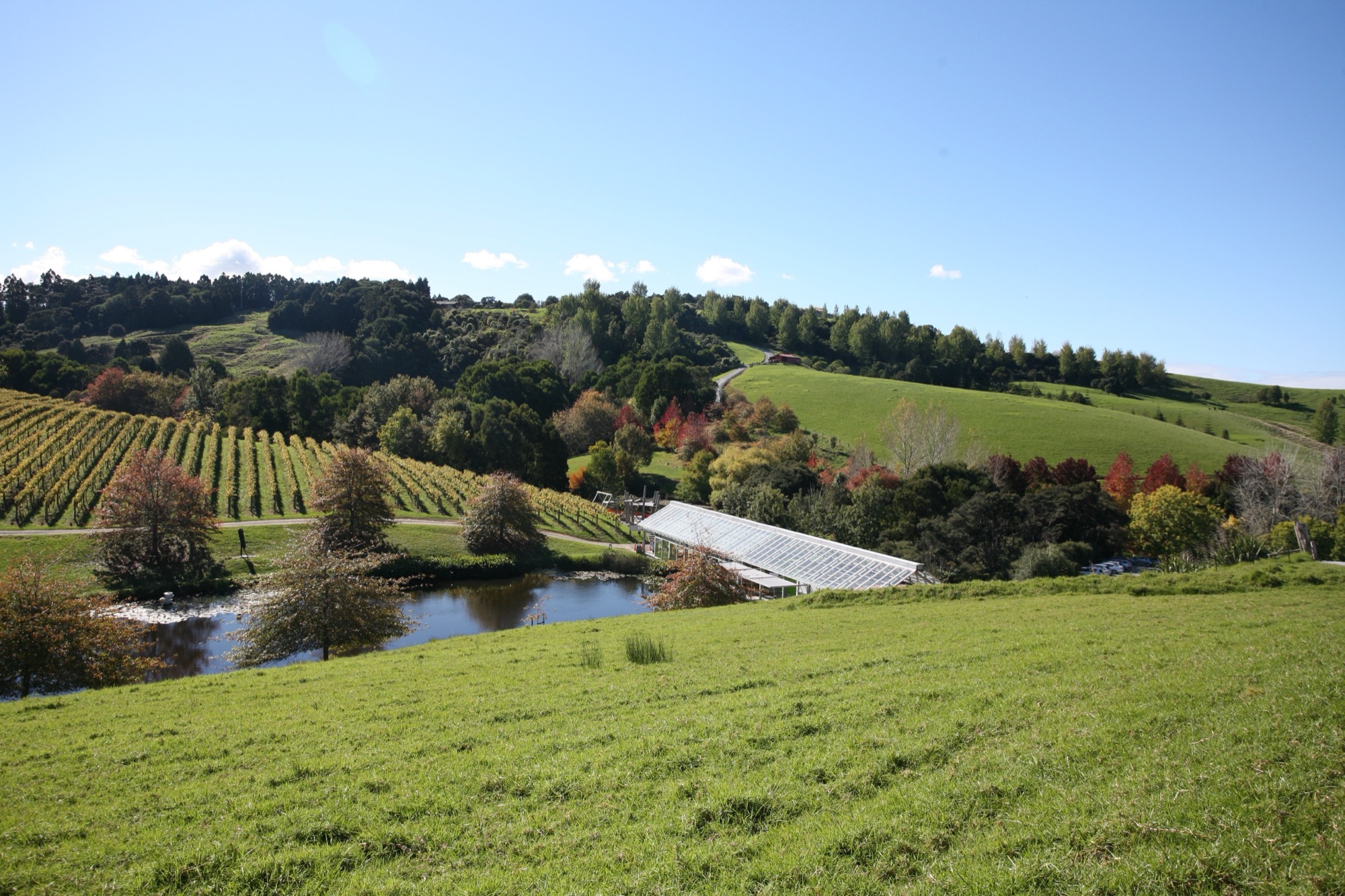
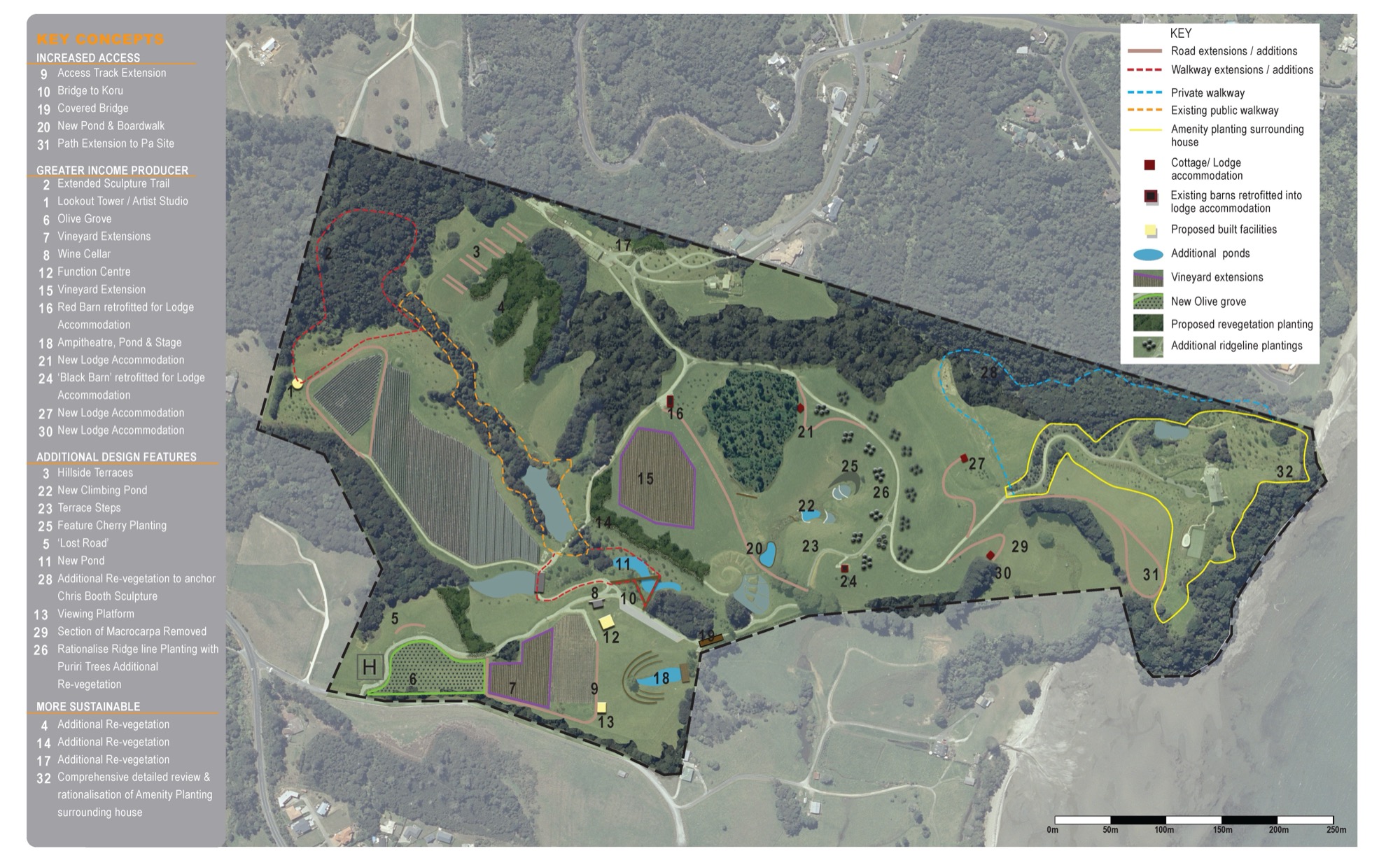
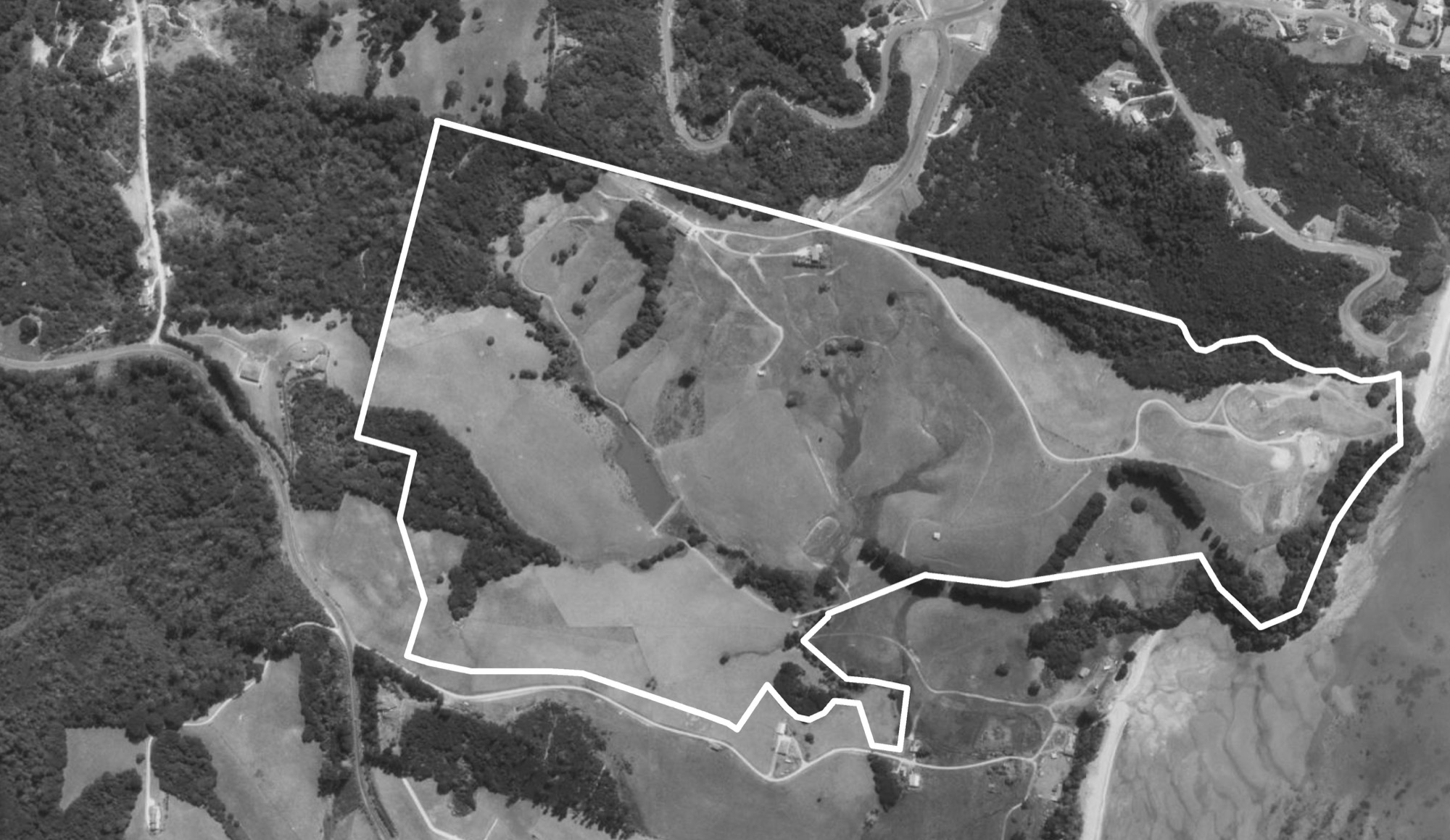
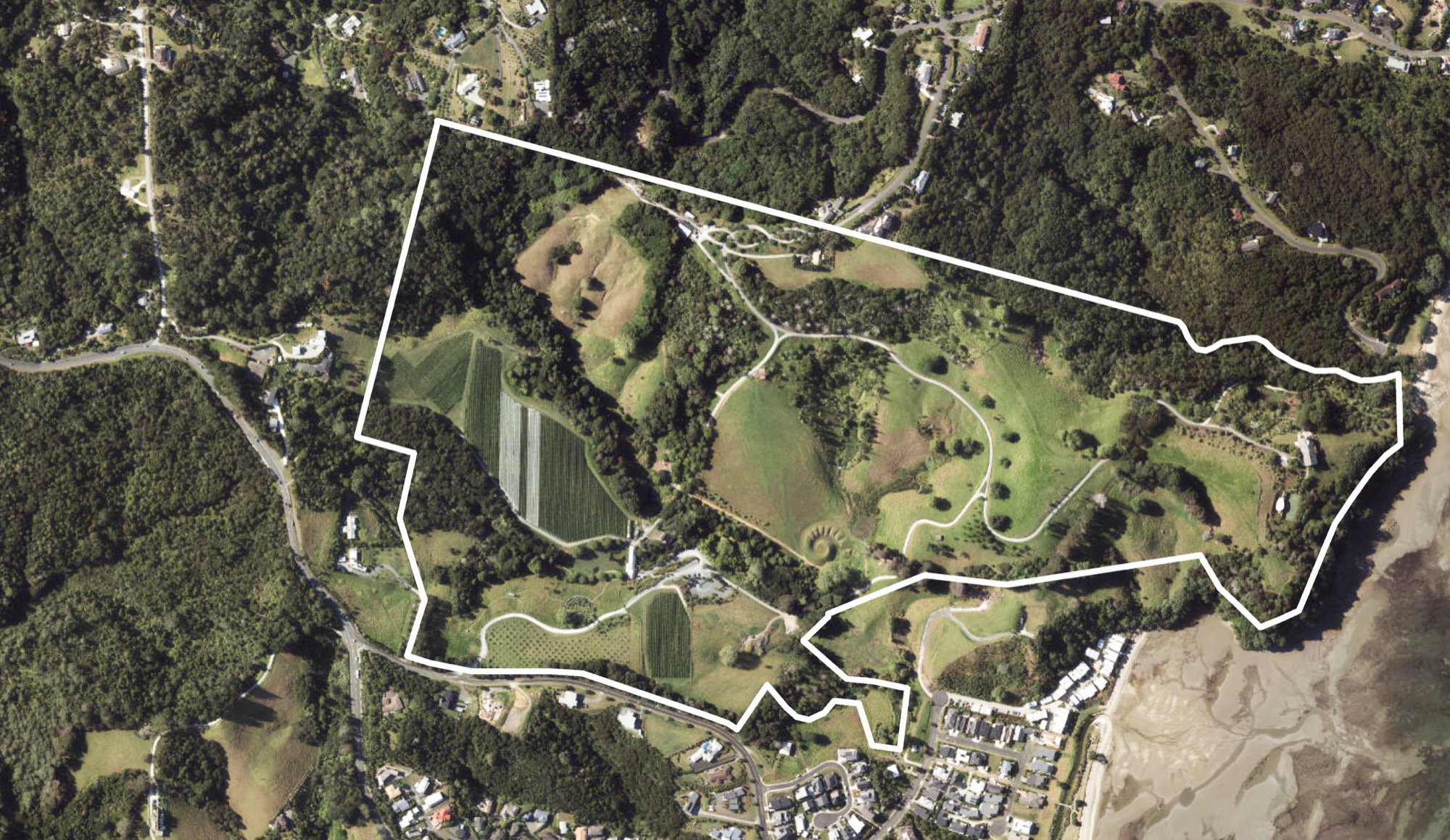
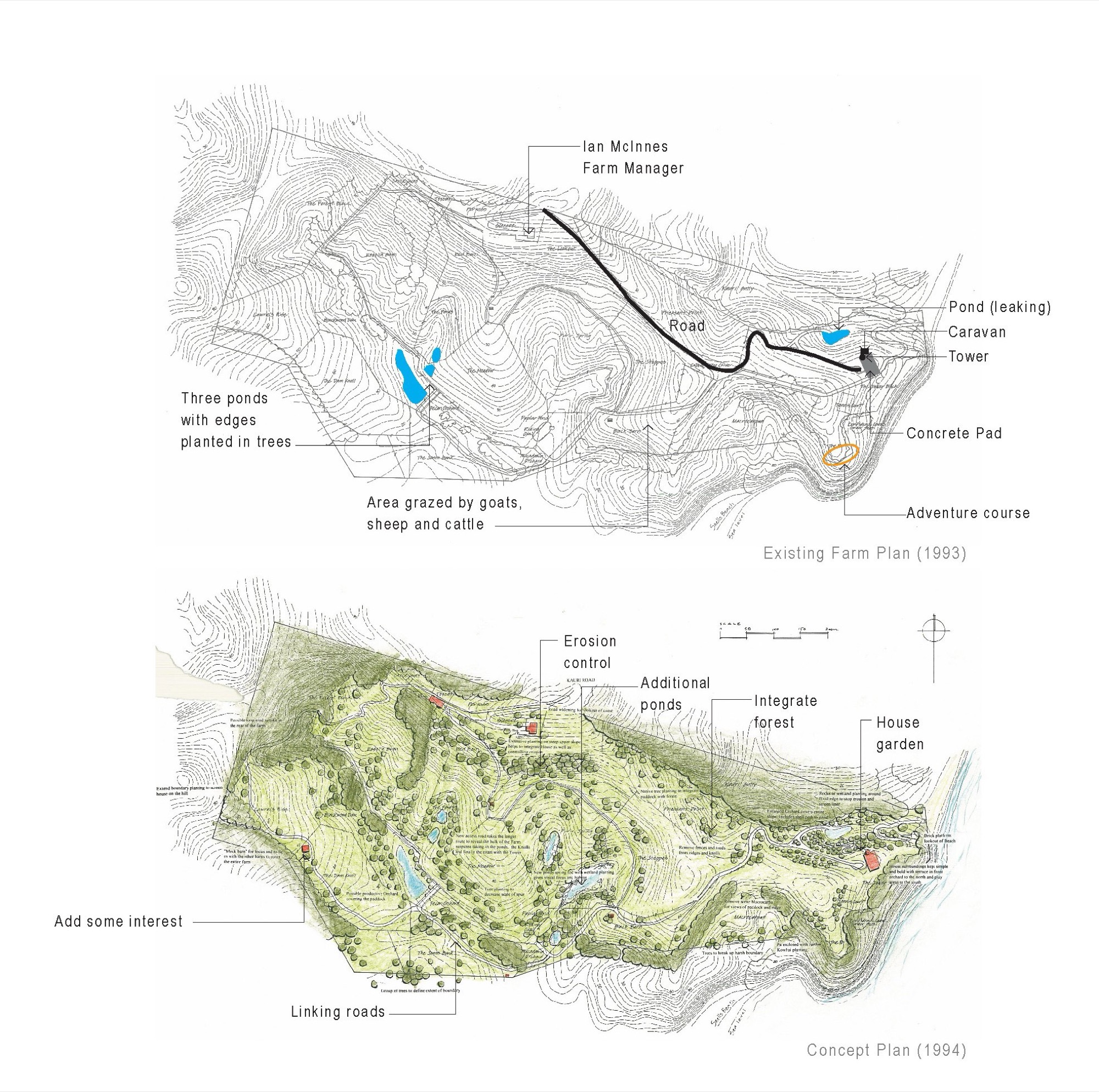
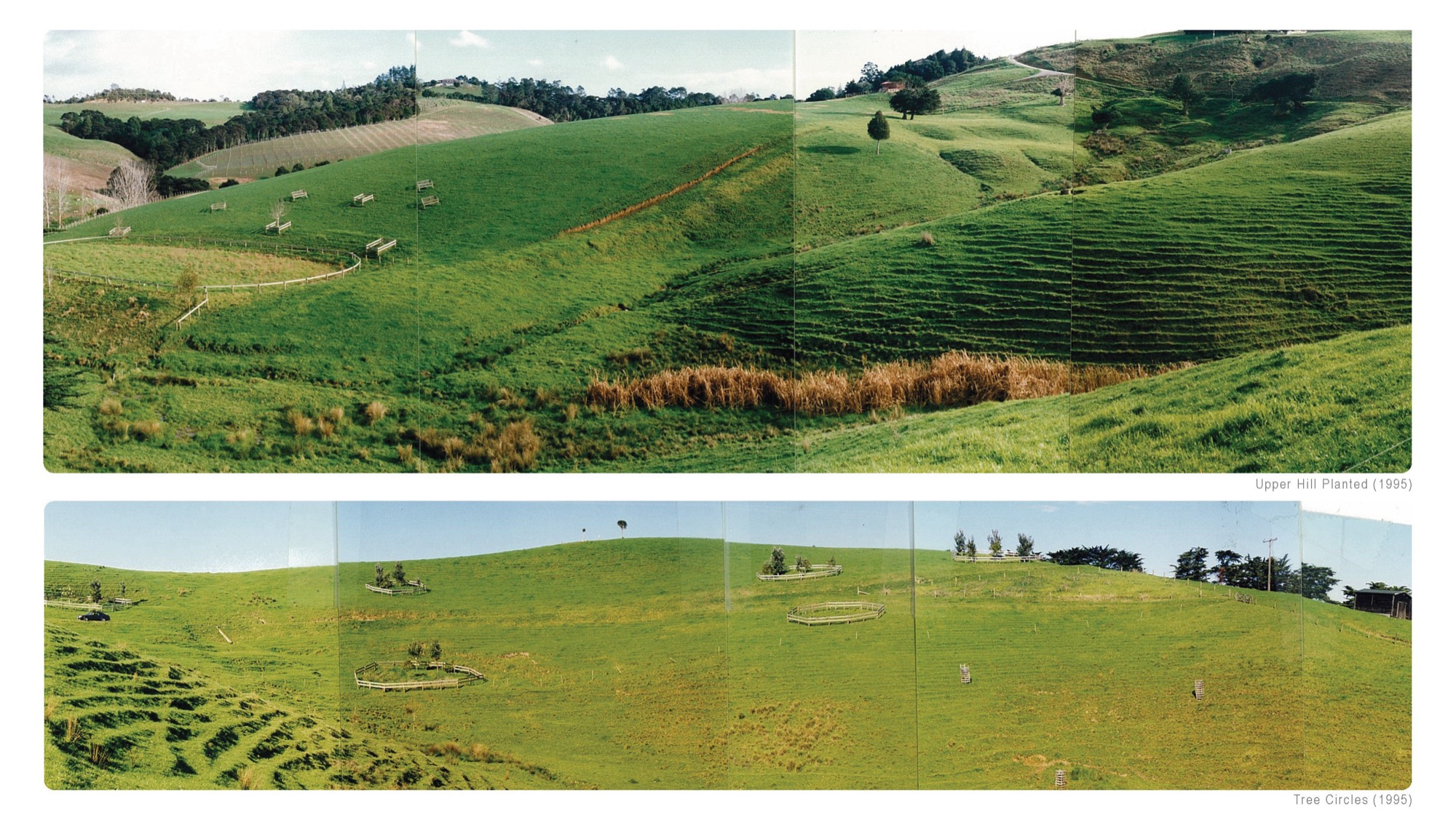
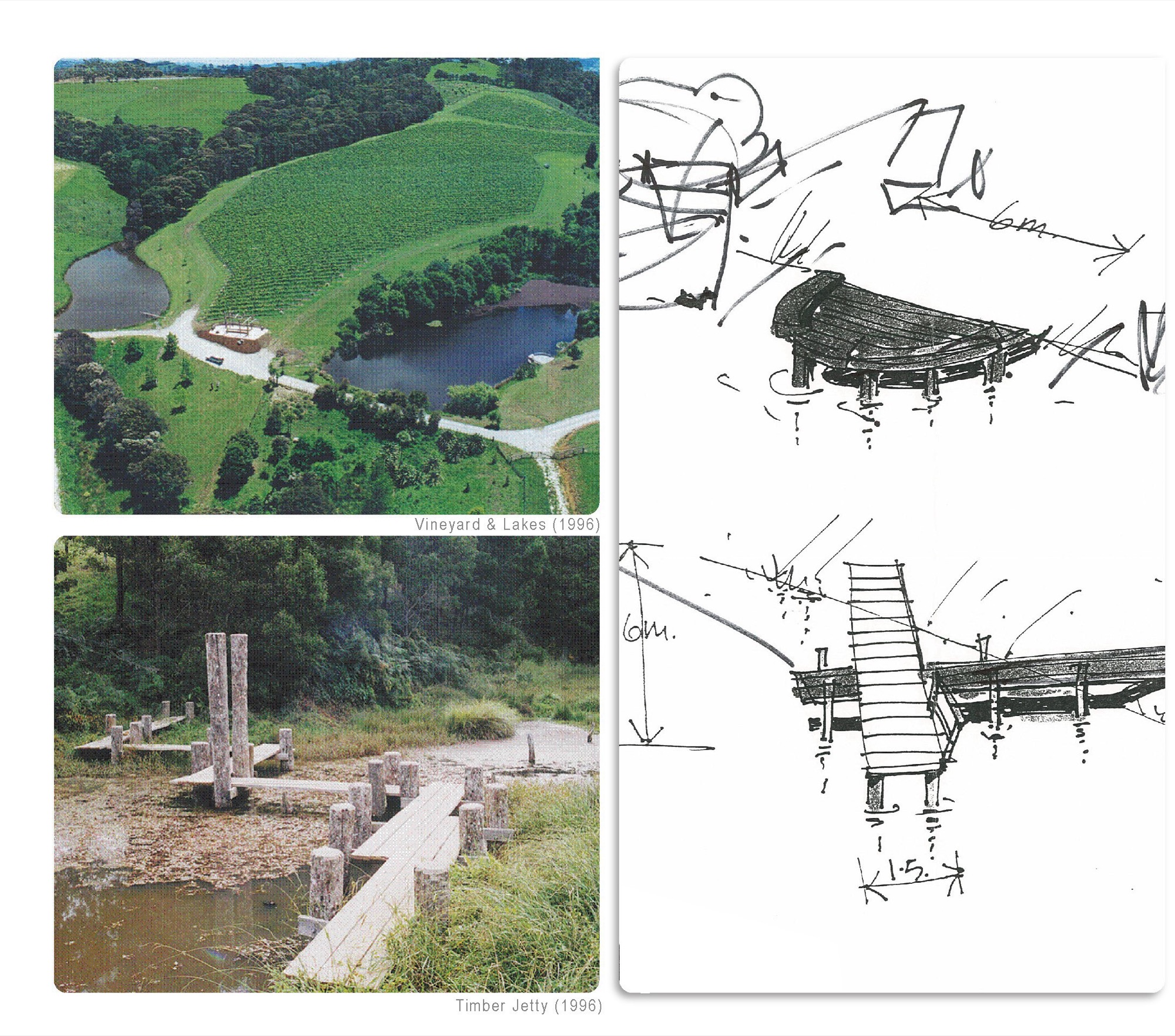
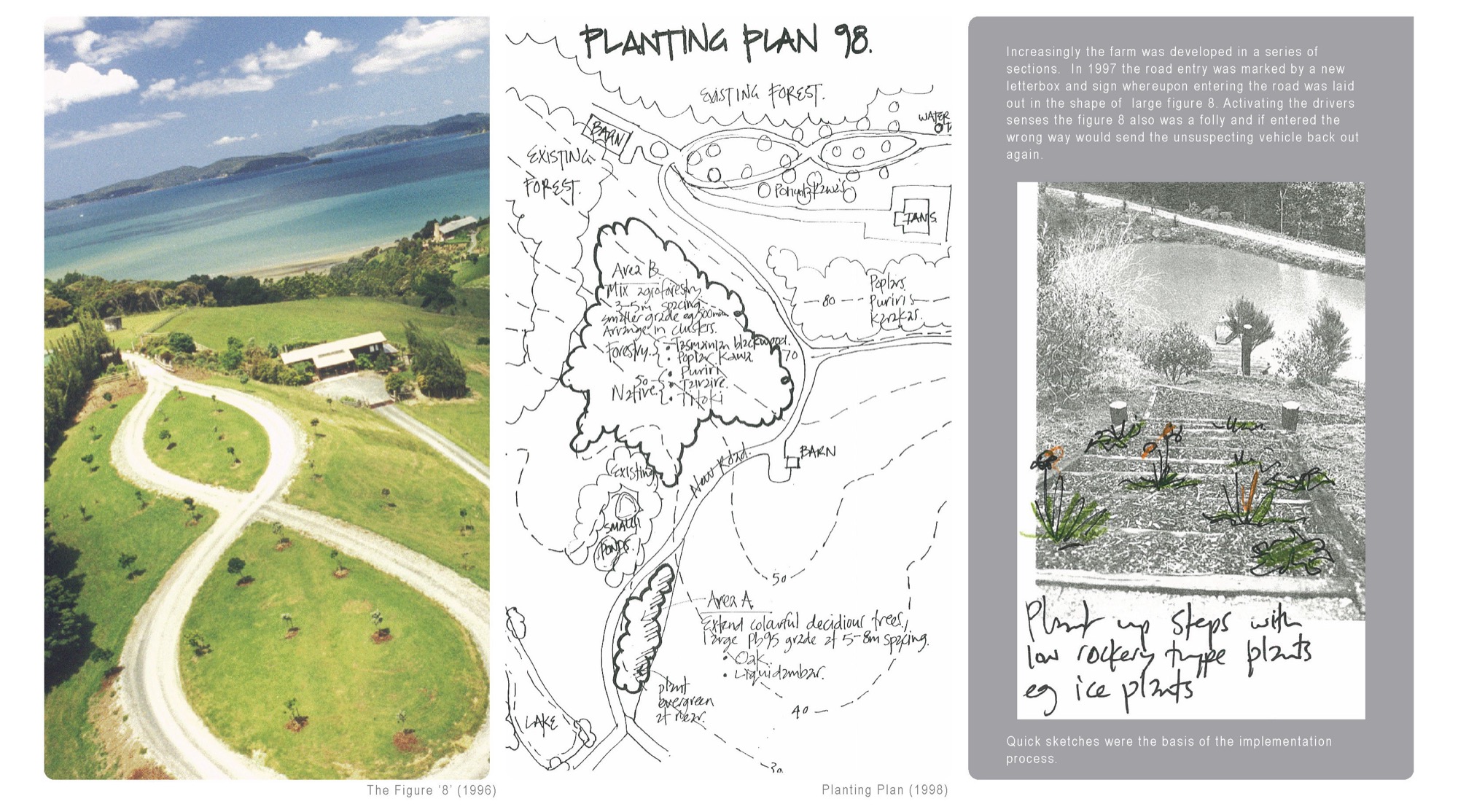
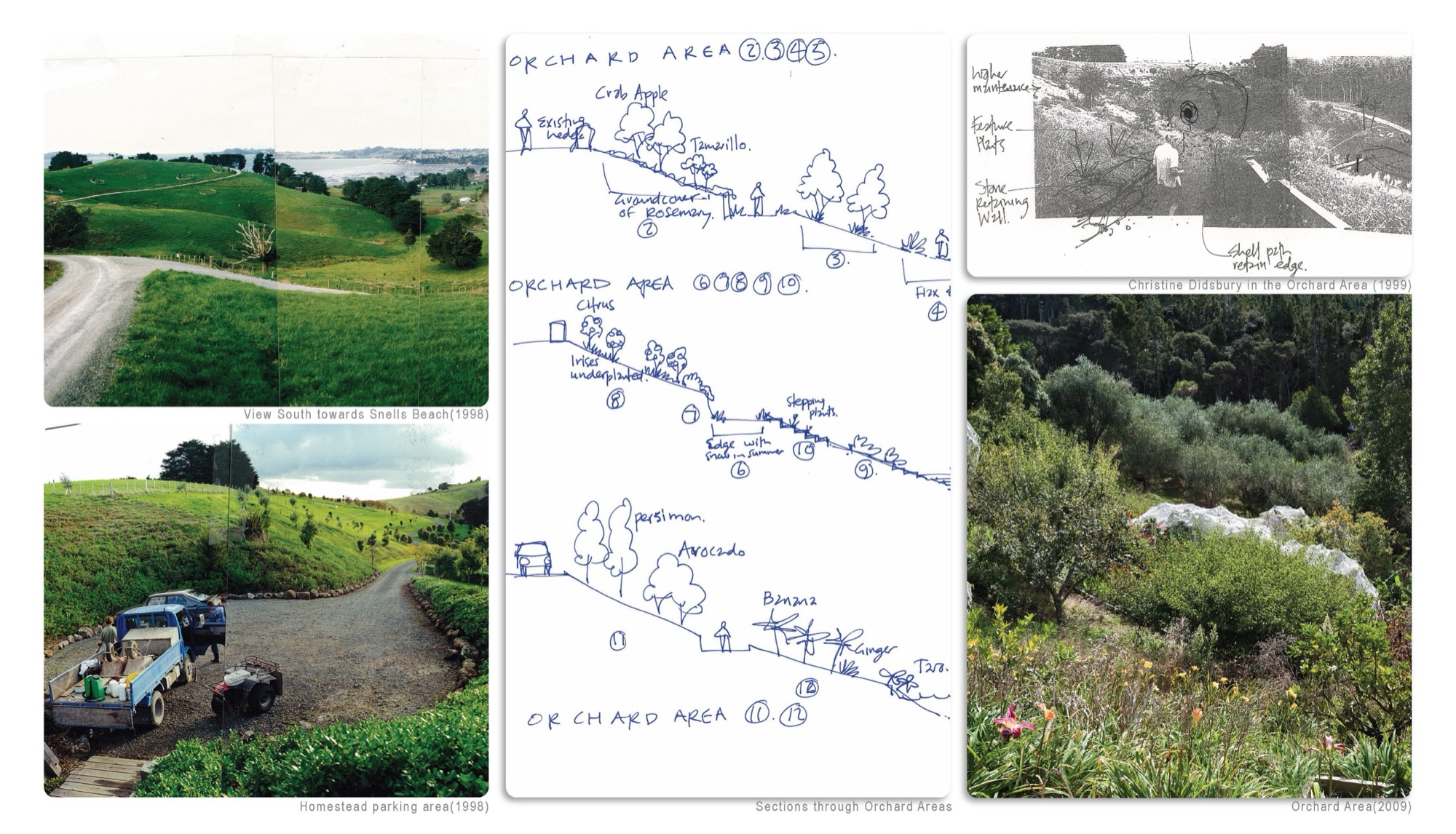
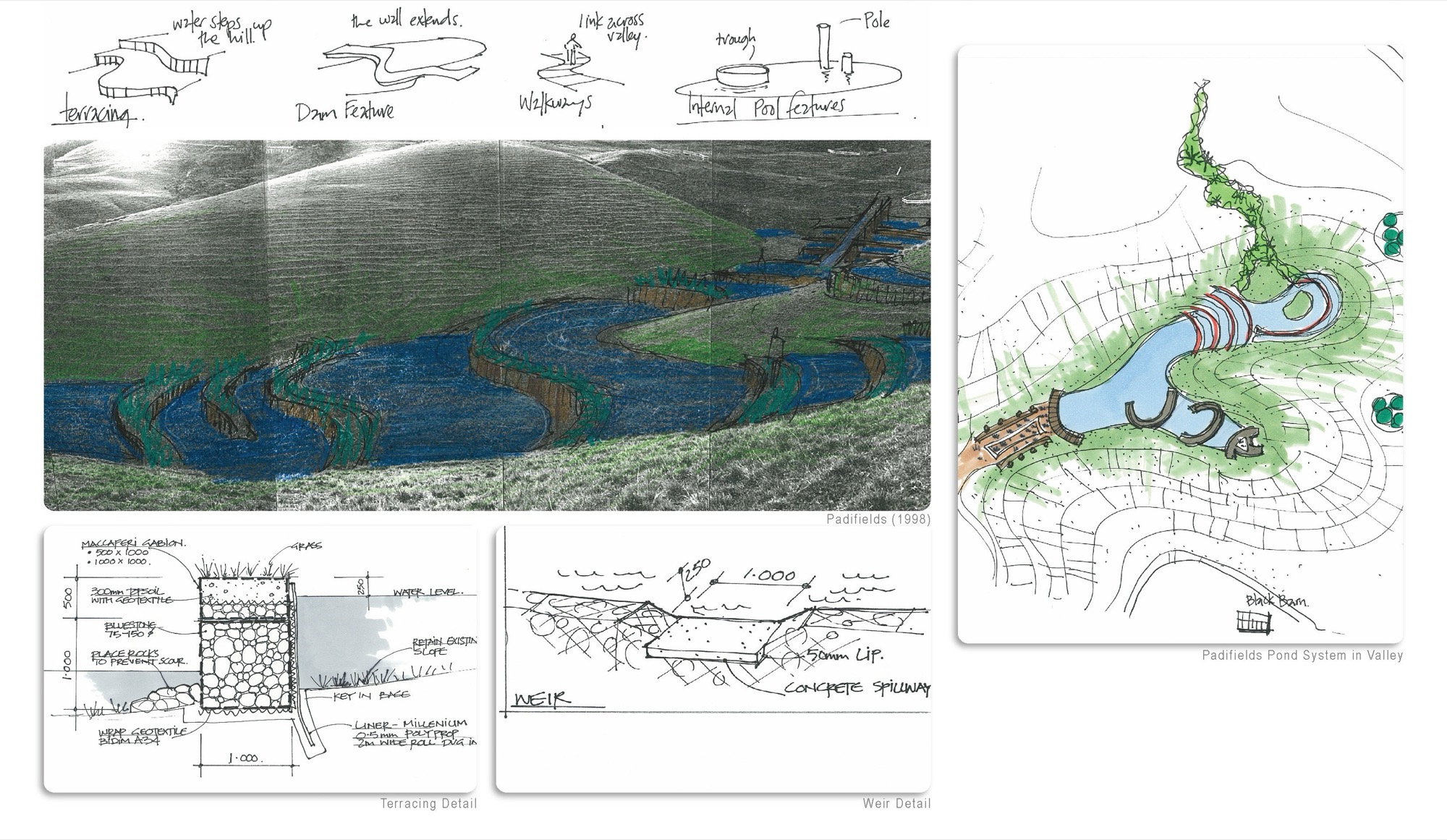
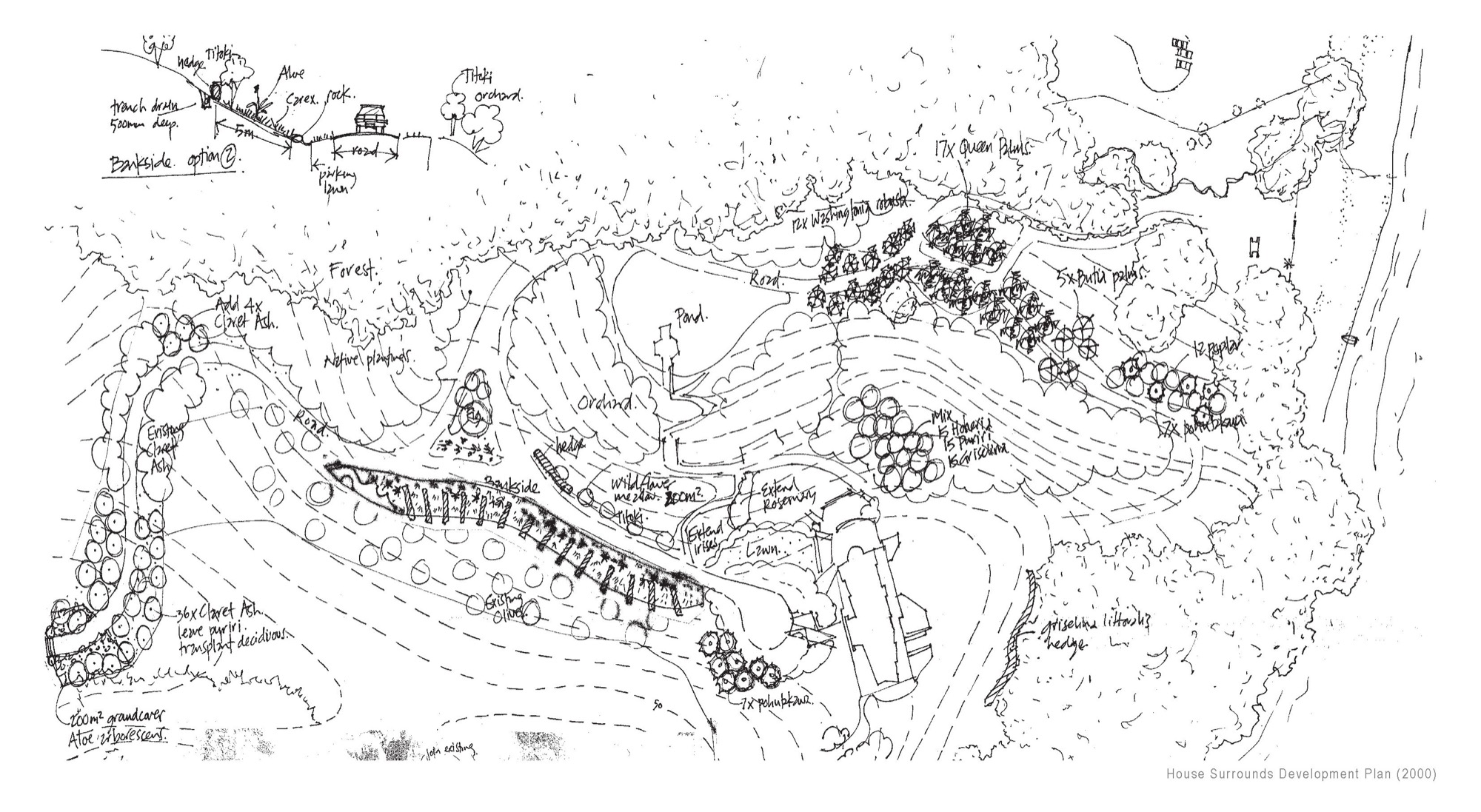
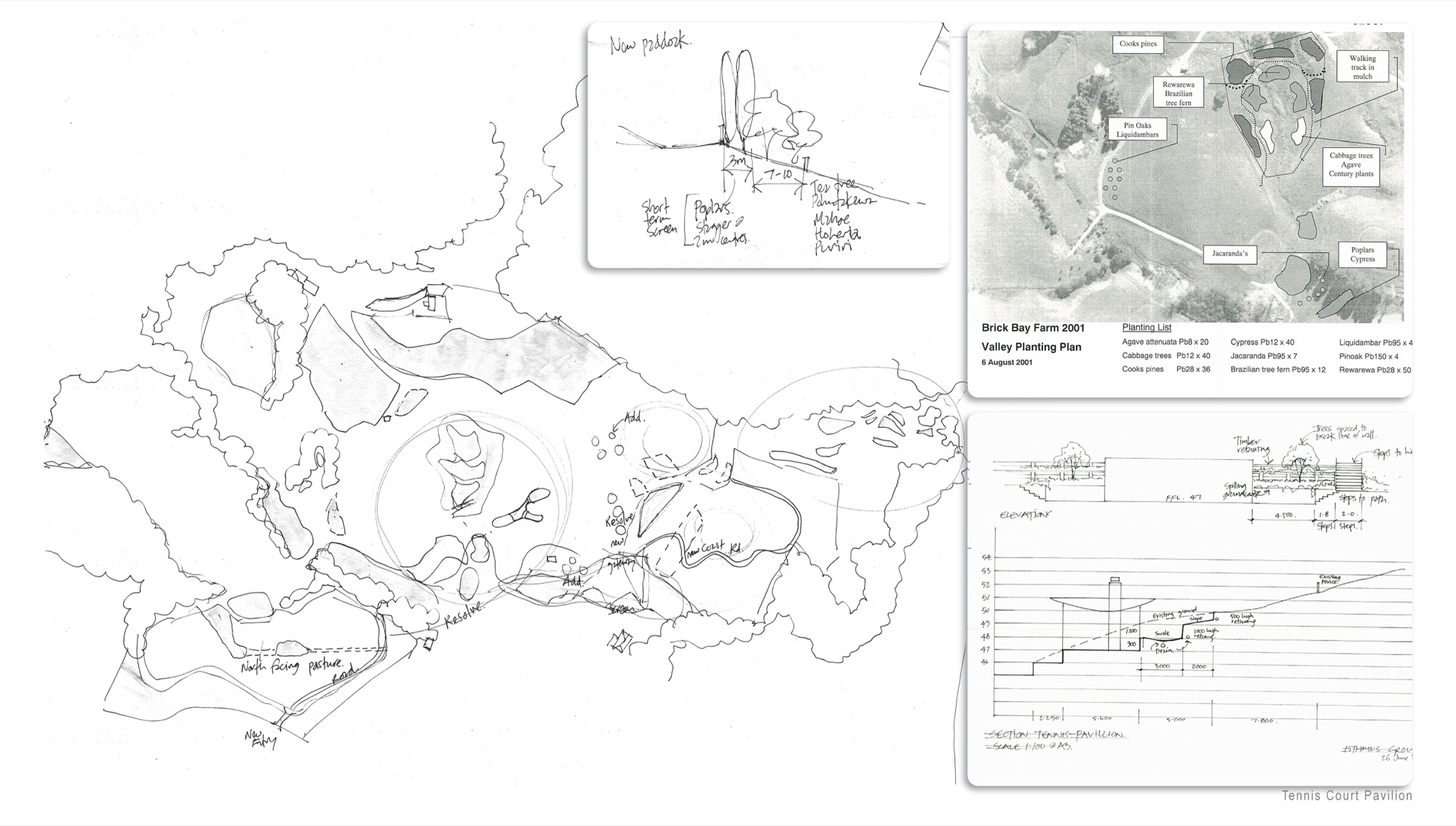
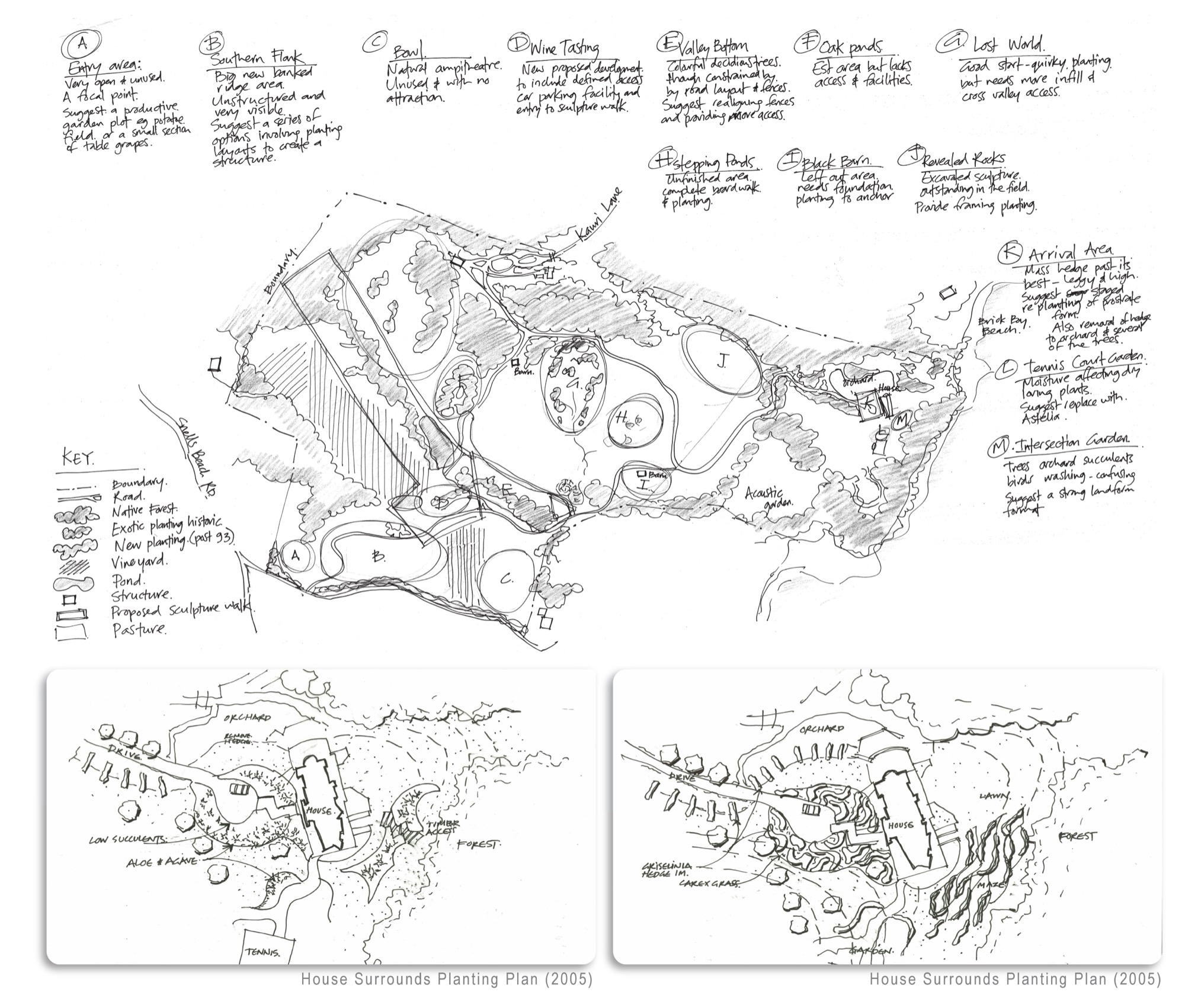
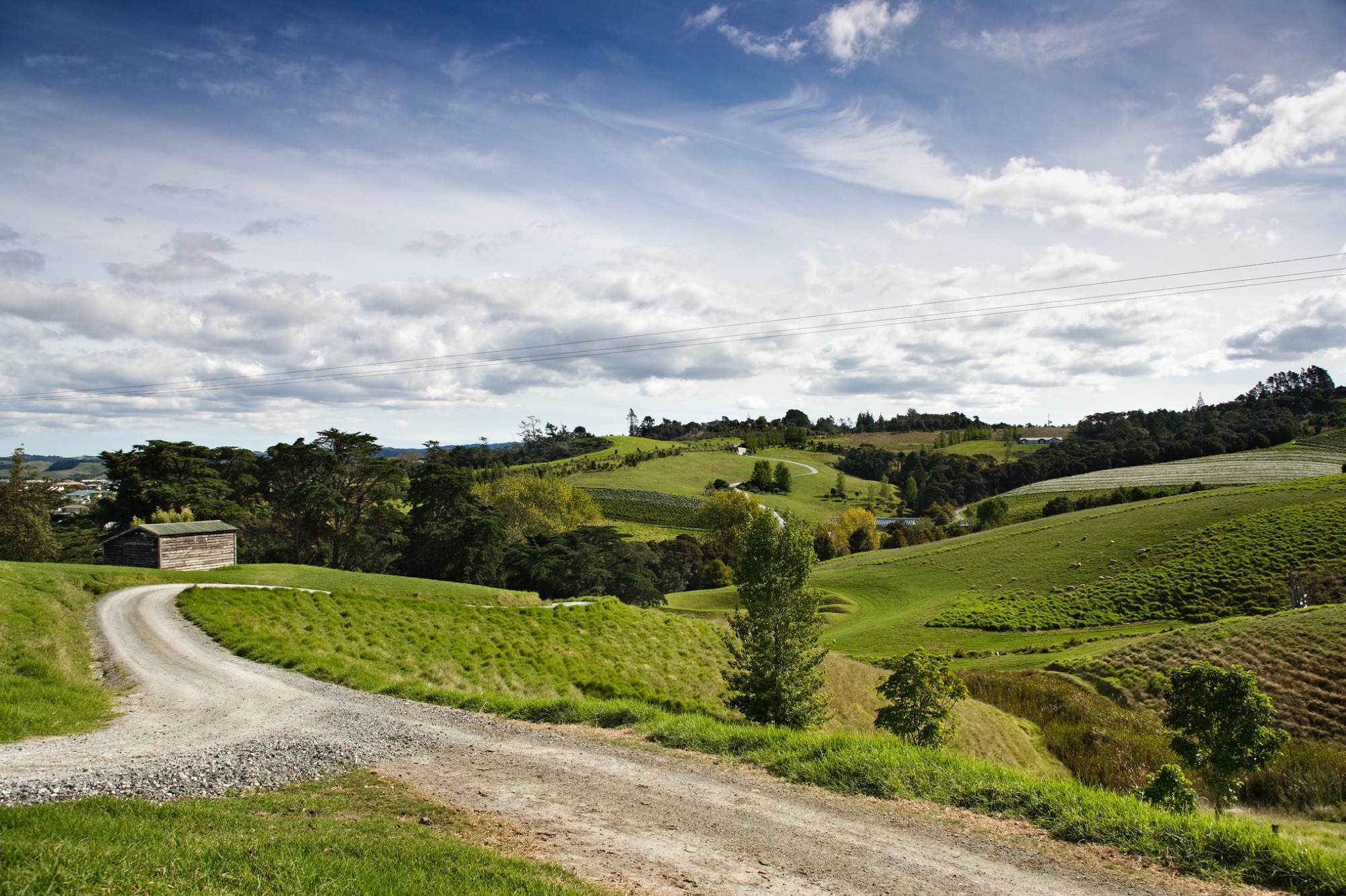
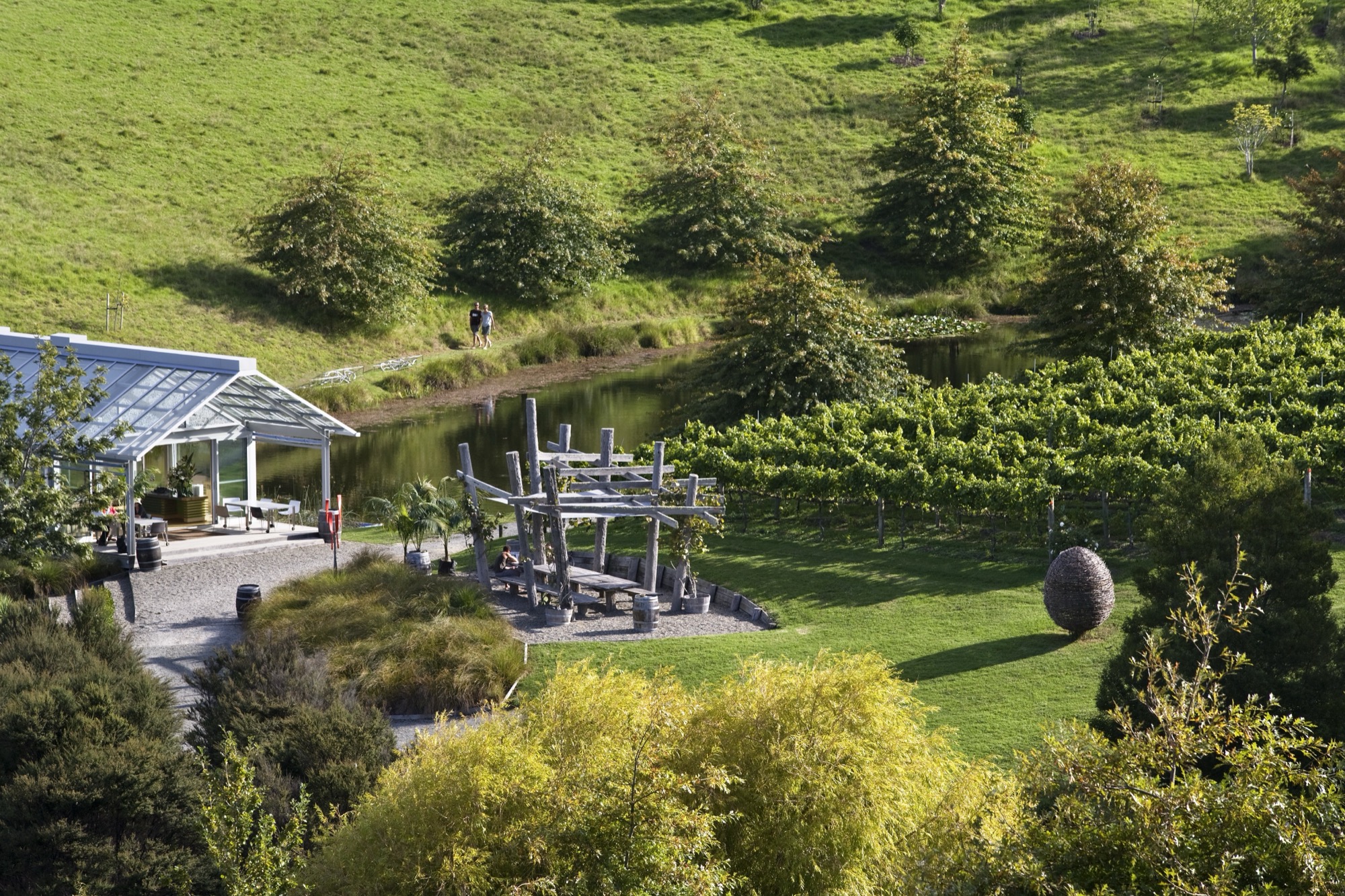
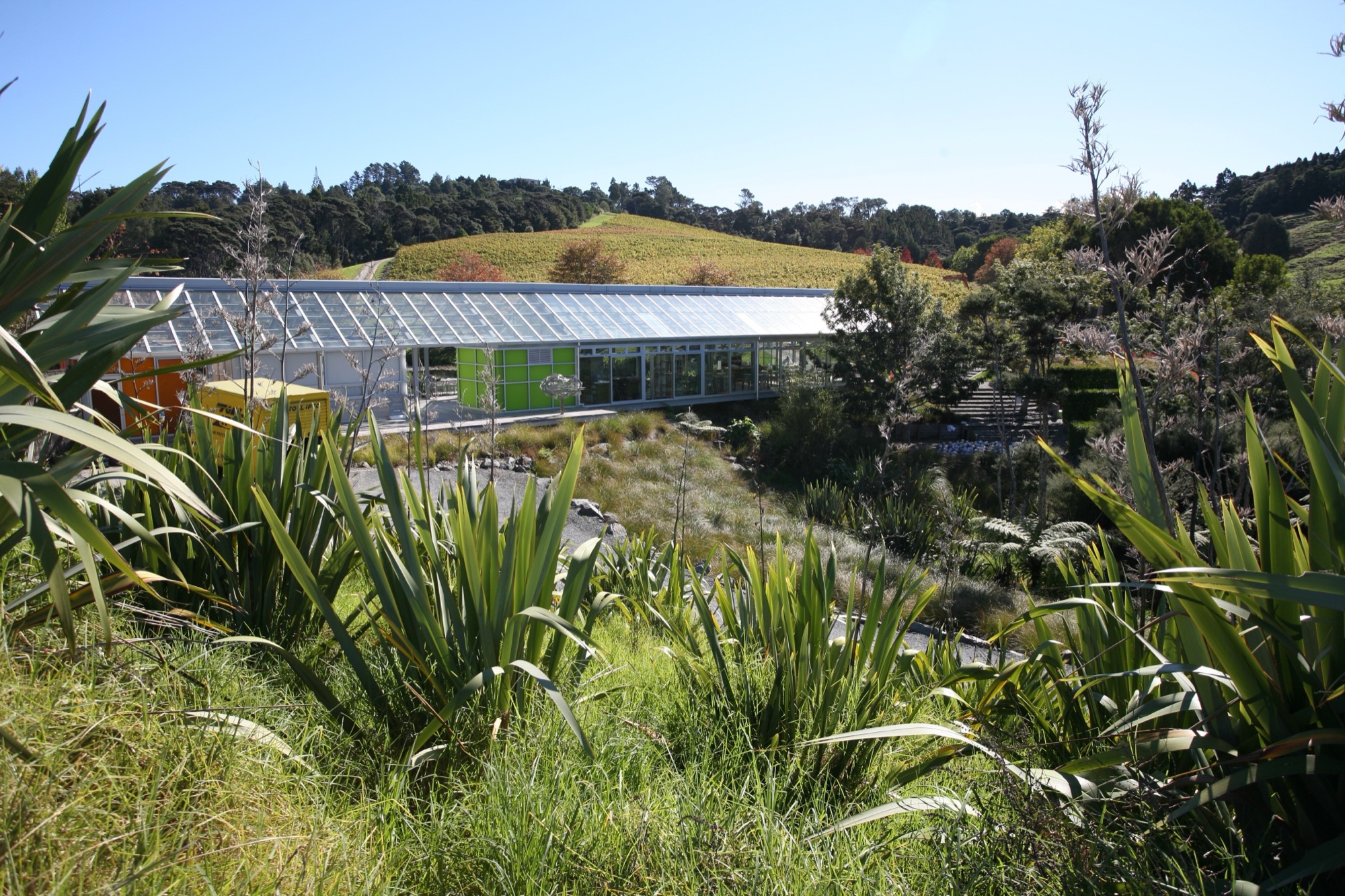
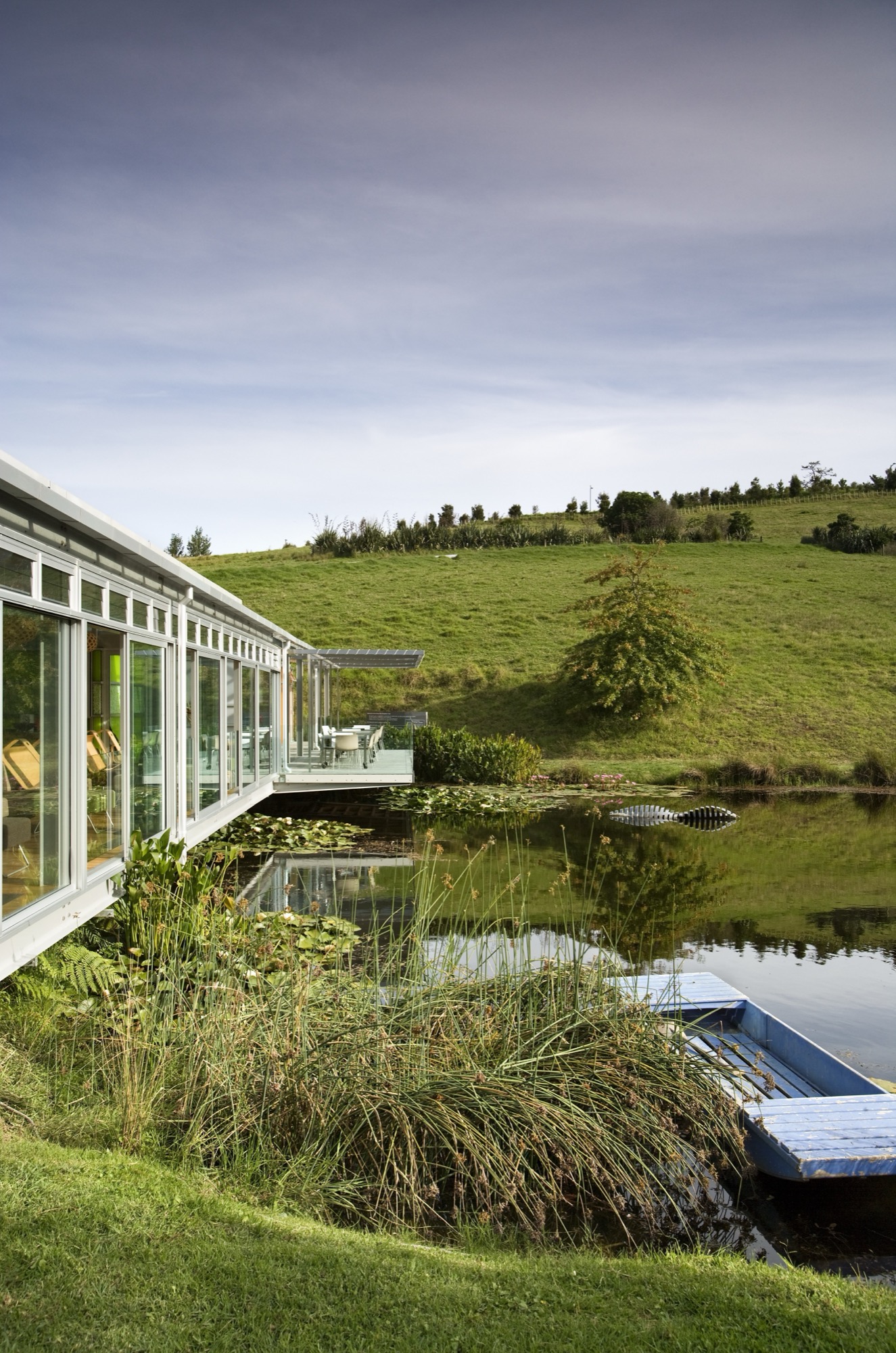
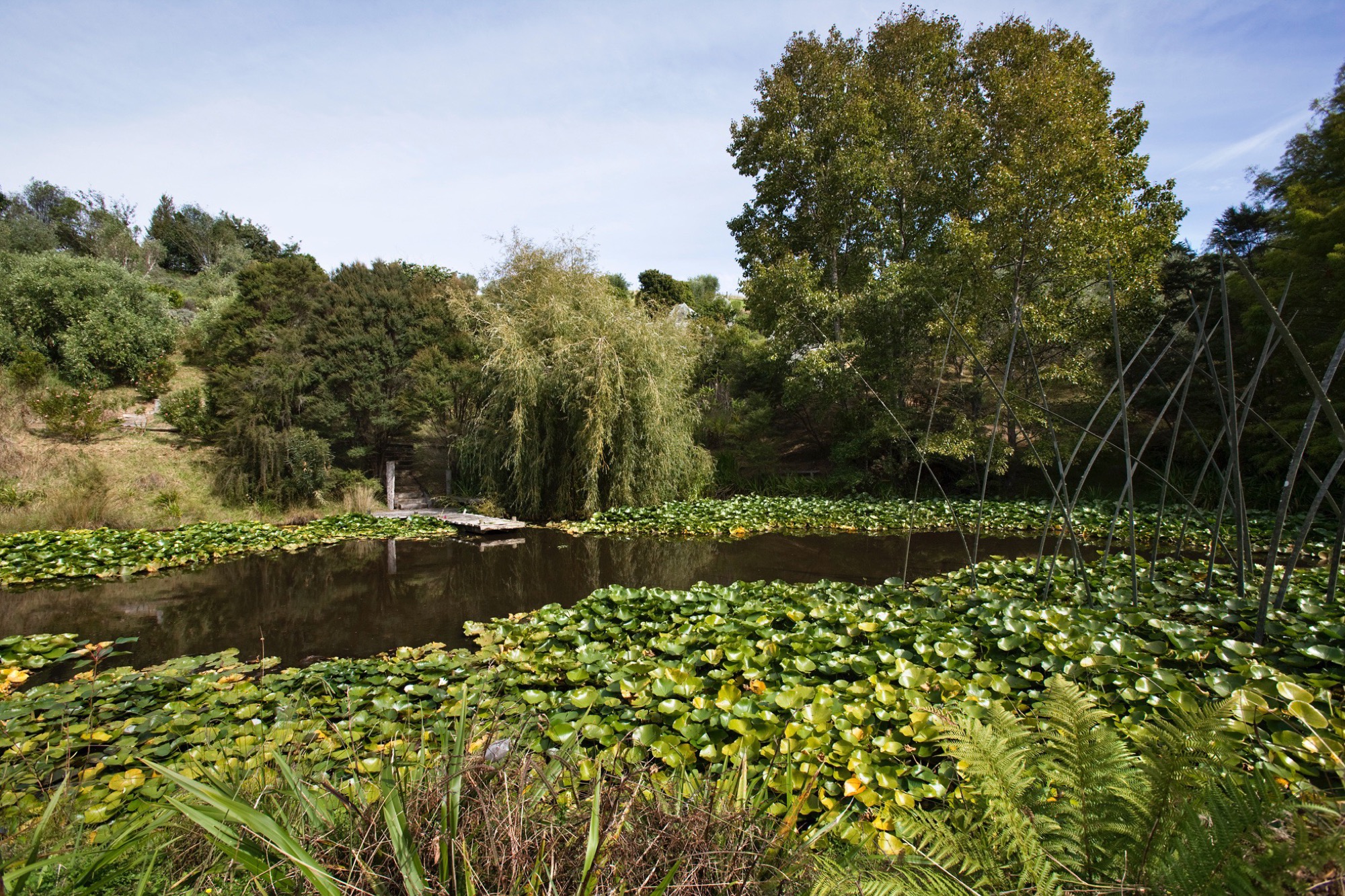
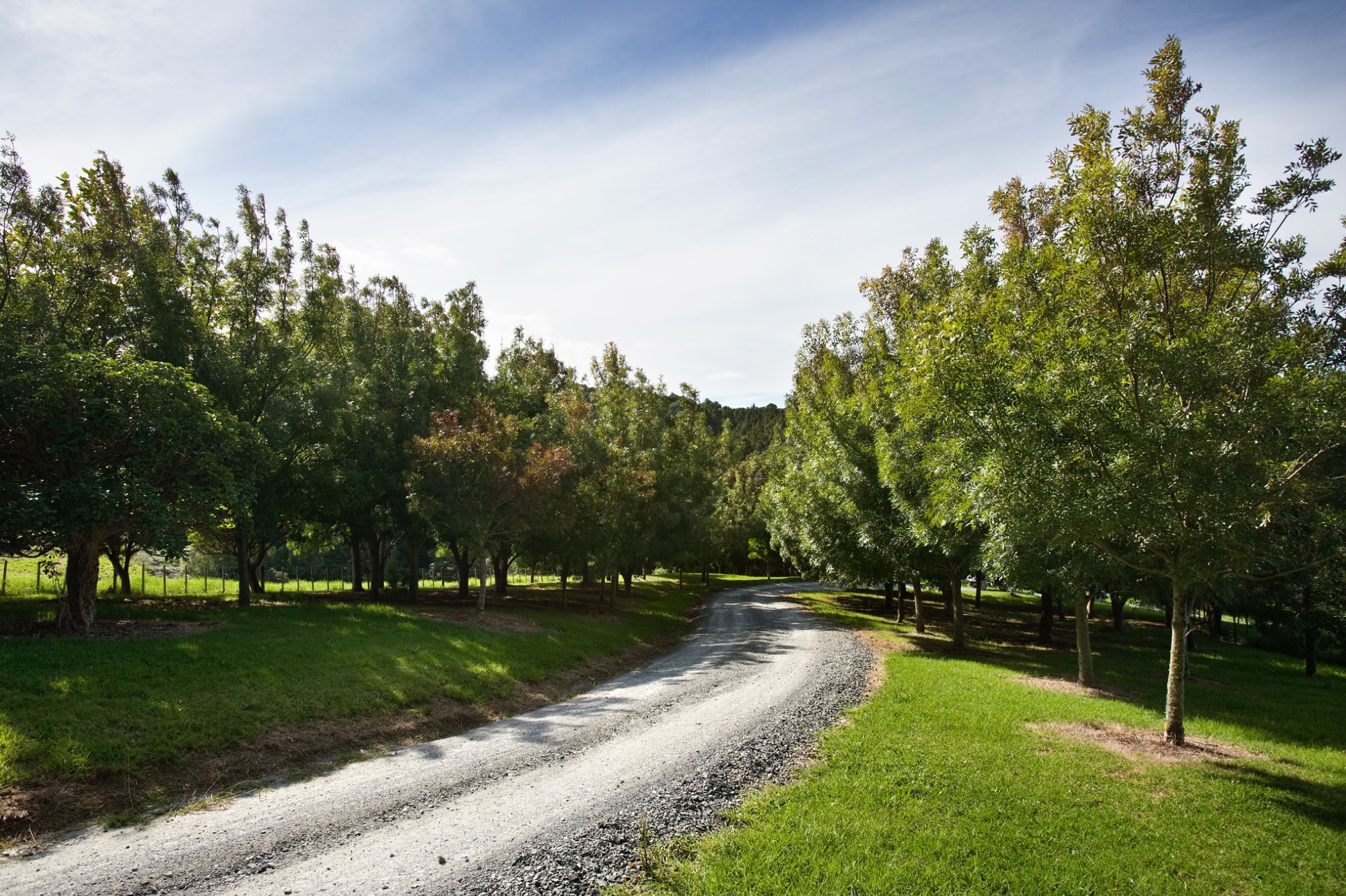
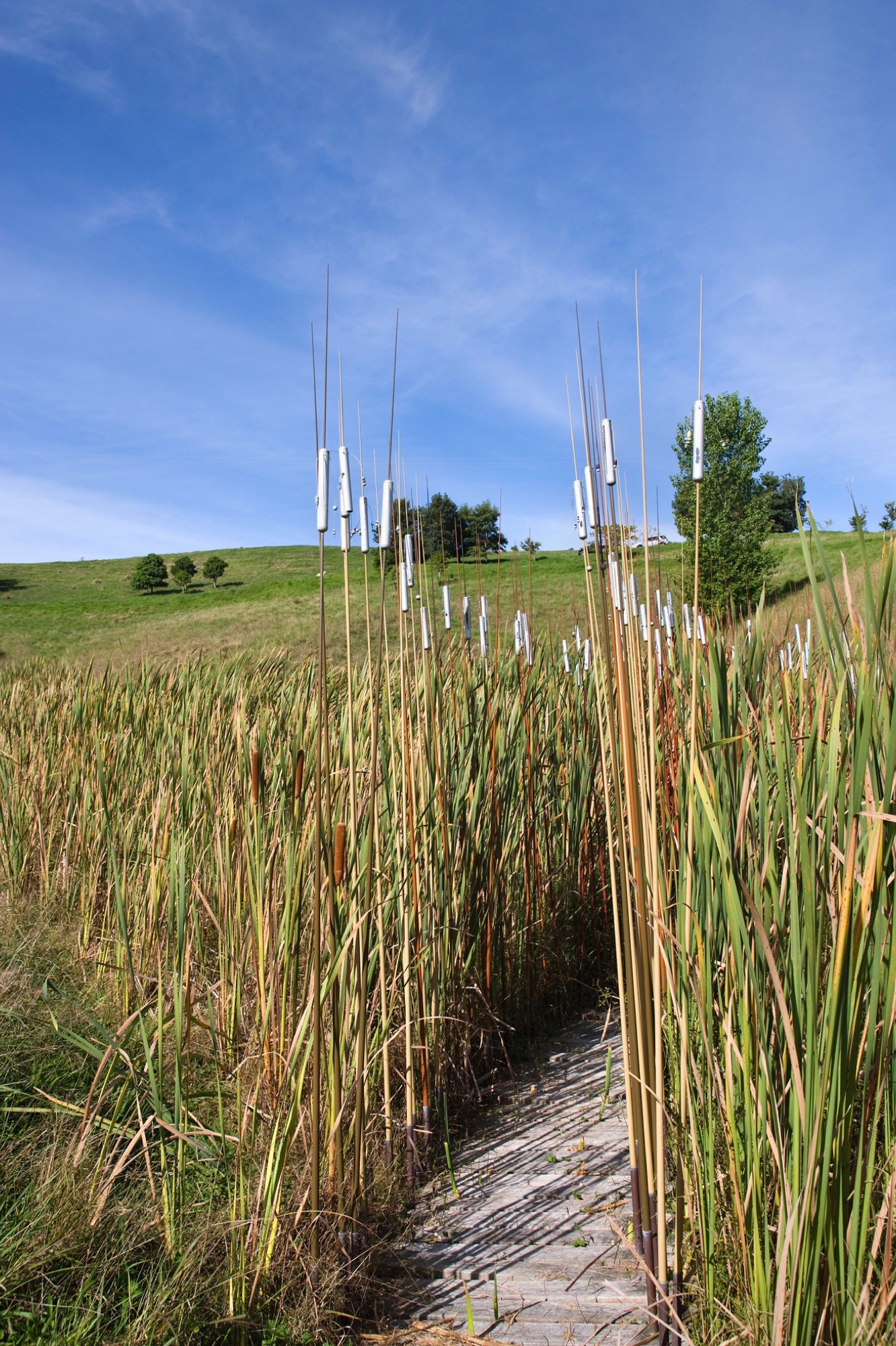
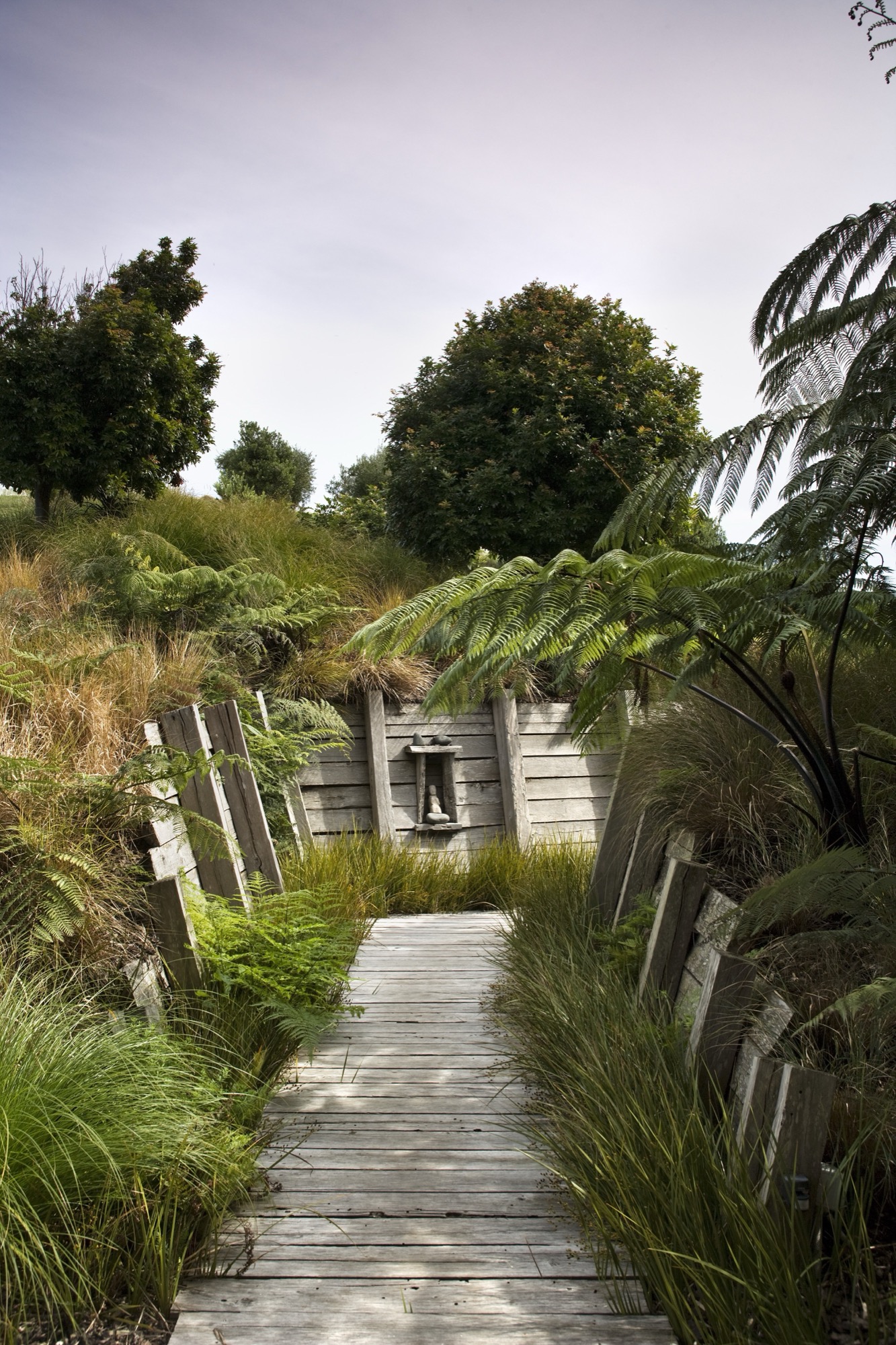
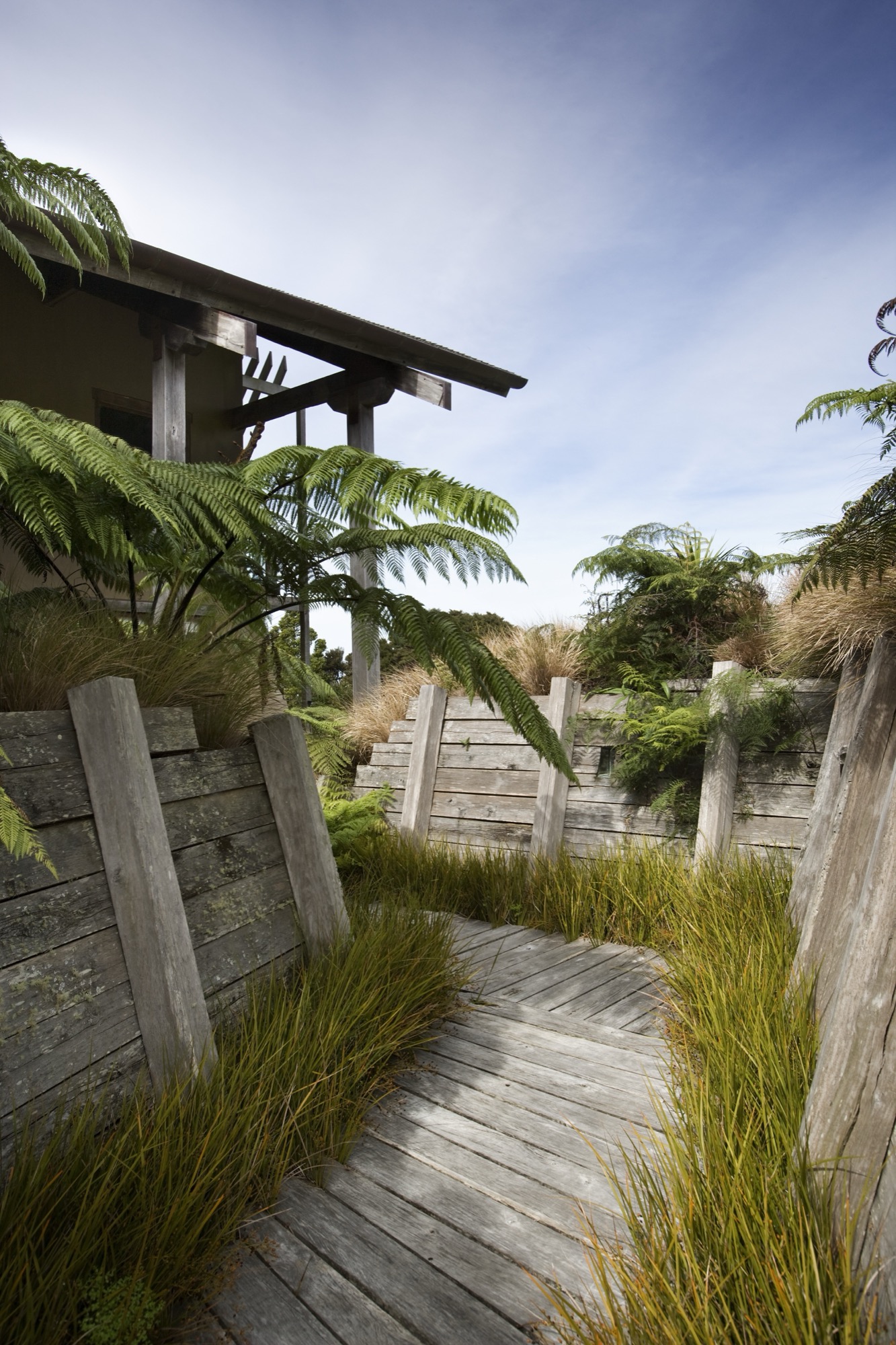
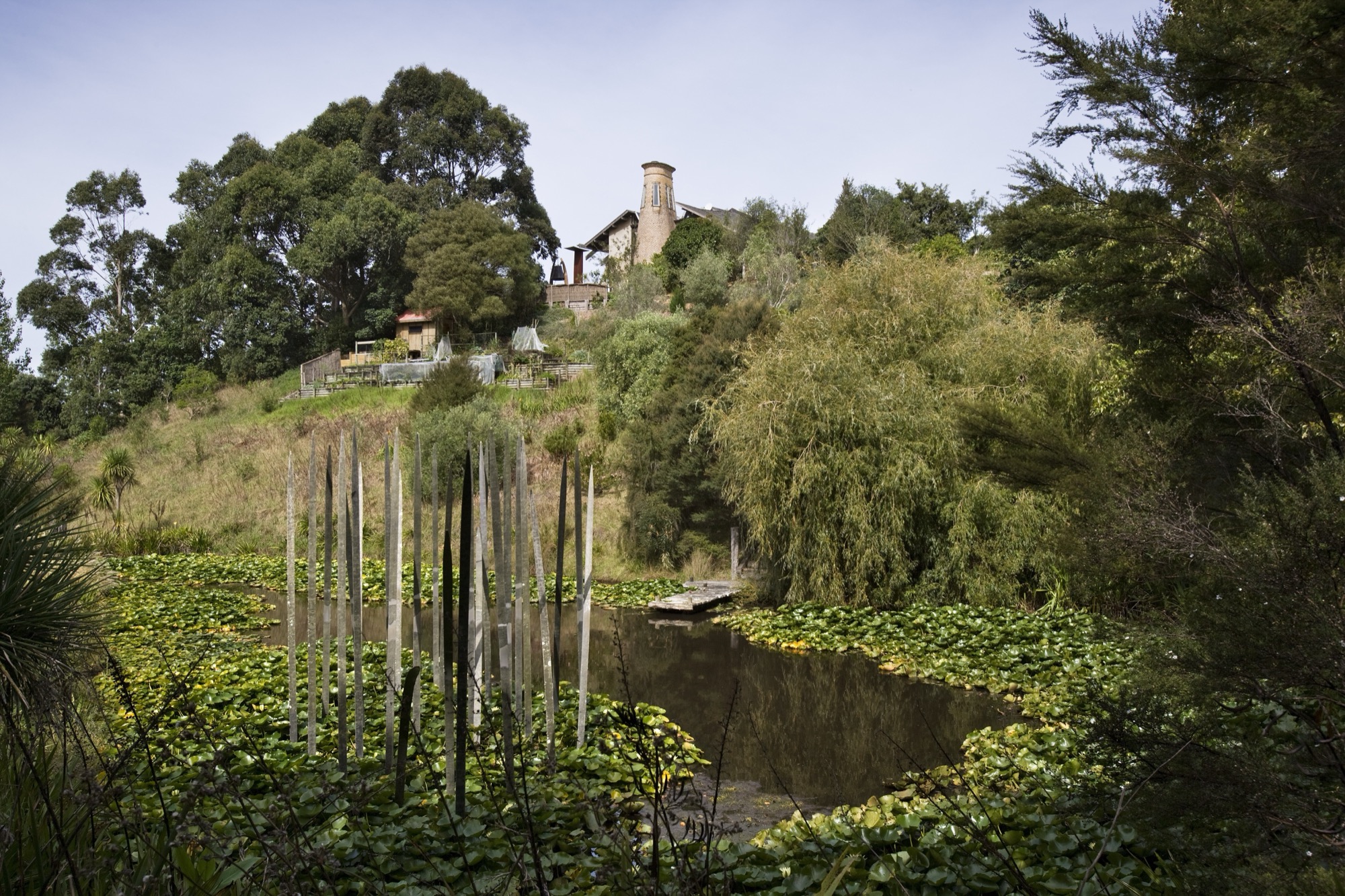
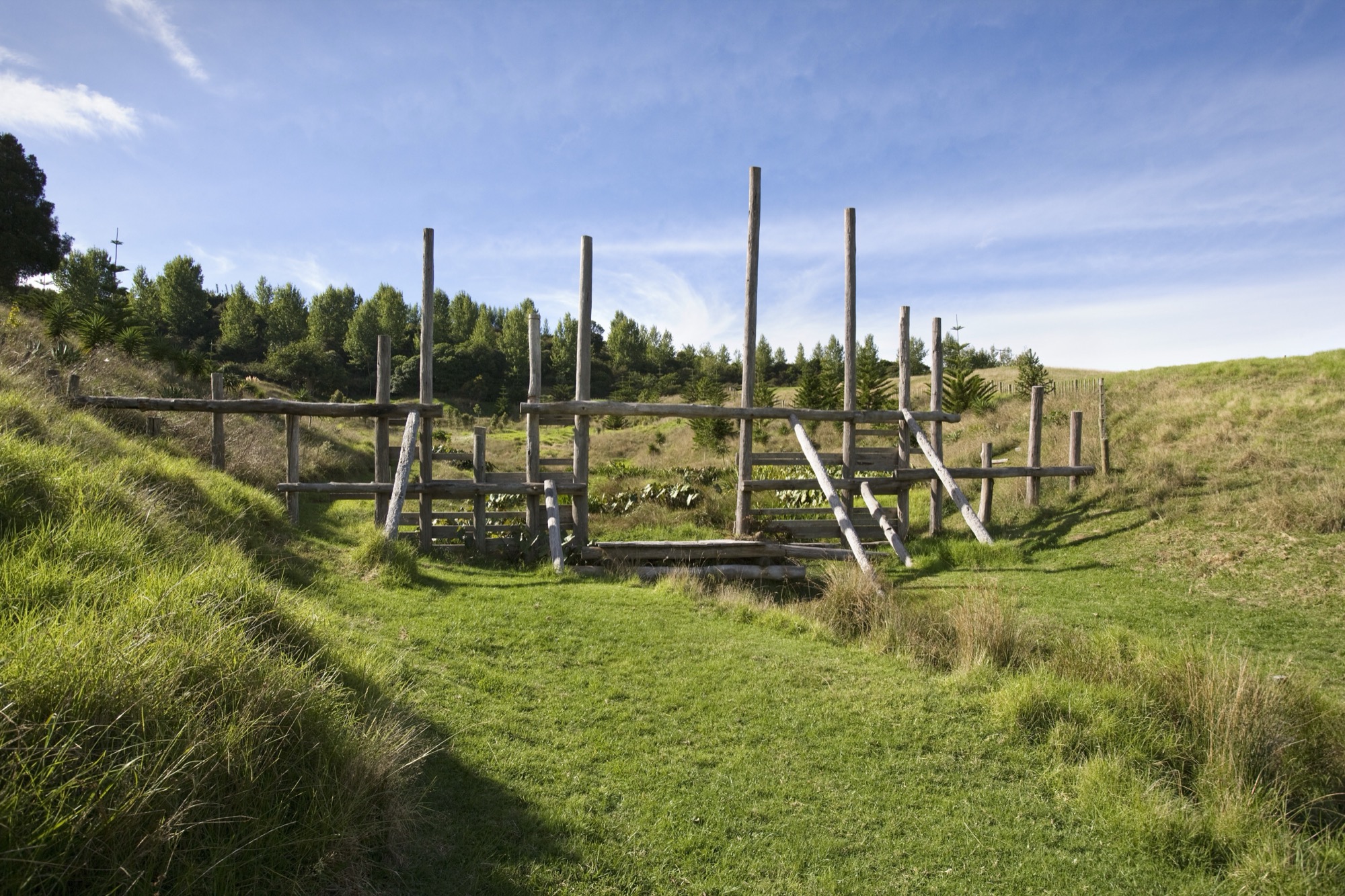
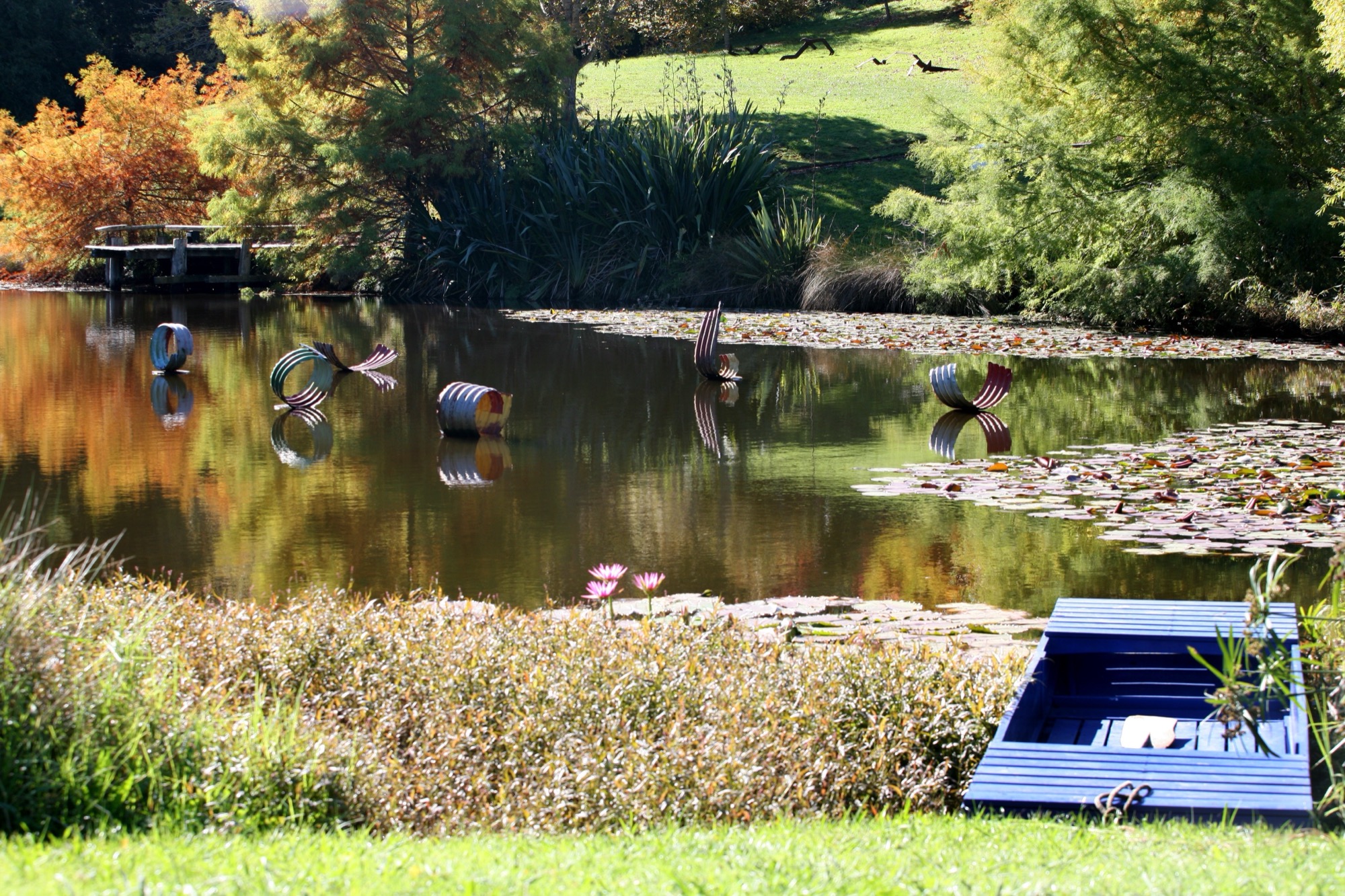
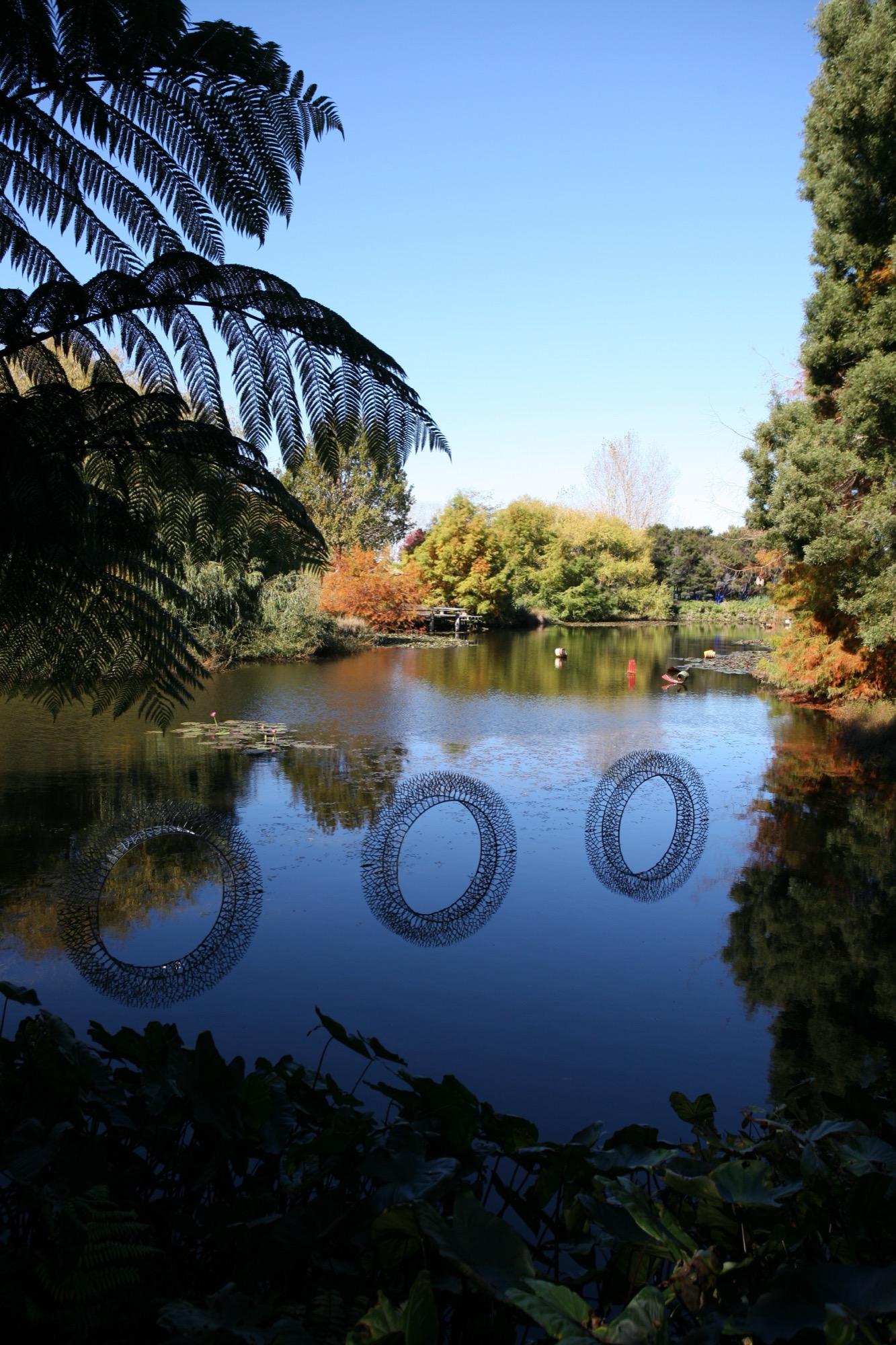
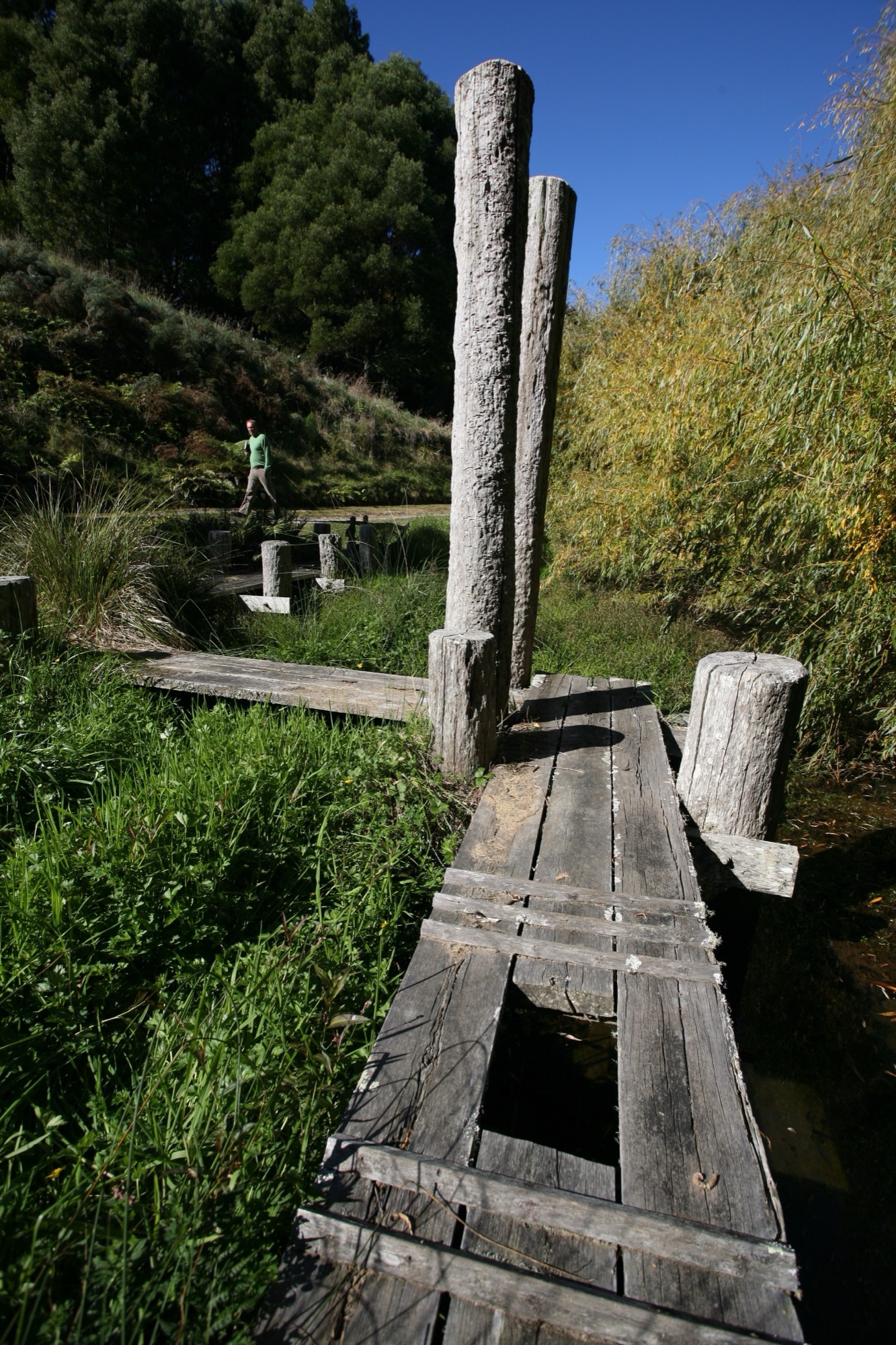
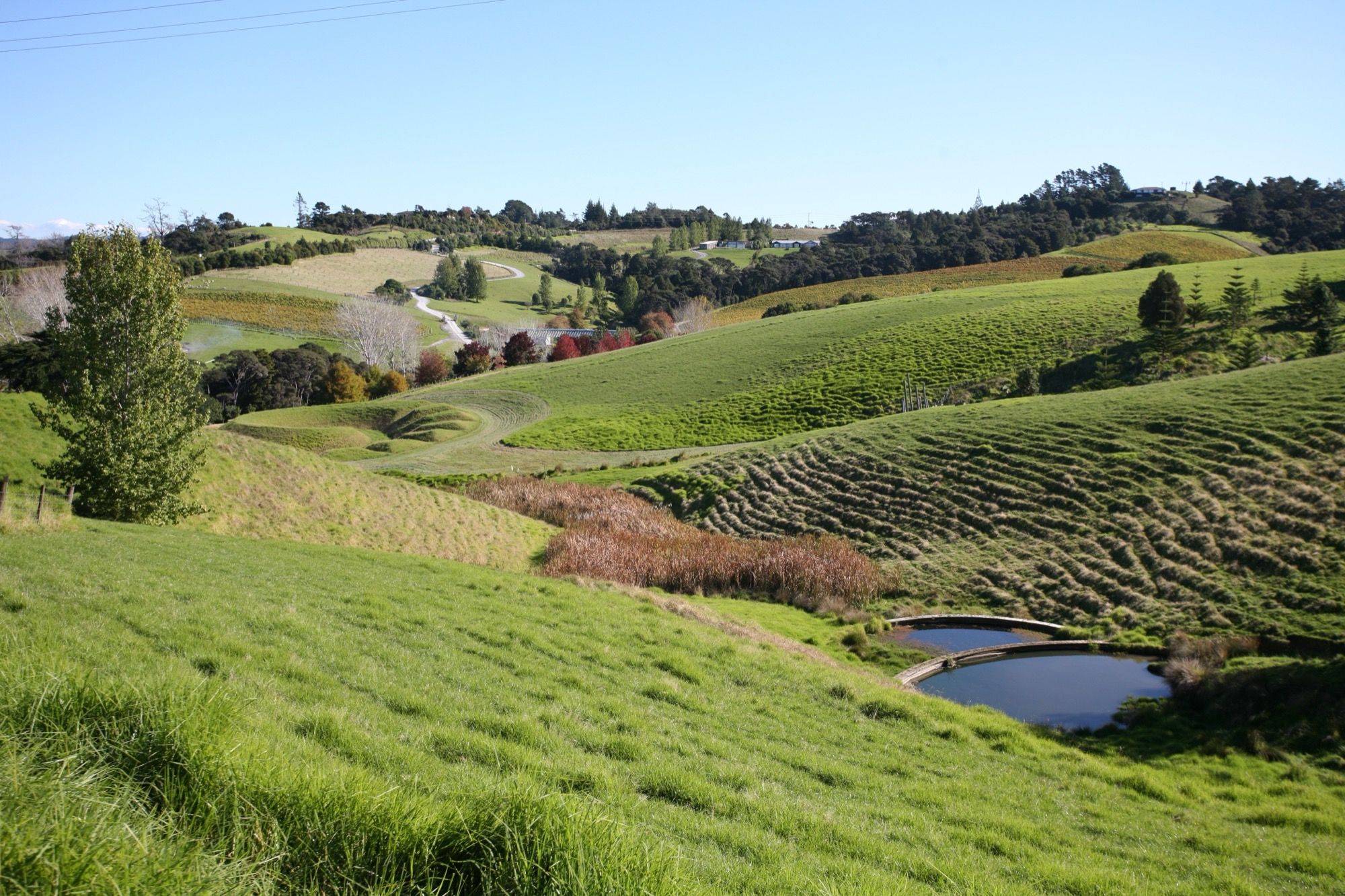
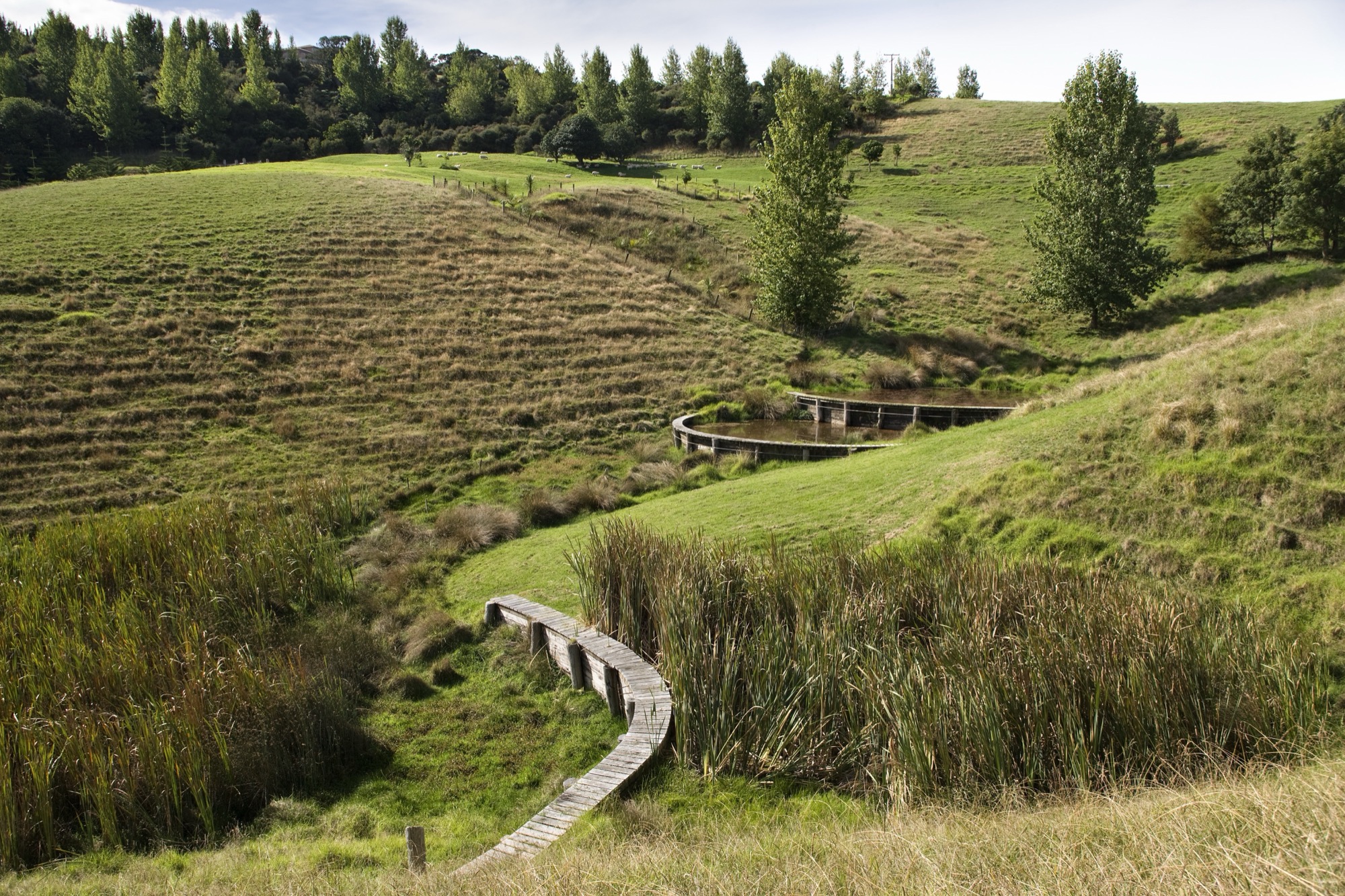
Design Through Time: The first season established the logic that would govern the project for the next fifteen years: address the steepest, most vulnerable ground first. Large sections of south-facing slopes were fenced off and planted in mānuka, pūriri, tairare, karo, and flax, with poplar poles introduced for immediate scale and wind protection. The leaking valley ponds were remade. The existing gravel road was entirely rerouted. Rather than efficiency, Falconer designed for revelation: the road now weaves deep into the centre of the farm, drawing visitors into the landscape before the coast appears. At the entry, a figure-of-eight loop completed the choreography, a spatial move rooted in the English serpentine tradition, and one that had an immediate practical effect: a driver entering the wrong way was automatically returned to the road.
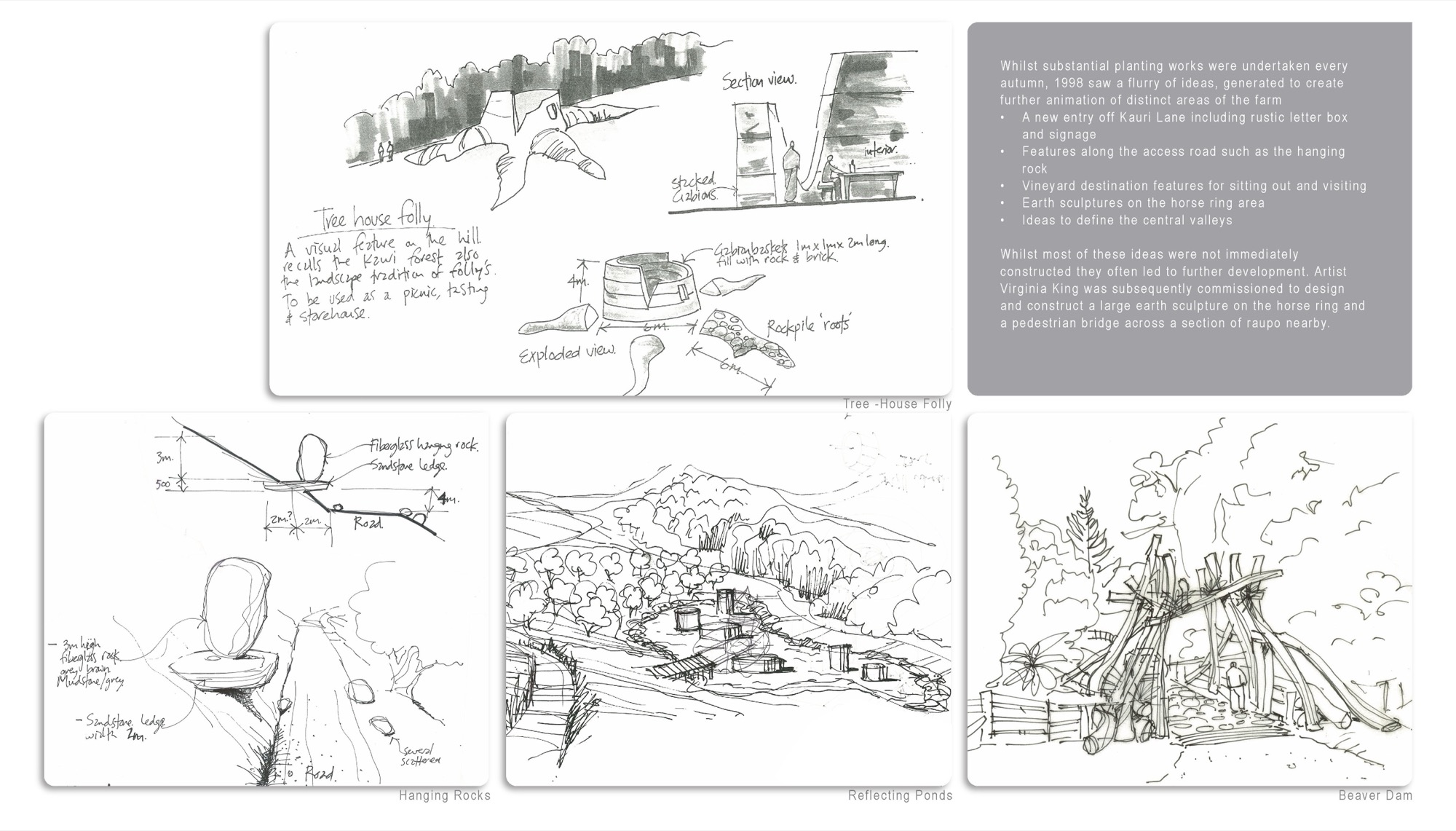
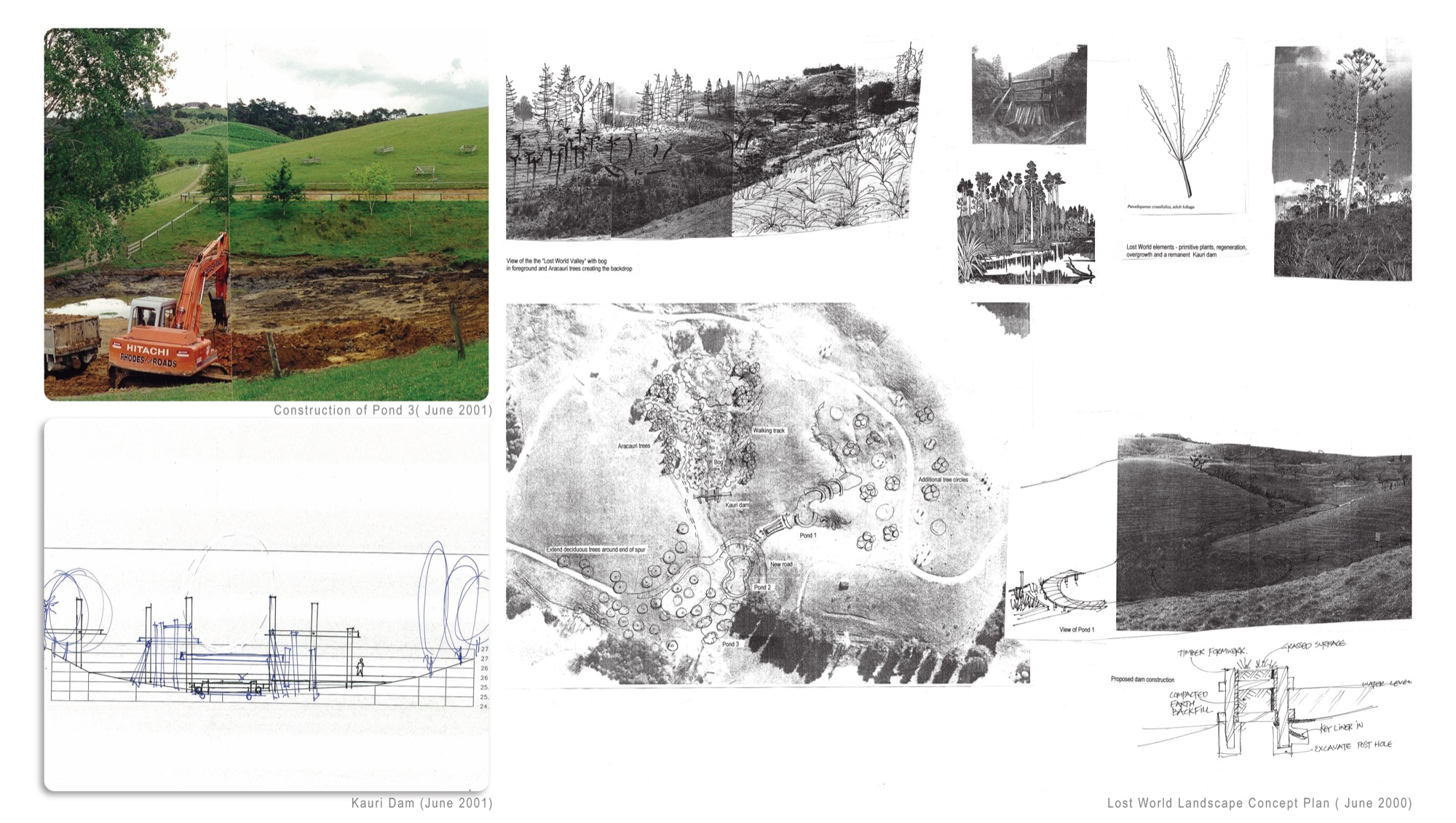
Each January, designer and client met to set the year’s strategy. Sketches developed in three dimensions; planting lists were implemented each autumn. As the planting established, ambitions grew. A boutique vineyard was introduced on the western section experimenting with Pinot Gris. Around the house, an orchard of olive trees, citrus, bananas, passionfruit, and avocados took shape, a direct invocation of the ferme ornée, productive and beautiful in the same gesture. The valley systems, wet, steep, and resistant, became the most ambitious spaces. The broader valley became the ‘Lost World’: planted in araucarias and prehistoric-foliaged species evoking the site’s kauri past, a landscape that reads as primordial rather than planted. At its base, an abstract Kauri dam was constructed , a structure that by the time it was complete, stood twice as large as anyone had anticipated. The spiralling earthwork hill that anchors the central valley was proposed by Falconer in 2000 and completed by artist Virginia King. In 2002 a further 60 acres were added. A public sculpture walk opened in 2004. The farm had become a public place without ceasing to be a farm. A 2009 development plan presented opportunities for future extended trails, new water bodies, retrofitted barns, vineyard extensions – a deliberate act of incompleteness.
A Landscape That Keeps Generating: Three decades on, the maturity of that original framework is measurable. Tens of thousands of native trees and plants have been established across the property reforesting gullies, regenerating wetlands, and reclaiming eroding slopes. The kauri forest now closes over the trail. Kerērū, tūī, kākā, and pīwakawaka have returned to what was eroded pasture. The 2km sculpture trail features 60+ rotating works curated by the Brick Bay Sculpture Trust. Since 2016, the annual Brick Bay Folly competition has placed experimental structures in the landscape; the 2025 edition engaged directly with the tradition of Māori hākari stages, continuing the project’s long conversation with the cultural history embedded in the site. What the original design made possible was not a finished place but a framework capable of receiving use, growth, and meaning over time, and that capacity has not diminished.
Credits – Client: Richard and Christine Didsbury/ Architecture: Noel Lane Architects (Glasshouse)/ Sculpture Walk: Anna Didsbury, Brick Bay Sculpture Trust/ Artists: Virginia King, Chris Booth, Phil Dadson
-36.40645115290656, 174.72322172940991
75649


LILA 2026 Sponsor