KWANGYA FOREST
choshinsung.com/
2026 Public Projects / South Korea / Built in 2025 /

![Jangpyeong Neighborhood Park is located in Dongdaemun-gu, Seoul, embedded between large apartment complexes and connected to the nearby Jungnangcheon stream by a pedestrian bridge. Despite its relatively small size, the park is heavily used by local residents due to its proximity to a community sports center and surrounding housing. In 2024, Seoul Green Trust—working in […]](https://landezine-award.com/wp-content/uploads/2026/05/0-HERO-IMAGE_Rain-Garden-600x336.jpg "Rain Garden – Jangpyeong Neighborhood Park")
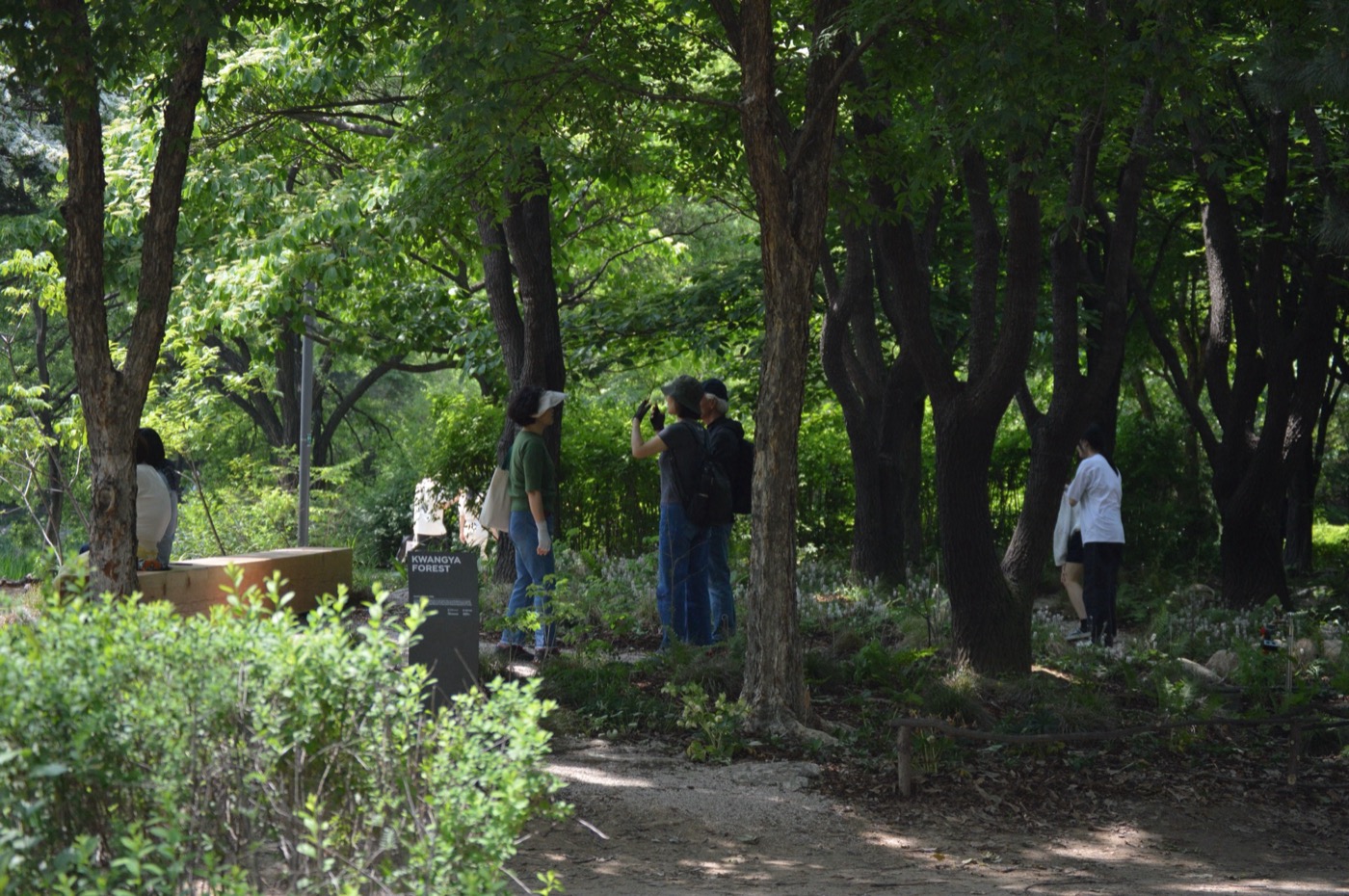
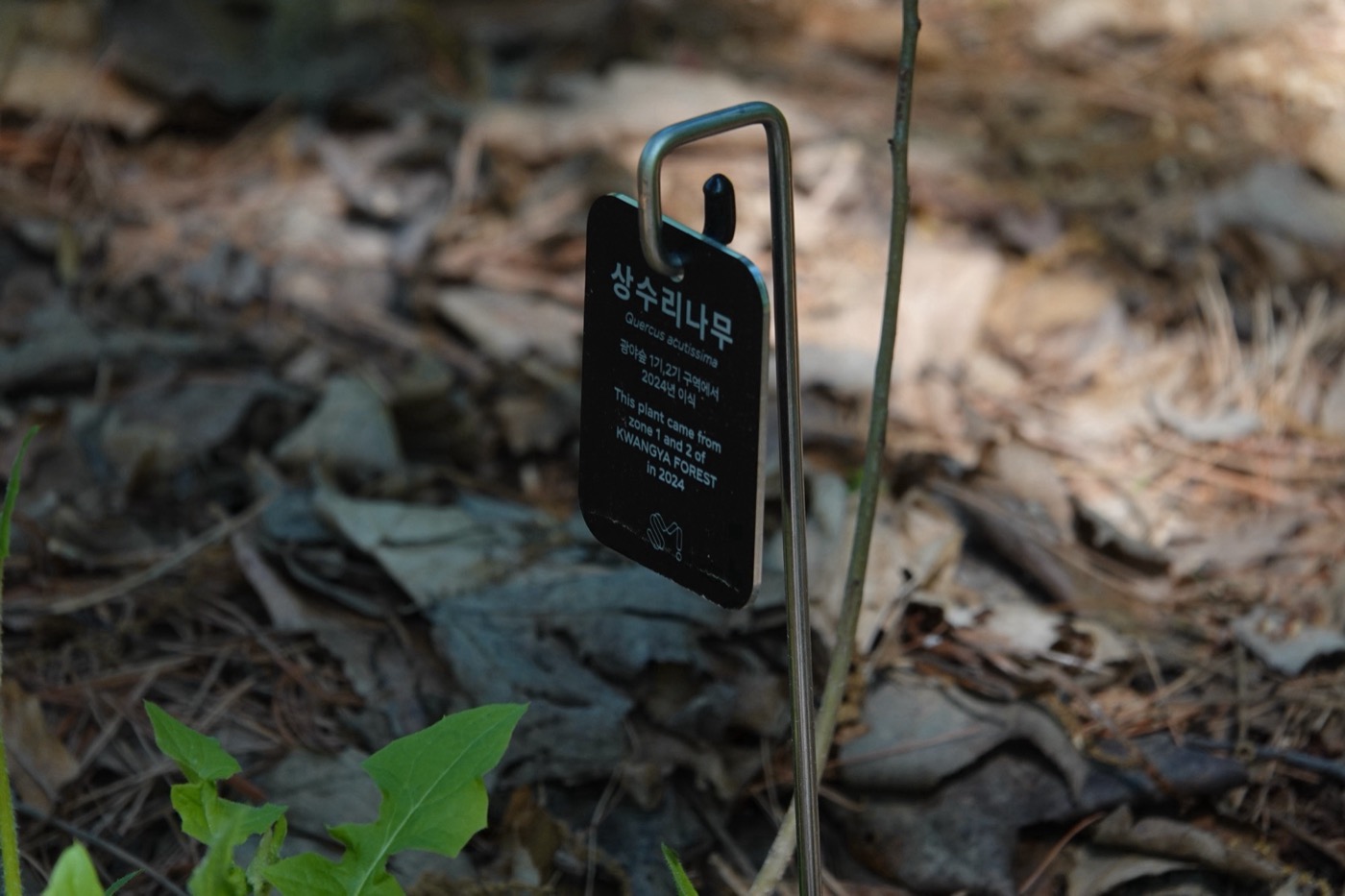
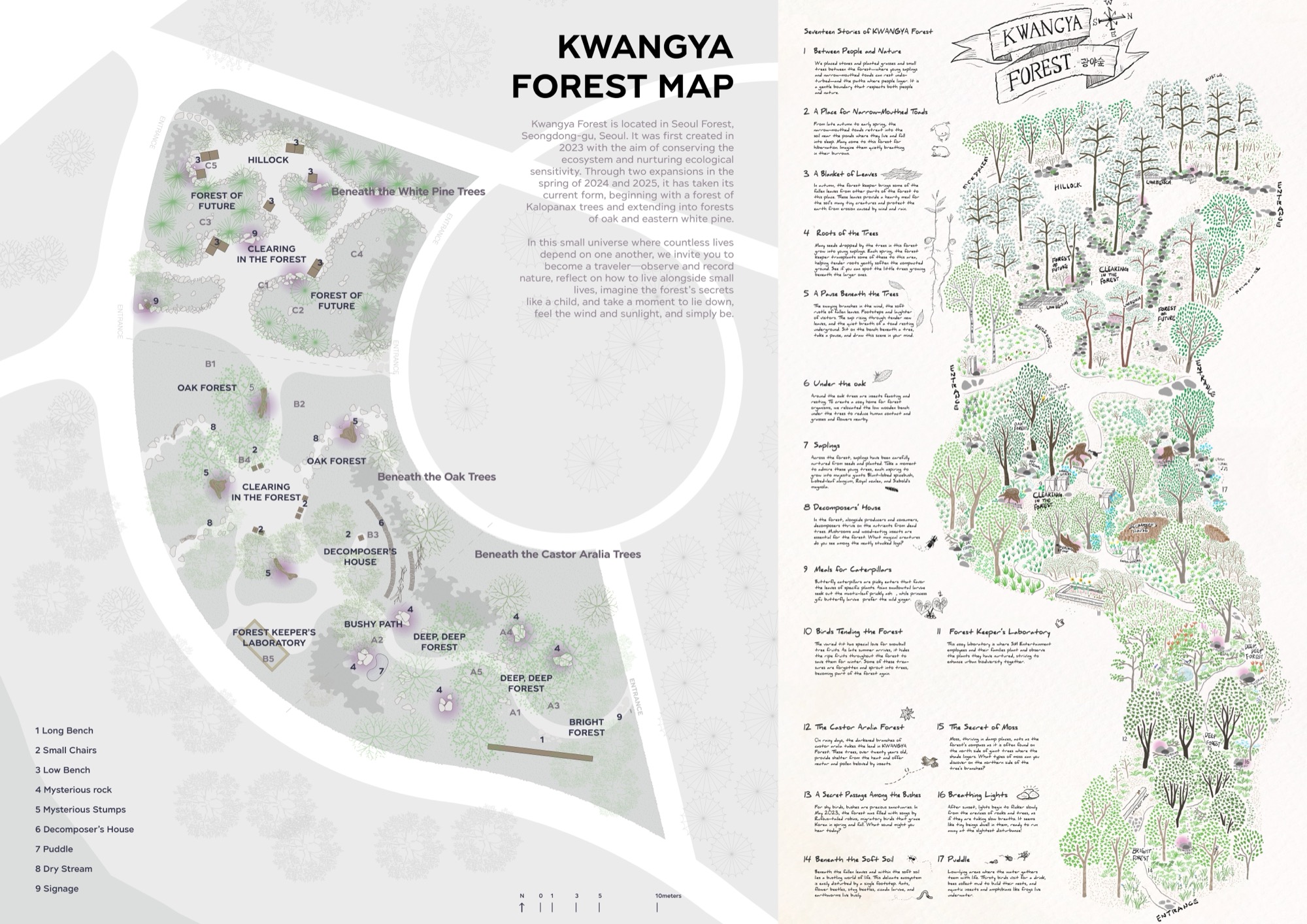
Kwangya Forest was first created in 2023 through funding provided by SM Entertainment—one of the most influential K-pop entertainment companies in South Korea—as a project dedicated to ecological conservation and ecological awareness. Since its initial construction, the garden has expanded twice and now consists of three interconnected forest gardens: the Kalopanax septemlobus forest established in the first phase, the Quercus acutissima forest added during the second expansion, and the Pinus strobus forest completed in 2025 as the third phase. The forest garden occupies approximately 1,290 square meters within Seoul Forest Park, one of Seoul’s most significant urban parks. Today, this garden functions as a biodiversity hub, educational landscape, and urban refuge.
The project was inserted into an existing woodland area established during the creation of Seoul Forest over twenty years ago. Designing beneath a dense canopy of mature trees presented significant ecological and spatial challenges. Although the site appeared green, the soil had become heavily compacted from long-term recreational use, while routine maintenance continuously removed fallen leaves, leaving the forest floor exposed and ecologically depleted.
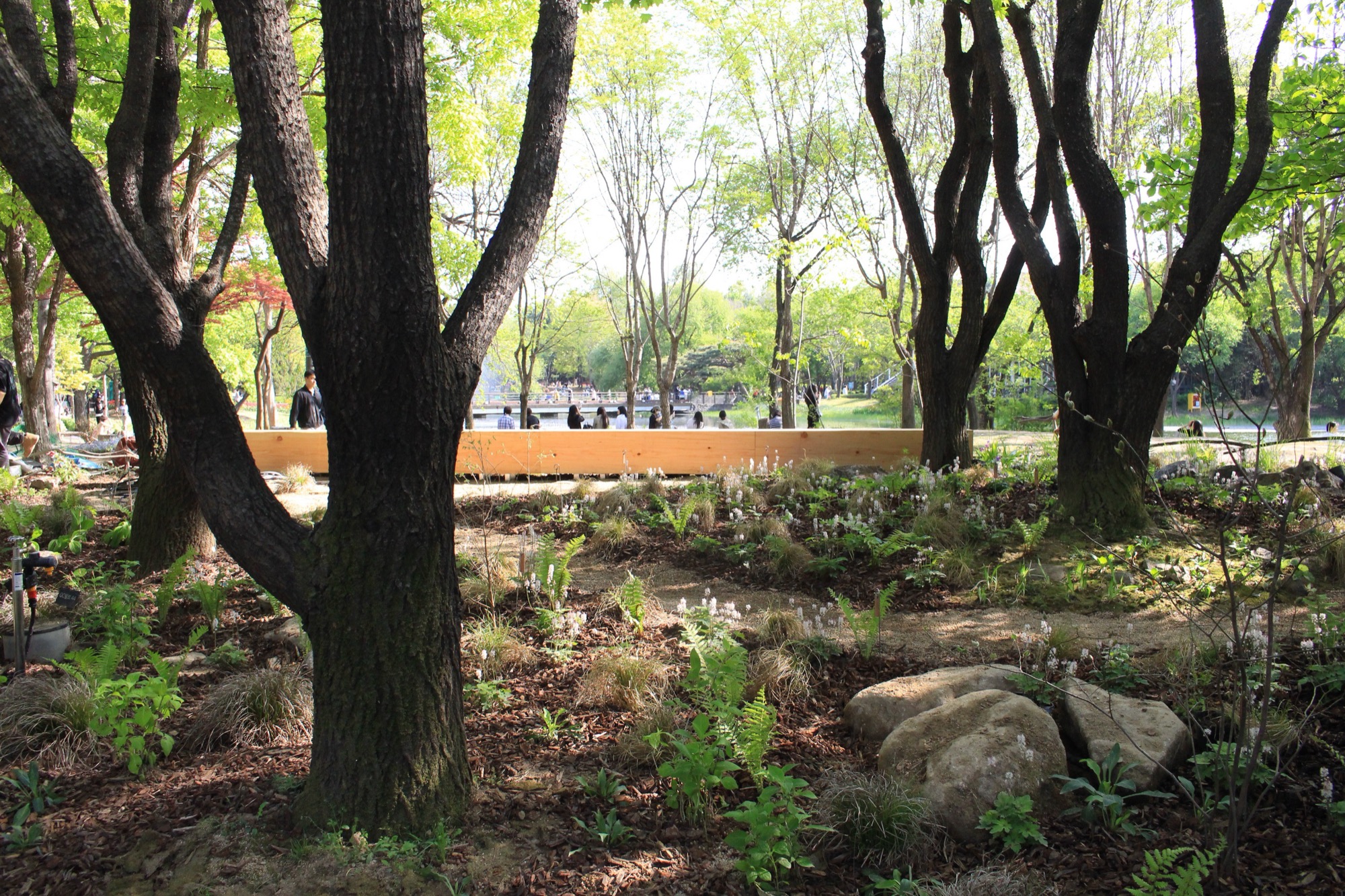
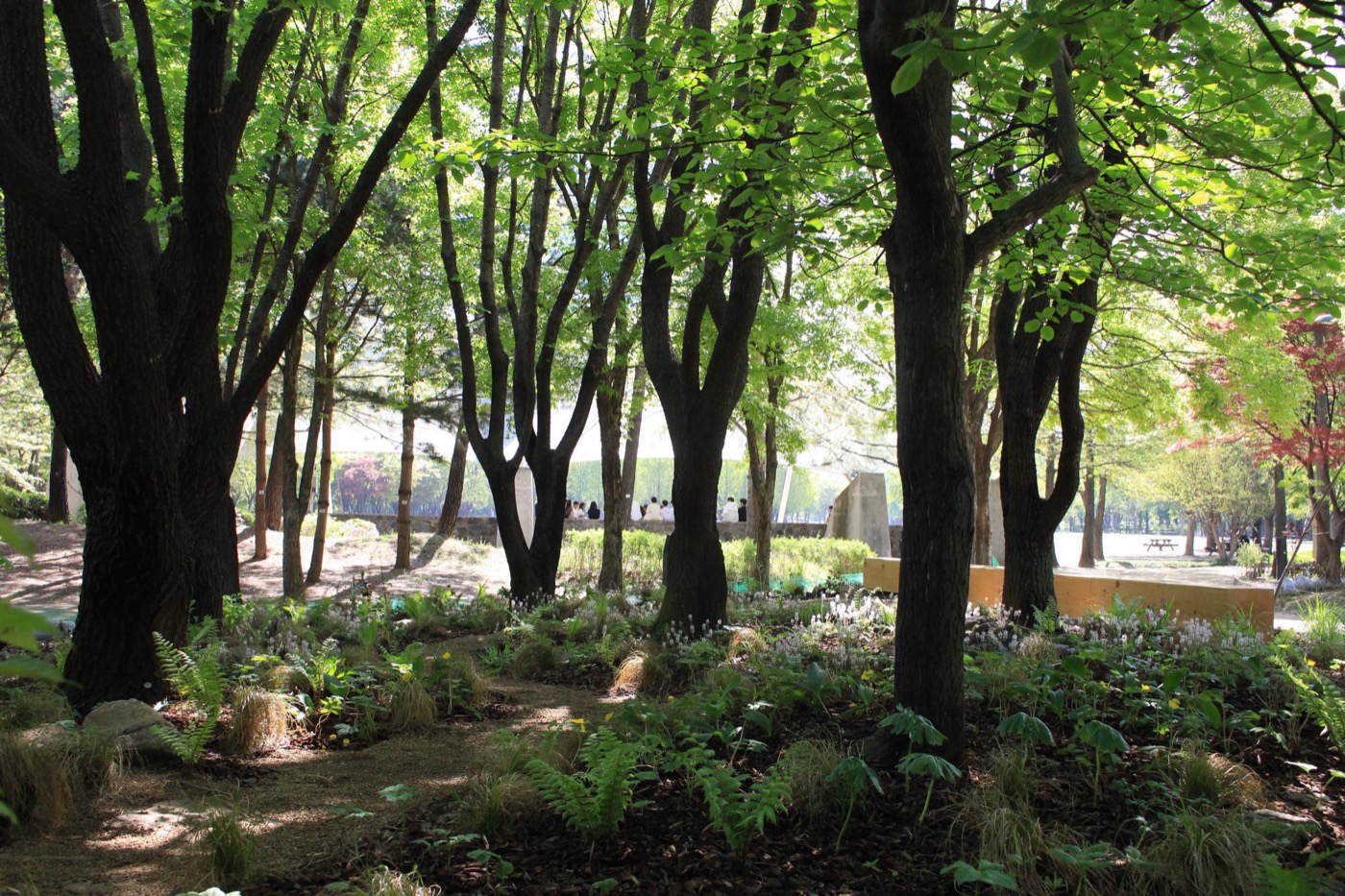
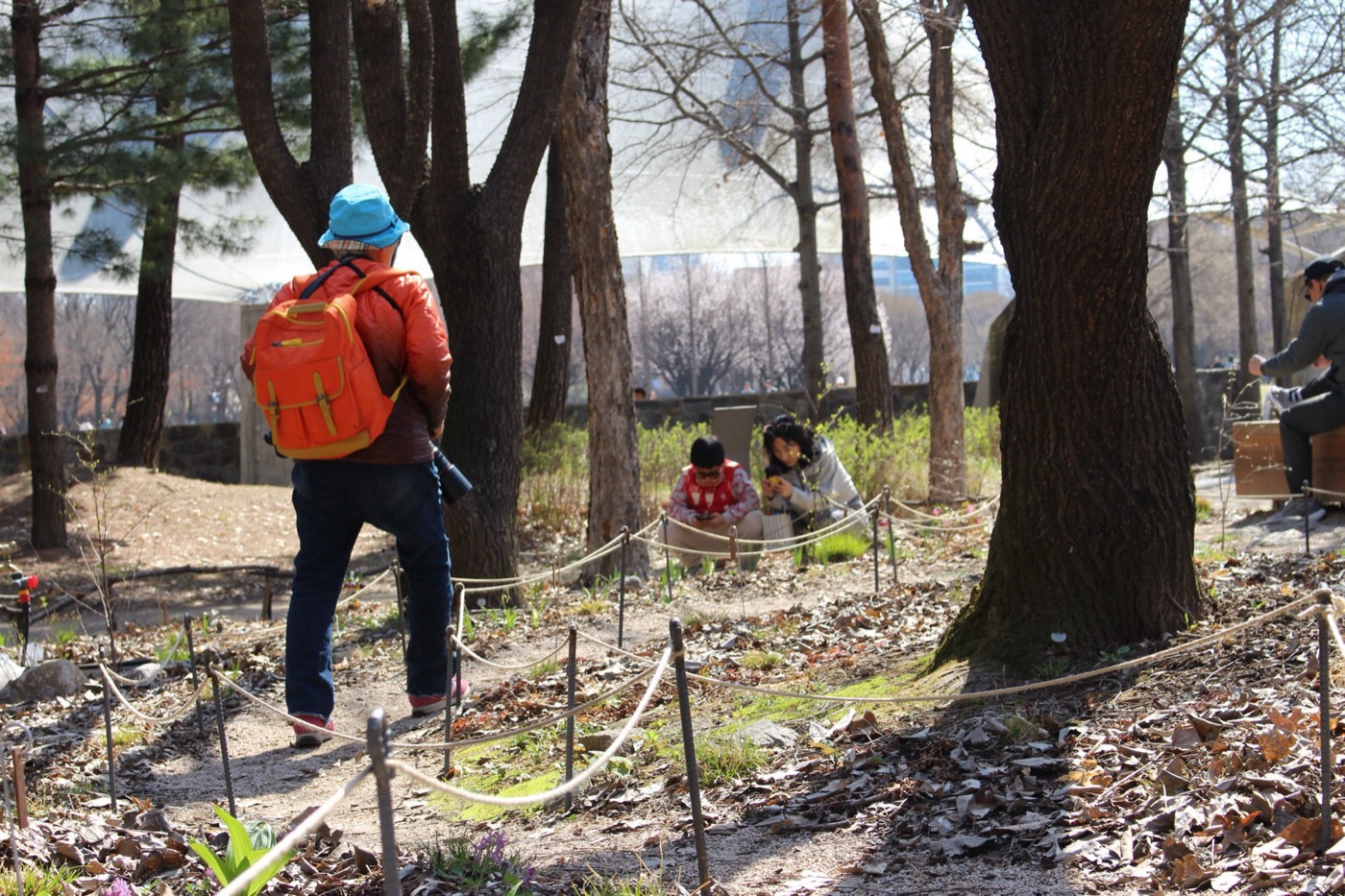
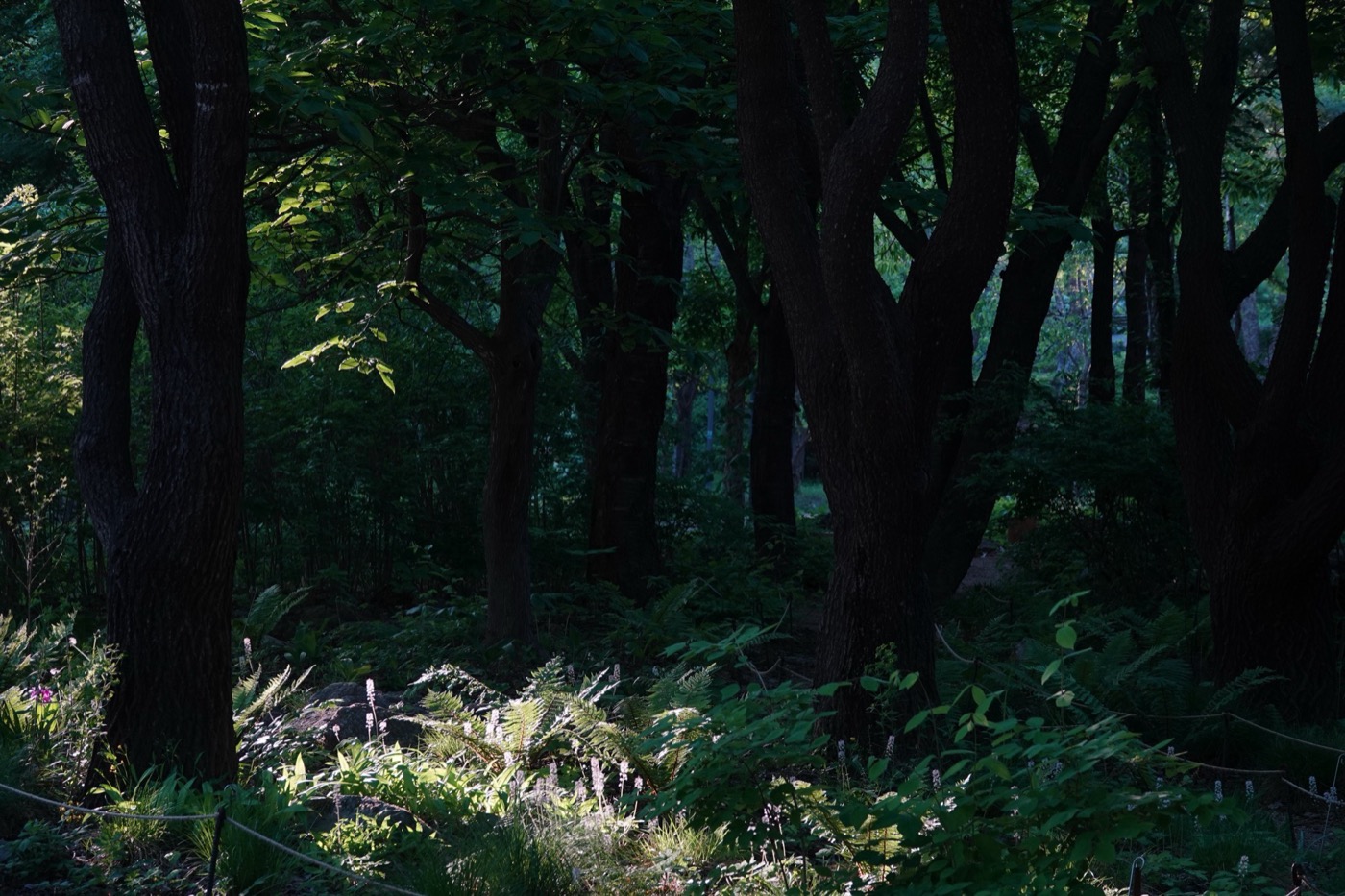
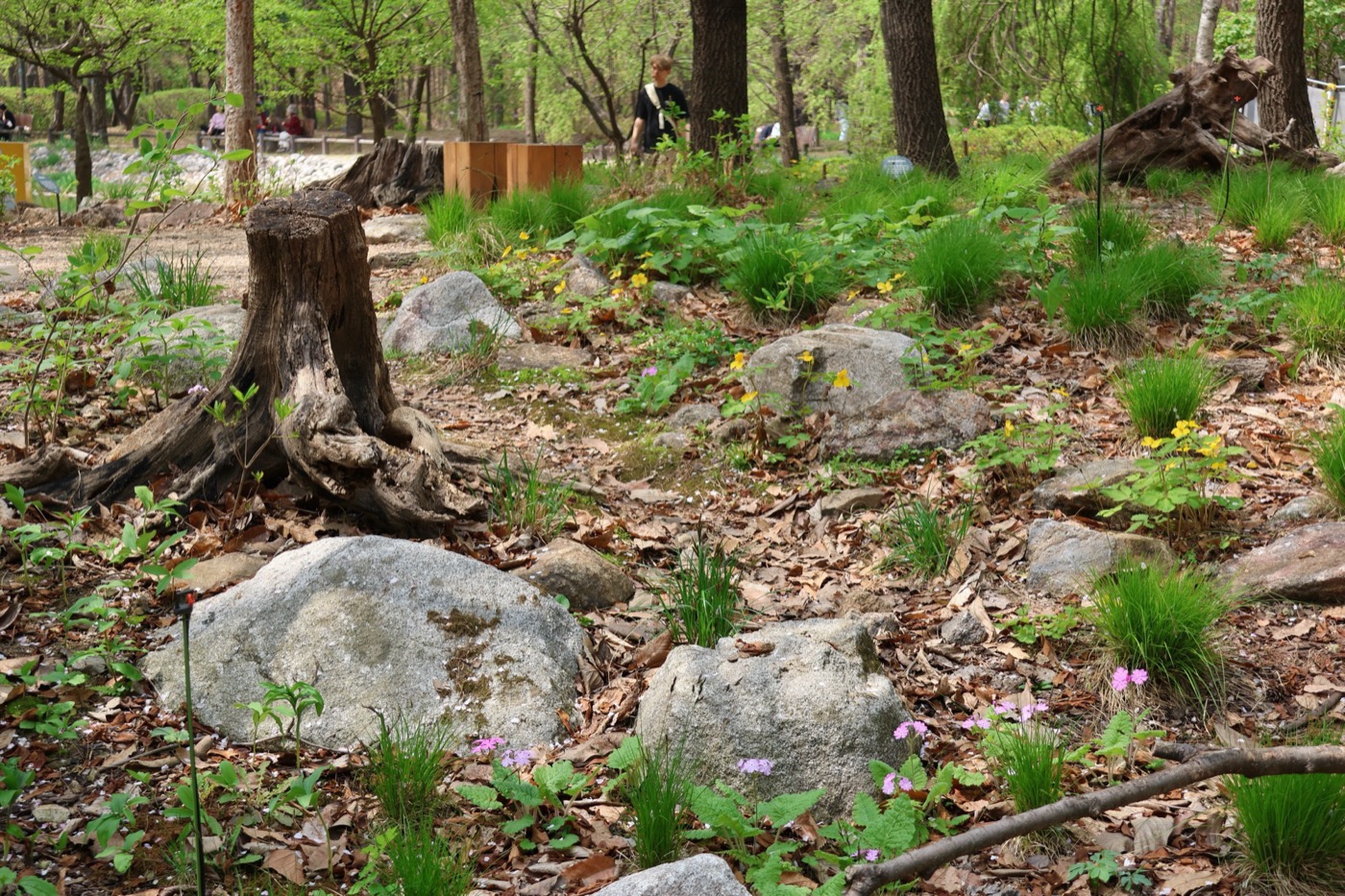
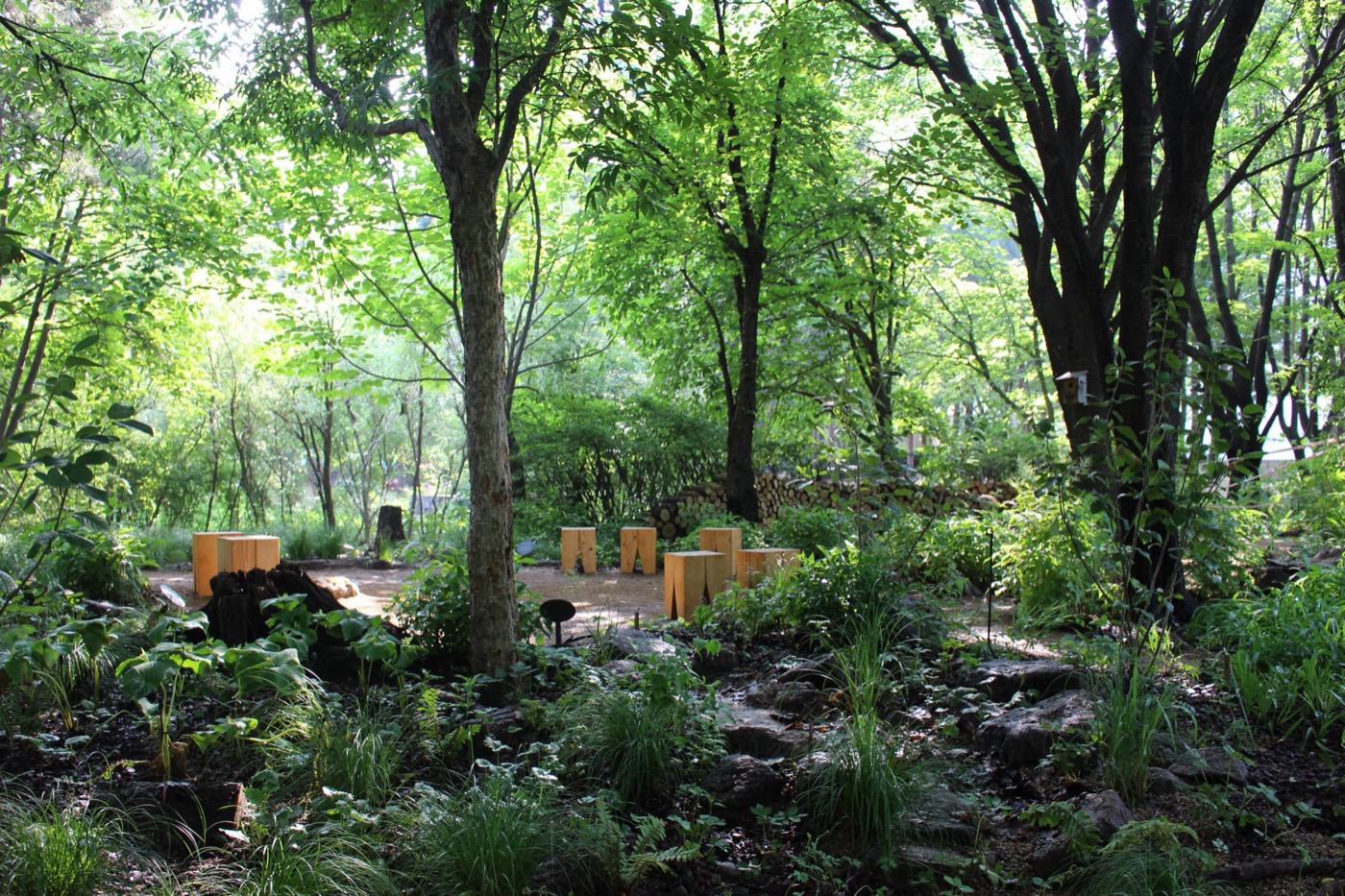
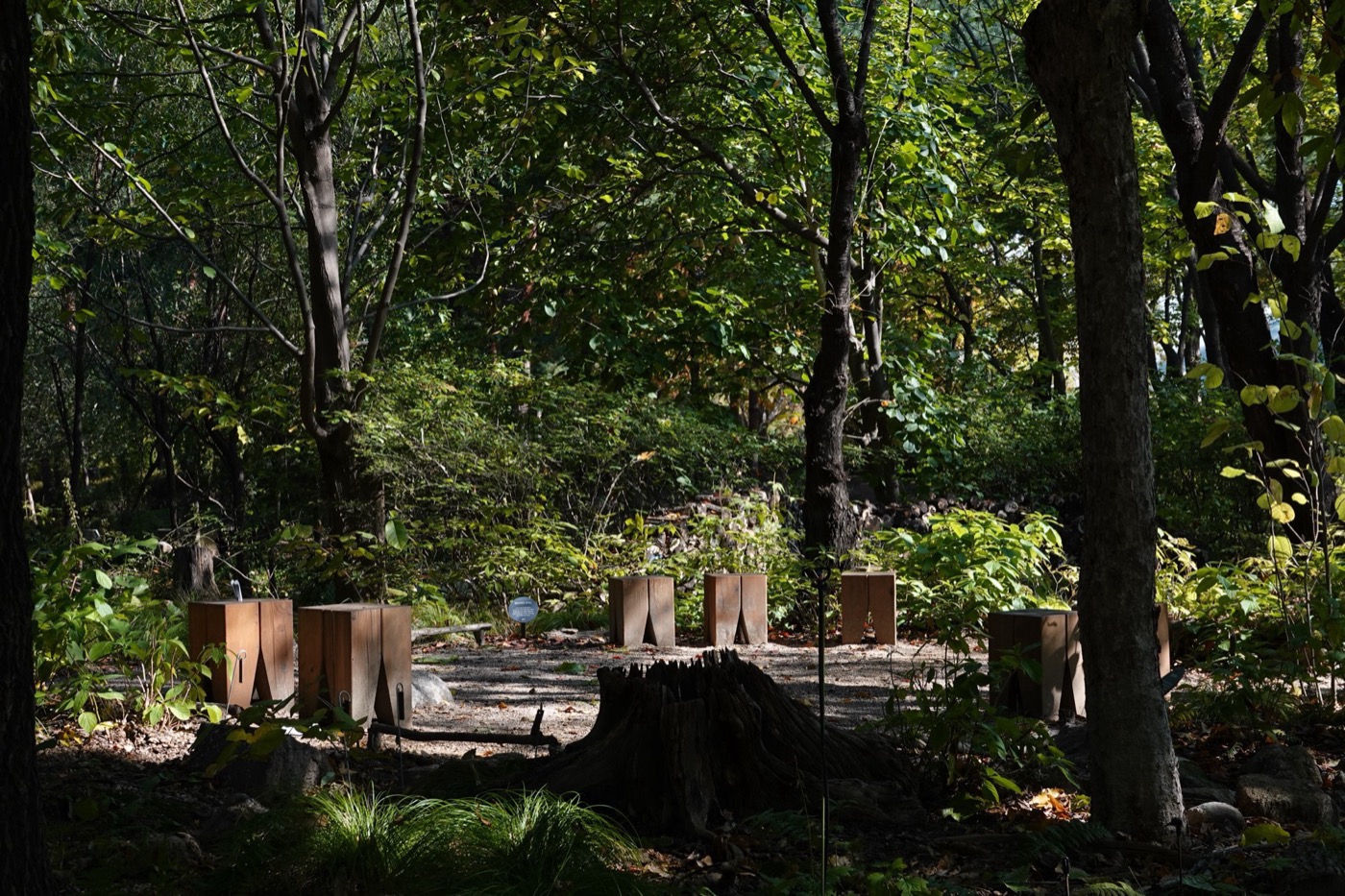
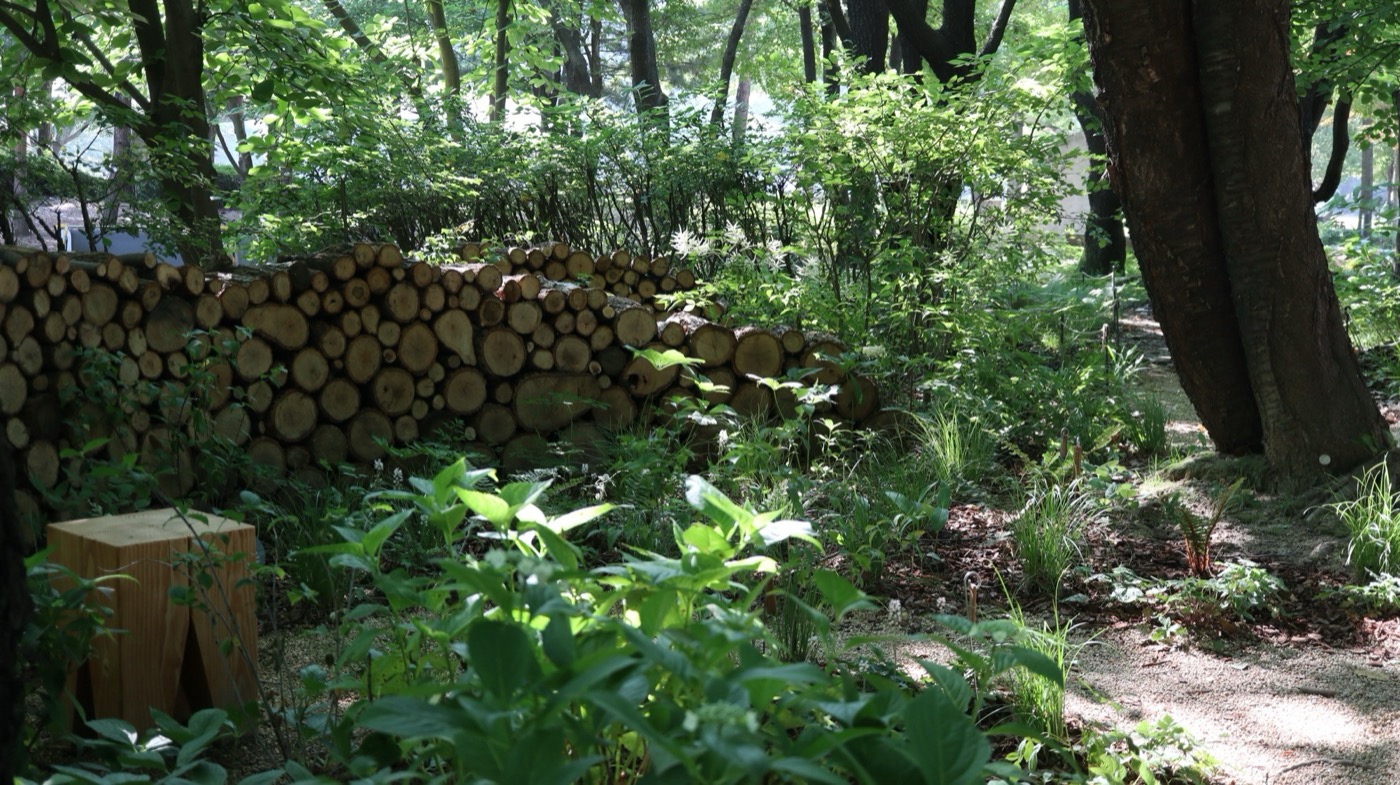
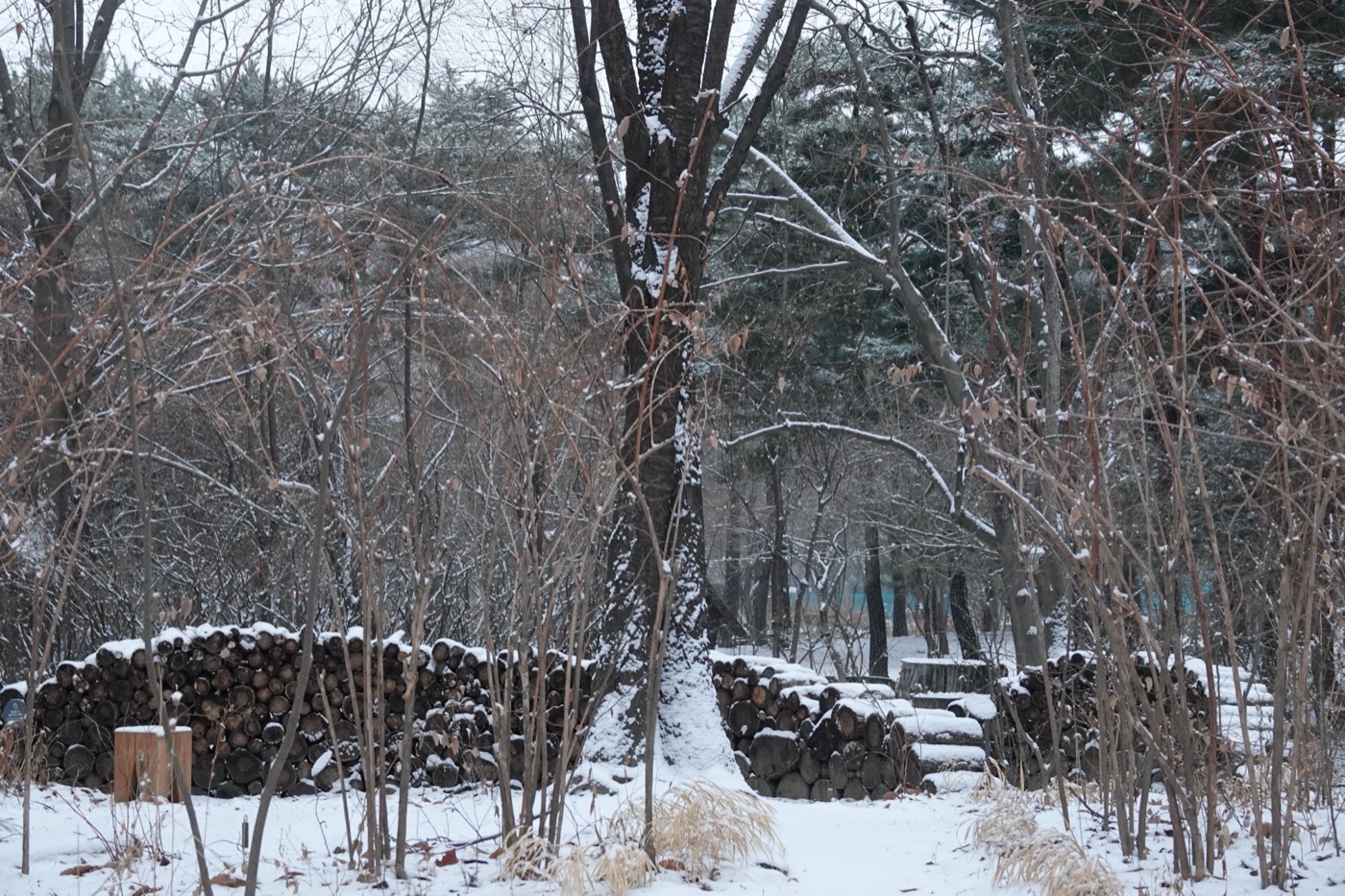
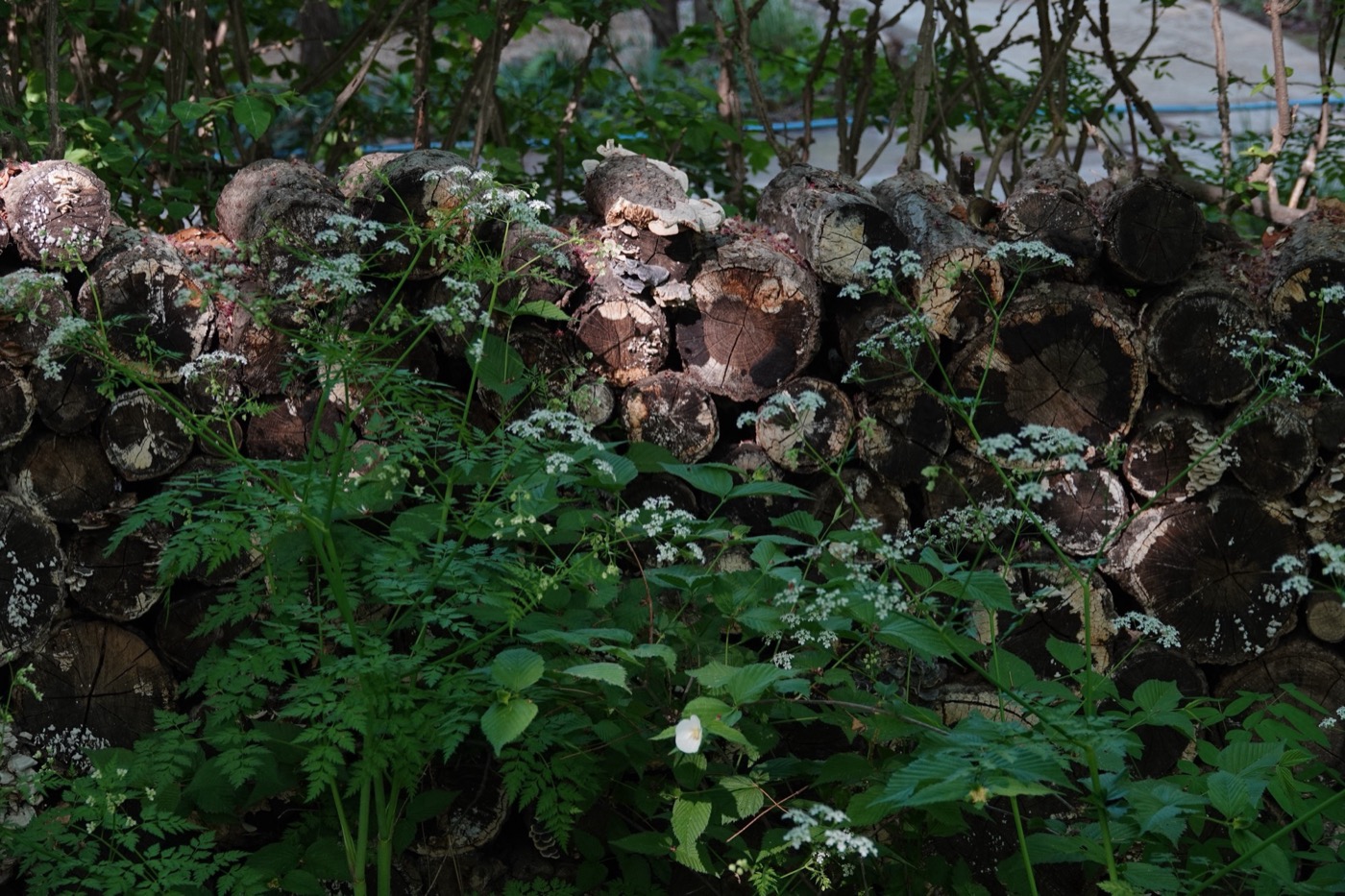
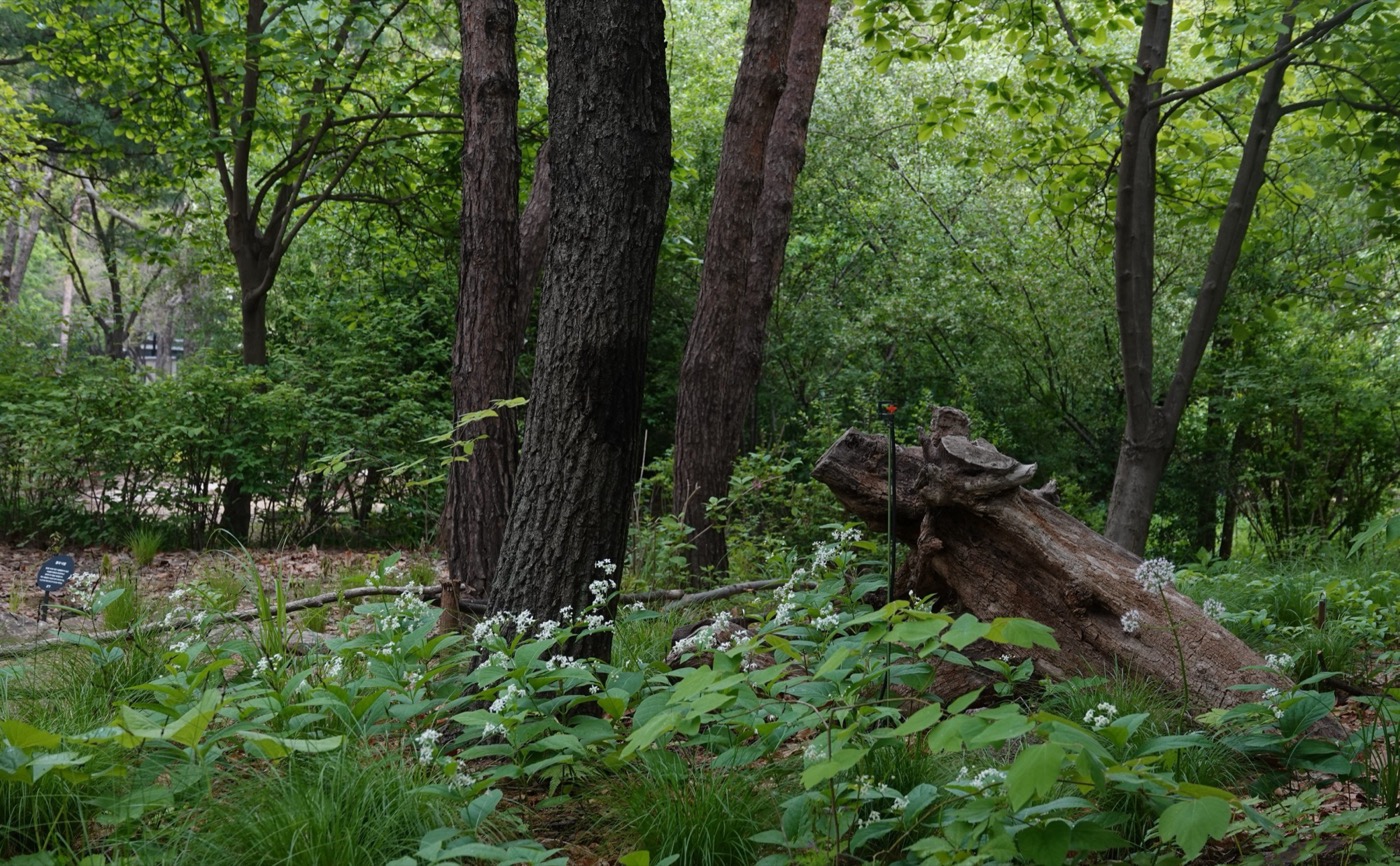
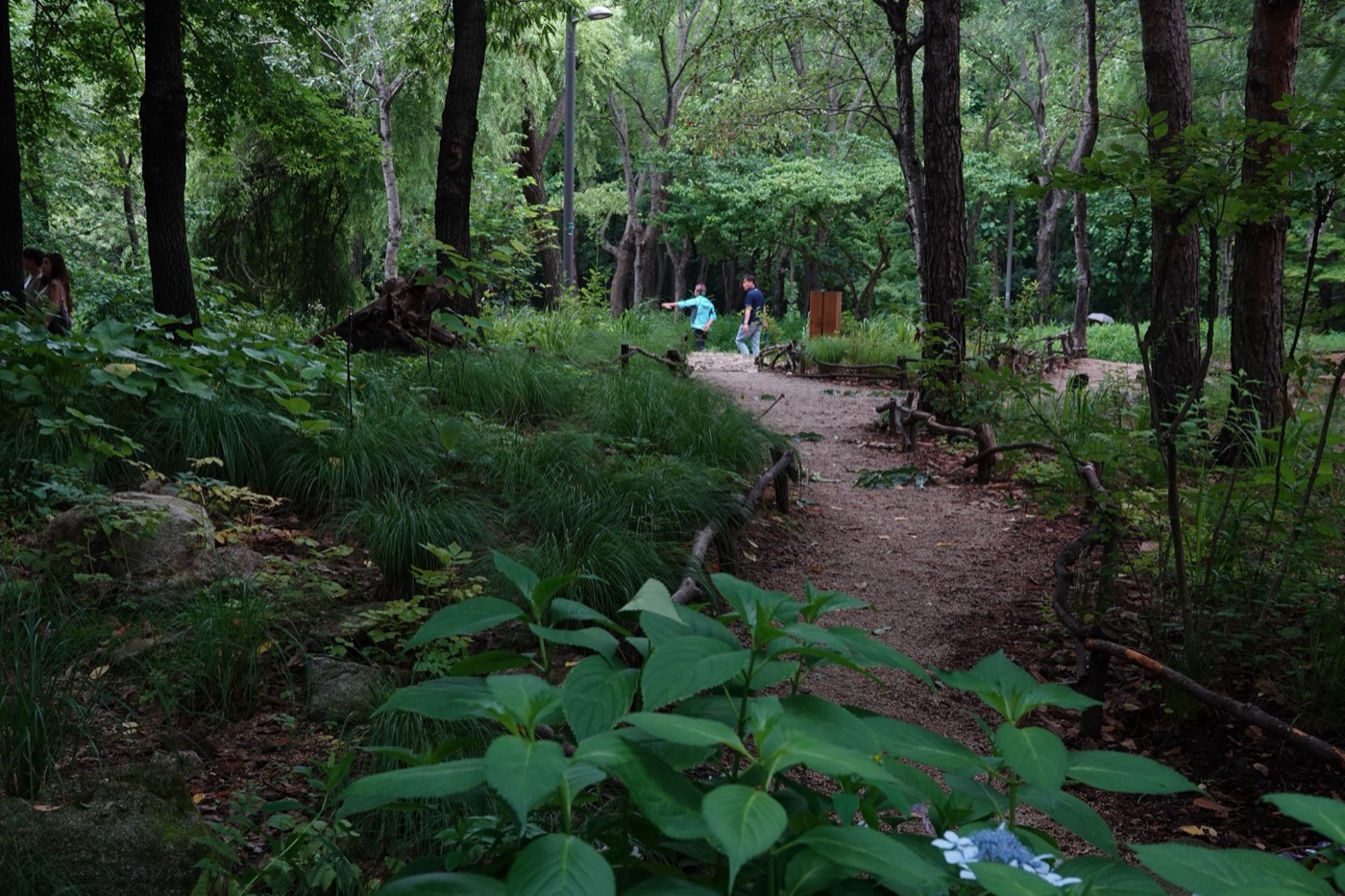
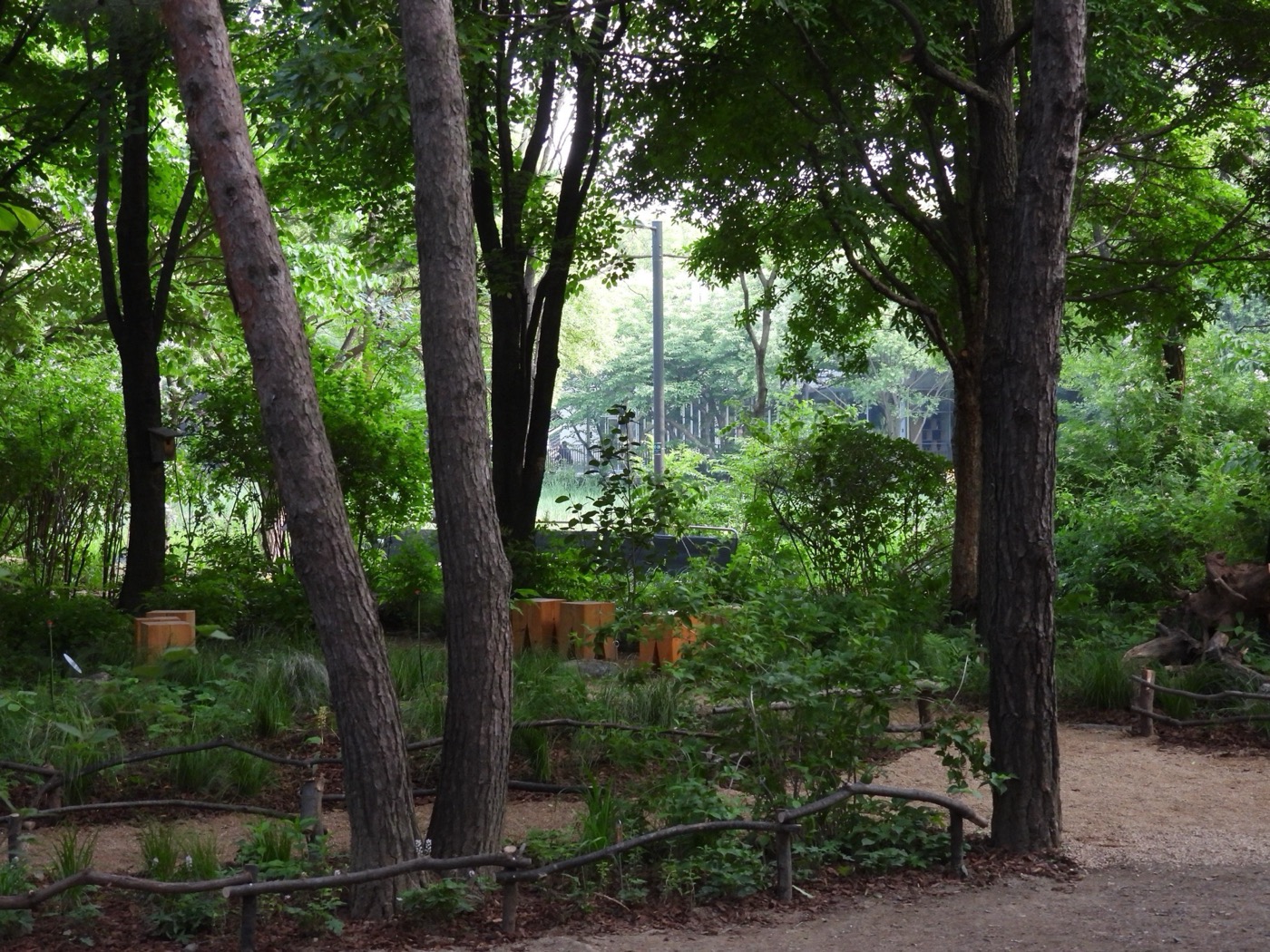
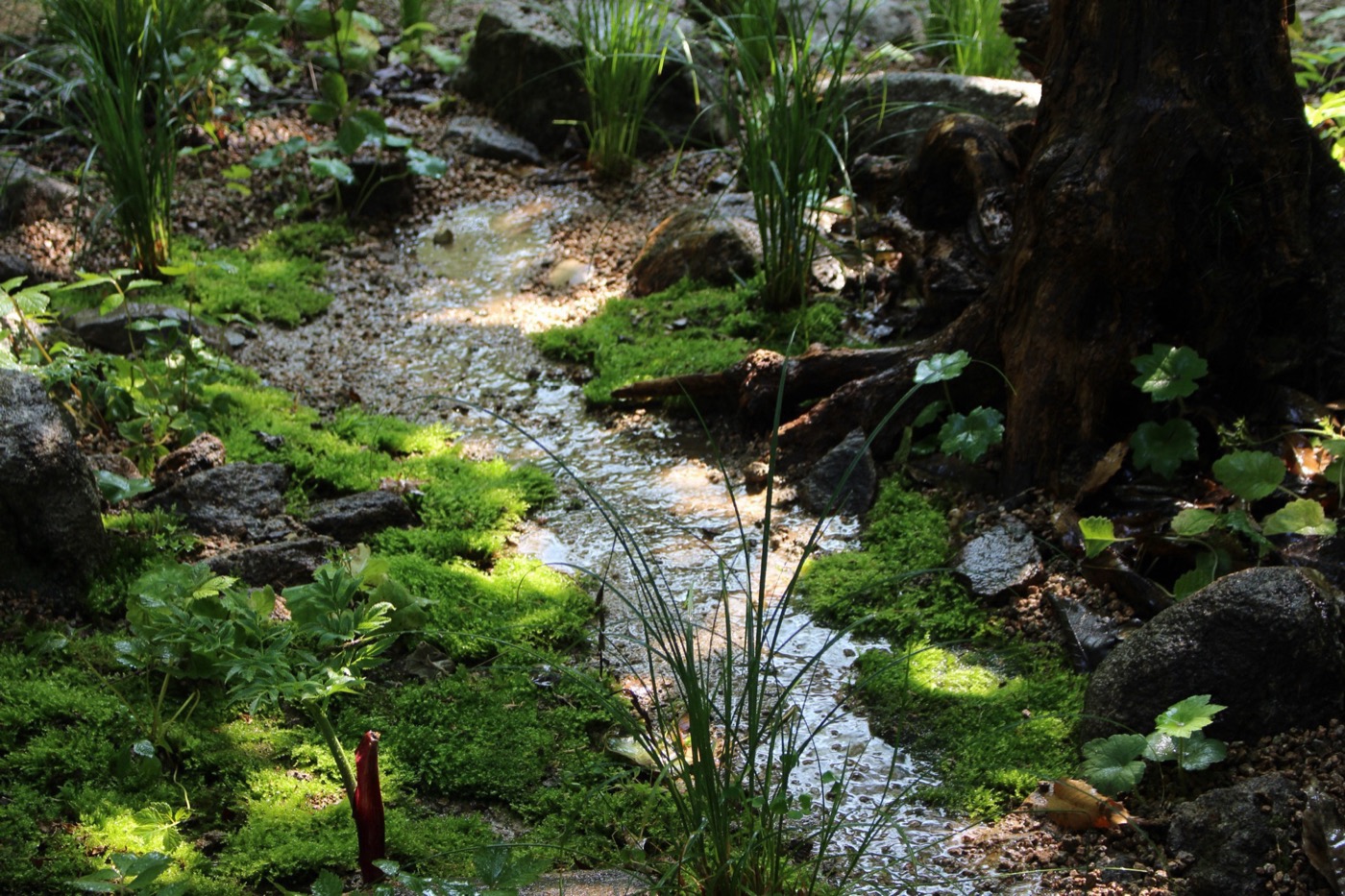
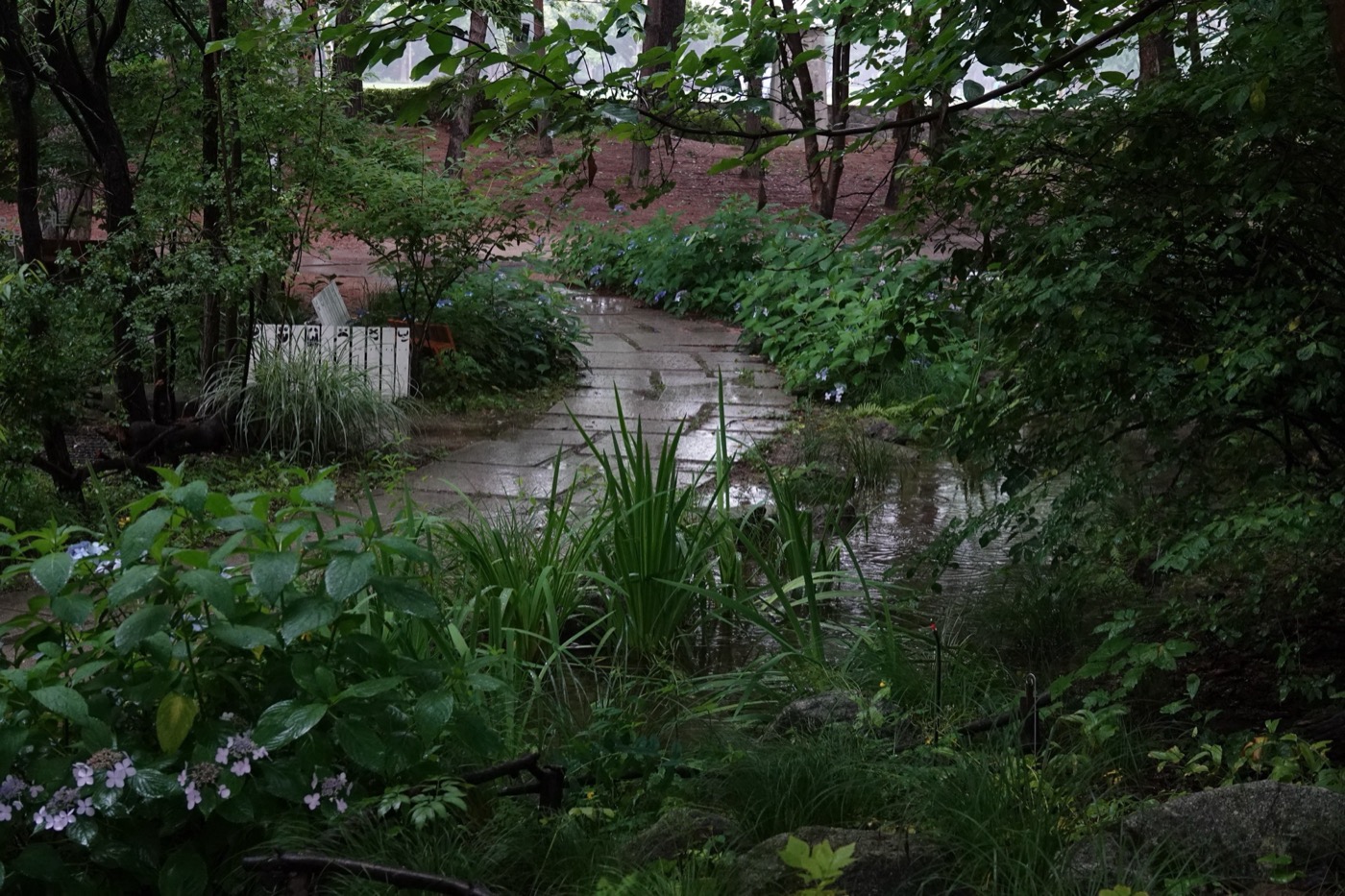
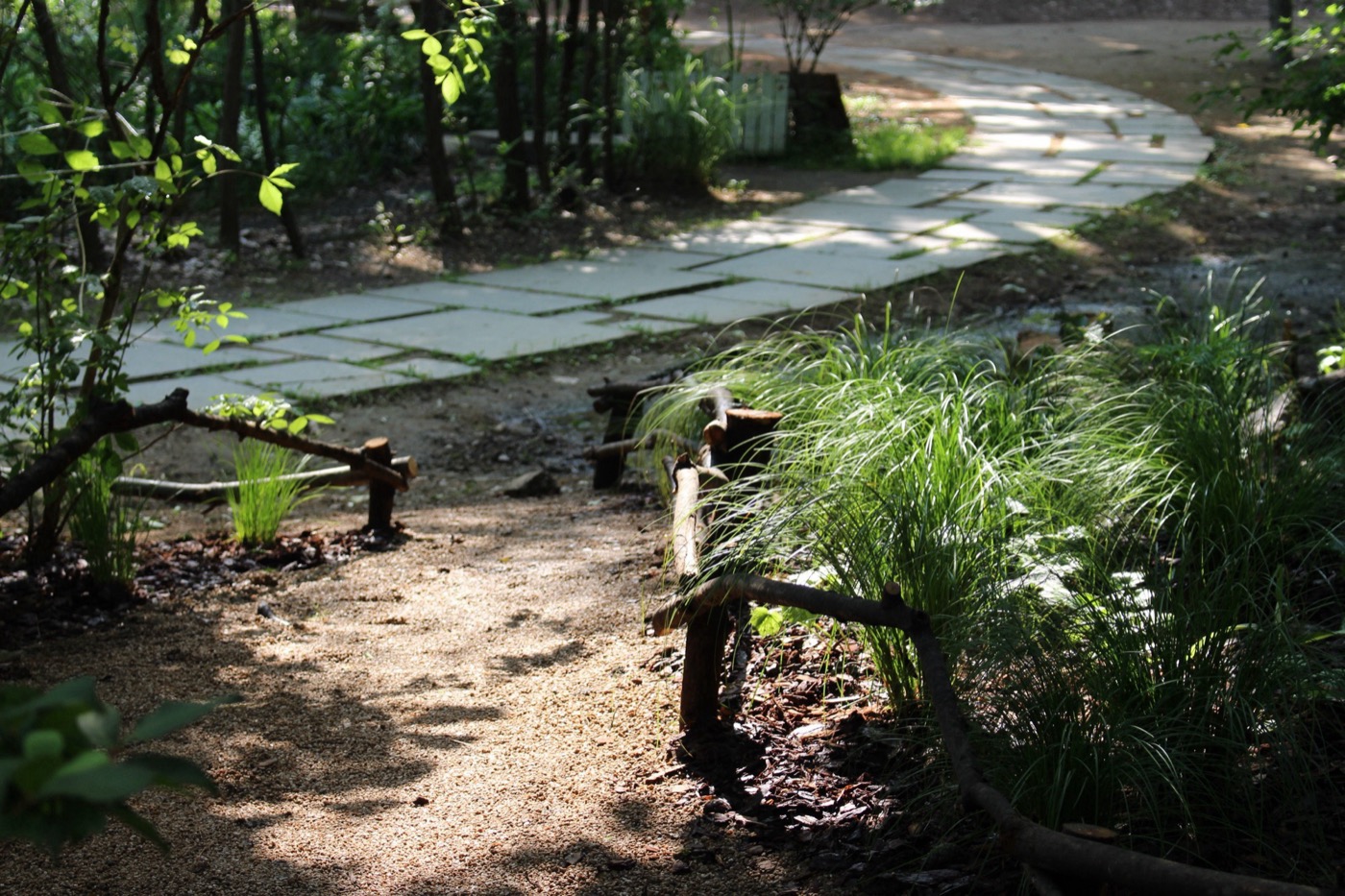
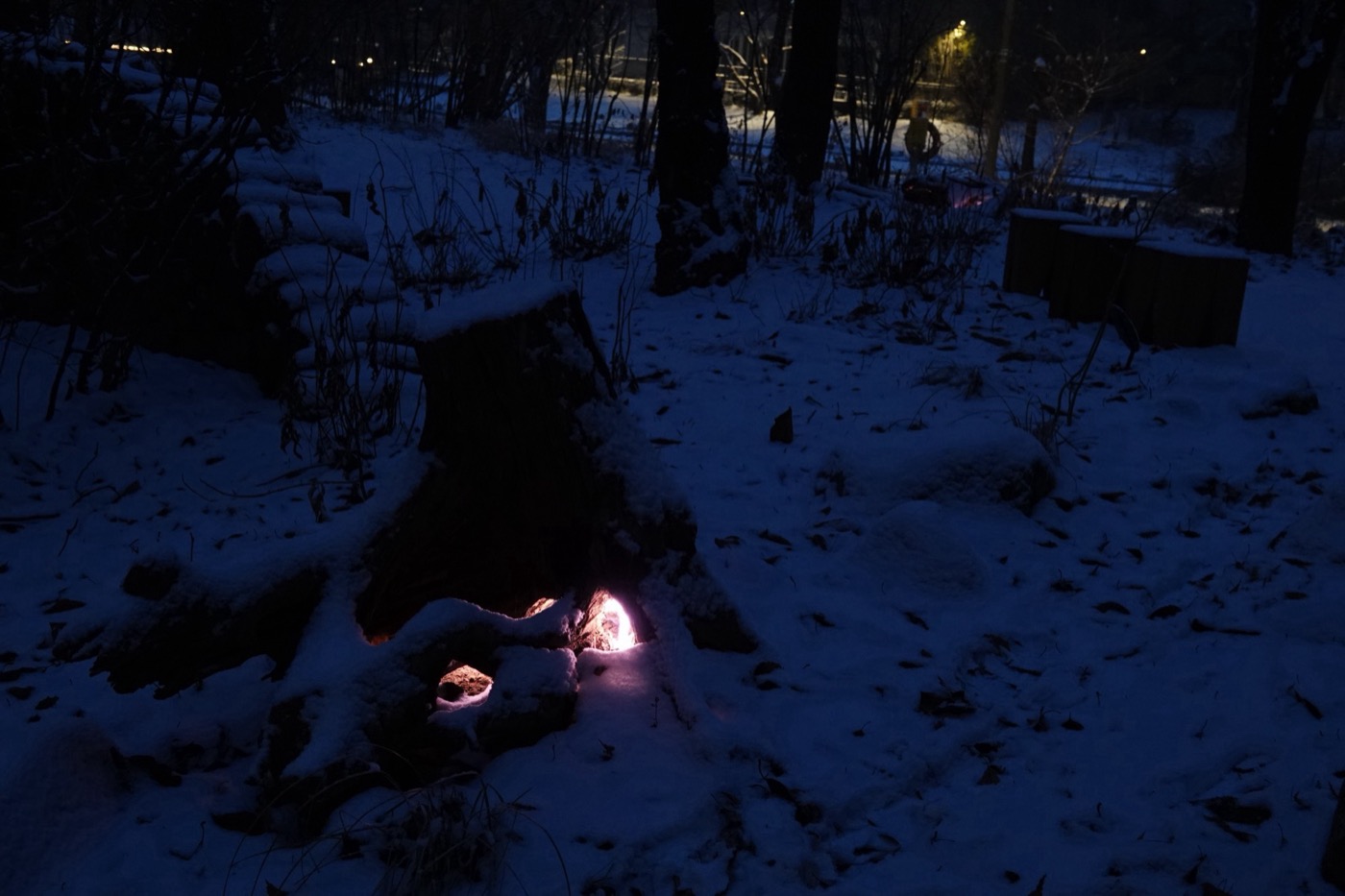
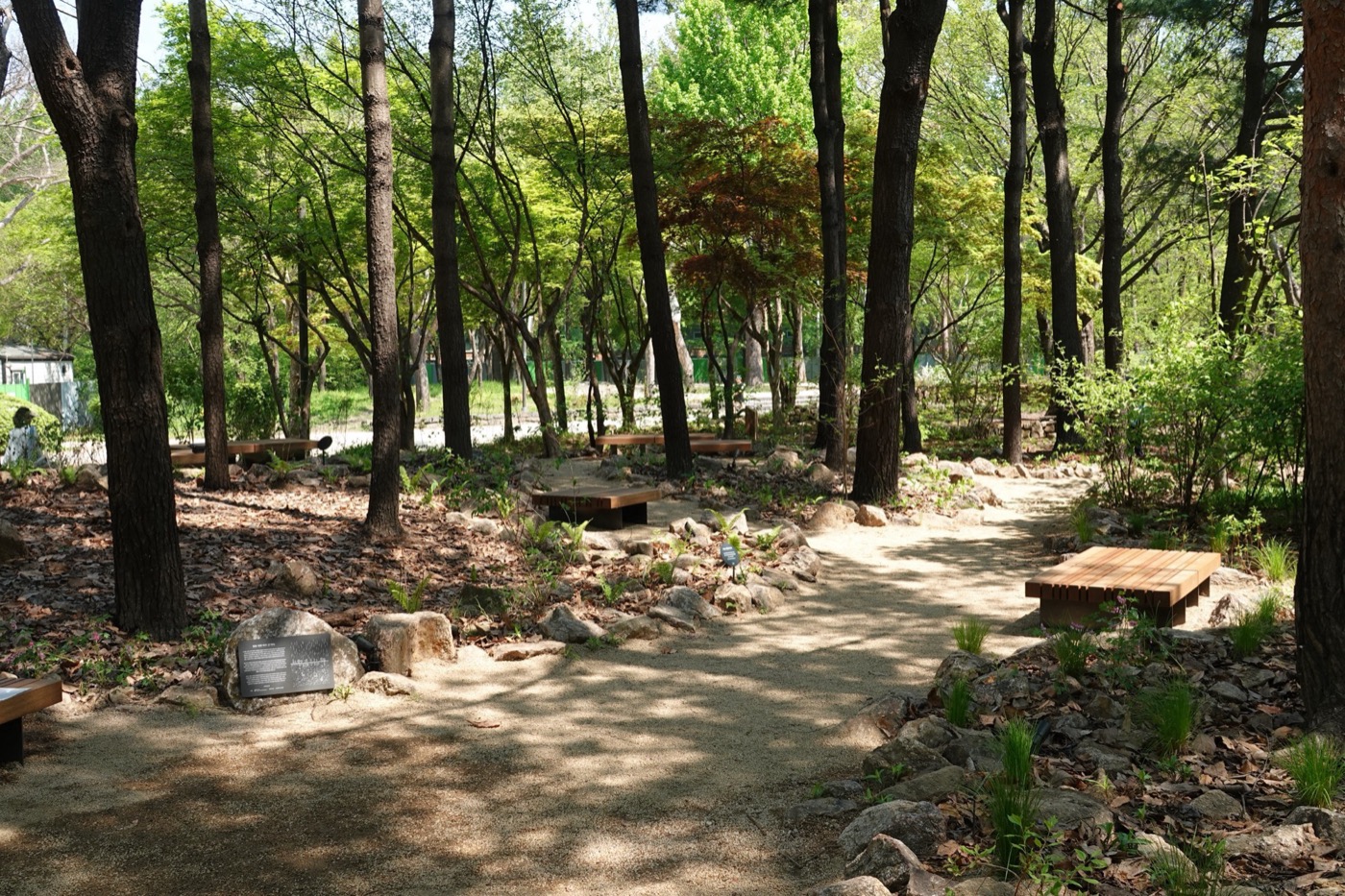
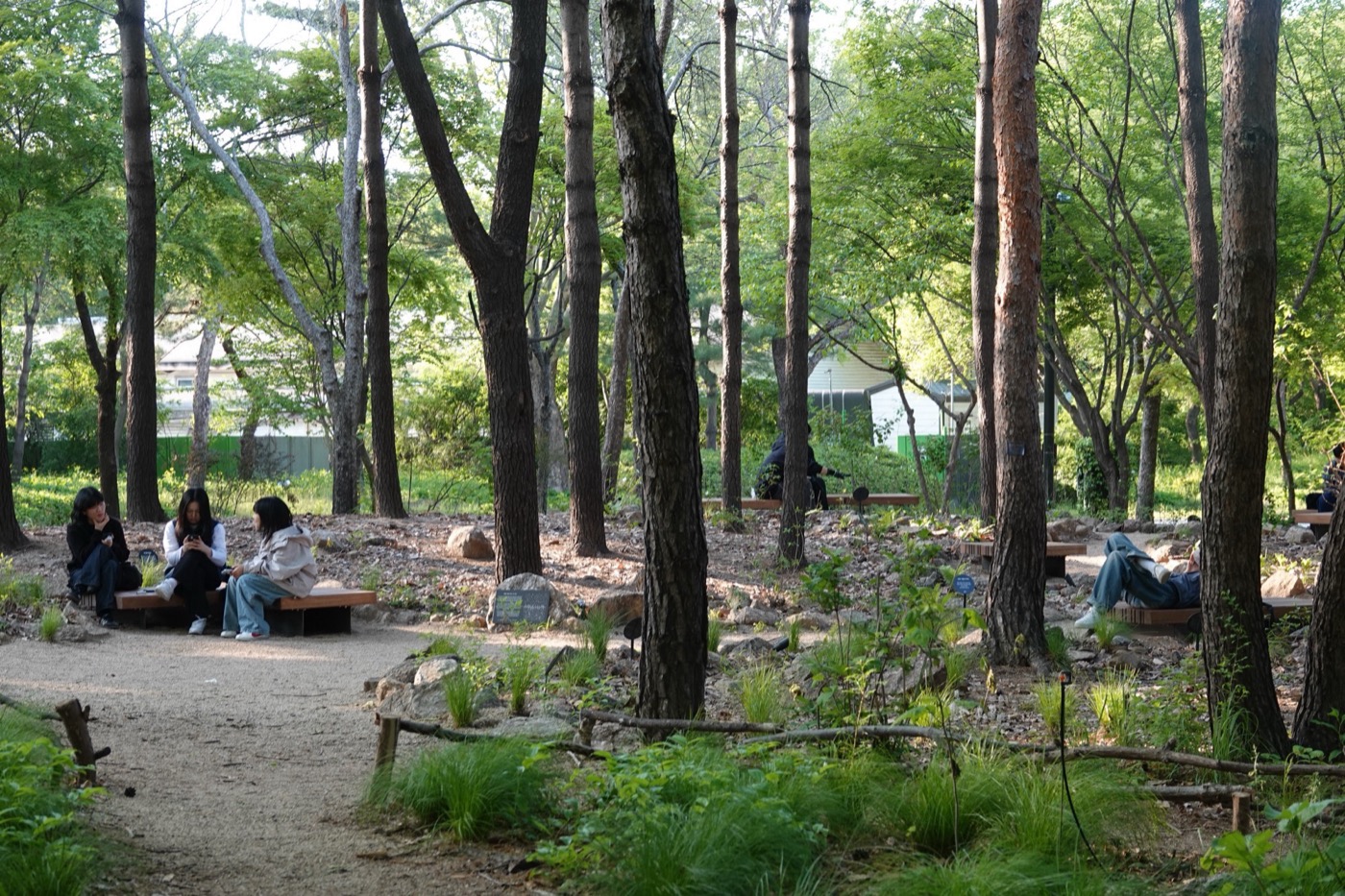
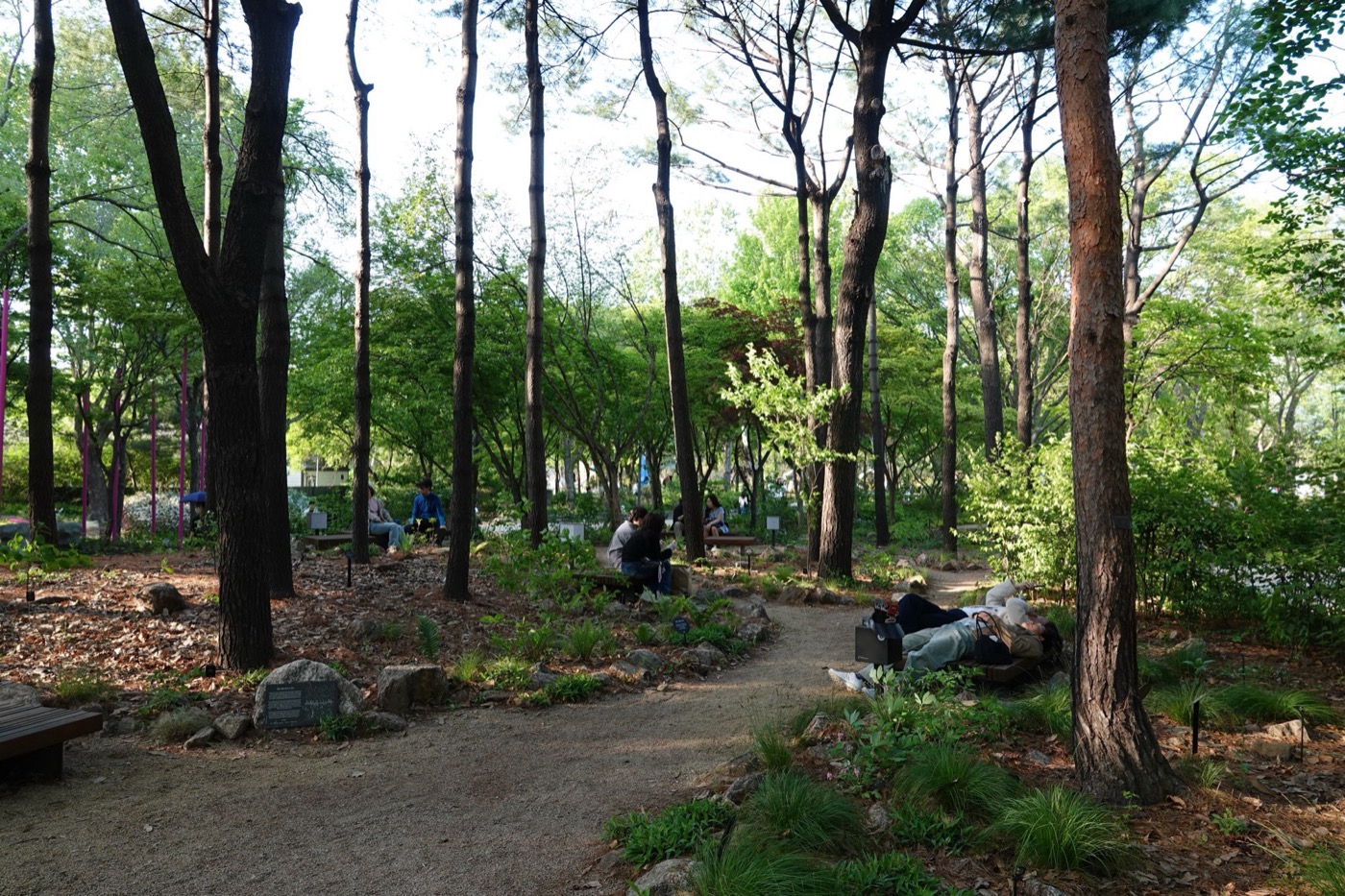
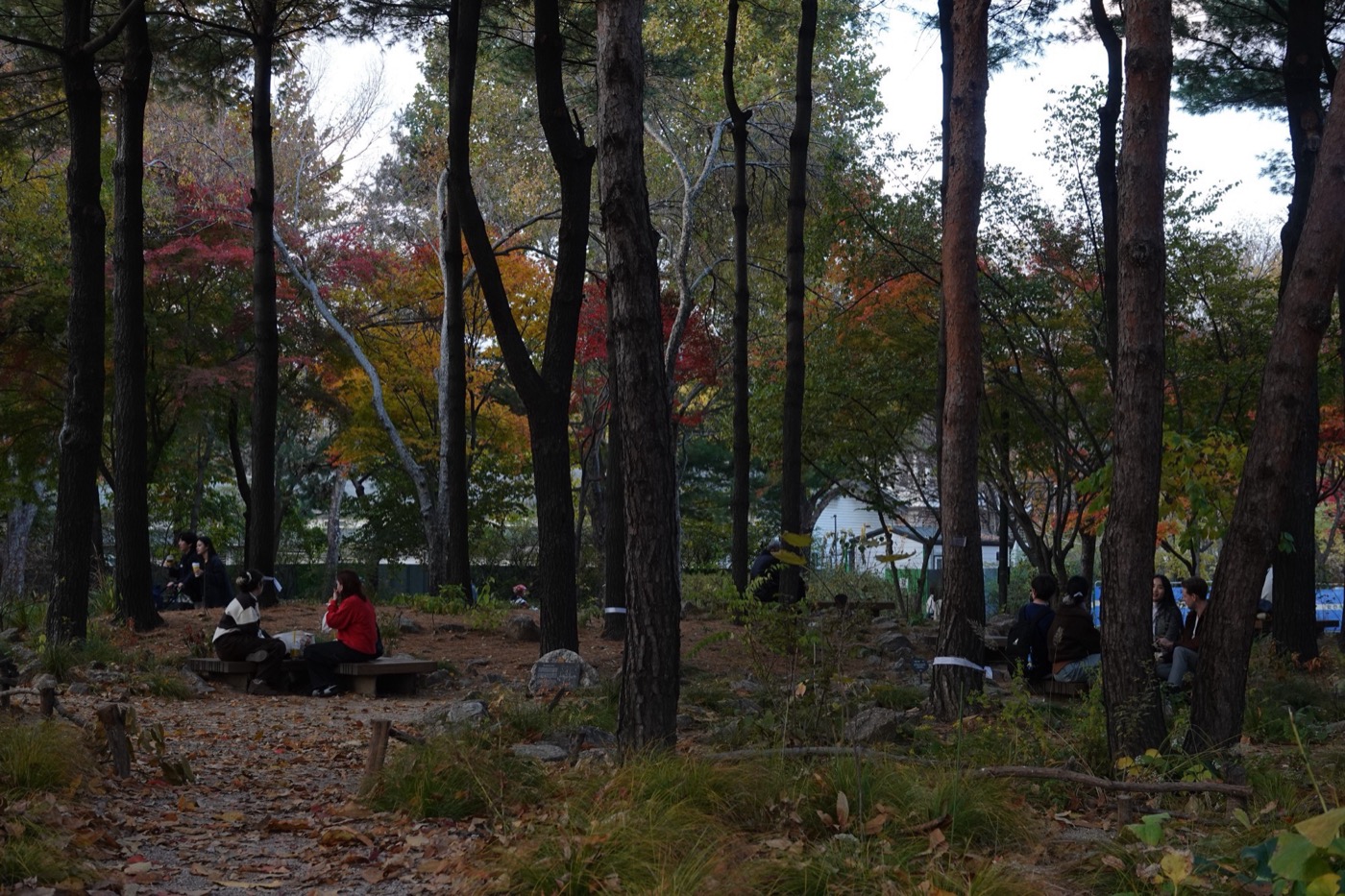
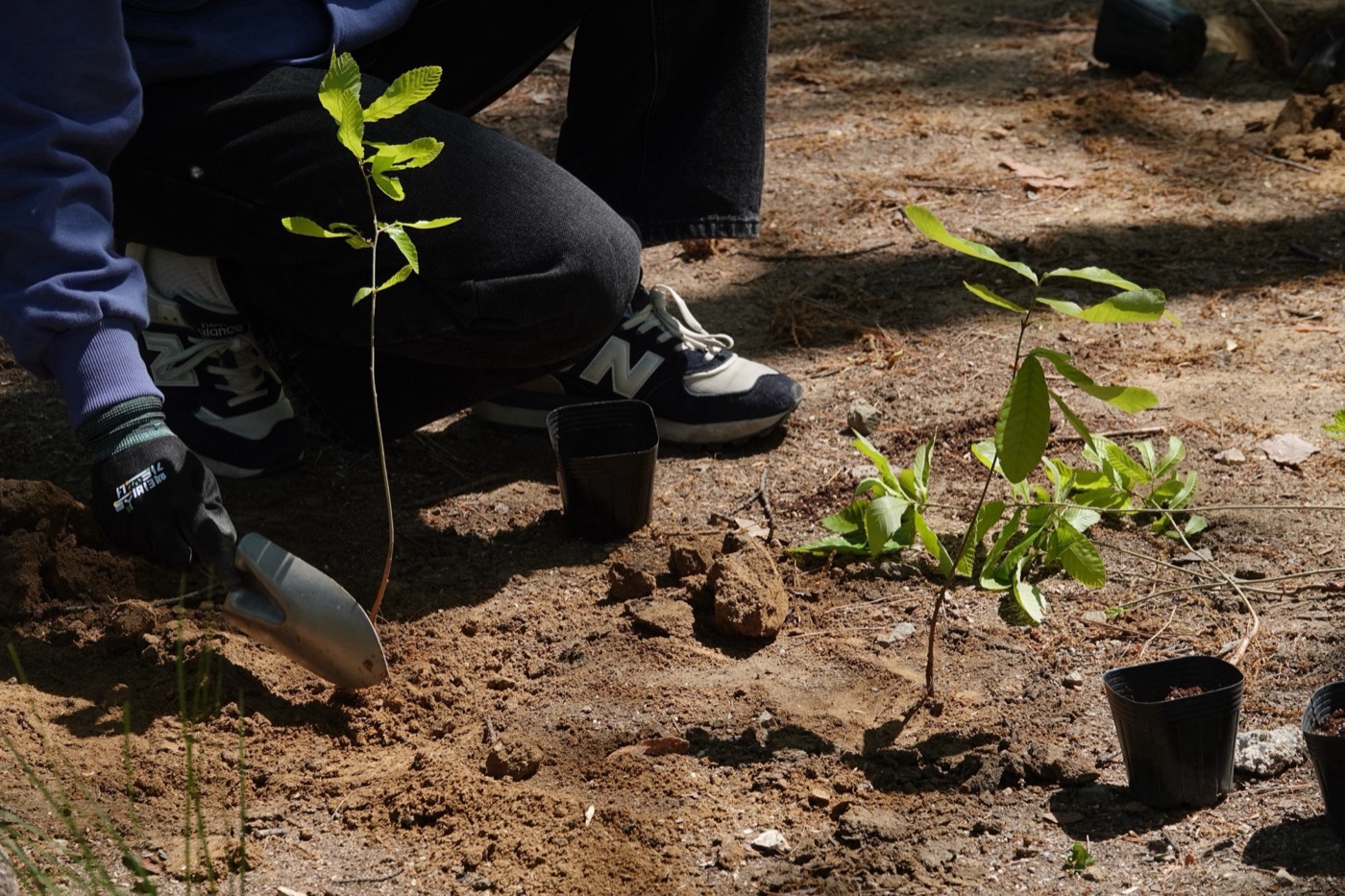
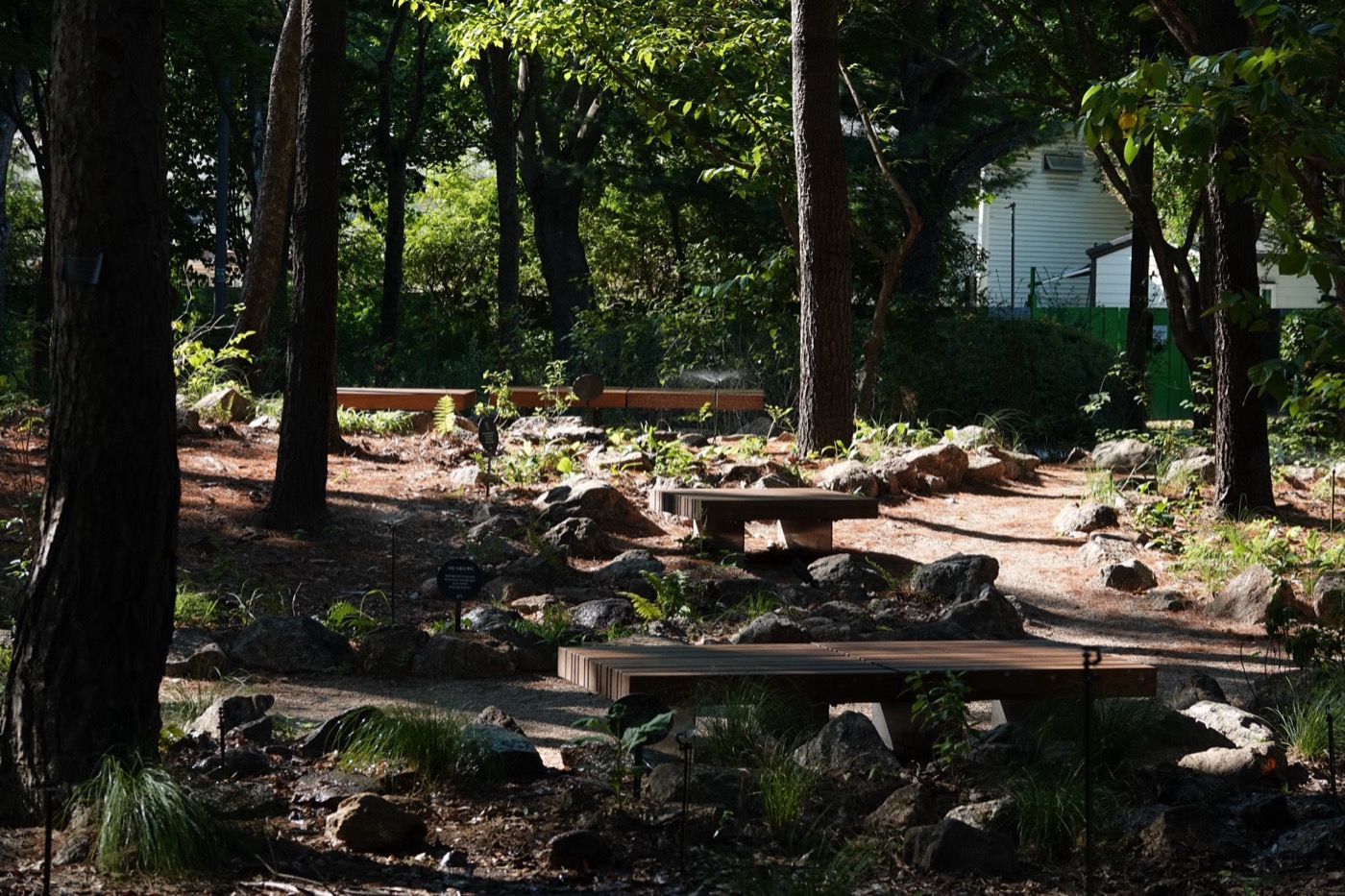
The first and second phases—the Kalopanax and Quercus forests—began by redefining areas for walking while allowing other areas to recover as undisturbed ground. Lost layers of leaf litter were gradually restored, and biochar was introduced during planting to replenish depleted organic matter within the soil.
The third phase, completed in 2025, explored how soil restoration could emerge through minimal intervention and collaboration with existing ecological processes. Rather than importing new resources, surplus materials generated during maintenance—including fallen leaves and naturally germinated seedlings—were transferred into the new forest area to gradually rebuild healthier soil conditions over time.
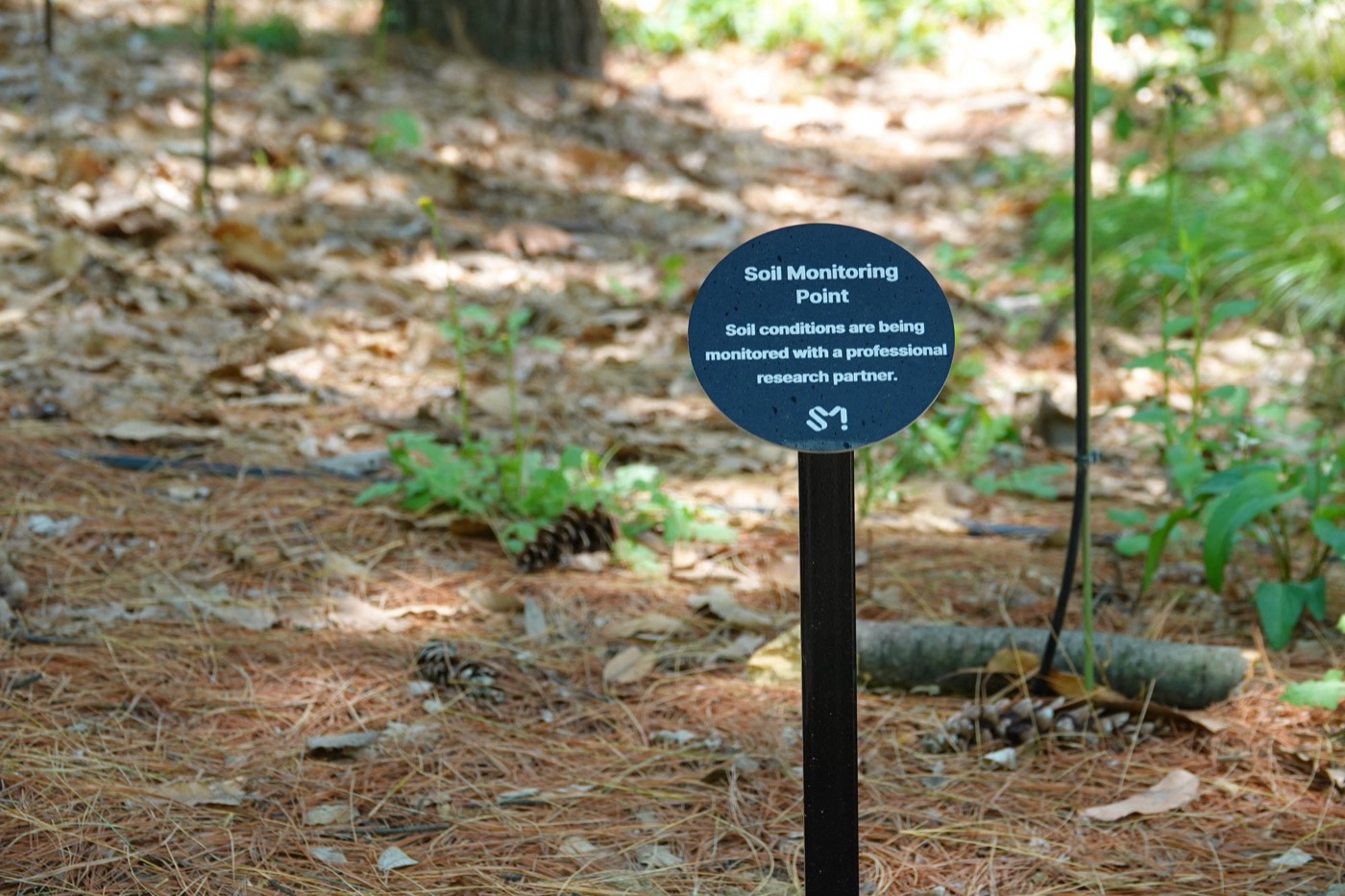
To evaluate the ecological effectiveness of these interventions, the project collaborates with soil scientists to monitor changes in soil organic matter, microbial diversity, and microbial activity. In this sense, Kwangya Forest functions not only as a public garden but also as a long-term living research environment investigating ecological restoration within urban parks.
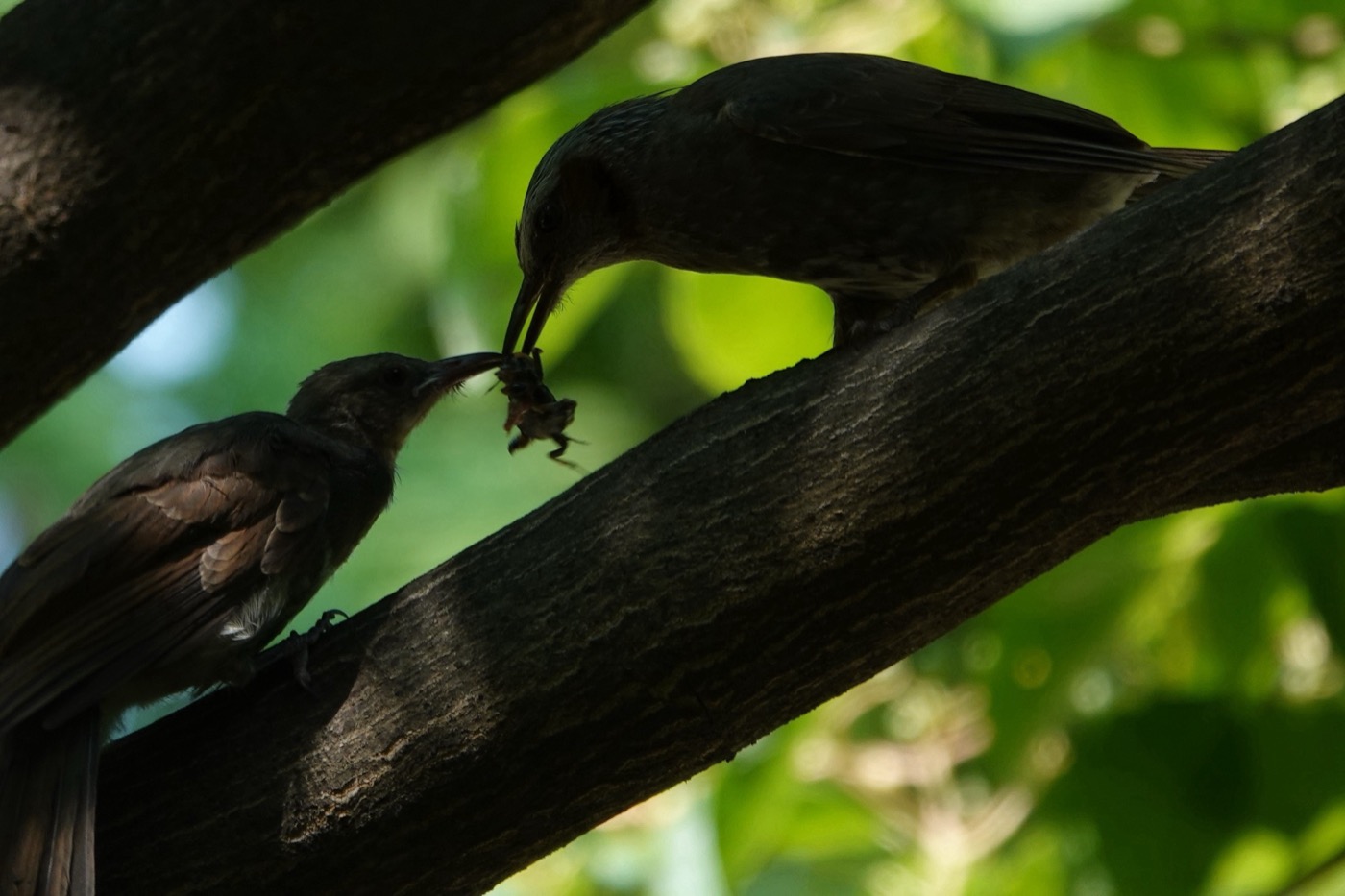
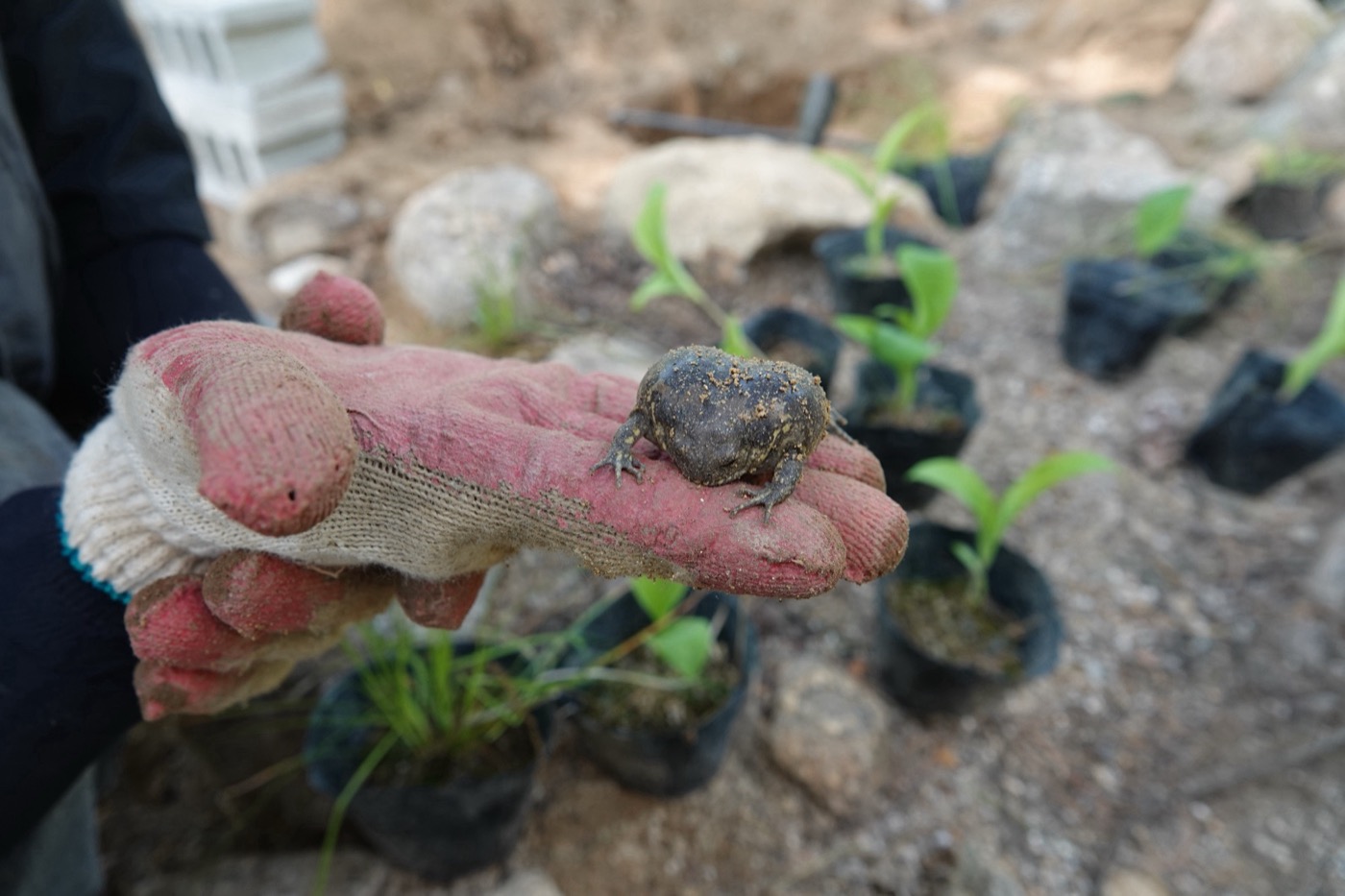
More than 120 plant species have been introduced throughout the forest garden, including 22 nationally protected species, helping communicate the value of vulnerable and ecologically significant plants to a broader public audience. The site has also become a habitat for various forms of urban wildlife, including the endangered Kaloula borealis (narrow-mouthed toad), classified as a Level II endangered species in Korea.
Stories about the plants, insects, birds, and amphibians inhabiting the garden are communicated through small interpretive signs dispersed throughout the site, encouraging visitors to discover ecological relationships through exploration.
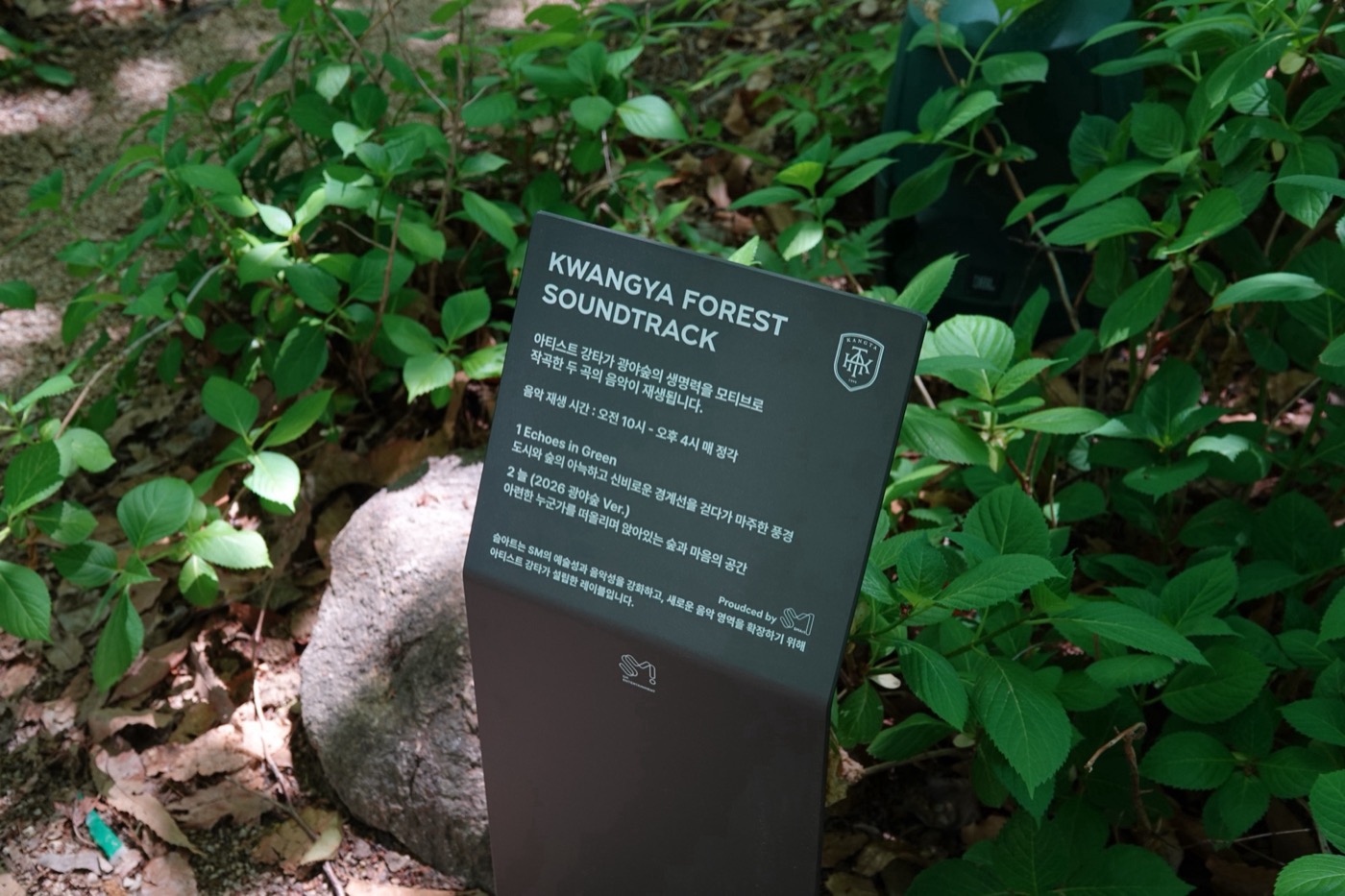
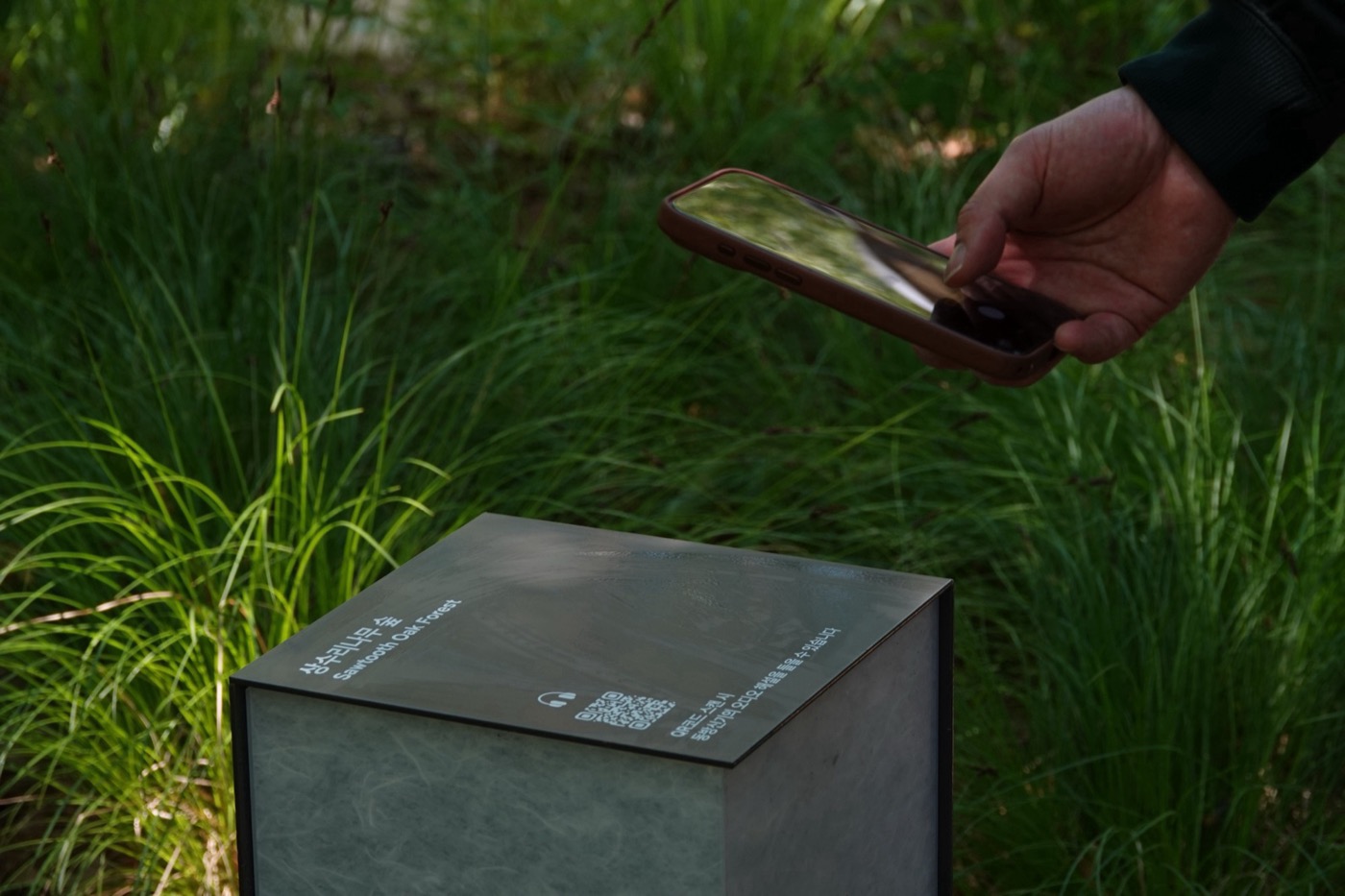
In 2026, during the Seoul International Garden Show held at Seoul Forest, artists from SM Entertainment participated in producing an audio docent program for the garden. Recordings narrated by K-pop artists were integrated into lighting elements distributed throughout the site, allowing visitors to encounter stories about urban ecology and non-human life while moving through the forest garden. Artist Kangta also composed a special soundtrack created exclusively for Kwangya Forest. Through this approach, Kwangya Forest has evolved into a cultural and educational platform connecting popular culture with ecological awareness.
The project continues through close, long-term collaboration between the funding partner, designers, researchers, and community partners. Mindful Gardeners, a social enterprise involved since the project’s earliest planning stages, works together with company employees and their families, who participate directly in stewardship and volunteer maintenance activities.
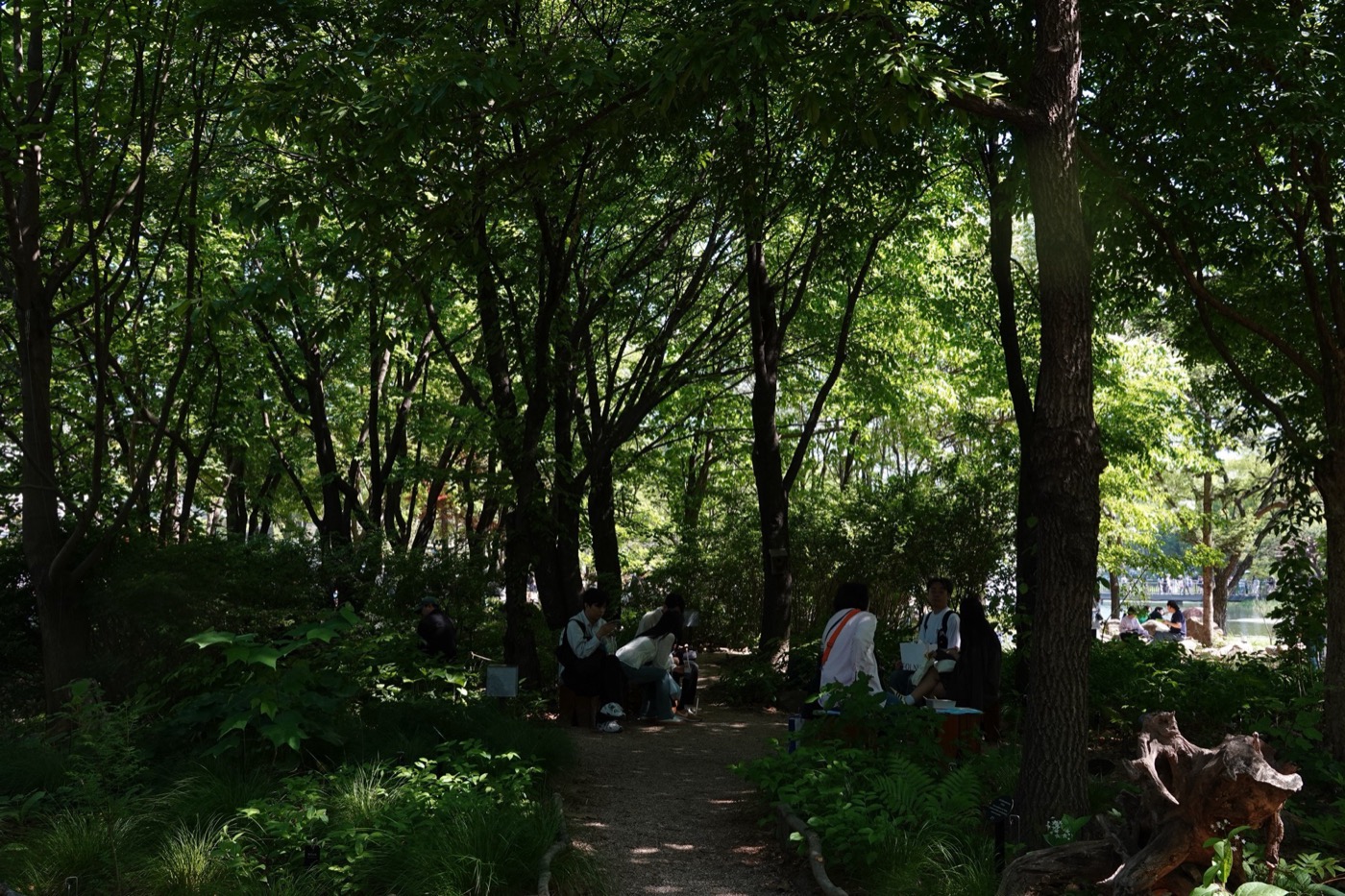
Kwangya Forest also represents a leading example of a biodiversity-oriented garden in which corporations, researchers, and designers collaboratively monitor ecological and soil transformations after construction. Beyond its ecological and educational roles, the garden quietly serves visitors as a place to pause, rest, and encounter diverse forms of life within the contemporary city.
Credit
Design & Construction: STUDIO CHO.SHIN.SUNG
Gardening Program: Mindful Gardeners
Lighting: YM electronics
Soil Monitoring: Soil Resources Environmental Lab, Kangwon National University
Funded by SM Entertainment
Cooperation: Seoul City
https://maps.app.goo.gl/npVQTgNuCFHS3cyXA
73652


LILA 2026 Sponsor