Rain Garden – Jangpyeong Neighborhood Park
choshinsung.com/
2026 Public Projects / South Korea / Built in 2024 /
![Kwangya Forest was first created in 2023 through funding provided by SM Entertainment—one of the most influential K-pop entertainment companies in South Korea—as a project dedicated to ecological conservation and ecological awareness. Since its initial construction, the garden has expanded twice and now consists of three interconnected forest gardens: the Kalopanax septemlobus forest established in […]](https://landezine-award.com/wp-content/uploads/2026/05/HERO-IMAGE_Kwangya-Forest-Zone-1-600x400.jpg "KWANGYA FOREST")
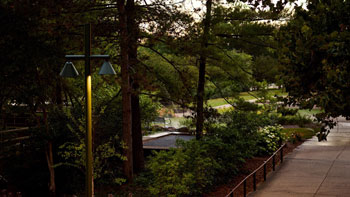
Jangpyeong Neighborhood Park is located in Dongdaemun-gu, Seoul, embedded between large apartment complexes and connected to the nearby Jungnangcheon stream by a pedestrian bridge. Despite its relatively small size, the park is heavily used by local residents due to its proximity to a community sports center and surrounding housing.
In 2024, Seoul Green Trust—working in partnership with Dongdaemun-gu to improve green infrastructure in districts with limited public open space—initiated a biodiversity enhancement project for the park with support from Porsche Korea. Our team participated as both landscape architect and construction manager, leading the process from site selection and ecological research to design and build the garden.
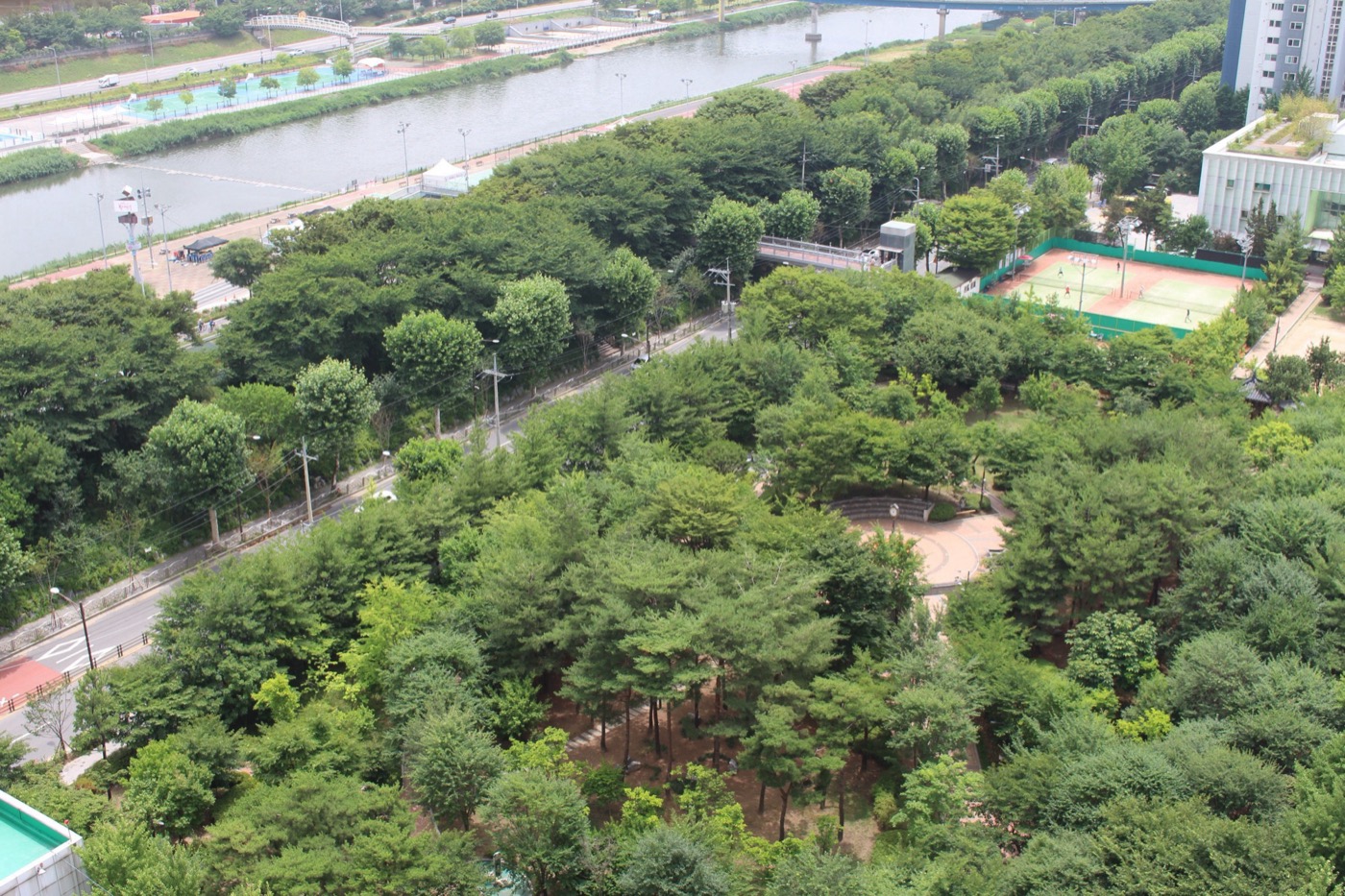
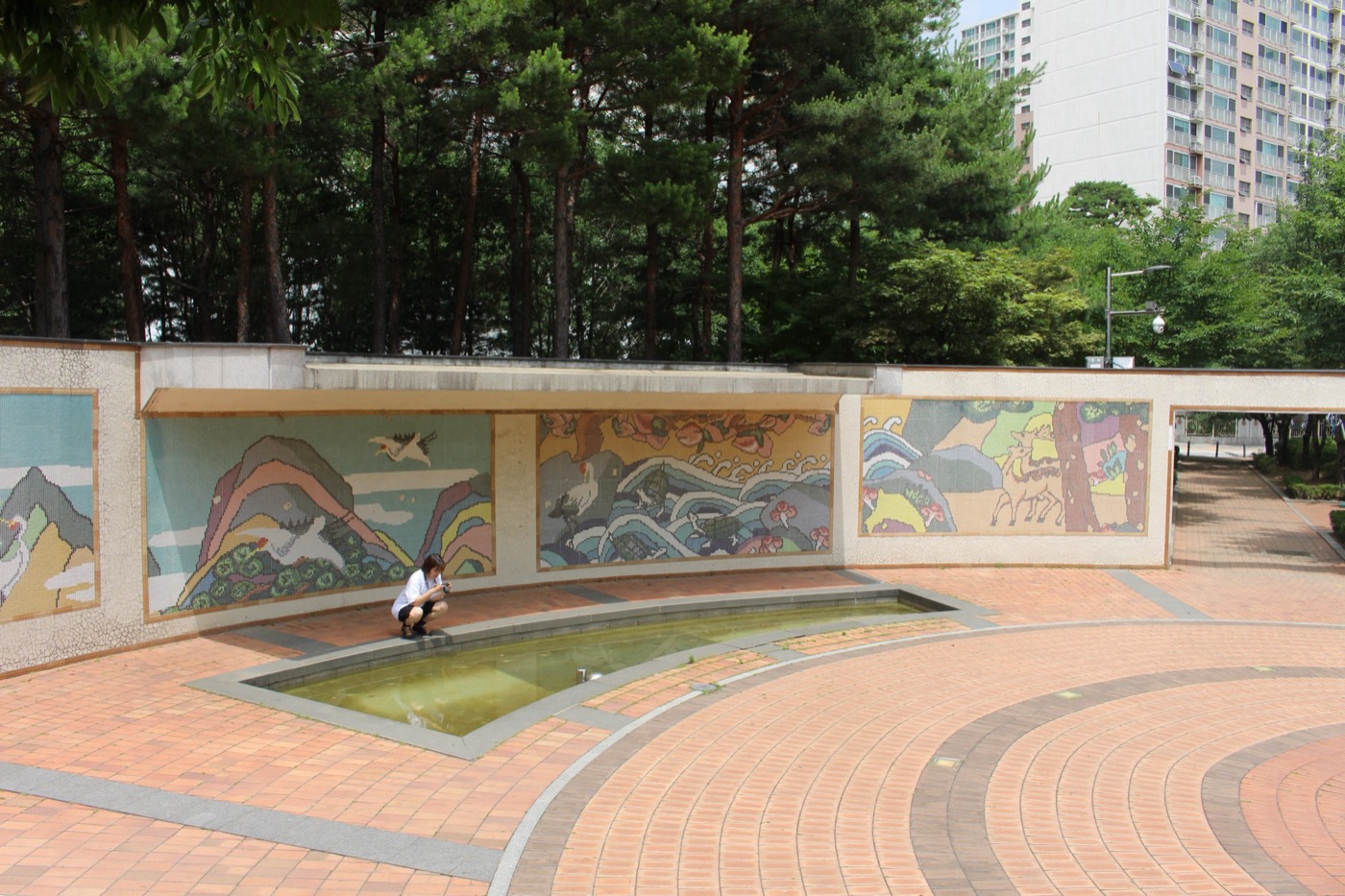
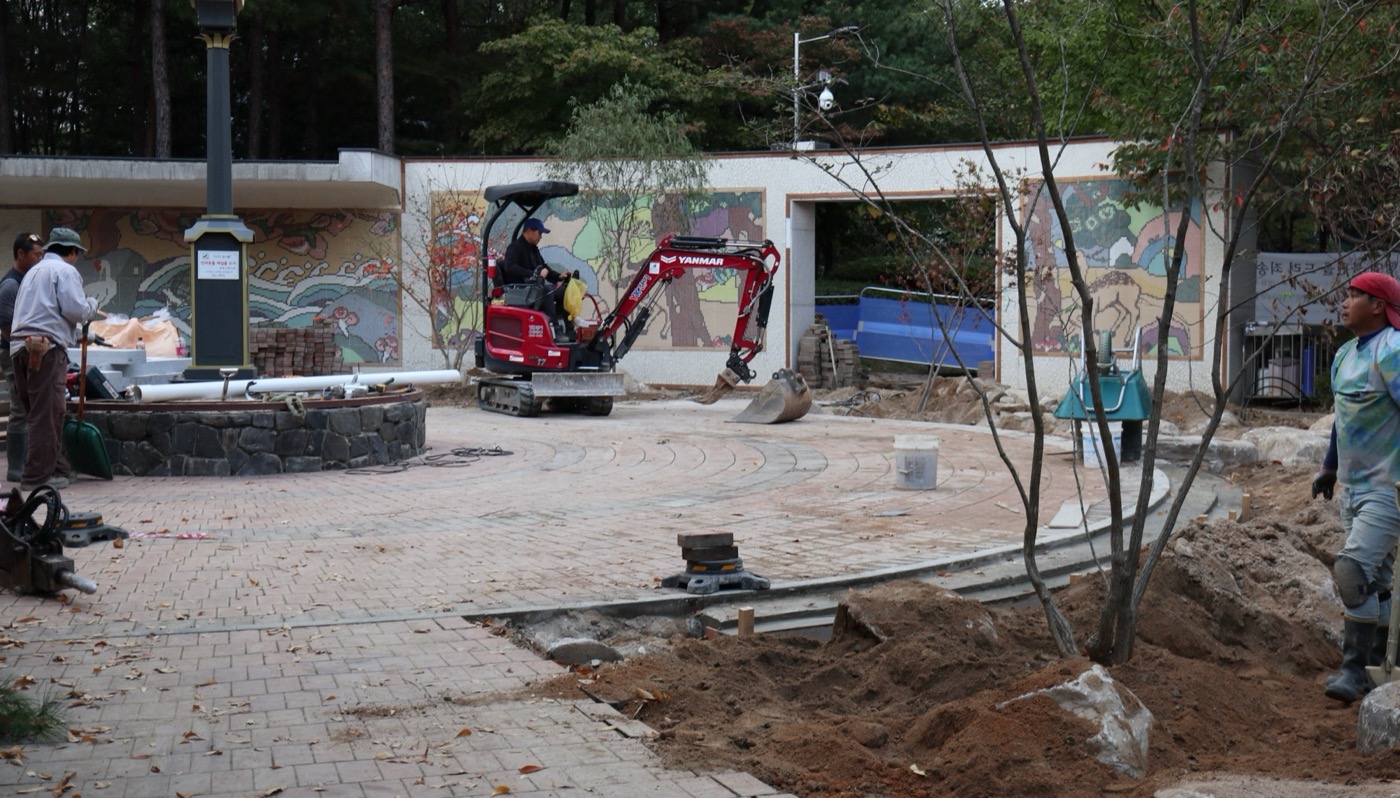
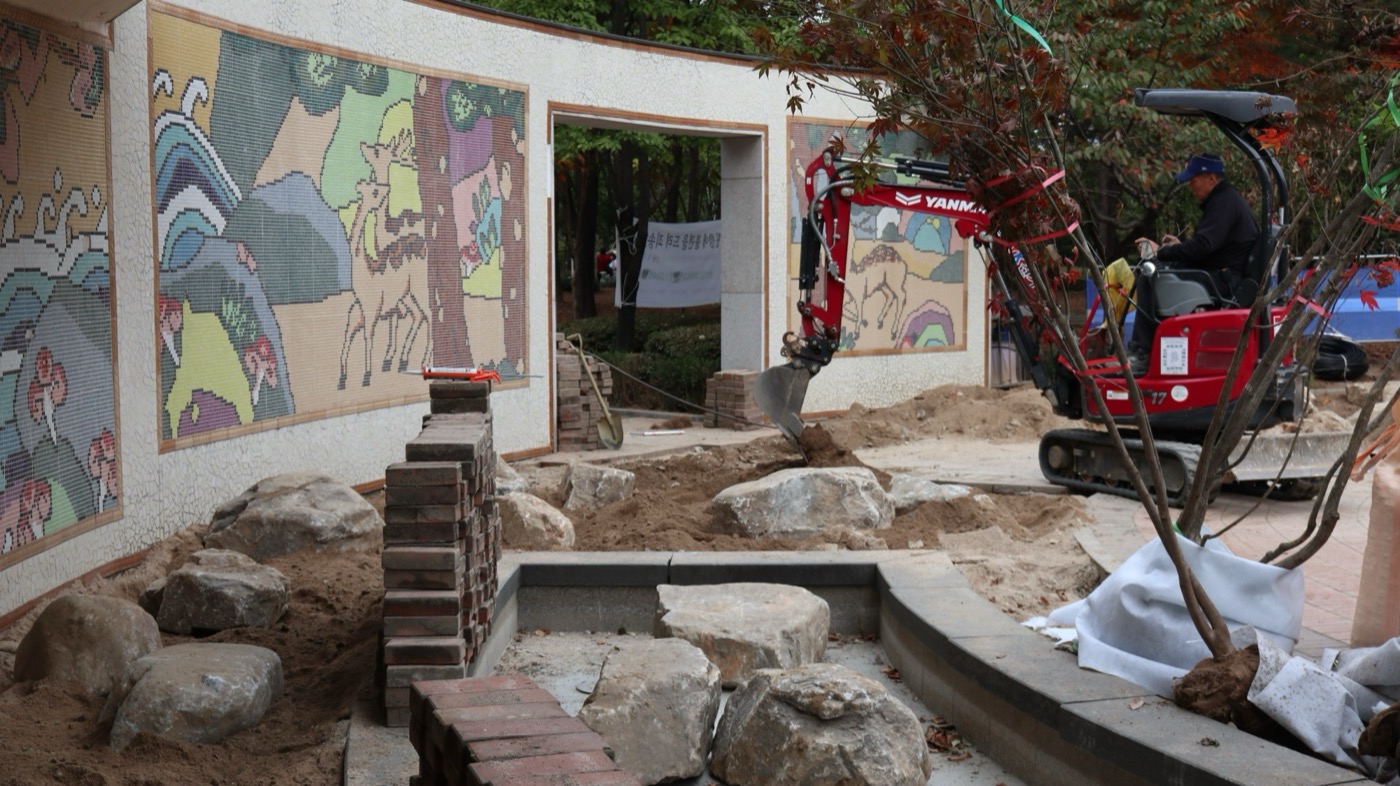
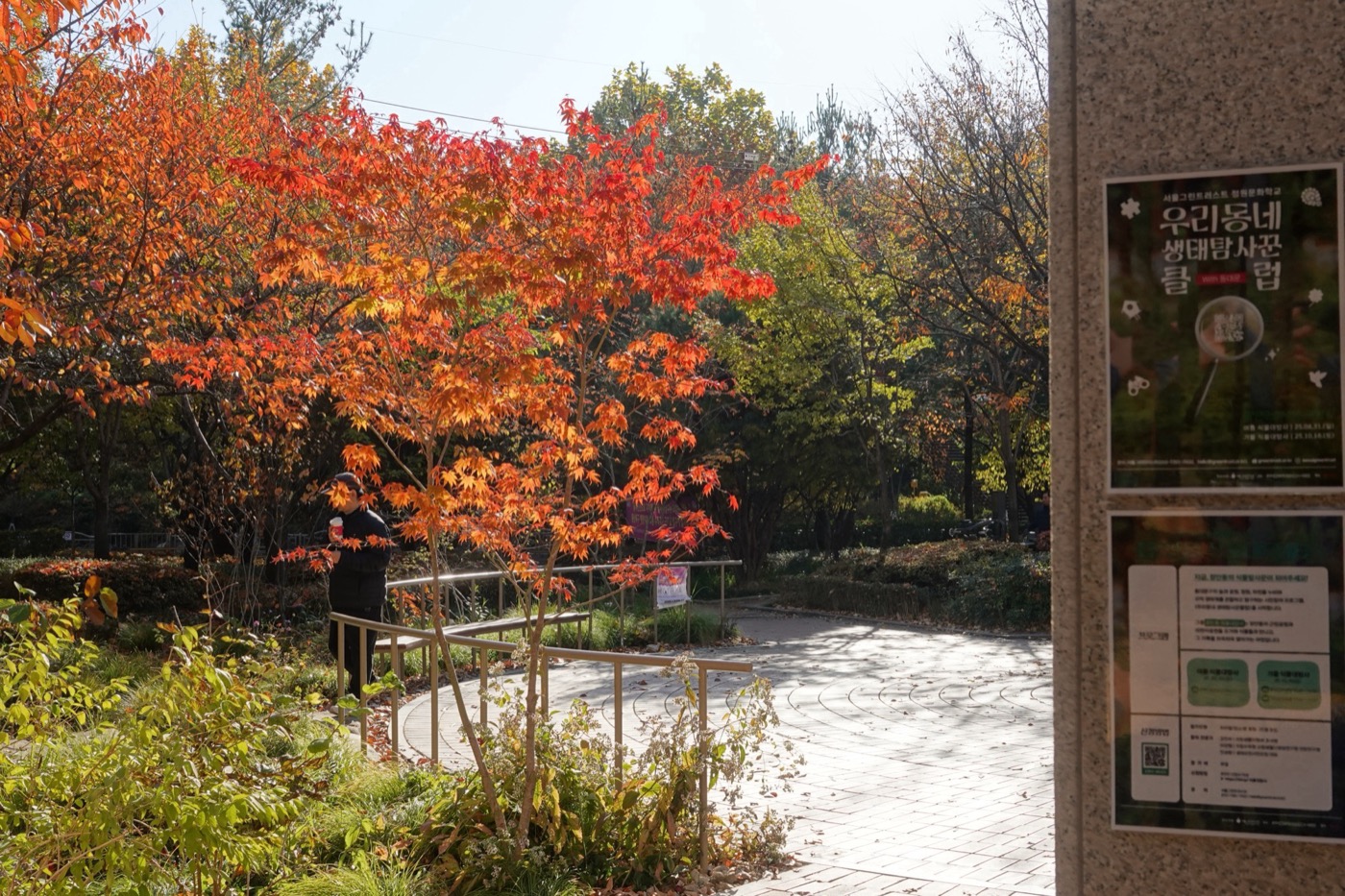
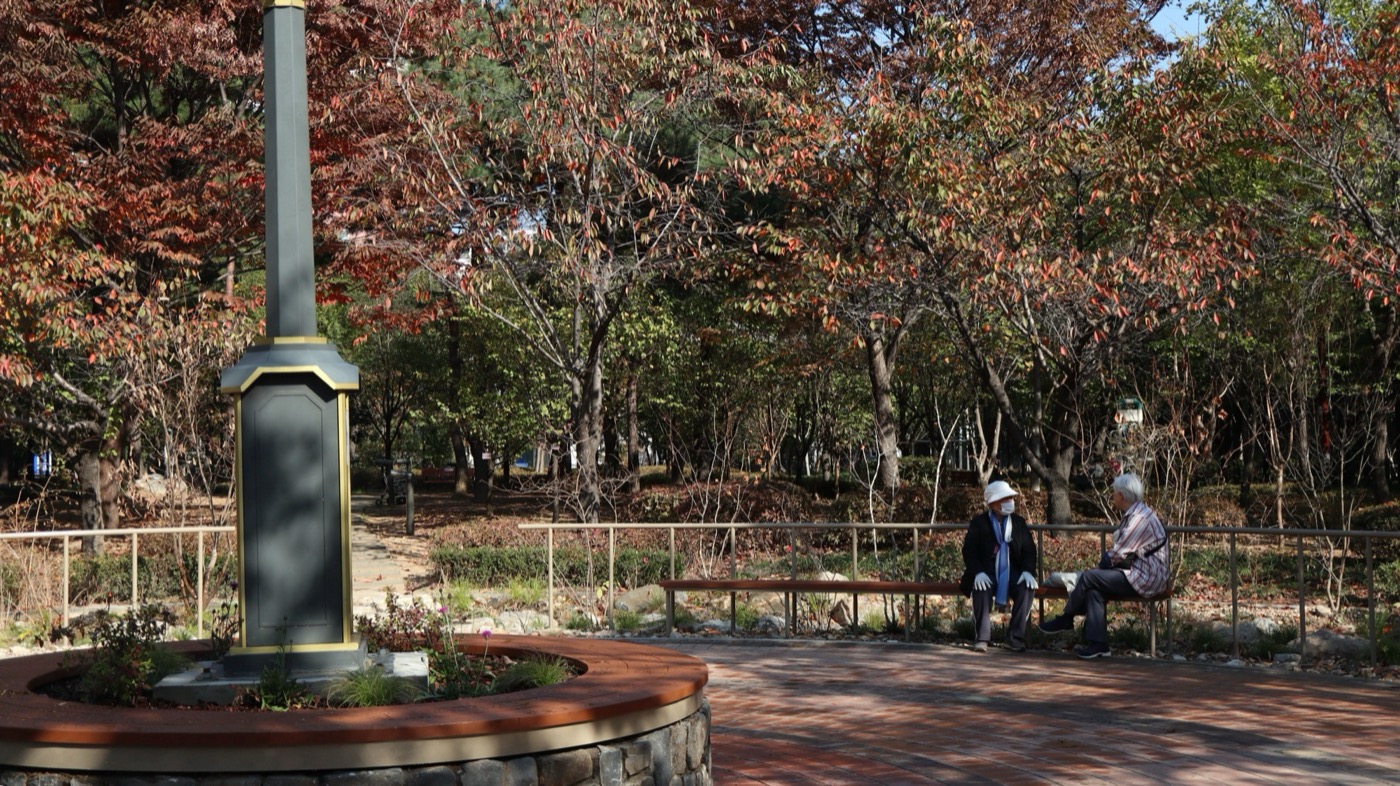
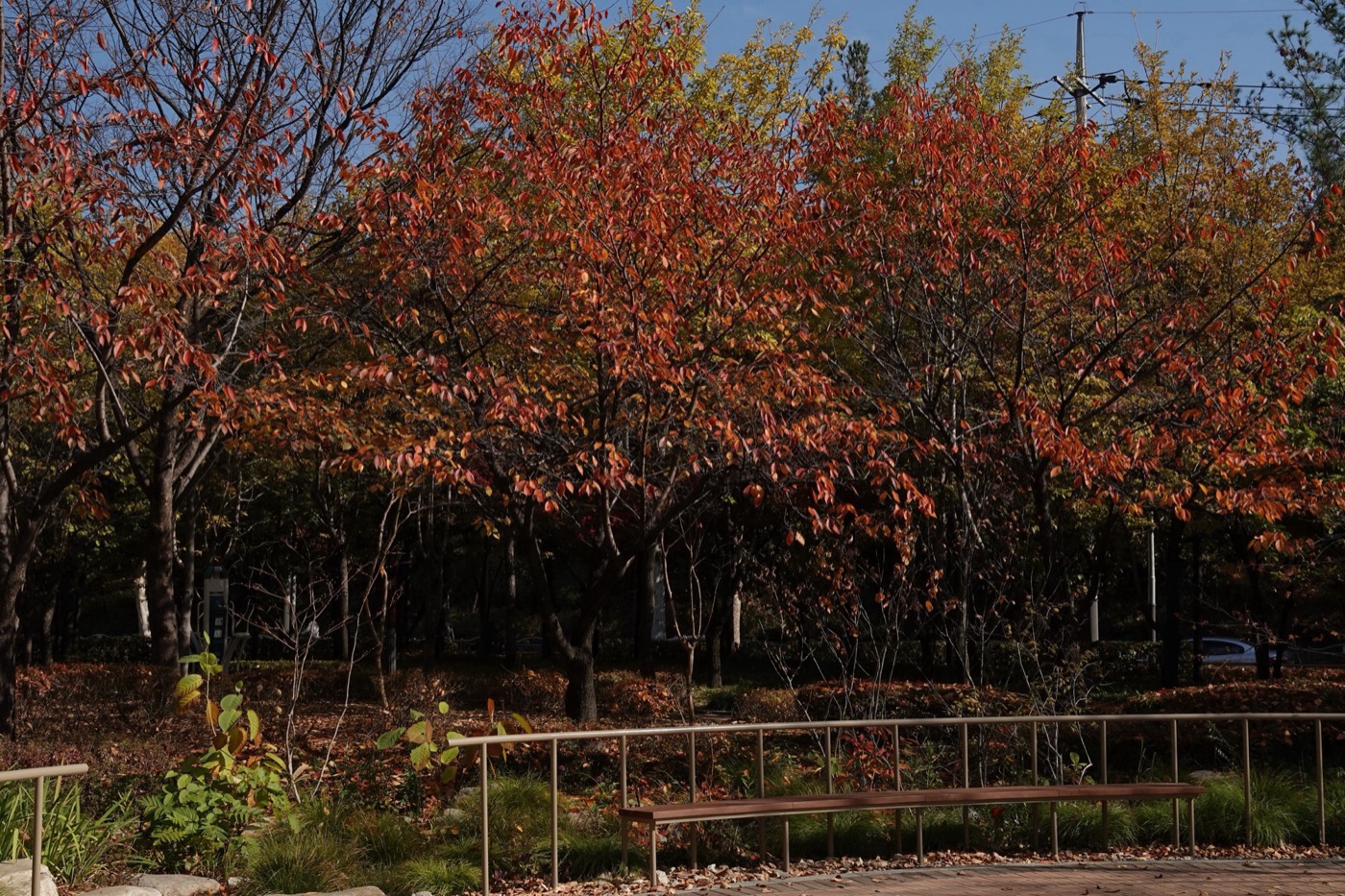
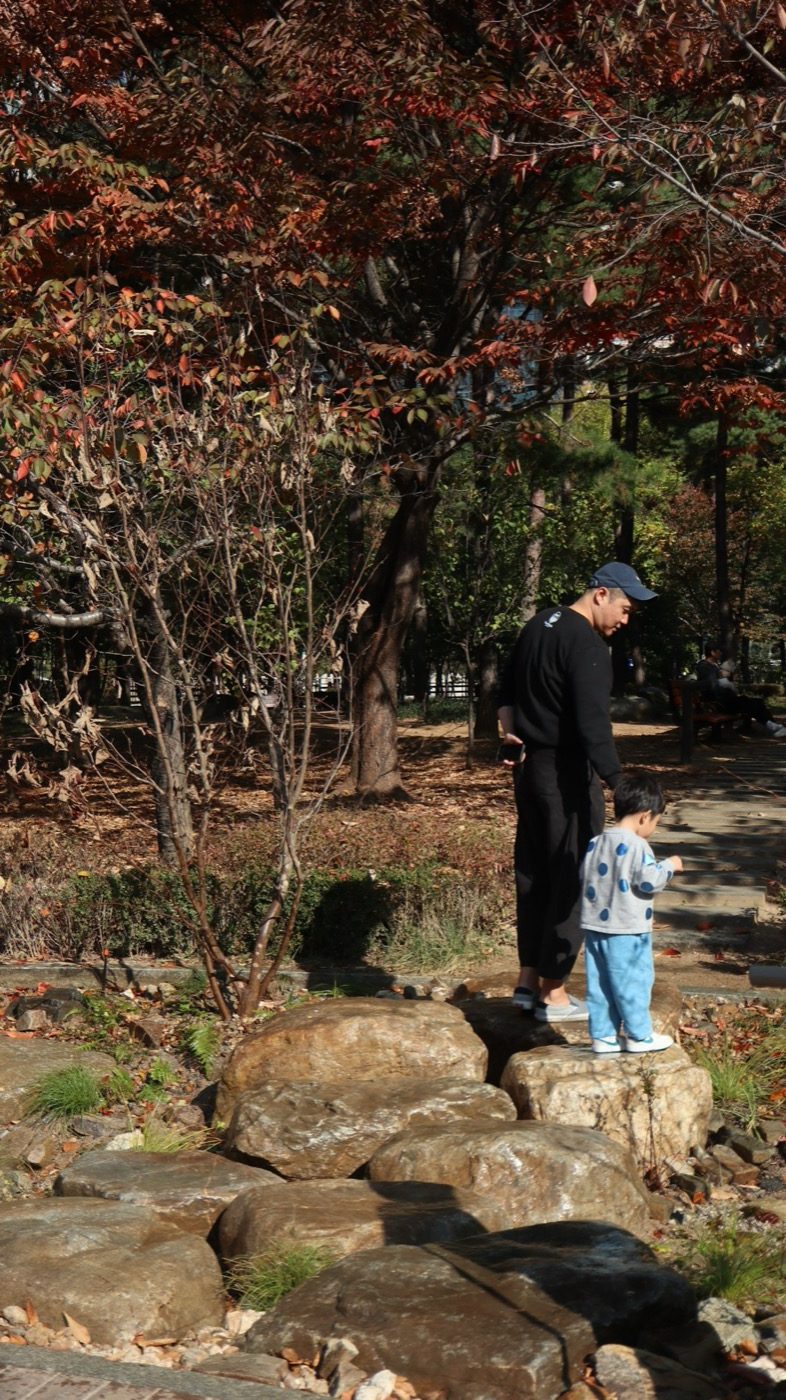
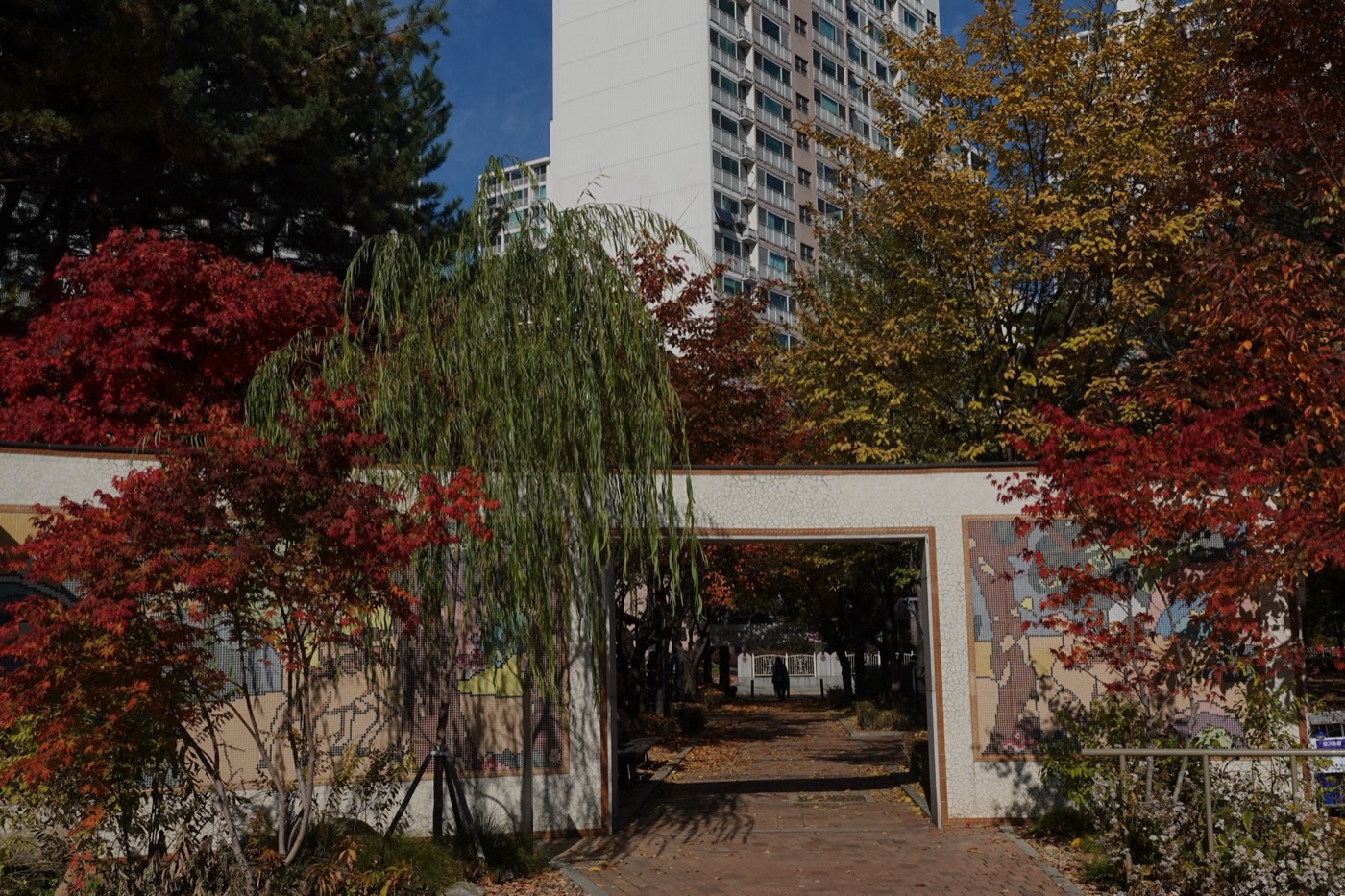
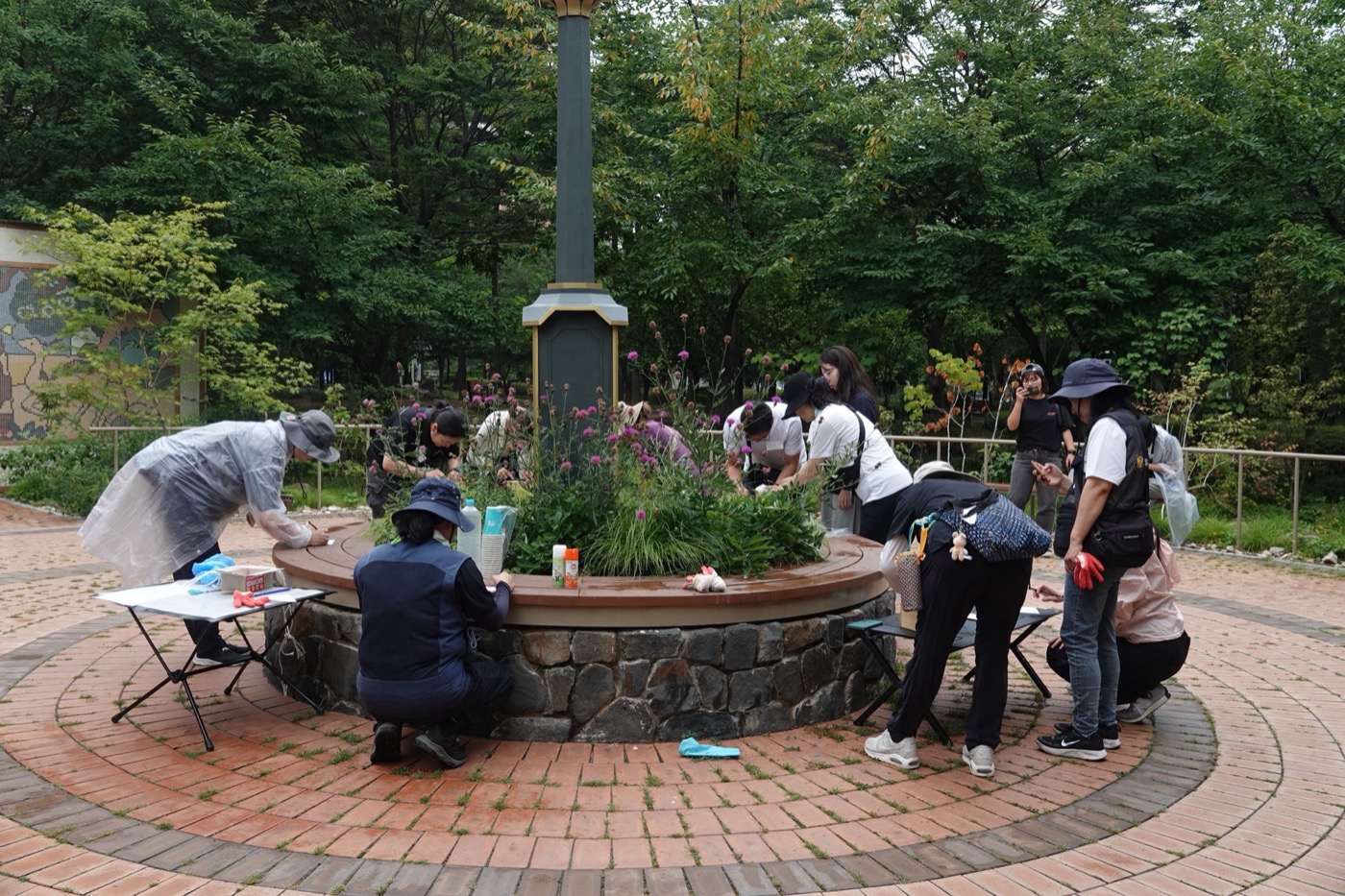
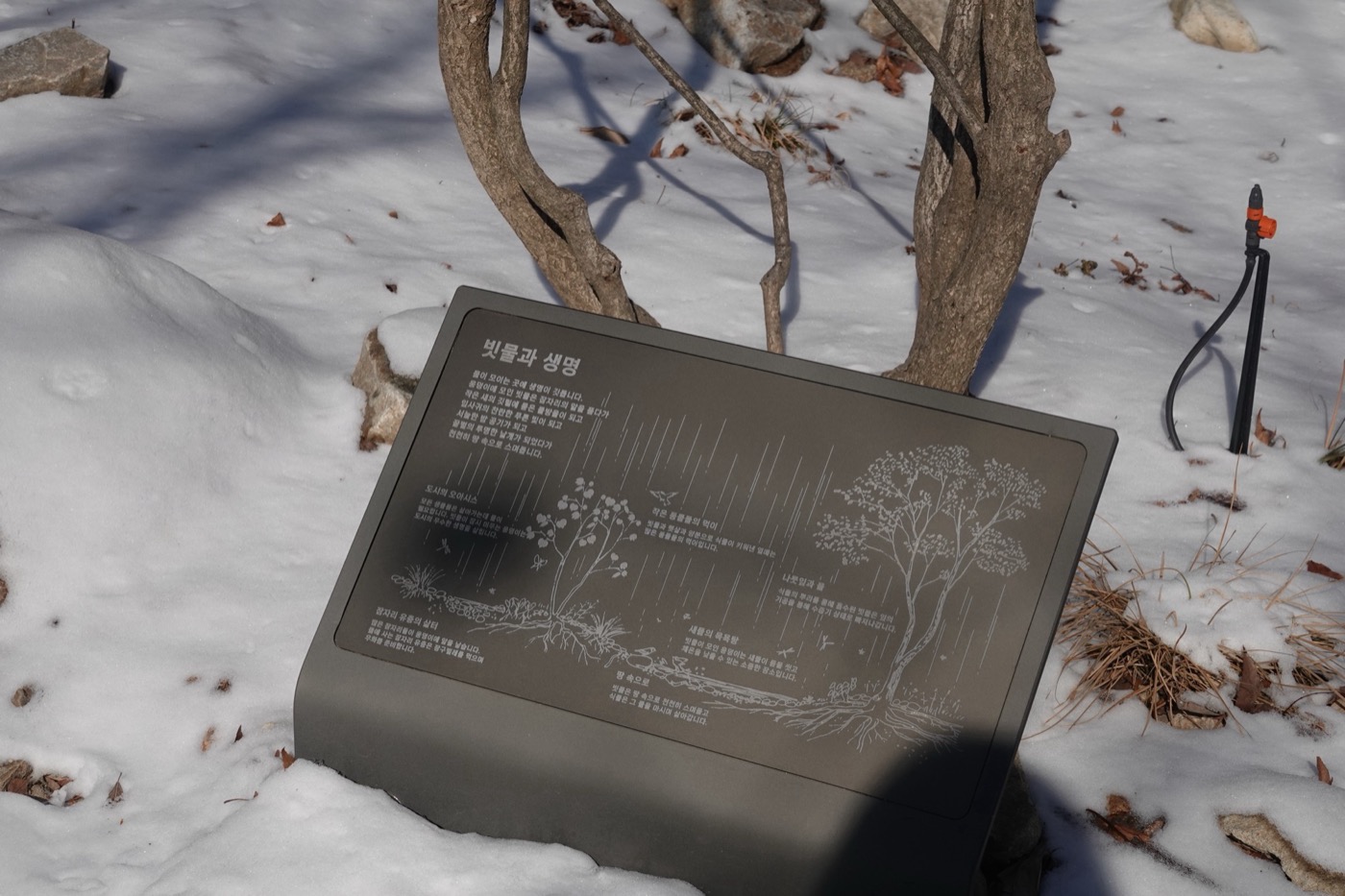
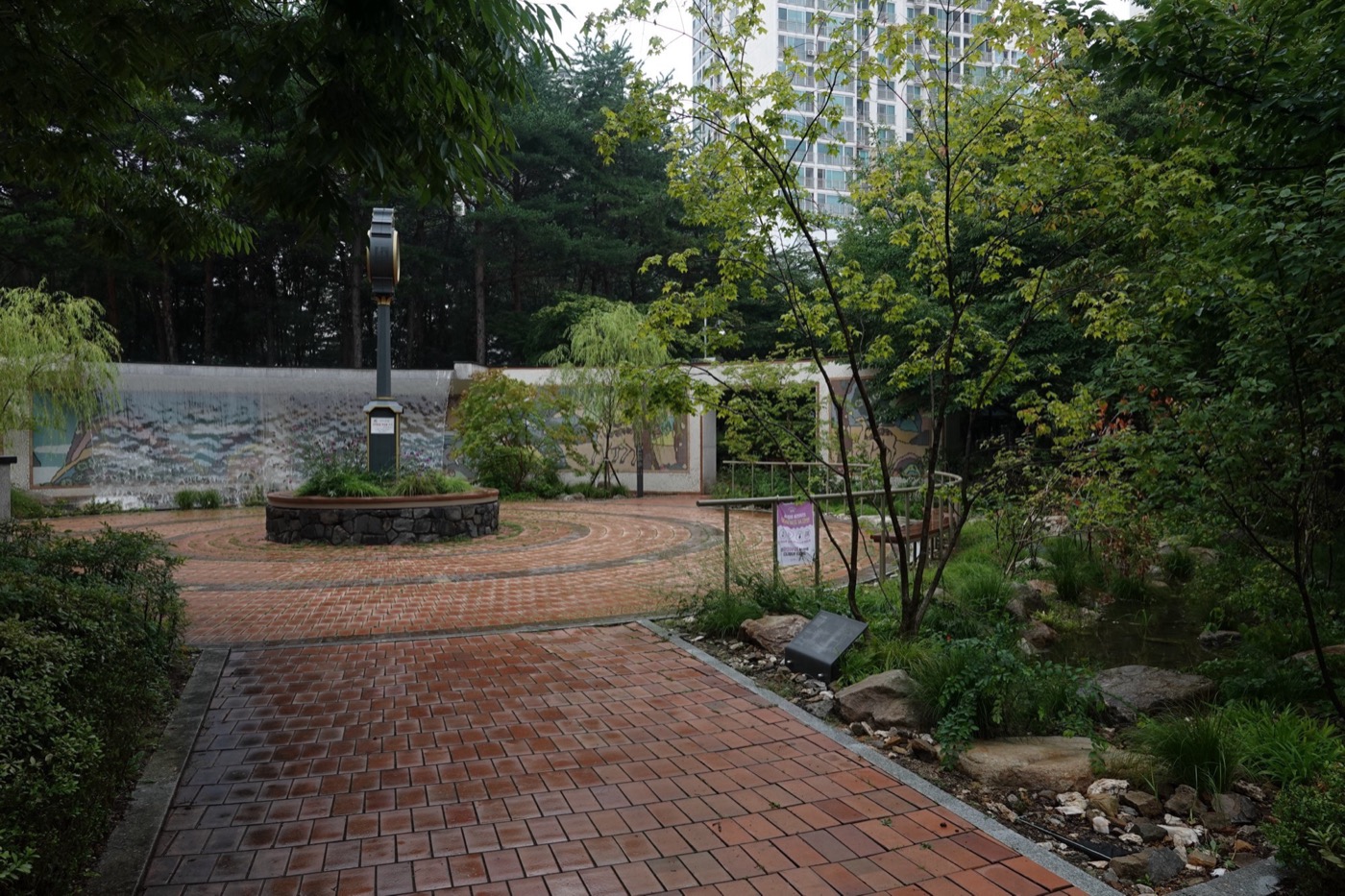
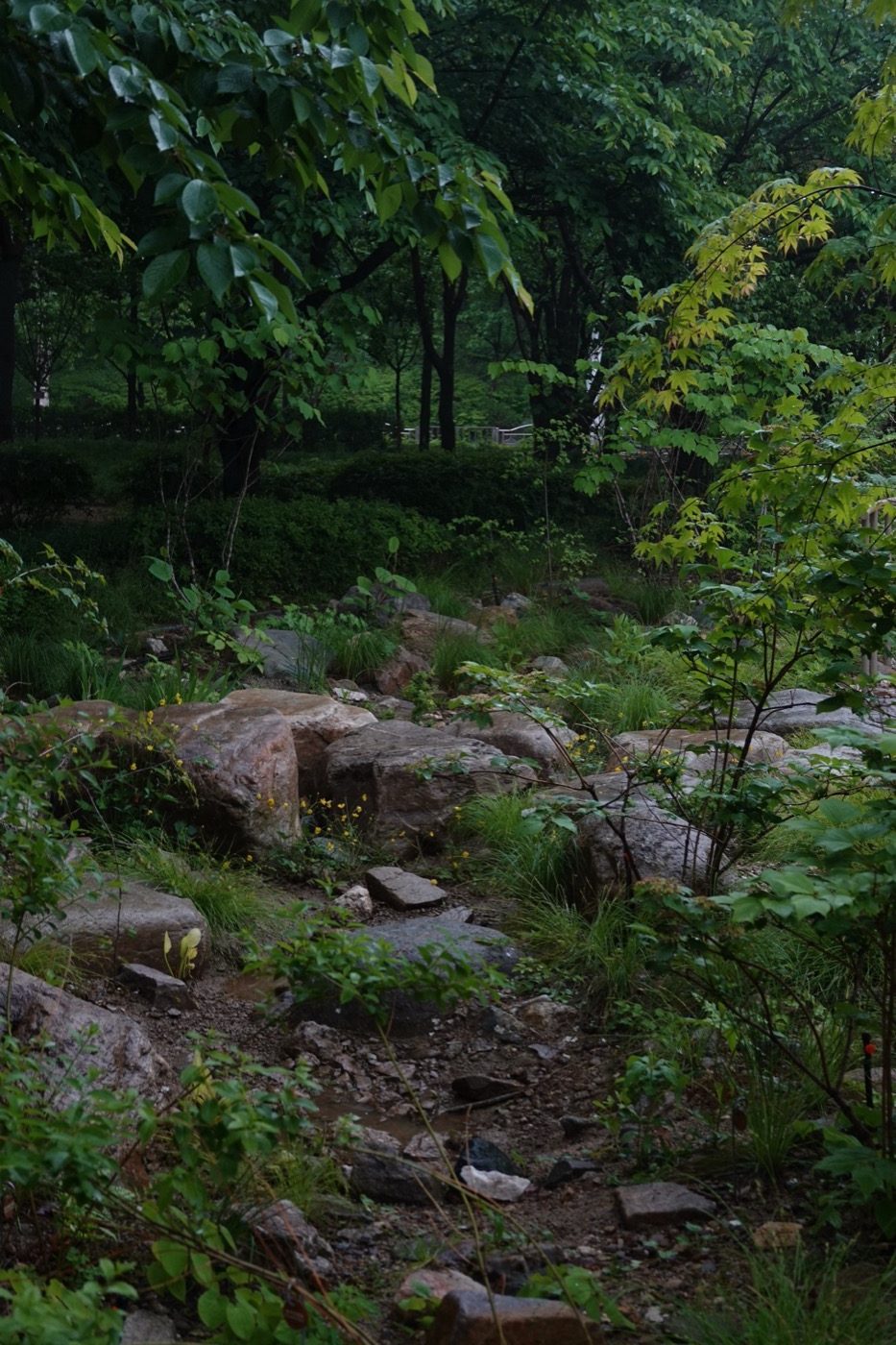
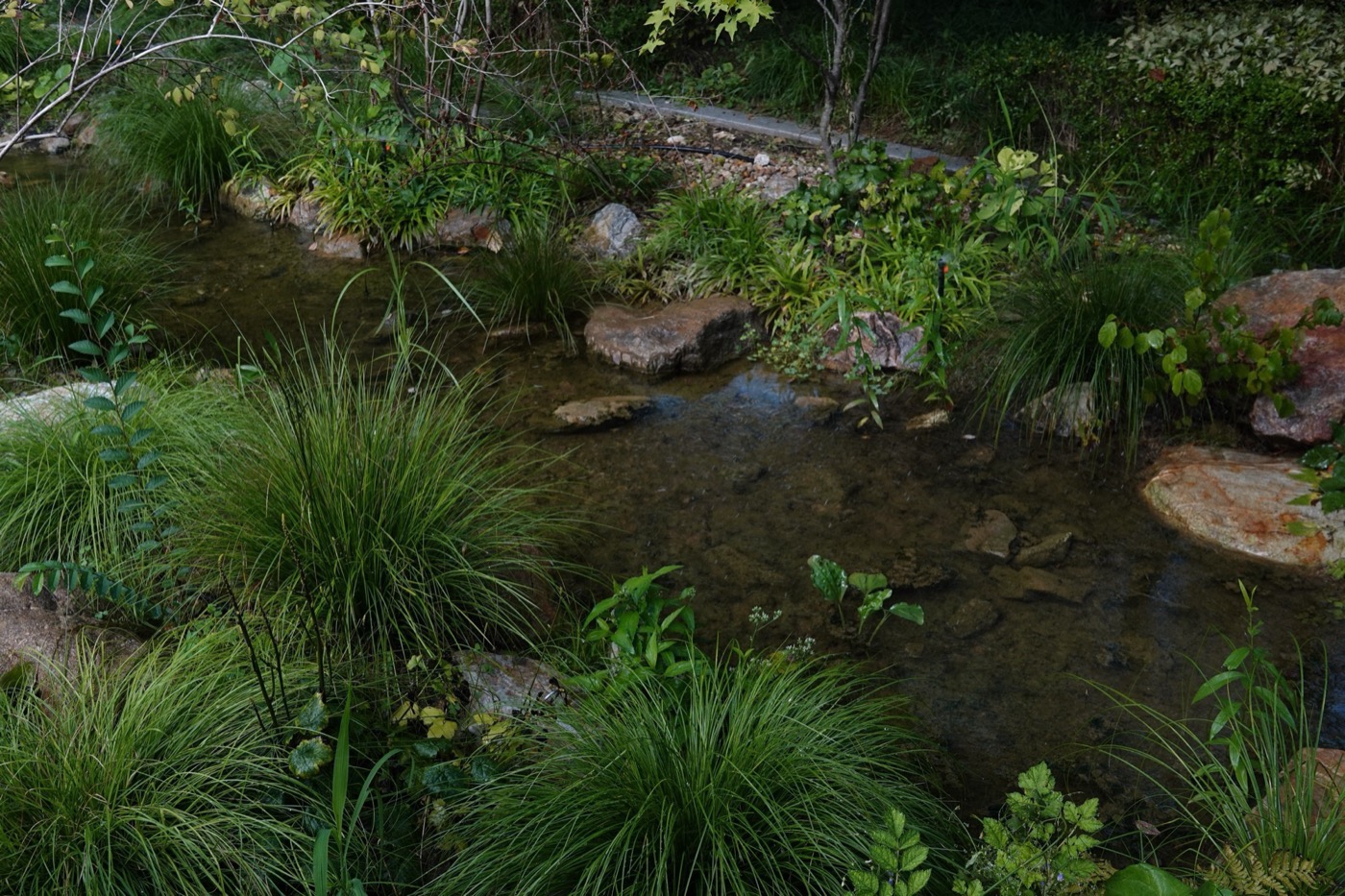
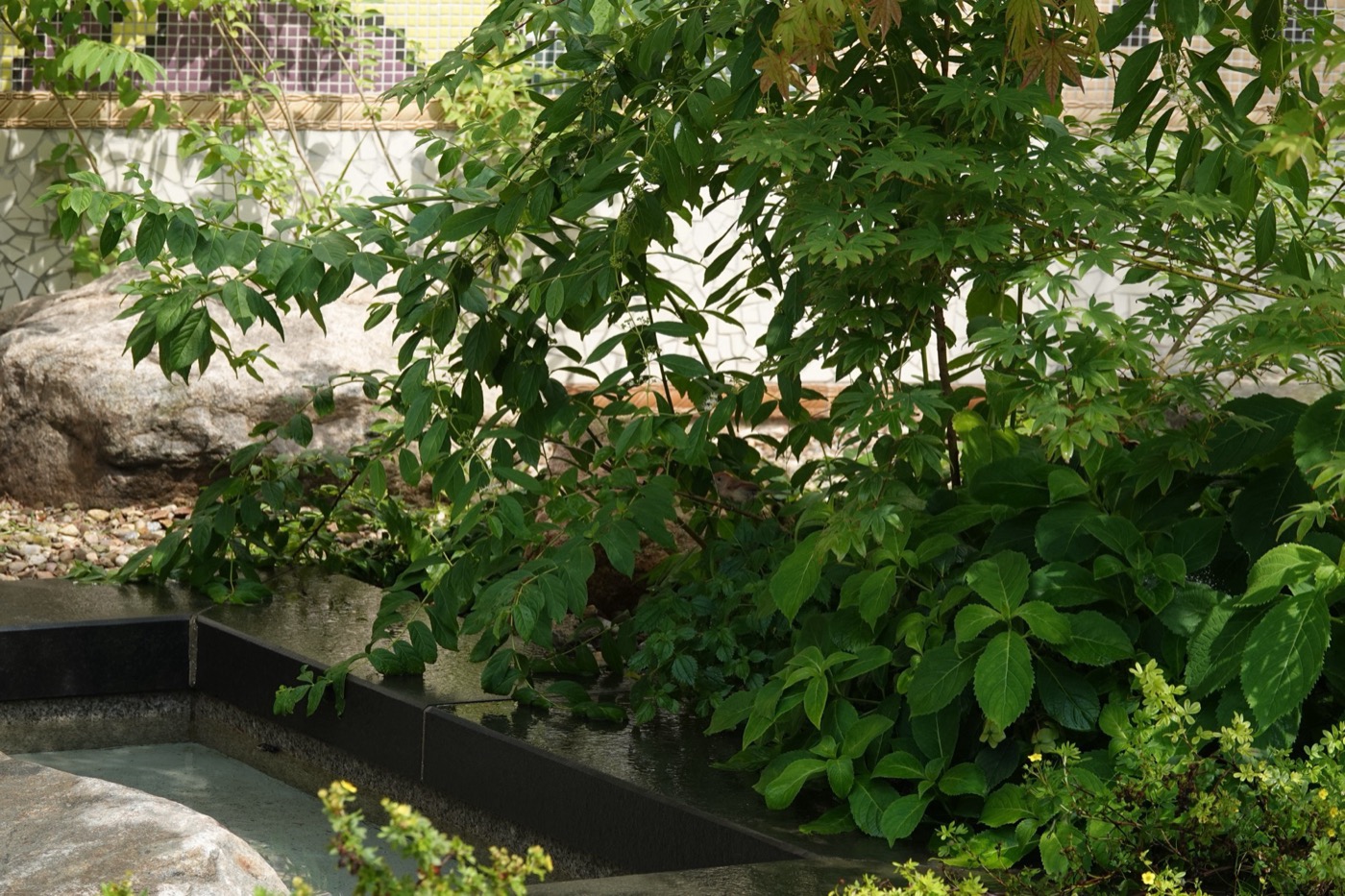
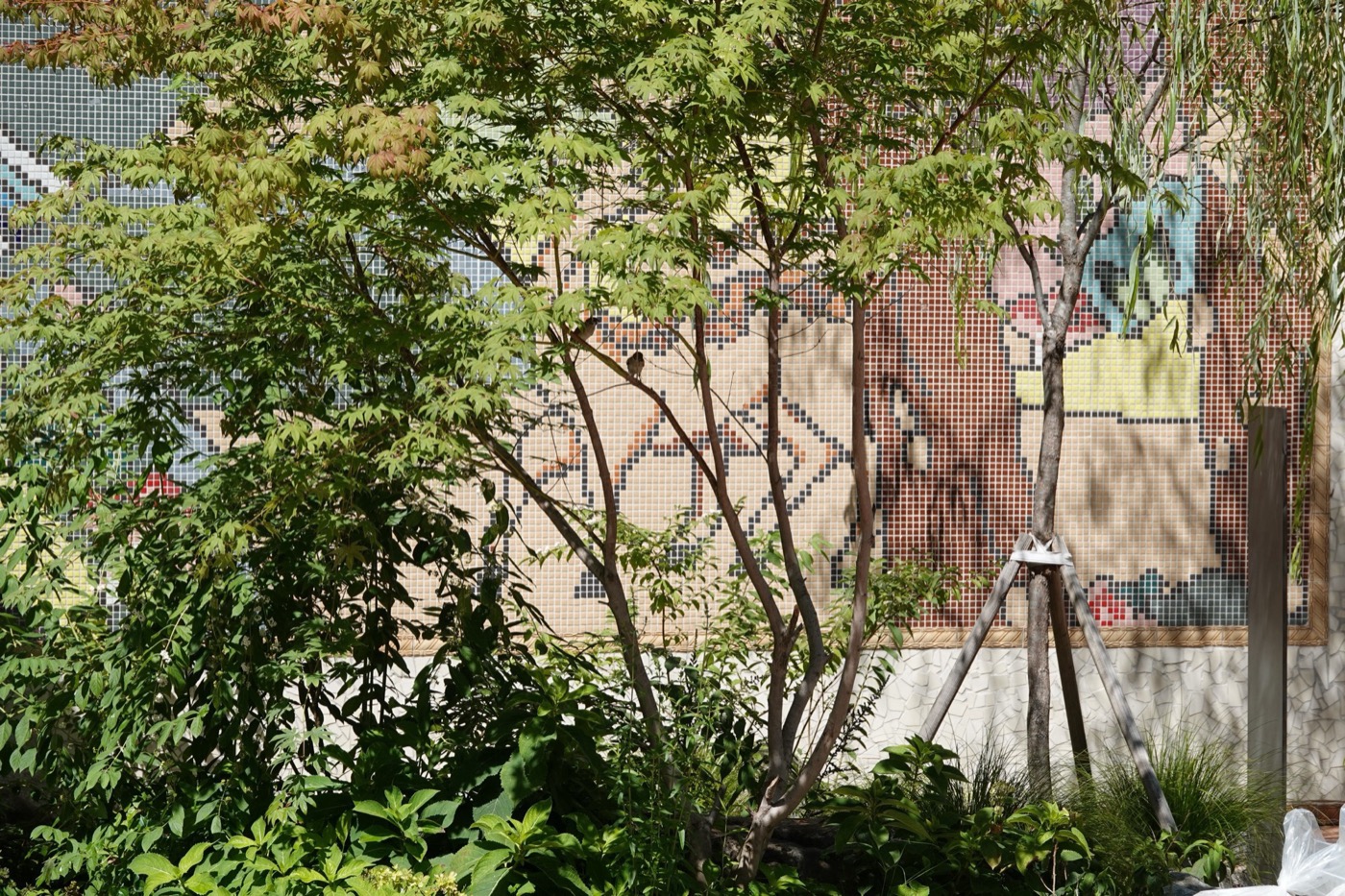
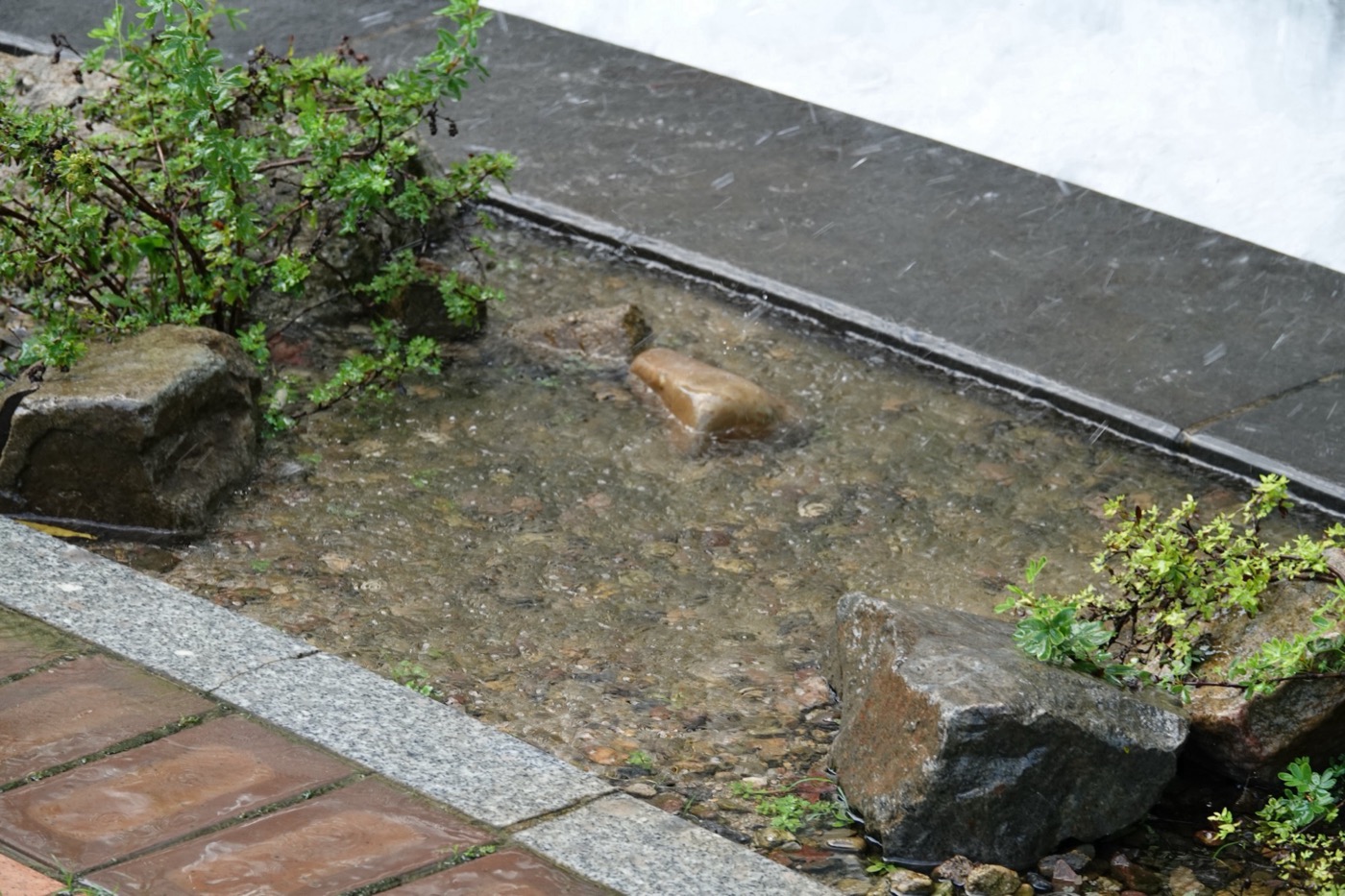
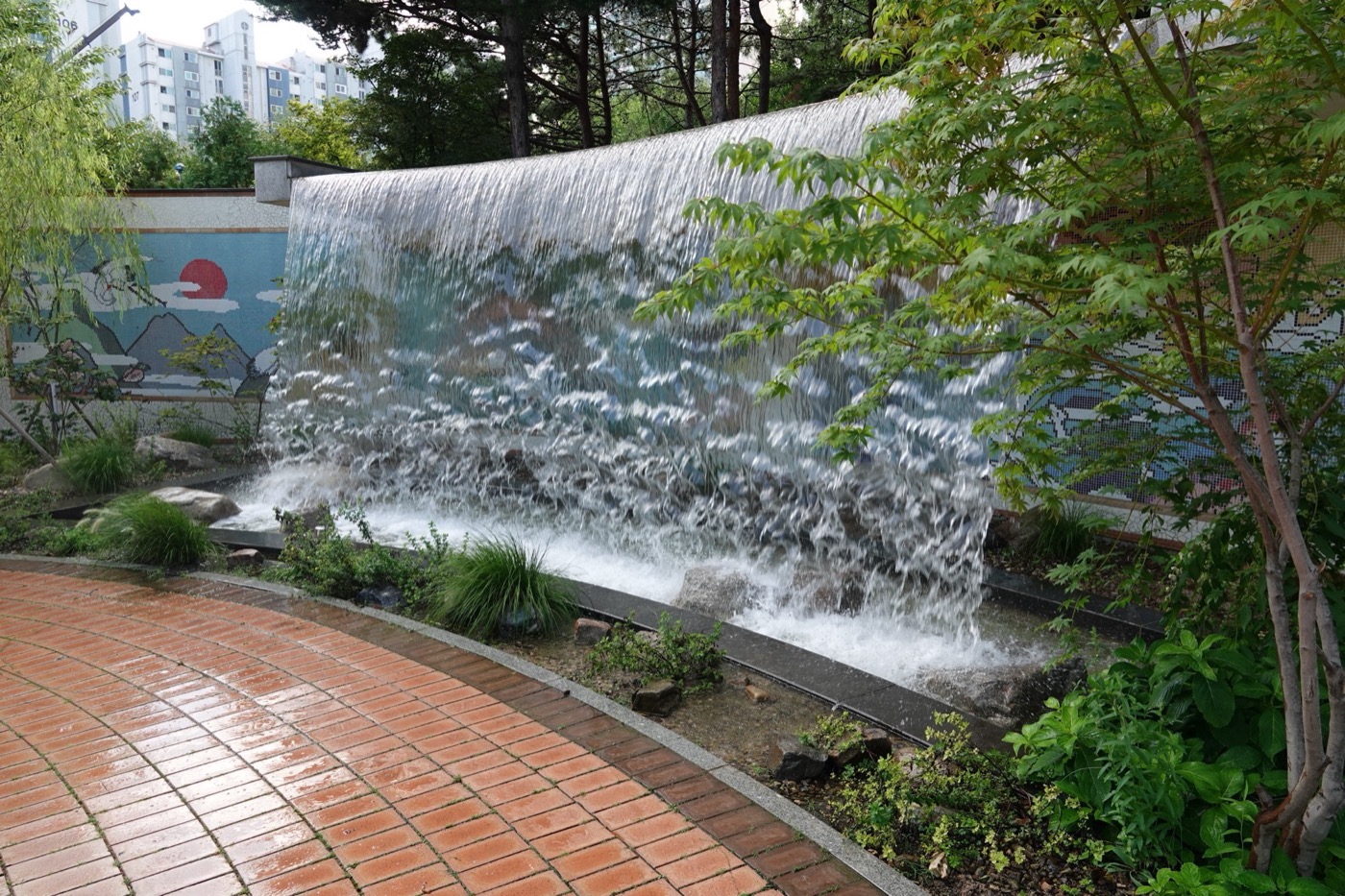
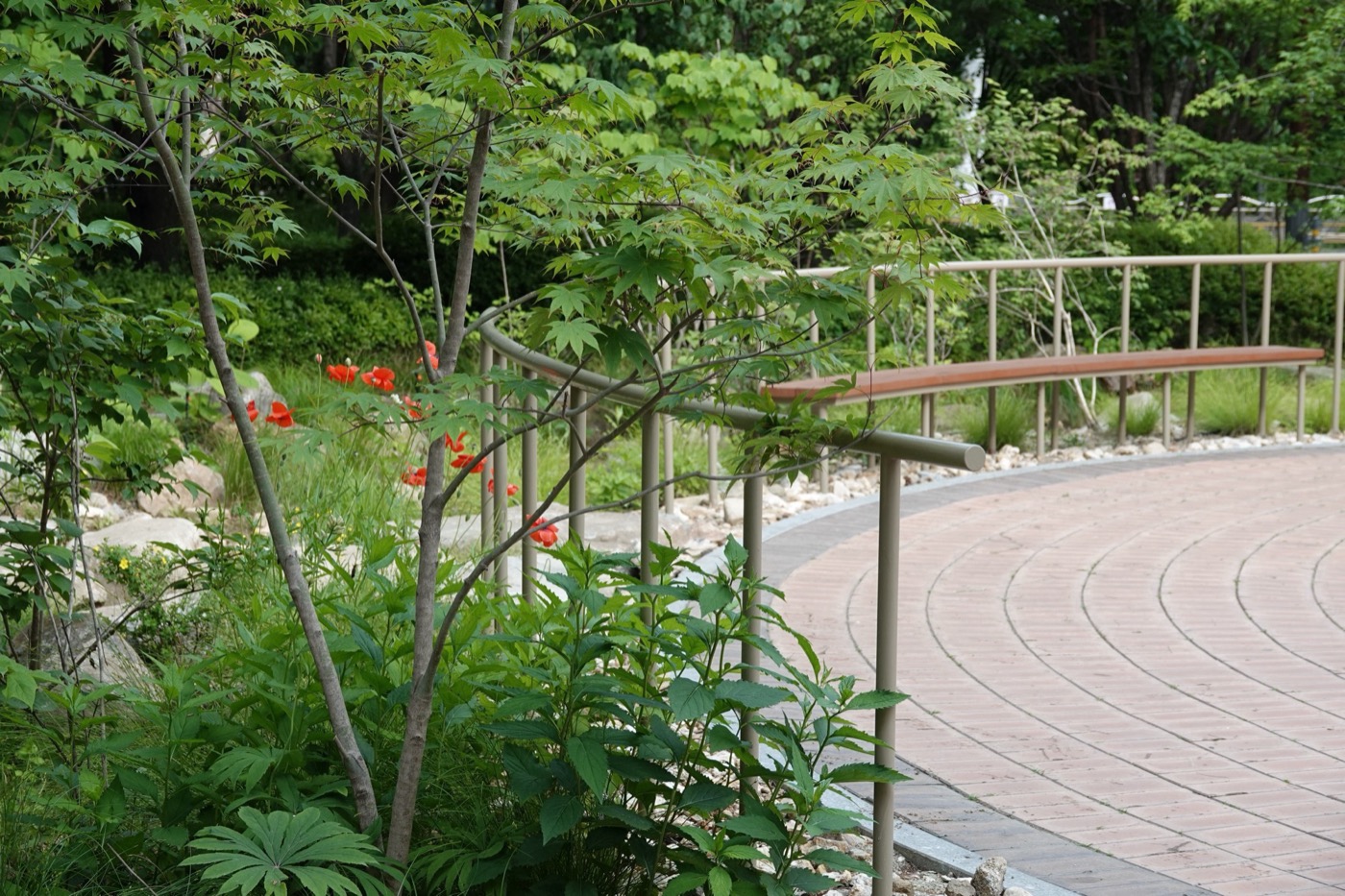
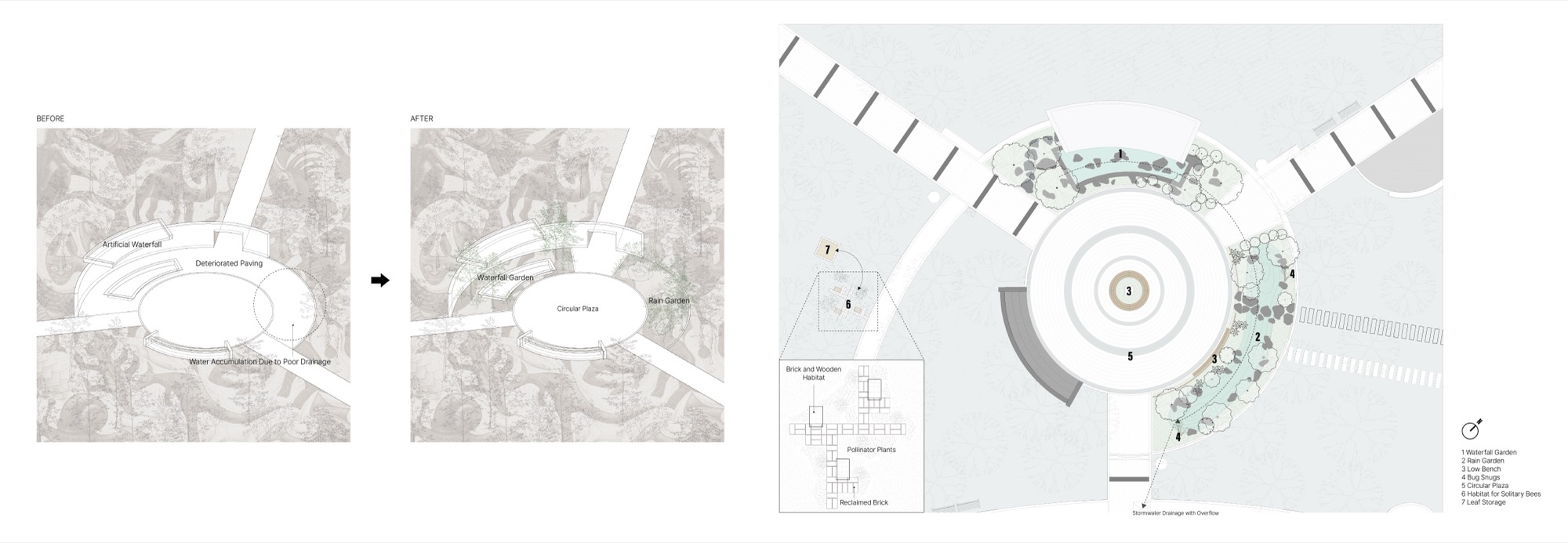
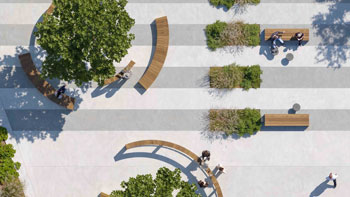
At the center of the park lies a circular plaza with an artificial waterfall, seating stands, and a clock tower. Although surrounded by mature trees, this plaza functioned as the park’s most human-centered and thermally exposed space. The waterfall provided only temporary visual cooling while consuming large amounts of water in ways inaccessible to other forms of life. At the same time, aging paving and deteriorating infrastructure revealed ongoing ecological and maintenance issues: sunken pavement collected sediment after rainfall, and parts of the retaining structure surrounding the water basin were beginning to fail.
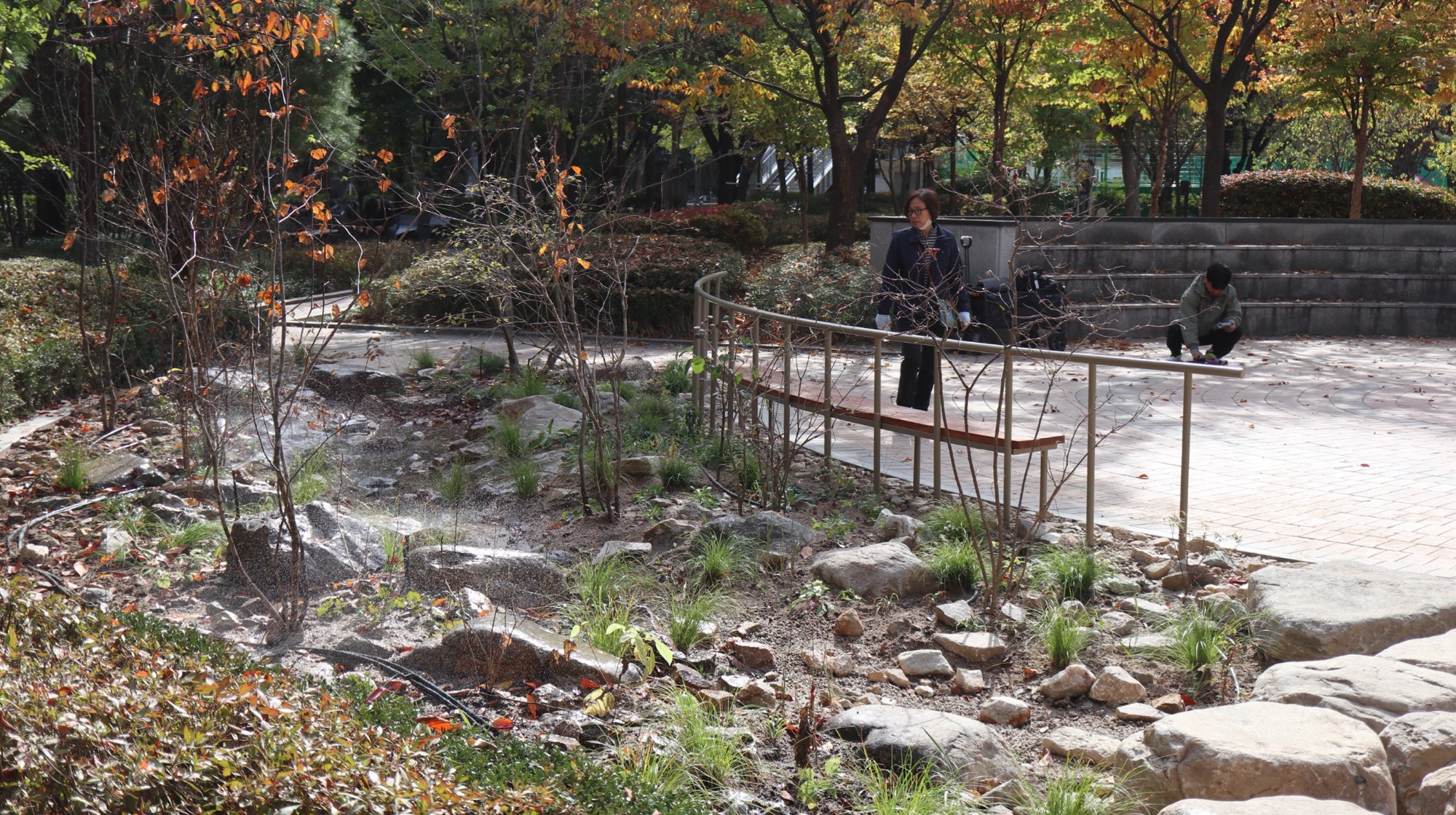
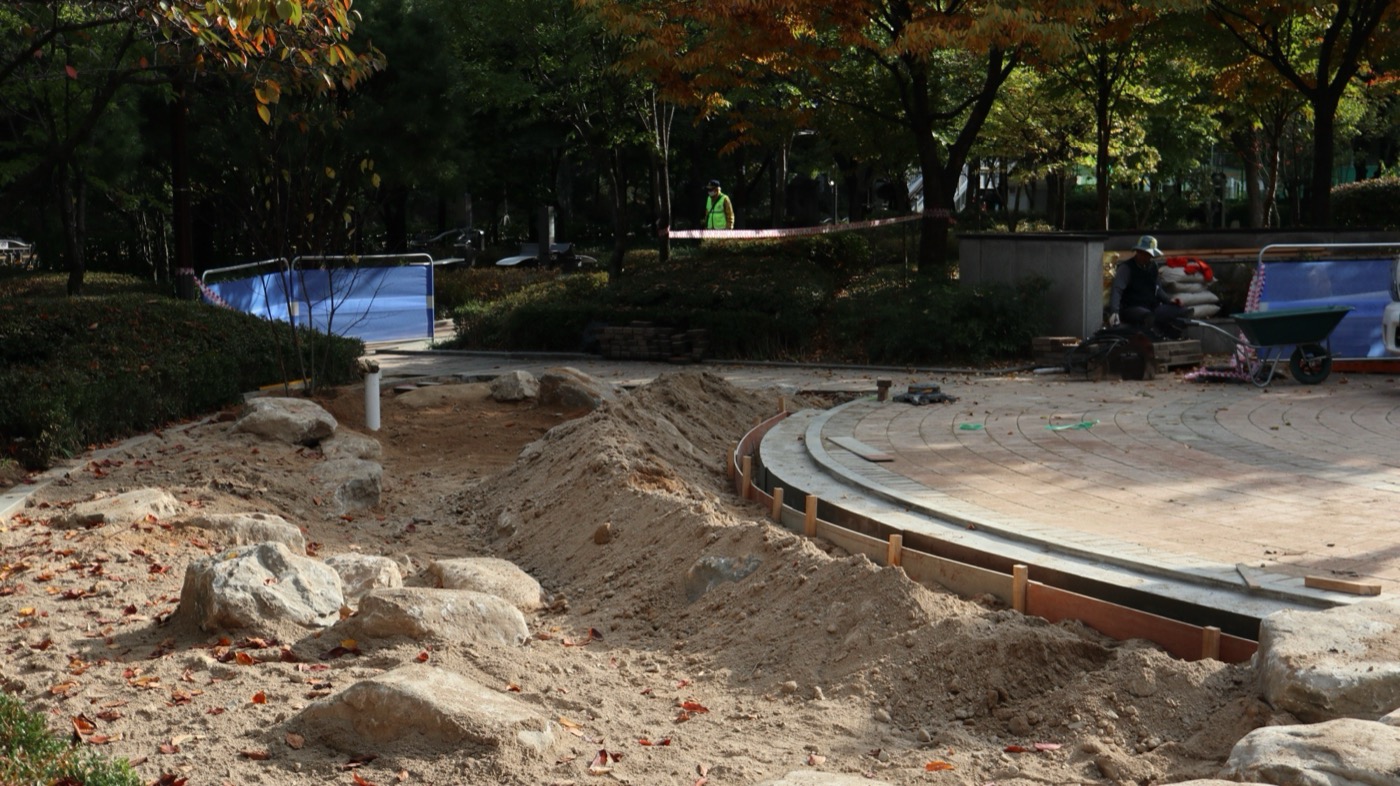
Rather than introducing decorative greenery, the project sought to reclaim part of the plaza as a more habitable urban landscape. Portions of the existing pavement were removed and transformed into two habitat gardens. Before design, ecological surveys were conducted together with bird and insect specialists, establishing baseline data that informed the spatial strategy.
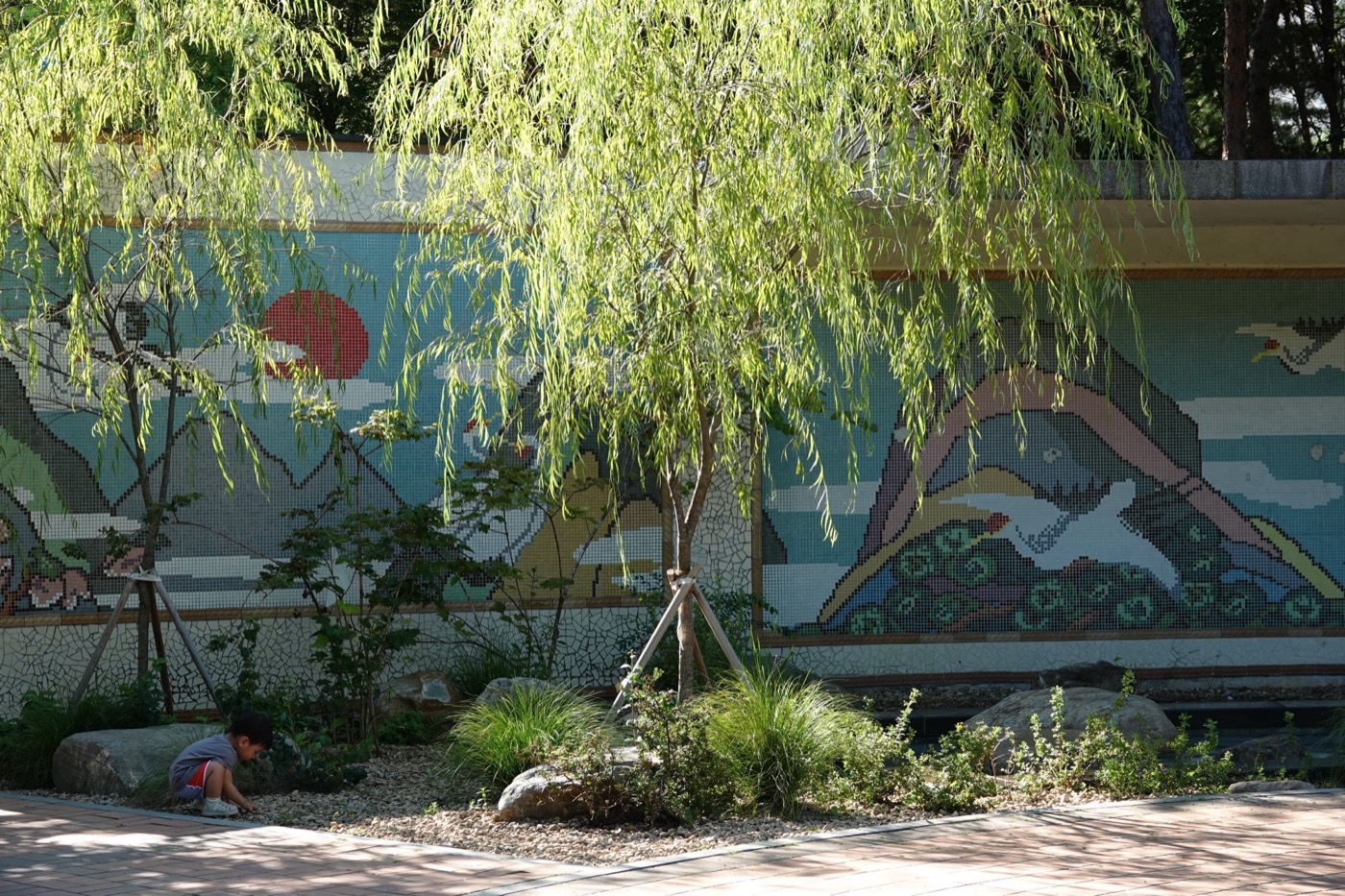
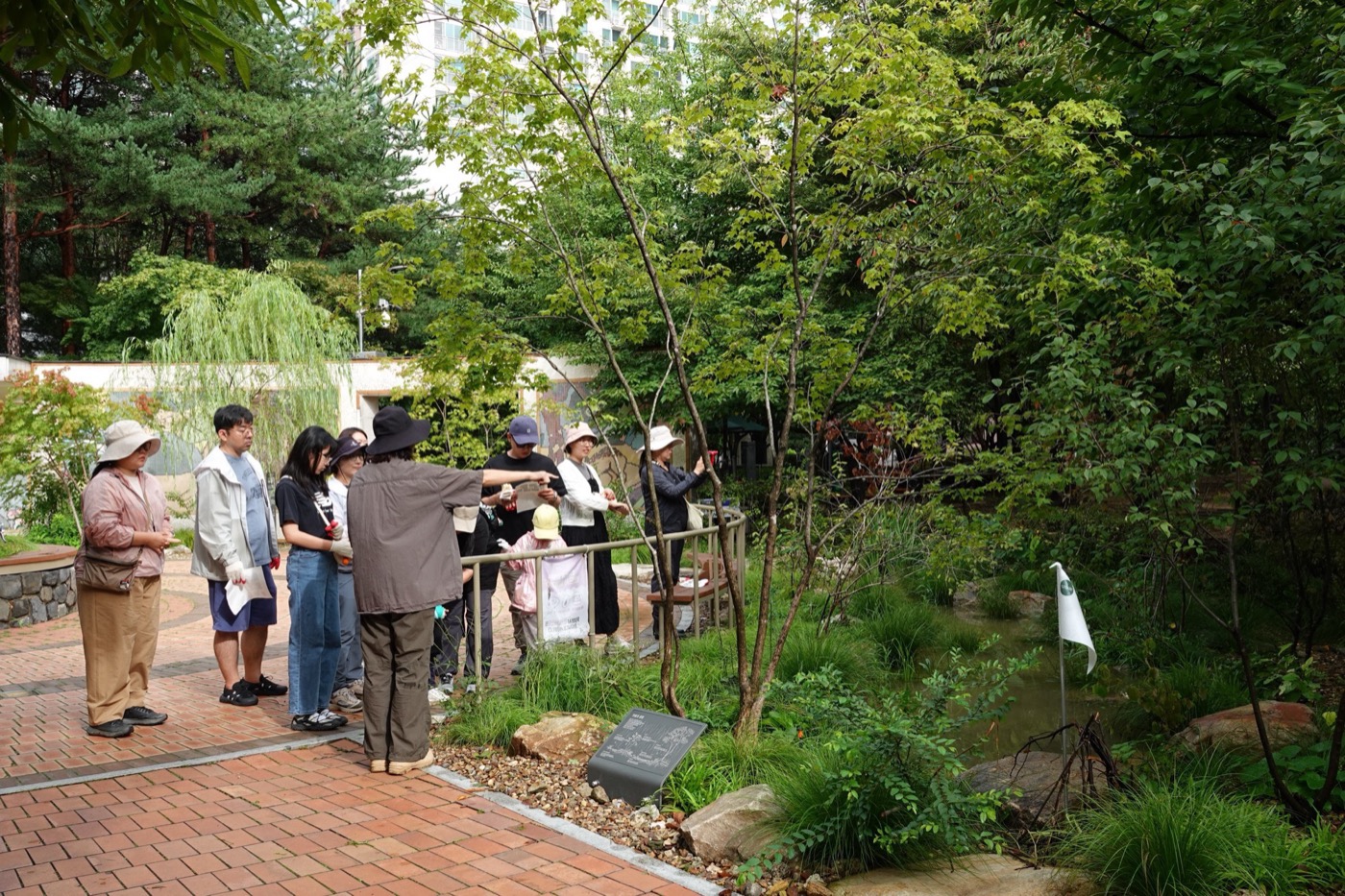
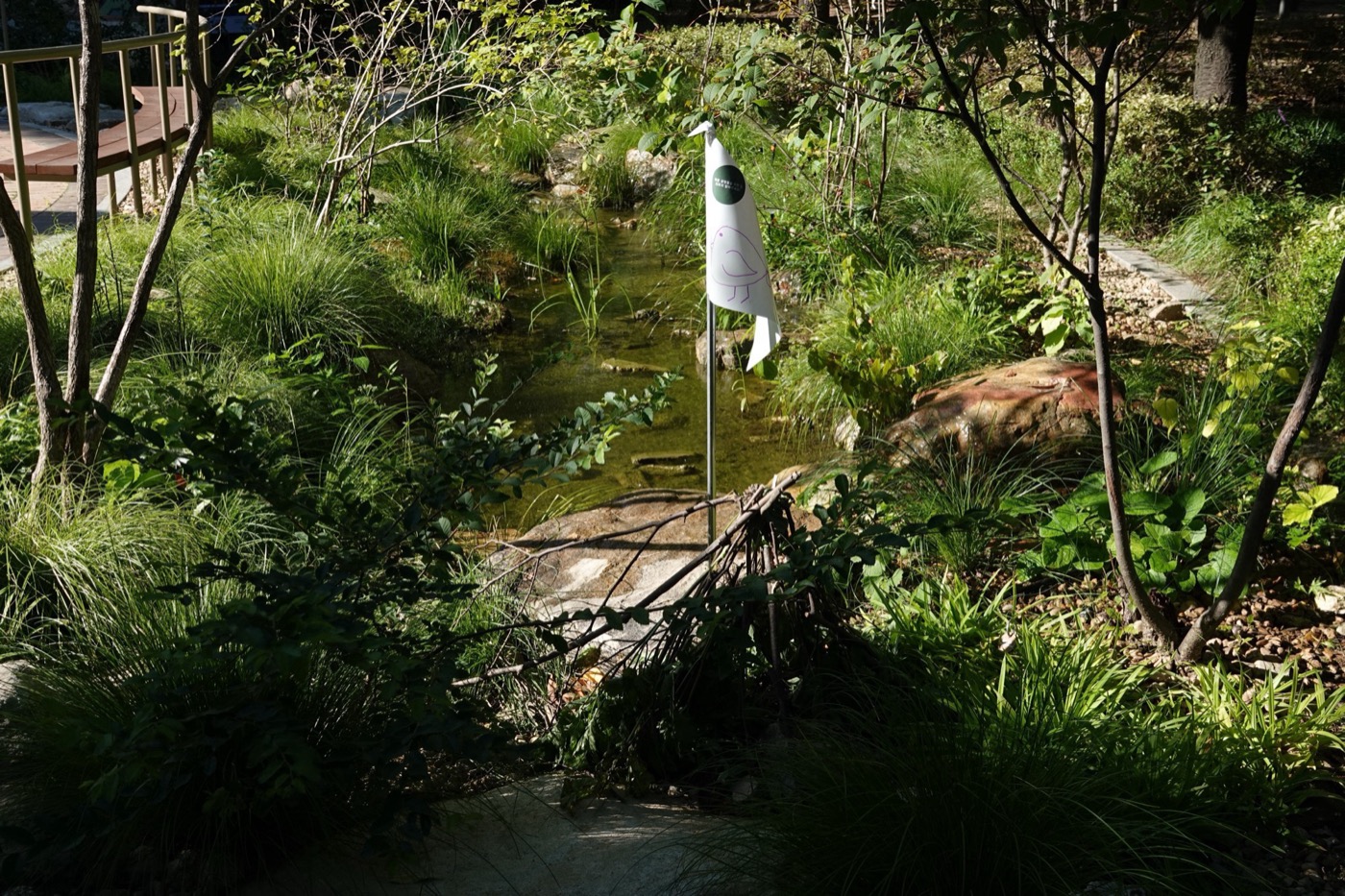
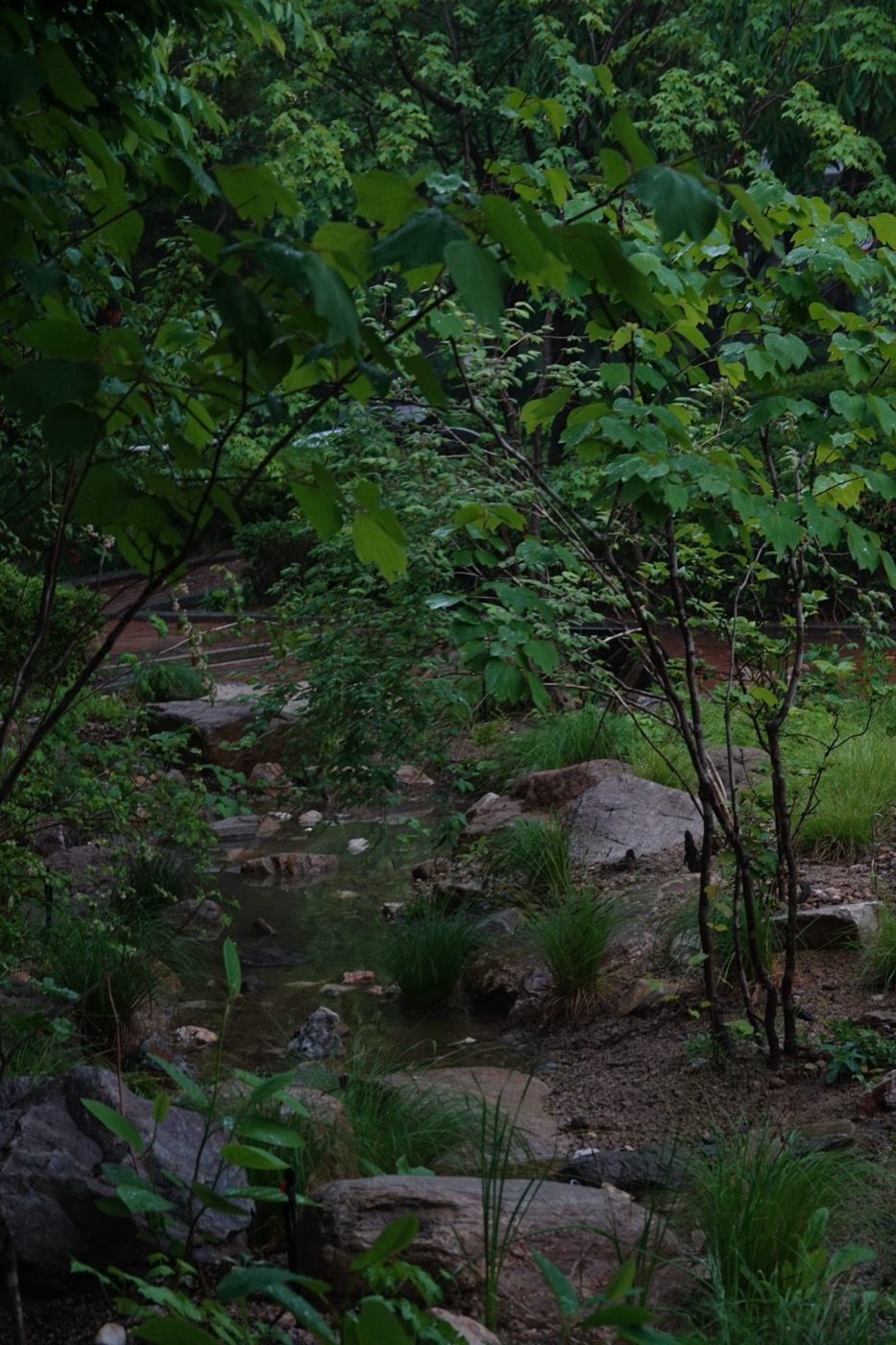
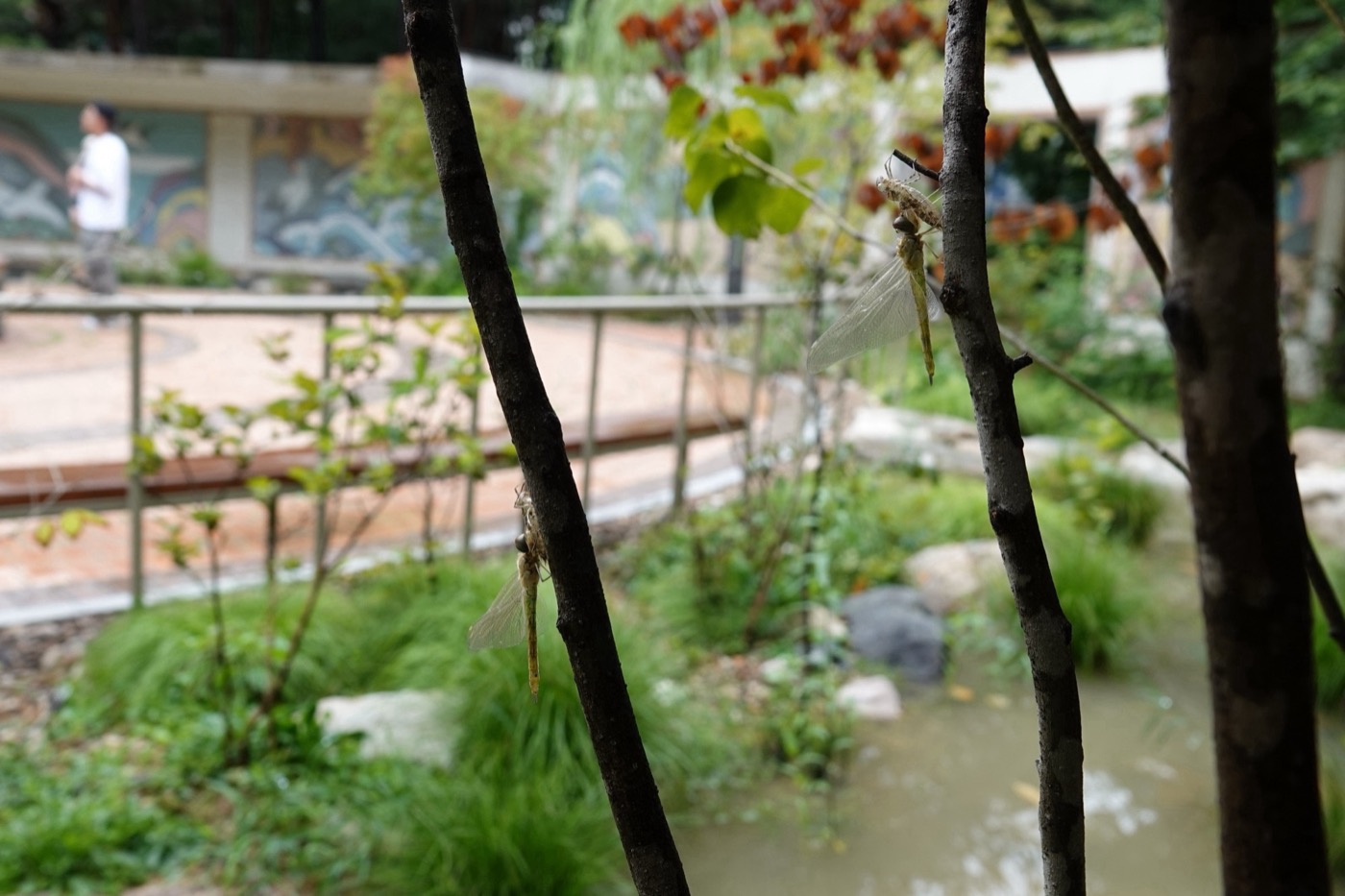
The first garden reinterpreted the existing water basin by introducing stones, shallow edges, and accessible water conditions that allow birds and small animals to safely approach and use the space. The second garden was designed as a rain garden, lowered to naturally collect and temporarily retain stormwater during Korea’s monsoon season. Depending on rainfall conditions, water remains on site from several hours to approximately one week, creating cyclical wet conditions that support urban biodiversity. Since completion, dragonflies have been observed emerging from the rain garden, while birds regularly gather in shallow puddles after rainfall.
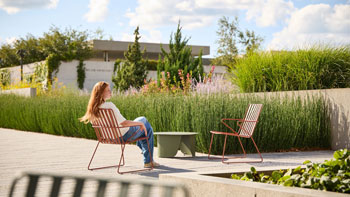
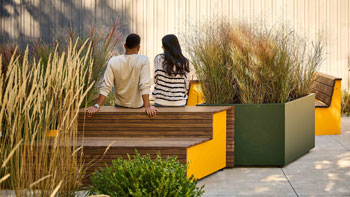
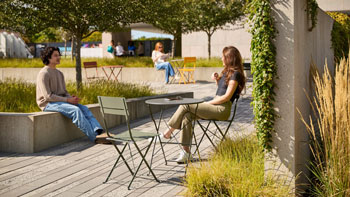
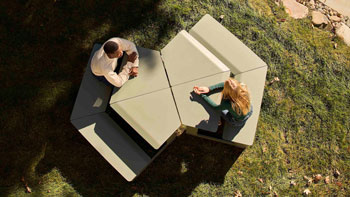
To improve the site’s microclimate, large canopy trees and diverse understory planting were introduced to reduce surface heat and create layered habitat conditions. Seating, guide fences, and subtle spatial boundaries were carefully integrated to support elderly visitors while protecting newly established habitats. The project intentionally avoids separating humans from nature, instead encouraging quiet coexistence within shared space.
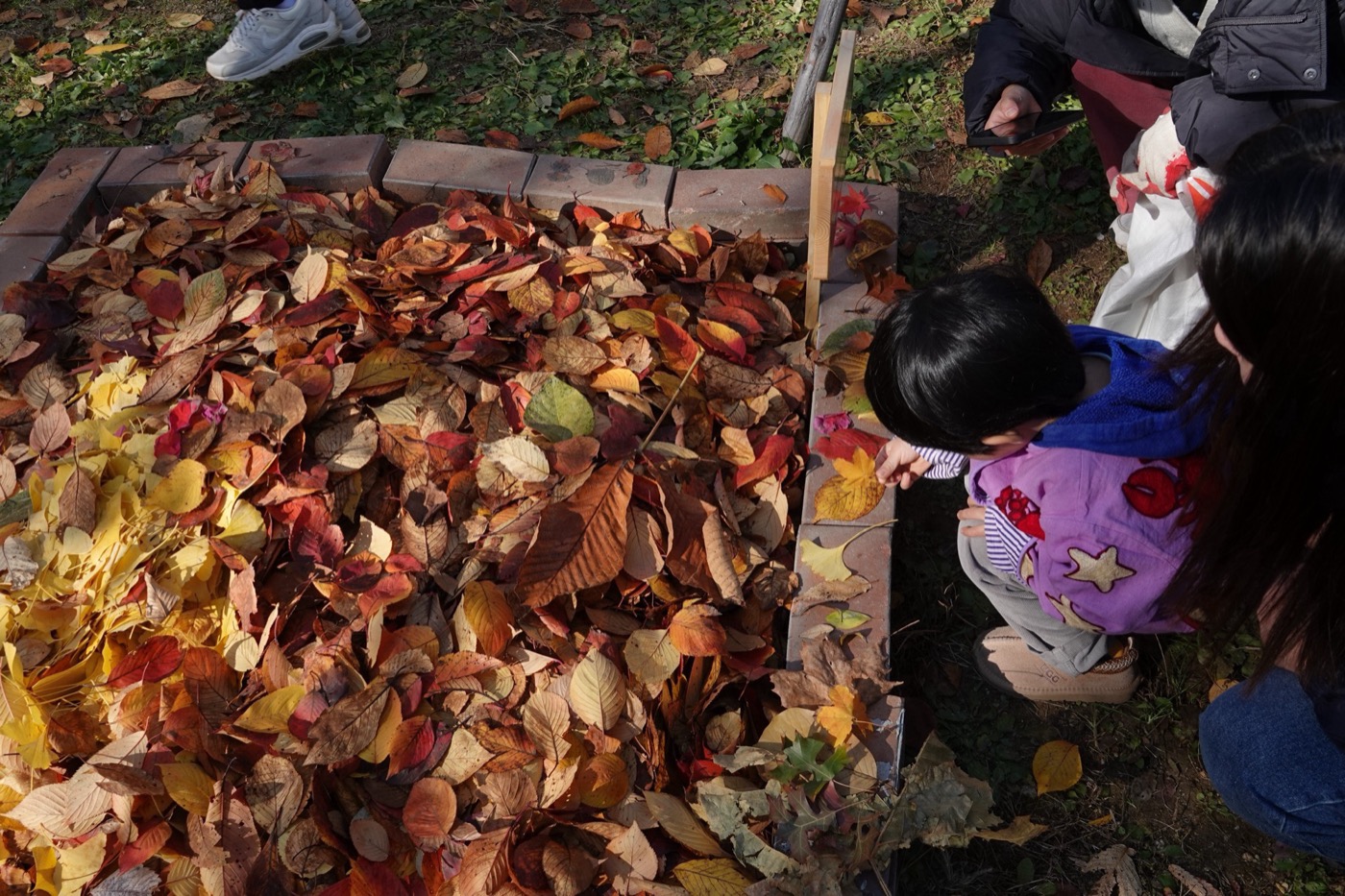
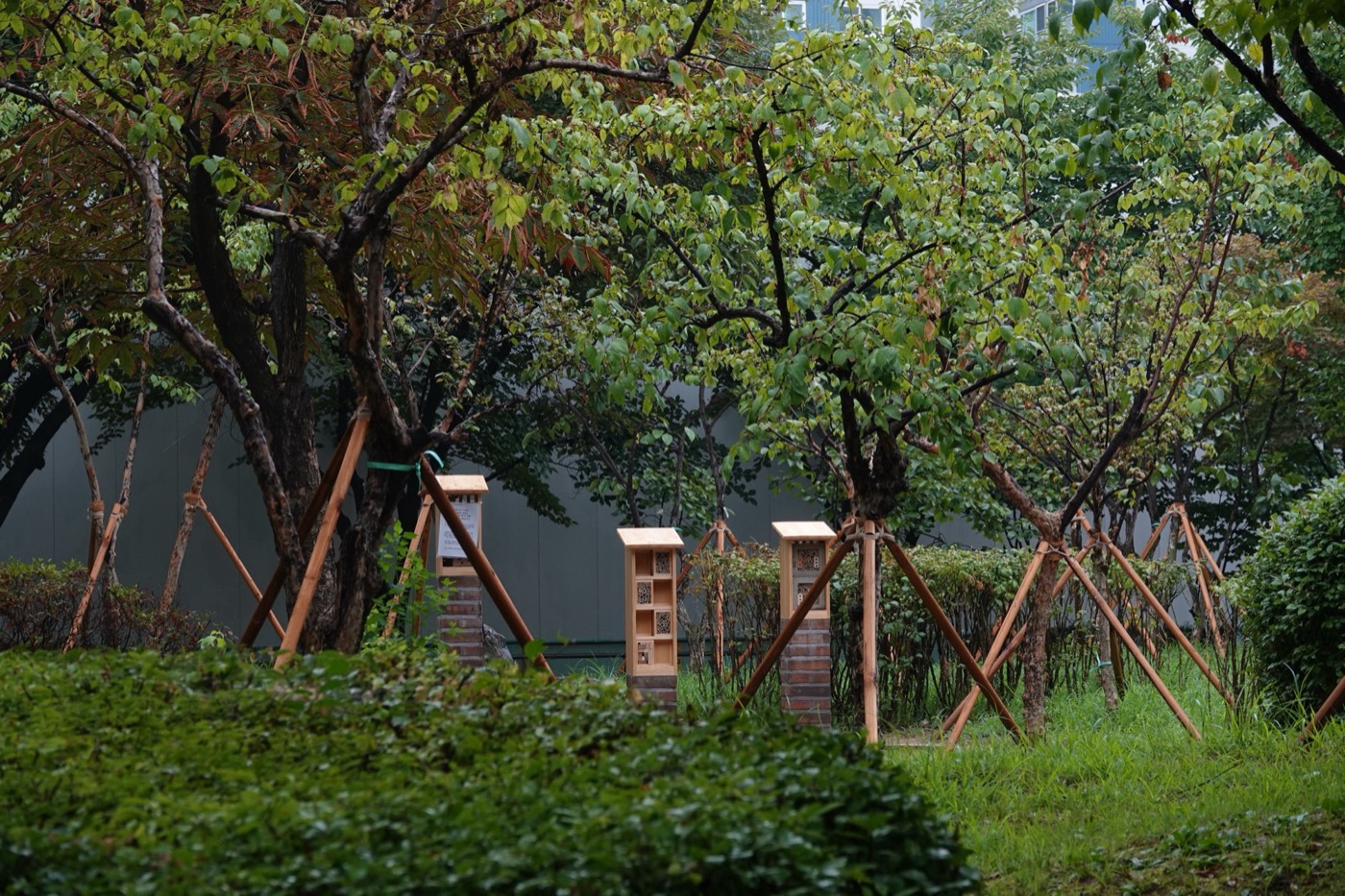
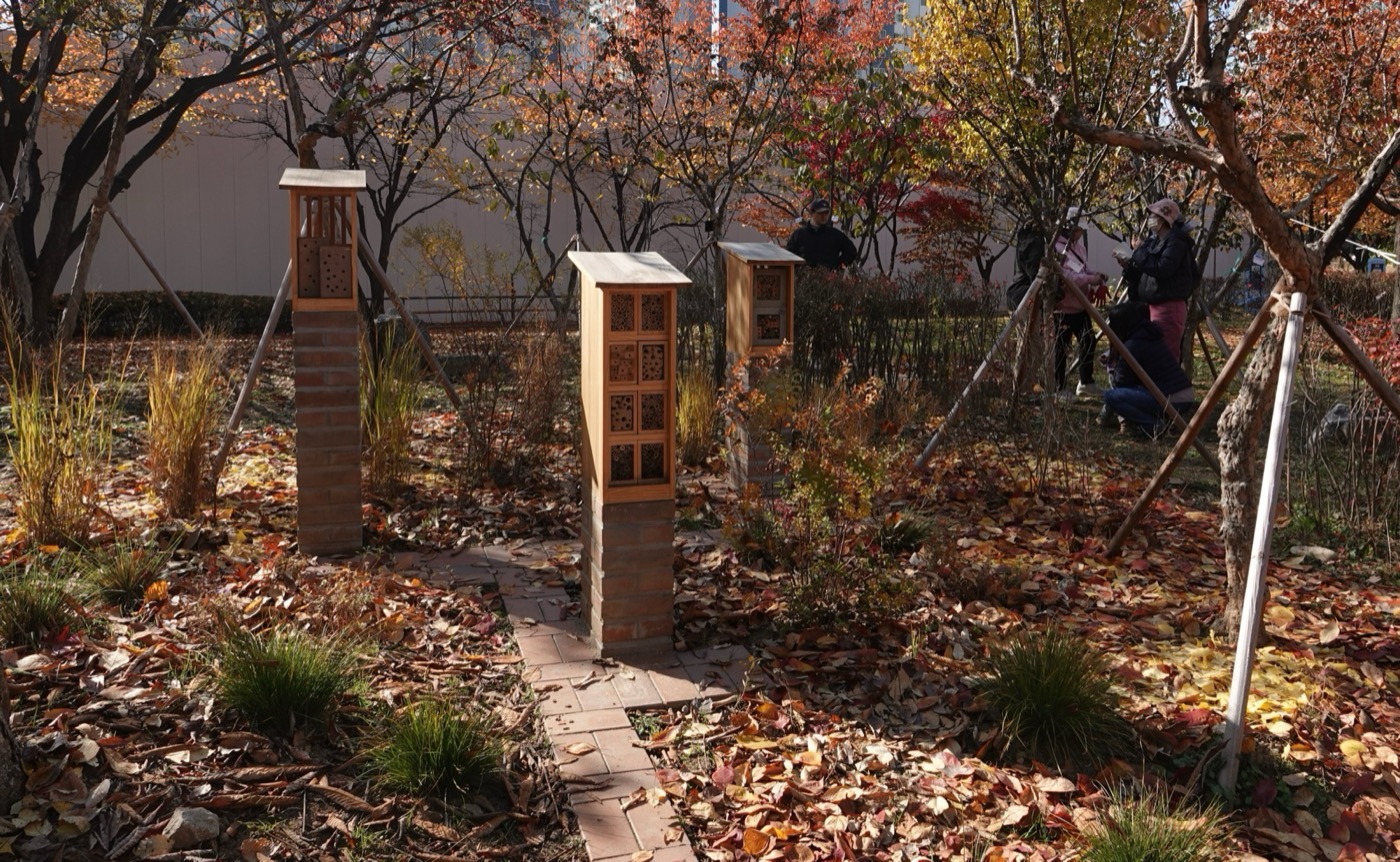
Material reuse and ecological restoration were central to the construction process. Existing paving materials were selectively dismantled, sorted, and reused throughout the site. Salvaged paving blocks were repurposed into small habitat structures, leaf storage areas, display elements, and structural components for solitary bee habitats. Pollinator-friendly planting, rainwater-based systems, and layered vegetation structures were integrated to support insects, birds, and small urban wildlife.
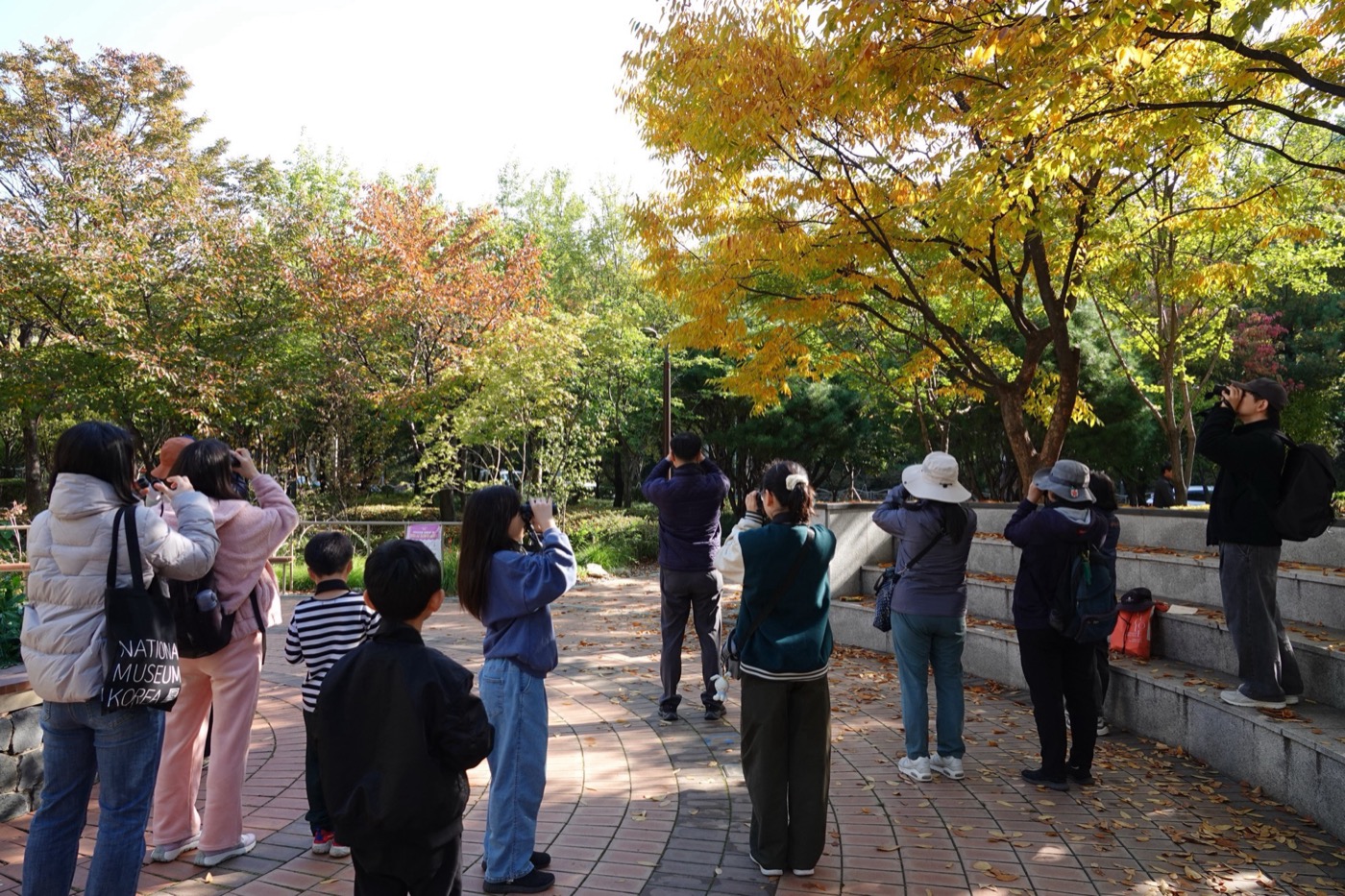
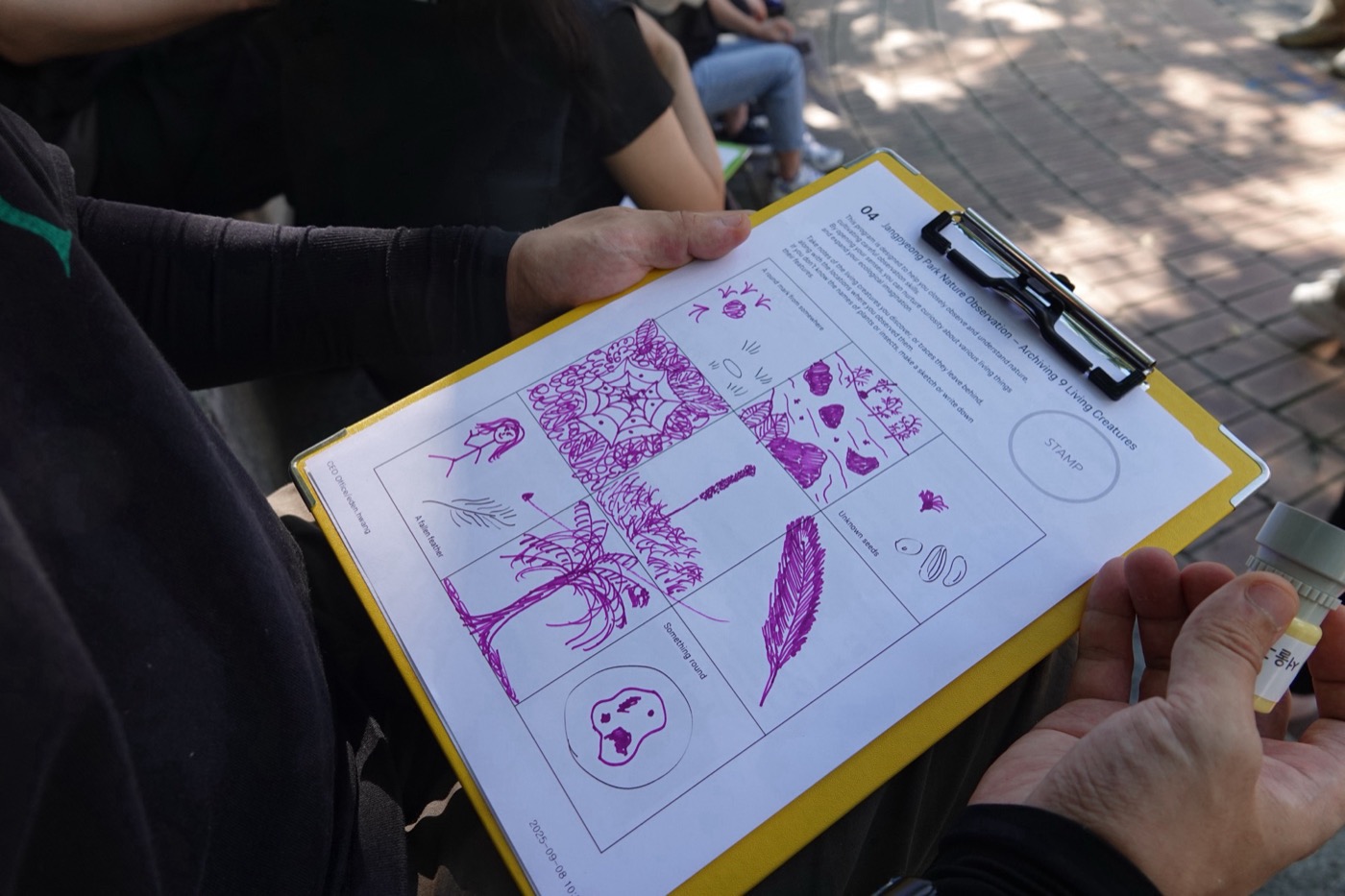
Since completion, the project has continued to evolve through long-term collaboration between the sponsor, park managers, and local residents. Ongoing stewardship programs include birdwatching walks, more-than-human species observation activities, workshops to promote solitary bees, and mulch-making using fallen leaves collected within the park.
Rather than presenting ecology as a finished image, the project frames the park as an evolving urban habitat sustained through care, participation, and gradual ecological processes.
The project suggests that ecological recovery does not emerge through greater control over nature, but through creating space for other forms of life to exist. As a metaphor for the contemporary city, the park reveals how highly human-centered spaces often fail both people and nature simultaneously.
By removing rather than adding, softening rather than controlling, and sharing space rather than dominating it, the project proposes a more inclusive model of public space—one that recognizes humans as only one part of a larger living ecosystem.
Credit
Design: STUDIO CHO.SHIN.SUNG
Construction: STUDIO CHO.SHIN.SUNG, PLATEAU, GARDENSTUDIO SANHA
Organized by SEOUL GREEN TRUST
Funded by PORSCHE KOREA
Cooperation: Dongdaemun-gu Office
https://maps.app.goo.gl/EzSLrHqgd5oWQTEB7
73652


LILA 2026 Sponsor