Lakeshore Park
nbwla.com
2026 Public Projects / USA / Built in 2024 /

![Once inaccessible and ecologically distressed, the Eastern Glades at the edge of Memorial Park is now one of Houston’s most vital urban commons, a 40-hectare landscape restored through native species, stormwater infrastructure, and the recovery of deep cultural memory. The Eastern Glades was the first major project completed in Houston’s Memorial Park from the Landscape […]](https://landezine-award.com/wp-content/uploads/2026/05/00EasternGlades_Hero-Image-600x397.jpg "Eastern Glades at Memorial Park")
![Memorial Drive once split Houston’s largest park in two. The Land Bridge & Prairie spans it, reuniting the urban wilderness across six lanes of traffic with over 18 hectares of restored Coastal Prairie. Memorial Park is one of the largest parks in the United States and Houston’s largest urban wilderness area. In 1955, the six-lane […]](https://landezine-award.com/wp-content/uploads/2026/05/00Hero-Image-1-600x338.jpg "Land Bridge and Prairie at Memorial Park")
![At Machicomoco, the land becomes a storyteller—revealing Algonquian histories, lifeways, and cosmologies long obscured. In Virginia’s vast and varied landscapes, the earth beneath our feet holds the stories of its Indigenous people. The cultural landscapes of the state are deeply intertwined with those of the Indigenous groups that occupied and stewarded the land for thousands […]](https://landezine-award.com/wp-content/uploads/2026/05/00Machicomoco-Hero-Image-600x480.jpg "Machicomoco State Park")
![A restored urban woodland unfolds as a civic commons where ecology and culture converge, reknitting downtown Fayetteville to its watershed, arts community, and regional trail network. Through stream and woodland restoration and a sequence of accessible paths descending from canopy to water, the landscape operates as environmental infrastructure and public realm, embodying long-term stewardship and […]](https://landezine-award.com/wp-content/uploads/2026/05/00Hero-Image-600x400.jpg "The Lower Ramble")
![The Eastern Glades was the first major project completed in Houston’s Memorial Park from the Landscape Architect’s 2015 Master Plan. The project reclaims 100 acres of previously inaccessible land at the park’s eastern edge for visitors to enjoy. Now, a new formal entrance leads to miles of recreational trails and an established lake with a […]](https://landezine-award.com/wp-content/uploads/2025/05/00-EasternGlades_MainPhoto-600x397.jpg "Eastern Glades at Memorial Park by Nelson Byrd Woltz Landscape Architects")
![At the heart one of the largest parks in the United States and Houston’s largest urban wilderness area, the 100-acre Land Bridge & Prairie in Memorial Park is one of the largest and most ambitious projects of its type in Houston, the state of Texas, and the country. The Land Bridge and Prairie is an […]](https://landezine-award.com/wp-content/uploads/2025/05/00-LBP_MainPhoto-600x449.jpg "Land Bridge & Prairie at Memorial Park by Nelson Byrd Woltz Landscape Architects")
![The House of Flowers landscape bridges the Russian River Valley and the Flowers Winery vineyards along rugged bluffs of the Sonoma Coast. The landscape embodies the ecologies of this transect. It highlights native plant communities that have evolved to respond to specific micro-climates prescribed by elevation, soils, humidity, and other environmental factors between these two […]](https://landezine-award.com/wp-content/uploads/2025/05/00-Flowers_MainPhoto-600x402.jpg "House of Flowers by Nelson Byrd Woltz Landscape Architects")
![The Peabody Essex Museum Garden celebrates the spirit of curiosity, the discovery of the Museum’s origins, and the dynamic works of its collection, which span cultures, eras, and genres. To accompany its building expansion, the Museum commissioned the Landscape Architect to design a 3,700 square foot garden that builds off the Museum’s work of interpreting […]](https://landezine-award.com/wp-content/uploads/2025/05/00-Peabody_MainPhoto-600x400.jpg "Peabody Essex Museum Garden by Nelson Byrd Woltz Landscape Architects")
![The EcoCommons at Georgia Institute of Technology is the largest standalone landscape project ever undertaken by the university. The project began as a solution to address the need identified in the 2004 Campus Landscape Master Plan for a series of open landscapes. In addition to creating new amenities for the campus community to gather, relax, […]](https://landezine-award.com/wp-content/uploads/2025/05/00-EcoCommons_MainPhoto-600x449.jpg "Georgia Institute of Technology EcoCommons by Nelson Byrd Woltz Landscape Architects")
![In Virginia’s vast and varied landscapes, the earth beneath our feet holds the stories of its Indigenous people. The cultural landscapes of the state are deeply intertwined with those of the Indigenous groups that occupied and stewarded the land for thousands of years. At Machicomoco (meaning Special Meeting Place), the landscape architects, working closely with […]](https://landezine-award.com/wp-content/uploads/2025/05/00-Machicomoco-Main-Image-600x480.jpg "Machicomoco State Park by Nelson Byrd Woltz Landscape Architects")
![The new Aga Khan Garden sits at the heart of the University of Alberta Botanical Garden and is the world’s northernmost Islamic Garden. The garden builds from traditional Islamic design principles, forms, and geometries to create a thoughtful and rich design that responds to the context of Alberta’s climate, ecology, and culture. With the support […]](https://landezine-award.com/wp-content/uploads/2023/05/00-AgaKhan_MainPhoto-600x400.jpg "Aga Khan Garden, Alberta")
![The Naval Cemetery Landscape is the first new public open space to be developed by the Brooklyn Greenway Initiative along the 26-mile Brooklyn Waterfront Greenway. Historically an unmarked burial ground associated with the Brooklyn Naval Hospital, this project revitalizes an abandoned parcel of the Brooklyn Navy Yard into a culturally and ecologically significant public space. […]](https://landezine-award.com/wp-content/uploads/2021/05/00-Naval-Cemetery-Landscape-Main-Photo-600x396.jpg "Naval Cemetery Landscape")
![The Eastern Glades is the first major project to be implemented from the 2015 Memorial Park Master Plan developed by the Landscape Architect. Including introducing a formal entrance to the park, miles of recreational trails, and an established lake with surrounding ecology, the Eastern Glades reclaims 100 acres of previously inaccessible land at the park’s […]](https://landezine-award.com/wp-content/uploads/2021/05/00-Eastern-Glades-Main-Photo-600x396.jpg "Eastern Glades at Memorial Park")
![The Flight 93 National Memorial is a new 2,200-acre national park in Western Pennsylvania where United Flight 93 crashed on September 11, 2001. The designed memorial landscape commemorates the 40 heroes on Flight 93 who gave their lives thwarting a terrorist attack on the U.S. capital. The design transforms the site – a former reclaimed […]](https://landezine-award.com/wp-content/uploads/2021/05/00-Flight-93-National-Memorial-Main-Photo-600x396.jpg "Flight 93 National Memorial")
![The Peabody Essex Museum Garden celebrates the spirit of curiosity and discovery of its origins and the character of its collection – dynamic works across cultures, eras, and genres. Situated at the terminus of the gallery atrium, the garden provides a moment of calm reflection. A fundamental design goal was to create a sense of […]](https://landezine-award.com/wp-content/uploads/2020/04/00-Peabody-Essex-Museum-Garden-Main-Photo-600x396.jpg "The Peabody Essex Museum Garden")
![The Hudson Yards Plaza brings vibrancy to the heart of the largest private development in American history, seamlessly stitching newly-minted, innovative architecture with the surrounding urban fabric. A technological achievement that supports a healthy ecosystem on the roof of a working train yard, the Plaza hosts world- class events and art exhibitions, while providing an […]](https://landezine-award.com/wp-content/uploads/2020/04/00-Hudson-Yards-Plaza-Main-Photo-600x396.jpg "The Hudson Yards Plaza")
![Nelson Byrd Woltz Landscape Architects designed the twelve-acre Duke University Water Reclamation Pond site to meet the University’s mission in support of the following criteria: Design Excellence The design balances formal and informal elements to ensure that the pond seamlessly mediates both its natural and cultural contexts. The northern edge of the pond is designed […]](https://landezine-award.com/wp-content/uploads/2019/04/00-Duke-Pond-Main-Photo-600x293.jpg "Duke Water Reclamation Pond")
![The Landscape Architect designed eight acres of new garden space within the 250-acre property, substantially increasing the horticultural collection of Bok Tower Gardens and providing new programming abilities and educational opportunities. They worked within the 50-acre core of the existing historic gardens to improve circulation throughout and promote access to the 1928 Neo-Gothic Singing Tower, […]](https://landezine-award.com/wp-content/uploads/2019/04/00-Bok-Tower-Gardens-Main-Photo-600x505.jpg "Bok Tower Gardens")
For over a century, the 75-hectares site at the edge of the Tennessee River was closed to the public—a fortified state mental health campus, isolating by design. Lakeshore Park reclaims it as Knoxville’s most visited public green space. Welcoming more than one million visitors annually, the park today is dedicated to civic, ecological, and physical health.
This transformation began over 35 years ago, when a small group of local parents petitioned the East Tennessee Hospital for the Insane for access to a small portion of its largely unused campus to build youth baseball fields. This grassroots effort gradually expanded as community advocates reclaimed more land and reimagined its future. Stewardship ultimately transitioned to the Lakeshore Park Conservancy, in partnership with the City of Knoxville, culminating in public stewardship of the full 185-hectare site. Today, the park welcomes more than one million visitors annually and stands as the city’s most visited public green space.
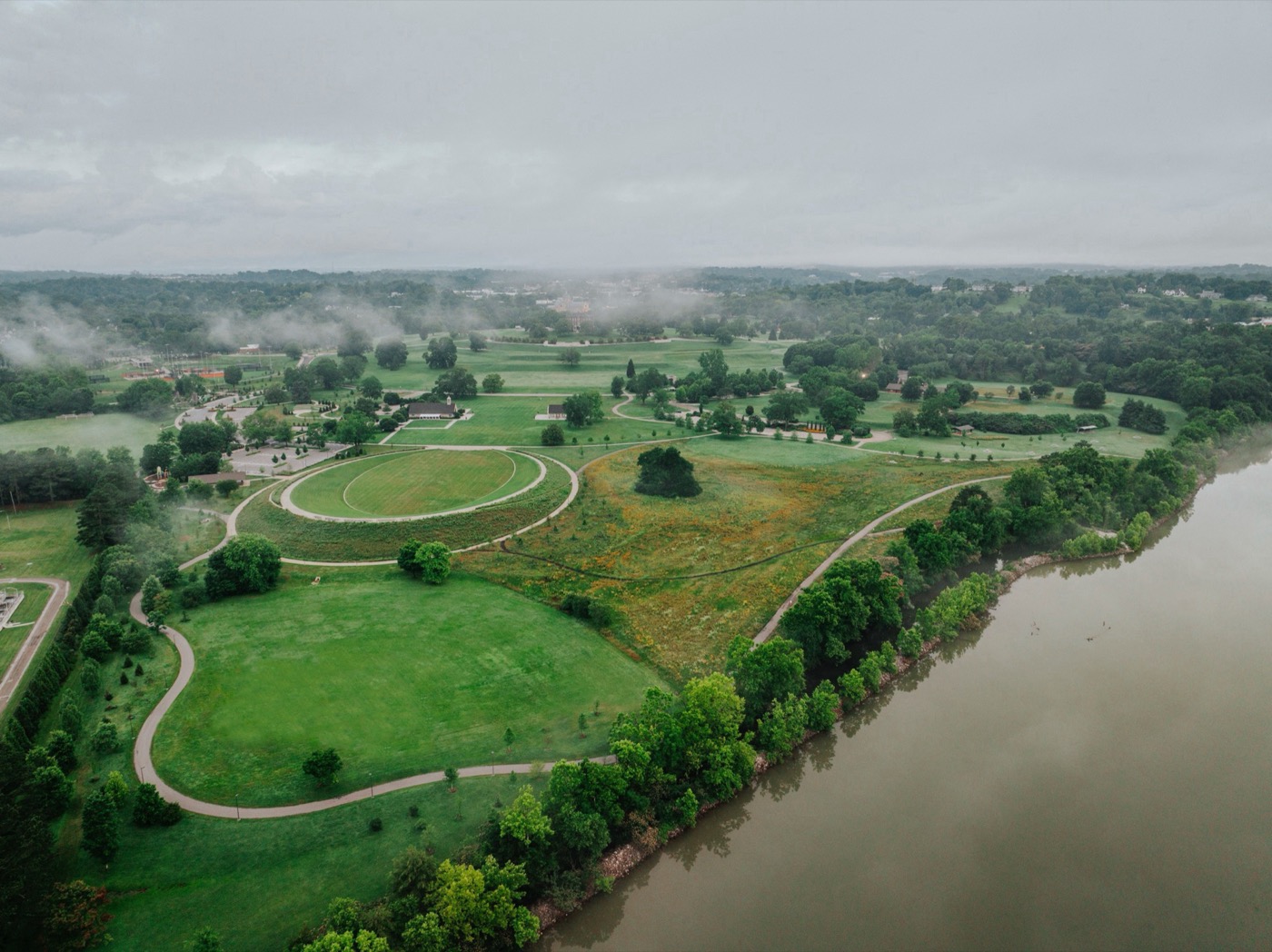
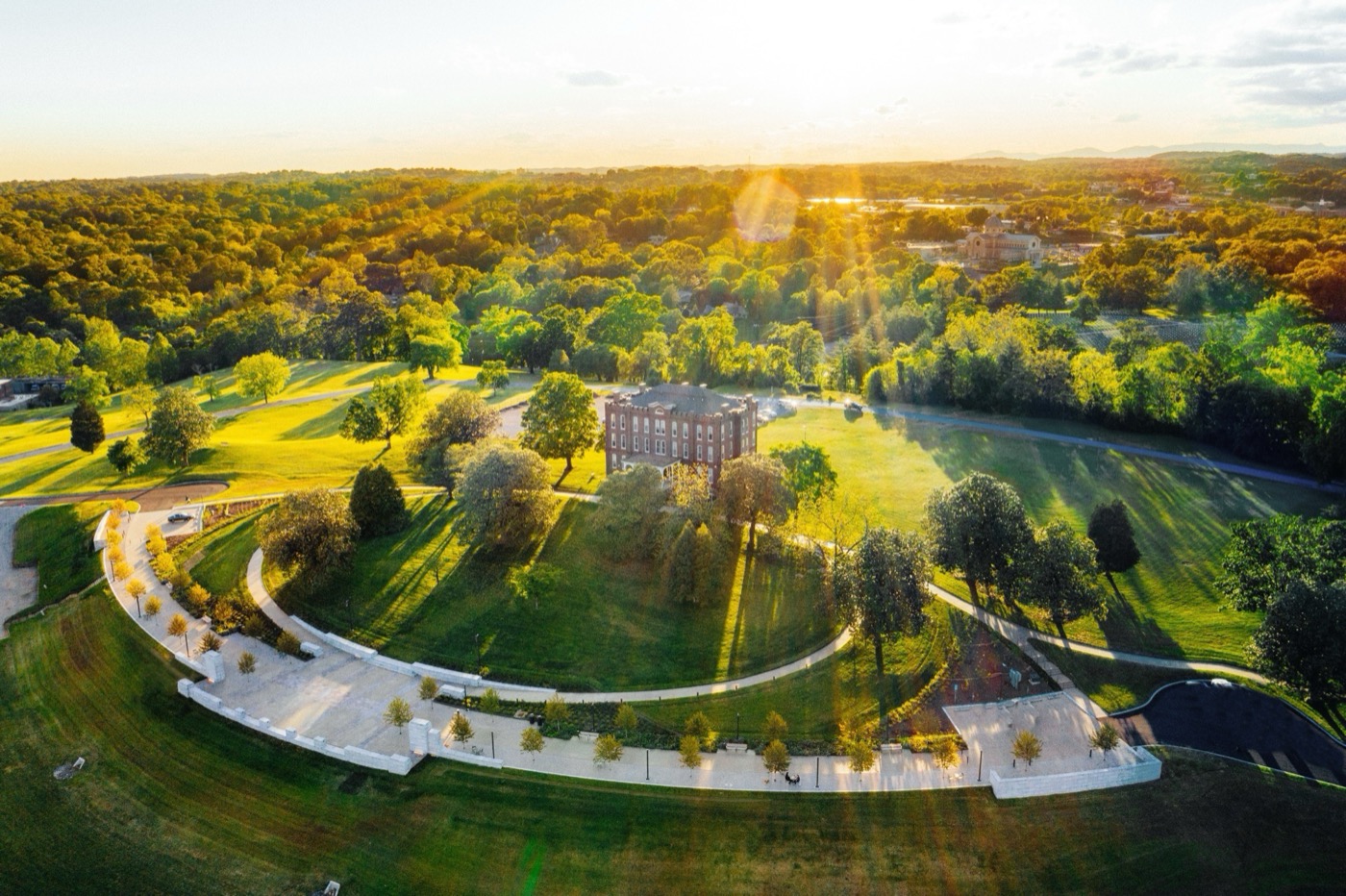
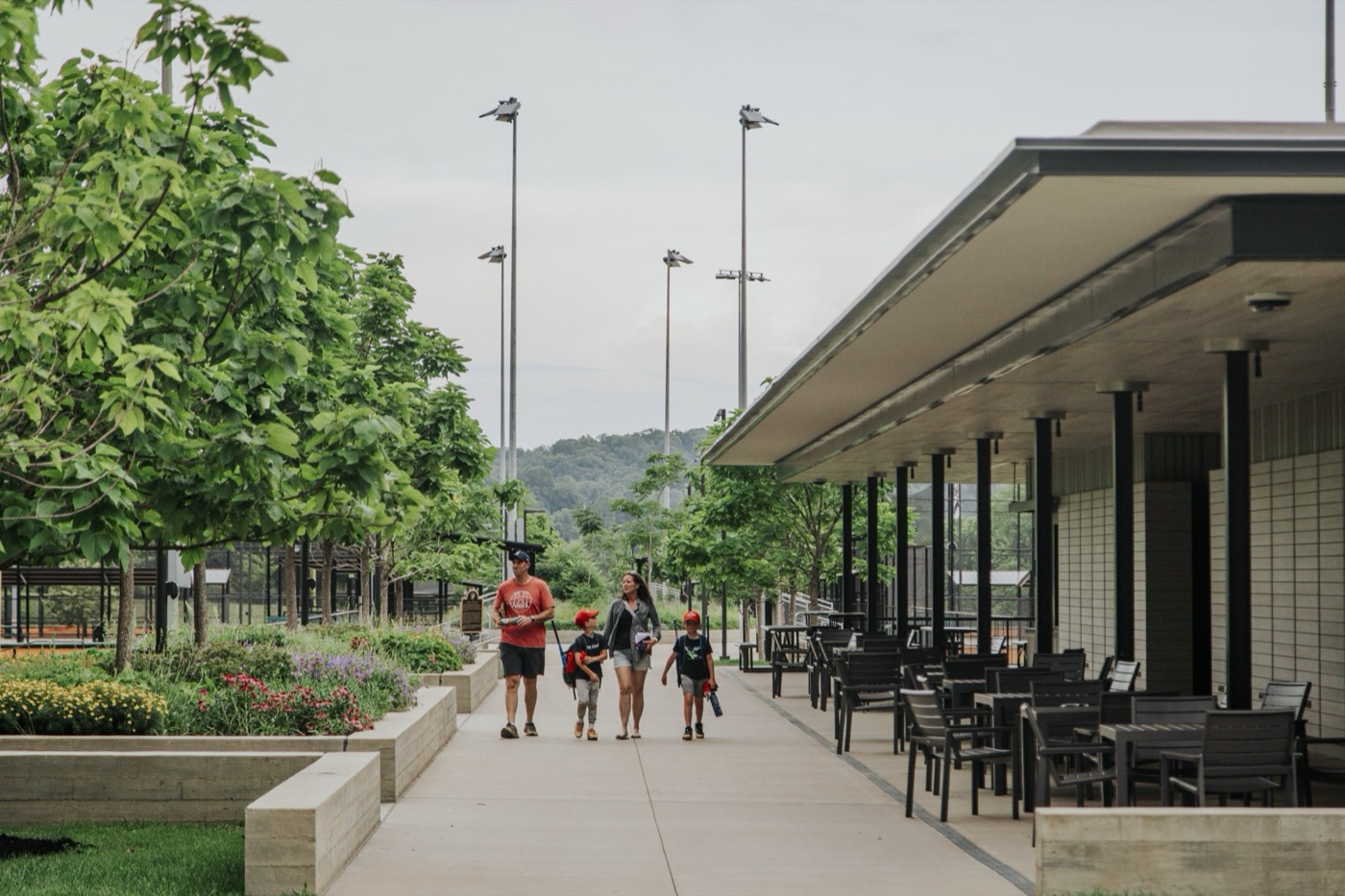
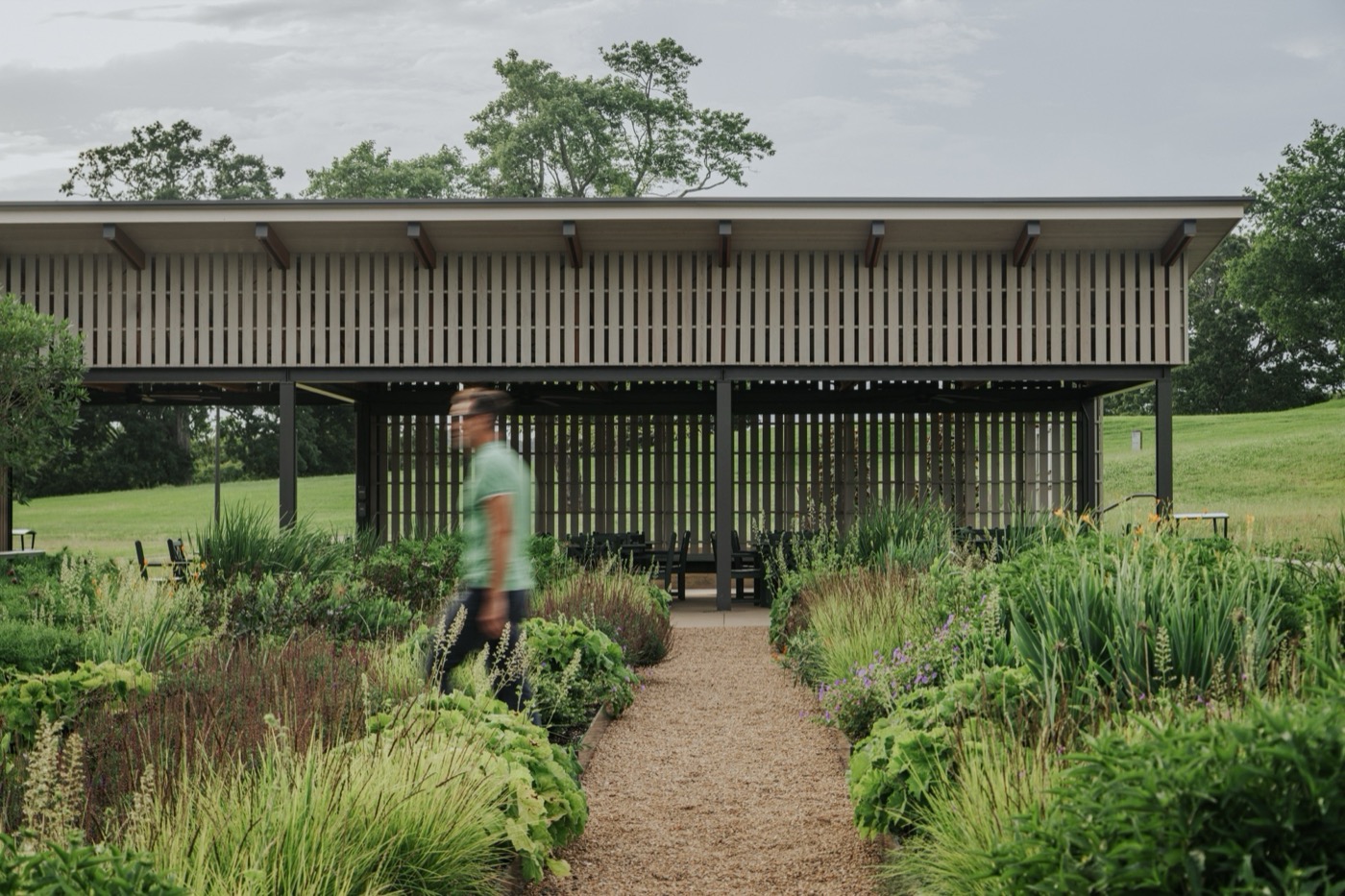
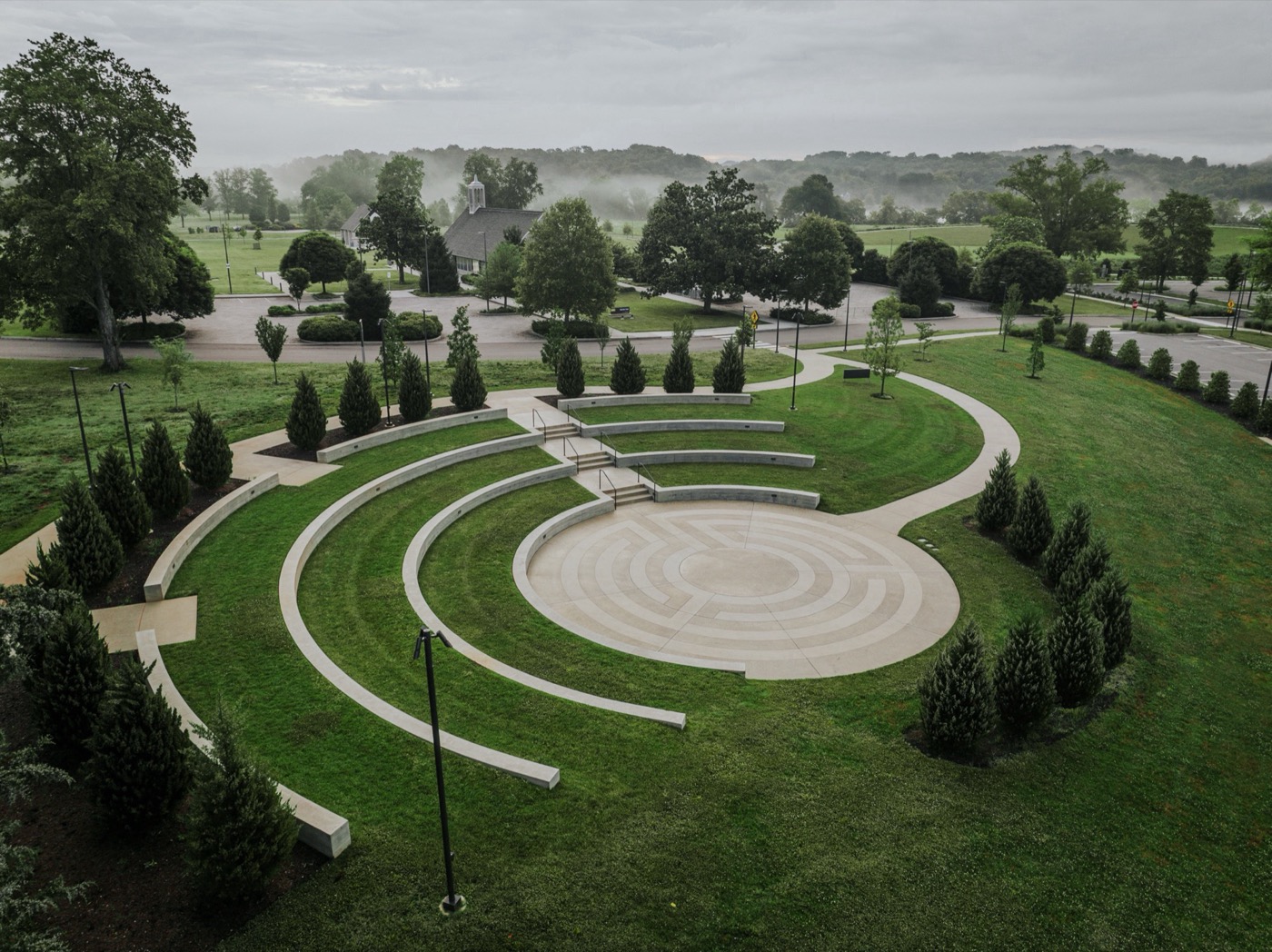
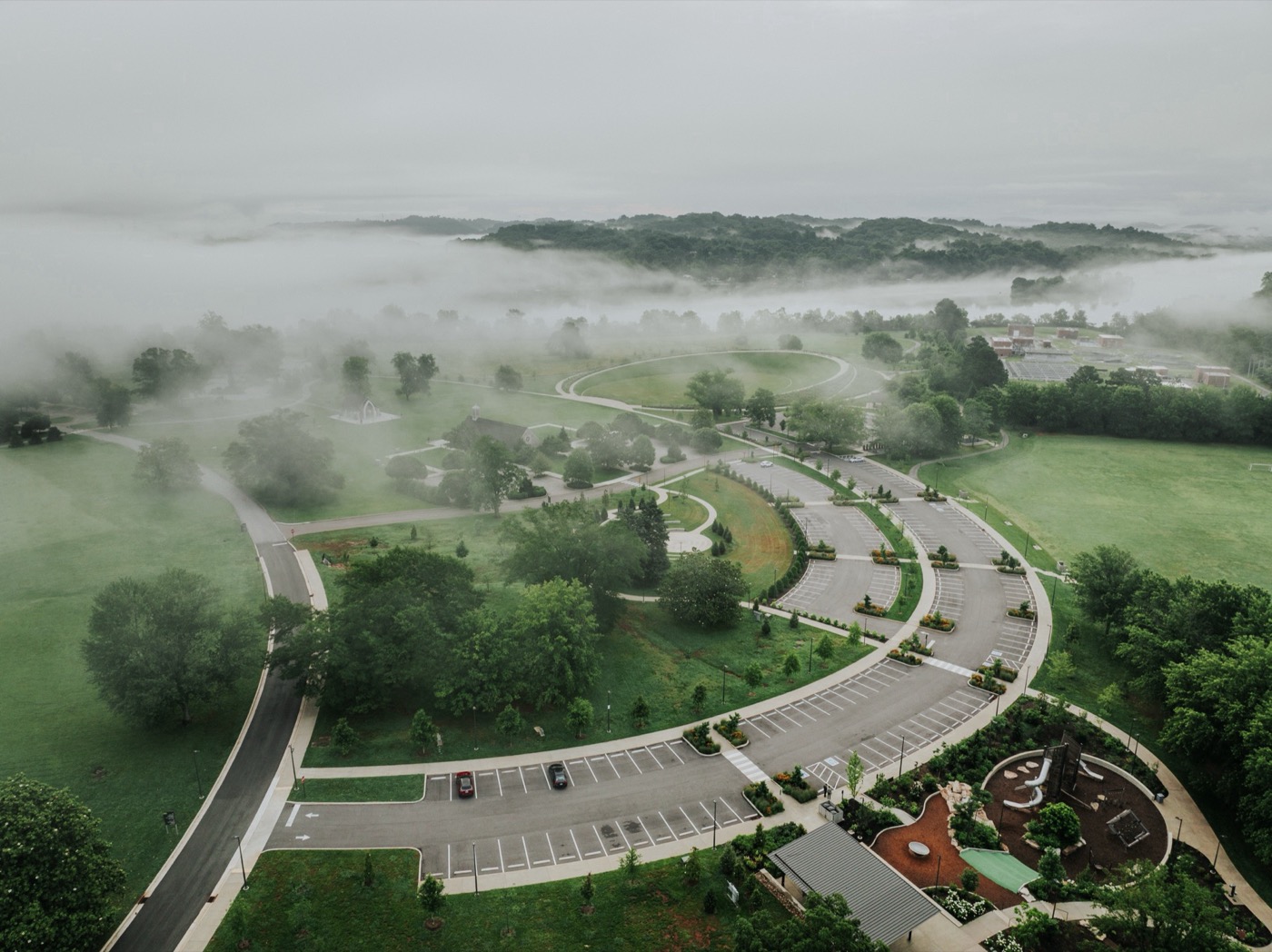
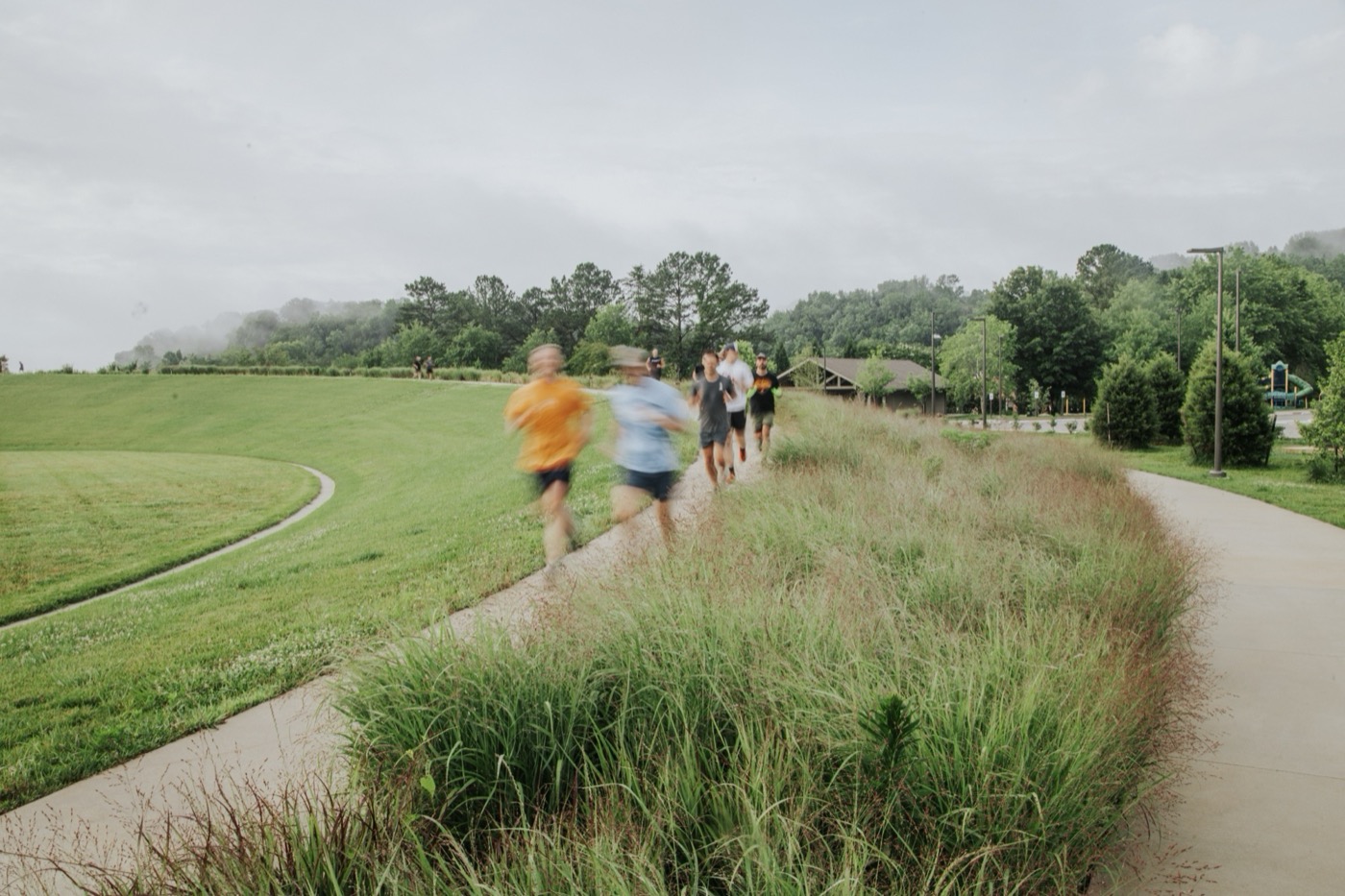
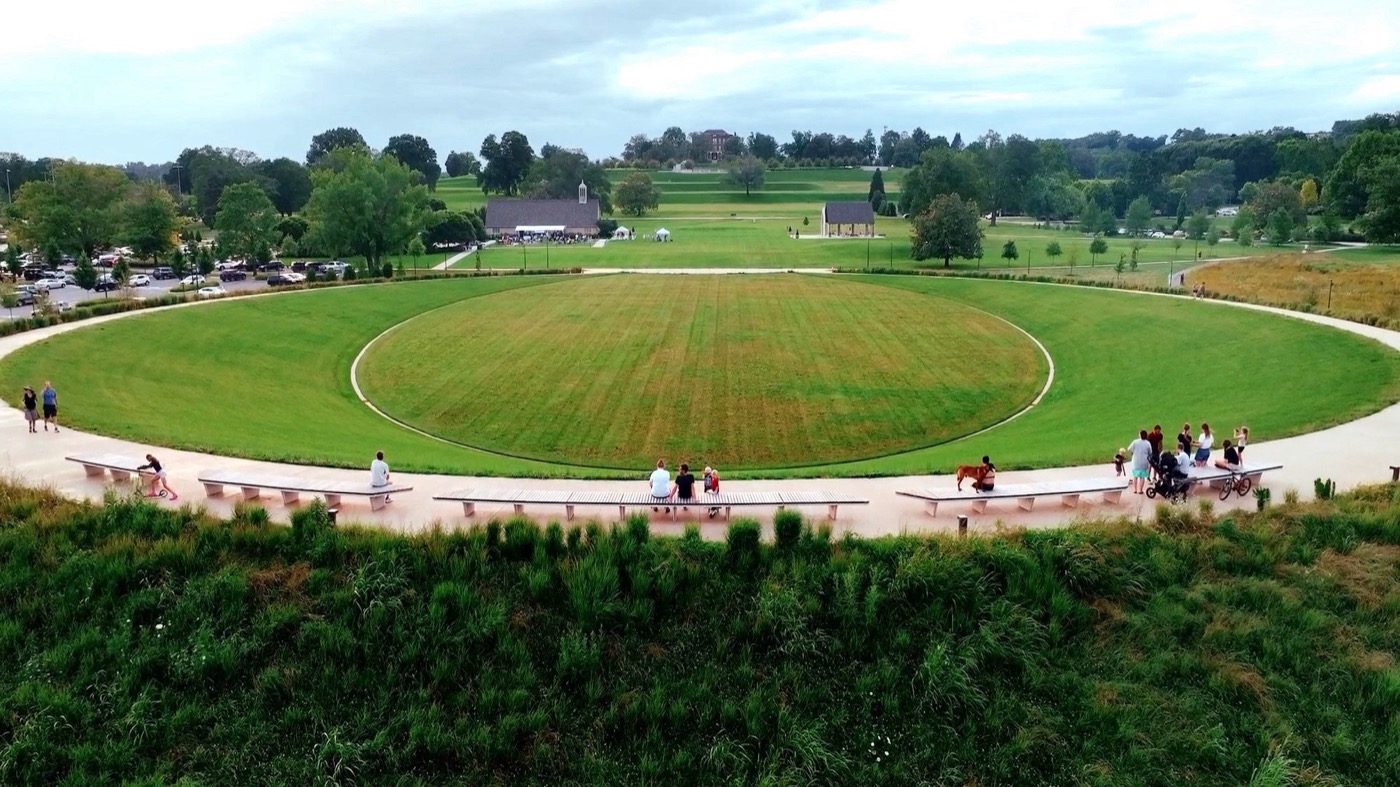
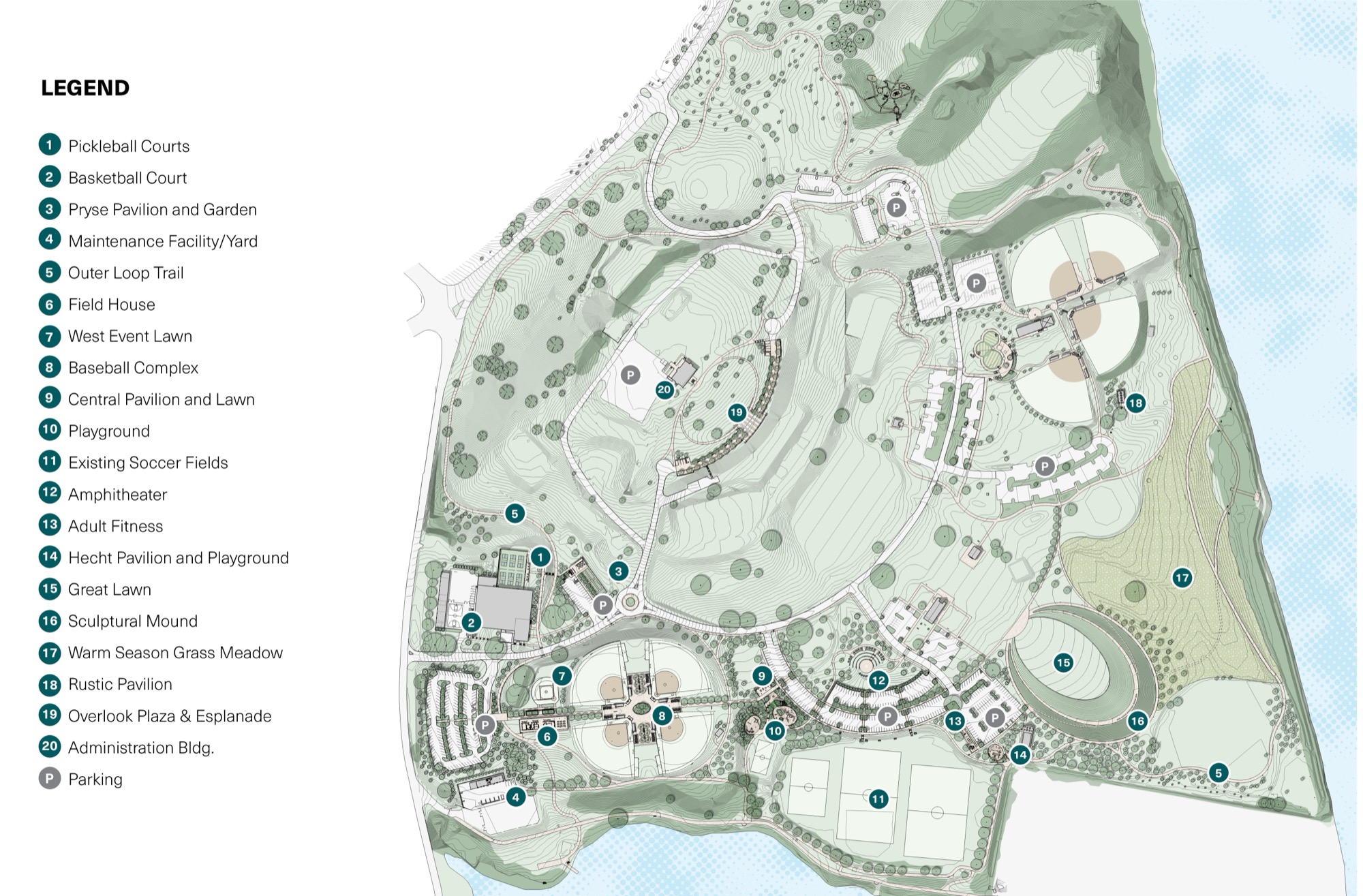
In 2019, the Landscape Architect led a comprehensive landscape plan that honored the site’s layered cultural and ecological history while reshaping it for contemporary public use. Extensive site investigation examined Indigenous histories, institutional legacies, topography, hydrology, and native ecologies of the Tennessee River Valley. The resulting design framework organized the park into three interconnected, but distinct zones—Natural, Athletic, and Civic—each defined by existing topographic and ecological conditions, circulation needs, and programmatic goals.
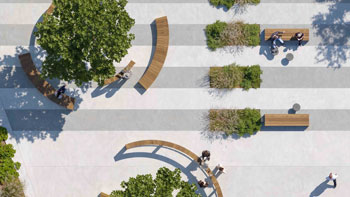
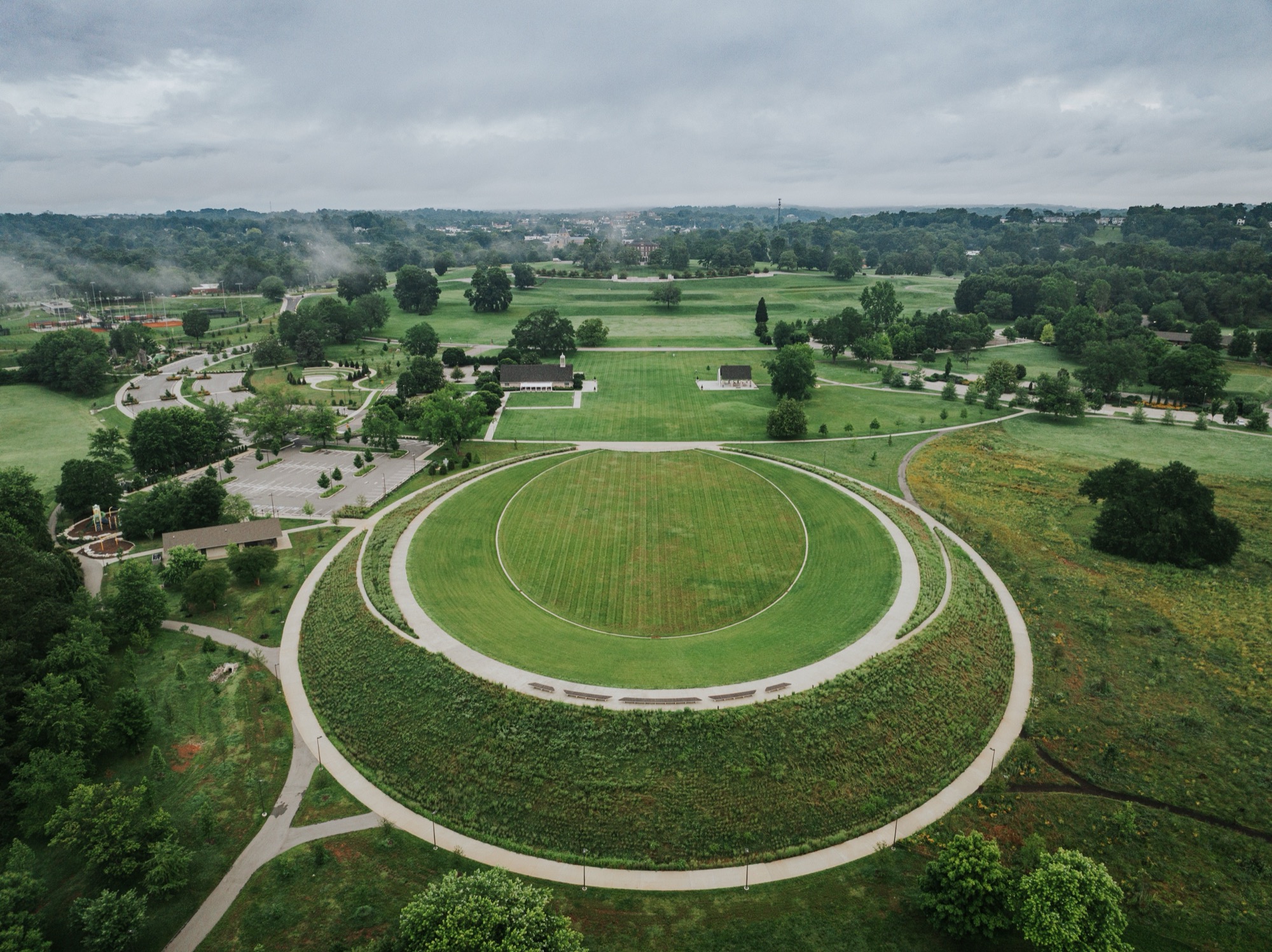
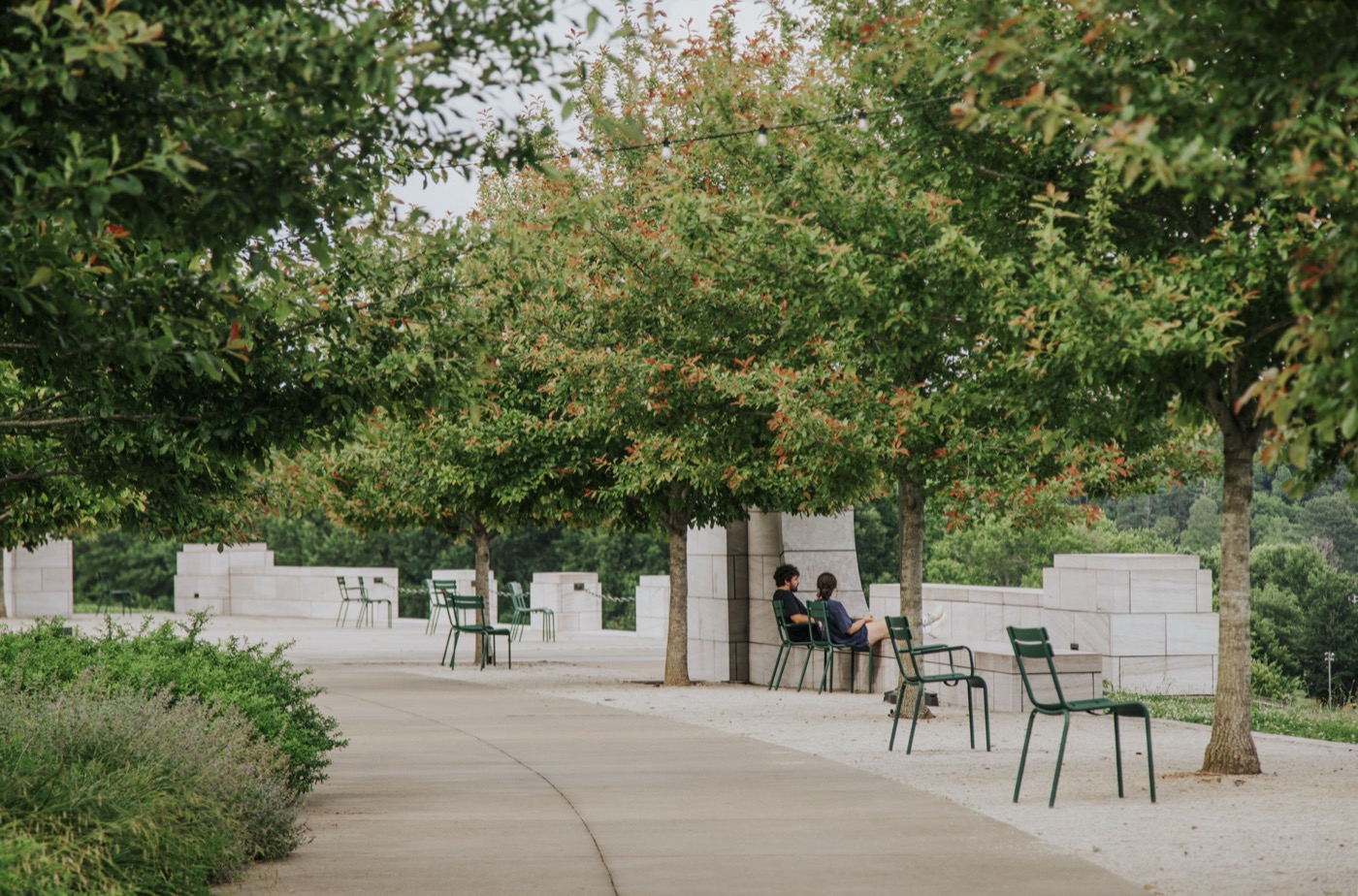
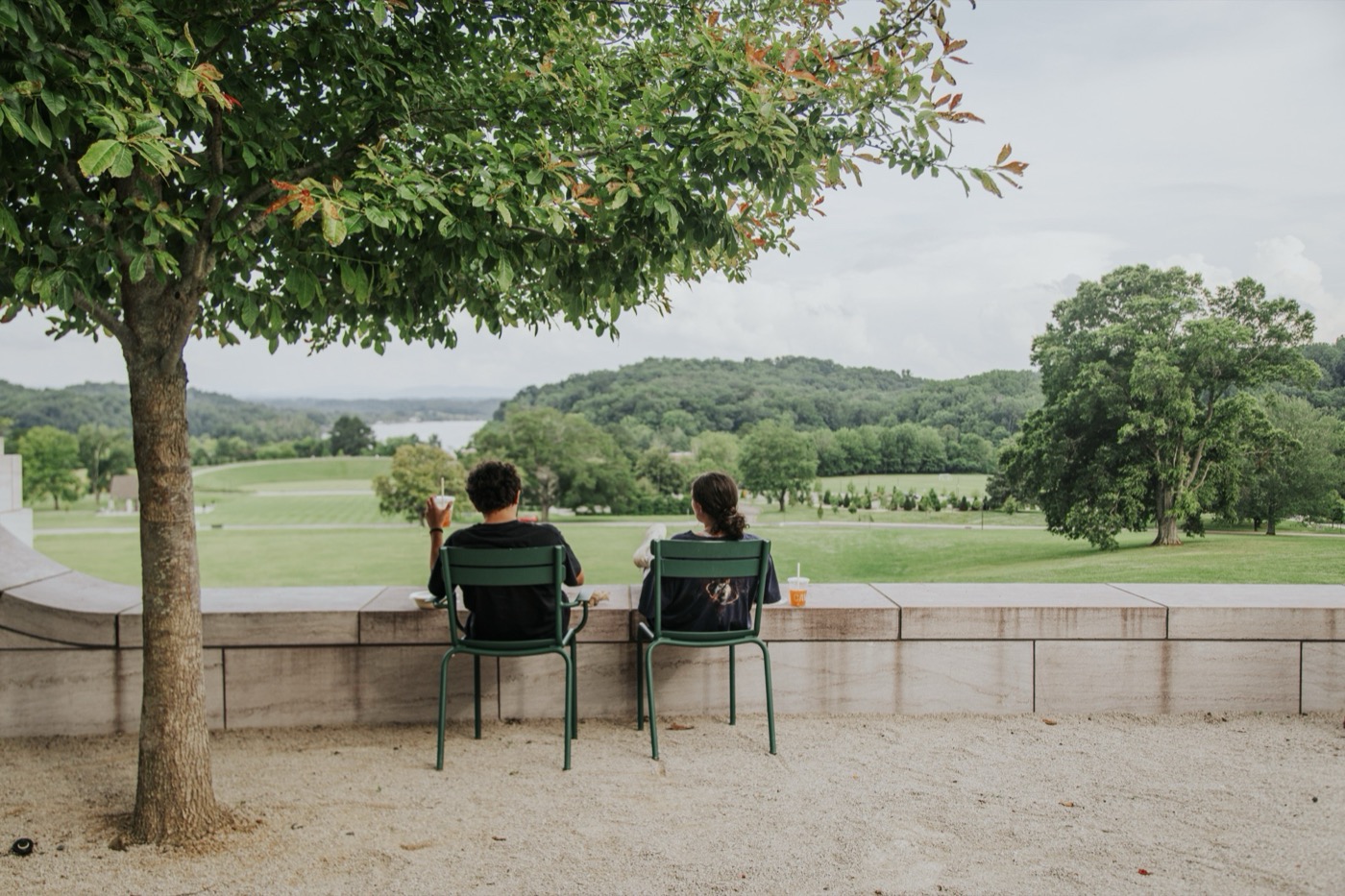
At the heart of the Civic Zone, the Overlook Plaza and Esplanade align with the historic Administration Building, opening panoramic views to the Tennessee River and the Great Smoky Mountains beyond. Framed by arcing allées of native black gum trees, the plaza serves as a civic-scale gathering space for daily use, performances, and community events. A monumental earthwork, the Mound, anchors the opposite end of the Civic Zone. Constructed using on-site fill generated during demolition and grading, the Mound transforms what was unused park space into a flexible event lawn and overlook.
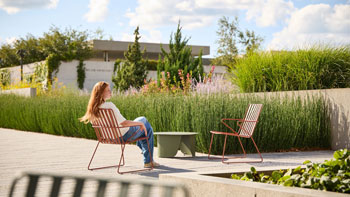
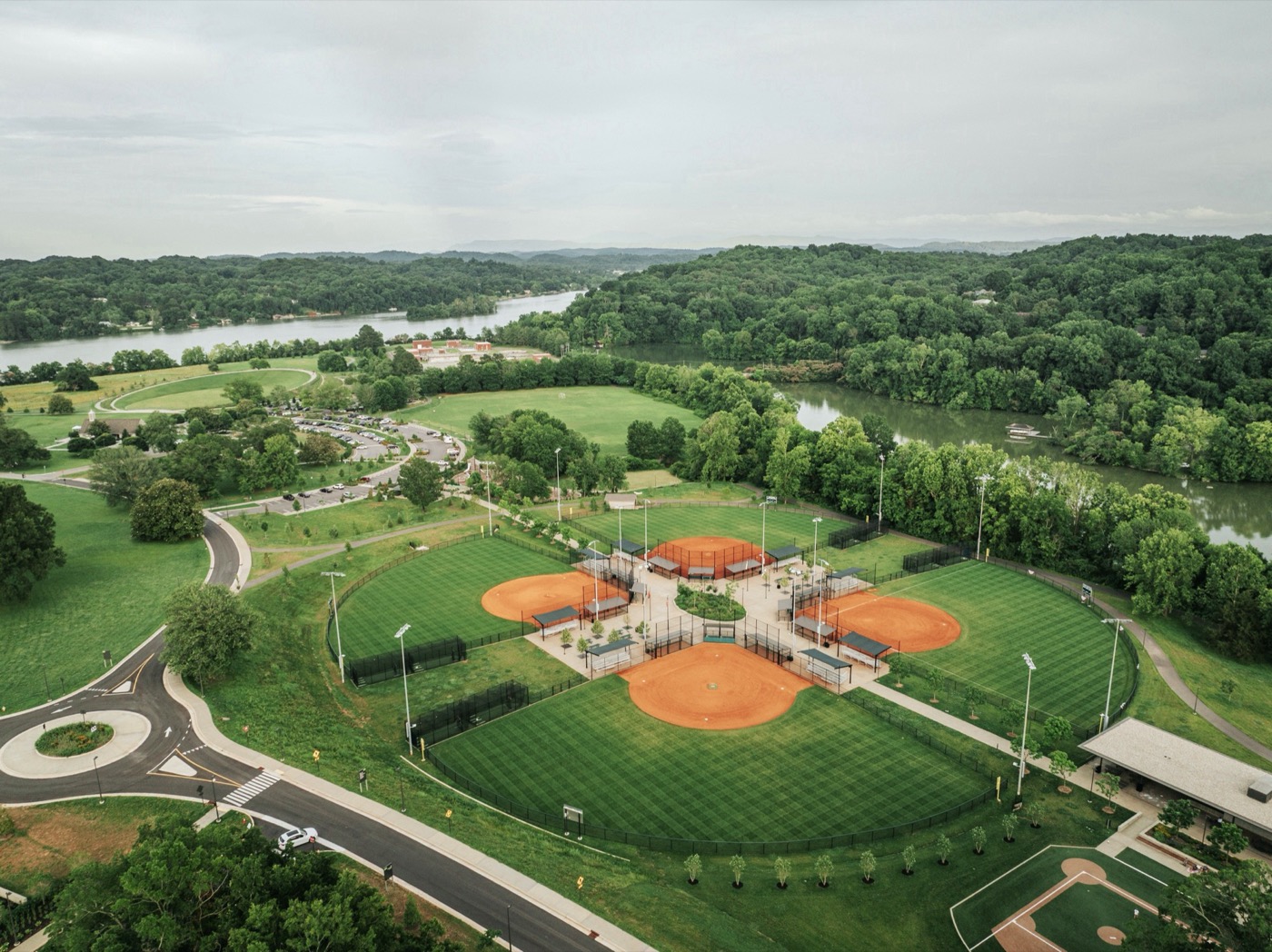
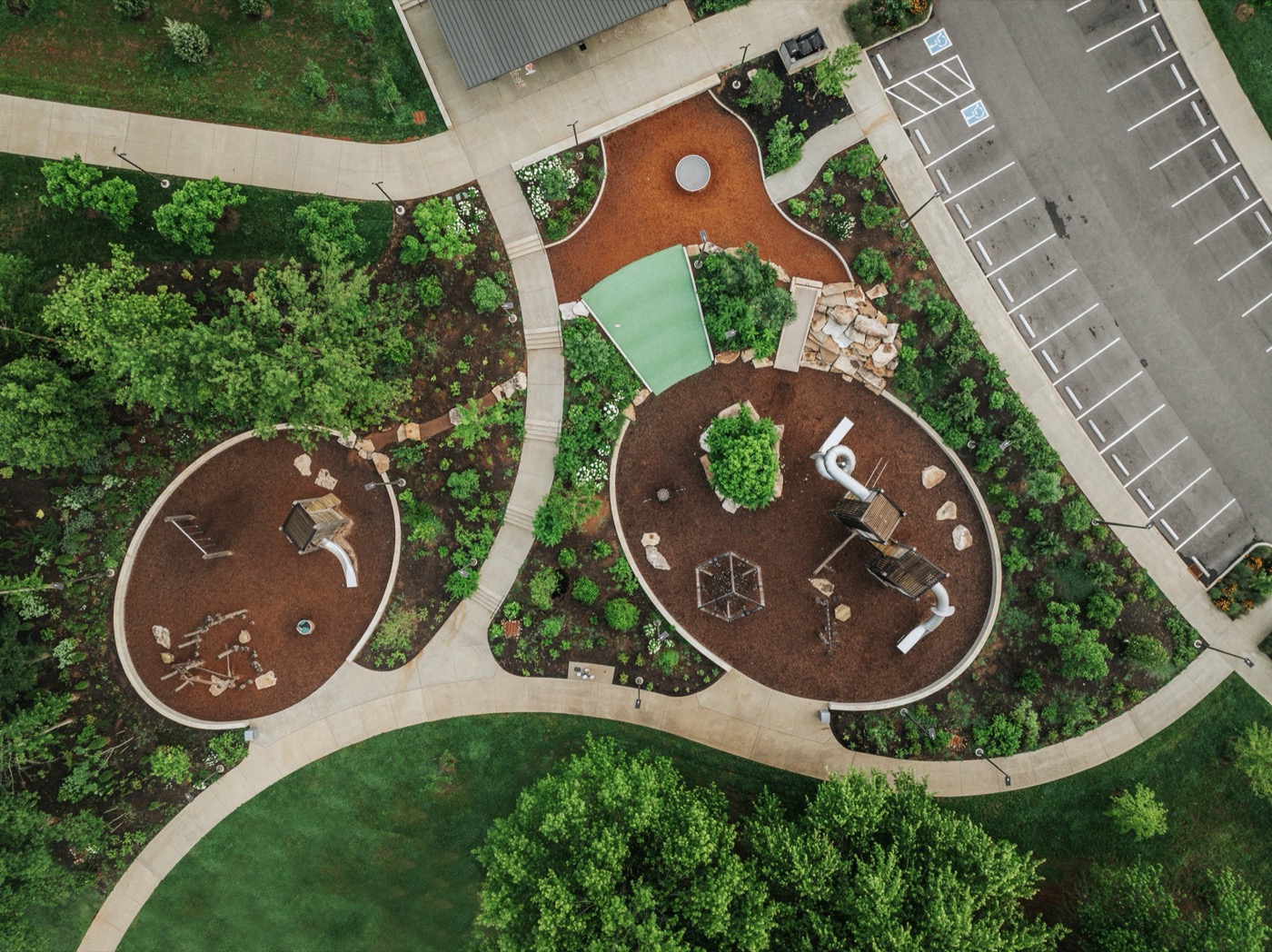
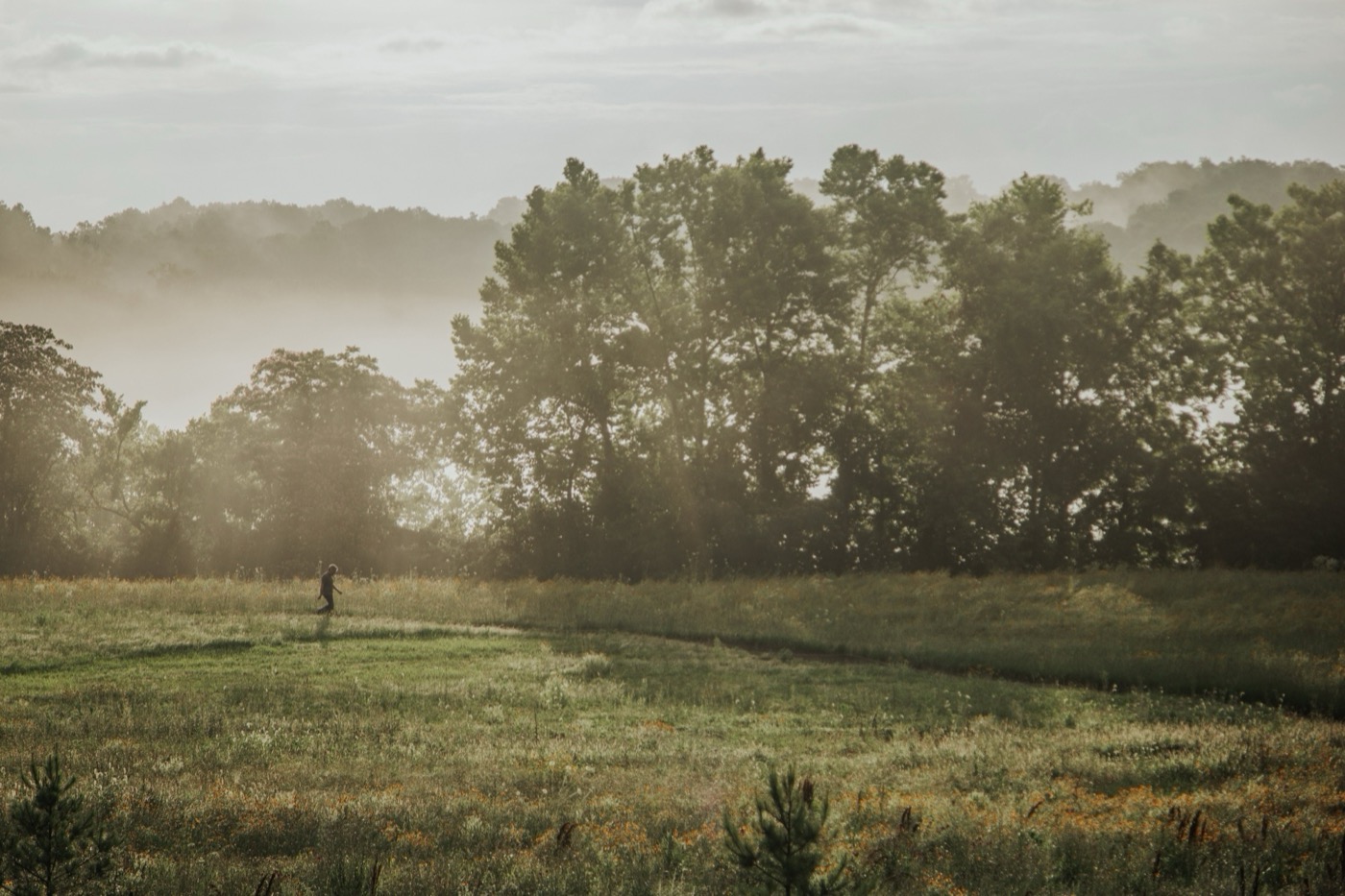
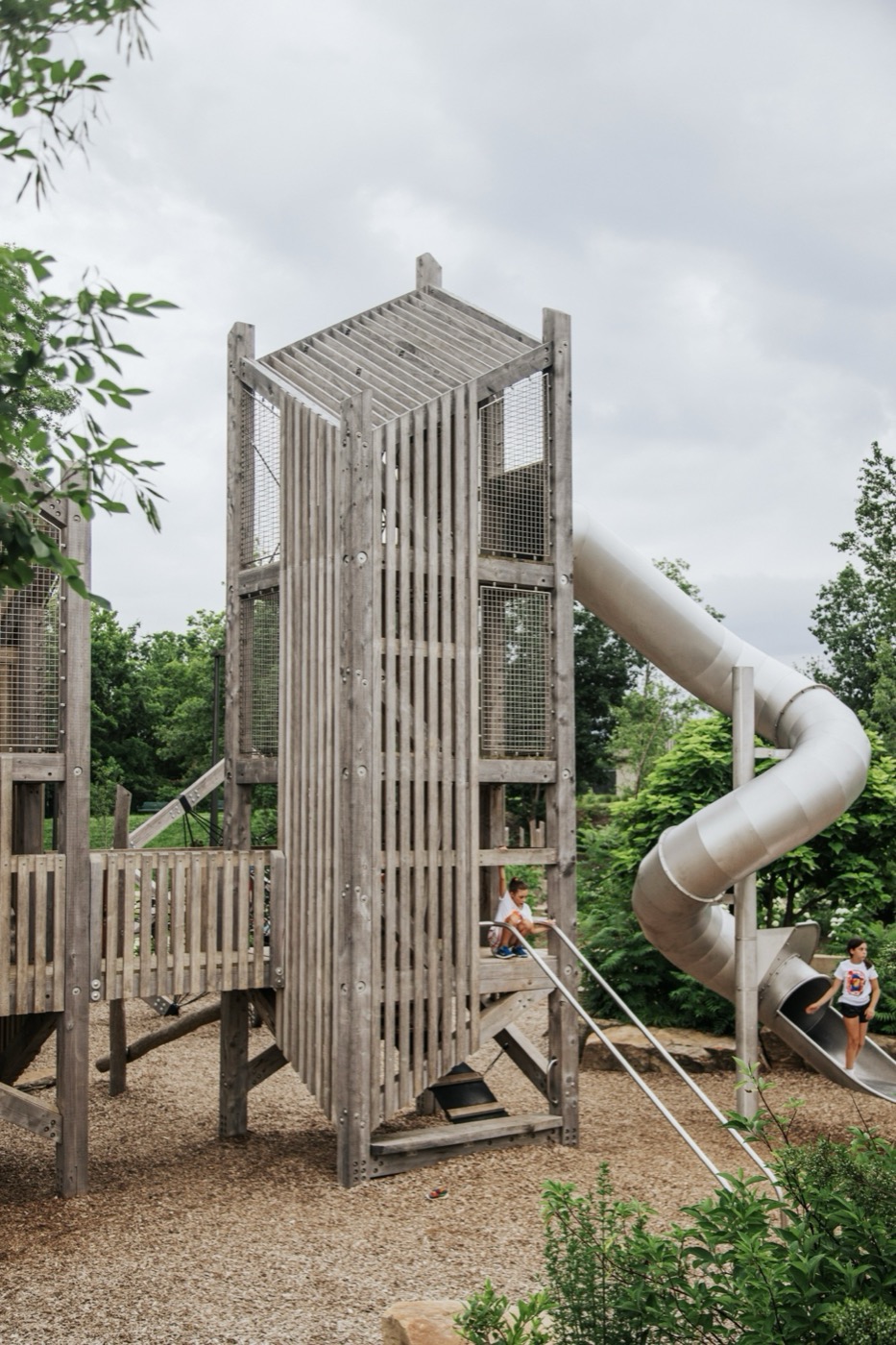
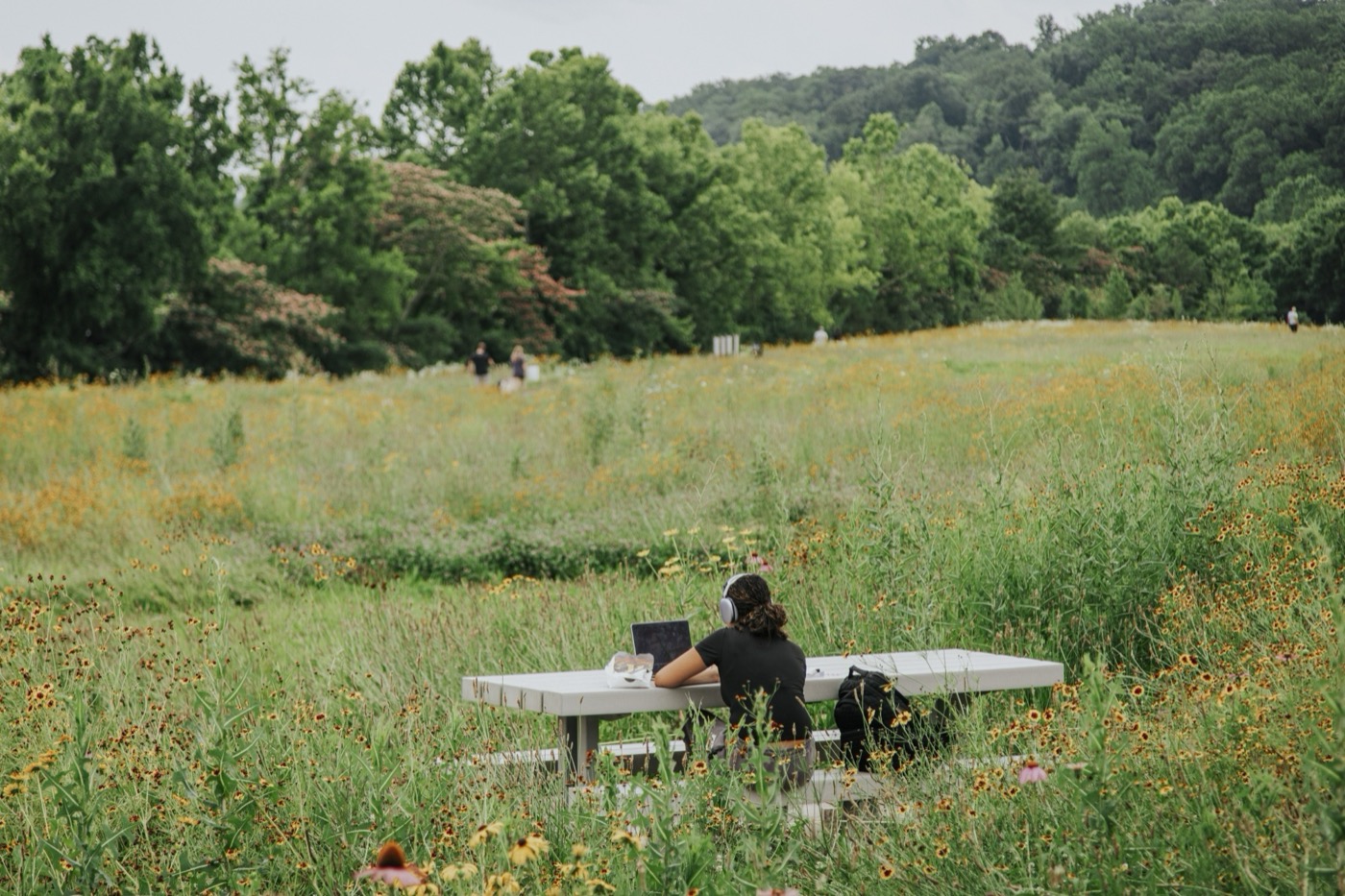
Subsequent phases expanded opportunities for physical wellness and ecological restoration. New ballfields we relocated to the Athletic Zone to improve safety and circulation, while new sports courts, fitness stations, universally accessible playgrounds, and a Little League Challenger Field broadened access for users of all ages and abilities. More than 700 trees were planted to increase canopy cover, mitigate heat, and enhance biodiversity. A 2.8-hectare warm-season grass meadow provides pollinator habitat, improves stormwater infiltration, and significantly reduces long-term mowing and maintenance demands.
Throughout the project, materials including stone, earth, and boulders were salvaged and reused on site, reinforcing a site-specific identity while reducing costs and environmental impact. Stormwater-sensitive grading and native planting strategies address flooding and climate resilience, while the phased implementation approach allowed the client to align construction with funding and evolving needs.
Developed through close collaboration with the client group, community stakeholders, and specialist consultants, Lakeshore Park demonstrates how landscape architecture can reclaim complex institutional land, mitigate environmental hazards, and replace isolation with openness—reframing a landscape of trauma as a resilient civic commons rooted in health, equity, and community.
Lakeshore Park Conservancy
City of Knoxville
Sanders Pace Architecture
Civil and Environmental Consultants,Inc
Facility Systems Consultants
Haines Structural Group
Tillett Lighting Design
LWLA
Lindsay & Maples Architects
Andy Pulte, Arborist
Denark Construction
35.922334658329504, -83.99141440568734
73570


LILA 2026 Sponsor