Leidsche Rijn Centre Utrecht
www.baljon.nl
2026 Public Projects / Netherlands / Built in 2025 /

![Waterfront Harderwijk Harderwijk is a remarkable fishing village that once stood on the shores of the vast Zuiderzee, protected from the water and other threats by high city walls. Over the course of the 20th century, this historic town was cut off from the water by a theme park (Dolfinarium) and an industrial area. Traffic […]](https://landezine-award.com/wp-content/uploads/2026/05/01-Harderwijk-Waterfront_HERO-IMAGE-600x400.jpg "Waterfront Harderwijk")
![Noorderhaven (De Mars) Zutphen Noorderhaven forms part of the De Mars redevelopment area in Zutphen. A former industrial site on the river IJssel has been transformed into a vibrant urban centre. The location, close to both the town centre and the stunning landscape of the IJssel, as well as the area’s history, inspired the design. […]](https://landezine-award.com/wp-content/uploads/2026/05/01-Zutphen-Noorderhaven-8202_HERO-IMAGE-600x400.jpg "Noorderhaven Zutphen")
![PARK BORNEOPLEIN WITH JEWISH MEMORIAL ‘LIGHT OF REMEMBRANCE’ The small park at Borneoplein in Amersfoort was transformed to house and experience the Jewish Memorial ‘Light of Remembrance’. Park and memorial are intertwined. The existing park was poorly used. It was uninviting due to its formal layout with few paths and a concrete pond. It was […]](https://landezine-award.com/wp-content/uploads/2026/05/01-Park-Borneoplein_HERO-image-600x400.jpg "Park Borneoplein with Light of Remembrance")
![The Station Square is the gateway for visitors and reflects the city’s regional identity, expresses the dynamics of the public transportation node, and offers a relaxed and comfortable place to linger. It accommodates a bicycle route under the tracks (26,000 users daily). The square proves to be popular with a wide range of visitors, making […]](https://landezine-award.com/wp-content/uploads/2024/05/00-BALJON-Station-Sq-24-600x400.jpg "Station Square Apeldoorn")
![Context The garden is situated in a lush suburban neighbourhood; at the point where it opens towards agrarian fields. The assignment to extend and alter the existing garden posed interesting challenges: make the best use of the mature trees (mostly oaks), convert a (visually and ecologically) uninteresting field, and bind together a new building (serves […]](https://landezine-award.com/wp-content/uploads/2023/05/00-LB-Priv‚tuin-Blaricum-Hoofdfoto-600x400.jpg "Blaricum")
![CONTEXT – The garden of 5,500 m2 is at the centre of the headquarters of the Rabo-bank, accommodating 6,500 employees. Through the staff restaurant and café, at two levels, the garden is accessible. STARTING POINT – The original garden was stony and created just to be looked at from the buildings. It consisted of three […]](https://landezine-award.com/wp-content/uploads/2023/05/00-LB-Rabotuin-main-600x400.jpg "Roof garden Rabobank Headquarters Utrecht")
![The Nova Zbrojovka site (25 ha.) in Brno, Czech Republic, is gradually transforming from a brownfield into a vibrant urban mixed-use area. Close to Brno city centre, this extensive site of the former Zbrojovka factory is embraced by the Svitava river and lies next to a train station. The developer was aware that such a […]](https://landezine-award.com/wp-content/uploads/2023/05/00-LB-Nova-main-600x270.jpg "Nová Zbrojovka Brno")
![Redevelopment of rundown urban area next to historic town centre with a dense and mixed program: school for higher education, public library, museum, art house cinema, shops, cafés, health care, and housing. Overall goal of the development was to create a rich urban environment with mixed-use, generate a healthy living environment, do justice to the […]](https://landezine-award.com/wp-content/uploads/2019/04/LB-Ligne-Sittard-main-photo-2-600x360.jpg "Ligne Sittard")
![LODEWIJK BALJON landscape architects: ‘Landscape architecture is constructed from craftsmanship, theory and artistic sense.’ Tradition, as a combination of knowledge and experience, offers inspiration, but also makes us critical and creative. Tradition makes the design familiar and comfortable. Innovation makes it fresh, dynamic and challenging. We make use of both currents. Landscape architecture as we […]](https://landezine-award.com/wp-content/uploads/2019/04/Baljon-office-photo-2-600x400.jpg "LODEWIJK BALJON landscape architects")
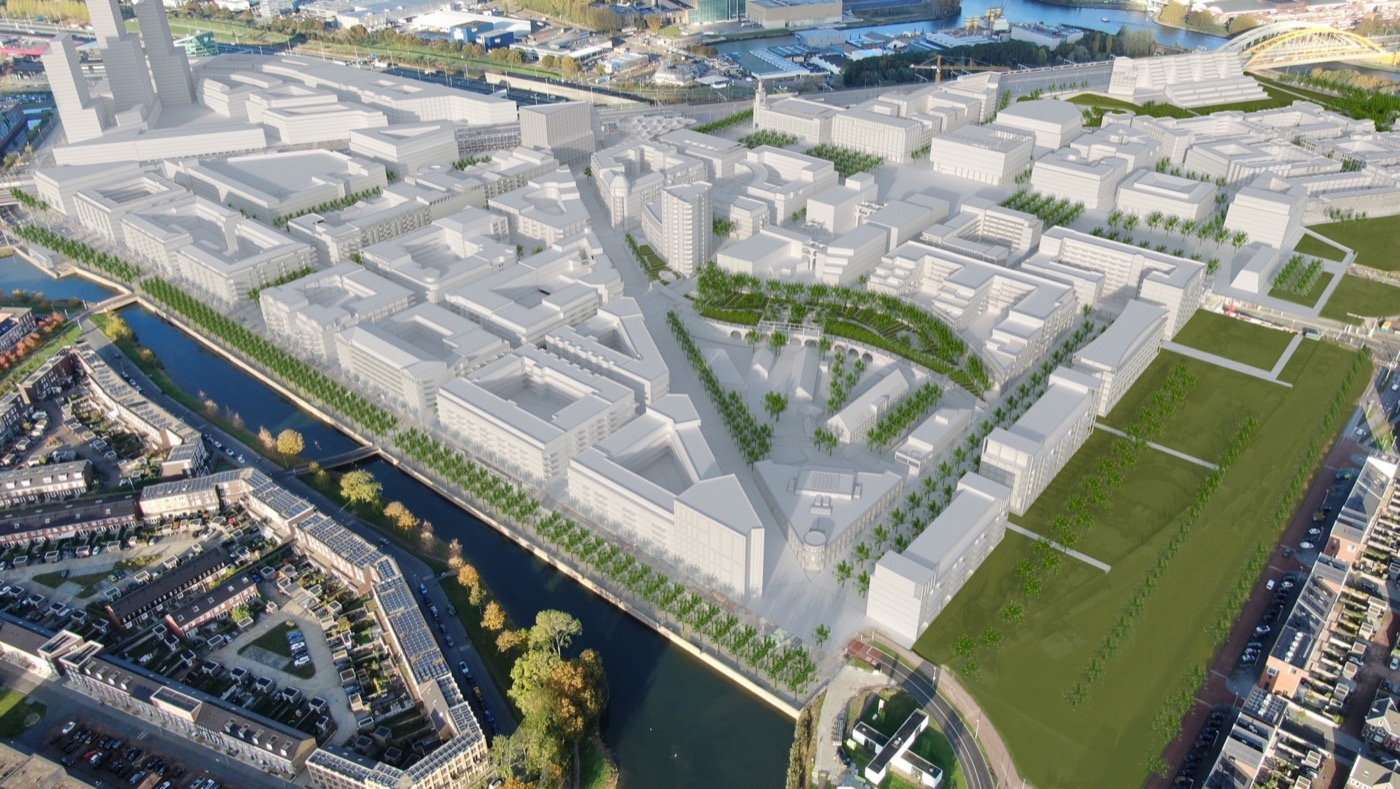
Leidsche Rijn Centre is an urban development project centered around public spaces. In addition to being a neighbourhood for shopping, living, and working, the centre is the heart of the Leidsche Rijn district and Utrecht’s second city centre. It serves as the vital link between Utrecht and the 100,000 residents of Leidsche Rijn; it has grown into a fully-fledged and diverse urban center with a wide range of urban spaces.
Character
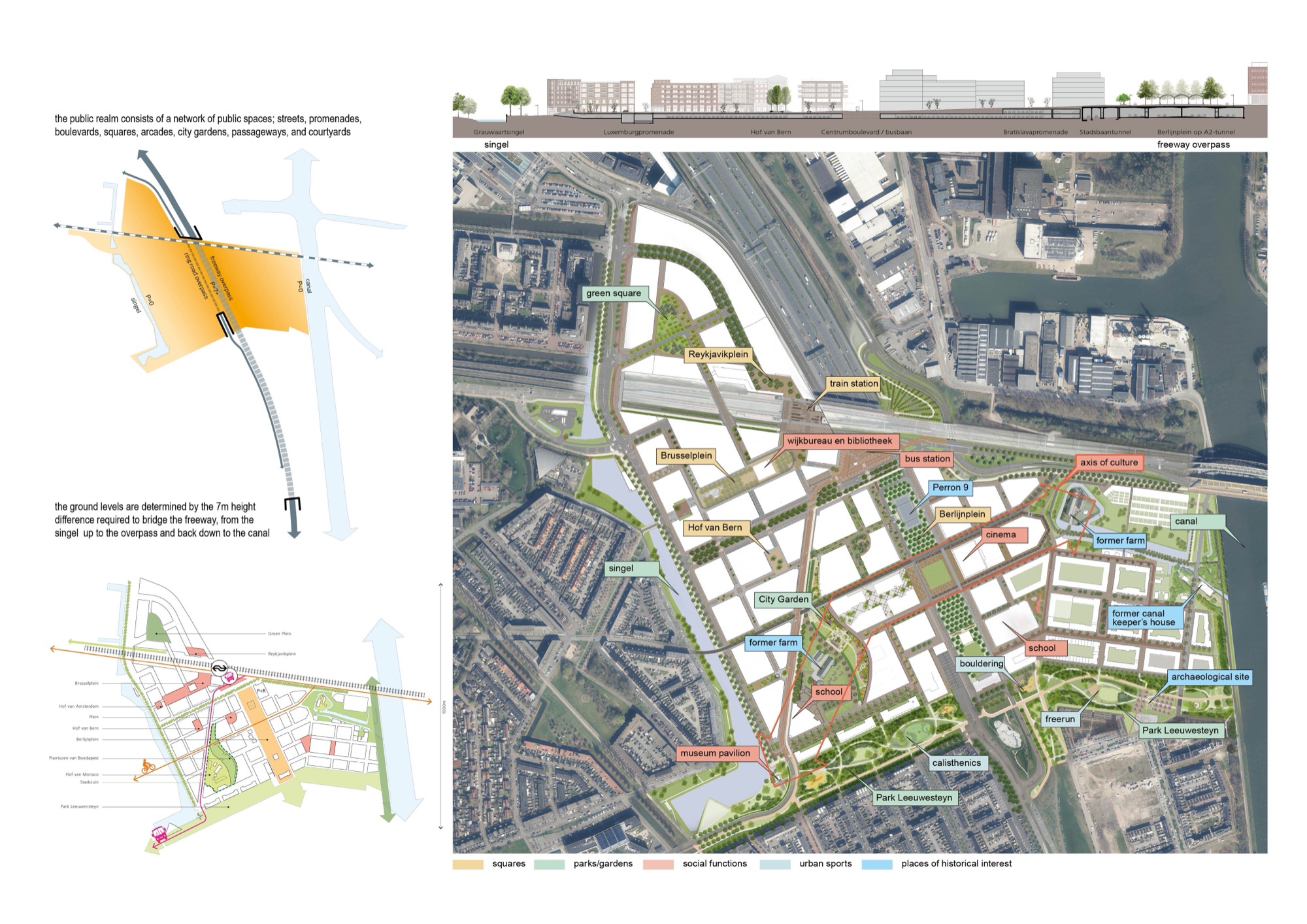
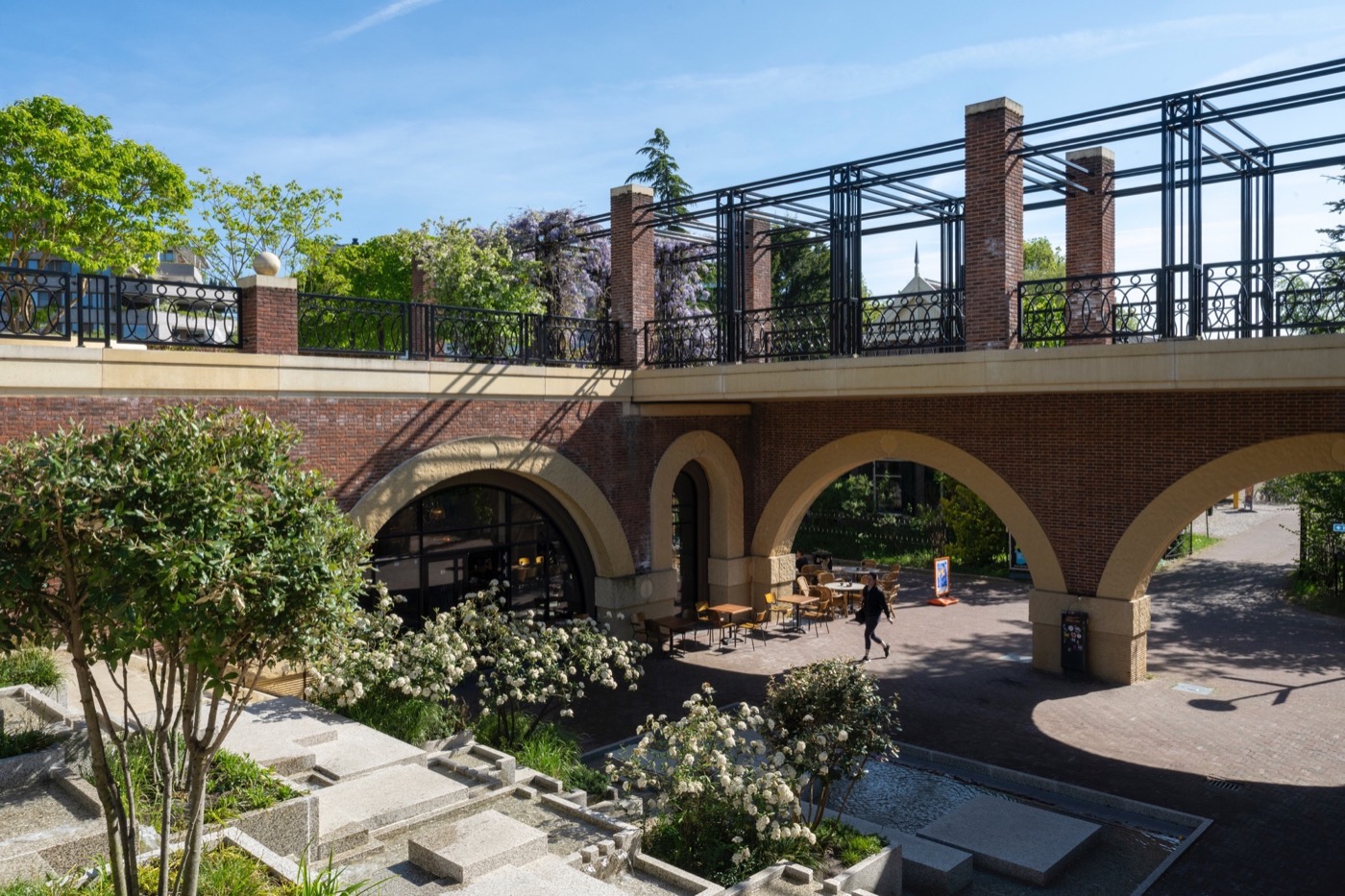
Three aspects make Leidsche Rijn Centre unique: its central location, the multitude and variety of functions, and the differences in elevation. The ground level of Leidsche Rijn Centrum is determined by the elevation differences required to bridge the A2 freeway. The height difference from Singel up to the freeway overpass and back down to the Canal averages 7 meters. Key public spaces, like the city square (Brusselplein) and a large part of the core shopping area are located on an intermediate level.
Structure
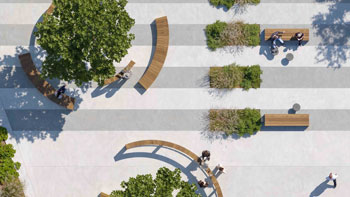
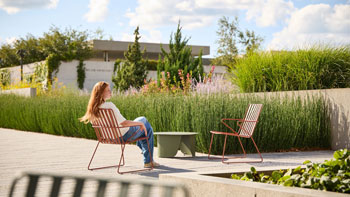
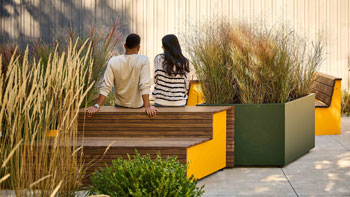
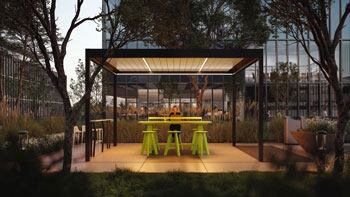
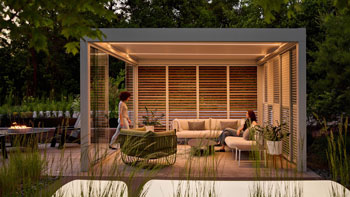
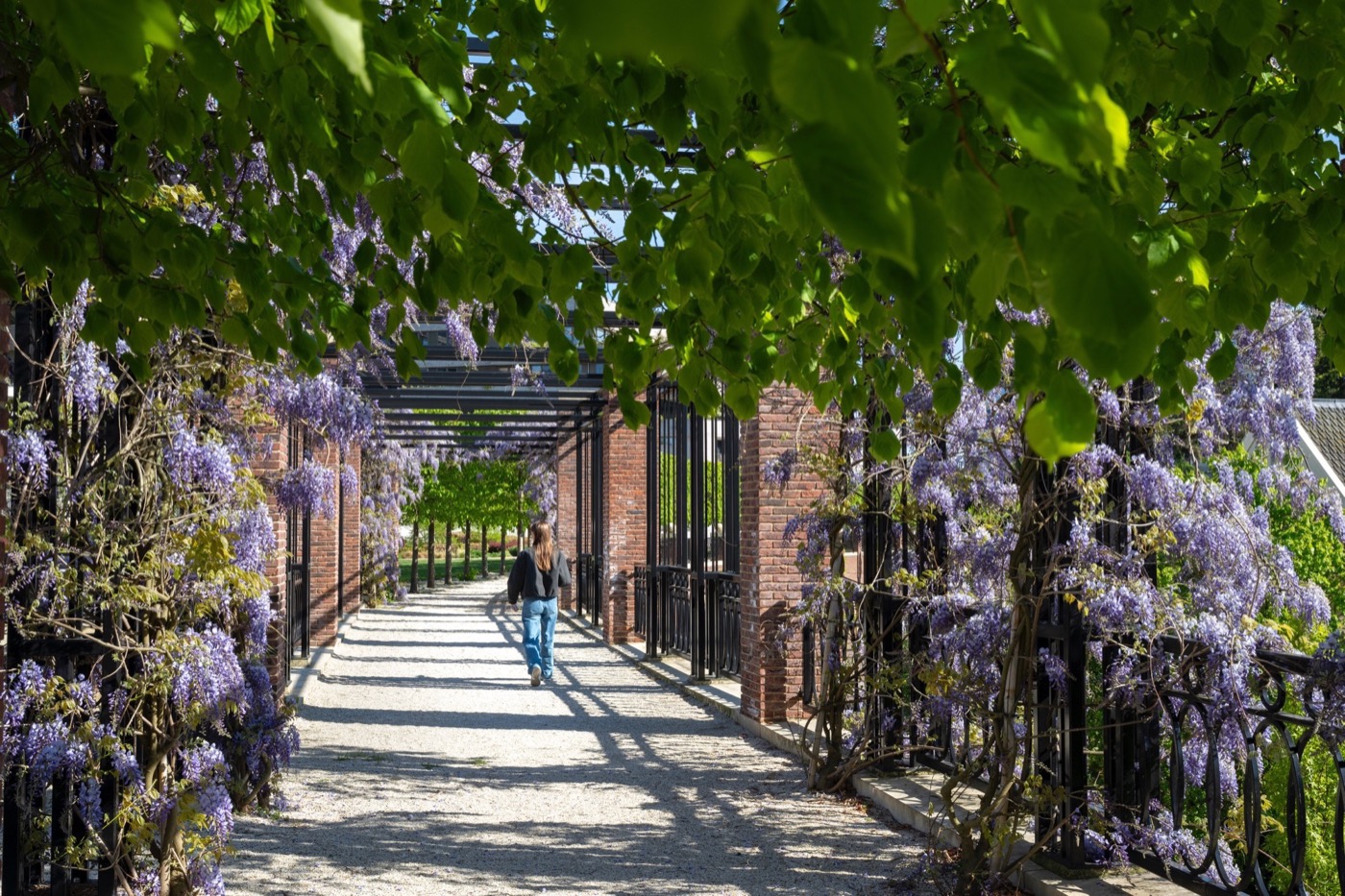
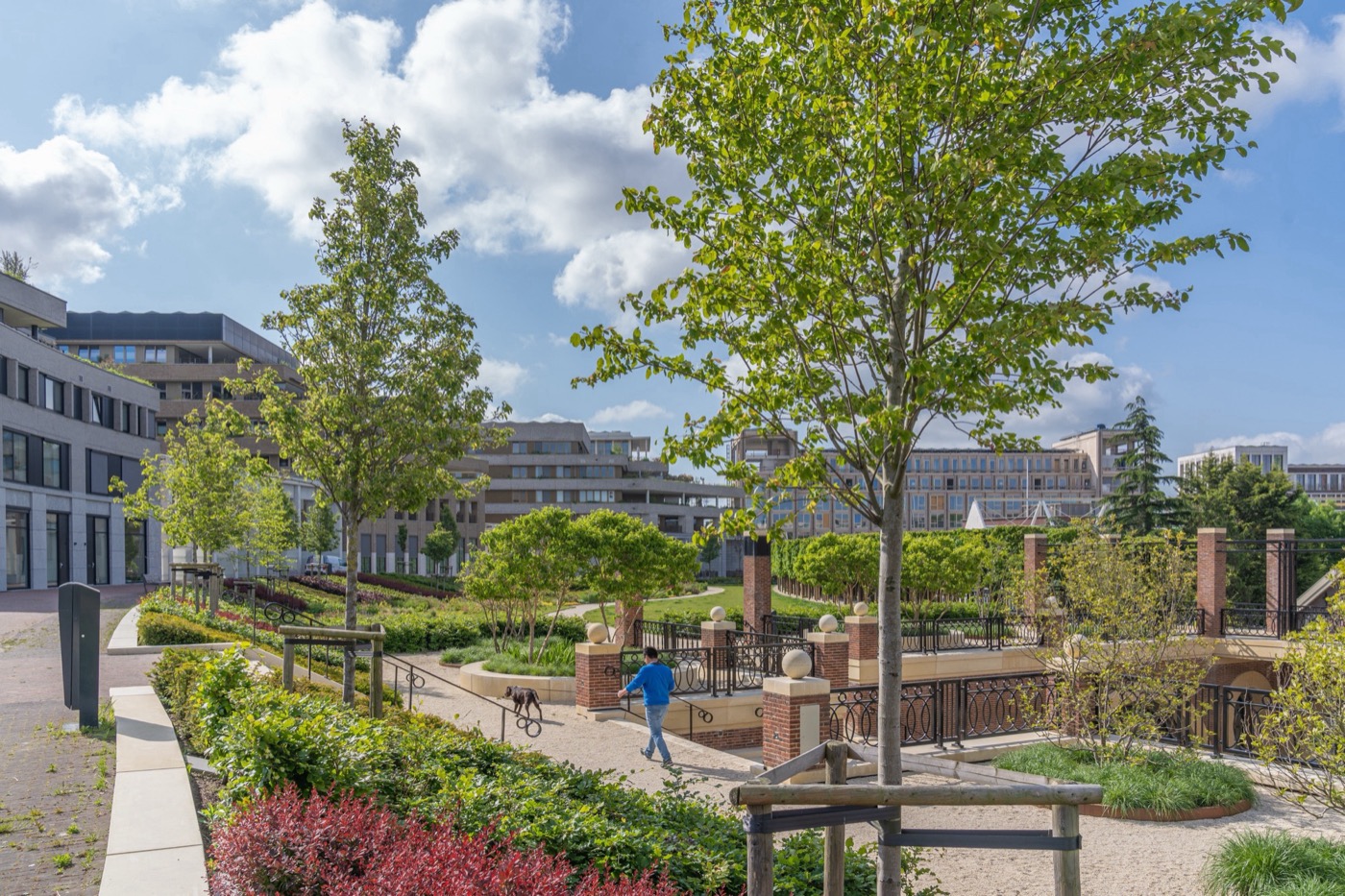
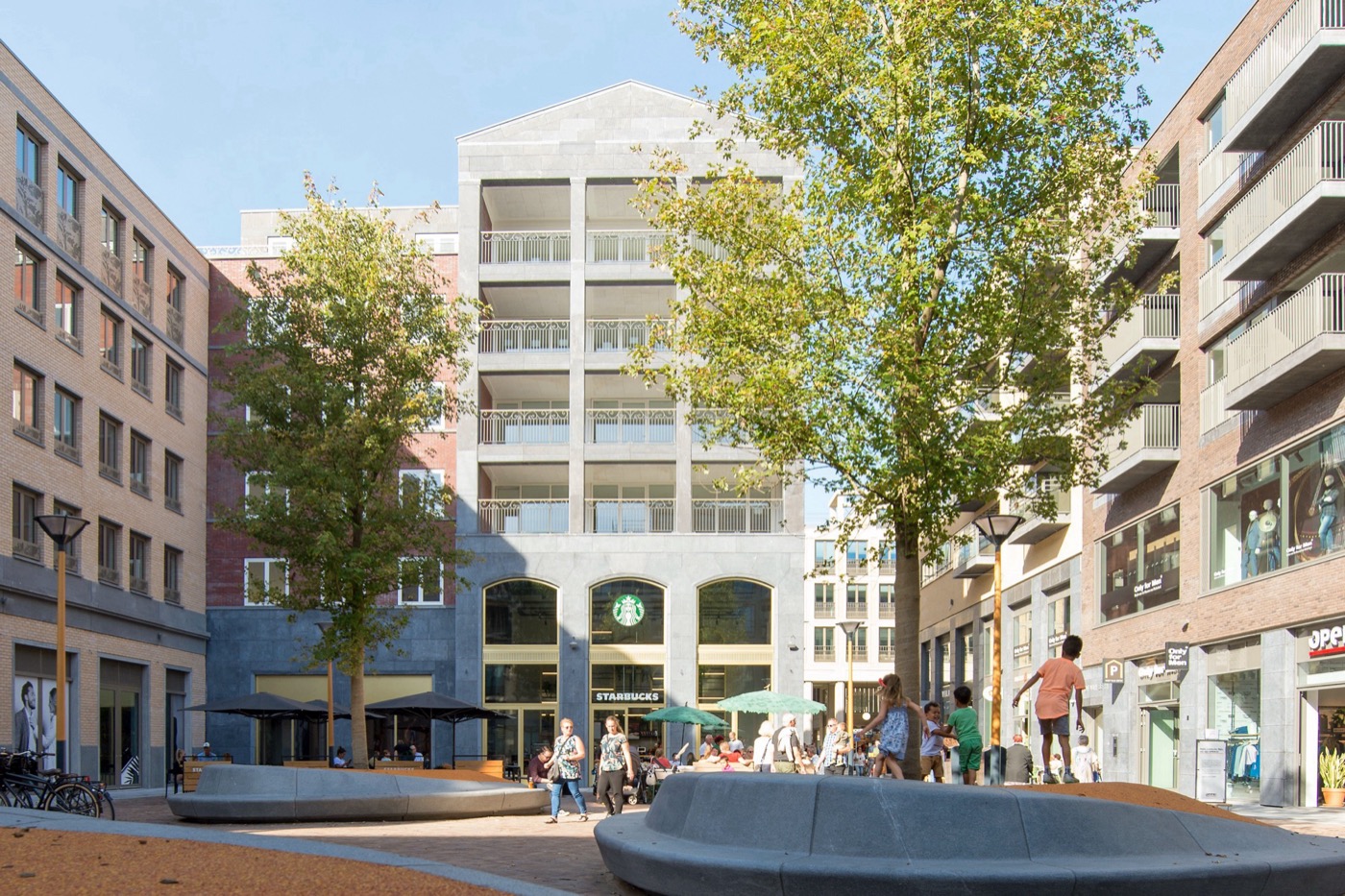
The public realm is characterized by a wide variety of spaces. These include familiar parts of the city, such as streets, promenades, boulevards, and squares, as well as unique spaces like arcades, city gardens, passageways, and courtyards. The classical urban structure is given a contemporary interpretation. The project is sustainable (based on the principle that what is sustainable is what is cherished) by using materials that age gracefully (with careful, solid detailing), through flexible functionality, intensive use of space by stacking programmes, and by prioritizing pedestrians and cyclists. It is located directly adjacent to the train and bus station, while car traffic and deliveries pass beneath the city. The difference in elevation enhances the experience of the public space. In designing the ground level gradient accessibility has been carefully ensured.
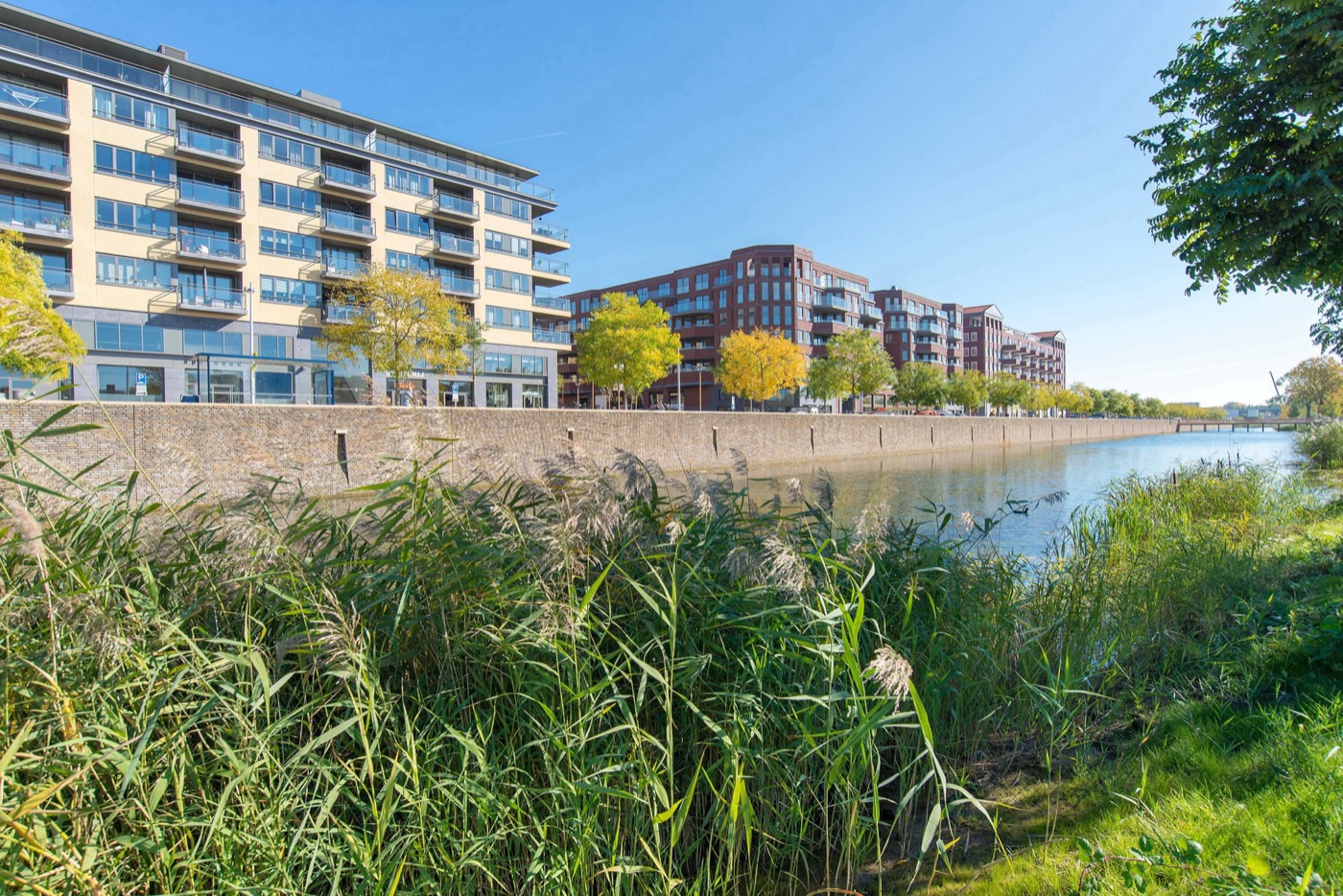
The centre is framed by long lines connected to the structure of the entire Leidsche Rijn district and Utrecht’s city centre. This network also incorporates major infrastructure lines, such as the railway, bus line (high-quality public transport), ring road, freeway, and Amsterdam-Rhine Canal. New landscape elements have been added, such as the Grauwaartsingel, the riverside promenade along the Amsterdam-Rhine Canal, and Park Leeuwesteyn. Park Leeuwesteyn is directly connected to the other parks in Leidsche Rijn.
Sustainable and cherished
Significant attention has been paid to climate-adaptive measures—such as water retention and buffering, a resilient green-blue infrastructure, the prevention of heat stress through shading and cooling air currents, and resilient tree planting sites. Despite the large areas of artificial ground level, rainwater infiltrates via sewage infiltration and an extensive storage and infiltration system along the Grauwaartsingel. The Grauwaartsingel itself forms part of the overall water management system.
Axis of Culture
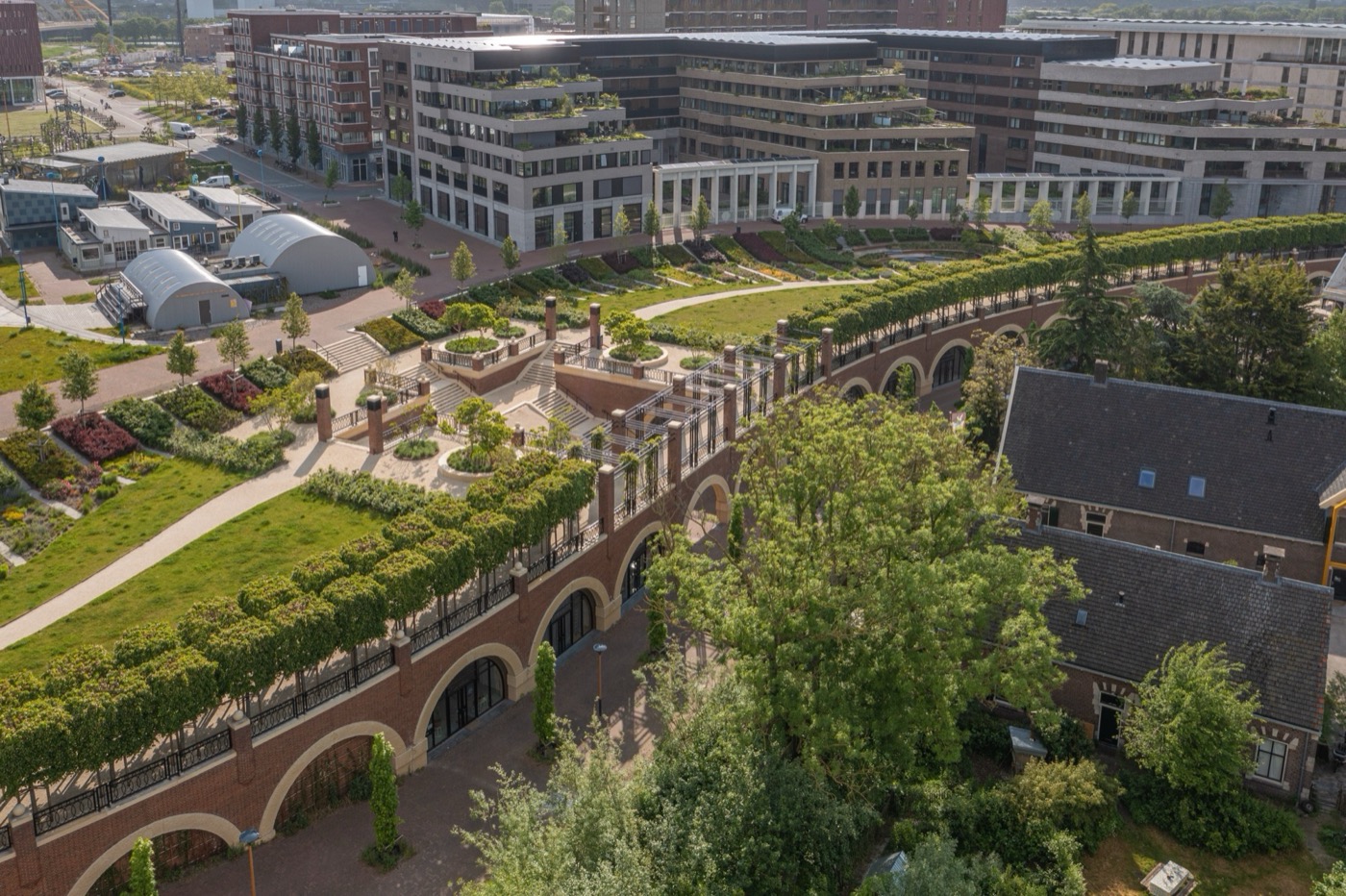
The cultural functions in Leidsche Rijn Centre are located along the Axis of Culture. The 7-meter elevation difference, necessary to bridge the gap between the freeway overpass and the old ground level, is celebrated with a route leading from the new elevated urban squares to the grounds of the preserved farmhouses via monumental staircases, vistas, and balconies in the public space.
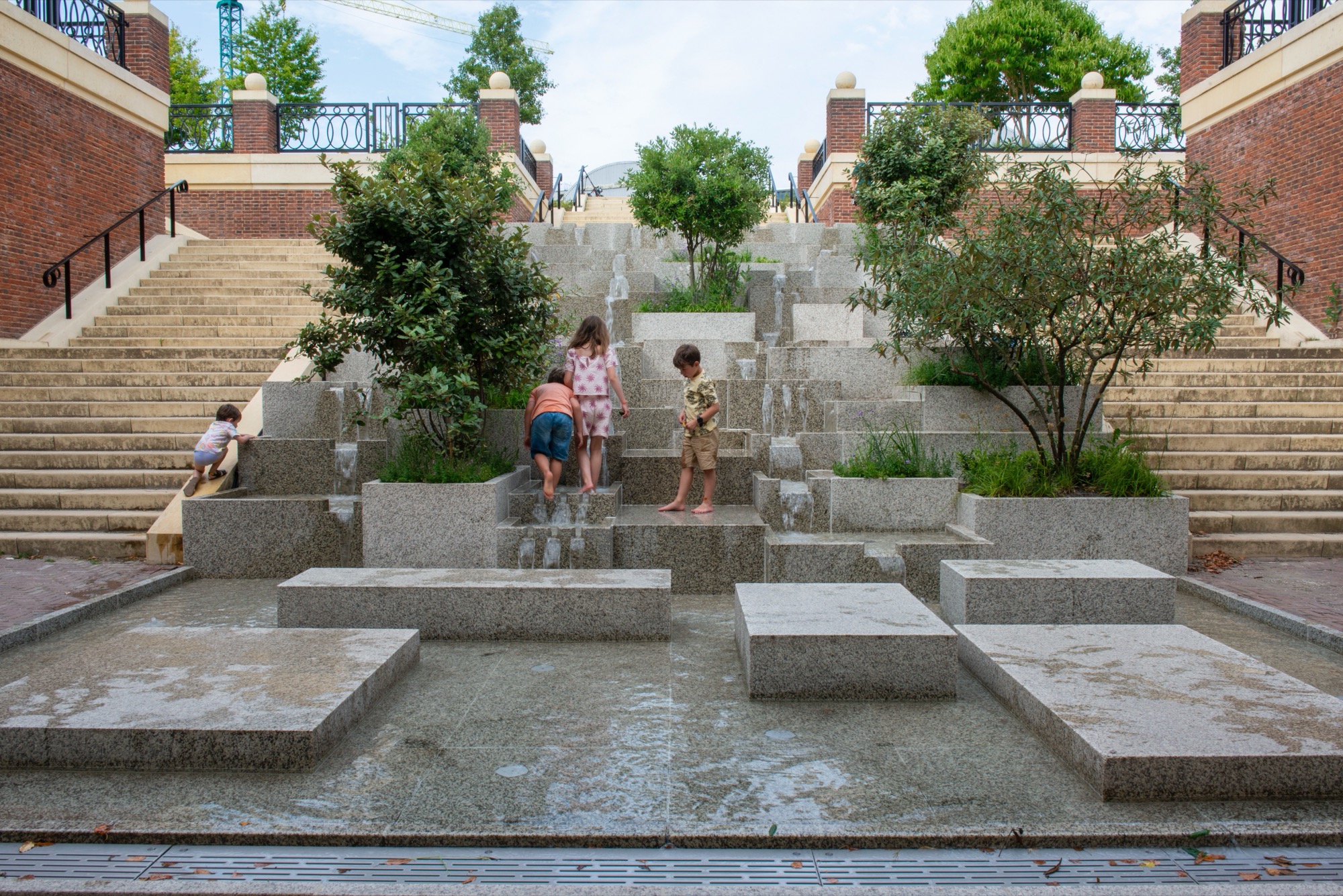
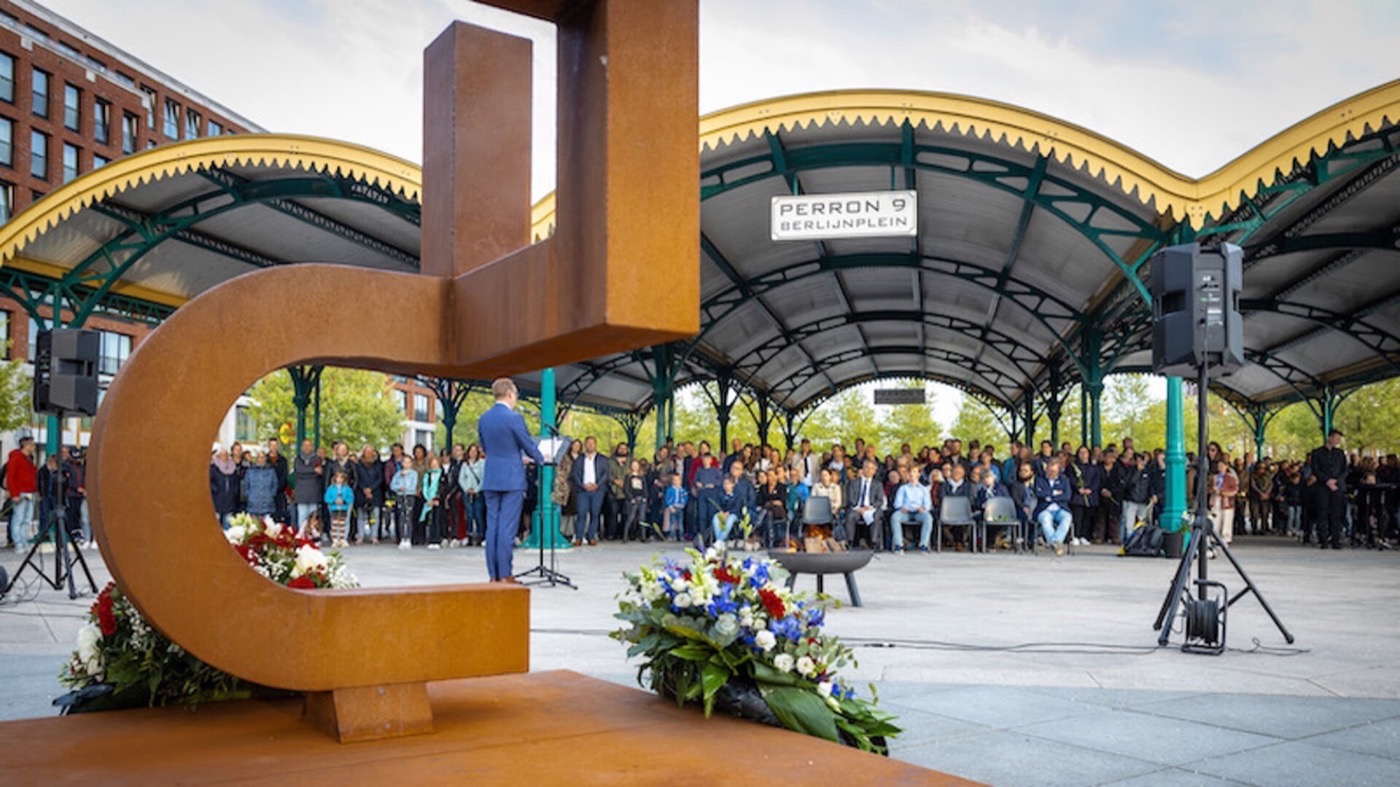
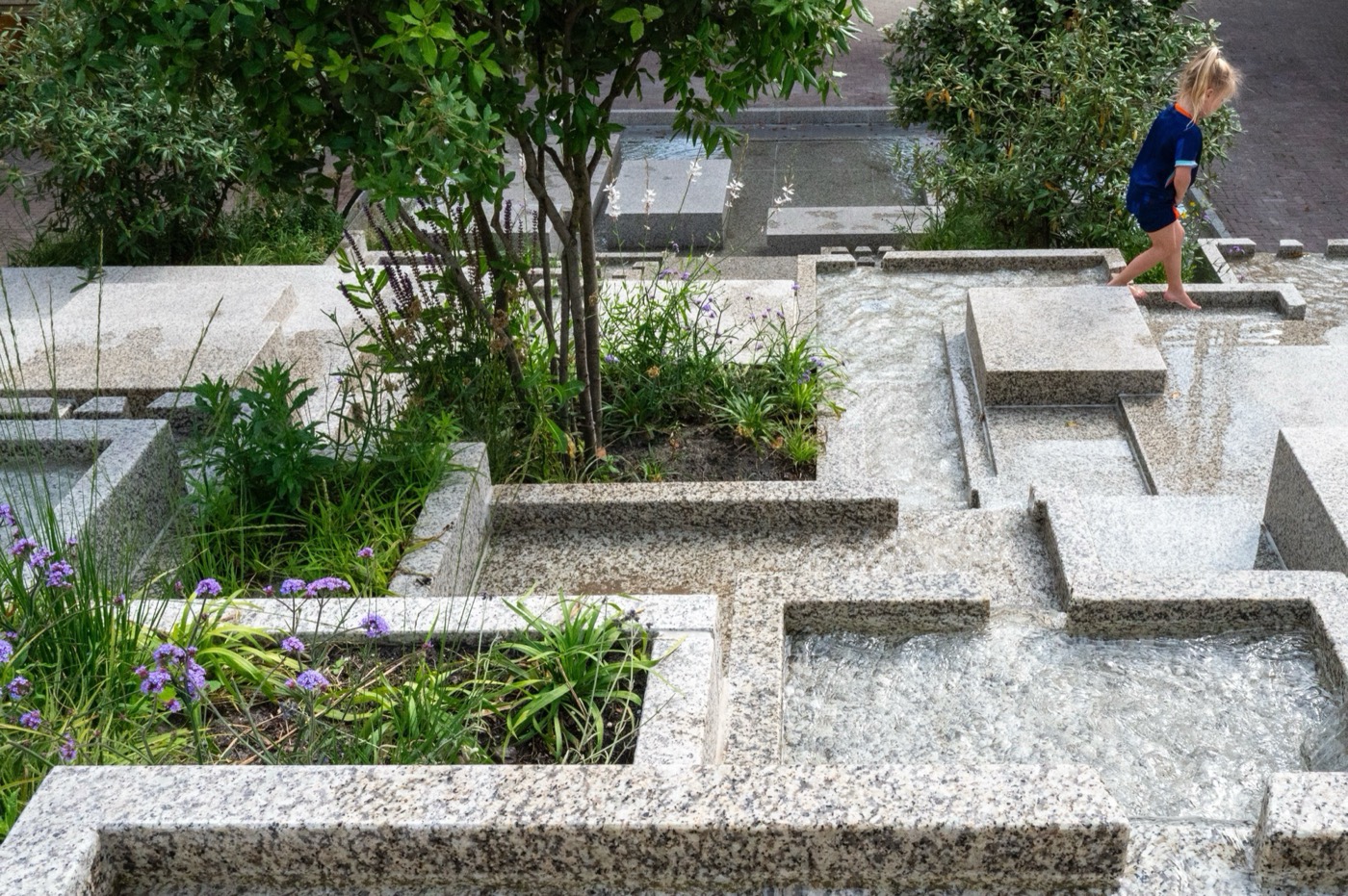
At the heart of the Axis of Culture lies the Culture Cluster; a venue for dance, theatre, festivals, or debate. The City Garden (Plantsoen van Boedapest and Hof van Monaco) and Berlin Square are the connecting public spaces of the cultural axis. The City Garden with its water stairs is the garden to the Culture Cluster. Berlin Square, with the re-used historic canopies of the inner-city train station – which also house the cinema – is a venue for events.
Parks and Squares
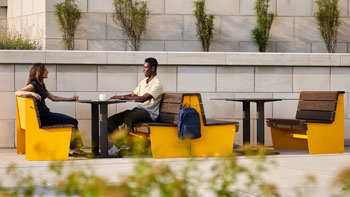
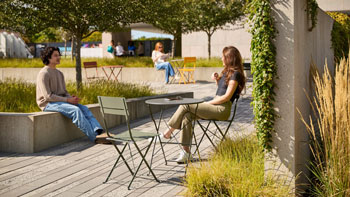
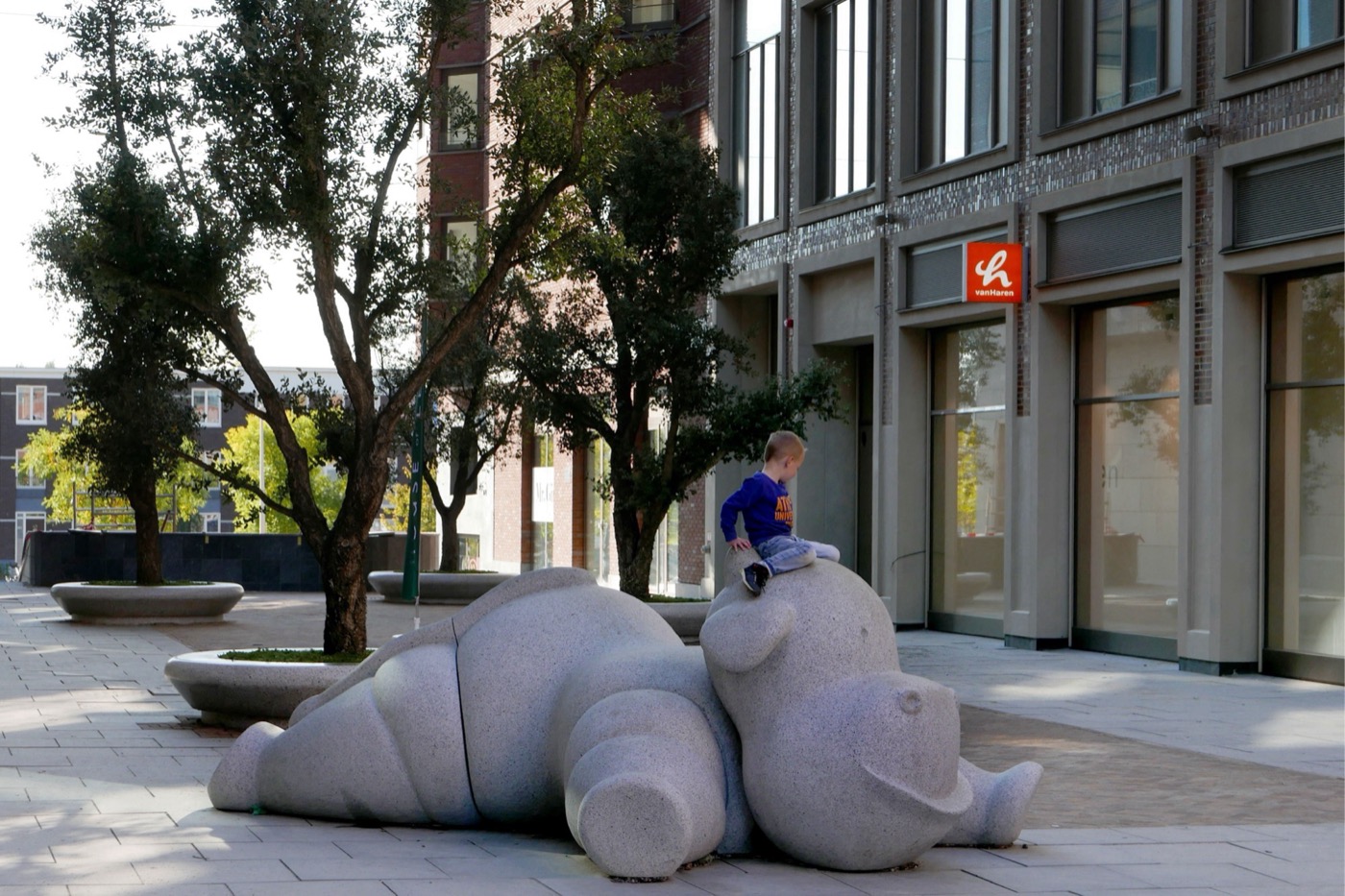
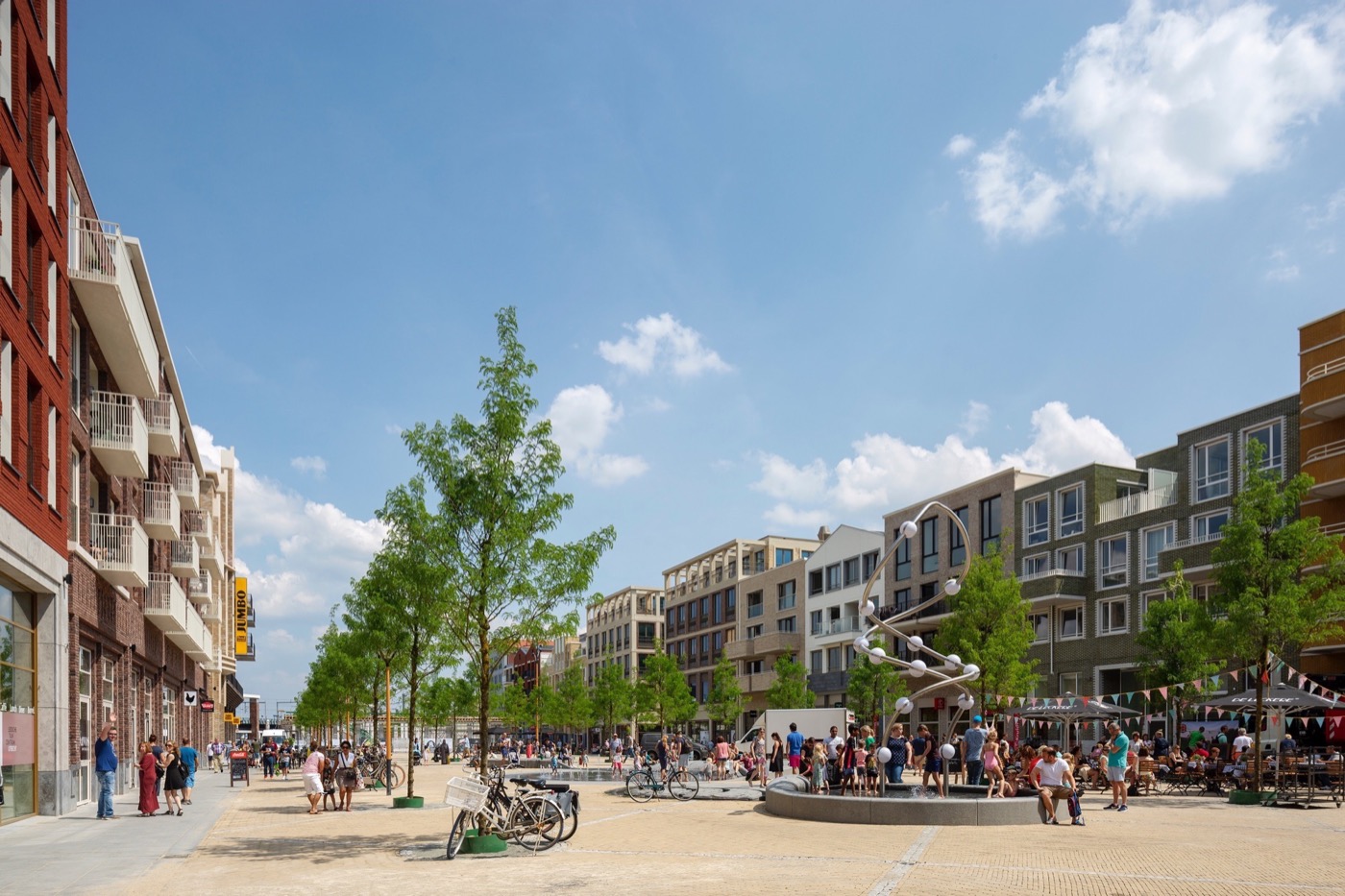
Parks and squares are designed with diverse user groups in mind. Berlijnplein is the main event square; Brusselplein is the tree-lined market square lined with terraces and featuring a water feature as an attraction. Hof van Bern is a small, peaceful spot; an open space in the shopping district with play areas for children.
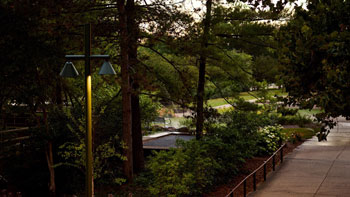
The design for Park Leeuwesteyn was a co-creation with the neighbourhood and a quest for both tranquillity and vibrancy for diverse target groups. For immediate residents, there is tranquillity because the park features a robust ecological border. Within this, there are open spaces of various sizes and functions. Some spaces are designated for play or urban sports, while others are open for flexible use.
Client: City of Utrecht
Cityplanner: Jo Coenen architect & urbanist
Landscape architect public space: Baljon landscape architects
Pictures: Nadine van den berg, Anne & Ben ter Mull, Ebben, Baljon, Luuk Kramer, Brandbeeld Fotografie
52.09808131356309, 5.06463331966931
76830


LILA 2026 Sponsor