Materialenkaai
tractebel-engie.com/
2026 Landscape and Architecture / 2026 Public Projects / Belgium / Built in 2024 /

![The Vaartkom waterfront reclaims a former industrial dock in Leuven as a continuous and generous public landscape, completing the long term transformation of the surrounding district. While warehouses, silos and productive infrastructure once defined the site, recent decades introduced housing, culture and creative activities. Yet the public realm along the dock remained fragmented and traffic […]](https://landezine-award.com/wp-content/uploads/2026/05/00_4_2025_©Rachel-Sari_A-planted-promenade-with-integrated-seating-structures-daily-life-combining-movement-rest-and-seasonal-greenery-600x400.jpg "Vaartkom")
![Heldenplein in Vilvoorde has undergone a complete transformation: from a congested traffic junction and parking area into a green, safe and characterful public space. The introduction of the Ringtrambus created a unique opportunity to combine necessary mobility interventions with an integrated redesign of the square — an approach that not only improves traffic flow, but […]](https://landezine-award.com/wp-content/uploads/2026/05/16_Heldenplein_Vilvoorde_RainInfiltration_Planting-©MichielDeCleene-600x488.jpg "Heldenplein")
![The Zuidpark is a dynamic urban park in the heart of Antwerp. Covering over eight hectares, this ambitious project reclaims public space for people, nature, and culture, redefining the relationship between the city and its open space. By integrating water management, biodiversity, and community engagement, Zuidpark sets a new standard for sustainable and inclusive urban […]](https://landezine-award.com/wp-content/uploads/2025/05/00_Zuidpark_main-photo-600x450.jpg "Zuidpark by Tractebel")
![Kortrijk Weide is positioned at the edge of Kortrijk’s city centre between a bundle of railway tracks, the Lys and the local ring road. The project definition incorporates the history of this unique location to help and define the design. The project site, a former customs warehouse, has been transformed into a dynamic and green […]](https://landezine-award.com/wp-content/uploads/2022/05/00-Kortrijk-Weide_Pavilion-connecting-the-park-meadow-to-the-water-garden-600x399.jpg "Kortrijk Weide")
![The Tuinen van Stene (Gardens of Stene) forms one of the most important new parks in Ostend: a multifunctional agricultural park that provides space for urban agriculture, water storage, nature development and recreational co-use. The project led to the uprise of a new public culture in Ostend, focused on renewed socio-economic and cultural relationships between […]](https://landezine-award.com/wp-content/uploads/2022/05/00-Overview_Drone-image-600x400.jpg "Tuinen van Stene (Gardens of Stene)")
Materialenkaai reclaims a long forgotten stretch of the Brussels–Charleroi Canal as a generous public landscape, transforming an industrial quay at the edge of Brussels and Molenbeek into a shared urban waterfront.
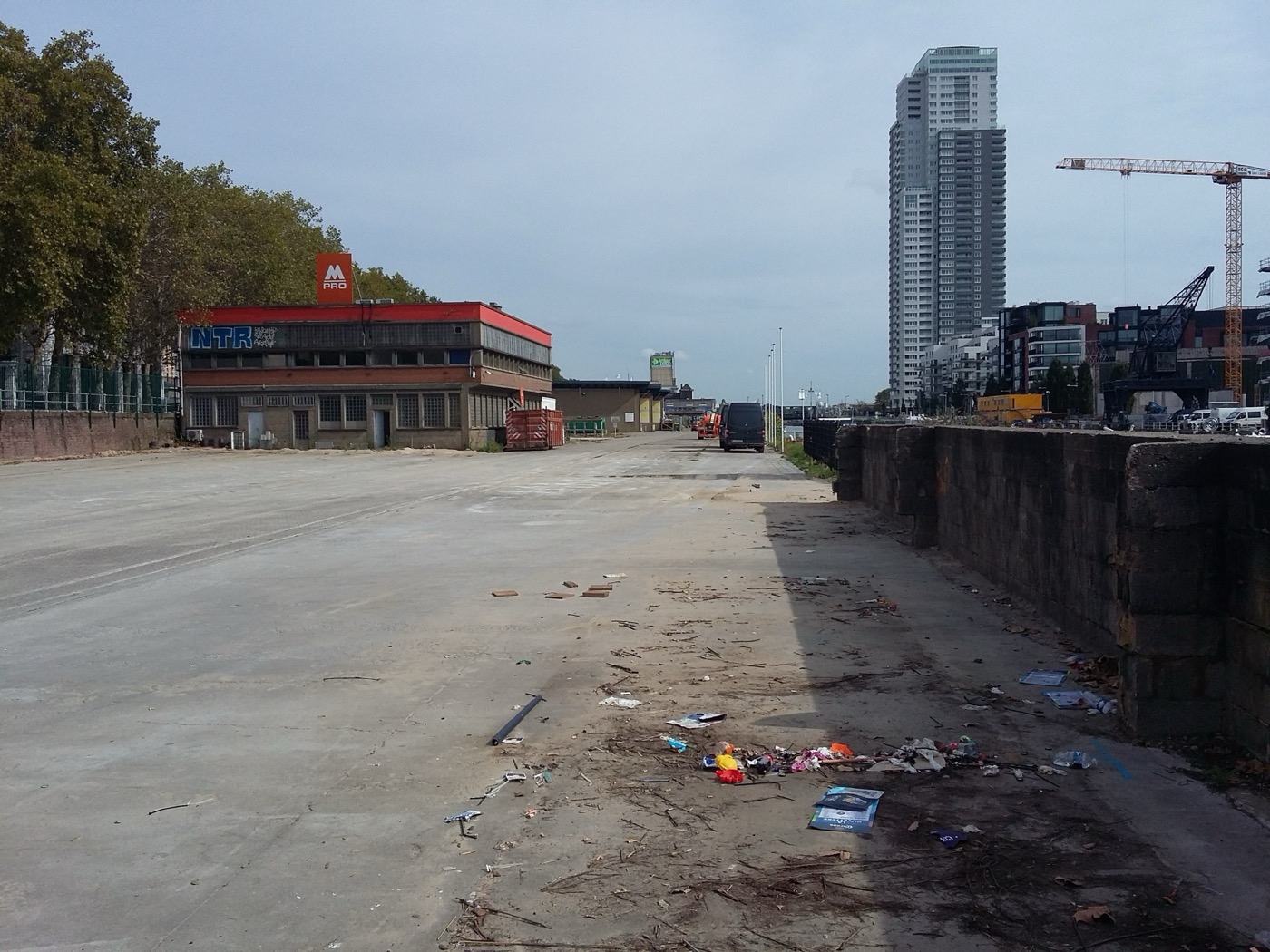
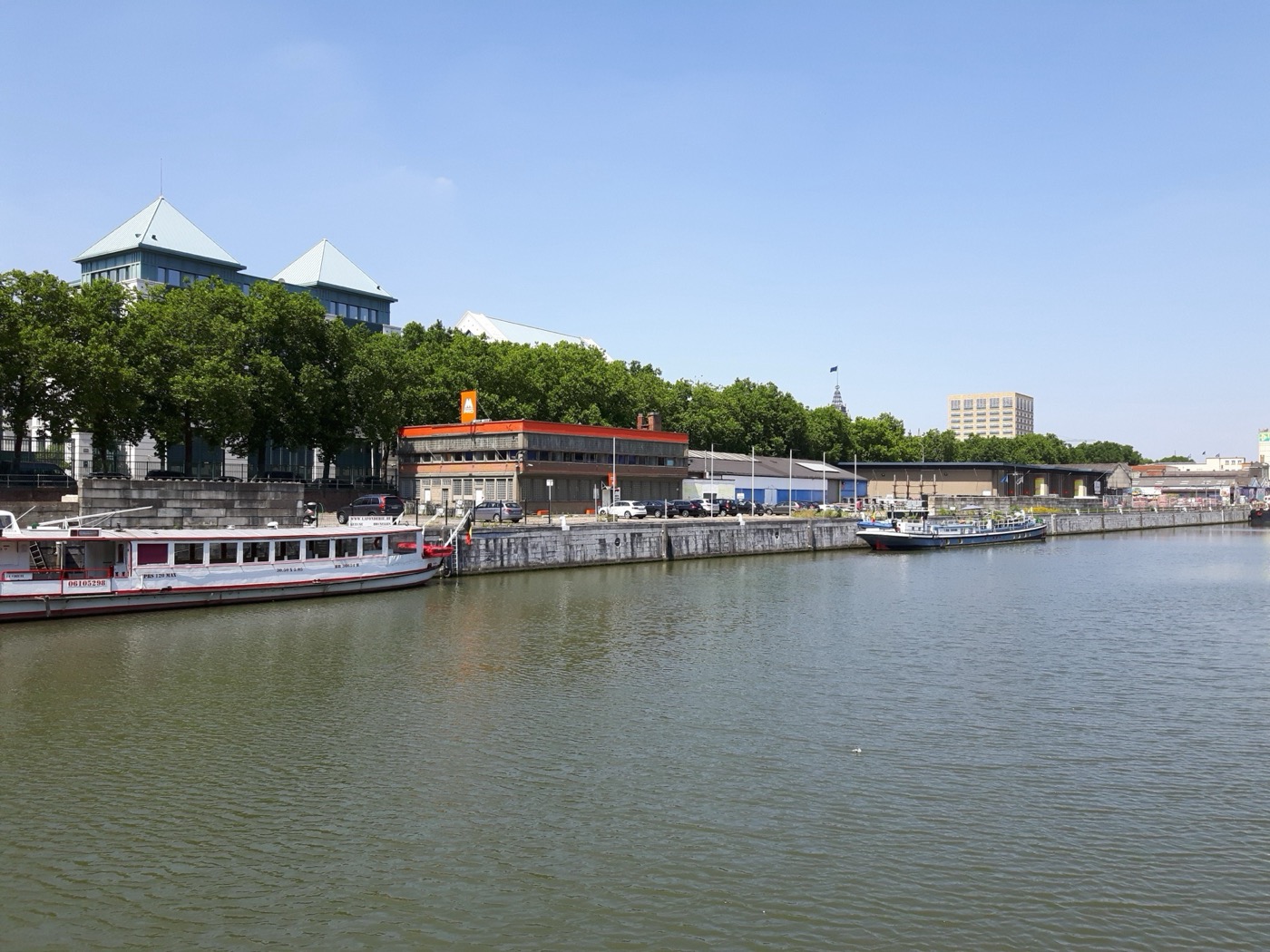
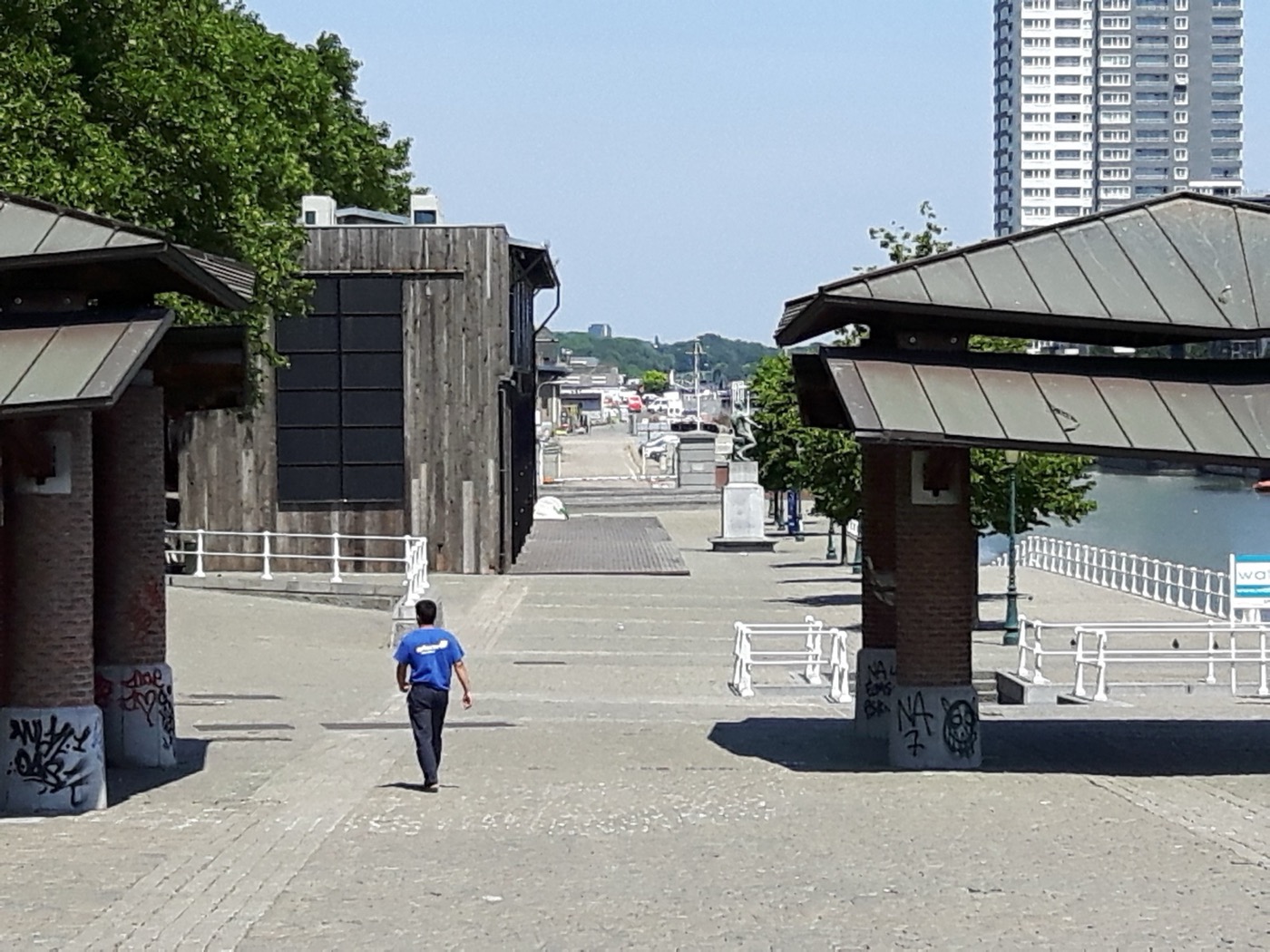
Located in one of the city’s most densely populated and multicultural neighbourhoods, the site forms a crucial interface between city and port, canal and neighbourhood, yet for decades remained inaccessible to residents. For more than a century, the quay was shaped by warehouses, construction companies and storage yards. Large parts of the site were sealed with asphalt, fenced off from the water and affected by soil contamination. Although strategically positioned between the canal, Tour & Taxis and surrounding residential areas, the quay functioned as a physical and social barrier rather than a place of encounter. Public access to the canal was virtually absent in a neighbourhood with little high quality open space.
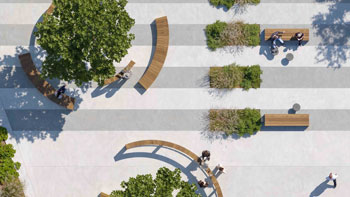
The transformation of Materialenkaai builds on this layered history instead of erasing it. The project establishes a robust spatial framework structured around a continuous waterfront promenade. This wide, barrier free route executed in three tones of polished concrete runs along the canal and acts as the backbone of the park, linking a sequence of places with distinct atmospheres. Along this linear structure, intensive, clearly programmed zones alternate with informal and open spaces, allowing different rhythms of everyday life to coexist within one coherent landscape.
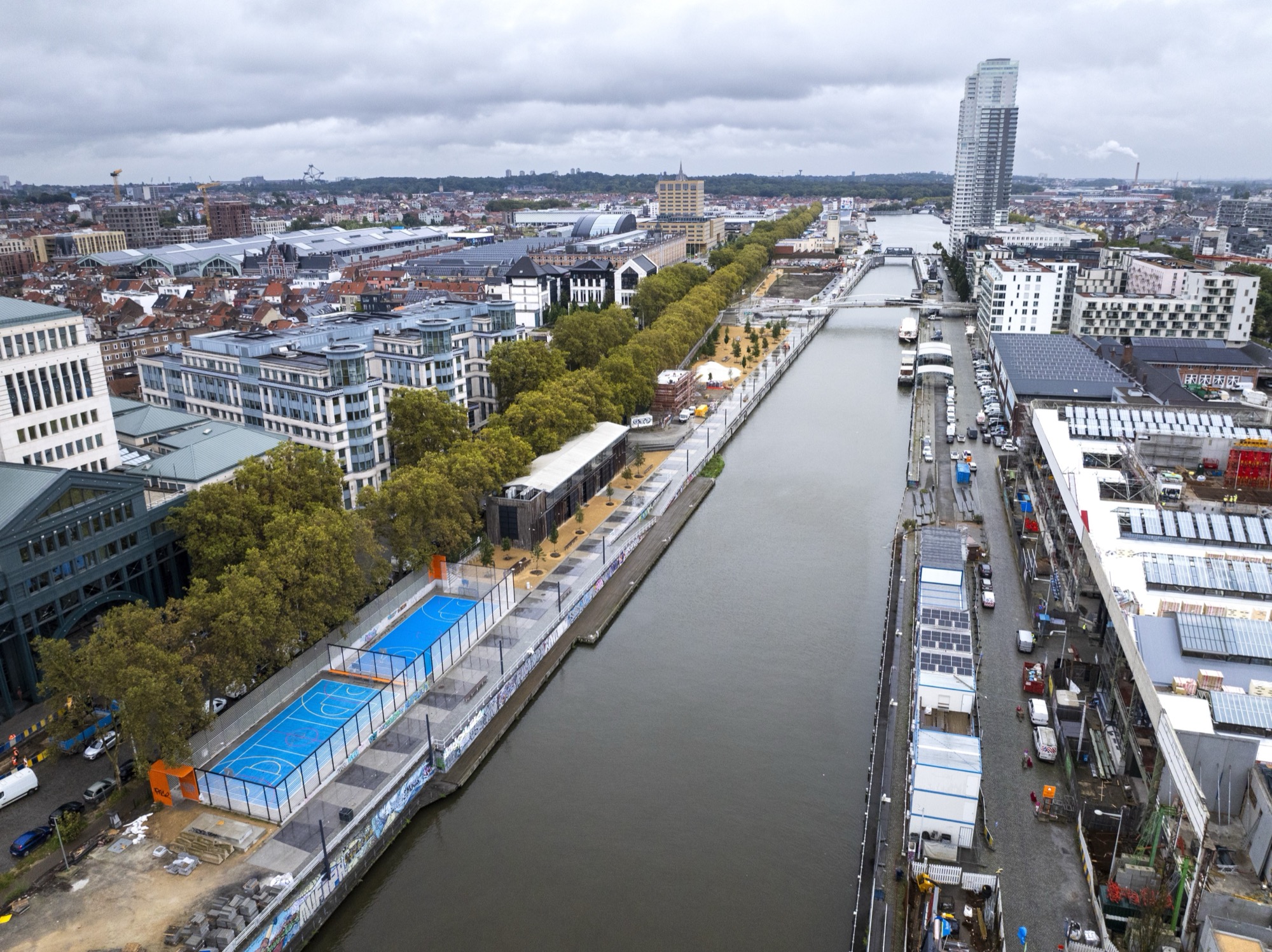
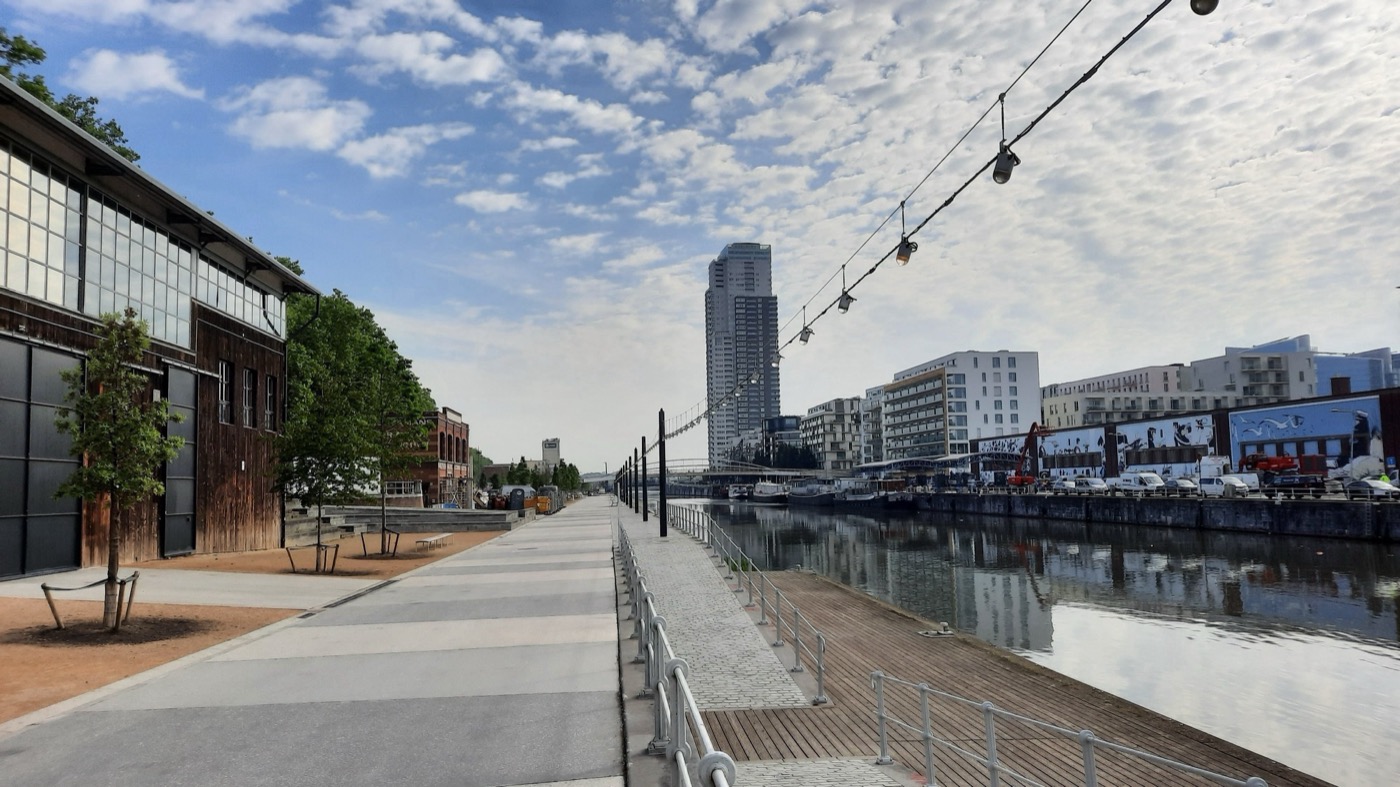
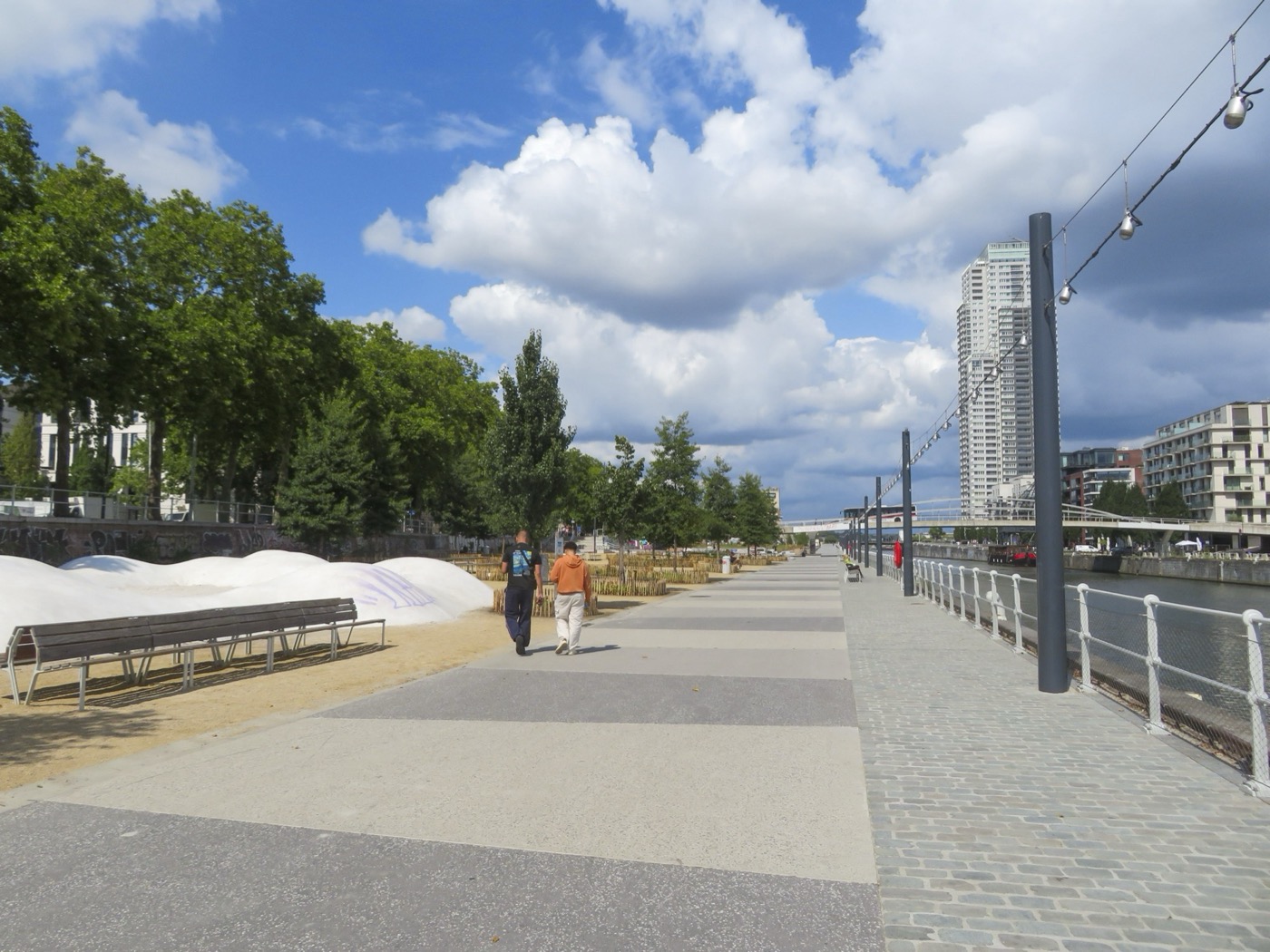
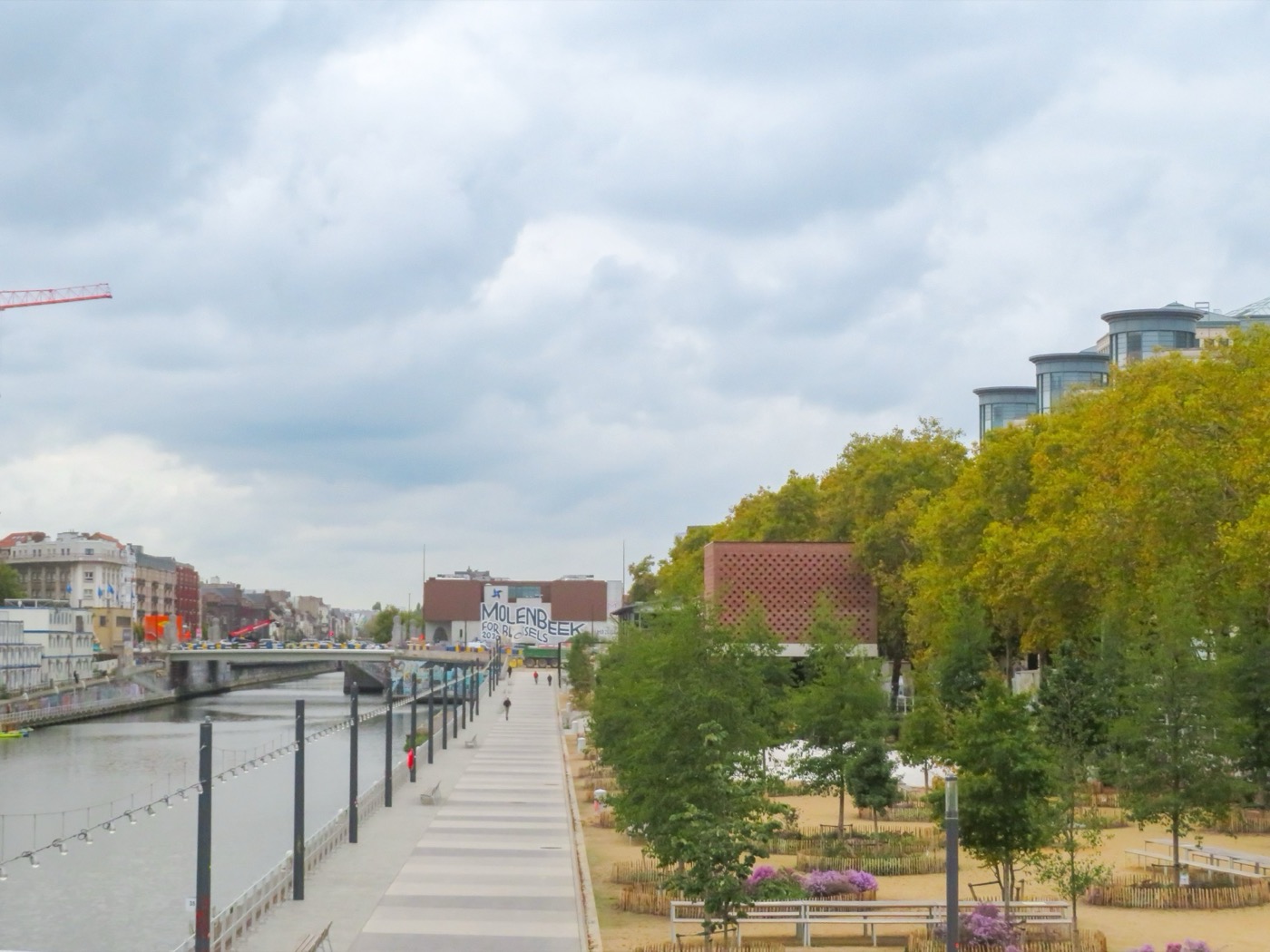
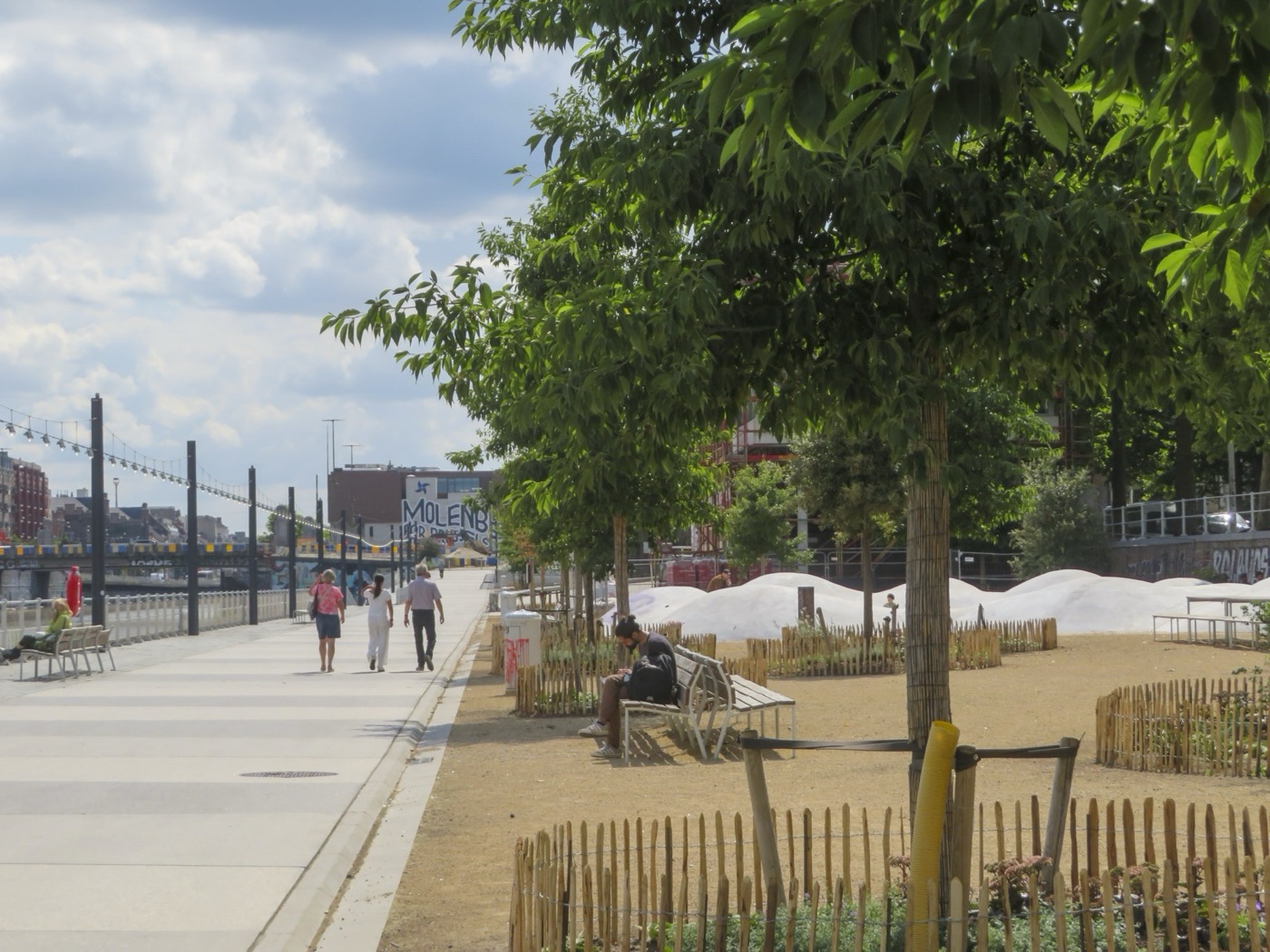
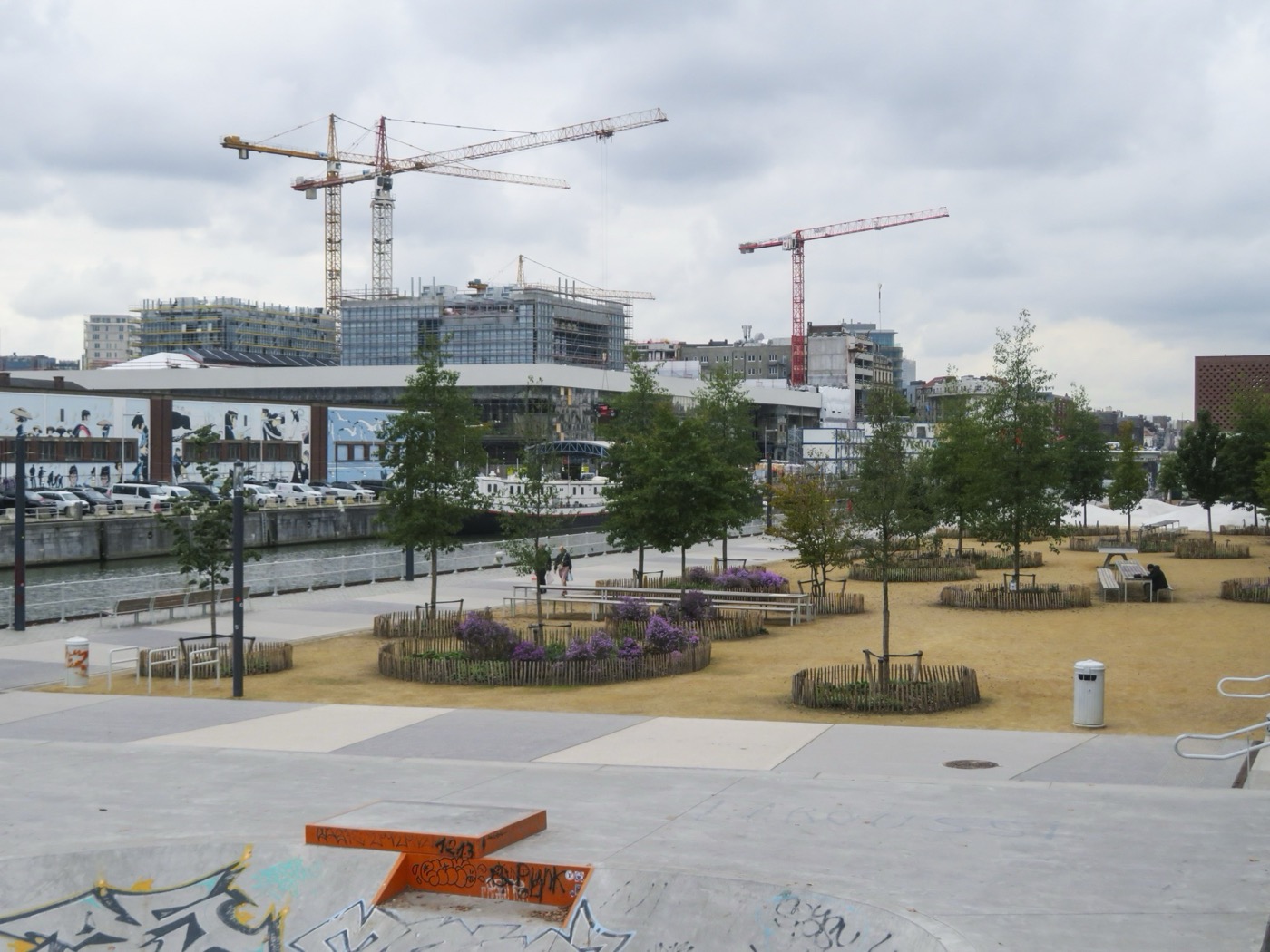
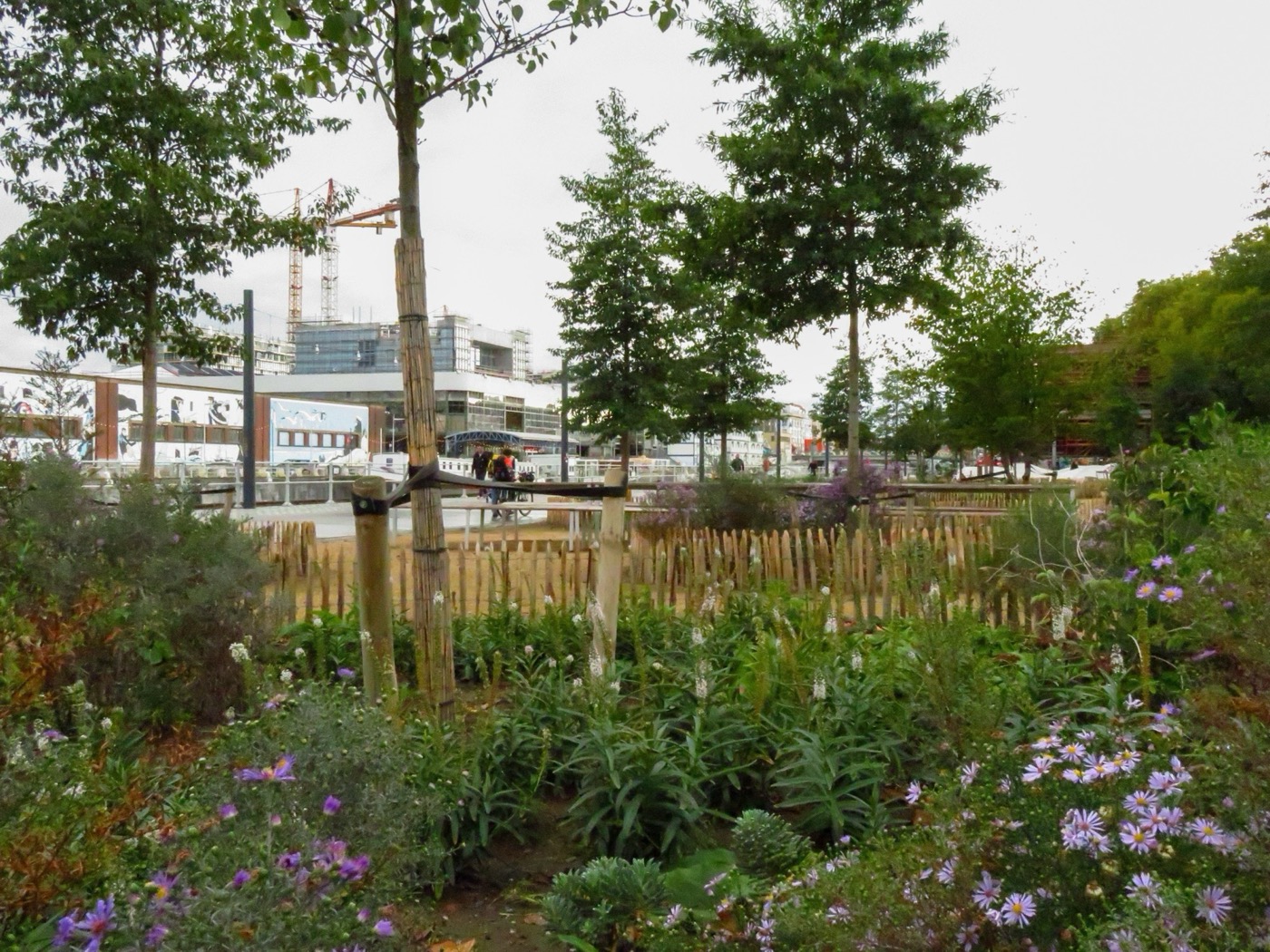
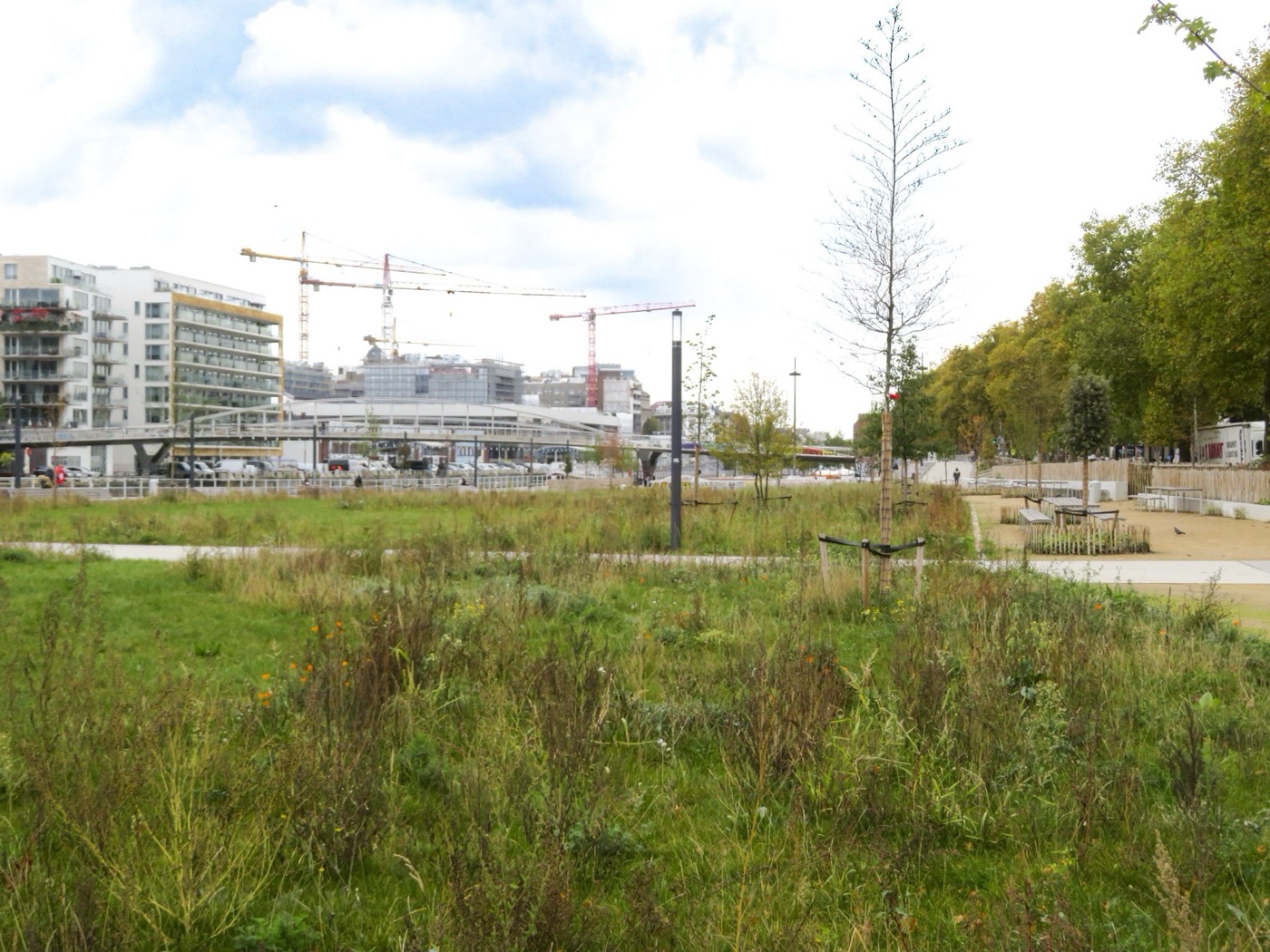
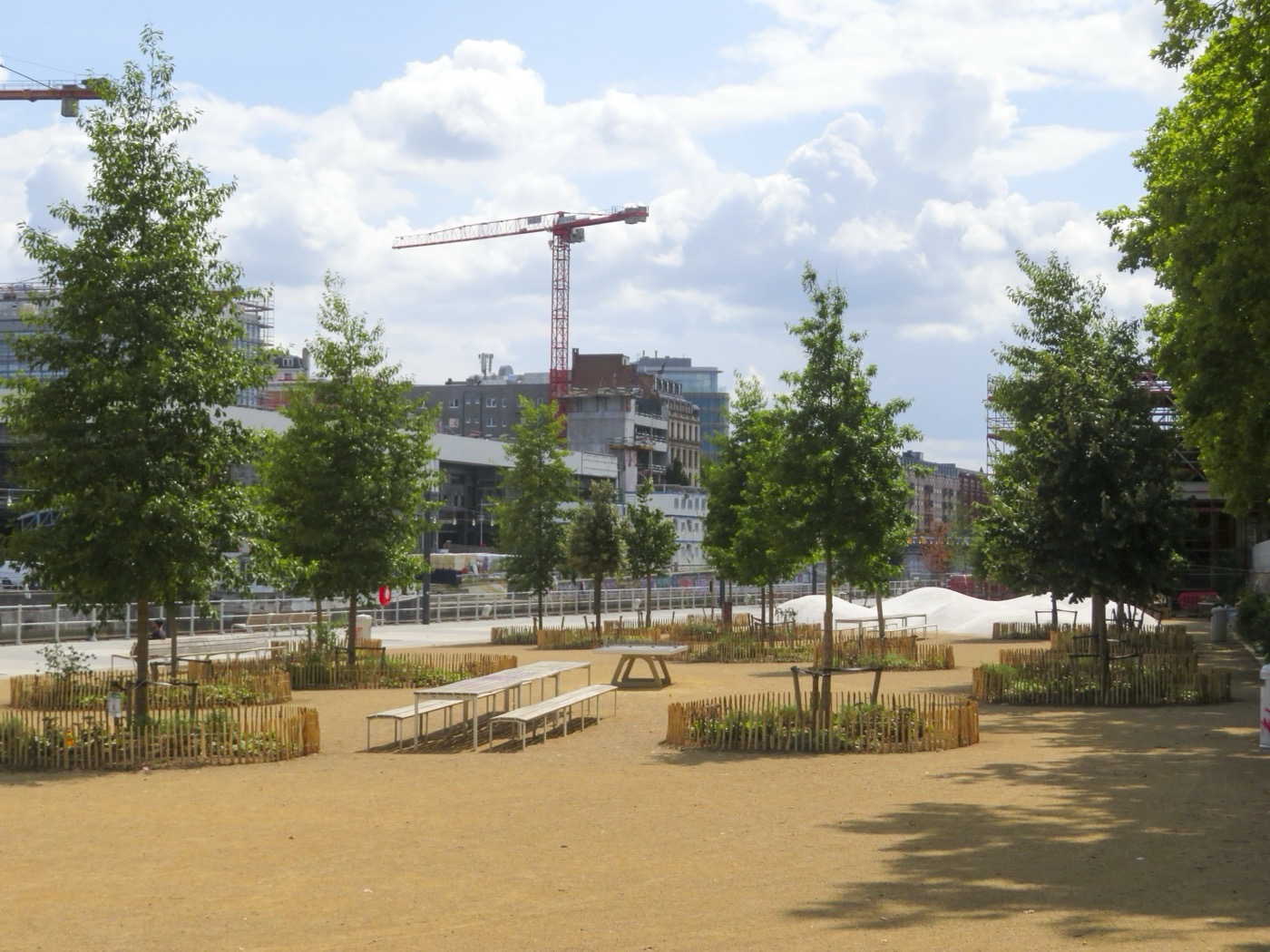
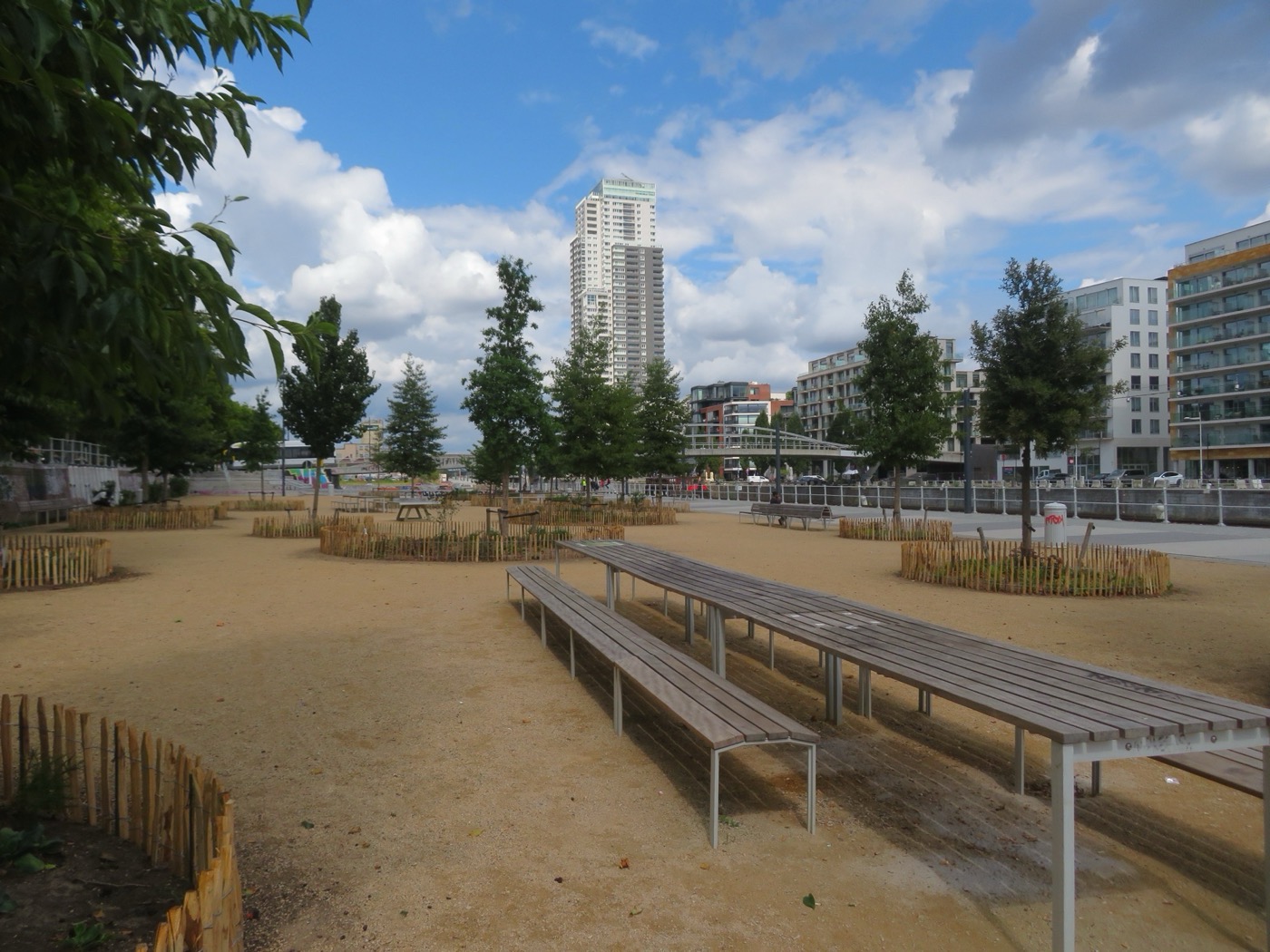
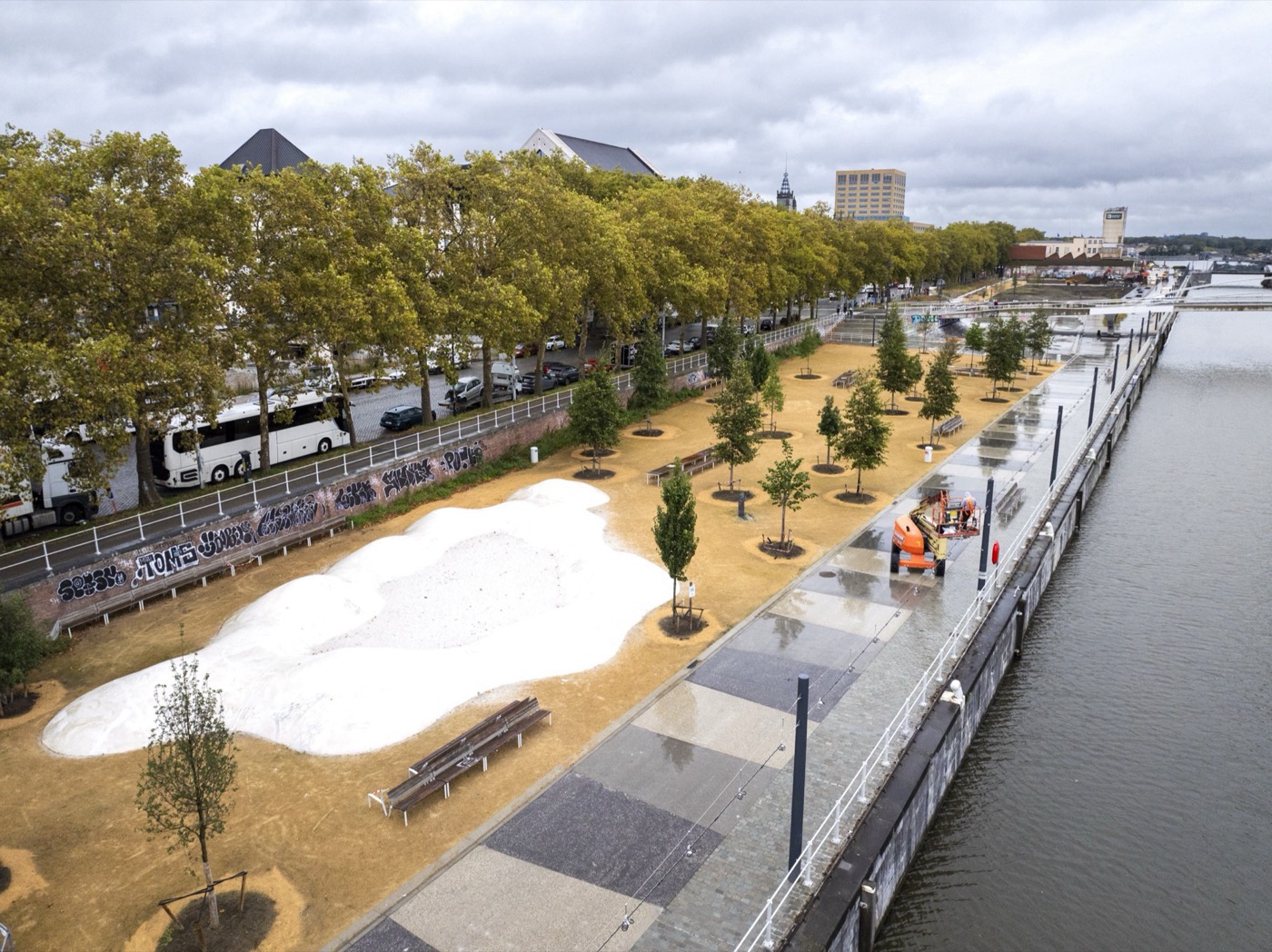
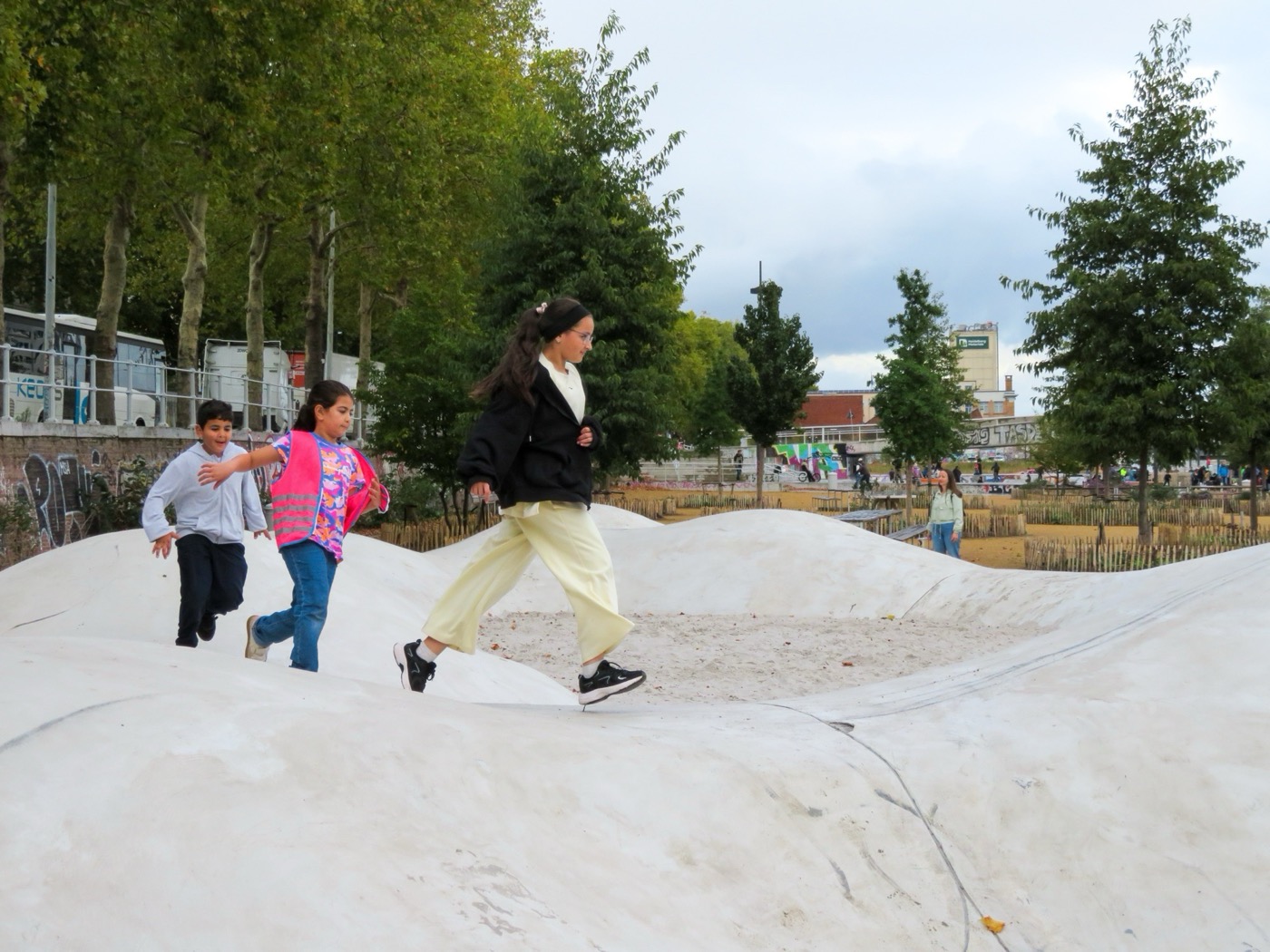
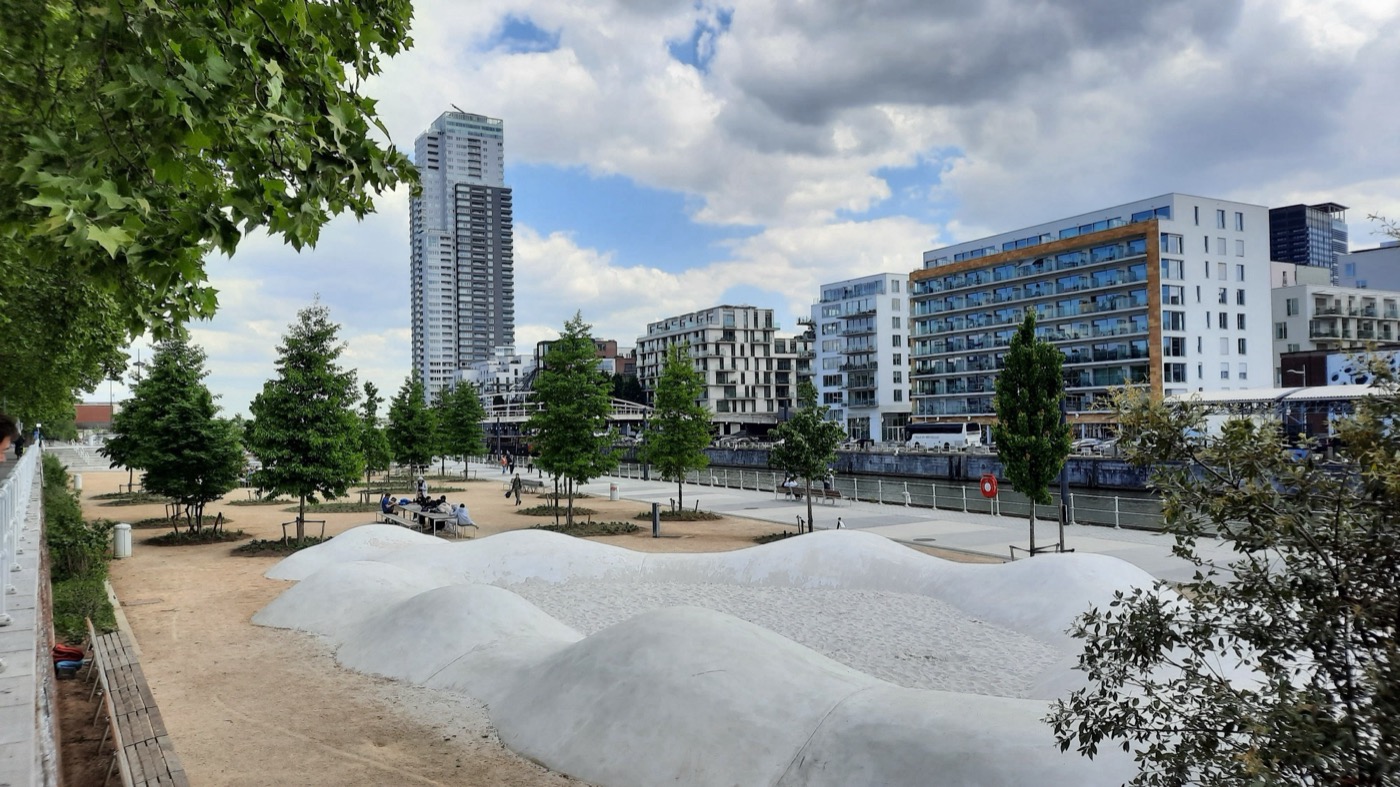
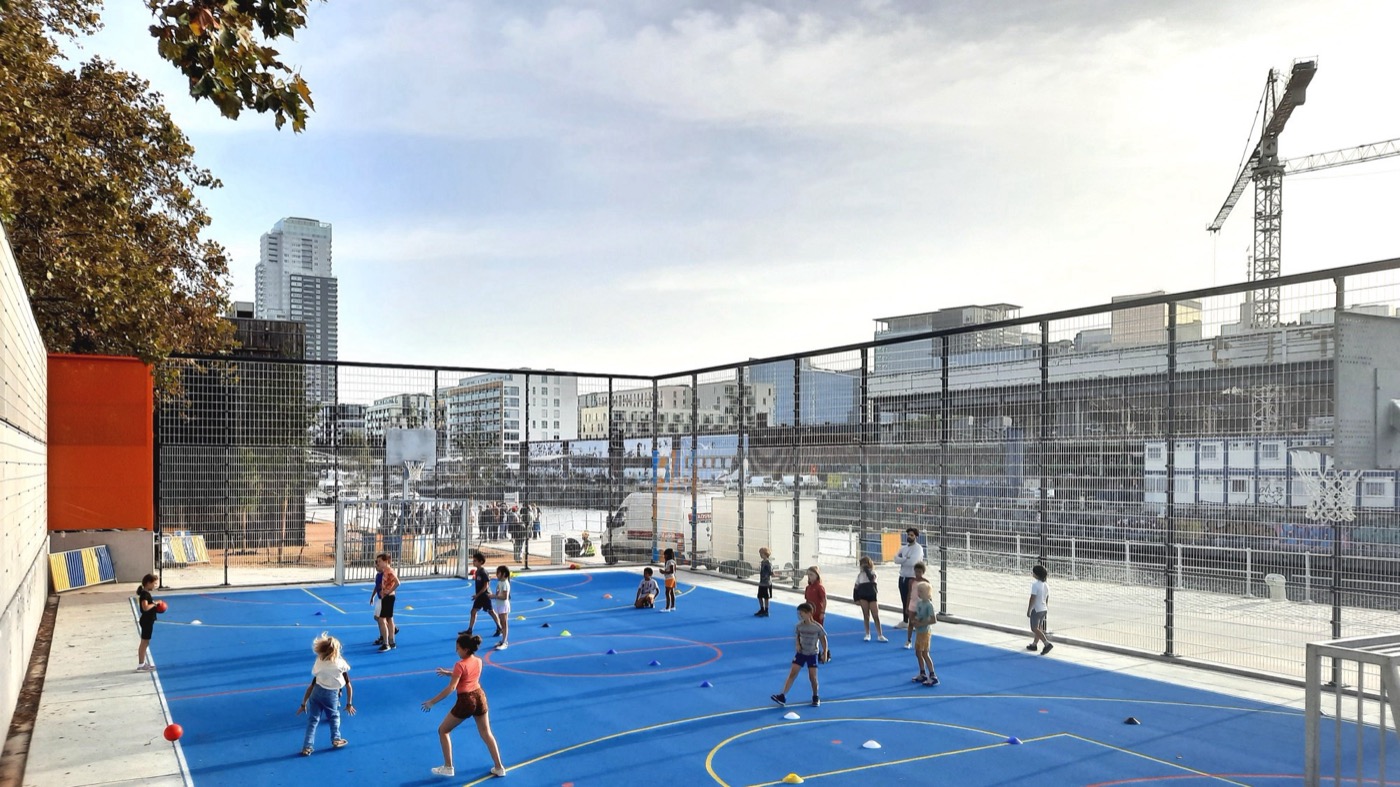
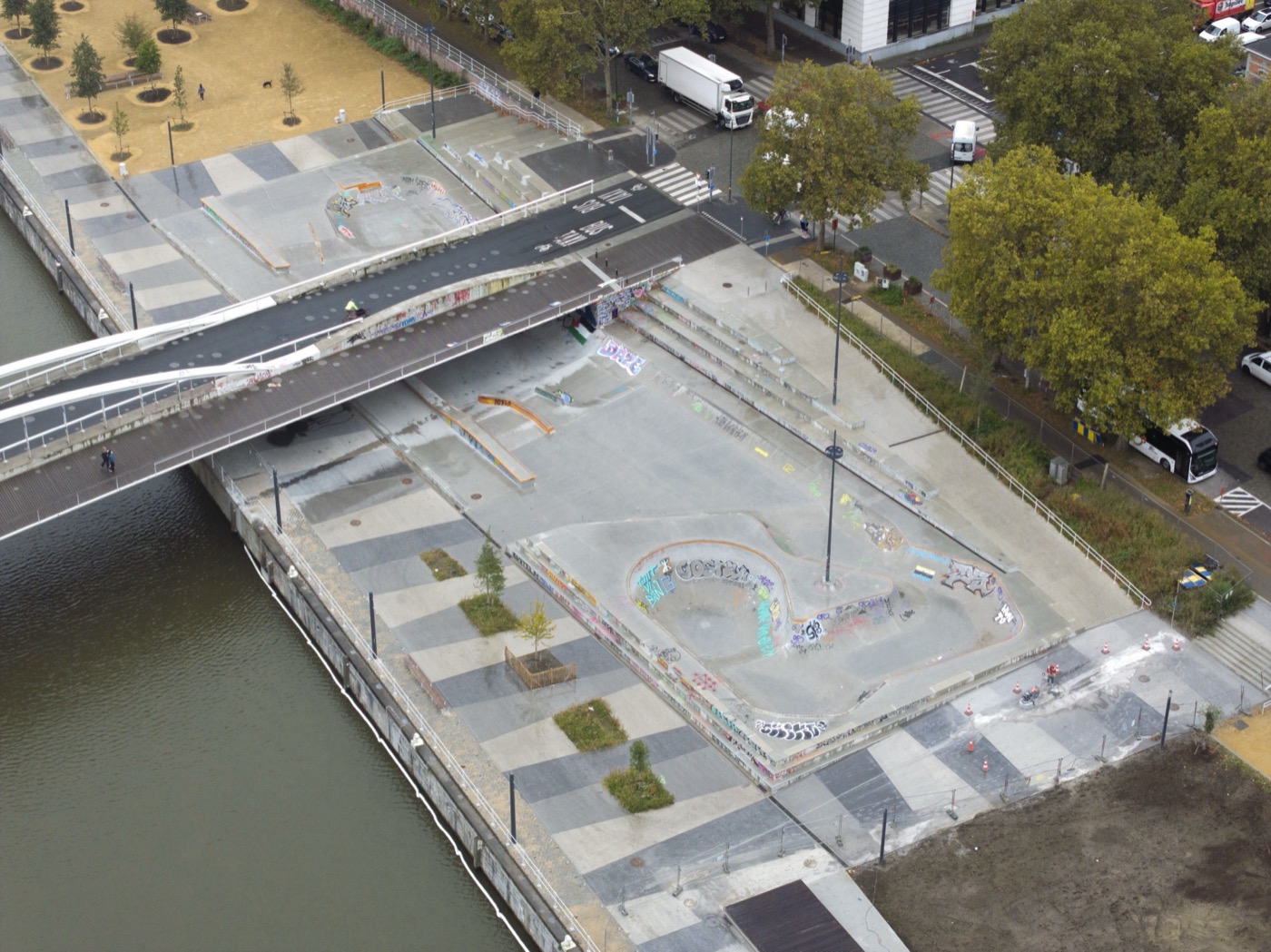
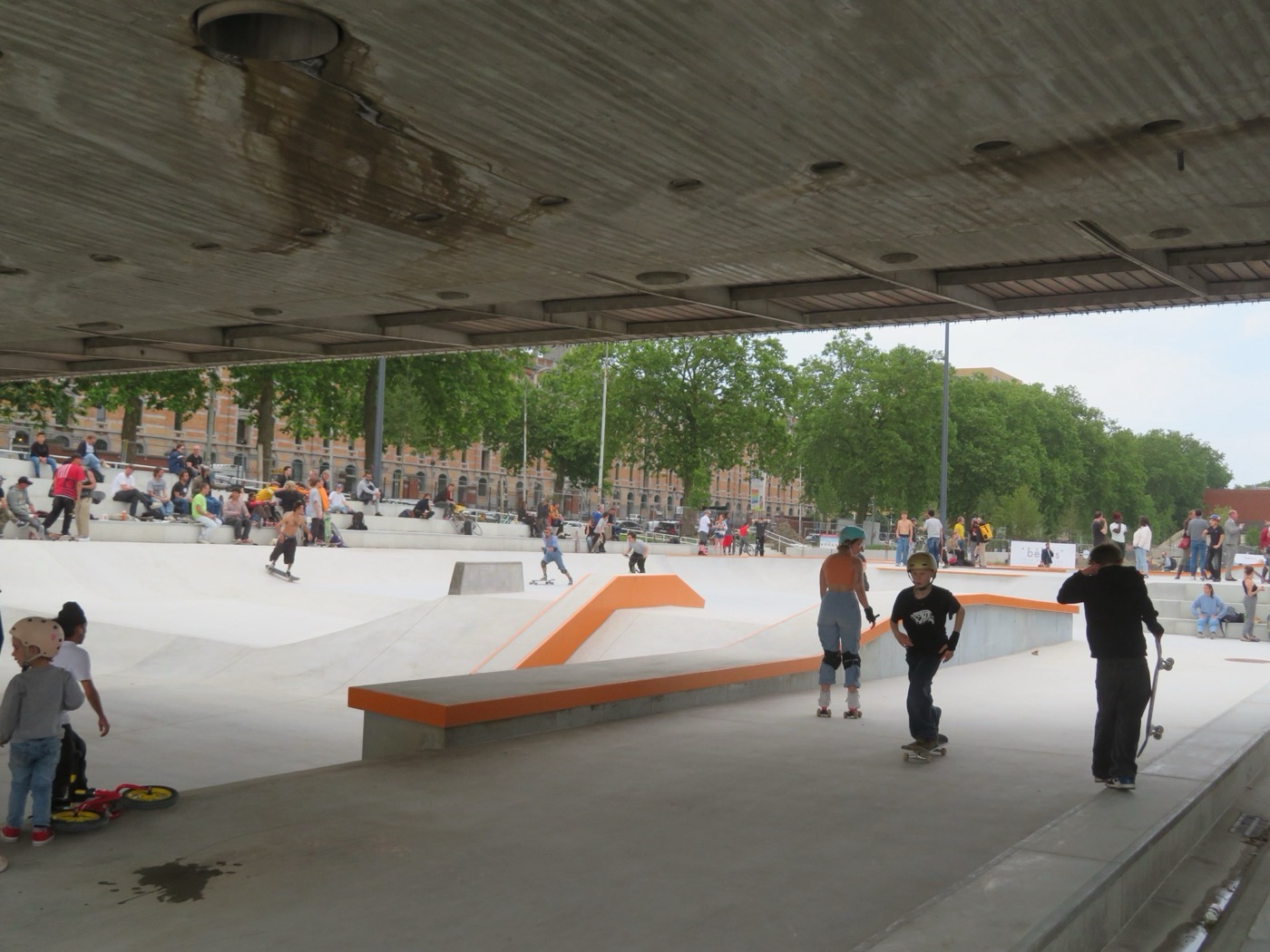
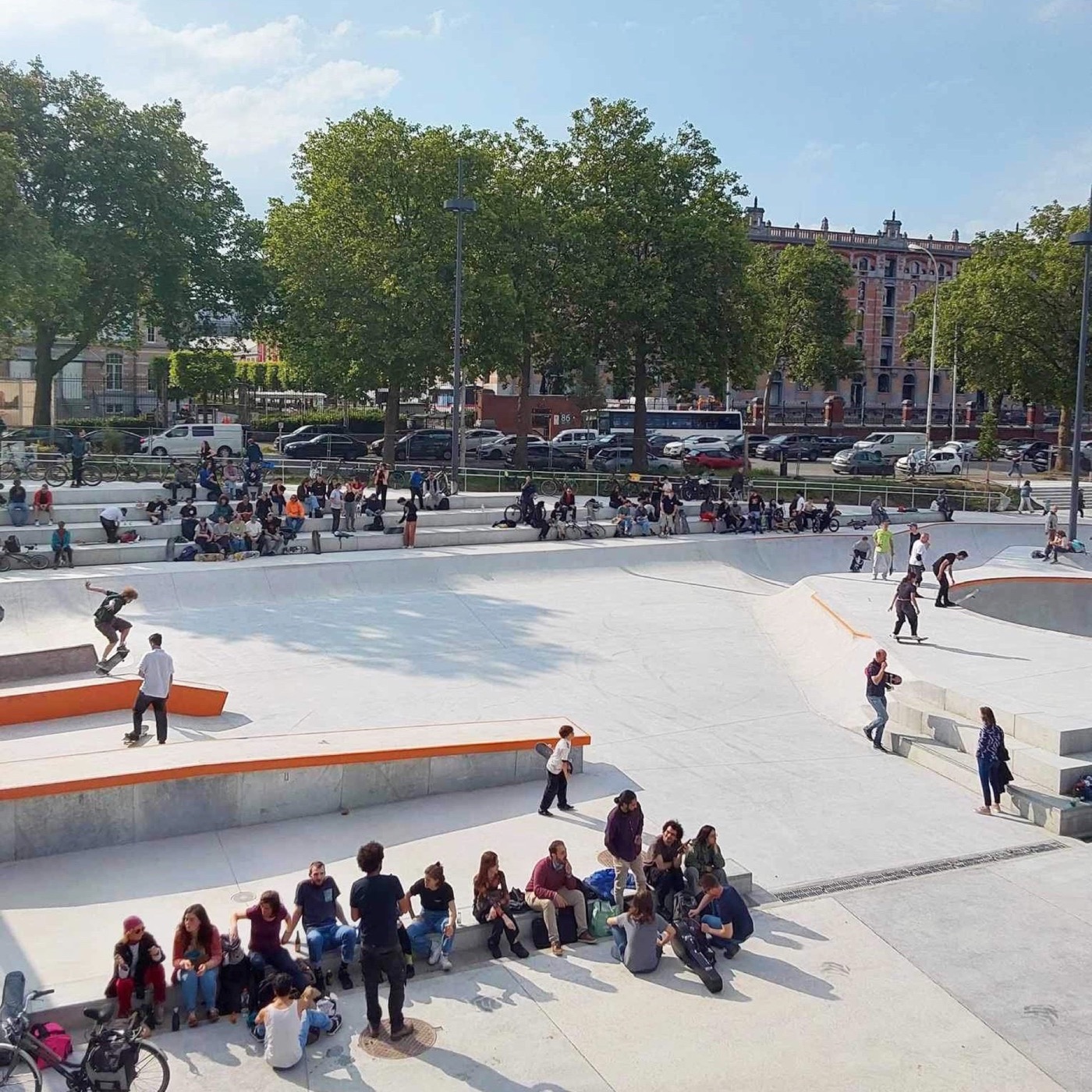
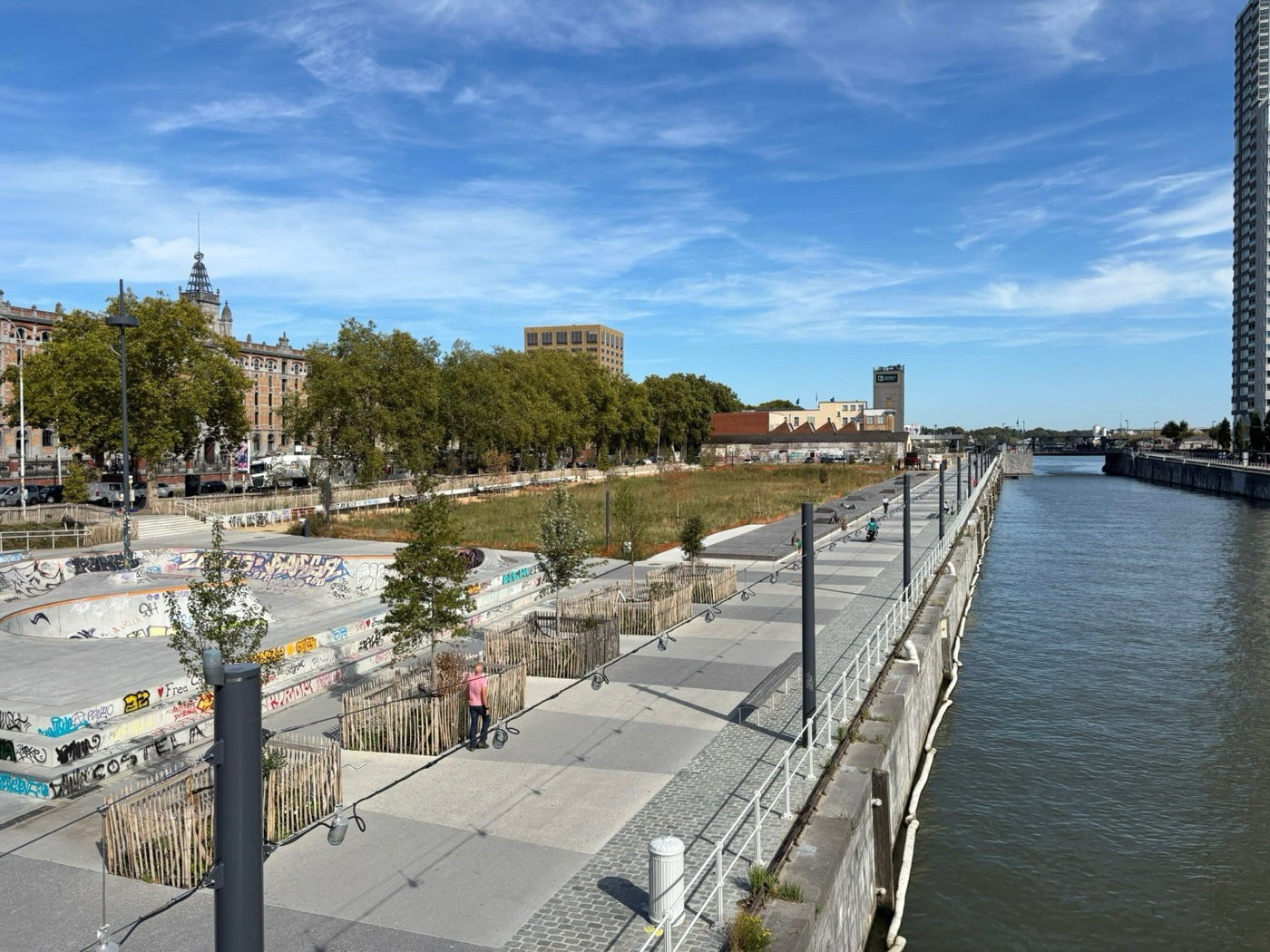
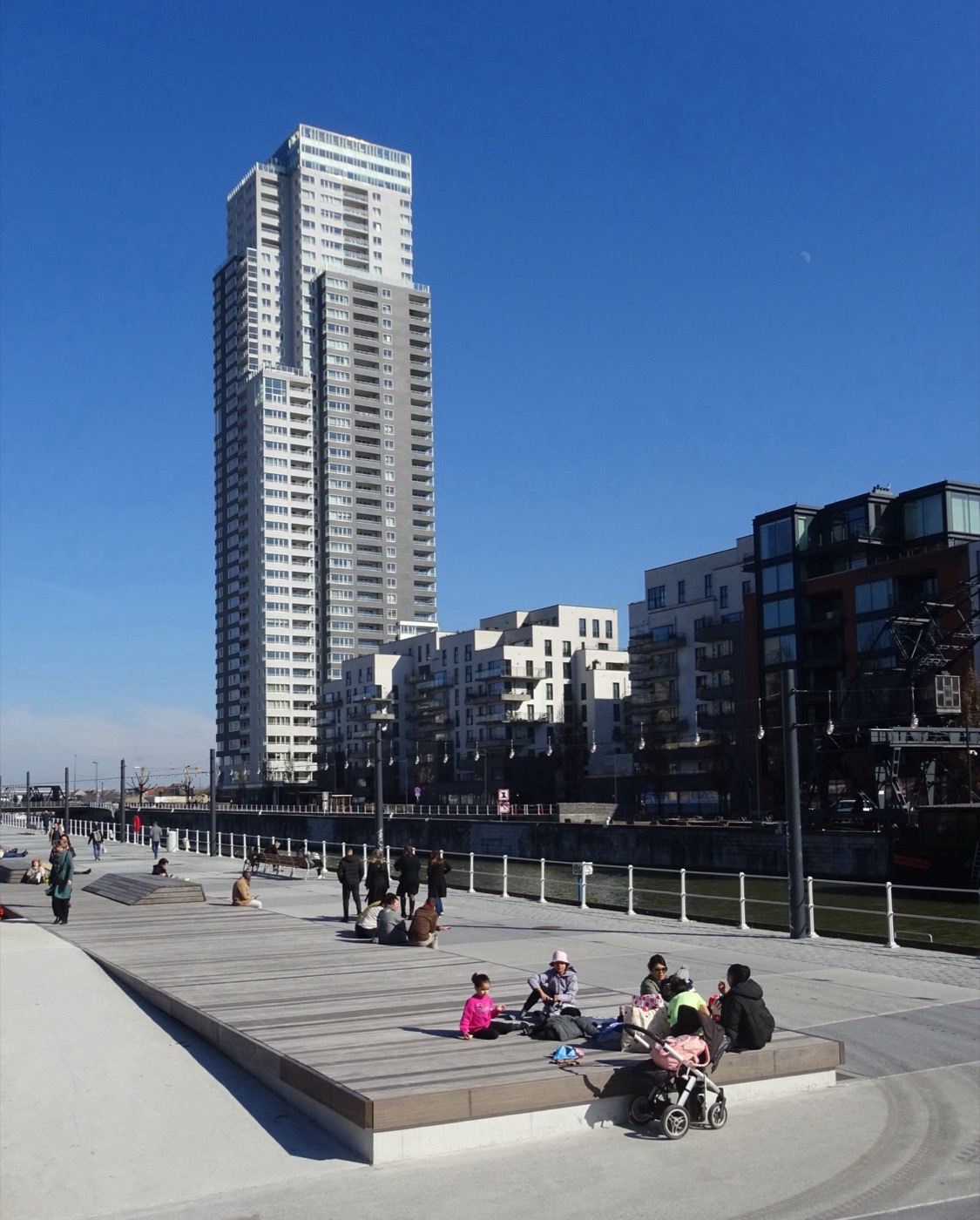
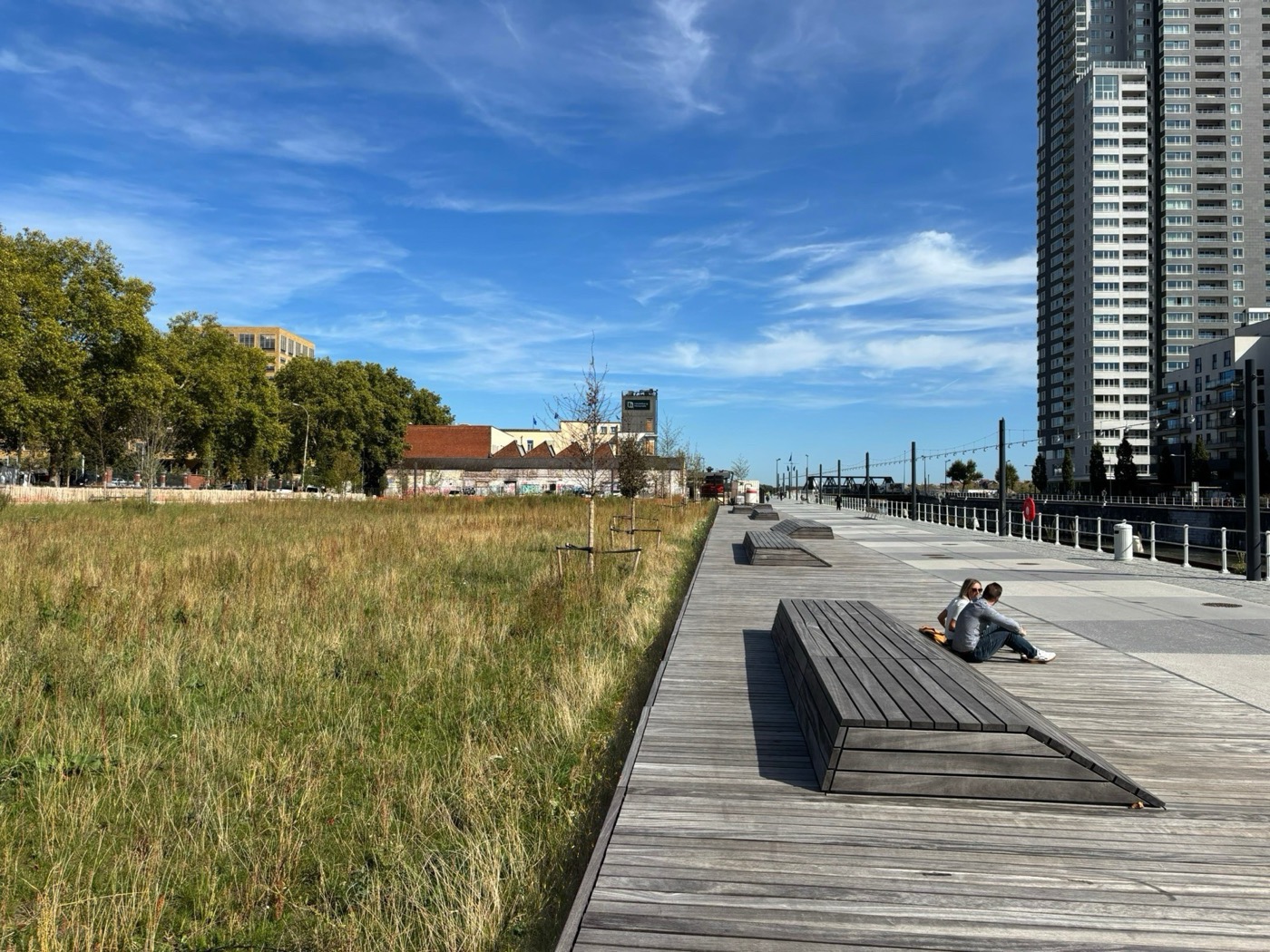
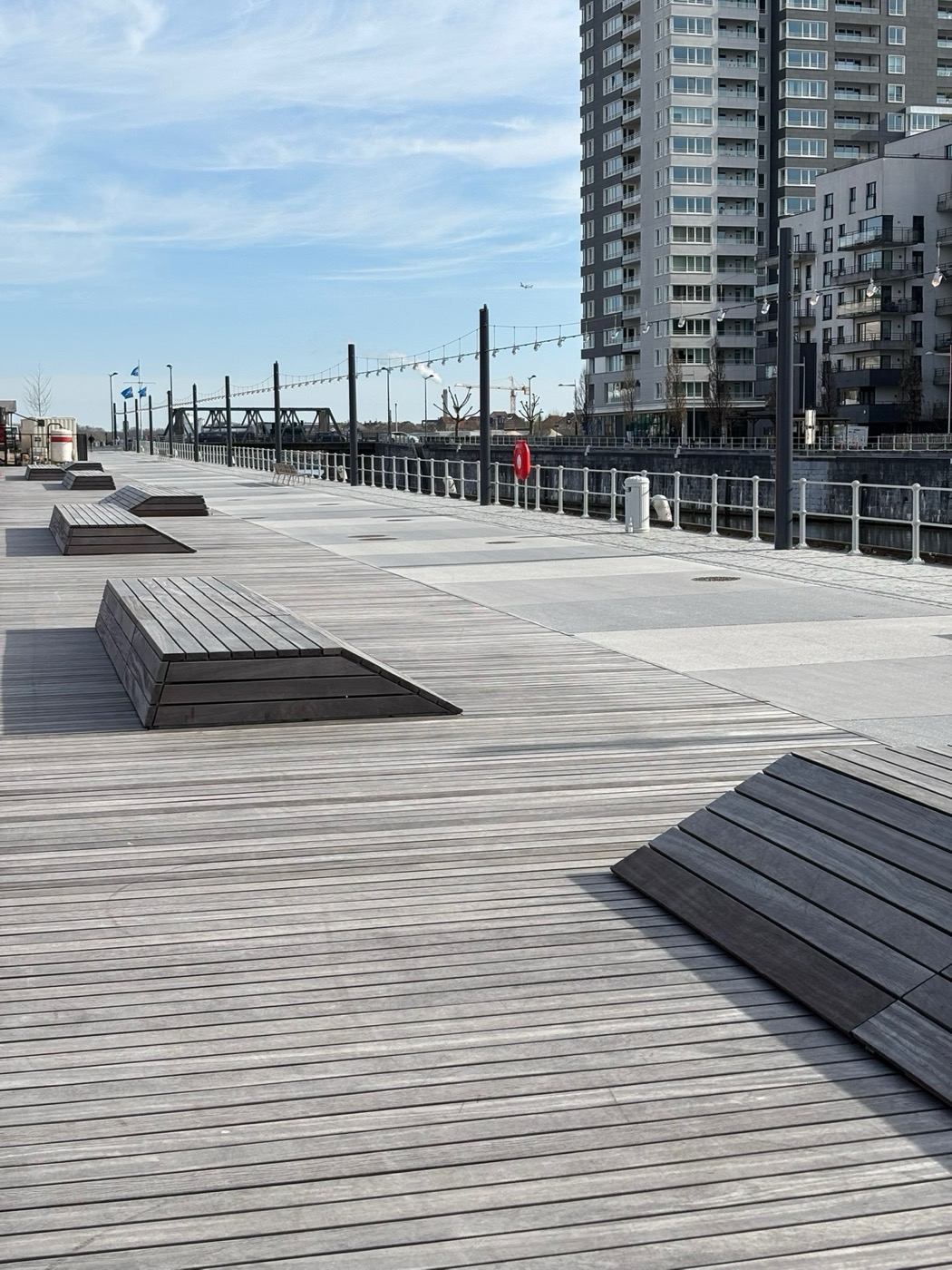
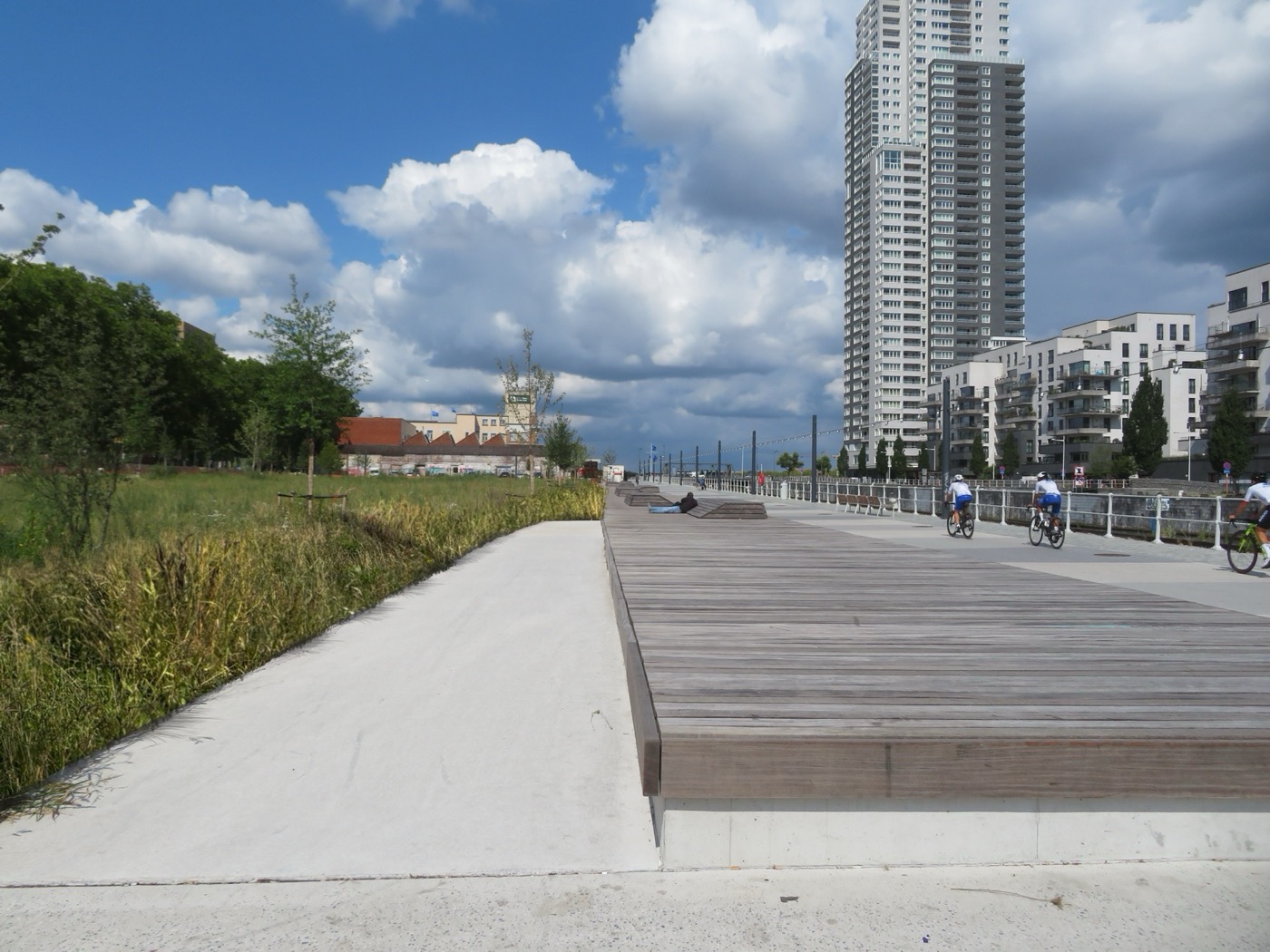
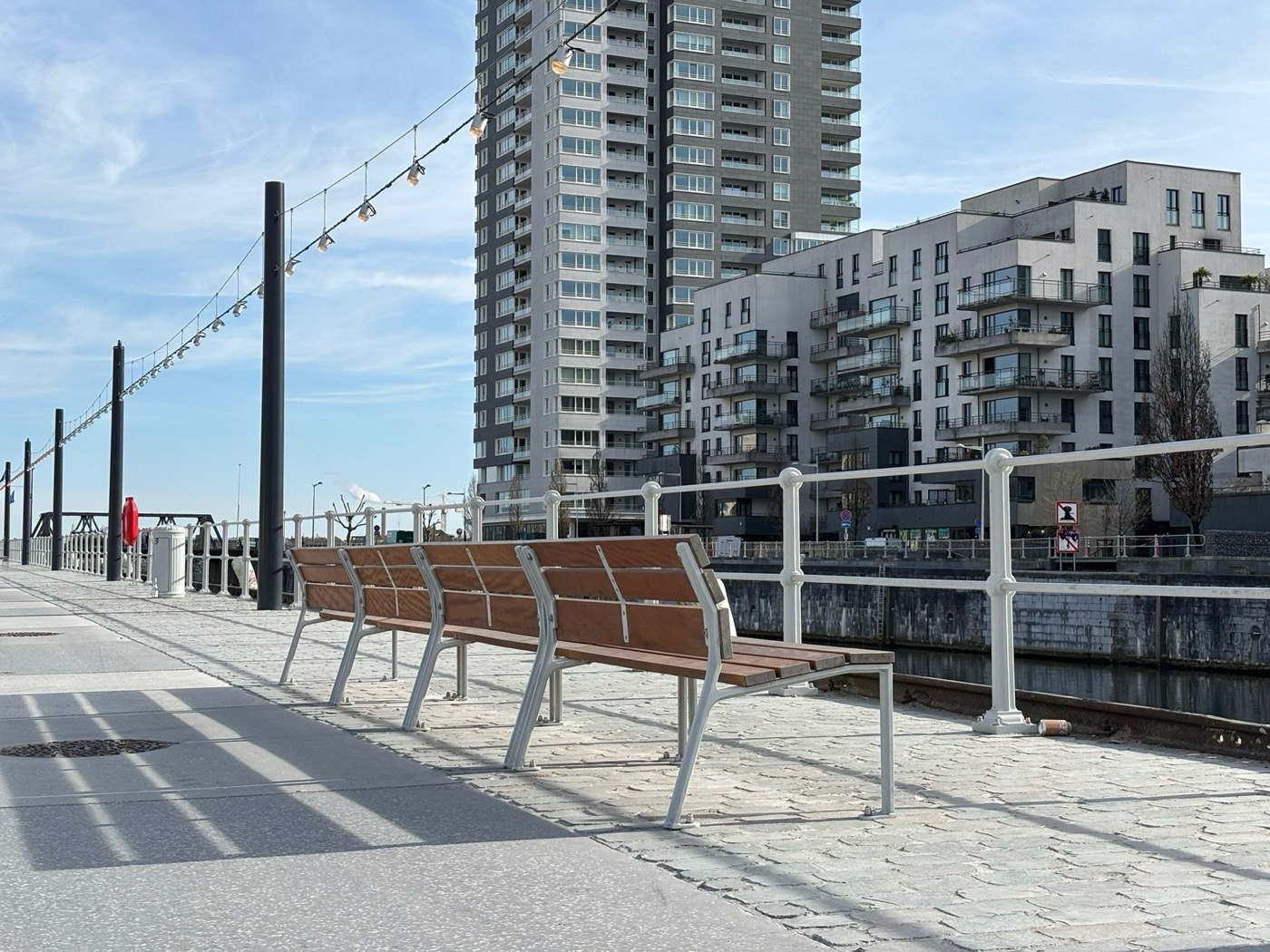
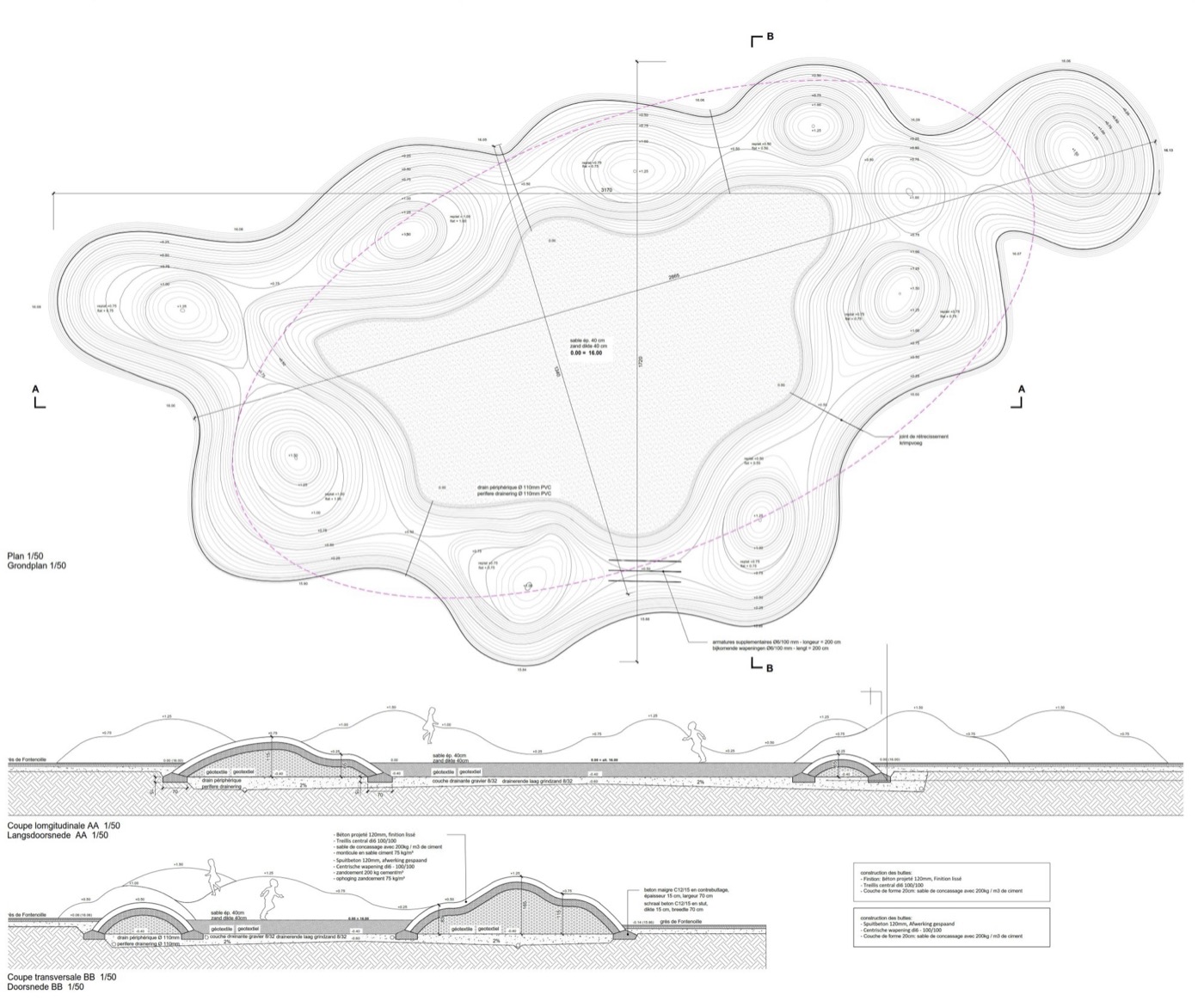
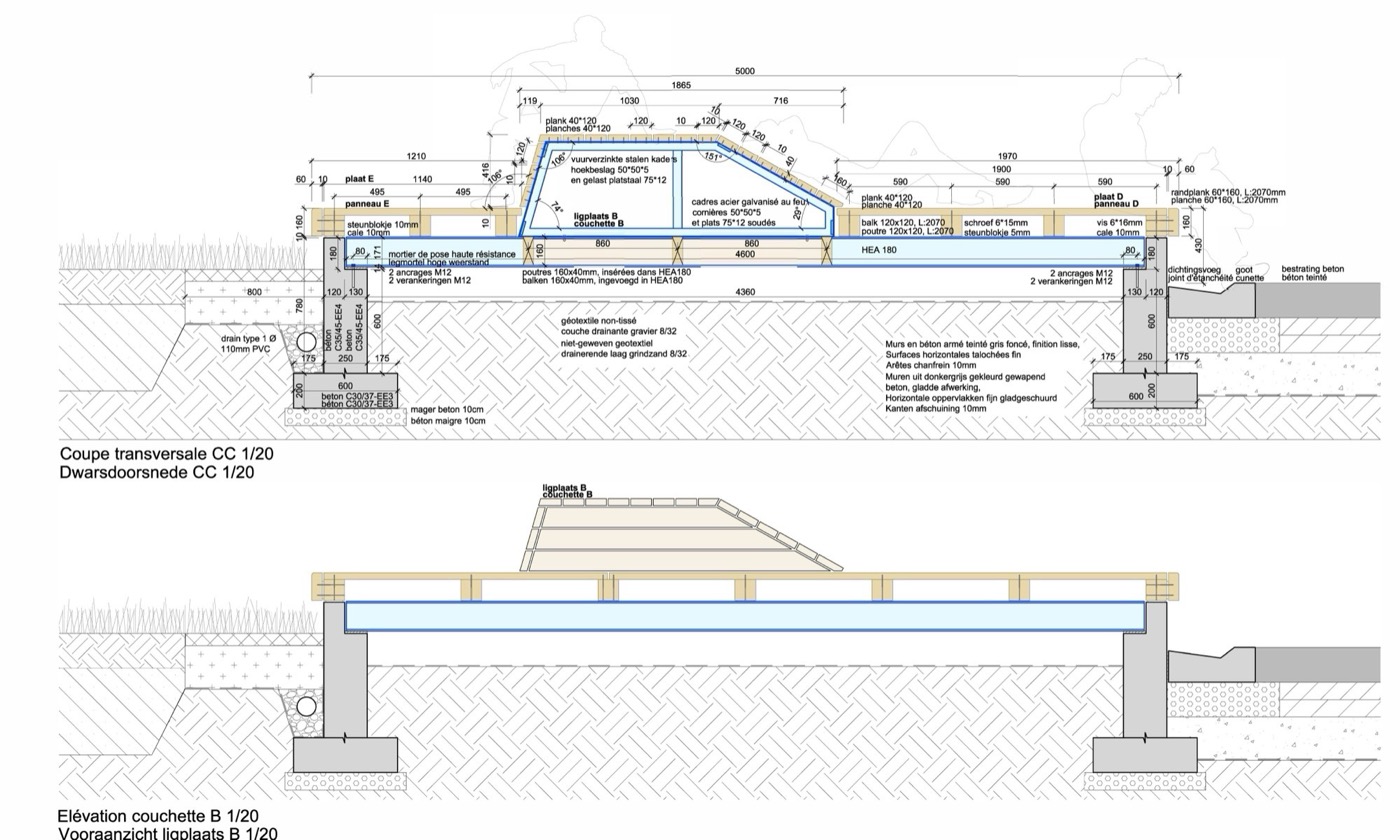
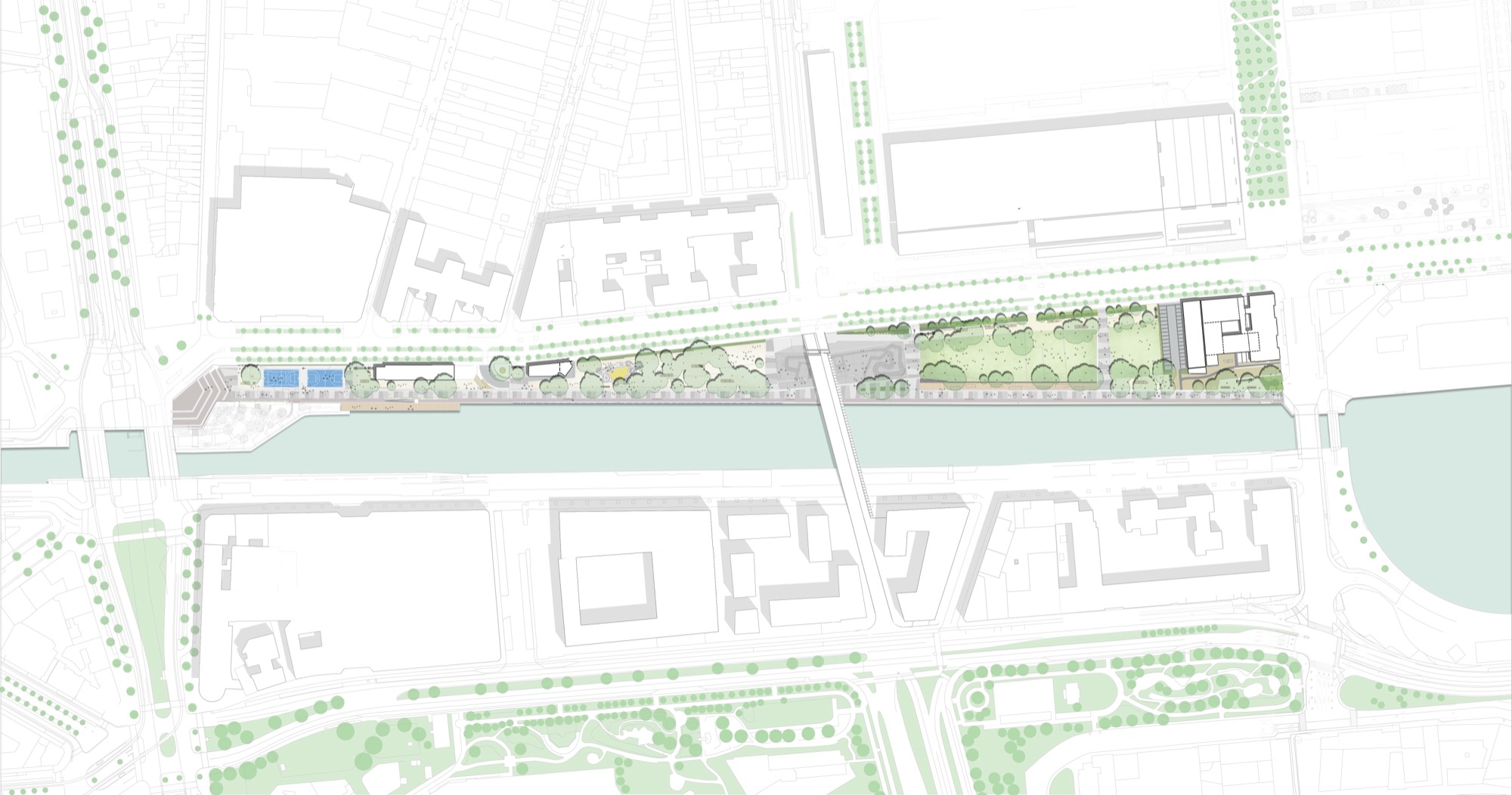
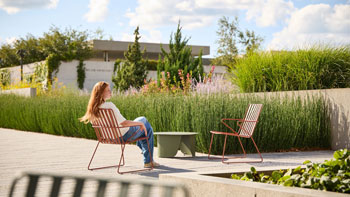
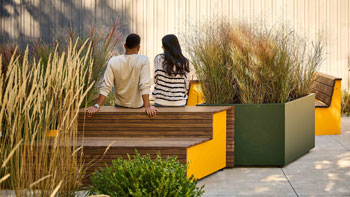
At the Sainctelette end, a multi sport cage with two courts activates the quay and anchors the park in daily neighbourhood life. Further along, the atmosphere gradually shifts to a more intimate garden space, where trees, layered planting, picnic tables and seating create a sheltered retreat. A sculpted concrete play topography shapes a sandpit and serves as a playful landmark that stimulates imagination while subtly defining space. Beneath the Suzan Daniel Bridge, a 2,150 m² skatepark forms a highly active urban ‘scene’. Its stepped tribune works simultaneously as spectator seating and as a social threshold, mediating between movement and rest, skating and lingering. Opposite the historic buildings of Tour & Taxis, an open meadow and an oversized double sided wooden deck provide a flexible setting for informal gathering, seasonal use and quiet observation of the water.
The social functioning of the park is not incidental, but the result of a long trajectory of experimentation and collaboration. Temporary uses tested programs and patterns of appropriation in real conditions, creating a feedback loop between design and everyday use. Within this broader process, specific elements were developed in close dialogue with their users: most notably, the skatepark was co designed with the Brussels skate community to ensure both spatial quality and long term relevance. At the same time, residents expressed the need for open, flexible space for informal gathering, which translated into the meadow and double sided wooden deck. The presence of park wardens, based in a renovated warehouse, supports close up management and long term care of the park.
Beyond its social role, Materialenkaai functions as ecological and climate adaptive infrastructure. Where the quay was once entirely paved, extensive de sealing now allows rainwater to infiltrate locally. Excess water is collected in an underground buffer and reused for irrigation during dry periods, while full disconnection from the combined sewer system reduces direct runoff into the canal and contributes to more sustainable urban water management. The park introduces 126 new trees and a rich, layered planting palette of shrubs, perennials, bulbs and multi stem species. Dynamic borders allow for spontaneous development and succession over time, strengthening biodiversity and seasonal variation.
Material choices reinforce durability and continuity. Reclaimed cobblestones from the original quay were reused within the park, maintaining a tangible link to the industrial past. The promenade’s high quality concrete surface was selected for its long life span and limited maintenance, supporting resilient and future oriented management.
By reclaiming a neglected canal edge as shared public ground, Materialenkaai re establishes the Brussels–Charleroi Canal as an accessible and meaningful part of everyday urban life. What was once an industrial barrier has become a generous waterfront landscape that supports social encounter, ecological performance and gradual appropriation over time, offering a compelling model for the transformation of canal zones in Brussels and beyond.
Client: Beliris & Brussels Environment
Landscape design: Tractebel, atelier adr, Georges Descombes
Co-author masterplan: MSA
Engineering: Tractebel, IMDC
Planting Design: Erik De Waele
Lighting Design: LEA
Skatepark Design: Carve
Main Contractor: Deckx (Stadsbader Group)
https://maps.app.goo.gl/ZLQ5crA4Ye3Guthc8
73655


LILA 2026 Sponsor