Midbarium – Desert Wildlife Park, Beer Sheva
www.zur-wolf.com
2026 Other Typologies / Israel / Built in 2023 /
![The Clore Garden of Science is recognized as a pioneering institution, established as the world’s first open-air science museum and serving as a model for others. During its formative years, it won several international awards. In 2024, a comprehensive renewal process was executed, making contemporary, excellent science accessible to diverse audiences through a wide variety […]](https://landezine-award.com/wp-content/uploads/2026/05/00_Hero-image_5450_Assaf-Pinchuk-Photography-600x400.jpg "The Clore Garden of Science, Weizmann Institute")
Humanity has profoundly reshaped its environment through physical alterations, habitat
fragmentation, deforestation, and ecosystem destruction. Pollution and the exploitation of
flora and fauna have caused irreparable global damage. The International Union for
Conservation of Nature (IUCN) annually publishes the "Red List"—an updated report on the
status of biological species—aiming to identify endangered species and direct global
conservation efforts. This list currently includes thousands of species and continues to
expand each year.
In designing the new wildlife park in Beer Sheva, we aimed to mitigate this environmental
injustice by creating dignified habitats for animals unable to survive in the wild, while
educating and mobilizing the public toward animal welfare. The park serves as an
interactive, experiential educational environment focused on animal life cycles to foster
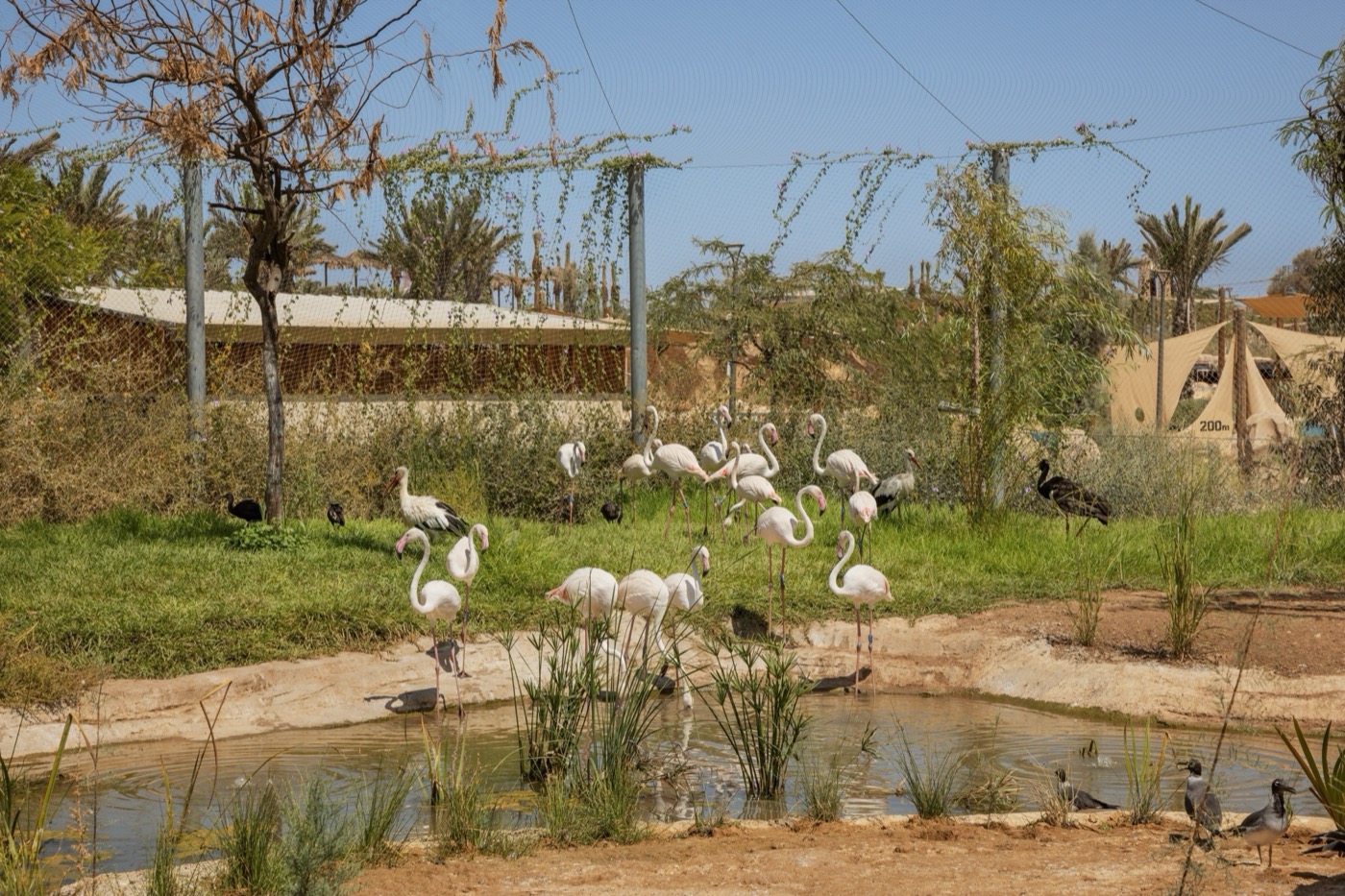
empathy and a commitment to conservation. The diverse species within the park, find
sanctuary here: from rehabilitated injured wildlife to those previously slated for euthanasia
or marked in a way that prevents their return to nature. In collaboration with the EAZA, the
park facilitates the breeding of endangered species for reintroduction. It also partners with
the Israel Nature and Parks Authority and houses an advanced veterinary hospital.
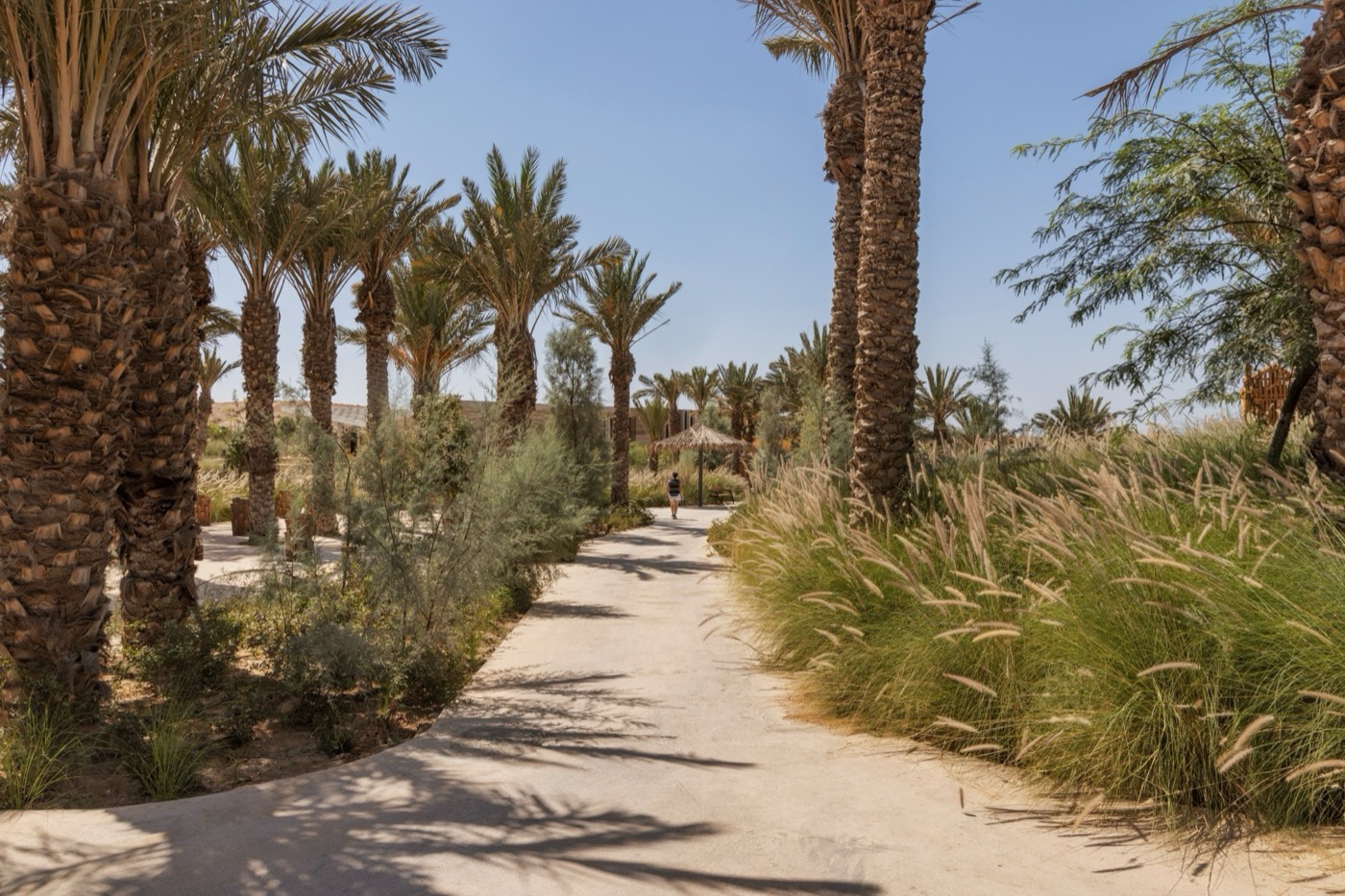
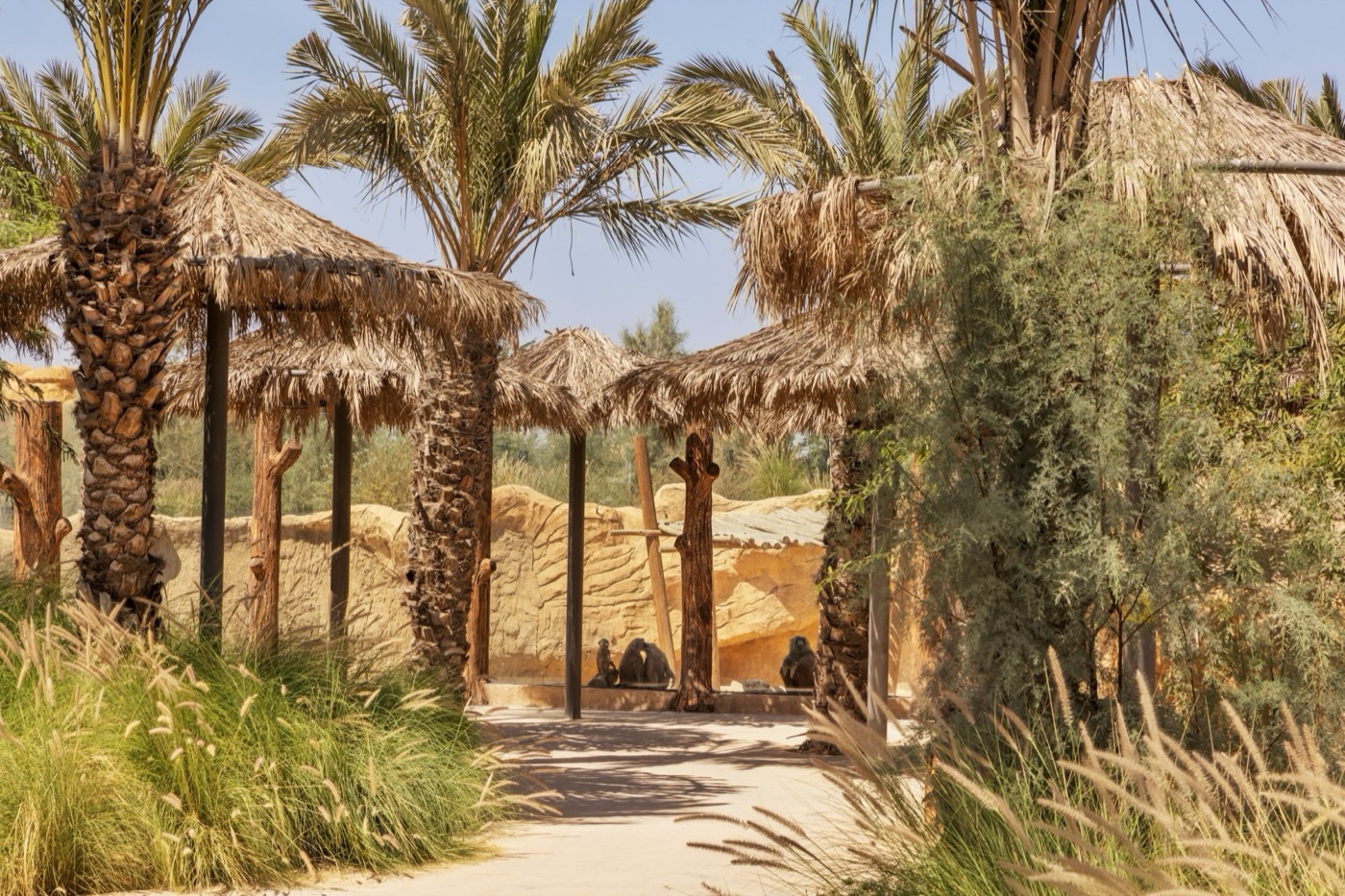
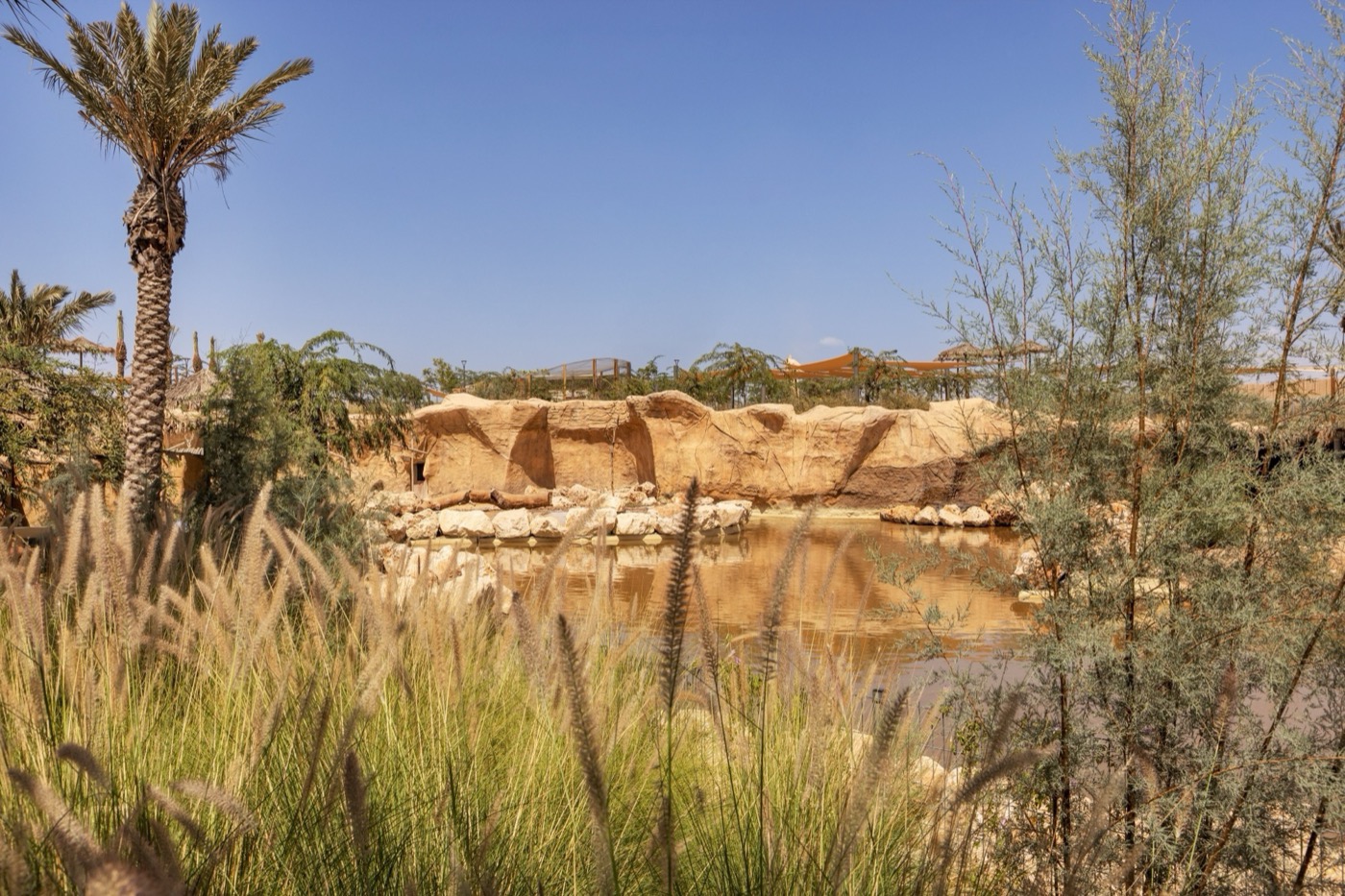
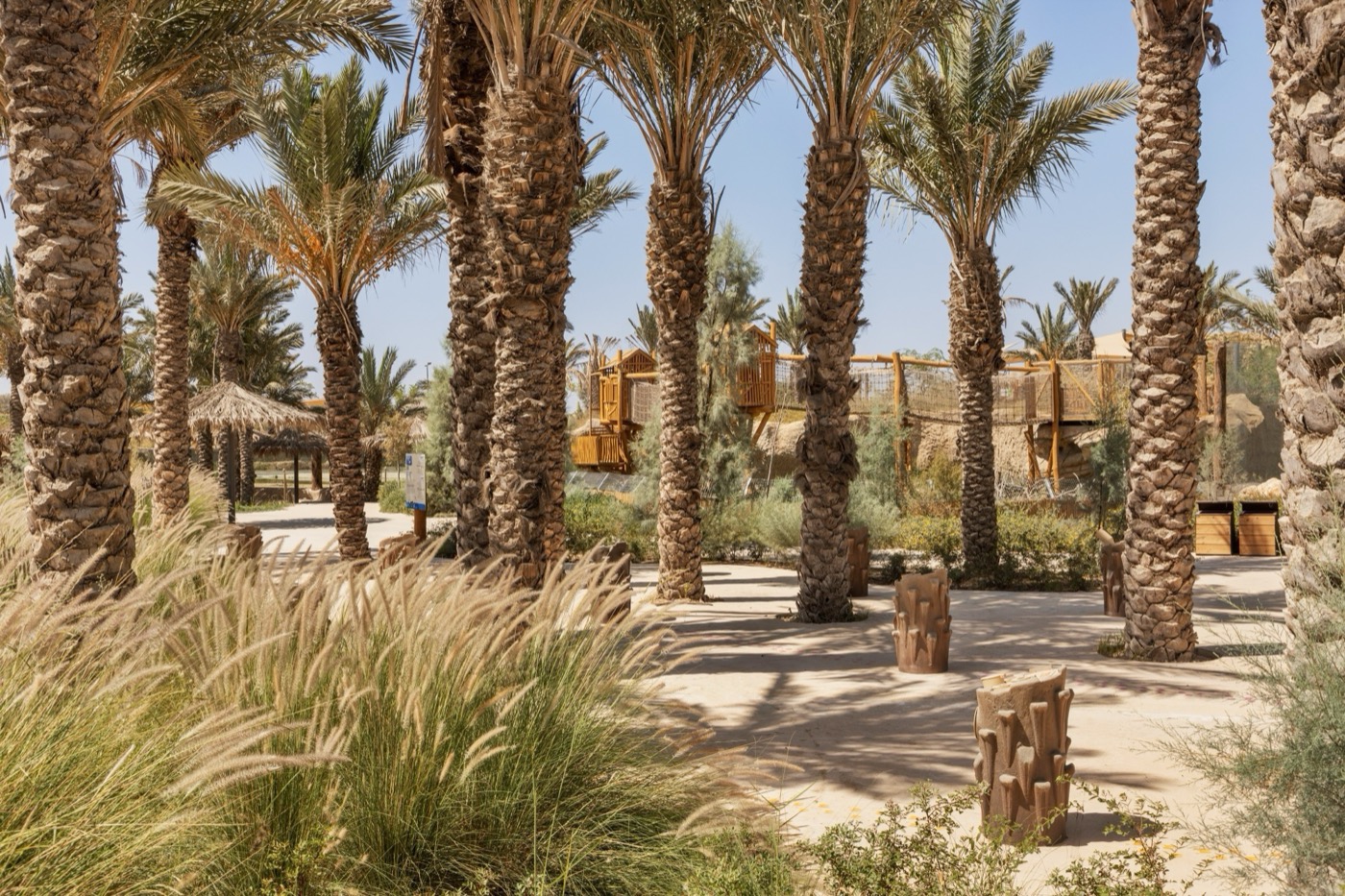
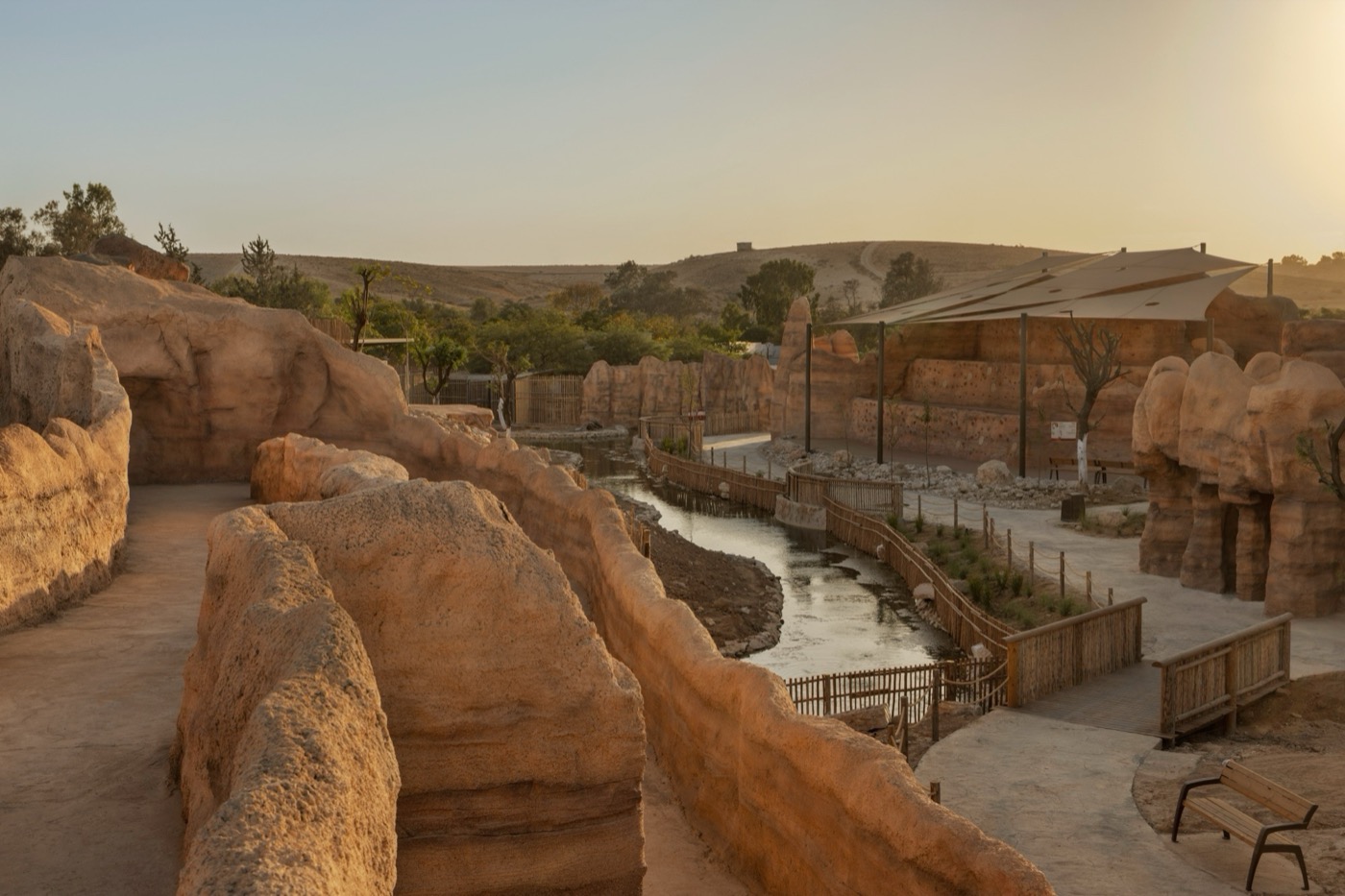


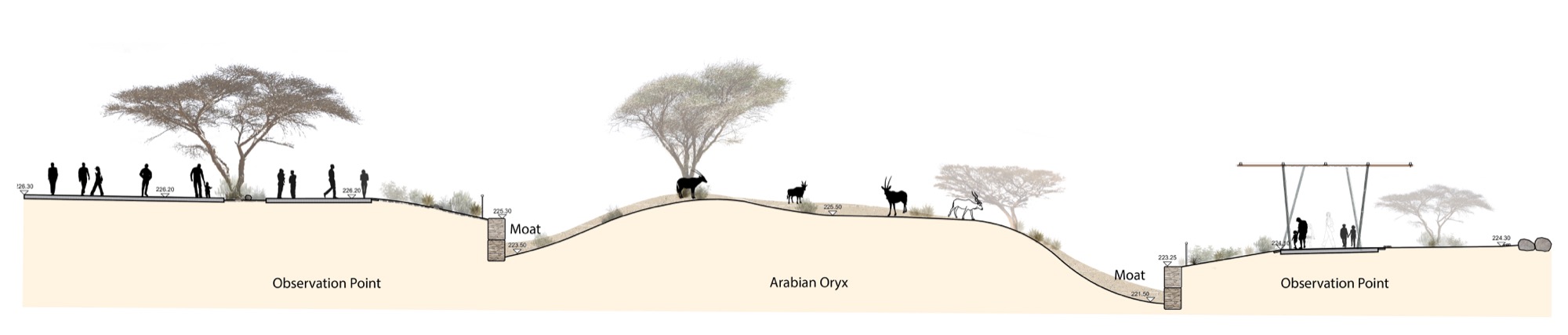

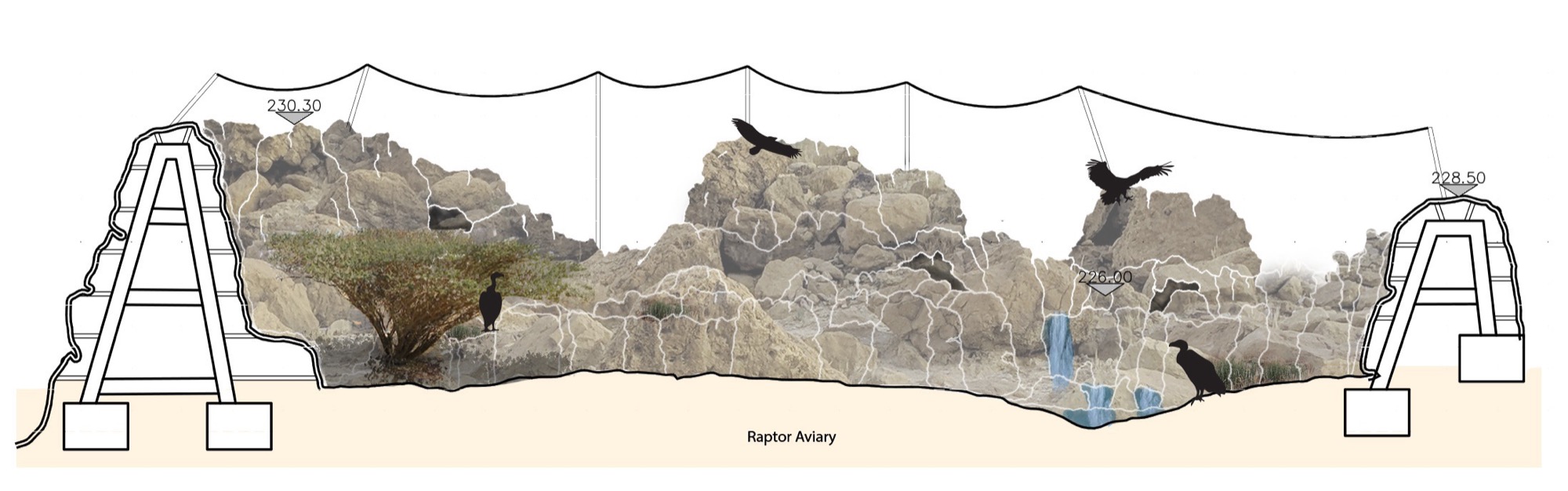
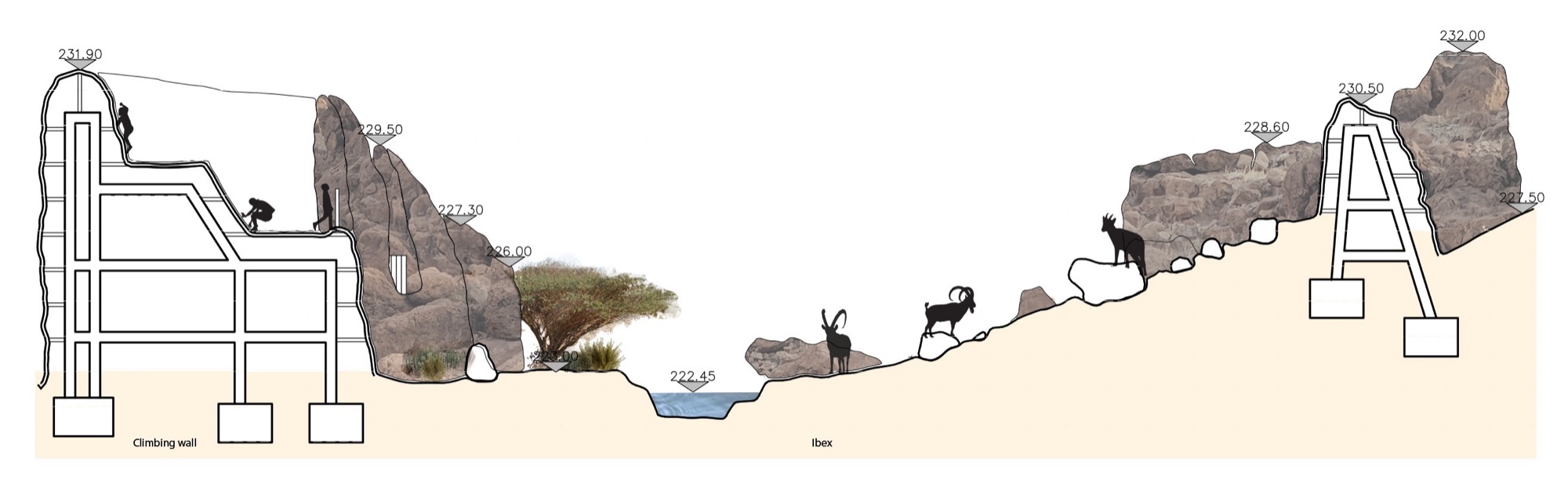
Landscape Design for Diverse Users
At Midbarium, the landscape design serves both animals and humans, facilitating a direct
encounter between them. As a foundation for the design, we studied the animals’ motor
skills and physiological needs—from the reach of a giraffe’s neck and its requirement for
stable surfaces, to the jumping distance of an ibex and the burrowing habits of meerkats.
Habitats are meticulously planned for long-term welfare, balancing animal needs with daily
operational requirements.
Context and Concept
Beer Sheva’s semi-arid climate is a transition zone between Mediterranean and desert
environments, defined by extreme temperature fluctuations and sparse precipitation.
Within this context, Midbarium houses species from similar or more extreme arid climates.
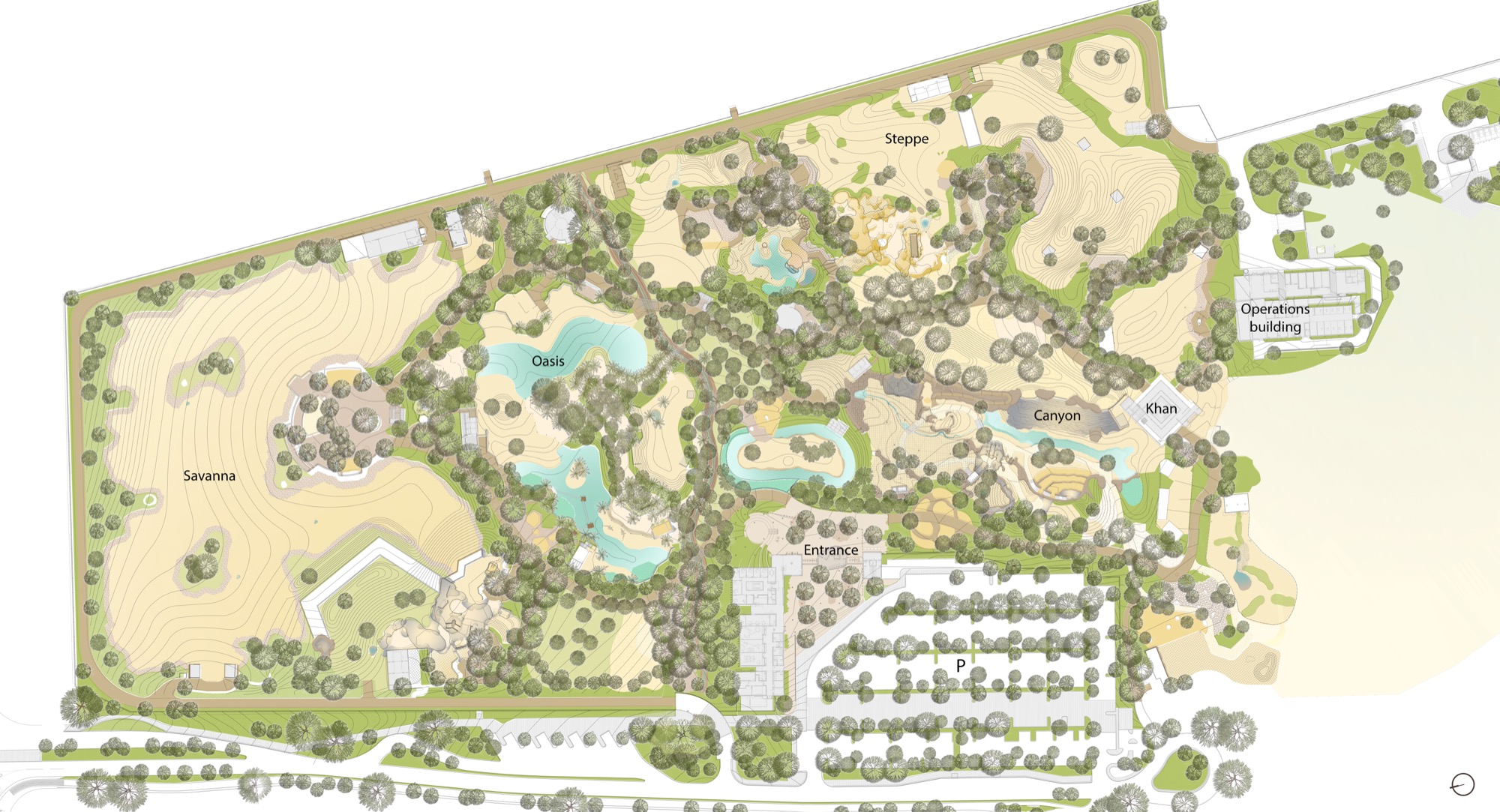
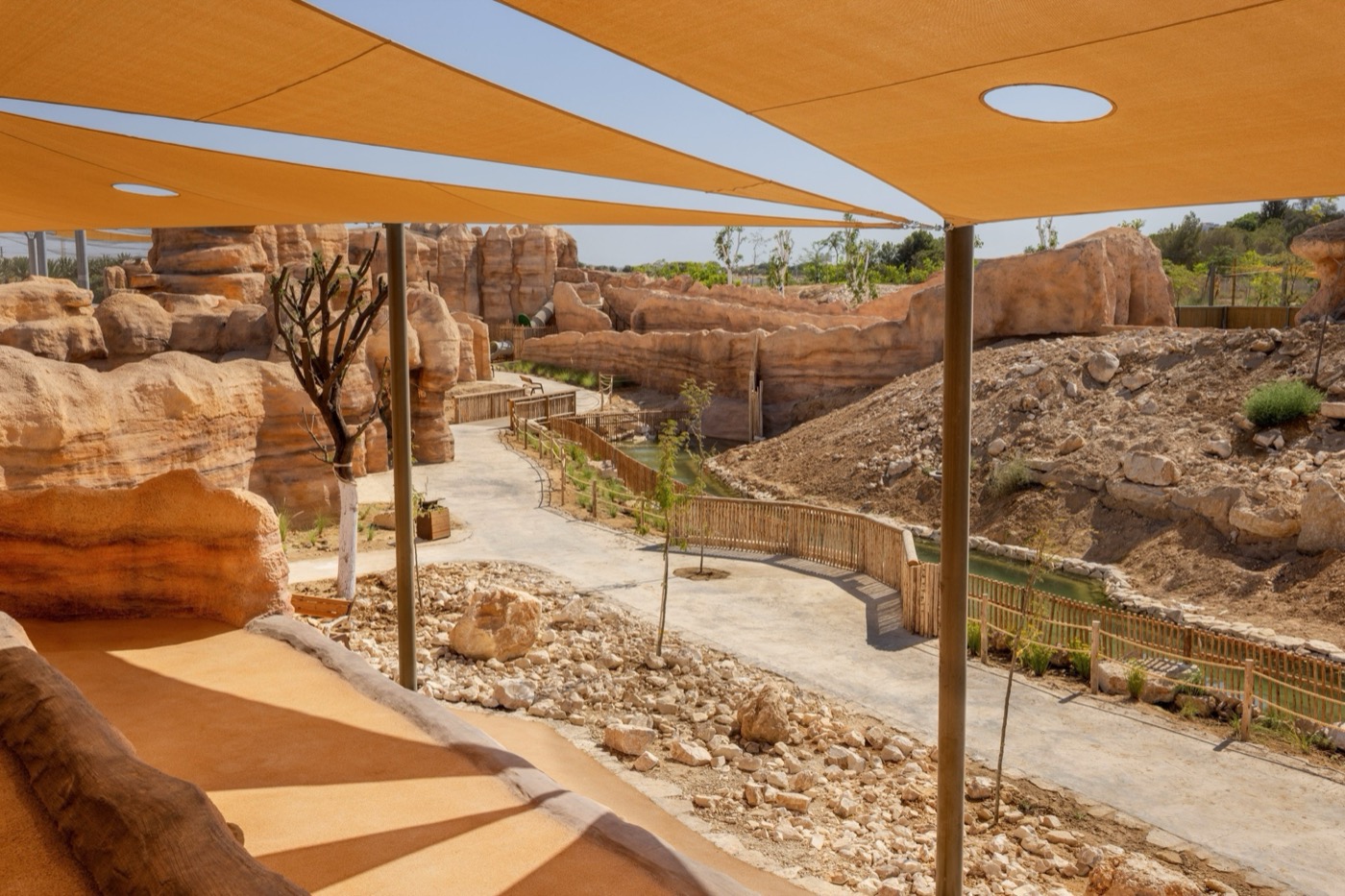
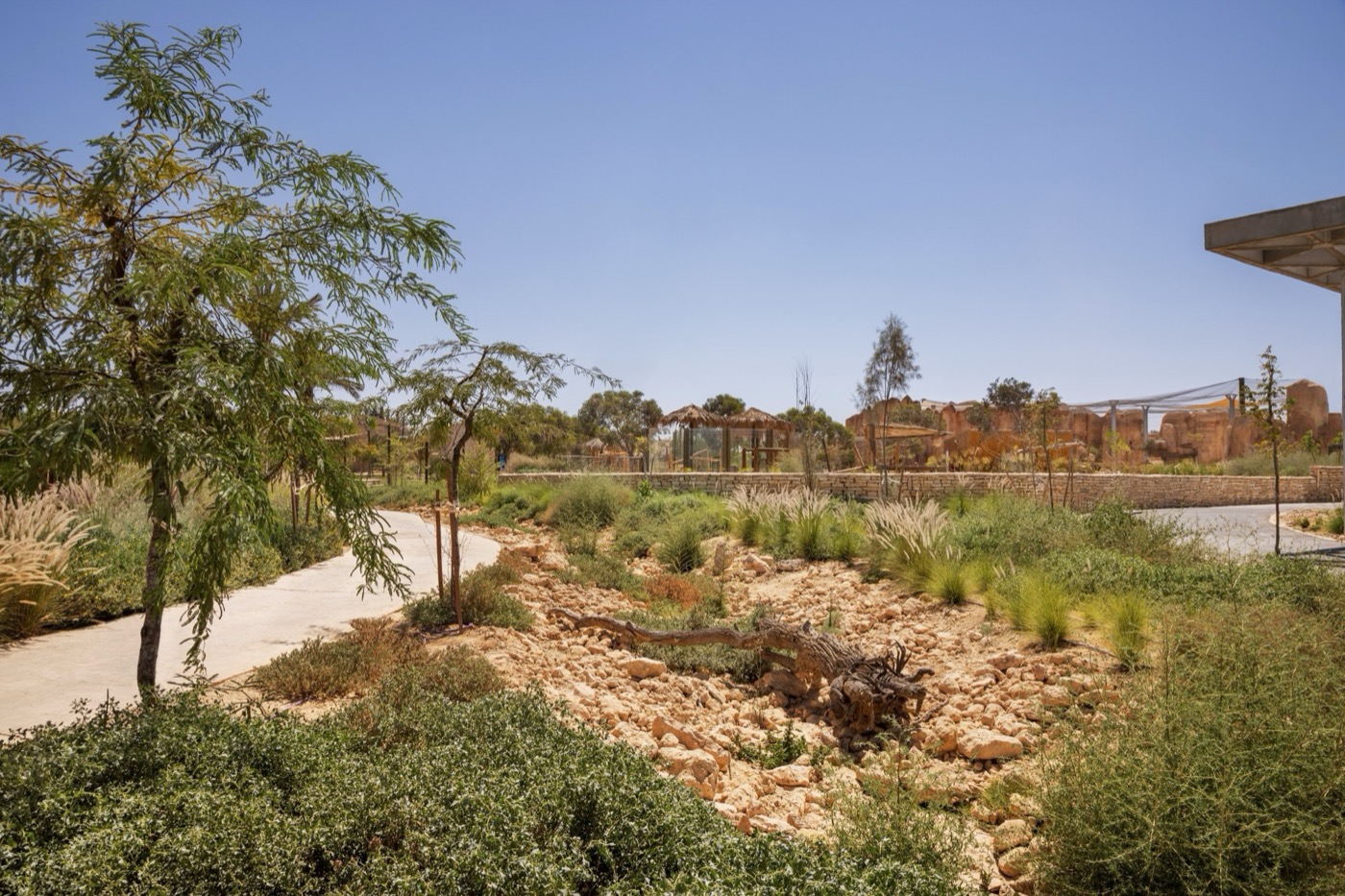
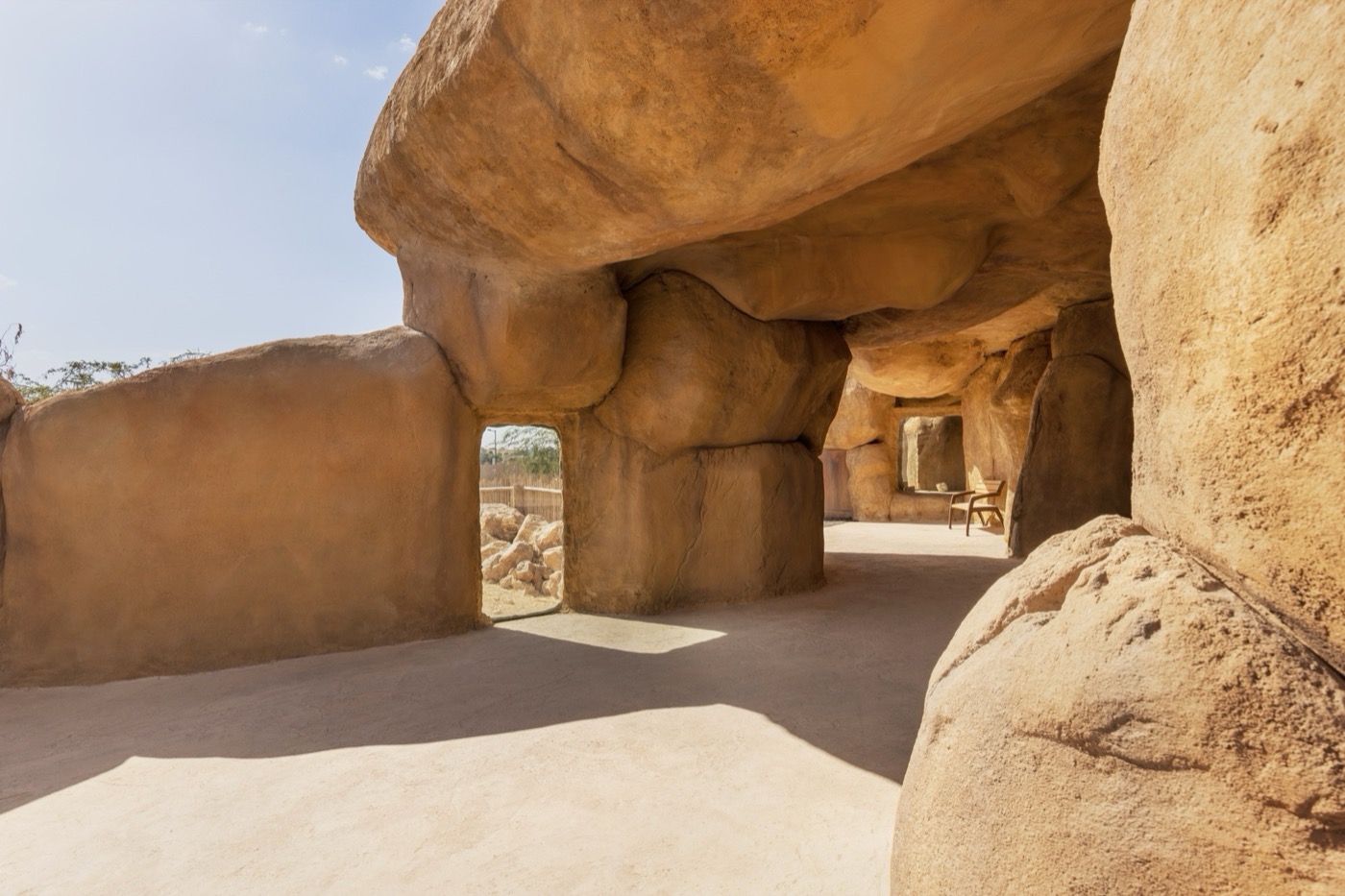
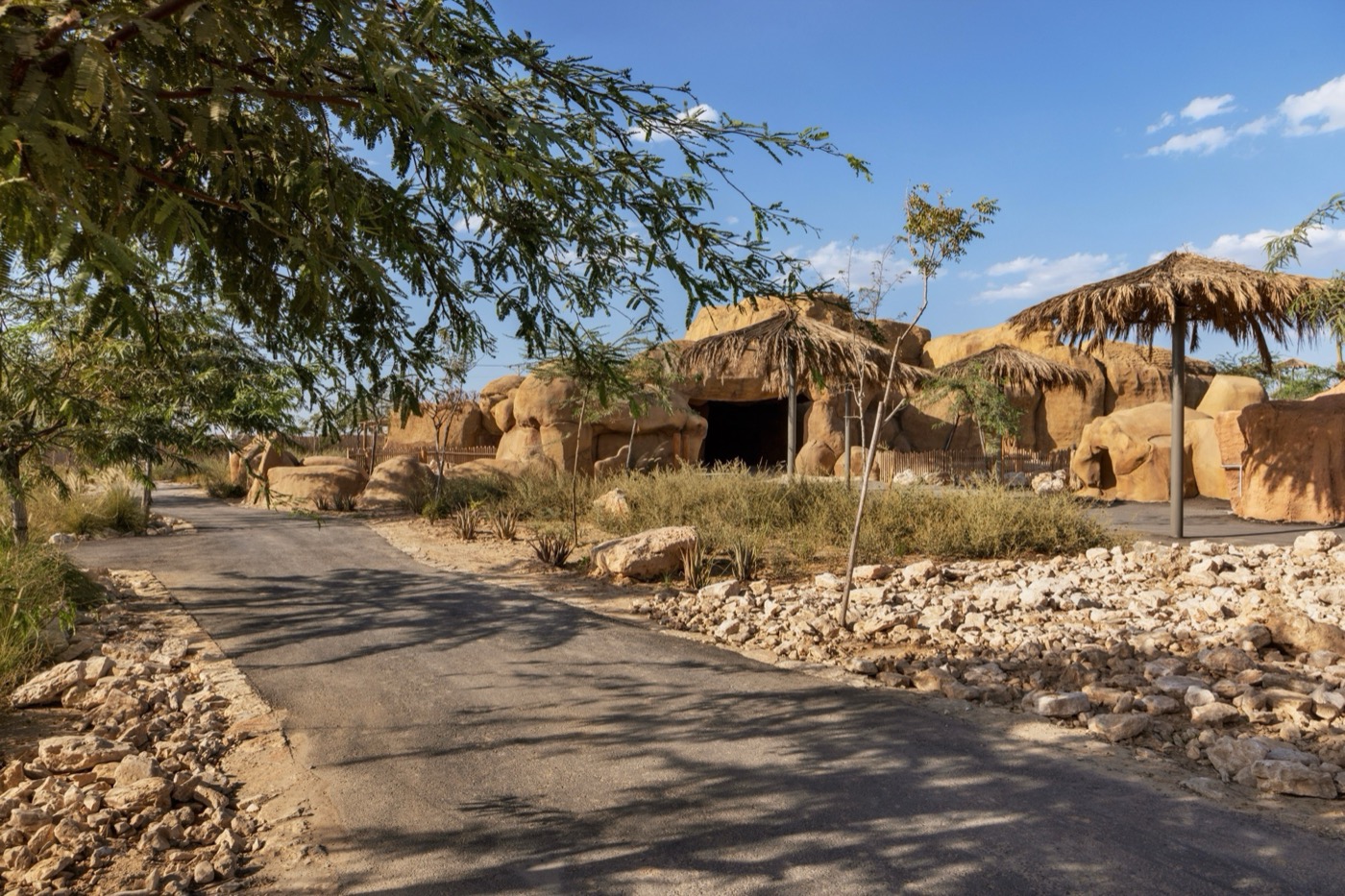
The park is divided into four distinct habitats, simulating four desert landscapes: Canyon,
Arid Steppe, Oasis, and Savanna. To ensure authenticity, we researched each formation’s
geomorphology, soil, and vegetation, applying distinct materiality, color palettes, flora, and
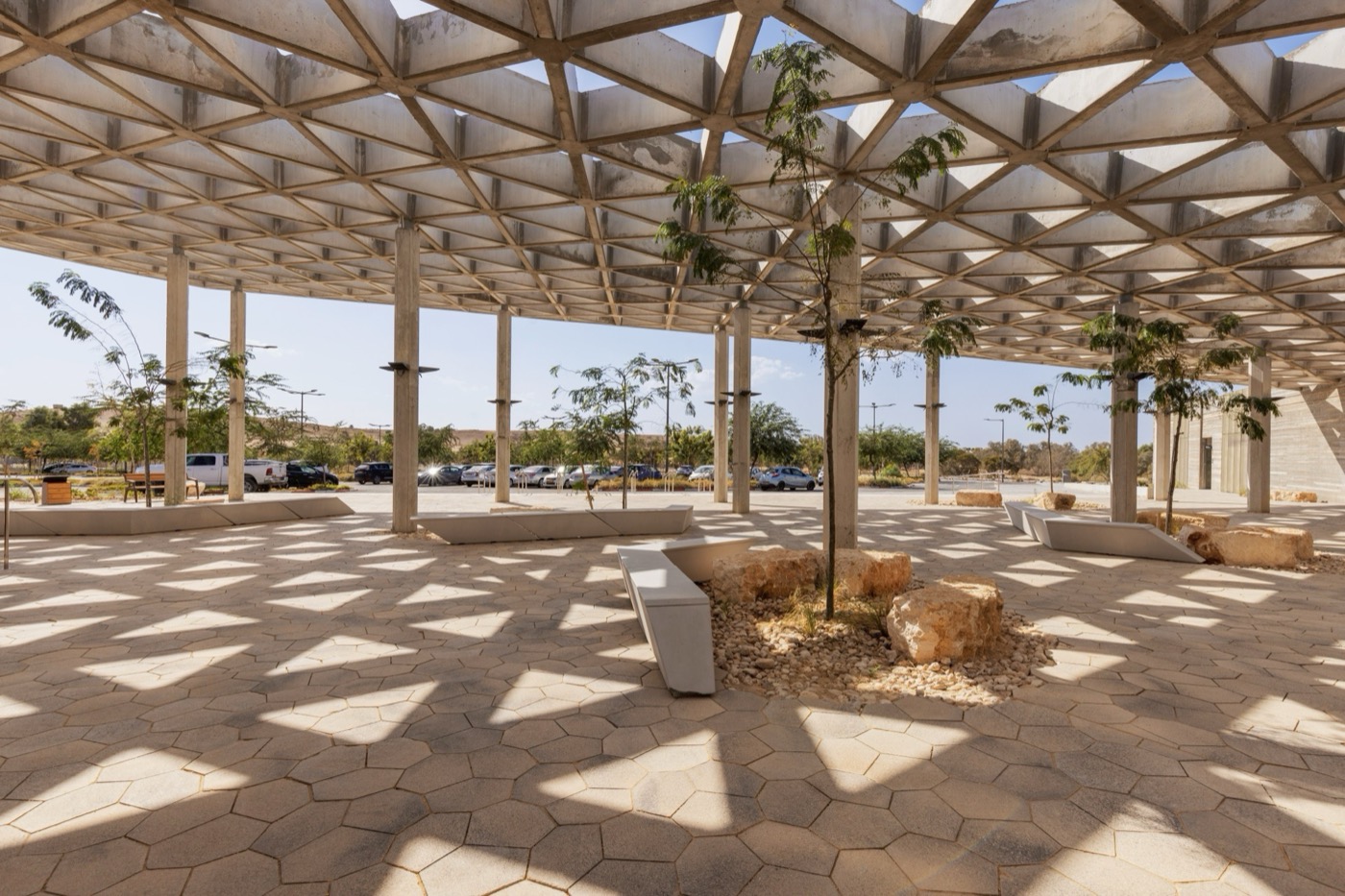
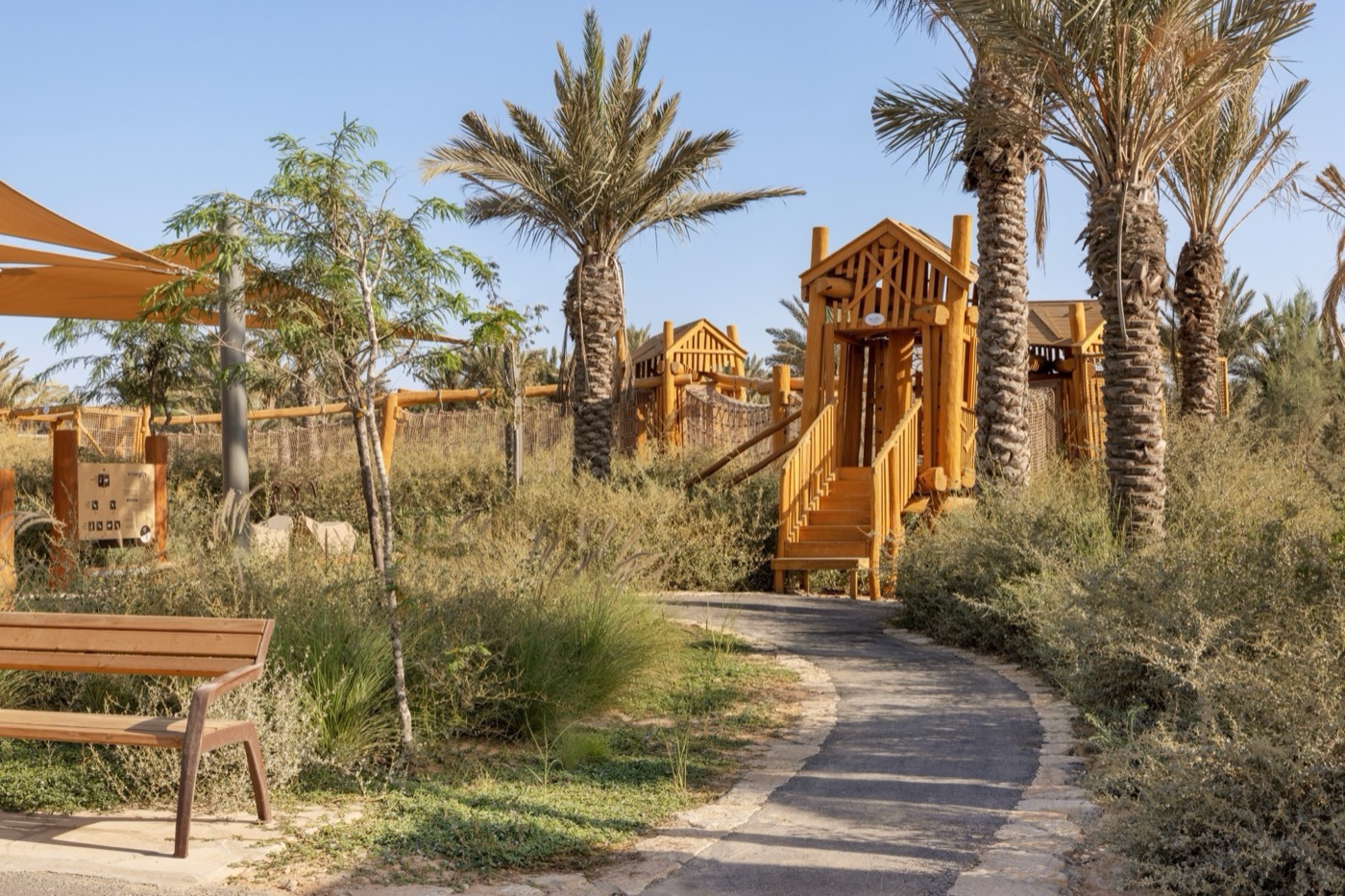
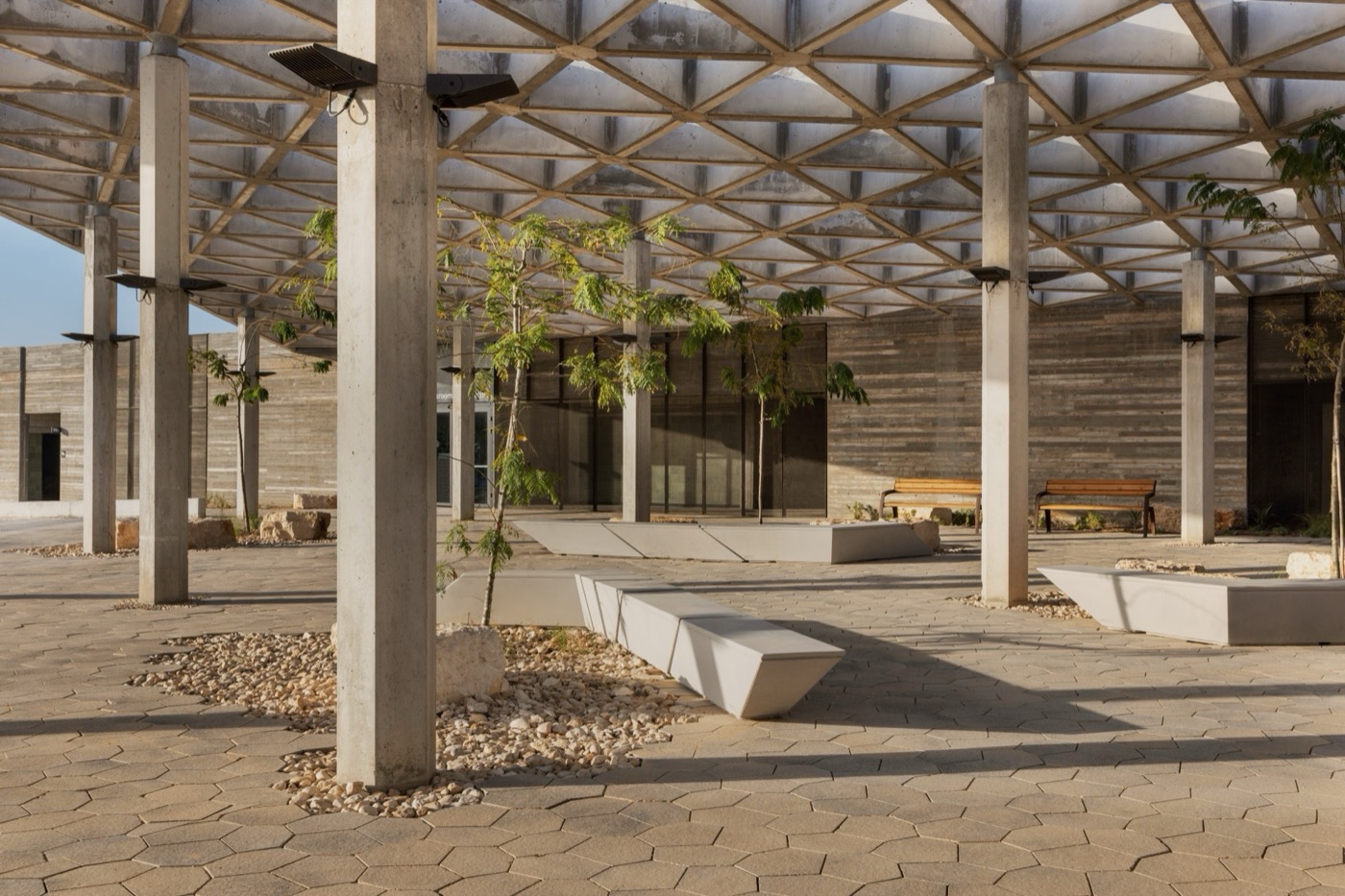
topography. These are complemented by the Entry Plaza, which welcomes visitors, and the
Operations Complex, where visitors can observe veterinary care and food preparation. The
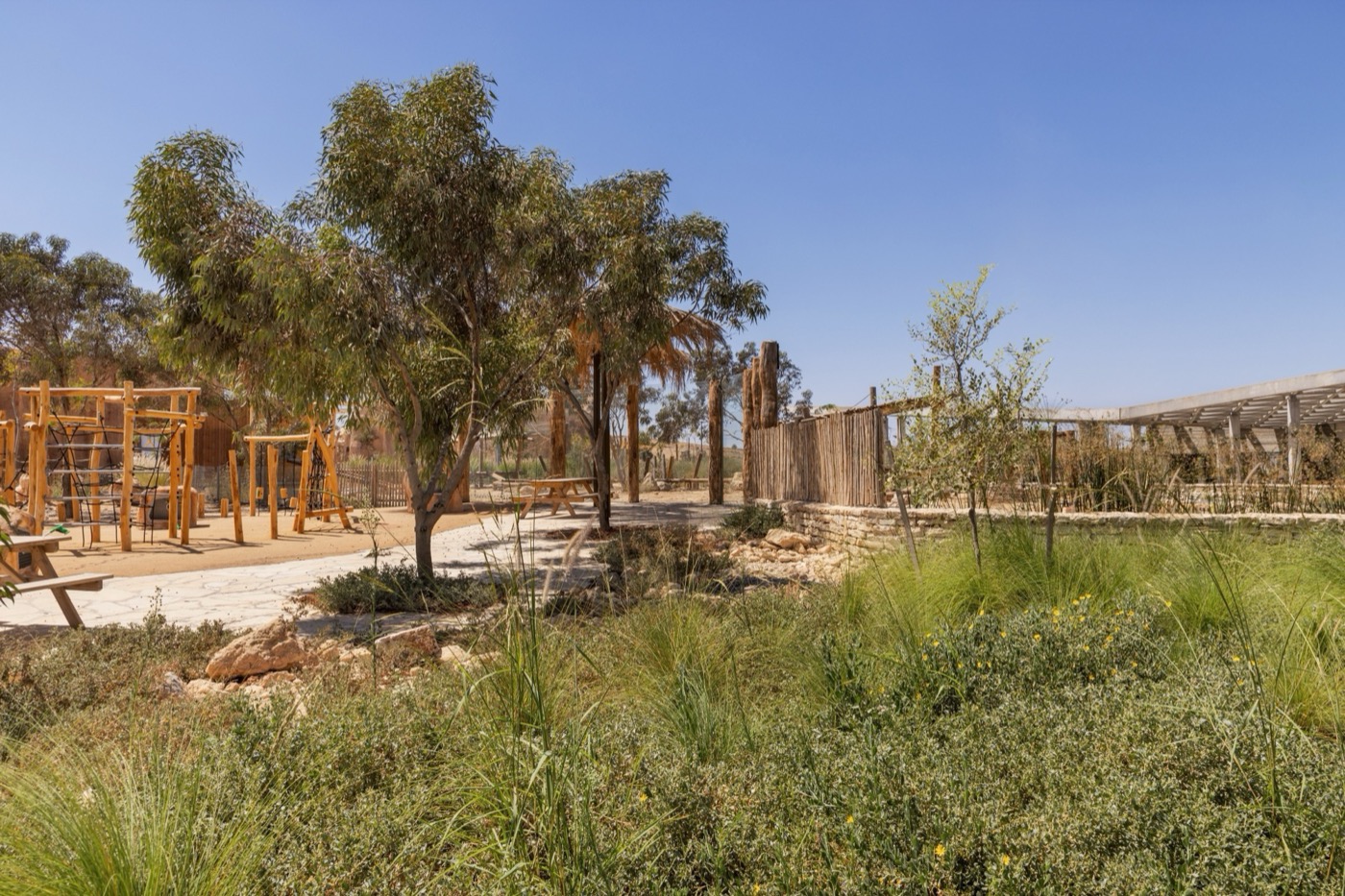
Khan, acting as a "human habitat", provides a space for respite and interaction with
domesticated animals.
Vegetation and Microclimate Control
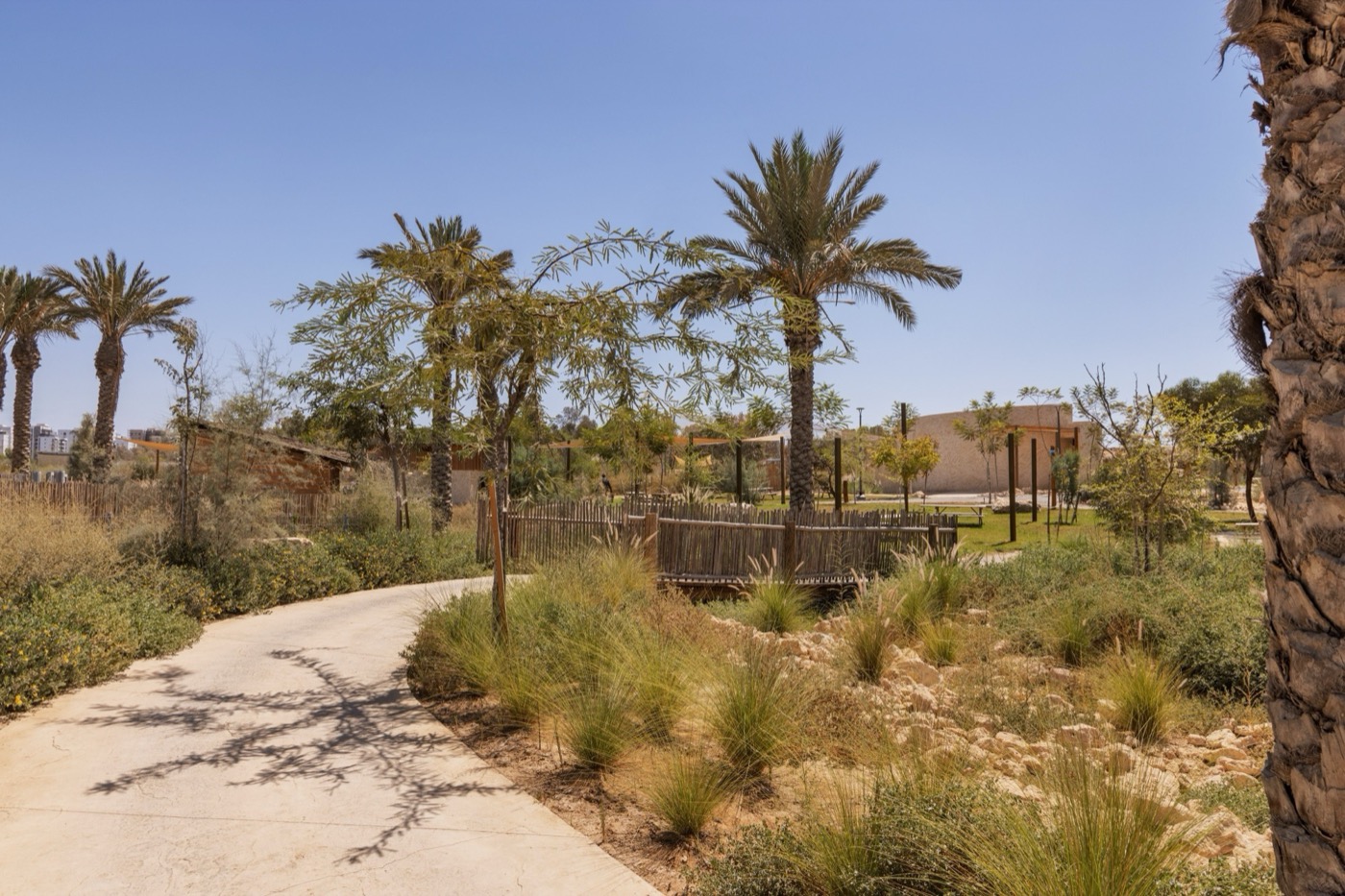
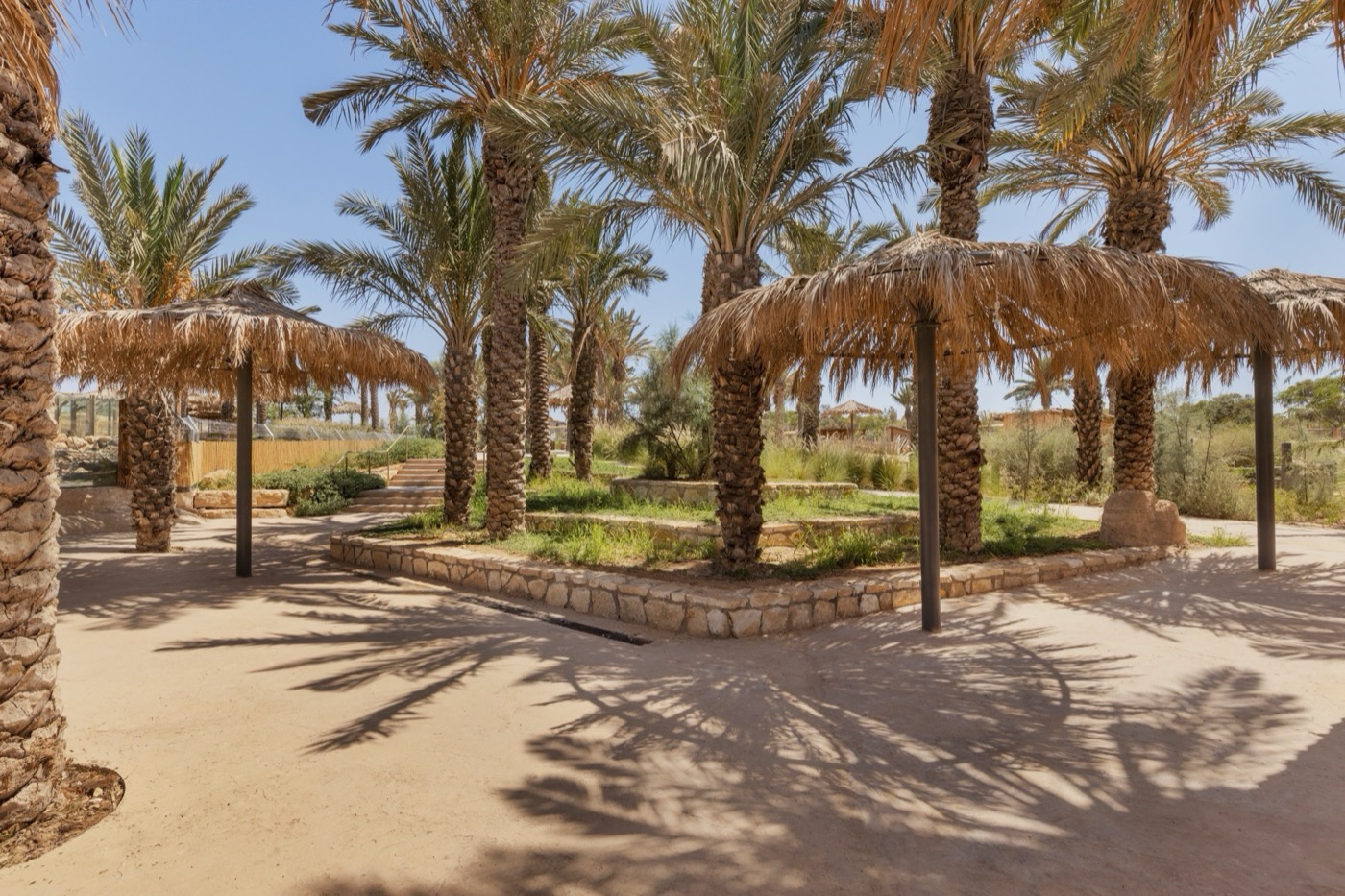
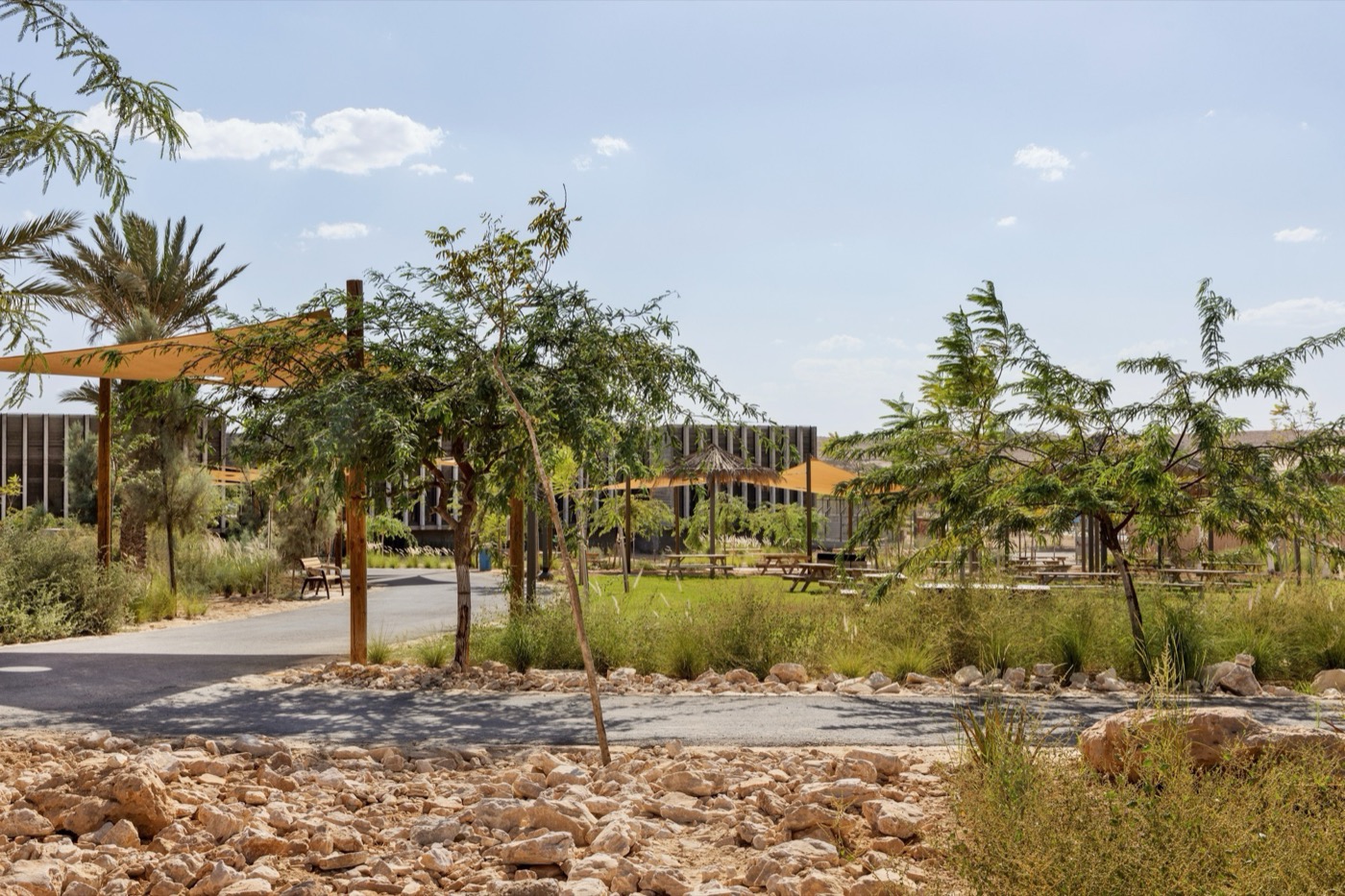
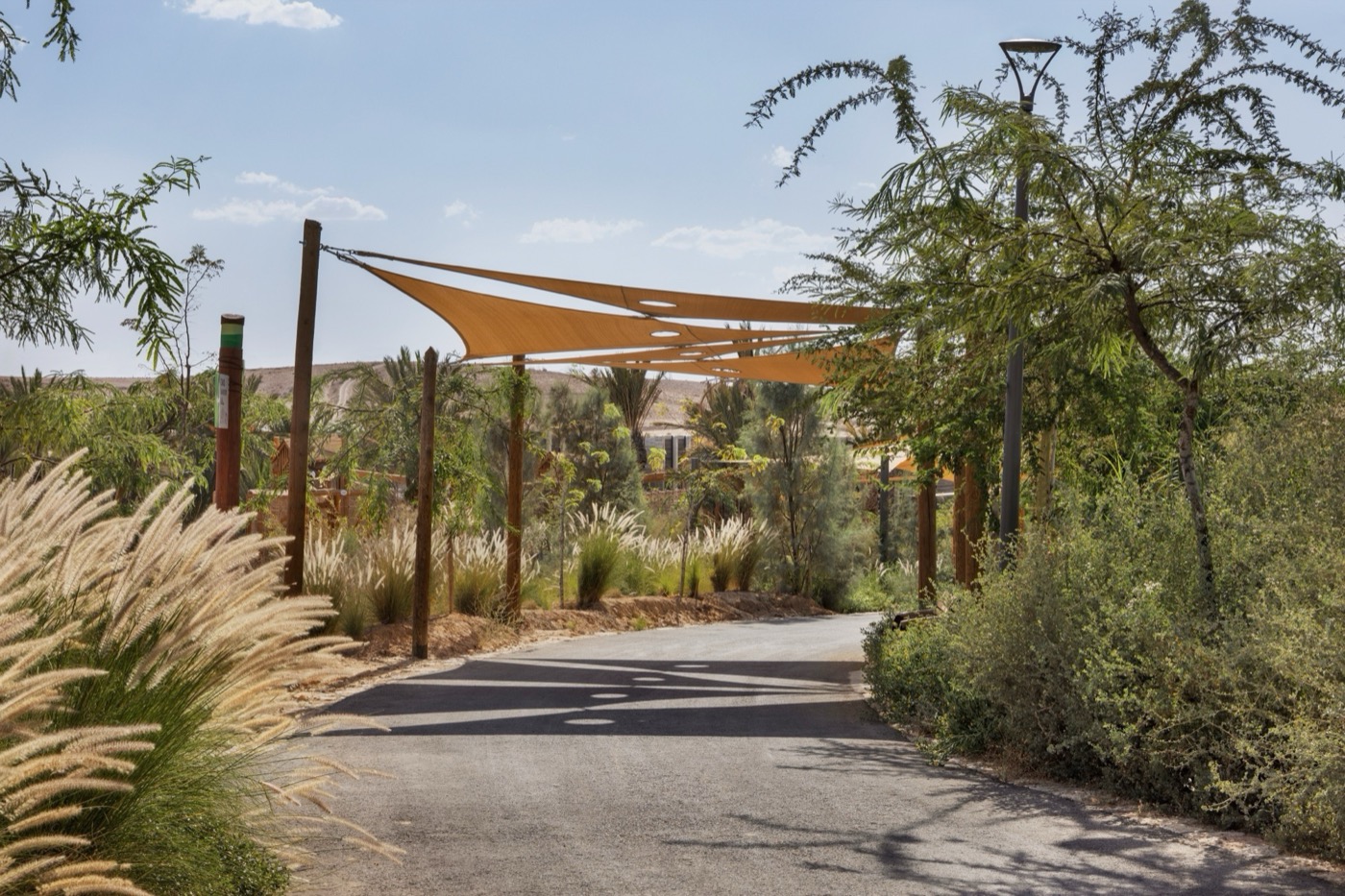
Precise planting is vital in a desert garden. Species were selected to fulfill two vital roles:
providing ample shade under the scorching Beer Sheva sun and screening operational
elements from the public. Other areas were kept barren to enhance the raw desert
atmosphere. All species are indigenous, desert-hardy, and low-maintenance.
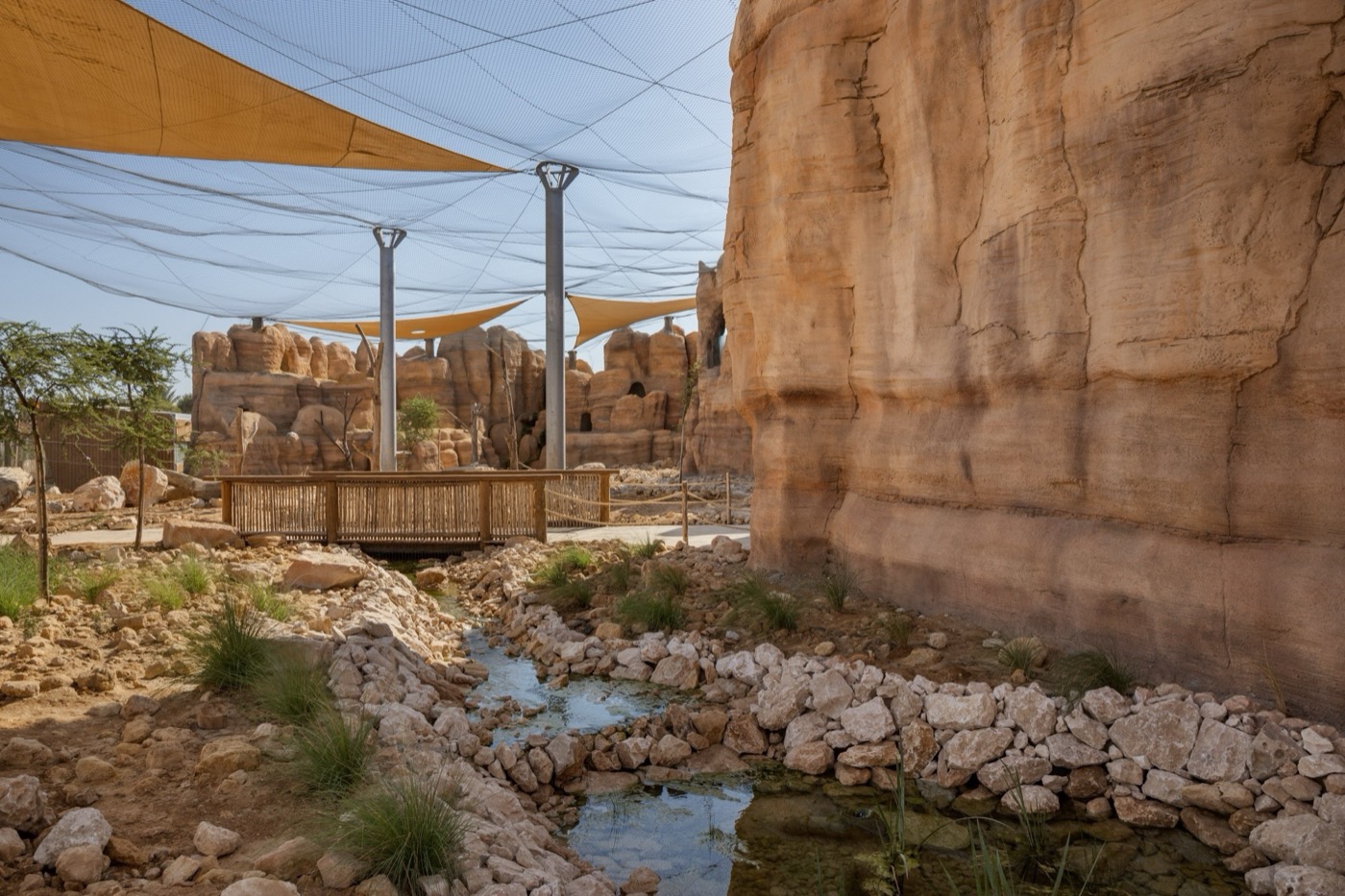
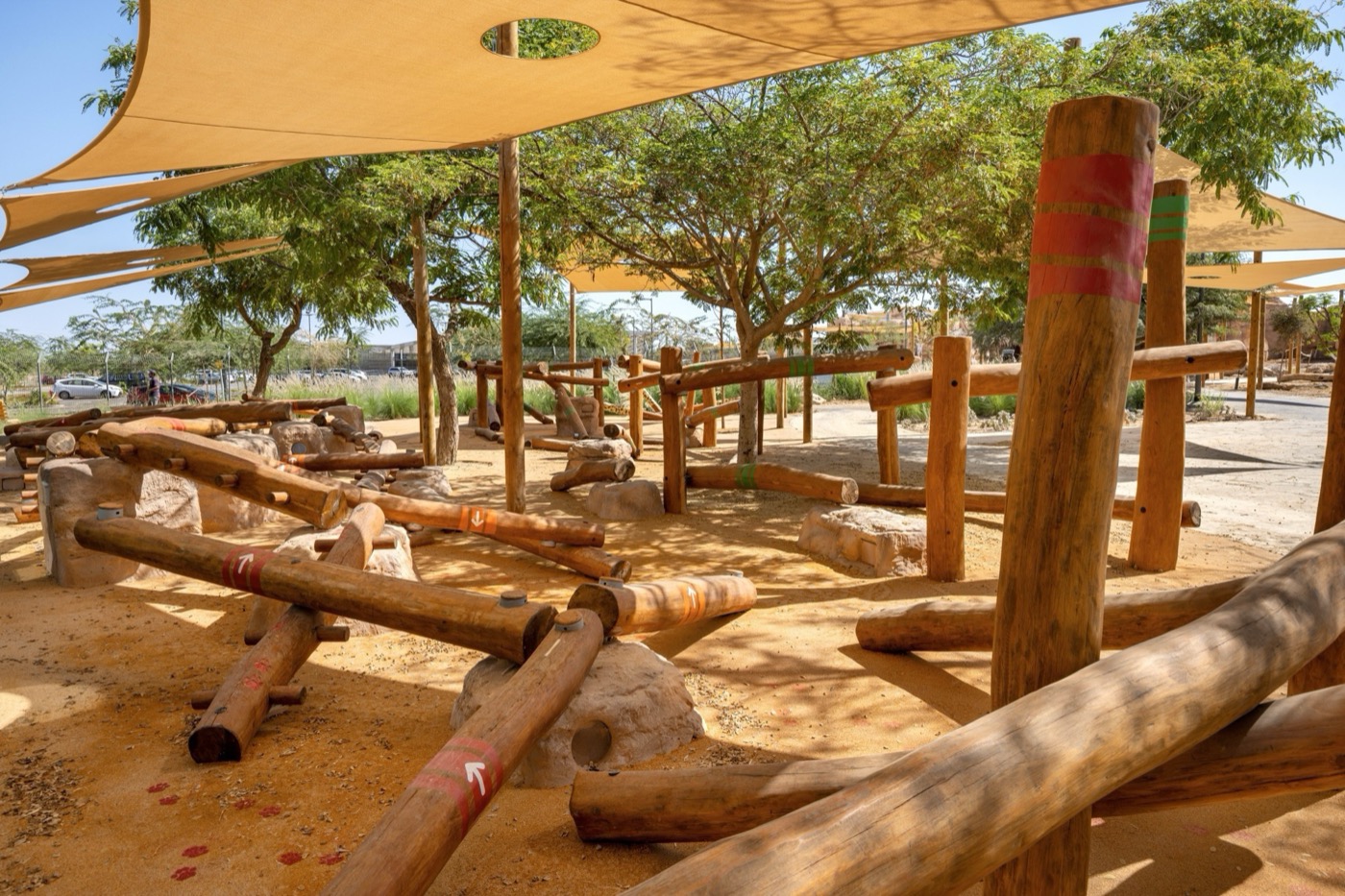
Complementing the natural canopy, various shading structures were designed for seating
areas and pedestrian paths.
Layers of Landscape: Exposure and Concealment
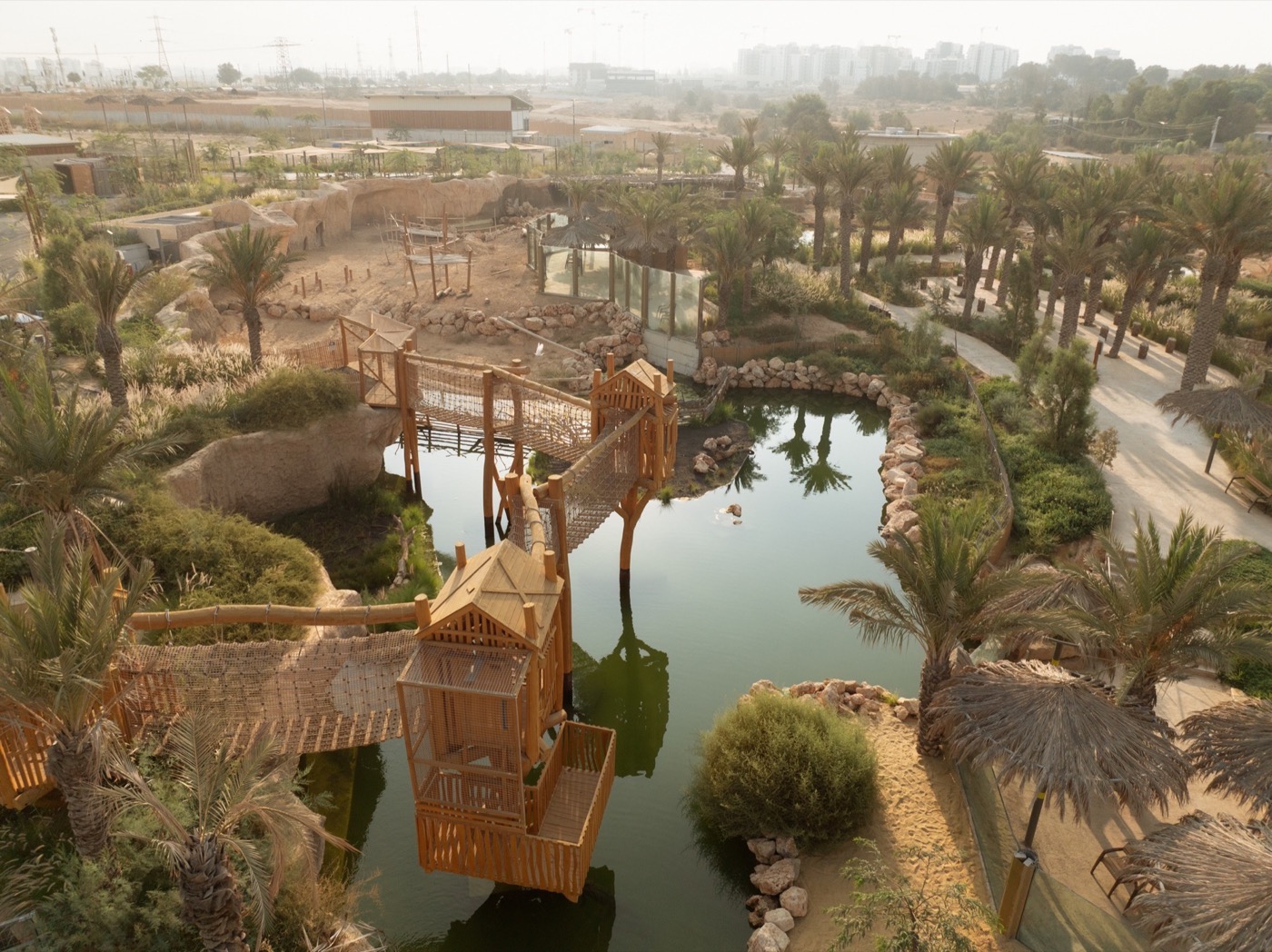
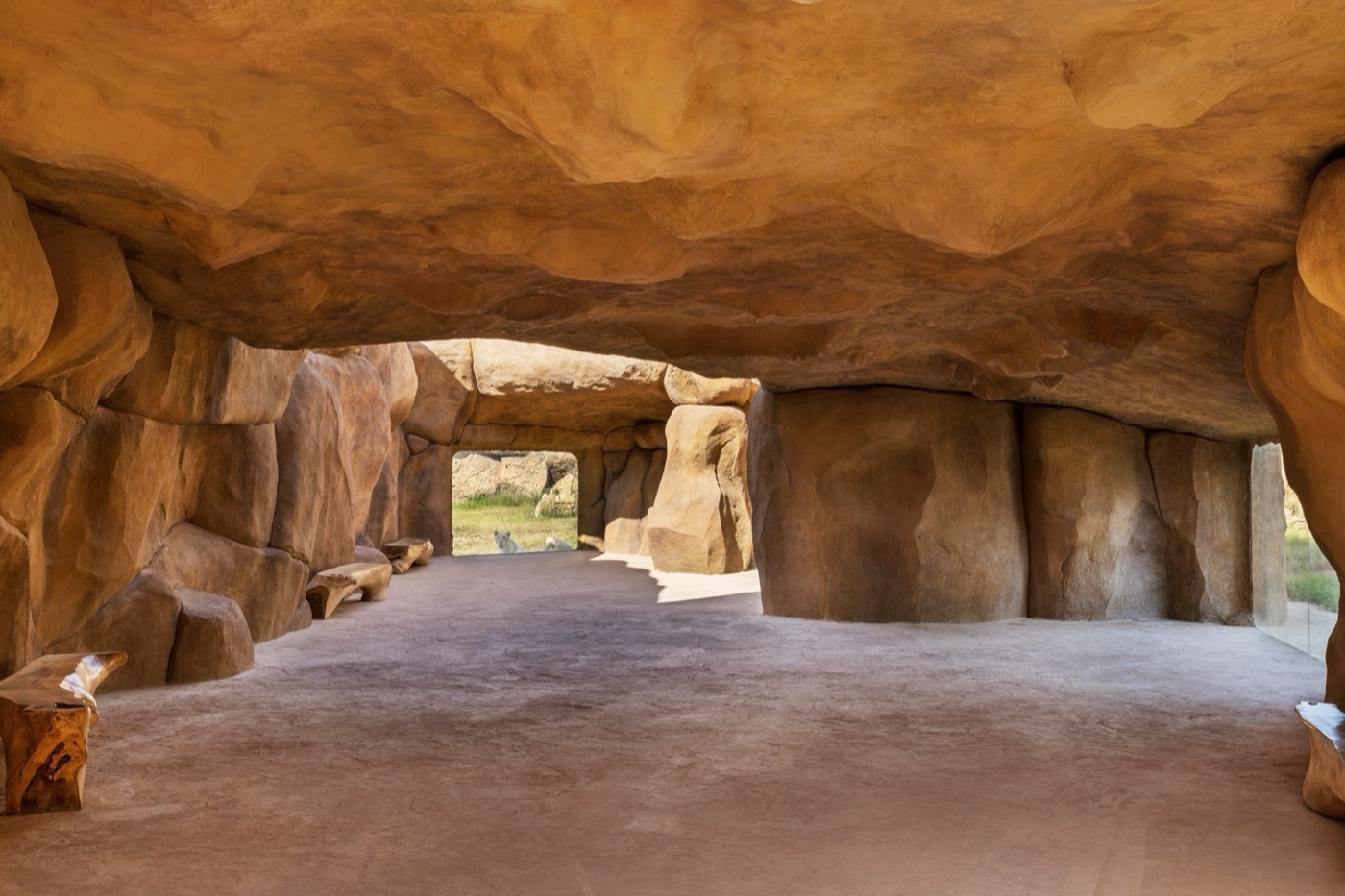
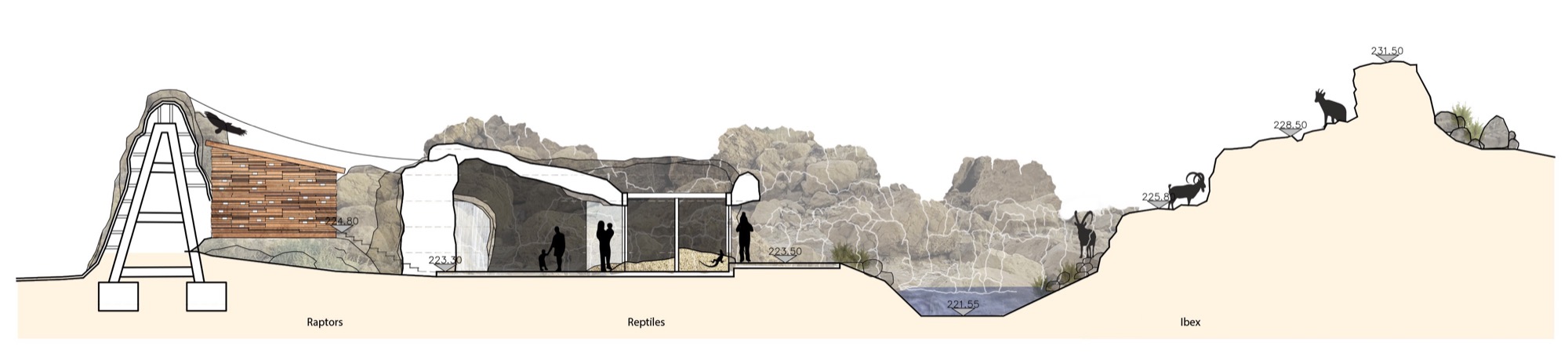
The park’s design consists of infinite landscape scenes with multiple layers, mimicking
natural tableaus by creating an illusion that predator and prey inhabit the same space.
Essential infrastructure is hidden; the design relies on a dialectic of exposure and
concealment. To facilitate an unmediated encounter, we minimized fences, utilizing sunken
barriers, concealed dry moats, and ornamental ponds. While visitors experience a seamless
stroll, a dramatic, hidden topographical system operates behind the scenes.
Small Footprint, Grand Experience
Spanning 120 dunams (30 acres), the habitats occupy the majority of the site. The journey
simulates a trek through the wild, utilizing the topography for a diverse, winding path
system. Strategic screening prevents the paths from feeling dense, providing a sense of
"getting lost" in the desert’s mystery. A wide Perimeter Loop connects the various
narratives, with winding sub-paths delving into specific habitats. The total pedestrian
network reaches approximately 3,000 meters.
Credits:
Lead Designers: Zur Wolf Landscape Architects – Lior Wolf, Ora Hacham Rafael, Ofer
Rapoport, Lior Confino Cohen
Masterplan & Consulting: Eric van Vliet, Zoo Design Specialist
Content & Play: Play Plus & HaTaasiya
Architecture (Entry, Operations, Shelters): Ar. Asaf Lerman
Zoological Consulting: Shmulik Yedvab
Commissioned by: The Beer-Sheva Economic Development Corporation
Funding & Contributions: Contributed by the Mandel Foundation and Mifal HaPayis, in
conjunction with the Beer-Sheva Municipality.
Photography: Assaf Pinchuk, Yosef Breton and Roee Zvi
31.26097815921815, 34.74440062702165
73689


LILA 2026 Sponsor