Wildflower Studios by Dirtworks Landscape Architecture
www.dirtworks.us
2026 Landscape and Architecture / 2026 Public Projects / USA / Built in 2024 /

![In 1965, the NYC Housing Authority built Stephen Wise Towers in the affluent Upper West Side, bringing affordable housing to the neighborhood. Over time, a lack of sustained investment resulted in a serious state of disrepair and unsafe conditions. Now, over 50 years after initial completion, our design team joined community leaders, government agencies, a […]](https://landezine-award.com/wp-content/uploads/2026/02/WISE-HERO_trimed-600x299.jpg "Wise Towers by Dirtworks Landscape Architecture")
![The Simons Center for Geometry and Physics is a research institute within Stony Brook University dedicated to furthering fundamental knowledge of mathematics and theoretical physics and to promoting collaboration and discovery at the interface of these two fields. The landscape concept for the Center took on the challenges of fostering exchange across disciplines, giving visual […]](https://landezine-award.com/wp-content/uploads/2017/05/SUNY-Simons-Center-main-photo-1-600x400.jpg "SUNY Simons Center")
![The landscapes of 150 Charles represent a new paradigm of urban residential development— one that celebrates urban ecology through nuanced and responsive design, and asserts that nature may be thoroughly integrated into the built environment. The 150 Charles landscape sets itself apart in both the overall percentage of green space and in its response to […]](https://landezine-award.com/wp-content/uploads/2017/05/150-Charles-Building-View-Main-Project-Photo-600x400.jpg "150 Charles")
Wildflower Studios:
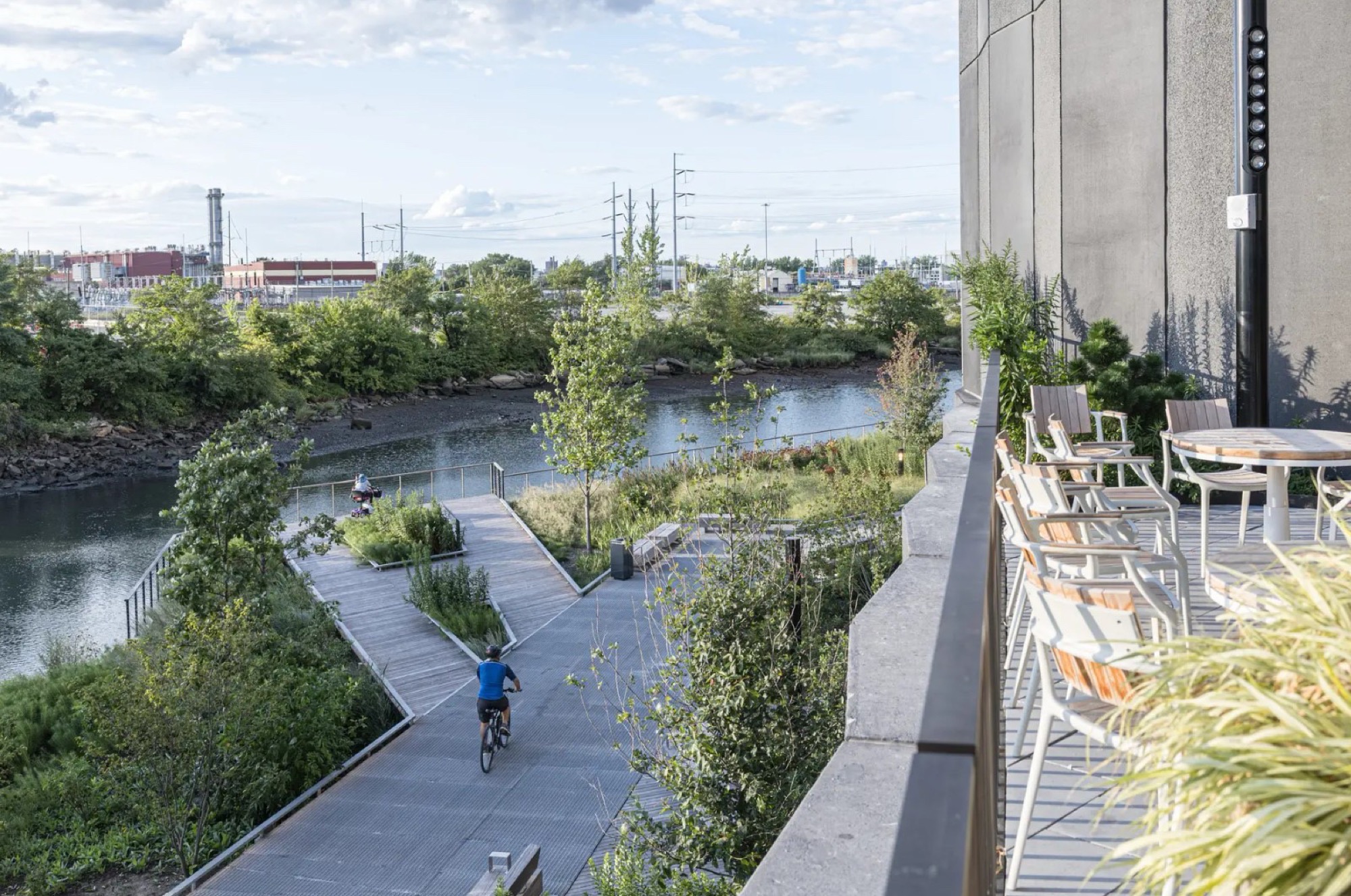
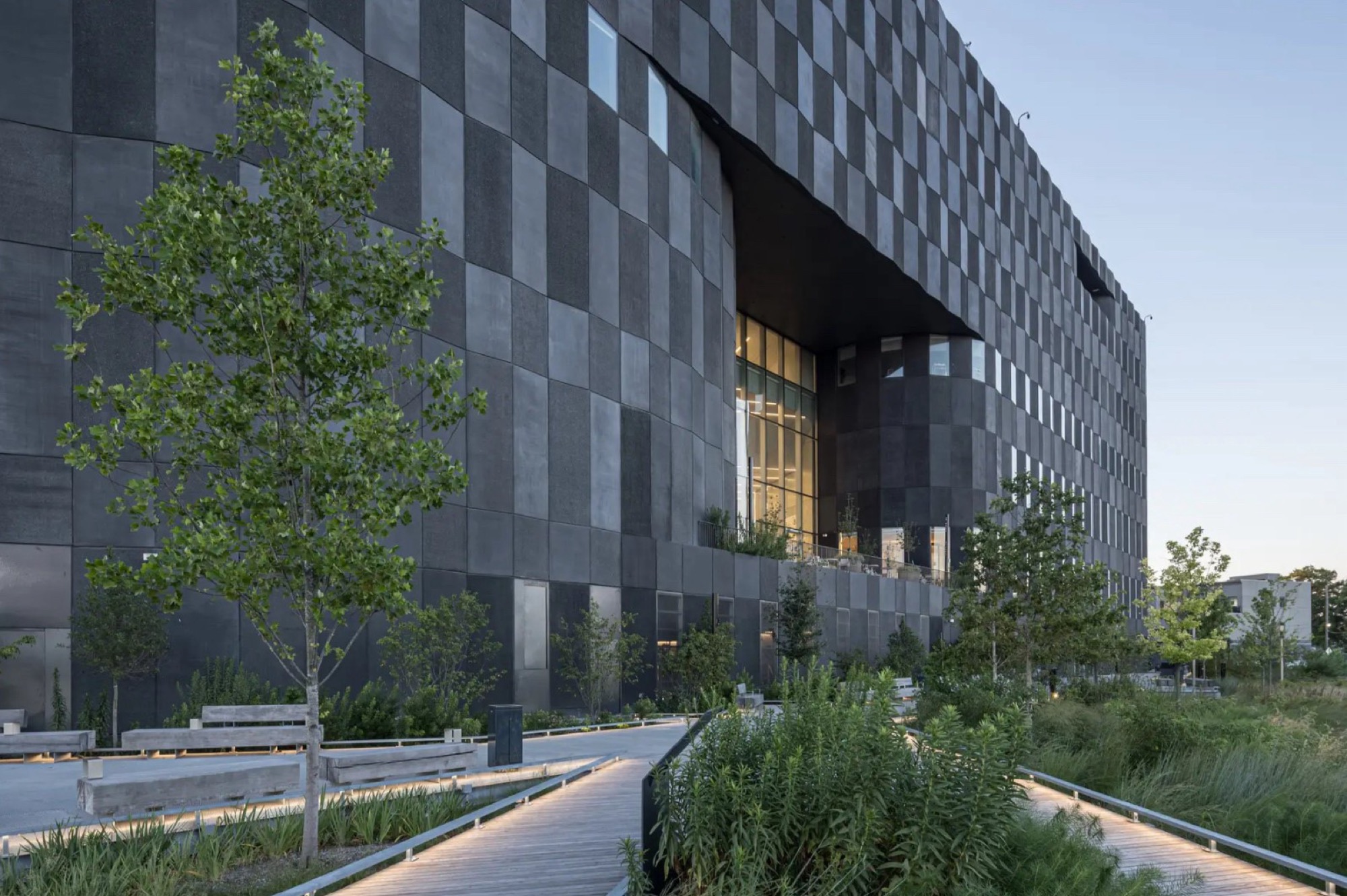
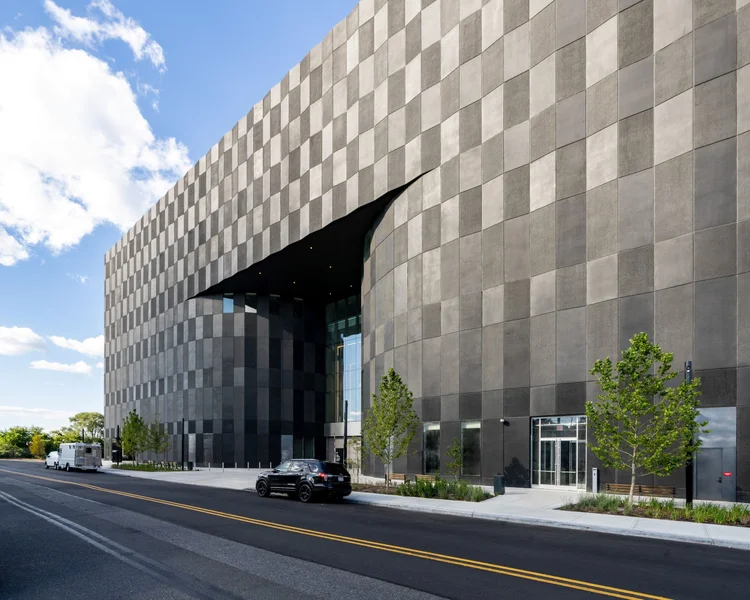
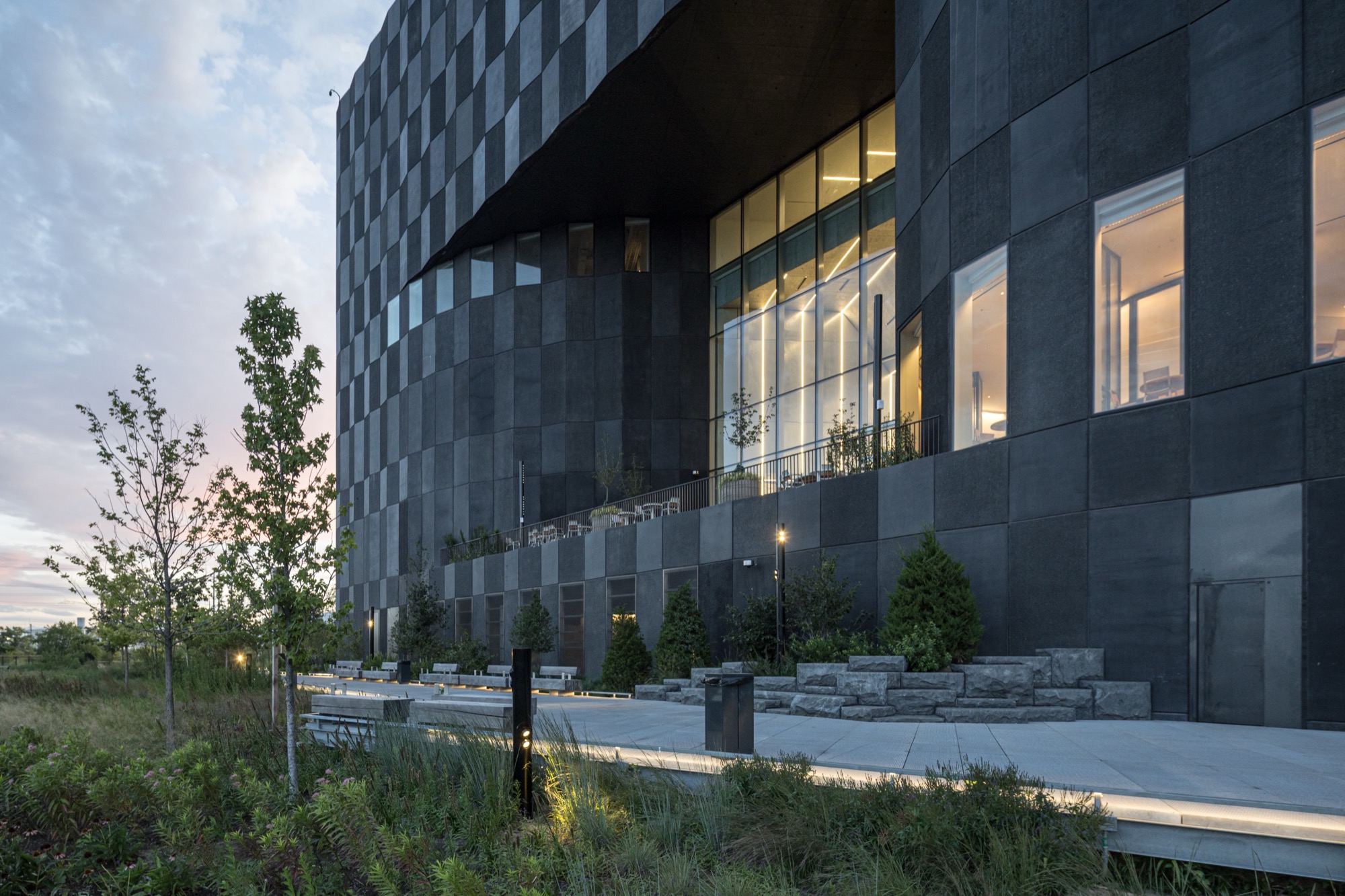
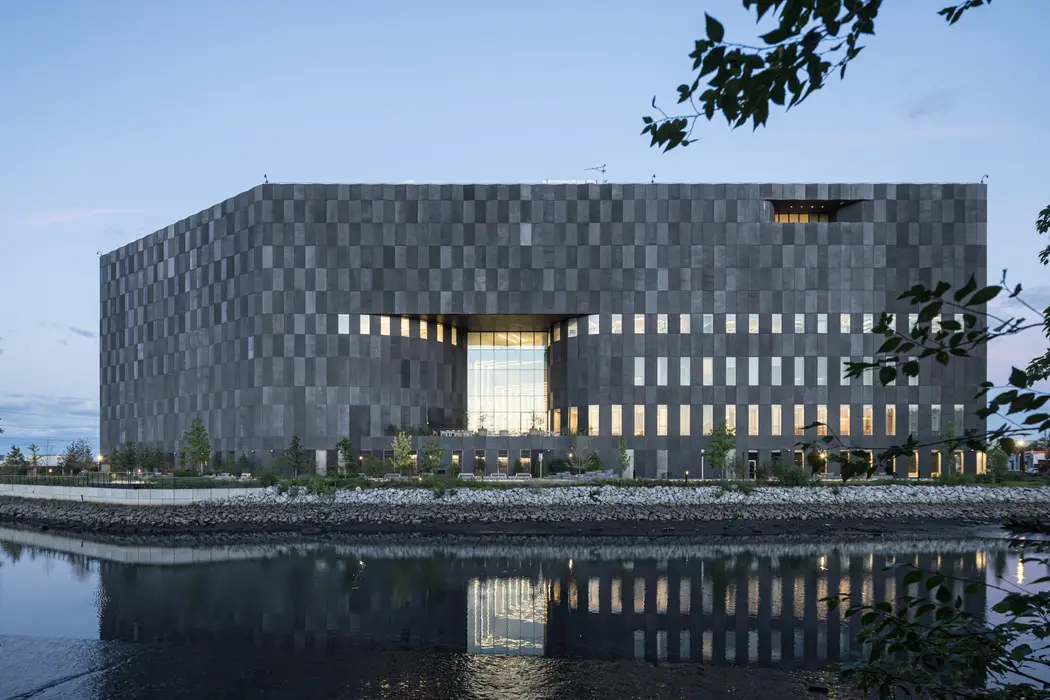
The waterfront at Wildflower Studios—a pioneering vertical film studio in Astoria—reclaims a complex industrial shoreline as high-performing ecological civic infrastructure. The project advances a site-specific model for transforming constrained, contaminated urban edges into resilient public landscapes that integrate habitat restoration, climate adaptation, and public access within an operating campus. The park and streetscape occupy the former Steinway Piano Factory site, an expanse of historic urban fill along the tidal wetlands of Luyster (Steinway) Creek. The post-industrial terrain is repositioned as functional shoreline system mediating between upland urban development and a recovering tidal ecosystem.
The design is grounded in the enhancement of the shoreline ecotone—the biologically rich interface where upland vegetation transitions into intertidal environments. By reinforcing this gradient, the landscape supports invertebrate, fish, and shorebird communities that rely on shoreline systems for foraging, nesting, and shelter, while reestablishing ecological processes disrupted by industrial use.
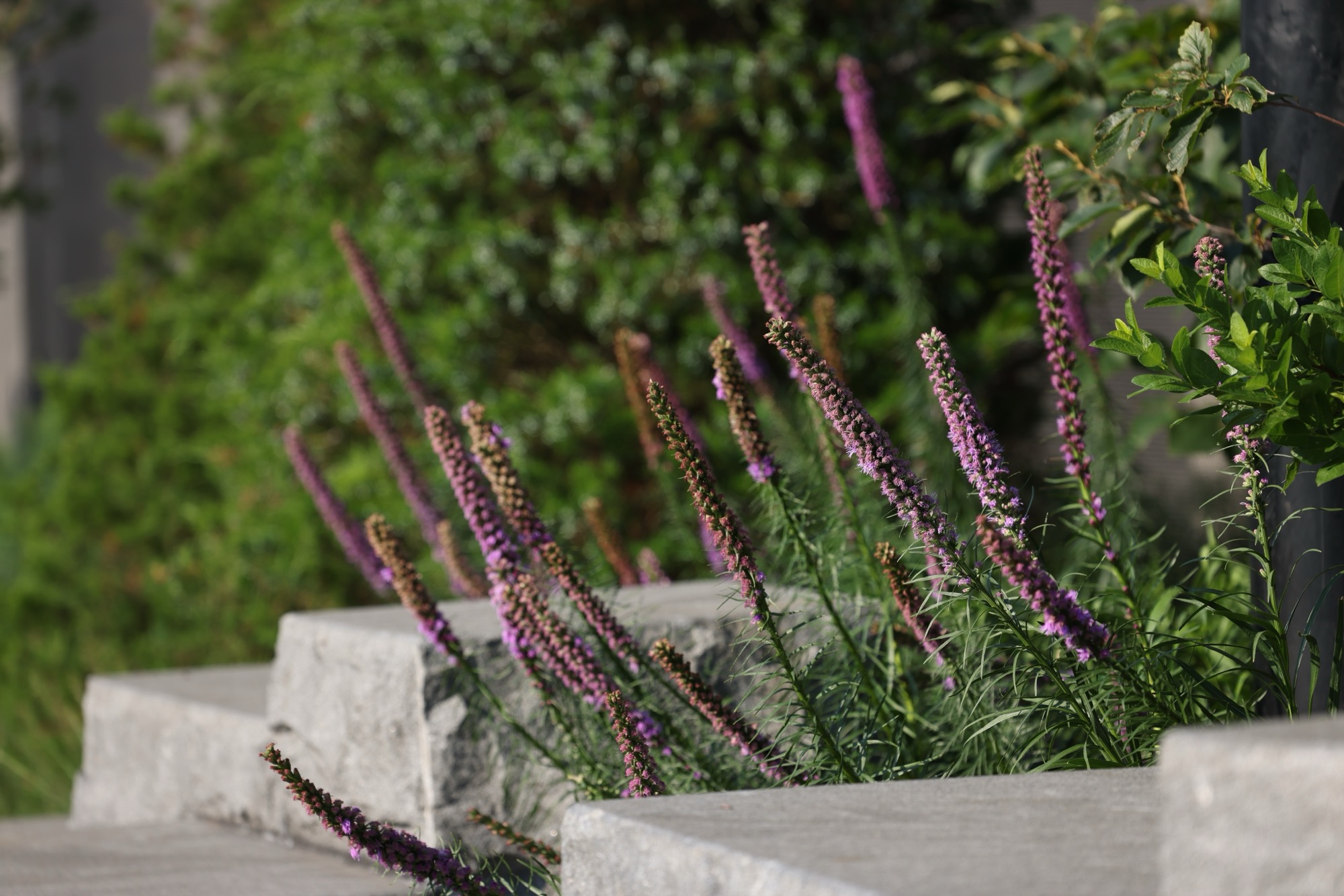
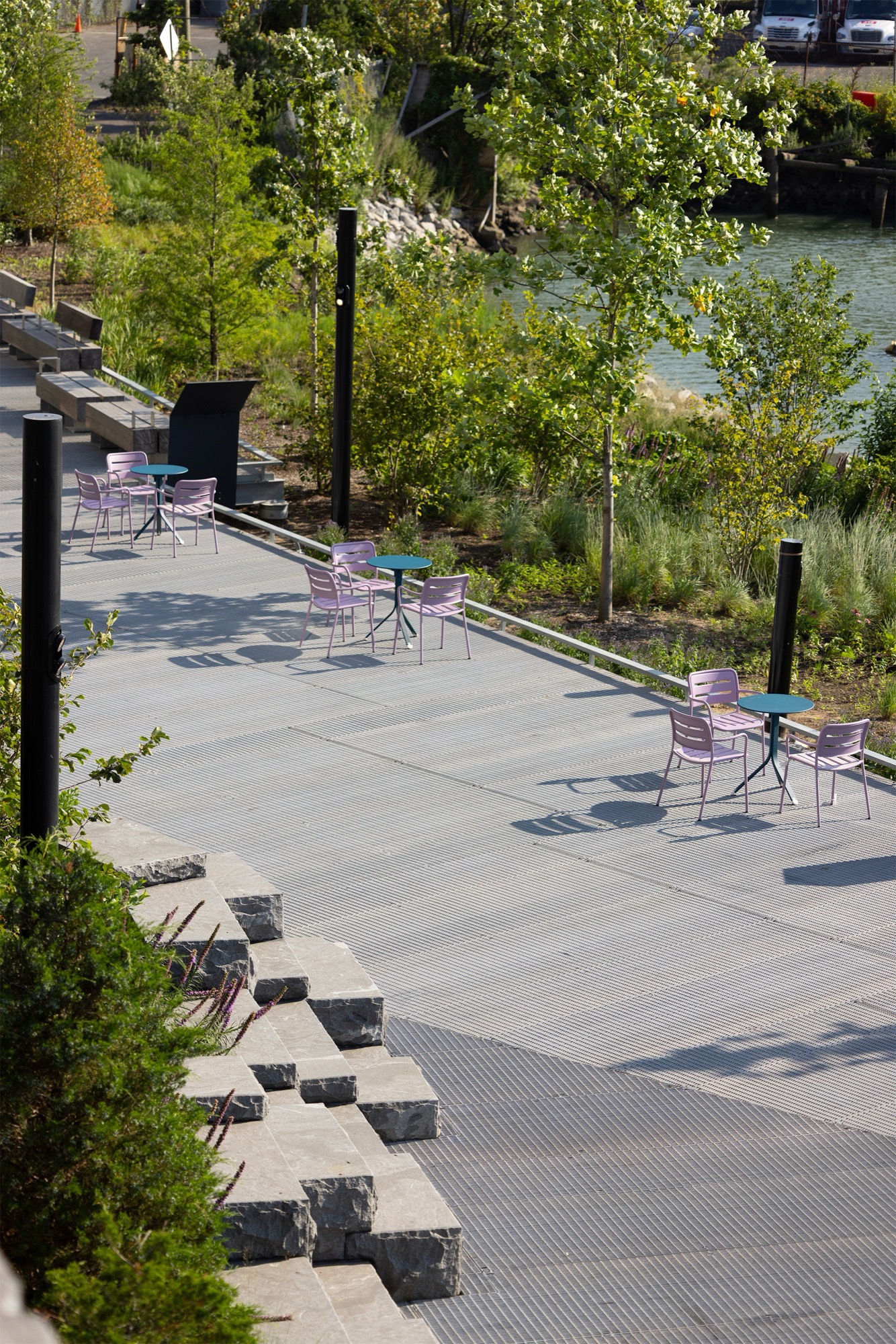
Habitat complexity is achieved through a mosaic of upland meadow plantings, salt-tolerant bioswales, and articulated rock block revetments whose patterning introduces structural heterogeneity for epifaunal and benthic organisms. These interventions emulate the ecological function of natural rocky shorelines within an urban context.
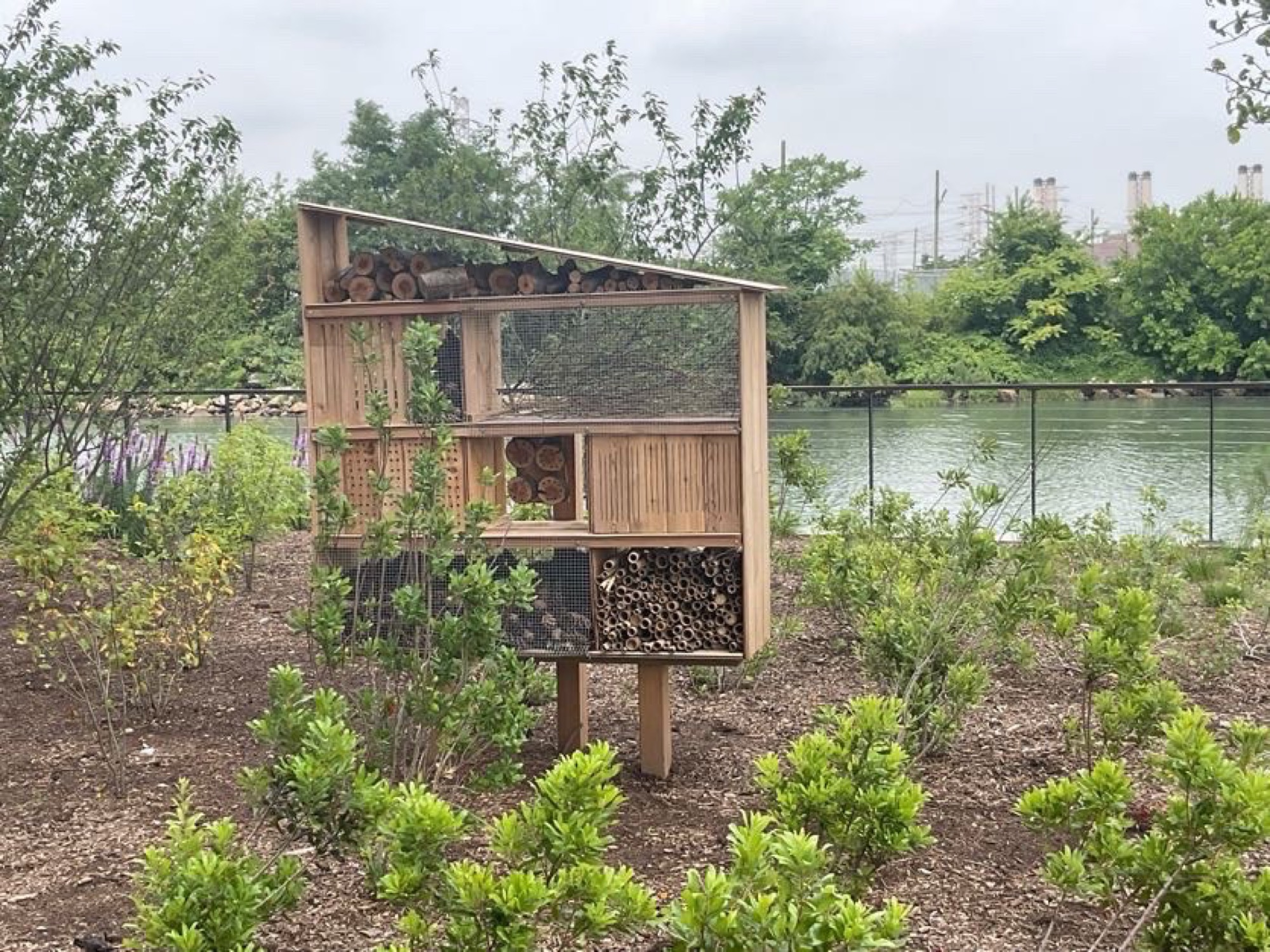
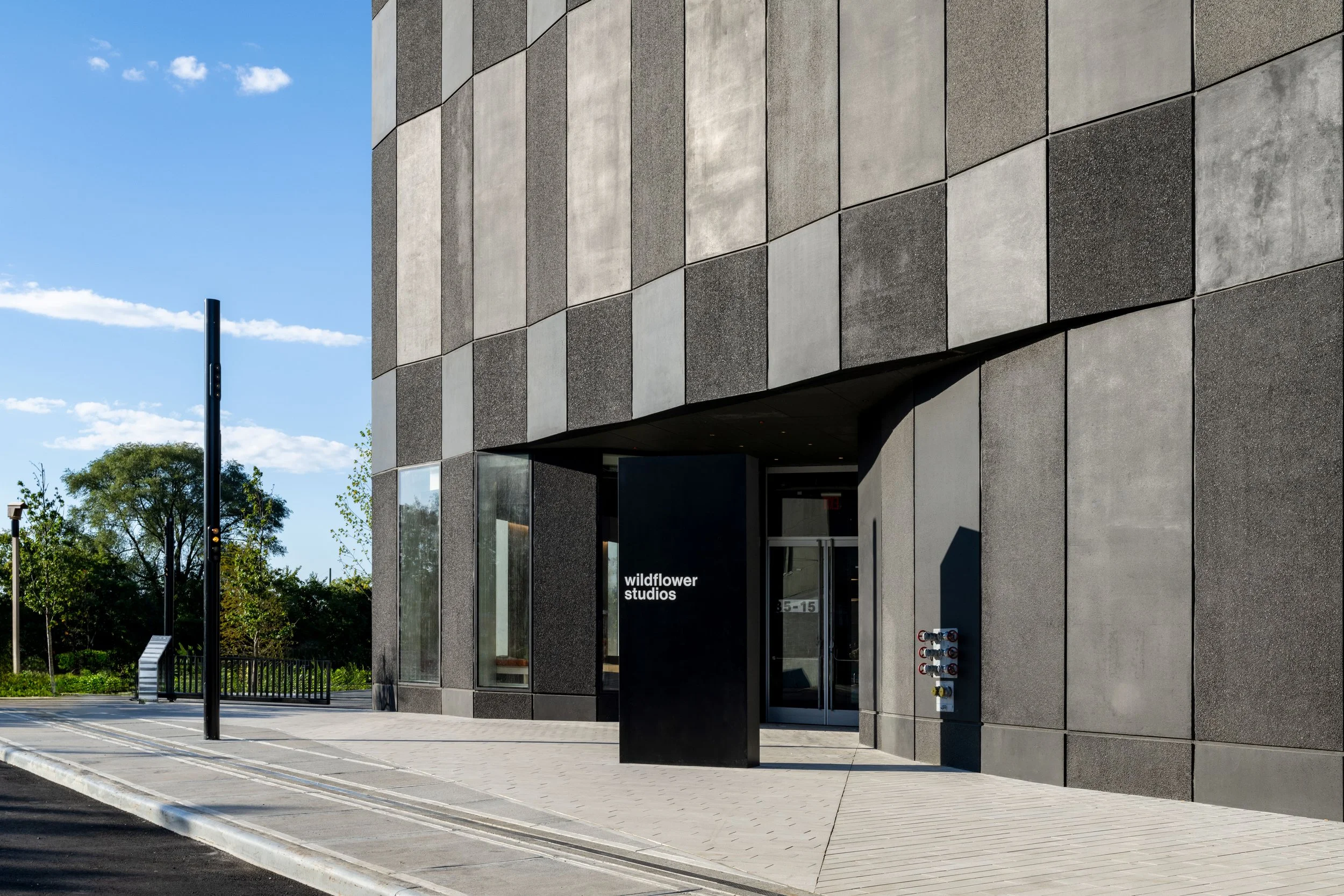
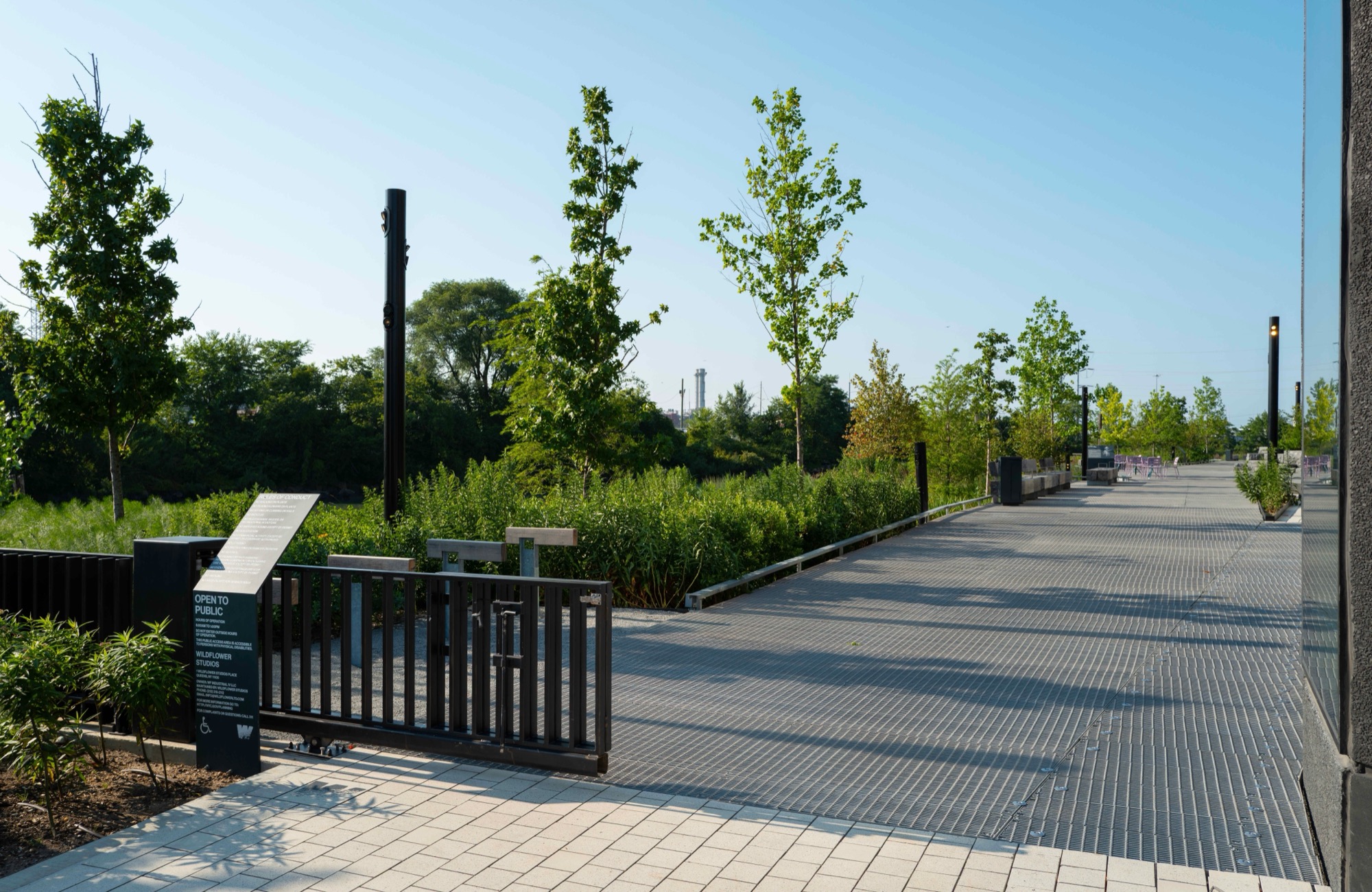
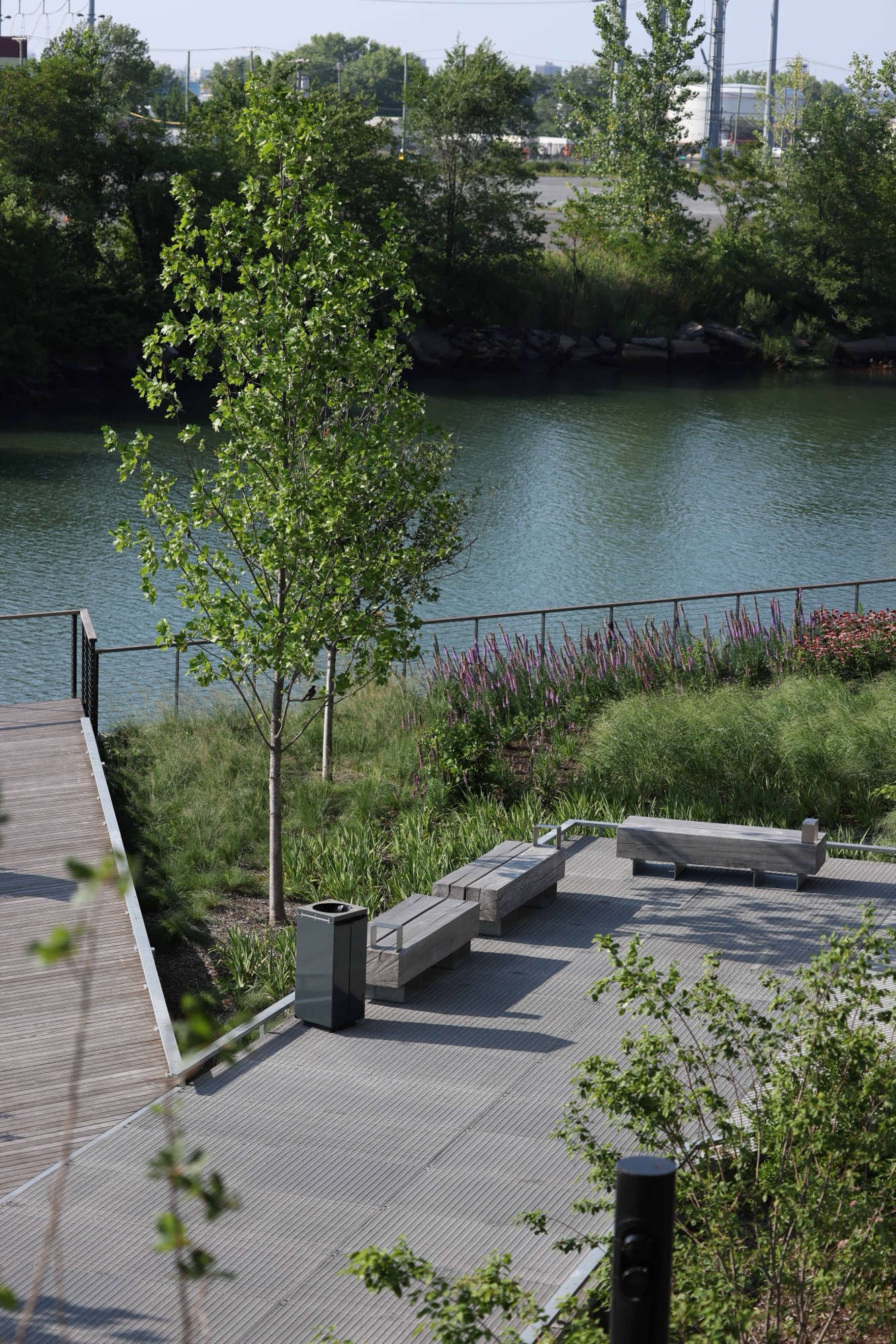
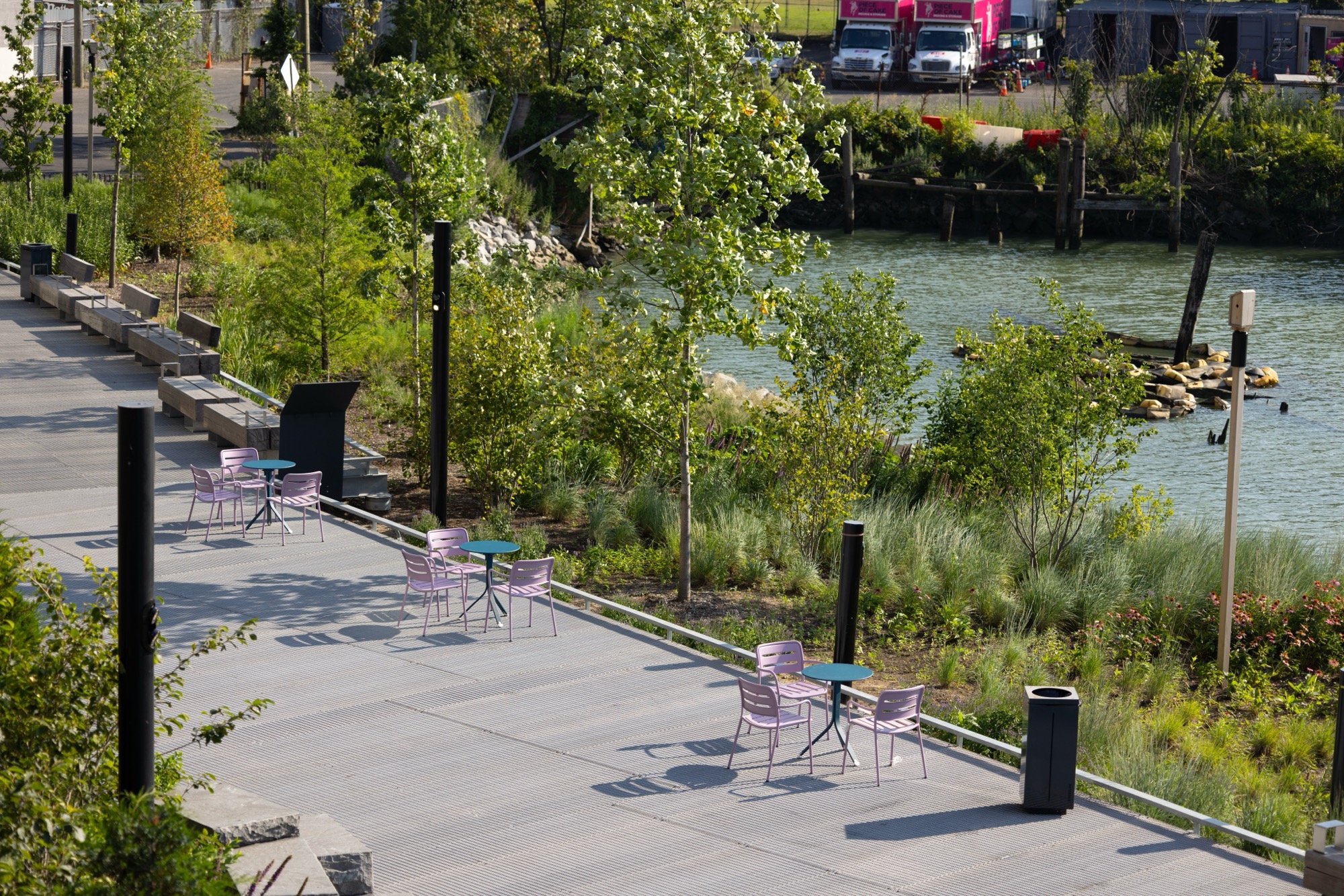
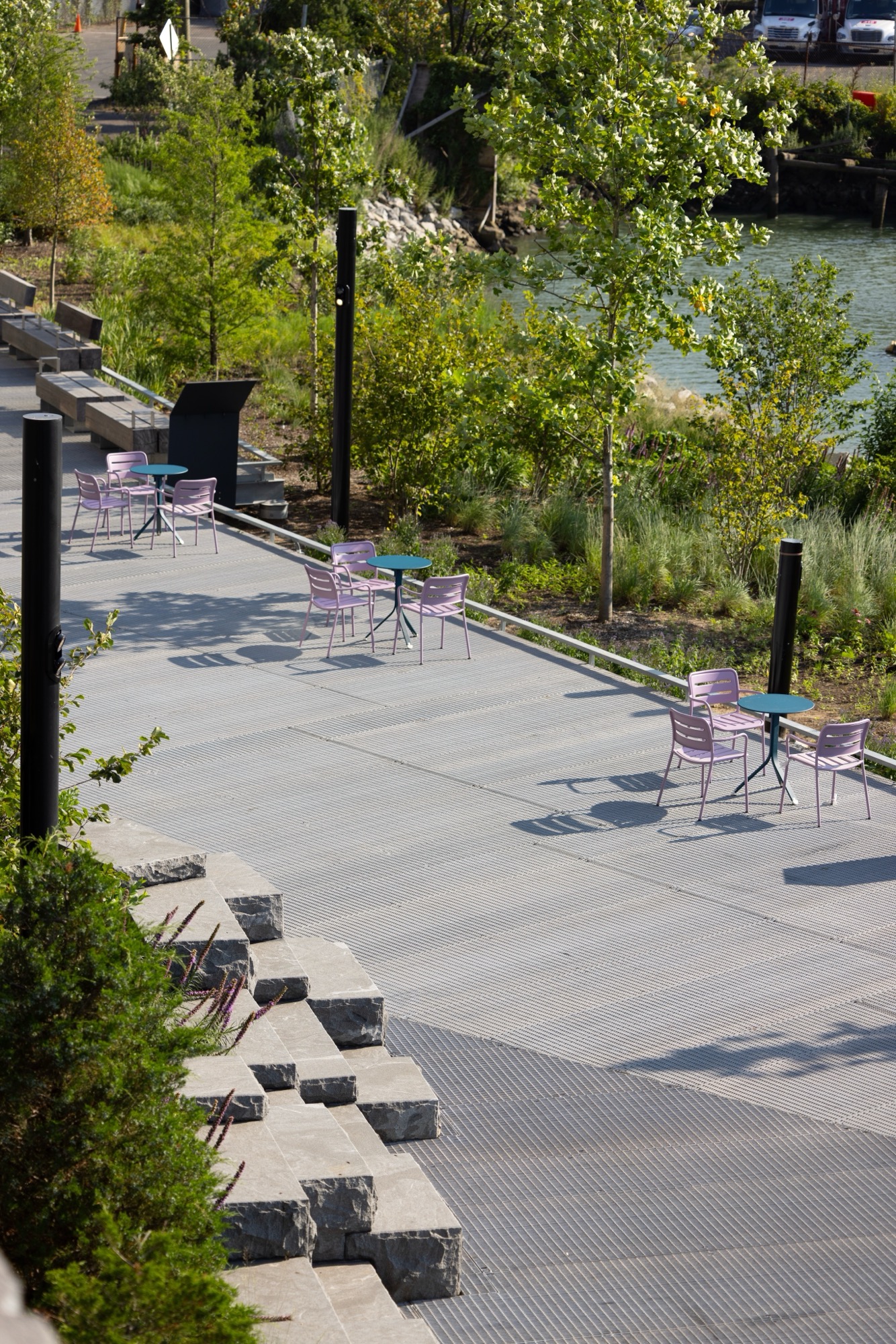
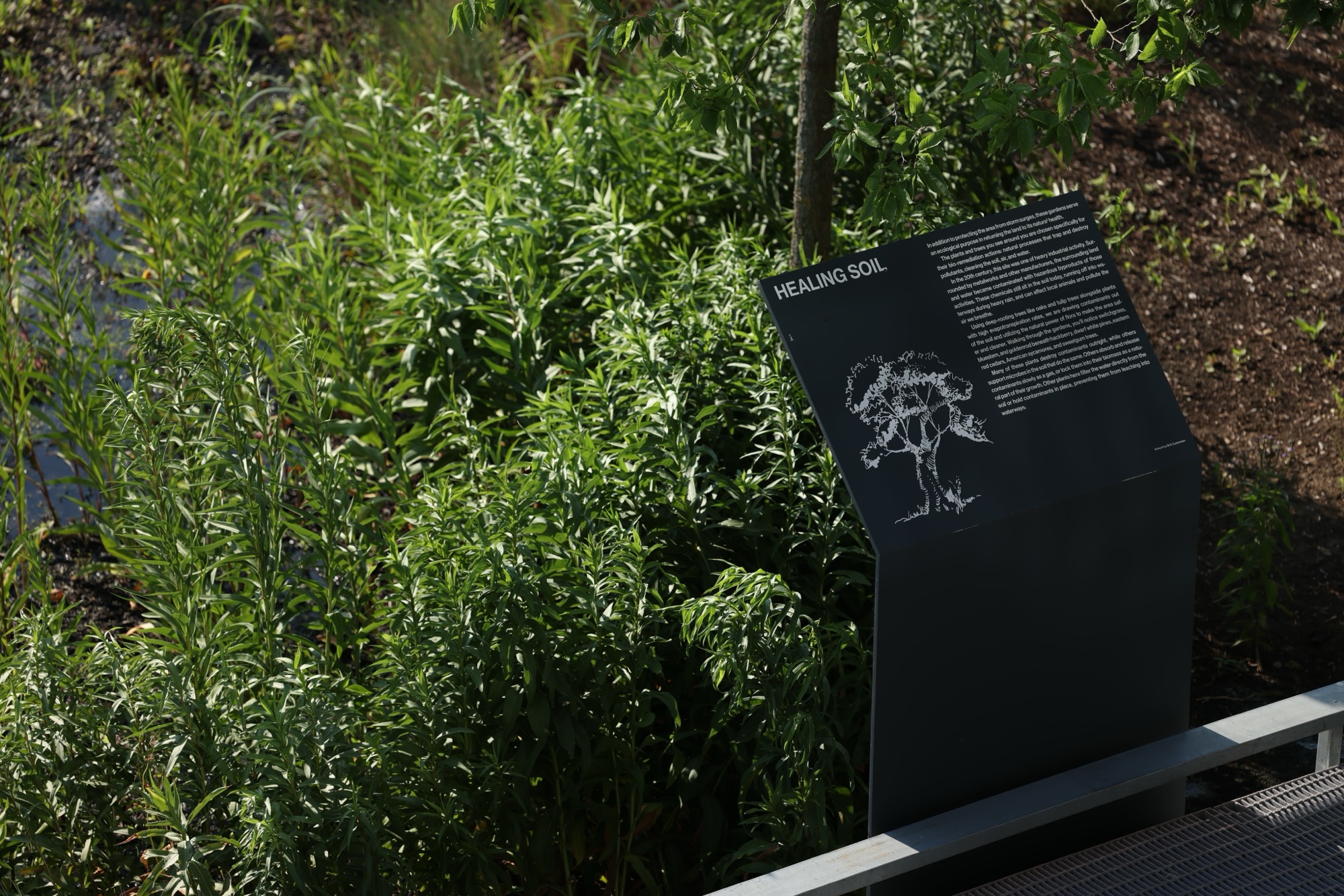
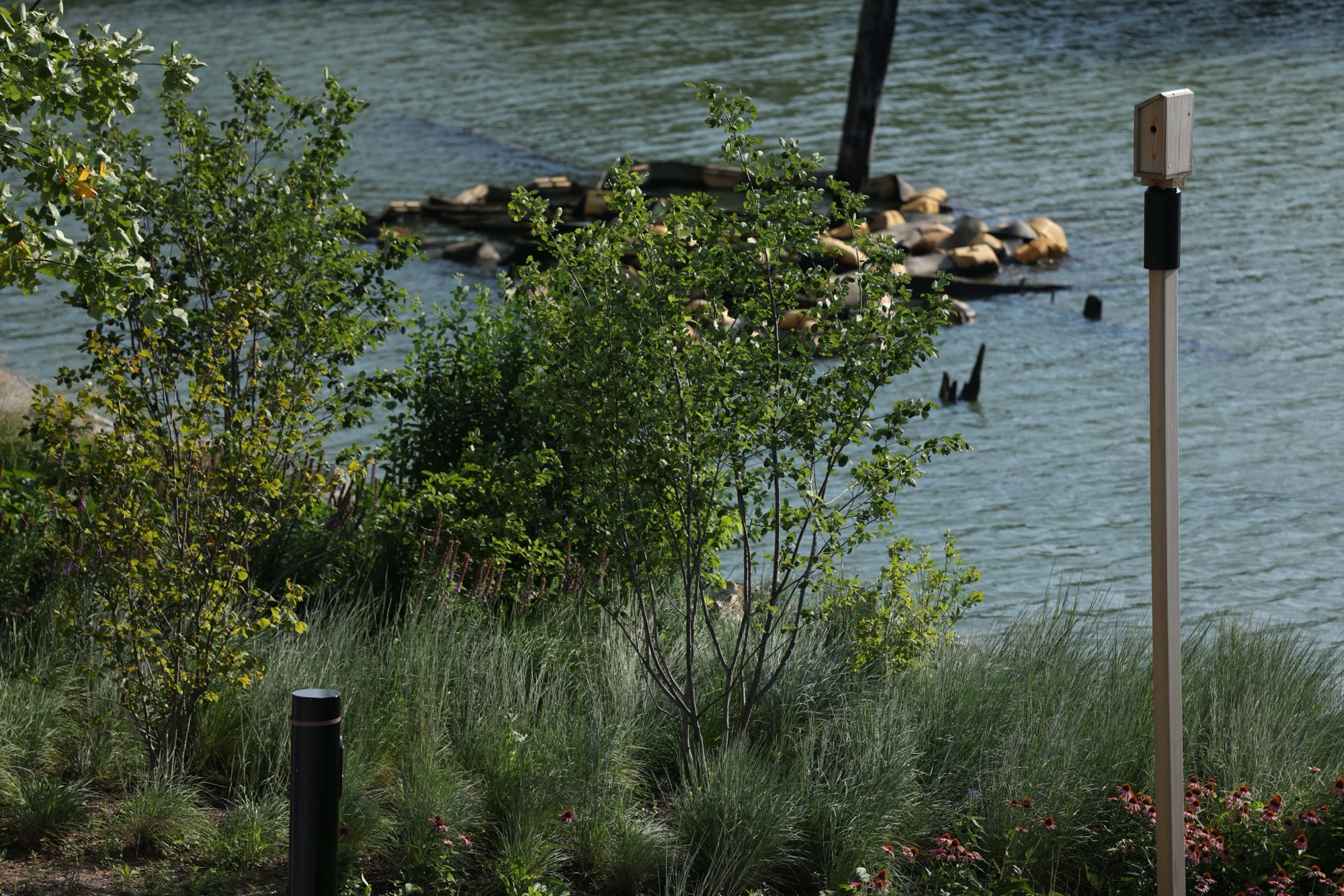
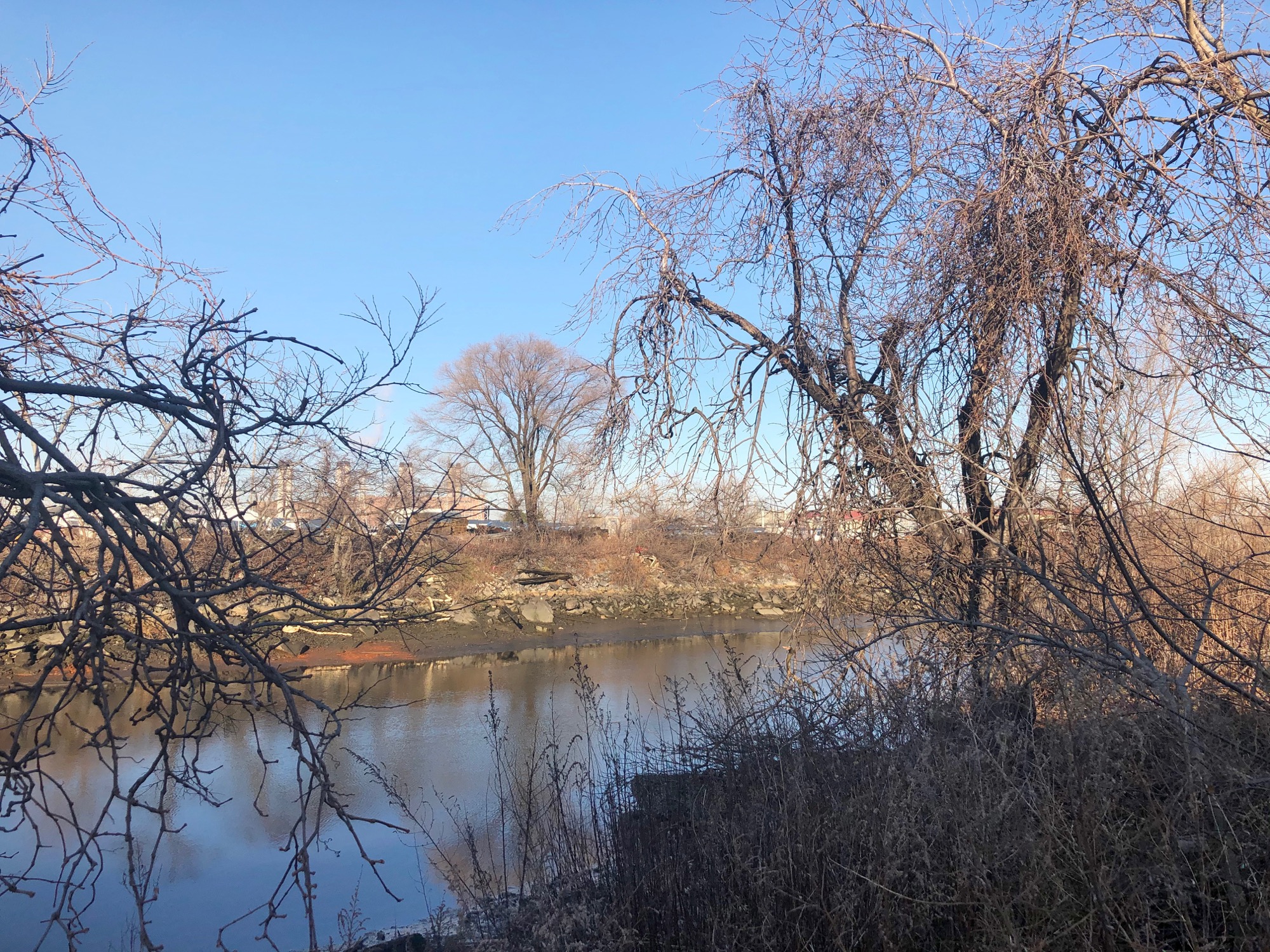
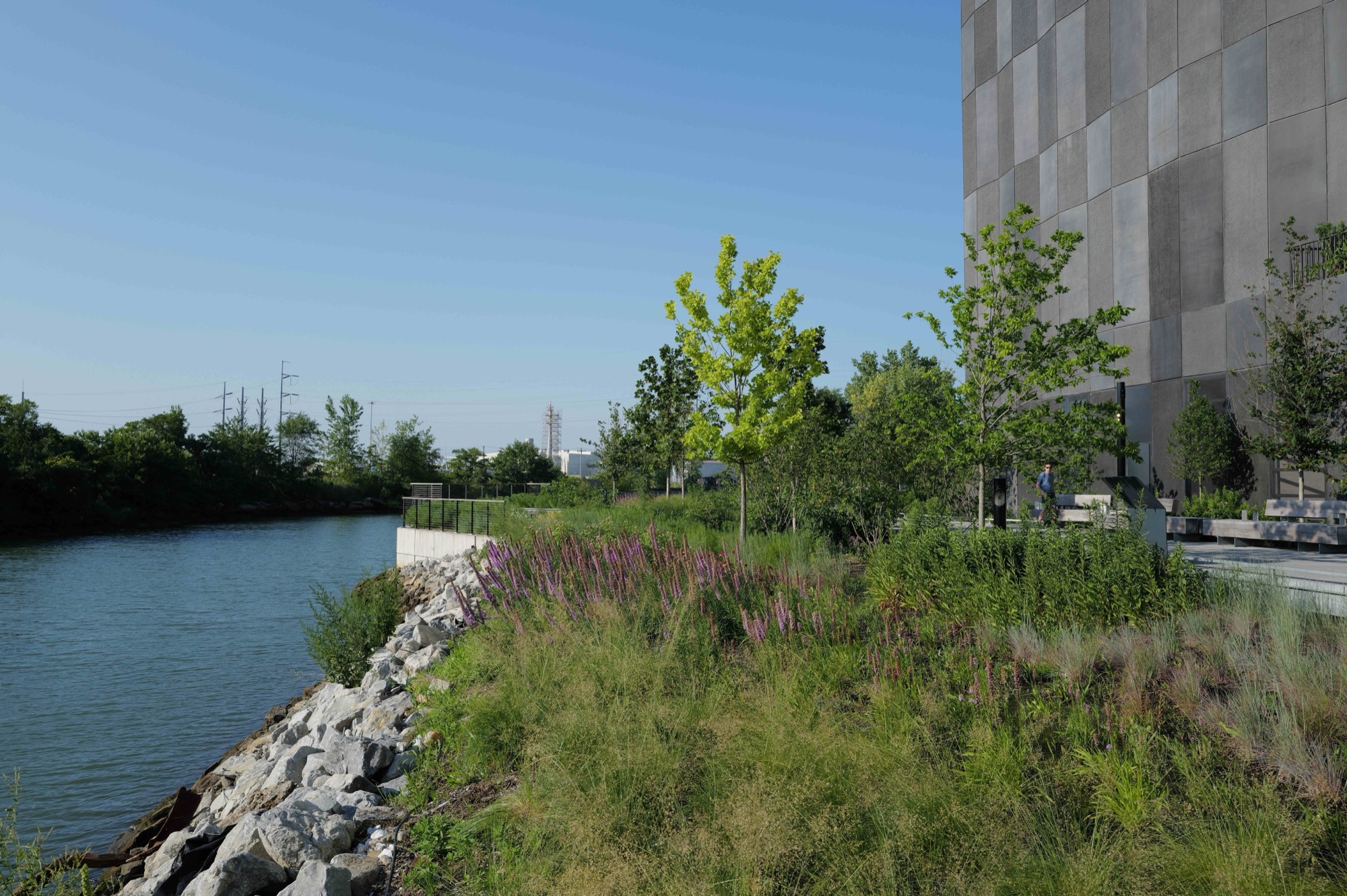
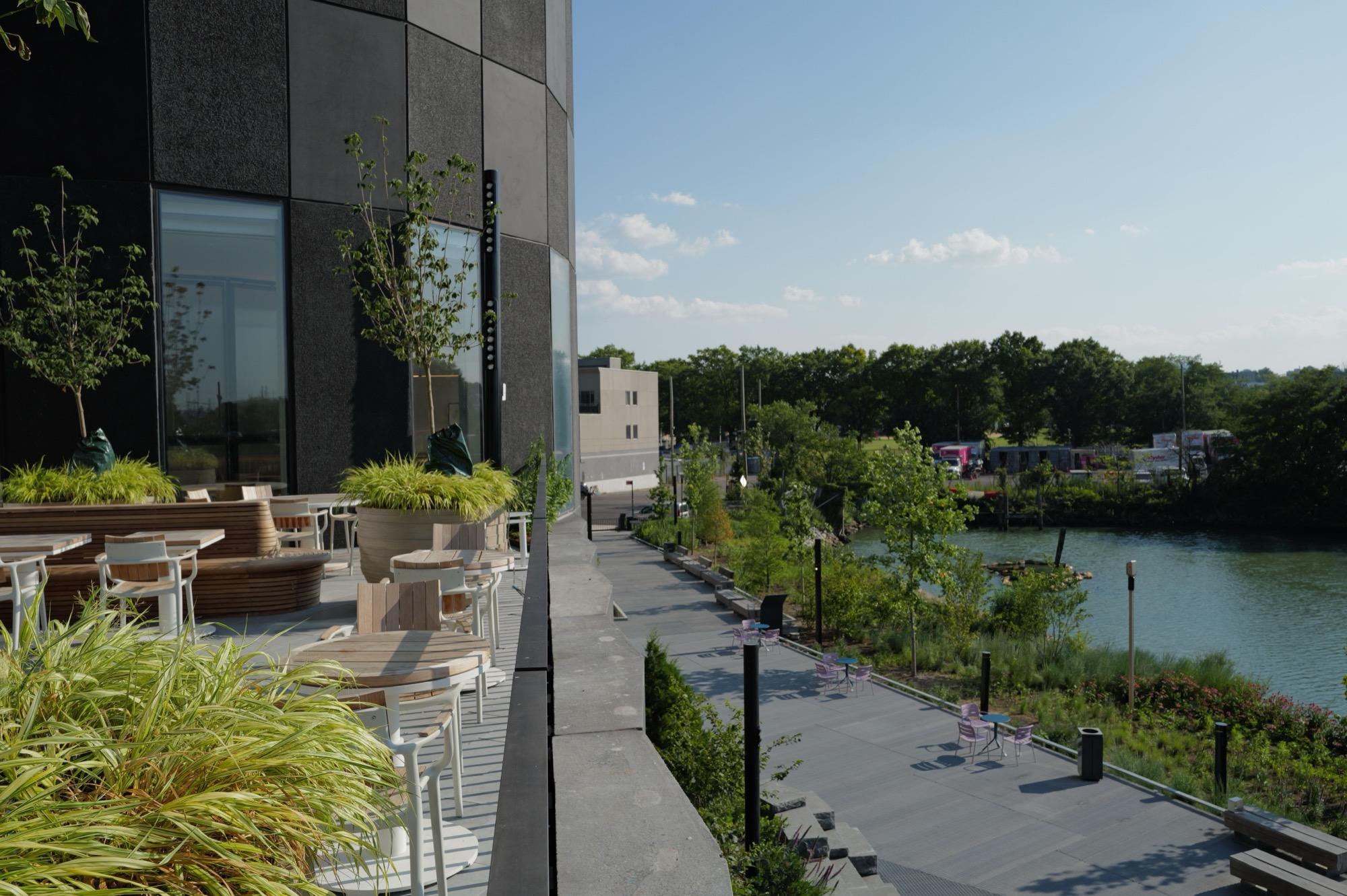
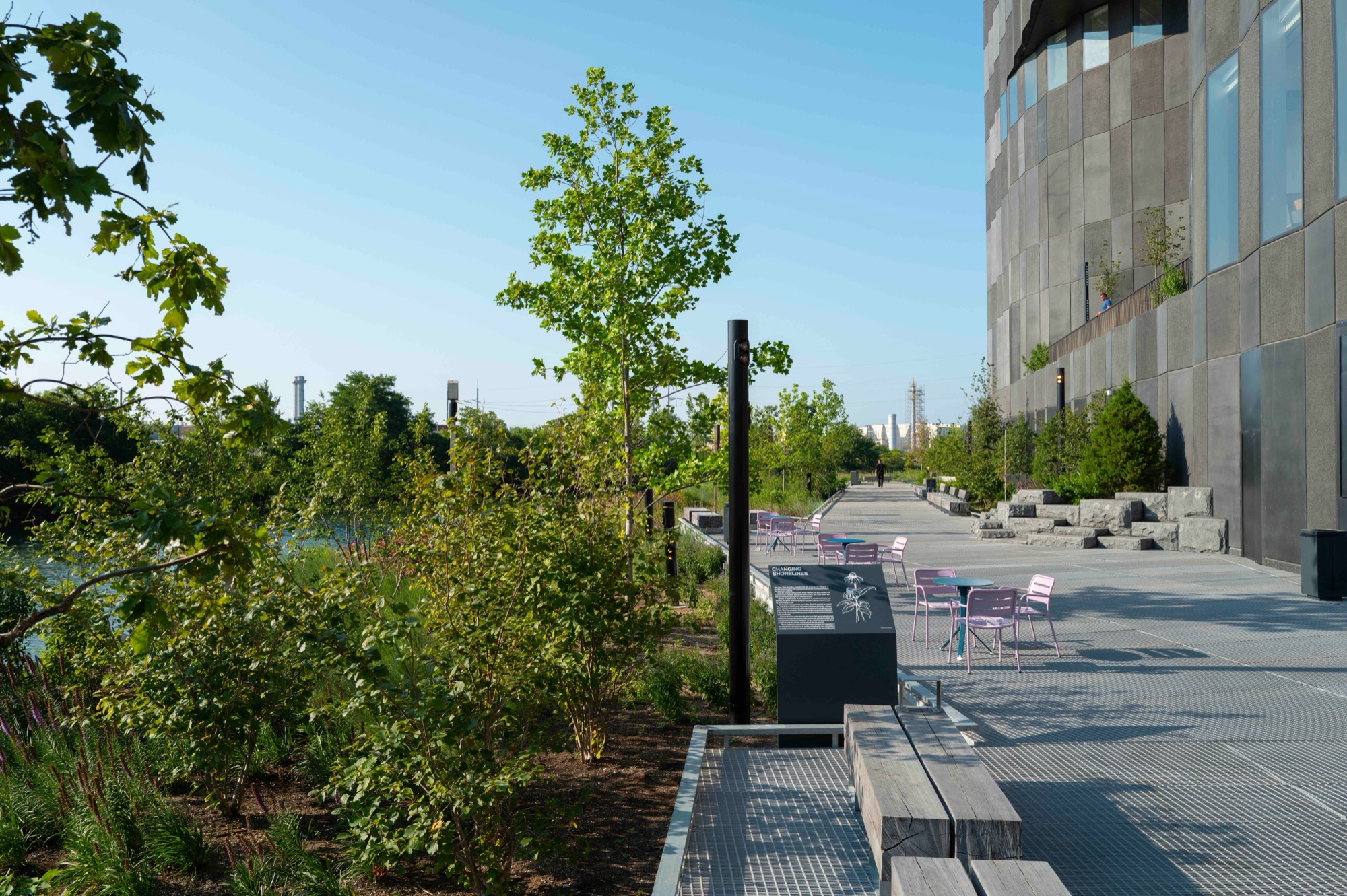
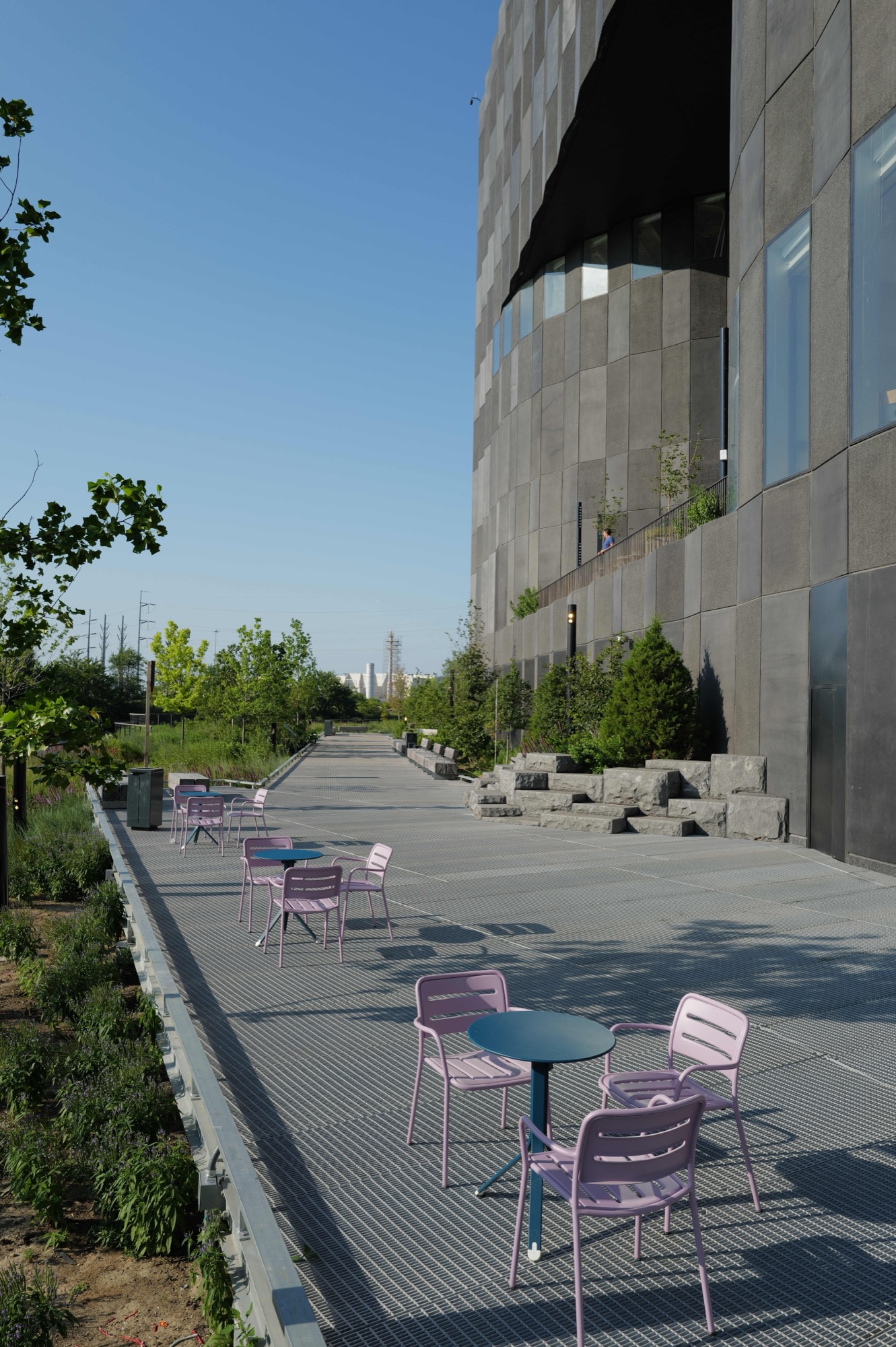
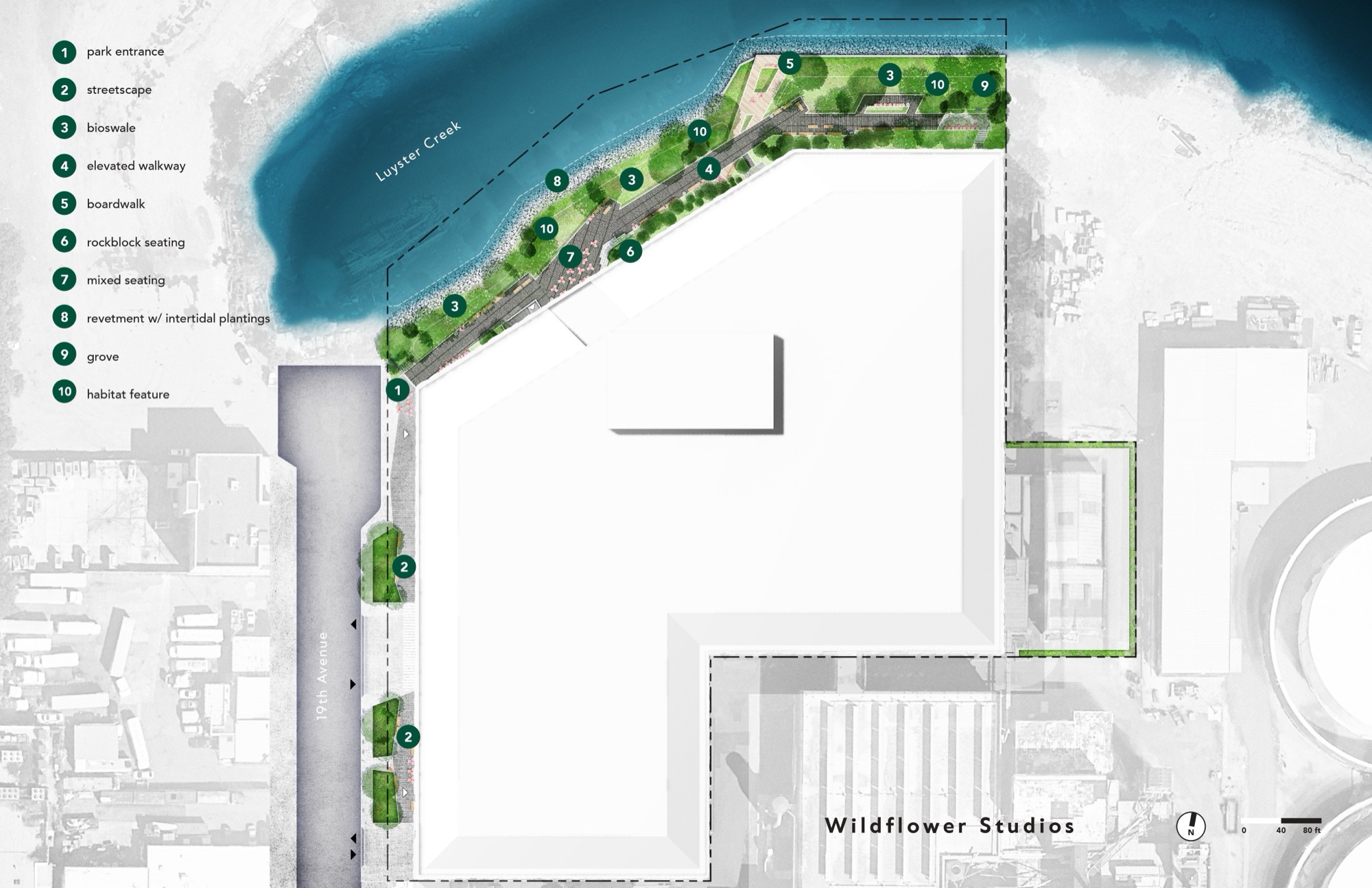
Custom bat, bird, and insect houses—designed for endemic species documented at Luyster Creek—were informed by species-specific research and carefully sited to avoid interspecies conflict. Interpretive signage illustrated by the landscape architect educates visitors about regional wildlife, bioswale function, and the evolving dynamics of New York’s shoreline.
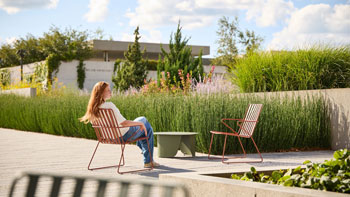
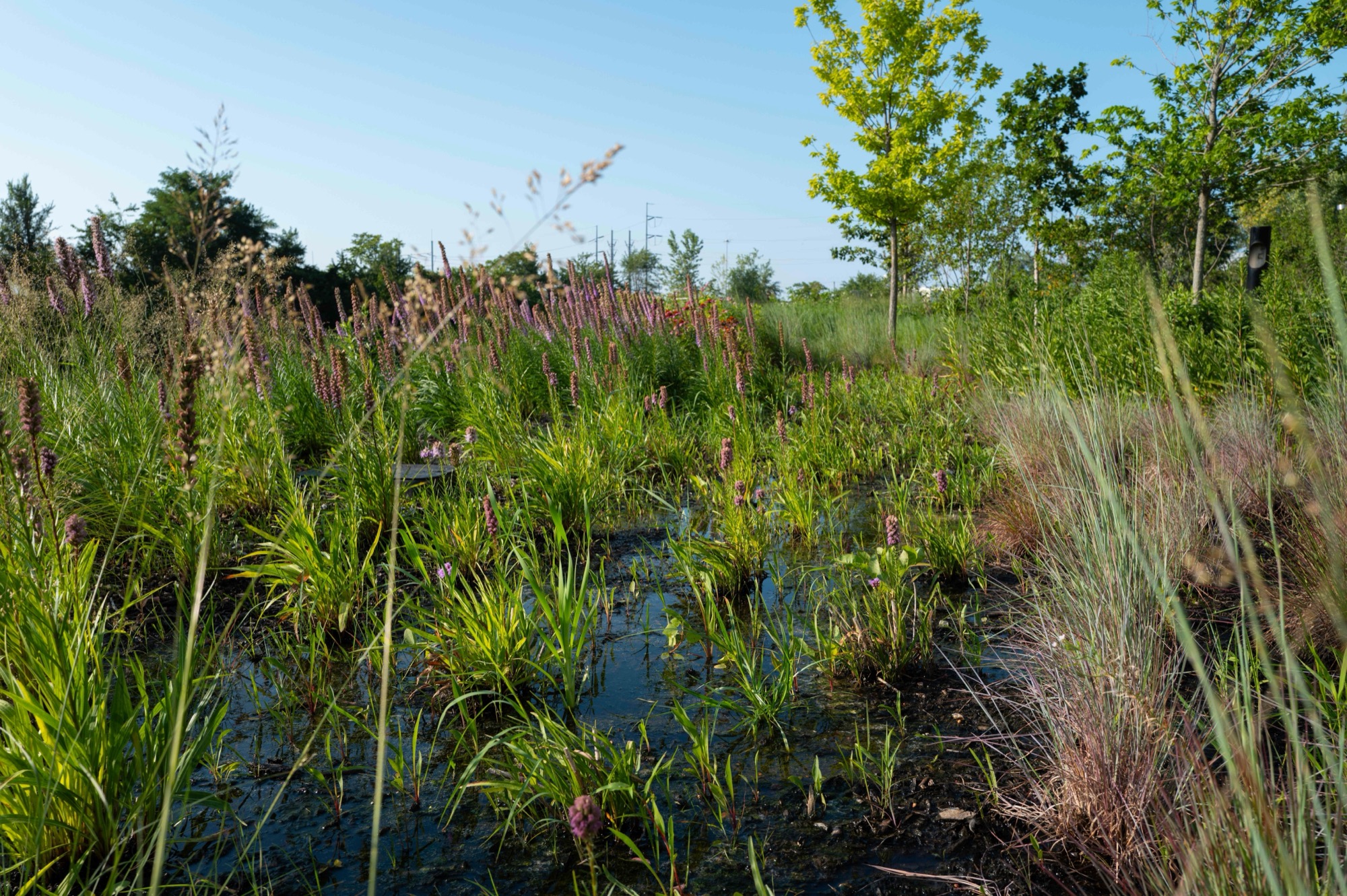
Wet meadows and bioswales further enrich the site’s ecological performance. Planted with native coastal species and salt-tolerant grasses, these systems manage stormwater while providing seasonal habitat and visual interest.
An early Environmental Assessment identified historic fill as the primary source of elevated PAHs in site soils and groundwater. In response, the design employs a phytoremediation strategy addressing both legacy and ongoing contamination. Deep-rooted grasses aerate soils and stimulate microbial communities, accelerating degradation and improving soil health over time.
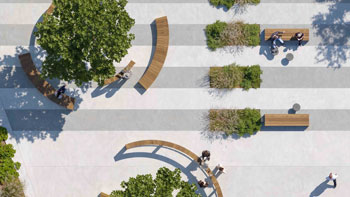
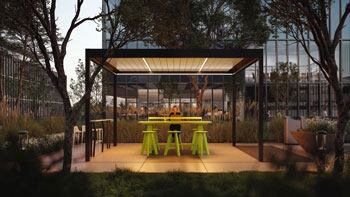
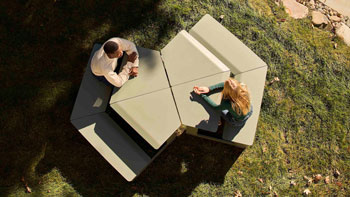
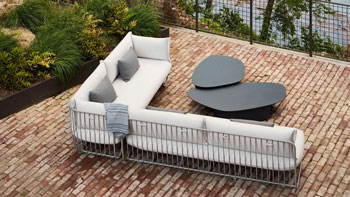
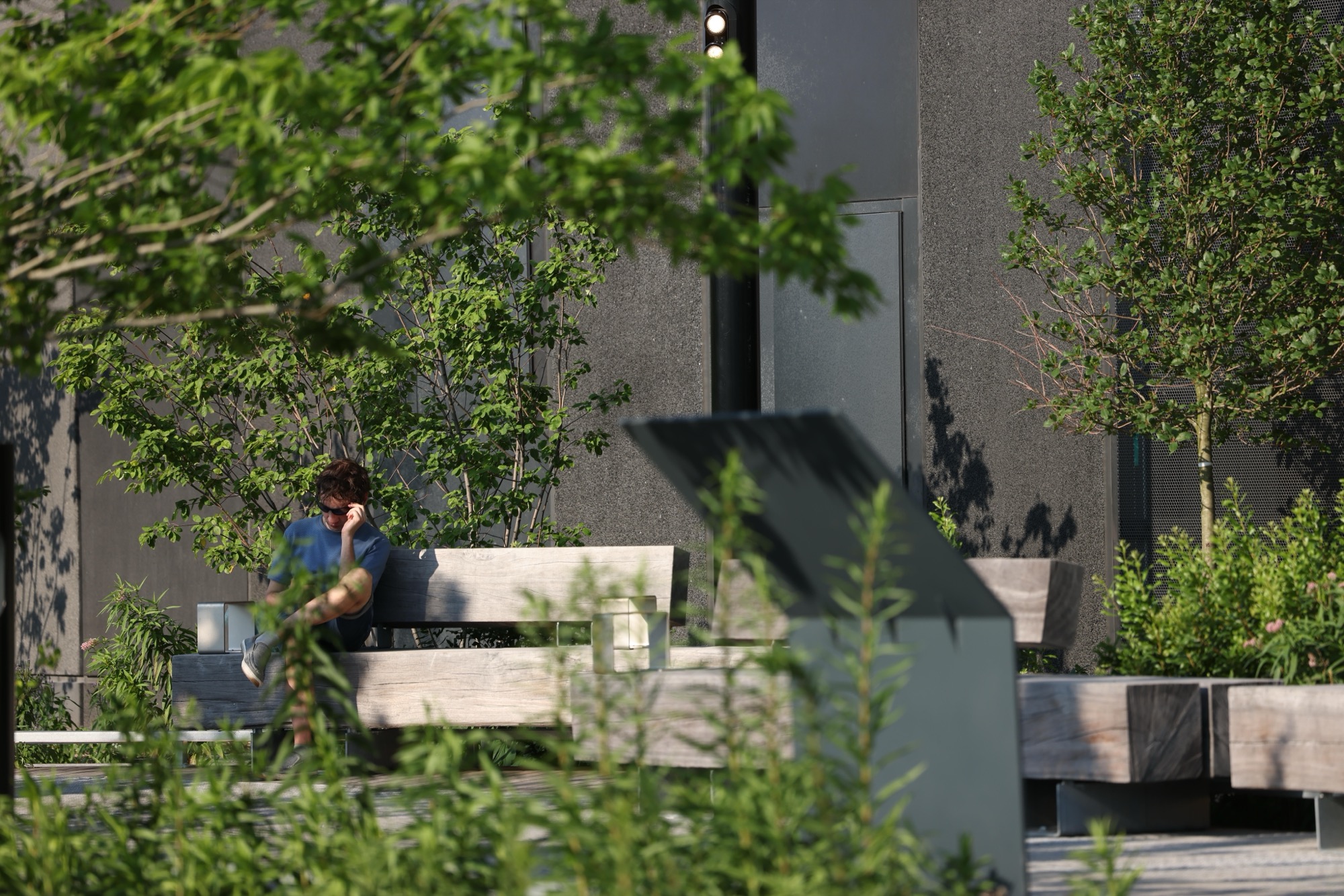
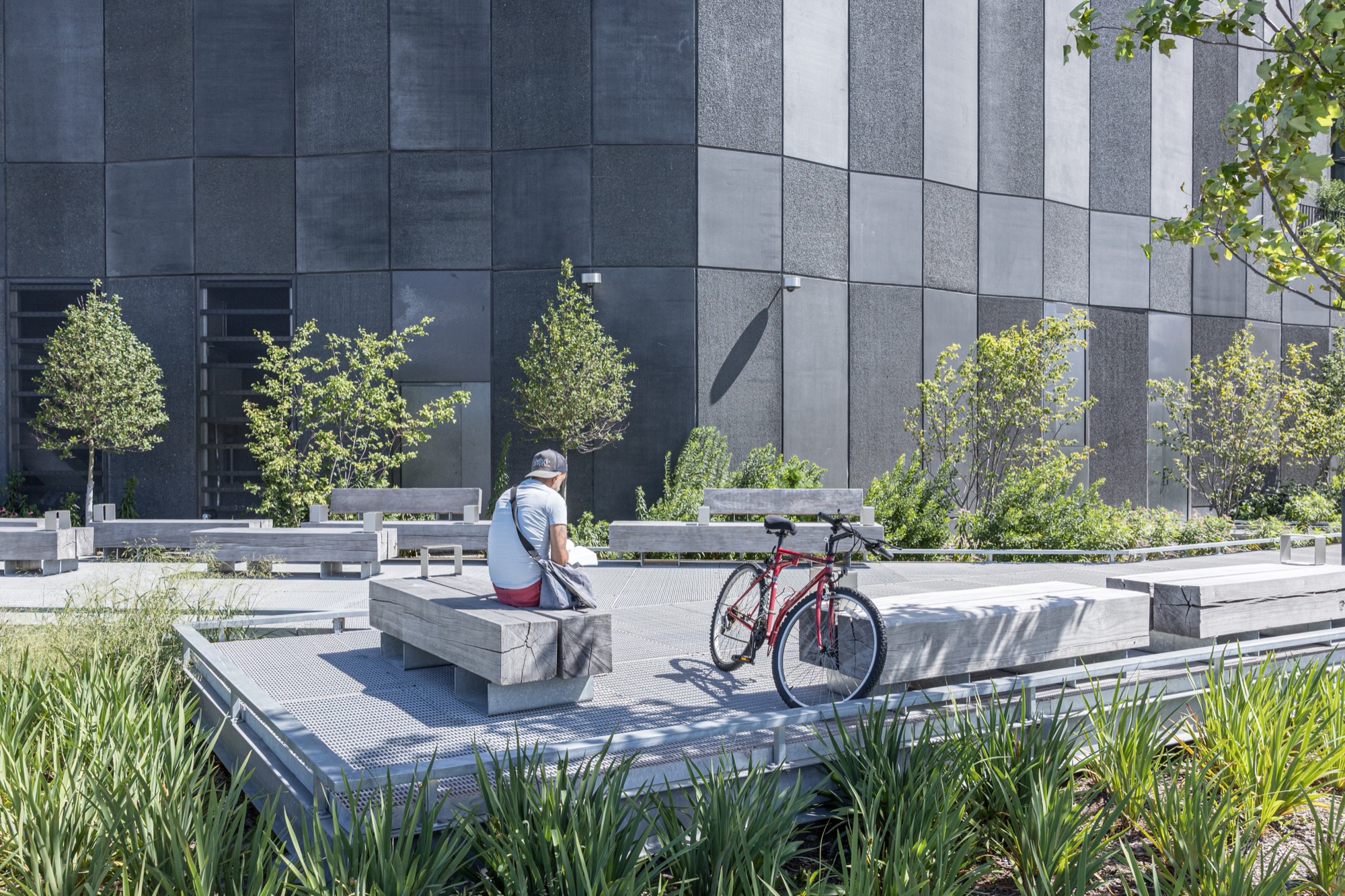
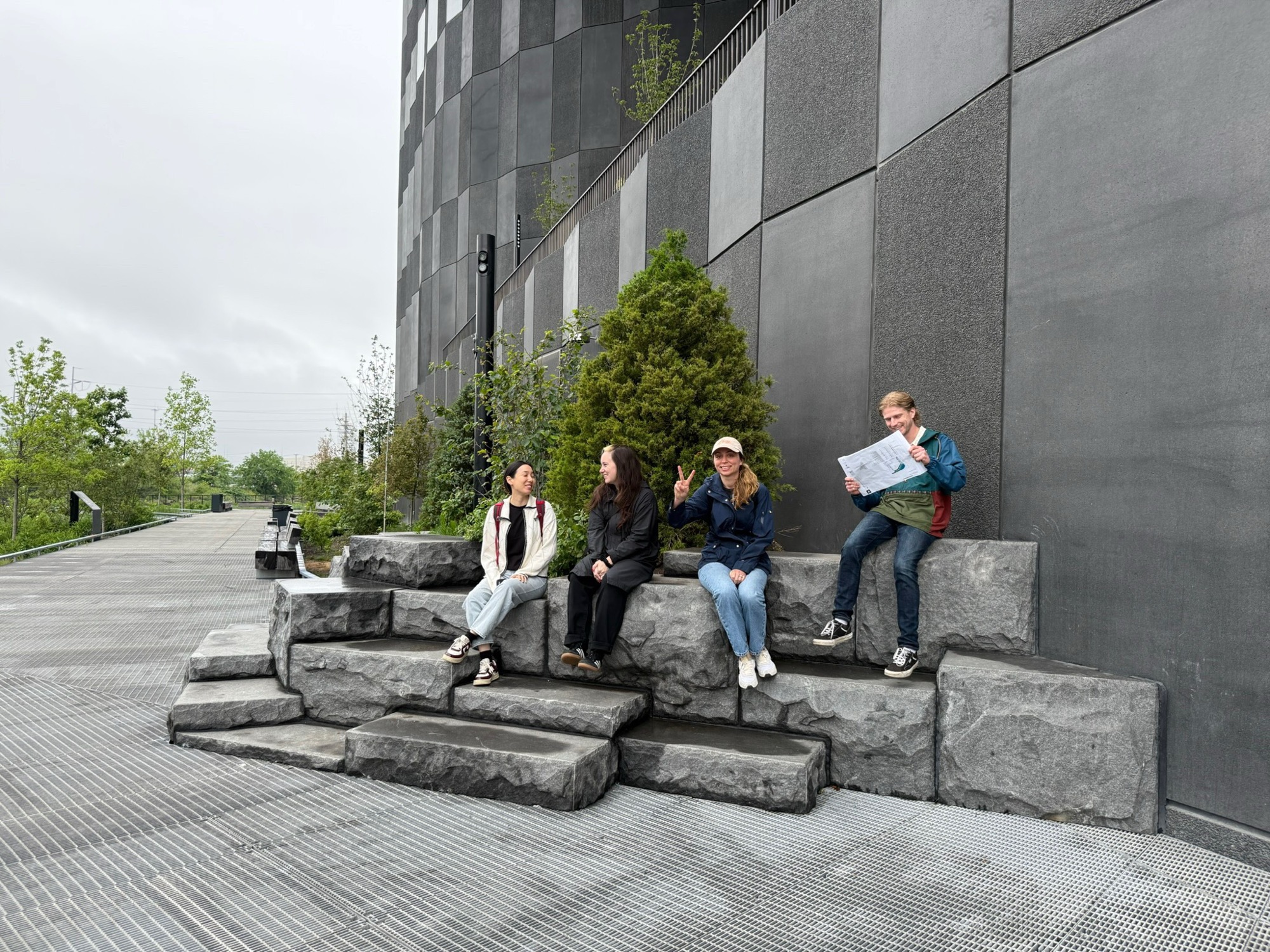
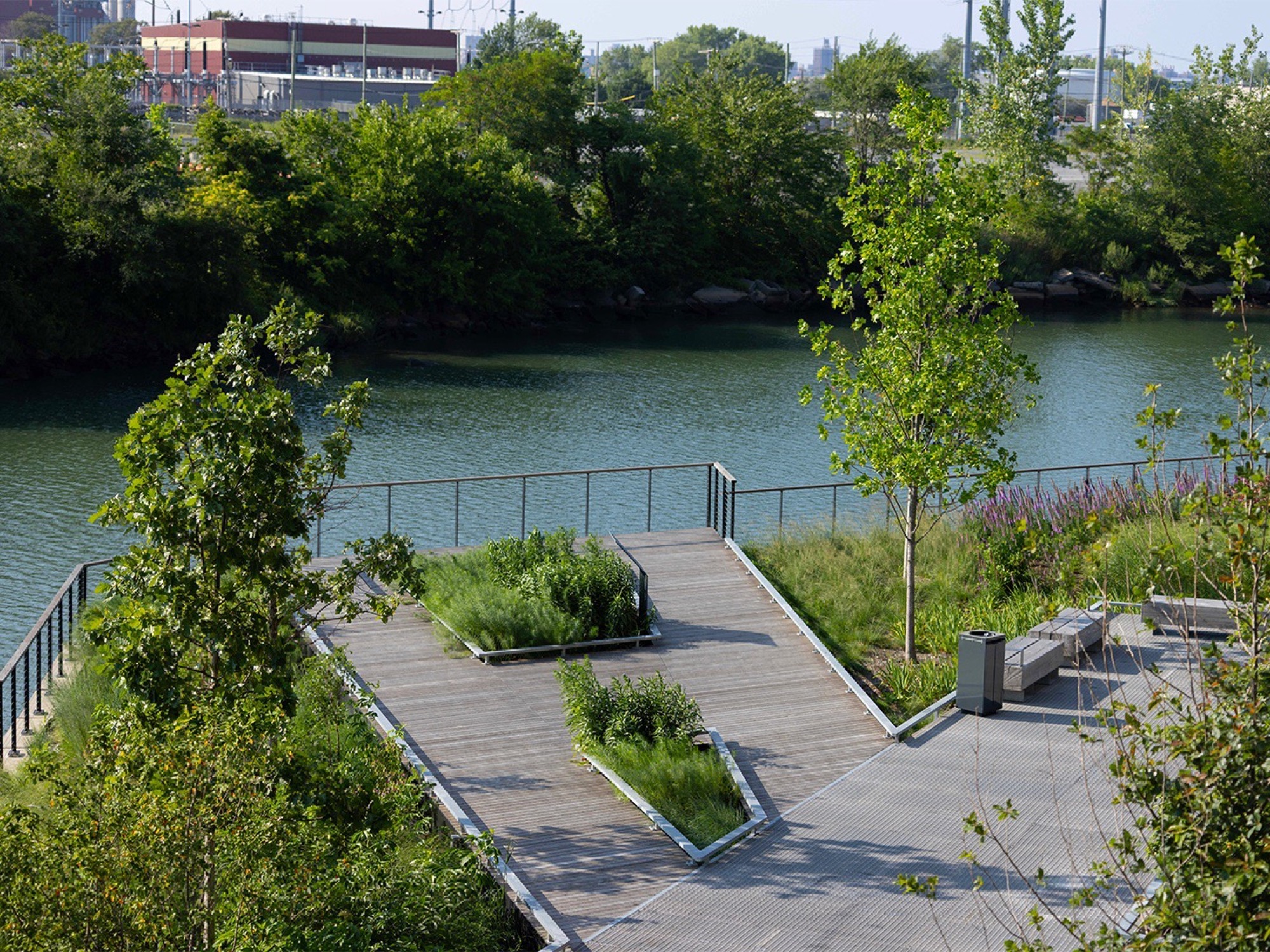
Visitors experience the landscape via an elevated pier and catwalk system that minimizes ground disturbance while preserving continuous habitat below. Integrated site furnishings—including reclaimed wood seating, movable accent furniture, and a granite “rock scramble”—activate the boardwalk, while a fully permeable circulation network accommodates periodic flooding and captures stormwater runoff. Helical pile foundations and ADA-accessible decking reduce subsurface impacts and ensure inclusive access across the site.
The waterfront landscape was developed through overlapping NYSDEC tidal wetlands permitting and DCP zoning review, requiring the design to reconcile ecological performance standards with prescriptive waterfront public access and dimensional zoning requirements. The completed project integrates wetland protection, public access, and regulatory compliance within a single, resilient waterfront system—demonstrating how landscape architecture can operate simultaneously as ecological infrastructure, civic space, and a framework for responsible urban redevelopment.
35-15 19th Ave, Astoria, NY 11105
73588


LILA 2026 Sponsor