Dachongkou Creek Landscape, Julong Bay Area, Guangzhou
2026 Public Projects / China / Built in 2025 /

![Since 2022, Shenzhen has advanced the high-quality development of a green and livable city through its “Mountain-Sea Connection” initiative, promoting the integration of mountains, coastline, urban space, and public parks. Located along the Qianhai Bay waterfront, Shuangjie River Park serves as a key node within this vision, transforming fragmented coastal green space into a resilient […]](https://landezine-award.com/wp-content/uploads/2026/05/01-©S.P.I-Design-600x449.jpg "Shuangjie River Park, Qianhai, Shenzhen")
![Context and Core Problems Located in the core area of Nansha District, Guangzhou, Huangge South Road is a 5.6 km-long strategic corridor serving as a key gateway for the National Games and a showcase for the Greater Bay Area. Prior to intervention, the site suffered from five systemic challenges: Spatial deficiency—extensive under-bridge areas, roadside vacant […]](https://landezine-award.com/wp-content/uploads/2026/04/00_Main-Photo-600x450.jpg "Huangge South Road and Adjacent Infrastructure Enhancement Project, Guangzhou")
![Hongfu Road Urban Axis Regeneration redefines the transformation of urban infrastructure in Dongguan from a vehicle-oriented traffic corridor into an inclusive, ecological, and people-centered public realm. Located along the city’s central axis, the 4.5-kilometer-long and 520,000-square-meter project explores a regeneration pathway that shifts from rapid urban expansion toward refined, high-quality urban living. Guided by the […]](https://landezine-award.com/wp-content/uploads/2026/05/00_Hero-Image-14-600x333.jpg "Hongfu Road Urban Axis Regeneration, Dongguan")
![Project Statement The Senior Retired Officials Activity Center, located on Xinhua Street – the primary thoroughfare of Huadu District, Guangzhou City, Guangdong Province – occupies a site area of 8,514 square meters. The site was once the political, economic, cultural, and international exchange hub of historic Huaxian County. With rapid urbanization, the urgent need for […]](https://landezine-award.com/wp-content/uploads/2025/05/00-Main-Photo-5-600x287.jpg "The Senior Retired Officials Activity Center: A Public Community Park by Guangzhou S.P.I Design")
![Sugang Park is located in the center of Shunde City, Guangdong Province, China—an area characterized by high population density, intensive urban development, and limited space for public activities. The project draws on the theoretical frameworks of landscape justice and sensory availability. For the designated study area, it proposes strategies such as the activation of underutilized […]](https://landezine-award.com/wp-content/uploads/2025/05/00-Main-Photo-4-600x400.jpg "Sugang Park, Shunde by Guangzhou S.P.I Design")
![Project Statement The Zhongguancun International Innovation Center serves as the permanent venue for the high-end international forums. Under the “Green Hill” concept, a multifunctional green urban space was created to restore ecological and social functions while integrating cultural and technological features. The site harmoniously blends with its surroundings, establishing a symbiotic city-park relationship. The landscape […]](https://landezine-award.com/wp-content/uploads/2025/05/00-Main-Photo-3-600x400.jpg "“Green Hill,” Zhongguancun International Innovation Center in Beijing by Guangzhou S.P.I Design")
![Project Statement Upon a “One Core, Two Wings” layout, Guangming Science Park was envisioned as a world-class destination integrating ecological, cultural, aesthetic, and recreational functions. Through biodiversity assessments, habitat creation, low-carbon planting design, and eco-corridor construction, the design team has rehabilitated a vital migratory bird sanctuary while boosting ecosystem resilience. Three “Science Trails” and six […]](https://landezine-award.com/wp-content/uploads/2025/05/00-Main-Photo-2-600x381.jpg "Guangming Science Park in Shenzhen, Green Heart of the Science City by Guangzhou S.P.I Design")
![The project is located in Shunde District, Guangdong Province in the south of China. The city is prospered by water, and boats play still an important role in people’s daily live and livelihood, and therefore have a strong regional cultural symbolic meaning. The project fully taps the local natural resources and traditional culture, and uses […]](https://landezine-award.com/wp-content/uploads/2023/05/00-Main-Photo-©Ne-sunshine-Photography-1-600x328.jpg "CR Land Shunde Landmark")
![West Lake Park, Chengdu is a sports and open waterfront park, which is located in Dayi County, Chengdu City, Sichuan Province, China. The park’s green space provides surrounding residents with an all-weather, all-age leisure destination. The project, with its superior waterfront scenery, unique wetland scenery, and abundant vegetation resources, lays the foundation for reconstructing an […]](https://landezine-award.com/wp-content/uploads/2023/05/00-Main-Photo-©XUEER-Space-Photography-600x449.jpg "West Lake Park, Chengdu")

![Background The project is located in a place surrounded by mountains and water, where the Bouyei people (an ethnic minority of China) live. Human settlement and nature seem to form a harmonious community. This kind of localization arouse from the initial design inspiration. The design intended to find a balance between the residents’ living needs […]](https://landezine-award.com/wp-content/uploads/2022/05/00-01©Inch-Studio-600x398.jpg "CRCC Woshan Longfu, Guiyang, China")
![The client proposed to bring a natural but artistic atmosphere to the site. The project respects the original natural mountain atmosphere and the essence of the orchard. It features three elements: The design of a pure cherry orchard, elevated in the sky. A base of emerging curved textured walls made from local granite boulders form […]](https://landezine-award.com/wp-content/uploads/2022/05/00-1©S.P.I-Design-600x344.jpg "Bailuwan Cherry Blossom Town, Rizhao, China")
![This project provides a novel solution for the community park in Guiyang, China. It respects the existing site and represents the local Karst topography, which is famous for its variant landscapes and complex water system, by reshaping the landform with historical construction methods. The project aims to preserve the original characters of the site and […]](https://landezine-award.com/wp-content/uploads/2021/04/Reshaping-Karst-Topography-1-600x293.jpg "Reshaping Karst Topography with Farming Culture: A New Community Park Design in Guiyang")
![With the growth of the urban population, Chinese cities are undergoing rapid construction and renewal. Datansha Island, formerly a low-income neighborhood in the city suburbs, is now being revitalized by the garden city initiatives that include urban greening and active transport. With the transit-oriented development concept in creating a vibrant, livable community, Datansha Transit-Center encourages […]](https://landezine-award.com/wp-content/uploads/2021/04/00-Main-photo-600x346.jpg "Datansha Transit-Center: a hub for transportation and community")
![Jingkai Central Park locates at the heart of Nanchang’s Economic and Technological Development District, north of the city center. The park serves as a transit hub for the city’s Changbei National Airport, the International Wharf, and Ganjiang New District. Therefore, as the pivot point for the practical and cultural lives in Nanchang, the park represents […]](https://landezine-award.com/wp-content/uploads/2021/04/00-Jingkai_Main-Photo©PRISM-Architectural-Photography-600x400.jpg "Jingkai Central Park – A New Developmental Method of Sustainable Park")
![1. Site analysis On a street corner in jianyang city, sichuan province, we sent a return to the forest ideal for the people who live there.The project is located in the east of the jianyang tuojiang river and the west of the trieshan park in sichuan, with high-quality natural landscape resources.The project’s buildings appear to rise […]](https://landezine-award.com/wp-content/uploads/2020/04/00-Project-main-photo-1-600x375.jpg "Yunyuemingdi, Jianyang")
![The site is located in Dalian, Liaoning province, China, only 3 kilometers from the coast, and is surrounded by mountains, with beautiful natural scenery.We hope to integrate the advantages of the site, respect nature, and let the landscape truly integrate into the mountains and nature.We combine Chinese garden design techniques, the unique quietly elegant free […]](https://landezine-award.com/wp-content/uploads/2020/04/00-Project-main-photo-600x400.jpg "Sea Oriental")
Context
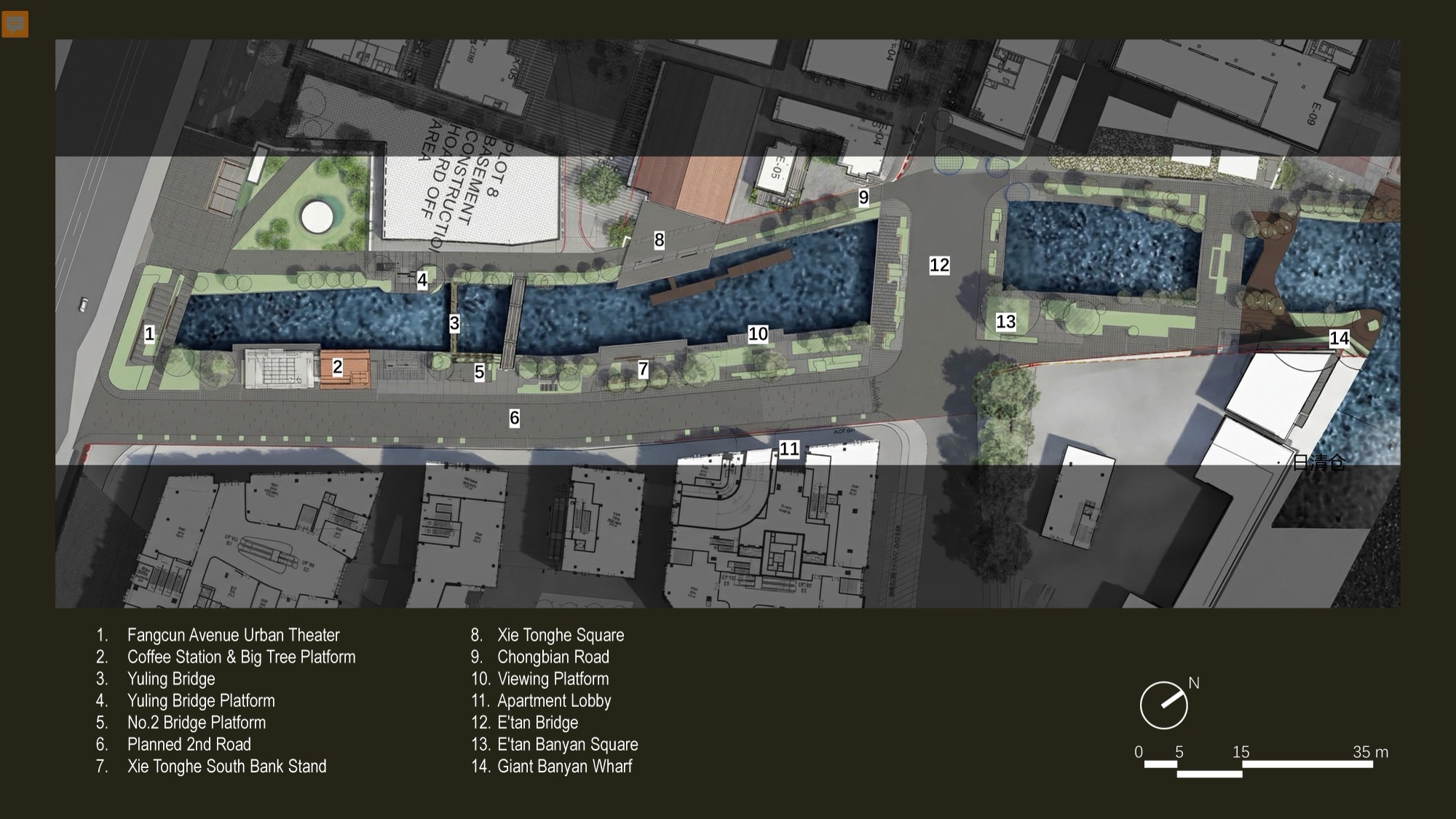
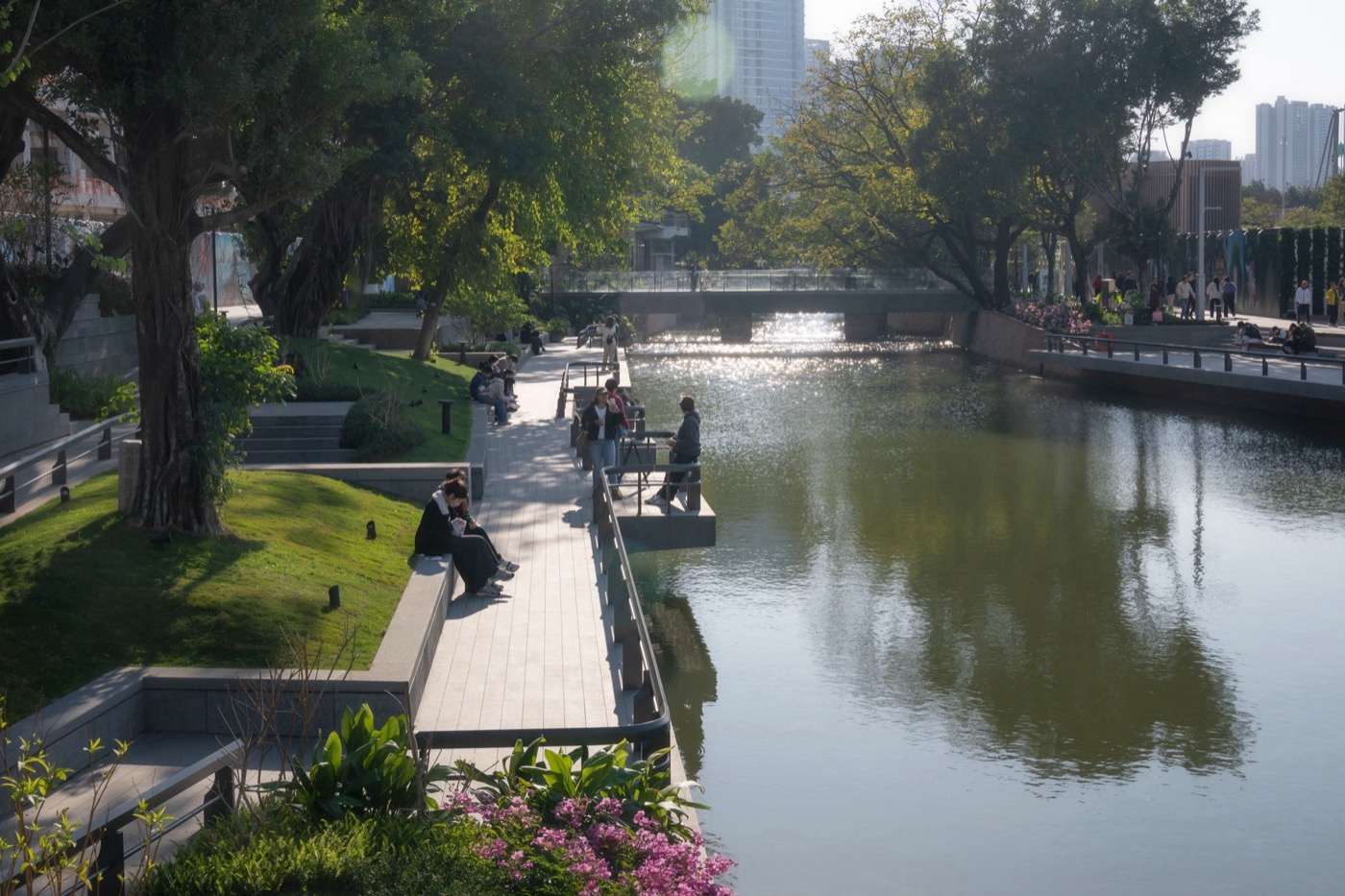
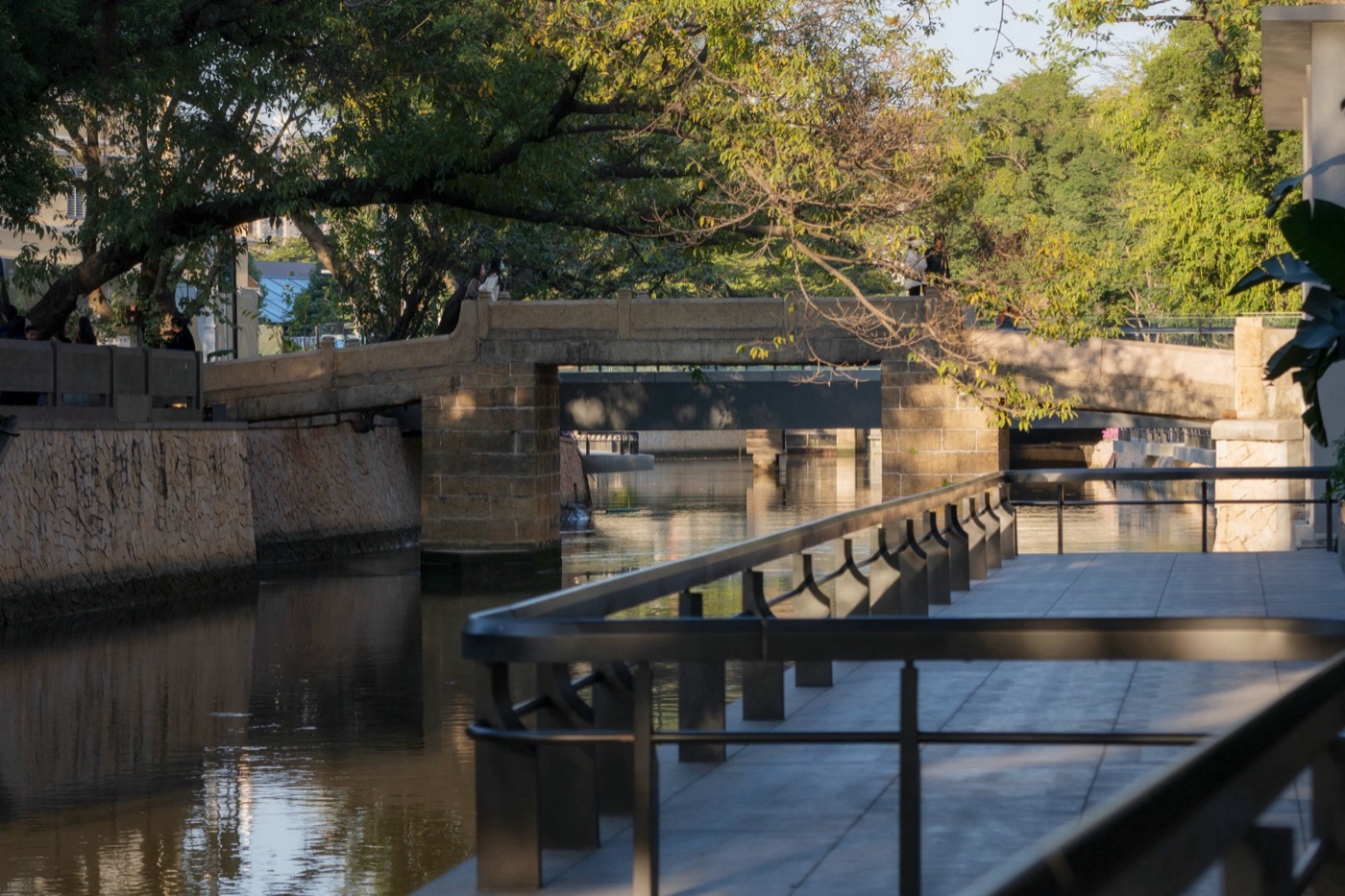
Located in Liwan District, Guangzhou, the Dachongkou Creek Landscape Project lies within a historic Lingnan urban fabric. With China’s first Taikoo commercial district planned along both sides of the creek, the project redefines the waterfront as an open public landscape, positioning it as a critical interface between heritage preservation and future urban development.
Site Condition
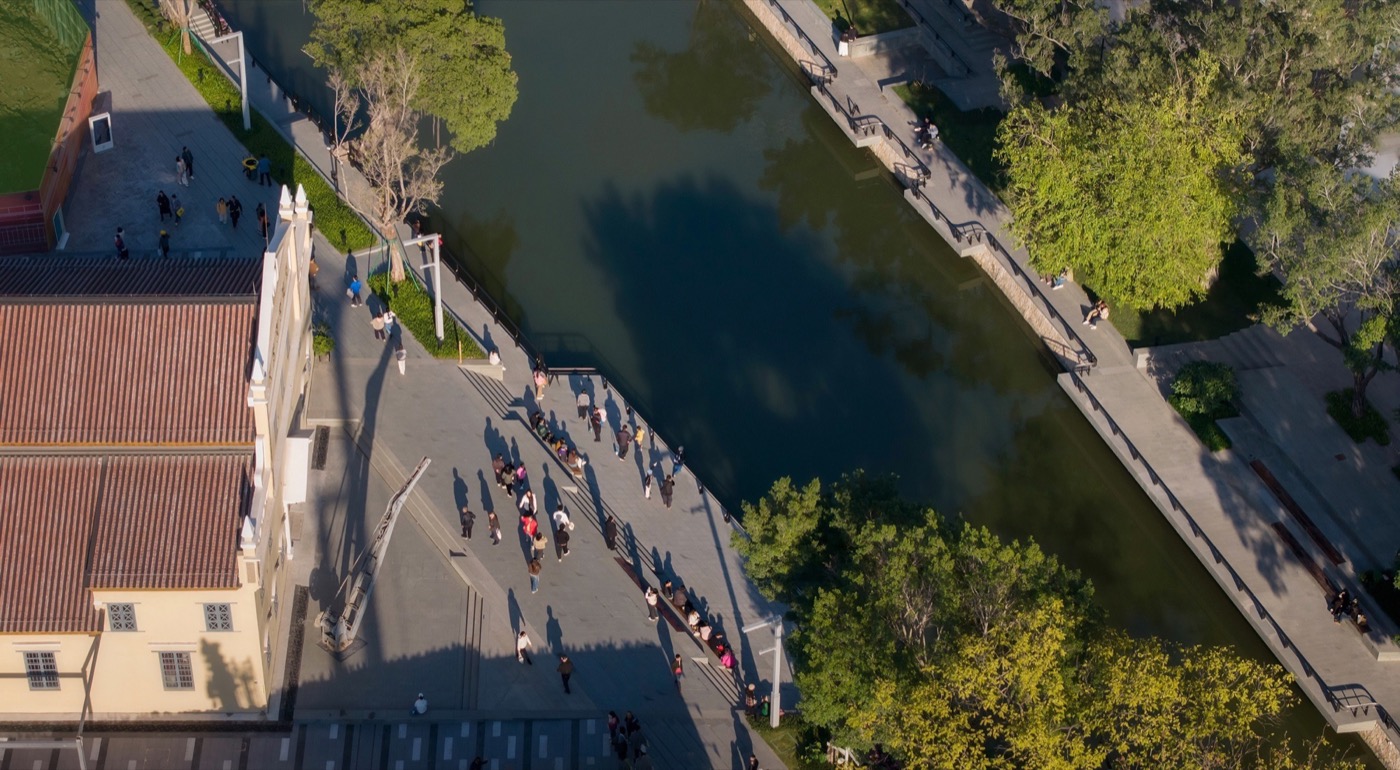
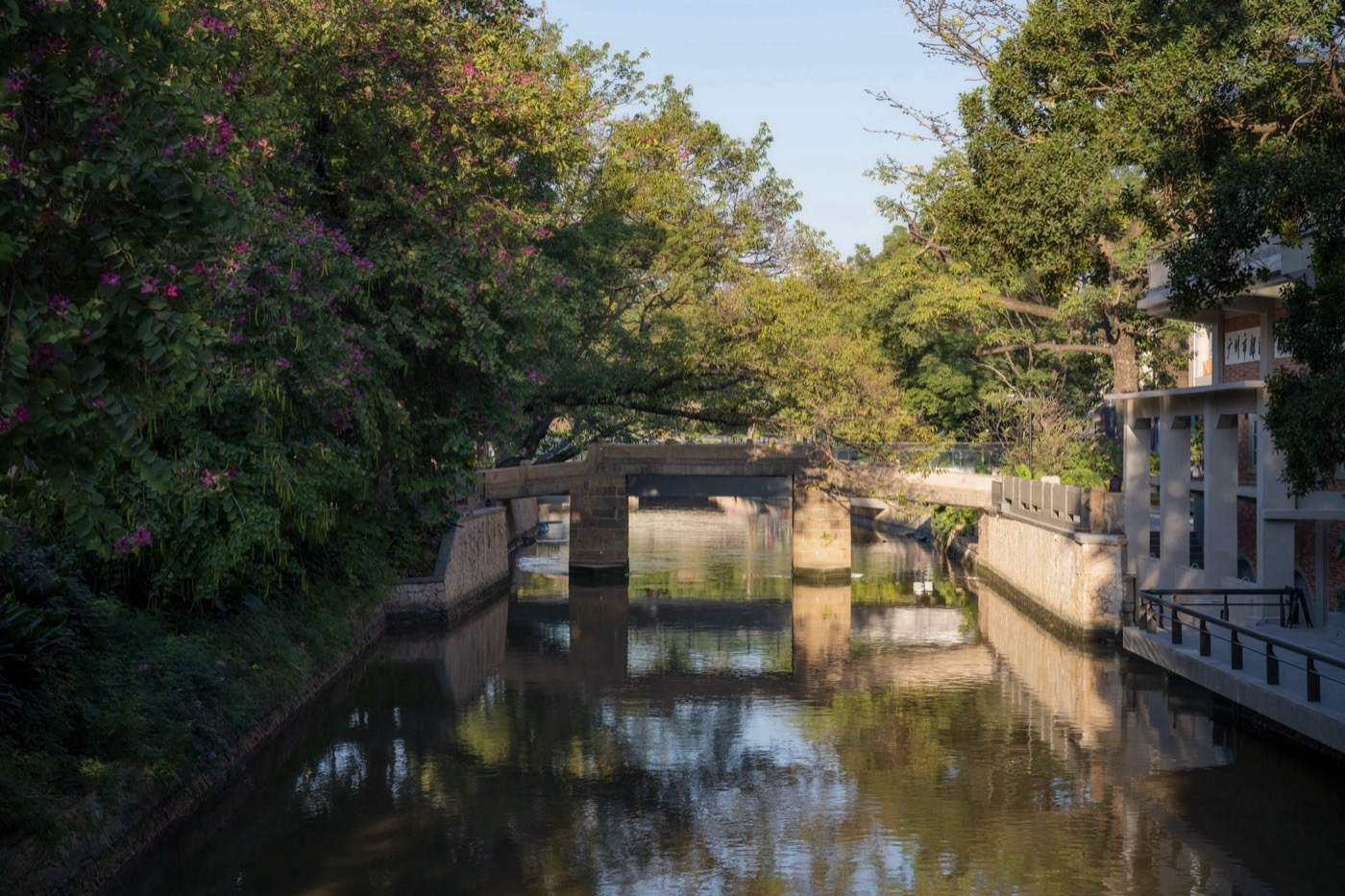
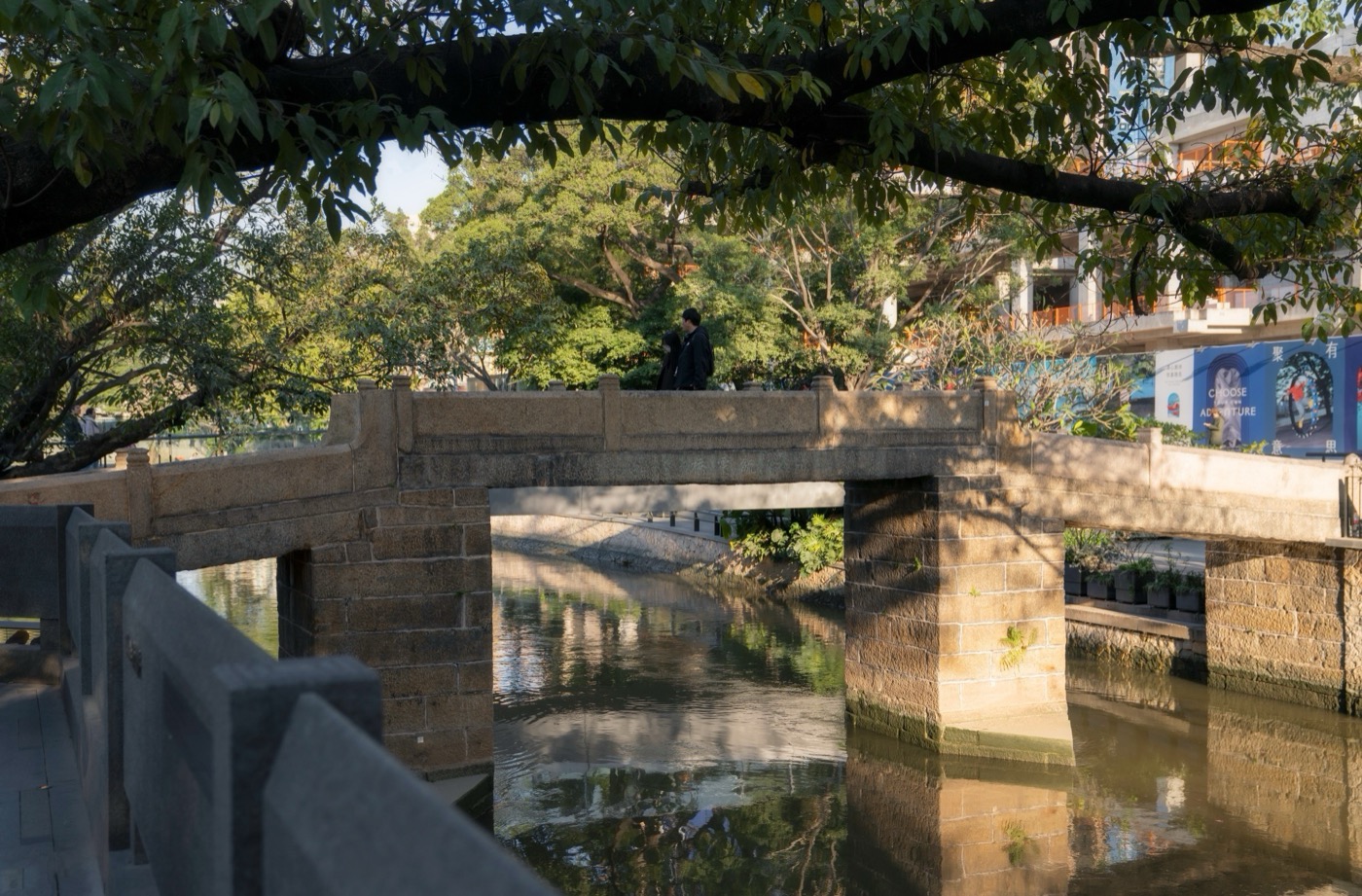
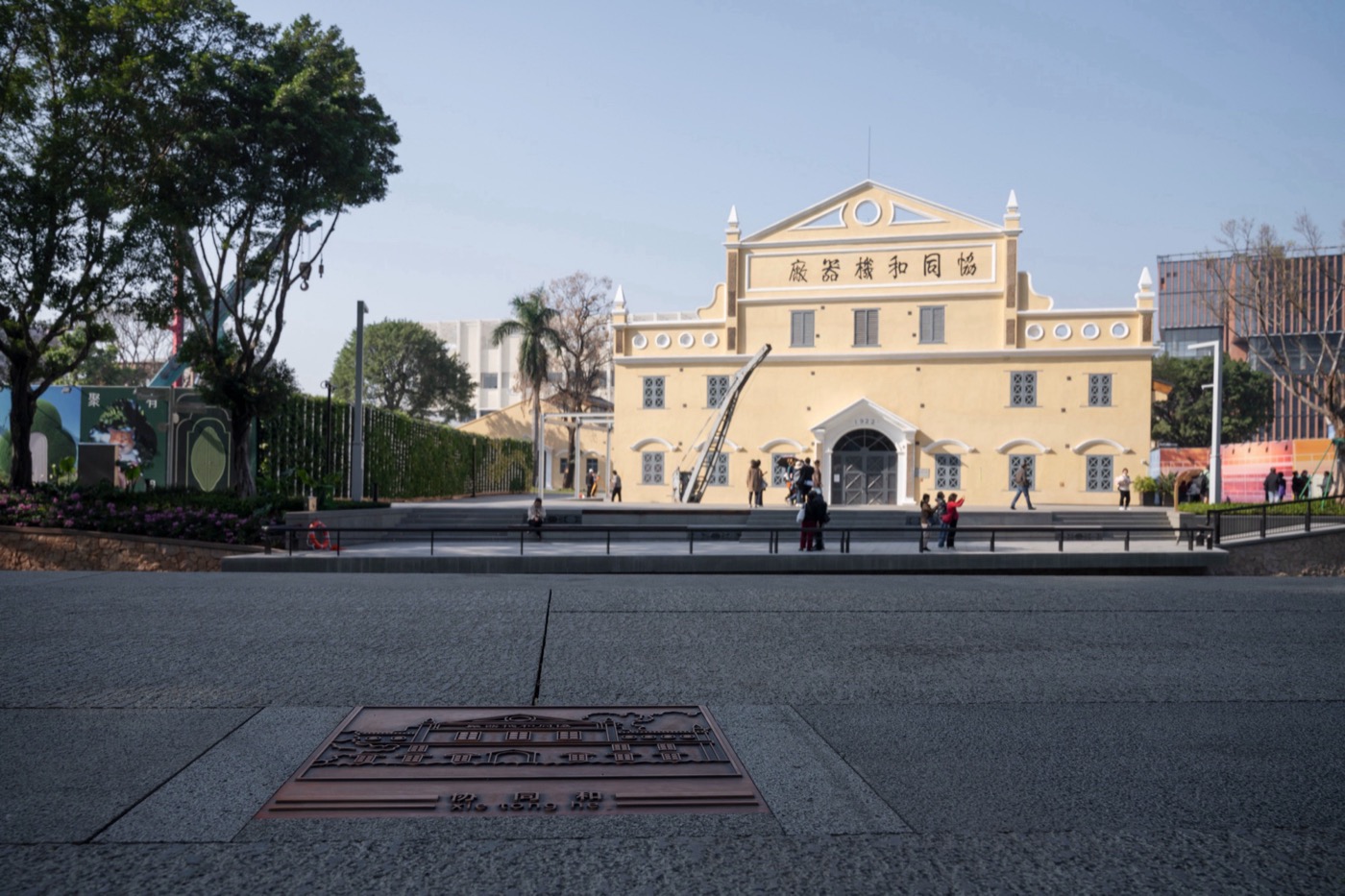
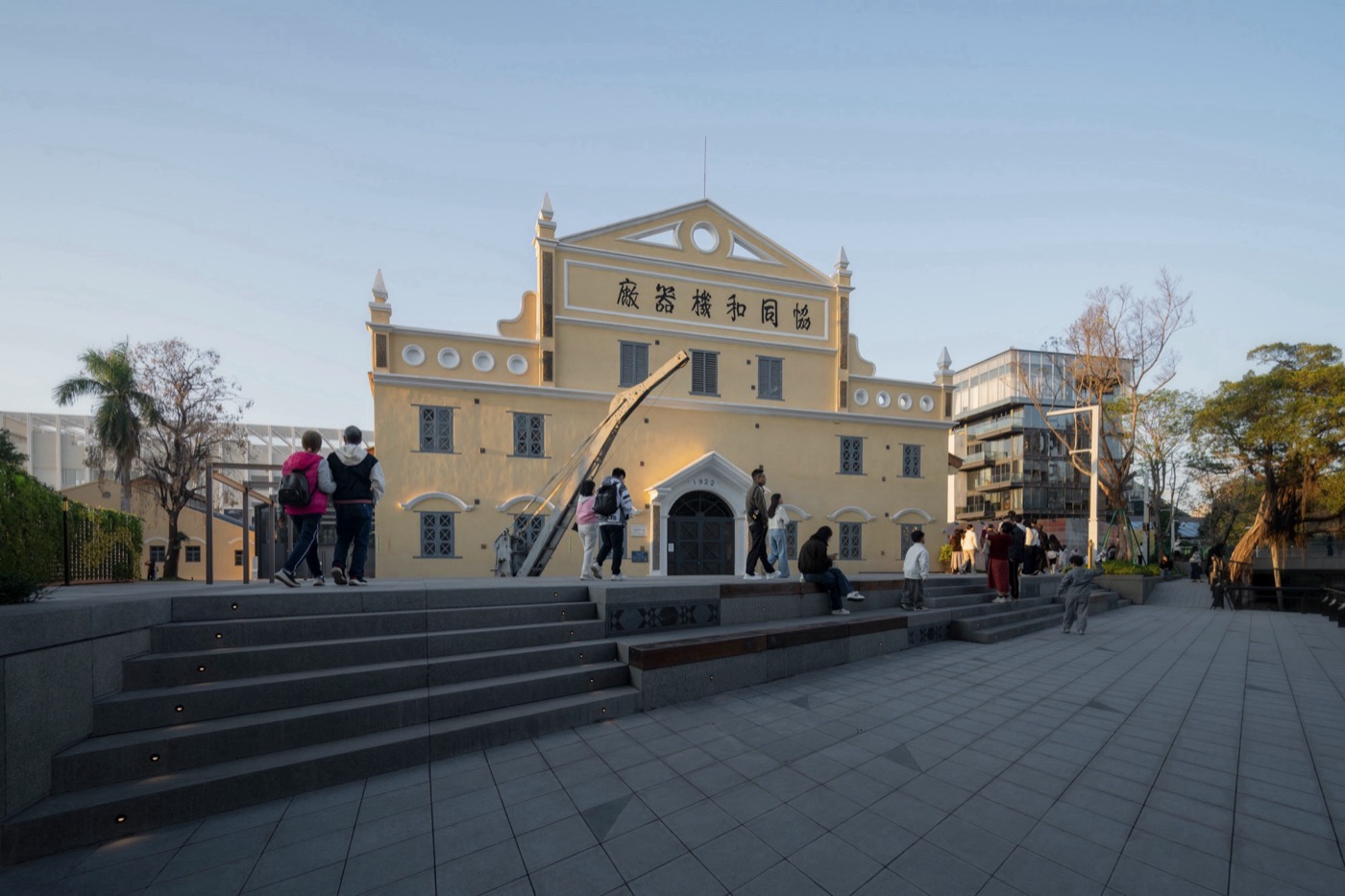
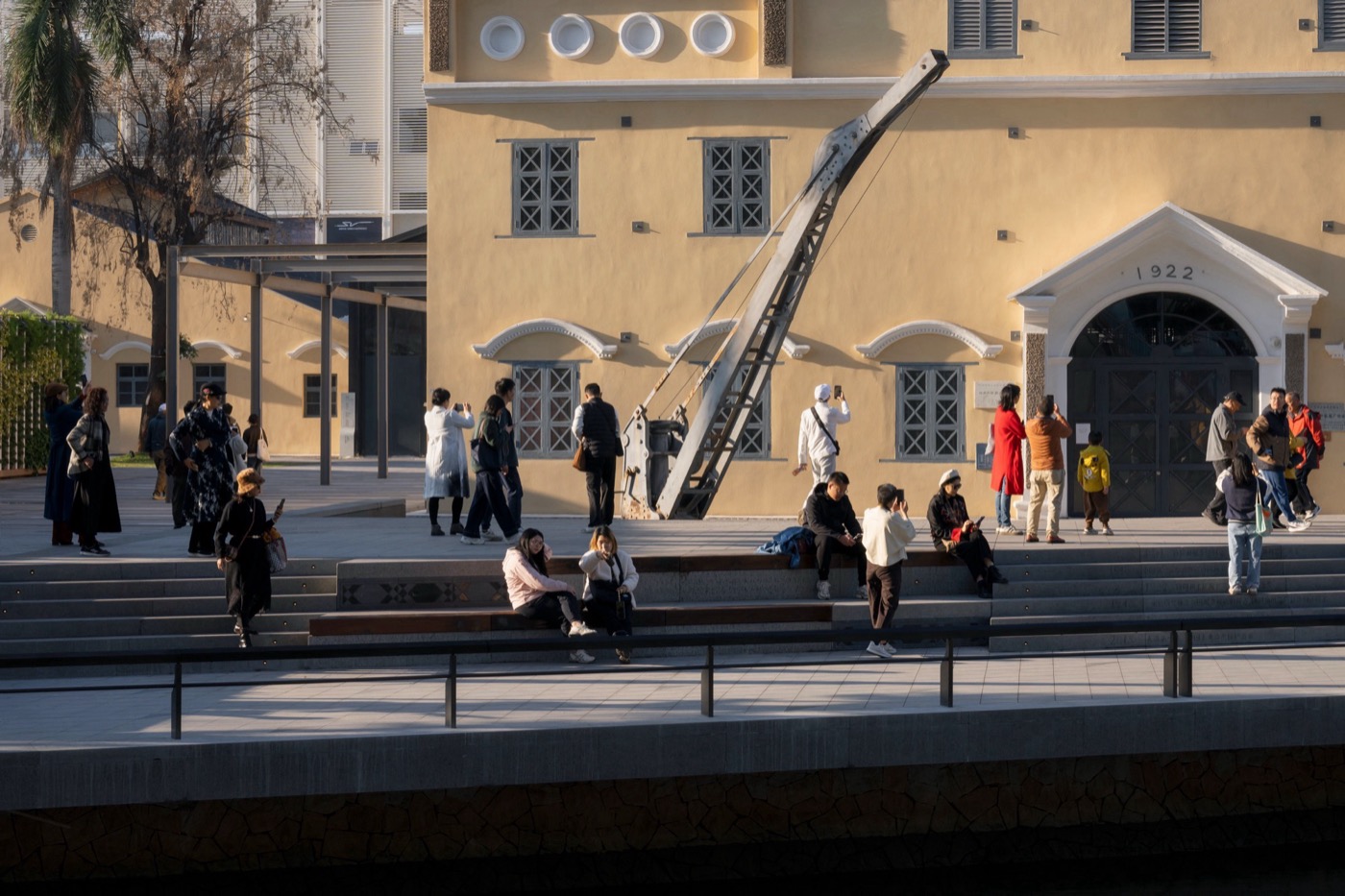
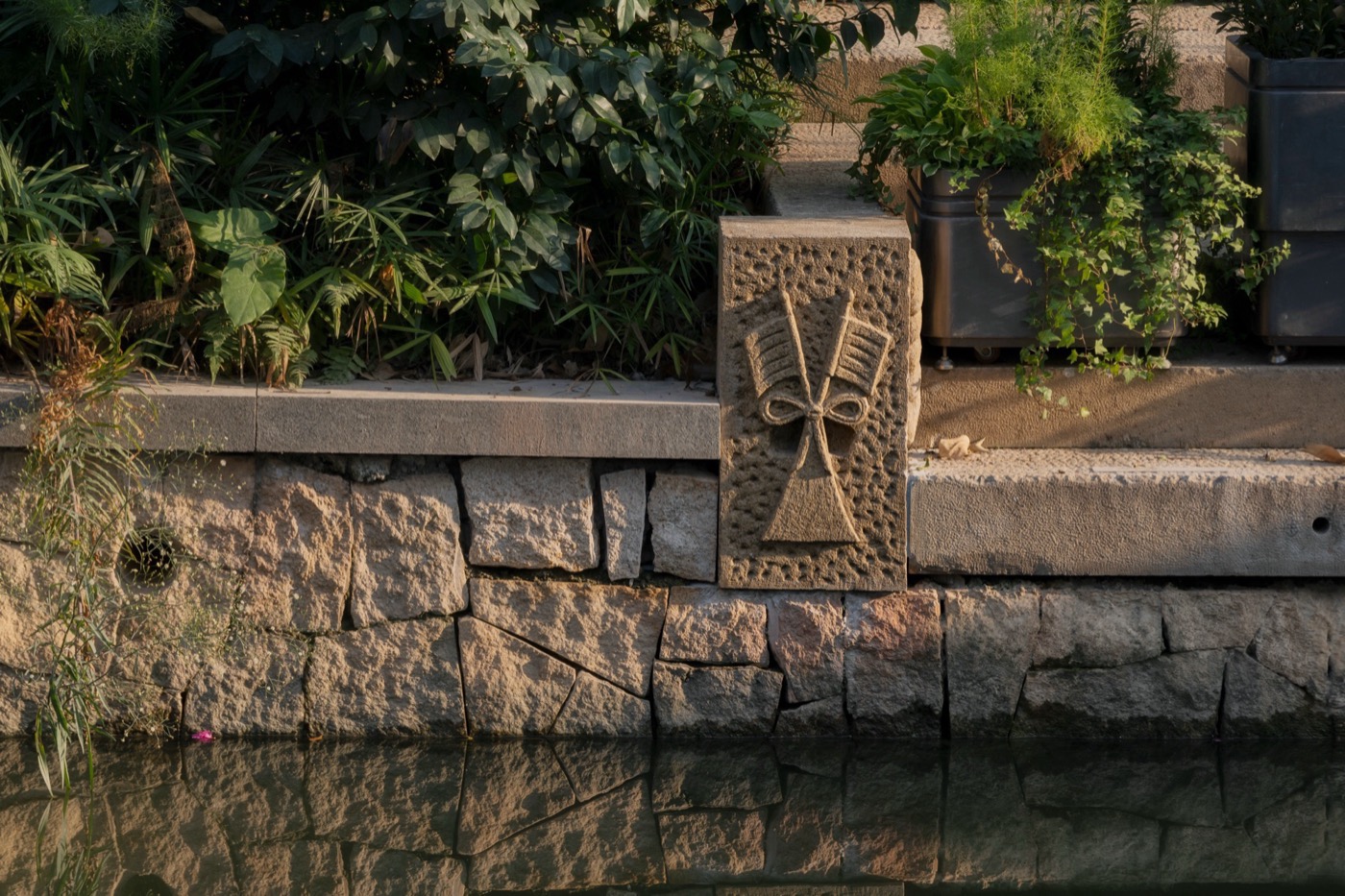
The 15,000 m² site extends approximately 360 meters through Fangcun’s old town, adjacent to Julong Ancient Village. It contains a rich collection of industrial and cultural heritage, including the former Xietonghe Machine Factory—where China’s first diesel engine was produced—historic warehouses from the late Qing Dynasty, early PRC infrastructure, and the Yuling Bridge.
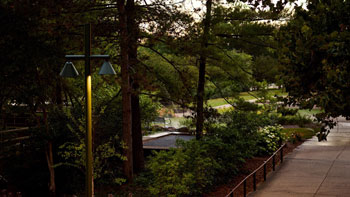
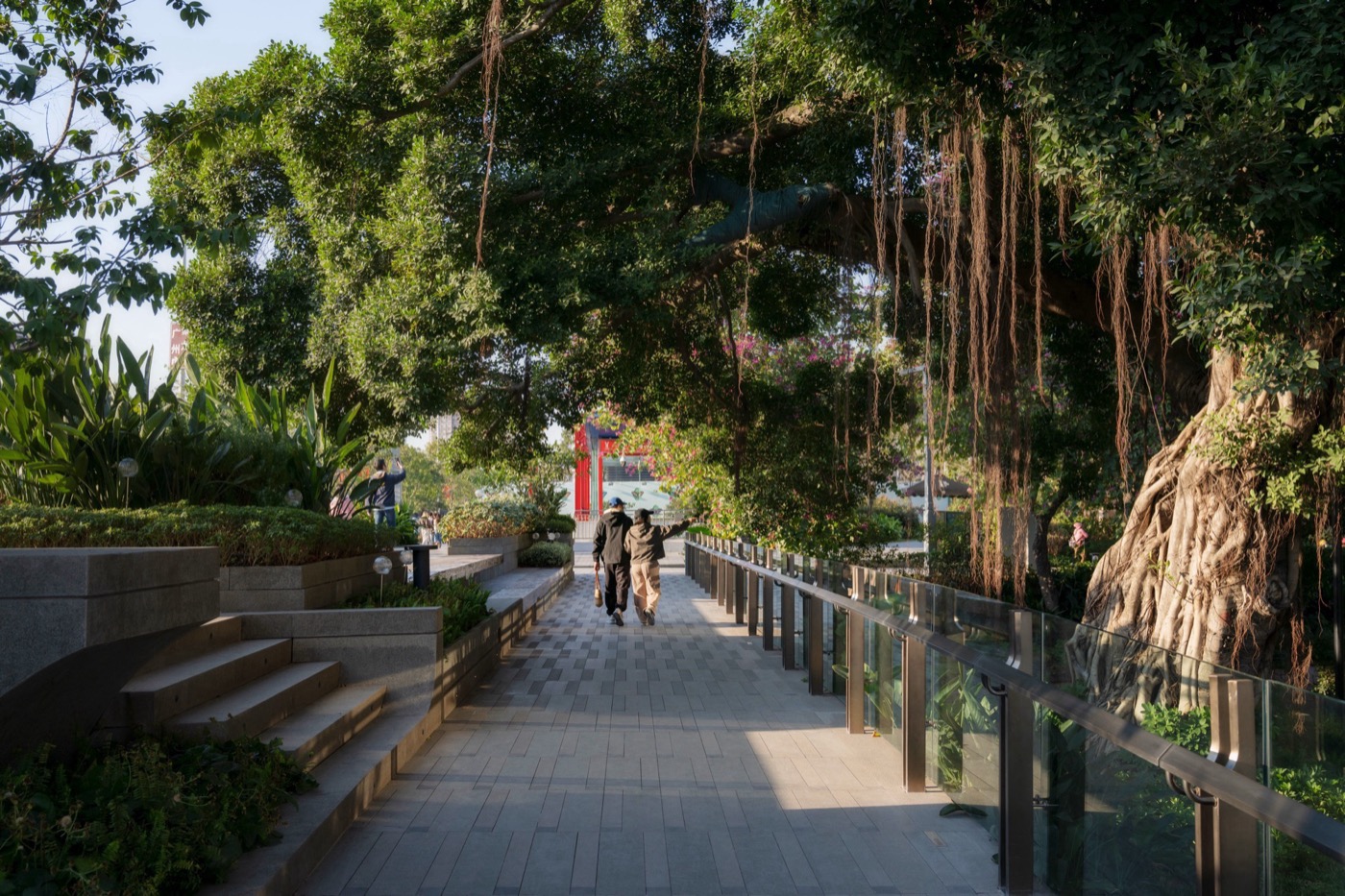
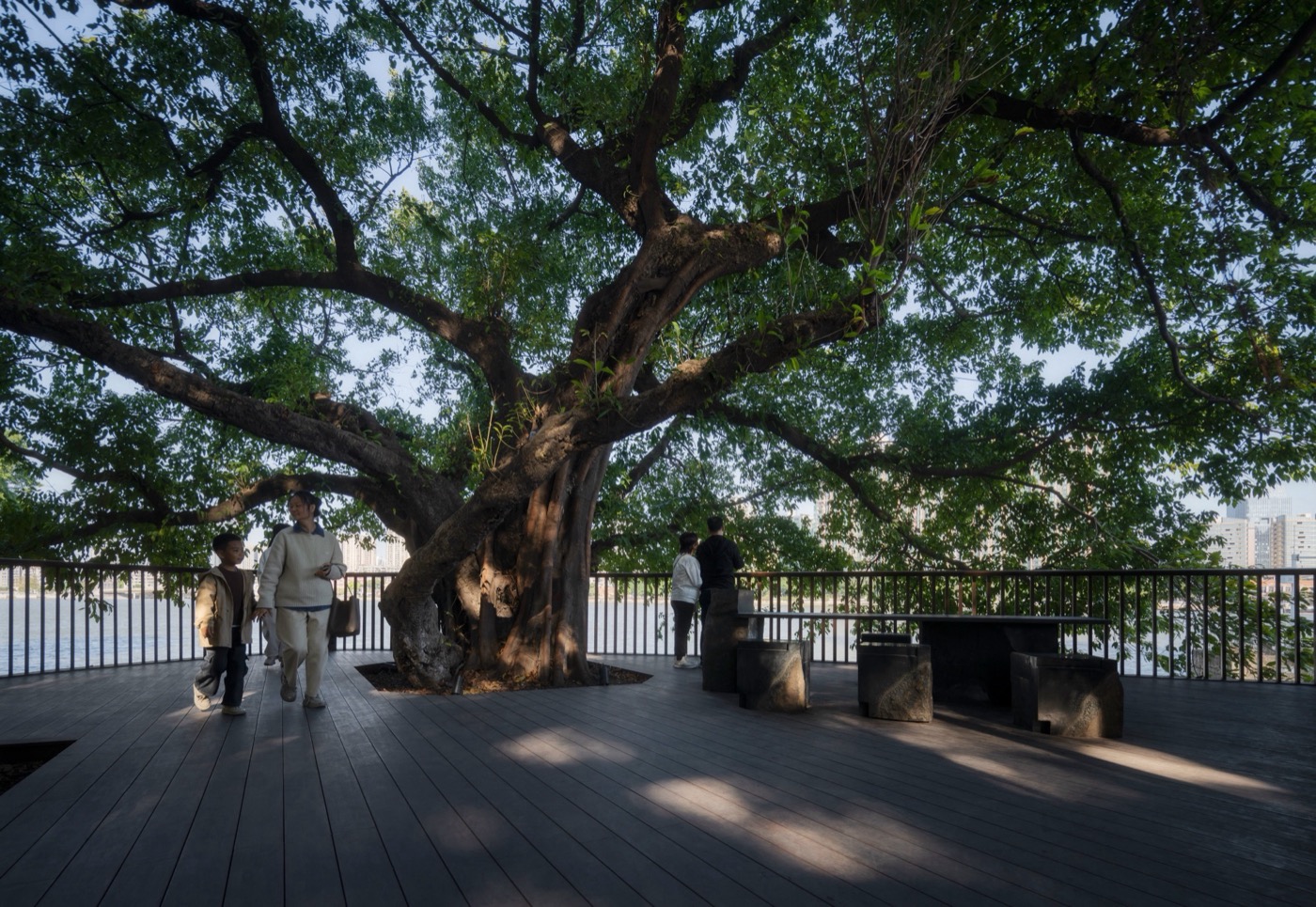
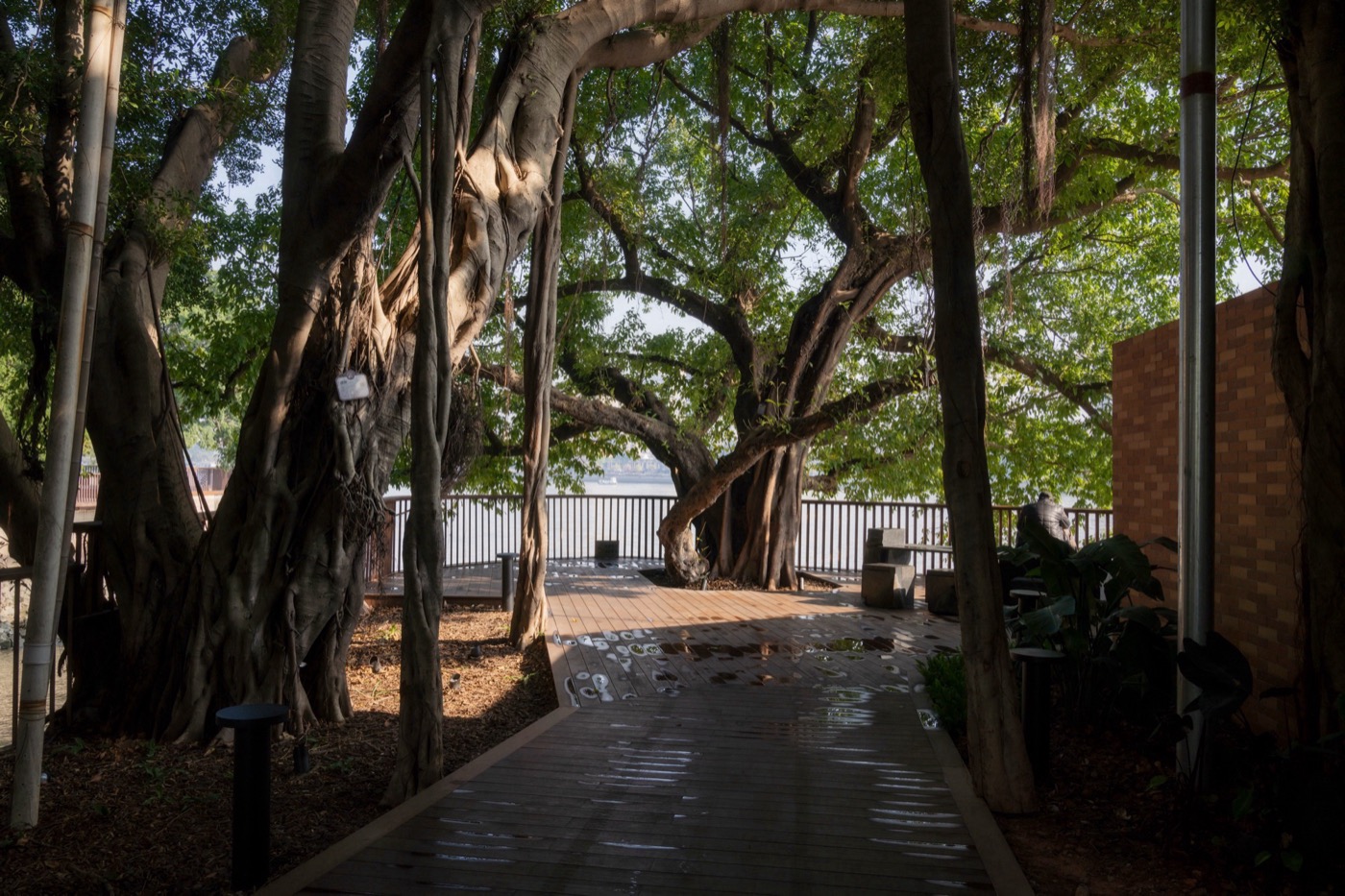
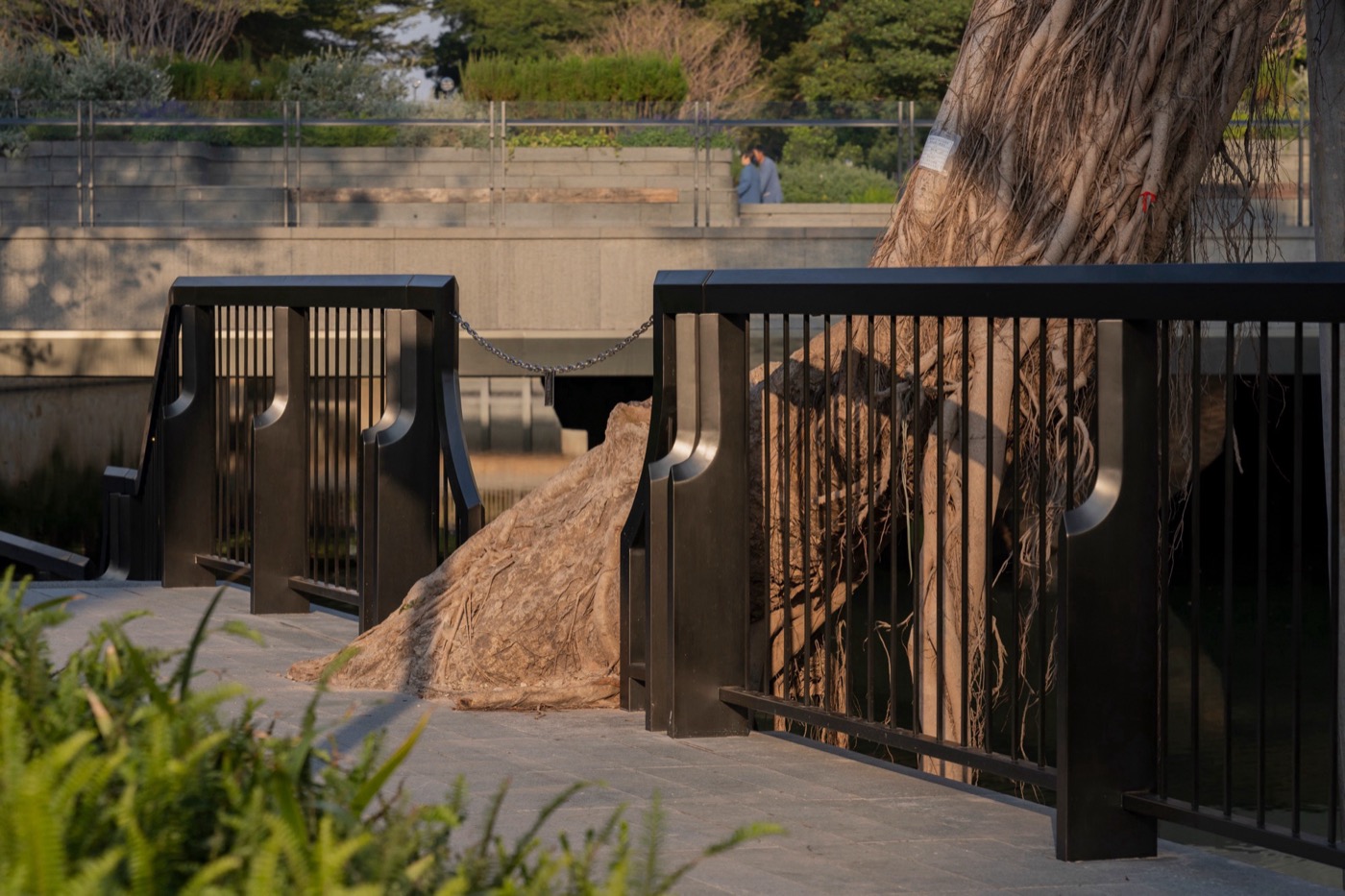
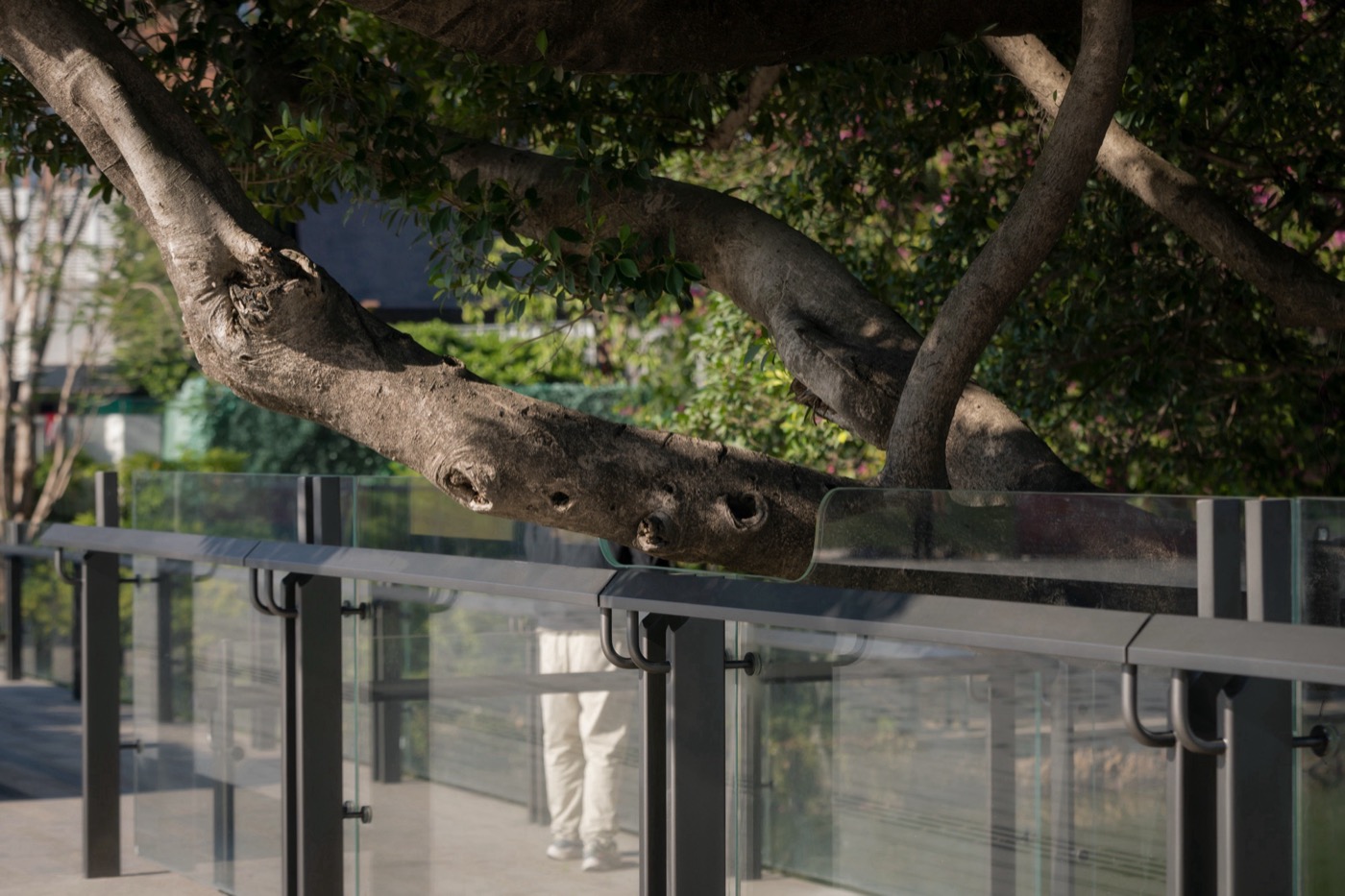
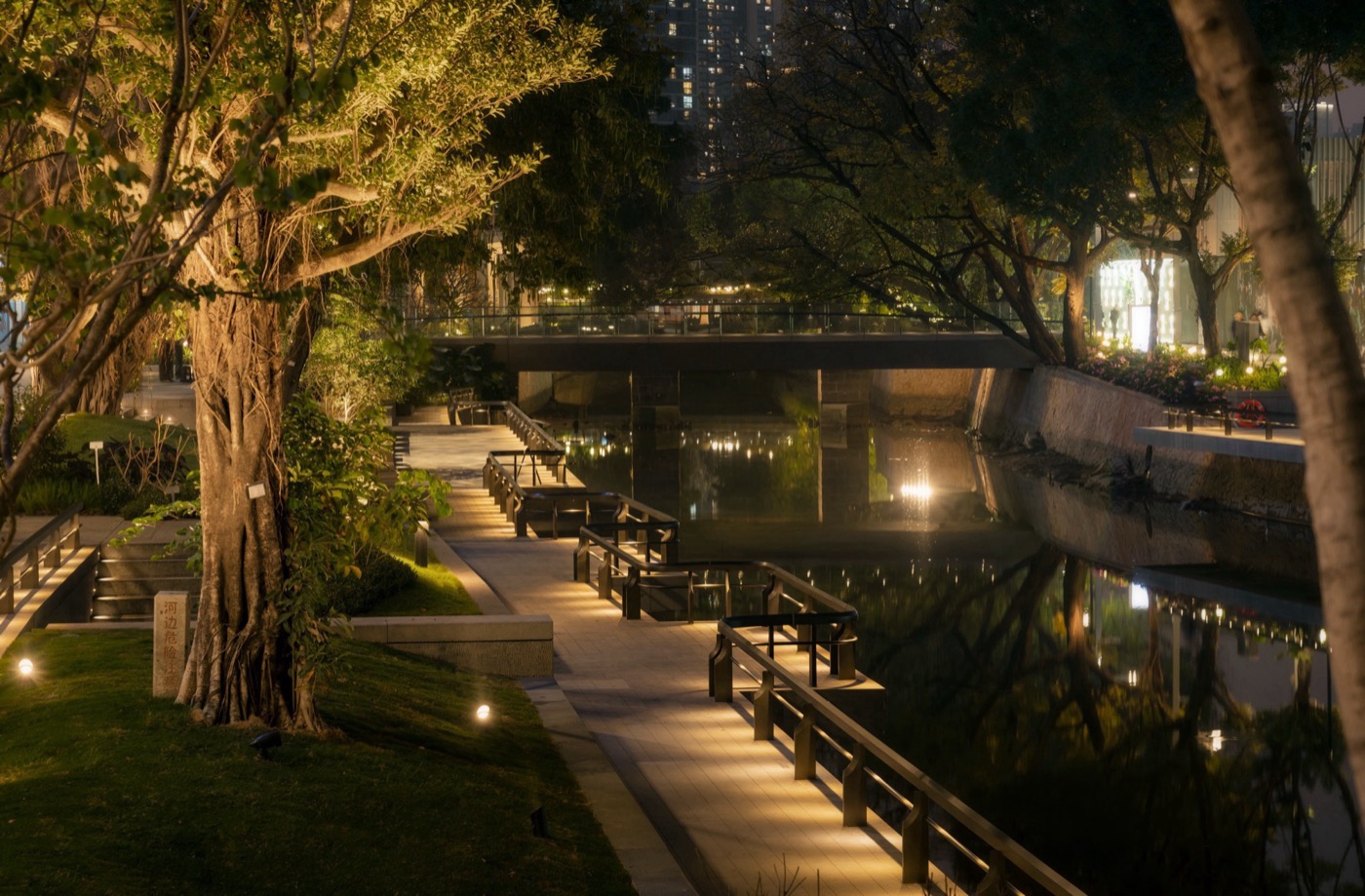
Mature banyan trees, aged between 70 and 180 years, form a dense ecological canopy, shaping a culturally layered and ecologically sensitive waterfront environment that is both historically significant and environmentally fragile.
Key Challenges
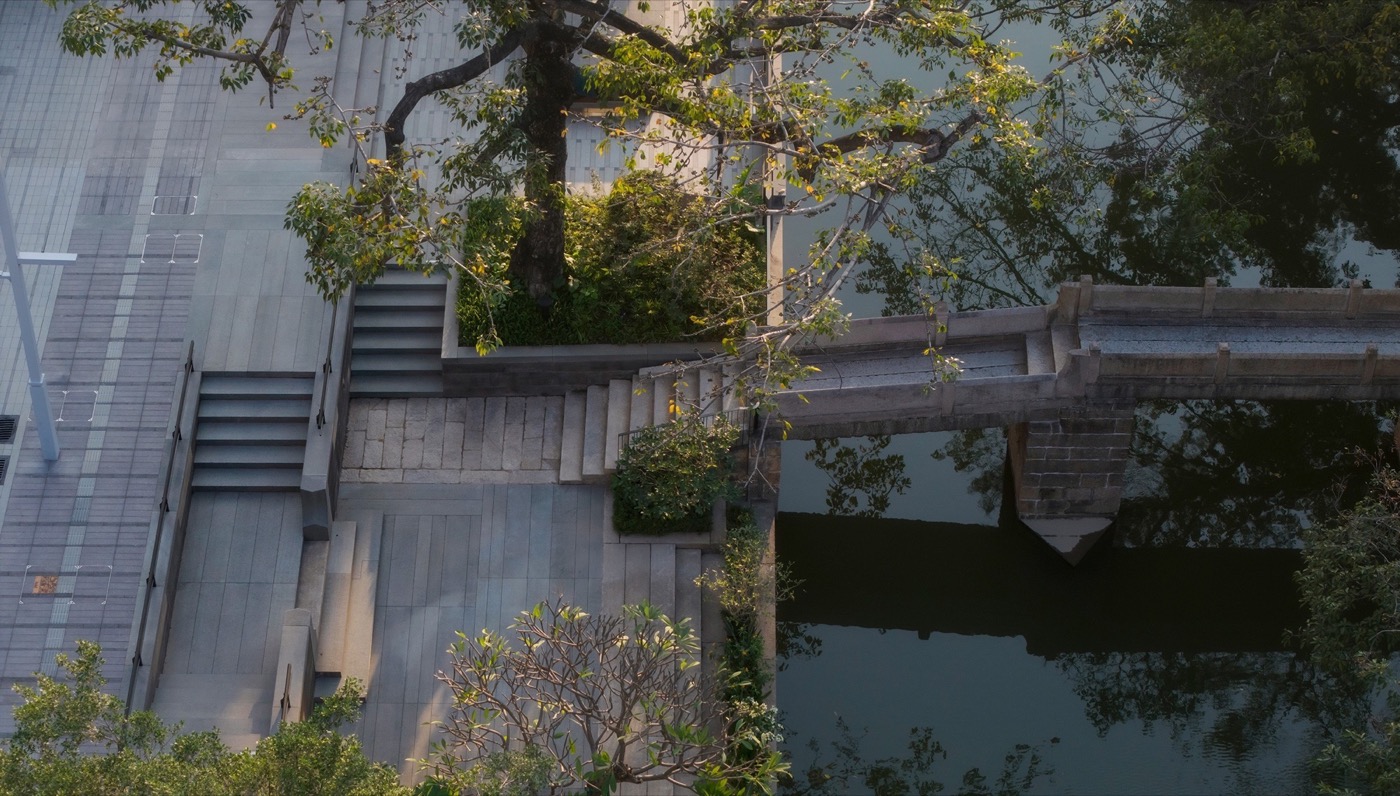
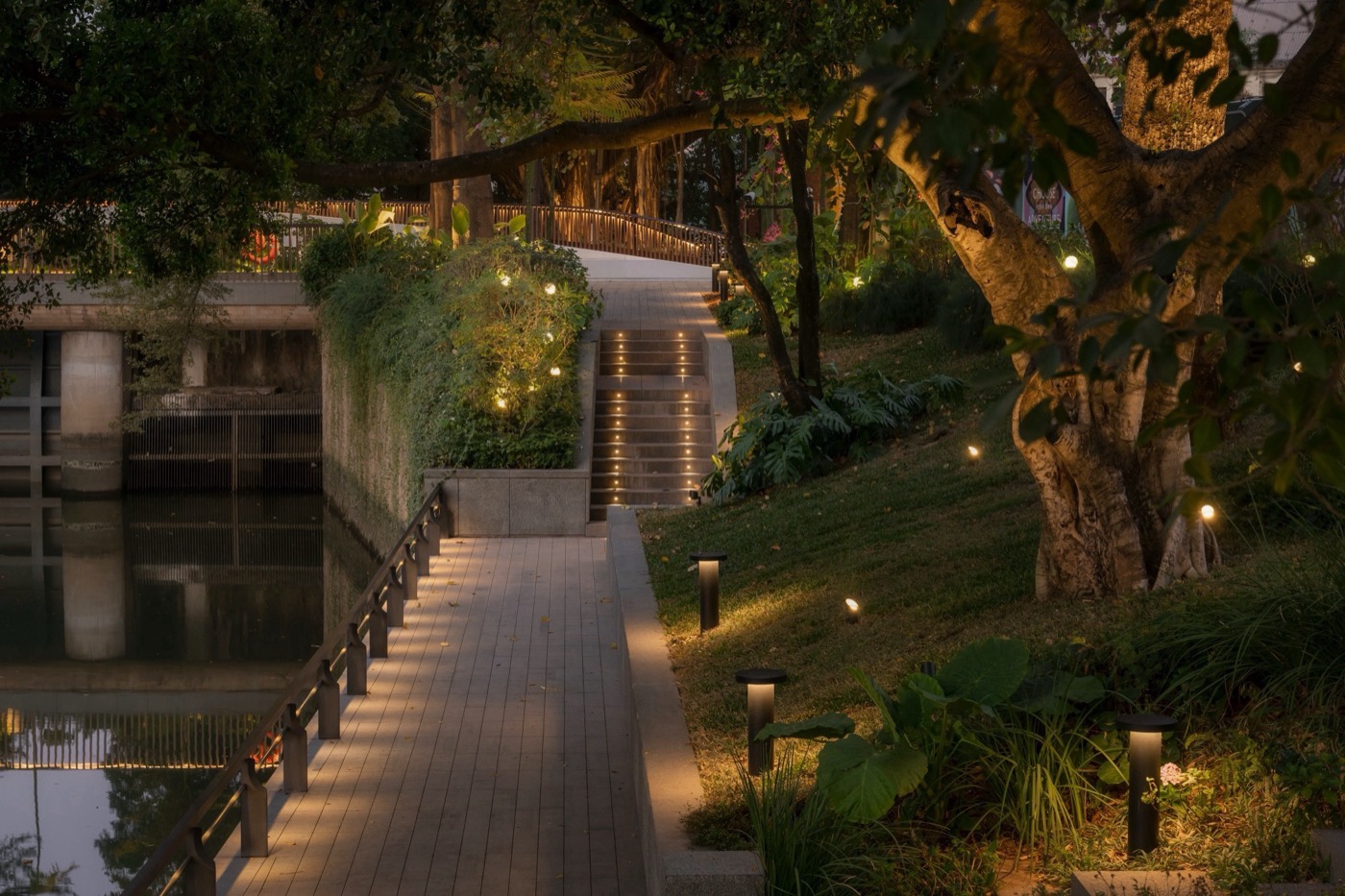
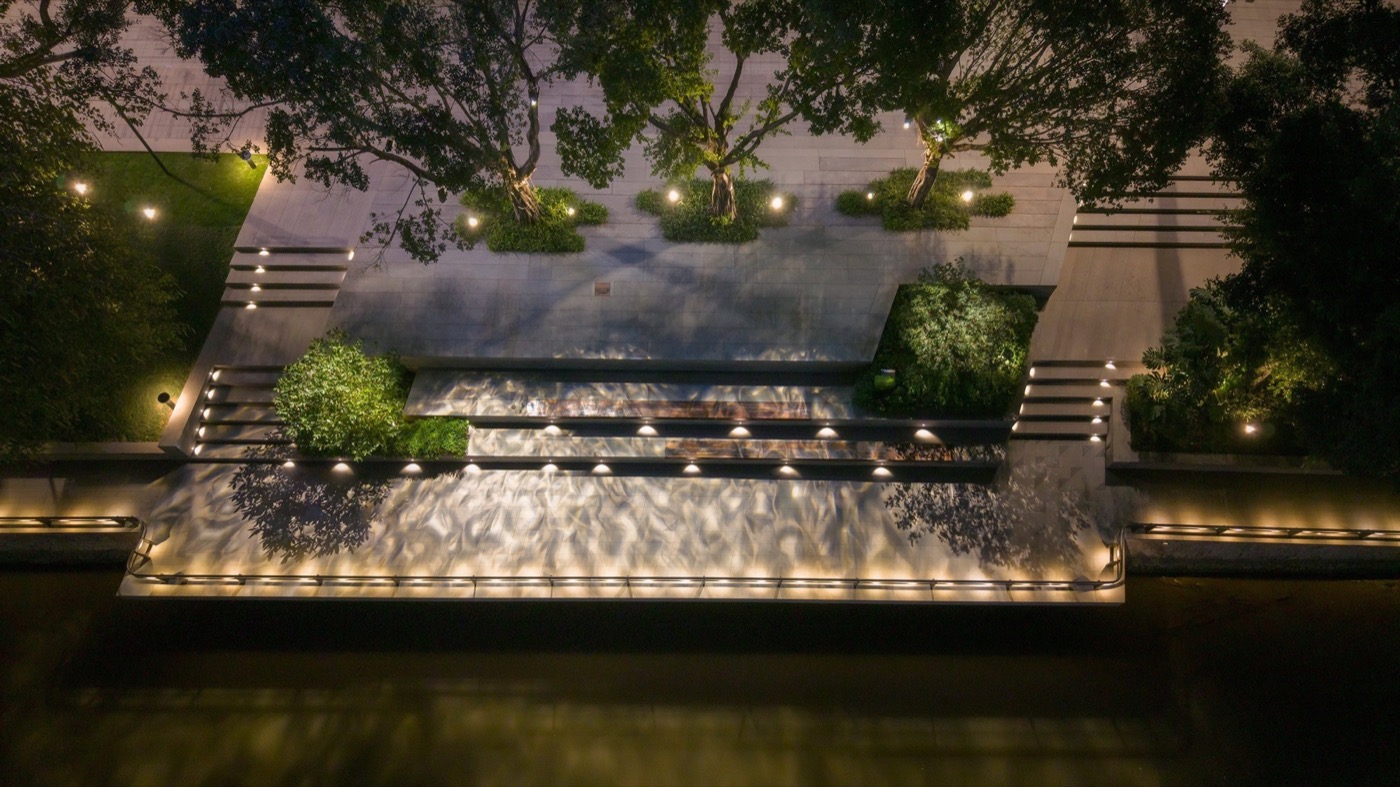
The project faced multiple challenges: resolving complex level differences between the creek, adjacent roads, and future commercial streets; reopening the waterfront as an accessible public realm; accommodating increased pedestrian flow while encouraging social interaction; preserving historic identity under the pressure of large-scale commercial development; minimizing disturbance to fragile ecological systems, particularly the extensive root zones of ancient banyan trees.
Design Innovation: Heritage as Generative System
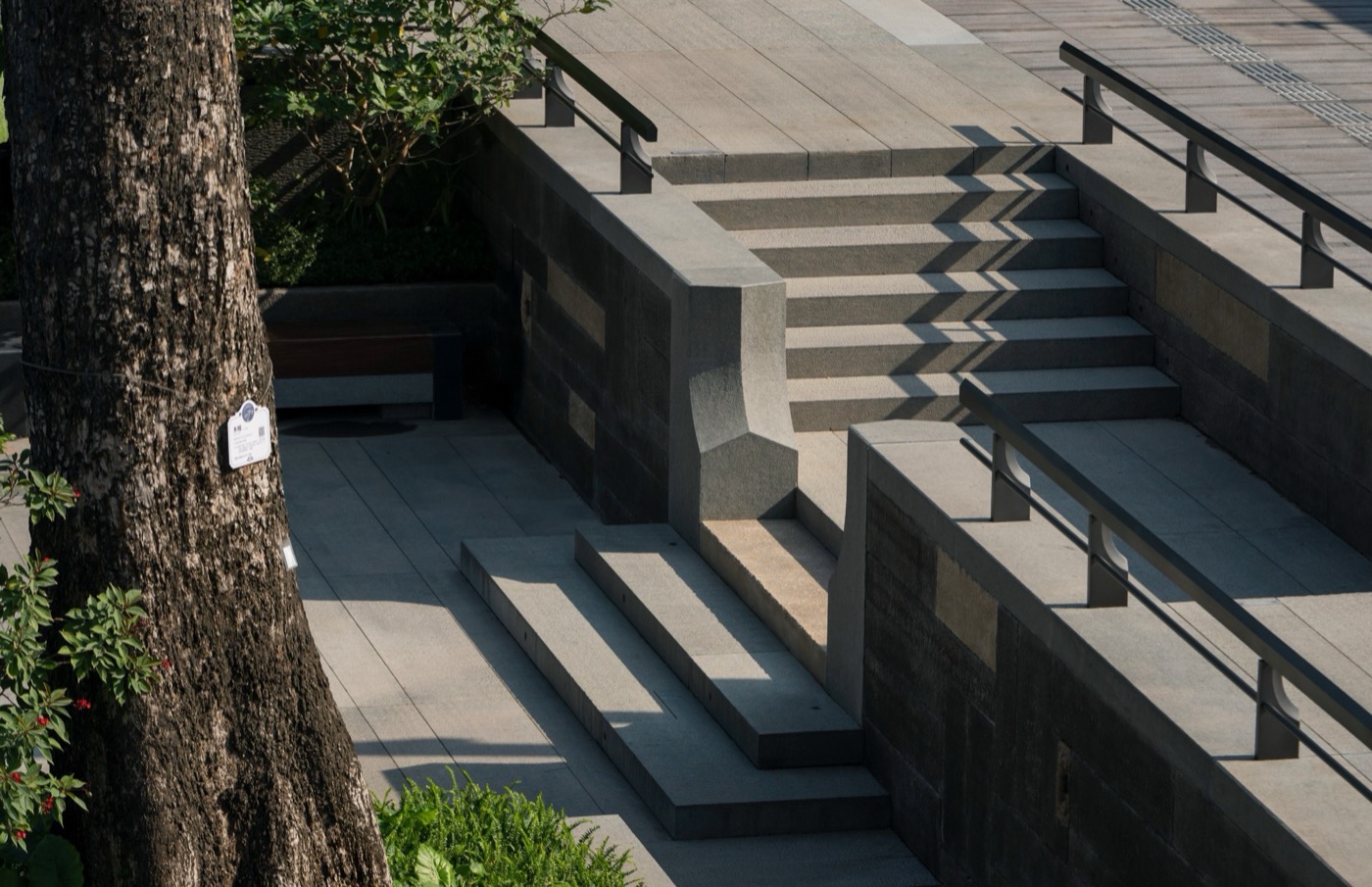
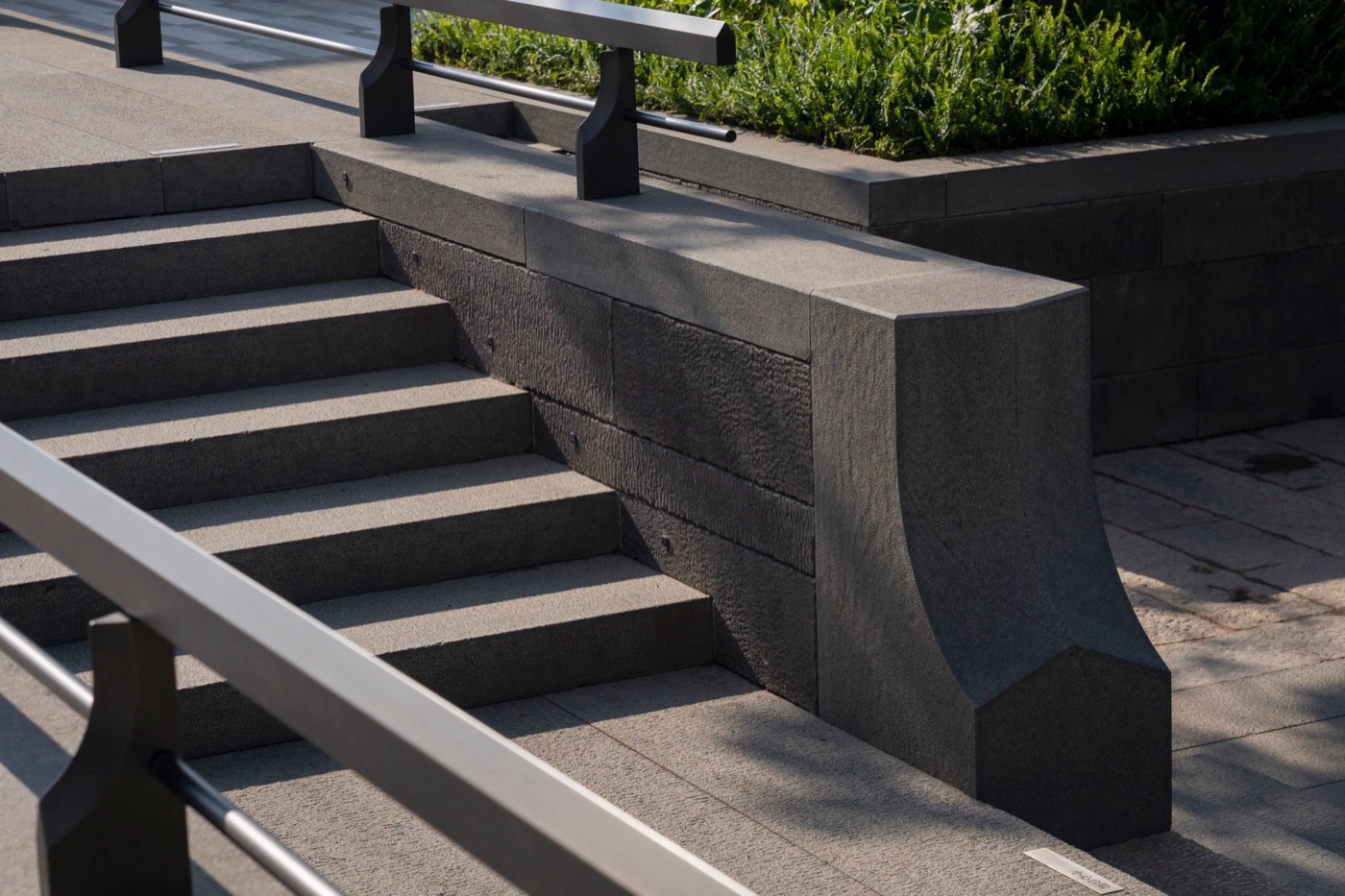
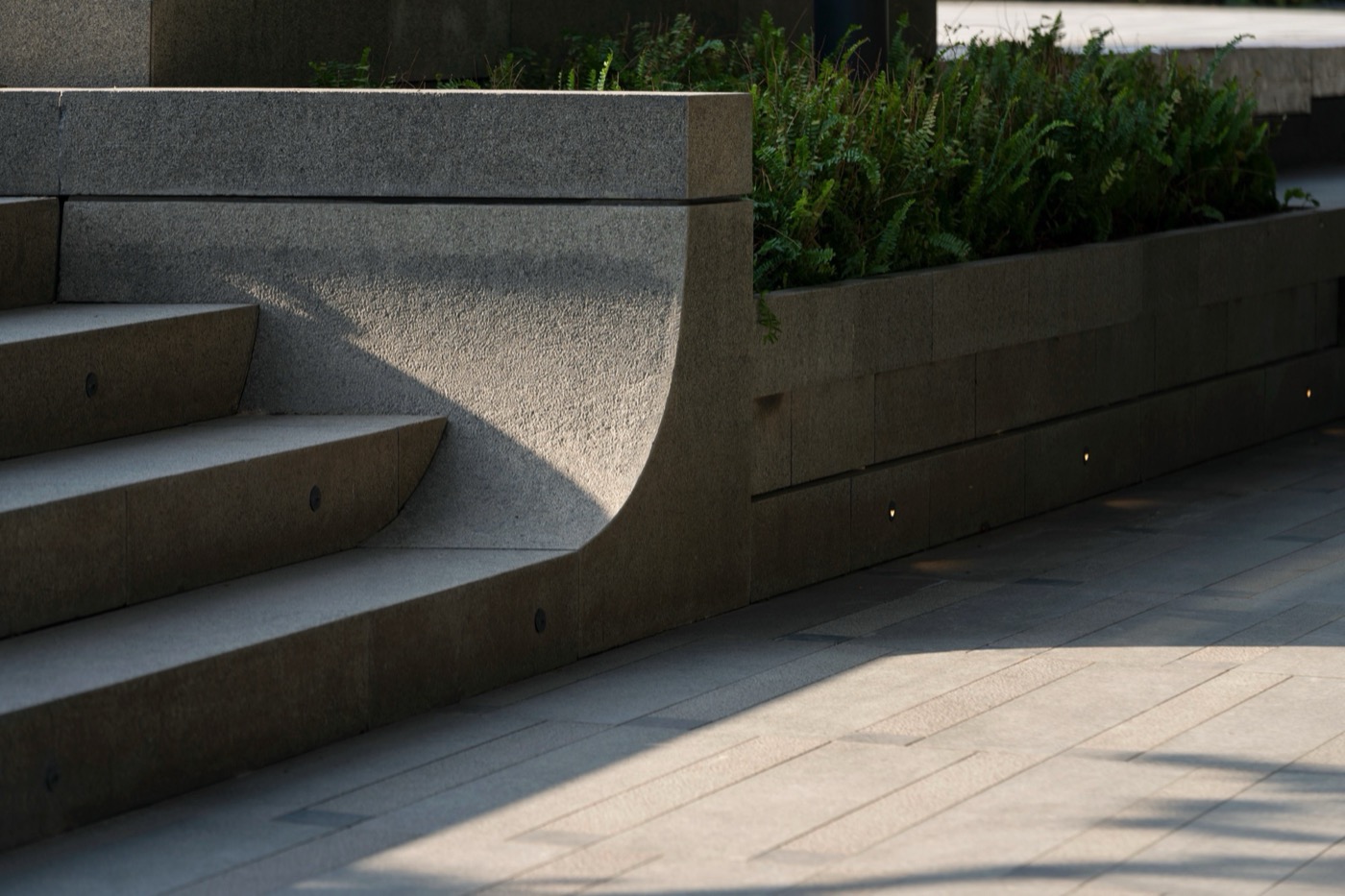
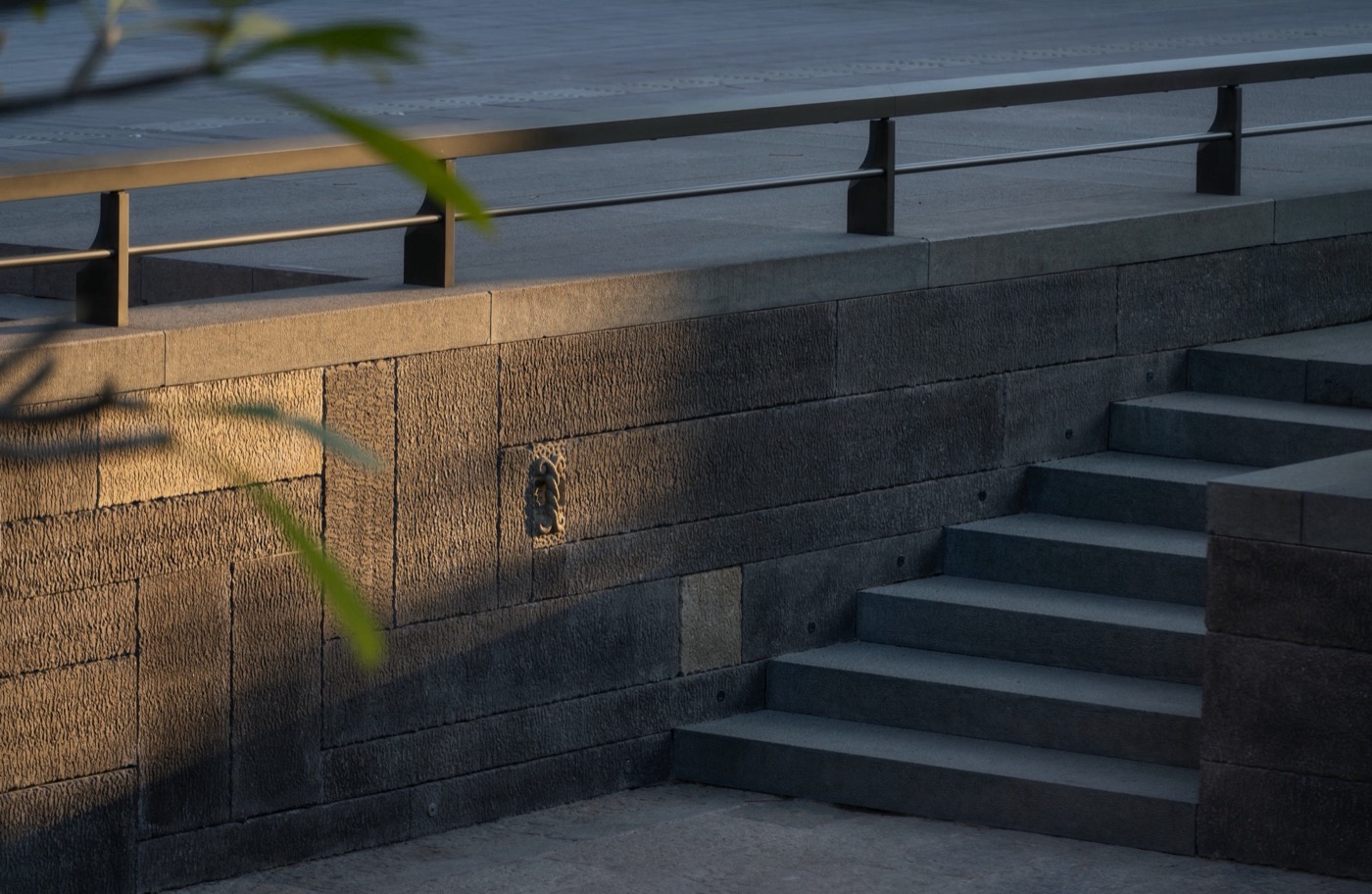
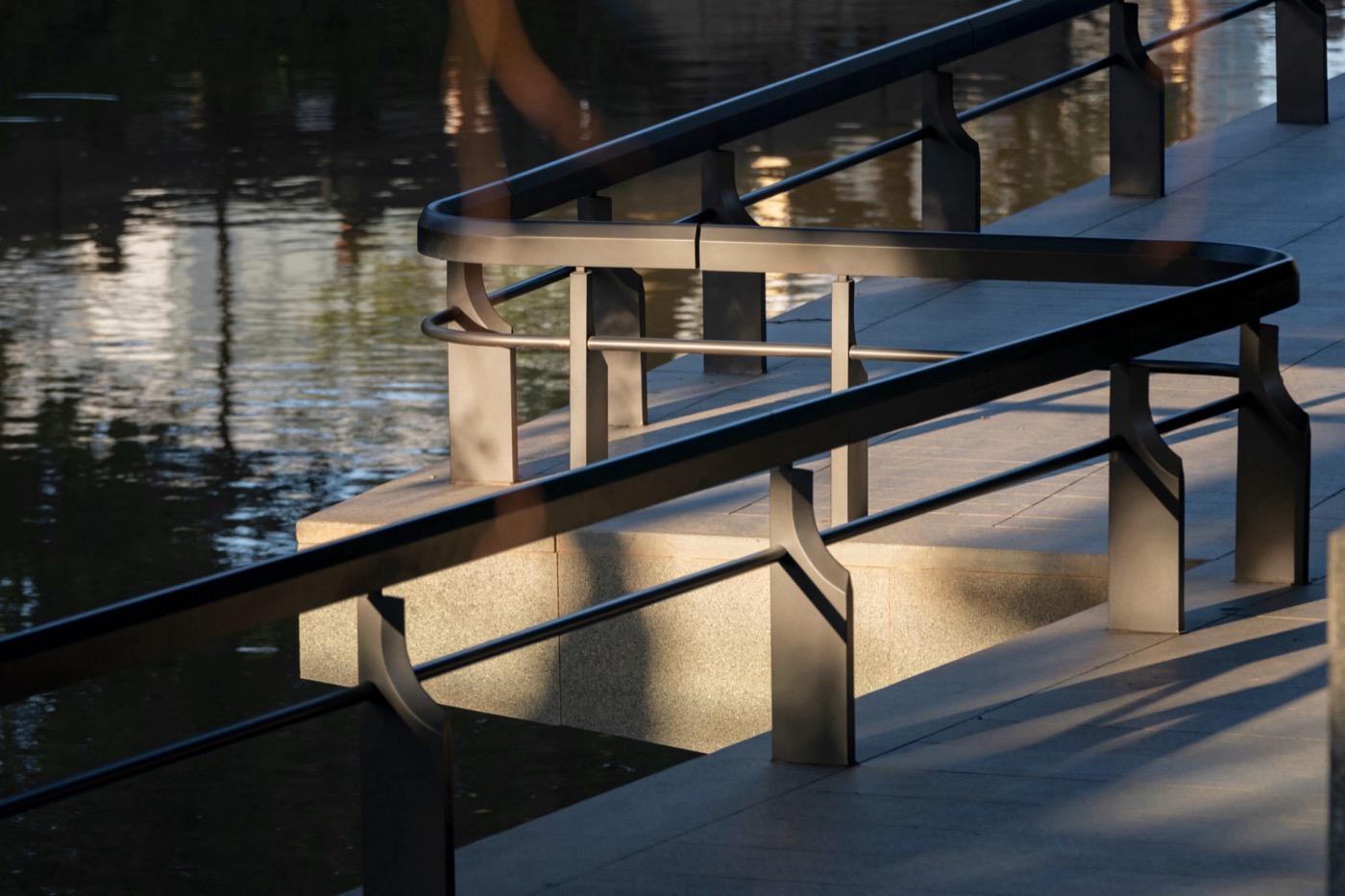
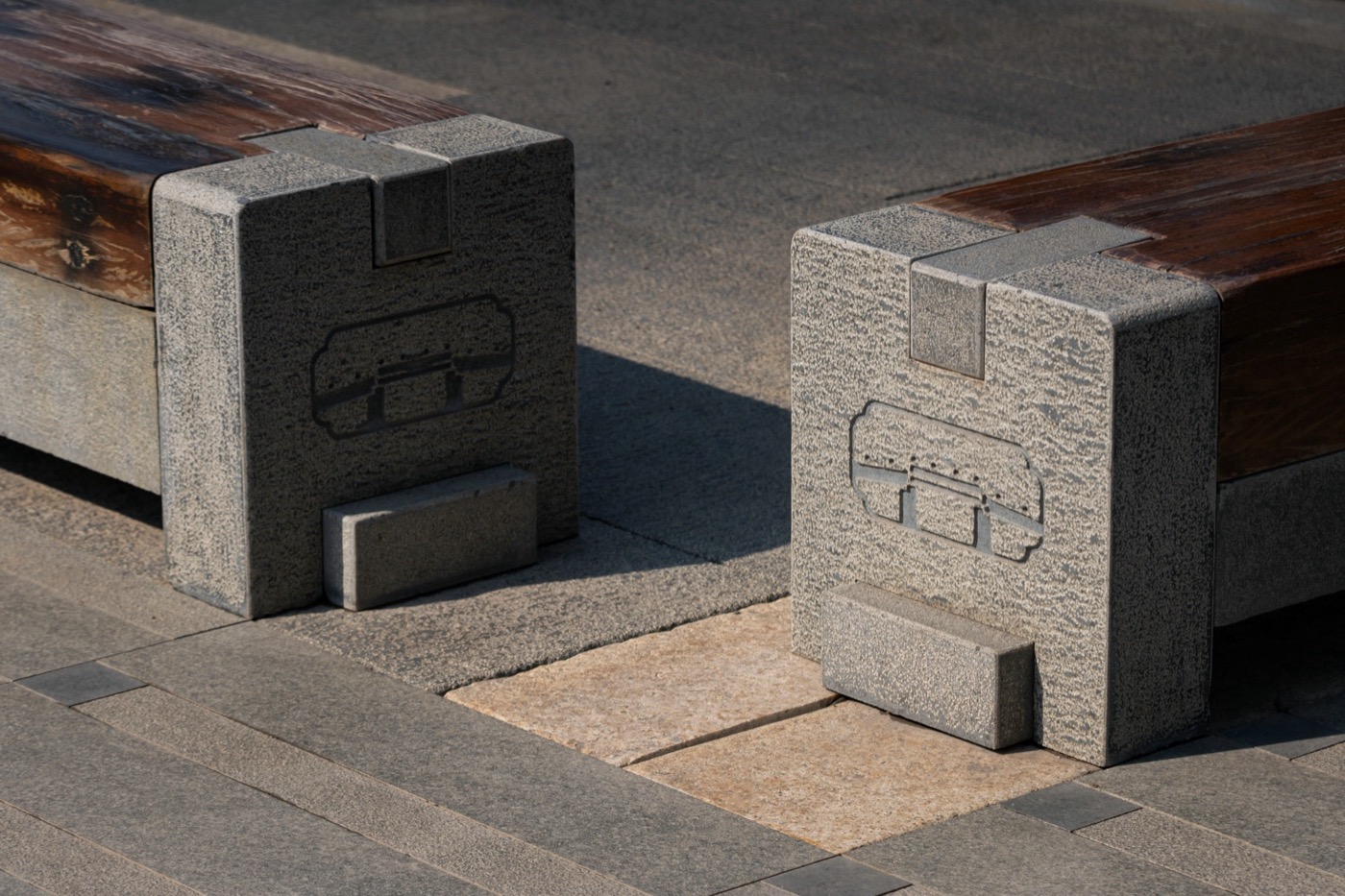
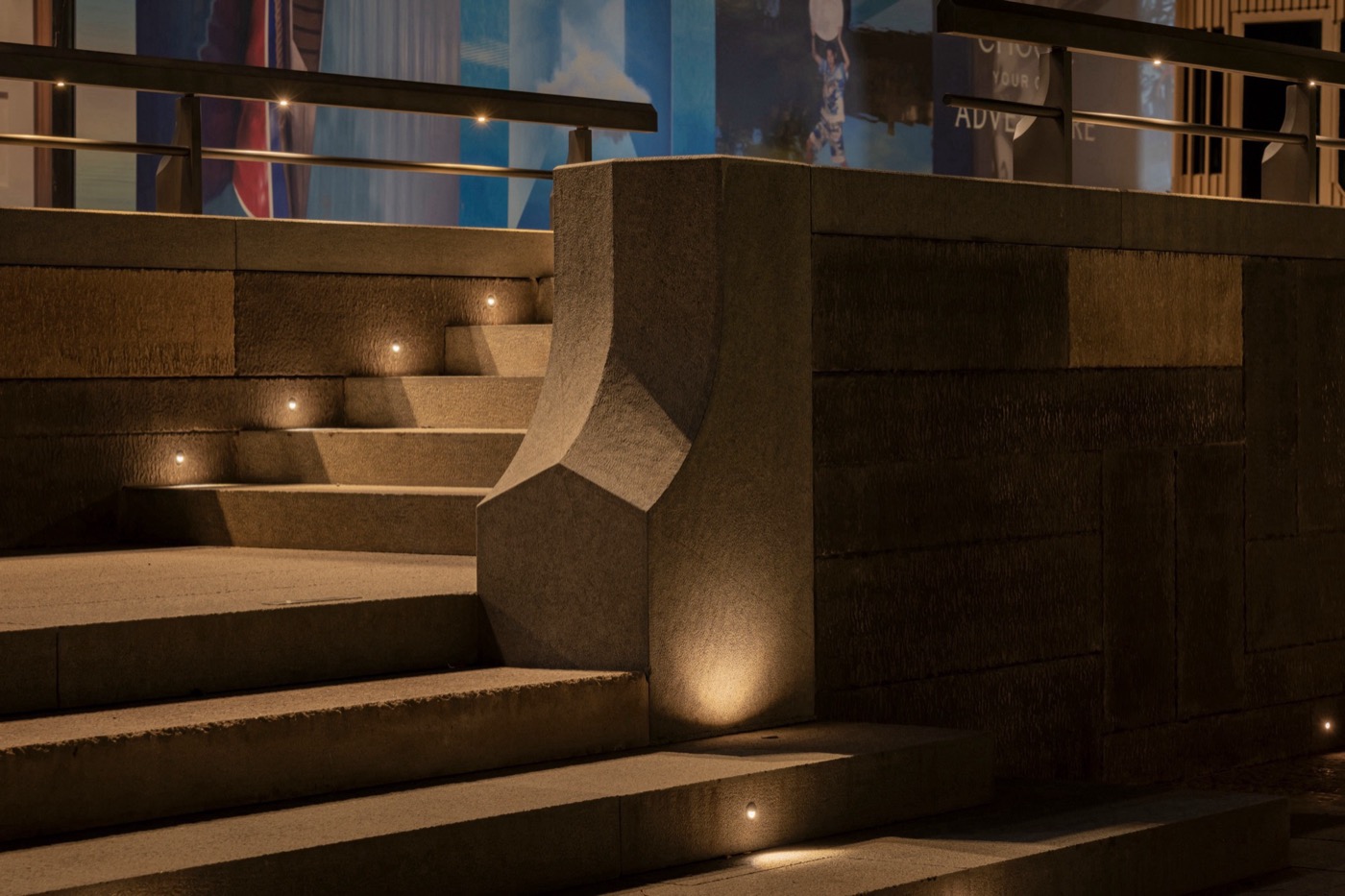
The project introduces a heritage-driven design methodology, using the Yuling Bridge as both conceptual origin and generative system. By deconstructing and reinterpreting its structural and aesthetic language, the design establishes a coherent design grammar across paving, edges, and site details. This approach transforms the historic artifact from an isolated relic into an active design framework, allowing it to “grow” into the contemporary landscape and redefine the spatial identity of the creek corridor.
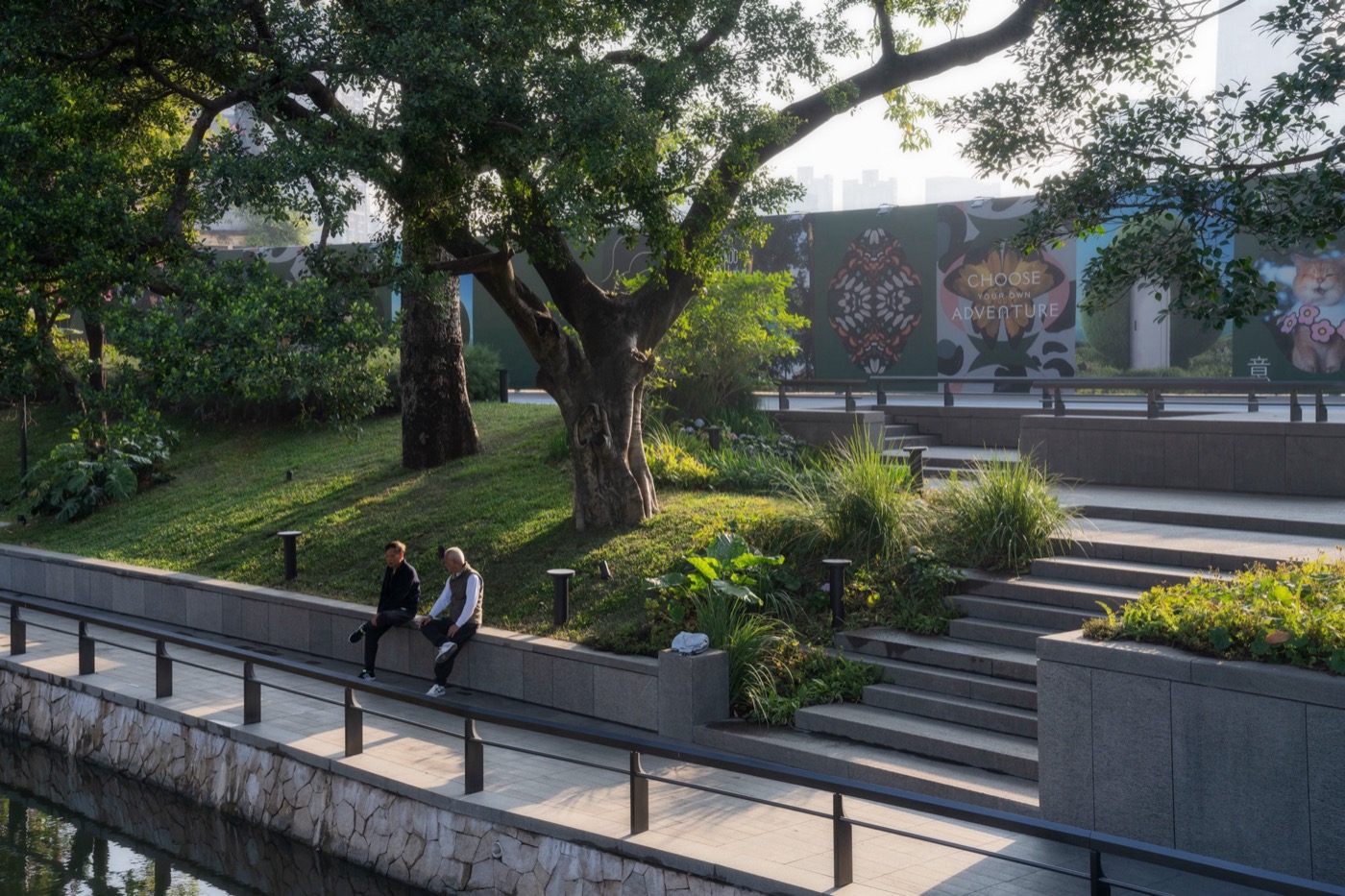
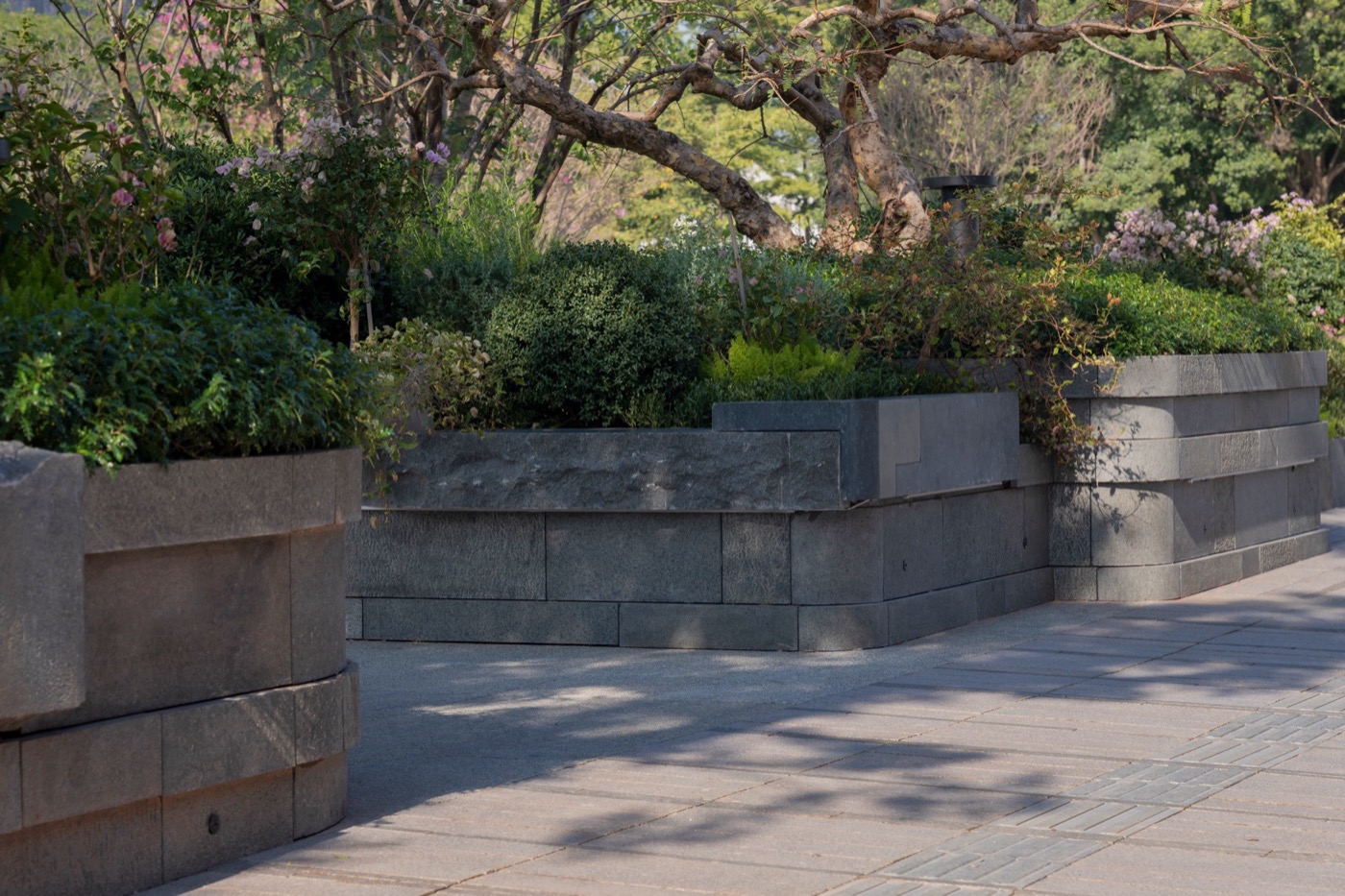
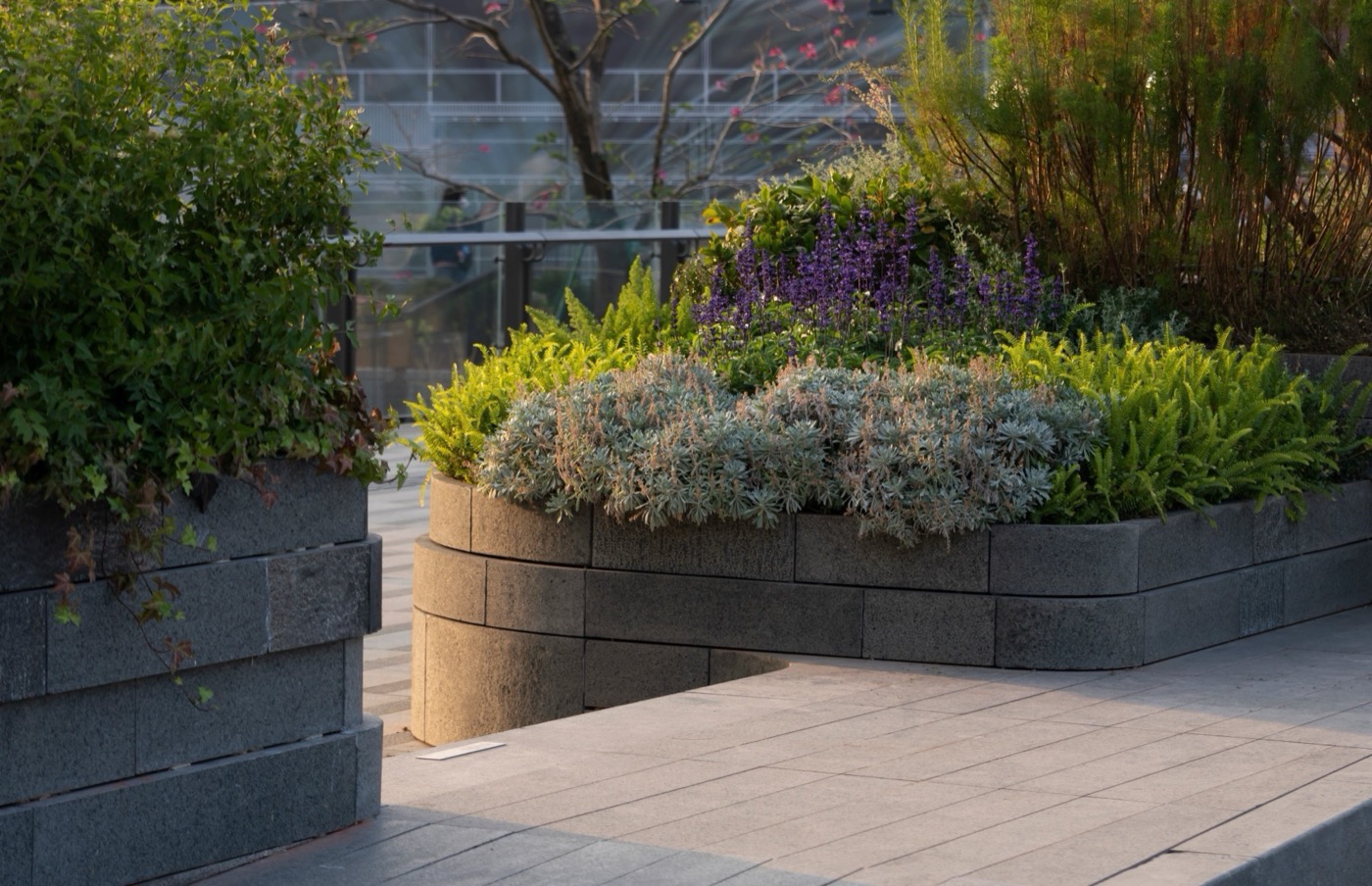
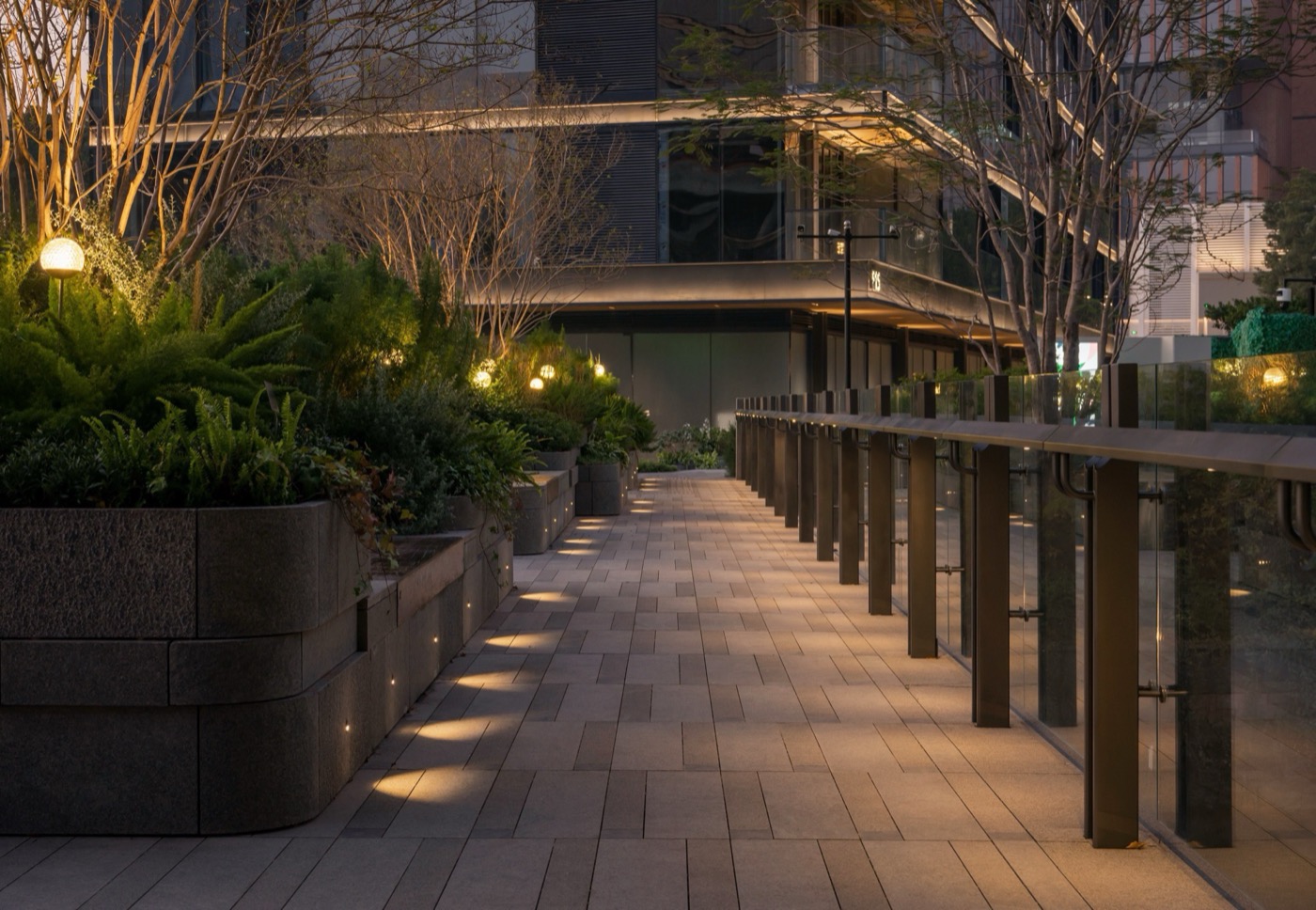
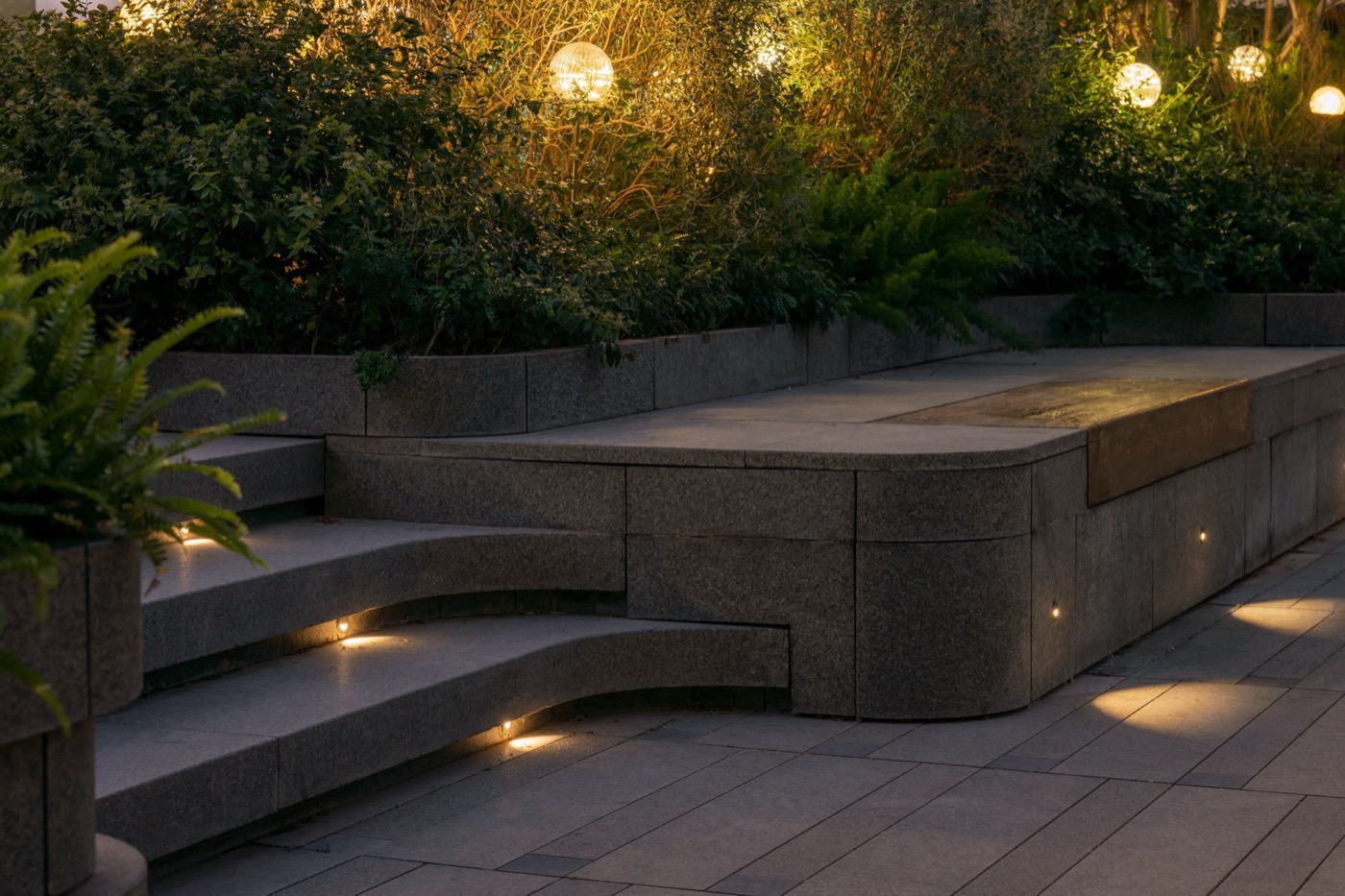
Simultaneously, the design reinterprets traditional Lingnan riverfront typologies—particularly “bu-kou” (wharf) spaces—as performative public interfaces. These elements resolve level differences while embedding collective spatial memory, creating a sequence of terraces, gathering platforms, and transitional thresholds that support everyday social life. Historic buildings along the creek are integrated through spatial framing and interpretive systems, forming a continuous cultural narrative rather than a collection of static relics.
Ecological Strategy: Minimal Intervention, Maximum Continuity
Ecological sensitivity underpins both design and construction. The project adopts a low-impact, on-site regeneration strategy, minimizing ground disturbance to protect ancient banyan root systems. A soil approach combining preservation, targeted remediation, and organic enhancement replaces conventional large-scale excavation, safeguarding microbial ecosystems and long-term soil health. Over 90% of plant species are native, significantly increasing biodiversity while reinforcing regional ecological resilience and identity.
Social Impact and Performance
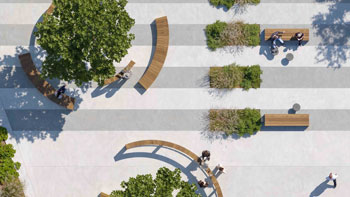
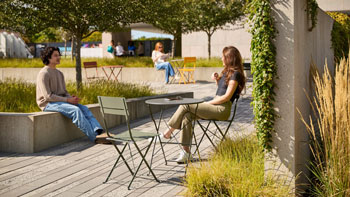
The project reclaims the waterfront as an inclusive and vibrant civic space. Shaded areas beneath preserved banyan trees are transformed into comfortable micro-environments that support gathering, rest, and informal social interaction. By reopening the creek edge and improving accessibility, the design strengthens connections between the historic neighborhood, the new commercial district, and everyday urban life. The project has been awarded Platinum certification under the Sustainable SITES Initiative (SITES), demonstrating measurable excellence in environmental performance and sustainable landscape practices.
Project Credits
Landscape Architect: Guangzhou S.P.I Design Co., Ltd., SASAKI, PLA
Design Team: Hu Sun, Songmin Liu, Kenan Xin, Jingwen Chen, Weiqing Wang, Yurong Jiang, Feixu Wu, Xiuwen Xiong, Long Kuang, Xiaodong Liang, Qingmin Li, Shuaishuai Lv, Shubin Ye, Haobo Xu, Jie Wang
Client: Guangzhou Pearl River Industrial Park Investment & Development Co., Ltd., Guangzhou Jushi Investment & Development Co., Ltd.
https://www.google.com/maps/place/%E8%81%9A%E9%BE%99%E6%B9%BE/@23.1347734,112.112649,9z/data=!4m10!1m2!2m1!1sDachongkou+Creek+Landscape,+Julong+Bay+Area,+Guangzhou!3m6!1s0x3403aaa0ed3e4a6f:0xa77e3089fe73a76f!8m2!3d23.076226!4d113.402301!15sCjZEYWNob25na291IENyZWVrIExhbmRzY2FwZSwgSnVsb25nIEJheSBBcmVhLCBHdWFuZ3pob3VaNiI0ZGFjaG9uZ2tvdSBjcmVlayBsYW5kc2NhcGUganVsb25nIGJheSBhcmVhIGd1YW5nemhvdZIBEmNoaW5lc2VfcmVzdGF1cmFudOABAA!16s%2Fg%2F1tfb44k6?entry=ttu&g_ep=EgoyMDI2MDQxNC4wIKXMDSoASAFQAw%3D%3D
74276


LILA 2026 Sponsor