The Orchard
landsculptorstudio.com
2026 Landscape and Architecture / 2026 Residential Parks / Vietnam / Built in 2025 /
![Xinglong Lake lies at the ecological core of Chengdu’s Tianfu New Area, spanning ~4.46 km² (water: ~2.80 km²). Once a flood detention basin, it faced mounting urbanization challenges: sediment siltation, impaired flood discharge, contaminated sediments, eutrophication, fragile ecosystems, and severed urban hydrological connections. The design repositions the lake as a socio-economic nexus—not merely a water […]](https://landezine-award.com/wp-content/uploads/2026/05/01-兴隆湖流域蓝绿生态格局-1-600x347.png "XINGLONG LAKE — ACTING WITH THE GRAIN")
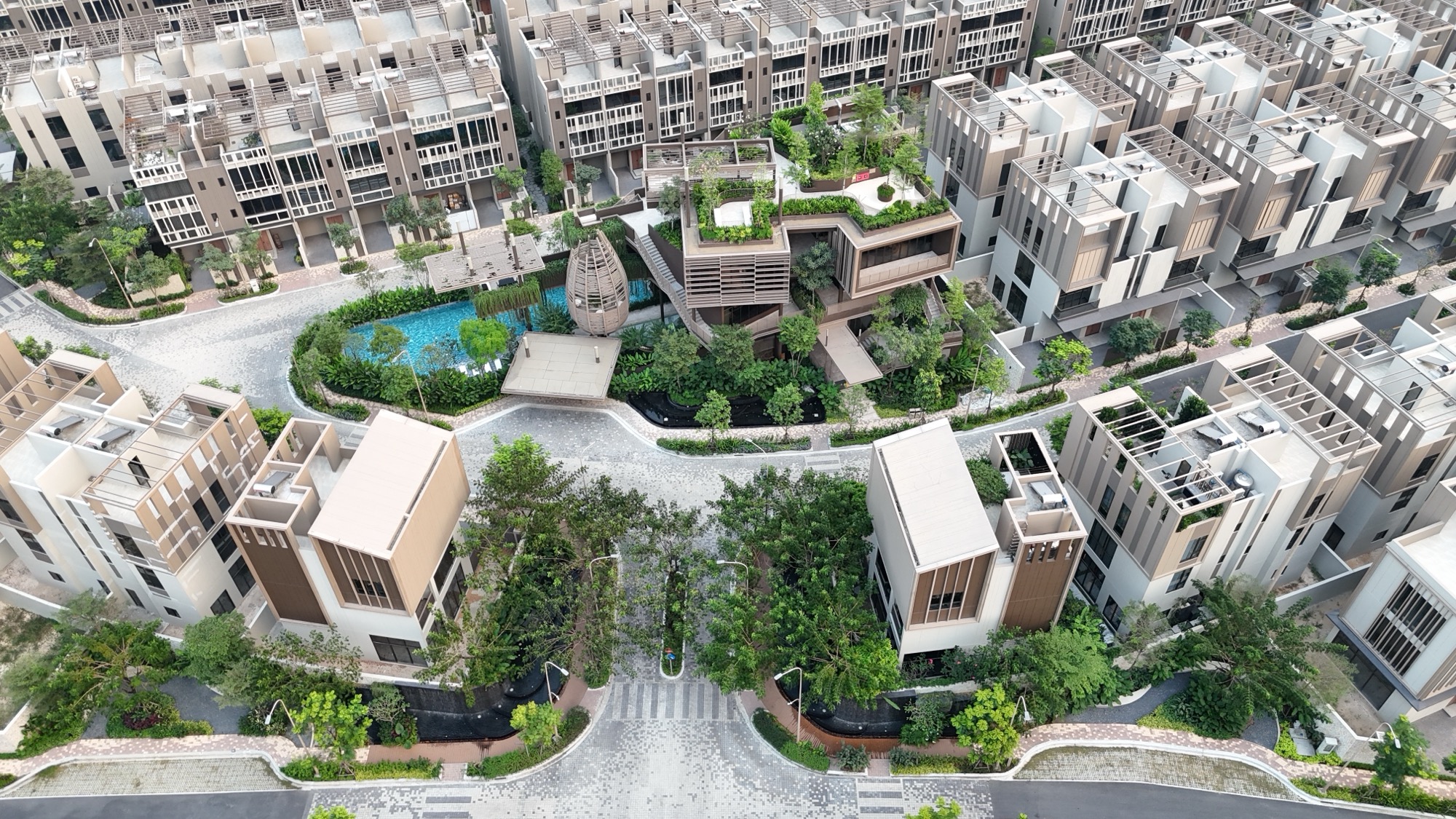
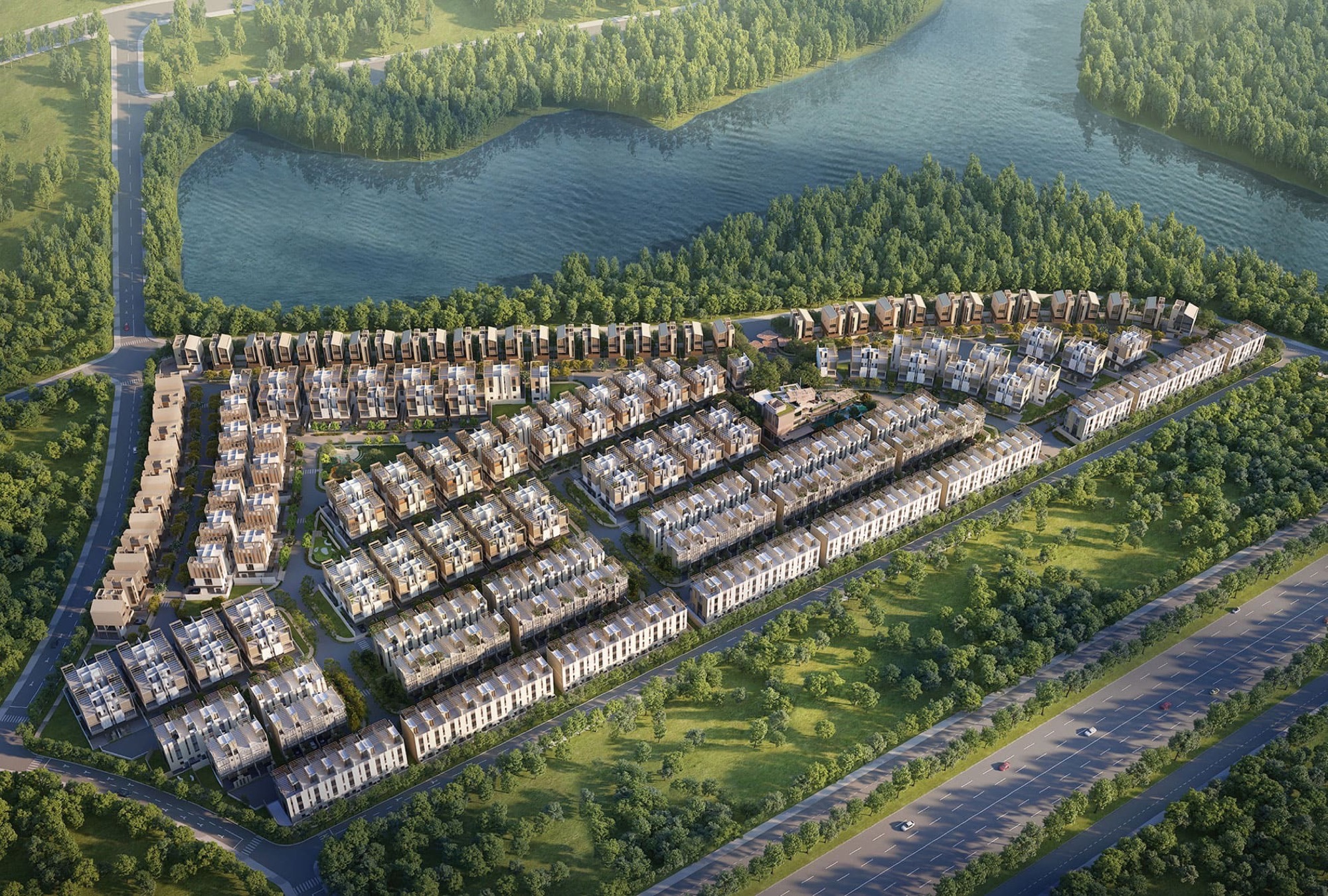
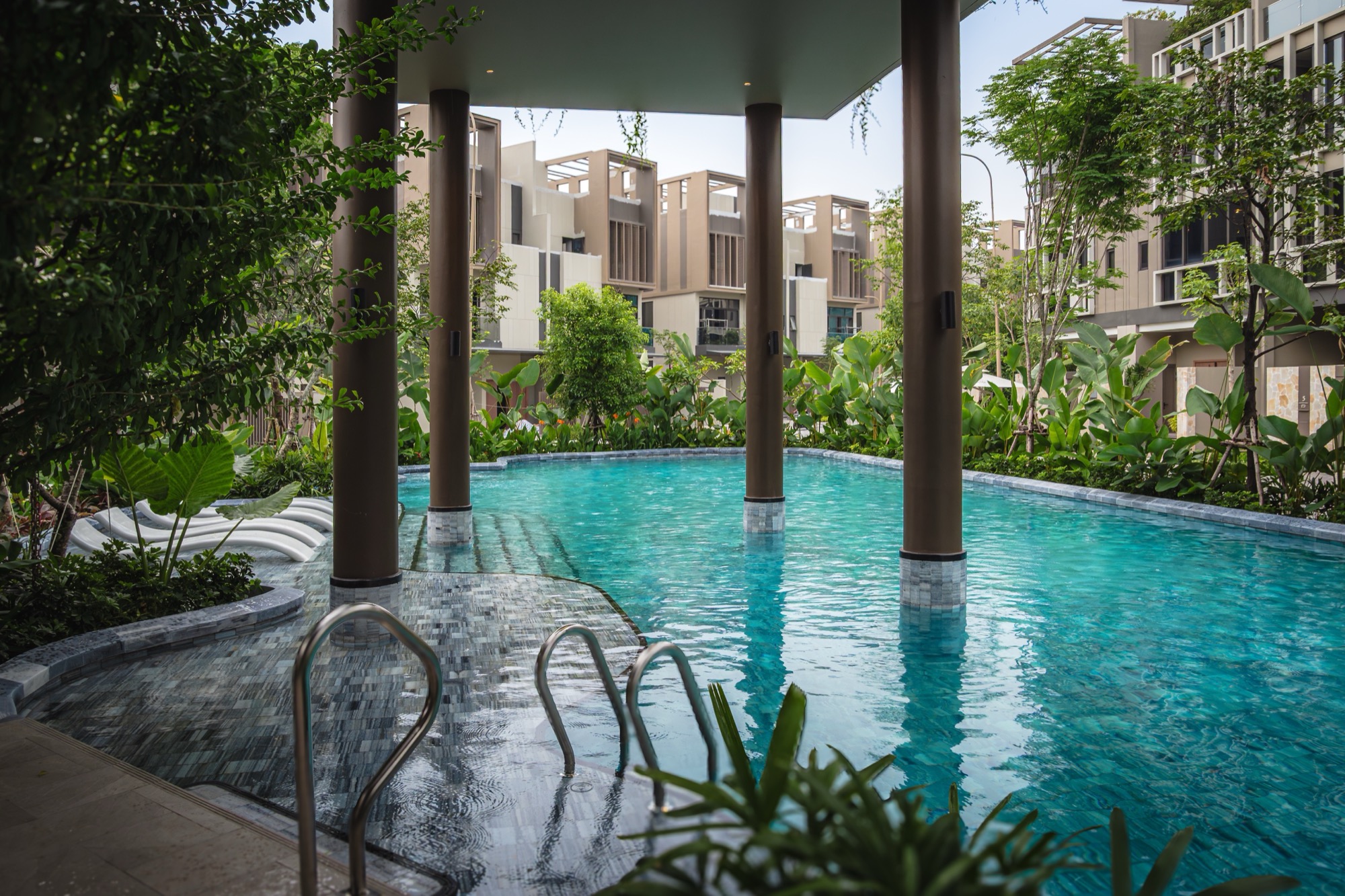
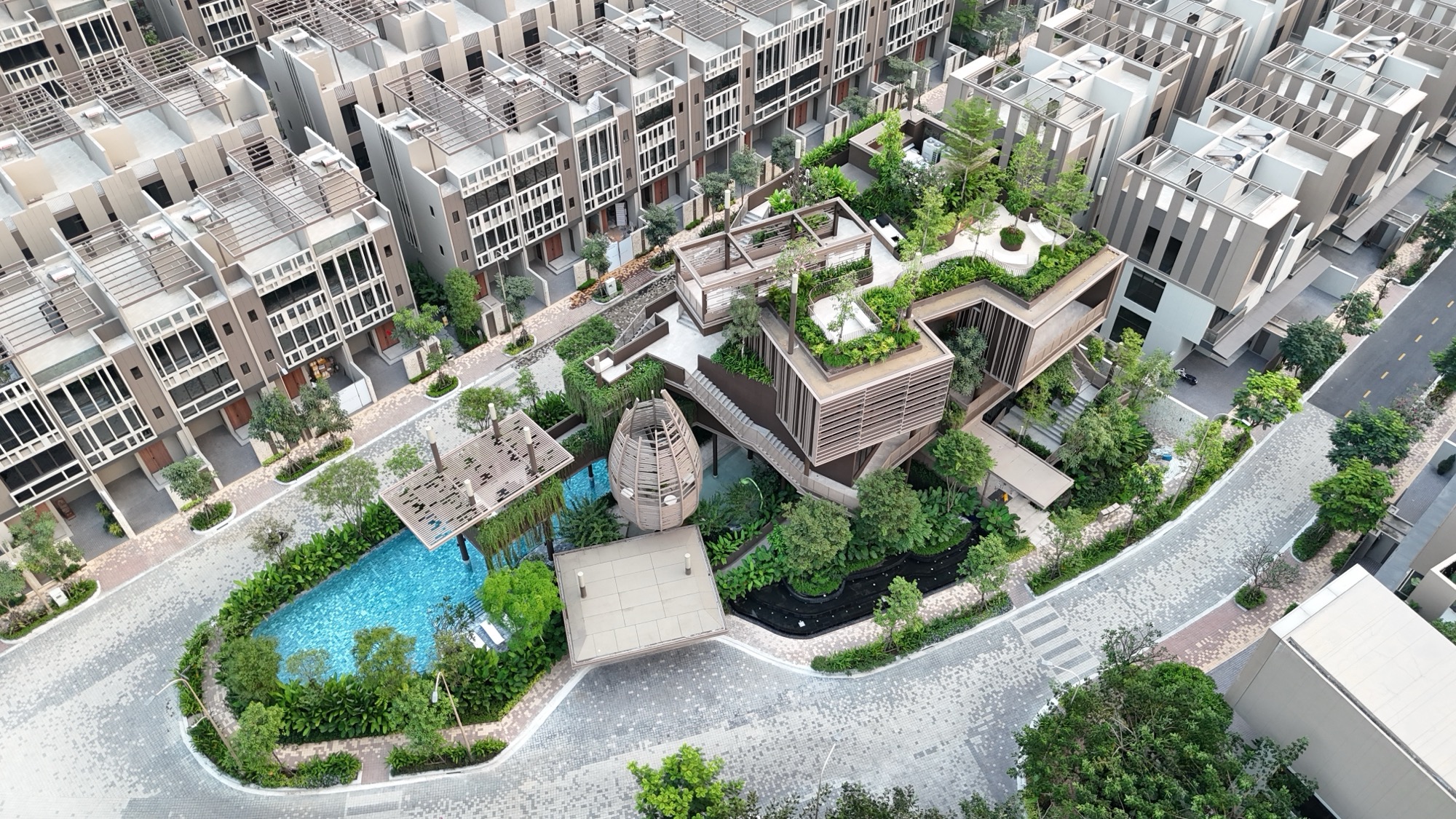
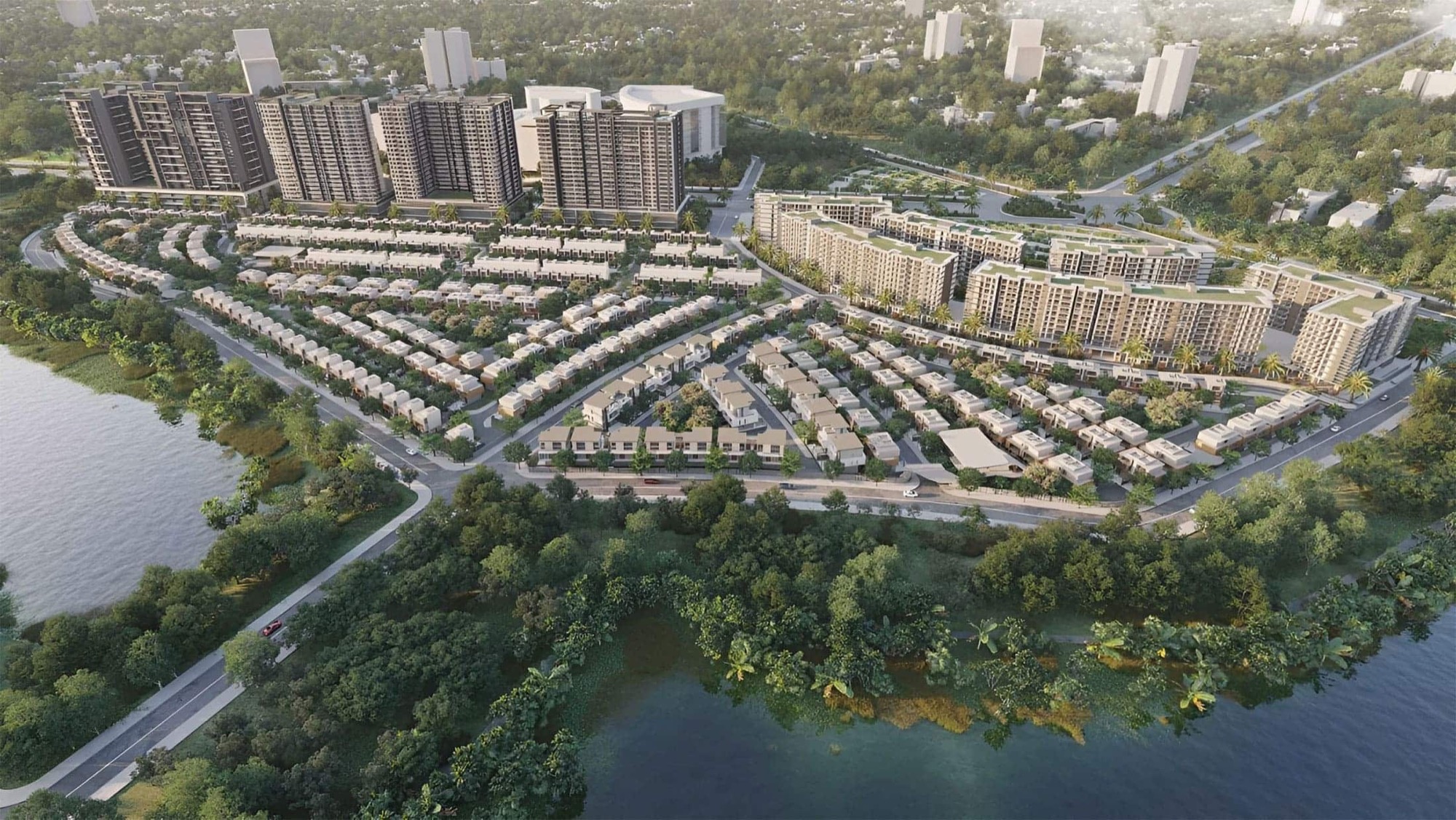
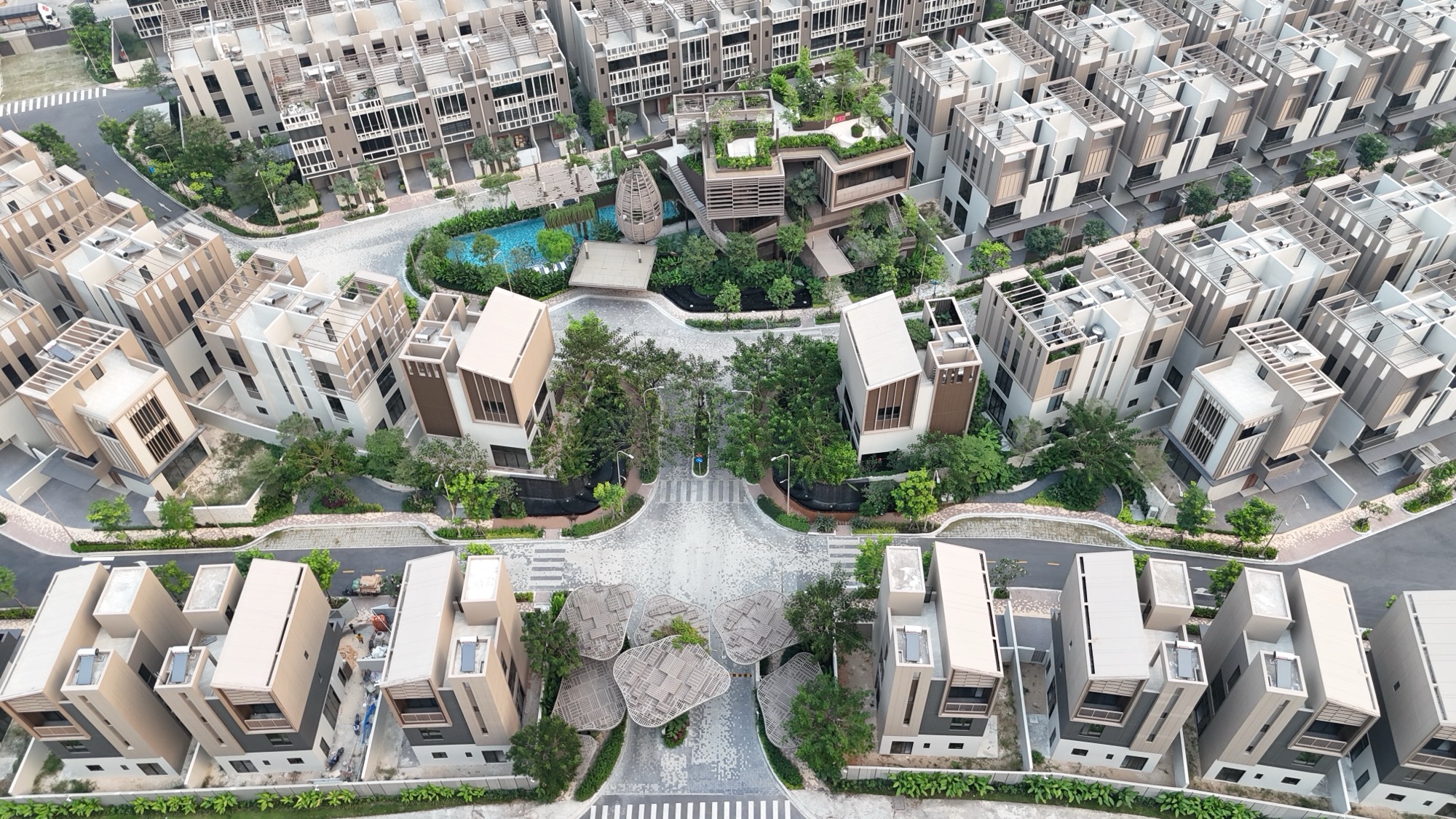
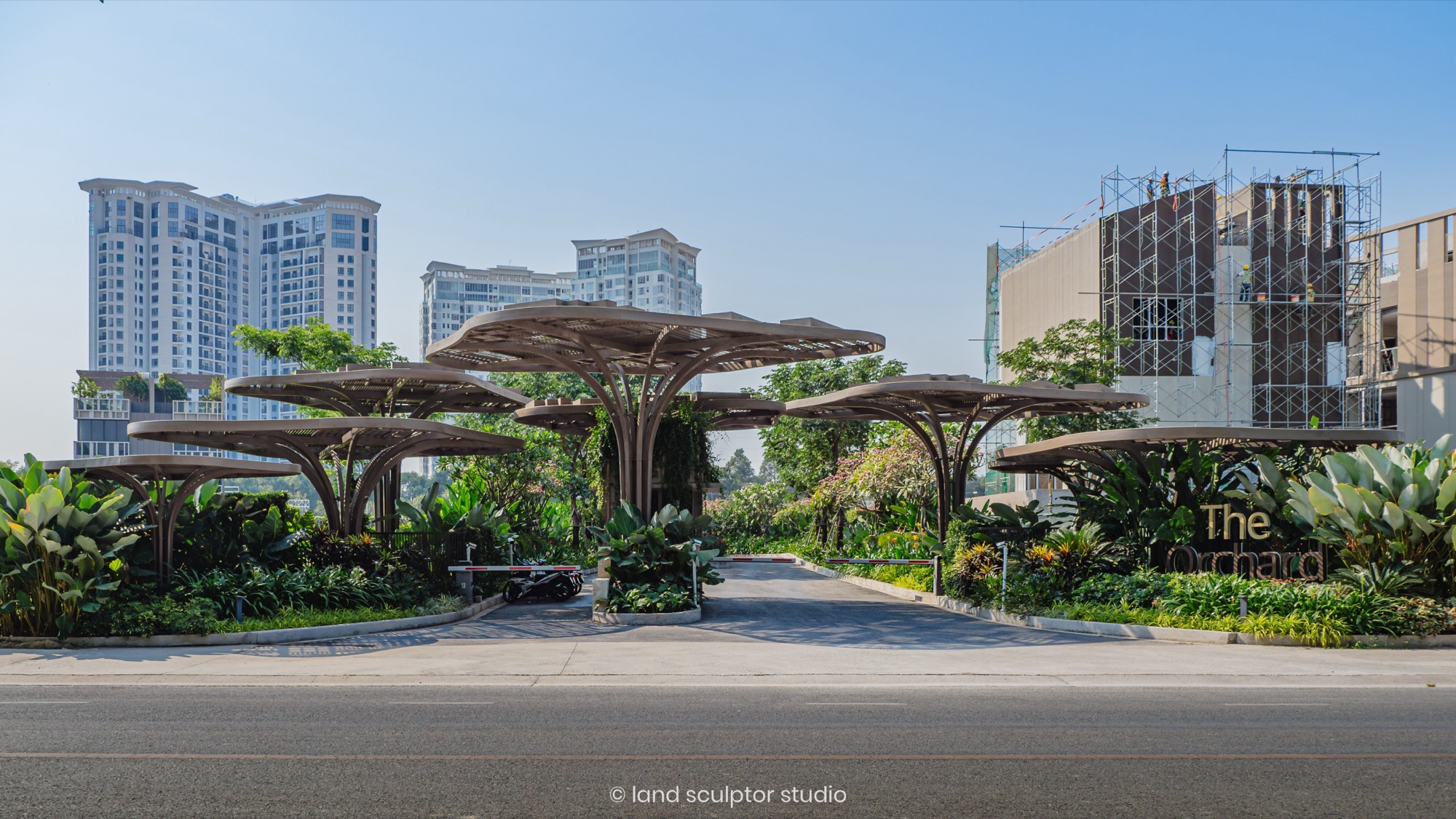
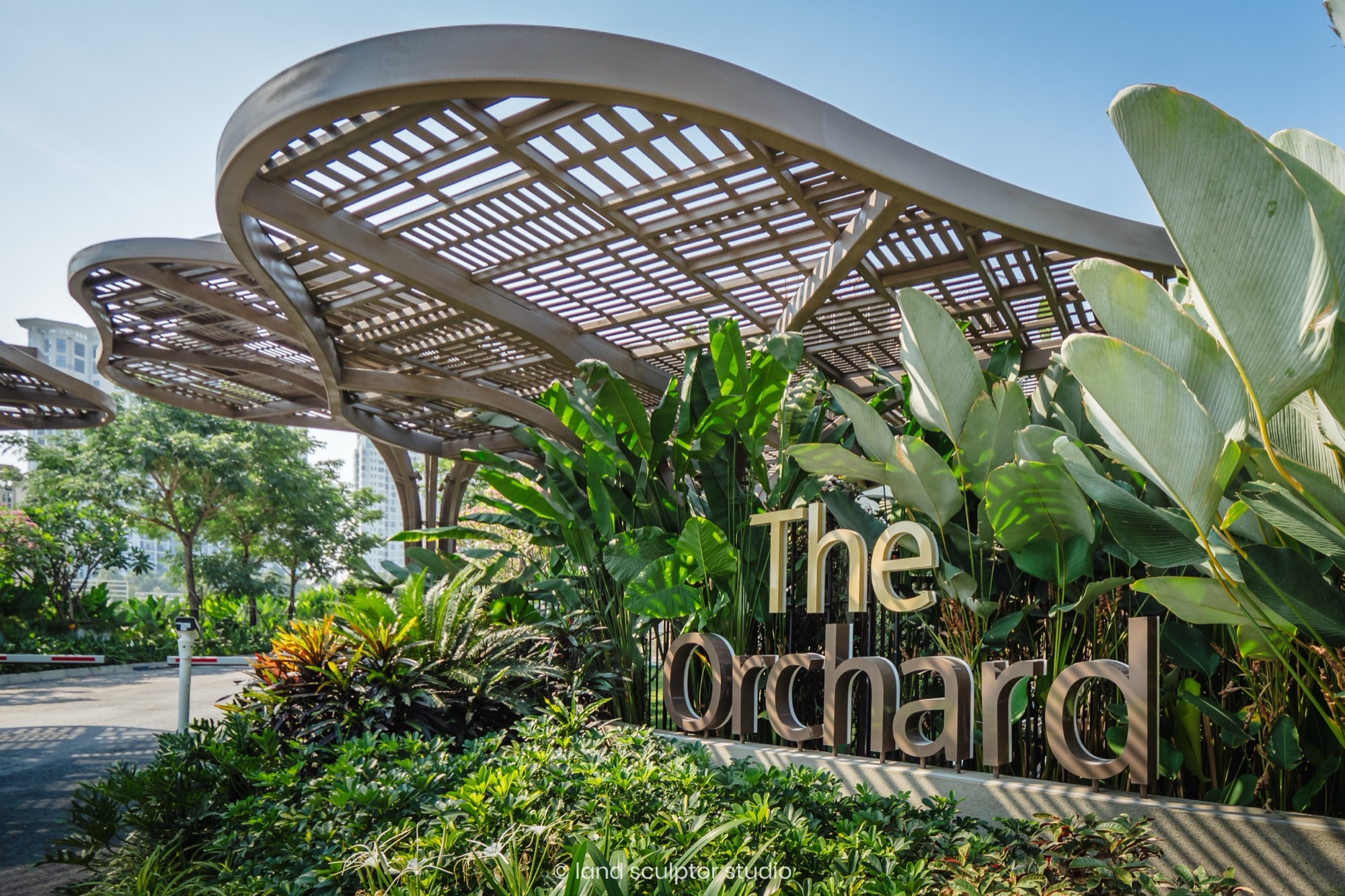
The Orchard at Sycamore Binh Duong is a 5.45-hectare high-end residential development located in Binh Duong Ward, Ho Chi Minh City, approximately 40 km north from the city center. Developed by CapitaLand Vietnam and completed in early 2025, the project establishes a new benchmark for ecological landscape design in Vietnamese urban residential development.
1. Design philosophy: nature as infrastructure
The design departs from the conventional model of landscape as visual amenity. At The Orchard, green systems are embedded as functional infrastructure: managing water, moderating microclimate, supporting biodiversity, and structuring daily life. Sustainability is not a layer applied over the design; it is the generative idea behind every spatial decision.
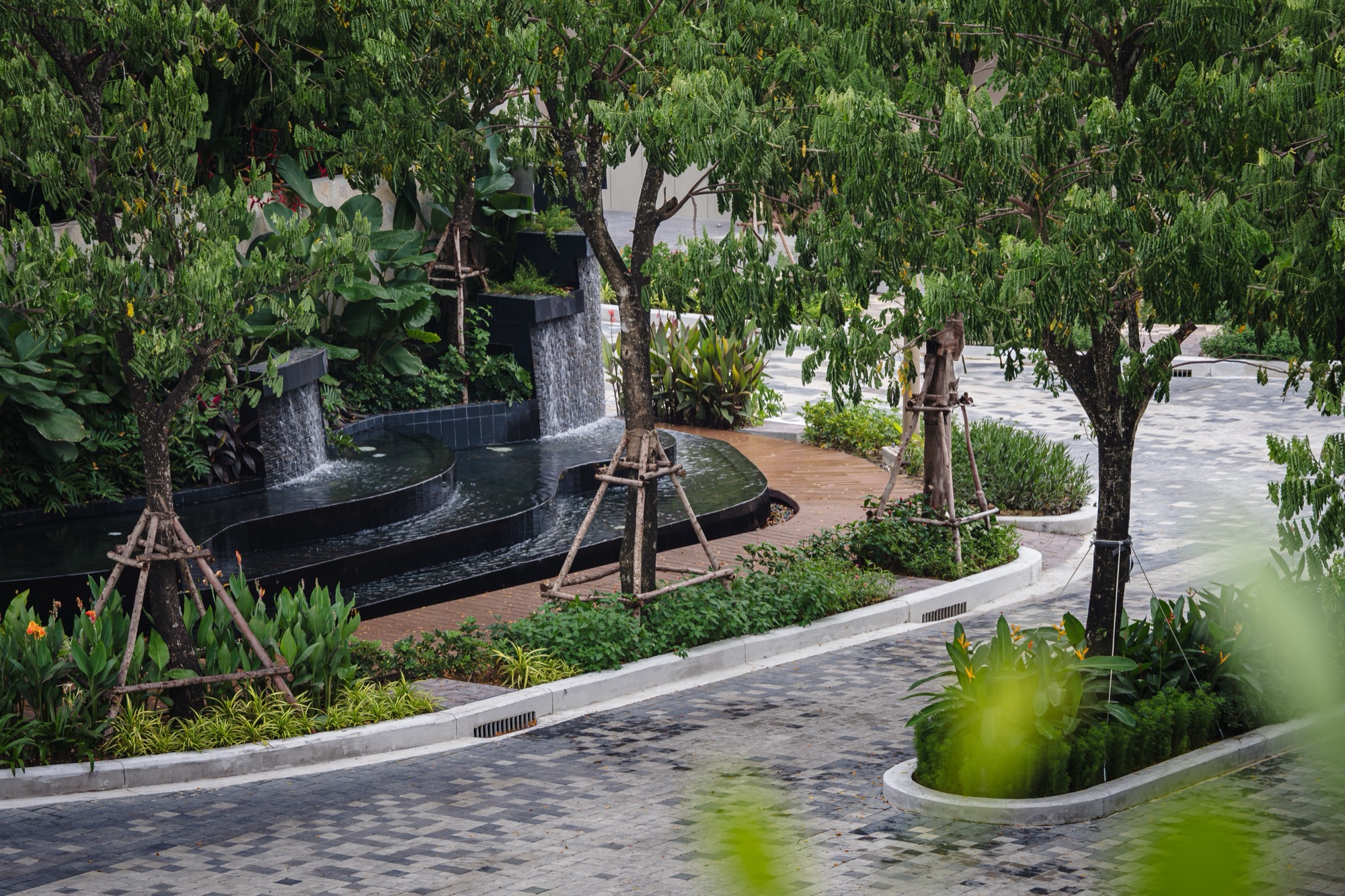
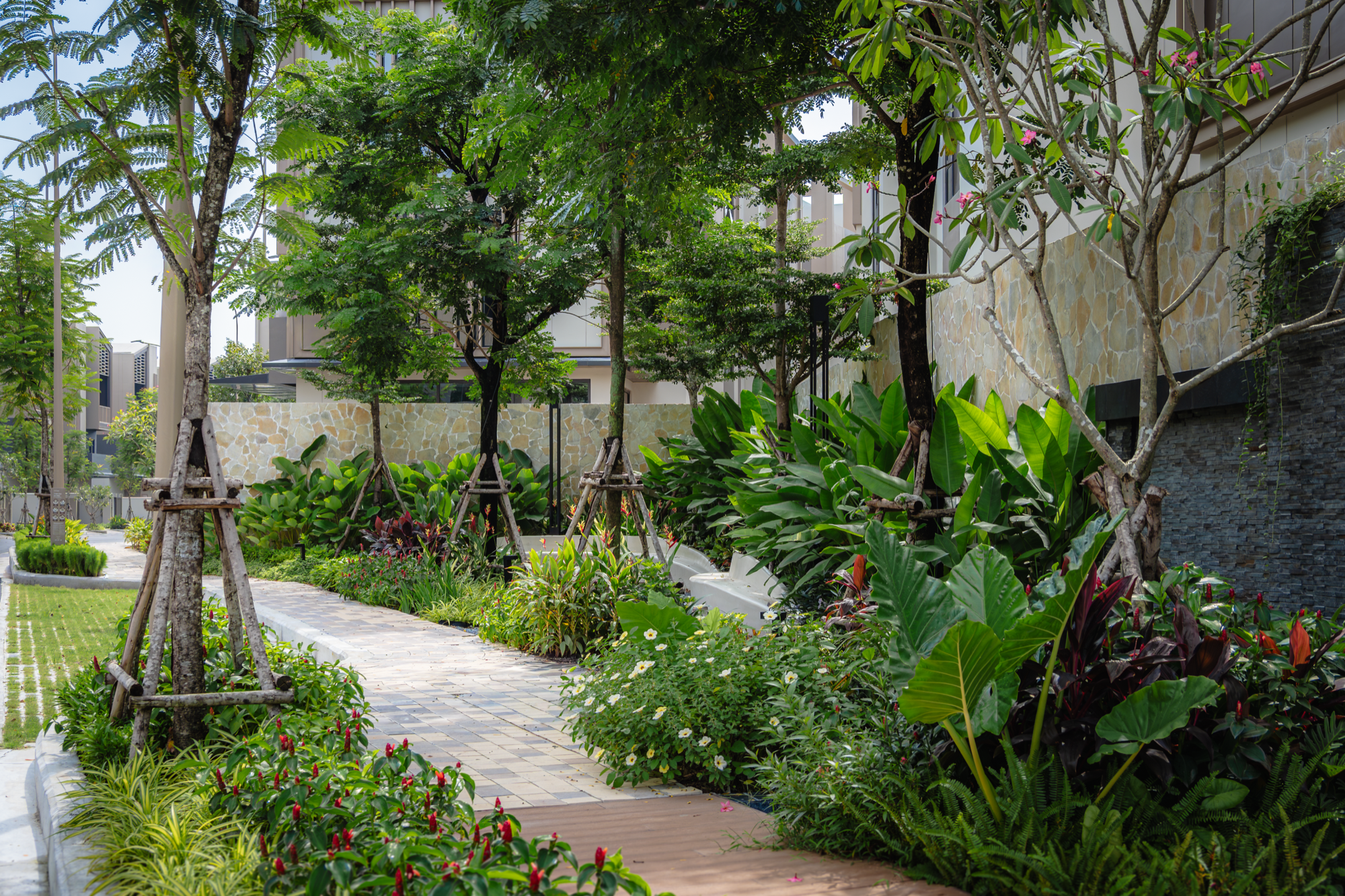
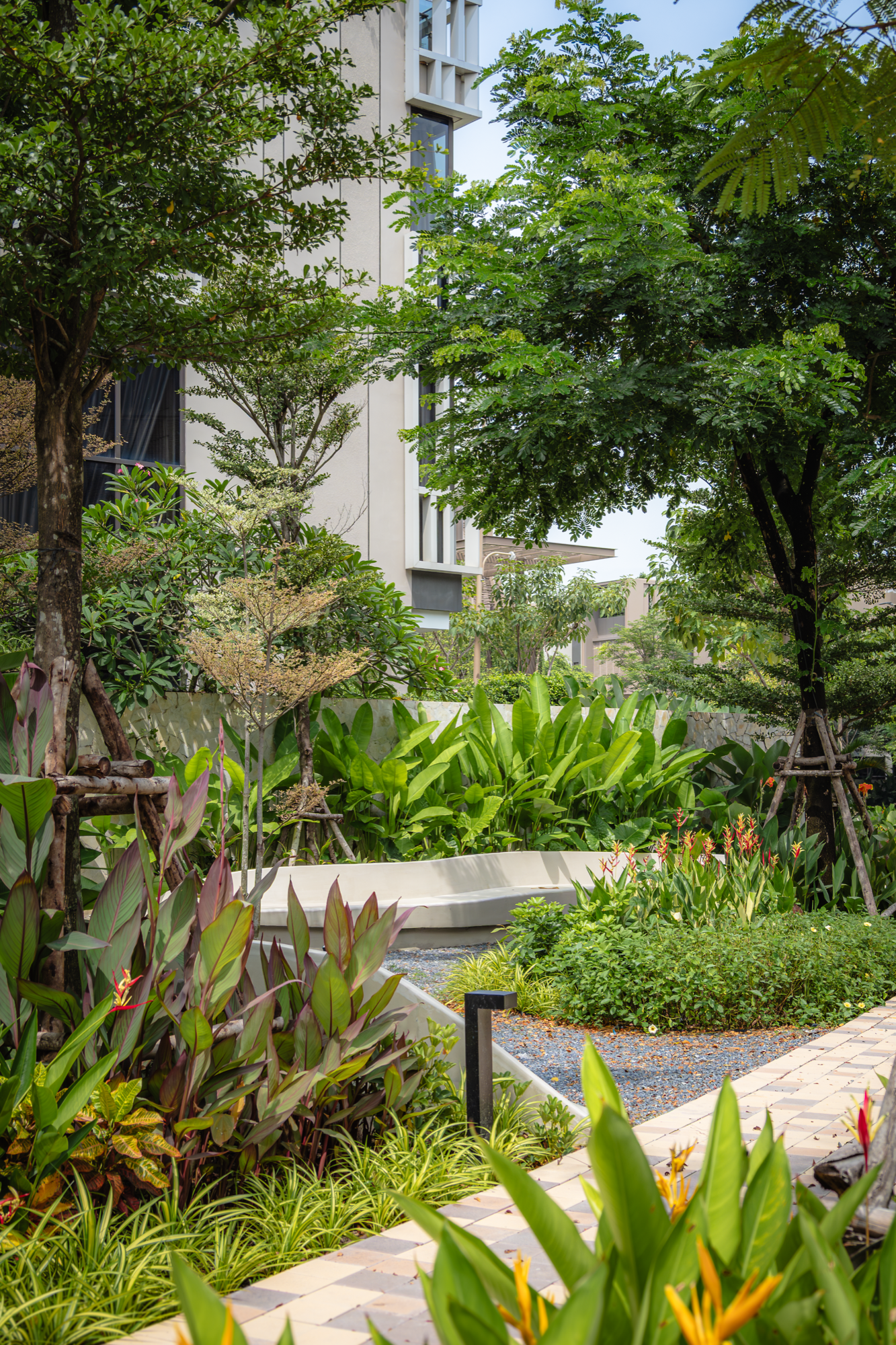
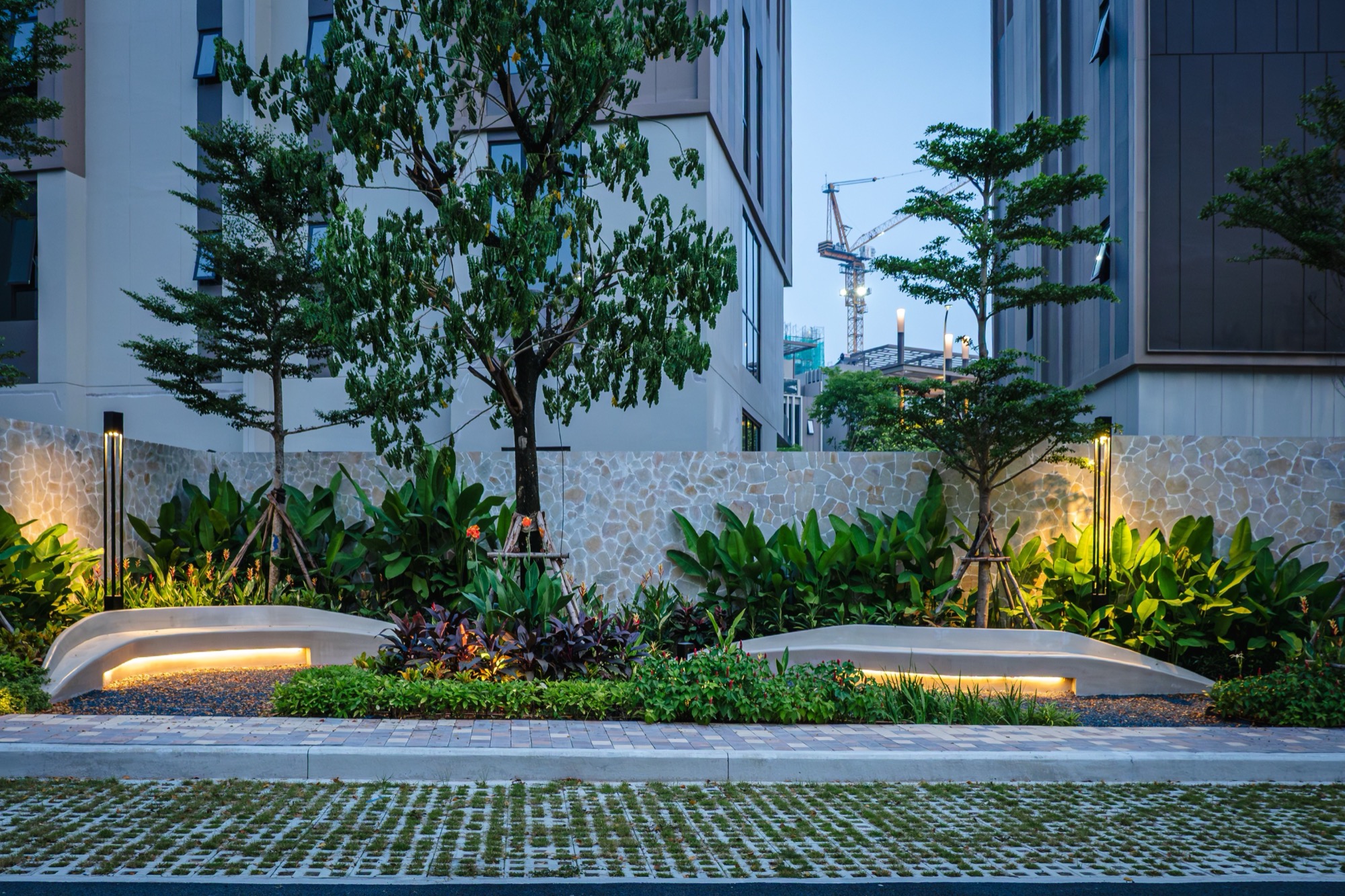
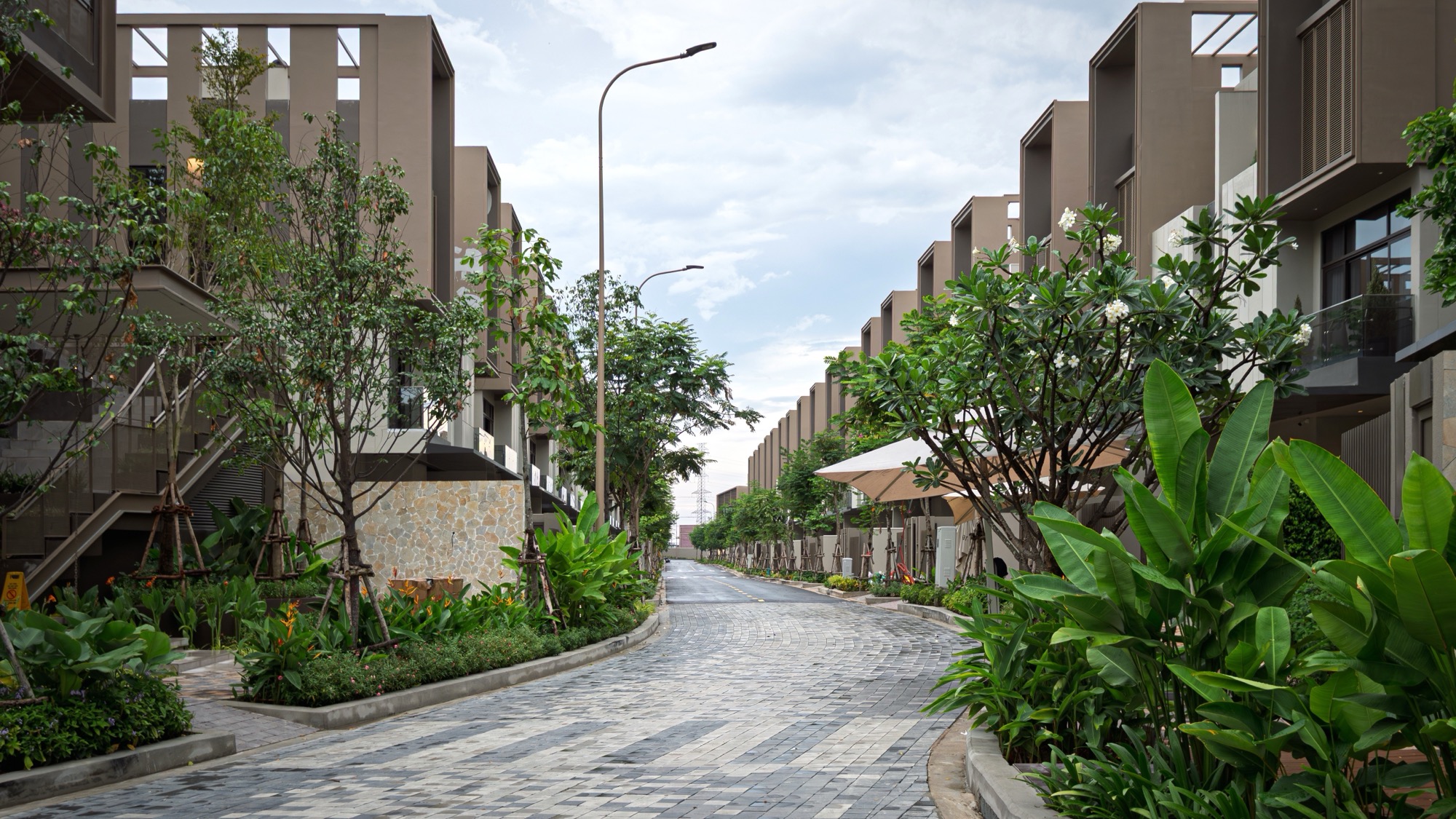
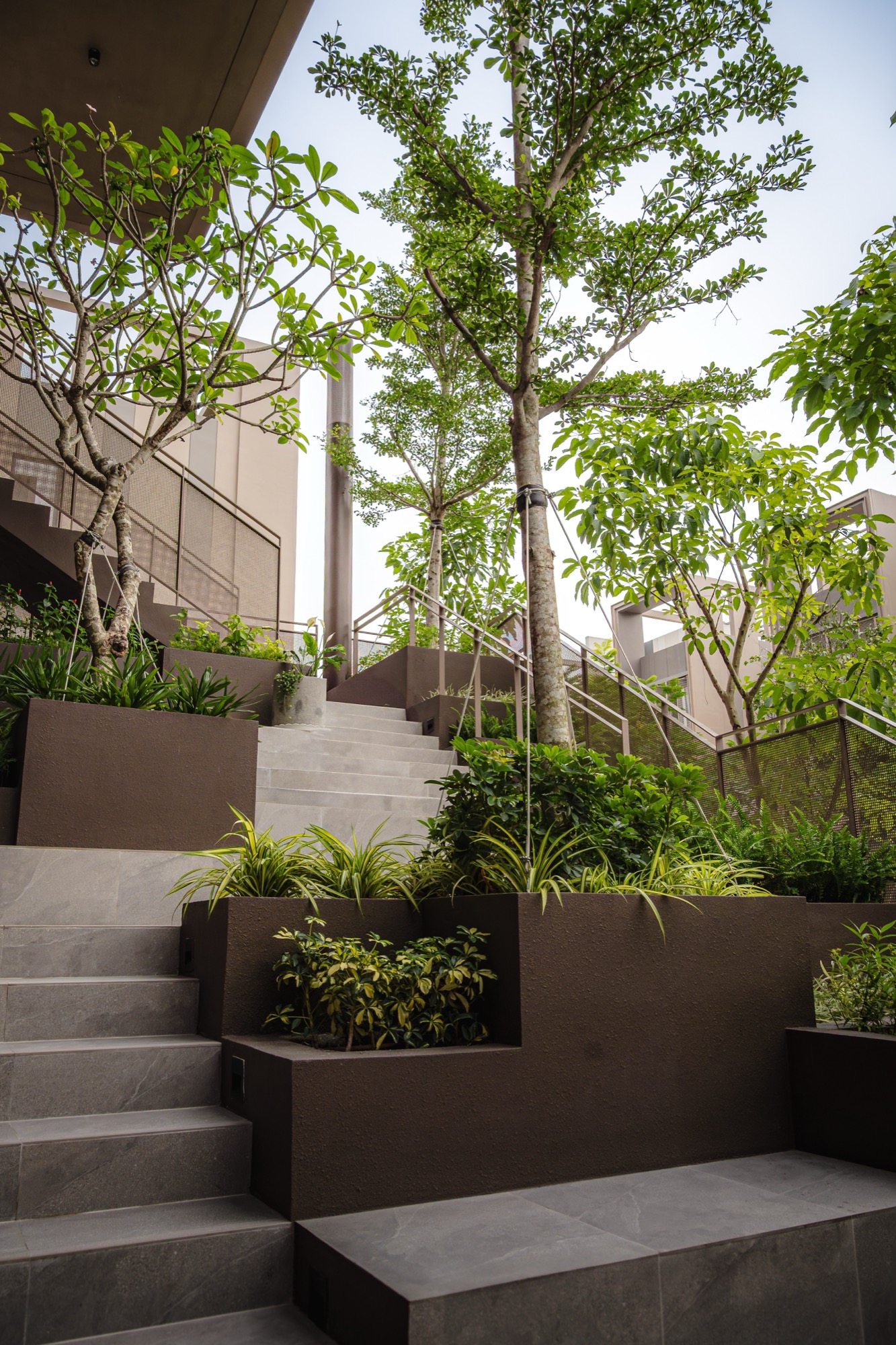
A central ambition was the “one tree per house” principle: ensuring shade trees line virtually every home along the streetscape. This required close coordination with engineers to resolve underground utility conflicts, a challenge that was resolved through careful spatial sequencing. The result is a network of shaded, tree-lined streets that reduce ambient heat and give the neighborhood a calm, inhabited quality.
2. Landscape structure and spatial variety
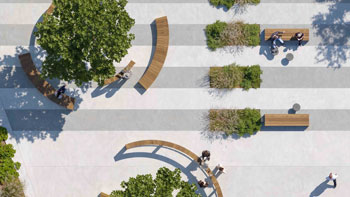
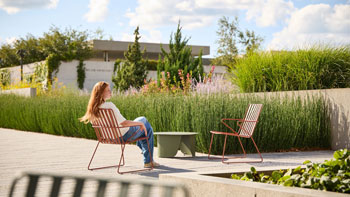
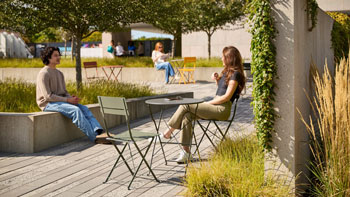
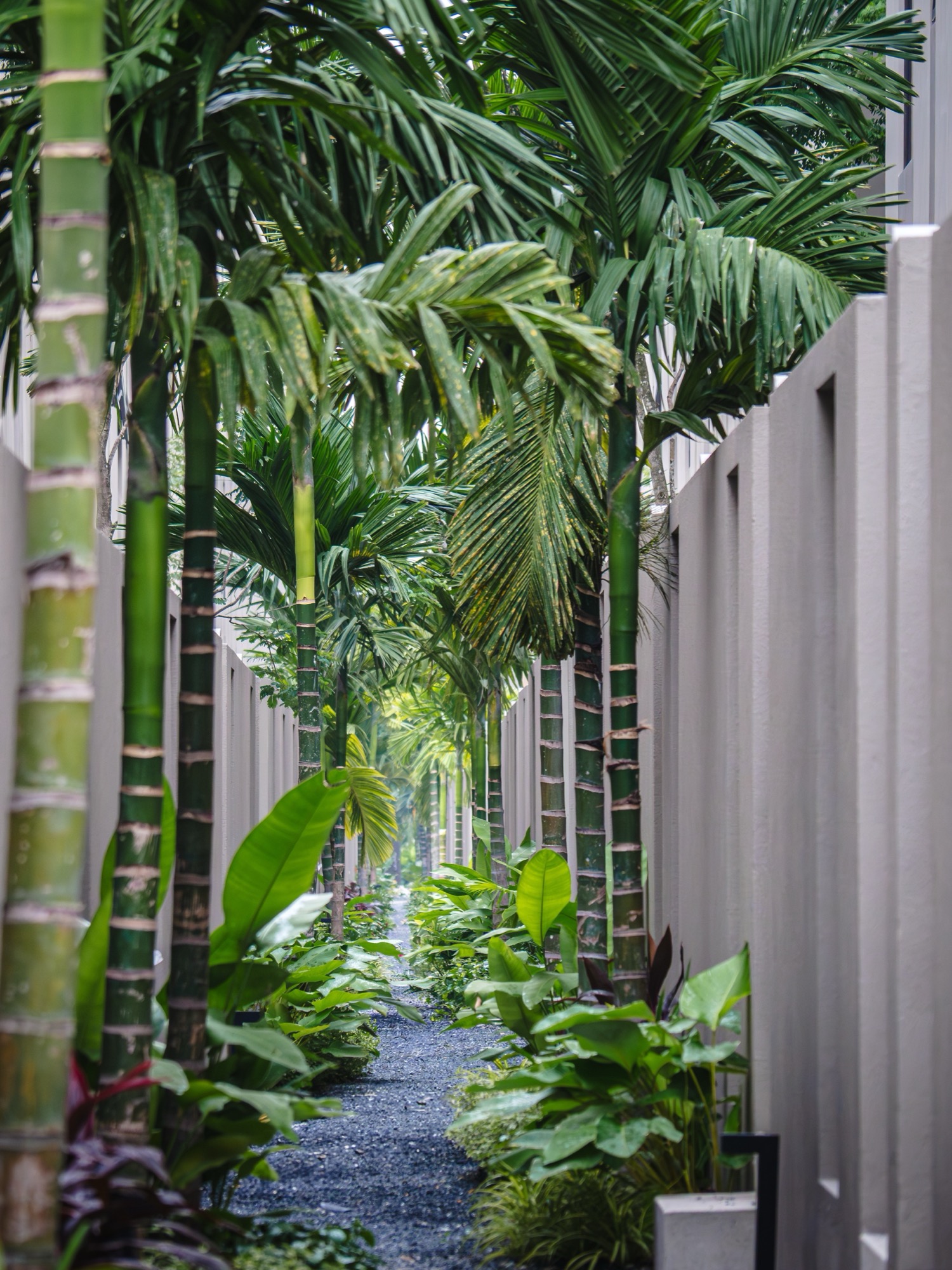
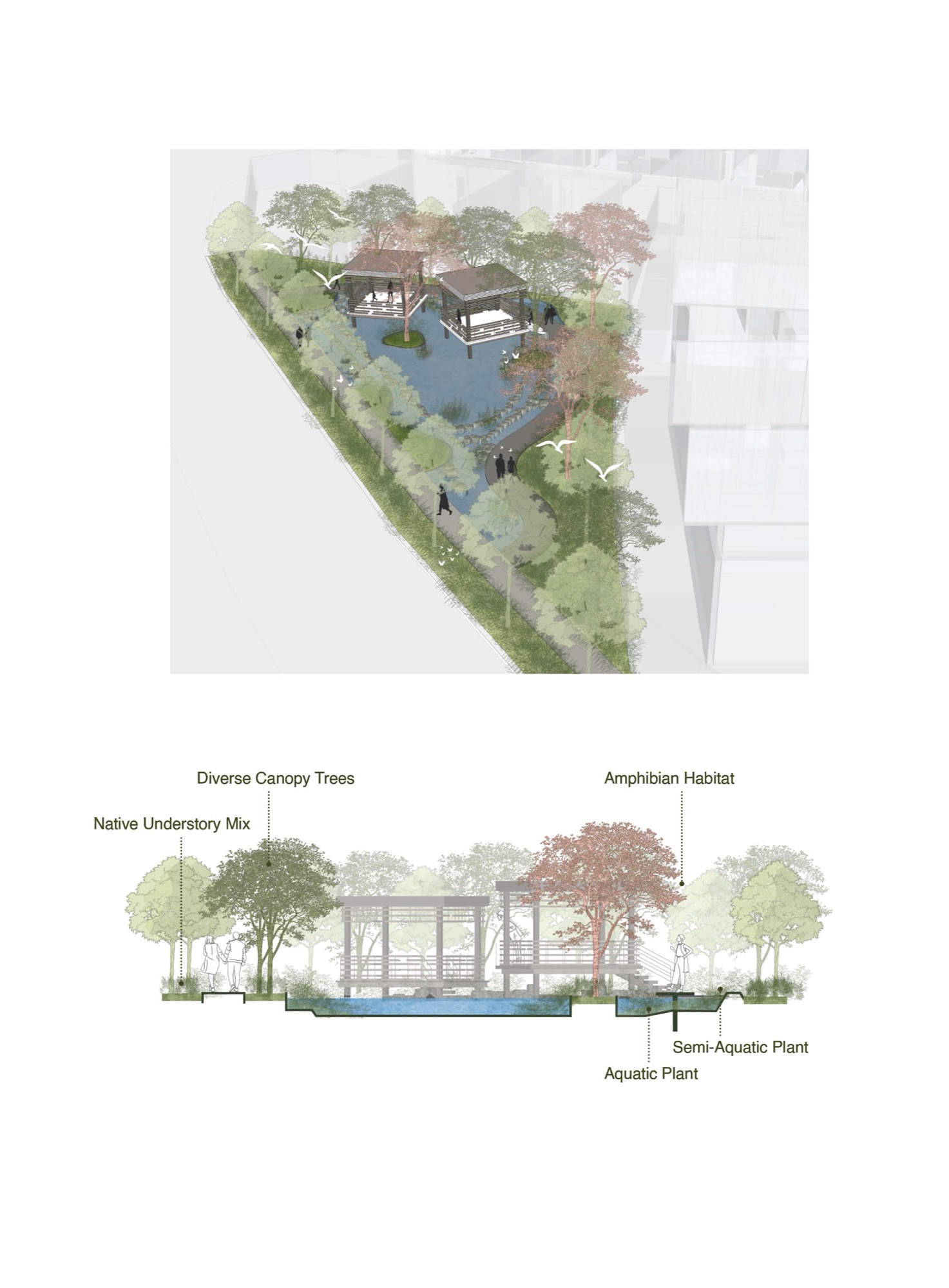
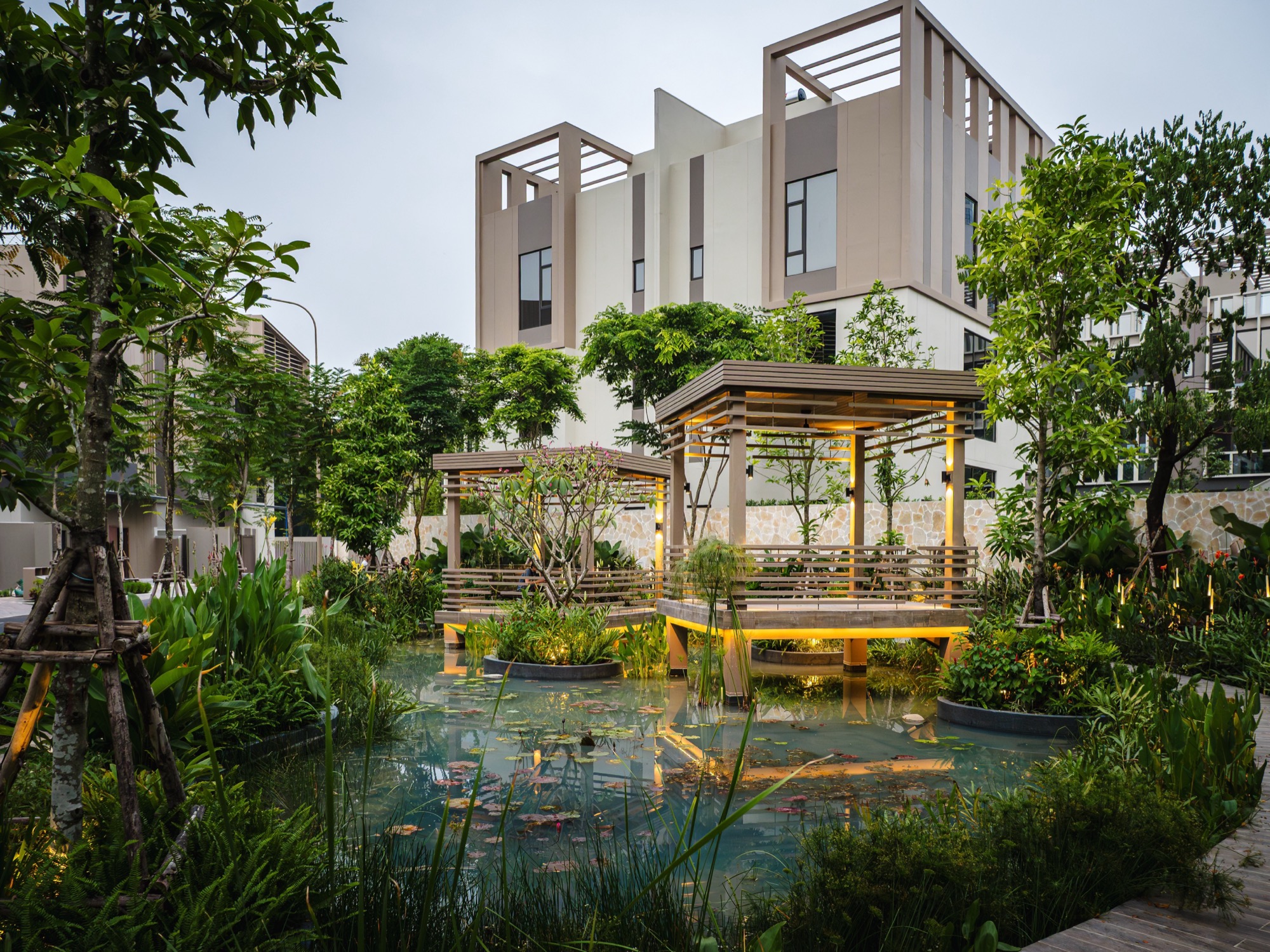
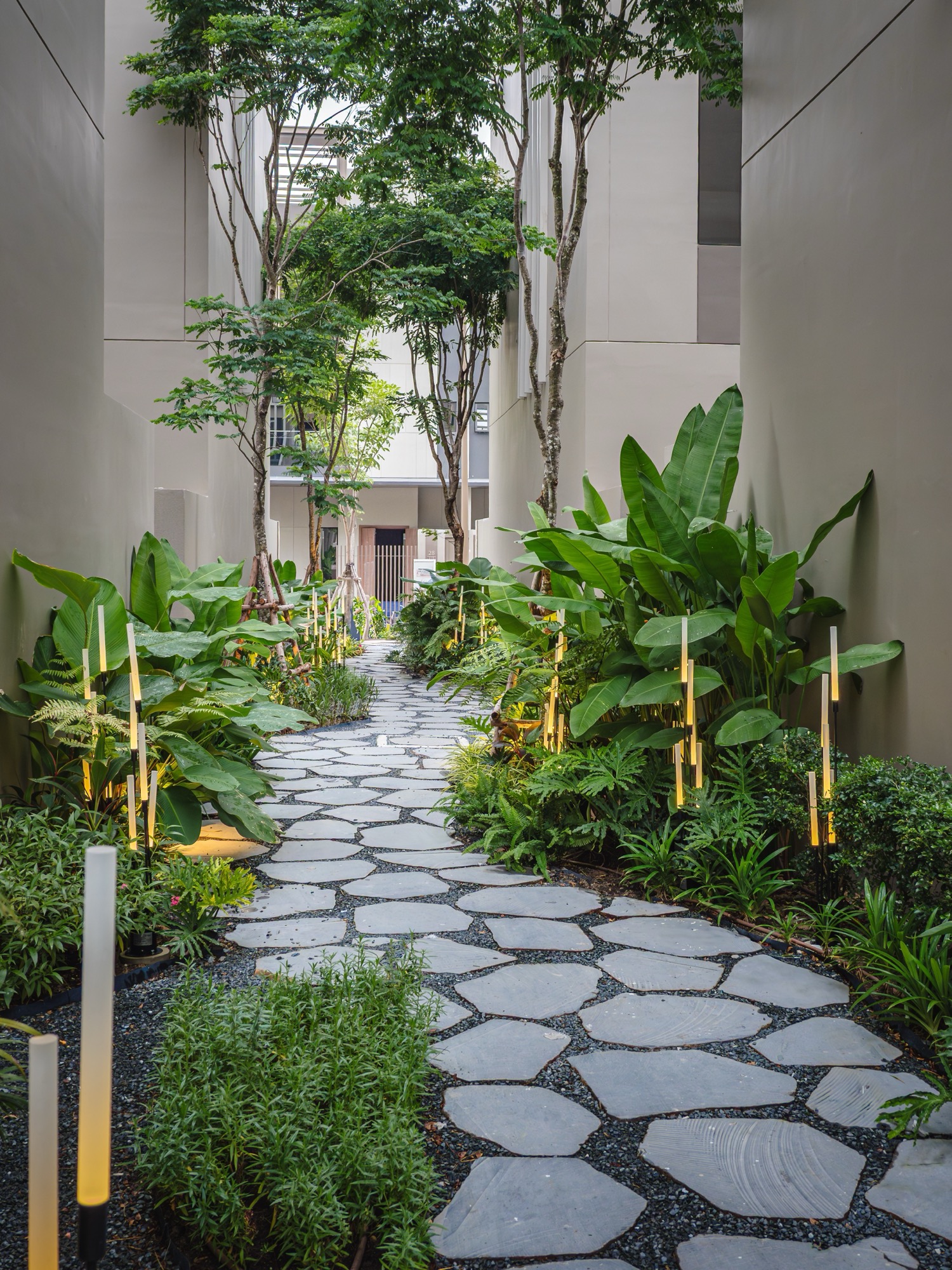
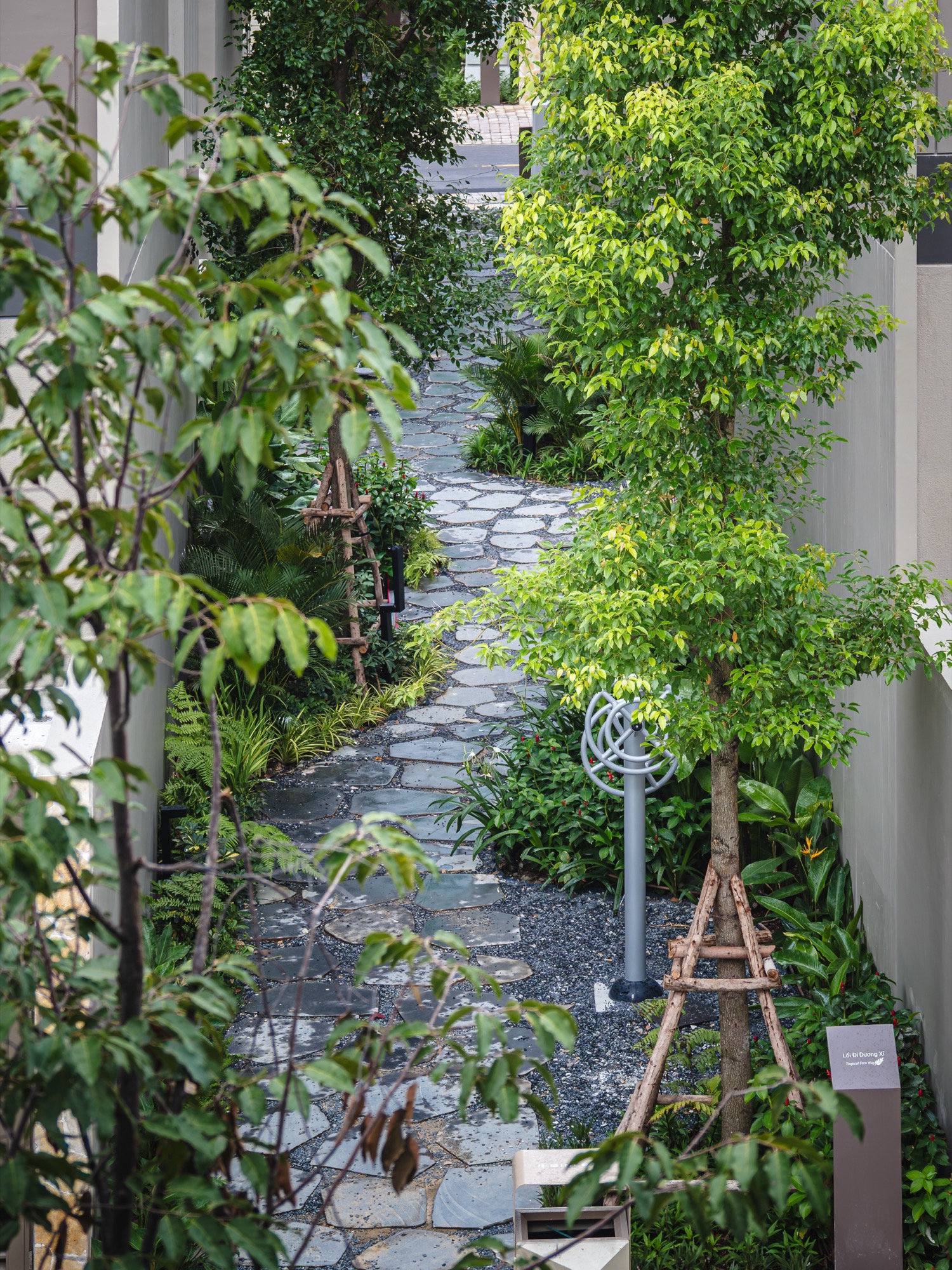
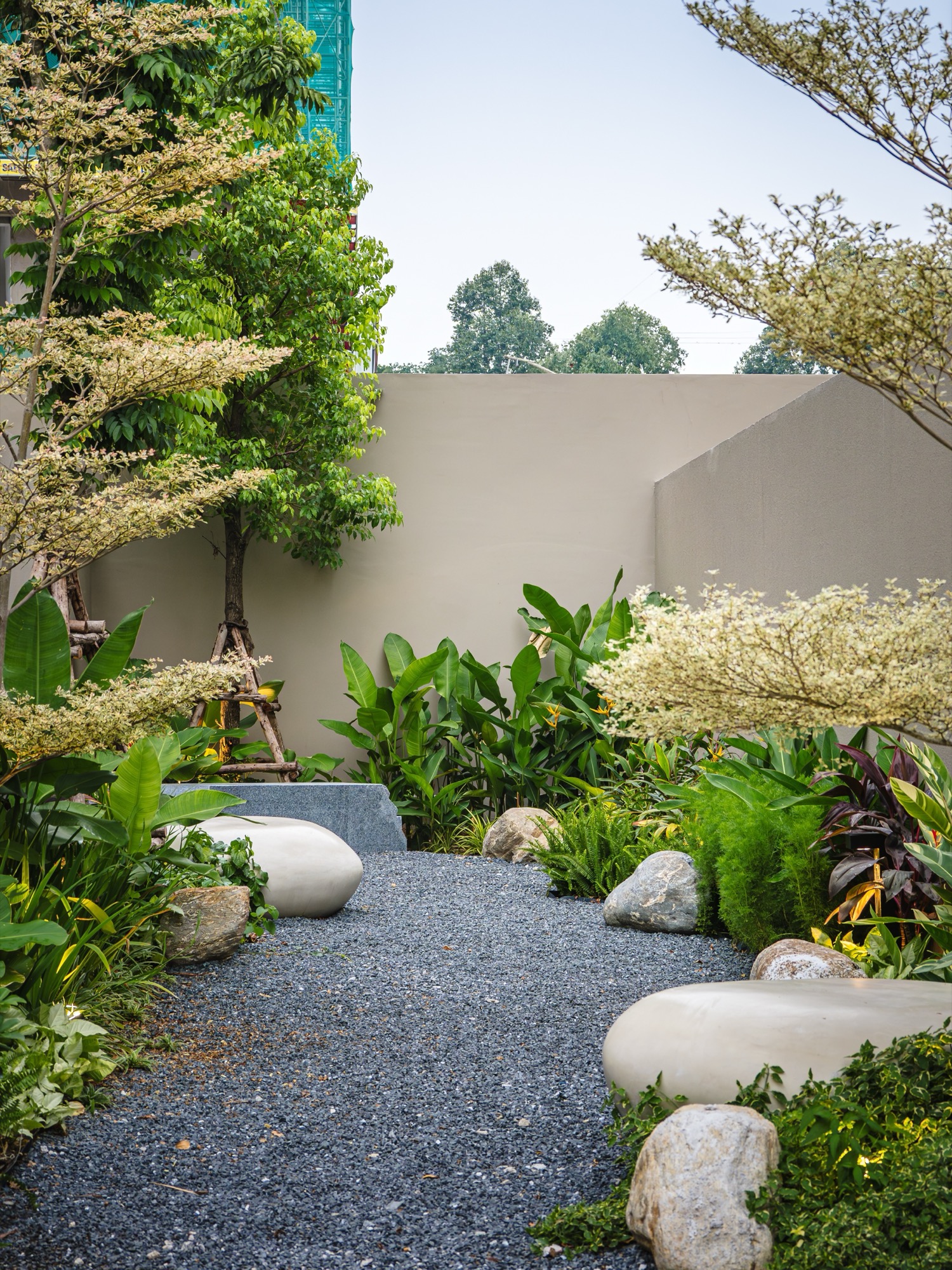
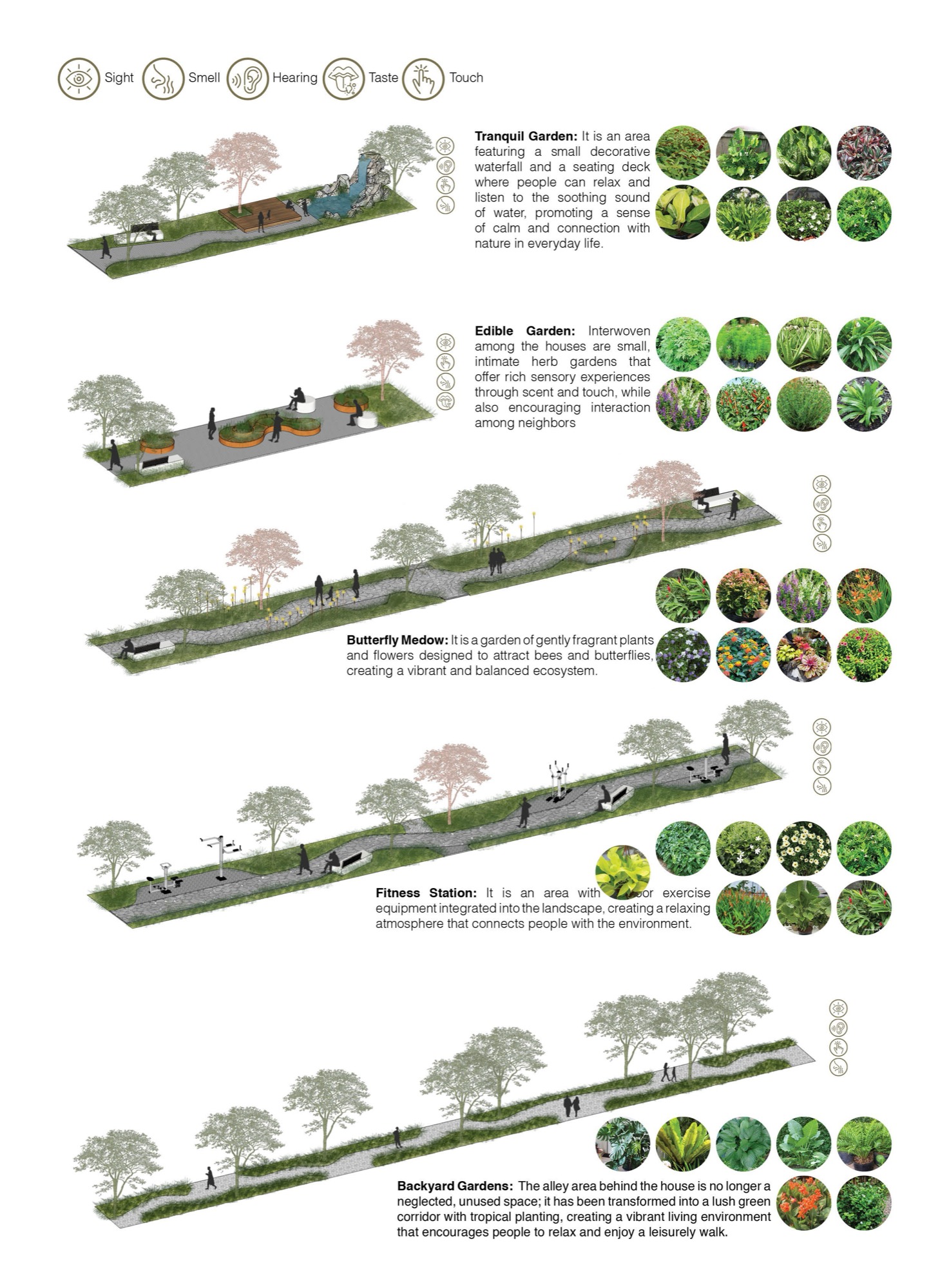
The masterplan organizes the landscape into a series of distinct pocket gardens, each with its own character and ecological role: a Butterfly Meadow planted with flowering species to attract pollinators; a Meditative Pads zone anchored by a bio-retention pond supporting amphibian habitats; Backyard Gardens that transform residual service lanes into tropical green corridors; a Rock Garden, Herb Garden, Edible Garden, and Scented Nook, each engaging a different sensory register.
Plant selection was driven by ecological criteria: species were chosen for their capacity to attract birds, butterflies, squirrels, and bees, forming a functioning urban biodiversity network rather than a decorative planting scheme.
3. Water management as landscape
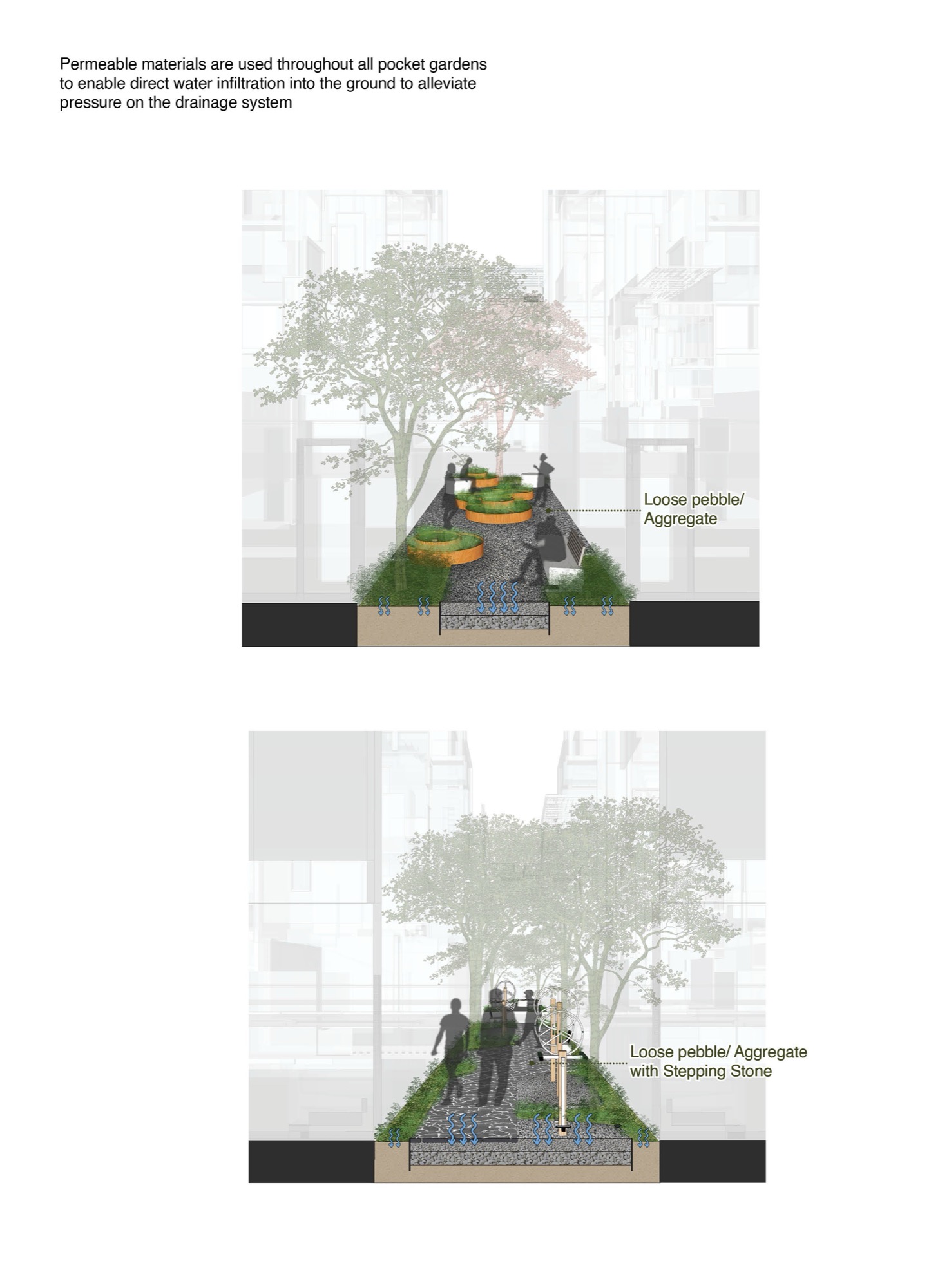
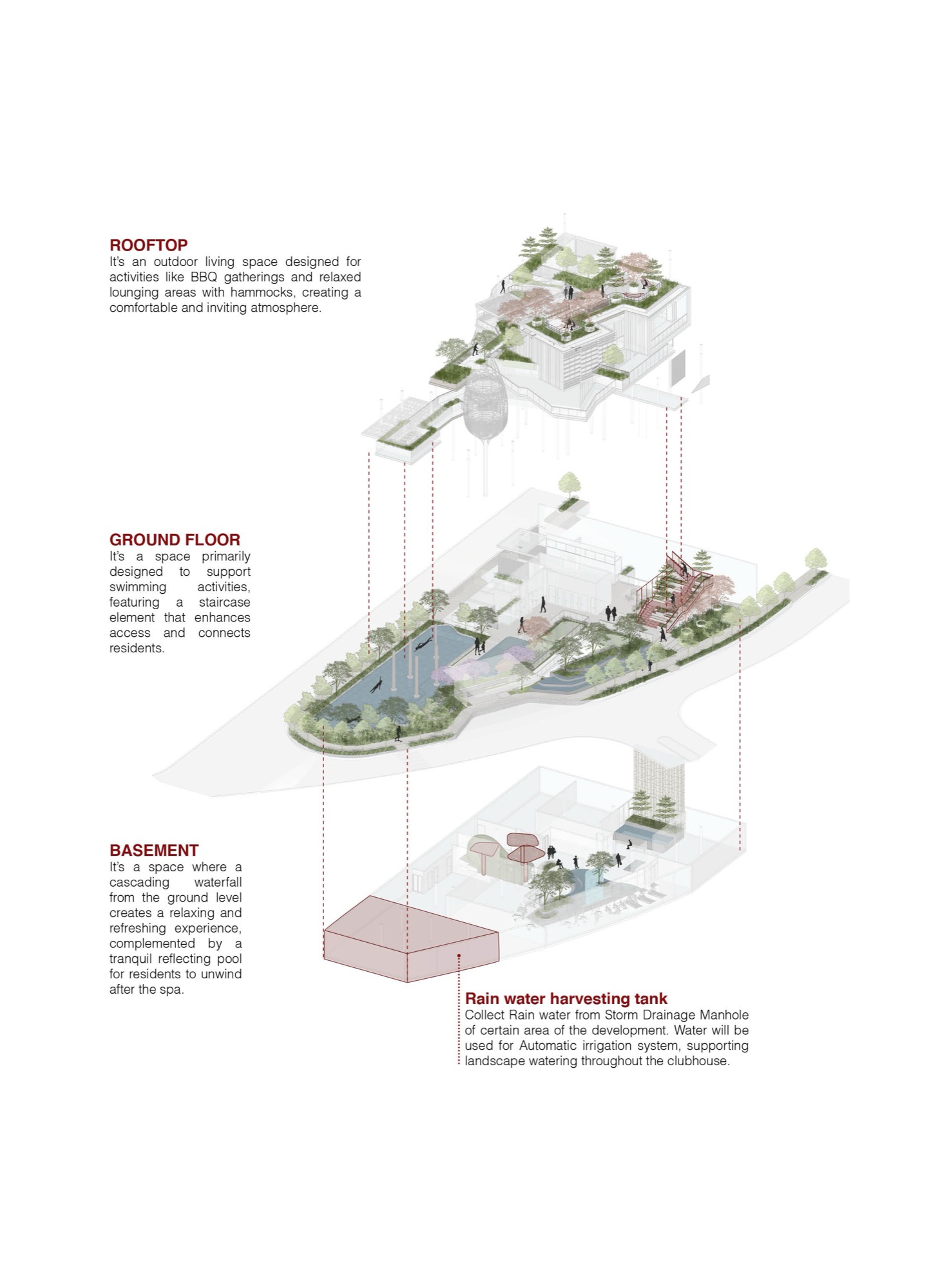
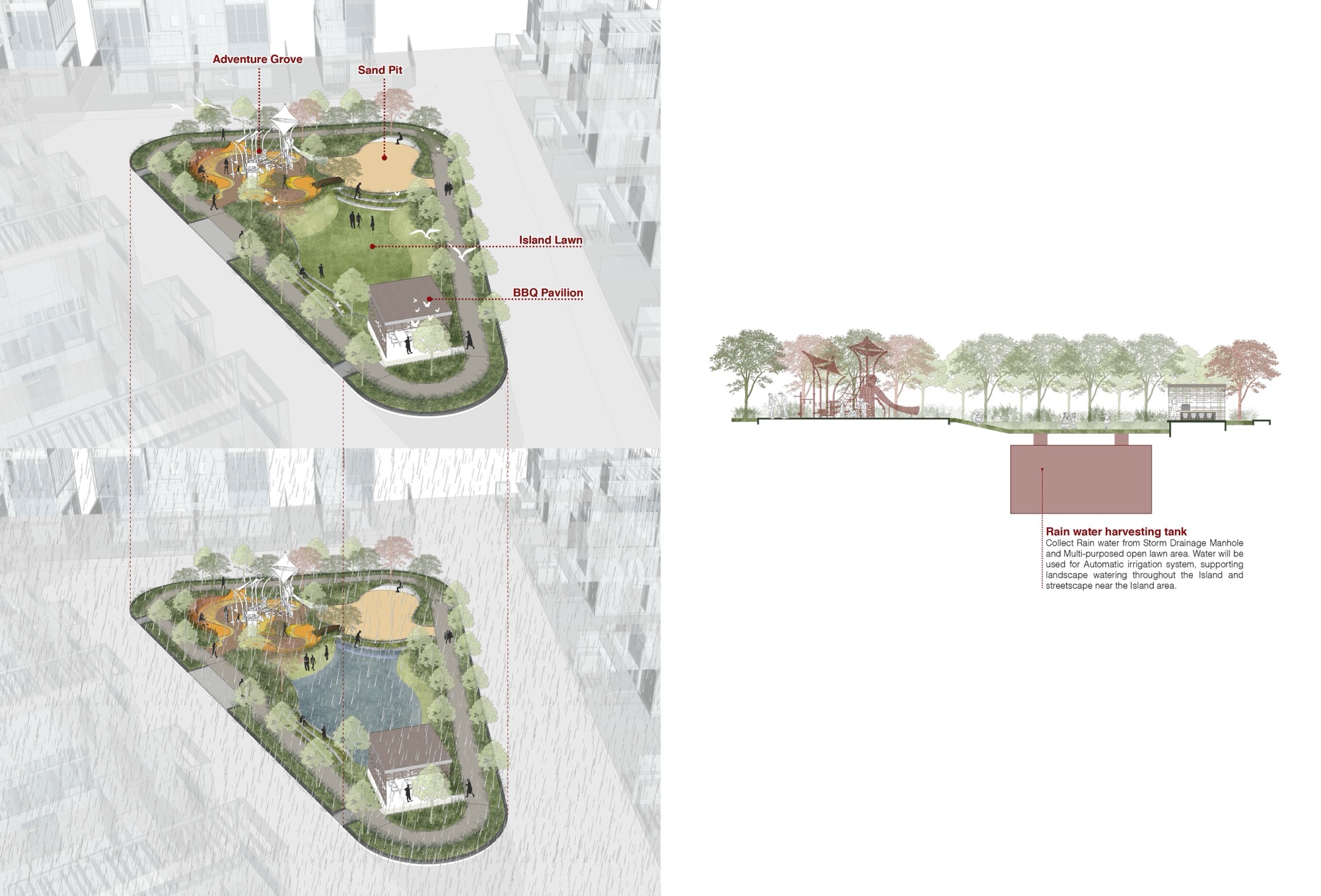
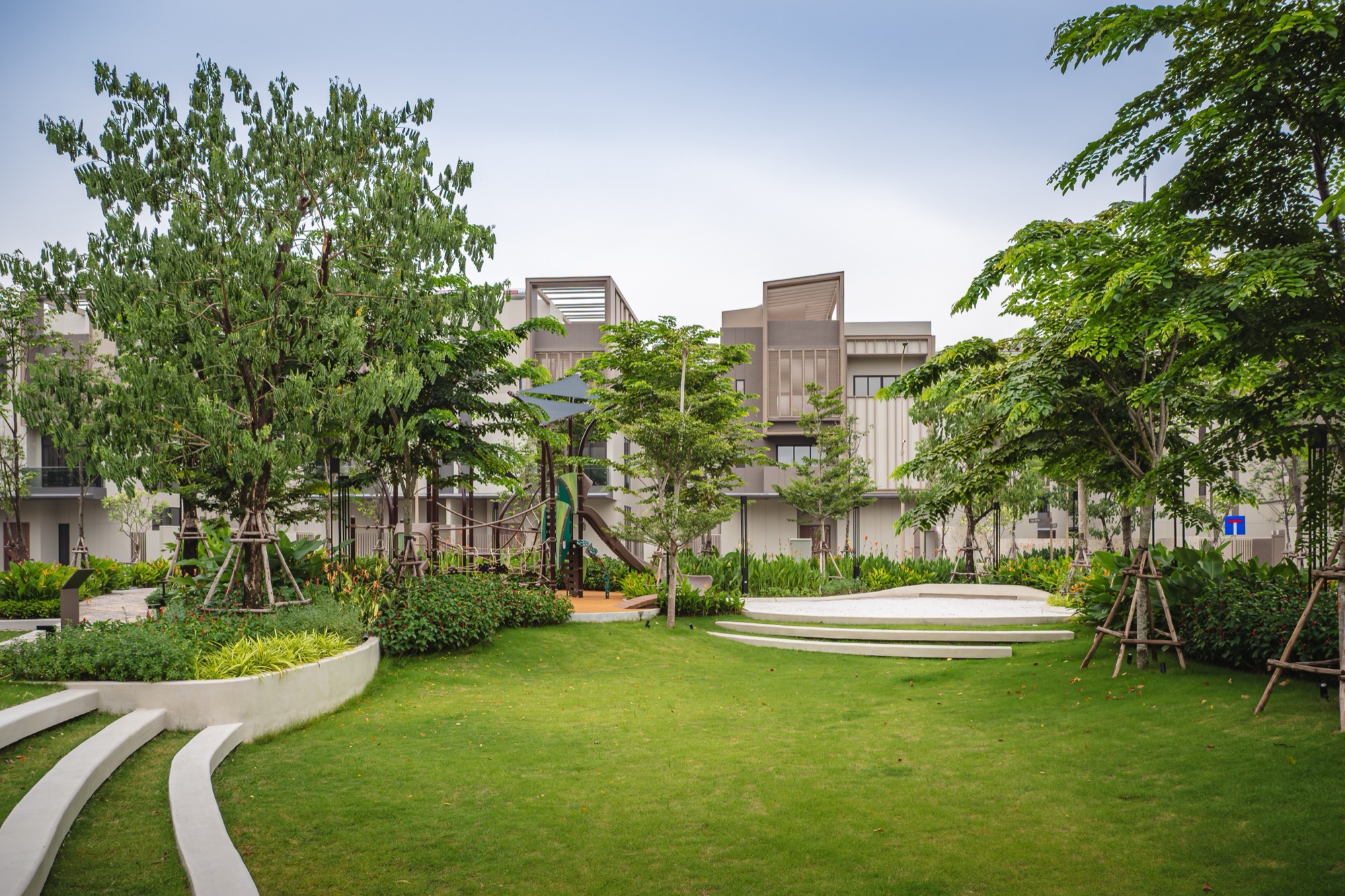
Three integrated water systems operate across the site. A detention pond combined with a rainwater harvesting system collects stormwater from drainage manholes and redistributes it through an automated irrigation network, reducing pressure on municipal infrastructure and eliminating potable water use for landscape maintenance. A bio-retention pond at the Meditative Pads zone filters stormwater naturally through layered soil and vegetation. The Island Lawn functions as a dual-use space: a recreational lawn in the dry season, and a temporary retention basin during heavy rainfall. Permeable surfaces: gravel paths, steppingstone walkways with granular sub-bases, allow direct infiltration across all pocket garden areas.
4. The Canopy: landscape and architecture converge
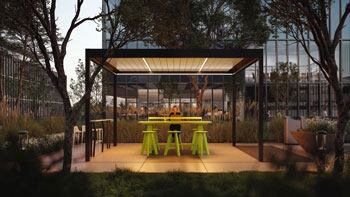
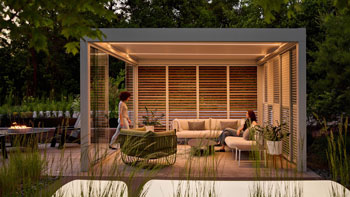
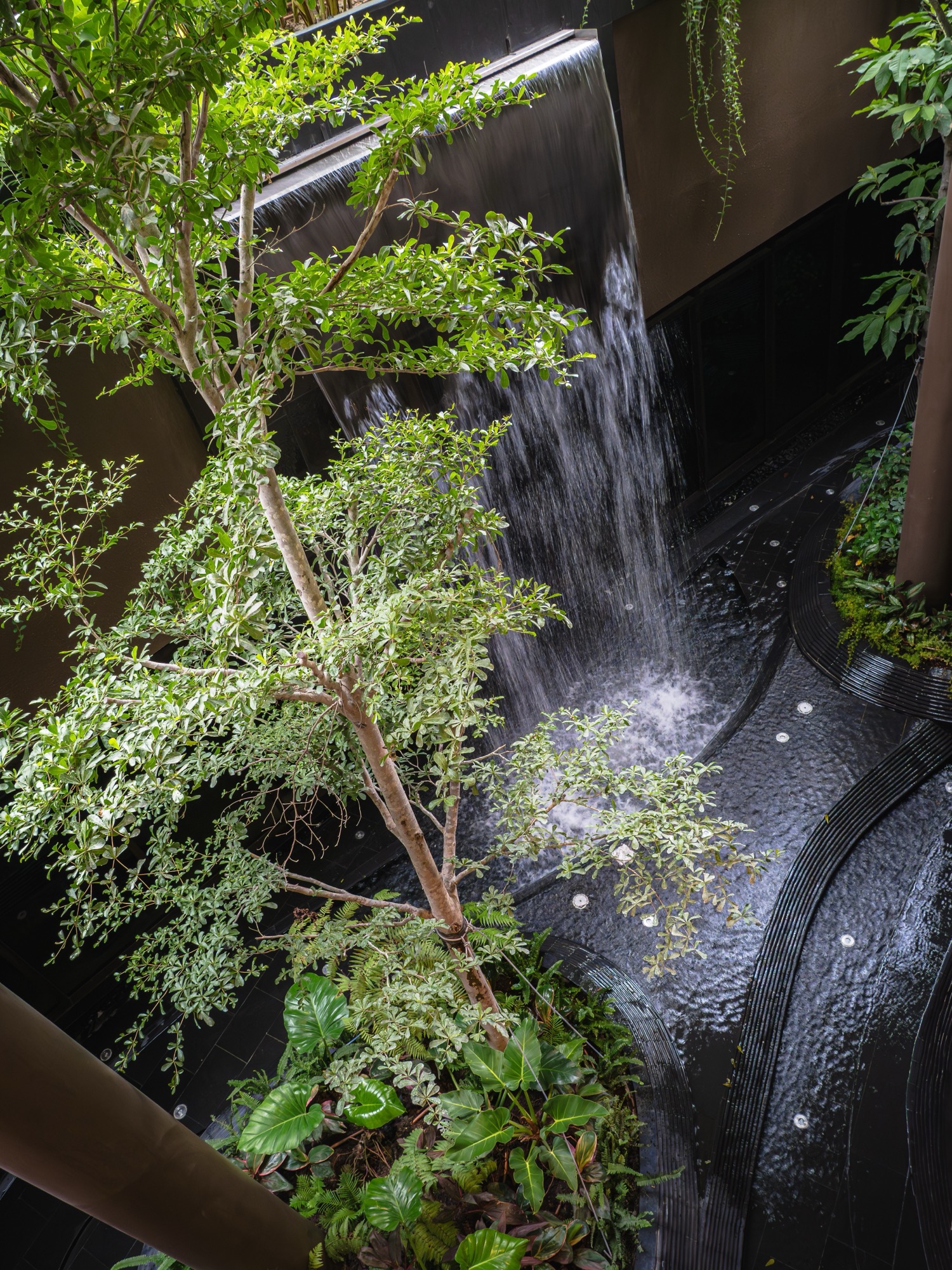
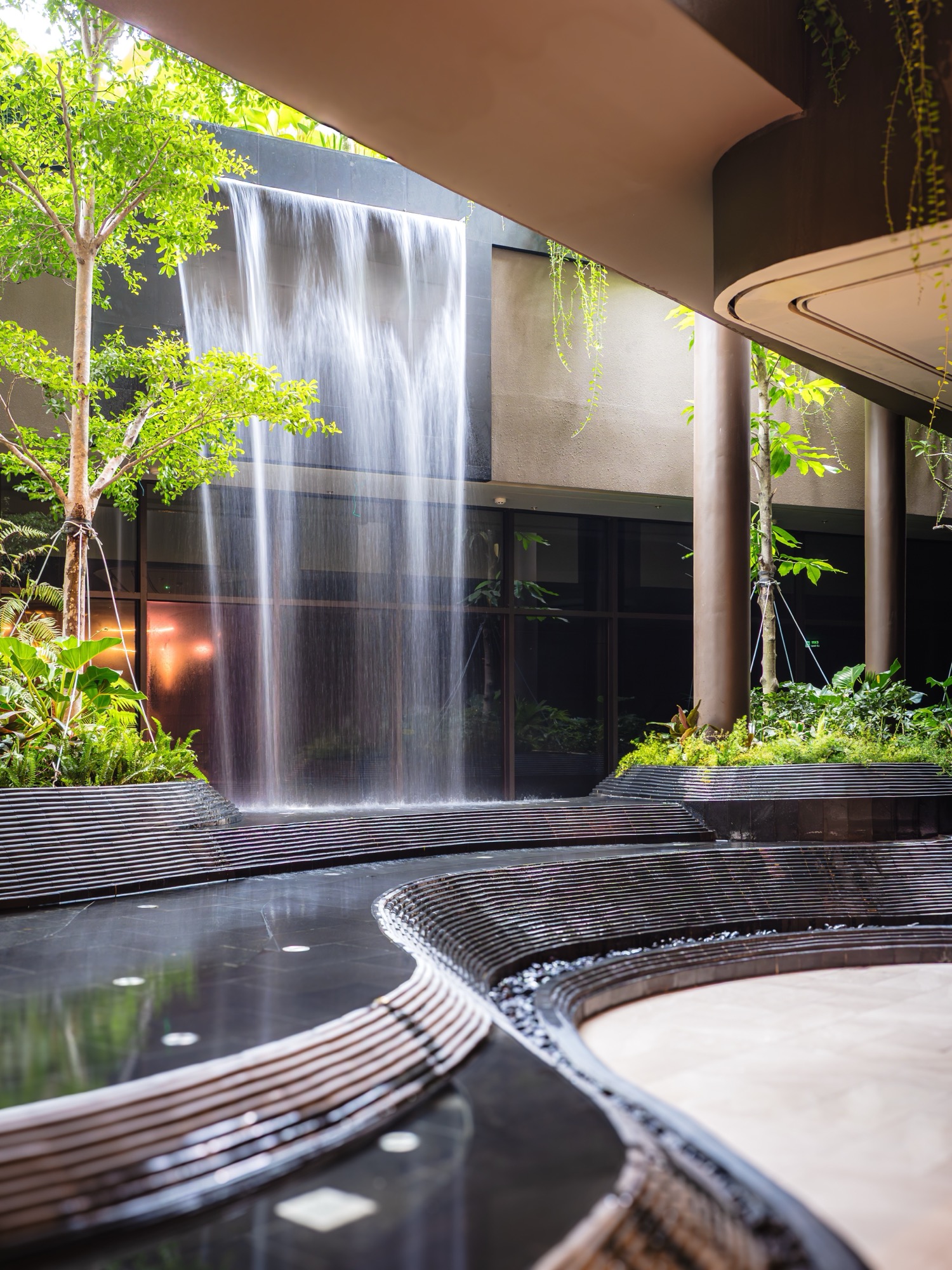
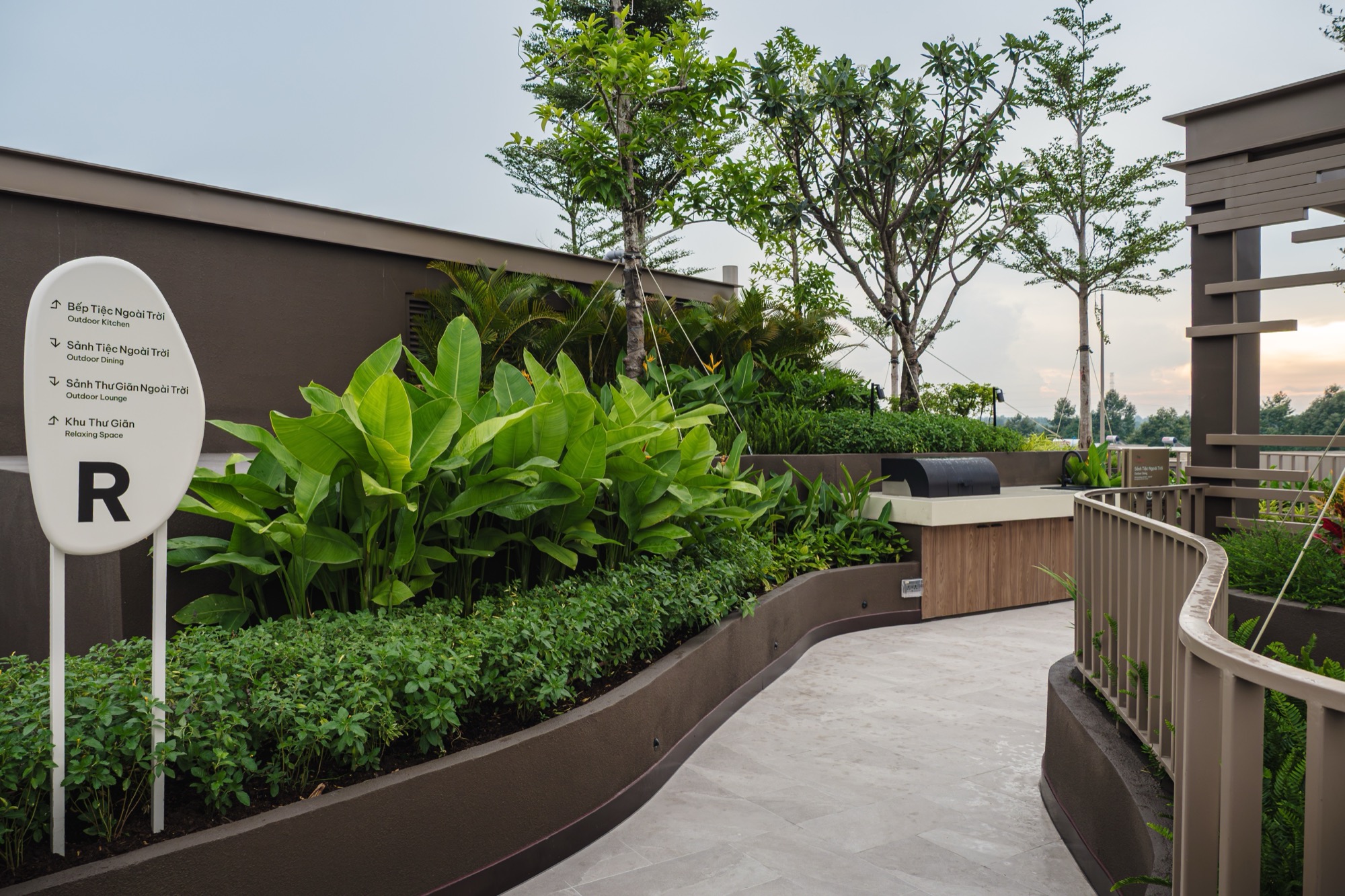
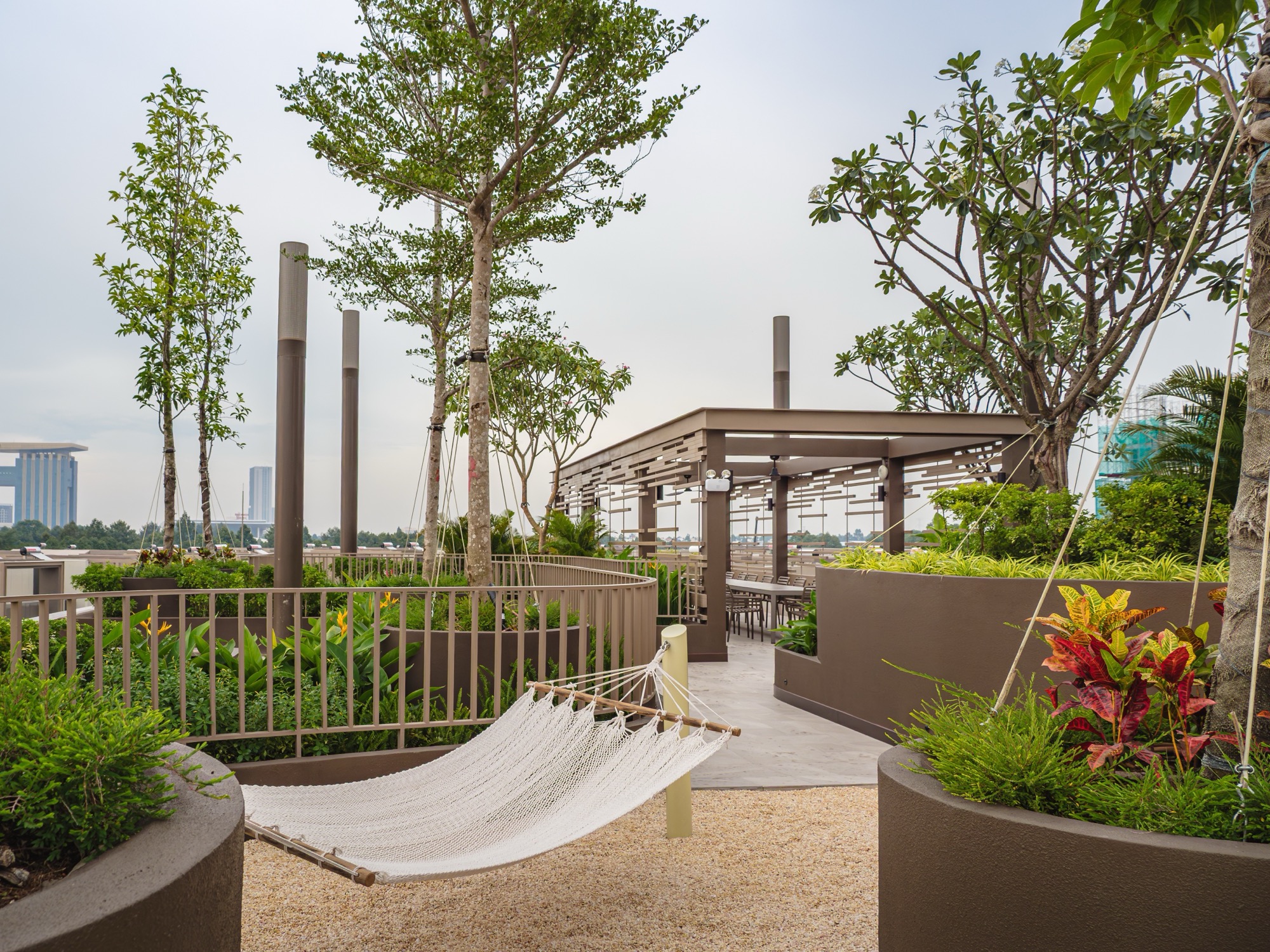
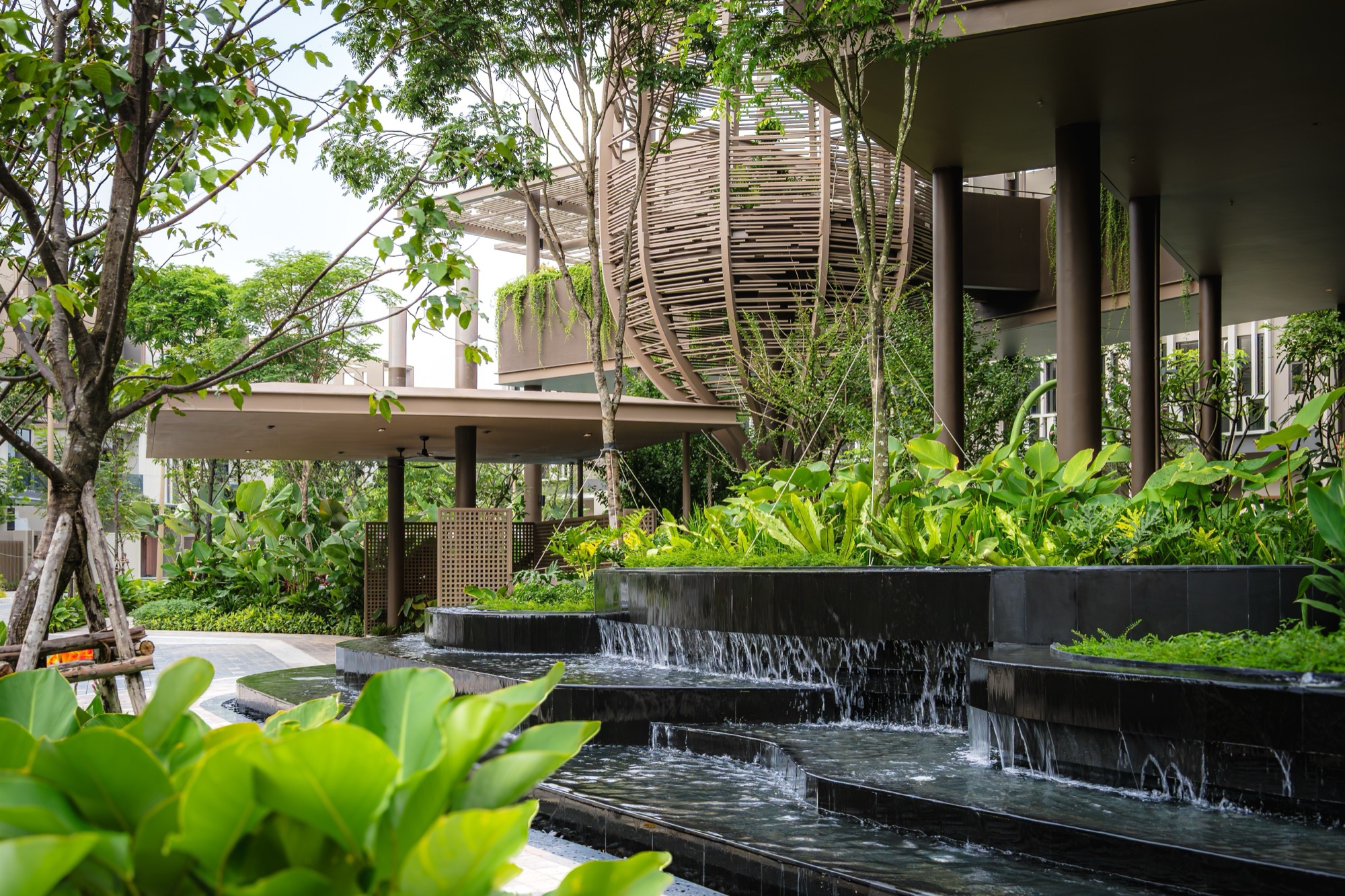
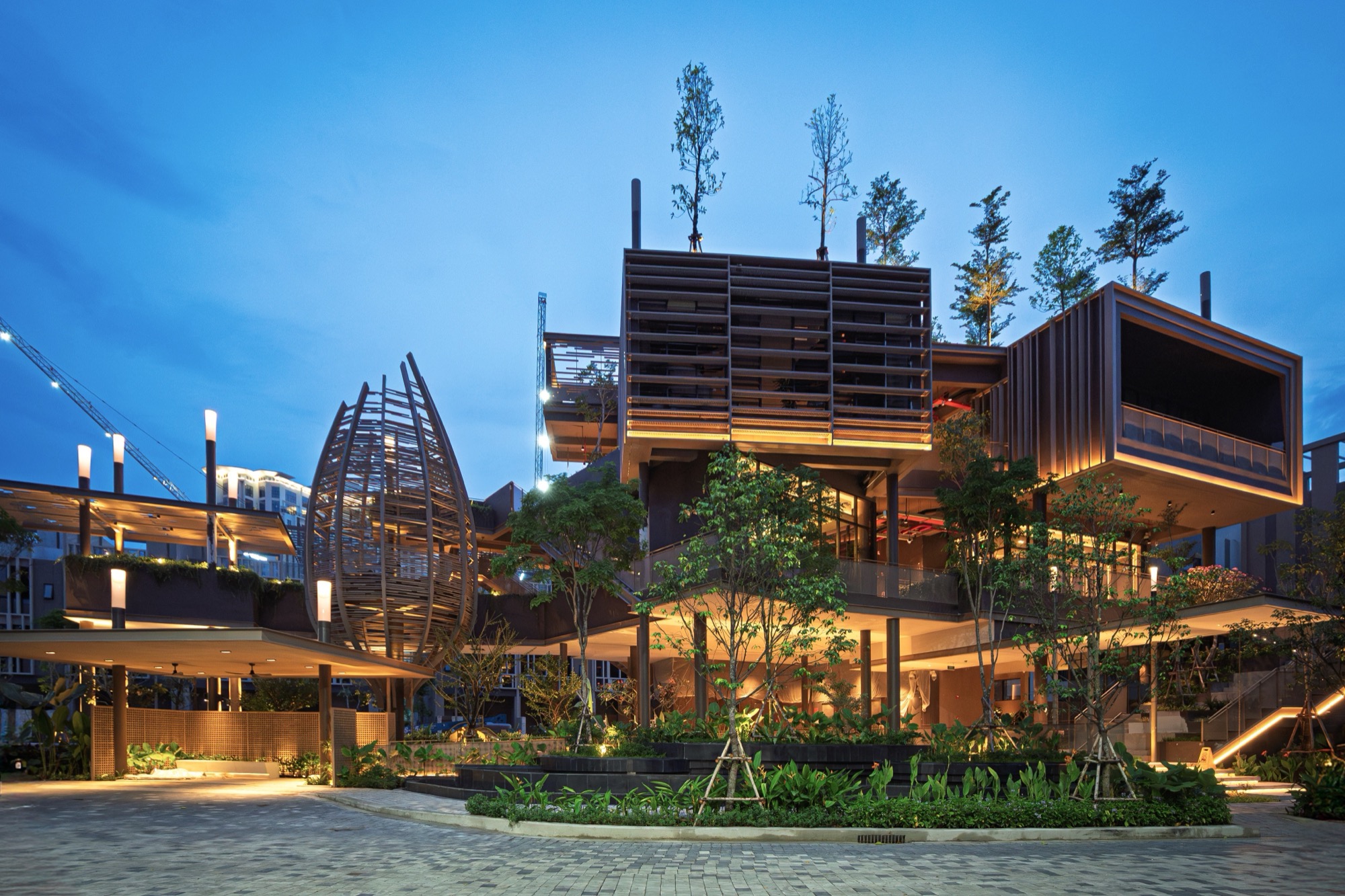
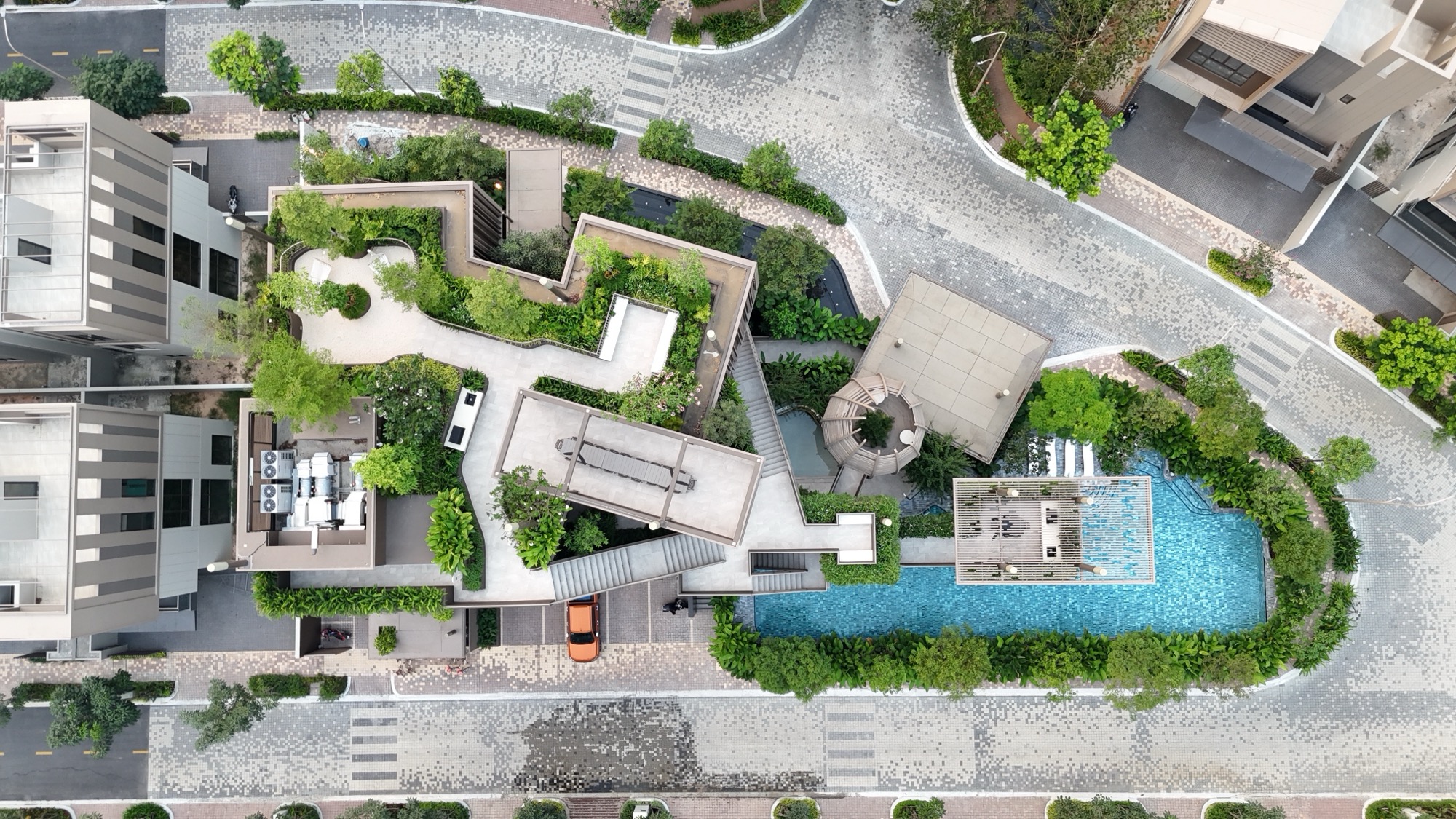
The Canopy clubhouse operates across three levels: basement, ground floor, and rooftop, unified by a central waterfall that descends from ground level into a basement reflecting pool and spa. Described as a “living axis,” the waterfall dissolves the boundary between floors and between interior and exterior space. An underground rainwater harvesting tank below the Canopy collects and reuses water for irrigation throughout the clubhouse precinct. On the rooftop, a BBQ terrace with hammock areas extends the landscape logic vertically, creating an outdoor living surface above the building.
5. Outcomes
Total landscape coverage (park areas and tree canopy shading) reaches 18,875 m², accounting for a substantial proportion of the 5.45-hectare site. Construction proceeded across multiple concurrent phases from February 2024, with full completion by February 2025.
Credits
Landscape Design Consultant: Land Sculptor Studio Co., Ltd.
Client: CapitaLand Vietnam
Architects: Formwerkz Architects, NT Architecture & Design
Location: Binh Duong Ward, Vietnam
Year of completion: 2025
Site area: 5.45 hectares
11.048457862211091, 106.67668611471689
73543


LILA 2026 Sponsor