Lakewood Cemetery Welcome Gardens
www.tenxtenstudio.com/
2026 Campuses and Corporate / USA / Built in 2024 /

![At the 19th International Biennale Architettura of La Biennale di Venezia, the United States Pavilion, commissioned by the Department of State, reimagined the nation through a single archetype: the porch. The design team included landscape architects, architects, exhibition curators, and artists. The landscape architect collaborated on the overall conceptual narrative of how this quintessentially American […]](https://landezine-award.com/wp-content/uploads/2026/04/PORCH_1_HERO-1-600x450.jpg "PORCH: An Architecture of Generosity")
![The Treetop Trail demonstrates the power of landscape-led design in shaping interpretation and experience—reimagining existing infrastructure as a didactic, immersive environment. Guided by the Zoo’s vision to connect people, animals, and nature, the Treetop Trail experiential framework shifts spatial perspective, immersing visitors within the forest canopy while revealing ecological processes, cultural narratives, and species-specific experiences. […]](https://landezine-award.com/wp-content/uploads/2026/04/Treetop-Trail_1_HERO-1-600x552.jpg "Treetop Trail at the Minnesota Zoo")
![The recently completed Treetop Trail allows visitors to experience the Minnesota Zoological Gardens through a renewed elevated perspective. The Minnesota Zoo Treetop Trail embodies a profound commitment to environmental stewardship, guided by the overarching vision of “connecting people with nature.” Along 1.25 miles and four touchdowns (access points), the Trail guides visitors through many stories, […]](https://landezine-award.com/wp-content/uploads/2024/05/00-Treetop-Trail_Main-Photo-600x401.jpg "Minnesota Zoo Treetop Trail")
![VISION Mill 19 sits at the heart of Hazelwood Green, Pittsburgh’s largest riverfront development. Nestled between the Monongahela River and the Hazelwood community, Mill 19 is the catalytic transformation of the former Pittsburgh J&L Steel Company into a sustainable advanced manufacturing research center enveloped by an immersive public landscape. The project celebrates a bold approach […]](https://landezine-award.com/wp-content/uploads/2024/05/00-Mill-19_Main-Photo-600x396.jpg "Mill 19")
![The SECOND + SECOND Courtyard is a new urban fabric that stitches a private housing development into the Historic North Loop District of Minneapolis. The project re-imagines privately owned space as public realm, using texture, planting, and infrastructure to create a welcoming, immersive, and resilient place. Three key spaces- the Garden Street, the Portal, and […]](https://landezine-award.com/wp-content/uploads/2022/05/00-Project-main-photo_SECOND-SECOND-Courtyard-600x358.jpg "SECOND + SECOND Courtyard")

![Nested within the armature of a 1,300-foot-long historic steel mill along Pittsburgh’s Monongahela River at the heart of Hazelwood Green, two new buildings sit in the shadows of trusses clad with solar panels. The 5-acre multi-phased adaptive reuse project is nested within a 170-acre brownfield site that is being transformed into a highly sustainable, high-tech […]](https://landezine-award.com/wp-content/uploads/2022/05/00-Mill-19_Project-main-photo-600x400.jpg "Mill 19 Phases A + B")
![OUR VISION + MISSION We design for people and habitats. We design to catalyze and inspire just futures. We co-create compassionate, immersive, and resilient spaces that confront the issues of our time. TEN VALUES We acknowledge that land is an expression of power and believe that it can be redistributed through the design process. We […]](https://landezine-award.com/wp-content/uploads/2022/05/TXT-TEAM-600x338.jpg "TEN x TEN")
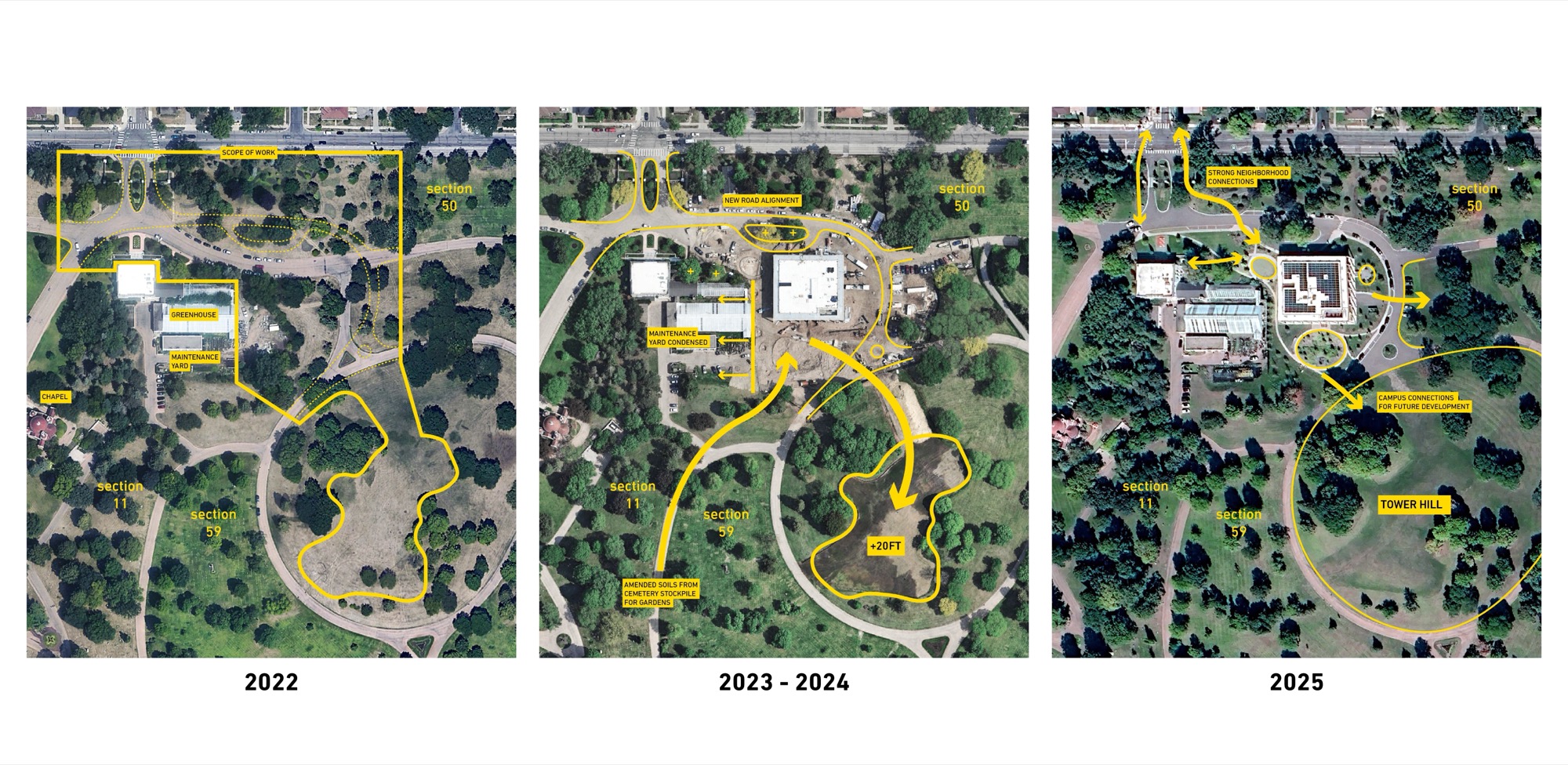
The Lakewood Welcome Gardens reimagine liminal ground as inclusive cultural infrastructure rooted in care and collective belonging. Located in historic Lakewood Cemetery in Minneapolis at the threshold between city and cemetery, the seven-acre project establishes a new district and framework for future growth, while transforming a former maintenance area into an immersive series of gardens. The design re-grounds Lakewood in the garden, breaking from the lawn plan to restore lost layers of ecology and meaning. Through expanded sensory experience and spaces of abundance for humans and nonhumans, the project reconnects people to the site’s history, water, and evolving rituals, welcoming all into a shared landscape of reflection and community.
-
- Corey Gaffer
-
- Corey Gaffer

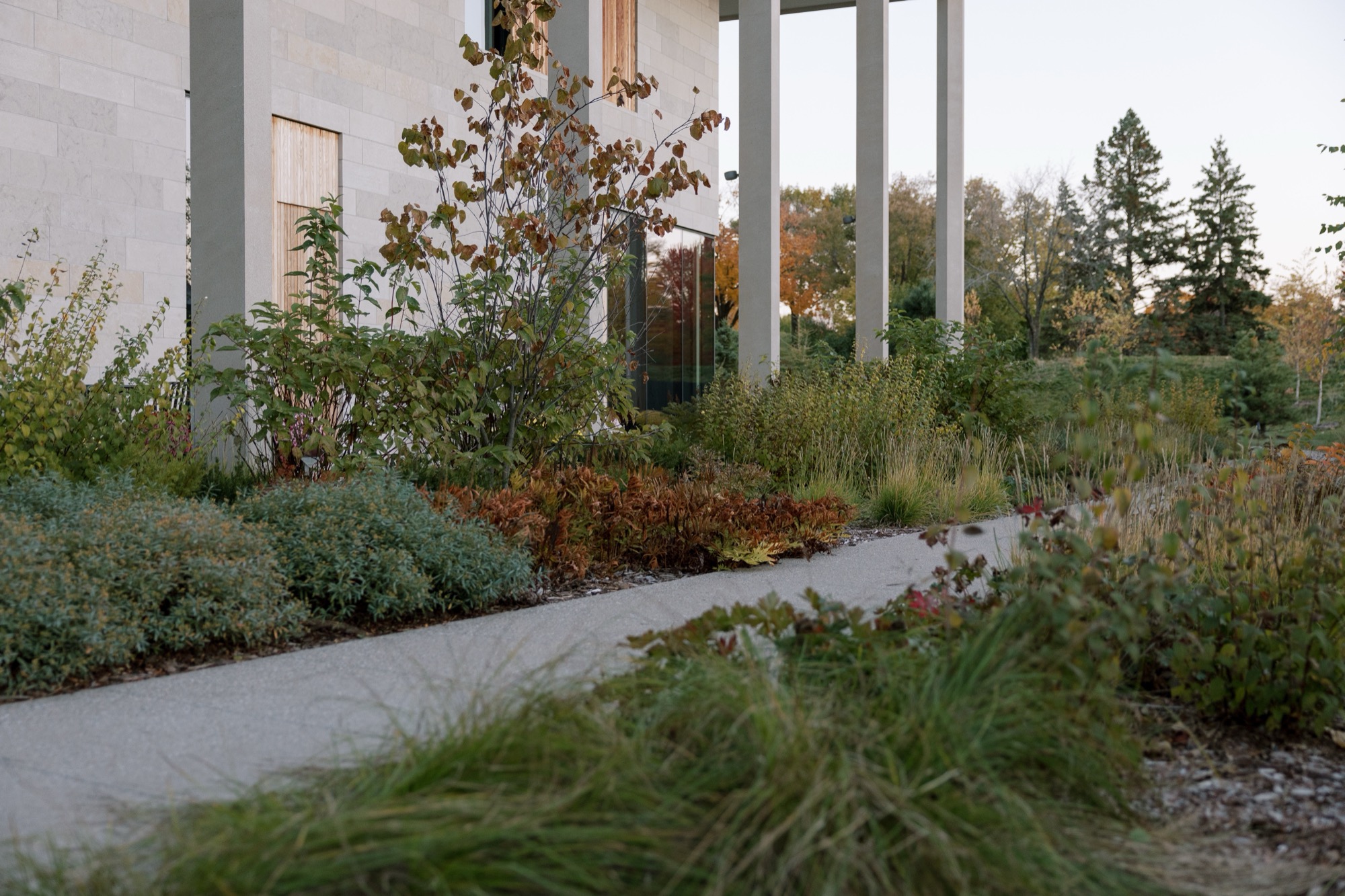
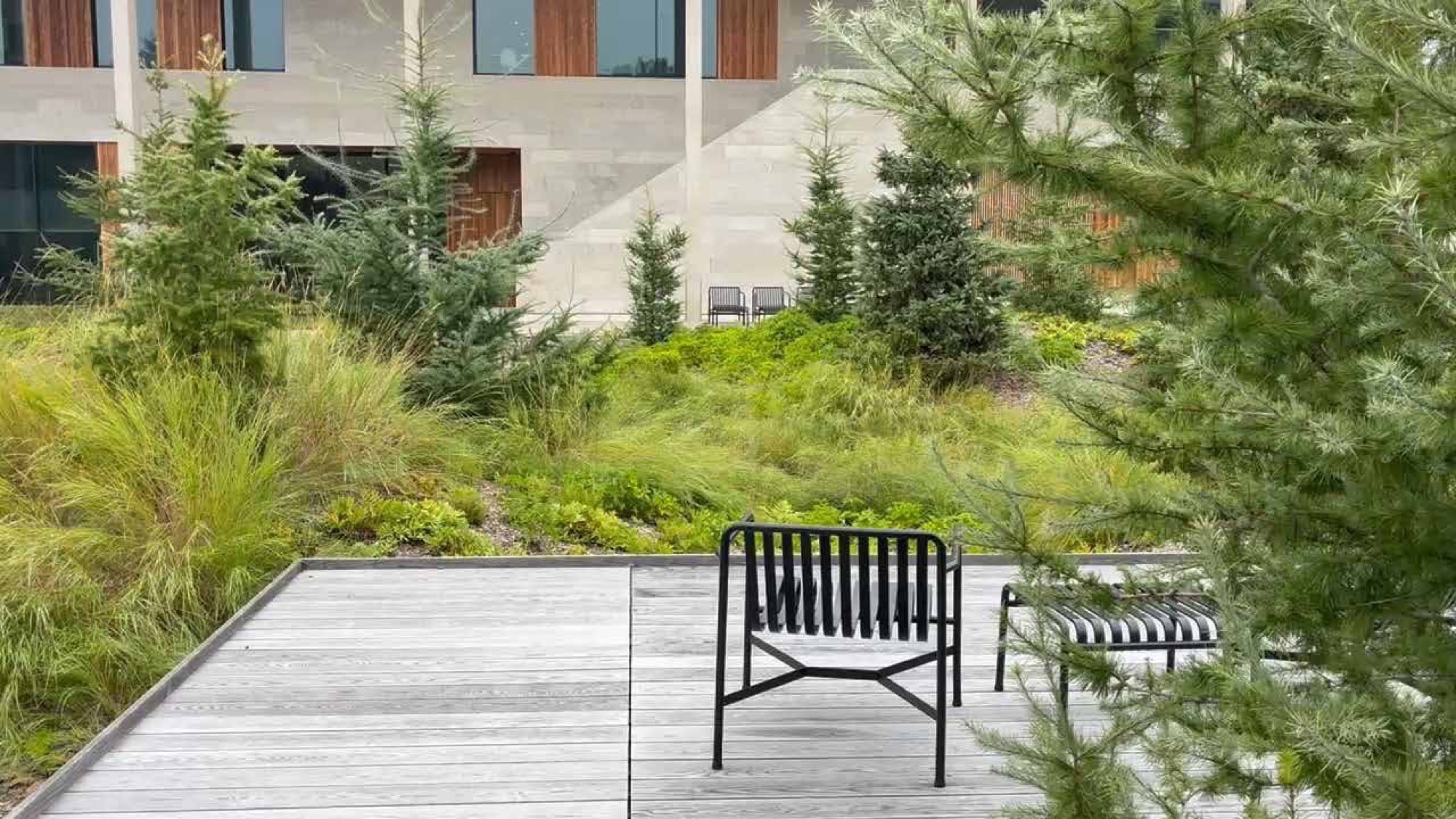
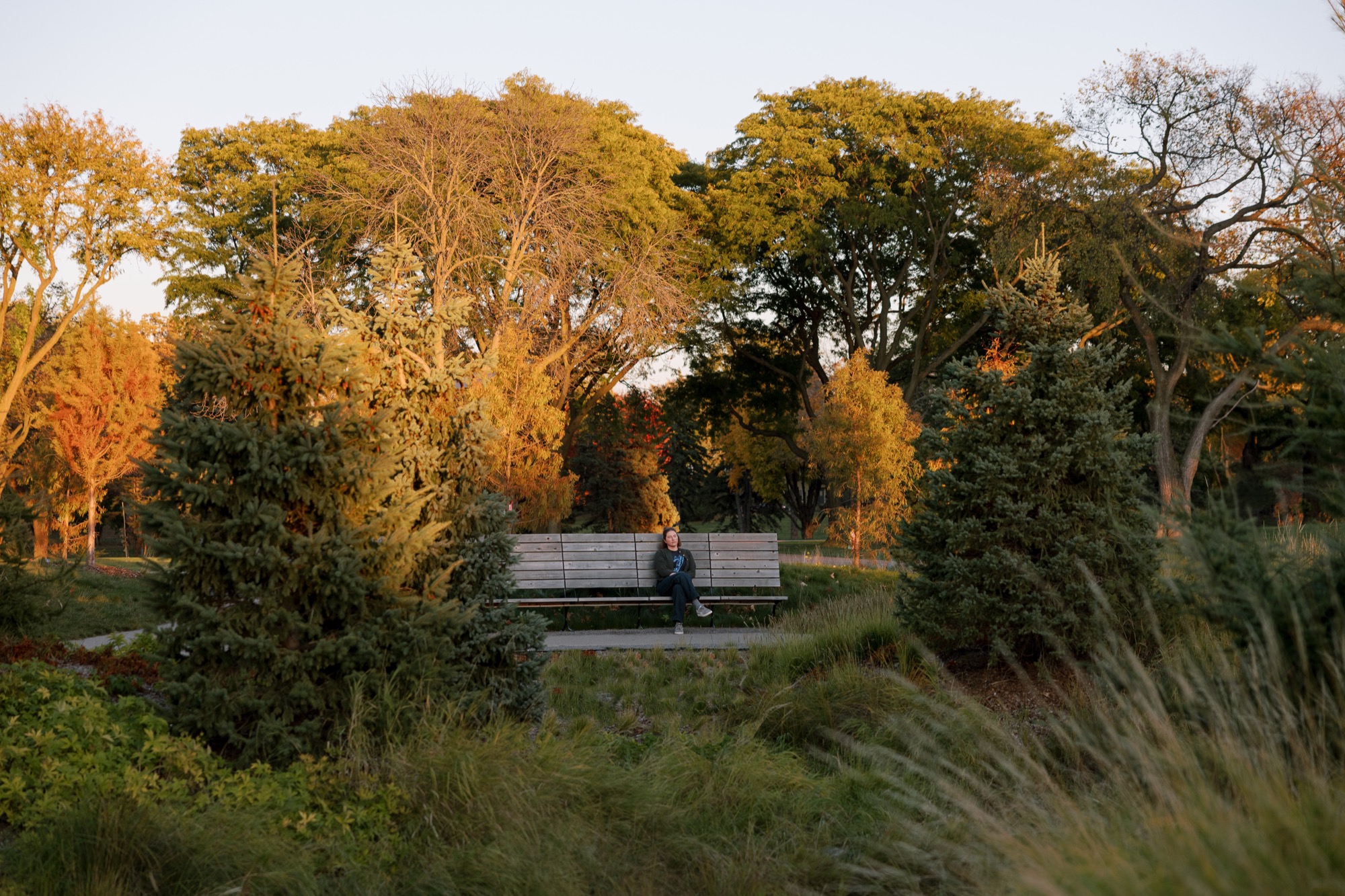

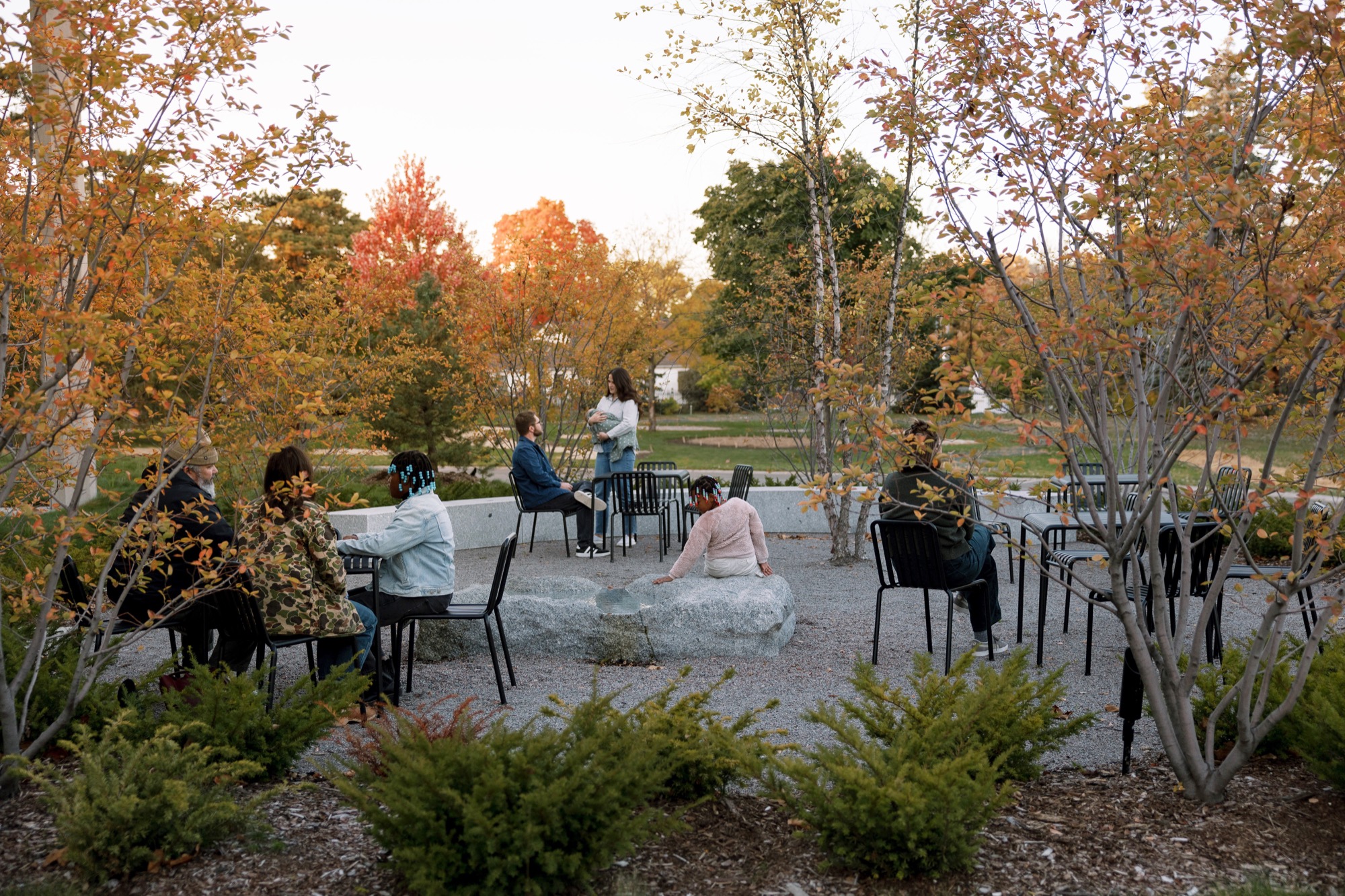
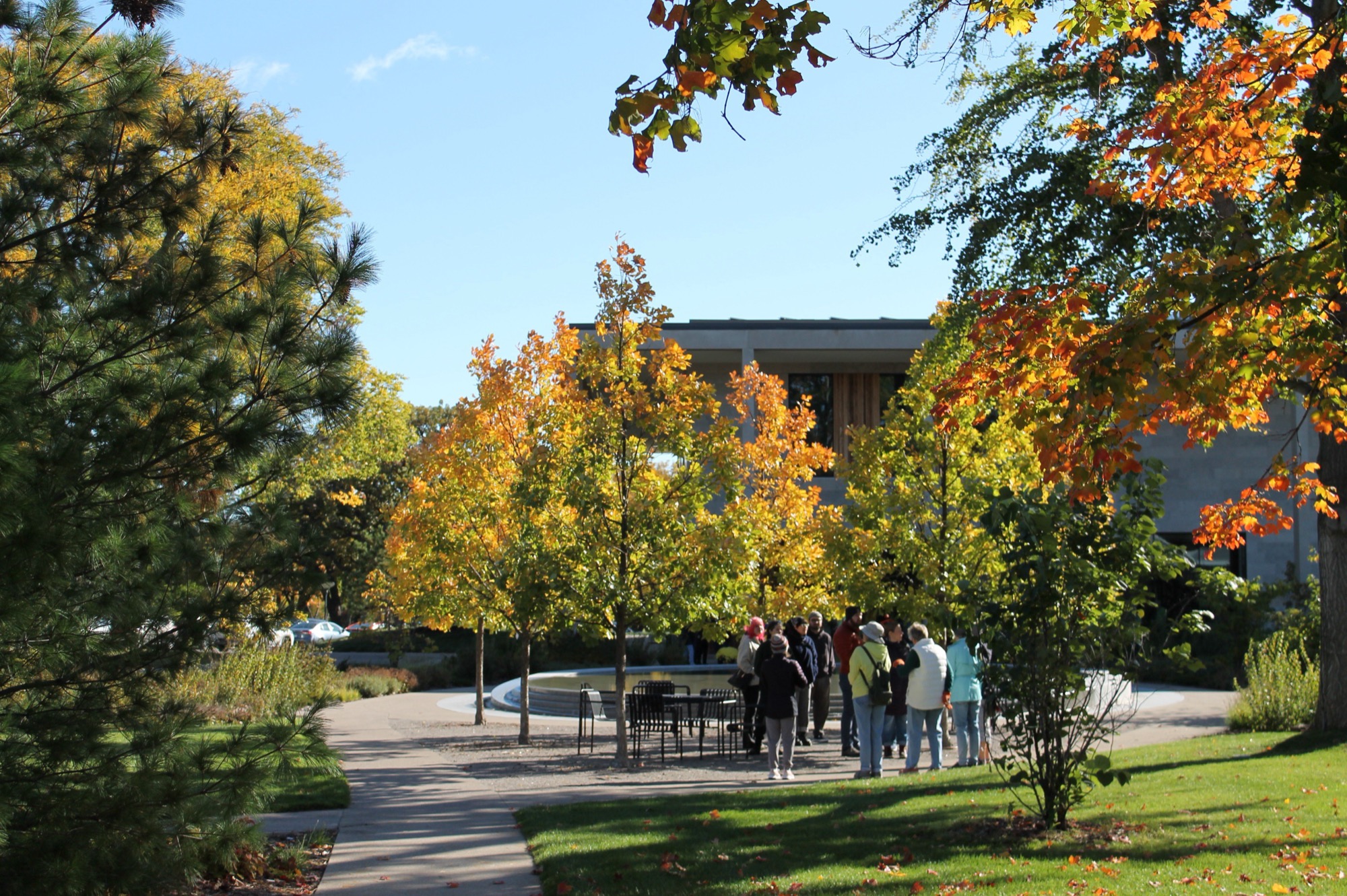

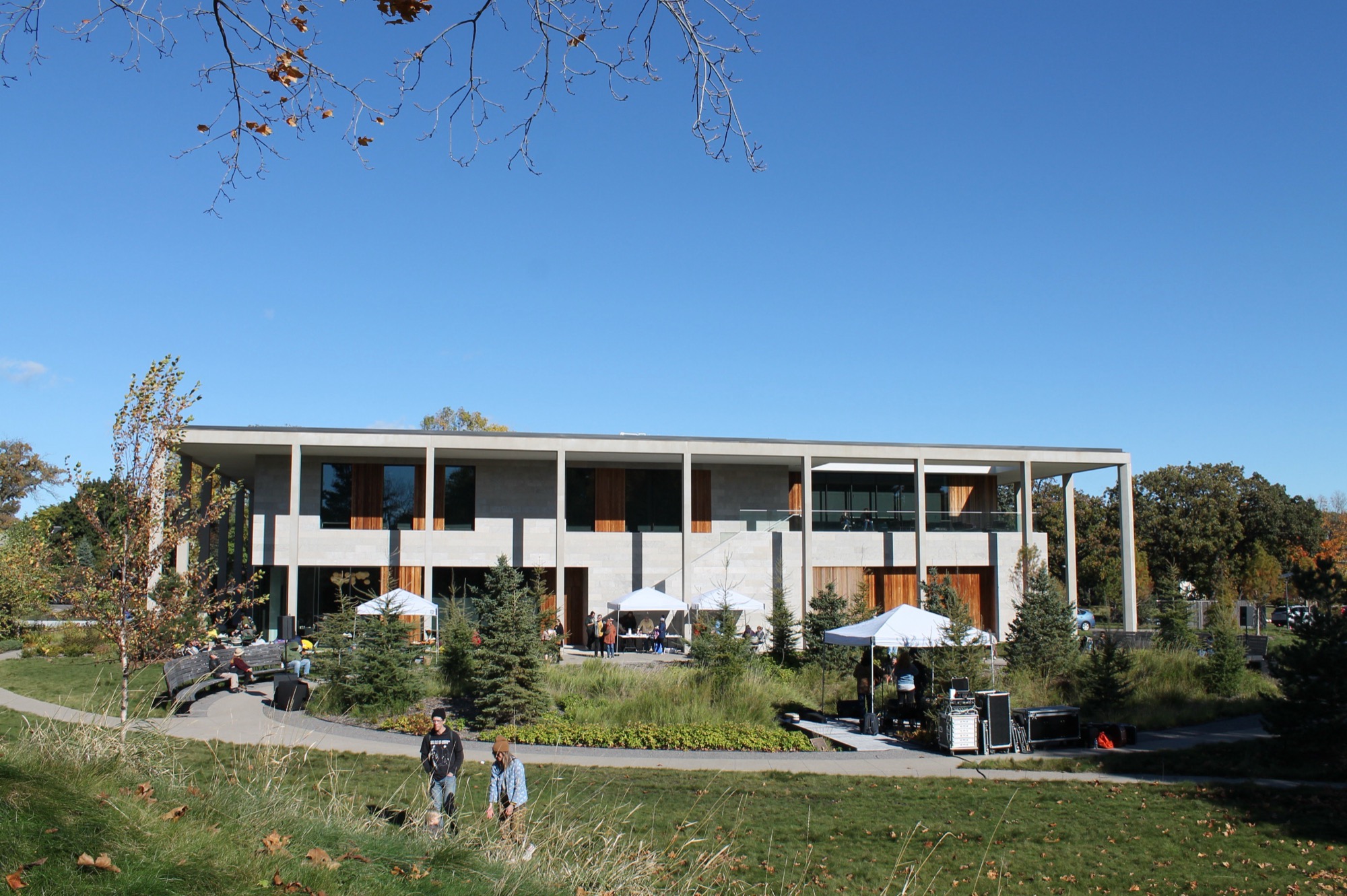
Lakewood is one of America’s most storied urban cemeteries, founded in 1871 as part of the Garden Cemetery Movement and embedded in Minneapolis’s cultural, ecological, and civic life. As the city’s first public open space, for over 150 years, Lakewood has served as a place of gathering, remembrance, reflection, and celebration. To mark its sesquicentennial and reaffirm its commitment community for the next century, Lakewood undertook the creation of the Welcome Gardens. The project began in spring of 2020 as the pandemic began and visitation doubled as people sought nature, ritual, and connection, recentering the cemetery as critical cultural infrastructure.
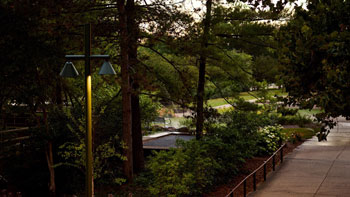
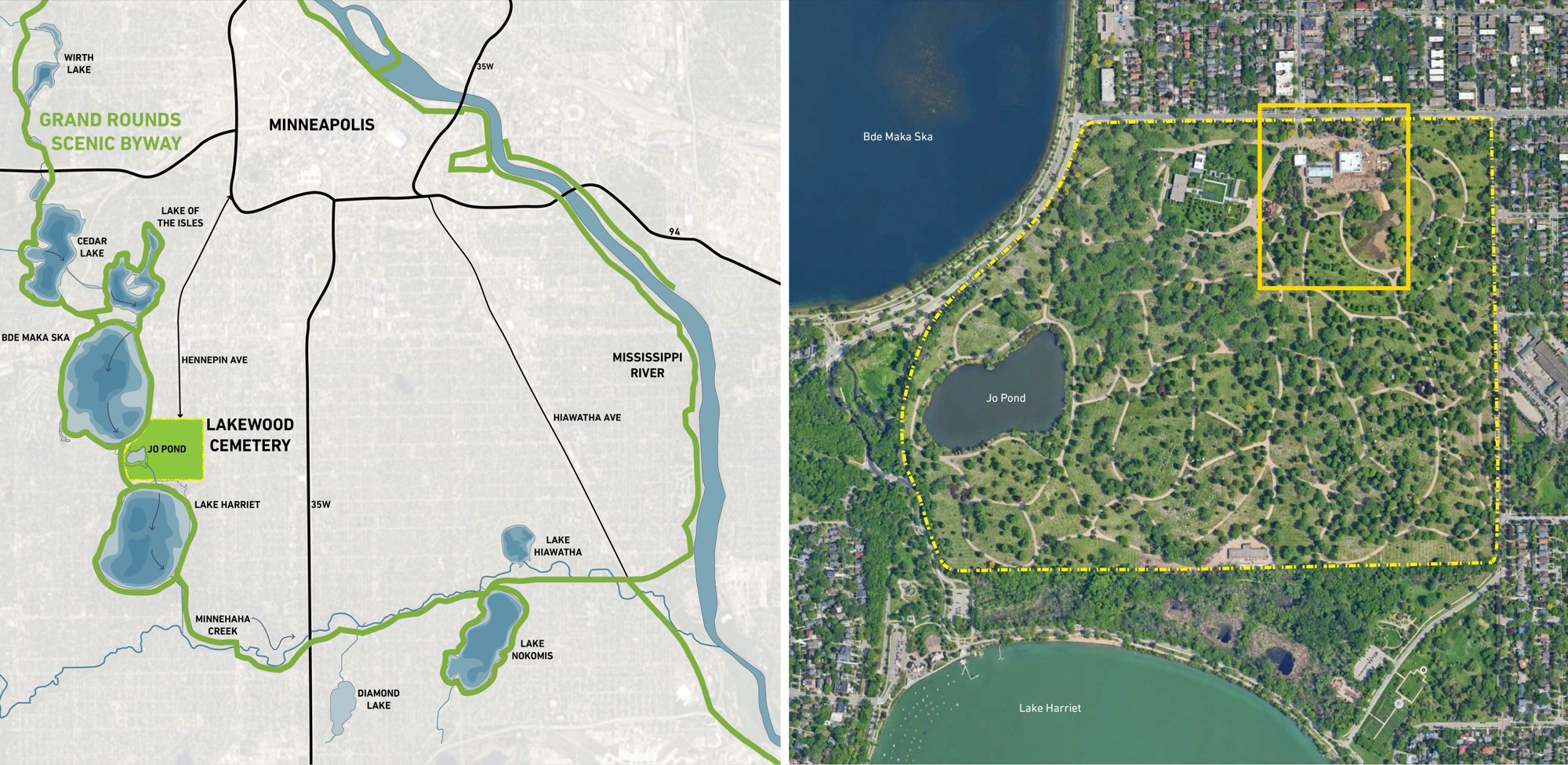
Situated on 250 acres between Bde Maka Ska, Lake Harriet and within Dakota homeland, its identity is rooted in water. The grounds contain lakes and filled wetlands tied to larger hydrologic systems within the Grand Rounds. The seven-acre project and former maintenance yard mediates the transition between city and cemetery. The design embraces the cemetery liminal space, organizing movement through sequences of landscape space that accommodate both bodily and emotional needs as they transition in and through the cemetery.
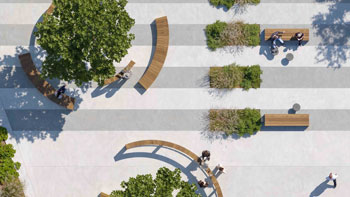
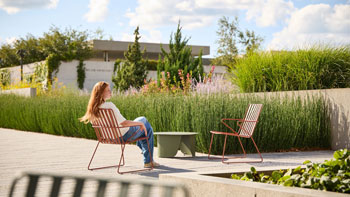
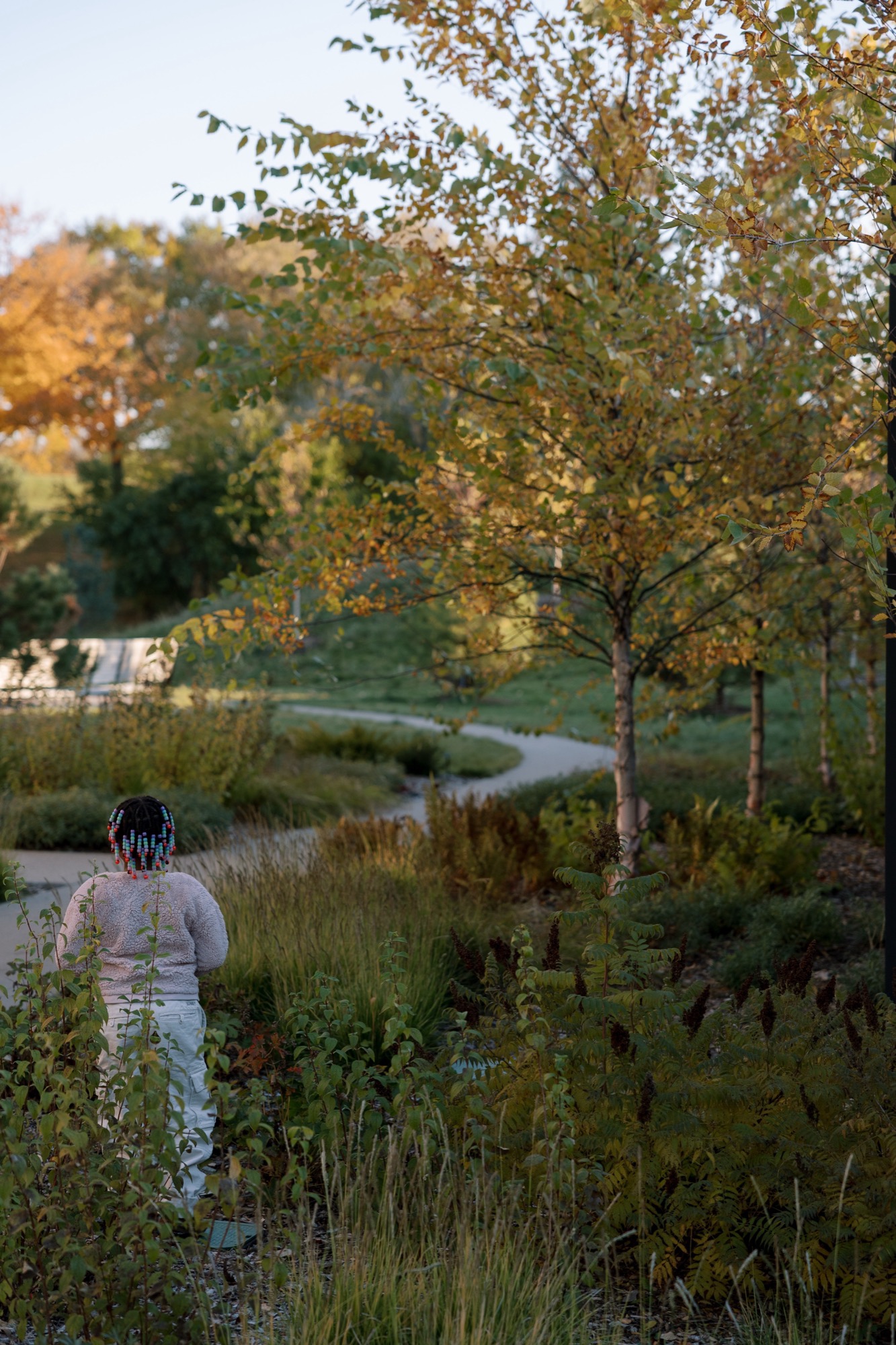
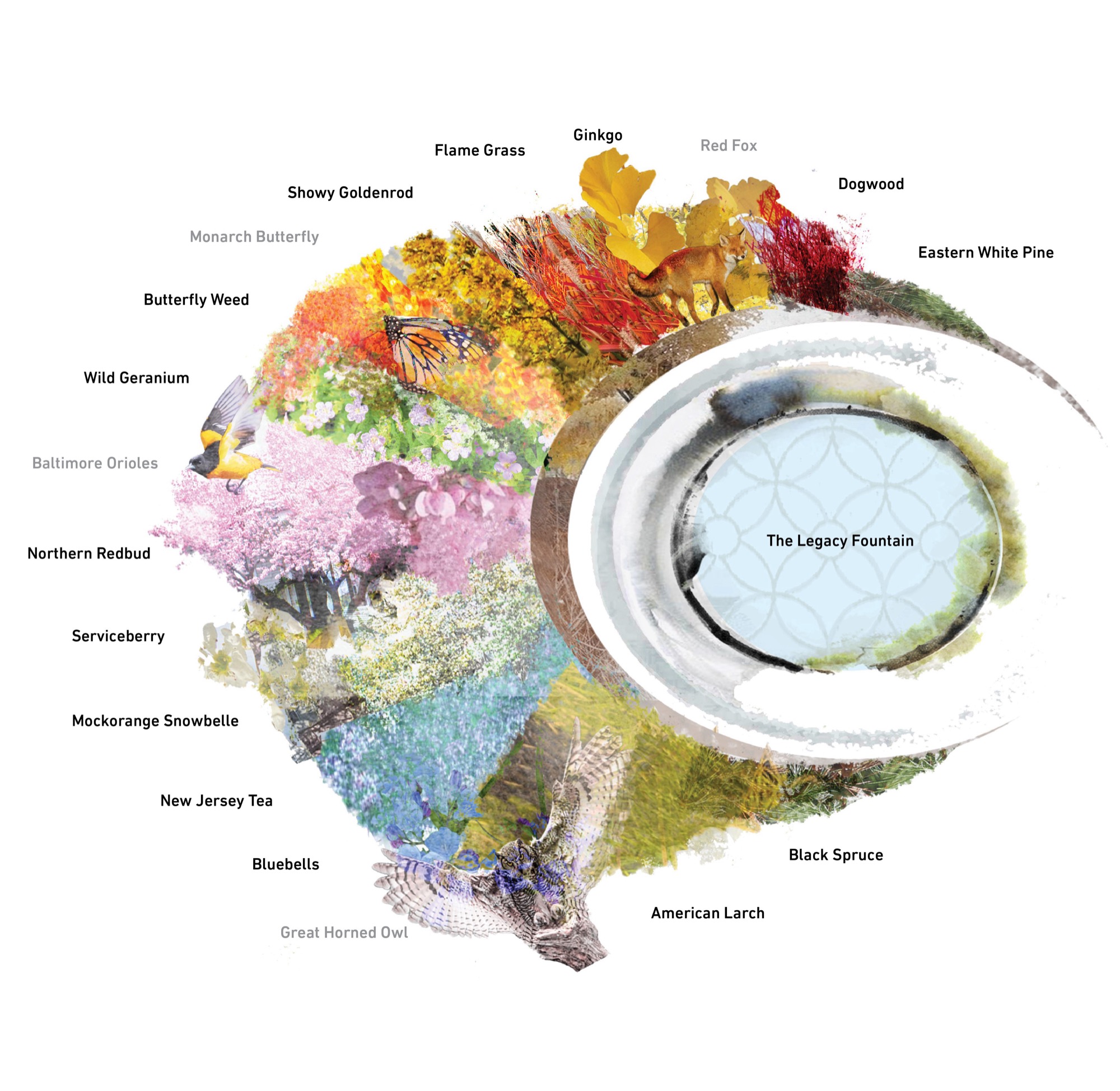
The new district plan disrupts the lawn plan, recentering the garden through new plant layers and lost ecologies. The plan prioritizes movement and pause through accessible paths and spaces. Inspired by the symbolism of knots, representing continuity, ritual, and eternity, the design weaves circulation and water gardens into experiences that reconnect visitors to Lakewood’s identity. The site features native and adaptive, local and regional plants, and educates visitors about ecosystems and native plant use. The planting allows for human and non-human interactions, a signature experience at Lakewood.
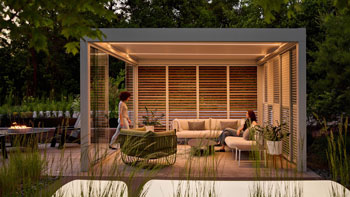
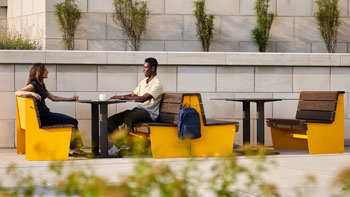
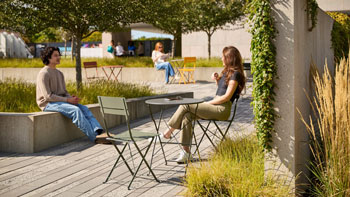
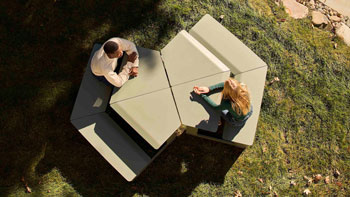
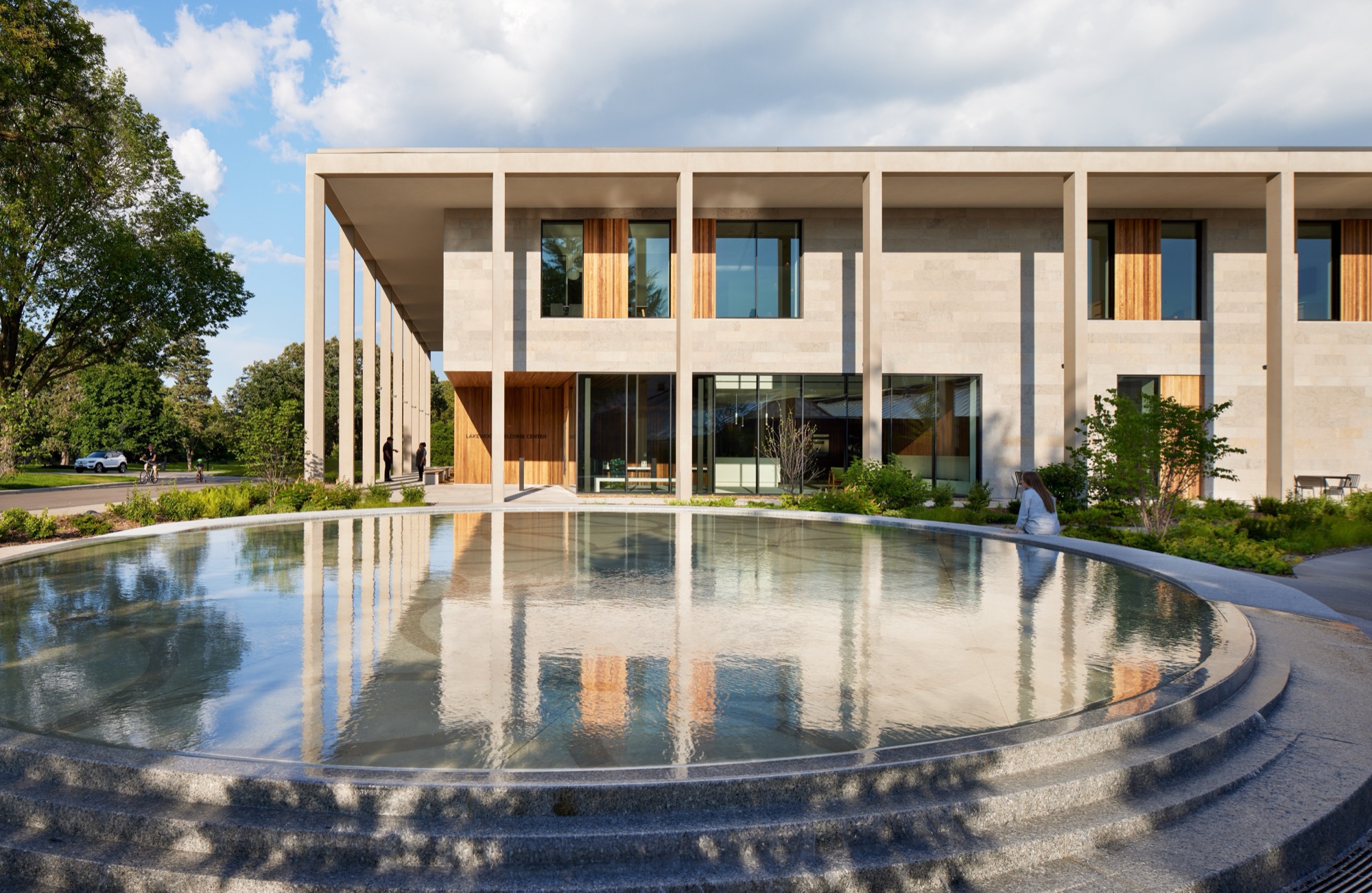
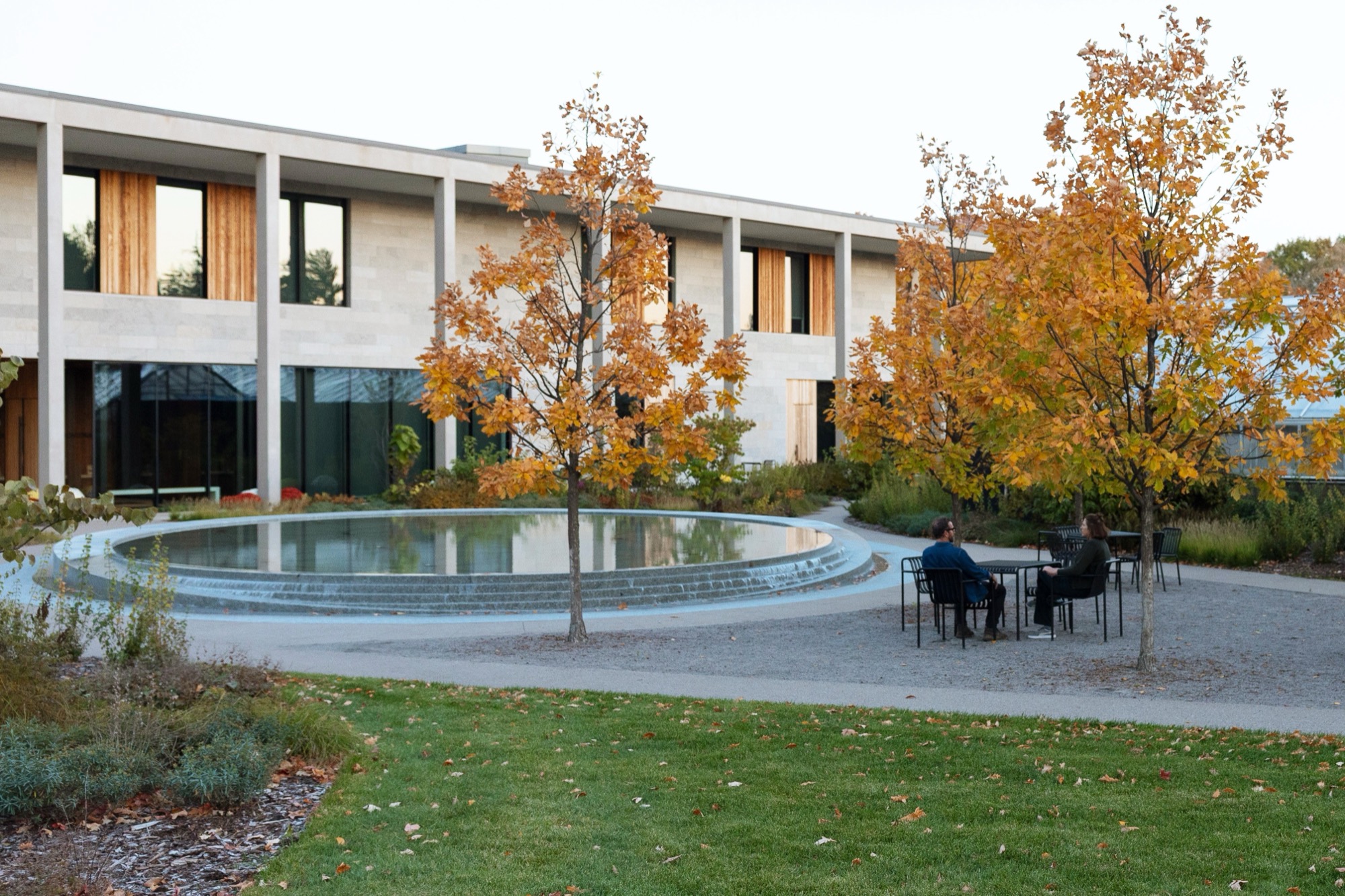
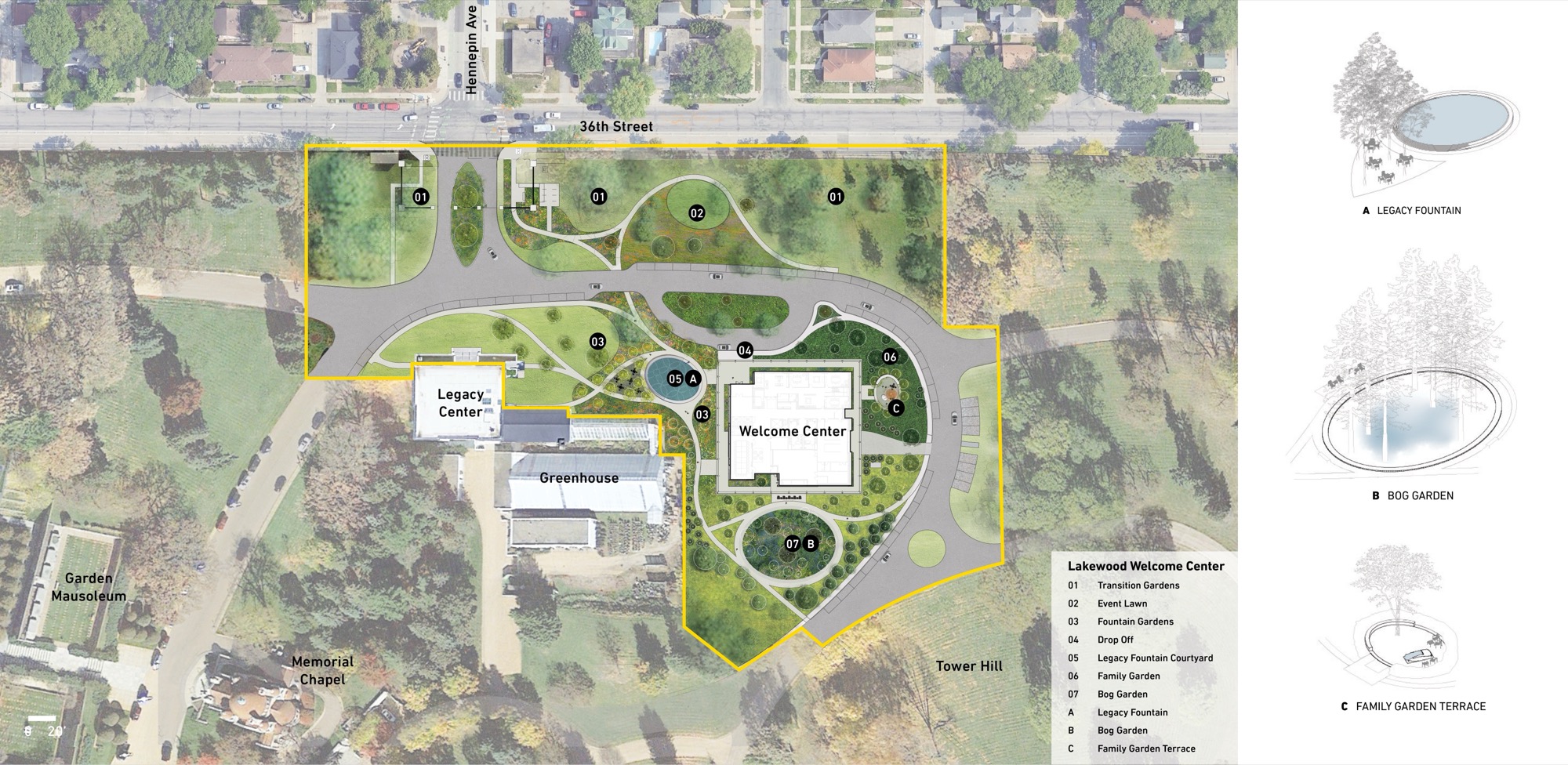
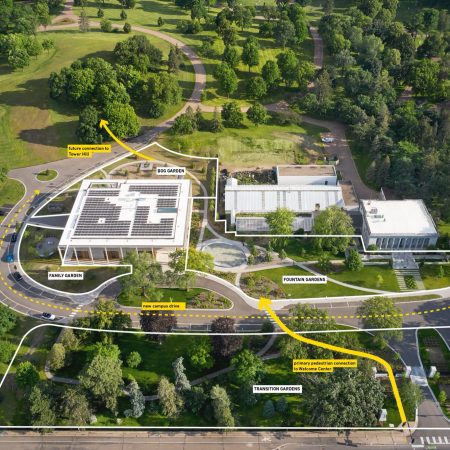
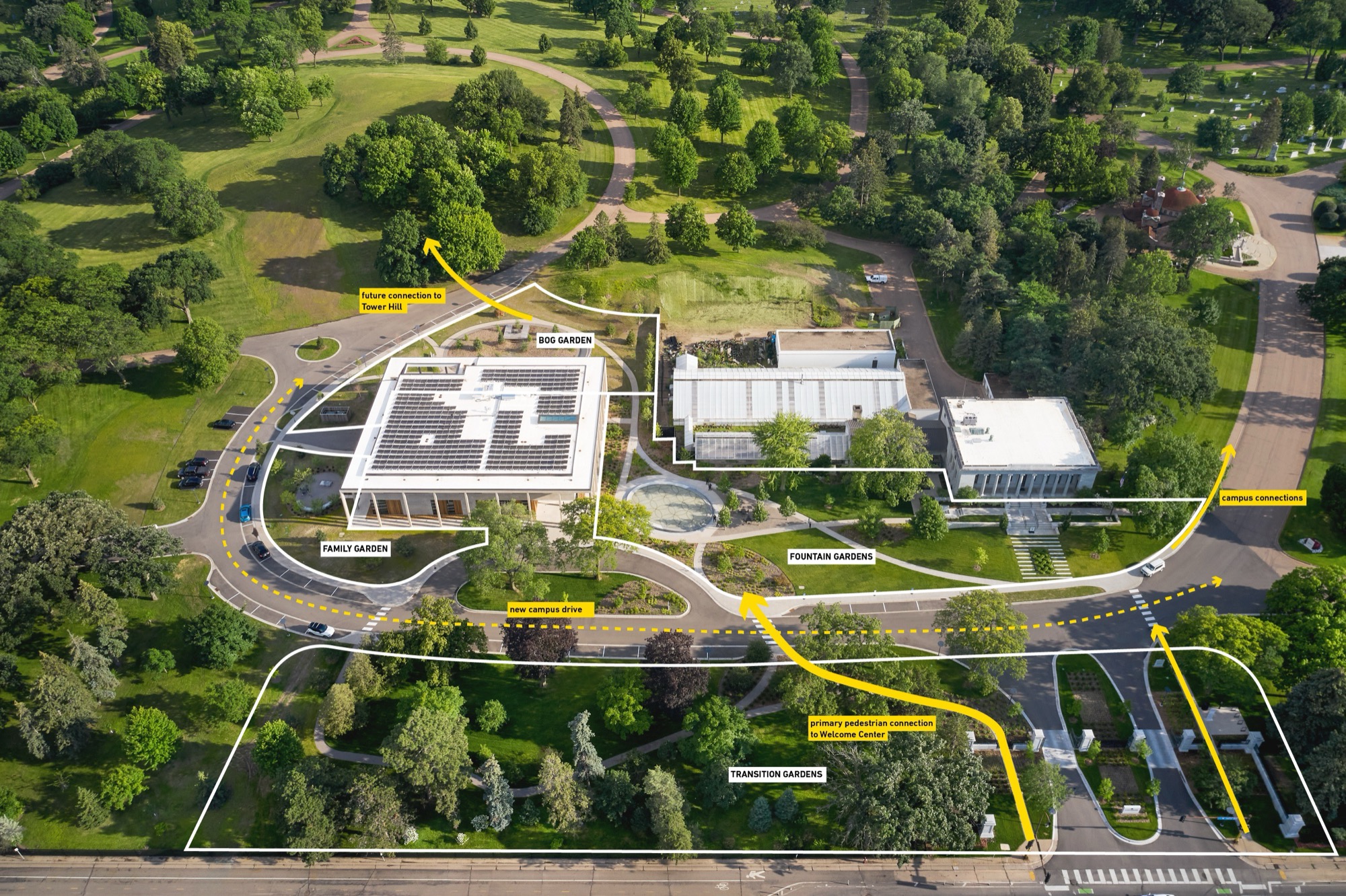
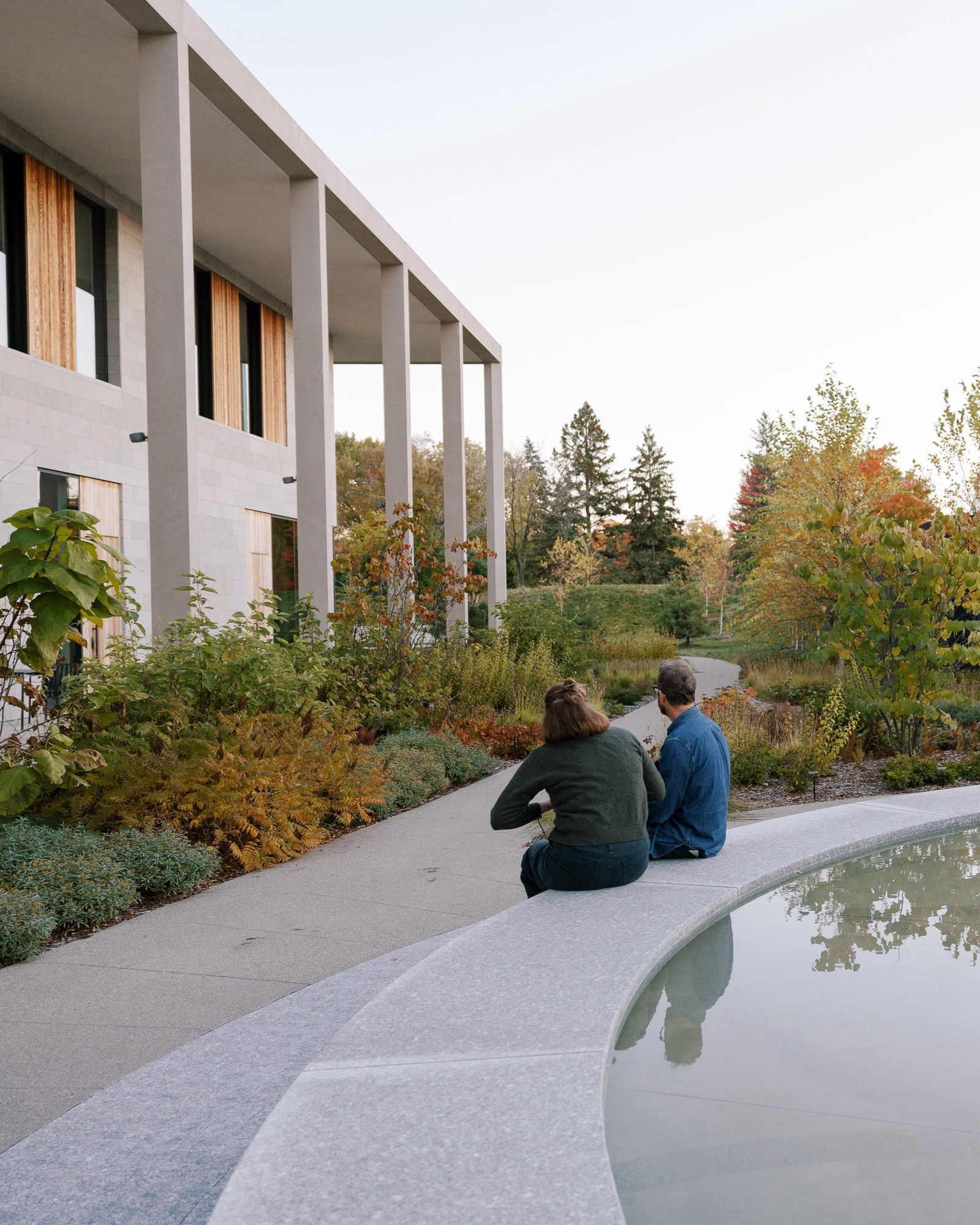
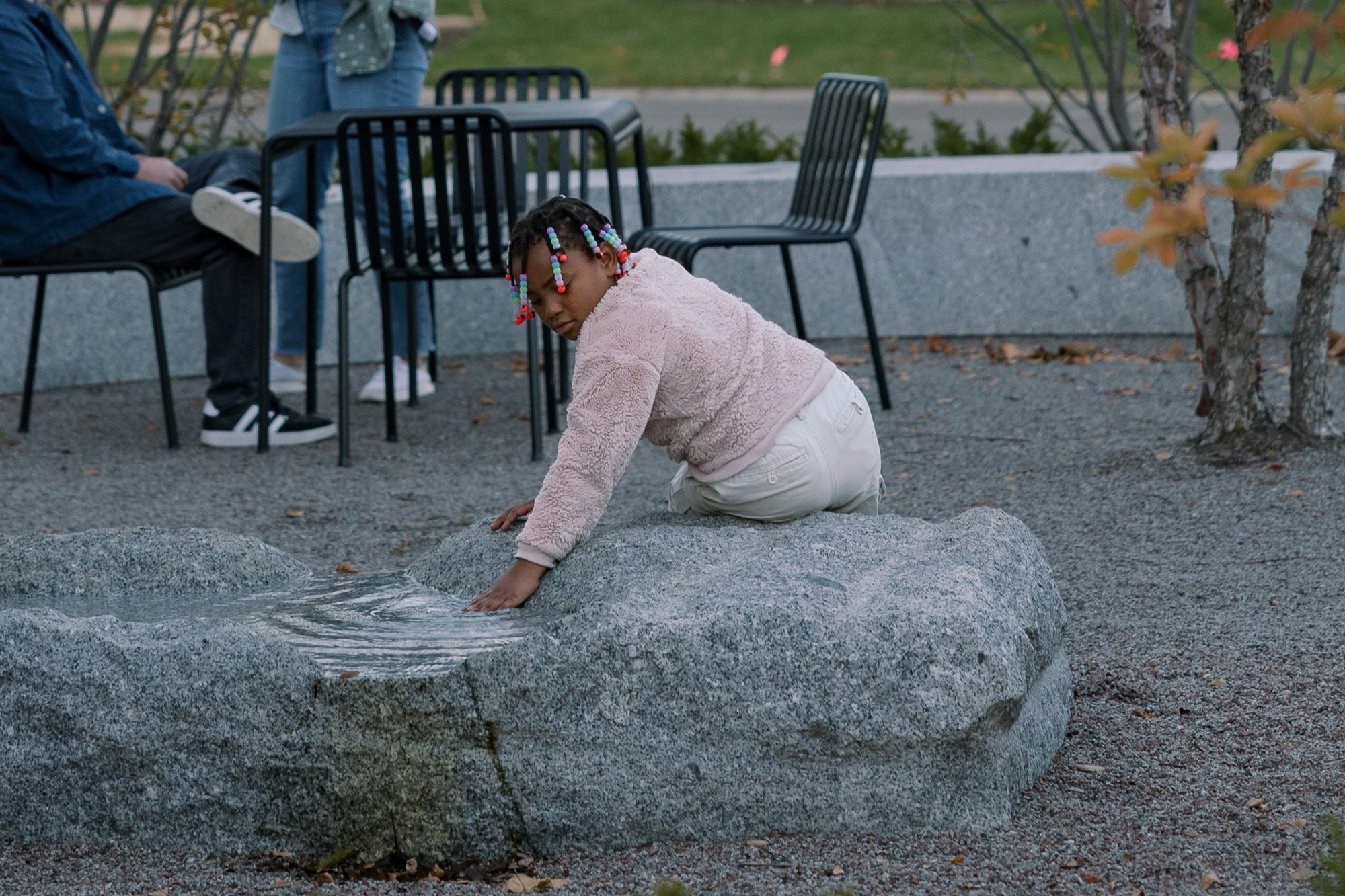
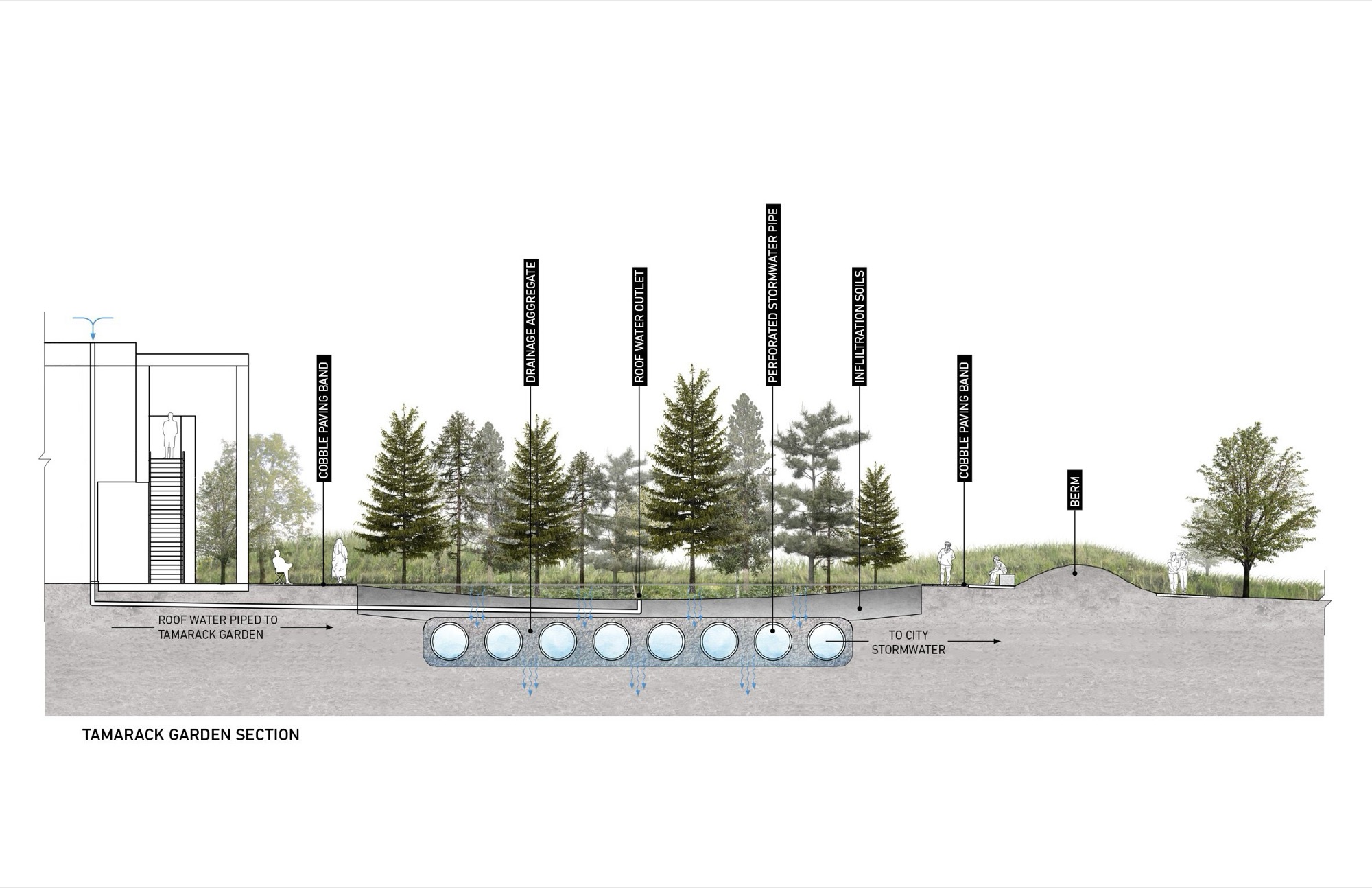
Significant site transformation supported the district vision requiring great care to knit the project back to the cemetery. Four experiential and materially rich garden zones define the Welcome Garden District. The Transition Gardens draw visitors from the city through dense perennial landscapes. The Fountain Gardens reorient and welcome visitors with a cascading stone water feature recalling regional lakes and rivers. The Bog Garden restores a wetland ecology, captures roof runoff, and provides custom wood seating immersed in planting. The Family Garden provides a restorative setting for planning, reflection, and staff respite, anchored by a spring-inspired stone water feature.
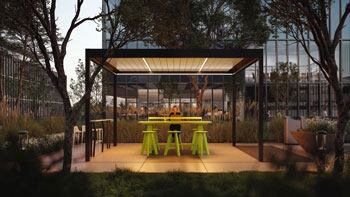
The project has had a profound impact on Lakewood’s ability to serve the public and their families. As visitation doubled during the pandemic and increased after, they have doubled their staff size. The gardens have provided an infrastructure to build new public programs and host existing ones in spaces better suited to their needs. The staff use the gardens for family meetings, and as restorative spaces for themselves. The spaces host new memorial rituals including a lantern lighting ceremony at the fountain. The project also demonstrates Lakewood’s commitment to horticultural excellence, receiving a Level Two Arboretum accreditation upon opening.
Together, the Lakewood Welcome Gardens reimagine the cemetery as a vital civic landscape, holding grief, ecology, ritual, and community simultaneously. The project demonstrates how landscape architecture can reconnect people to land, memory, and one another, offering a resilient and human centered model for public landscapes and cemeteries nationwide.
Credits:
Lakewood Cemetery (Client)
TEN x TEN (Landscape Architecture)
Snow Kreilich Architects (Architecture)
Miller Dunwiddie (Architecture)
JE Dunn Construction (Contractor)
NTH (Client Representative)
Meyer Borgmann Johnson (MBJ) (Structural Engineering)
Schuler Shook, Pierce Pini + Associates, Inc. (Lighting)
Cause Sustainability (Sustainability Consultant)
True North Consulting Group (Master Plan/Client Advisors)
Emanuelson-Podas (MEP Engineering)
Global Specialty (Fountain Design)
Coastwise Fireguard (Fire Protection)
Kvernstoen, Rönnholm, & Associates (Acoustical Consultant)
44.93686625014124, -93.29718305309474
74062


LILA 2026 Sponsor