PORCH: An Architecture of Generosity
www.tenxtenstudio.com/
2026 Landscape and Architecture / 2026 Other Typologies / Italy / Built in 2025 /

![The Lakewood Welcome Gardens reimagine liminal ground as inclusive cultural infrastructure rooted in care and collective belonging. Located in historic Lakewood Cemetery in Minneapolis at the threshold between city and cemetery, the seven-acre project establishes a new district and framework for future growth, while transforming a former maintenance area into an immersive series of gardens. […]](https://landezine-award.com/wp-content/uploads/2026/04/Lakewood_1_HERO-1-600x400.jpg "Lakewood Cemetery Welcome Gardens")
![The Treetop Trail demonstrates the power of landscape-led design in shaping interpretation and experience—reimagining existing infrastructure as a didactic, immersive environment. Guided by the Zoo’s vision to connect people, animals, and nature, the Treetop Trail experiential framework shifts spatial perspective, immersing visitors within the forest canopy while revealing ecological processes, cultural narratives, and species-specific experiences. […]](https://landezine-award.com/wp-content/uploads/2026/04/Treetop-Trail_1_HERO-1-600x552.jpg "Treetop Trail at the Minnesota Zoo")
![The recently completed Treetop Trail allows visitors to experience the Minnesota Zoological Gardens through a renewed elevated perspective. The Minnesota Zoo Treetop Trail embodies a profound commitment to environmental stewardship, guided by the overarching vision of “connecting people with nature.” Along 1.25 miles and four touchdowns (access points), the Trail guides visitors through many stories, […]](https://landezine-award.com/wp-content/uploads/2024/05/00-Treetop-Trail_Main-Photo-600x401.jpg "Minnesota Zoo Treetop Trail")
![VISION Mill 19 sits at the heart of Hazelwood Green, Pittsburgh’s largest riverfront development. Nestled between the Monongahela River and the Hazelwood community, Mill 19 is the catalytic transformation of the former Pittsburgh J&L Steel Company into a sustainable advanced manufacturing research center enveloped by an immersive public landscape. The project celebrates a bold approach […]](https://landezine-award.com/wp-content/uploads/2024/05/00-Mill-19_Main-Photo-600x396.jpg "Mill 19")
![The SECOND + SECOND Courtyard is a new urban fabric that stitches a private housing development into the Historic North Loop District of Minneapolis. The project re-imagines privately owned space as public realm, using texture, planting, and infrastructure to create a welcoming, immersive, and resilient place. Three key spaces- the Garden Street, the Portal, and […]](https://landezine-award.com/wp-content/uploads/2022/05/00-Project-main-photo_SECOND-SECOND-Courtyard-600x358.jpg "SECOND + SECOND Courtyard")

![Nested within the armature of a 1,300-foot-long historic steel mill along Pittsburgh’s Monongahela River at the heart of Hazelwood Green, two new buildings sit in the shadows of trusses clad with solar panels. The 5-acre multi-phased adaptive reuse project is nested within a 170-acre brownfield site that is being transformed into a highly sustainable, high-tech […]](https://landezine-award.com/wp-content/uploads/2022/05/00-Mill-19_Project-main-photo-600x400.jpg "Mill 19 Phases A + B")
![OUR VISION + MISSION We design for people and habitats. We design to catalyze and inspire just futures. We co-create compassionate, immersive, and resilient spaces that confront the issues of our time. TEN VALUES We acknowledge that land is an expression of power and believe that it can be redistributed through the design process. We […]](https://landezine-award.com/wp-content/uploads/2022/05/TXT-TEAM-600x338.jpg "TEN x TEN")
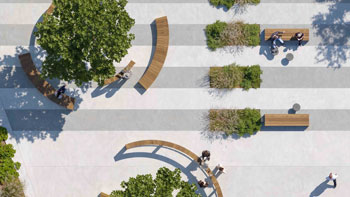
At the 19th International Biennale Architettura of La Biennale di Venezia, the United States Pavilion, commissioned by the Department of State, reimagined the nation through a single archetype: the porch. The design team included landscape architects, architects, exhibition curators, and artists. The landscape architect collaborated on the overall conceptual narrative of how this quintessentially American place—social, environmental, tectonic, performative, generous, and democratic—became both lens and stage. The landscape architect led the design and detailing of the horizontal surfaces, defined the overall configuration and movement into the galleries, determined the materiality, and curated the edges, platforms, and steps as opportunities for performance, observation, comfort, and active exchange between visitors.
The porch is a quietly enduring icon of America—an unheralded figure that spans time, geographies, climates, cultures, and construction methods. It appears in rural towns and dense cities, in grand porticos, and modest shotgun houses. Across histories and communities, it has persisted as a foundational element of American life—a threshold where private life leans toward public life. This porch was designed as a place where boundaries between the private and public could be fluid, where personal became communal, and where individuals were both seen and heard.
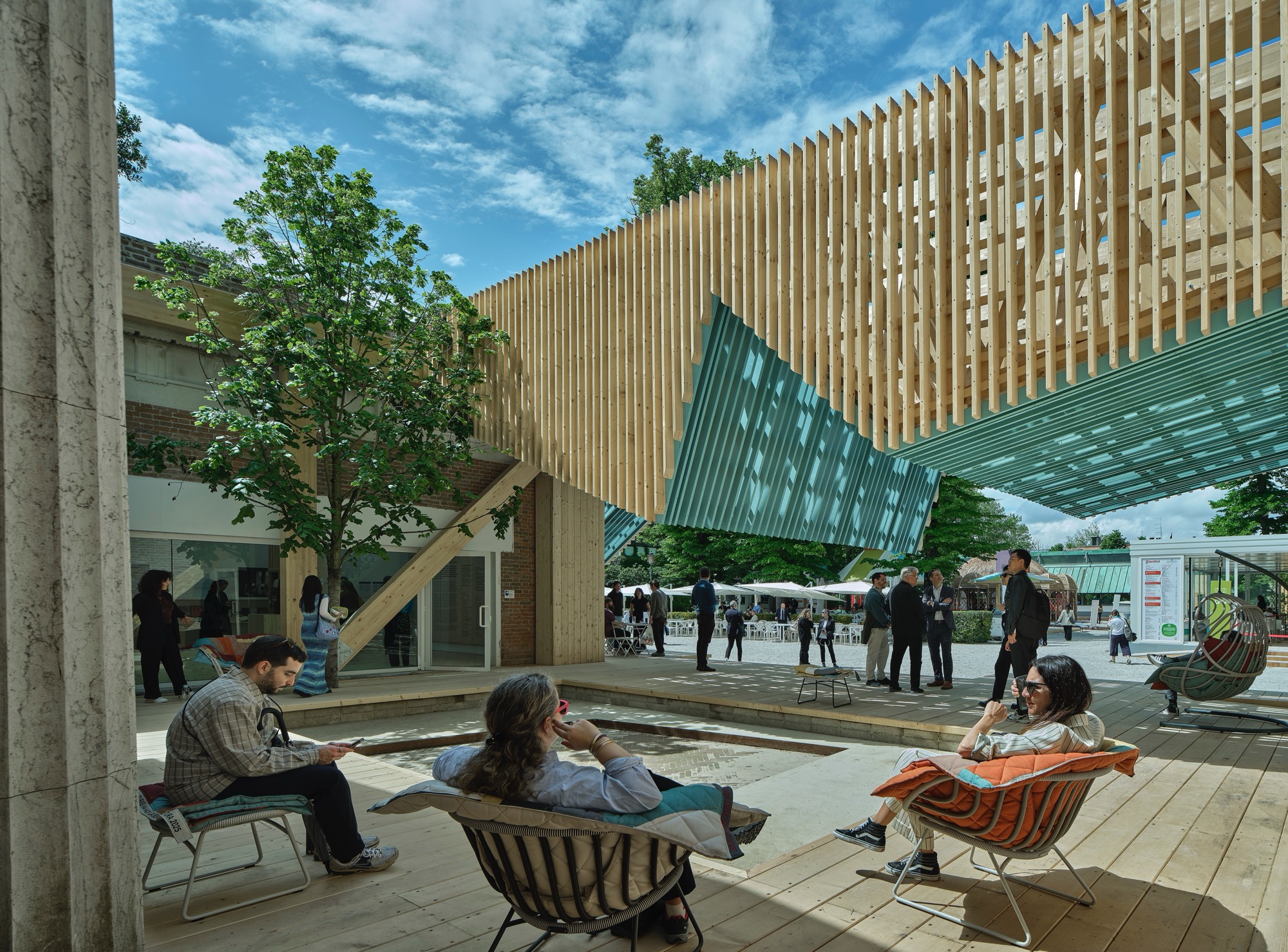
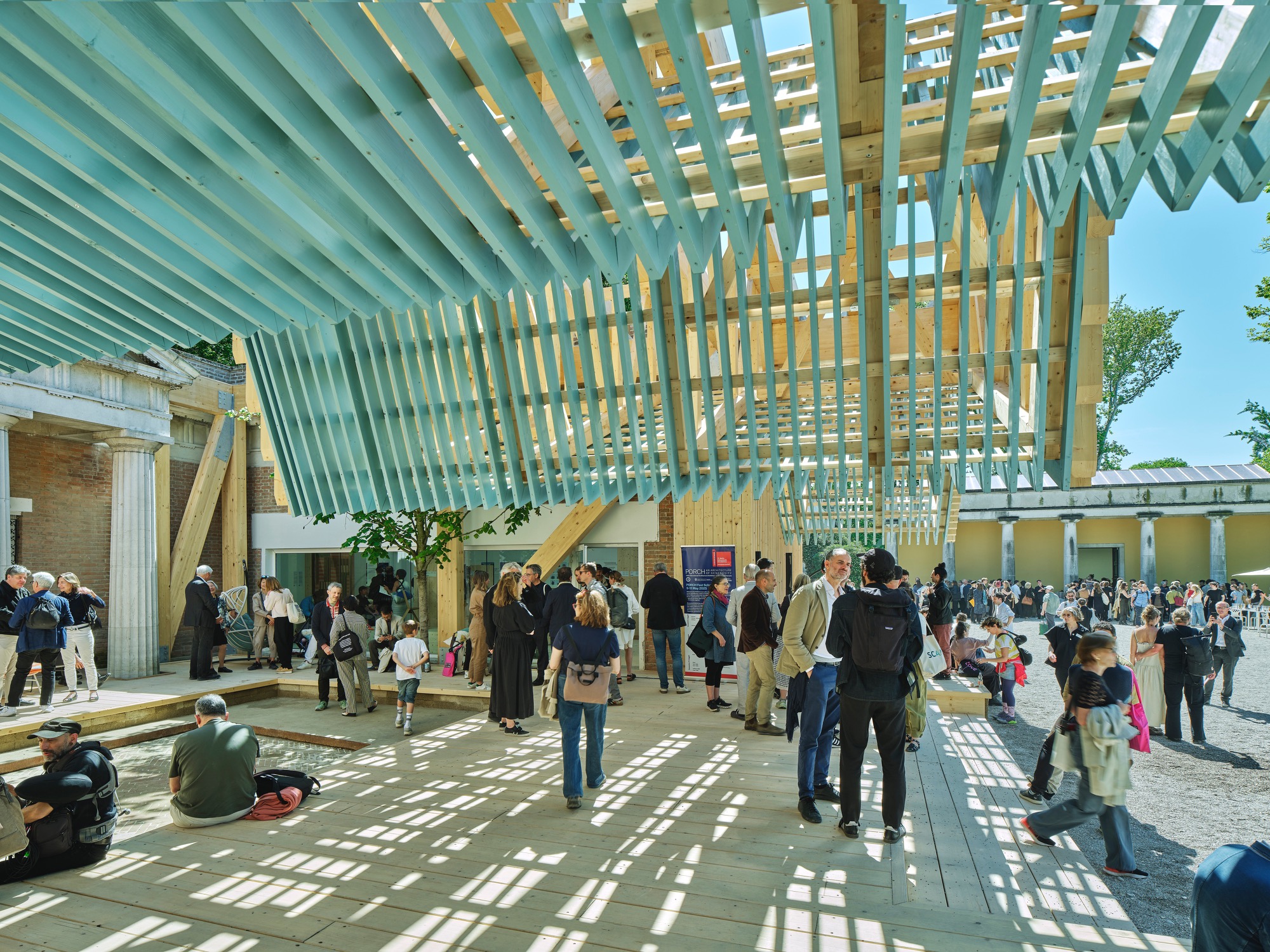
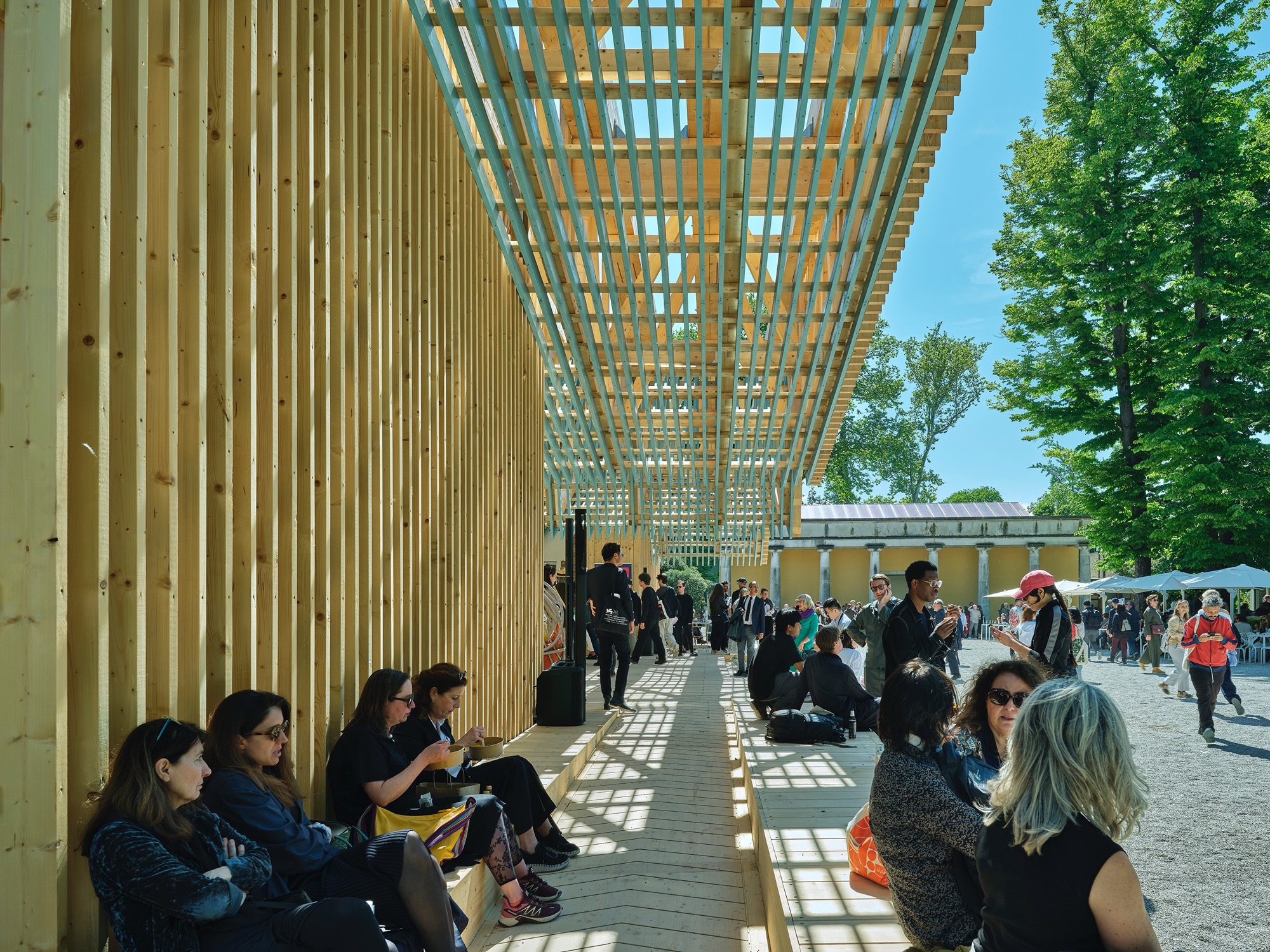
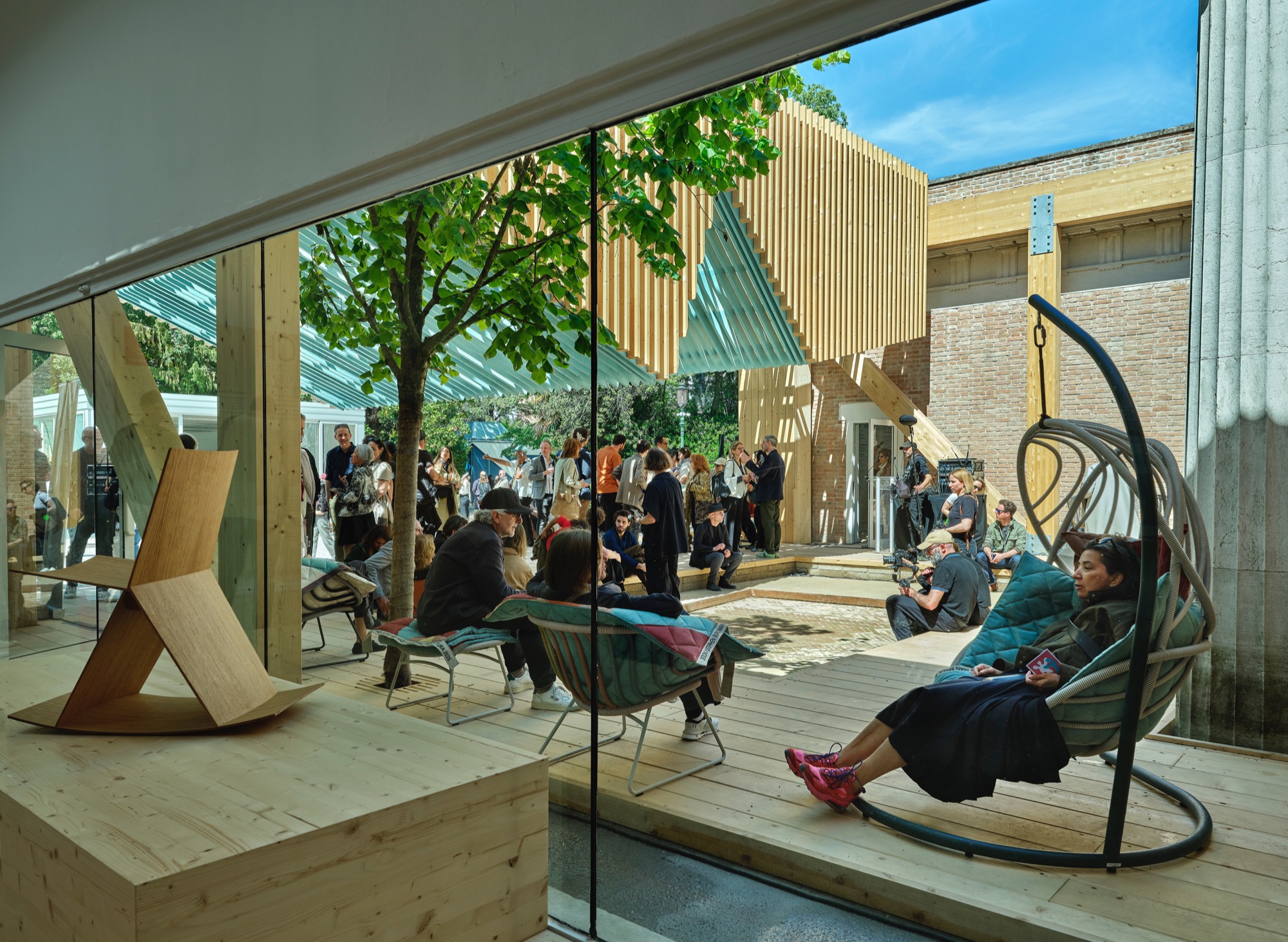
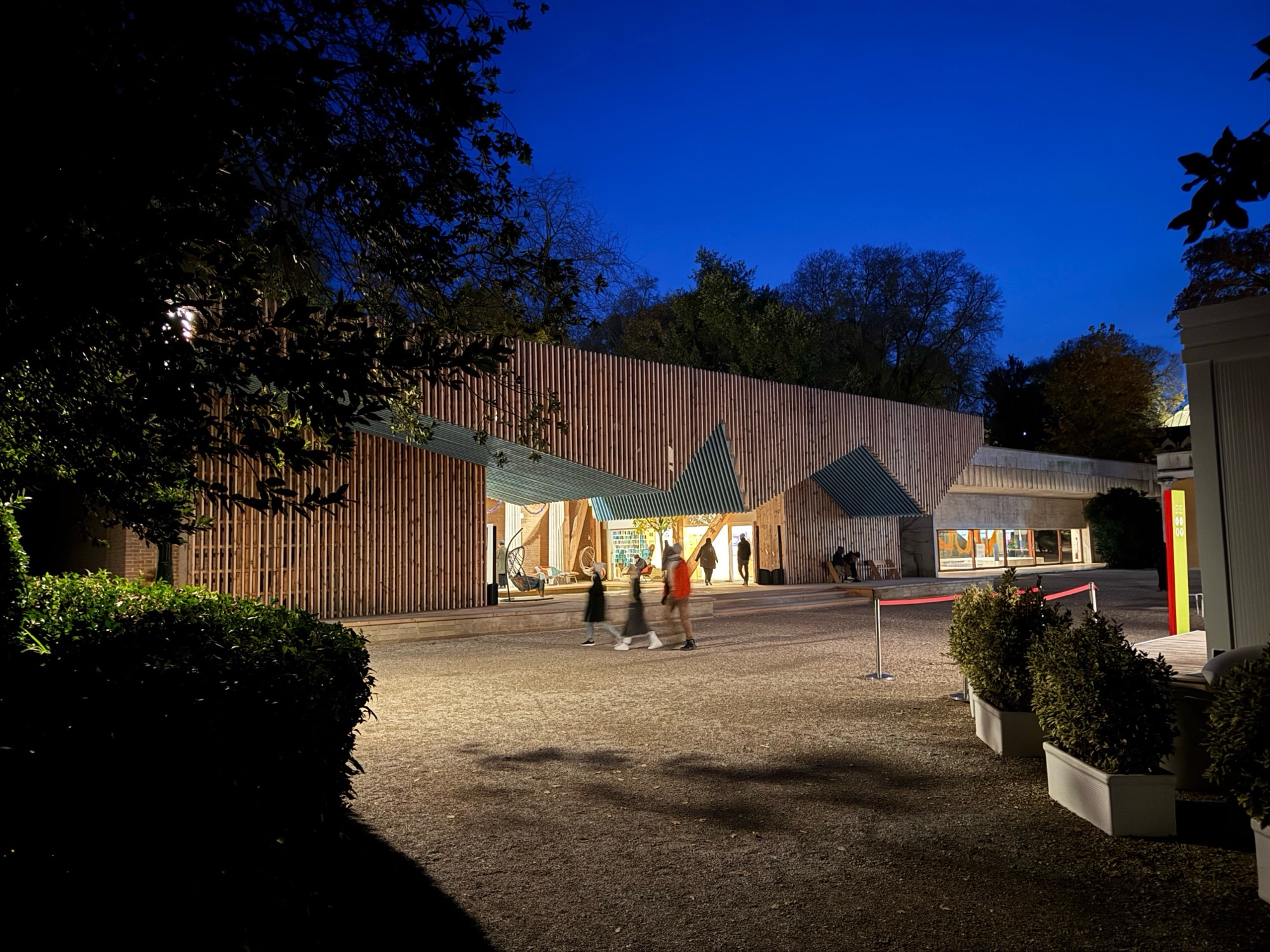
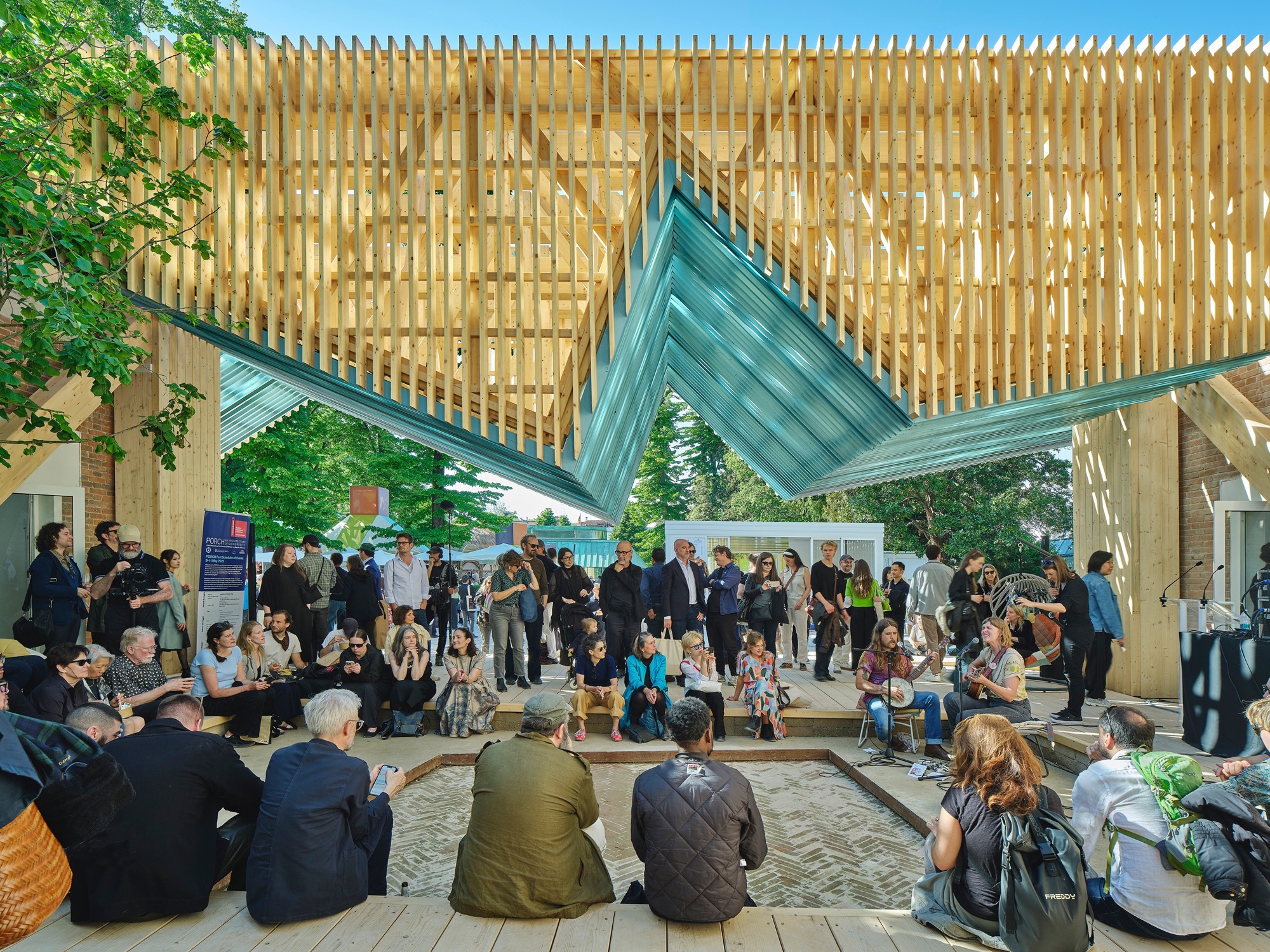
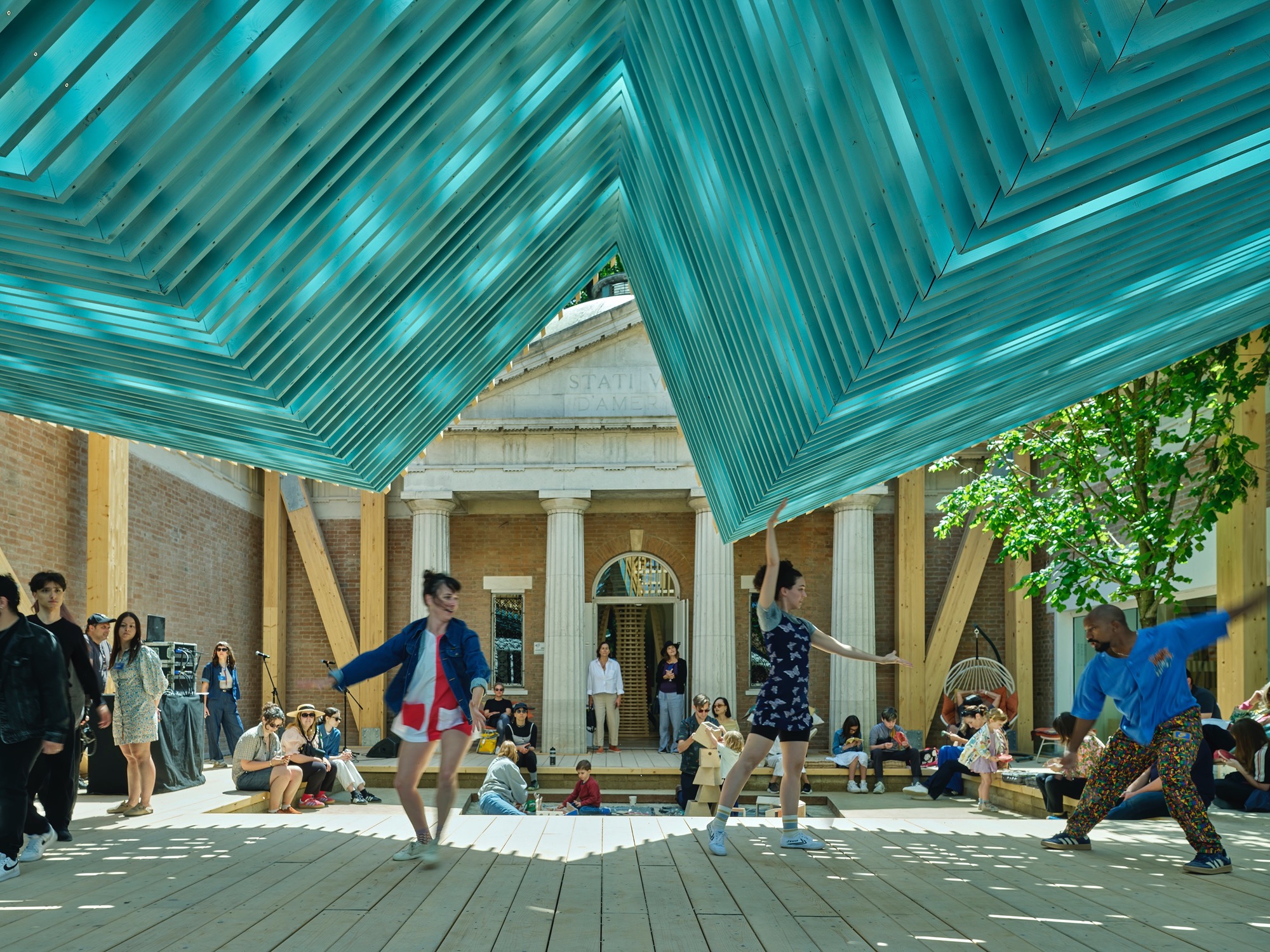
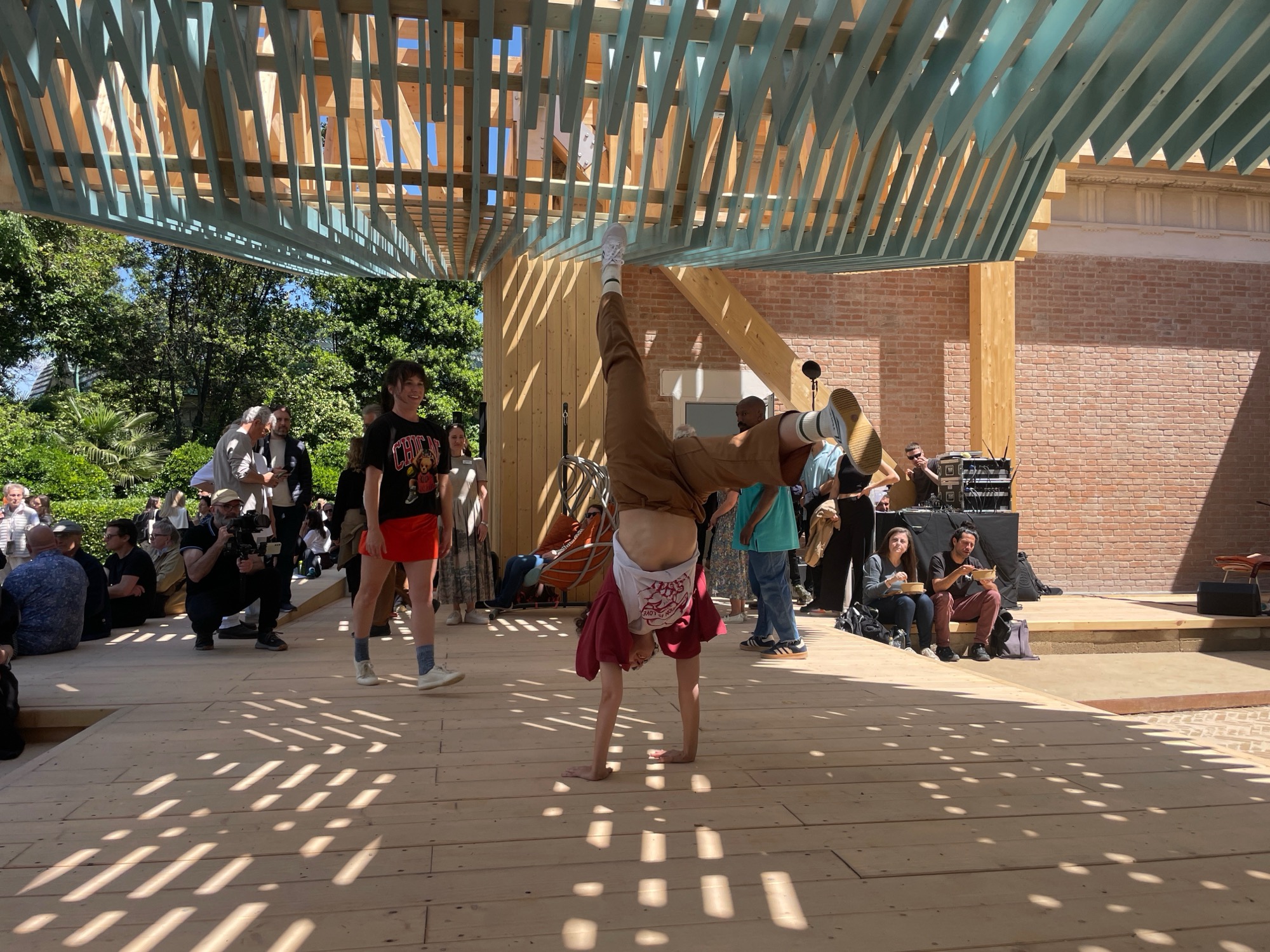
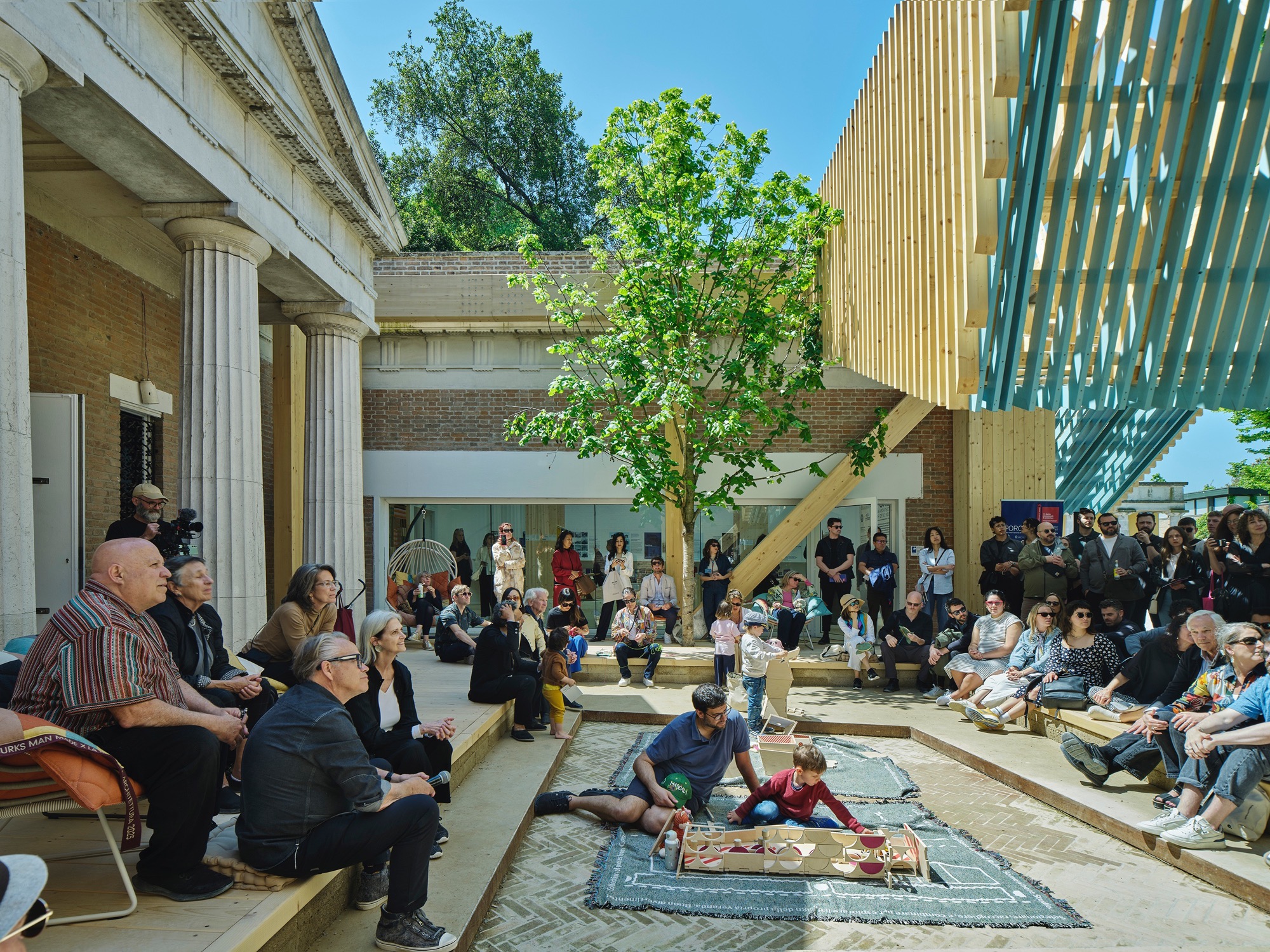
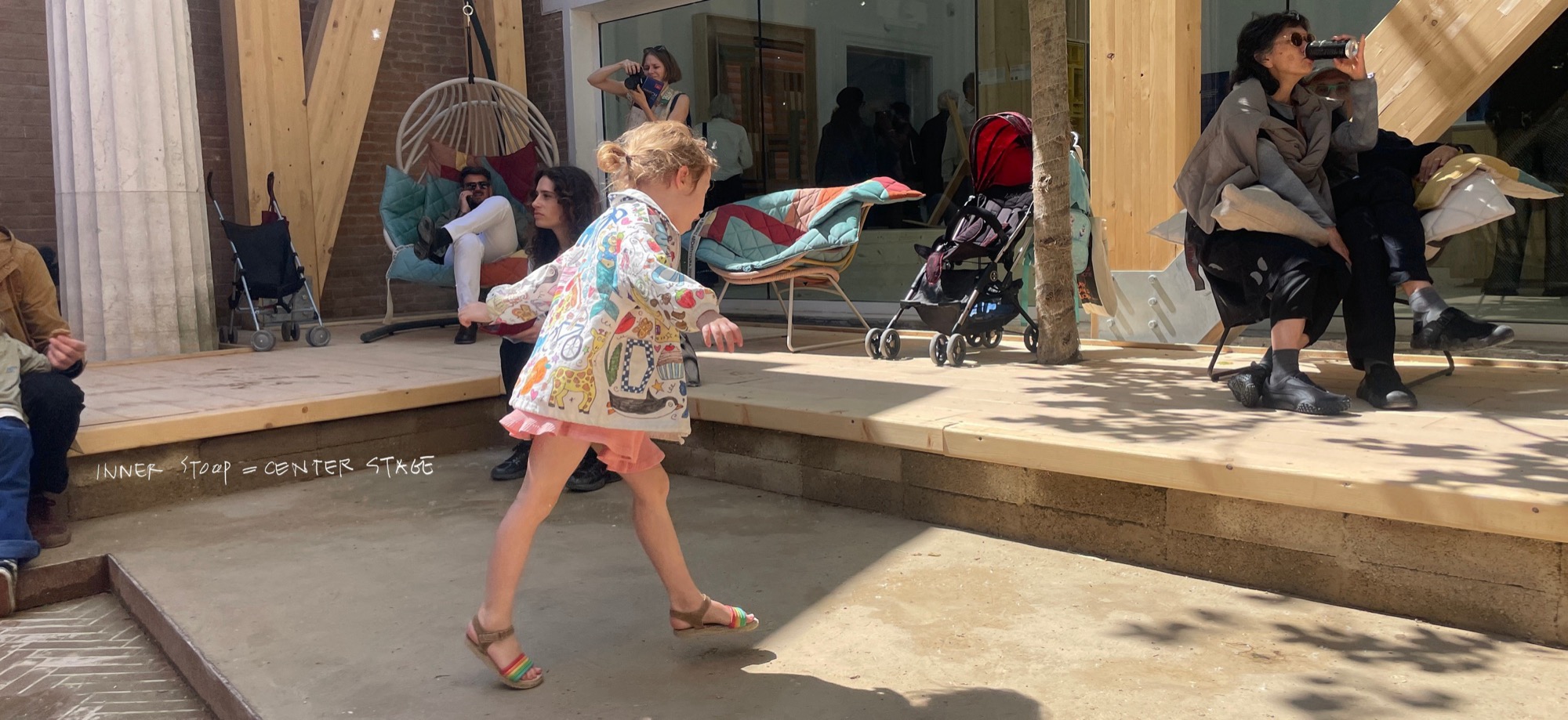
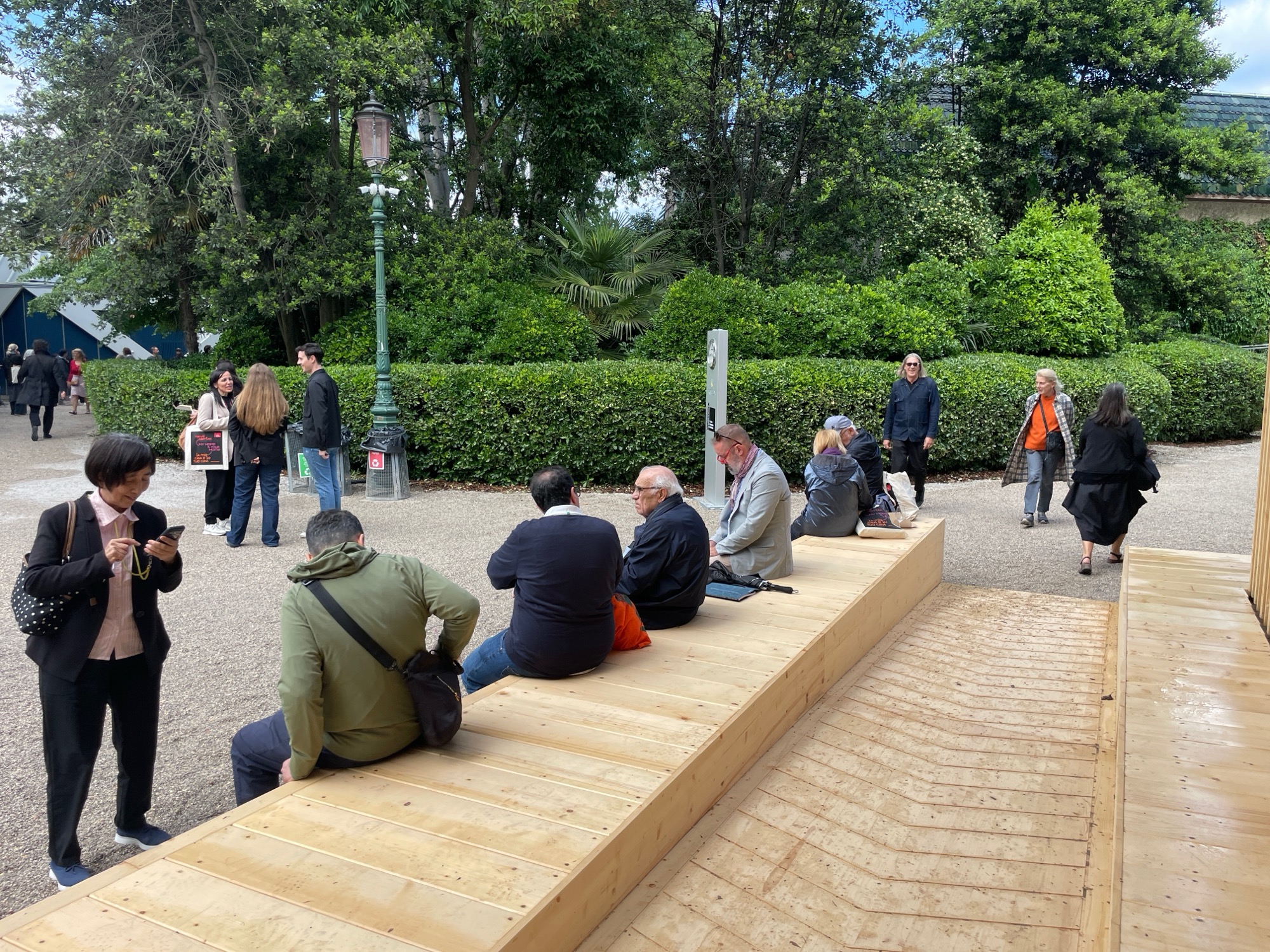
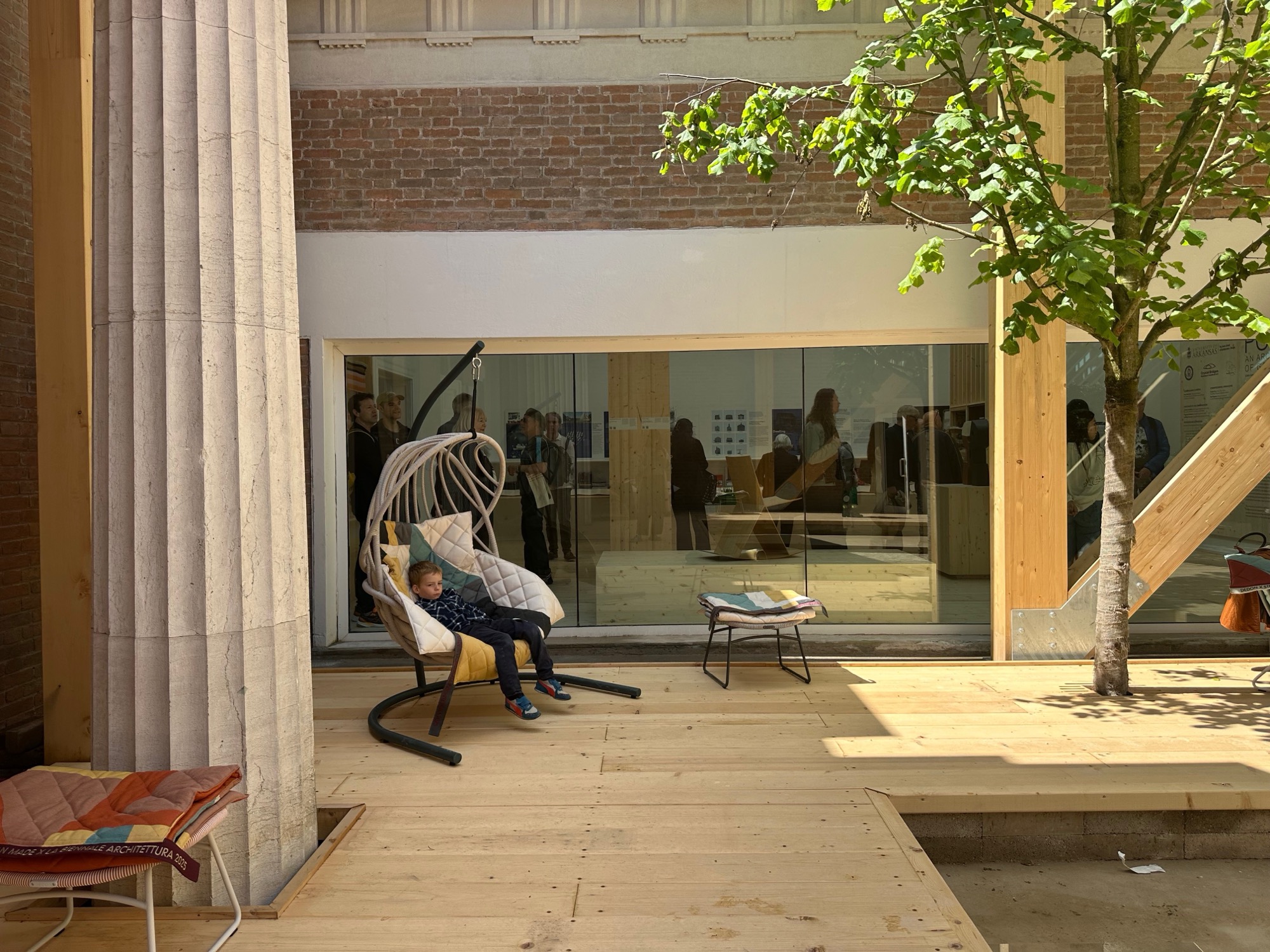
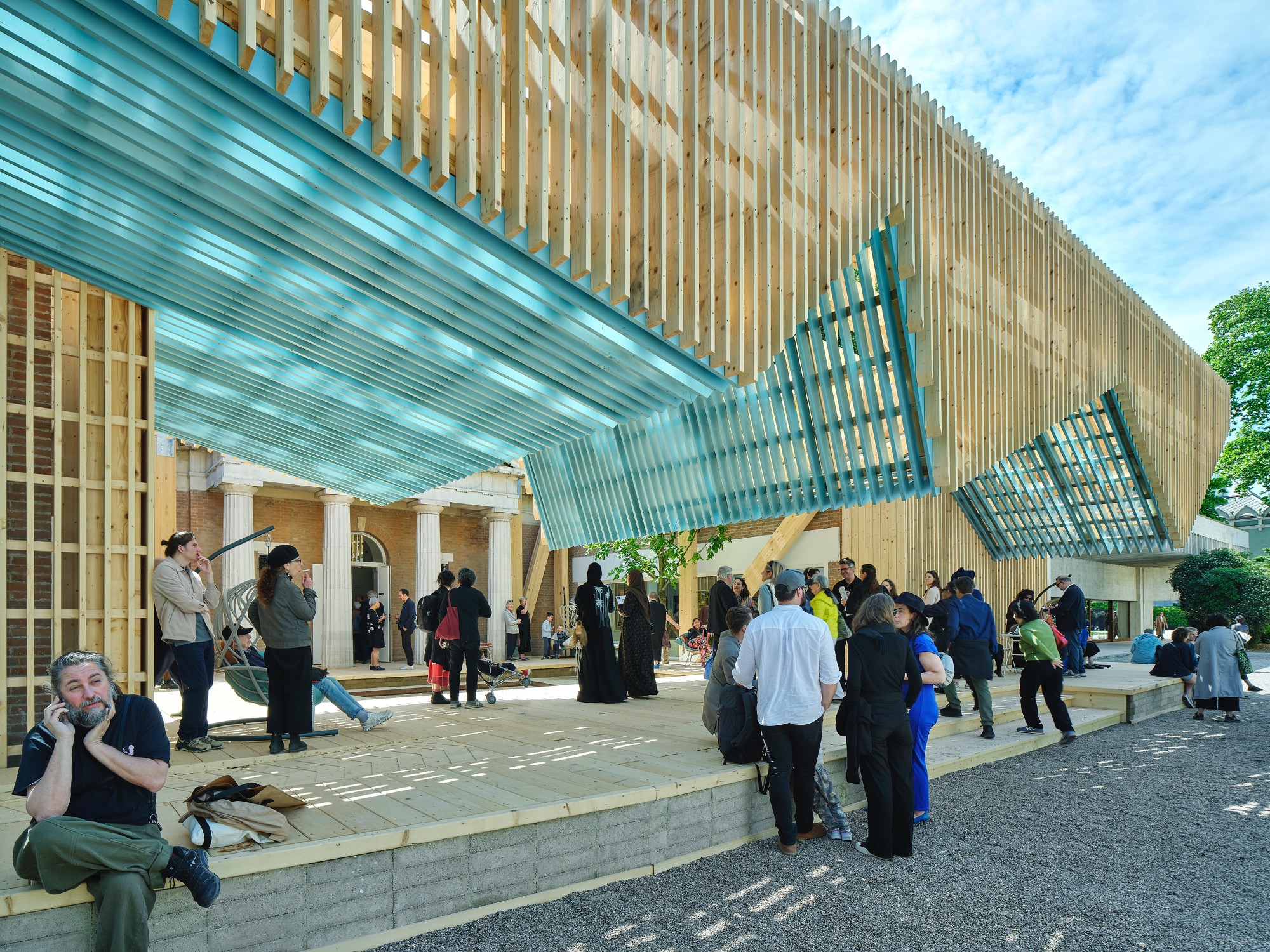
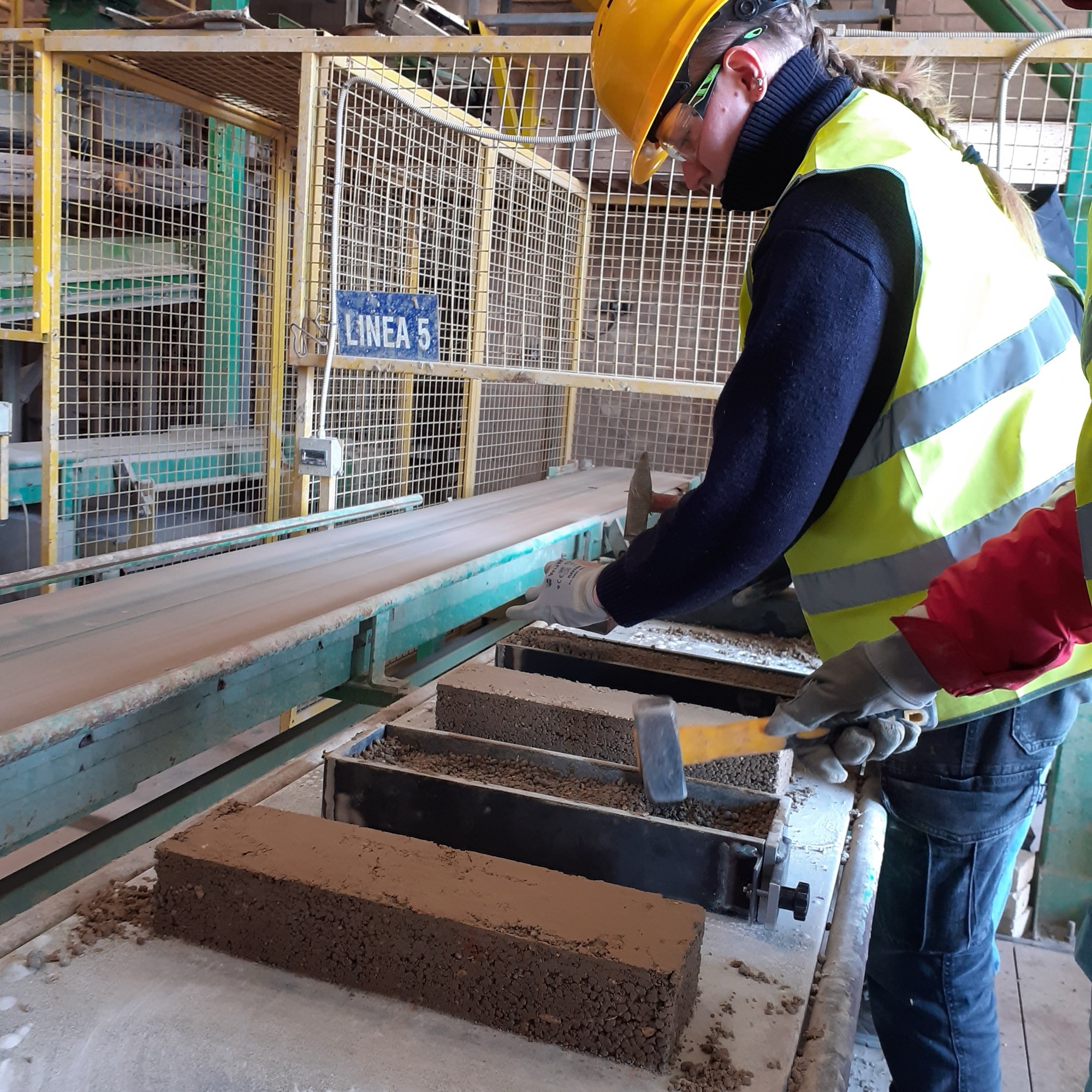
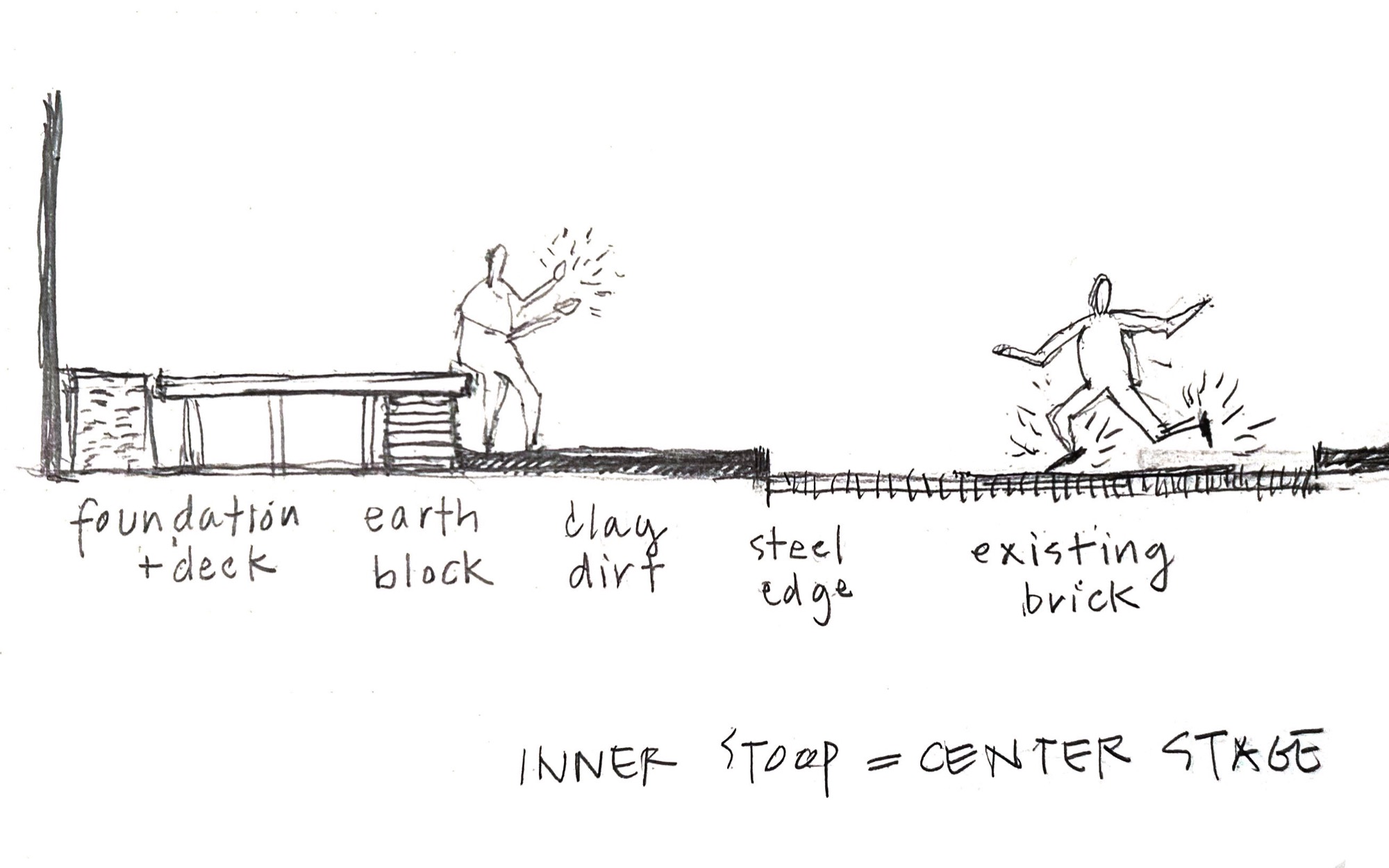
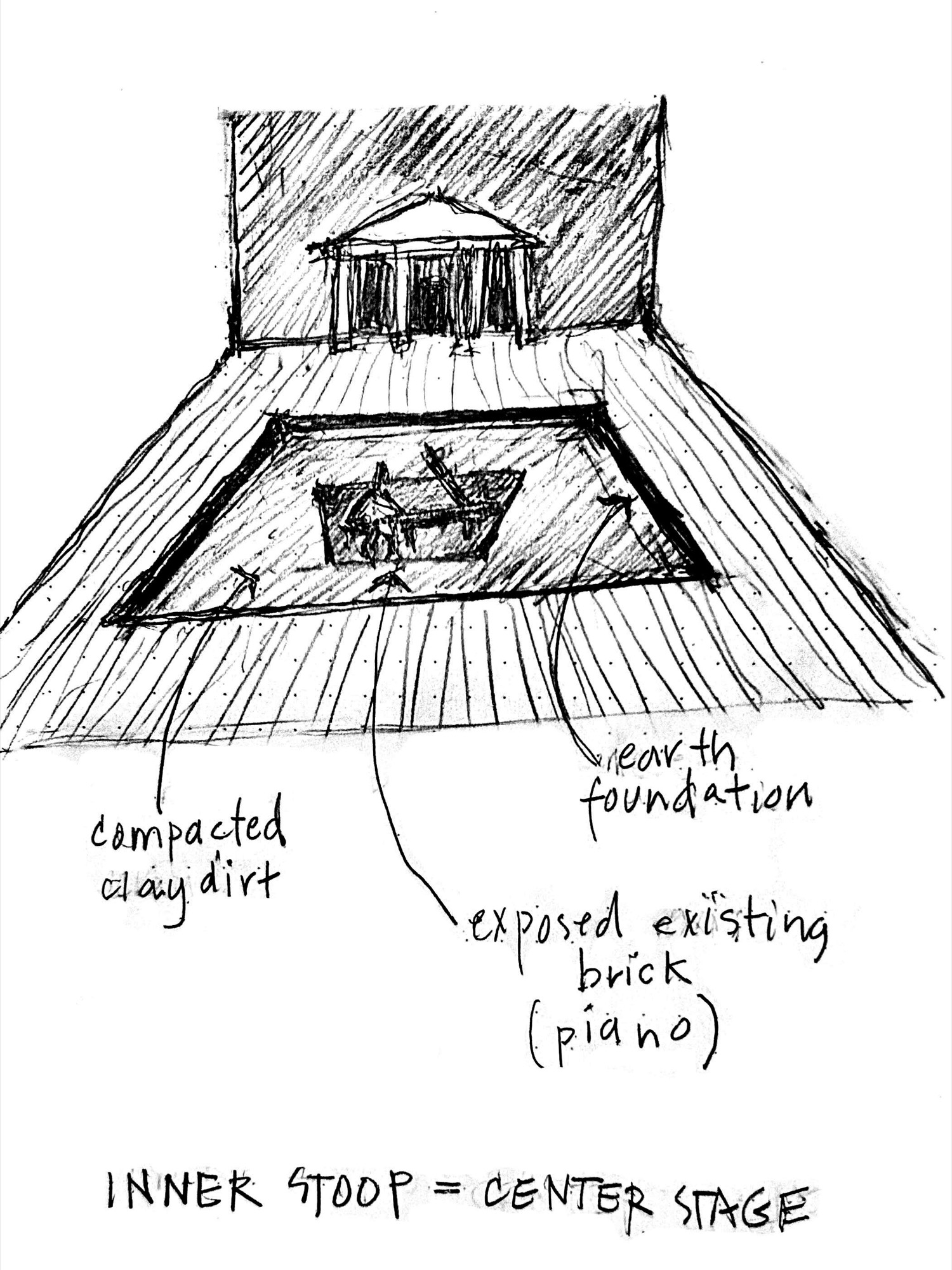
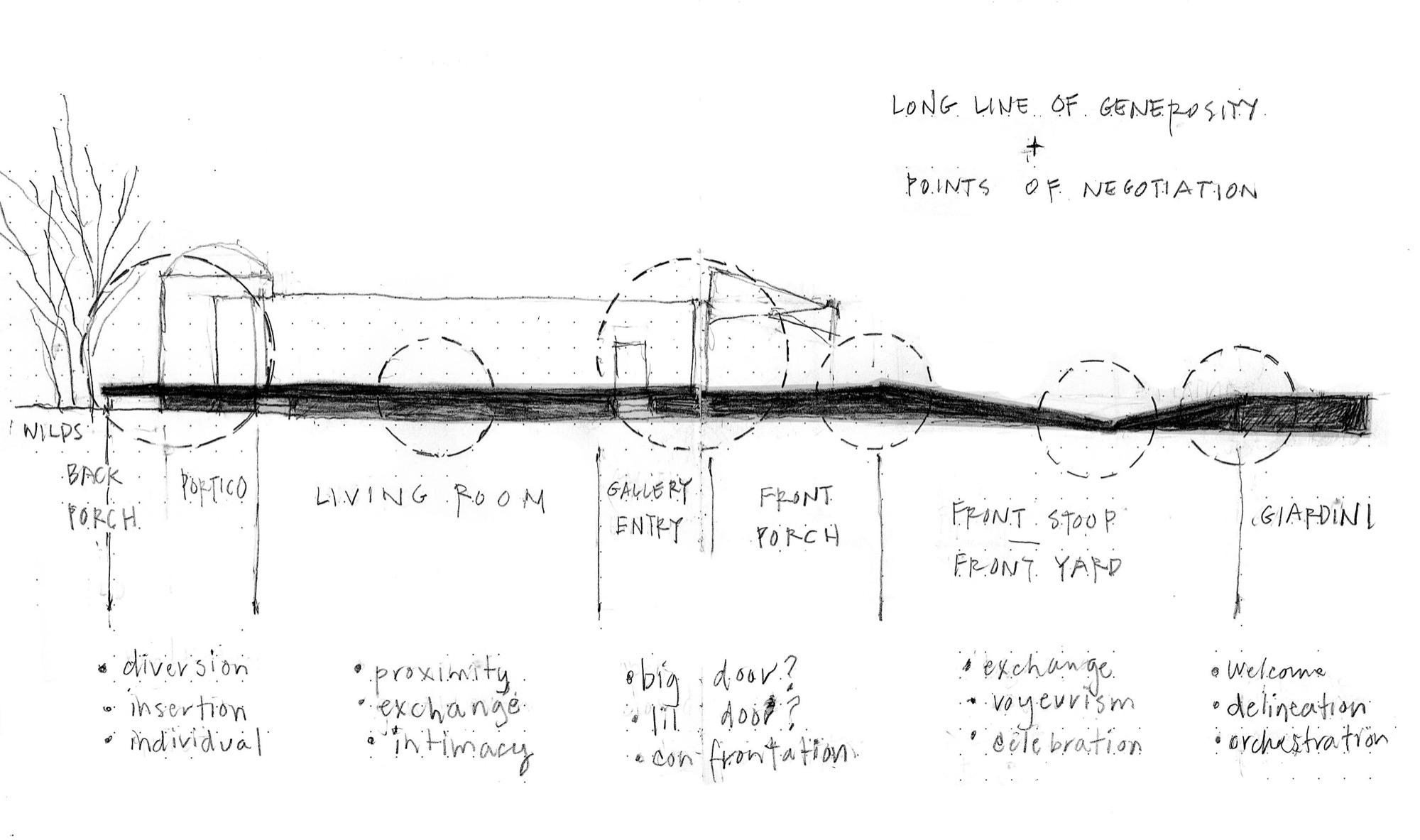
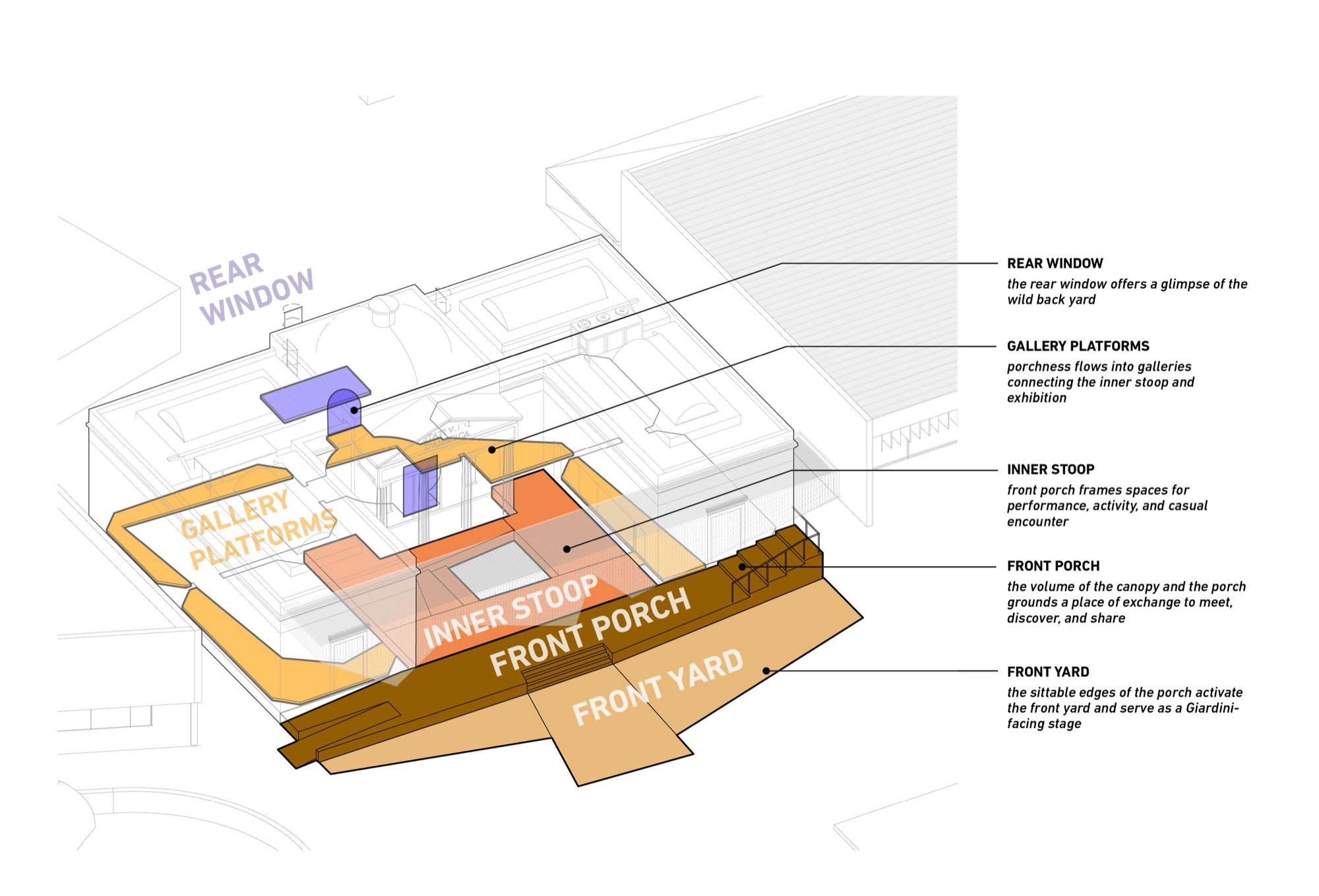
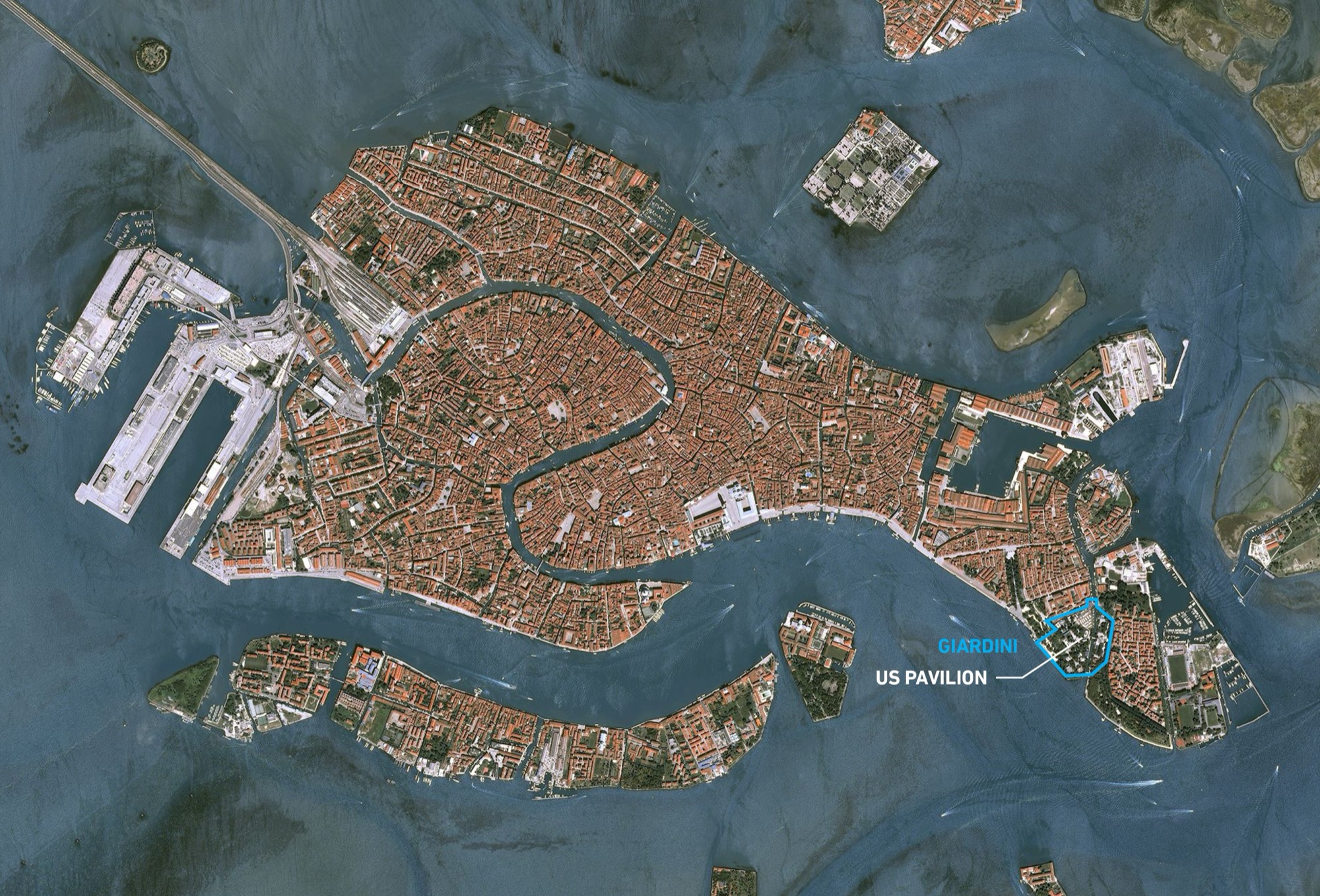
From May to November 2025, the temporary installation presented a spatial expression of encounter, negotiation, and shared civic life. This American porch was not a static object but a dynamic, living space. The design drew inspiration from the clear geometry of vernacular structures, shaped by memory, necessity, and daily ritual. The new, contemporary porch was constructed on site around the Pavilion—unfolding into the courtyard and outward toward the Biennale grounds as a landscape gesture and civic armature. The edges of the porch invited occupation, while broad steps and open platforms offered places to sit, linger, witness, and engage. Through these simple, deliberate design details, the project cultivated connection. For 6 months, it hosted dialogue, performances, readings, screenings, and informal exchange—activities that reflect the richness and diversity of American culture.
The porch served as a transitional space between dynamic environmental conditions, highlighting the relationship between nature and architecture. The porch mediated shelter and exposure, sun and shade, wind and stillness. It heightened visitors’ awareness of climate as a lived experience rather than an abstraction. The porch framed weather, light, and seasonal change as active participants in the life of the installation. It was both refuge and register, offering comfort while drawing attention to our shared environmental responsibilities.
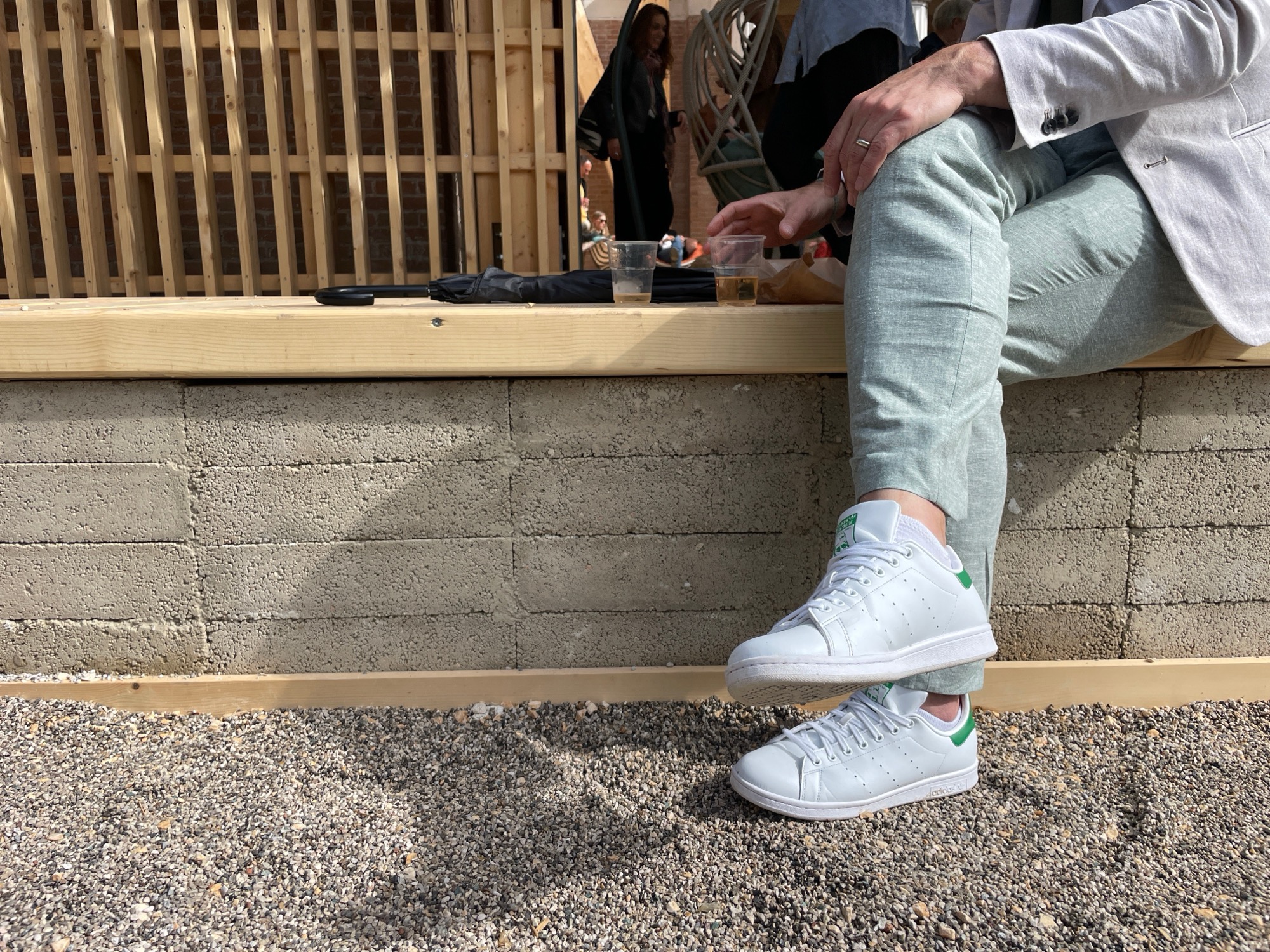
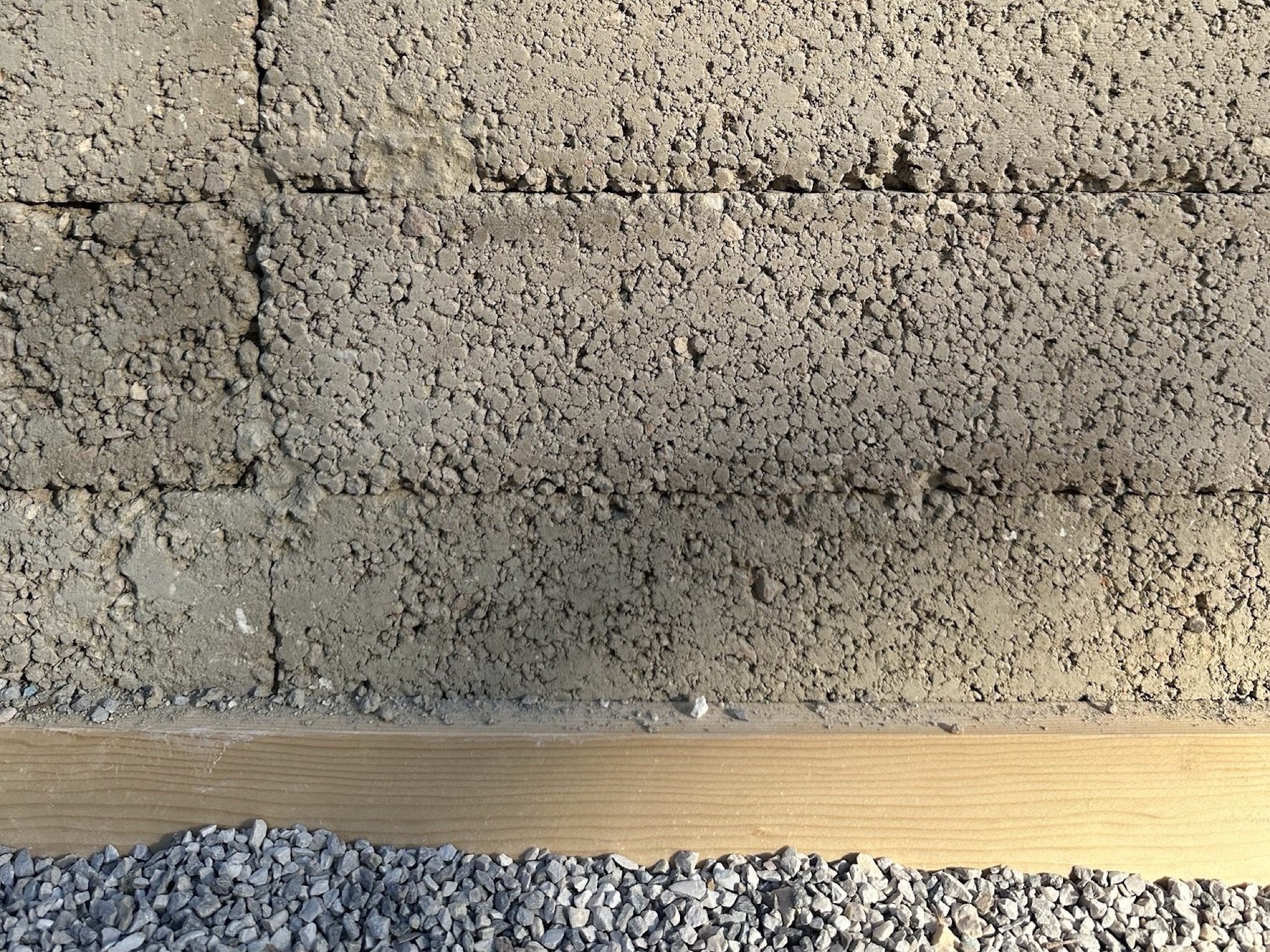
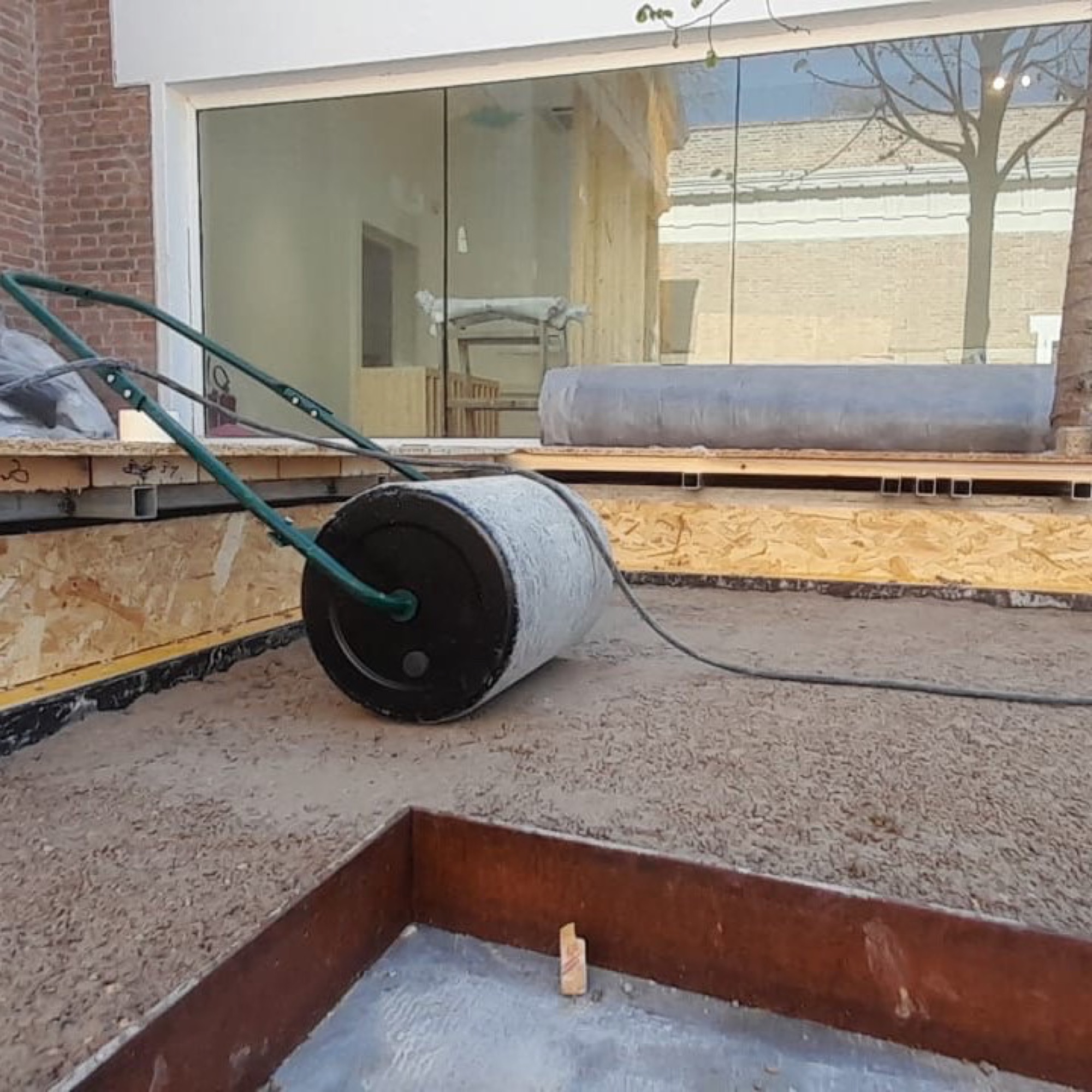
Material choices reinforced this dialogue between human, built, and natural systems. Wood, selected for its low embodied carbon and cultural resonance, was at the heart of the project’s structural and spatial core. Wood evokes a sense of place, of labor, and of tradition, grounding the porch in the American landscape. The porch hovered lightly above the earth, allowing the terrain to remain visible and active beneath it—a reminder that the ground holds layered histories. To deepen this connection to the land, recycled Venetian clay was hand-packed into blocks and stacked beneath the porch, connecting the pavilion to the local context. Rammed earth spoke to resilience, resourcefulness, and climate intelligence—demonstrating that sustainability can be both technical and cultural.
Economically, the horizontal and vertical structures are designed for disassembly and reuse. Its prefabricated timber components, wood decking, and modular earthen blocks were repurposed after the Biennale. The horizontal structure was shipped to Rome to be reused in design-build projects by students in a new park. The vertical structure is being shipped back to the United States for installation in a sculpture garden. Extending the materials’ life and reducing waste were critical goals of the design strategy.
The porch was a collaborative, speculative, and forward-thinking place shaped by optimism, embodying a spirit of openness and vulnerability. It was a place where we could meet not just our neighbors but ourselves, where we could reflect on who we are, where we’ve been, and where we are going.
Through this installation, the porch was reclaimed as an essential element of civic life—a place where social negotiation, cultural exchange, and communal generosity come together in a shared experience of the present and future. It is a place where memory and progress coexist, where form and function meet to create a new landscape of encounter, generosity, and rooted intelligence.
Credits:
U.S. Department of State (Client)
Peter MacKeith, Susan Chin, Rod Bigelow (Co-Commissioners)
Stephen Burks Man Made (Product Design)
45.4286796624259, 12.35859730687356
74062


LILA 2026 Sponsor