Treetop Trail at the Minnesota Zoo
www.tenxtenstudio.com/
2026 Landscape and Architecture / 2026 Public Projects / USA / Built in 2023 /

![The Lakewood Welcome Gardens reimagine liminal ground as inclusive cultural infrastructure rooted in care and collective belonging. Located in historic Lakewood Cemetery in Minneapolis at the threshold between city and cemetery, the seven-acre project establishes a new district and framework for future growth, while transforming a former maintenance area into an immersive series of gardens. […]](https://landezine-award.com/wp-content/uploads/2026/04/Lakewood_1_HERO-1-600x400.jpg "Lakewood Cemetery Welcome Gardens")
![At the 19th International Biennale Architettura of La Biennale di Venezia, the United States Pavilion, commissioned by the Department of State, reimagined the nation through a single archetype: the porch. The design team included landscape architects, architects, exhibition curators, and artists. The landscape architect collaborated on the overall conceptual narrative of how this quintessentially American […]](https://landezine-award.com/wp-content/uploads/2026/04/PORCH_1_HERO-1-600x450.jpg "PORCH: An Architecture of Generosity")
![The recently completed Treetop Trail allows visitors to experience the Minnesota Zoological Gardens through a renewed elevated perspective. The Minnesota Zoo Treetop Trail embodies a profound commitment to environmental stewardship, guided by the overarching vision of “connecting people with nature.” Along 1.25 miles and four touchdowns (access points), the Trail guides visitors through many stories, […]](https://landezine-award.com/wp-content/uploads/2024/05/00-Treetop-Trail_Main-Photo-600x401.jpg "Minnesota Zoo Treetop Trail")
![VISION Mill 19 sits at the heart of Hazelwood Green, Pittsburgh’s largest riverfront development. Nestled between the Monongahela River and the Hazelwood community, Mill 19 is the catalytic transformation of the former Pittsburgh J&L Steel Company into a sustainable advanced manufacturing research center enveloped by an immersive public landscape. The project celebrates a bold approach […]](https://landezine-award.com/wp-content/uploads/2024/05/00-Mill-19_Main-Photo-600x396.jpg "Mill 19")
![The SECOND + SECOND Courtyard is a new urban fabric that stitches a private housing development into the Historic North Loop District of Minneapolis. The project re-imagines privately owned space as public realm, using texture, planting, and infrastructure to create a welcoming, immersive, and resilient place. Three key spaces- the Garden Street, the Portal, and […]](https://landezine-award.com/wp-content/uploads/2022/05/00-Project-main-photo_SECOND-SECOND-Courtyard-600x358.jpg "SECOND + SECOND Courtyard")

![Nested within the armature of a 1,300-foot-long historic steel mill along Pittsburgh’s Monongahela River at the heart of Hazelwood Green, two new buildings sit in the shadows of trusses clad with solar panels. The 5-acre multi-phased adaptive reuse project is nested within a 170-acre brownfield site that is being transformed into a highly sustainable, high-tech […]](https://landezine-award.com/wp-content/uploads/2022/05/00-Mill-19_Project-main-photo-600x400.jpg "Mill 19 Phases A + B")
![OUR VISION + MISSION We design for people and habitats. We design to catalyze and inspire just futures. We co-create compassionate, immersive, and resilient spaces that confront the issues of our time. TEN VALUES We acknowledge that land is an expression of power and believe that it can be redistributed through the design process. We […]](https://landezine-award.com/wp-content/uploads/2022/05/TXT-TEAM-600x338.jpg "TEN x TEN")
The Treetop Trail demonstrates the power of landscape-led design in shaping interpretation and experience—reimagining existing infrastructure as a didactic, immersive environment. Guided by the Zoo’s vision to connect people, animals, and nature, the Treetop Trail experiential framework shifts spatial perspective, immersing visitors within the forest canopy while revealing ecological processes, cultural narratives, and species-specific experiences. The landscape architect led a collaborative partnership with Zoo staff and the Shakopee Mdewakanton Sioux Community, weaving landscape, interpretation, wayfinding, and experience to cultivate meaningful relationships with nature and inspire conservation awareness and collective action.
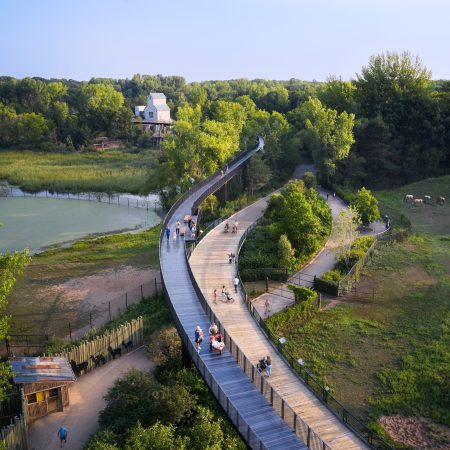
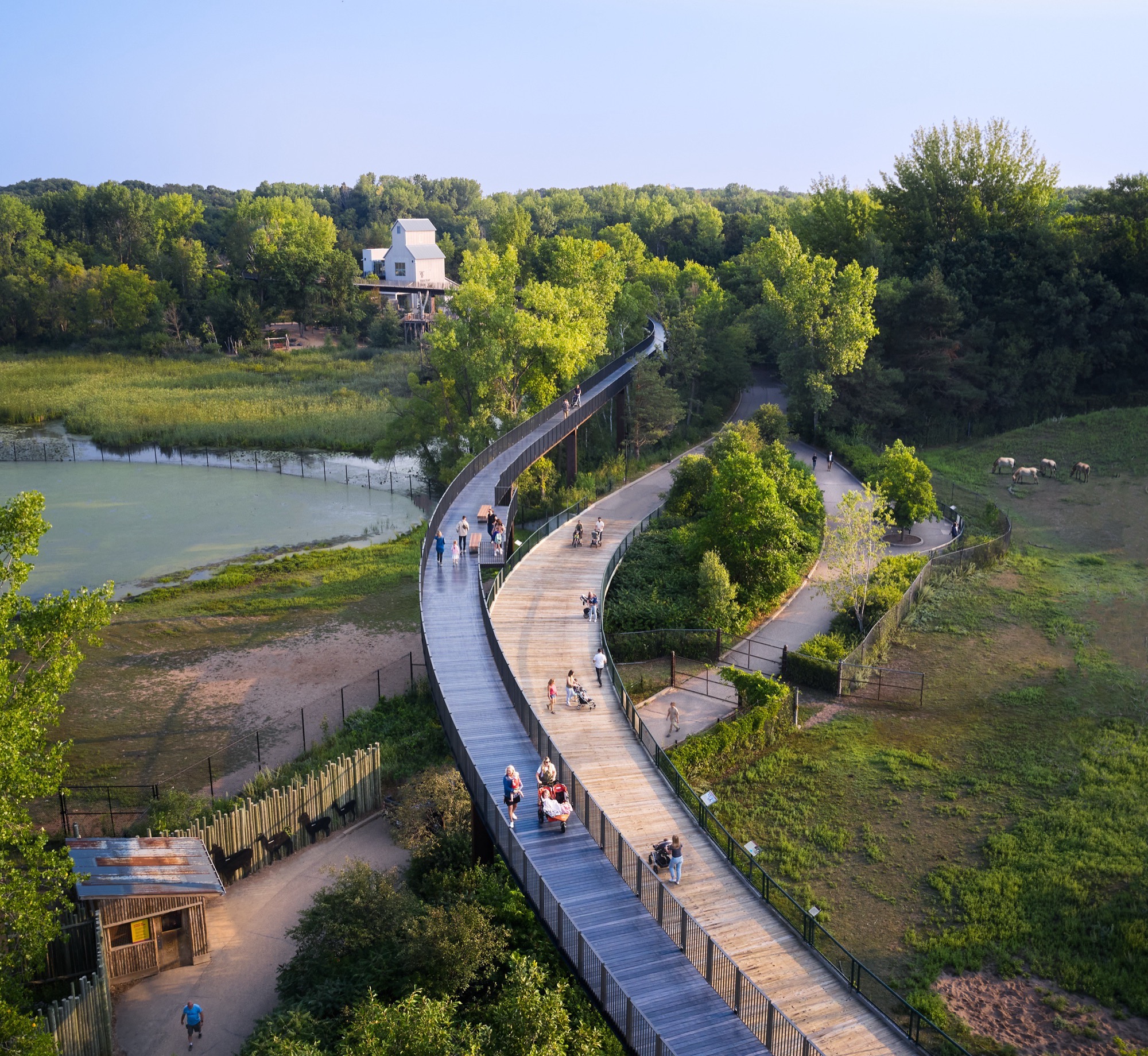
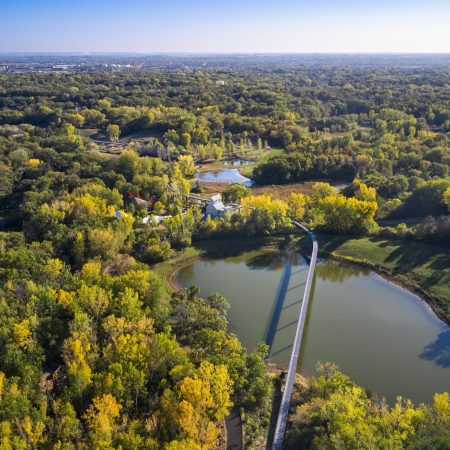
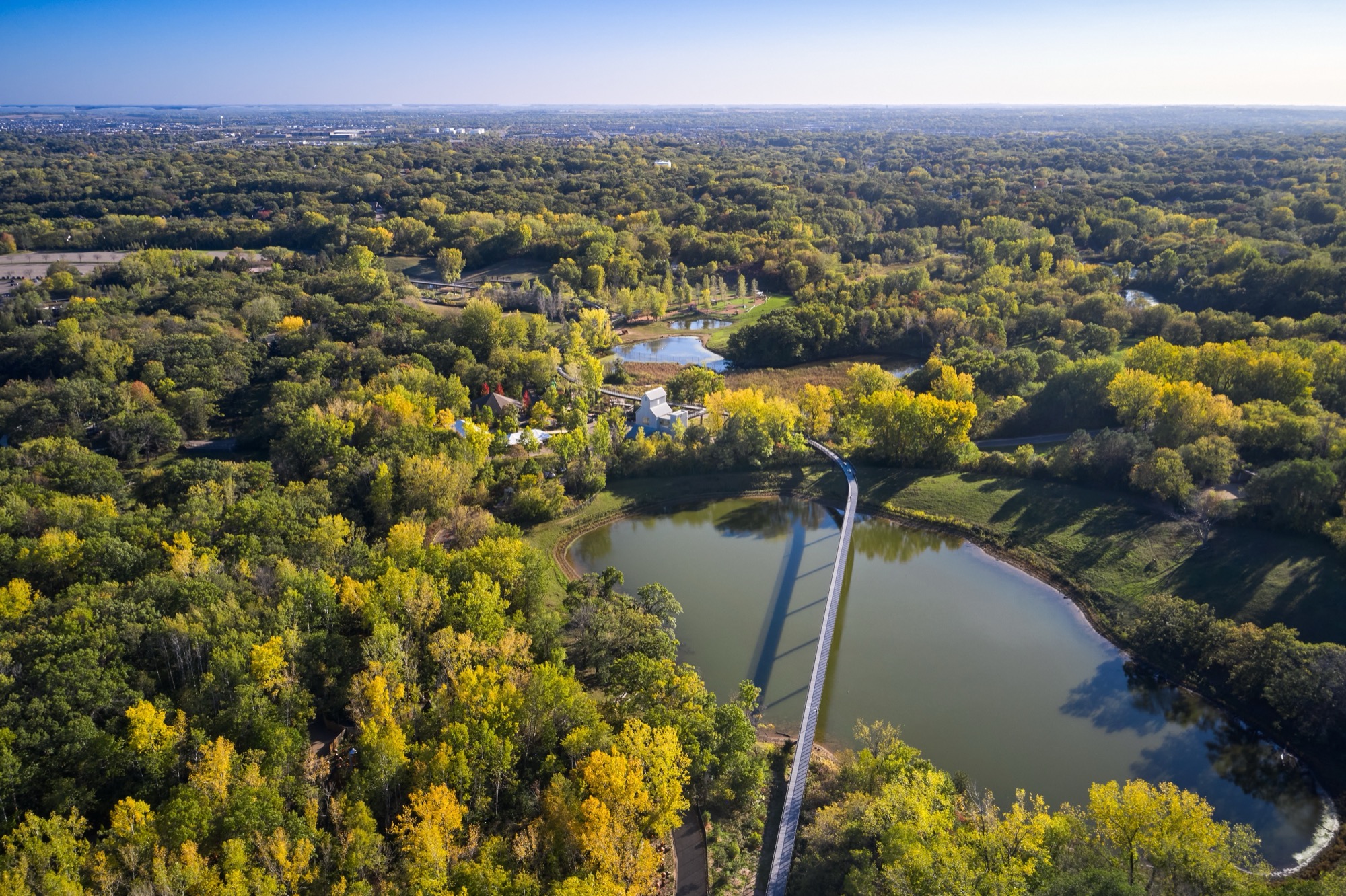
Established in 1975, the Minnesota Zoo pioneered habitat-based animal exhibits within its 485-acres of forest, wetland, and prairie. A 1.25-mile elevated monorail once provided interpretive access across these ecologies, offering visitors an aerial understanding of the zoo’s diverse environments. Decommissioned in 2013, the structure remained, presenting an opportunity for it to be transformed into a framework for understanding the zoo in new ways.
-
- Corey Gaffer
-
- Corey Gaffer
-
- Corey Gaffer
-

- Corey Gaffer

-
- Corey Gaffer
-
- Corey Gaffer
-
- Corey Gaffer
-
- Corey Gaffer
-
- Corey Gaffer
-
- Corey Gaffer
-
- Corey Gaffer
-

- Corey Gaffer
-
- Corey Gaffer
-
- Corey Gaffer
-
- Corey Gaffer
-
- Corey Gaffer
-

- Corey Gaffer

-
- Corey Gaffer
-
- Corey Gaffer
-
- Corey Gaffer
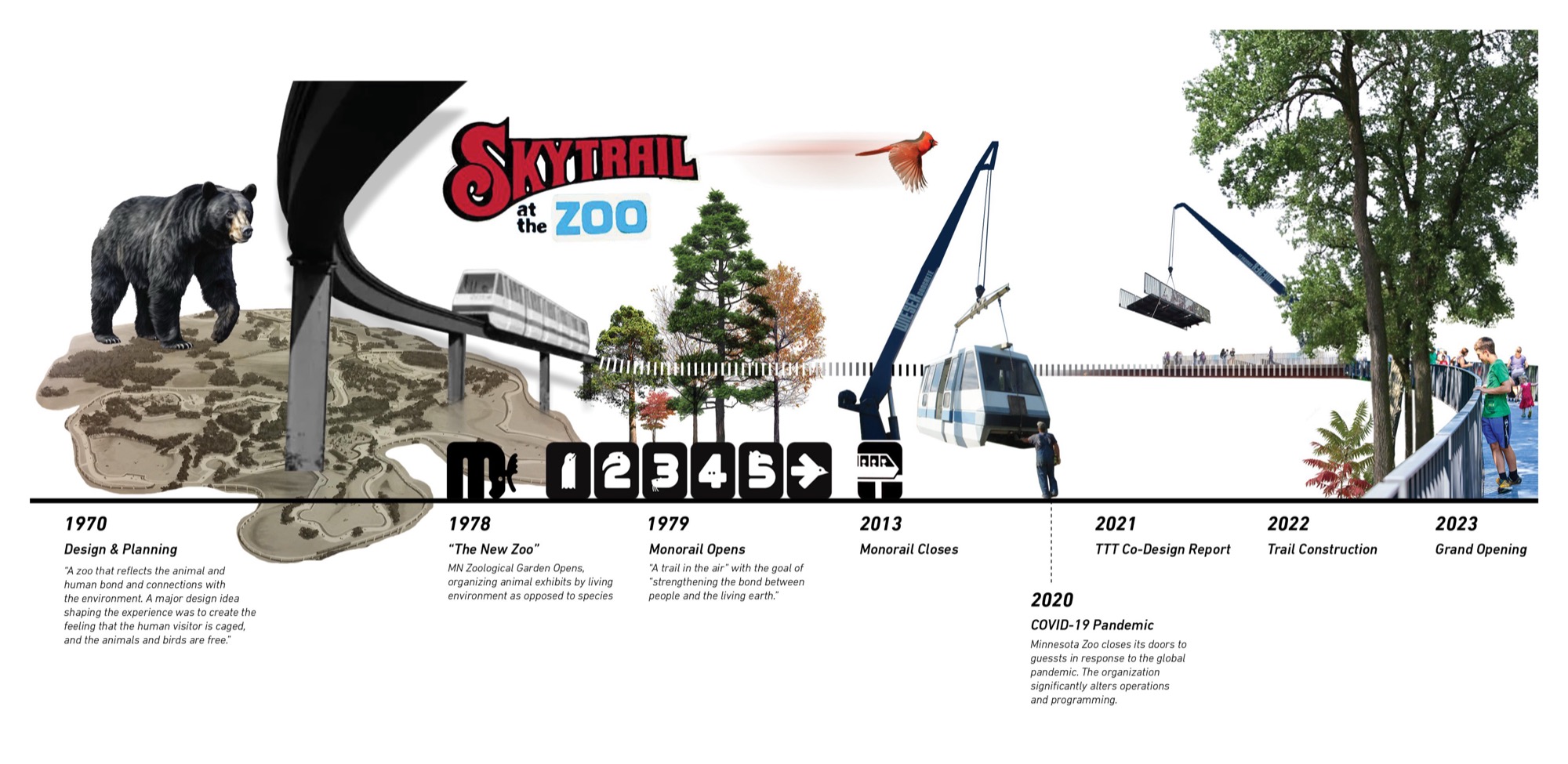
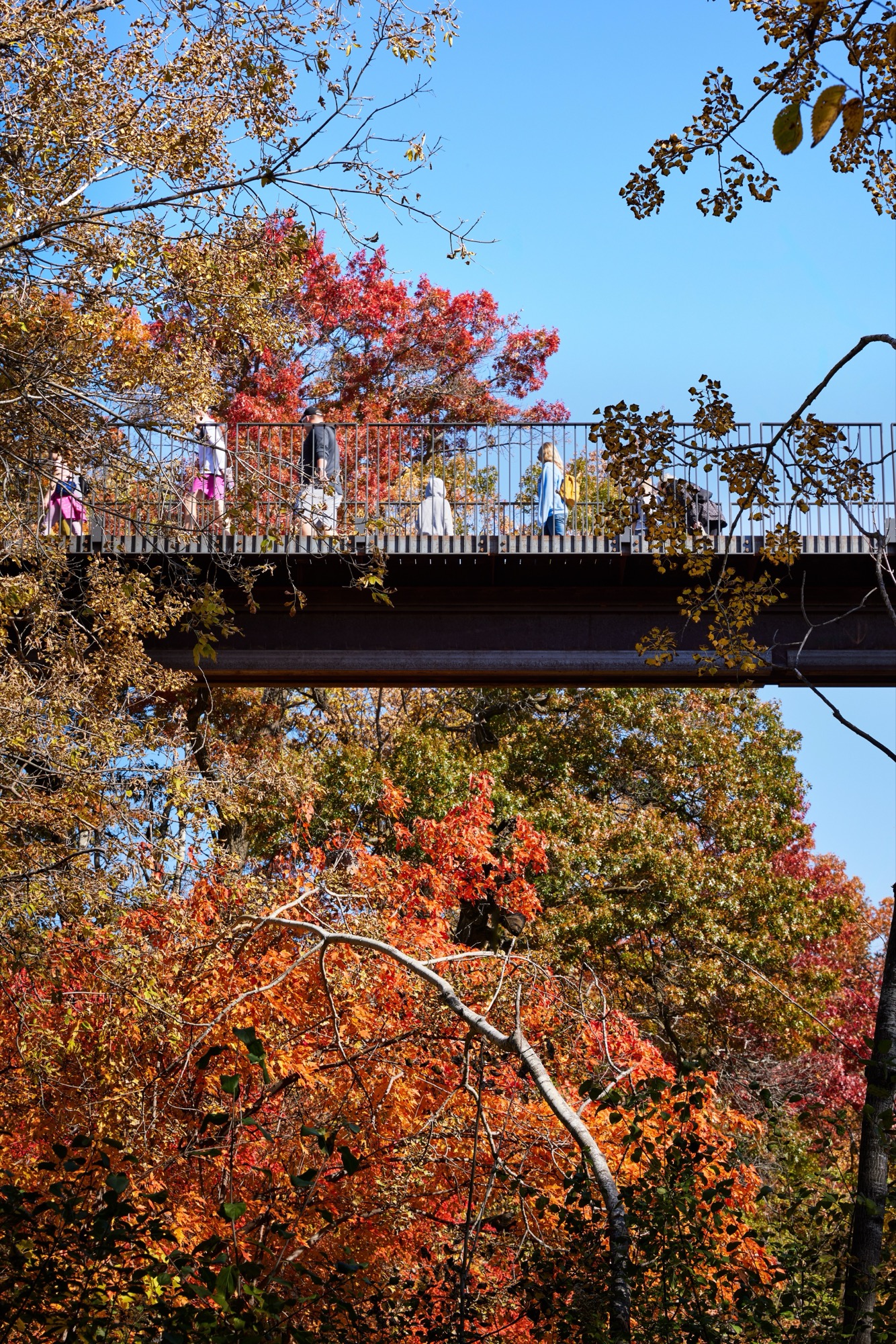
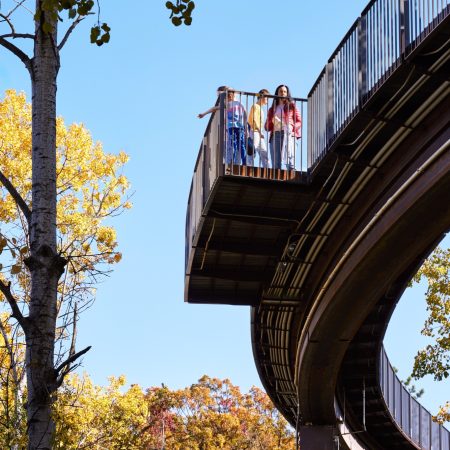
The design team worked diligently on analyzing and determining the appropriate scale, weight, and materiality of the trail to maximize the structural performance of the existing infrastructure and cause the least amount of disturbance to the zoo grounds. This included designing a modular construction process, which required collaboration between the architect, engineers, landscape architect, and contractor. The devised construction method was to construct the trail in 20-foot sections off-site, crane them onto the existing monorail, and then push them on the rail to their final location. This prevented disruptive construction from occurring along most of the trail, minimized impact on the existing landscape of the zoo, and sped up the construction timeline significantly.
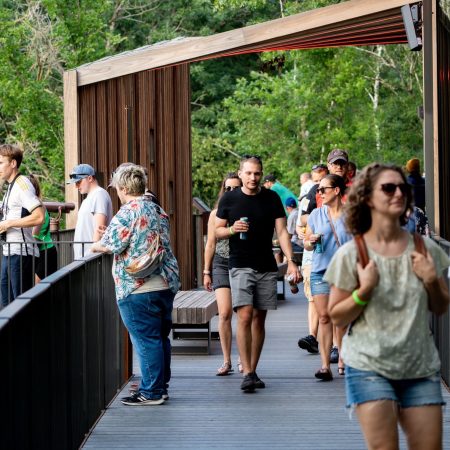
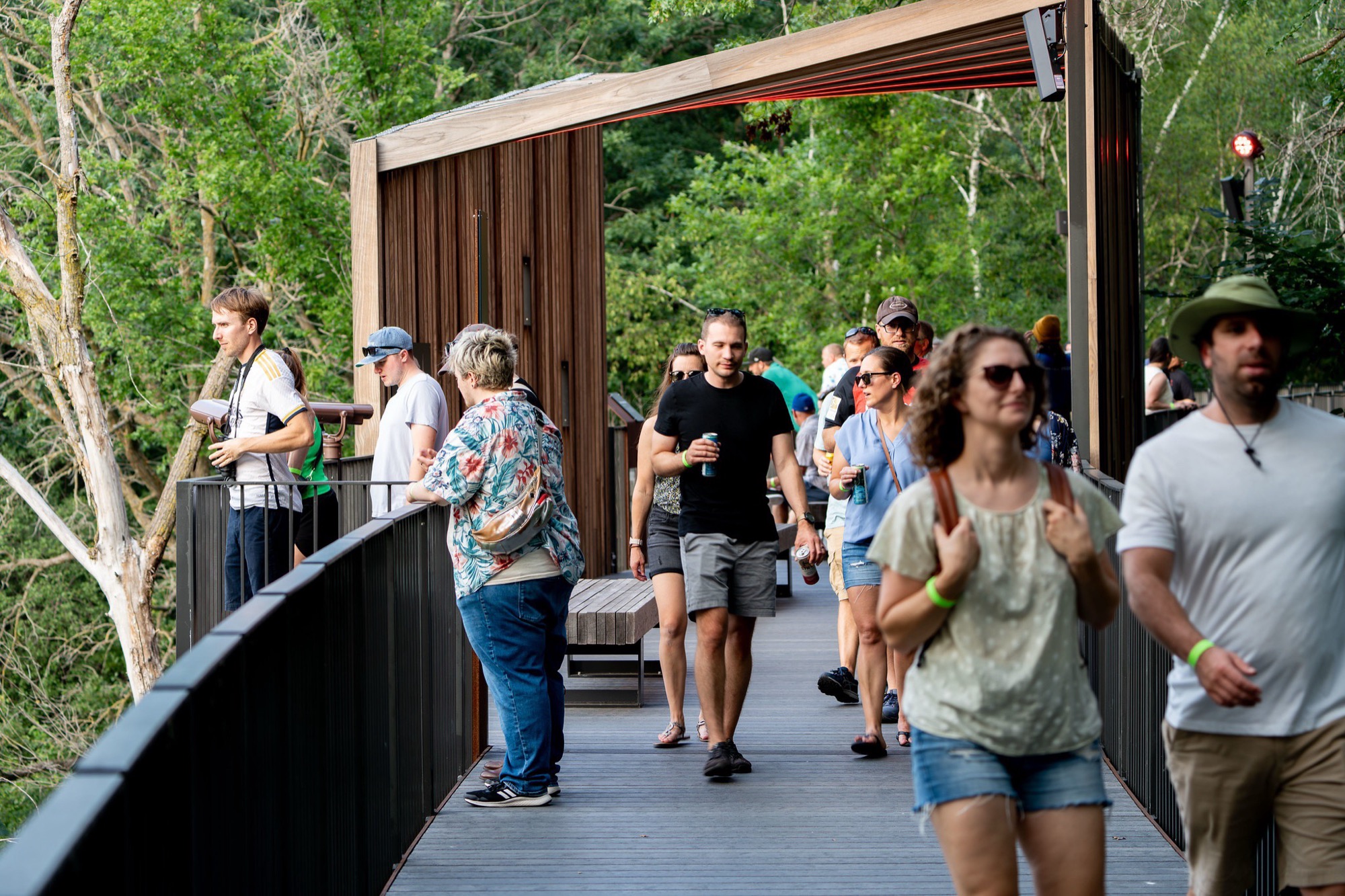
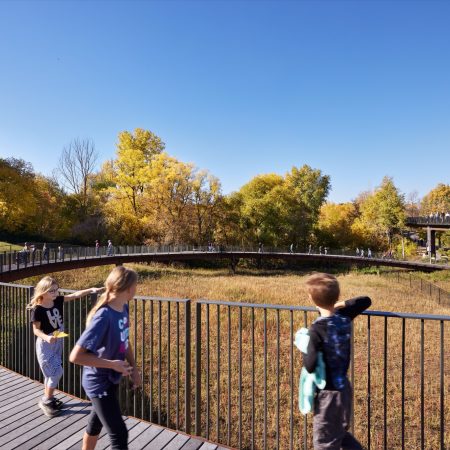
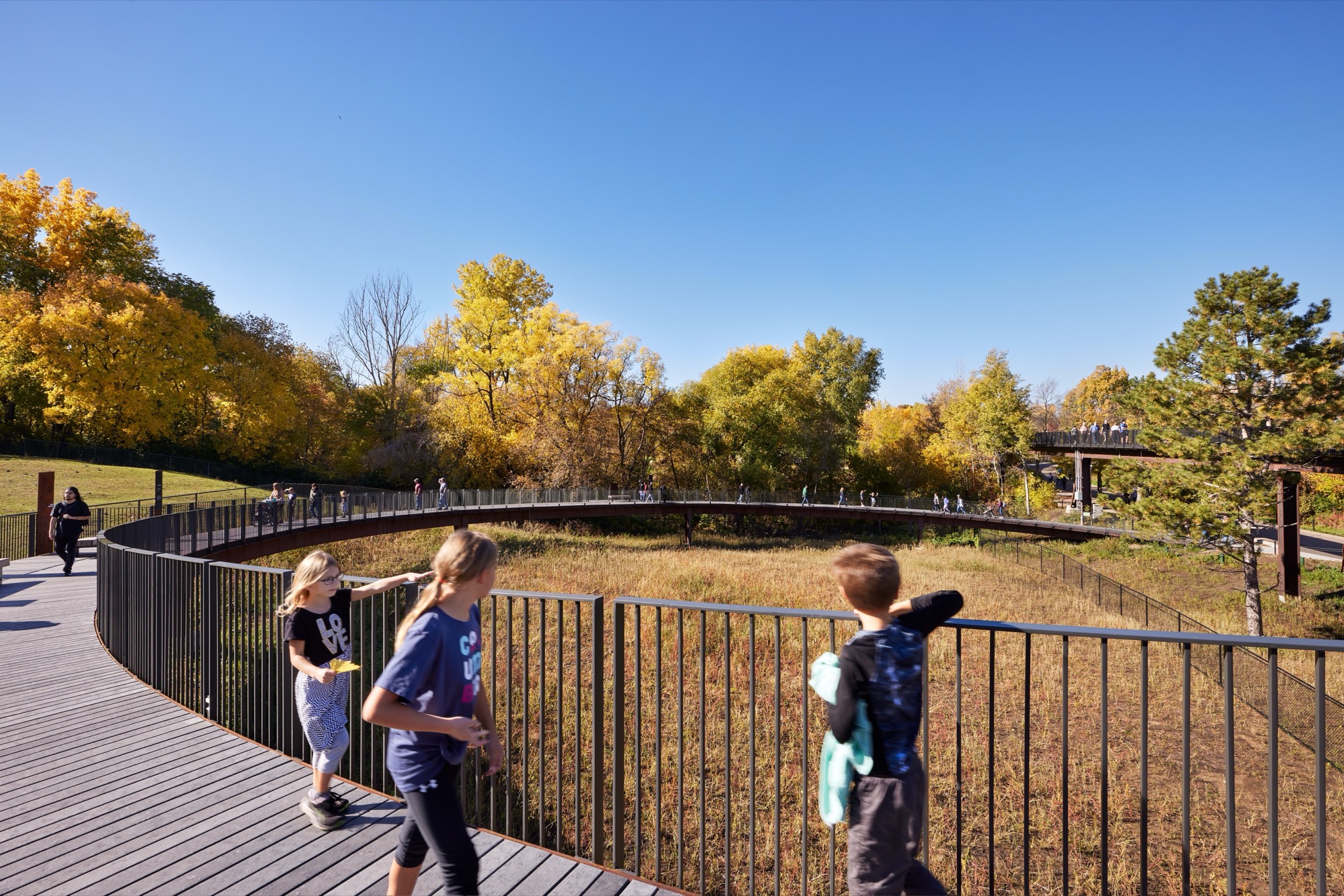
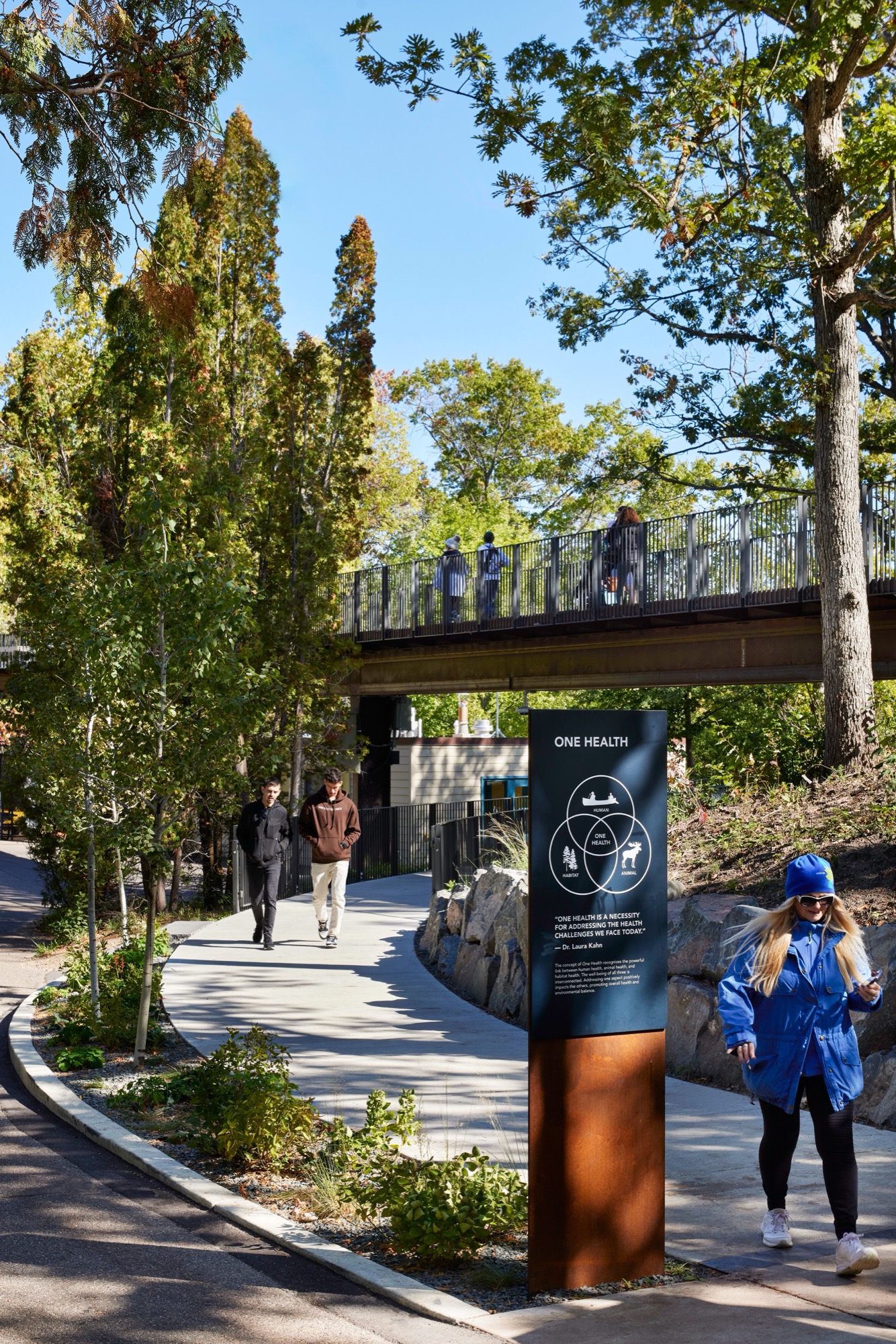
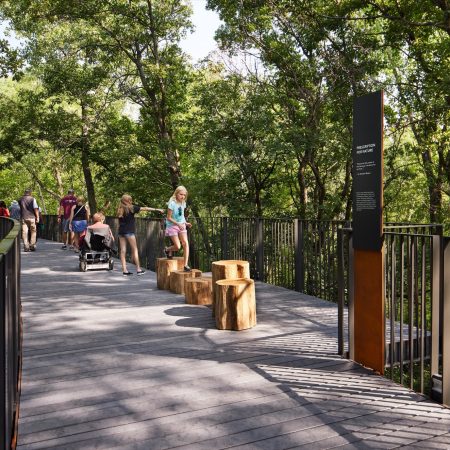
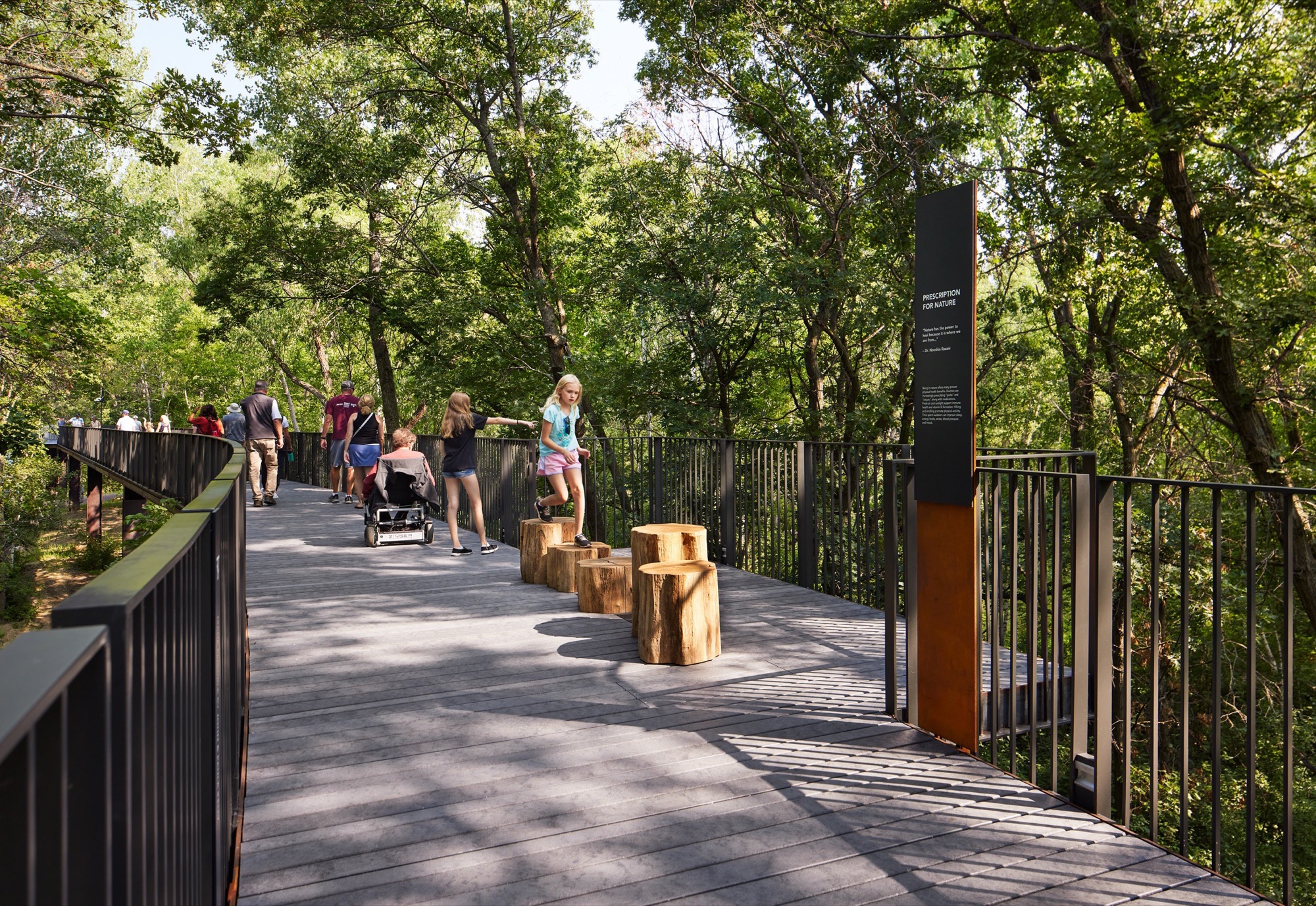
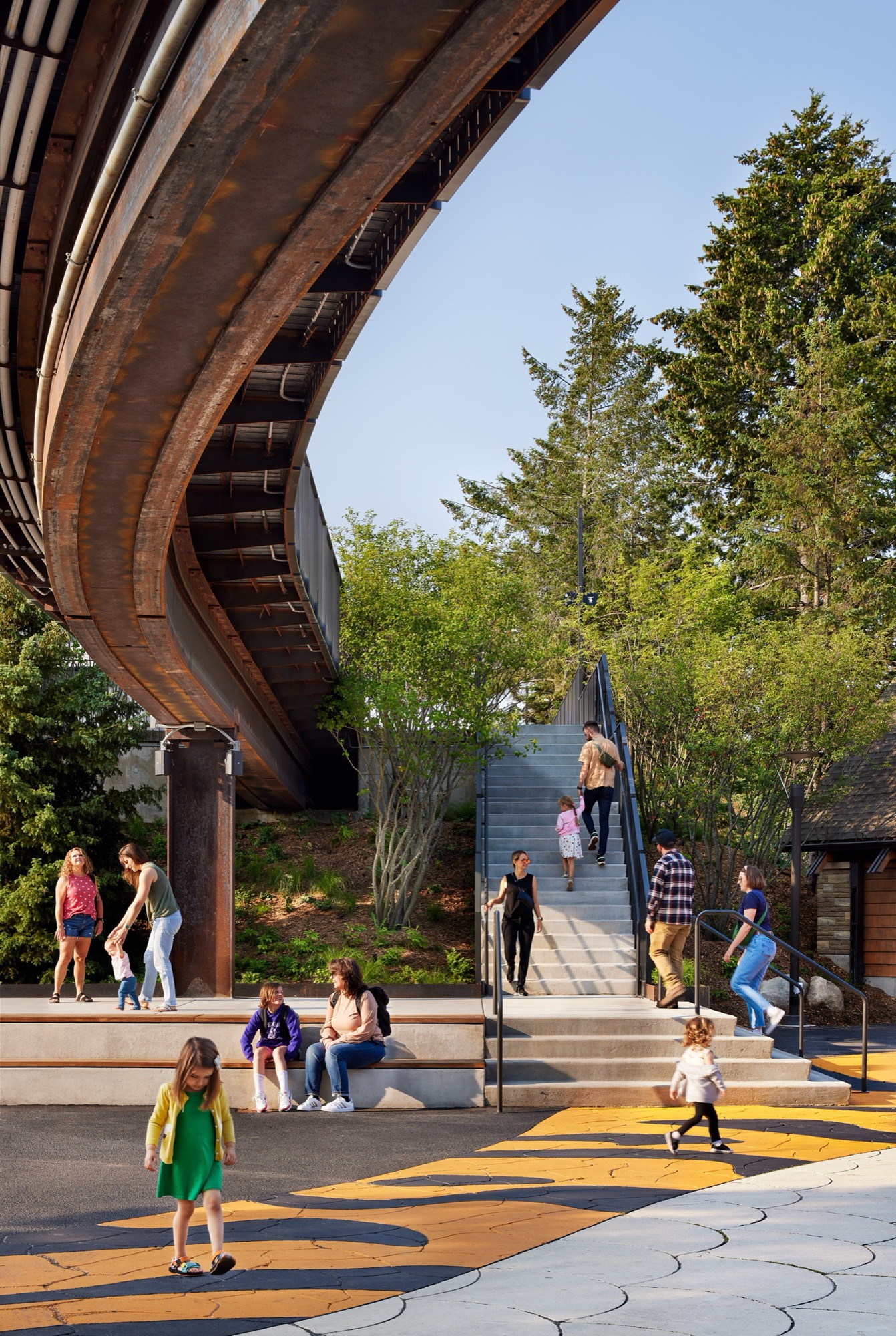
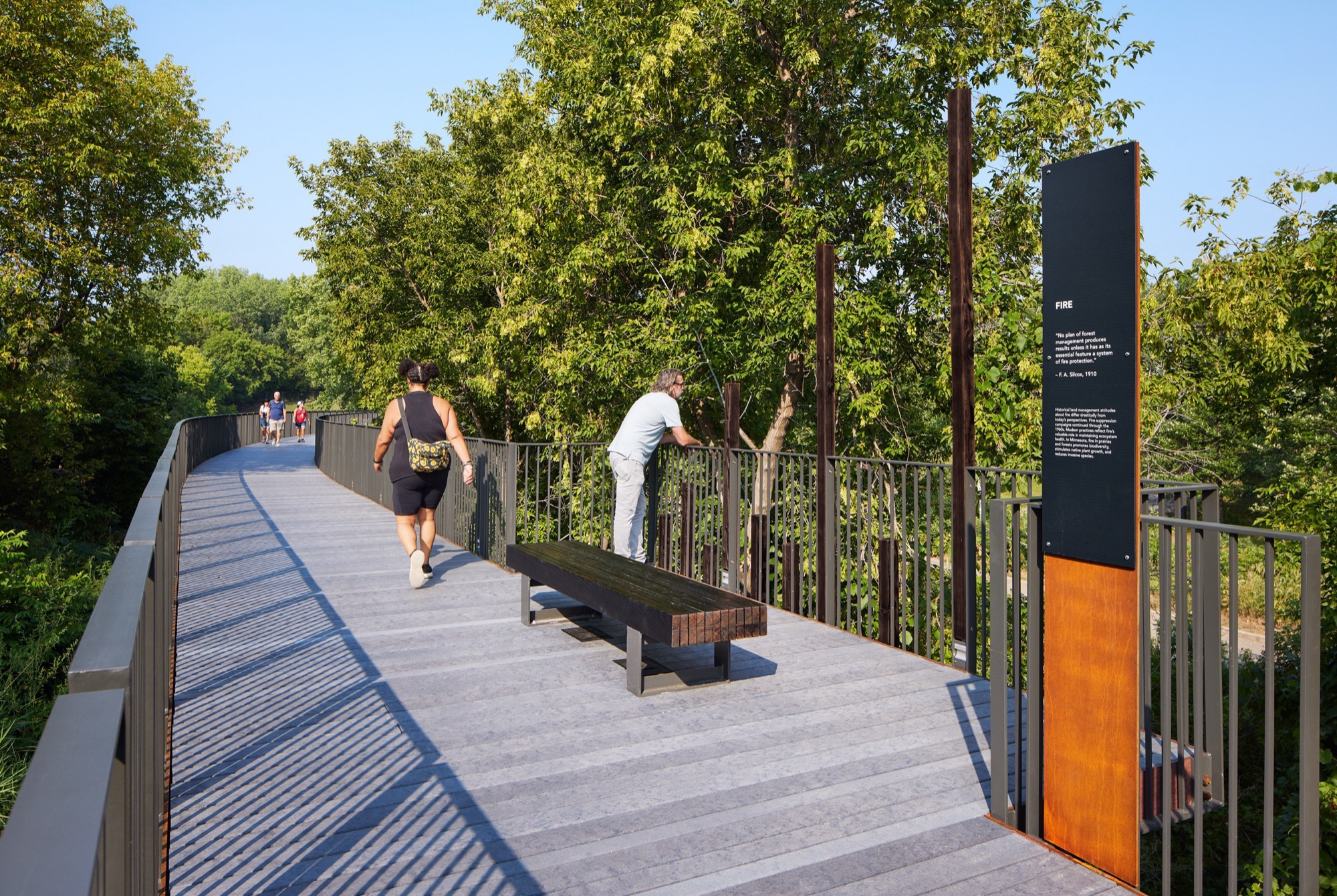
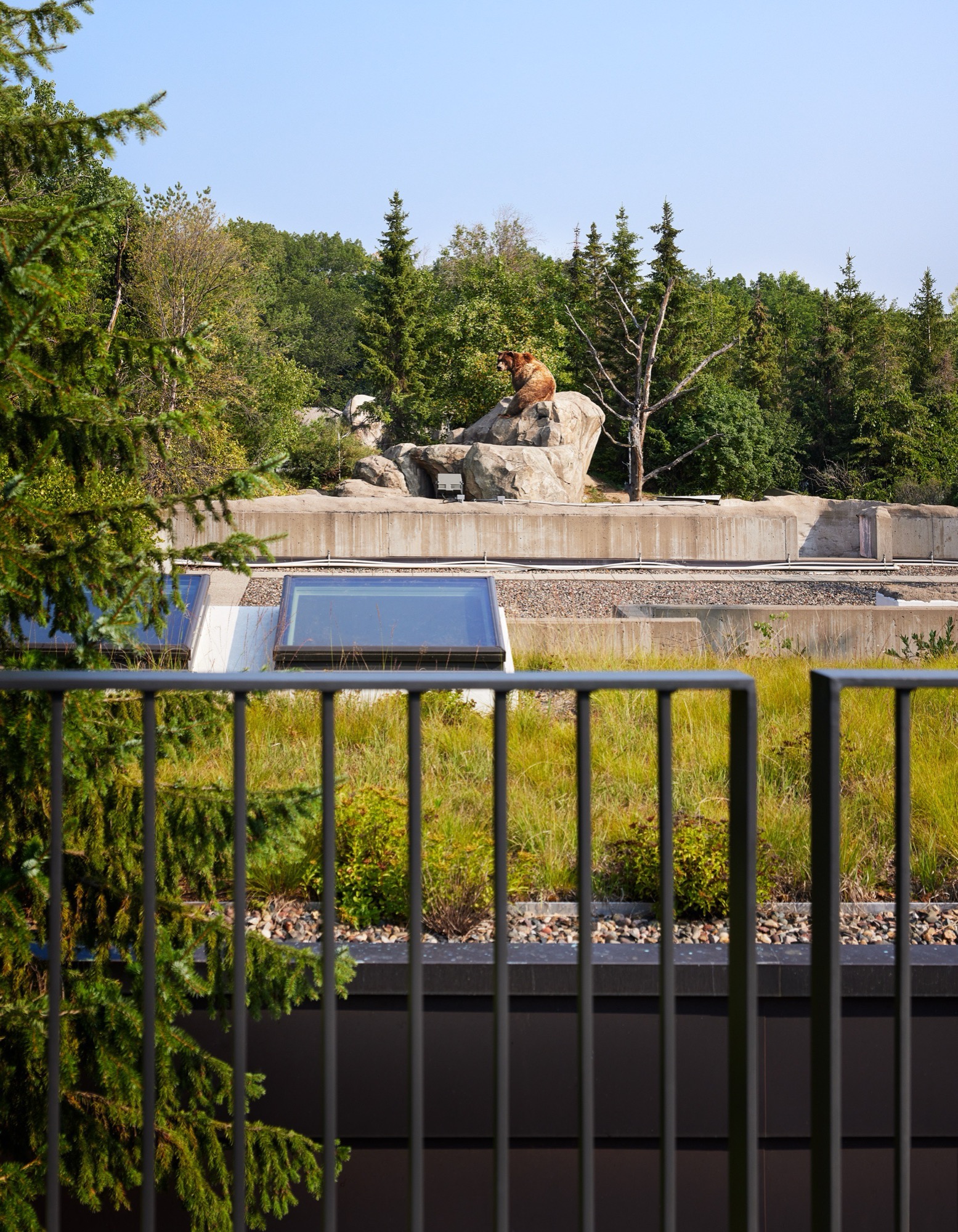
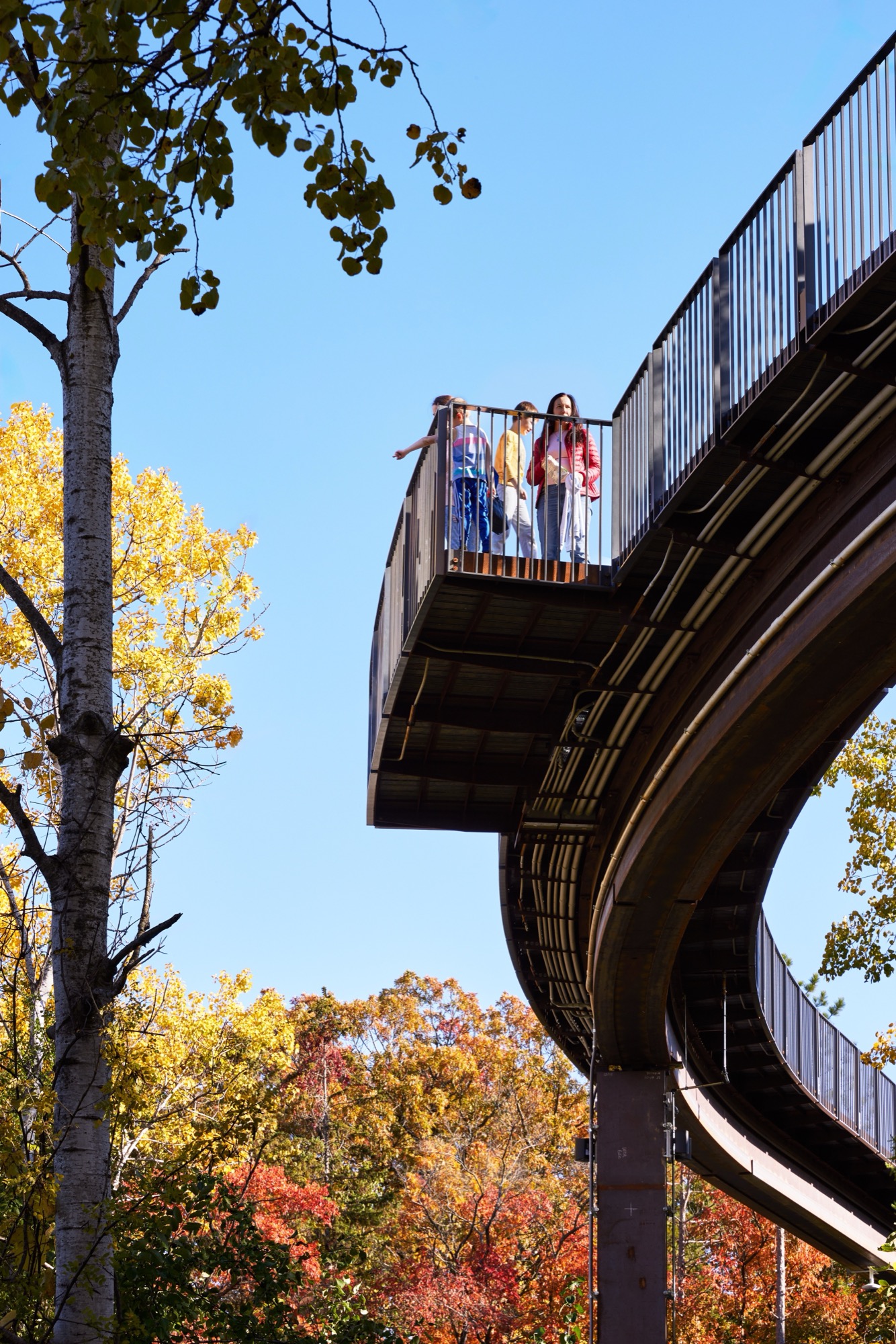
The Treetop Trail reimagines the former monorail as a fully accessible, elevated interpretive corridor. Reuse of the existing structure minimizes ecological disturbance and carbon footprint, while centering movement and sequence as primary tools of communication. From an elevated vantage point, visitors engage not only with eight animal exhibits, but also with native Minnesota flora and fauna and the often-hidden care and maintenance systems that support them. These new perspectives give agency back to the visitor and the trail itself becomes an interpretive scaffold that reveals layered ways of understanding the zoo.
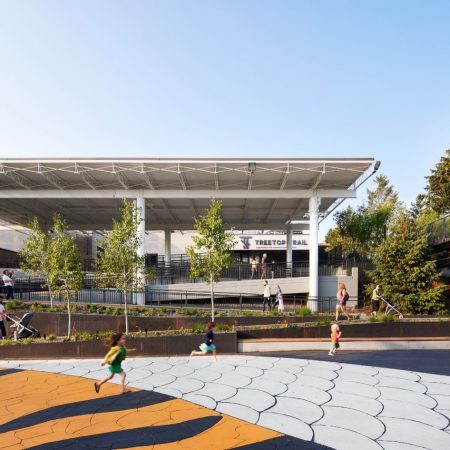
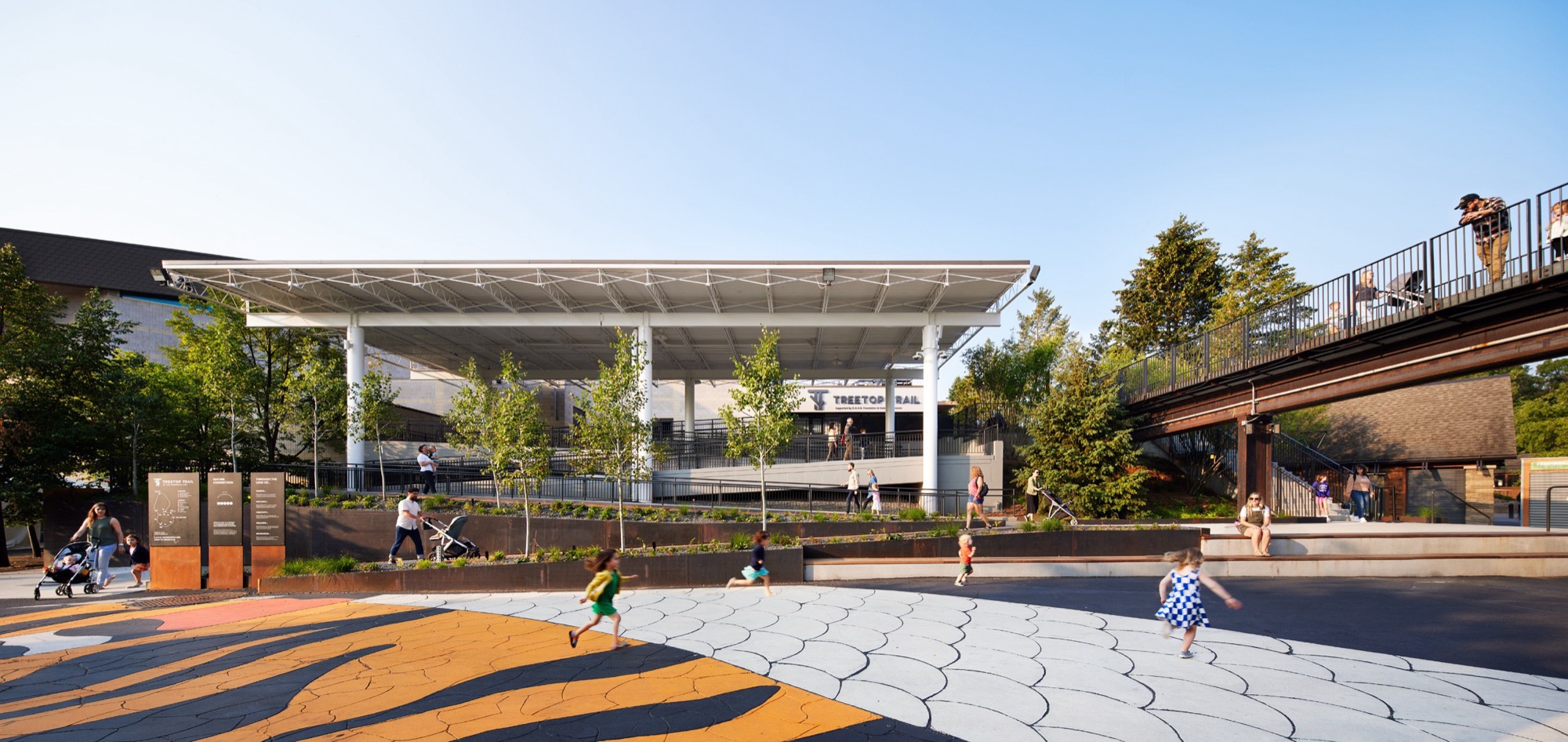
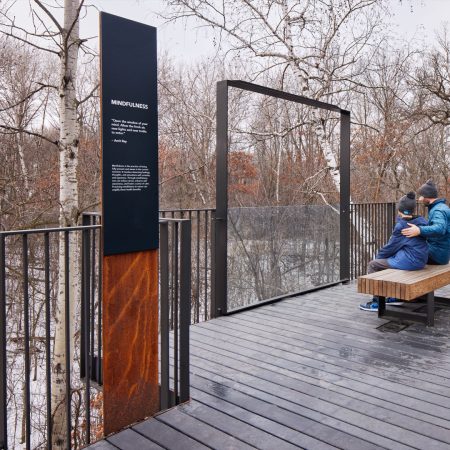
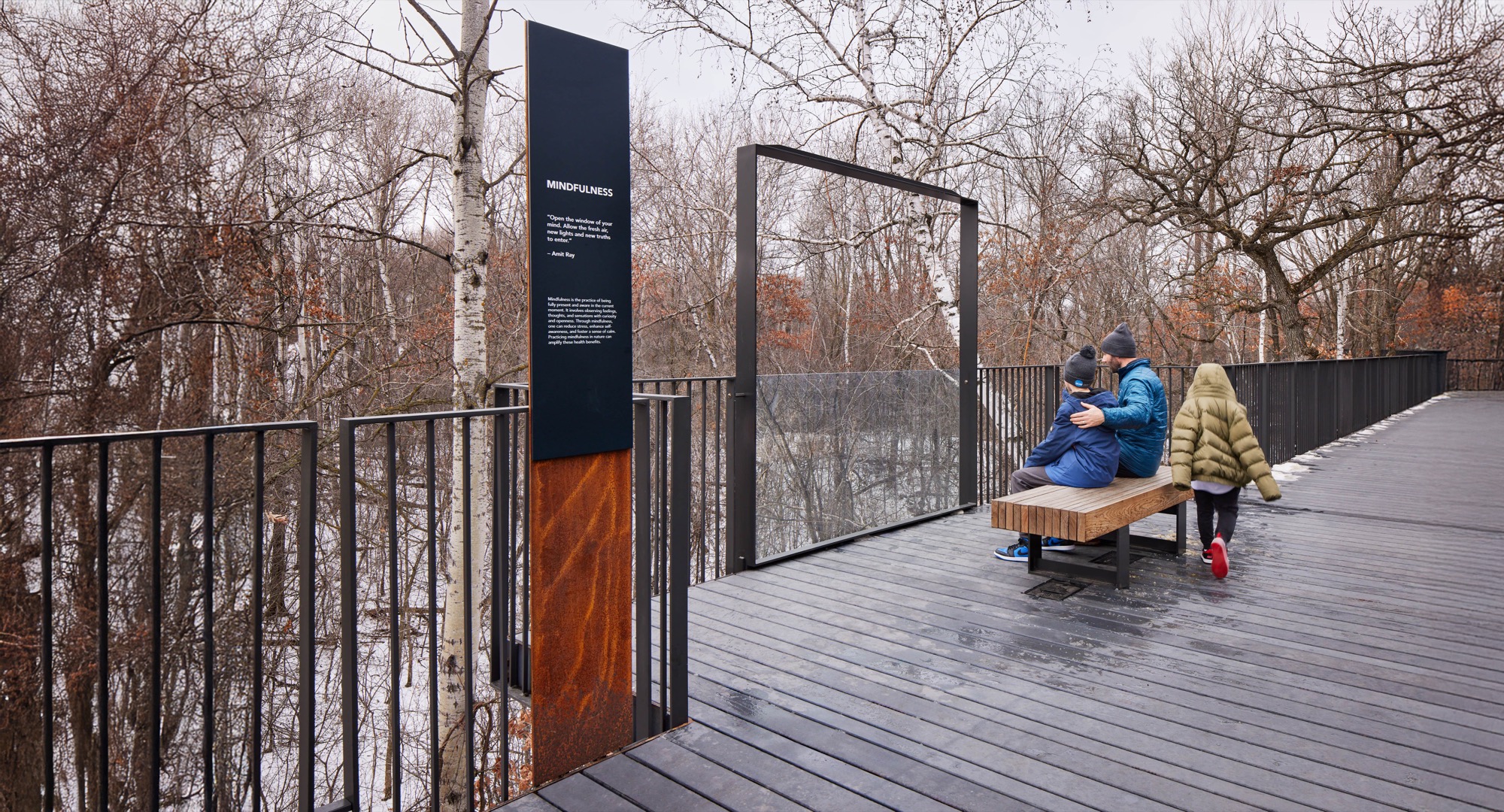
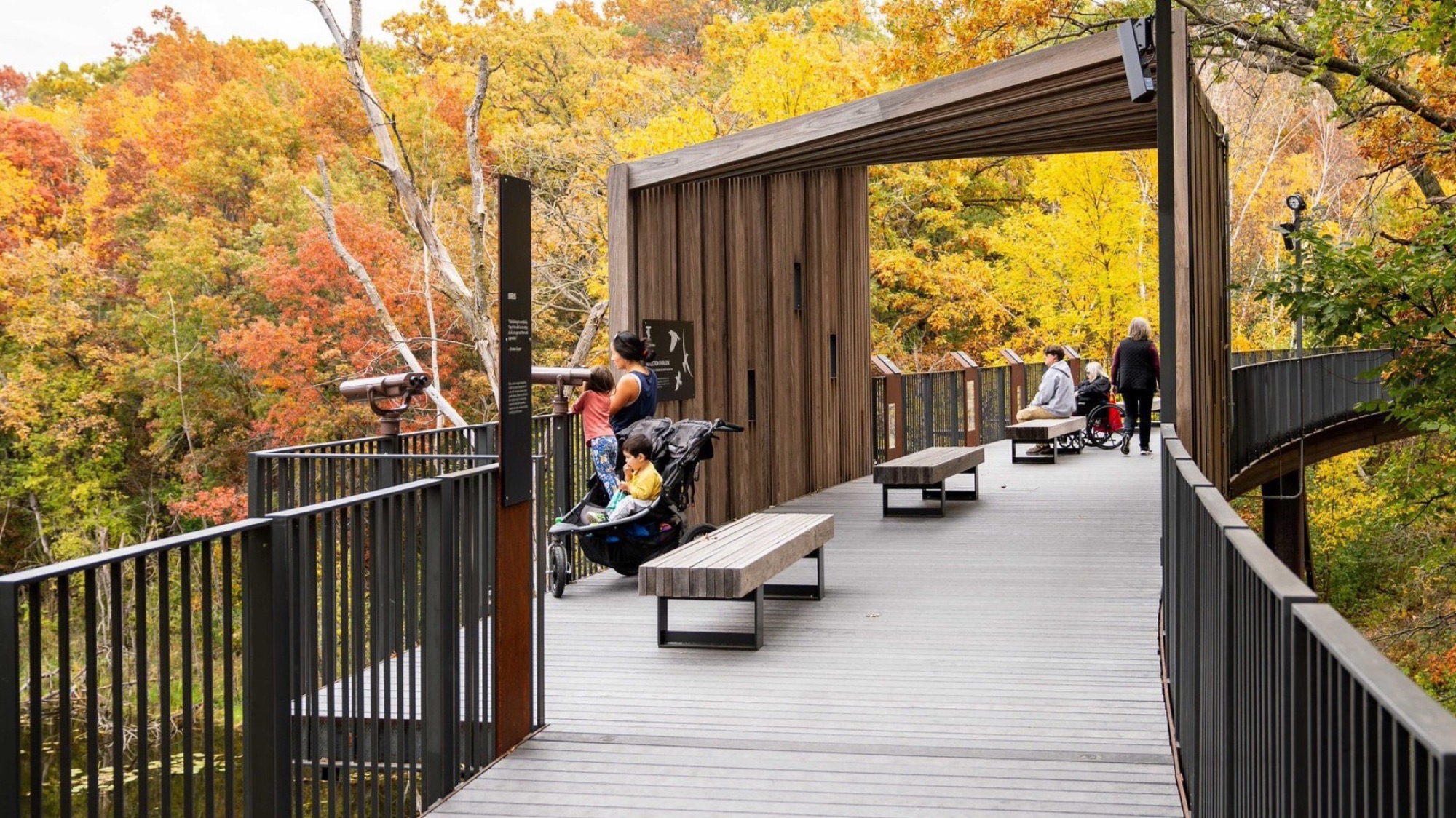
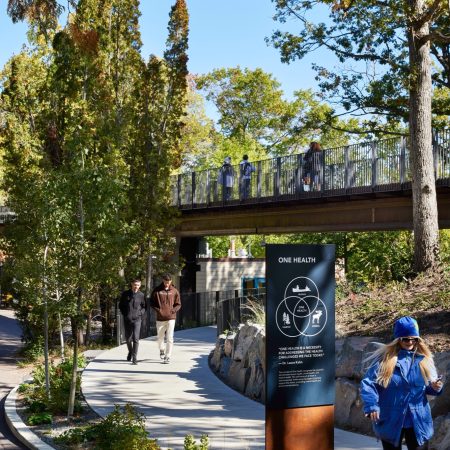
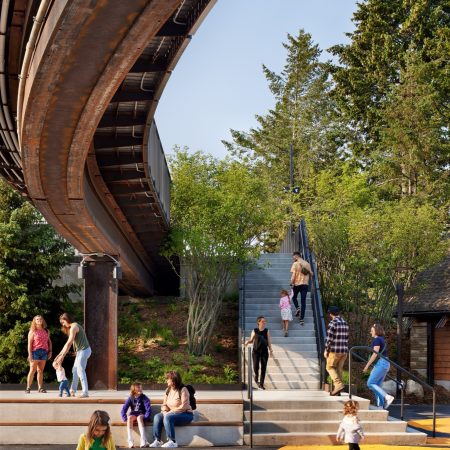
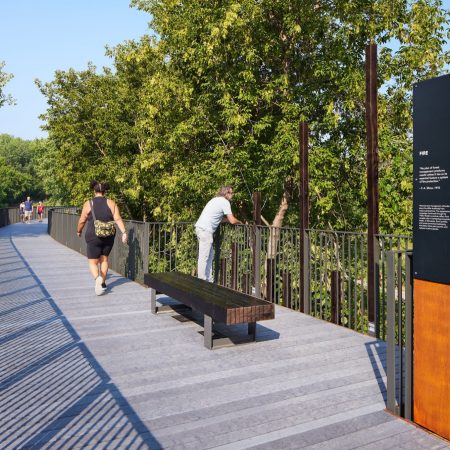
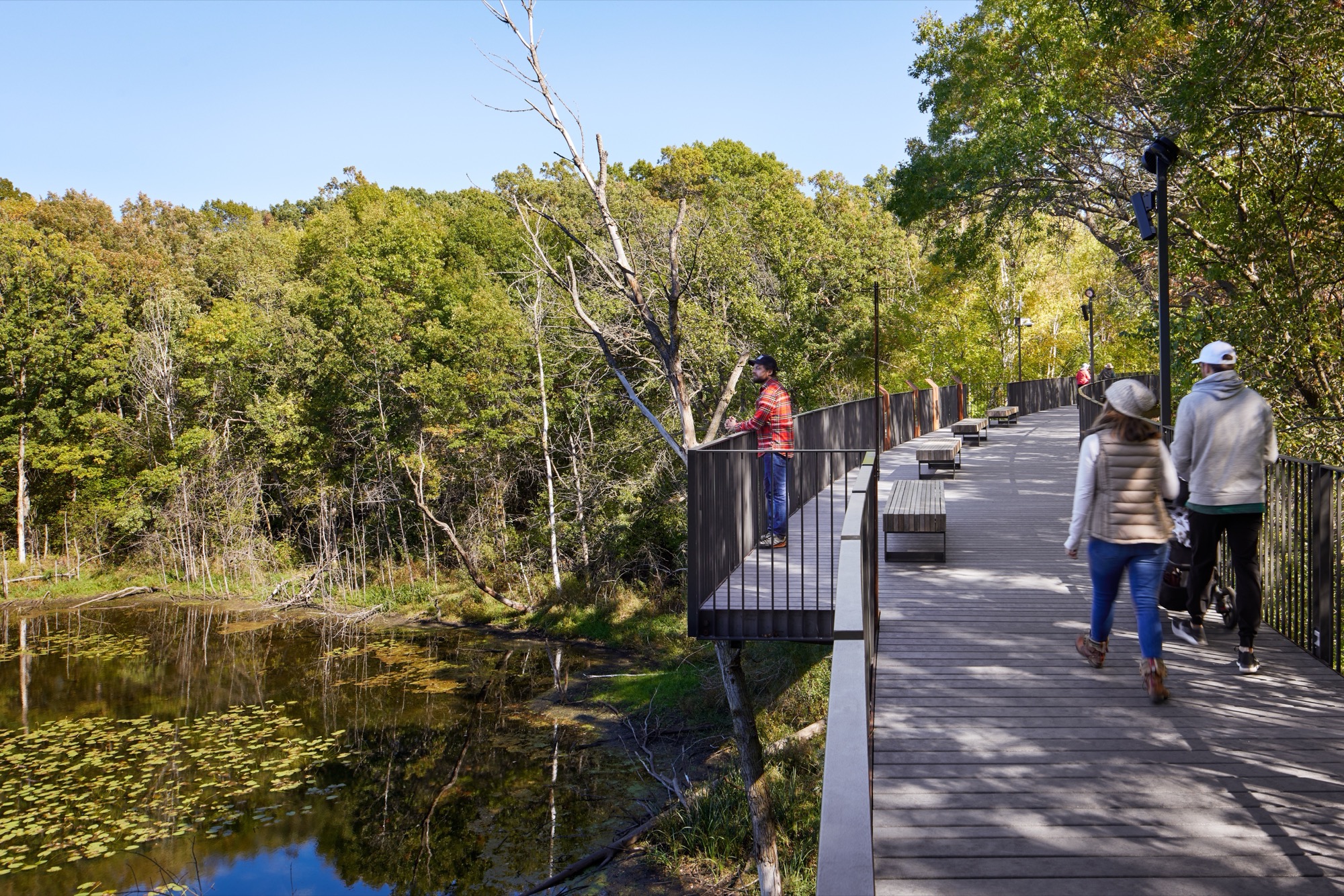
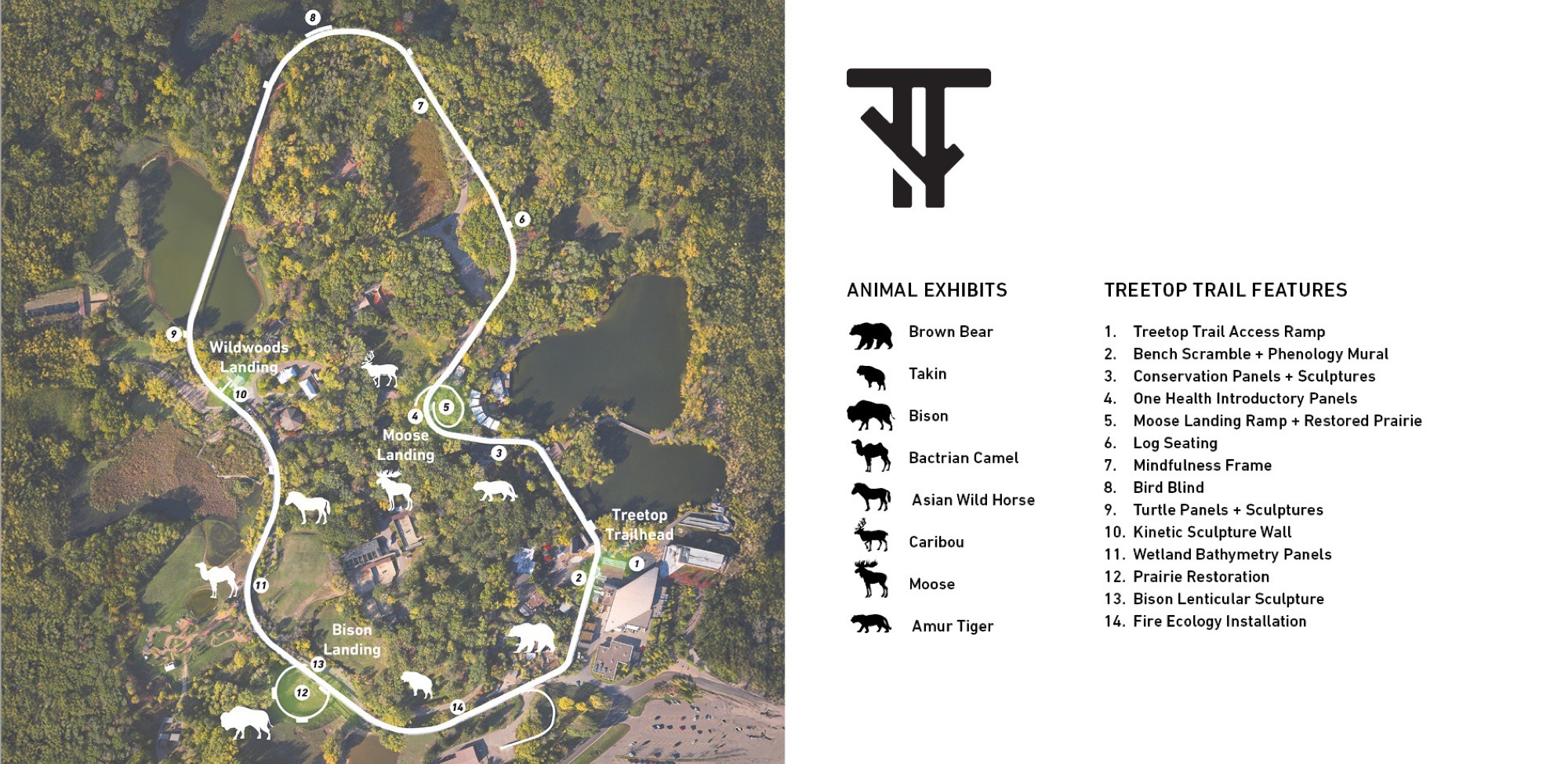
The landscape team collaborated with Zoo staff to craft interpretive elements that translate ecological processes, cultural knowledge, and sensory experience into the trail design through five themes – science, wellness, resource, inspiration, and recreation. The interpretive strategy uses tactile materials, planting, furnishings, and custom railings to reinforce embodied learning and place-based narratives. This system extends into integrated wayfinding, ensuring the interpretive story is legible and navigable. Four new touchdown points connect the elevated trail to activated on-grade experiences. Numerous bump-outs along the trail create deliberate moments of pause and organize fourteen interpretive installations into a clear, coherent sequence. This new infrastructure also gives Zoo staff infinite new spaces to program throughout the seasons.
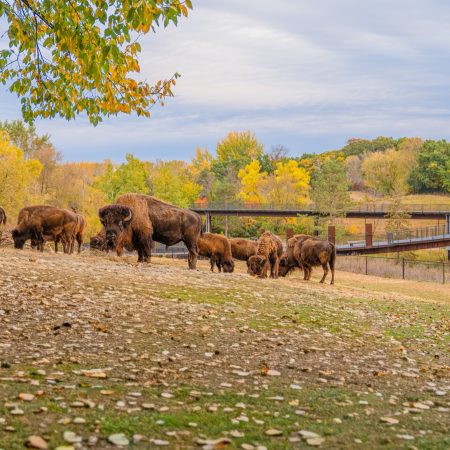
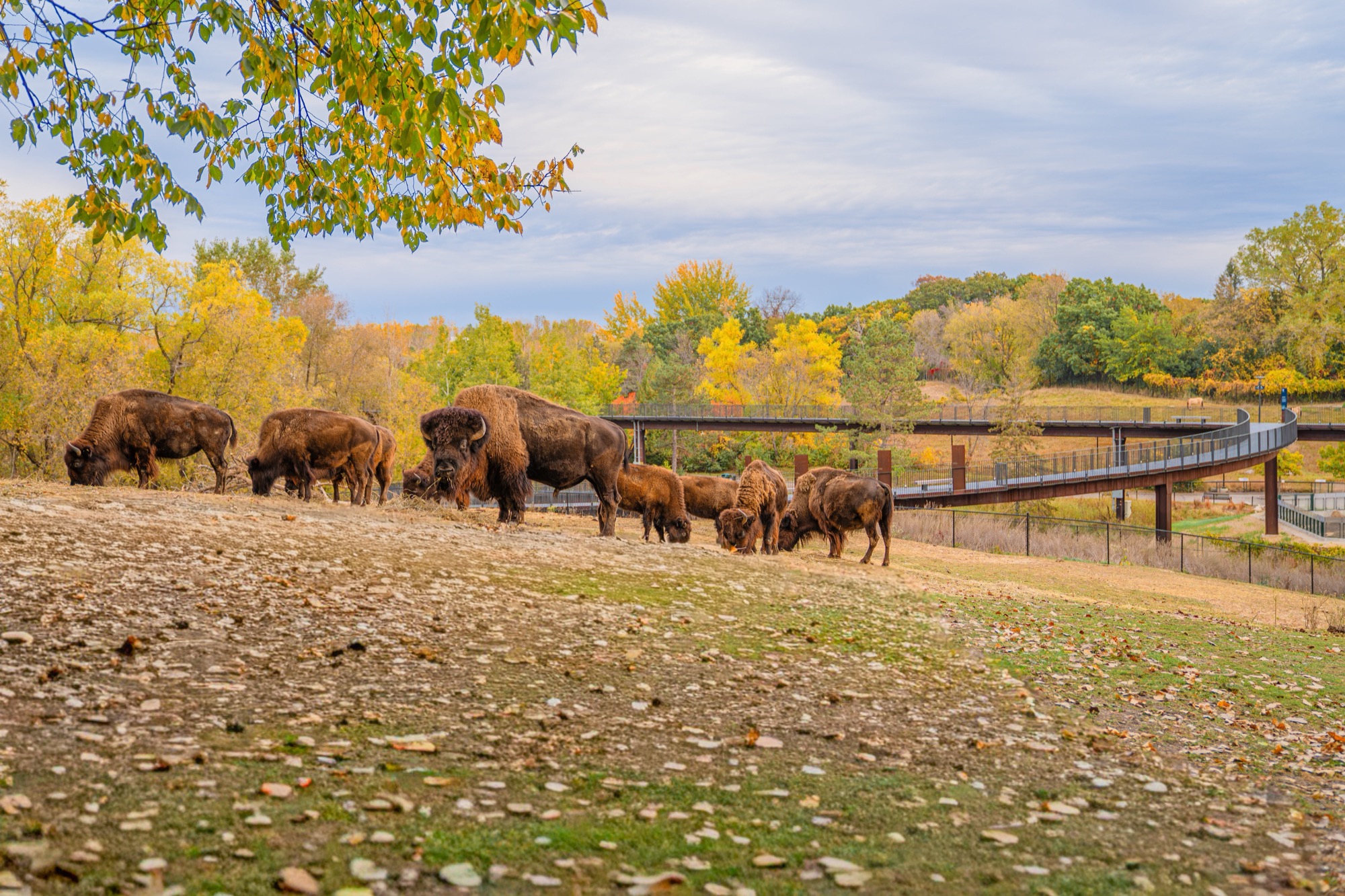
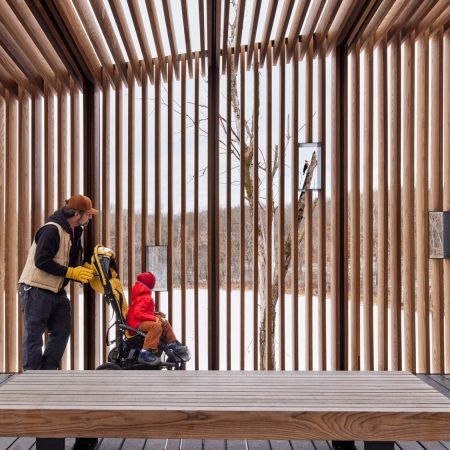
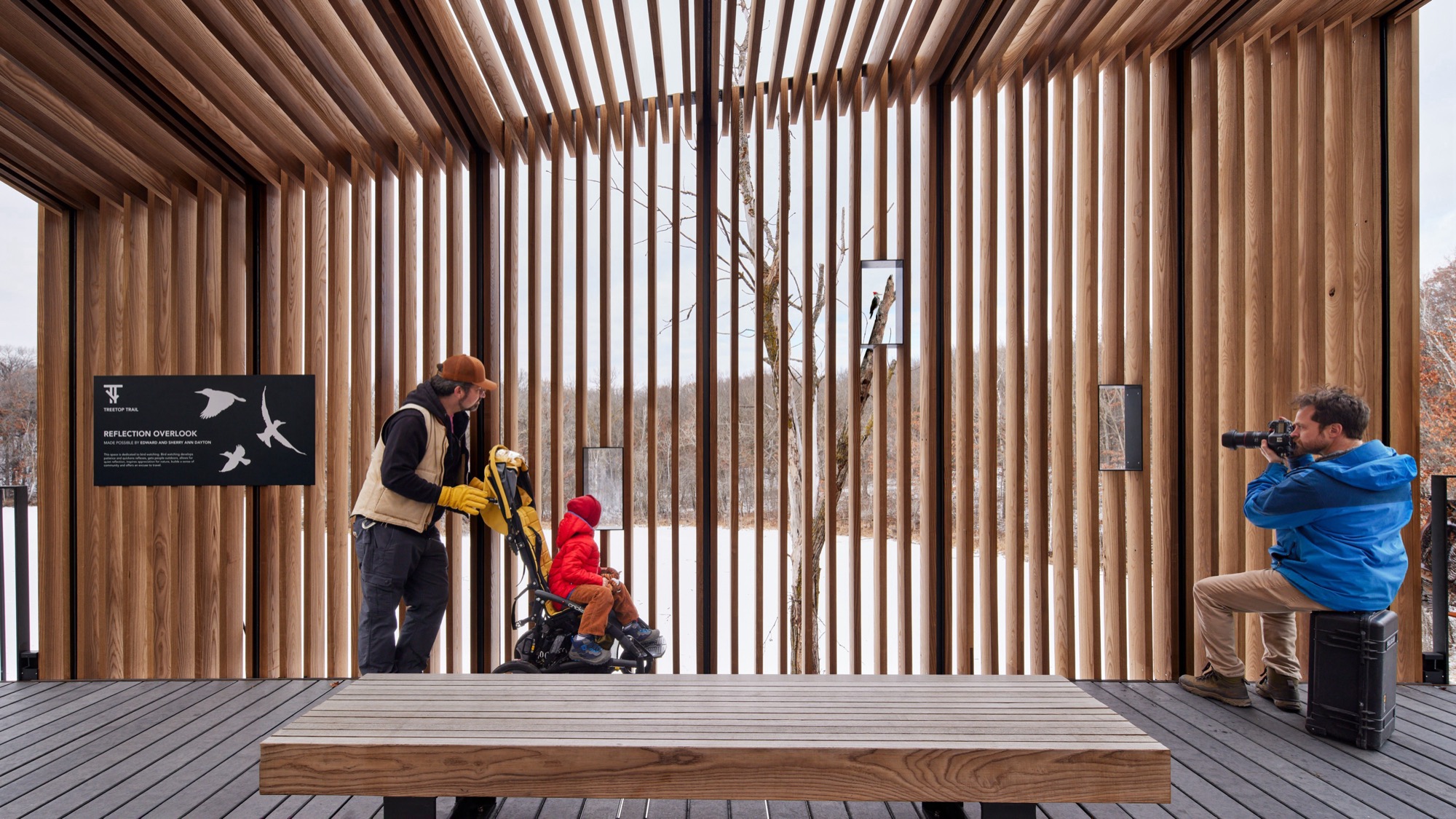
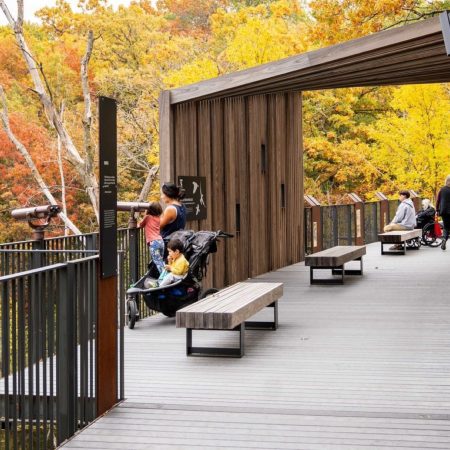
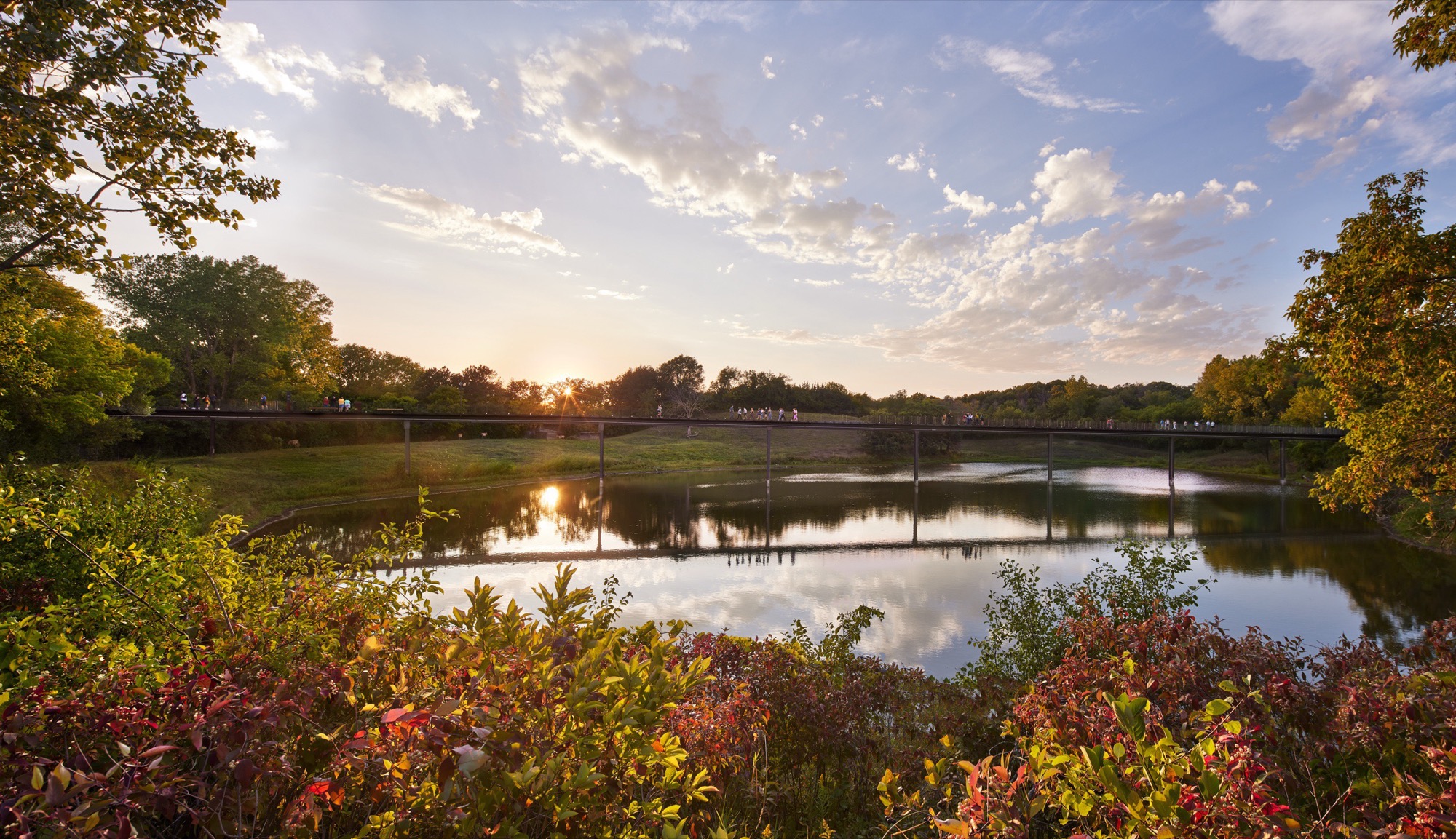
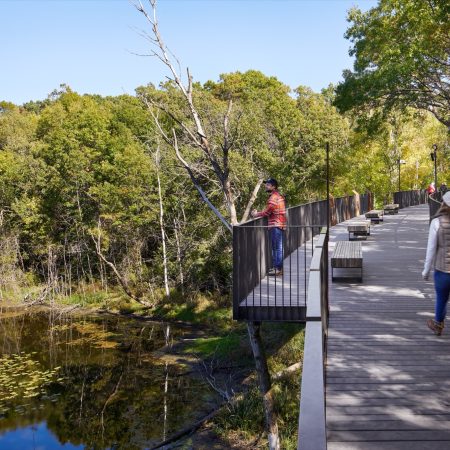
The northern segment of the Trail passes through 40 acres of Big Woods deciduous forest and wetlands, an undeveloped area home to a natural lake called Reflection Pond. Here, a bird blind envelops guests, offering screened views that encourage quiet observation without disturbance. At Bison Landing, storytelling and interpretation was cocreated with the Shakopee Mdewakanton Sioux Community. At this touchdown, visitors can hover above the bison habitat or descend a circular ramp, interpreting the critical relationships between bison, people, prairies, and pollinators. The exhibit culminates in an interactive bison sculpture at-grade.
Since opening in 2023, the Treetop Trail has increased Zoo visitation by approximately 66,000 visitors per month demonstrating the impact of landscape-led design, interpretation and wayfinding on audience engagement and advancing the zoo’s mission. The project’s SITES Silver certification makes it only the third Minnesota project to receive this recognition.
Credit List:
Minnesota Zoo (Client)
Buro Happold (Structural Engineering)
Meyer Borgman Johnson (MBJ) (Structural Engineering)
Victus Engineering (Mechanical Engineering, Electrical Engineering, and Plumbing)
Barr Engineering (Civil Engineering)
MIG (Zoo Exhibit Design)
SIG (SITES + Sustainability)
Braun Intertec (Geotechnical Engineering)
Summit Companies (Sustainability Consultant & SITES Certification Support)
Split Rock Studios (Interpretive Signage & Wayfinding)
44.76709177878086, -93.19648628961549
74062


LILA 2026 Sponsor