Place Jean Jaurès
agenceaps.com
2026 Public Projects / France / Built in 2025 /

![The Mediterranean Park, located in the heart of the Brusc harbor and overlooking the remarkable landscapes from the Embiez Islands to the Calanques, offers a true immersion in the world’s Mediterranean ecosystems. Through a succession of atmospheres—maquis, garrigue, pine forest, arid landscapes, and even inspirations from the South African fynbos—the park showcases the diversity of […]](https://landezine-award.com/wp-content/uploads/2026/05/HERO-IMAGE-Mediterranean-Park-窼俠astien-Parmentelot-7-600x400.jpg "The Mediterranean Park")
![Redevelopment of the Promenade de la Liberté An iconic space in the heart of the city Respectful of the site’s curved shape, the spatial composition takes advantage of the east-west elongation of the urban form and seeks to unite the Croisette, the new esplanade, and the old town through the unity and strength of its […]](https://landezine-award.com/wp-content/uploads/2026/05/HERO-IMAGE-Cannes-¸S‚bastien-Parmentelot-600x400.jpg "Les Allées de la Liberté")
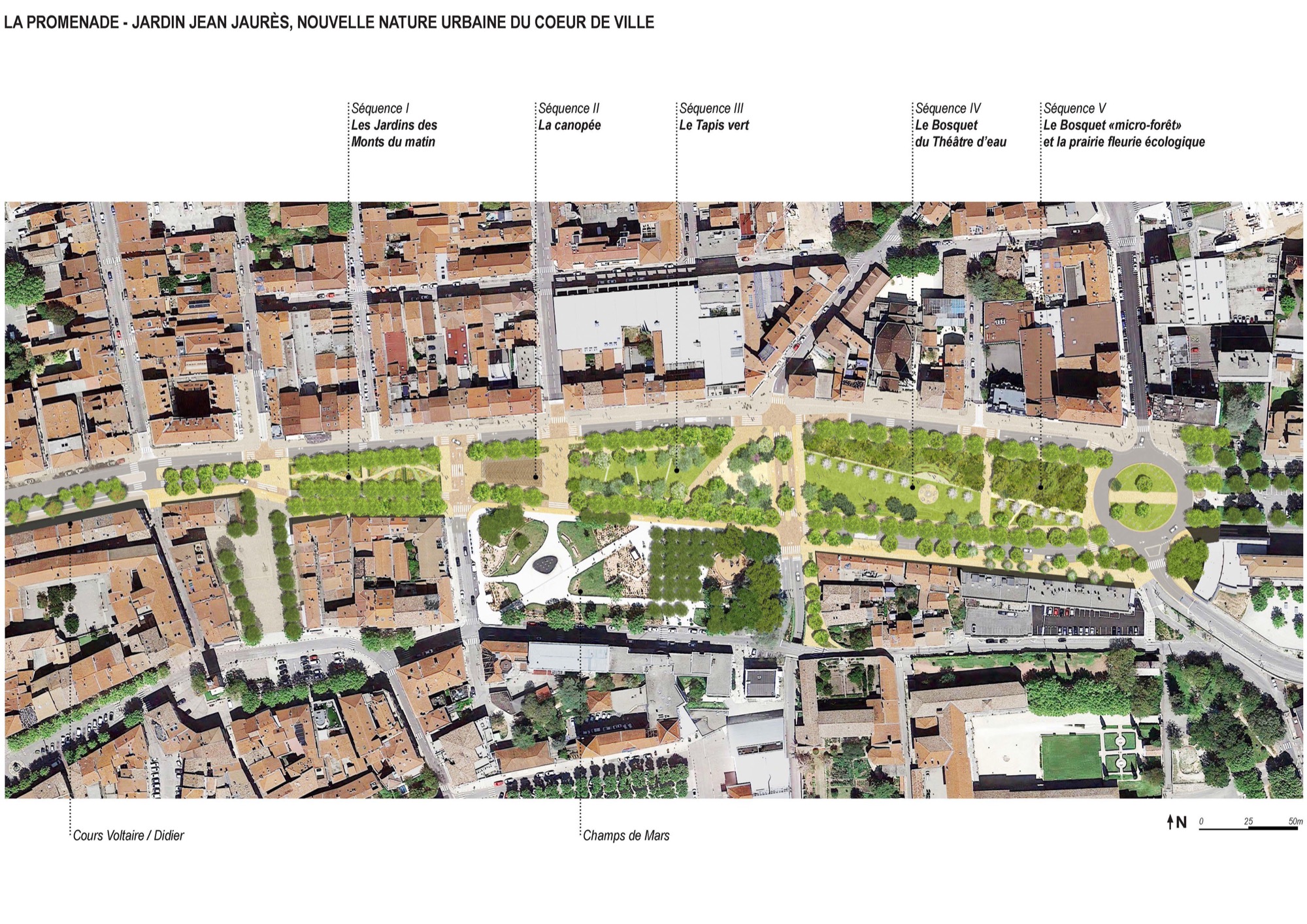
The Jean-Jaurès garden promenade, spanning nearly 3 hectares, embodies an innovative and committed approach to urban resilience, the rewilding of the city center, and the de-sealing of soils.
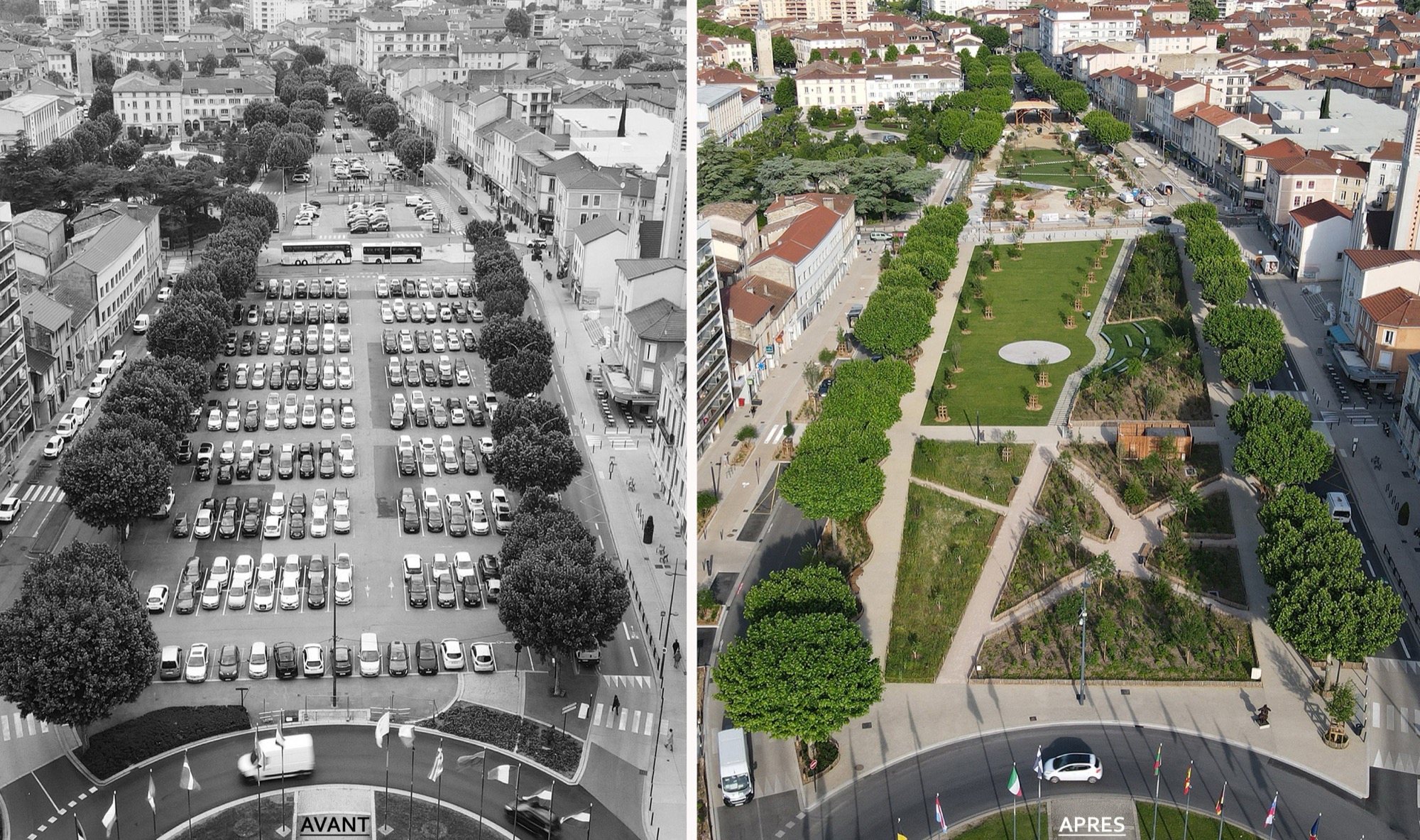
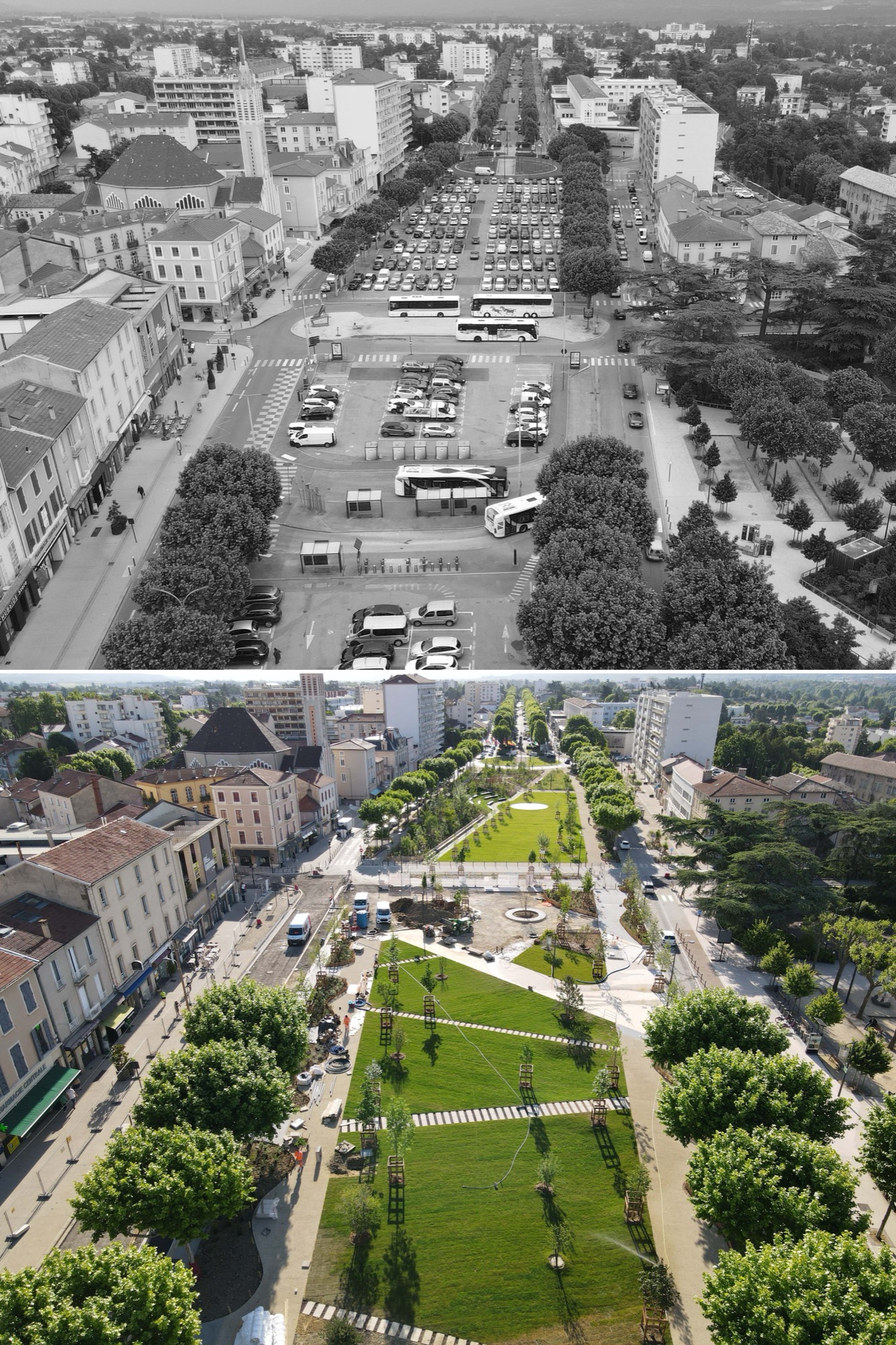
This project transforms a predominantly paved and impermeable parking lot into a vast ecological corridor, where the fertile subsoil is revealed and enriched.
This project, which prioritizes living organisms, was structured by an innovative ambition : a strong emphasis on a brown network.
The project now constitutes a green enclave in the midst of a dense urban space. As such, it serves as a refuge for certain species.
The objective of this project was to reconcile urban uses with local environmental concerns. The redevelopment of Place Jean-Jaurès into a garden promenade seeks to find a balance between recreational facilities, relaxation, and the preservation of biodiversity.
The Garden Square : A New Lease of Life for Romans
An Urban Metamorphosis
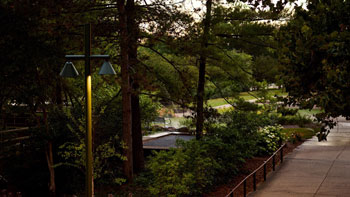
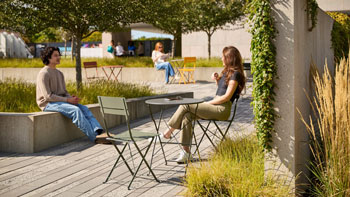
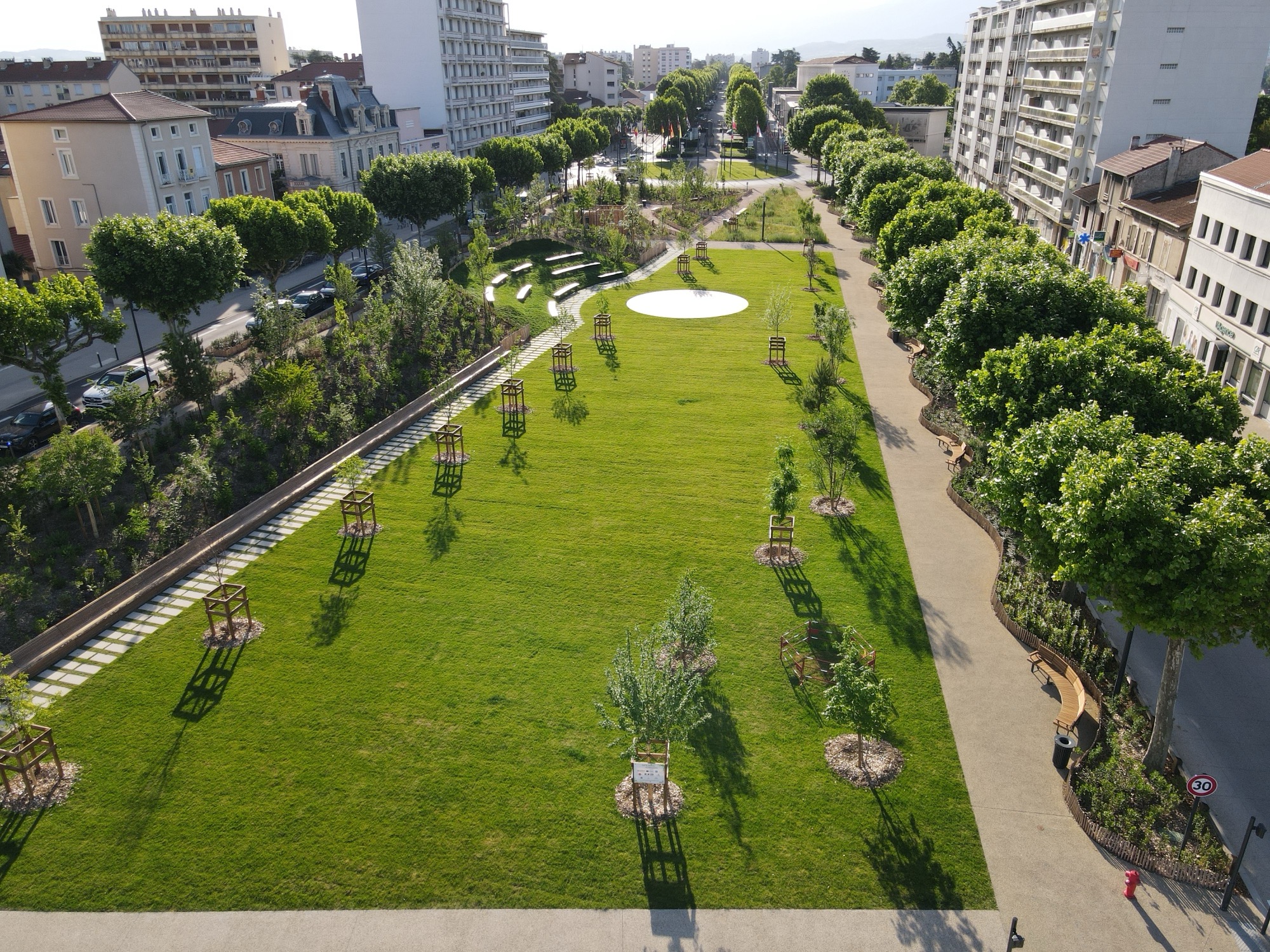
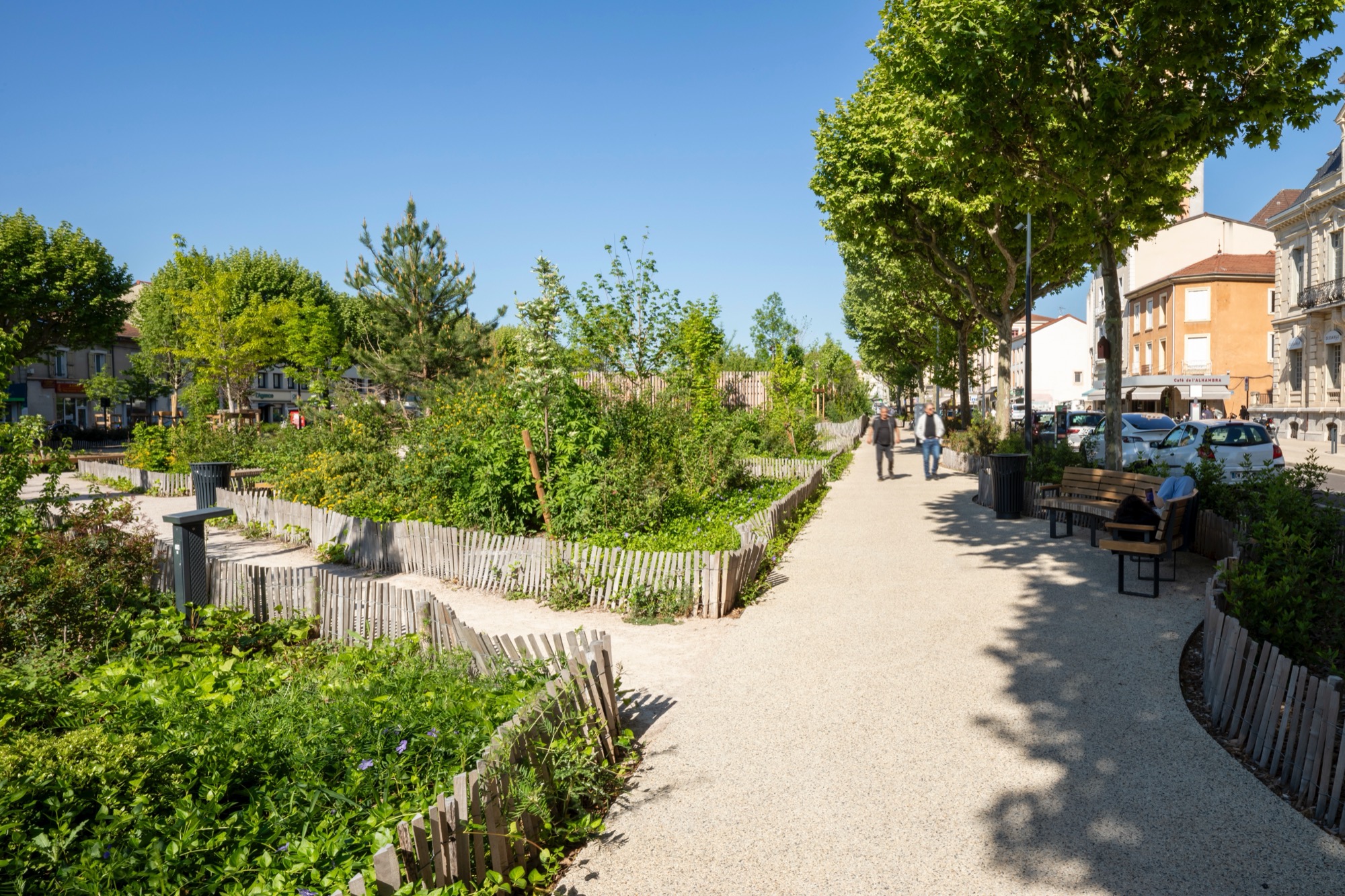
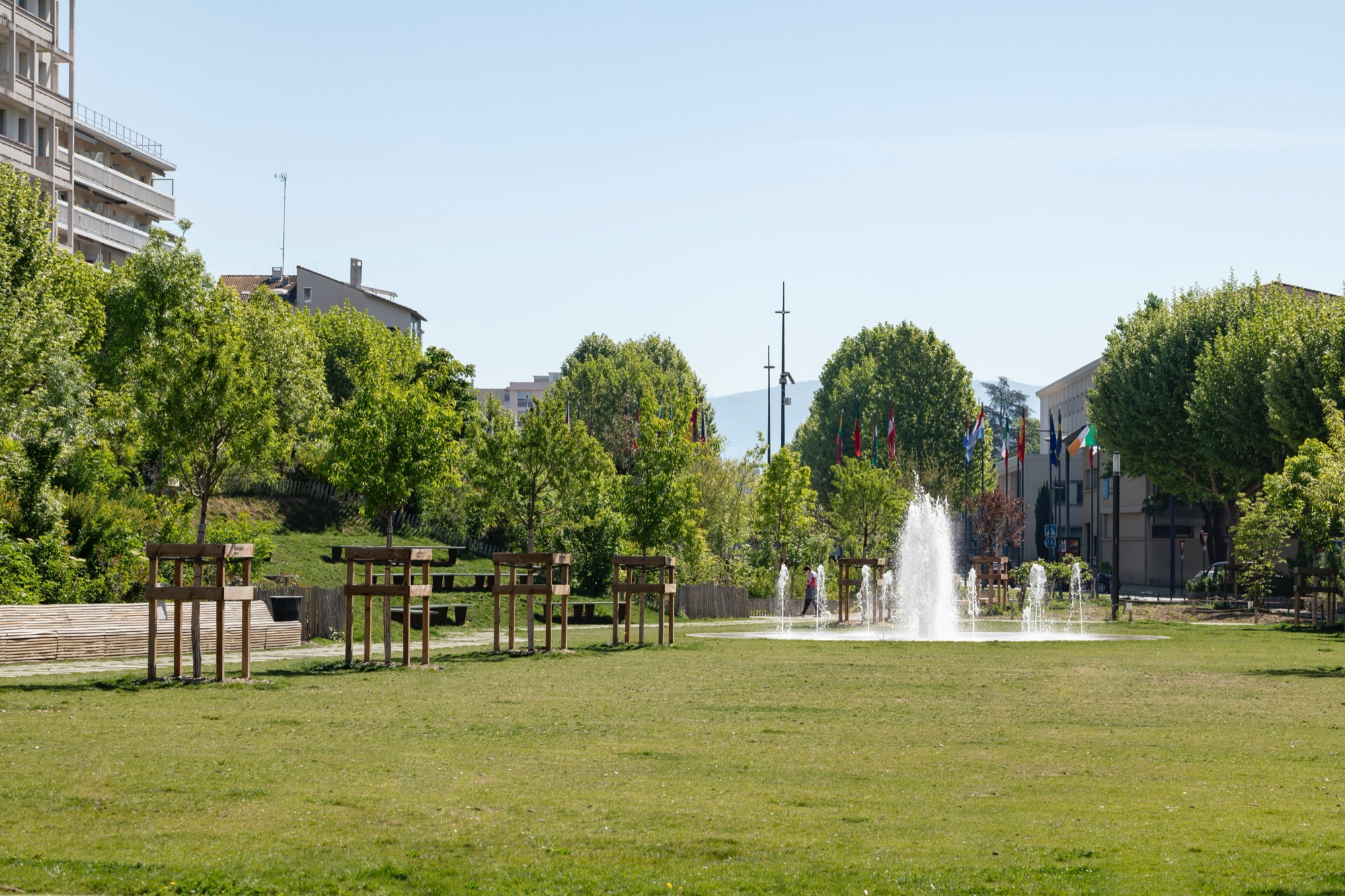
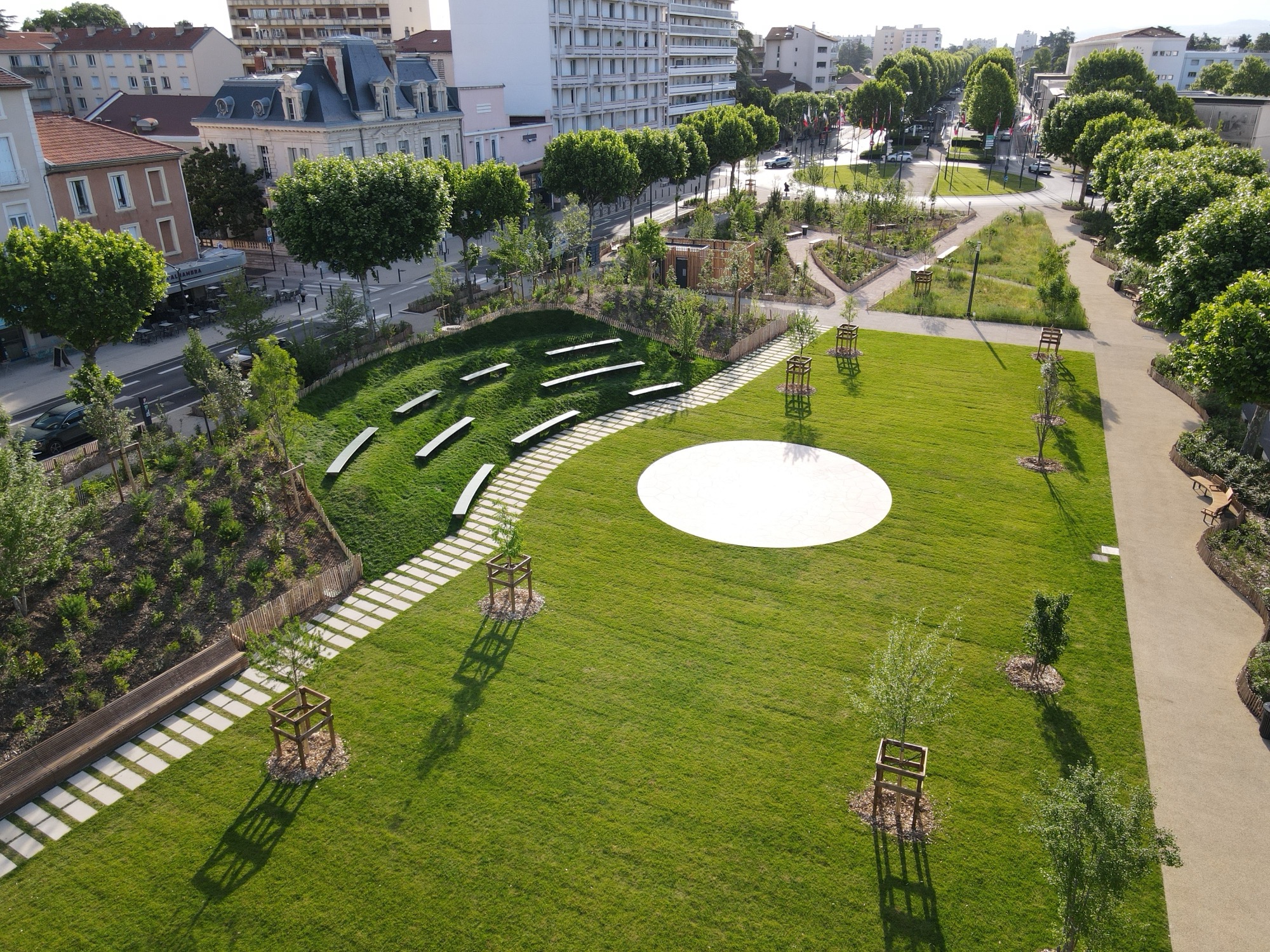
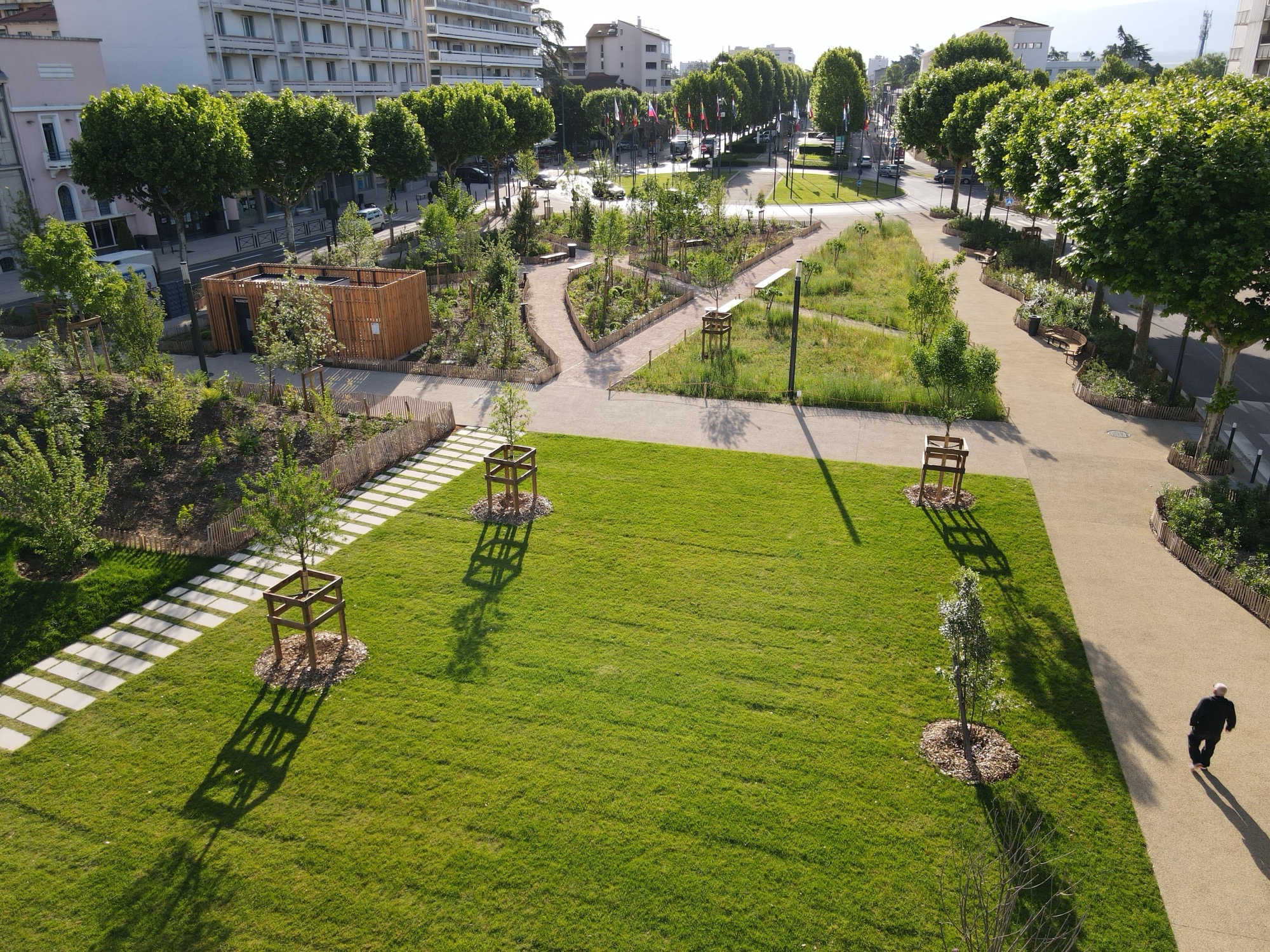
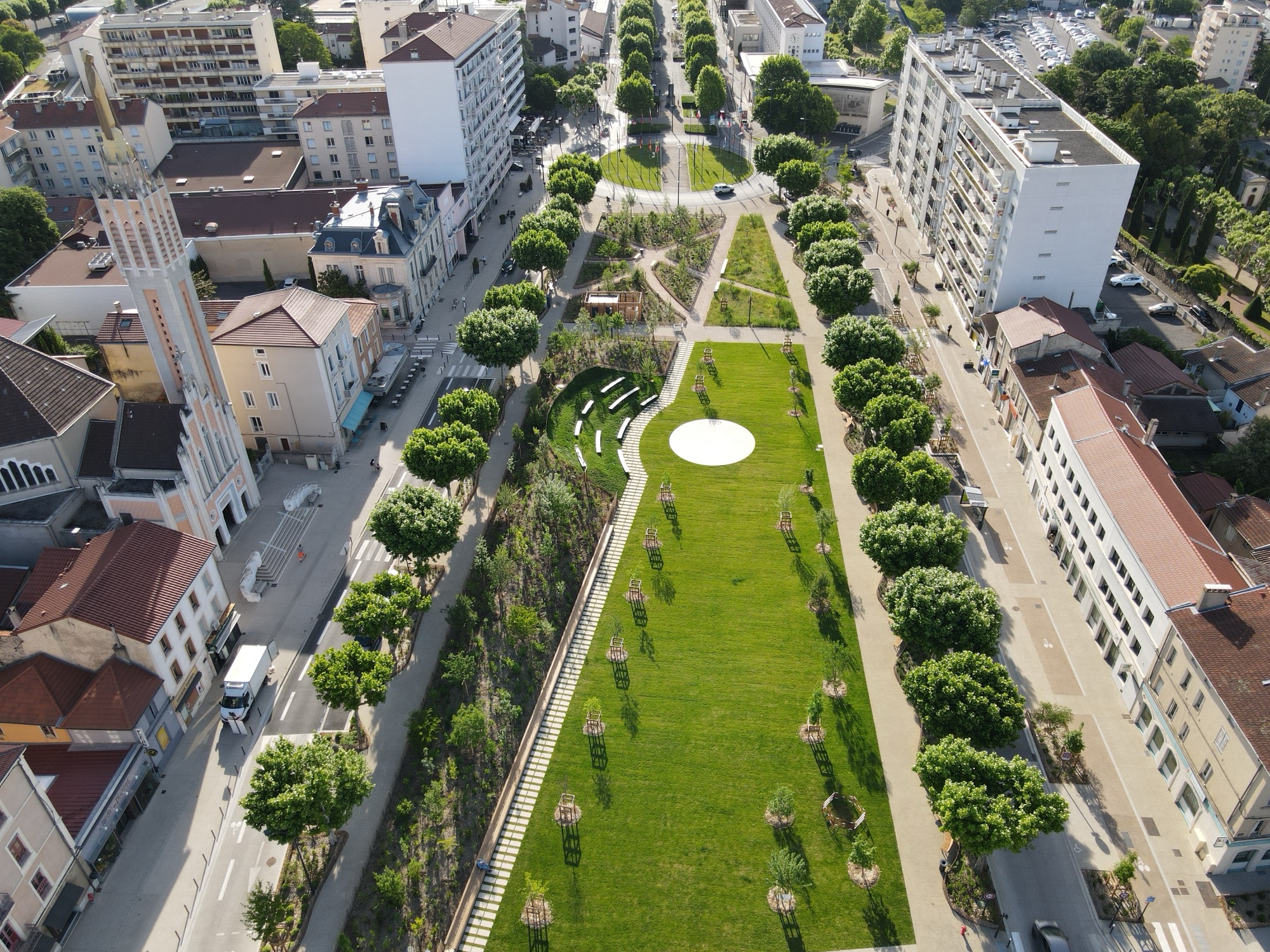
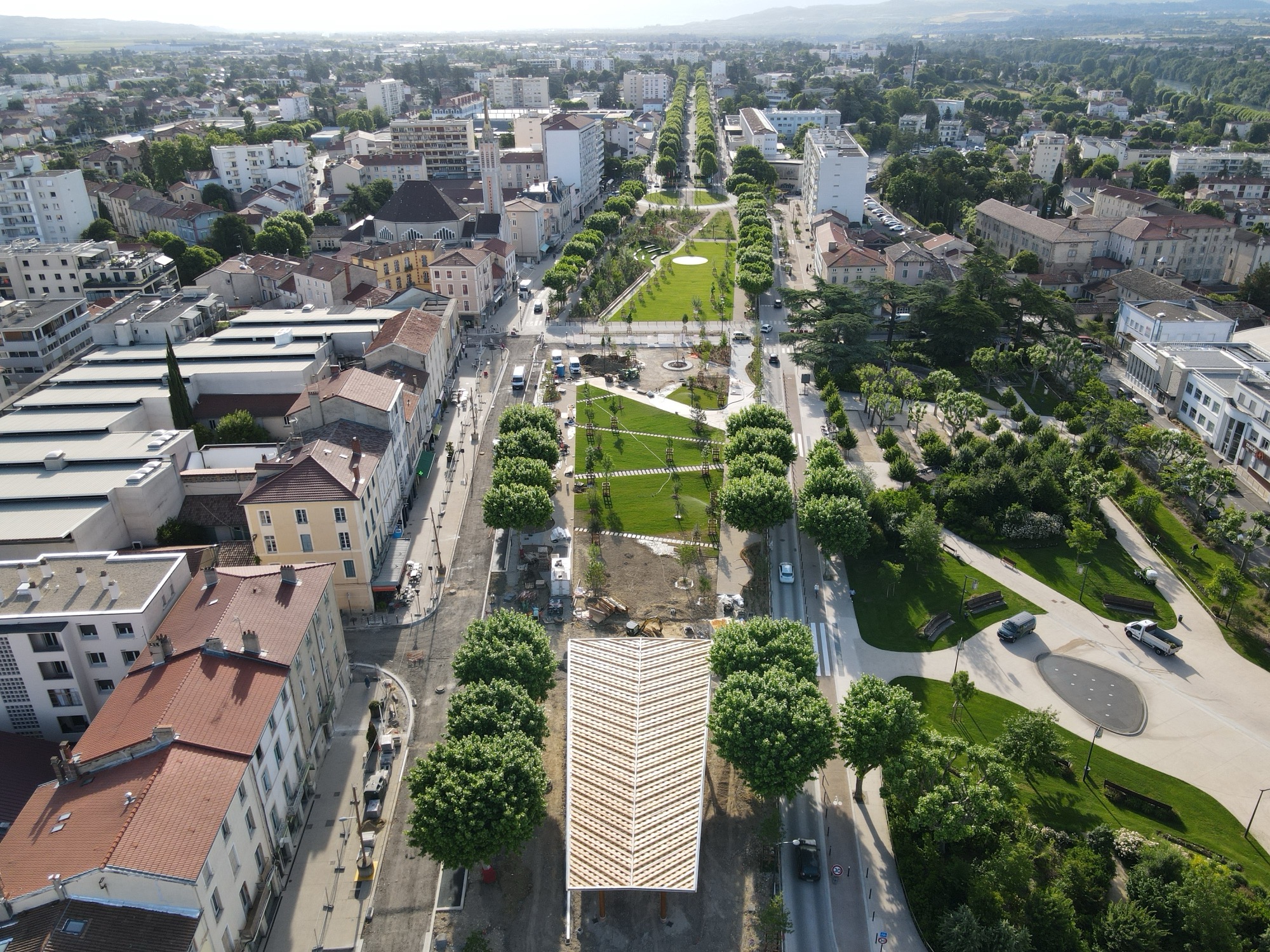
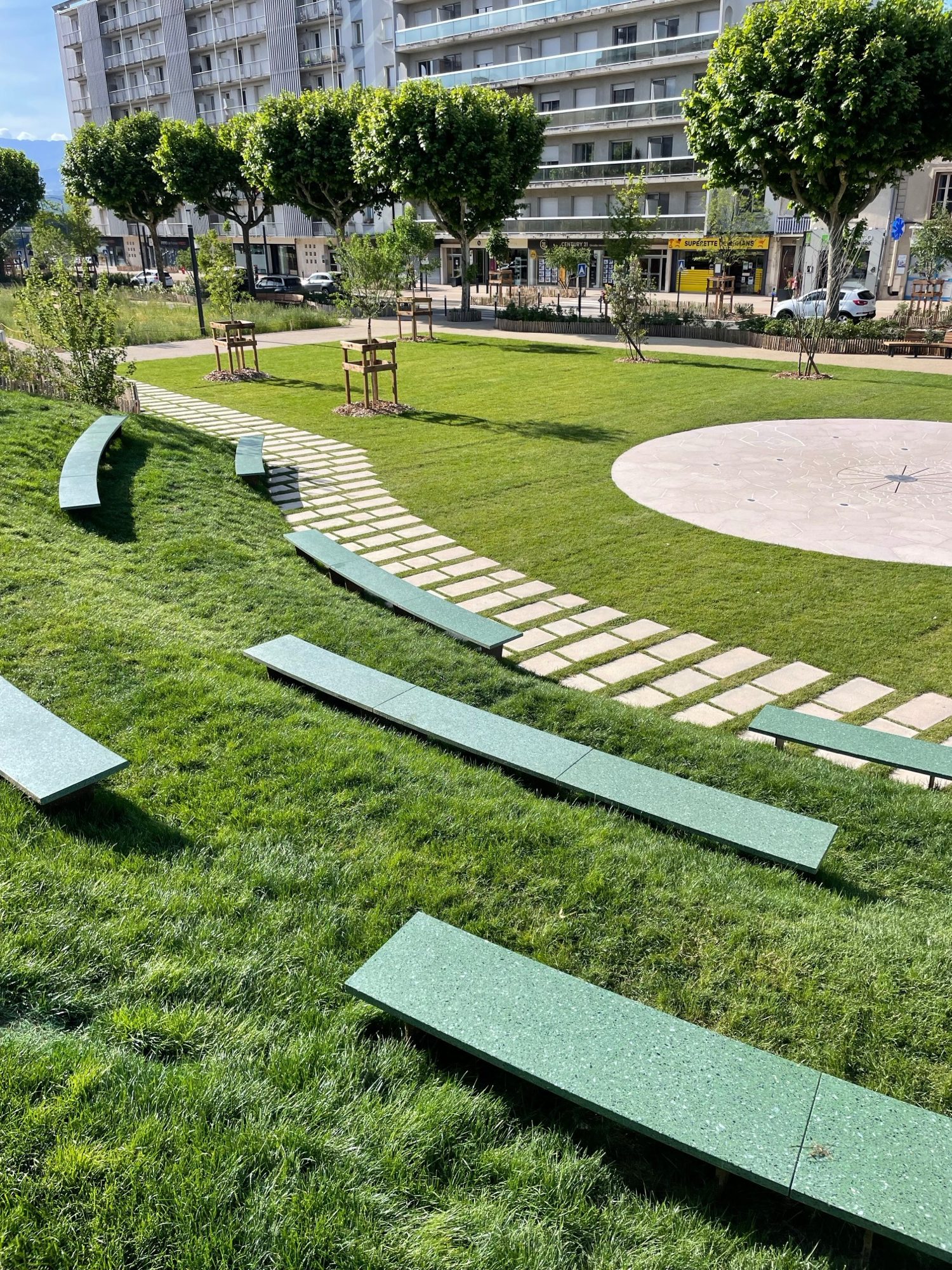
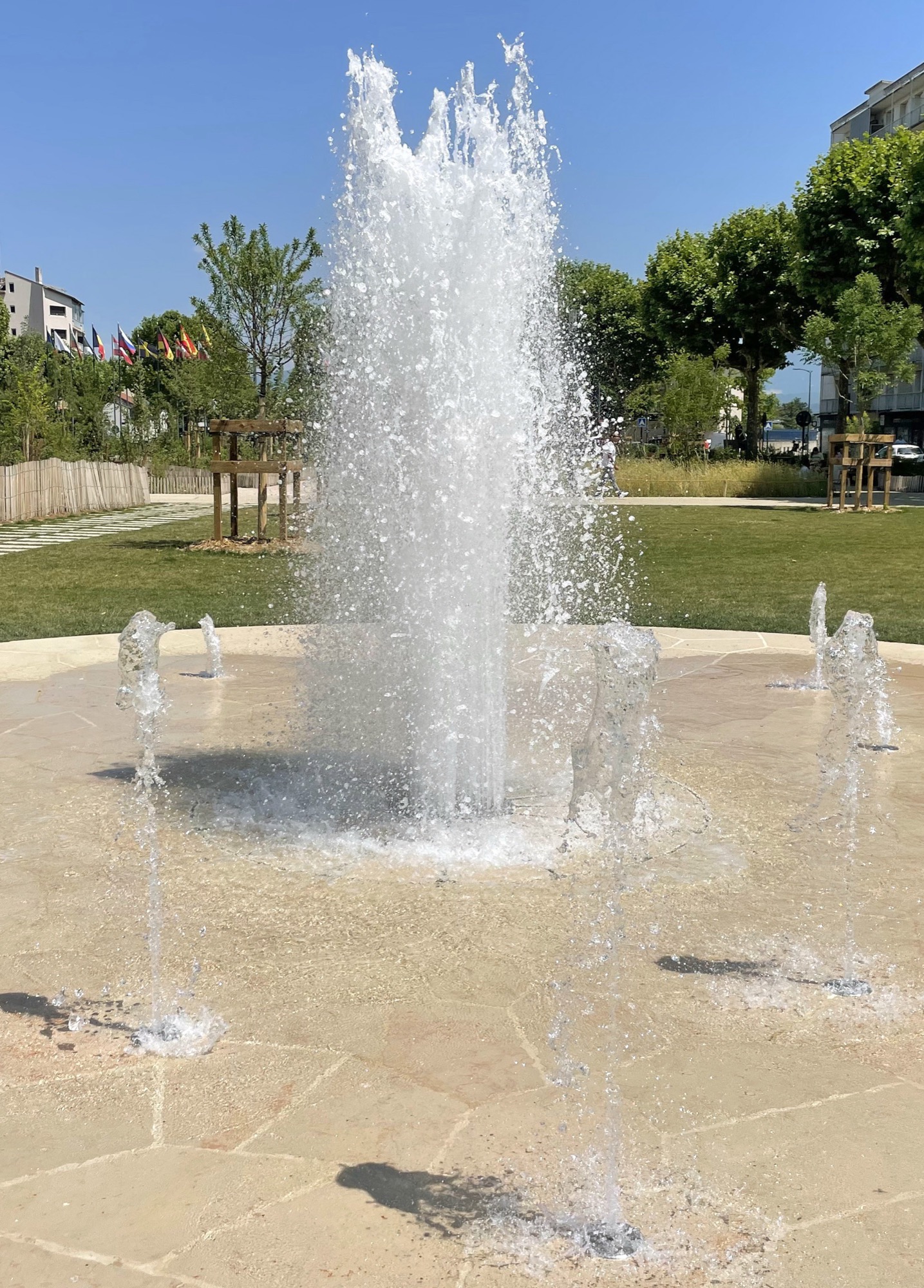
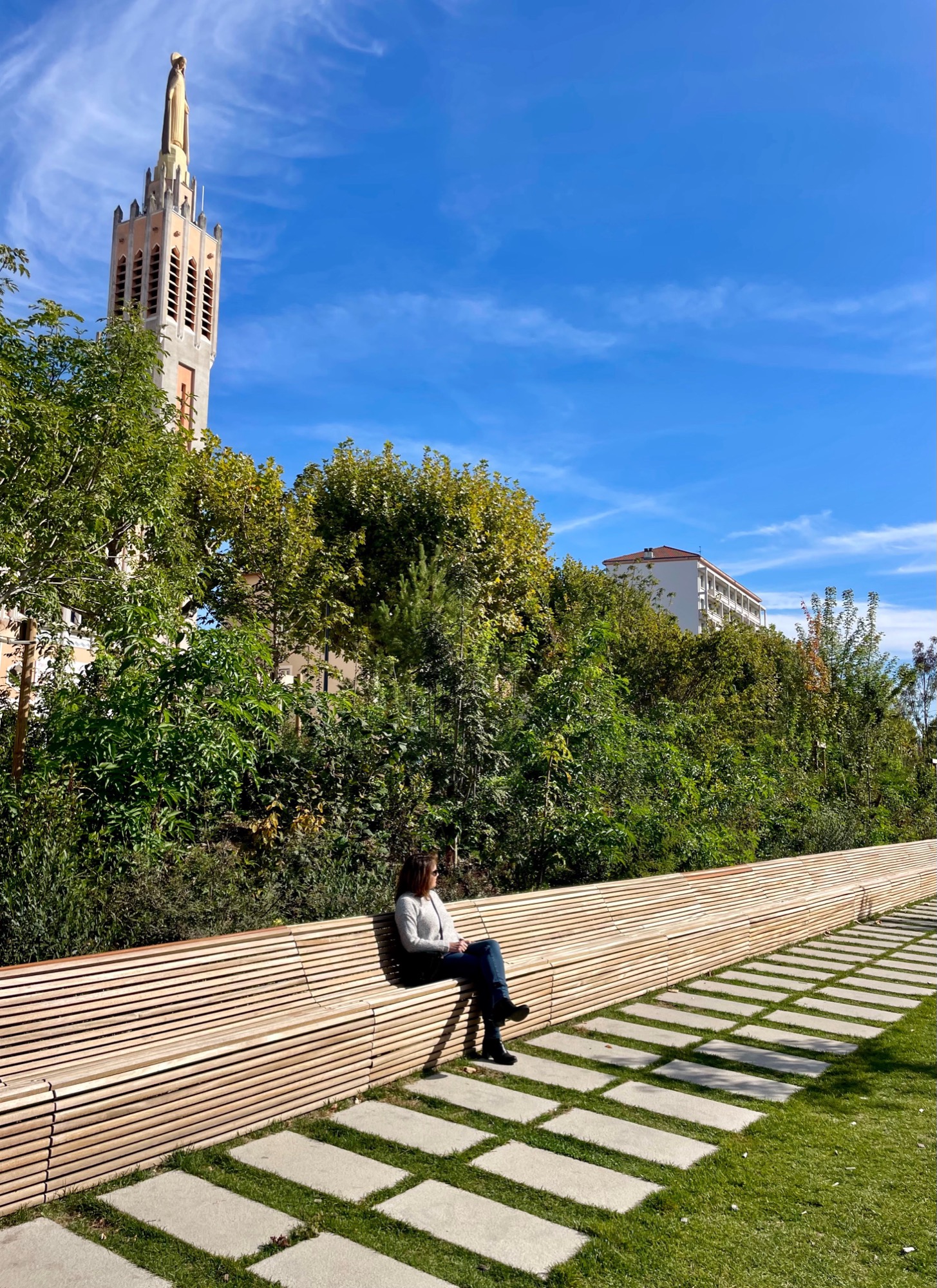
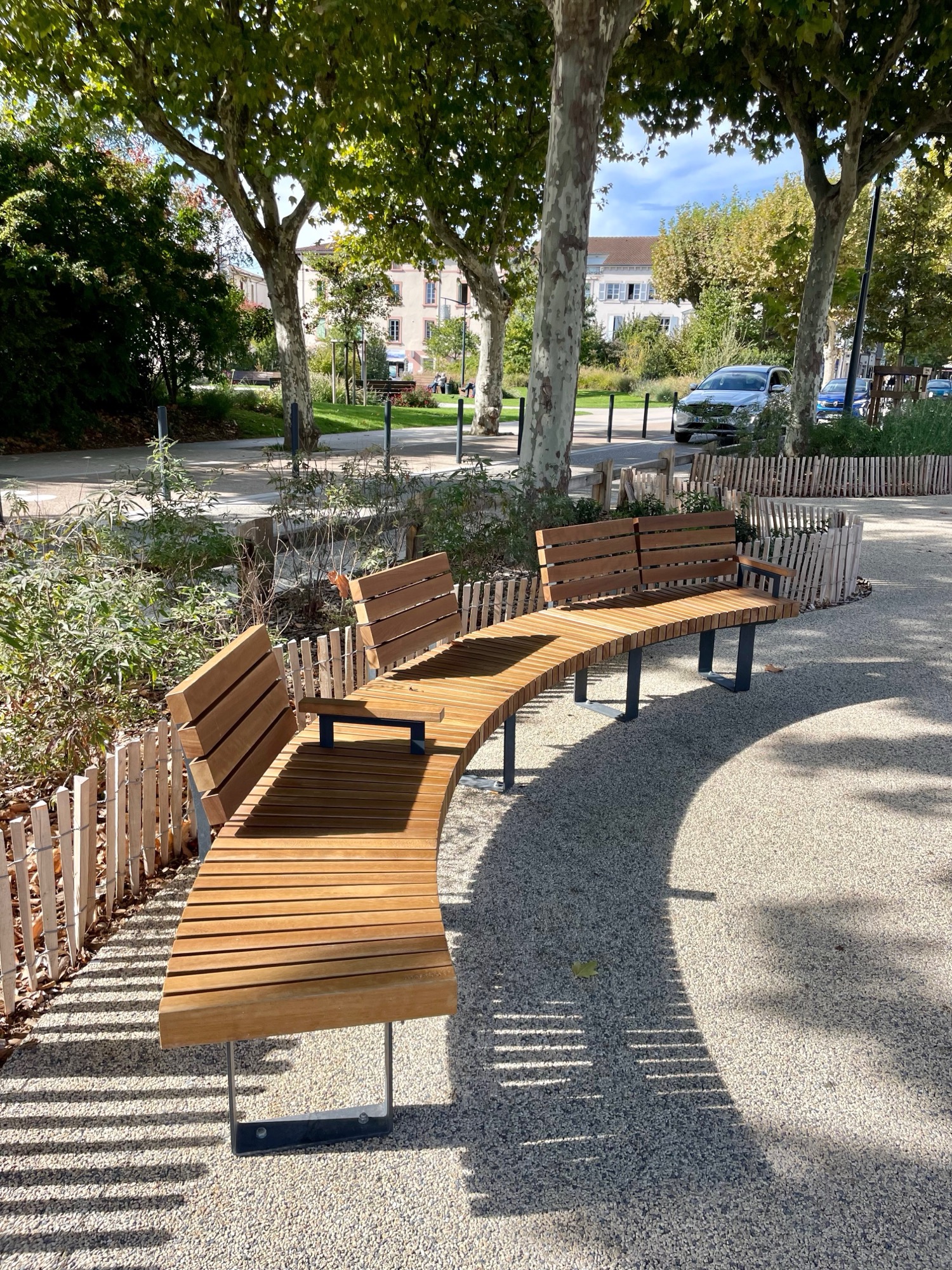
In the heart of Romans-sur-Isère, the Place Jean-Jaurès has been transformed. Formerly a parking lot and a traffic intersection saturated with asphalt, it has become a 2.9-hectare garden square, a vast urban clearing that breathes new life, freshness, and a sense of centrality into the city.
Contemporary Challenges and Territorial Roots
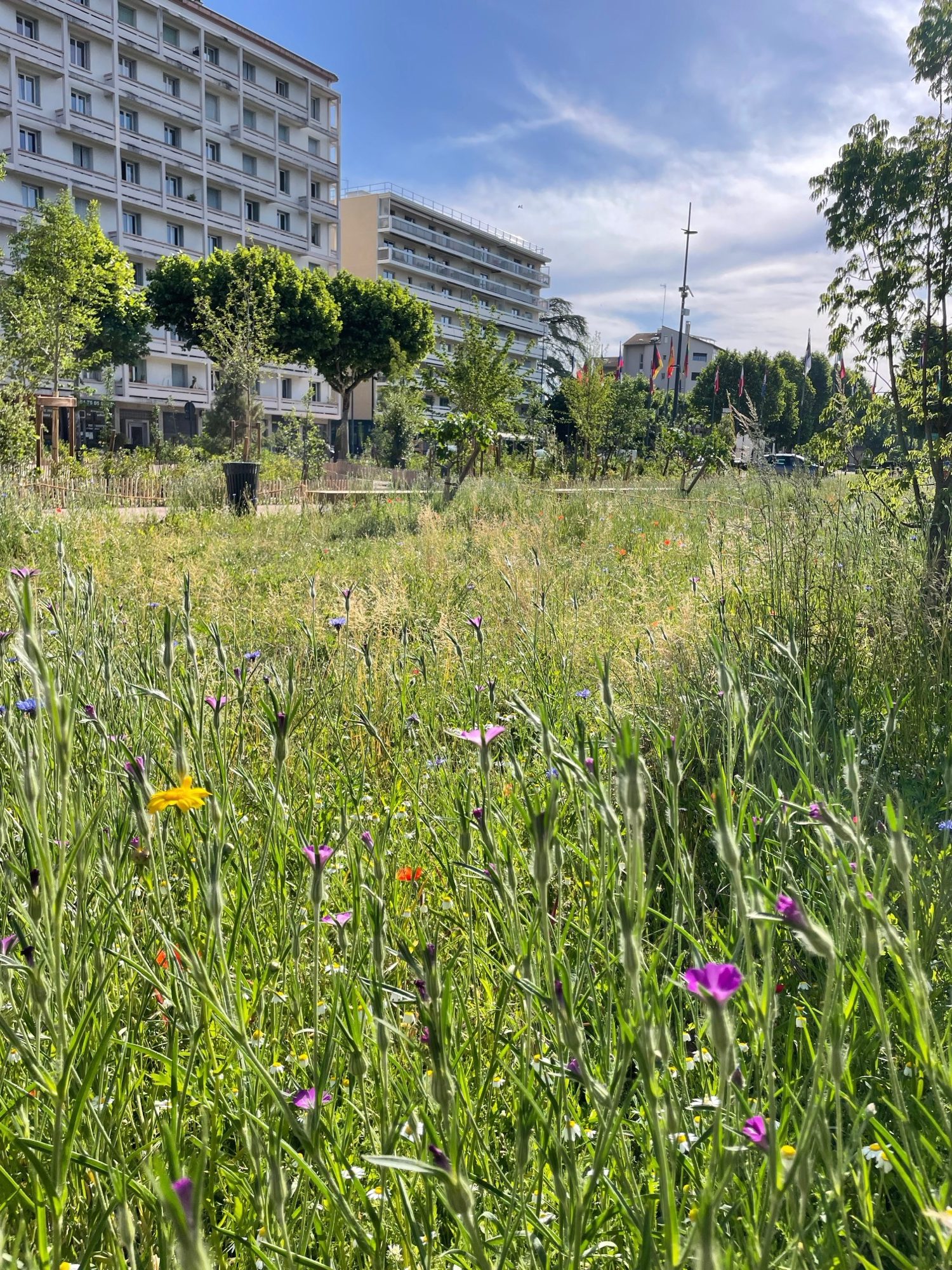
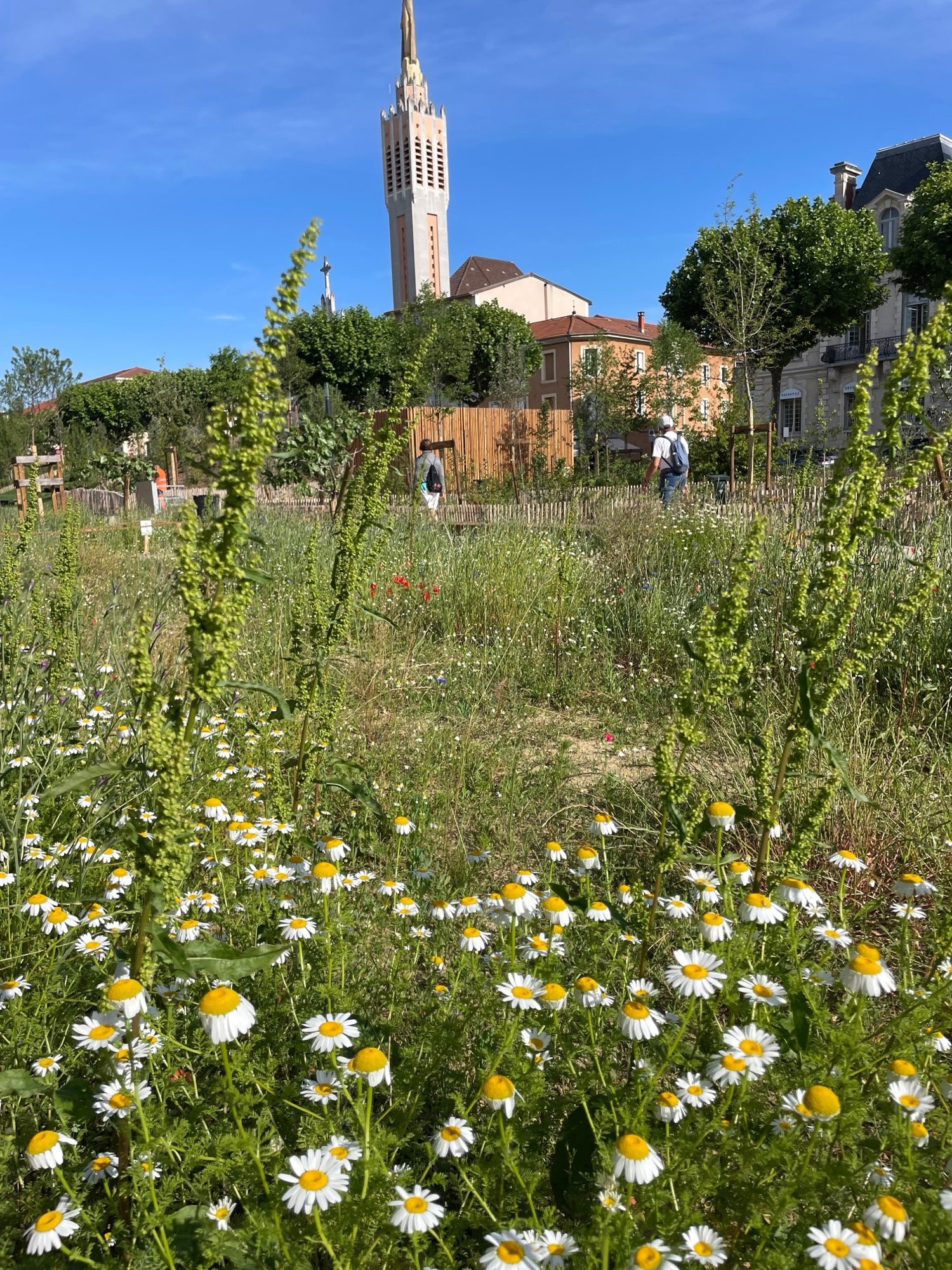
The landscape project addresses contemporary challenges: responding to climate change through shade, water infiltration, and plant diversity; welcoming biodiversity by recreating continuity; practicing constructive restraint; and rebuilding social connections.
But it is also rooted in a specific geography and history. Romans is a city situated in the Isère Valley at the foot of the Vercors Massif. This liminal position, between plain and hill, between city and nature, is reflected in the design. The garden square thus becomes a vibrant link between the old town center, the train station, and the surrounding neighborhoods, as well as between the city and its landscaped horizons.
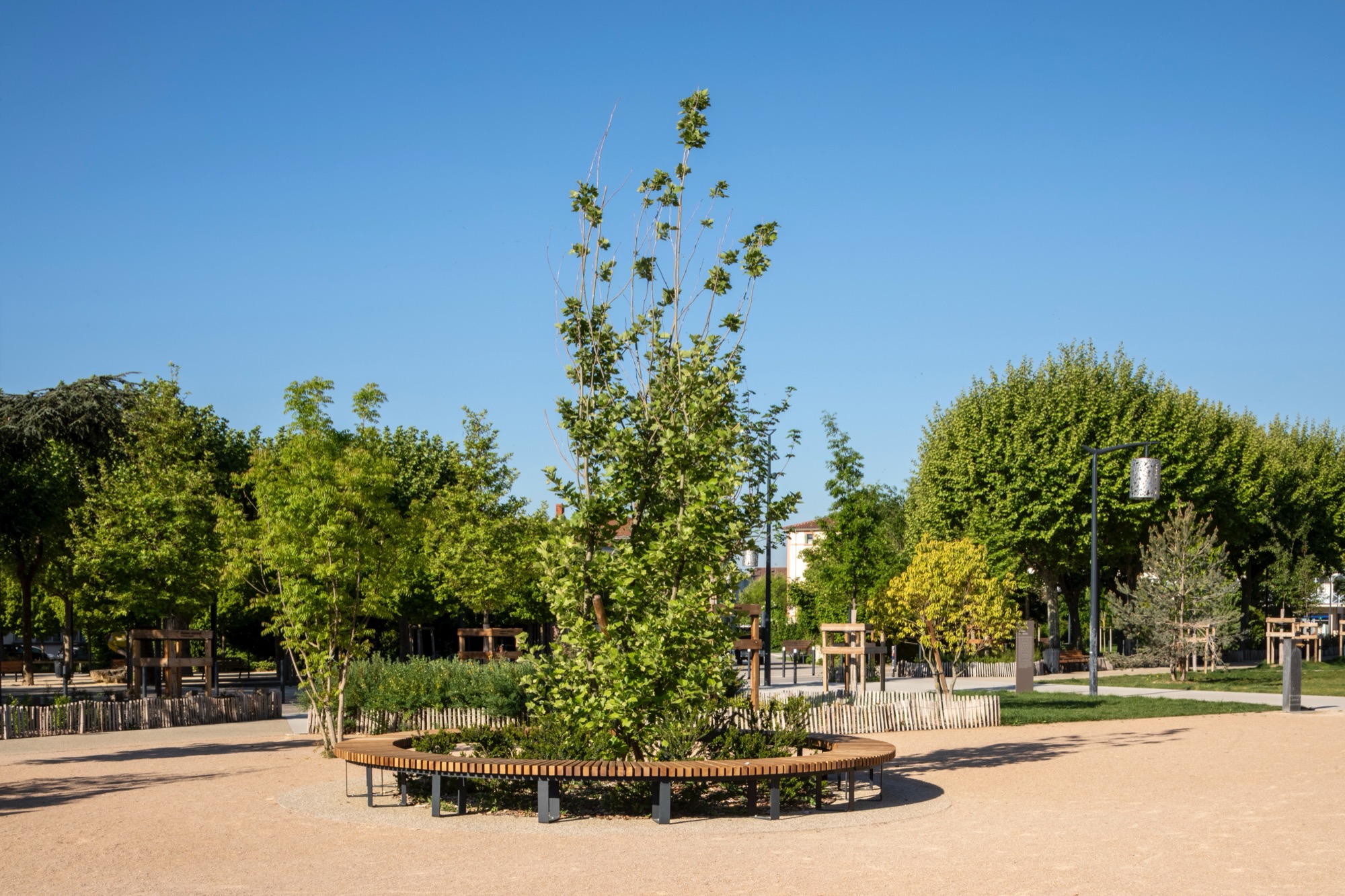

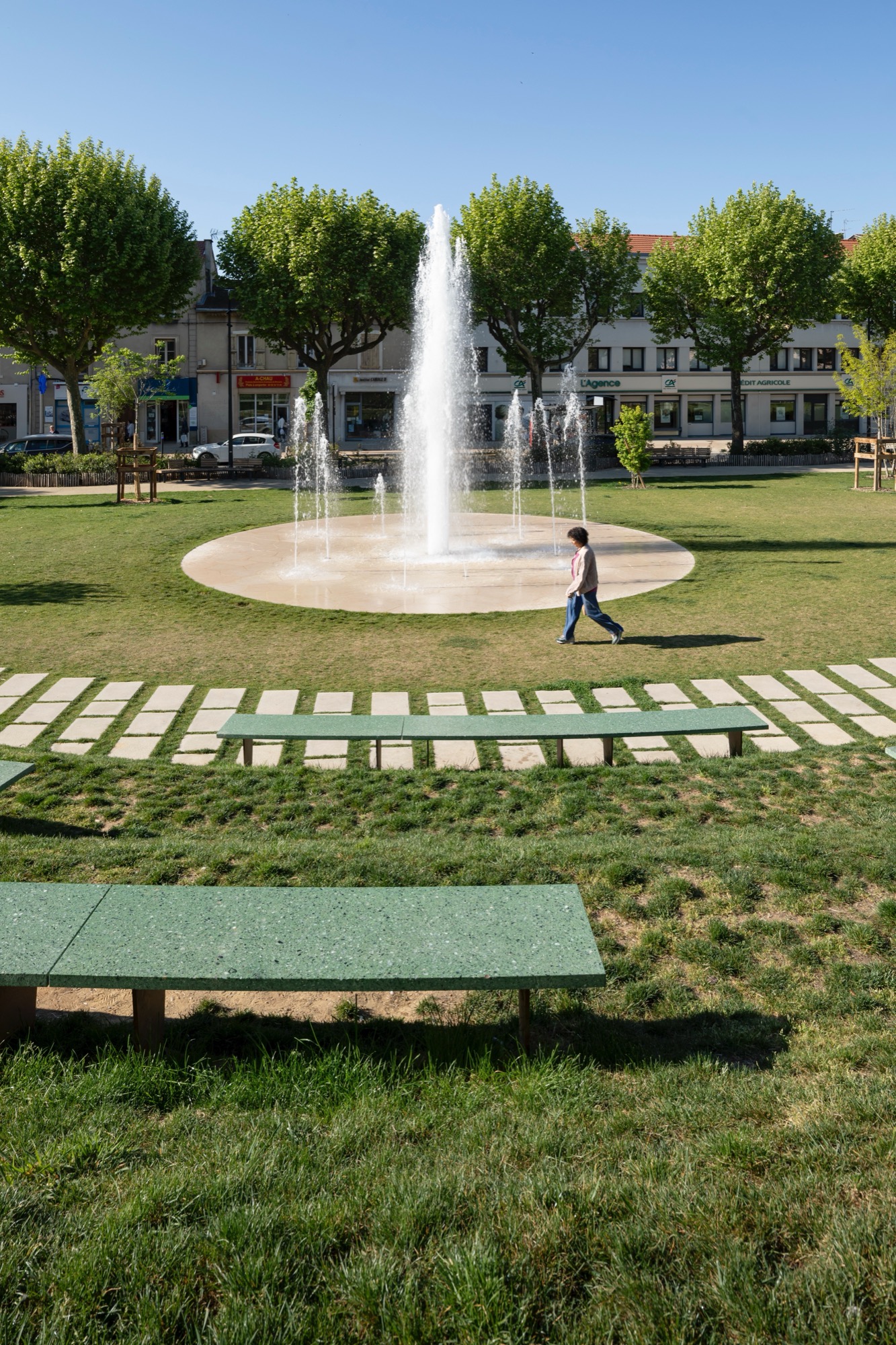
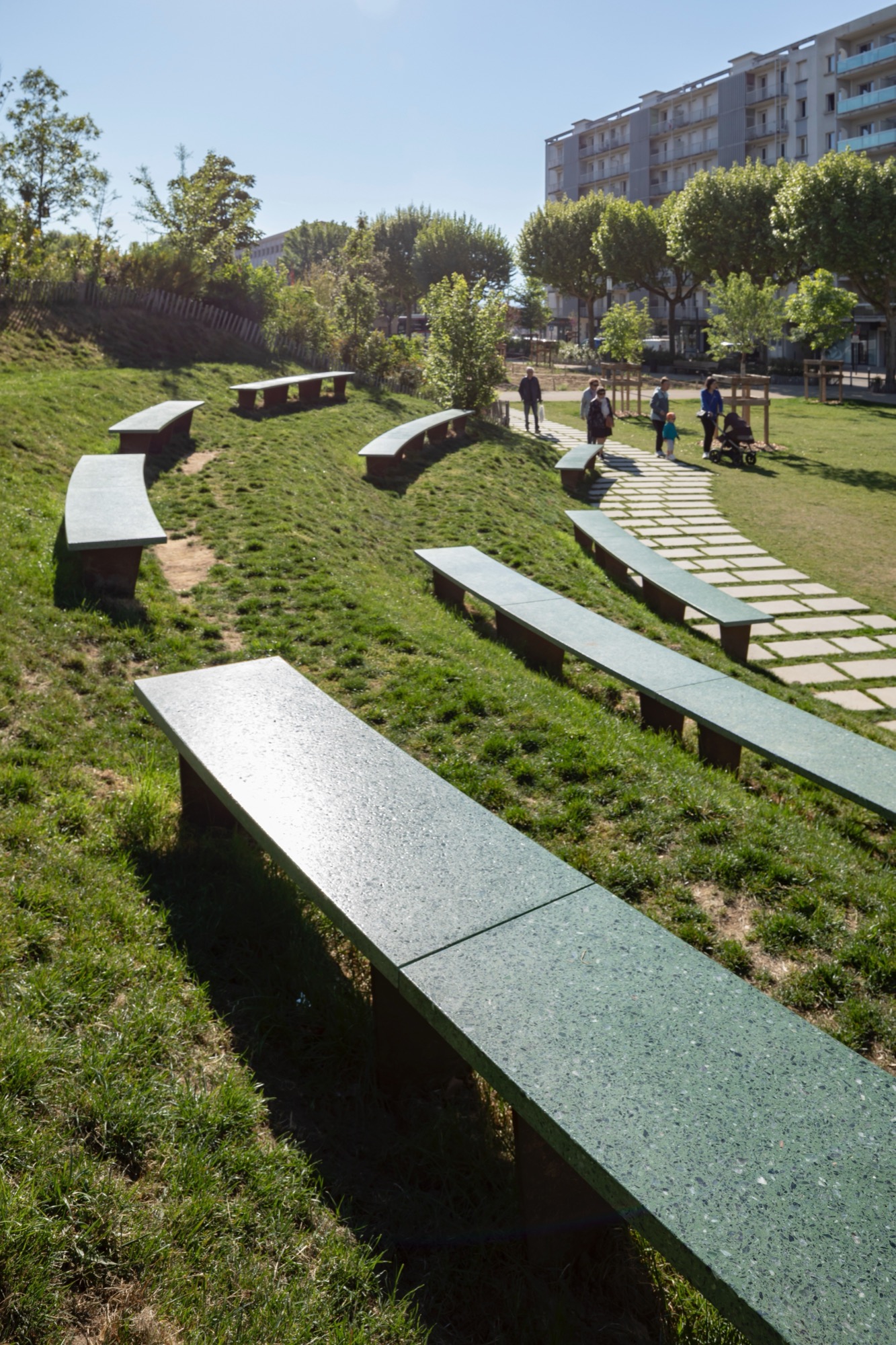
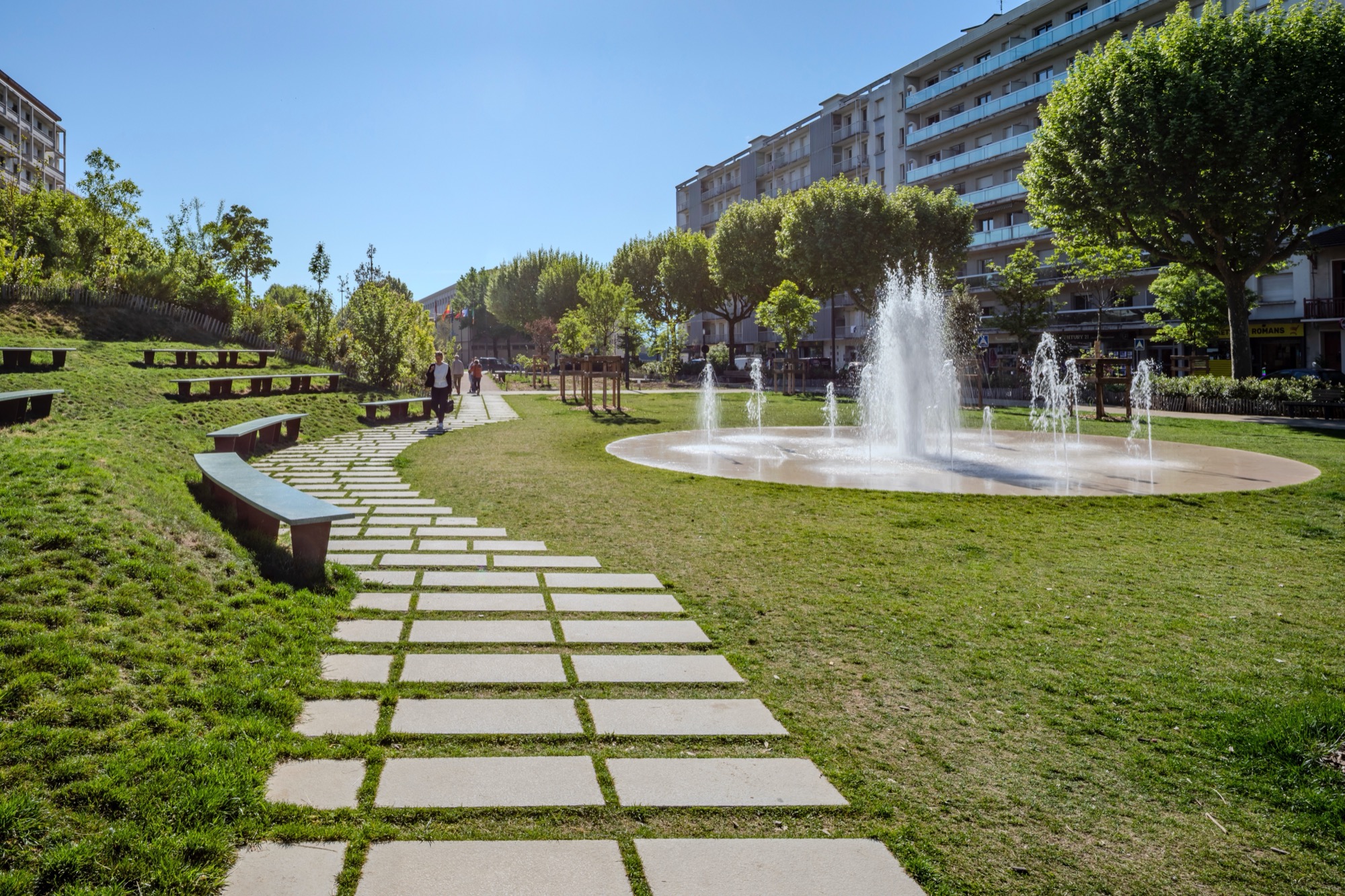

The Soil Rediscovered
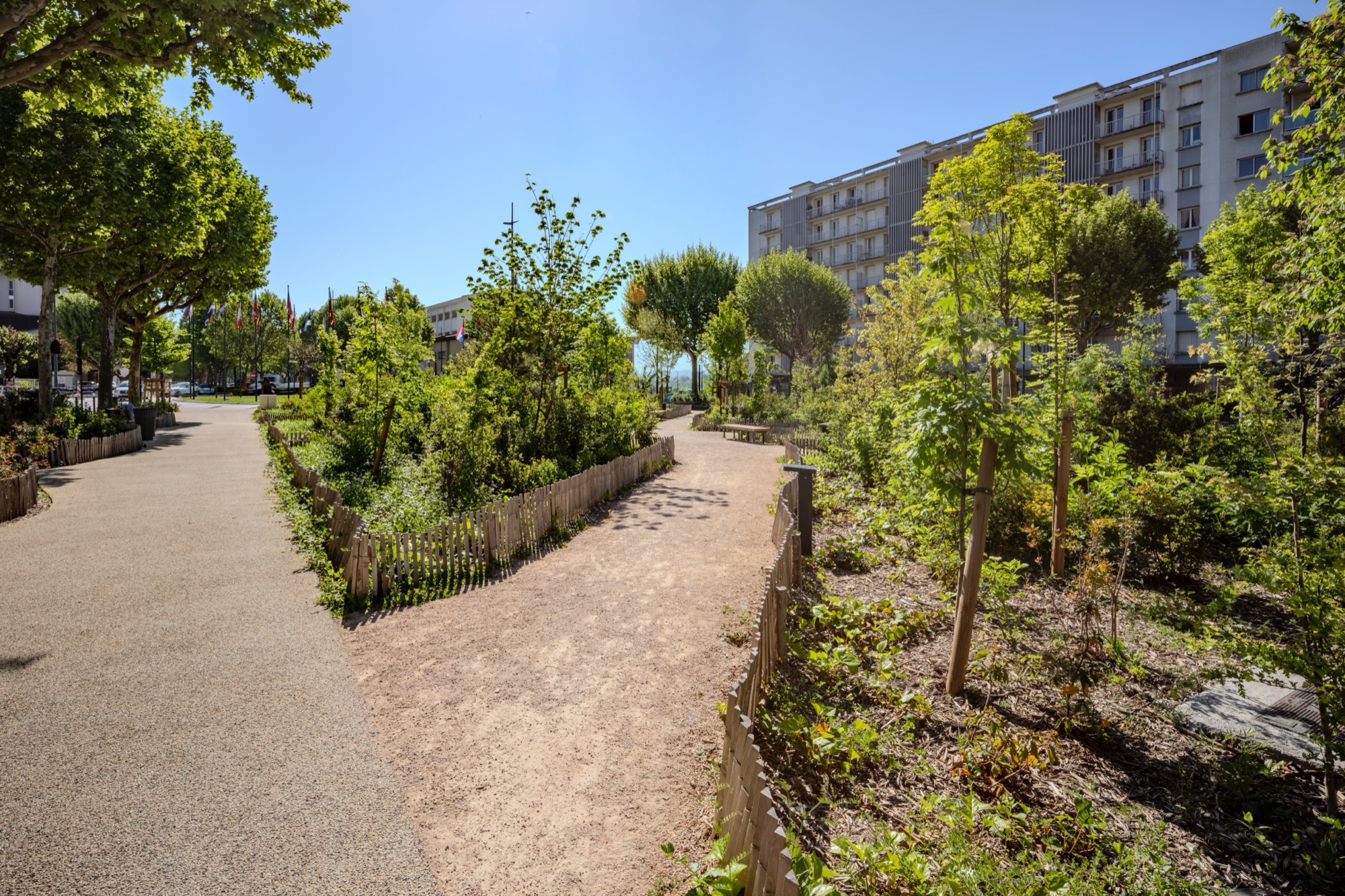
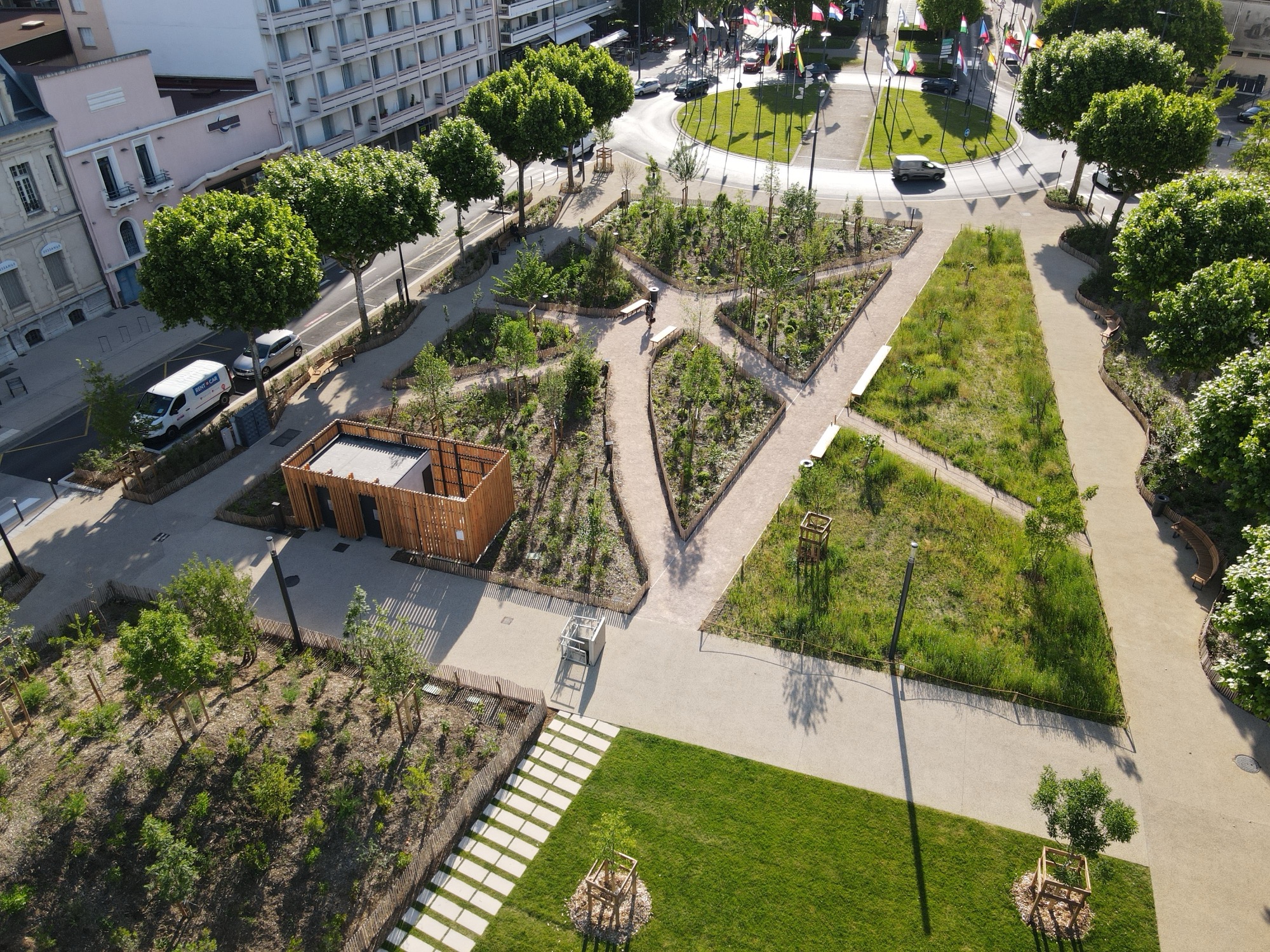
Landscaping begins at its foundation: the soil. The APS agency sought to rediscover the historical bedrock of the agricultural soils to create a fertile continuum where water, roots, and biological life circulate. To recreate this brown network, excavated material from nearby construction sites was reused and transformed to make it rich and vibrant. In total, 15,000 m² of brown network replace the old asphalt surface in the heart of the square.
Water as a Resource
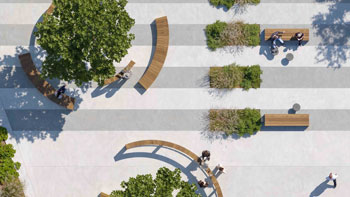
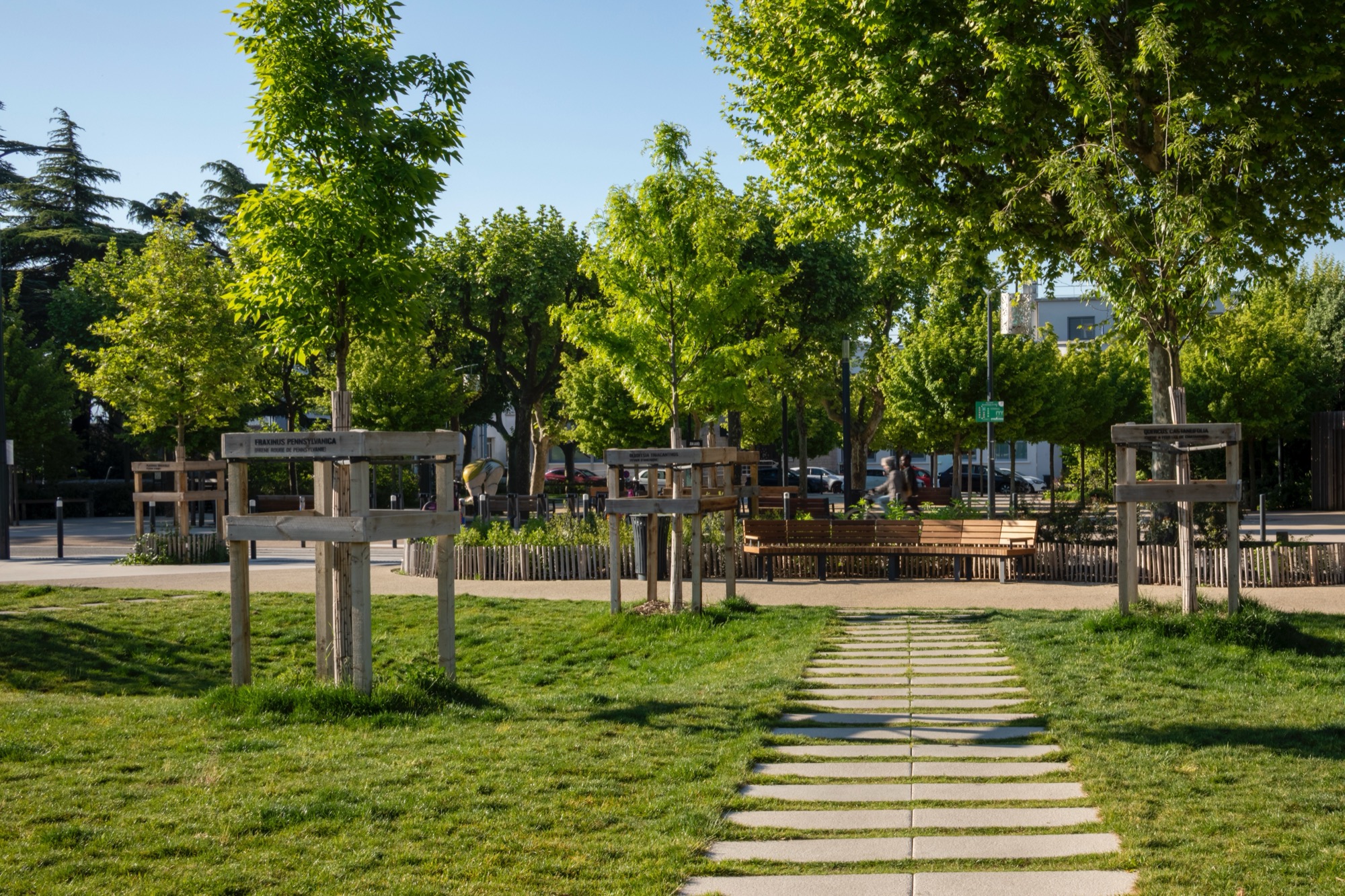
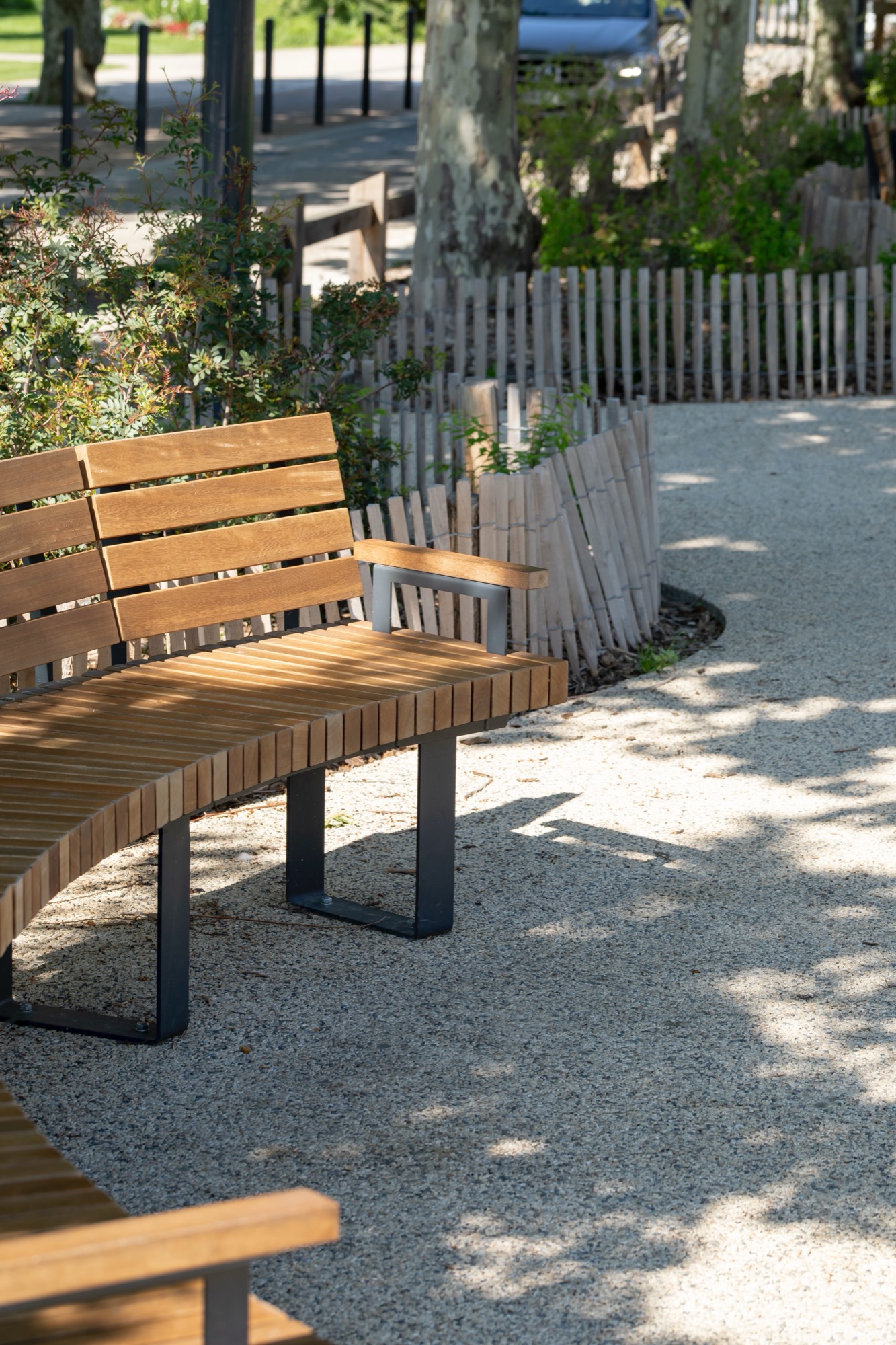
The complete removal of impermeable surfaces from the square and the natural management of rainwater are central to the project. The existing asphalt was entirely removed and replaced with vegetation. The pathways created are made of permeable concrete, offering walking comfort and direct infiltration into the underlying brown network. Only 20% of the square remains paved, primarily along the building facades.
Landscaped depressions, green spaces, groves, and planted edges absorb runoff.
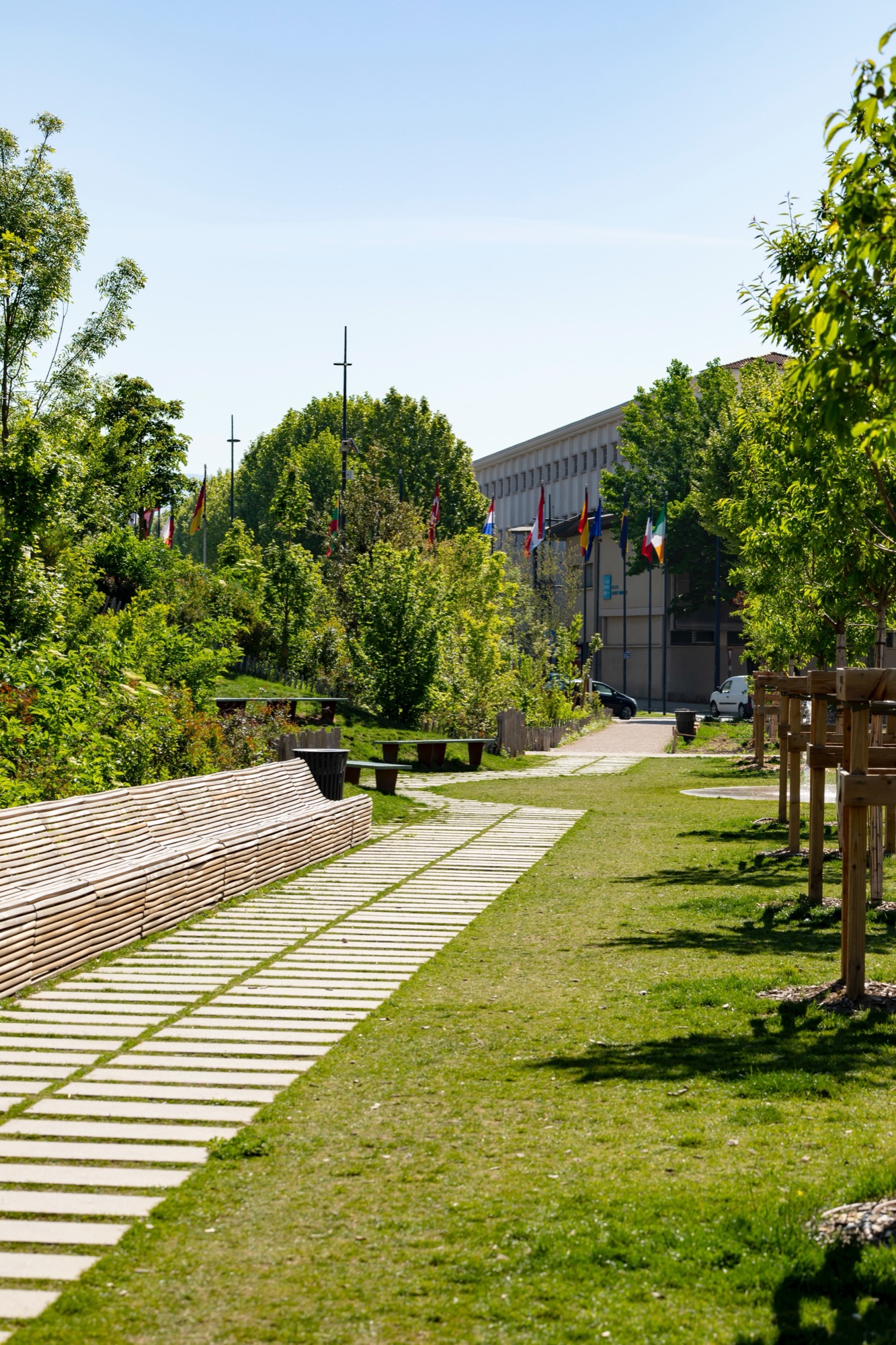
Watering is only carried out for planting and in cases of extreme necessity. The lawn benefits from an innovative underground irrigation system, delivering water directly to the roots and reducing consumption by 40% compared to a traditional sprinkler system.
The Urban Canopy
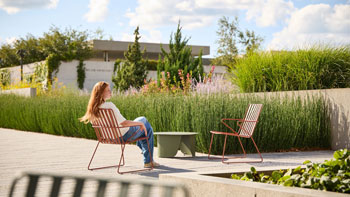
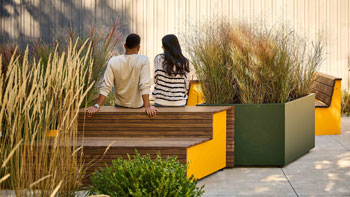
The project, generously planted with nearly 400 trees, helps create an urban oasis of coolness. Existing trees are preserved and complemented by vegetation adapted to the dry climate. Three layers are superimposed: trees, shrubs, and ground cover. The plant structures are irregular and diverse to reduce exposure to risks (diseases, storms) and mitigate the effects of blocking hot, polluted air. The uppermost layer establishes a true urban canopy over the public space.
An Architecture in Resonance
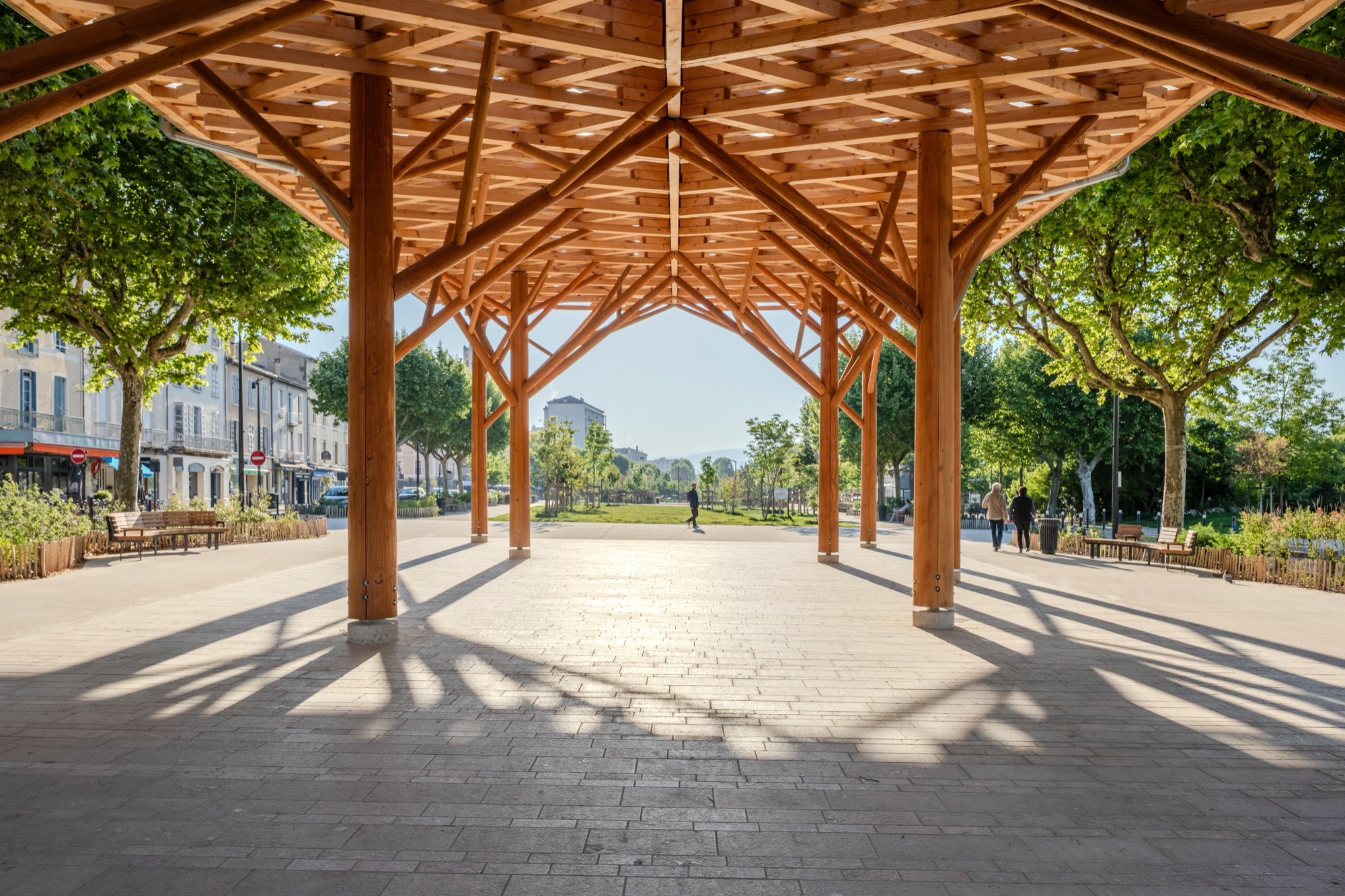
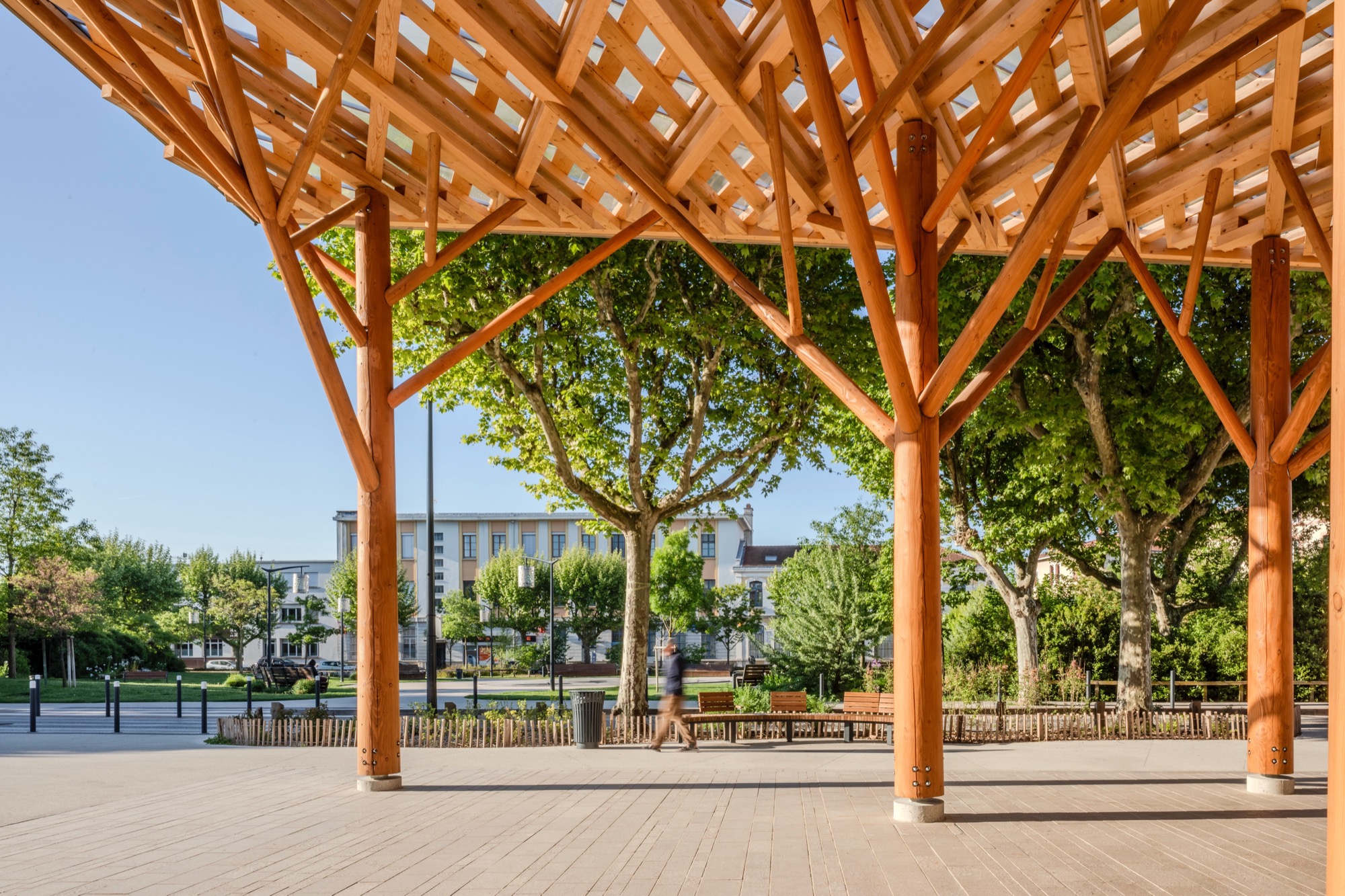
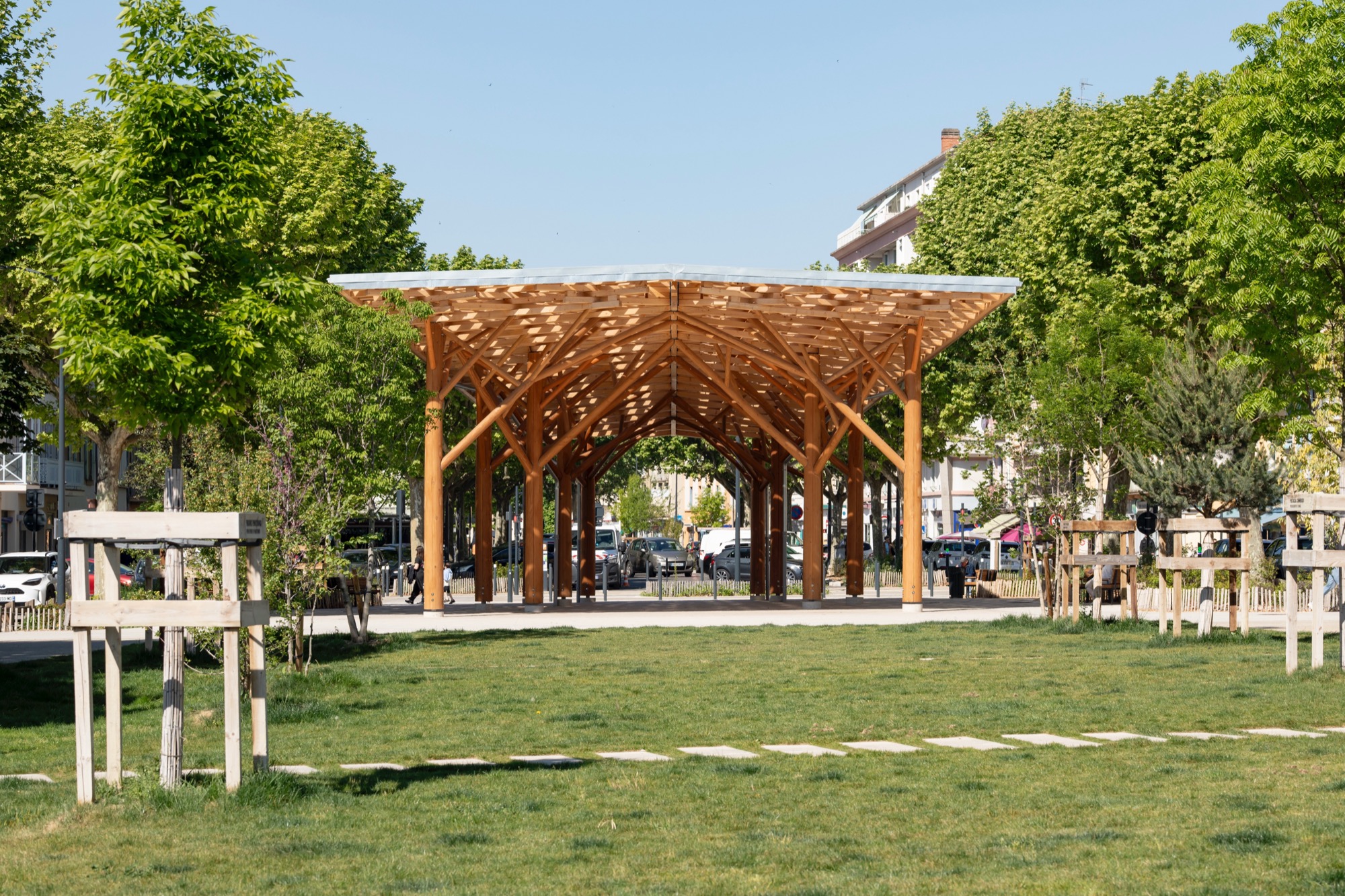
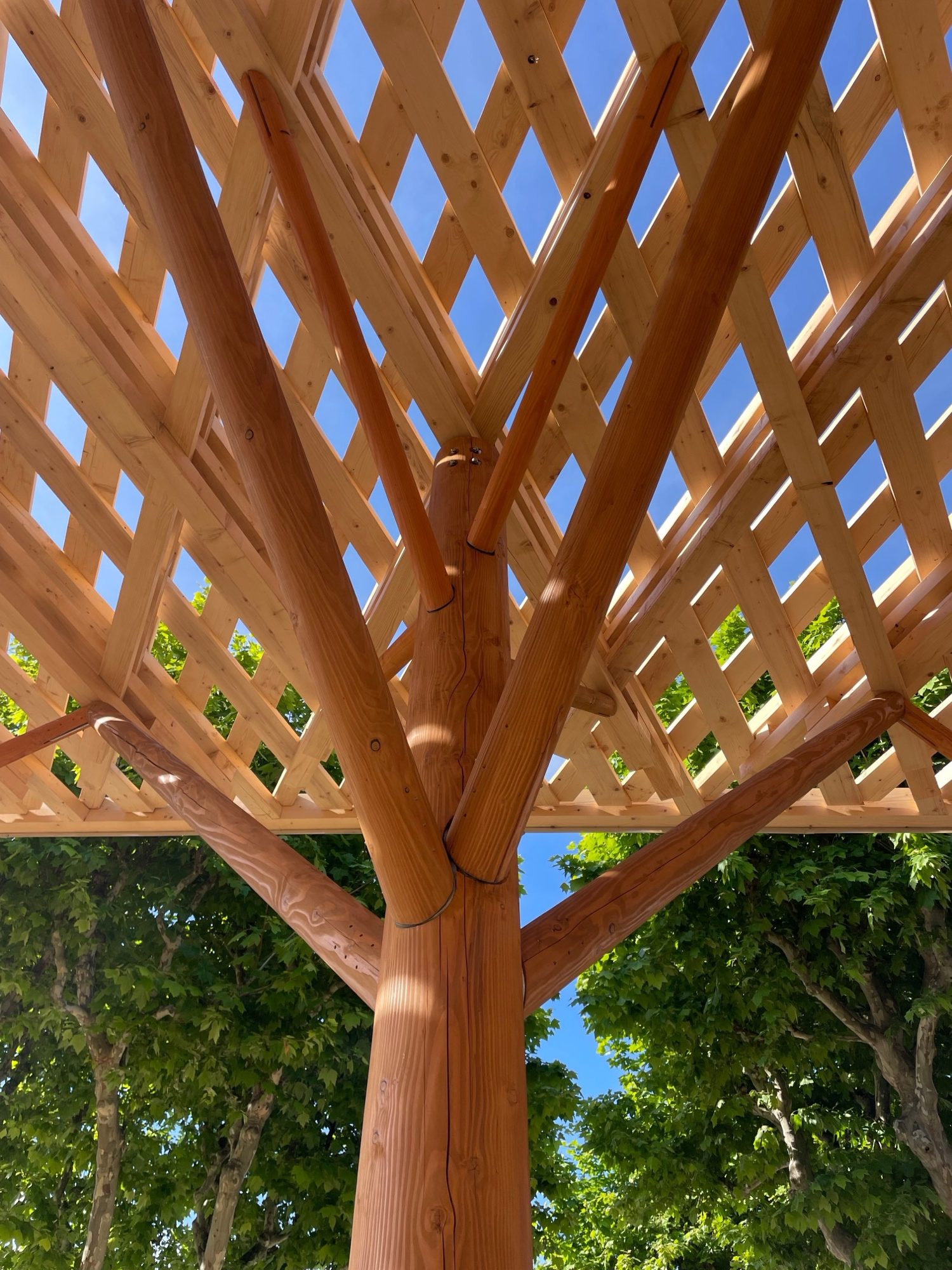
The wooden structure, the “canopy,” designed by architect Enri Chabal using trees from the Vercors region, is integral to the project’s design. A local, understated, and symbolic piece of architecture, it extends the dialogue with the surrounding area, becoming an urban landmark and a welcoming shelter.
A Common Good
Thus, Place Jean-Jaurès is not simply being redesigned. It has become a common good: a living infrastructure that responds to climate challenges, a fertile landscape inscribed in the geography of a territory, and a collective place where urban society finds an anchor and a breath of fresh air.
Maitrise d’ouvrage :
Ville de Romans-sur-Isère (26) France
Equipe de maîtrise d’oeuvre :
Paysagistes concepteurs (mandataire) : Agence APS, Valence (26)
Architecte : Chabal Architectes, Grenoble (38)
Bureau d’études VRD et OPC : Suez consulting, Valence (26)
Bureau d’études Structure bois : Arborescence, Lyon (69)
Bureau d’études Structure : Mathieu, Chabeuil (26)
Bureau d’études Mobilité : Transitec, Lyon (69)
Bureau d’études Fontainerie : Diluvial (44)
Conception lumière : LEA, Lyon (69)
45°02'44.5"N 5°03'12.9"E
73576


LILA 2026 Sponsor