AB Haabet
vegalandskab.dk
2026 Residential Parks / Denmark / Built in 2021 /

![The new Kløverskolen is a unified educational campus distributed across two distinct building plots. The school is accommodating a four-track primary school with integrated after-school facilities (SFO), alongside a three-track lower and upper secondary school with associated leisure and community functions. Located in Gellerup, Aarhus, the project forms an integral part of the Municipality of […]](https://landezine-award.com/wp-content/uploads/2026/05/00_Hero-Image-13-600x429.jpg "Kløverskolen i Aarhus (Clover School)")
![The new schoolyard at Skørping School strengthens the joy of movement by integrating the forest into the schoolyard as an active part of school life. At Skørping School, the children are explorers, interacting with and learning about nature while having fun. The play area is targeted towards students in middle and upper grades – both […]](https://landezine-award.com/wp-content/uploads/2025/05/00-Vega-600x450.jpg "Skørping School by VEGA landskab")
![Nuuk School takes its inspiration from the stark beauty of the Greenlandic landscape, integrating the city with the mountains and the tundra while creating outdoor spaces that satisfy children’s need for a safe and functional school environment. The school’s name, Atuarfik Nasarsuaq, means “School in the Tundra”. The city’s cultural center is just to the […]](https://landezine-award.com/wp-content/uploads/2025/05/00-Nuuk-463x600.jpg "Nuuk School by VEGA landskab")
![A gently sloping wooden ramp leads down to a beautiful boardwalk out of the surface of Lemvig Lake, a large kettlehole lake formed at the end of the ice age. Vega’s design makes the lake more accessible for all while opening the lakeshore to visitors and connecting the city to the lake, providing new possibilities […]](https://landezine-award.com/wp-content/uploads/2025/05/00-Lemvig-600x450.jpg "Lemvig Lake by VEGA landskab")
![Inspired by the rolling hills of the region, Dybkær School is a dynamic and elegant schoolyard for the town of Gødvad, hosting 800 students and 90 teachers. The complex is situated at the top of Gødvad Hill, a part of the great valley system that encompasses nearby Silkeborg and its many lakes. Vega’s design brings […]](https://landezine-award.com/wp-content/uploads/2025/05/00-IMG_5881-600x400.jpeg "Dybkær School and Gødvad Square by VEGA landskab")
![The Jutlandic heath landscape comes into focus as a therapeutic and aesthetic element in Vega’s design for DNV Gødstrup’s new psychiatry ward, creating safe spaces for contemplation, relaxation, and playful movement. DNV Gødstrup is one of Denmark’s new super-hospitals, and its psychiatry ward centralizes care for the whole western part of the Mid-Jutland region. The […]](https://landezine-award.com/wp-content/uploads/2025/05/00-DNV-1-600x400.jpg "DNV Gødstrup by VEGA landskab")
![The plaza and new entrance to Bispebjerg Cemetery in Copenhagen, is a new urban space on an area that used to be inside the walls of the cemetery. As a gesture to the neighborhood, the Cemetery is opened and made accessible for everybody, as a green space in a dense urban neighborhood. The surrounding brick […]](https://landezine-award.com/wp-content/uploads/2021/04/00-14-600x400.jpg "New Entrance to Bispebjerg Cemetery")
![Carlsbakken is a new block of apartments in Hillerød located in the north of Zealand. VEGA landskab has designed the block’s communal courtyard and rooftop terrace. The outdoor communal areas include spaces for social interaction and private relaxation. Pergolas and raised beds help divide the rooftop terrace into small niches. The combination of fixed and […]](https://landezine-award.com/wp-content/uploads/2023/05/00-14-600x408.jpg "Carlsbakken courtyard and rooftop terrace")
![The Psychiatry department in Central Jutland was consolidated into a single unit in connection with the construction of the new super hospital in Herning. The work on the new psychiatric hospital began with a competition, which was won by the team consisting of VEGA, AART, Nerd, and former Midtconsult in 2014. The concept was to […]](https://landezine-award.com/wp-content/uploads/2023/05/00-6-1-600x400.jpg "DNV Gødstrup Psychiatric Care Cluster")
![The plaza and new entrance to Bispebjerg Cemetery, is a new urban space on an area that used to be inside the walls of the cemetery. As a gesture to the neighborhood, the Cemetery is opened and made accessible for everybody, as a green space in a dense urban neighborhood. The surrounding brick wall is […]](https://landezine-award.com/wp-content/uploads/2022/05/00-DJI_0405-600x400.jpg "New Entrance to Bispebjerg Cemetery")
![Vognsbøl Børnehus is a large institution with 13 home groups of children in the age of 0 – 6 years old, with a total of 180 children. The institution was finished in 2018. The institution has a special focus on activity and sports for children. Children today in Denmark is spending most of their awake […]](https://landezine-award.com/wp-content/uploads/2021/04/00-R-Hjortshoj-Vognsboel-98-600x400.jpg "Vognsbøl Kindergarten")
![The renewal of the shared courtyard in the housing cooperative has turned a grey courtyard into a green oasis. On the base of a democratic sketch process, the various wishes of the different people living here have been embraced in the new design. The new design is based on a democratic design process, involving a […]](https://landezine-award.com/wp-content/uploads/2021/04/00-IMG_7509-600x450.jpg "Nørrebrohus")
![Wonder Wood – a loop of movement In the recent years there has been an increased focus on what happens in the schoolyard between the classes, and what play, movement and motor skills can do for learning. In 2013, the philanthropic fund ‘Realdania’ created a campaign, to increase physical activity among school children. The campaign […]](https://landezine-award.com/wp-content/uploads/2019/05/00-DJI_0013-600x364.jpg "Wonder Wood – a loop of movement")
![At the waterside of Hvidovre, a small artificial beach area has been upgraded to a new improved beach park, designed by VEGA landskab and sculptor Karin Lorentzen. Hvidovre Strandpark is a unique city beach in the metropolitan area of Copenhagen, which can easily be reached by bike and by public transportation. The small child-friendly beach […]](https://landezine-award.com/wp-content/uploads/2018/04/Hvidovre-01-MAIN-IMAGE-600x401.jpg "Hvidovre Beach Park")
![WONDER WOOD – a loop of movement In the recent years there has been an increased focus on what happens in the schoolyard between the classes, and what play, movement and motor skills can do for the childeren’s learning. In 2013, the philanthropic fund ‘Realdania’ created a campaign, to increase physical activity among school children. […]](https://landezine-award.com/wp-content/uploads/2017/07/Leif-Tuxen_SKuRPING-102-600x399.jpg "Skõrping Skole")
![Down by the Hvidovre waterside VEGA landskab has upgrated a small atificial beach area to a new improved beach park. The Hvidovre beach area has been developed over the past 100 years with added beach sand and sandfill from the municipality’s construction projects. Unfortunately the orientation of the beach causes a lot of seaweed to […]](https://landezine-award.com/wp-content/uploads/2017/07/L1100125-2-600x401.jpg "The Hvidovre Beach Park")
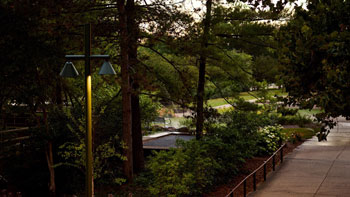
The courtyard at AB Haabet is located on the threshold of Amagerbrogade at Amager, the diverse island connected to Copenhagen’s city center. The courtyard forms an important semi-private urban space for the residents of the cooperative housing association AB Haabet, within a dense and mixed-use neighborhood. The courtyard is constructed above a parking deck established in 1960, a condition that has fundamentally shaped its spatial structure, material logic, and overall character over time. This inherited structural constraint remains a defining parameter for the project, operating under conditions comparable to those of a rooftop landscape. Load-bearing capacity, build-up heights, drainage, and planting depths have been carefully integrated as generative design drivers rather than limitations.
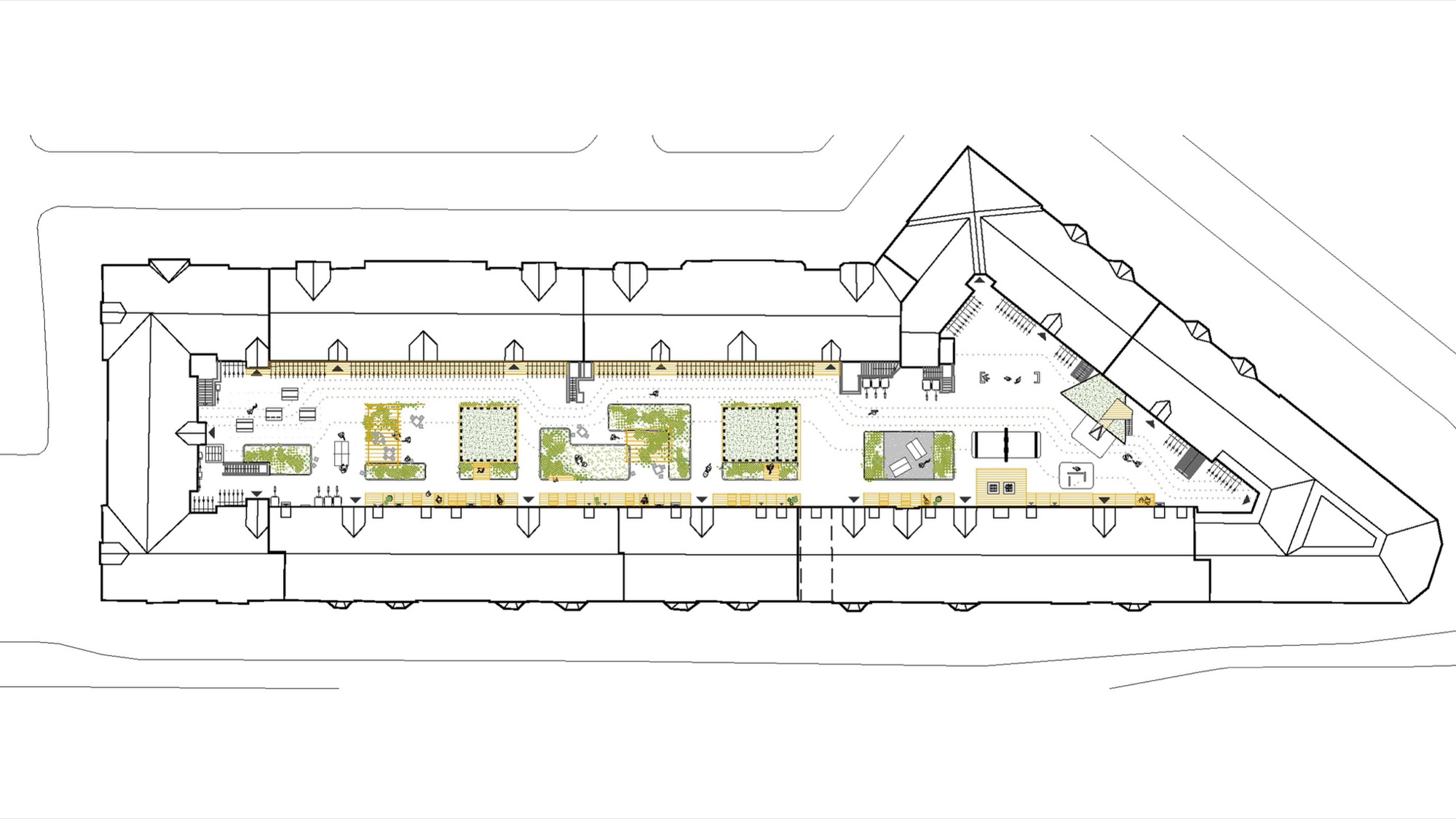
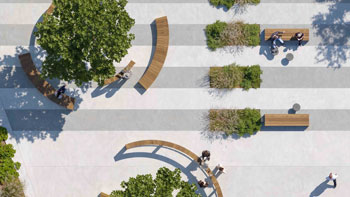
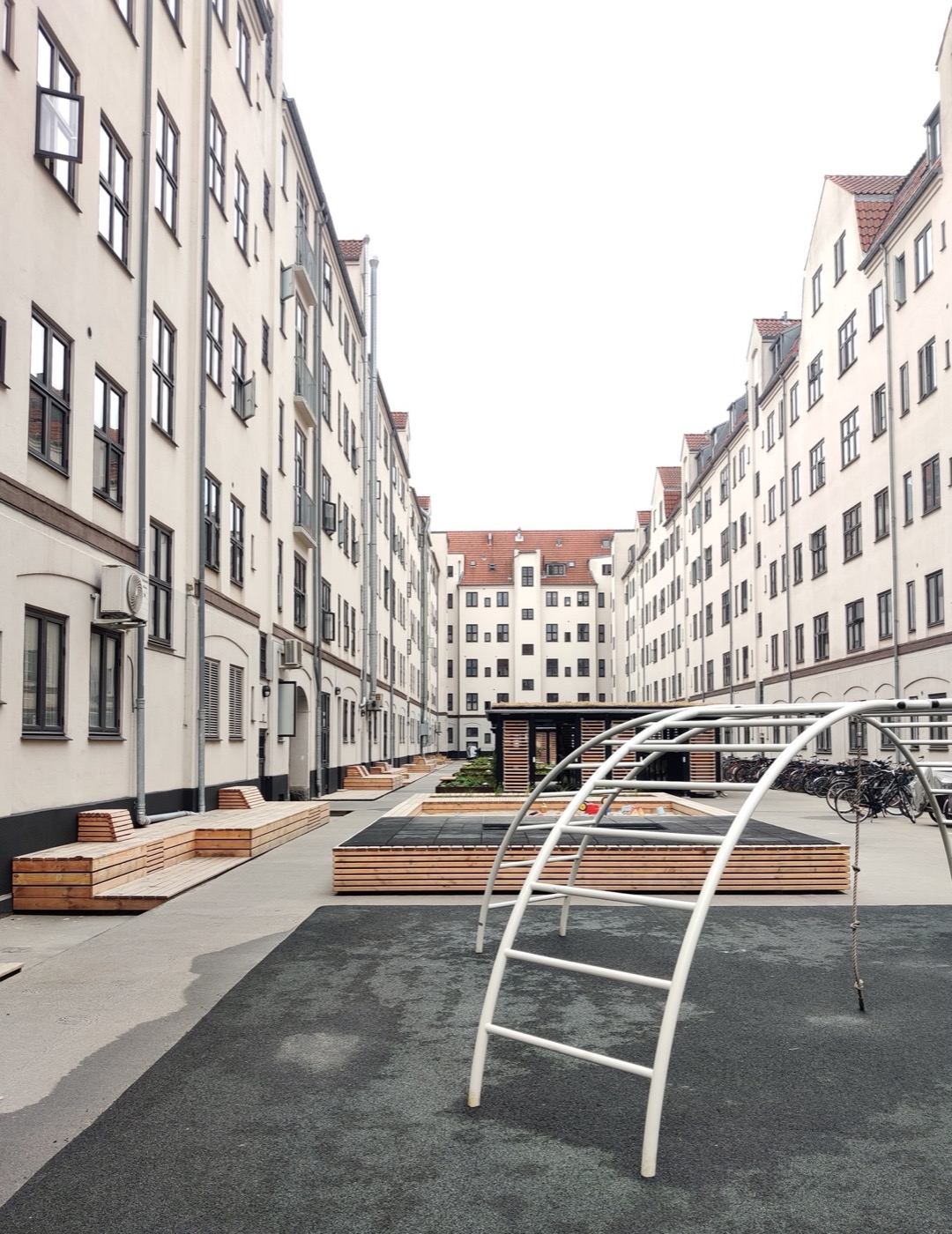
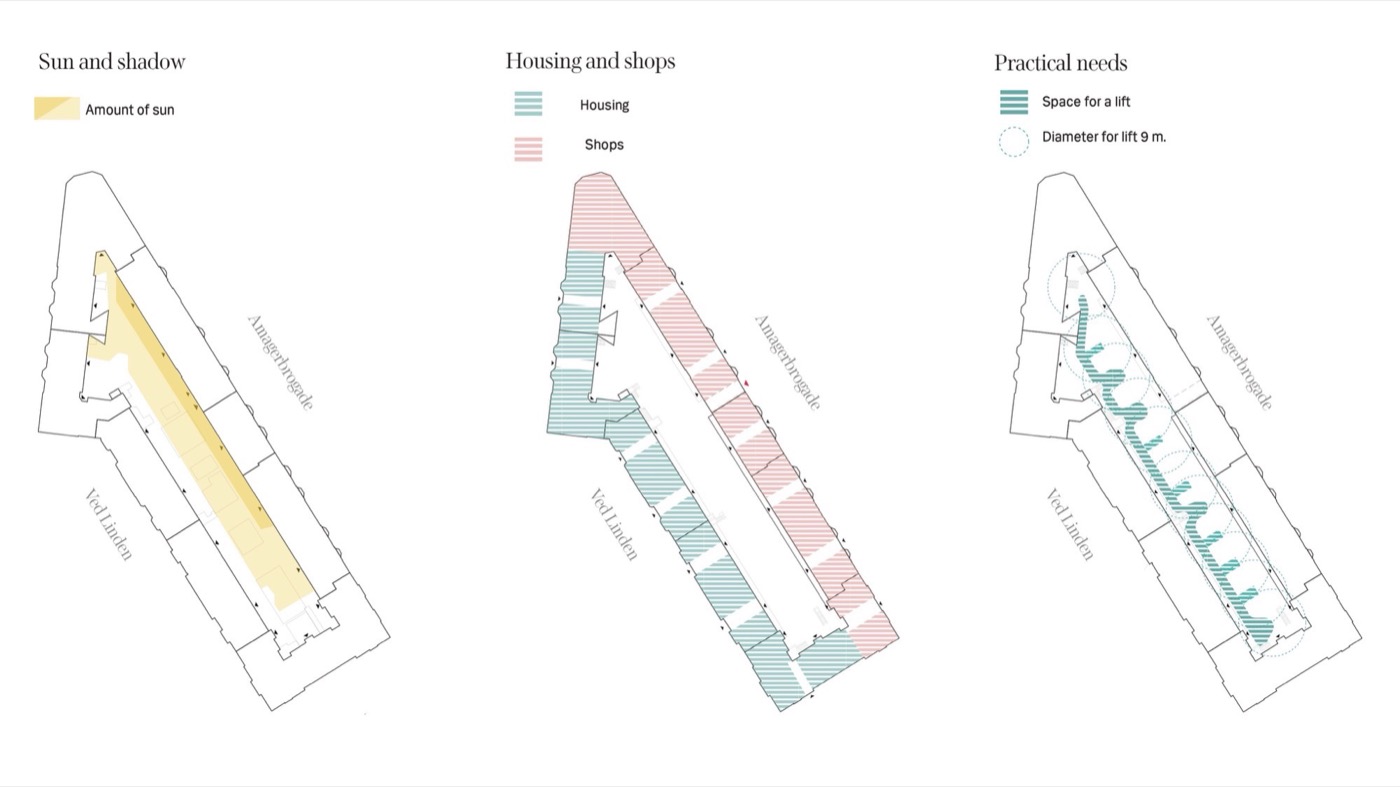
The renovated courtyard introduces a clear spatial hierarchy, optimizing both functional distribution and environmental quality. Areas for stay, play, and greenery are strategically positioned along the eastern edge facing Amagerbrogade, while bicycle parking and primary circulation are placed along the western edge. This zoning maximizes sun exposure in the most active parts of the courtyard, ensuring that spaces for social interaction and recreation benefit from optimal daylight conditions. At the same time areas for stay and integrated benches are placed near the commercial ground floor which reduces potential conflicts with private residential facades, contributing to a balanced coexistence between the public and private.
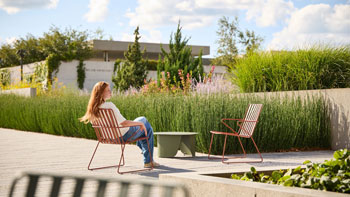
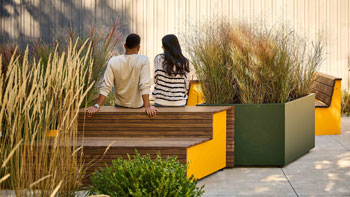
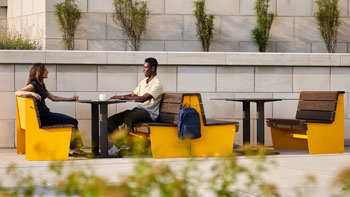
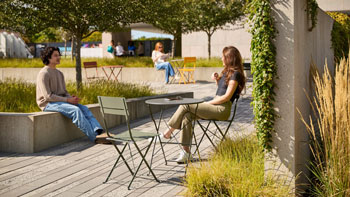
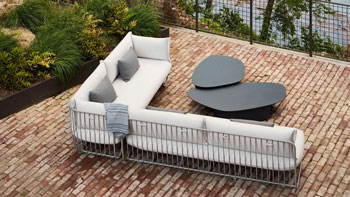
The courtyard is a sequence of differentiated yet interconnected zones, each supporting distinct modes of residence. The benches along the facade, establishes a quieter and more intimate edge – “with its back to the wall” – providing sheltered residences for smaller groups and individual occupancy. Here is to find diverse seating typologies, thresholds, and entry points to the shops along the street. The edge zone of the courtyard is utilized in this way.
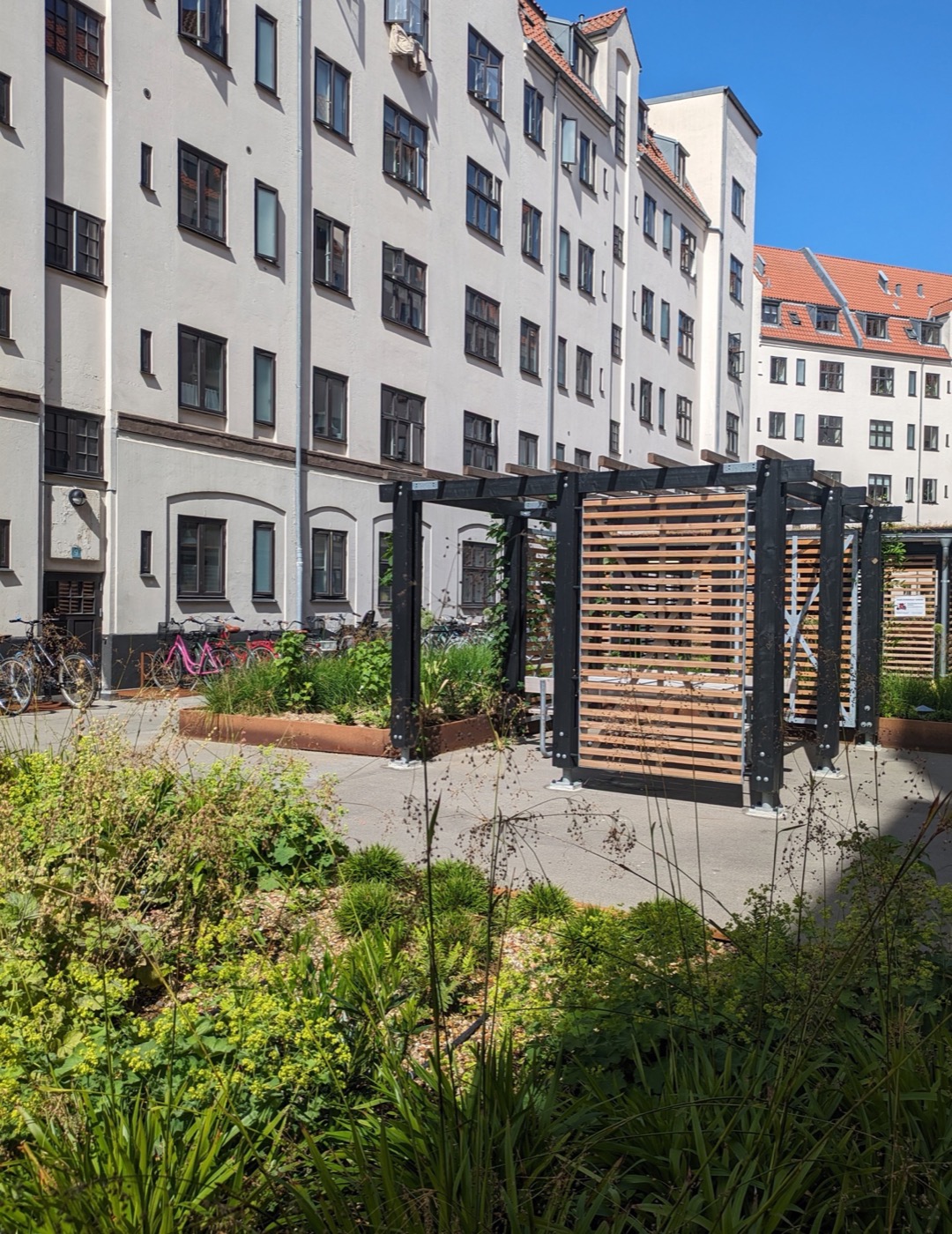
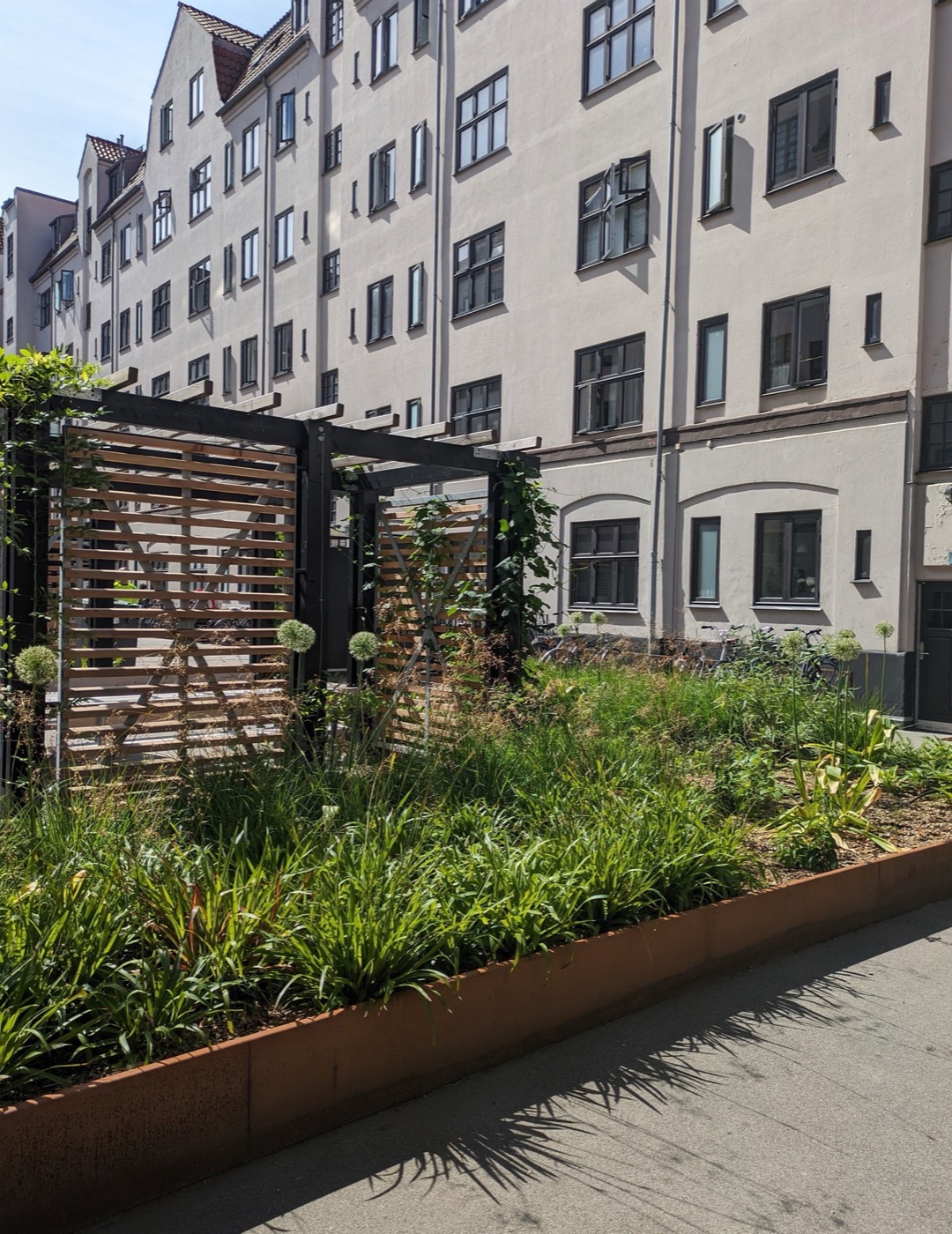
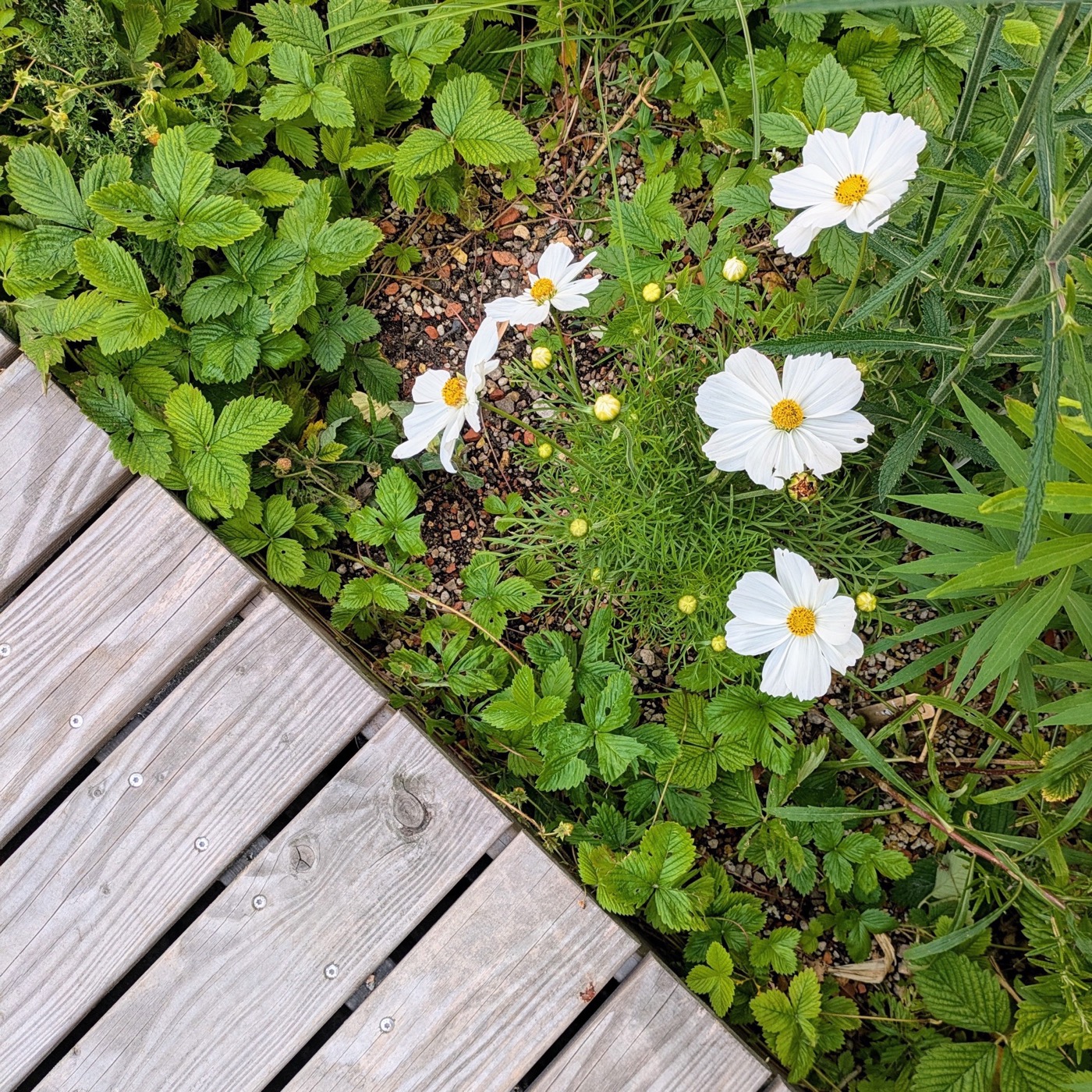
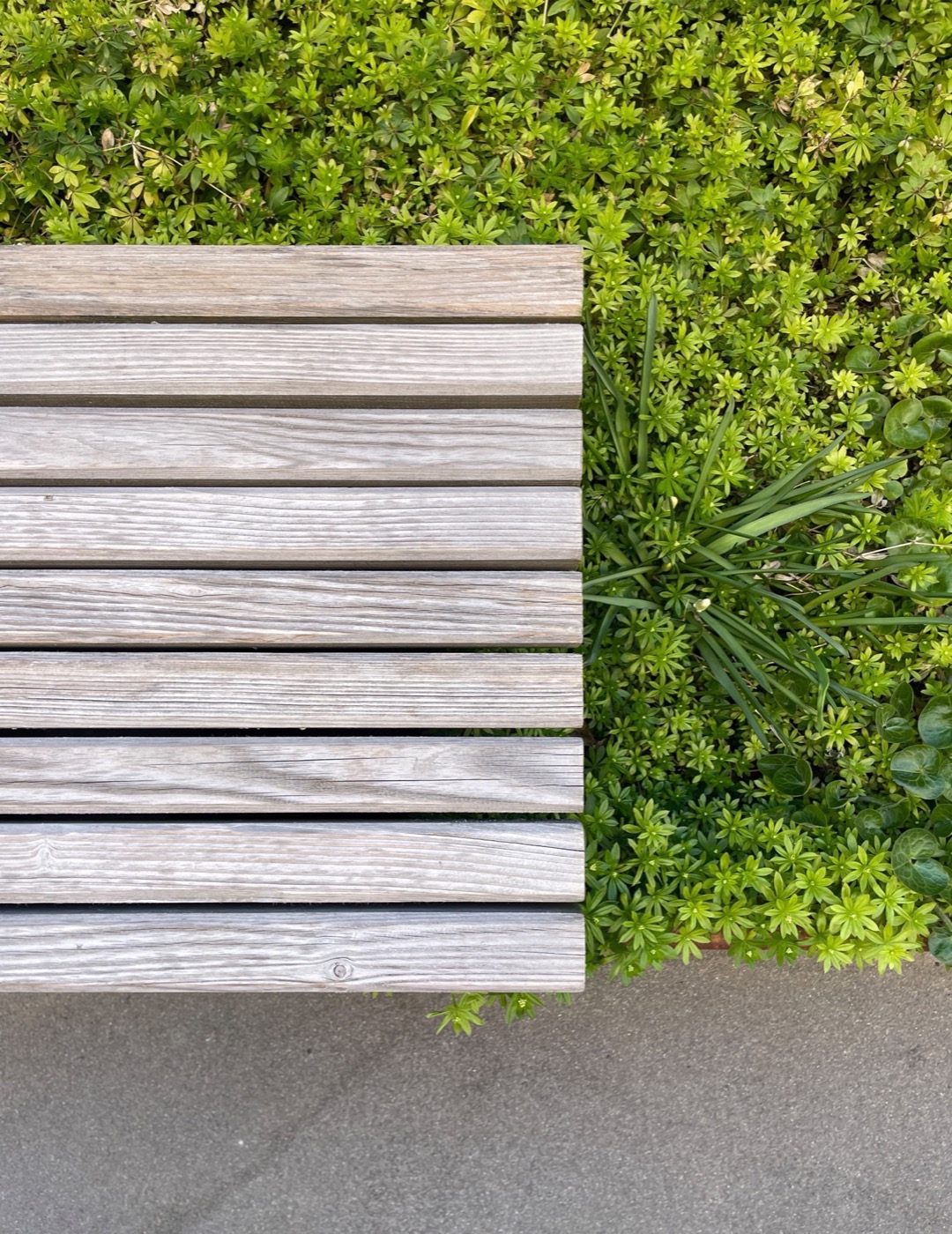
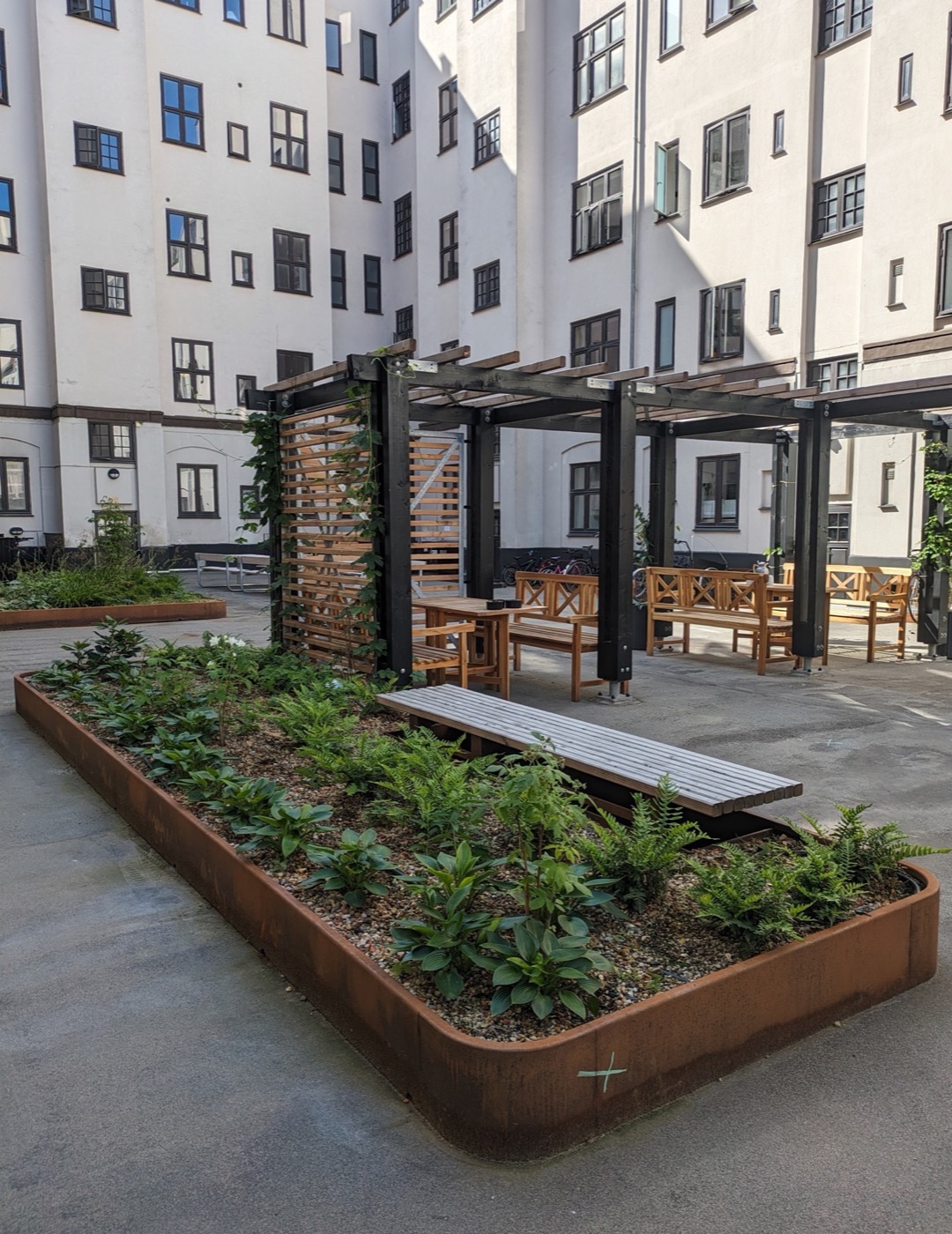
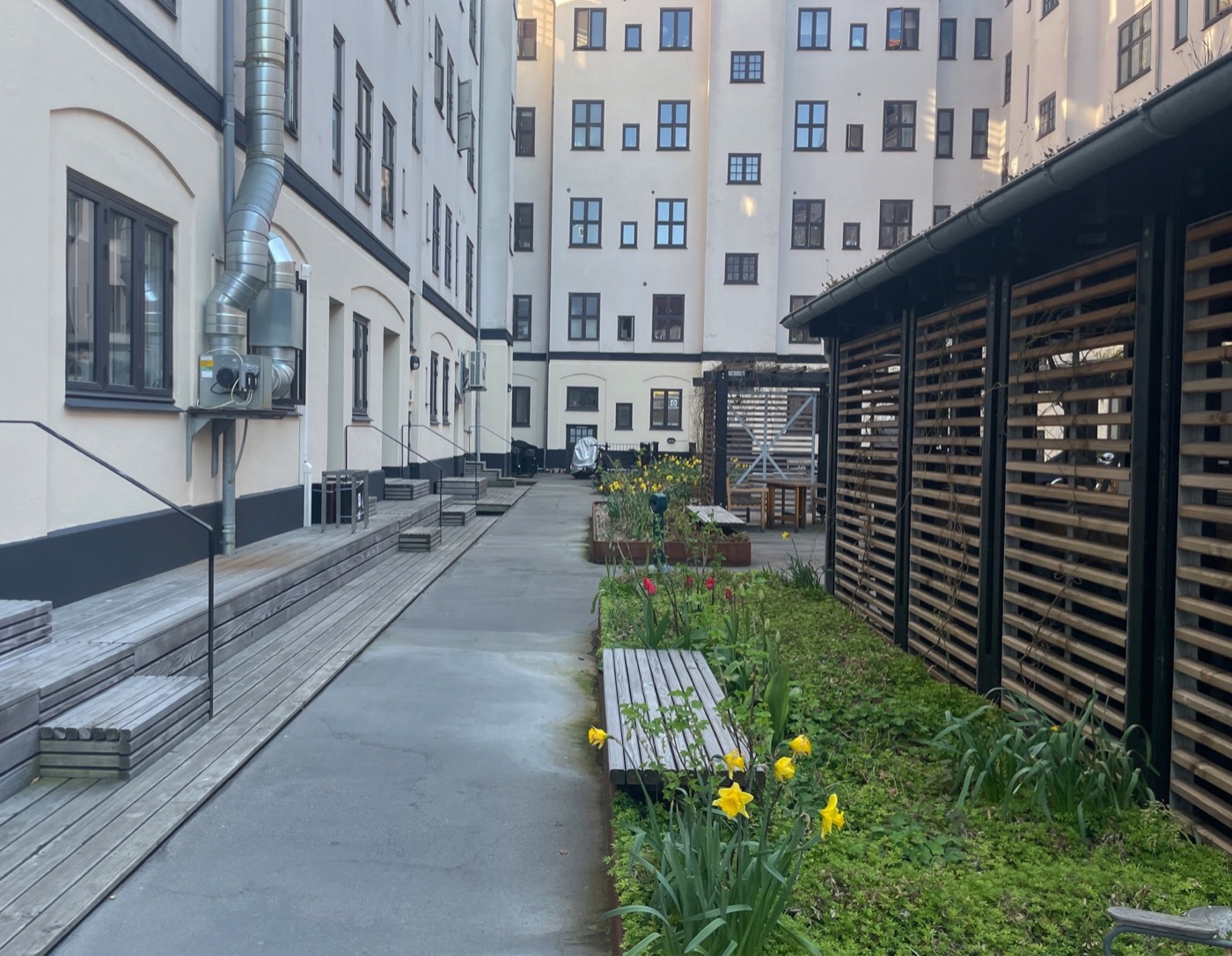
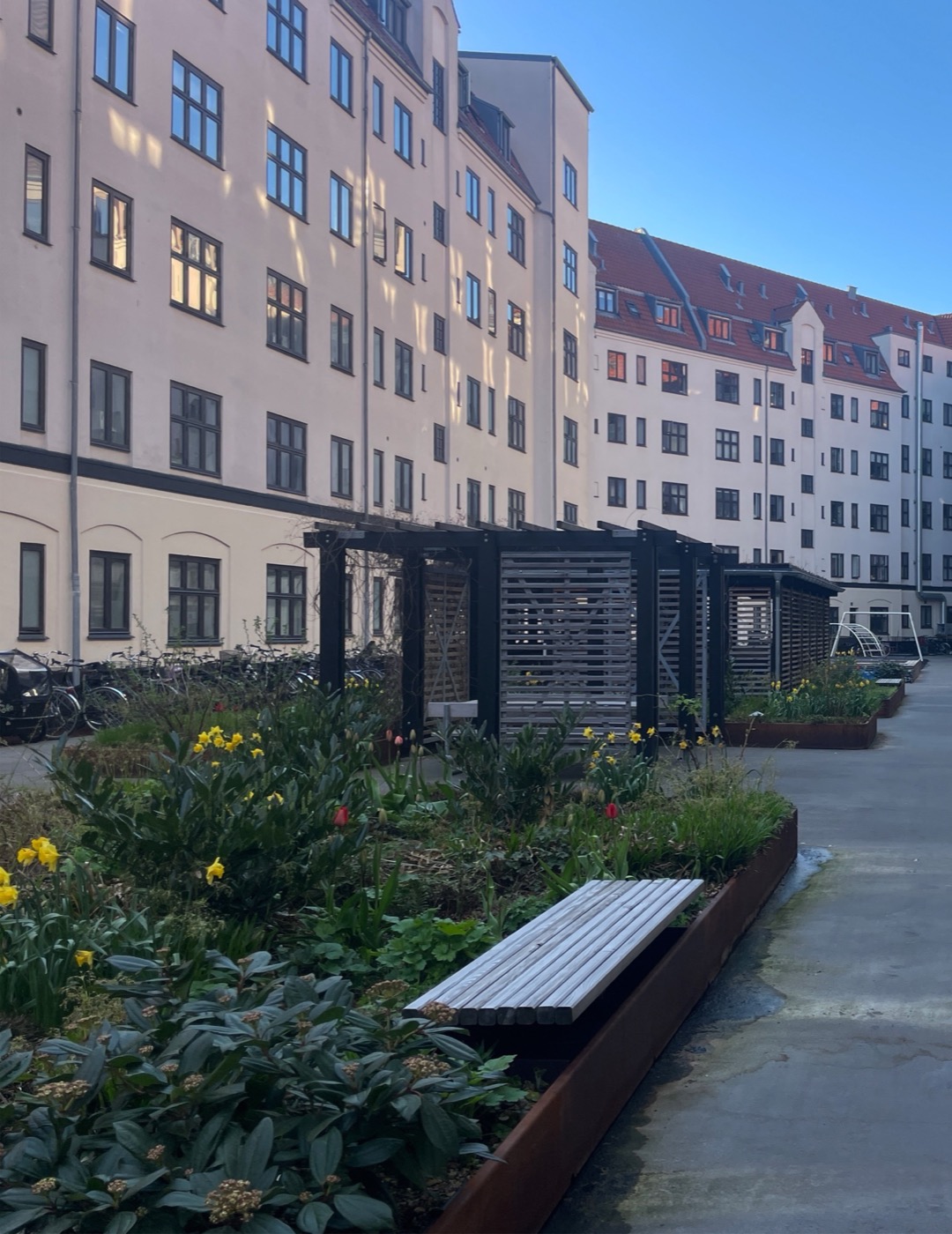
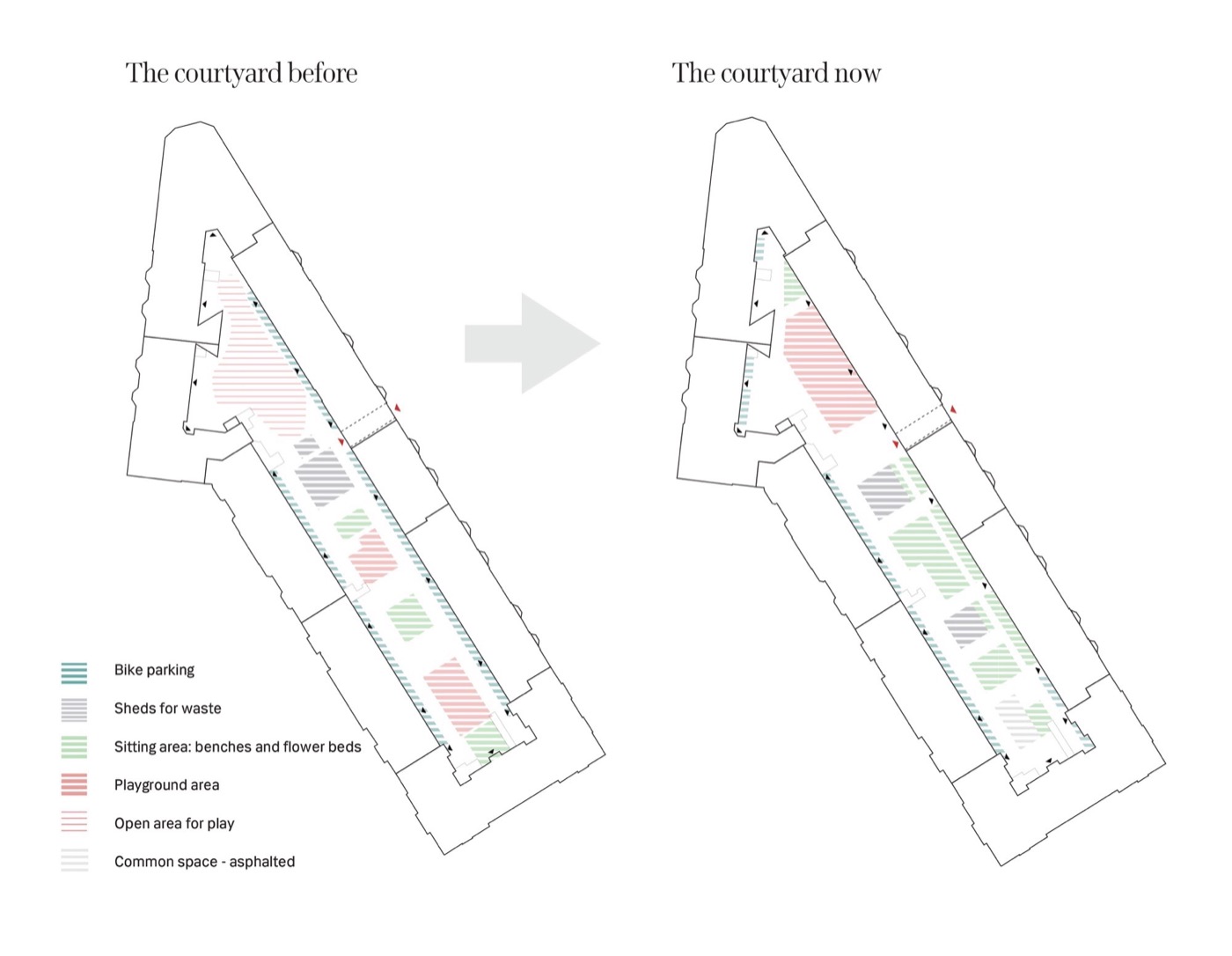
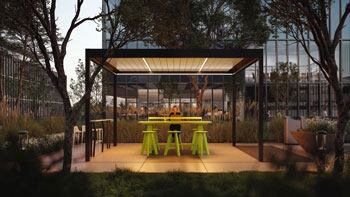
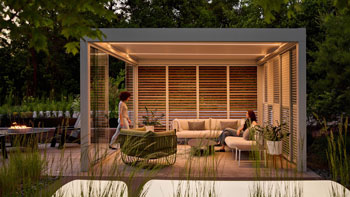
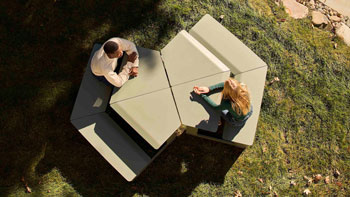
At the heart of the courtyard, a long communal zone invites collective use and flexible programming. Here, large picnic tables are positioned beneath lightweight pergola structures, softened by climbing vegetation that provides seasonal shade and spatial definition. These central area functions as the social anchor of the courtyard, enabling everyday encounters as well as more organized gatherings.
The northern and southern ends of the courtyard are conceived as its social poles, each accommodating diverse user groups and activities. In the southern end of the courtyard, a more open surface allows for temporary arrangements such as table-bench set ups and the stay of larger tents for communal events, reinforcing the courtyard as a setting for collective events and celebrations.
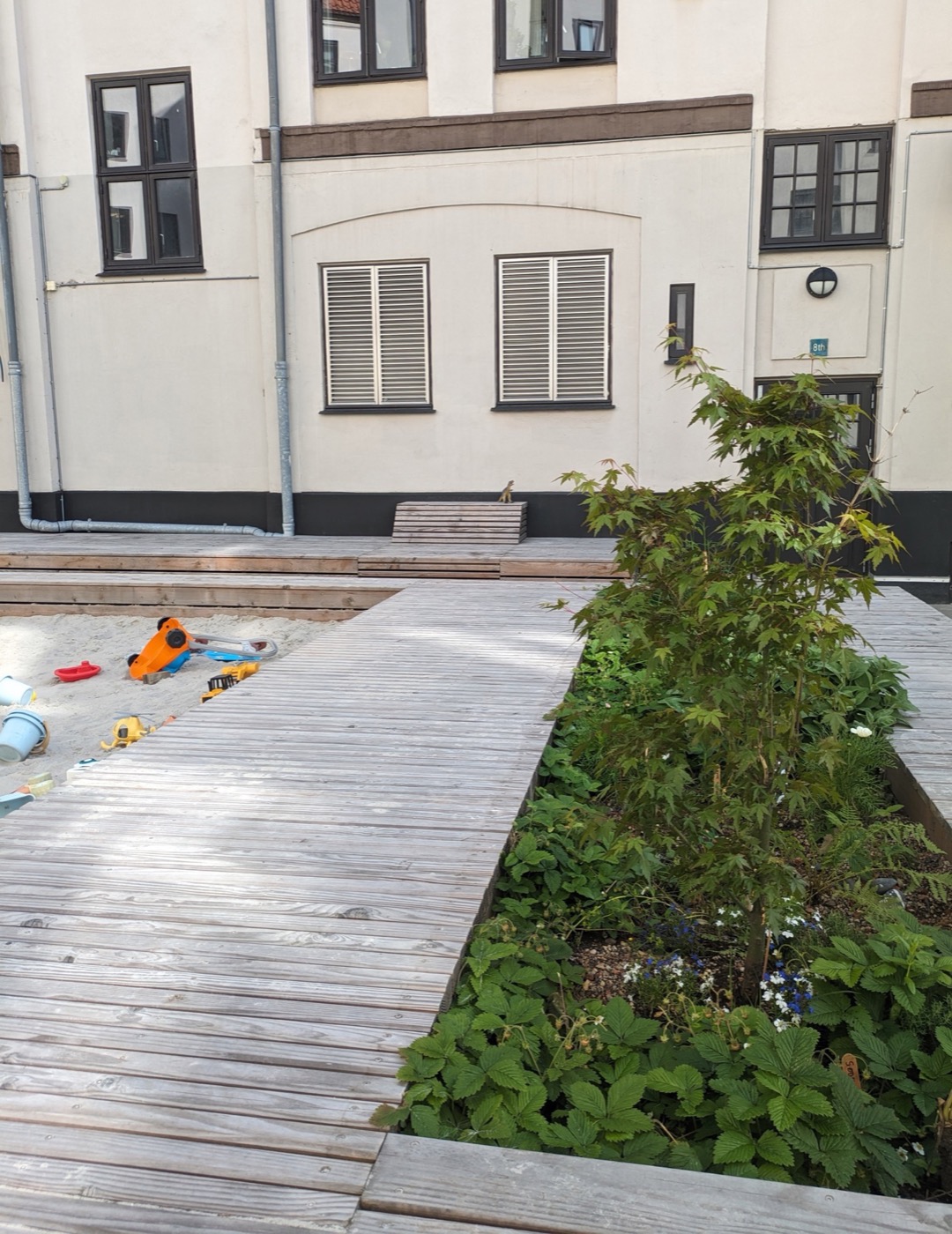
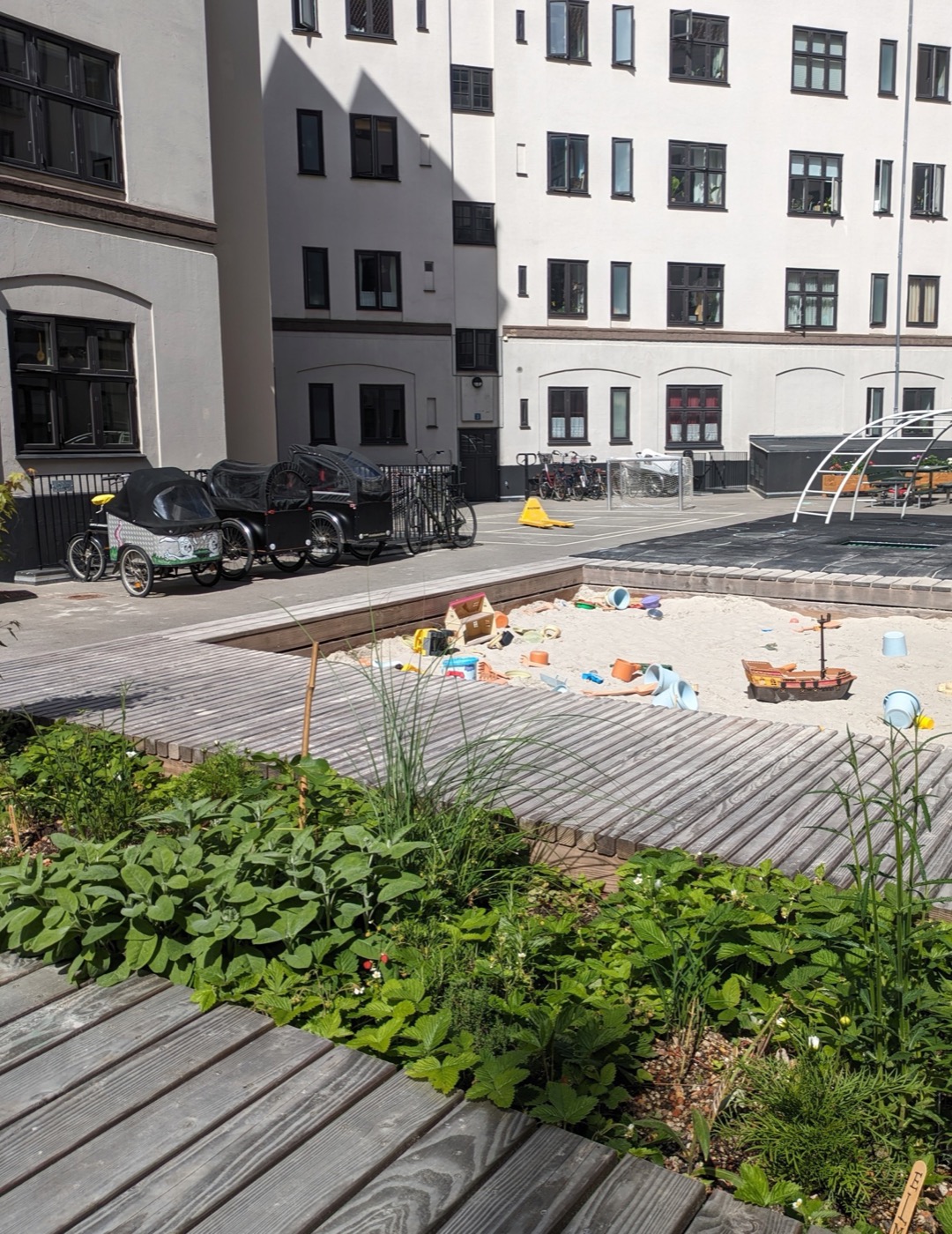
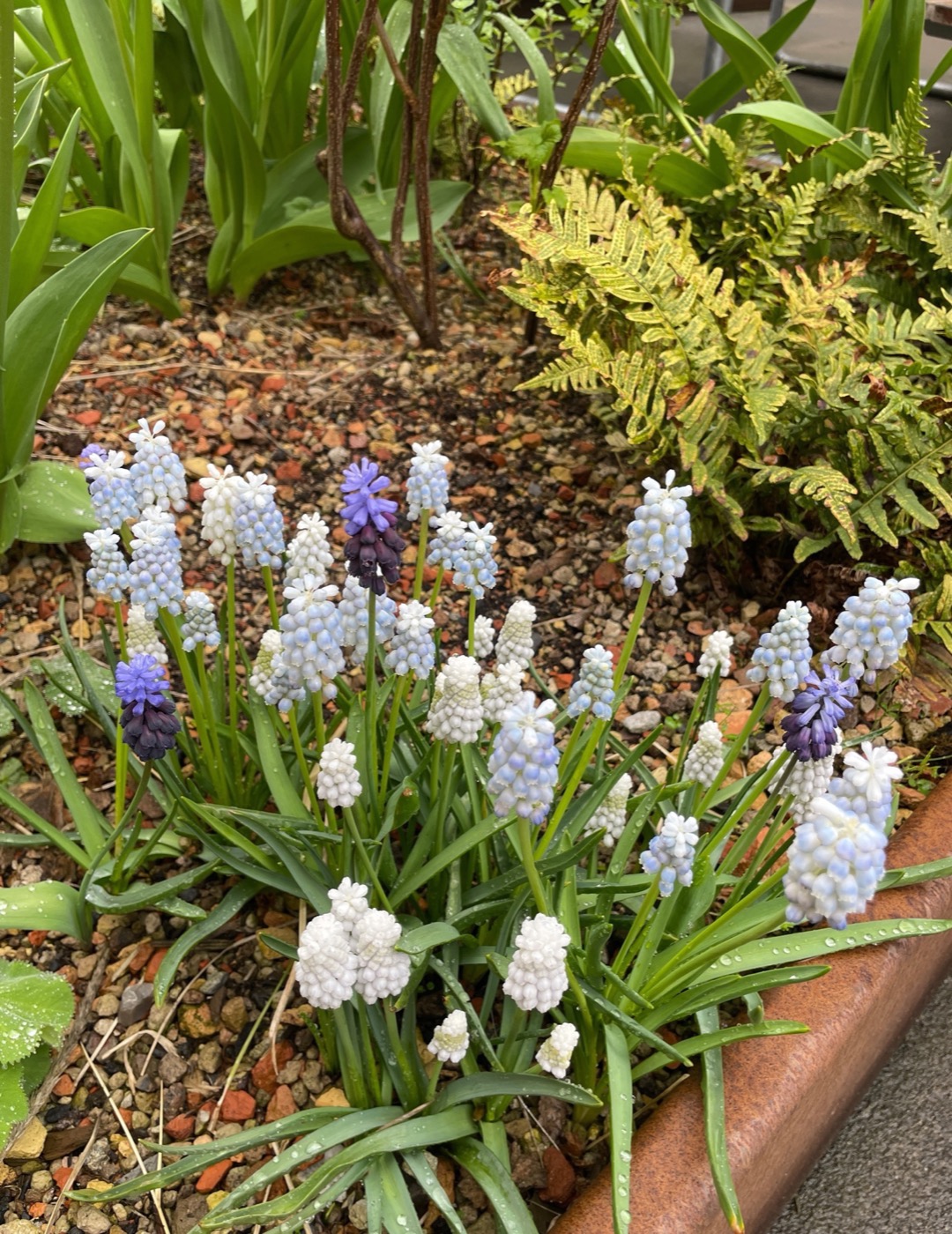
In the north end – characterized by the most favorable solar conditions – the primary play landscape is located. Here, a large wooden deck integrates a range of play elements for different age groups. For younger children, a sand pit and in-ground trampolines are embedded in the deck, alongside a sensory garden planted with edible and aromatic species. This space encourages tactile exploration and informal learning through interaction with planting. For older children, the play area expands to include climbing structures, swings, a small ball pitch, and traditional play markings on the ground surface, supporting both structured and unstructured play.
The more shaded western segment of the courtyard accommodates the project’s infrastructural functions. Here, a level difference is resolved through the introduction of open grating elements (elephant grates), which both maintain necessary ventilation to the underlying parking structure and create a permeable surface condition. As a use of this space bicycle parking is facilitated on top of the elephant grates. This intervention allows for improved accessibility while maximizing usable surface area without compromising technical requirements.
The proposal is rooted in the project brief and developed by an iterative, dialogue-based process with the courtyard committee. Through a series of workshops, multiple conceptual approaches have been explored, tested, and refined, resulting in a scheme that balances technical constraints, user needs, and spatial quality. The project ultimately reimagines the courtyard as a cohesive, viable landscape – one that supports everyday life, fosters community, and transforms inherited limitations into architectural potential.
Credits:
Pictures: VEGA Landskab and Clara Knudsen
https://maps.app.goo.gl/Z4D688Lfu7MJALut5
73642


LILA 2026 Sponsor