Camden Park
www.ojb.com/
2026 Landscape and Architecture / 2026 Public Projects / USA / Built in 2025 /

![By prioritizing equity, economic vitality, and environmental sustainability, Downtown Cary Park was planned to reflect changing community needs and growth. Nestled in the heart of North Carolina’s Research Triangle, the park employs a comprehensive sustainable framework to protect and express the native ecologies of North Carolina’s Piedmont region and utilizes green infrastructure solutions to solve […]](https://landezine-award.com/wp-content/uploads/2026/05/00_Hero-Image-CA-DTP-480x600.jpg "Downtown Cary Park")
![Originally designed in the 1960s, two office towers along the Avenue of the Stars in Century City were connected by expansive concrete plazas—monumental in scale but lacking human comfort, shade, and a sense of place. As part of a comprehensive repositioning effort, these iconic structures have been thoughtfully reimagined to meet the evolving needs of […]](https://landezine-award.com/wp-content/uploads/2026/05/00_Hero-Image-CC_AOS-600x450.jpg "Anderson Towers")
![The transformation of three parks in downtown Omaha’s core, collectively known as the RiverFront, has revolutionized the community’s relationship with urban green spaces. Despite their nearly six-decade history, three neighboring parks had grown stagnant over time, with disjointed access leading to dwindling utilization. Complicating matters further, one park was situated amid a largely metropolitan backdrop, […]](https://landezine-award.com/wp-content/uploads/2026/05/00_Hero-Image-OM-RIV-1-480x600.jpg "The RiverFront")
![The American Airlines Robert L. Crandall Campus is a 258-acre campus located in Fort Worth, Texas. The new campus coalesces an existing set of training, museum, and administrative buildings and reorders their uses, together with 1,850,000 SF of new building construction and structured parking. Together, the new campus brings together nearly 12,000 people to create […]](https://landezine-award.com/wp-content/uploads/2026/05/00_Hero-Image-AA-WHQ-600x450.jpg "American Airlines Robert L. Crandall Campus")
![Situated within an 11-acre site in Burbank, California, this legacy Hollywood studio center introduces a striking new presence on the skyline between the iconic Hollywood Hills and San Gabriel Mountains. Lush landscape on the ground plane and in building terraces create a three-dimensional composition that mediates the area between the hillside and the roadway. The […]](https://landezine-award.com/wp-content/uploads/2026/05/00_Hero-Image-BR-STL-600x450.jpg "Warner Bros. Second Century Burbank Studios")
![For nearly 60 years, three existing parks in this Midwest city served as open spaces near the downtown core. Despite their long history, these neighboring parks had grown stagnant, with disjointed access leading to dwindling utilization. Complicating matters further, one park was surrounded by a metropolitan backdrop, while the other two parks faced challenges as […]](https://landezine-award.com/wp-content/uploads/2025/05/00-Main_OMRIV_LILA-480x600.jpg "The RiverFront by OJB Landscape Architecture")
![This 258-acre workplace campus near Dallas/Fort Worth blends native ecology with the built environment, focusing on restoring the Texas Blackland Prairie, which has dwindled to less than 1% of its original range. The campus features two districts: a corporate office complex and a hospitality/training/call center facility. The American Mile, a multi-modal spine, connects these districts, […]](https://landezine-award.com/wp-content/uploads/2025/05/00-AA_LILA_Main-600x480.jpg "Robert L. Crandall Campus, American Airlines by OJB Landscape Architecture")
![The landscape at this Burbank studio exemplifies sustainability and wellness through its robust biophilic design. The campus features diverse outdoor spaces that foster a connection to nature, restoring mind and spirit. Achieving WELL Platinum certification, the design includes varied workspaces, such as lush roof terraces for outdoor working areas. A free address policy empowers employees […]](https://landezine-award.com/wp-content/uploads/2025/05/00-03Burbank-600x450.jpg "Warner Bros. Second Century Burbank Studios by OJB Landscape Architecture")
![By prioritizing equity, economic vitality, and environmental sustainability, Downtown Cary Park was planned to reflect changing community needs and growth. Nestled in the heart of North Carolina’s Research Triangle, the park was realized after almost two decades of incremental site acquisition in the downtown core, and an extensive open community listening process. A comprehensive sustainable […]](https://landezine-award.com/wp-content/uploads/2025/05/00-02CA_DTP-600x480.jpg "Downtown Cary Park by OJB Landscape Architecture")
![Dominion Energy’s urban headquarters is a 20-story addition in downtown Richmond, Virginia. Rated for LEED Gold, the tower is a new locus for collaboration that brings employees together and is a draw for others into the Central Business District and the city. With the potential to dramatically alter the downtown skyline, as well as pedestrian […]](https://landezine-award.com/wp-content/uploads/2022/05/00-Project-2-Main-600x293.jpg "Dominion Energy Headquarters")
![The Texas Blackland Prairies are a temperate grassland ecoregion located along a 300-mile swath between north and south Texas. Because its rich black soil is ideal for agriculture, untold hundreds of thousands of acres have been converted for that use. Less than 1% of the original, pristine prairies remain, including such sites as the Nature […]](https://landezine-award.com/wp-content/uploads/2022/05/00-Project-1-Main-600x360.jpg "American Airlines Campus: Restoring a Blackland Prairie")
![The retail environment is transforming into an experiential setting. At Westfield’s Century City Flagship Mall in Los Angeles, OJB and the design team, including Kelly Wearstler Design, reimagined the existing outdoor retail environment for the modern-day shopper. Inspired by a Mid-Century California Modern aesthetic, the entries, gardens, plazas, terraces and streetscapes offer layered sensorial experiences […]](https://landezine-award.com/wp-content/uploads/2020/04/00-Westfield-main-photo-600x400.jpg "Westfield Century City: Reimagining the American Shopping Mall")
![Partners HealthCare is the largest employer, hospital network, and physician’s organization in Massachusetts. The organization sought to consolidate its administrative operations one corporate campus. They enlisted OJB to design a landscape that would scale with their new 850,000 SF building, while serving both their employees and the public. Prior to redevelopment by Federal Realty Investment […]](https://landezine-award.com/wp-content/uploads/2020/04/00-Partners-main-photo-600x400.jpg "Partners HealthCare Administrative Campus")
![Given to The City of Houston in 1941, Levy Park was once home to baseball diamonds, a dog park and picturesque live oak trees. Over time, the park became under-utilized, suffering from a lack of visibility, access and activation. As the only green space in Houston’s Upper Kirby District, the park needed to be rejuvenated […]](https://landezine-award.com/wp-content/uploads/2020/04/00-Levy_13-600x349.jpg "Levy Park")
![CityPlace at Springwoods Village is a pedestrian-friendly urban district featuring office, retail, residential, hospitality and open spaces. The 60-acre development balances nature, urbanism and diversity. The site preserves a forest habitat and is organized with a connected drainage corridor/park system to assist with stormwater collection. Eight interconnected ponds allow for an 8’ water fluctuation accommodating […]](https://landezine-award.com/wp-content/uploads/2020/04/00-CityPlace_01-600x349.jpg "CityPlace at Springwoods Village")
![As consumers continue to shift their focus to online shopping, retailers are challenged to reinvent the in-store experience as a vibrant destination where people want to meet socially and linger to experience events both day and night. Traditional mall design has focused on an insular approach to consumer behavior, with distinct storefronts that pay little […]](https://landezine-award.com/wp-content/uploads/2019/04/XX-Westfield-Century-City-01-600x394.jpg "Westfield Century City")
![In 2013, the estate of Carolyn and Maurice LeBauer gifted the Community Foundation of Greater Greensboro with a bequest of $10 million to create a new urban park for “the benefit and enjoyment of the general population of Greensboro, particularly children and their families.” Located on a 4.5-acre site in the heart of downtown […]](https://landezine-award.com/wp-content/uploads/2019/04/XX-Lebauer-Park-01-600x401.jpg "LeBauer Park")
![Inspired by the idea of ‘living within nature’, the design intent for this 6,500 SF residential project was to position 5 living and sleeping modules around a series of landscaped courtyards and terraces. The landscape is arranged to provide seclusion from the neighbors and nurture a sense of connection in the communal areas. Hedges create […]](https://landezine-award.com/wp-content/uploads/2019/04/XX-Bellaire-Residence-01-600x395.jpg "Bellaire Residence")
![The Office of James Burnett focuses on creating landscapes that transform perspectives and evoke emotional responses. The firm’s work imaginatively unifies the relationship between landscape and architecture, ensuring unique compositions that satisfy the demands of both form and function. Creating unique and unforgettable sensory experiences that promote healthy living is core to OJB’s design ethos. […]](https://landezine-award.com/wp-content/uploads/2016/10/OJB-Office-of-James-Burnett-600x399.jpg "OJB")
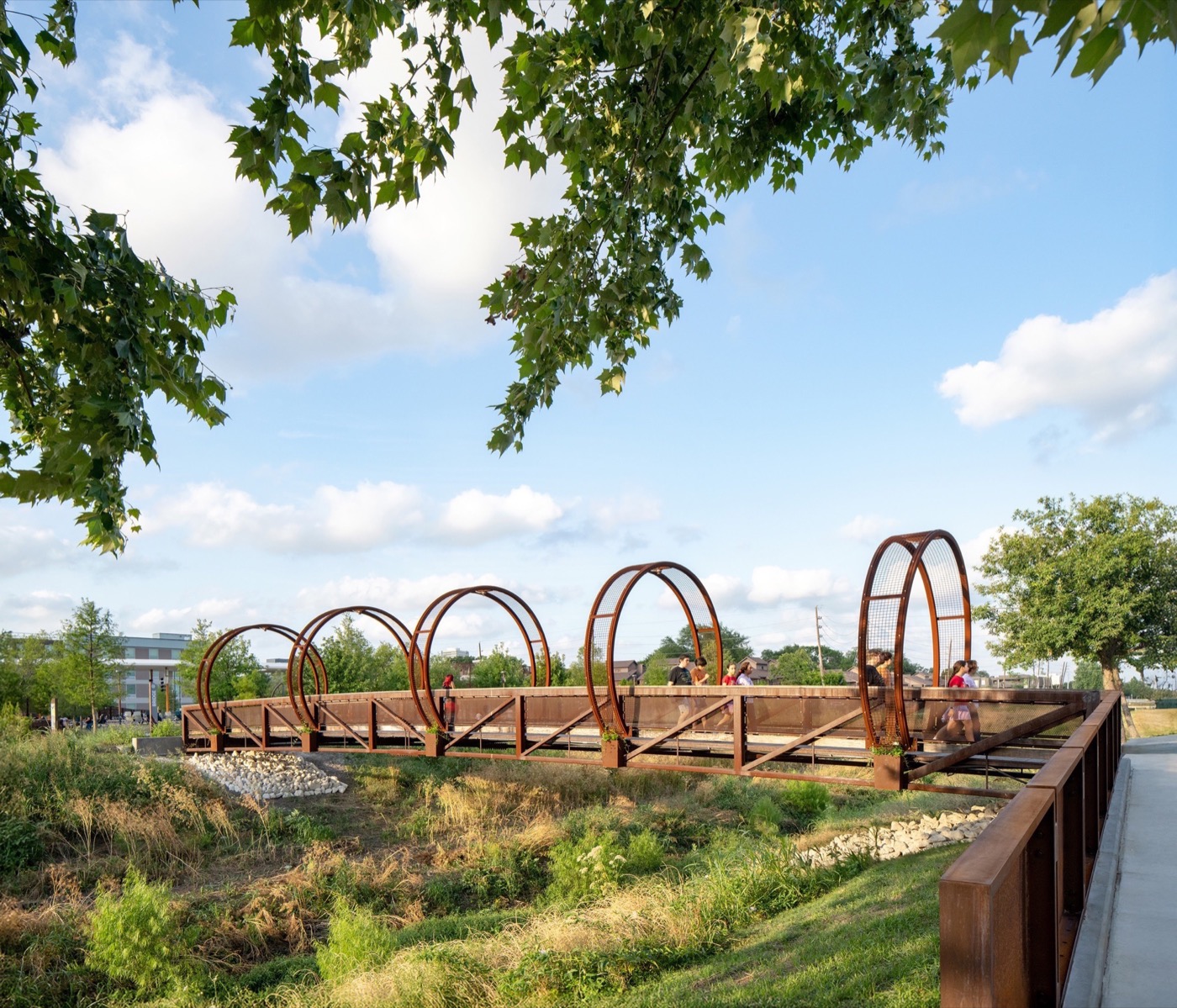
The design for Camden Park establishes a dynamic and inclusive public landscape that responds directly to the need for accessible open space within a historically underserved area of West Houston. Positioned adjacent to an existing bike trail and a neighborhood library, the park is conceived as both a social destination and connective infrastructure, strengthening relationships between key community assets while creating a welcoming, restorative environment for a wide range of users. The design prioritizes flexibility, accessibility, and layered programming, ensuring that the park supports both everyday use and larger community events.
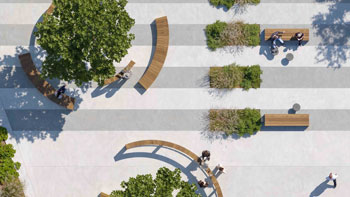
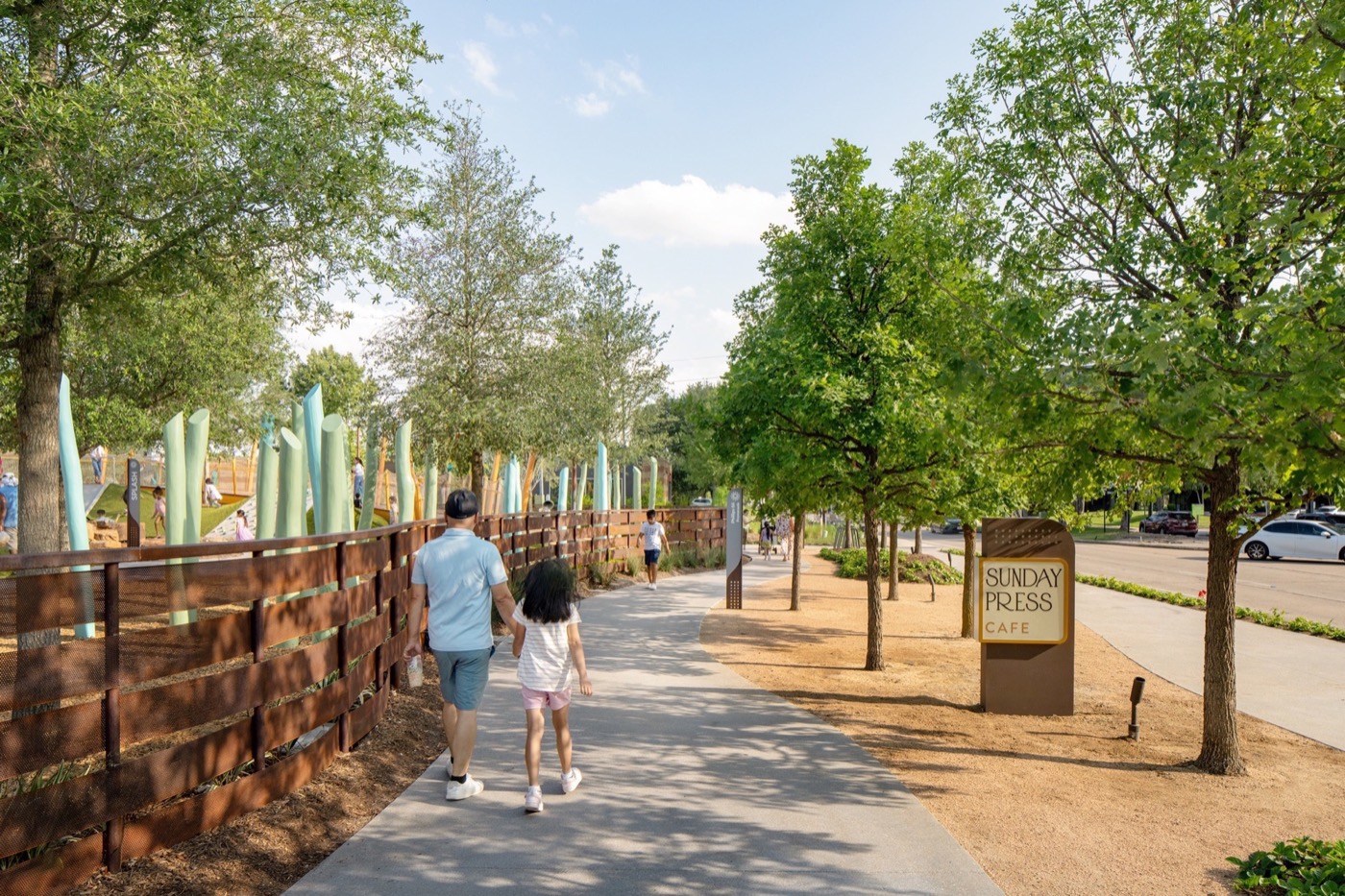
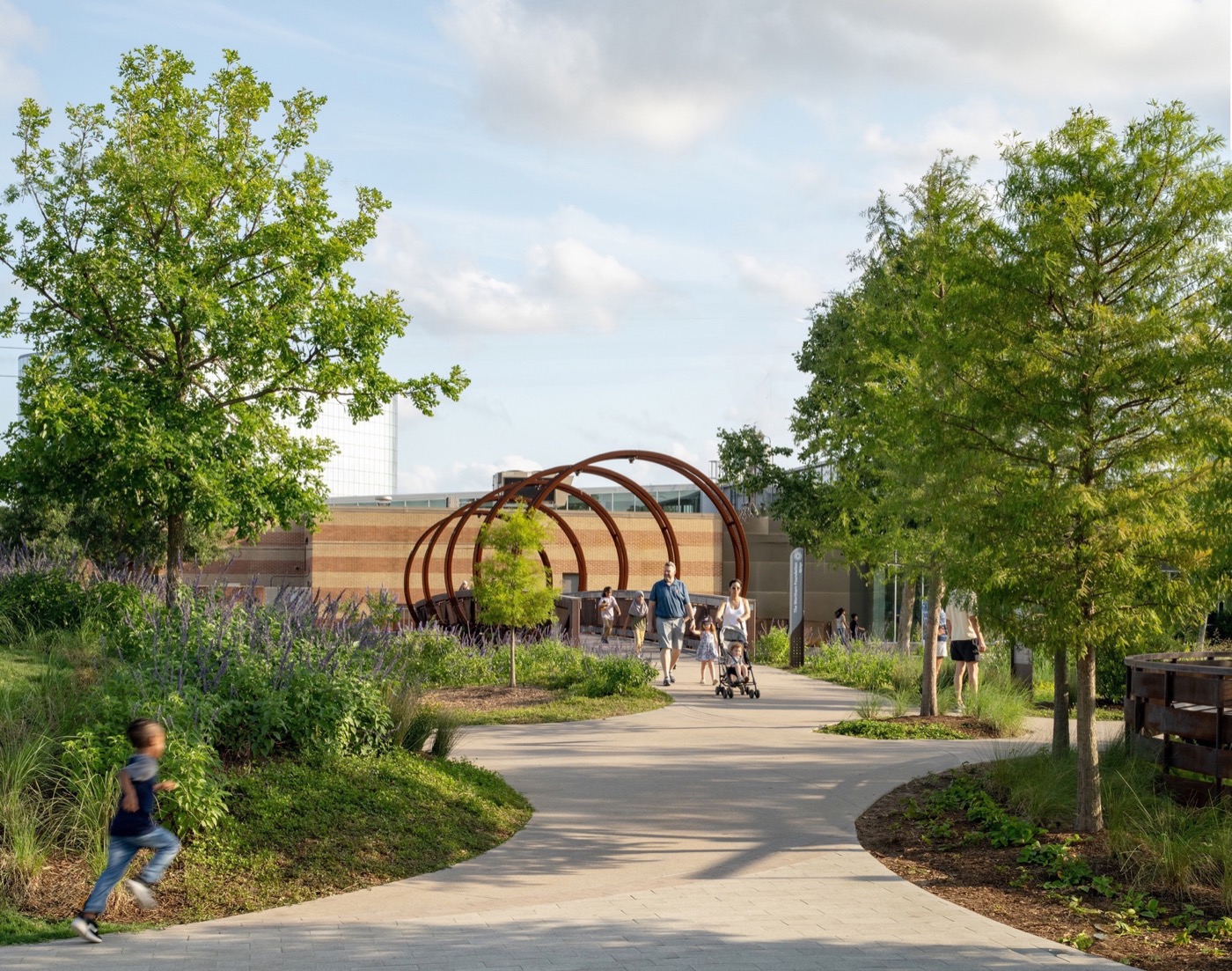
At the core of the park is an 18,000 square-foot central lawn that functions as a highly adaptable civic space. This expansive green accommodates informal activities such as picnicking, lounging, and casual recreation, while also serving as a venue for larger programmed events, including performances and community gatherings. A gently winding path defines and frames this central space, guiding movement through the park and linking its various programmatic zones. This circulation strategy reinforces a sense of cohesion while encouraging exploration and discovery.
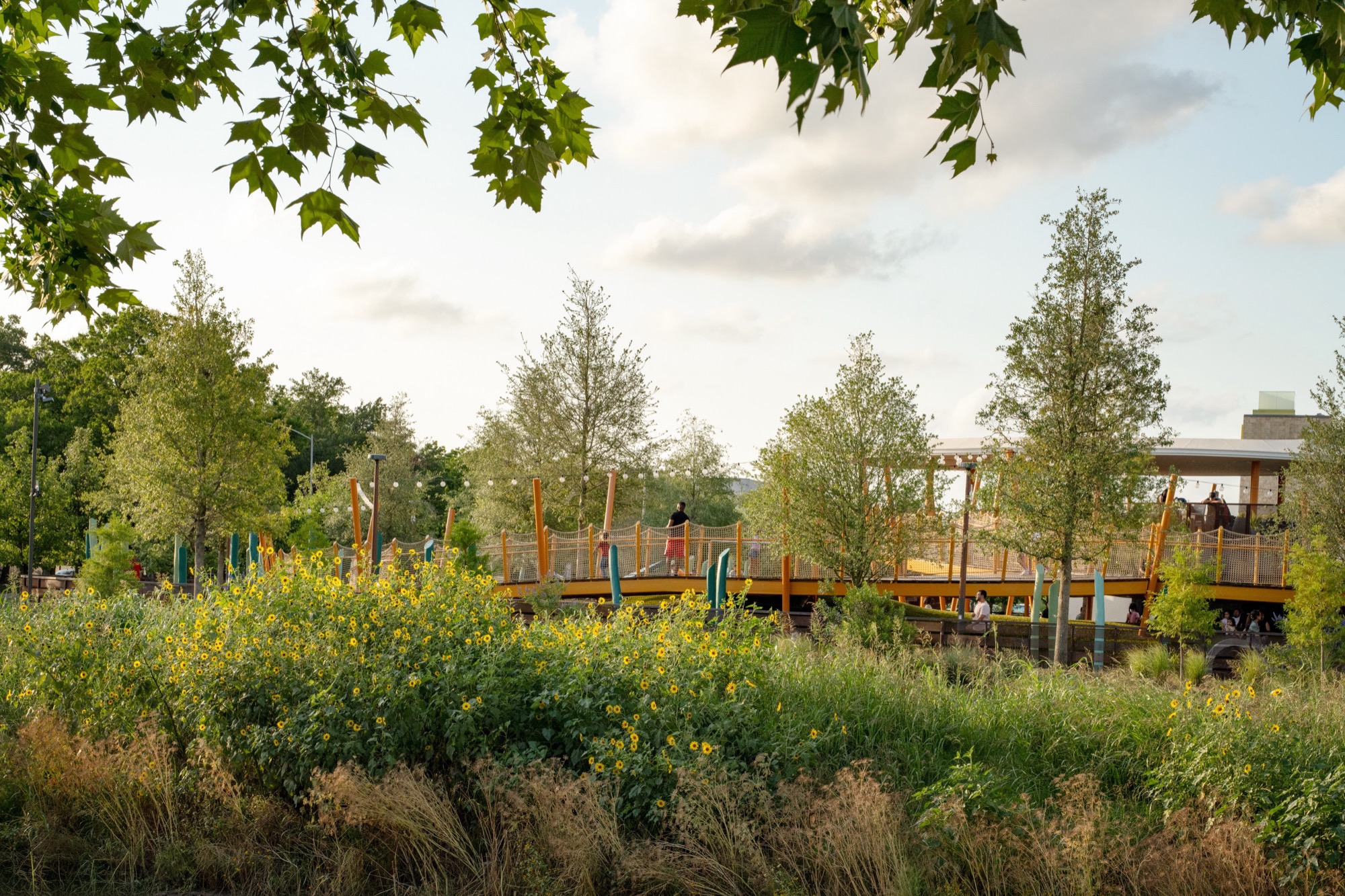
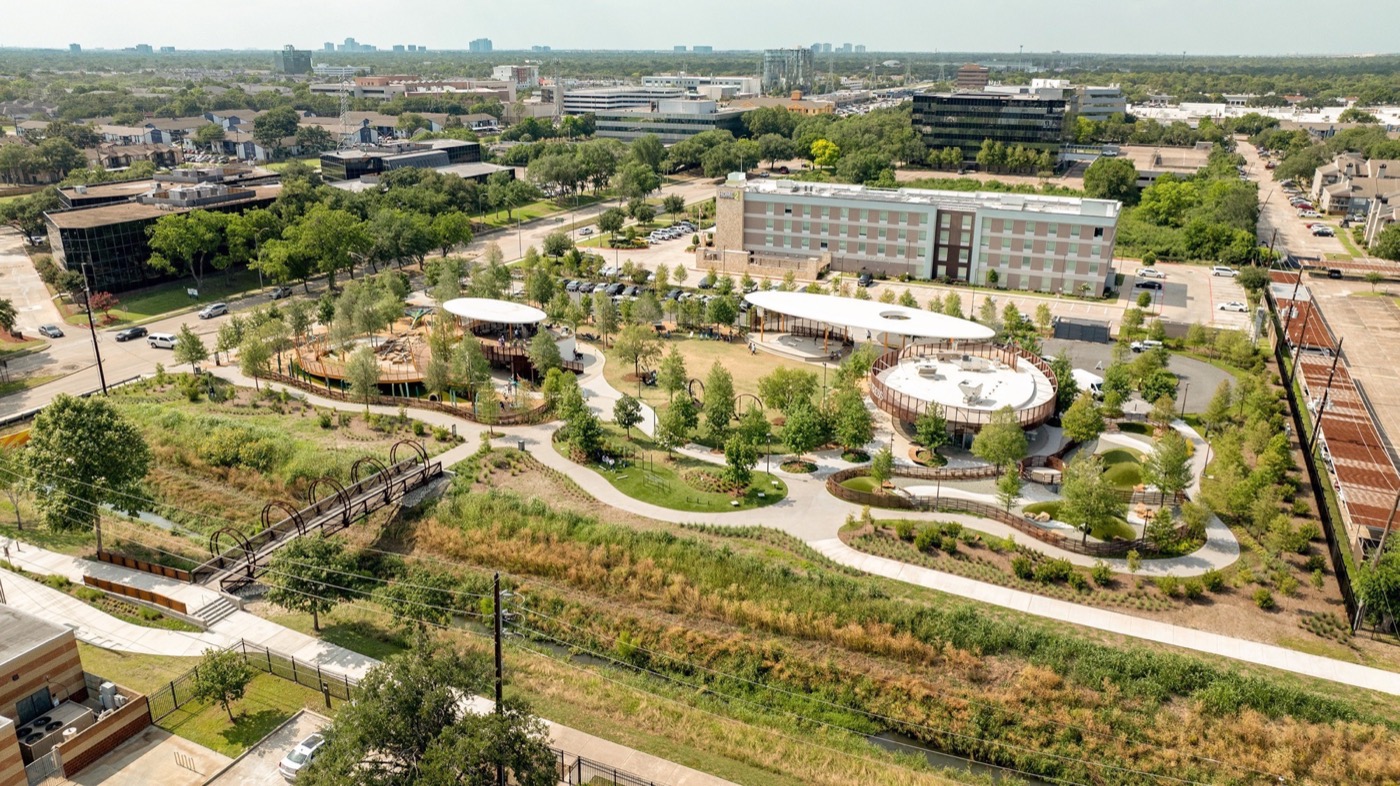
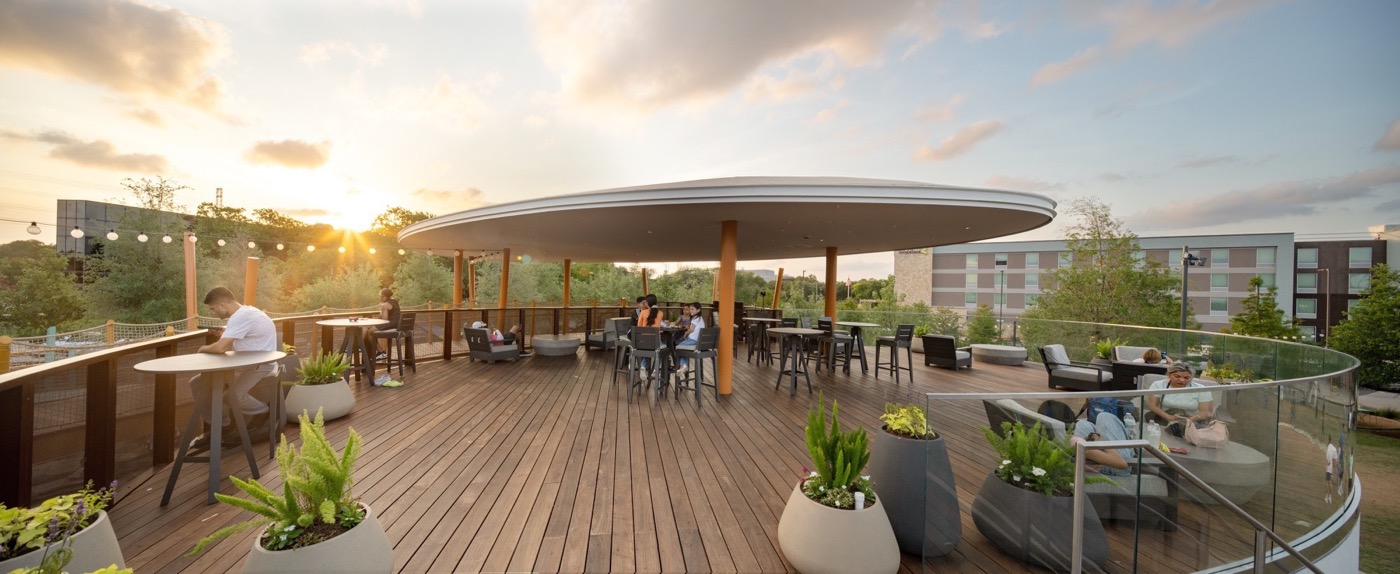
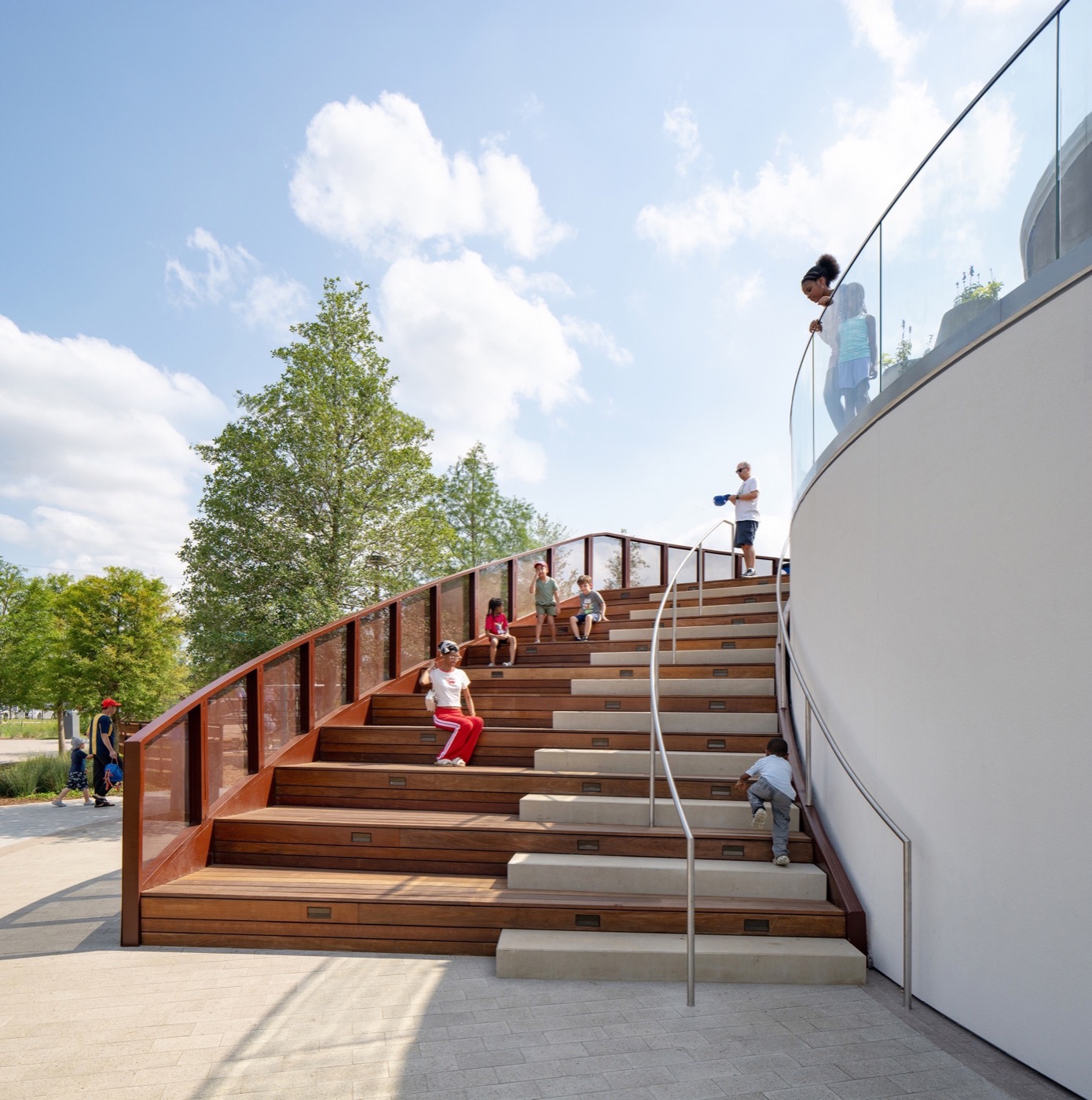
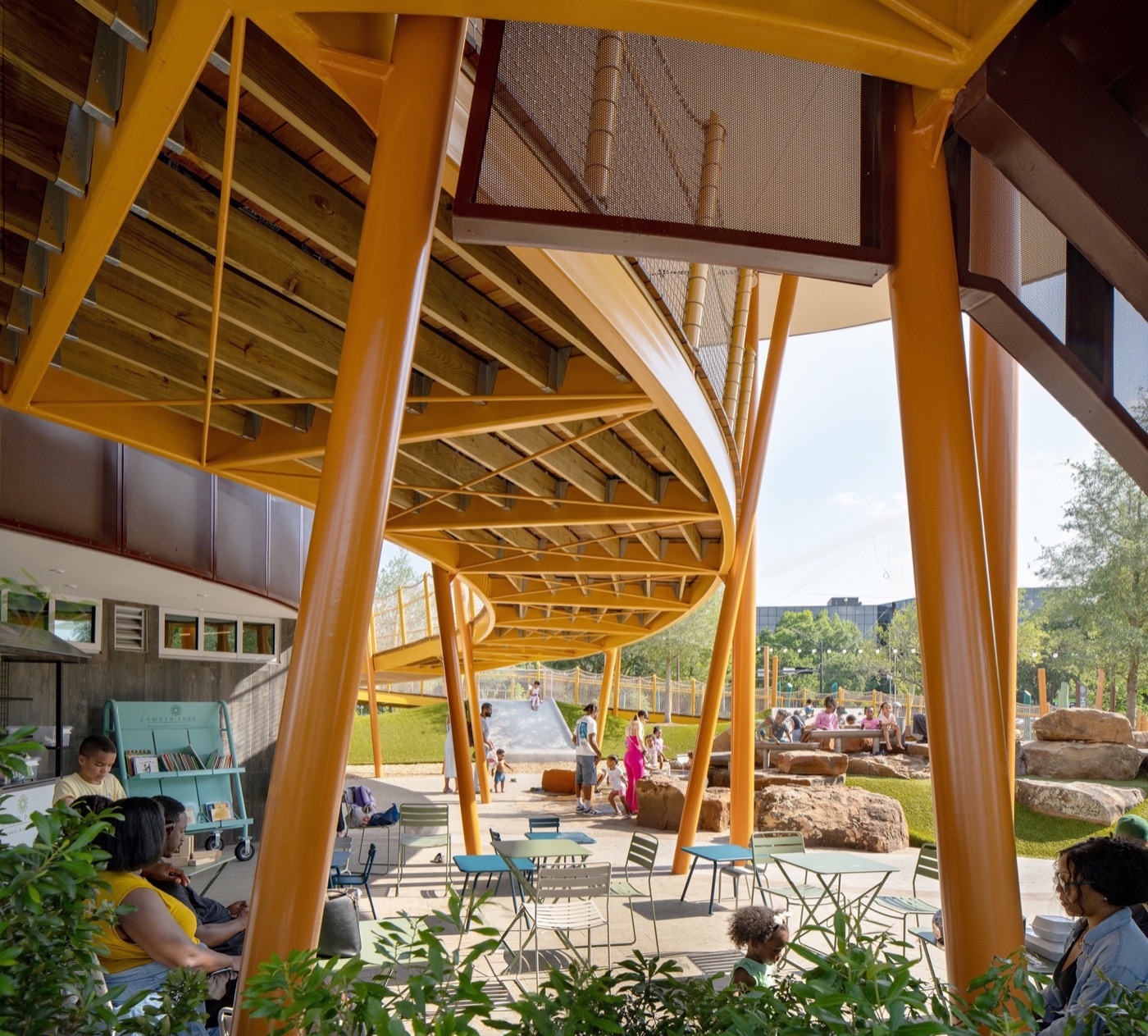
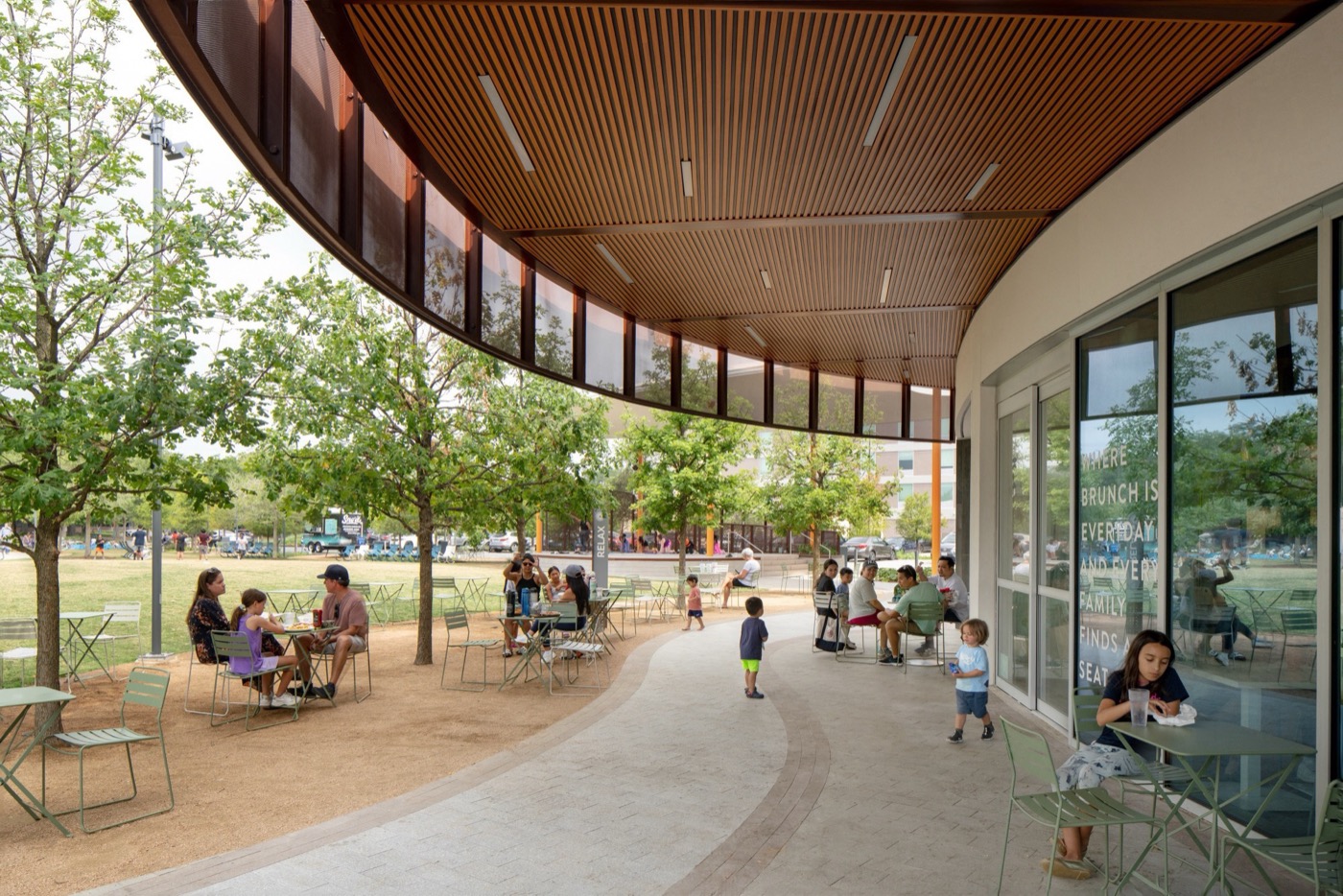
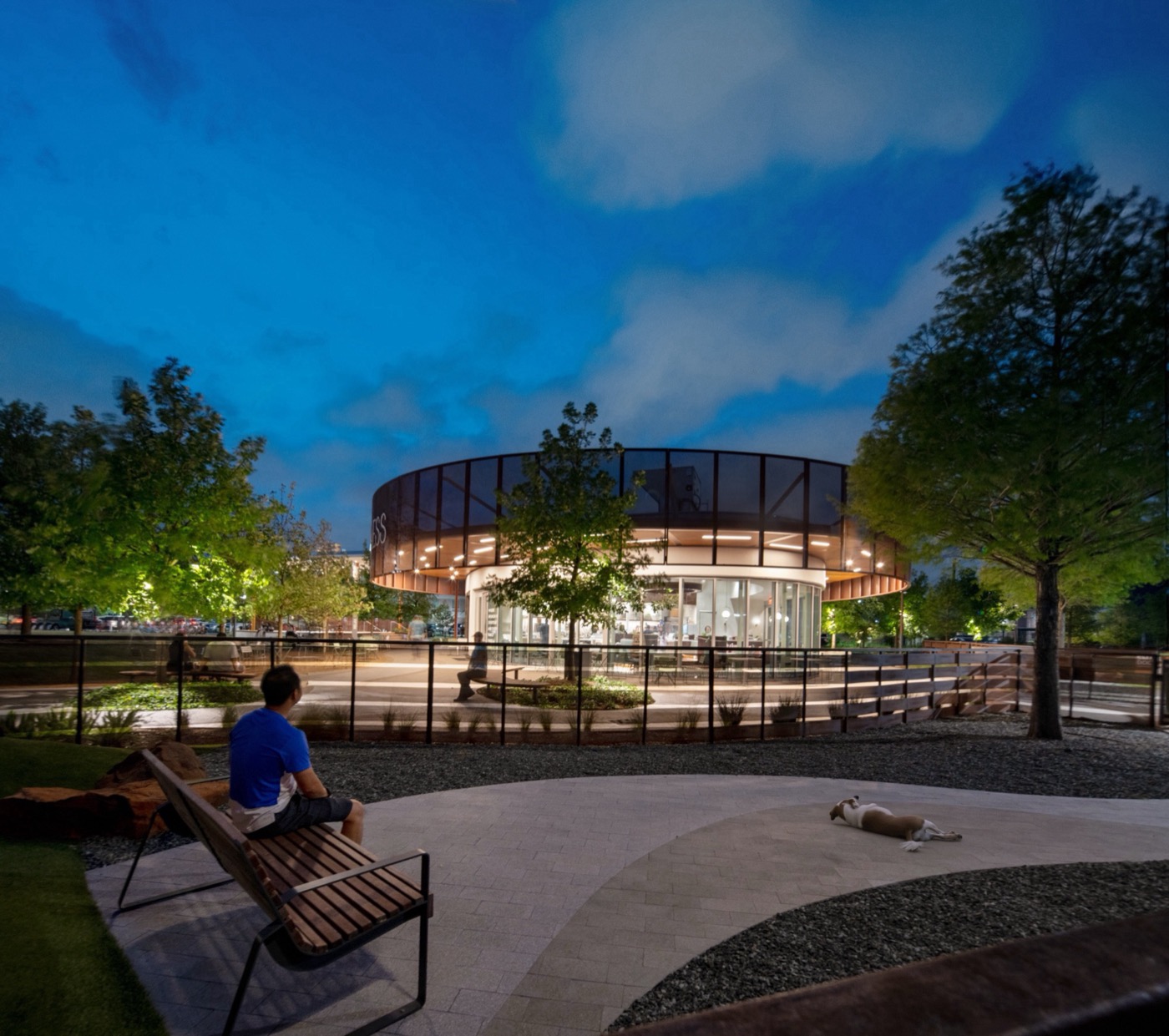
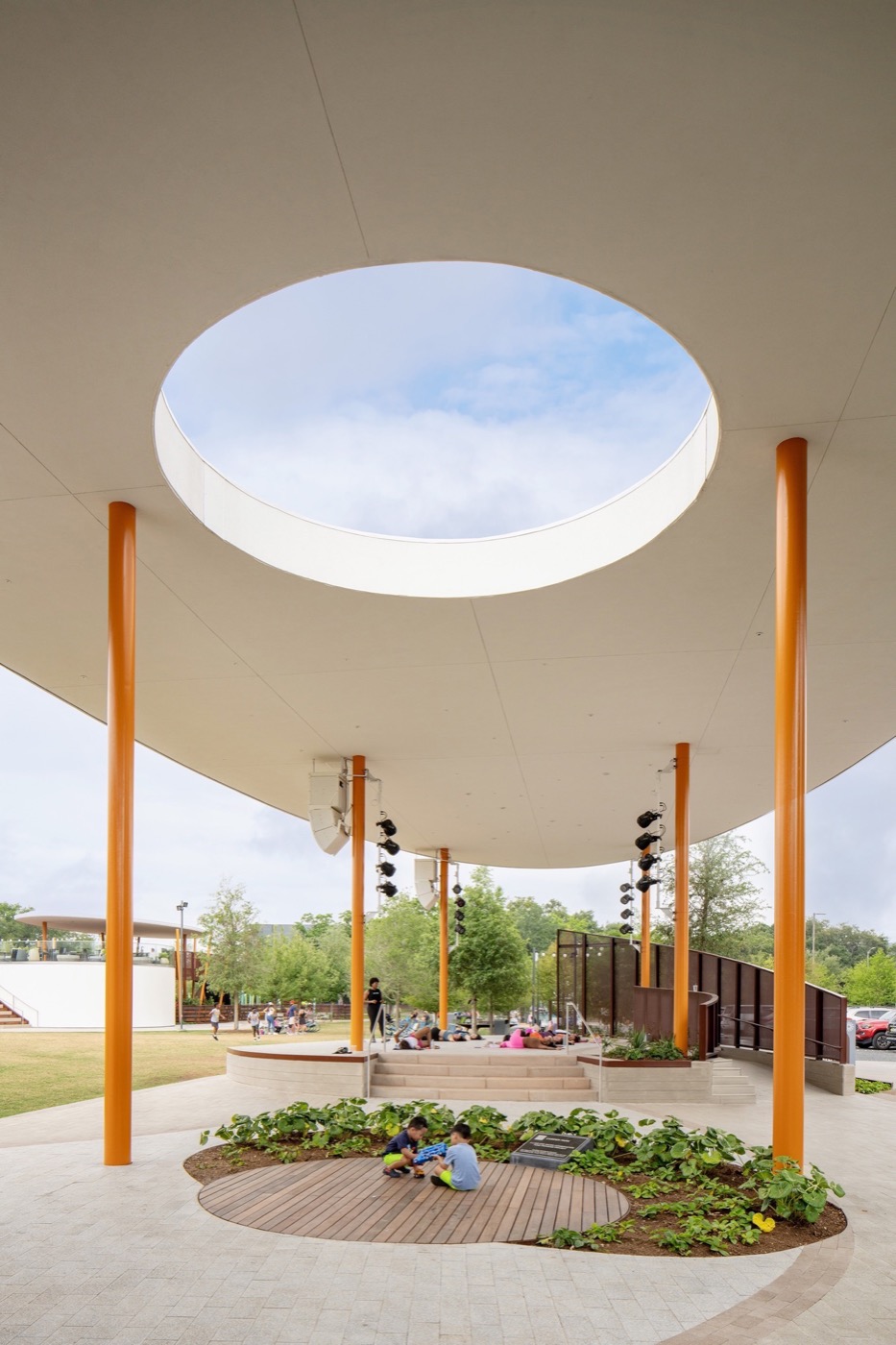
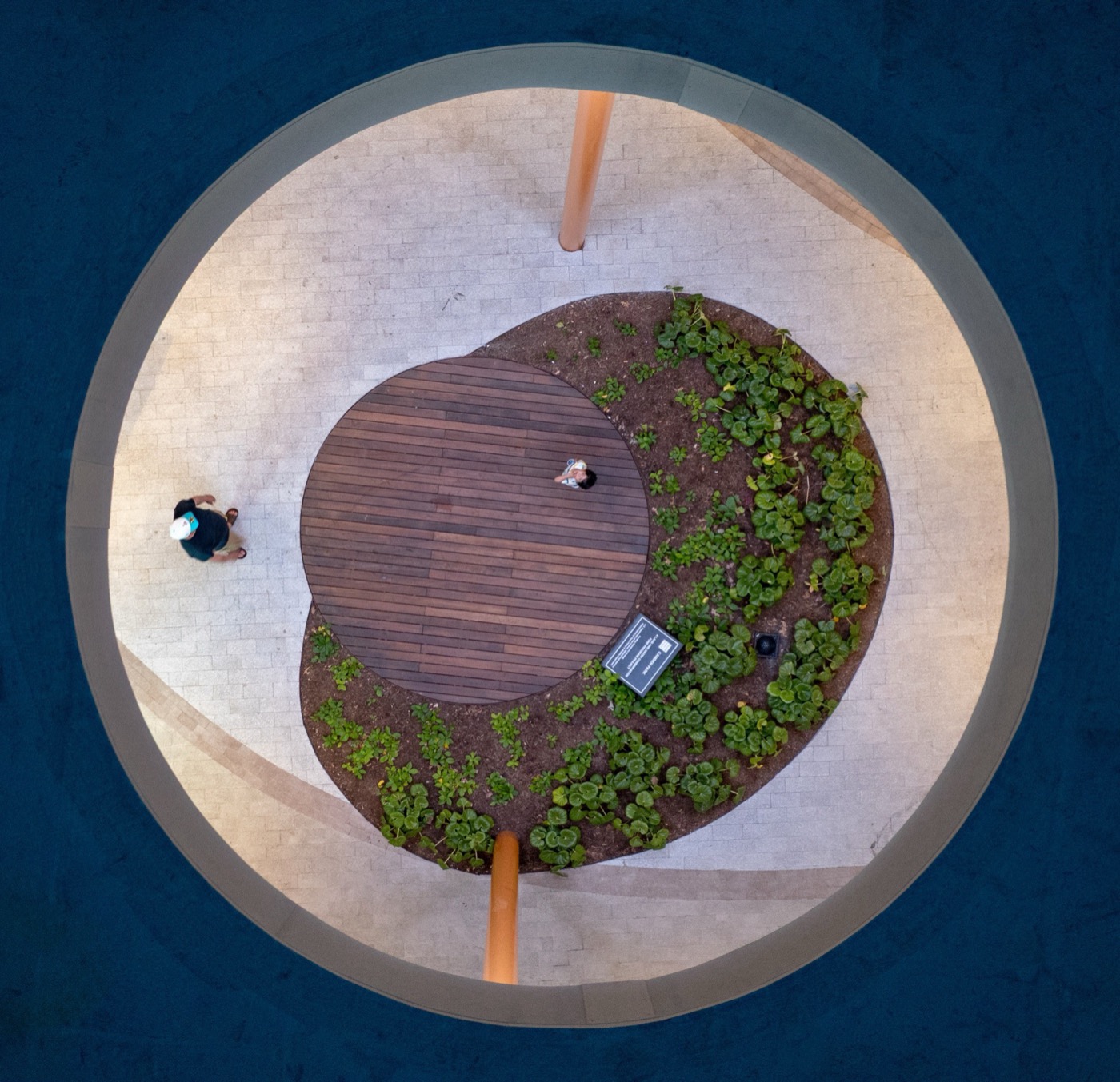
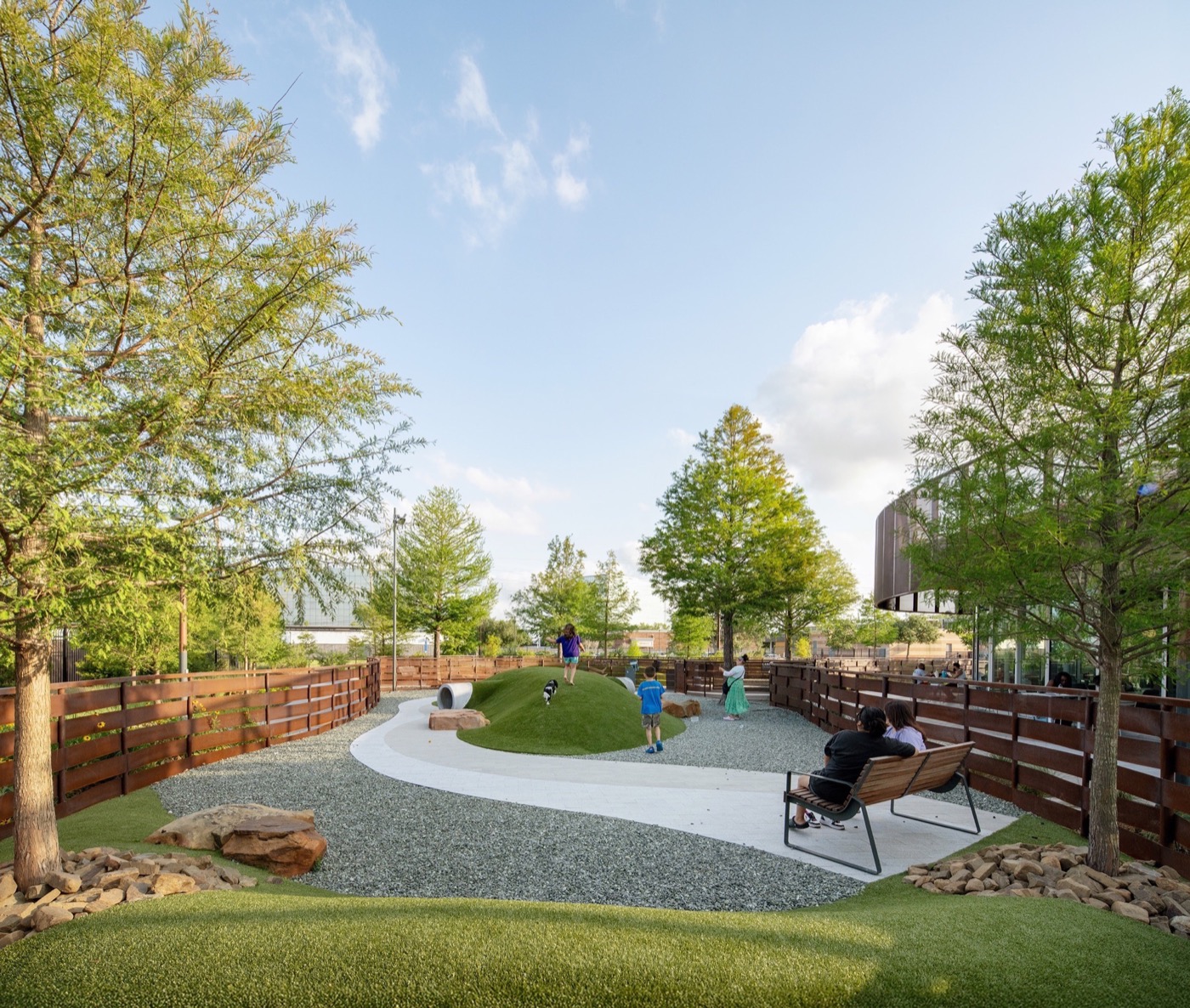
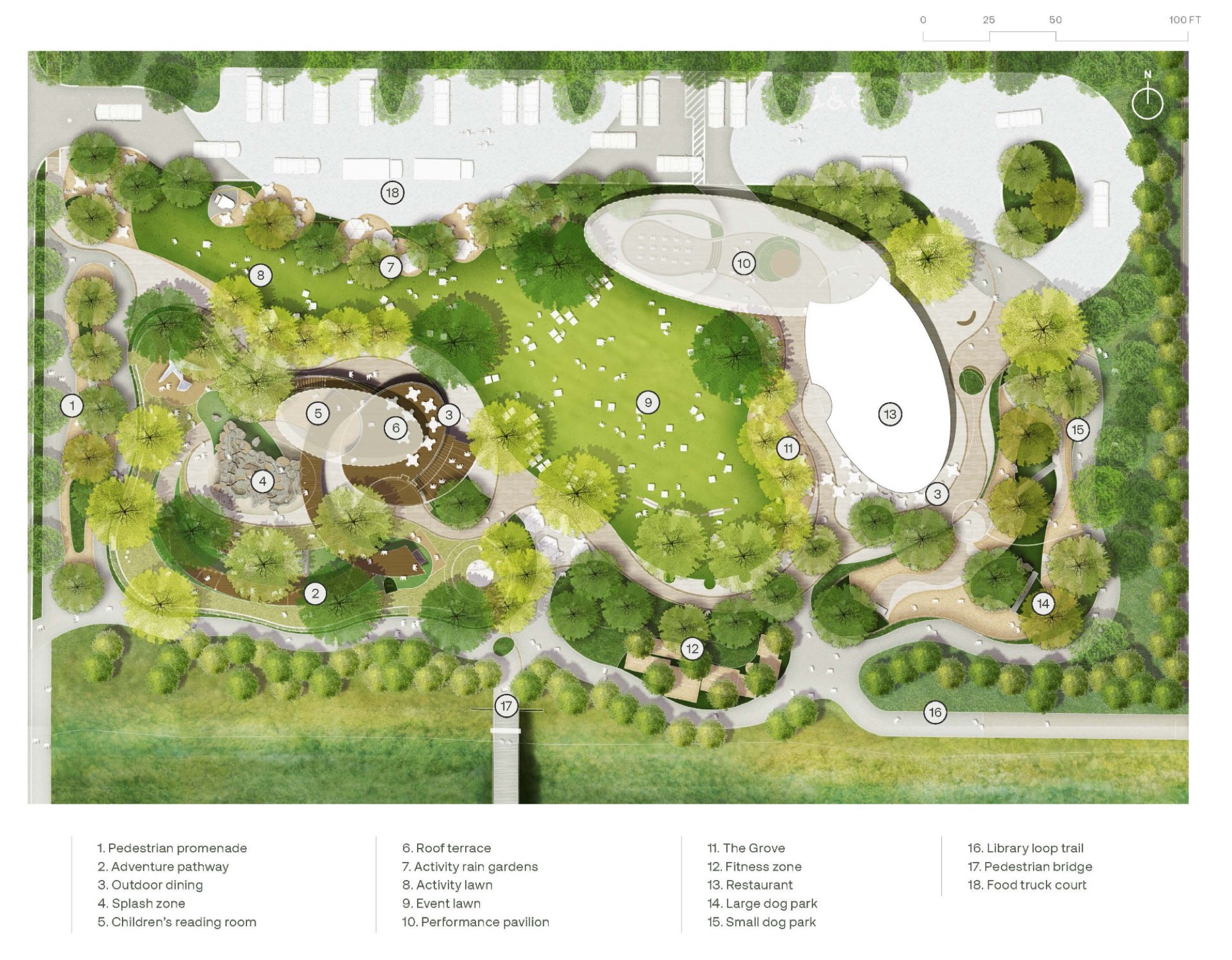
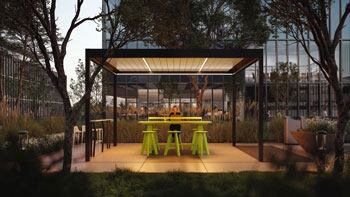
One edge of the lawn is activated by an event stage and a food-and-beverage pavilion, forming a social anchor that supports both organized programming and day-to-day use. Complementing this active zone, a dedicated dog park provides separate areas for small and large dogs, incorporating varied topography, purposeful berming, and water features to enhance play and interaction. The dog park is thoughtfully integrated within the overall layout, allowing for visibility and connection while maintaining clear spatial definition.
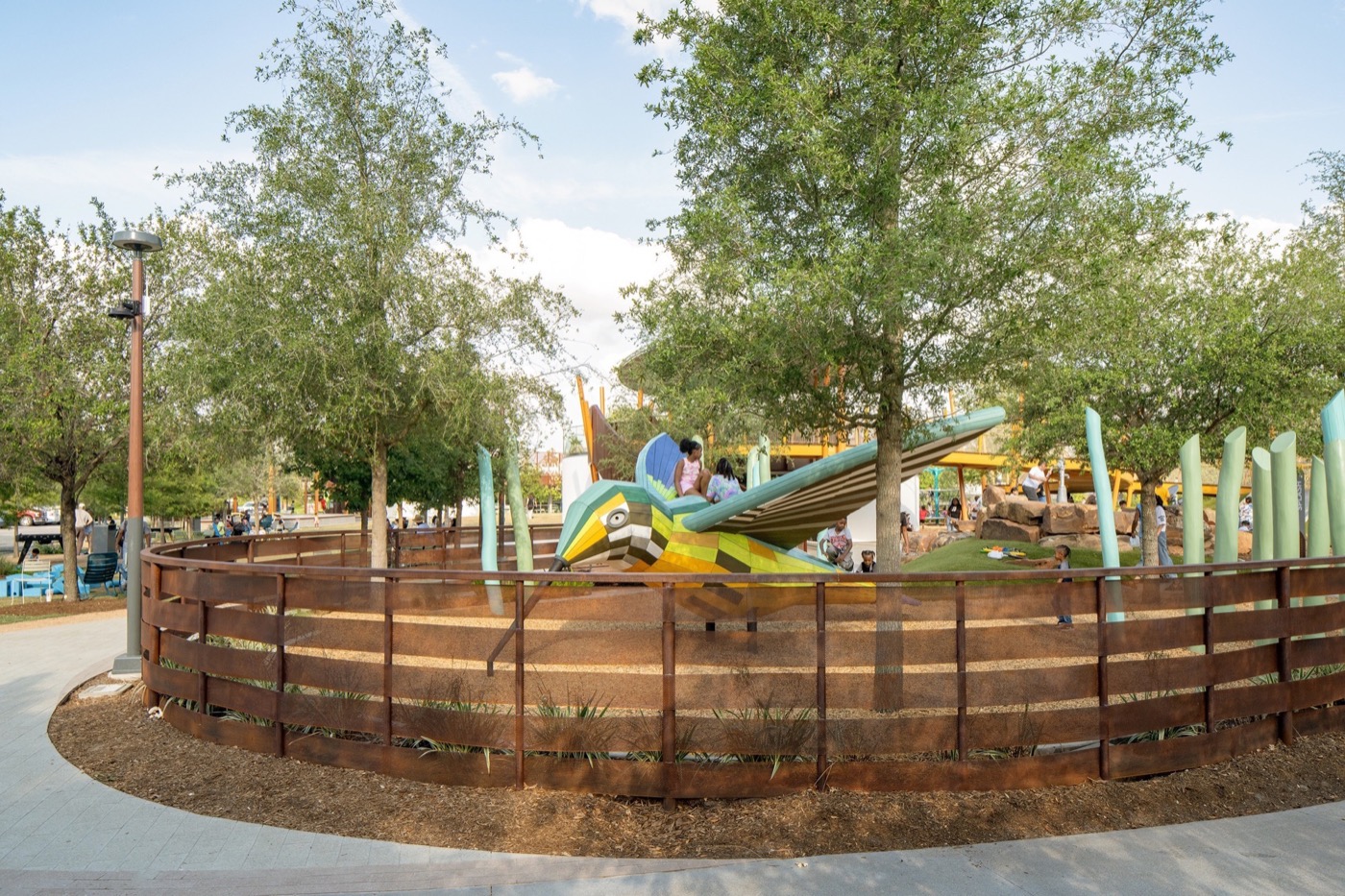
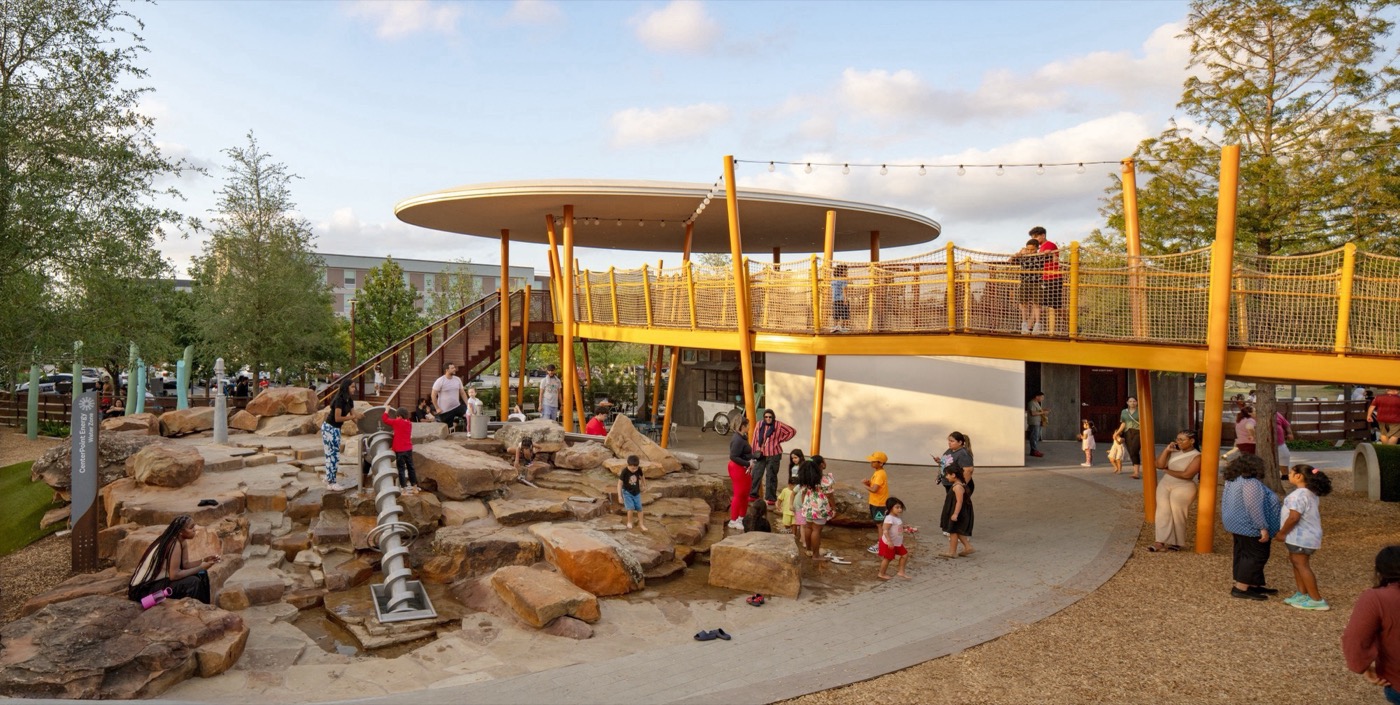
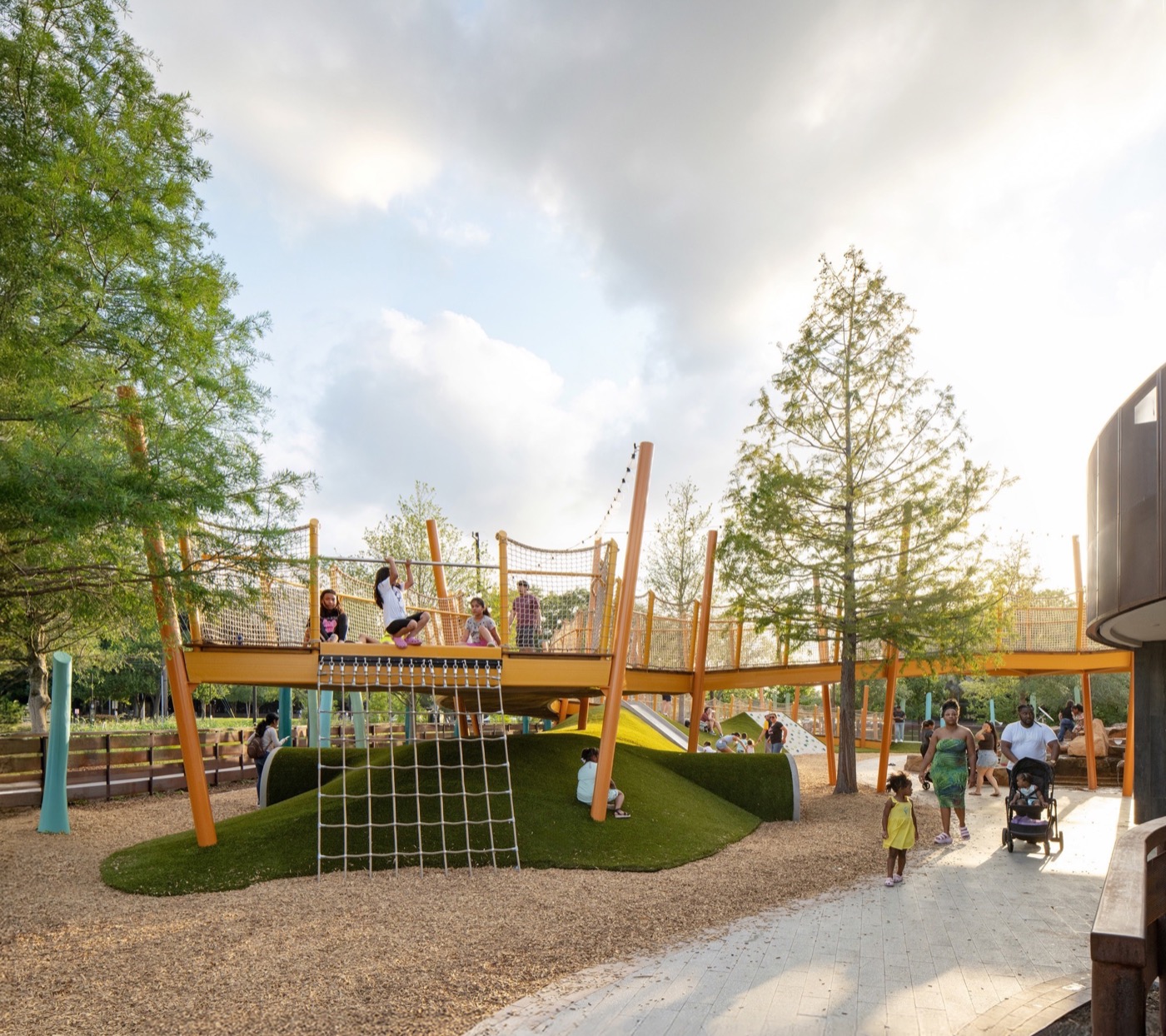
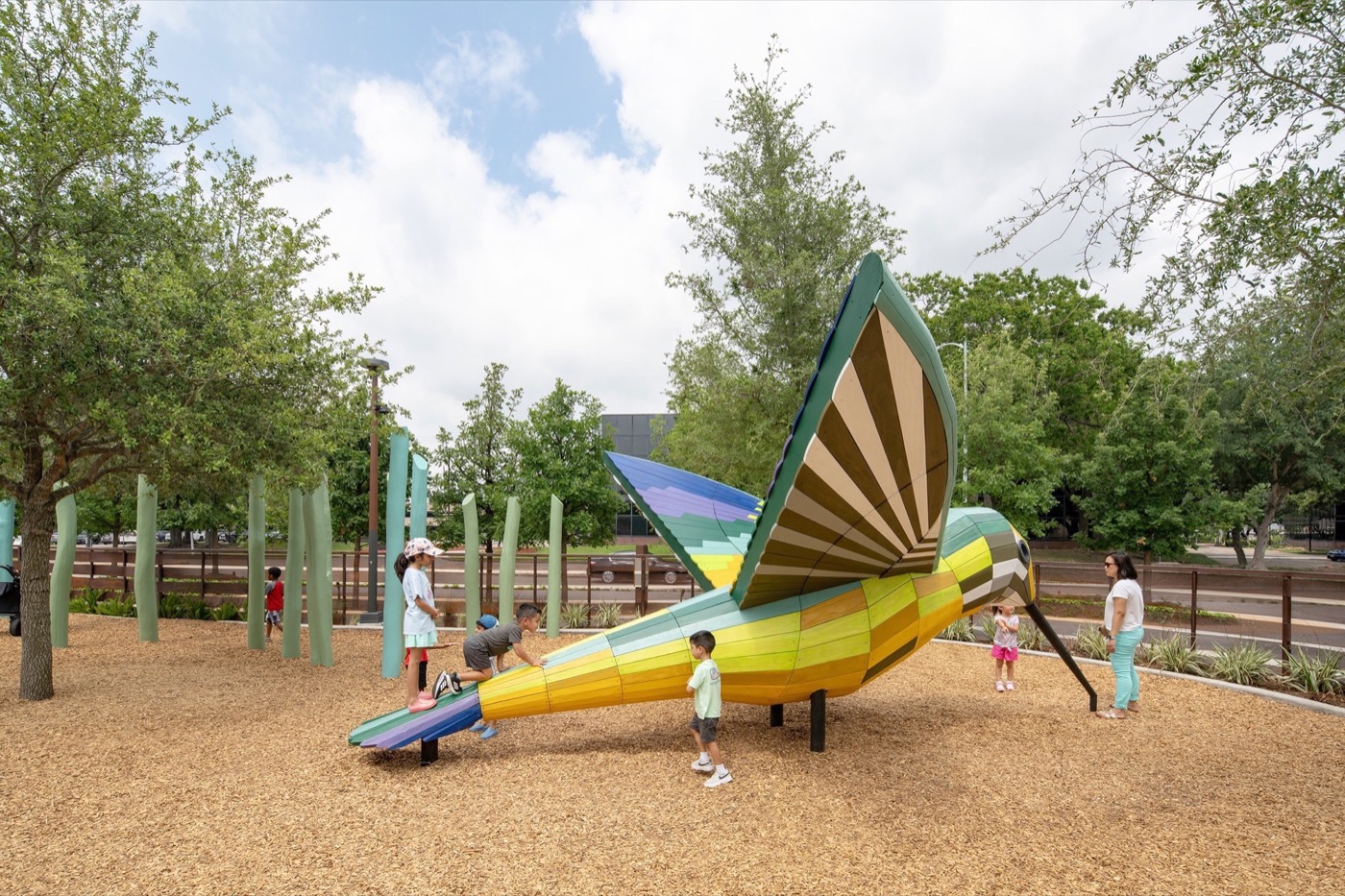
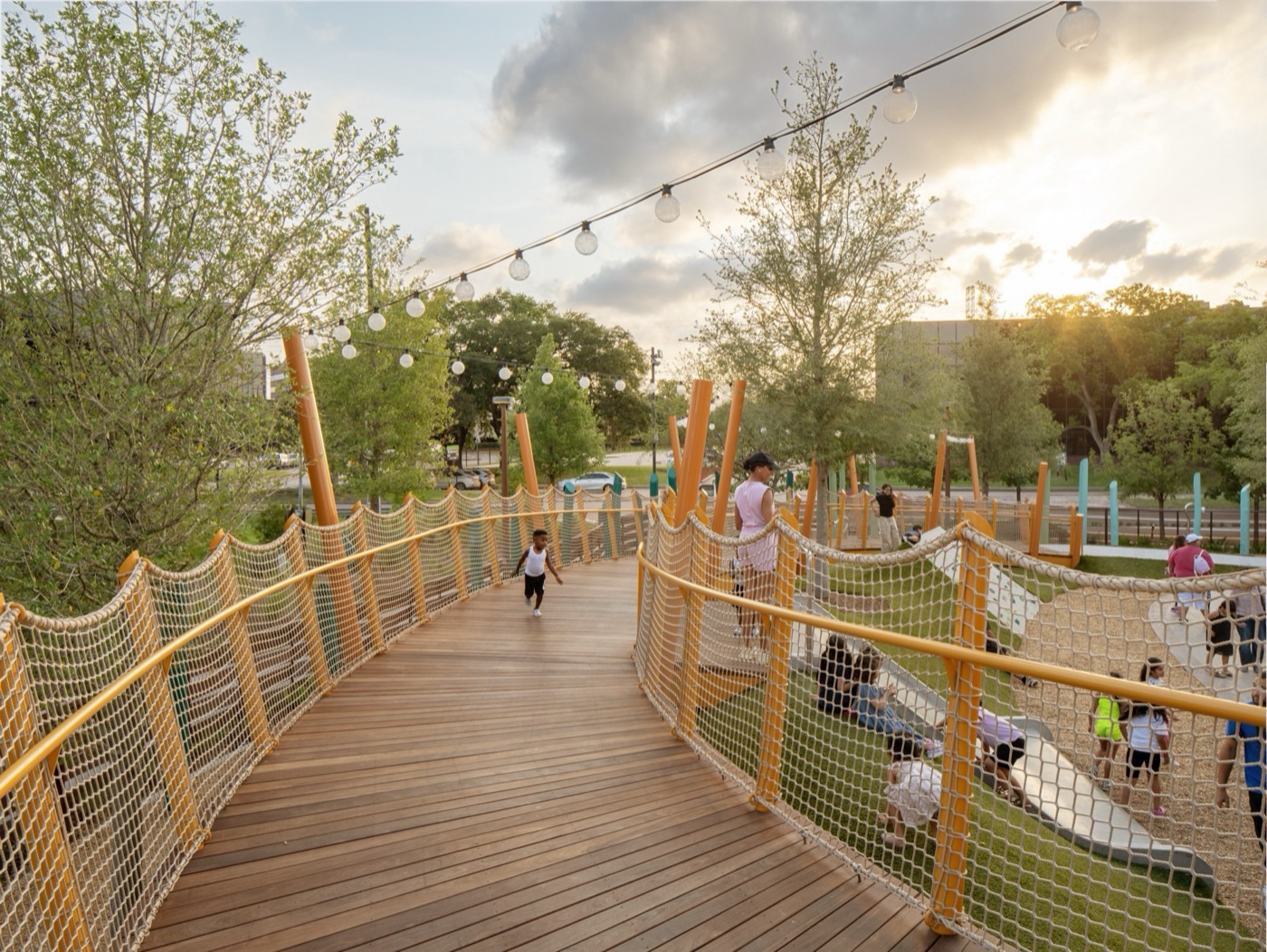
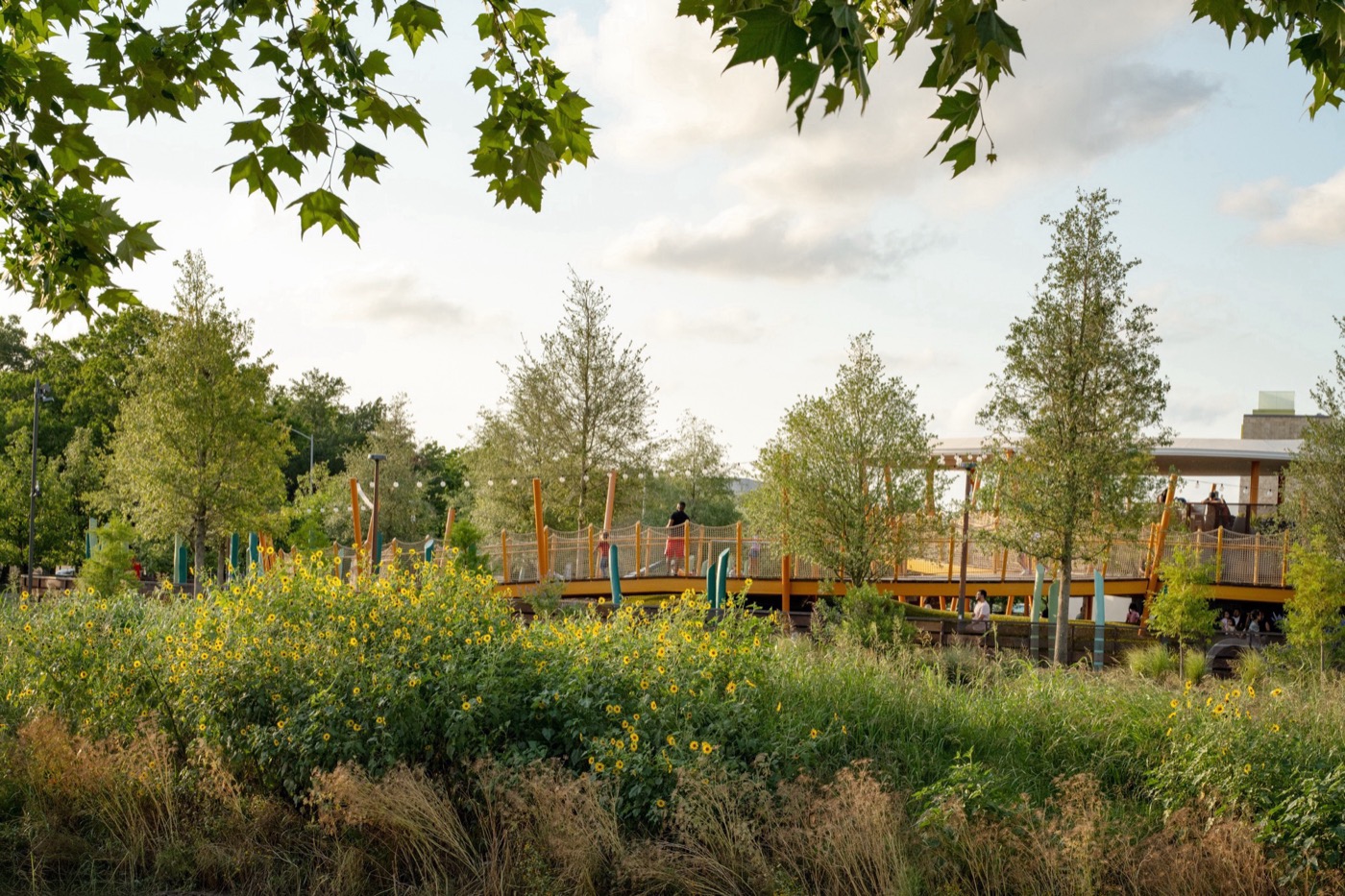
The children’s playground, spanning roughly 12,000 square feet, is designed as an immersive and multi-sensory environment that encourages creativity, exploration, and physical activity. A signature treehouse structure establishes a strong identity for the space, drawing children and caregivers upward into the canopy and creating a unique vantage point within the park. The play environment is further enriched through a combination of natural and constructed elements, including grassy berms, sand areas, boulders, water features, climbers, spinners, and resilient play surfaces. Together, these features support a wide range of play types and age groups, fostering both independent exploration and social interaction.
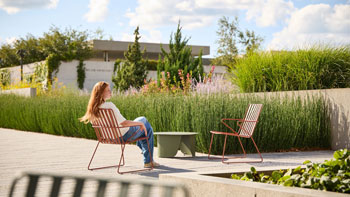
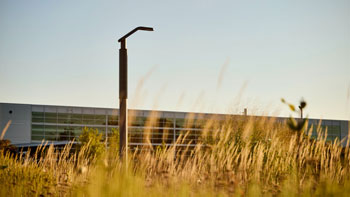
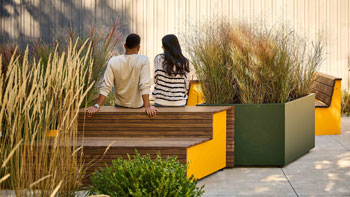
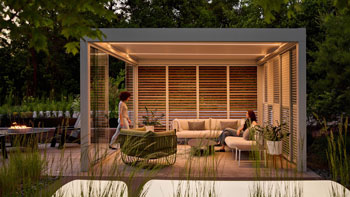
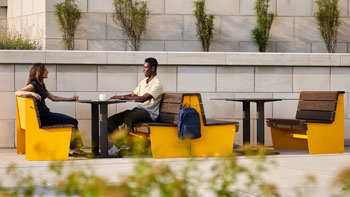
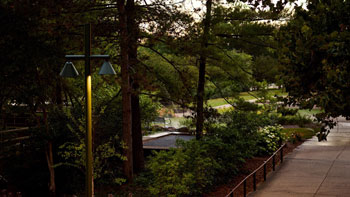
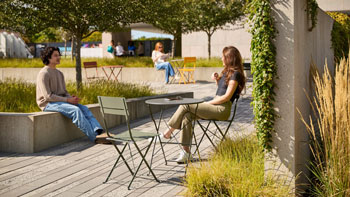
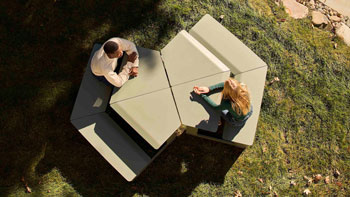
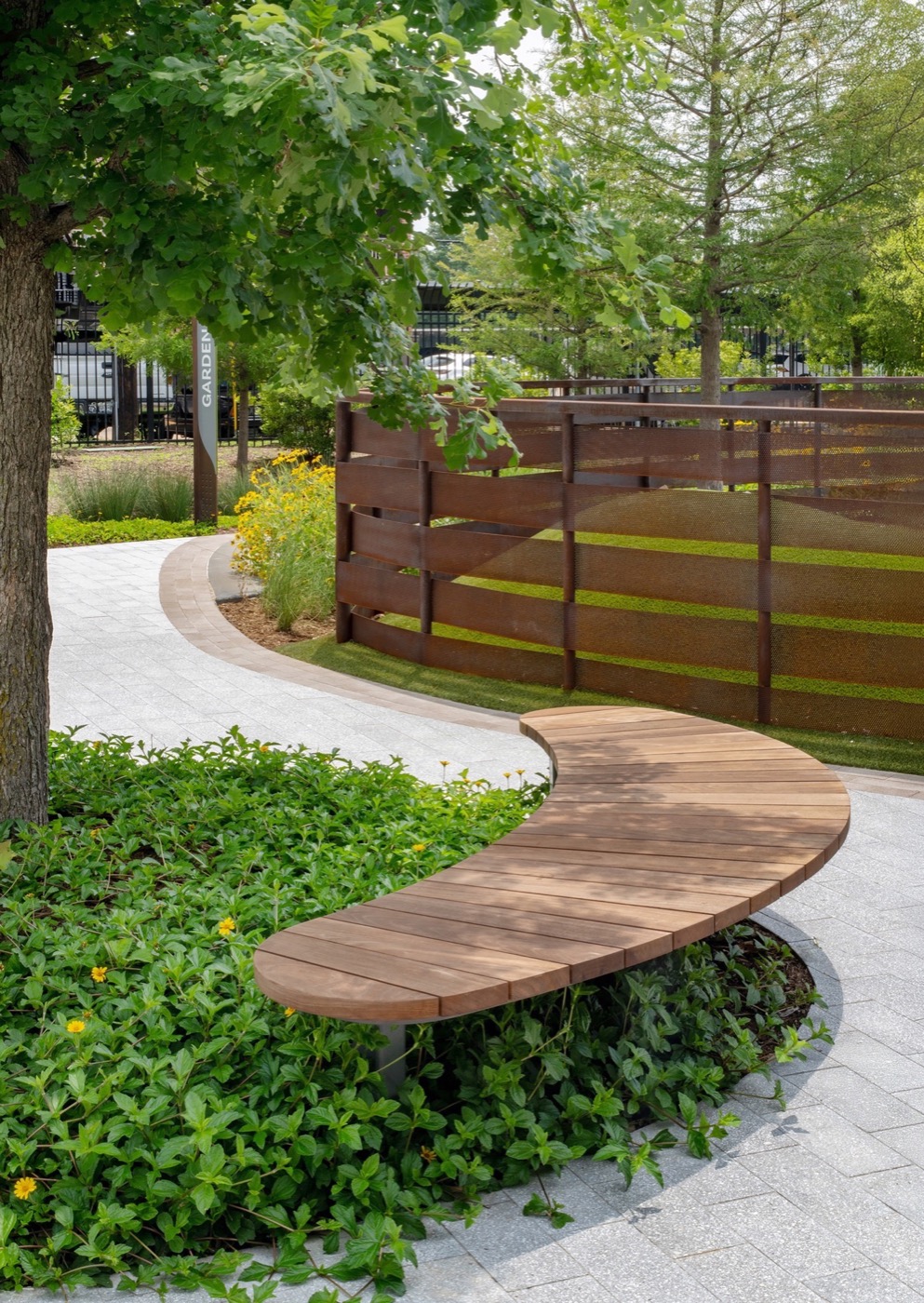
Seating is distributed throughout the park in the form of terraces and informal gathering areas, offering diverse opportunities for rest, observation, and social engagement. These spaces are intentionally varied, allowing visitors to choose between shaded, quiet settings within groves of trees or more active locations overlooking key program areas. The landscape is further defined by expanses of native meadow plantings and a canopy of street trees, which provide seasonal interest, shade, and ecological benefits. These plantings are selected for their durability, low maintenance requirements, and drought tolerance, reinforcing the park’s long-term sustainability.
A woven fence element frames the park’s perimeter, balancing the need for enclosure with preserved sightlines. This feature subtly screens internal activity while maintaining a welcoming and accessible edge condition that engages the surrounding neighborhood. Collectively, the design integrates social, ecological, and spatial strategies to create a cohesive and resilient urban landscape. Camden Park ultimately serves as a vital community asset, supporting recreation, connection, and a strong sense of place through its thoughtful and inclusive design approach.
Credit:
Westchase District, Client
Natalye Appel + Associates, Architect
Walter P. Moore, Civil Engineer
SGH, Structural Engineer
Wylie Consulting Engineers, Mechanical Engineer
Minor Design, Graphics and Wayfinding
2951 Wilcrest Dr, Houston, TX 77042
74245


LILA 2026 Sponsor