Prinz-Eugen-Park, Munich
tn-l.de/ + www.clubl94.de/
2026 Landscape and Architecture / 2026 Residential Parks / Germany / Built in 2023 /

![Due to the necessary renovation work at St. Bartholomäus church in Porz, an opportunity to reorganize and redesign the church complex opened up. Modification of the existing retaining wall and demolition of the church pavilion led to the creation of an open and welcoming church territory. As the main access to the church was redesigned […]](https://landezine-award.com/wp-content/uploads/2021/04/00-Club-L94_Porz_016-bearb-300-600x516.jpg "Redesign of St. Bartholomäus Church Complex")
![The residential development of Hafengold overlooks the harbour in Offenbach and comprises of nine residential towers, arranged around a central open space. As landscape architect ClubL94 has created a sequence of public, semi public and private open spaces and reinforced the connection to the water. Central Open Space ‘Quartiersmitte’ The network of pathways leads the […]](https://landezine-award.com/wp-content/uploads/2021/04/00-ClubL94_Hafengold-2018_008-600x400.jpg "Hafengold – Living at the Harbour in Offenbach")
![The redesign of the public spaces around Koningin Julianaplein aims to strengthen the spatial relation between the city hall ‘Gemeentehuis’ and its surrounding shopping street and market square. By assigning unique design theme to individual spaces, an interesting sequence of public squares has been created. Drawing reference to the industrial past of the site, more […]](https://landezine-award.com/wp-content/uploads/2021/04/00-ClubL94_Vaals_23.08.17-023-600x400.jpg "Koningin Julianaplein Vaals, Netherlands")
![The state garden show of 2018 triggered a rejuvenation of open spaces in the city of Lahr. As the brownfield sites and agricultural lands were refurbished, a trilogy of public parks emerged on the western side of the city. Distinguished by their unique spatial character, the parks not only offer diverse recreational opportunities for the […]](https://landezine-award.com/wp-content/uploads/2021/04/00-Vogelperspektive-Seepark-600x400.jpg "The Park Trilogy in Lahr")
![The redevelopment concept for the city center of Stolberg envisages the ‘Bastinweiher’ water body and its surrounding open spaces as part of a bigger green ‘Ensemble’. While creating synergy among previously fragmented spaces, the design aims to offer diverse outdoor experience to different user groups. Bastinweiher To improve the connectivity with adjacent areas, the shape […]](https://landezine-award.com/wp-content/uploads/2021/04/00-ClubL94_Stolberg_23.06.170772-600x400.jpg "Redesign of ‘Bastinweiher’ in Stolberg")
![Kulmbach’s central square plays a significant role in the city’s fabric. It is located on the north-eastern side of the city center, at the intersection of local access roads and the main cycle path. It is not only used as a car parking area by the visitors to the old city center, but also as […]](https://landezine-award.com/wp-content/uploads/2021/04/00-ClubL94_Kulmbach-1_photo-by-Gereon-Holtschneider-600x400.jpg "Redevelopment of the Central Square, Kulmbach")
Preserve and Transform
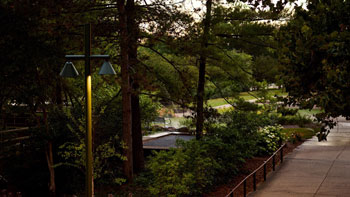
Following site clearance, a new urban neighborhood for nearly 4,000 residents was created on the grounds of the former Prinz Eugen Barracks, covering a total area of approximately 30 hectares. Prinz Eugen Park accounts for almost one third of this area. To this day, the district is defined by its remarkable stock of mature trees—nearly 3,000 preserved specimens—alongside expansive, near-natural meadow landscapes and traces of its former military use. These site-specific characteristics were deliberately emphasized as exceptional open-space potentials and form the guiding principle of the design concept: “MAKE DO WITH NOW!”

Future with a Past
Conceptually, the existing vegetation typologies are refined and accentuated in their distinct qualities. The park is thus structured into predefined thematic zones, each developing its own strong and unique atmosphere. With the northern, southern, and eastern wings, the central Anger grove, and the connecting green corridors, spaces are created that reflect the past while simultaneously pointing toward the future.




The Northern Wing
The defining feature here is a series of elongated tree halls—remnants of untamed hornbeam hedges from the barracks’ history. These are spatially expanded so that their dense canopies provide ample shade for park pathways and adjacent, low-impact play islands.
The Eastern Wing
The expansive, open “Bläulings meadow” preserves the site’s sense of openness. A dry biotope identified in the northern section is protected and extended across the entire eastern wing. Paths and a small number of wooden decks invite visitors to observe nature.
The Southern Wing
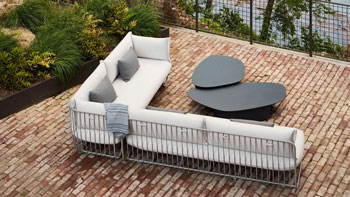
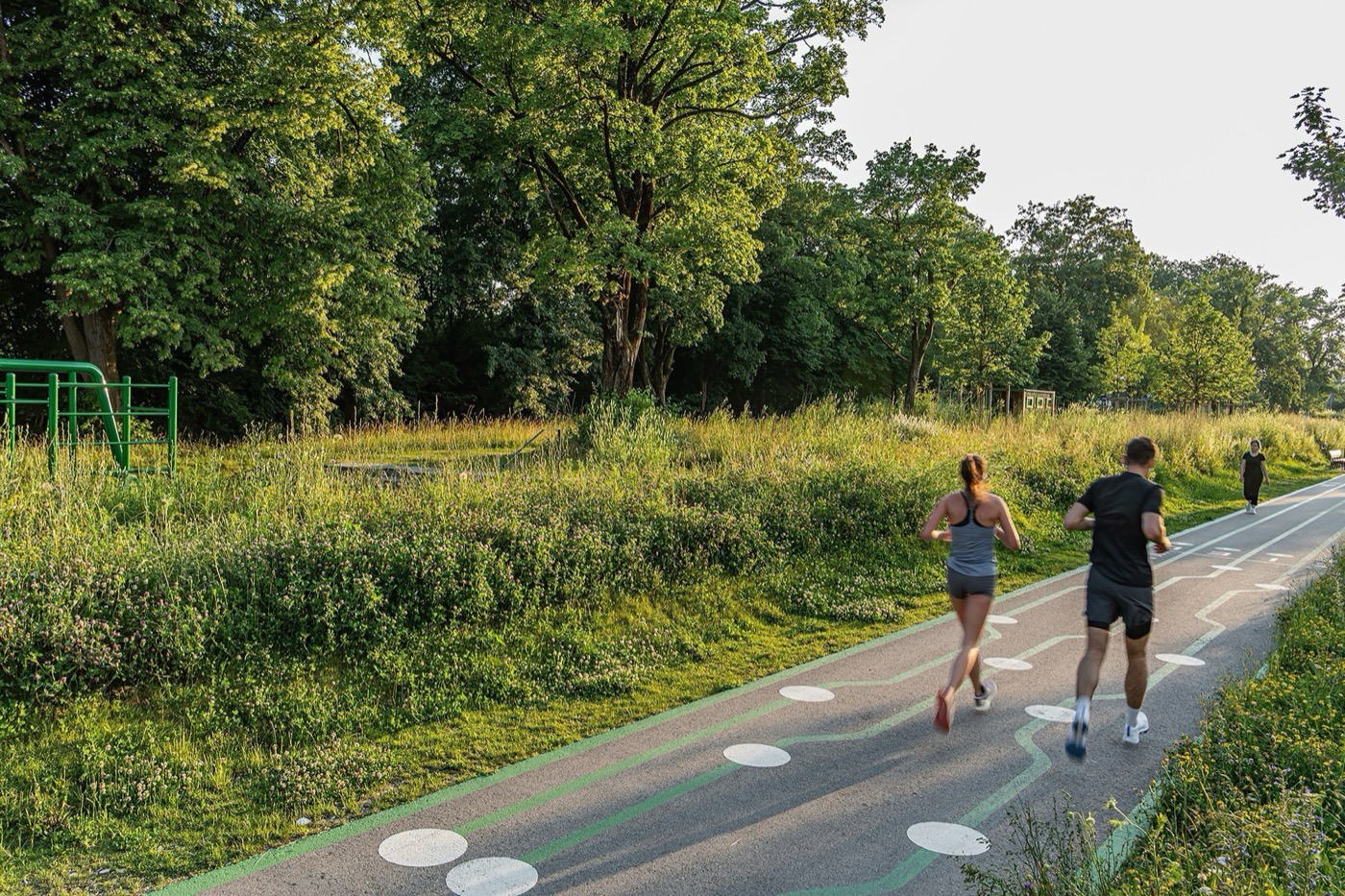
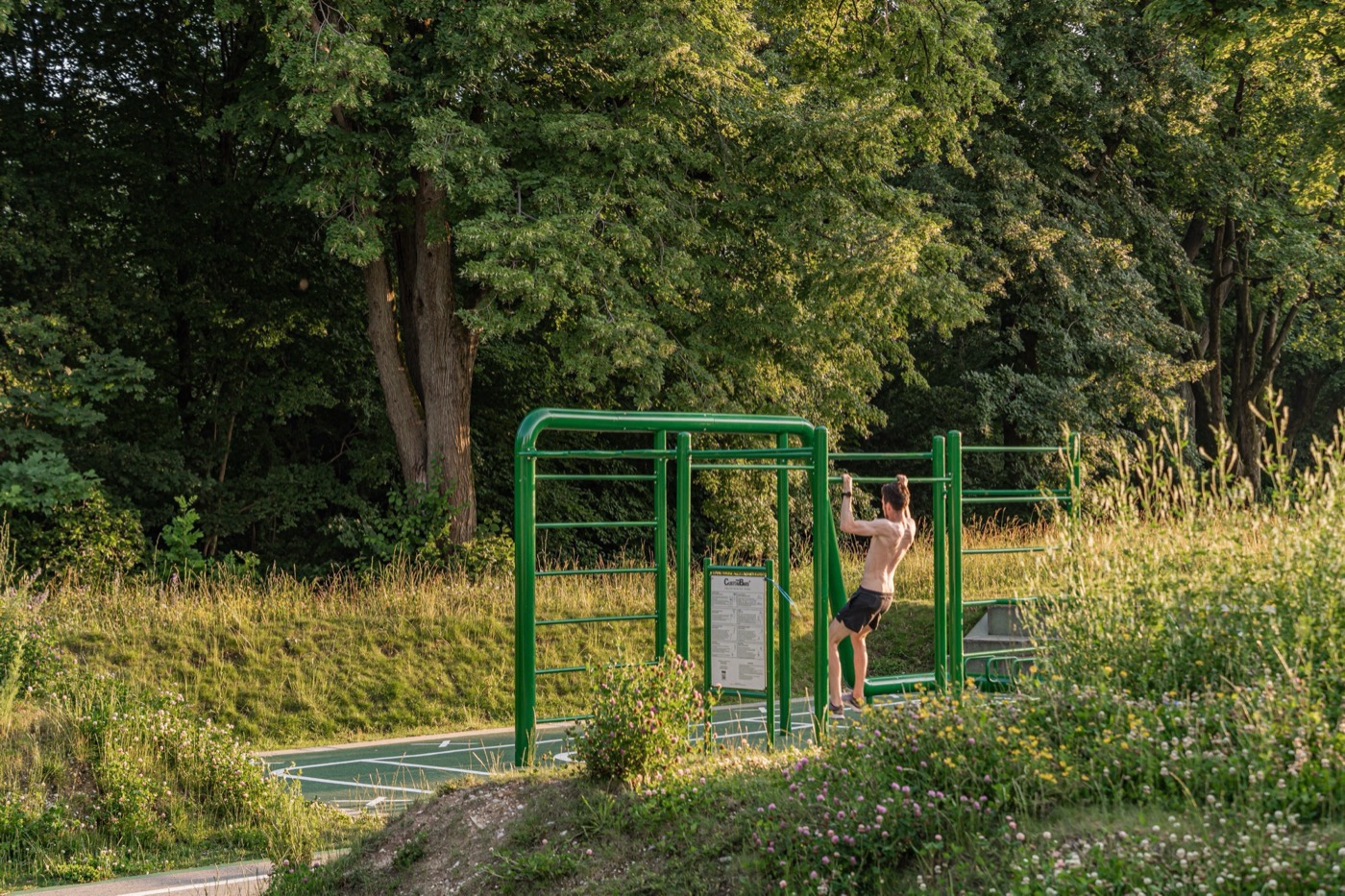
A plateau-like elevation of approximately 1.0–1.5 meters above the surrounding district marks the area of the sports terraces. Activity zones for all age groups are embedded into this topography like inlays and framed by precisely shaped grass embankments or meadow mounds that also serve as noise buffers. On the upper level, the guiding idea of the existing “wild meadow” is maintained with a few large solitary oaks. Mown lawn paths exclusively lead to the sports facilities. Toward the street, an elevated lounging landscape provides an attractive vantage point over the sports areas.
The Anger Grove
A former military road once ran diagonally through what is now the Anger grove. After its removal, a slightly lowered terrain remained, now forming an elongated meadow valley that defines a spacious play area with two prominent focal points. On the urban side, this takes the form of an intensively designed water playground featuring stone elements up to 4 meters high, inspired by oversized Isar river pebbles. Its counterpart is the “Beaver Castle,” a complex, monumental wooden sculpture up to 7 meters tall that can be explored both inside and out. The Anger Loop, a gently elevated circular path, follows the alignment of the particularly valuable tree population in this area and frames the central space.
The Green Corridors
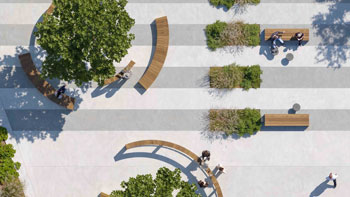
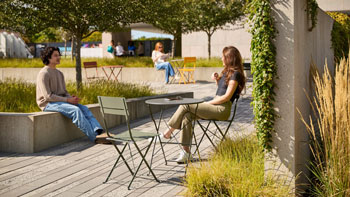
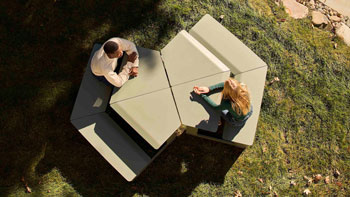
The orchard corridors serve as key connective spaces. Each interval is characterized by a specific fruit tree species and its own landscape modeling concept. Along the meandering paths, individual picnic islands with expressive shade trees are embedded within the soft topography.
Ecology and Sustainability
Seed mixtures for the extensive meadow areas were specially developed in accordance with site conditions and soil characteristics. Diverse plant structures and seasonal flowering aspects lend the park landscape a distinctive character throughout the year while making a valuable contribution to biodiversity and species conservation. All soil material was processed on-site for reuse, for example in planting pits and topsoil installation. Excess material was incorporated during construction through the designation of flexible grading areas. All rainwater is retained locally, where it evaporates and is returned to the groundwater.
Client:
City of Munich,
represented by the Department of Public Construction – Horticulture Division, Friedenstraße 40, 81671 Munich
Project Phases:
Phases 2–8, open space planning (in collaboration with Club L94, Cologne),
Fee zone IV
Design Authors:
Peter Wich and Frank Flor,
Consortium of TERRA.NOVA Landscape Architecture and Club L94 Landscape Architects GmbH
Team:
Eva Greimel, Oliver Keil, Marion Schiffer, Anna Sevarac, Maria Wagner (TERRA.NOVA)
Pia Custodis, Priyambada Das, Axel Feja (Club L94)
Awards:
German Landscape Architecture Prize 2025 – Award in Residential Environment Category
2nd Prize City’Scape Award – Category City, Sport & Play and Category Urban Furniture
https://www.google.com/maps/search/m%C3%BCnchen+prinz+eugen+park/@48.1622763,11.6300705,460m/data=!3m2!1e3!4b1?entry=ttu&g_ep=EgoyMDI2MDQyNy4wIKXMDSoASAFQAw%3D%3D
73668


LILA 2026 Sponsor