
![Xinglong Lake lies at the ecological core of Chengdu’s Tianfu New Area, spanning ~4.46 km² (water: ~2.80 km²). Once a flood detention basin, it faced mounting urbanization challenges: sediment siltation, impaired flood discharge, contaminated sediments, eutrophication, fragile ecosystems, and severed urban hydrological connections. The design repositions the lake as a socio-economic nexus—not merely a water […]](https://landezine-award.com/wp-content/uploads/2026/05/01-兴隆湖流域蓝绿生态格局-1-600x347.png "XINGLONG LAKE — ACTING WITH THE GRAIN")
![The Orchard at Sycamore Binh Duong is a 5.45-hectare high-end residential development located in Binh Duong Ward, Ho Chi Minh City, approximately 40 km north from the city center. Developed by CapitaLand Vietnam and completed in early 2025, the project establishes a new benchmark for ecological landscape design in Vietnamese urban residential development. 1. Design […]](https://landezine-award.com/wp-content/uploads/2026/05/Hero-Image-1-600x405.jpg "The Orchard")
![Since 2022, Shenzhen has advanced the high-quality development of a green and livable city through its “Mountain-Sea Connection” initiative, promoting the integration of mountains, coastline, urban space, and public parks. Located along the Qianhai Bay waterfront, Shuangjie River Park serves as a key node within this vision, transforming fragmented coastal green space into a resilient […]](https://landezine-award.com/wp-content/uploads/2026/05/01-©S.P.I-Design-600x449.jpg "Shuangjie River Park, Qianhai, Shenzhen")
![Context and Core Problems Located in the core area of Nansha District, Guangzhou, Huangge South Road is a 5.6 km-long strategic corridor serving as a key gateway for the National Games and a showcase for the Greater Bay Area. Prior to intervention, the site suffered from five systemic challenges: Spatial deficiency—extensive under-bridge areas, roadside vacant […]](https://landezine-award.com/wp-content/uploads/2026/04/00_Main-Photo-600x450.jpg "Huangge South Road and Adjacent Infrastructure Enhancement Project, Guangzhou")
![Hongfu Road Urban Axis Regeneration redefines the transformation of urban infrastructure in Dongguan from a vehicle-oriented traffic corridor into an inclusive, ecological, and people-centered public realm. Located along the city’s central axis, the 4.5-kilometer-long and 520,000-square-meter project explores a regeneration pathway that shifts from rapid urban expansion toward refined, high-quality urban living. Guided by the […]](https://landezine-award.com/wp-content/uploads/2026/05/00_Hero-Image-14-600x333.jpg "Hongfu Road Urban Axis Regeneration, Dongguan")
![Context Located in Liwan District, Guangzhou, the Dachongkou Creek Landscape Project lies within a historic Lingnan urban fabric. With China’s first Taikoo commercial district planned along both sides of the creek, the project redefines the waterfront as an open public landscape, positioning it as a critical interface between heritage preservation and future urban development. Site […]](https://landezine-award.com/wp-content/uploads/2026/04/00_Hero-Image-600x338.jpg "Dachongkou Creek Landscape, Julong Bay Area, Guangzhou")
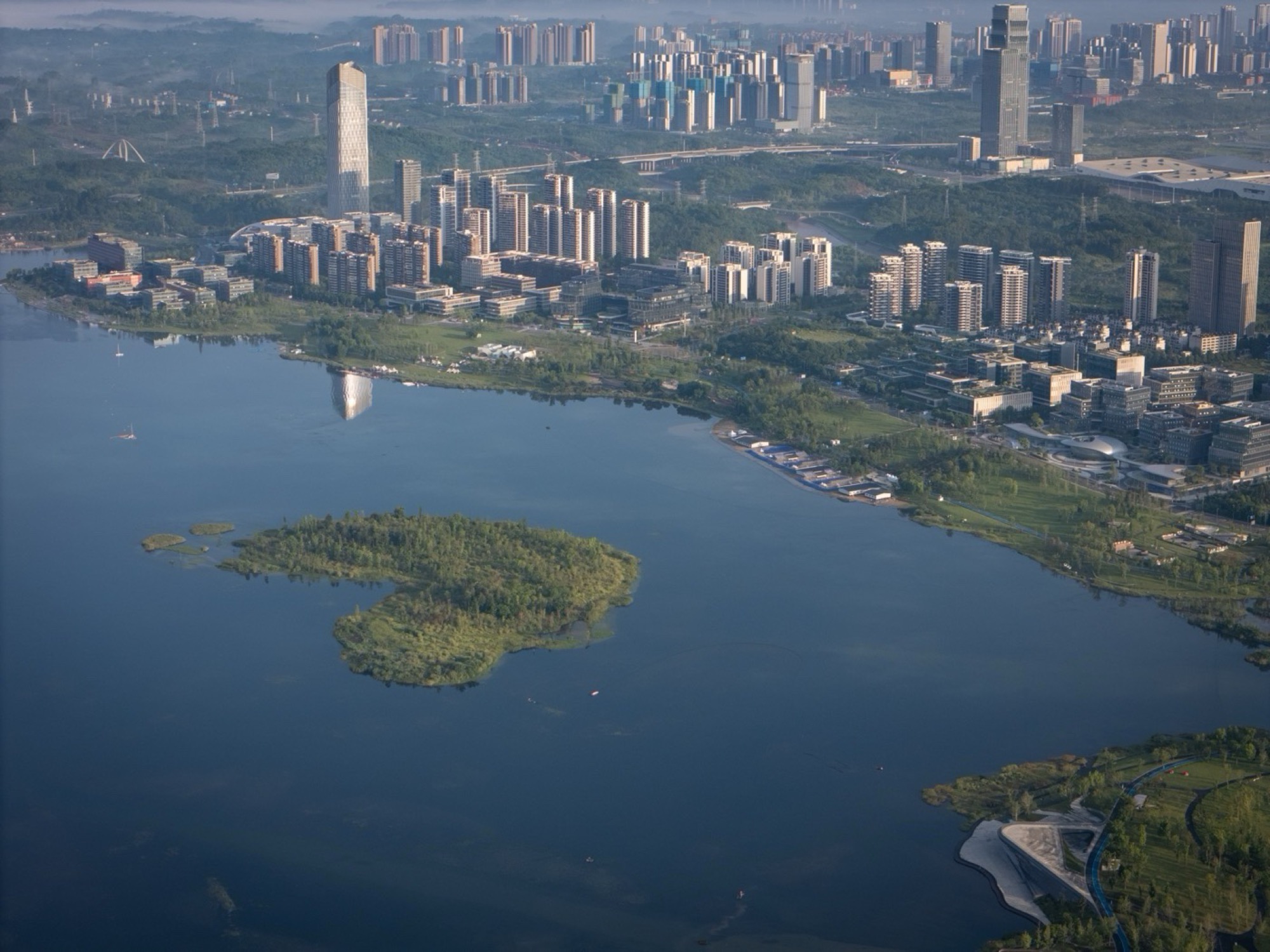
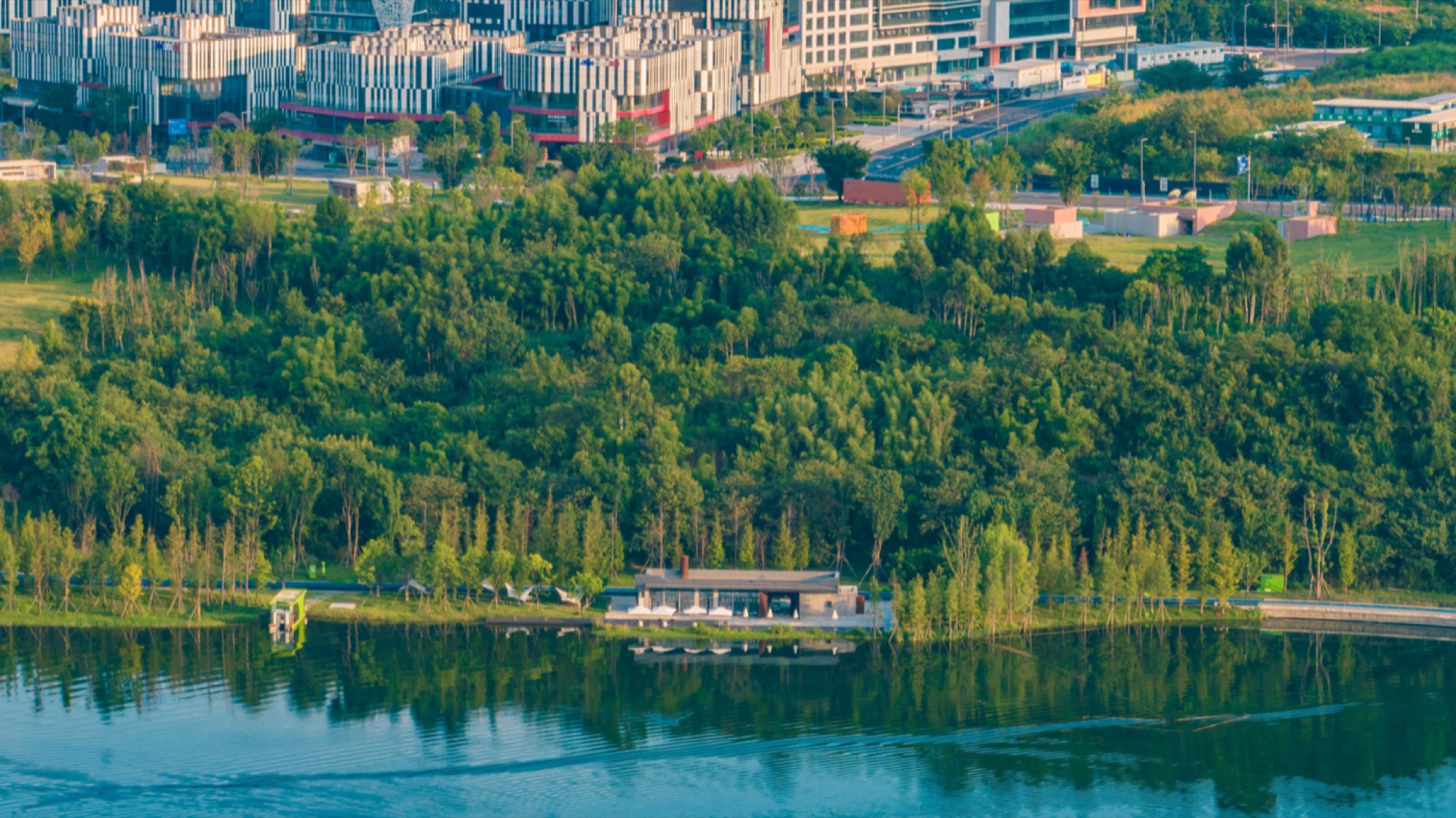
Xinglong Lake (with total area 4.46 km², water surface 2.80 km²) lies at the heart of Tianfu New Area, Chengdu. Originally a flood detention depression, rapid urbanization brought sediment siltation, impeded drainage, polluted sediments, eutrophication, fragile ecosystems, and disrupted urban hydrological connectivity.
The design treats the lake as a dynamic socio-ecological nexus where energy, material and biotic fluxes co-evolve with human activities, coordinating integrated stormwater management across the entire catchment, restoring a self-sustaining native aquatic ecosystem, and delivering high-quality public open space for over ten million residents. The philosophy, “Acting with the Grain,” embodies “restoring nature with nature’s own power” to achieve a robust living system.
Inspired by the 2,000-year-old Dujiangyan irrigation system, which uses landform rather than dams to divide flows and settle sediment, the project traces the site’s original channel depressions to reconstruct an ecological sediment–water separation system. Under normal conditions gentle flow prevails; during extreme storms the same geometry automatically accelerates flood discharge and controls sediment, relying solely on gravity—an elementary yet infallible logic.
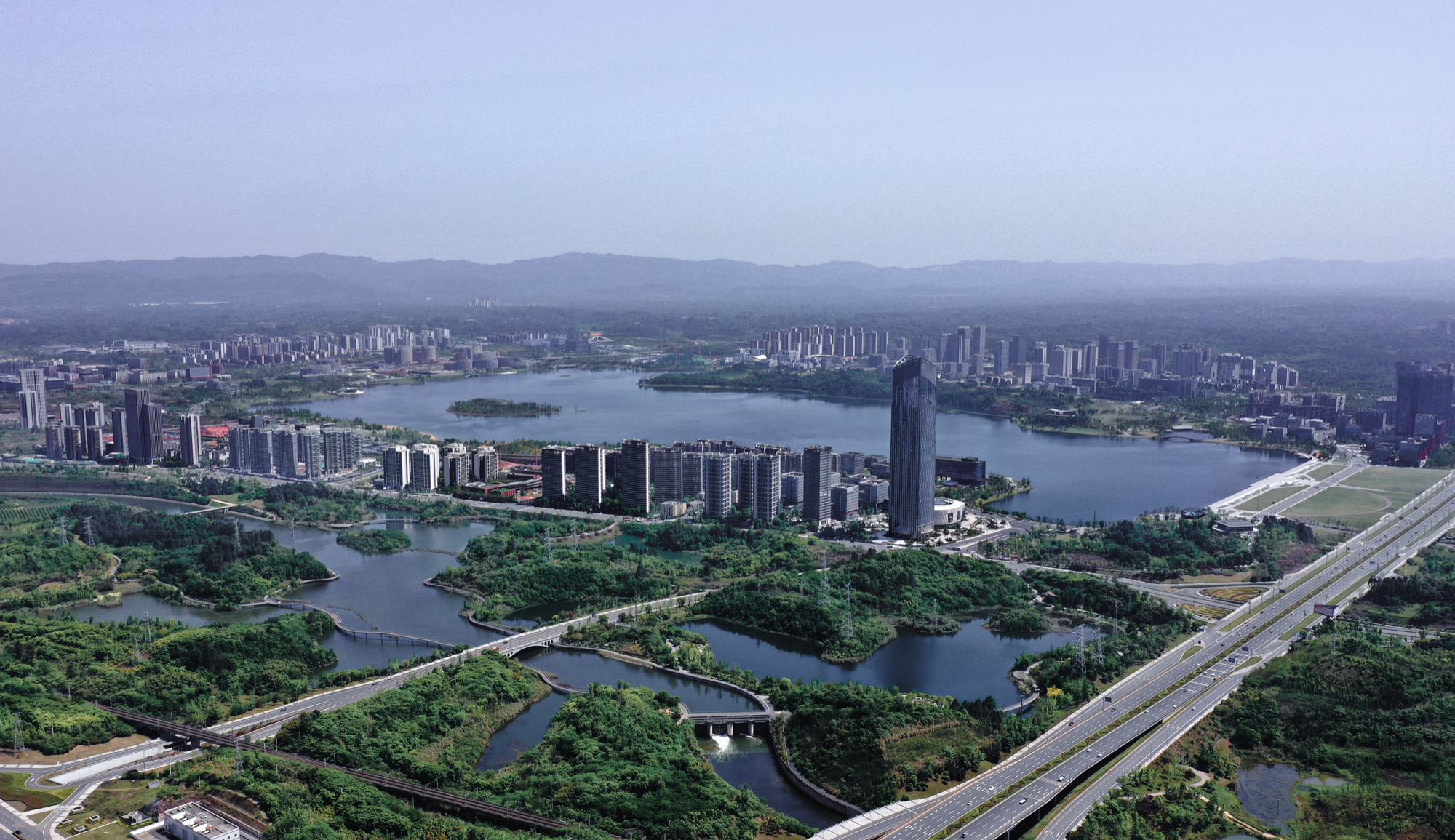
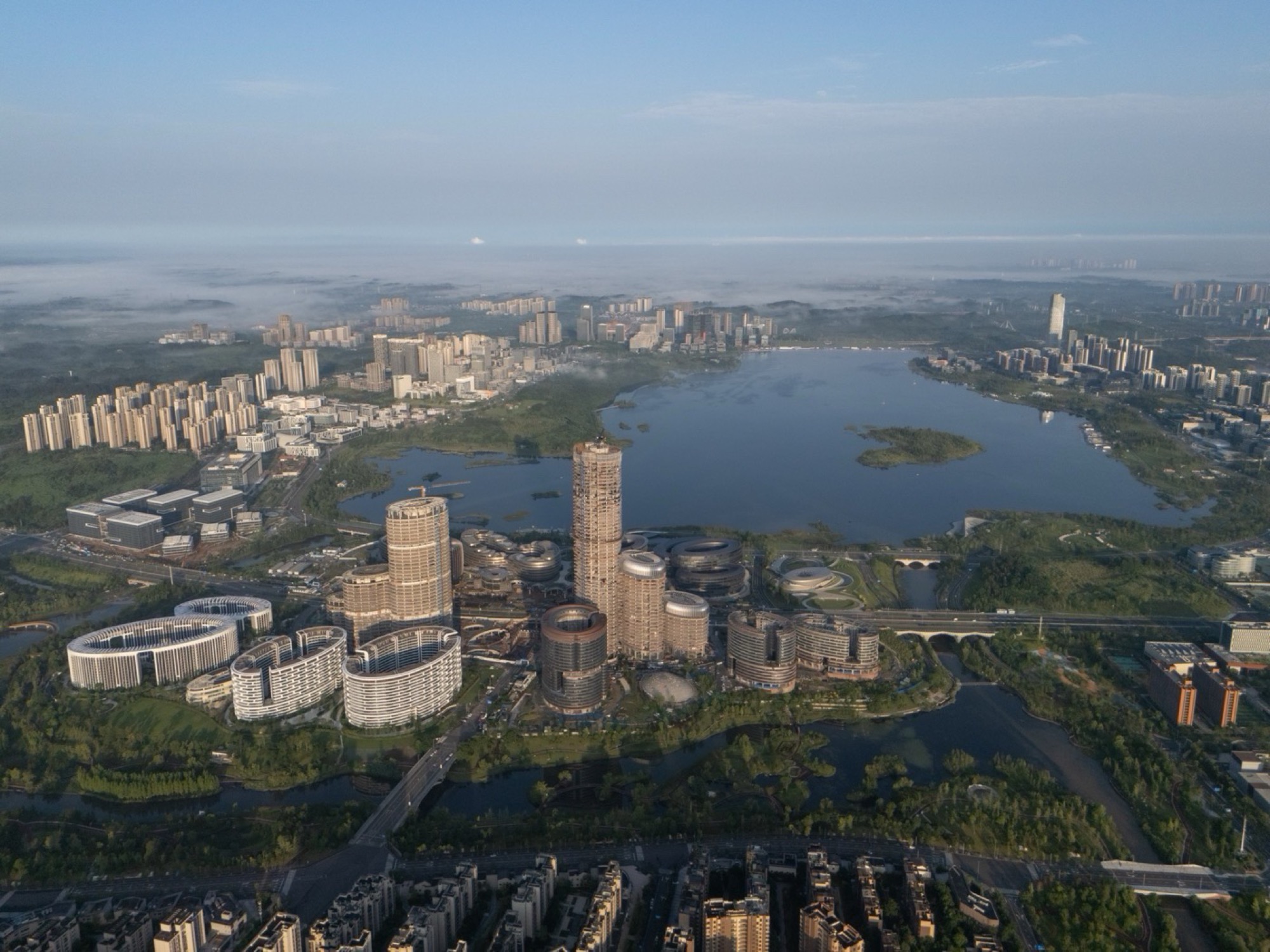
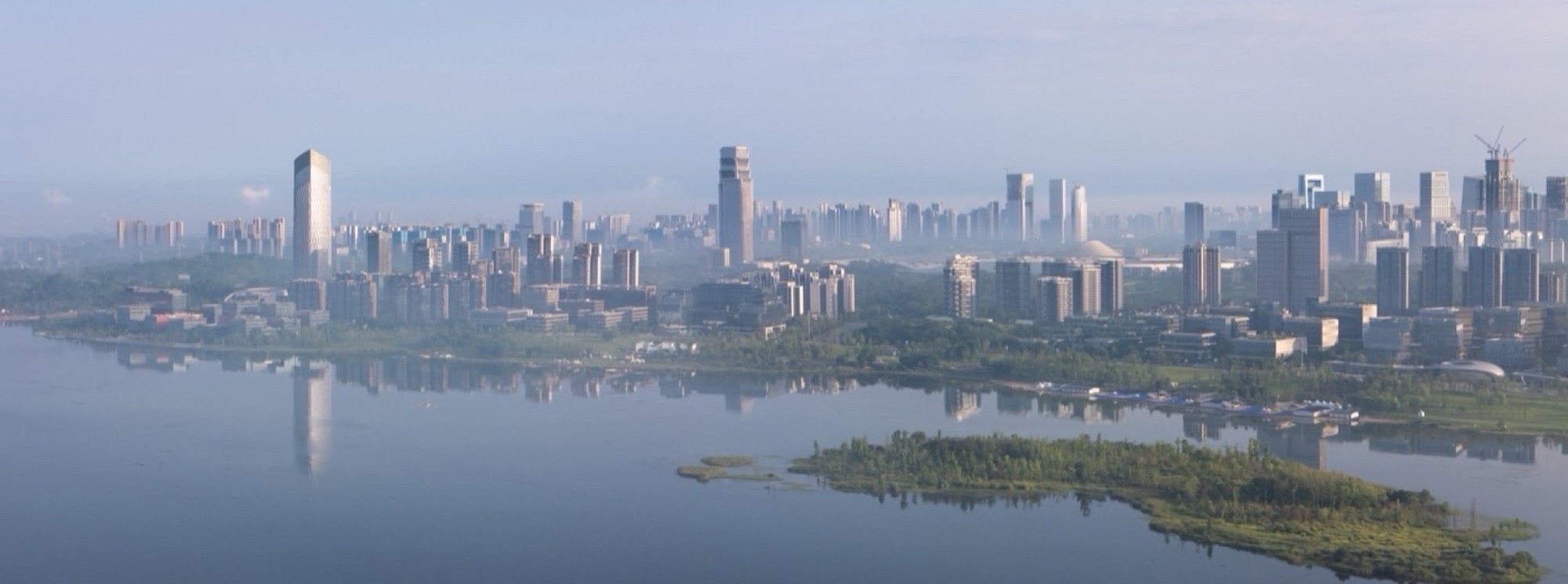
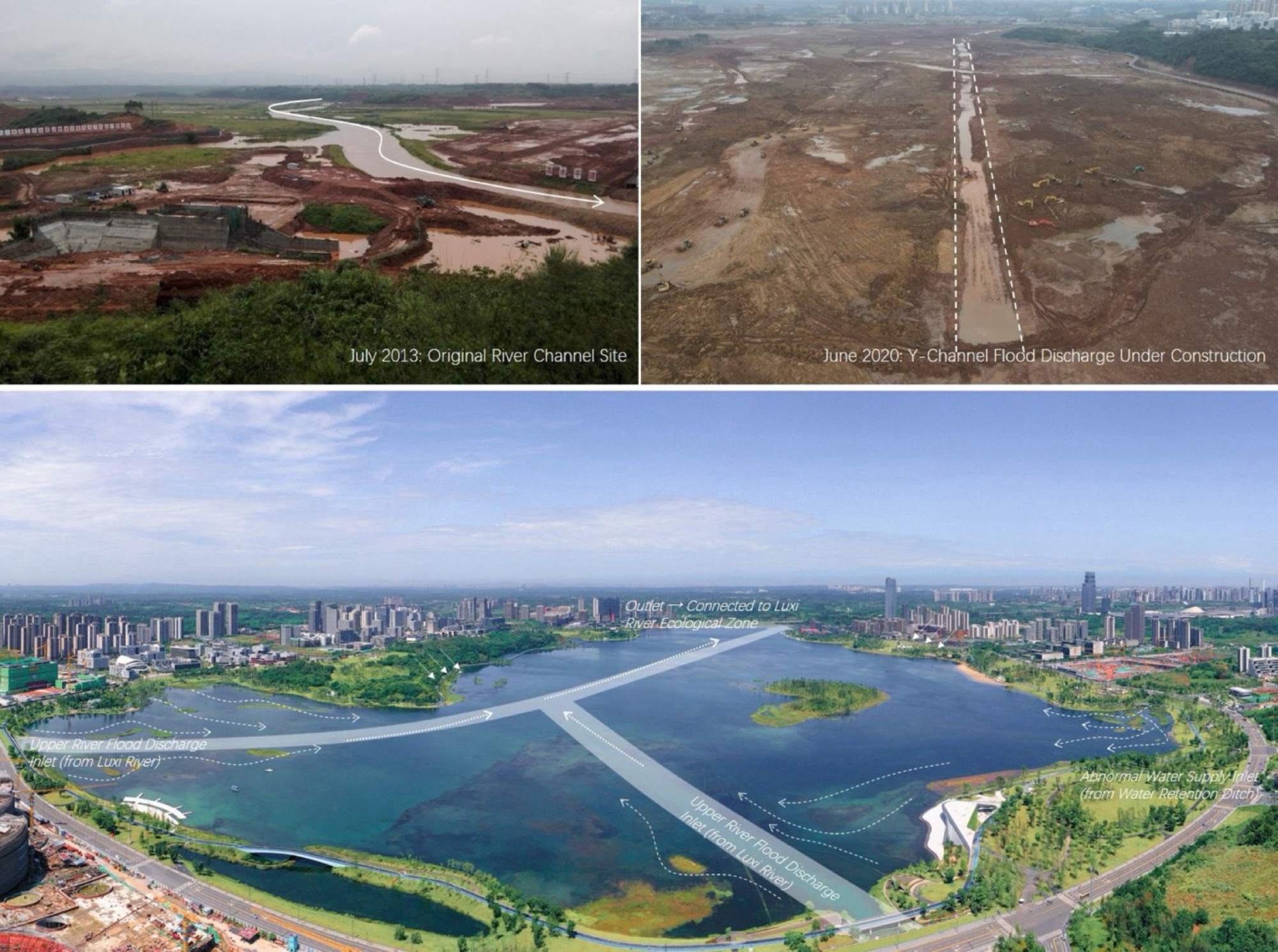
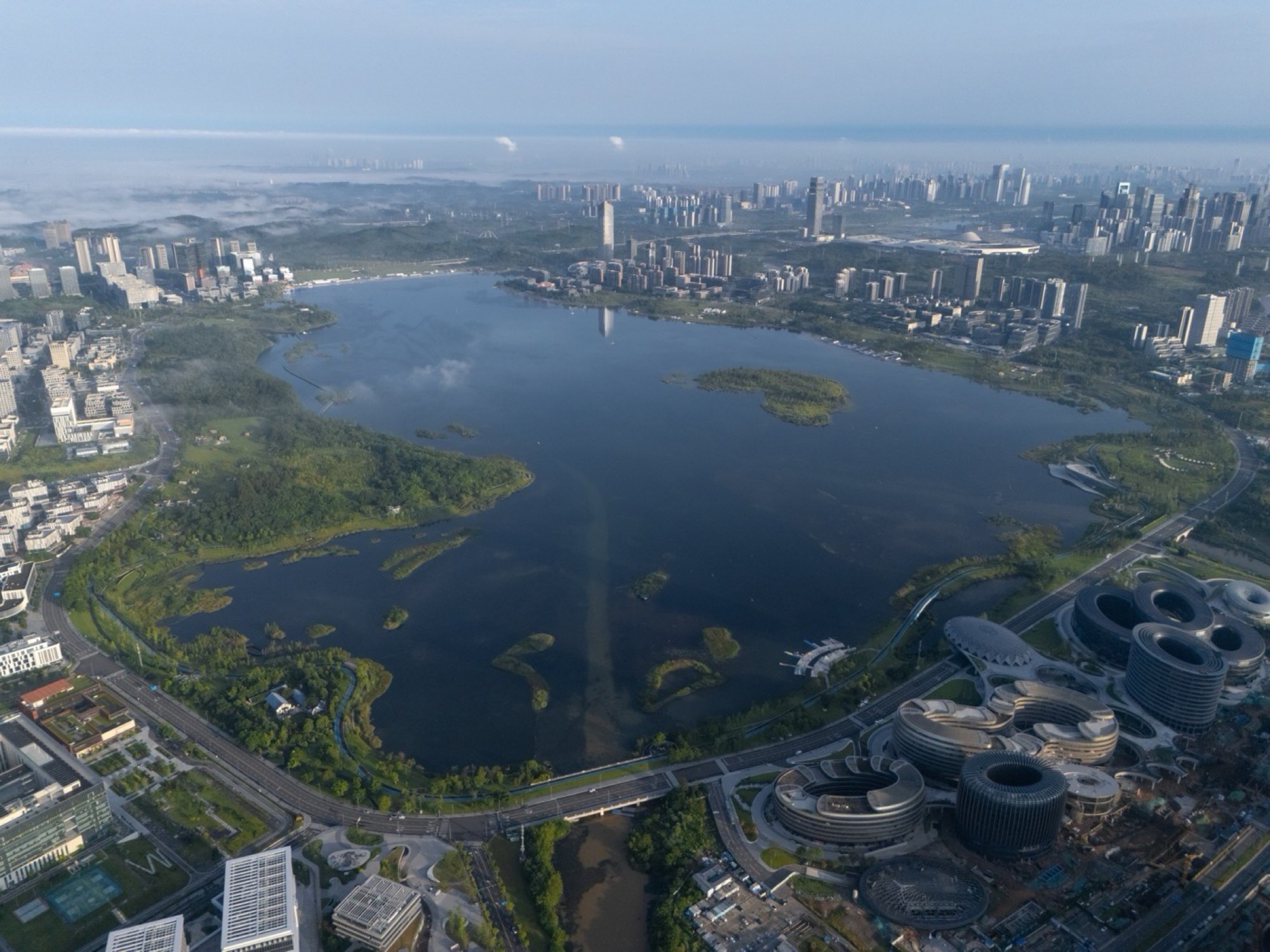
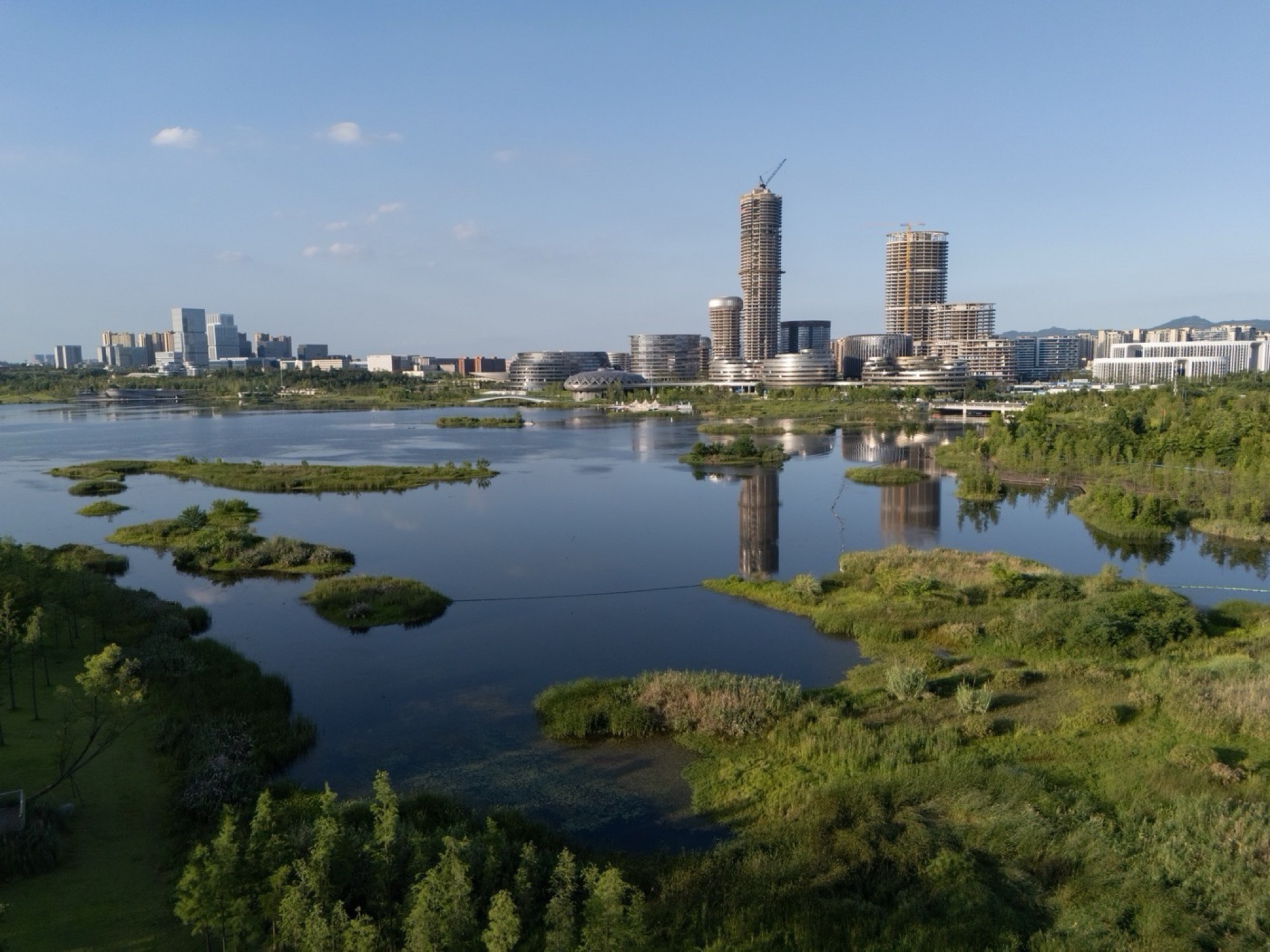
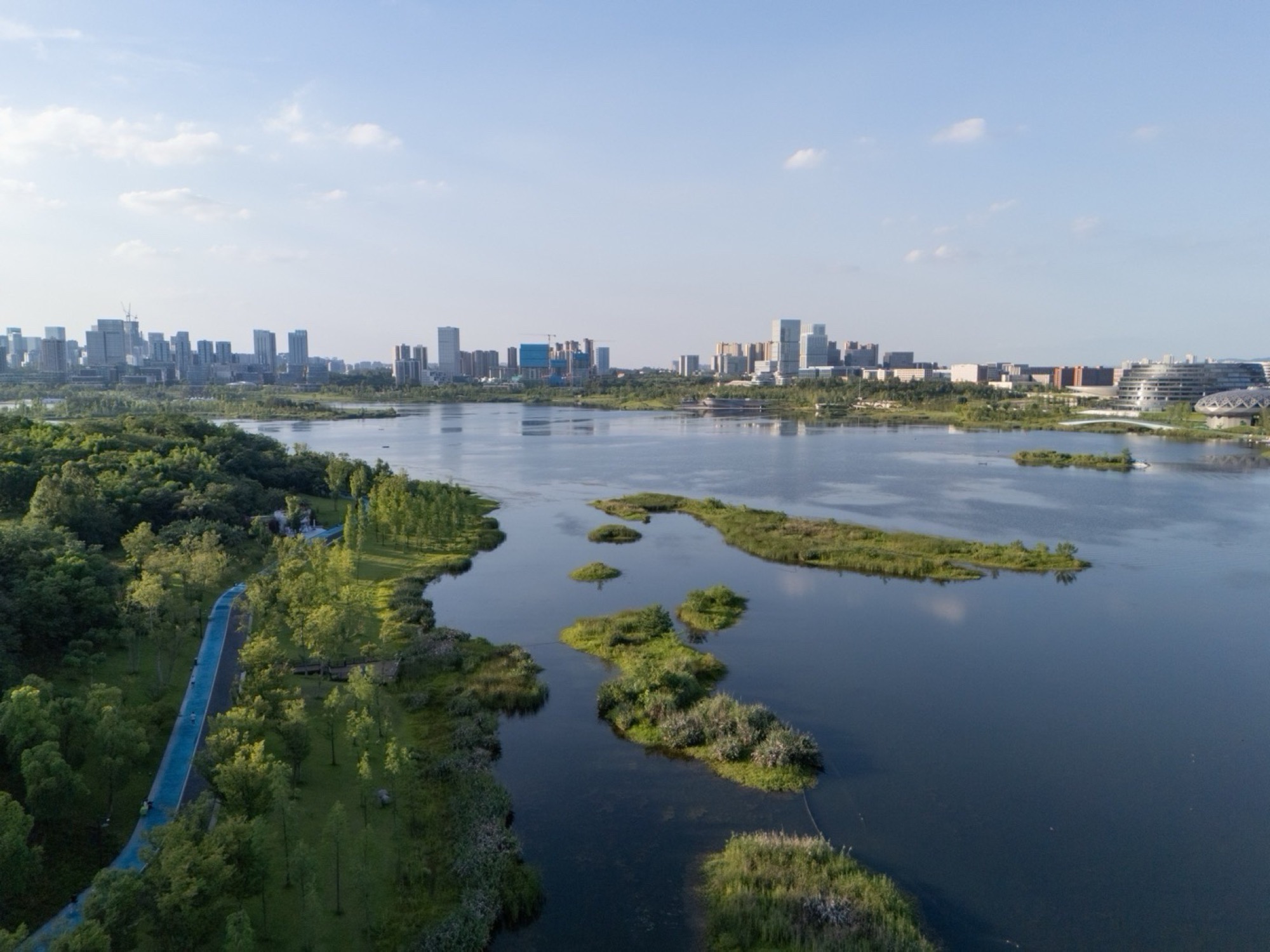
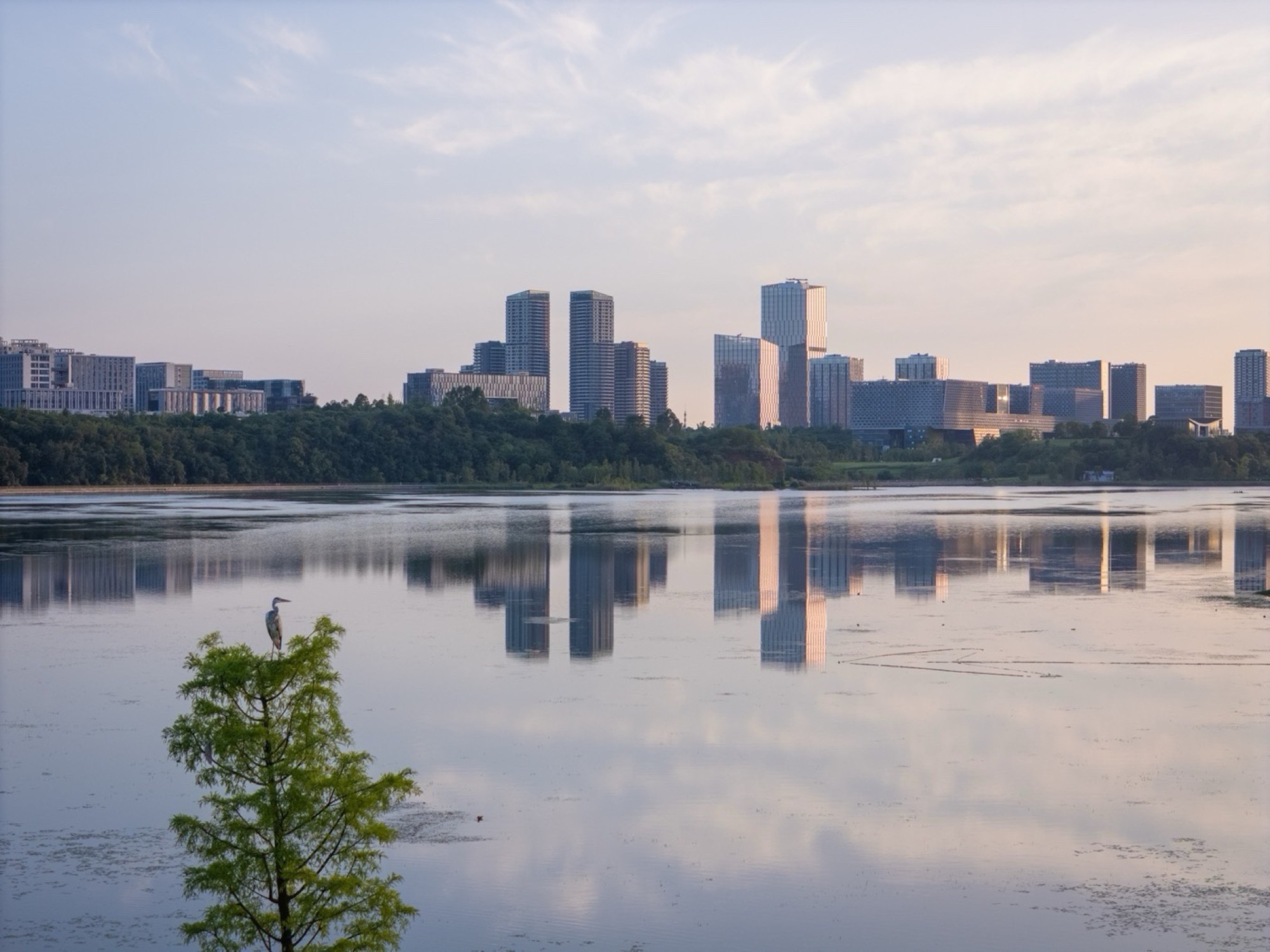
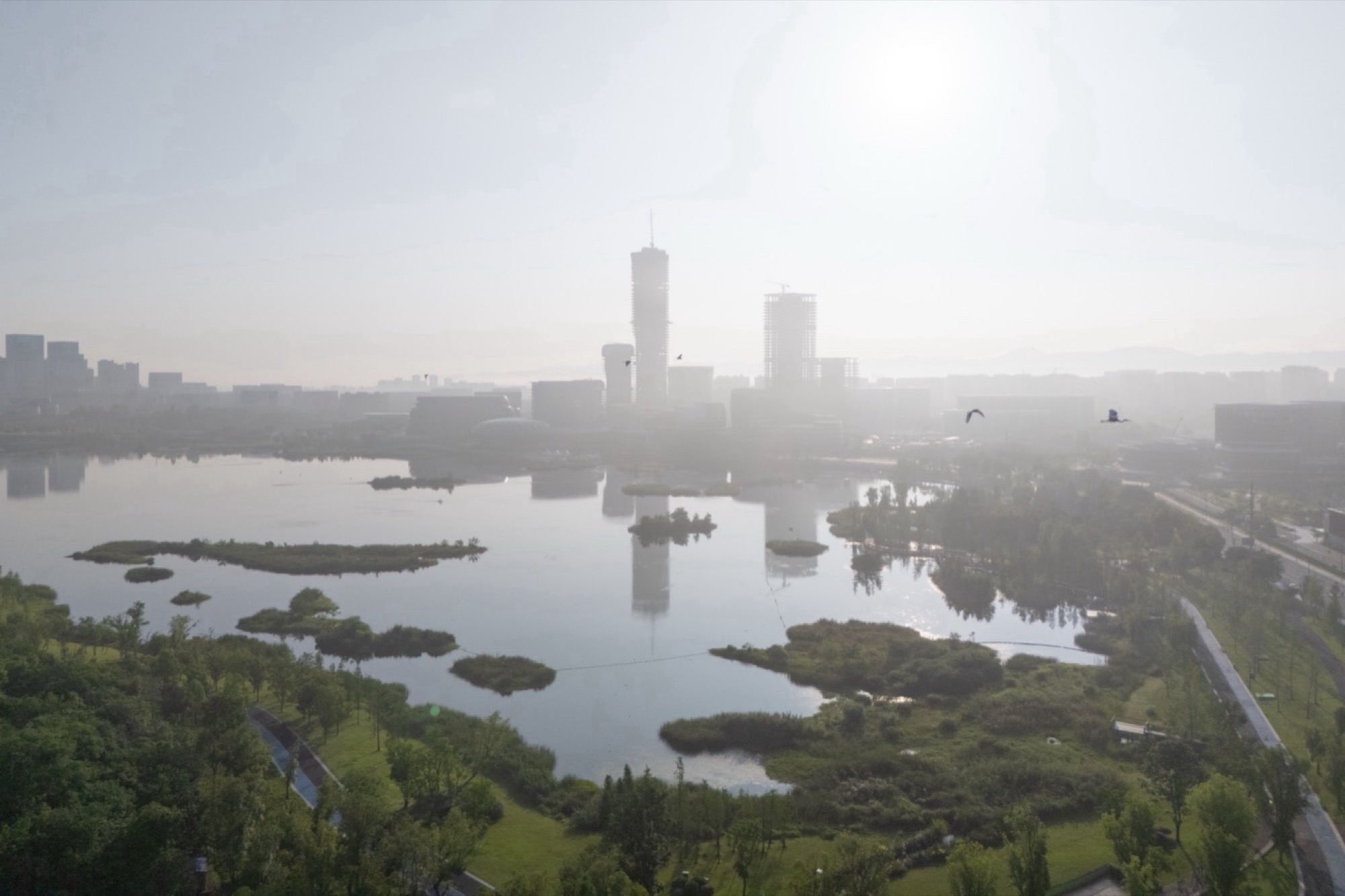
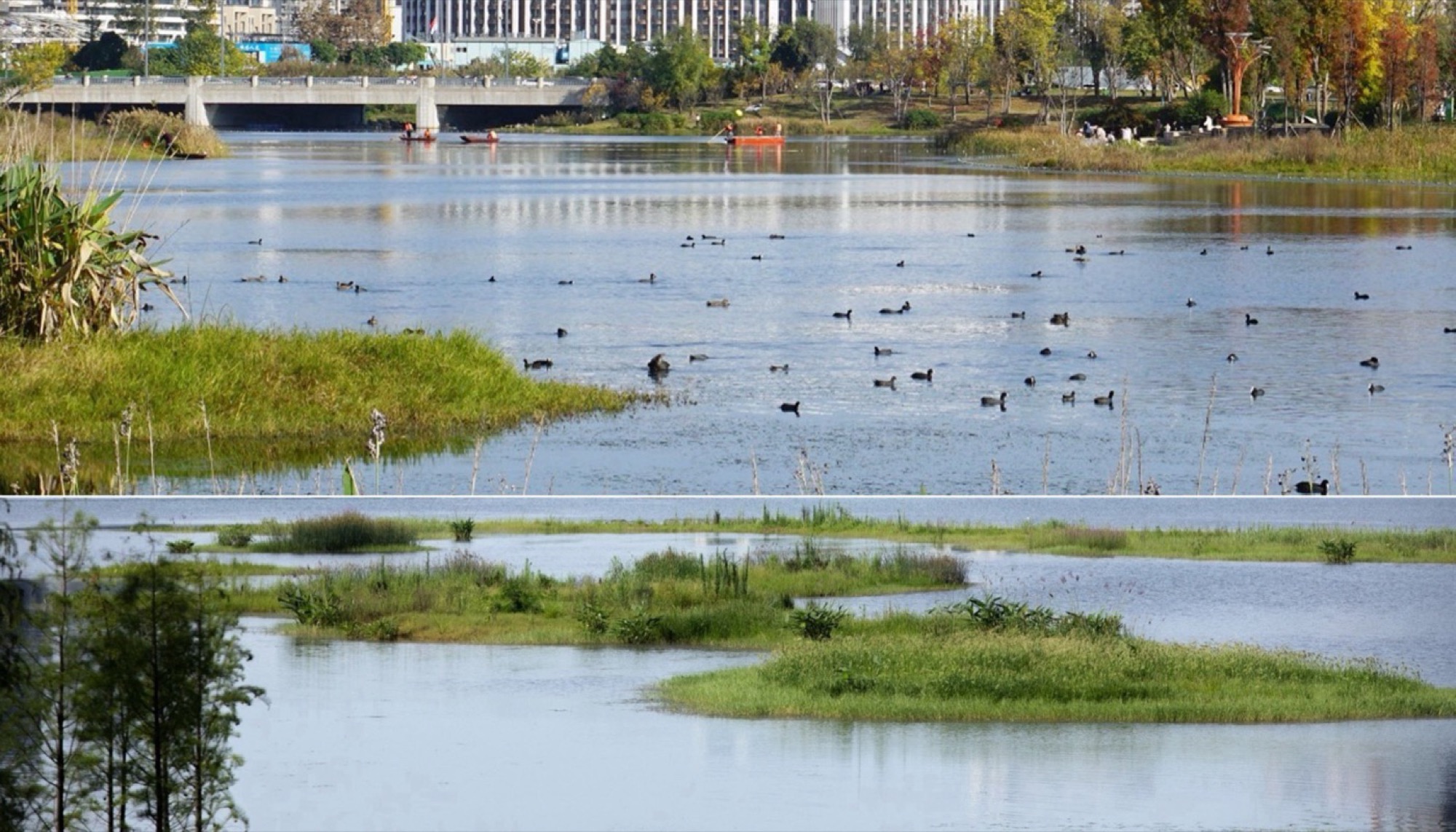
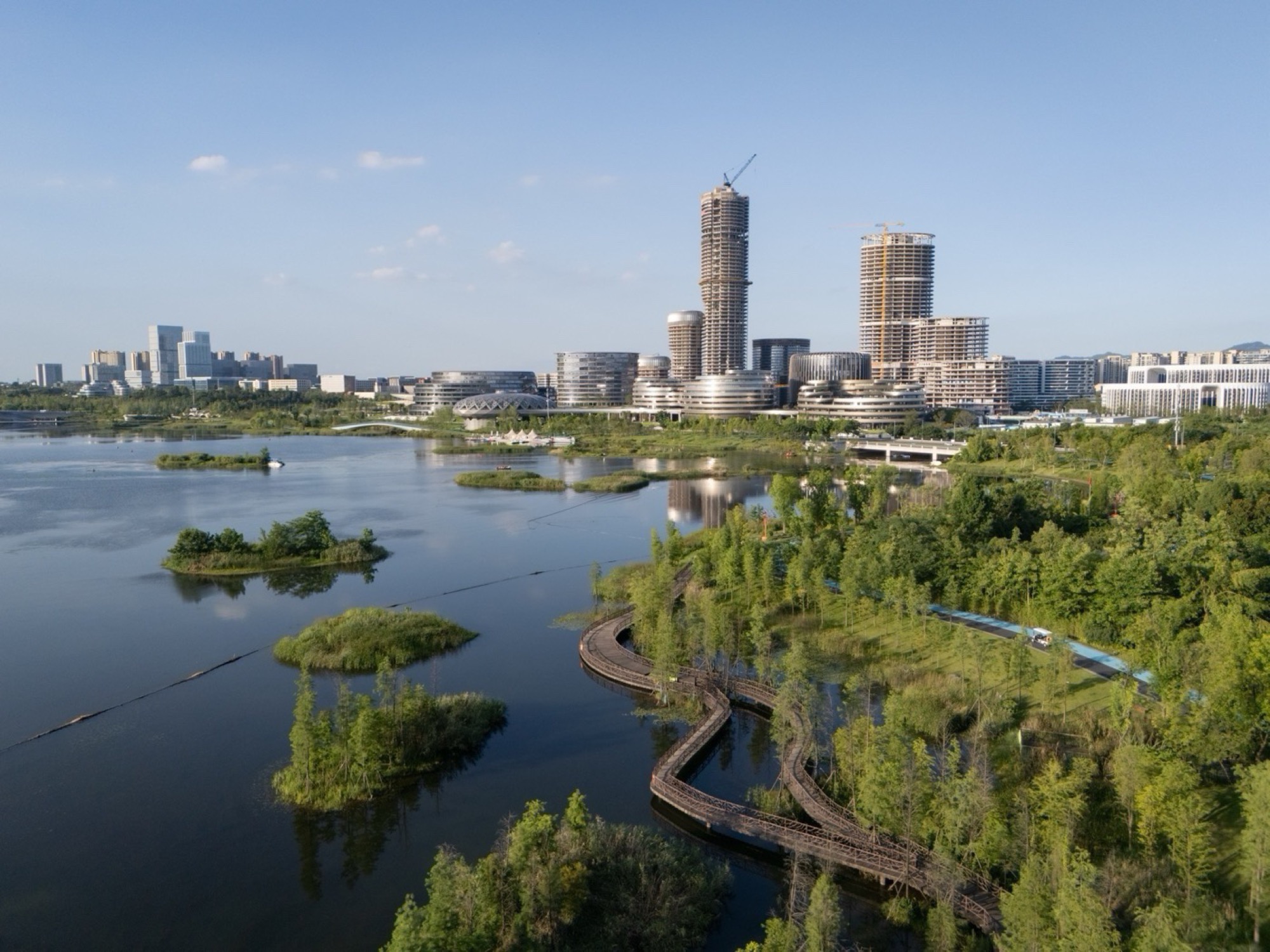
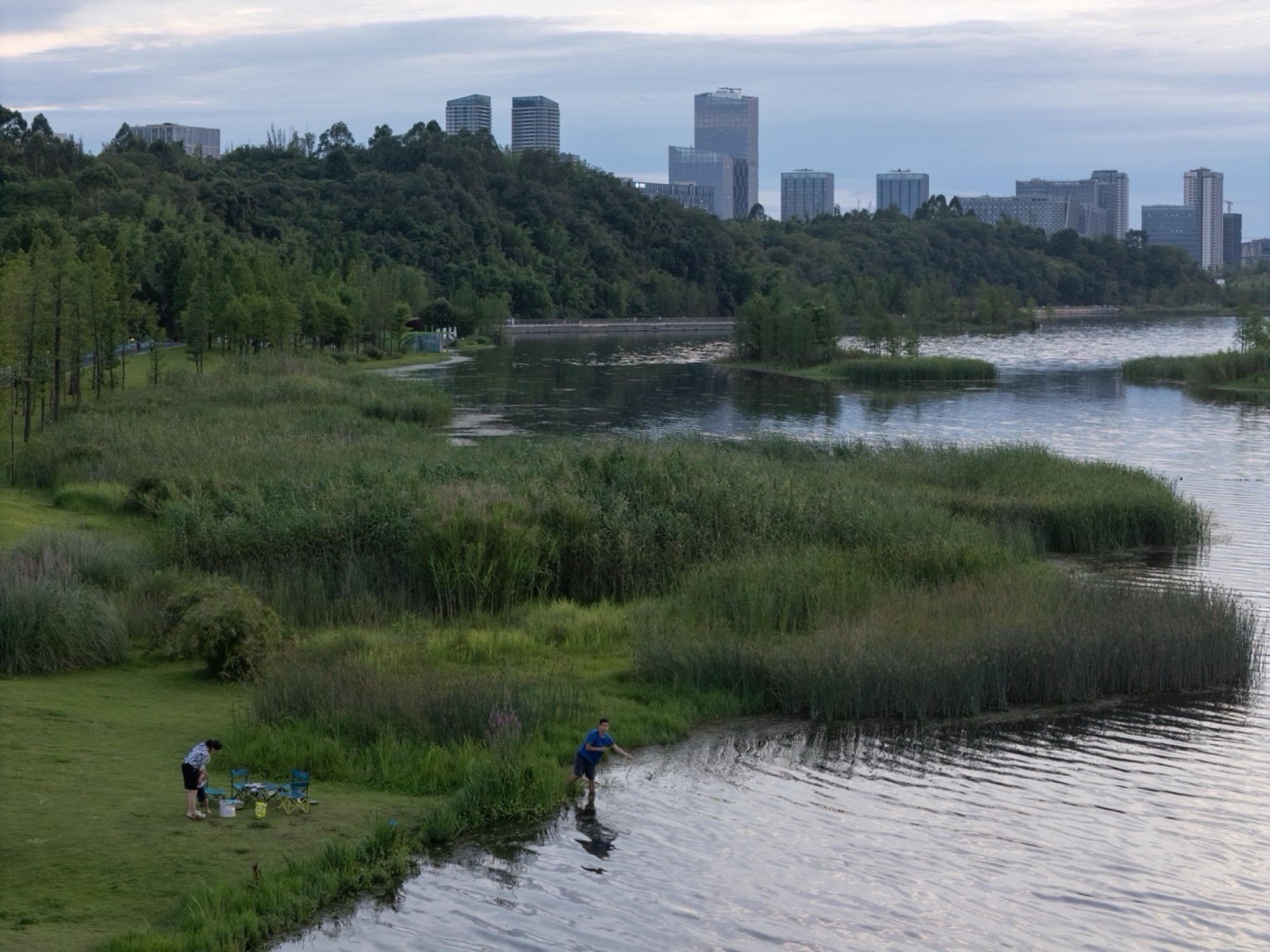
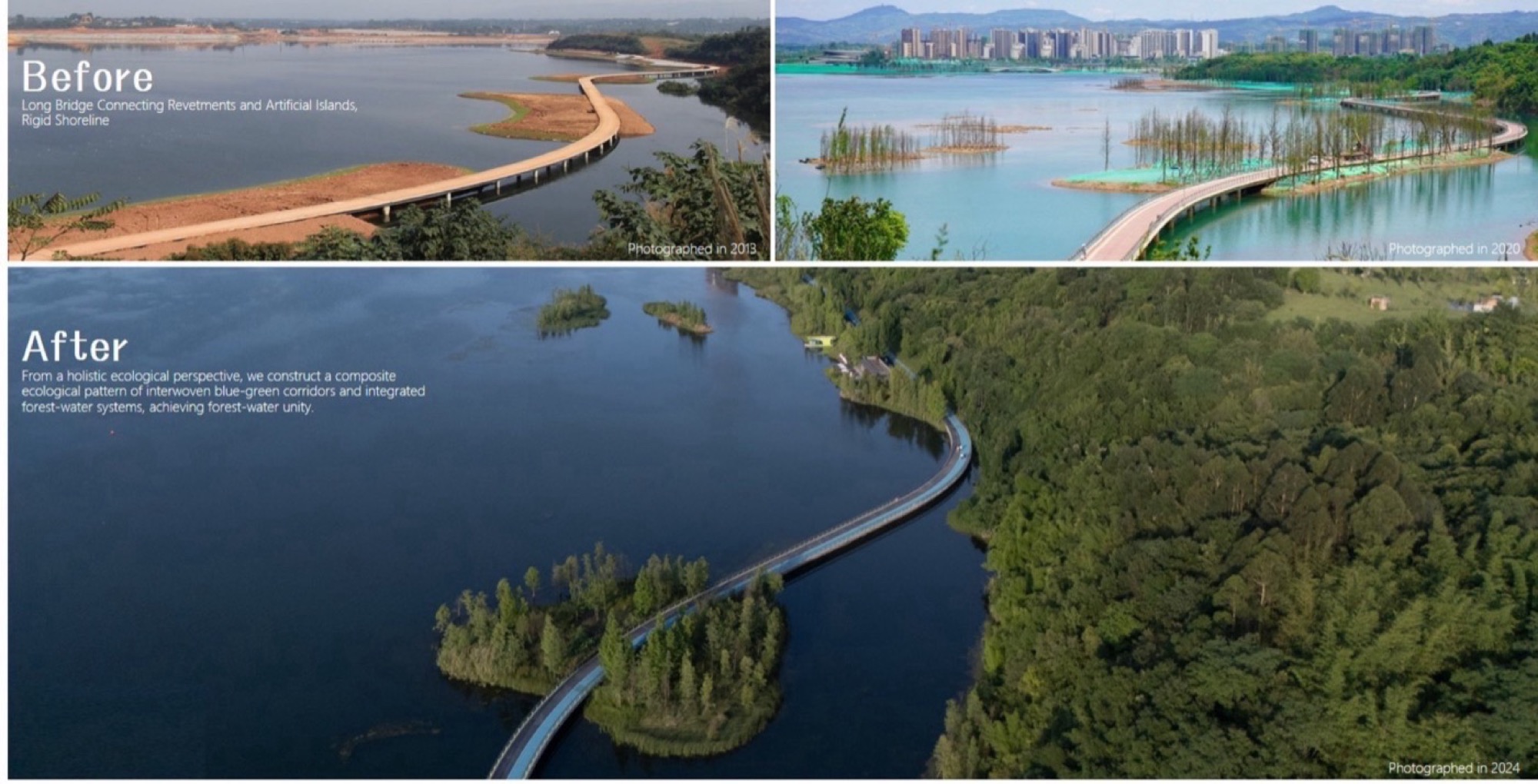
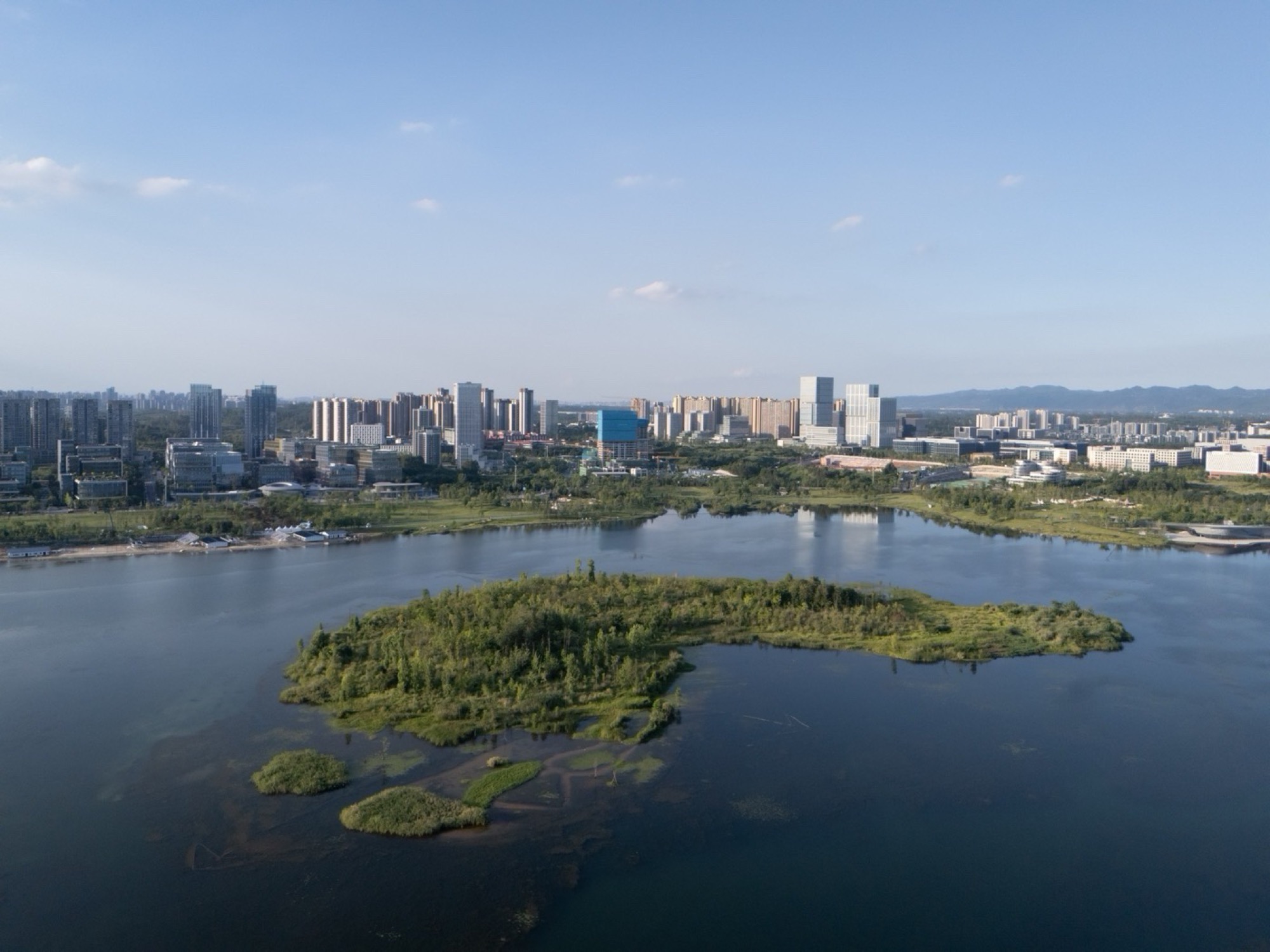
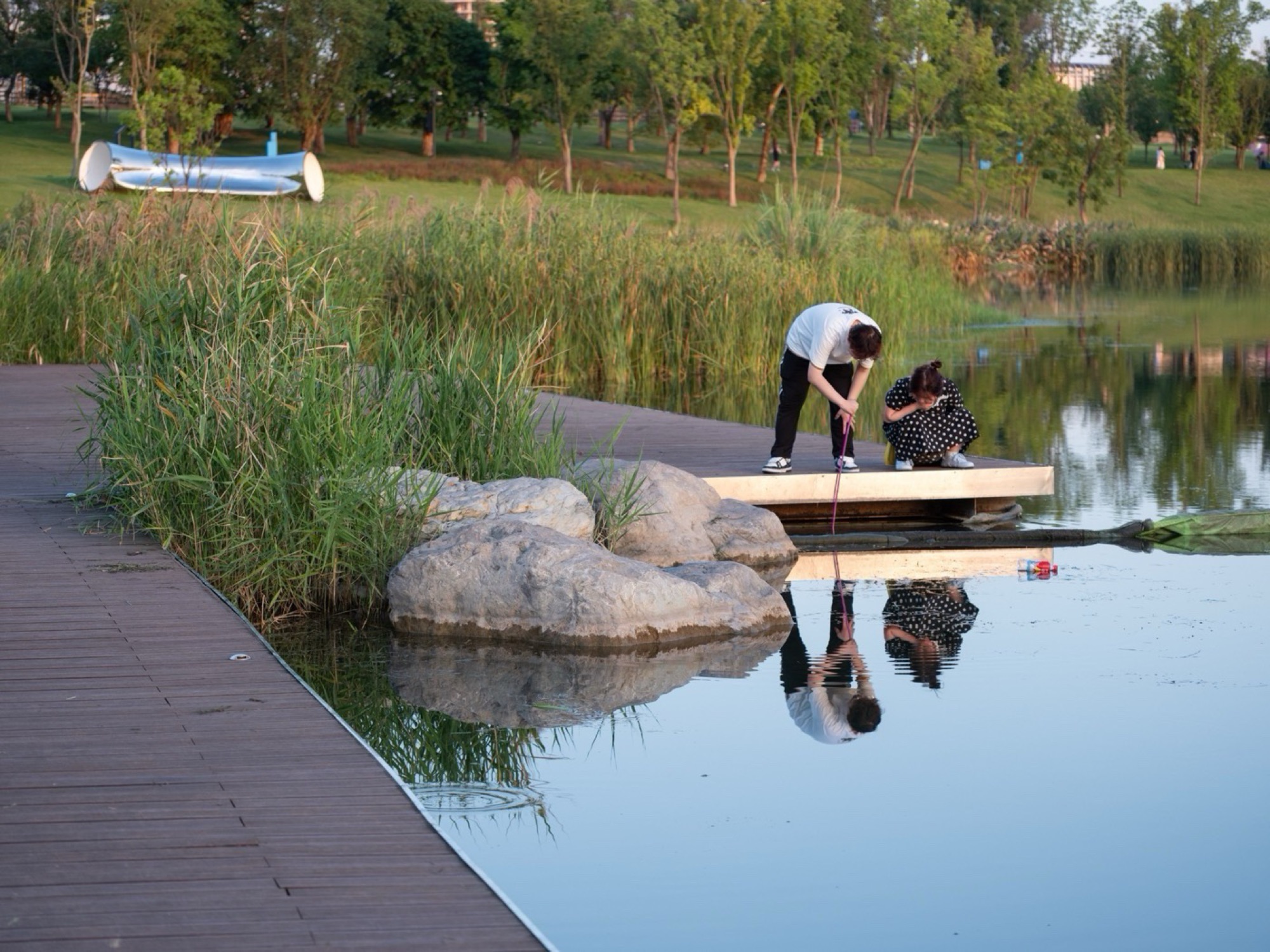
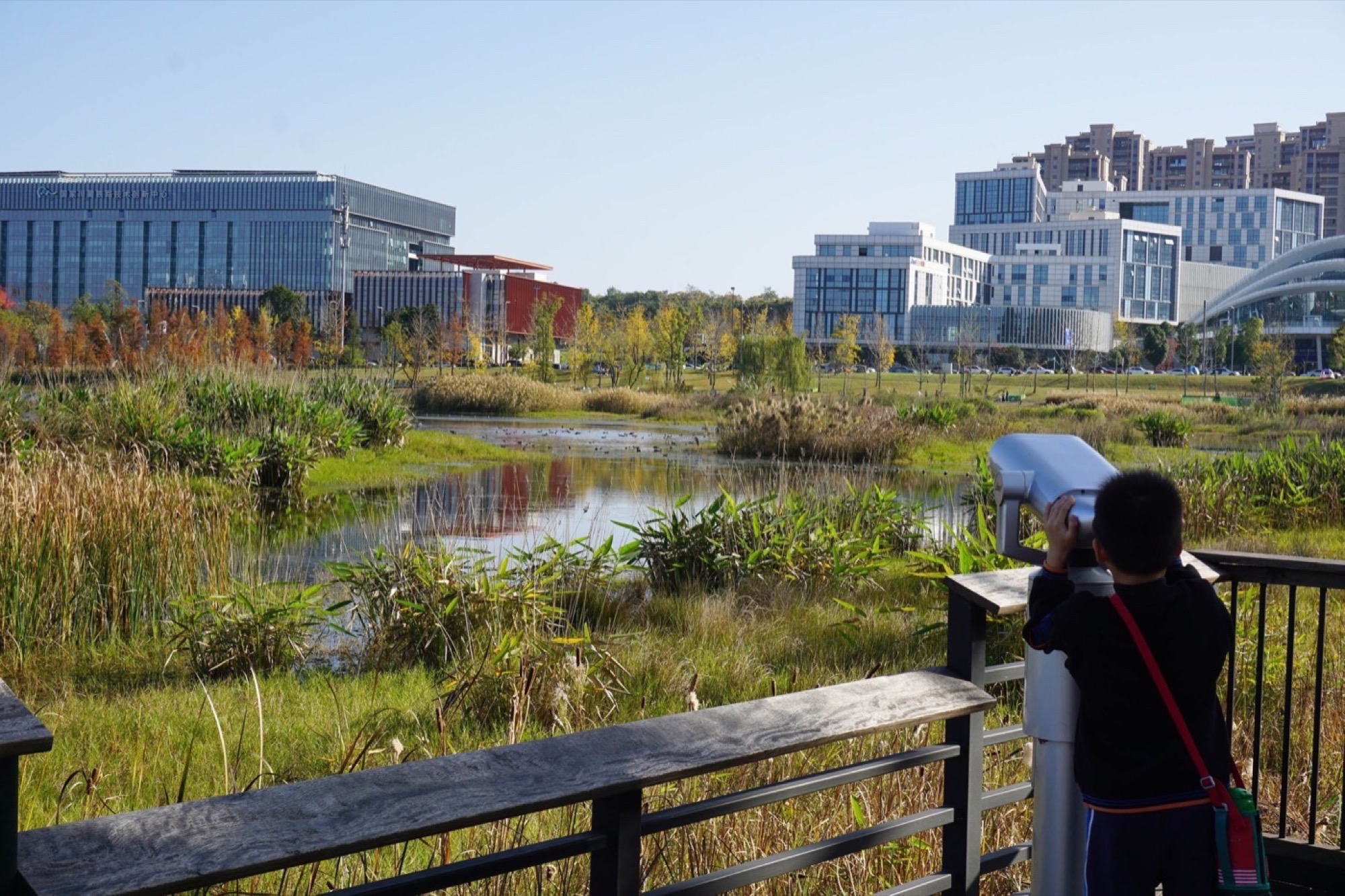
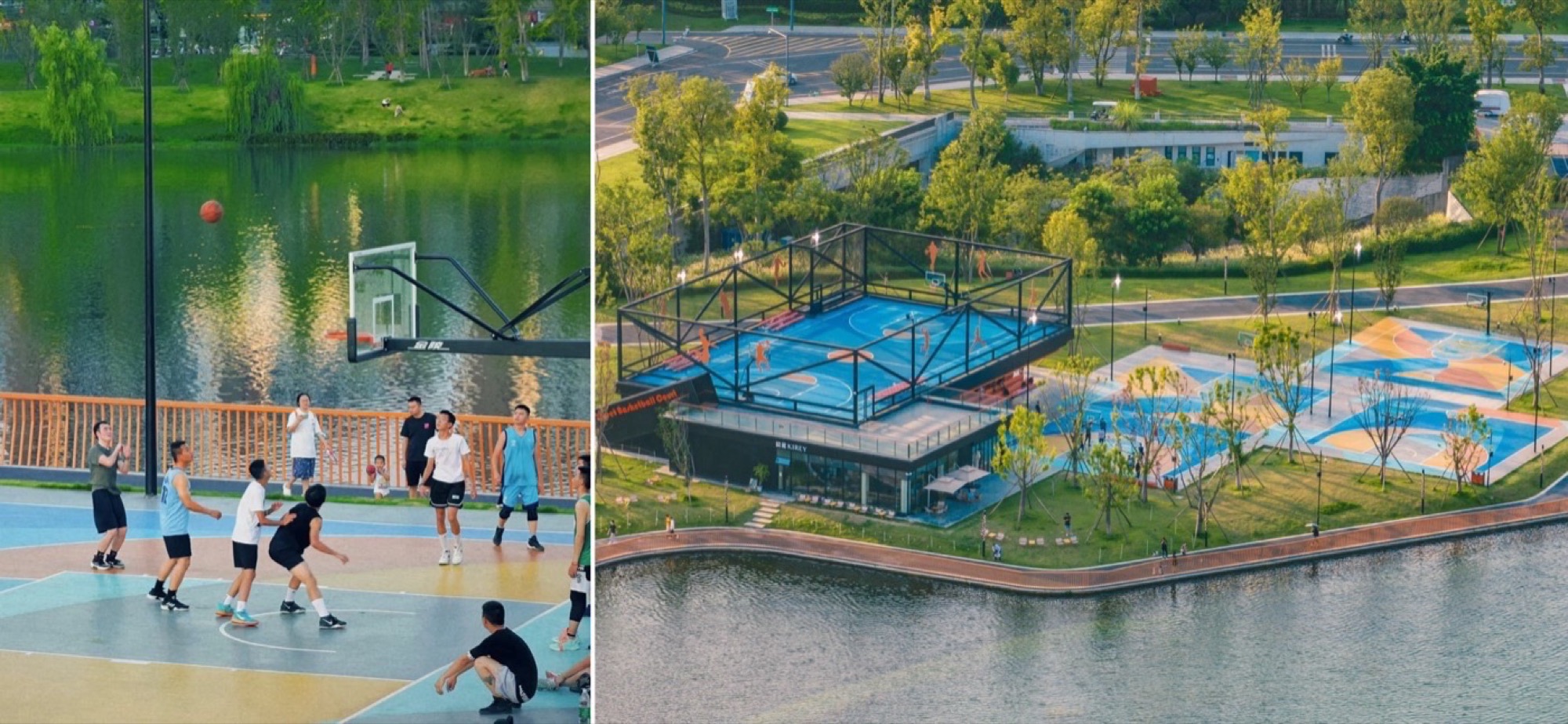
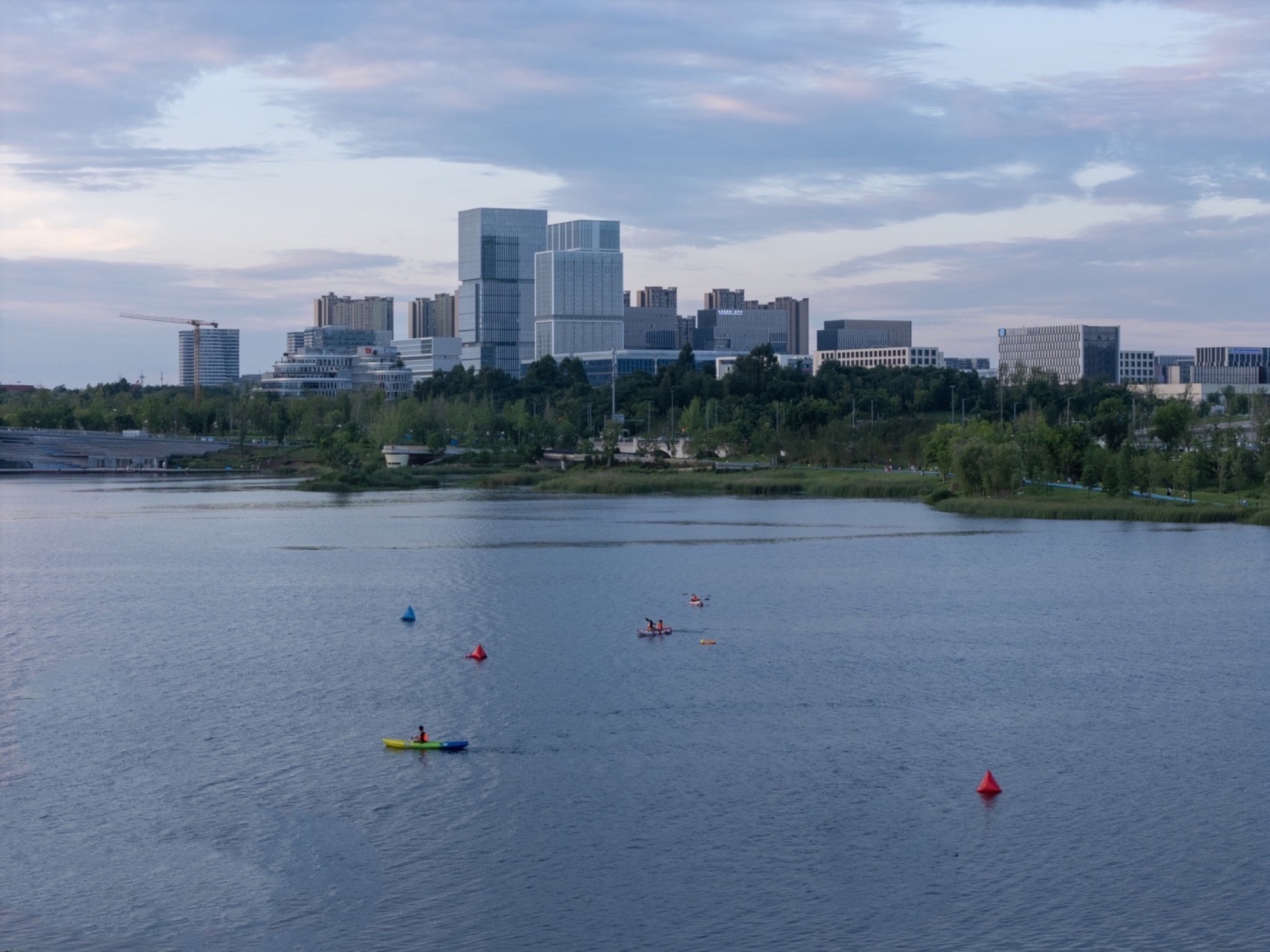
Re-examined from a watershed perspective, the lake occupies the topographic low of the Luxi River basin, receiving runoff from nearly 60 km². One year of flood simulations revealed that lake dysfunction is a symptom of a disrupted network, not an isolated water-body problem. Refusing to treat the lake in isolation, the intervention boundary was expanded: Xinglong Lake is redefined as the regulatory hub of Tianfu New Area’s hydraulic network, using a river–lake separation strategy that combines upstream detention, inlet management, and dynamic water exchange. It stores water in dry seasons and attenuates flood peaks in rainy seasons, reducing downstream flood risk by 30–40%. It has transformed from a static ornamental water body into a dynamic hydraulic organ breathing with the seasonal rhythms of the basin.
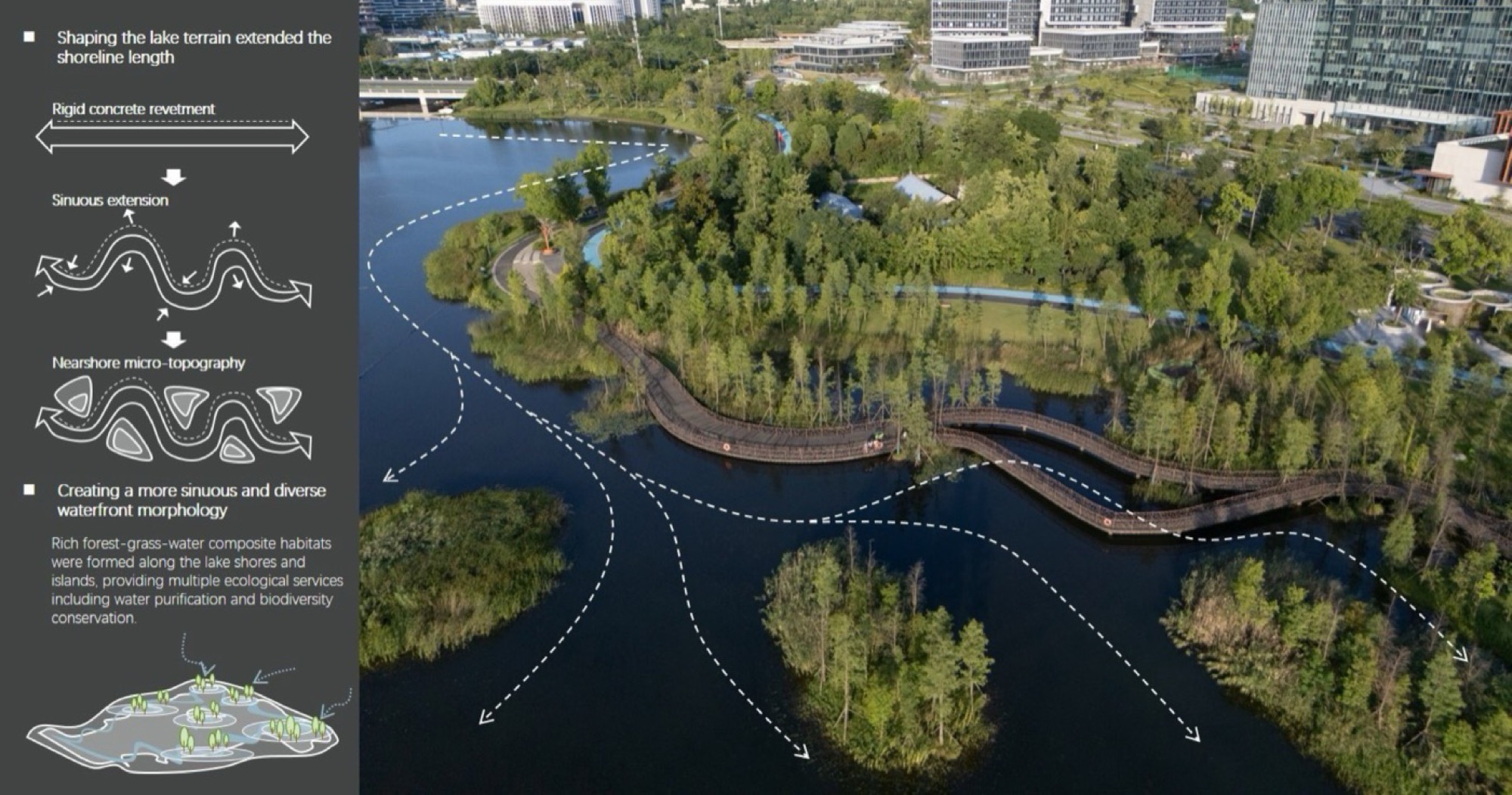
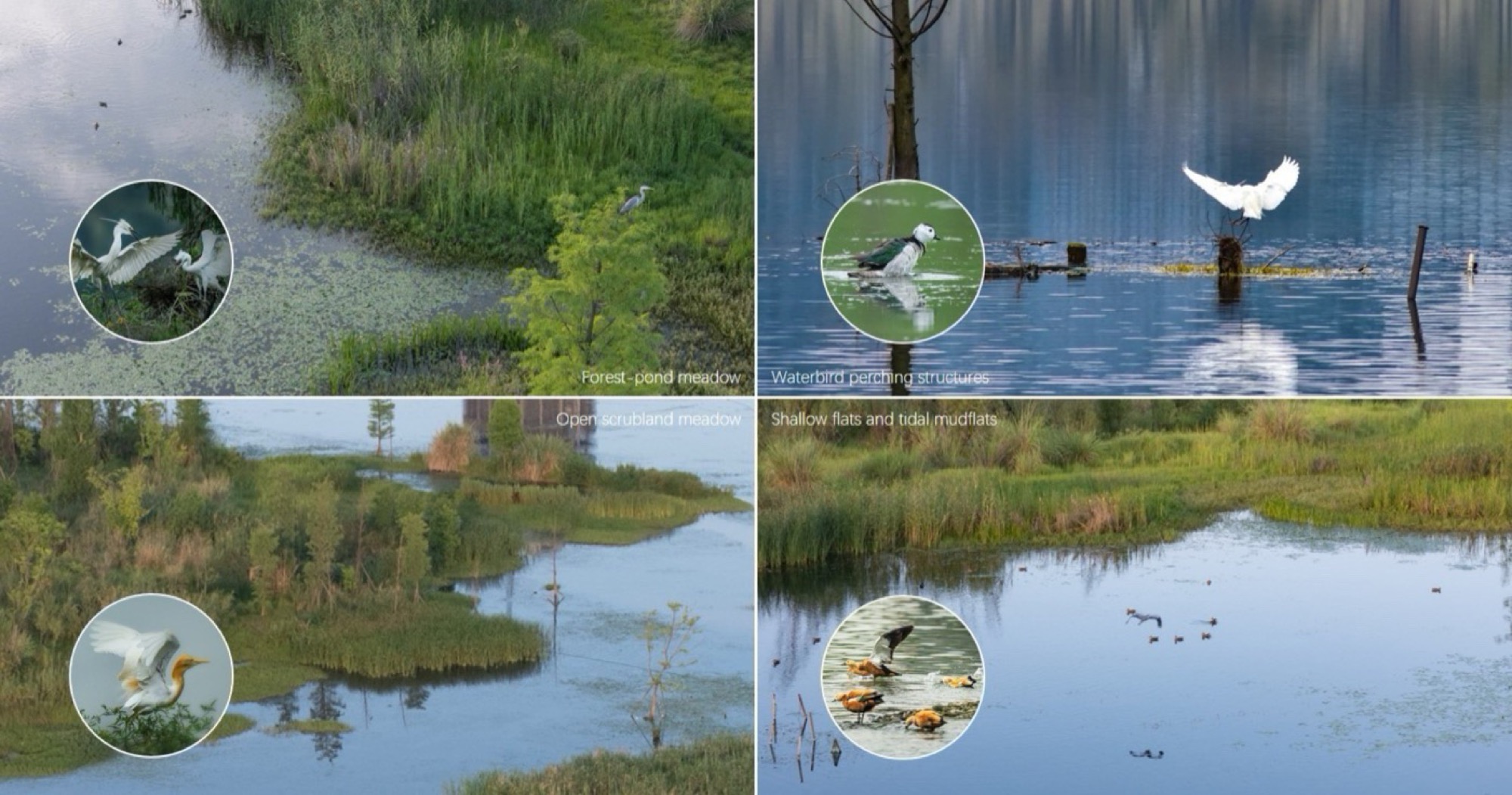
Biodiversity cannot be commanded; conditions must be prepared. The project creates a lateral ecological gradient from deep water to terrestrial forests, building four habitat types through rewilding.
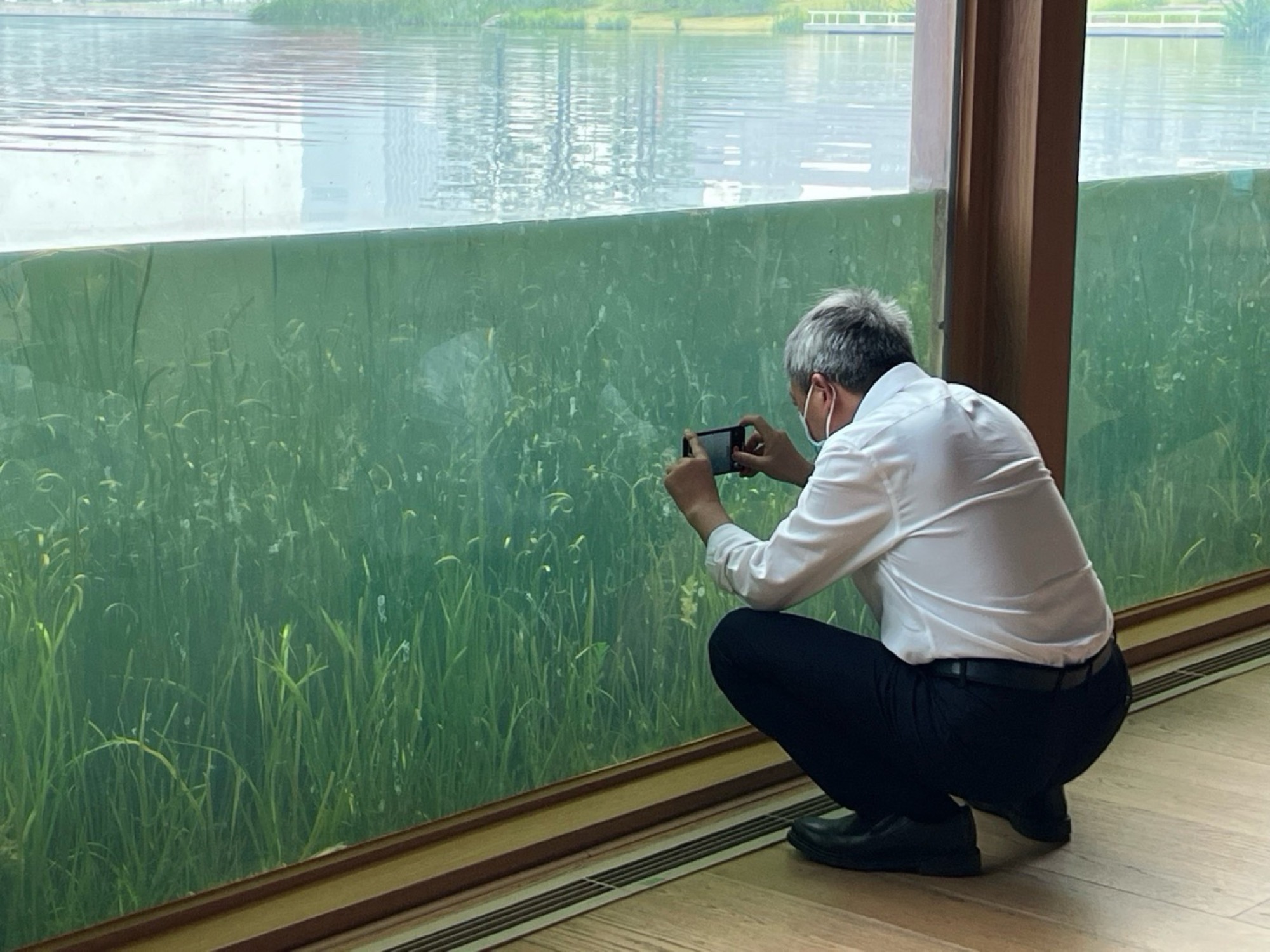
– Aquatic Habitat: a stable underwater ecosystem centered on “submerged plant communities + underwater food web structure.” Vallisneria and Hydrilla dominate an underwater forest with 75.3% coverage, supplying fish spawning grounds, oxygenating water, and driving ecosystem recovery.
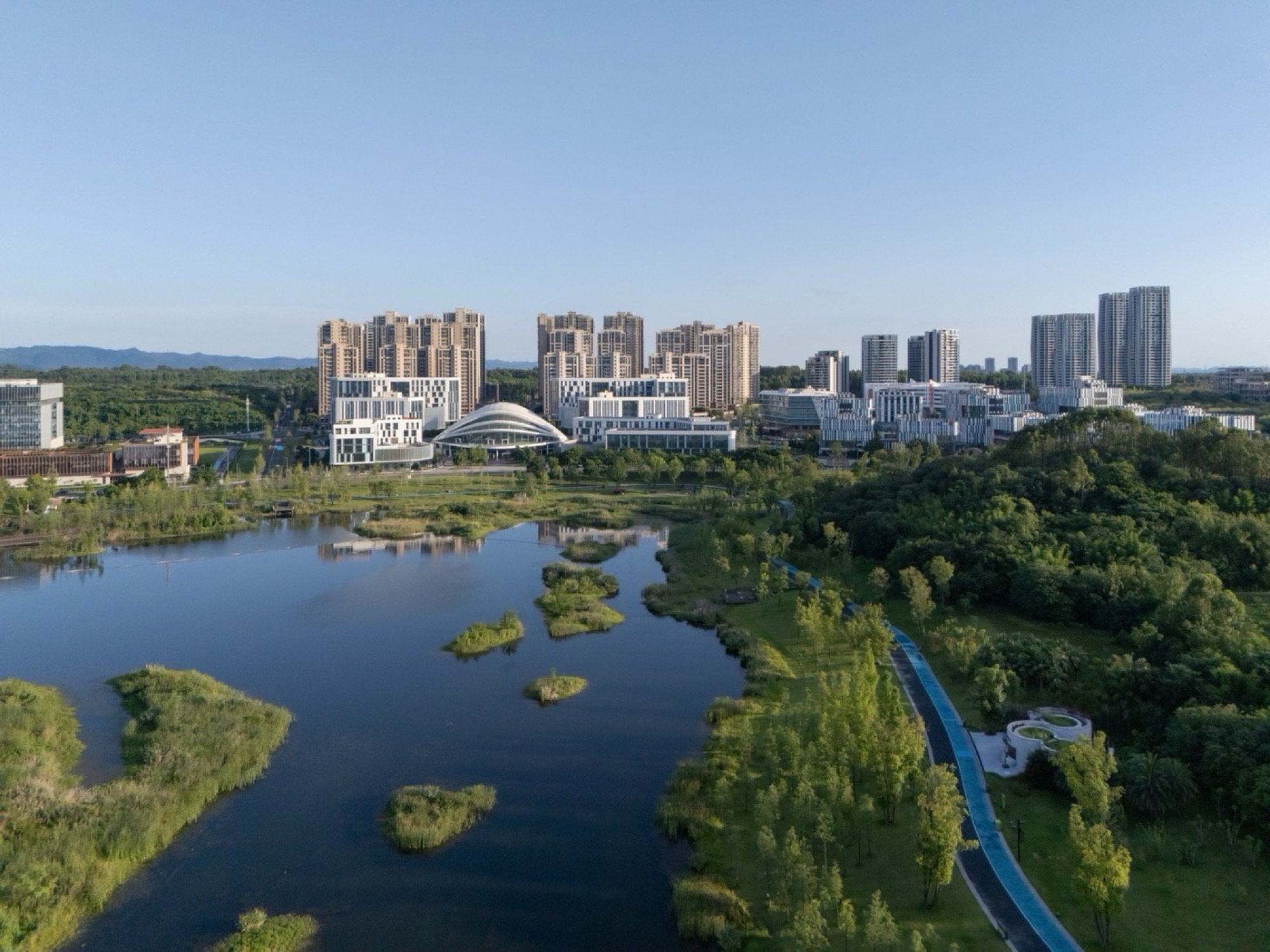
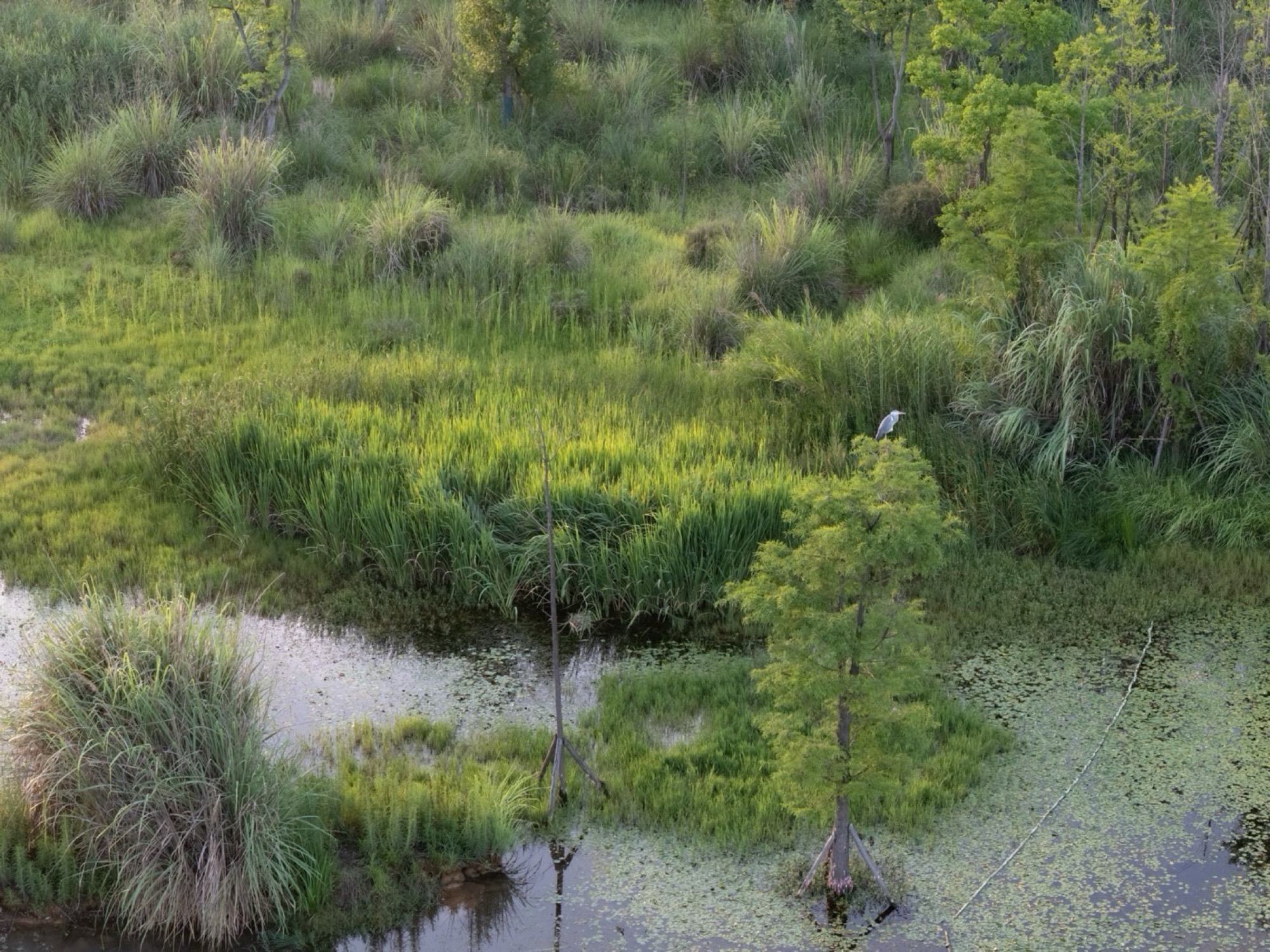
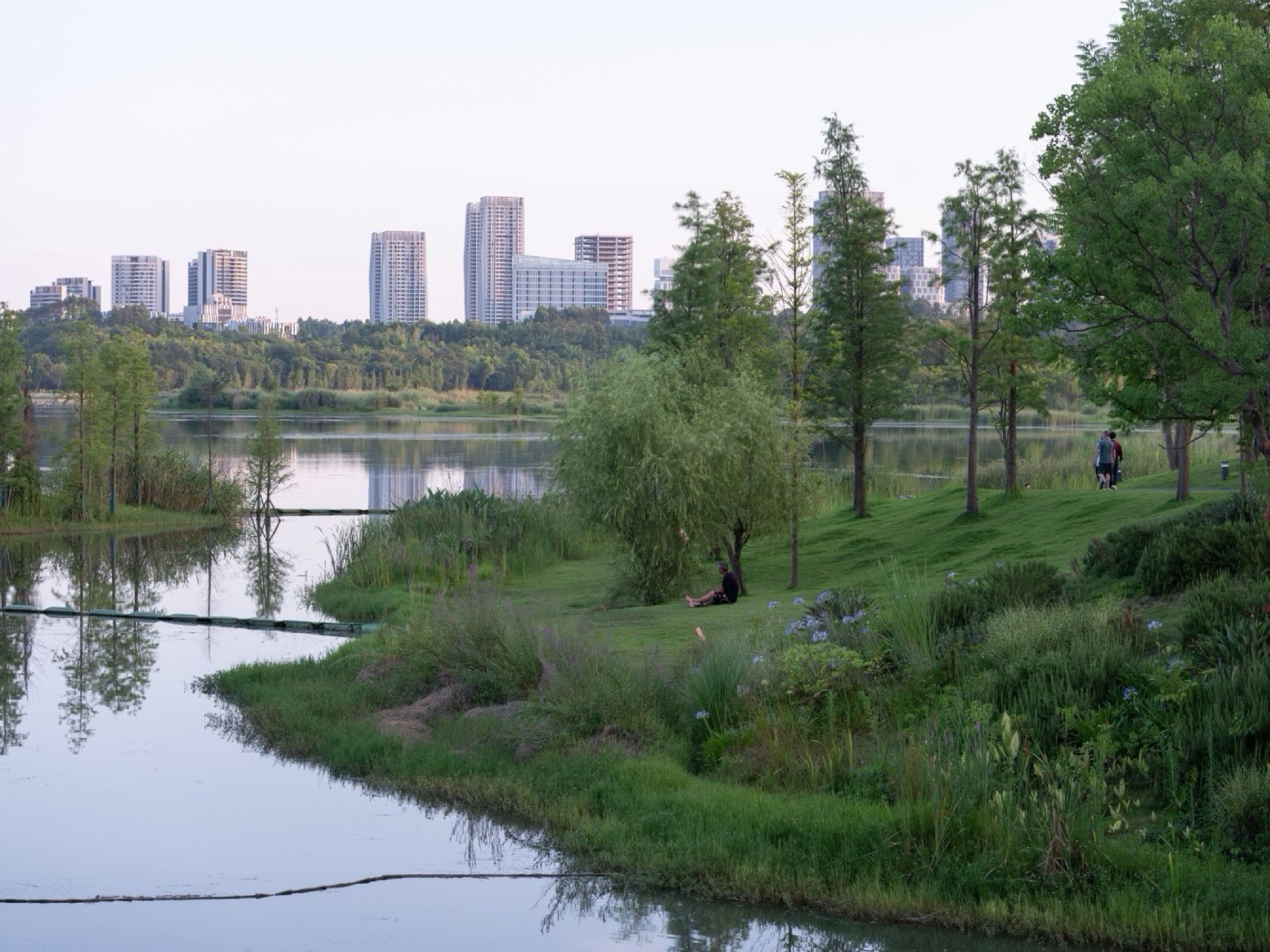
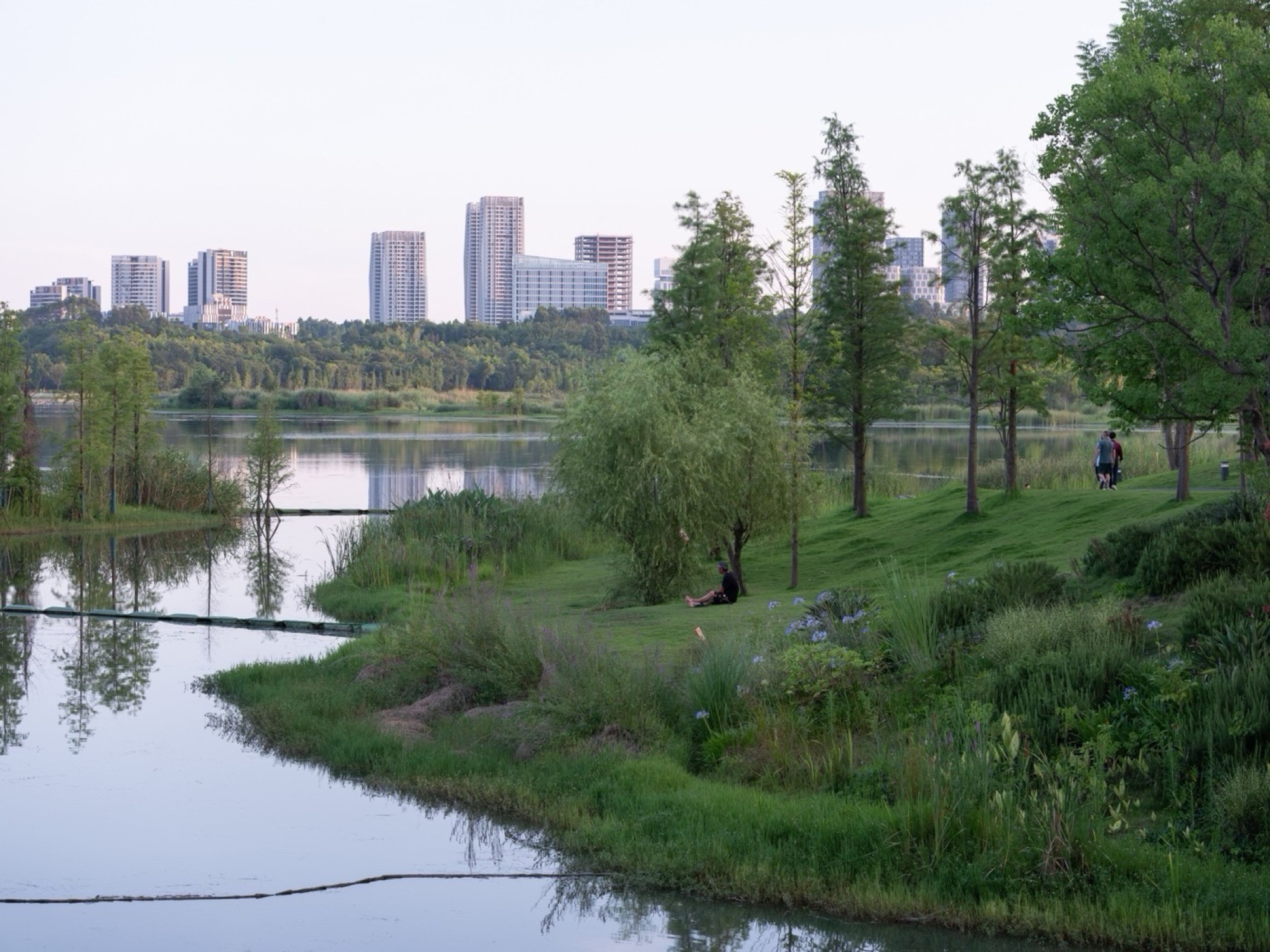
– Wetland Habitat: shallow littoral zones planted with water-tolerant trees and wetland herbs filter runoff and create waterbird foraging corridors; constructed wetlands purify tributary inflows and form an ecological island chain that serves as critical stepping stones.
– Island Habitat: a central island exceeding 90,000 m² remains closed to the public as an undisturbed breeding sanctuary. Irregular microtopography—swales, wooded pond meadows, sparse tree meadows, lagoon shallows—provides an enclosed wilderness that meets diverse nesting requirements.
– Terrestrial Forest Habitat: vegetated edges absorb wave energy and form the essential aquatic–terrestrial ecotone for amphibians. An uneven-aged, multi-storied mixed forest creates layers of canopy–understory–forest edge–shrub thicket, using native saplings from juvenile to mature, fast- and slow-growing species, trees, shrubs and herbs.
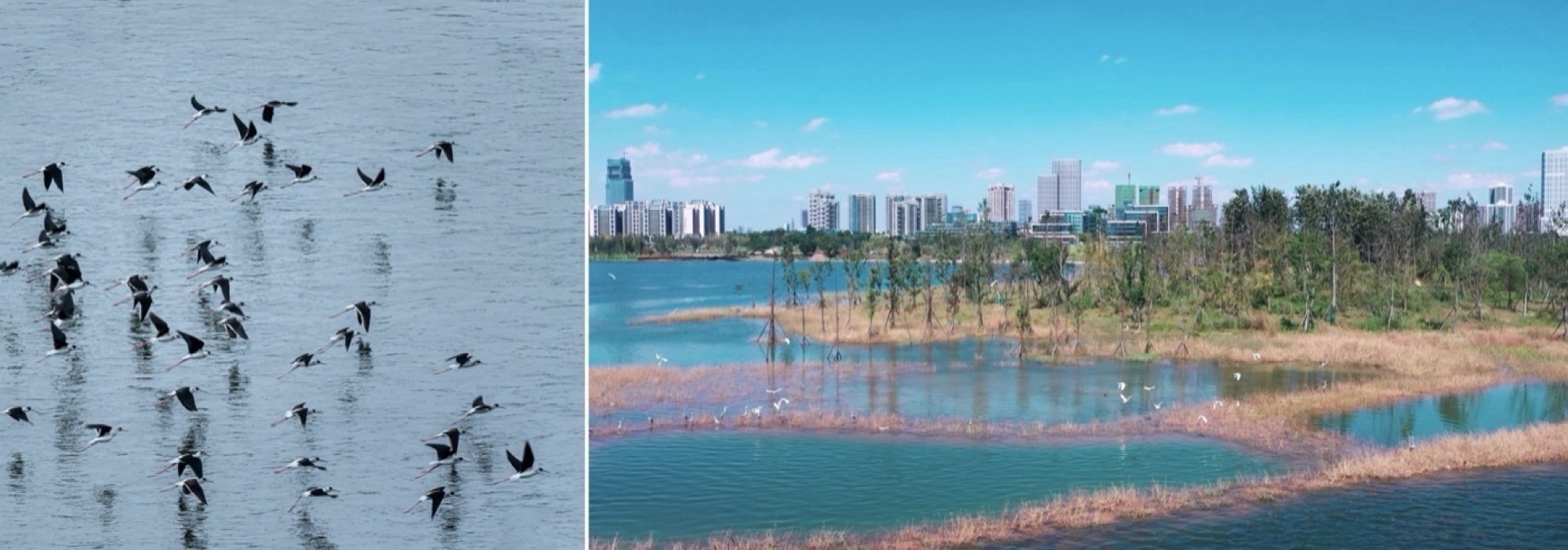
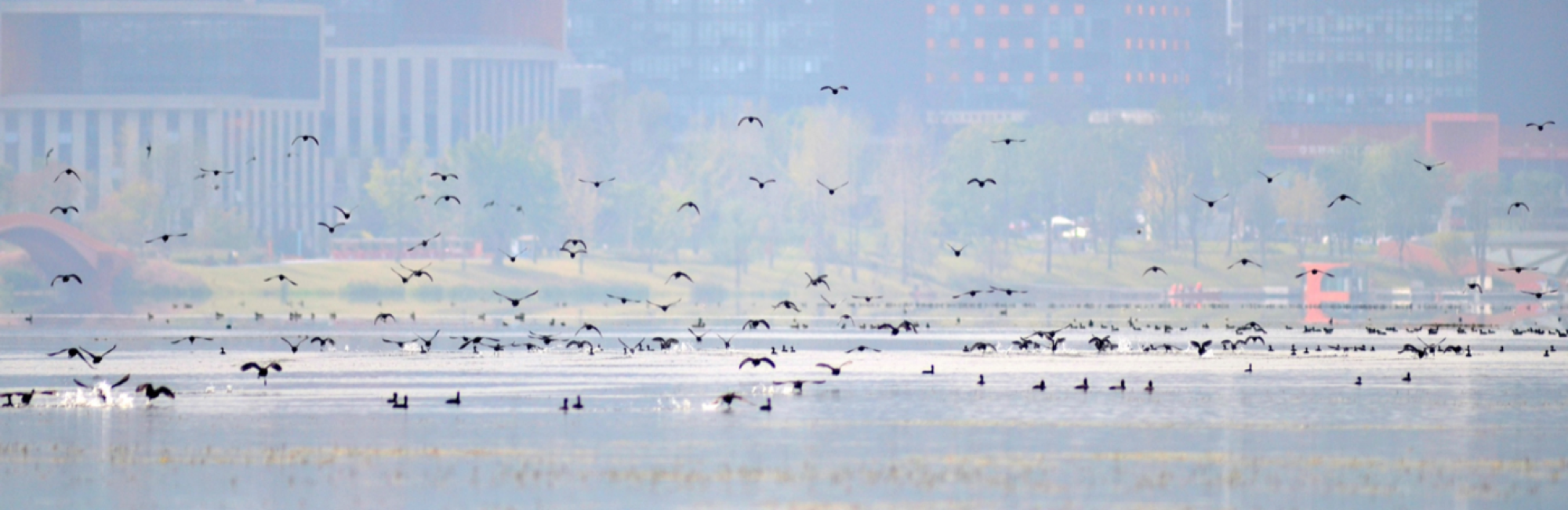
Through sustained rewilding, bird species increased from 132 to 181 (a 37% gain), including 70 waterbird species and the critically endangered Baer’s Pochard, a Class I nationally protected species. Xinglong Lake is now the largest waterbird wintering site on the Chengdu Plain—wildlife chose it because the habitat was ready.
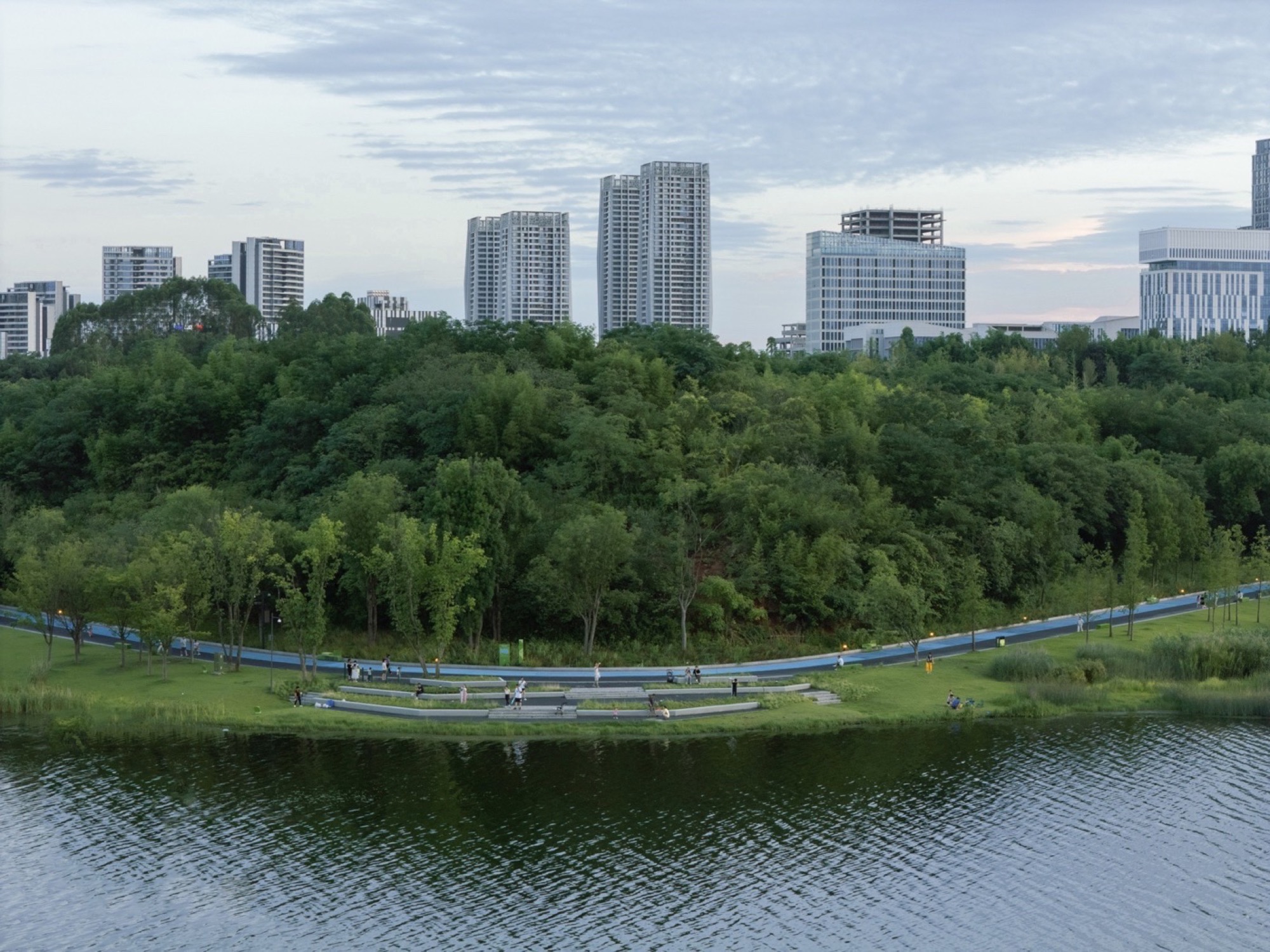
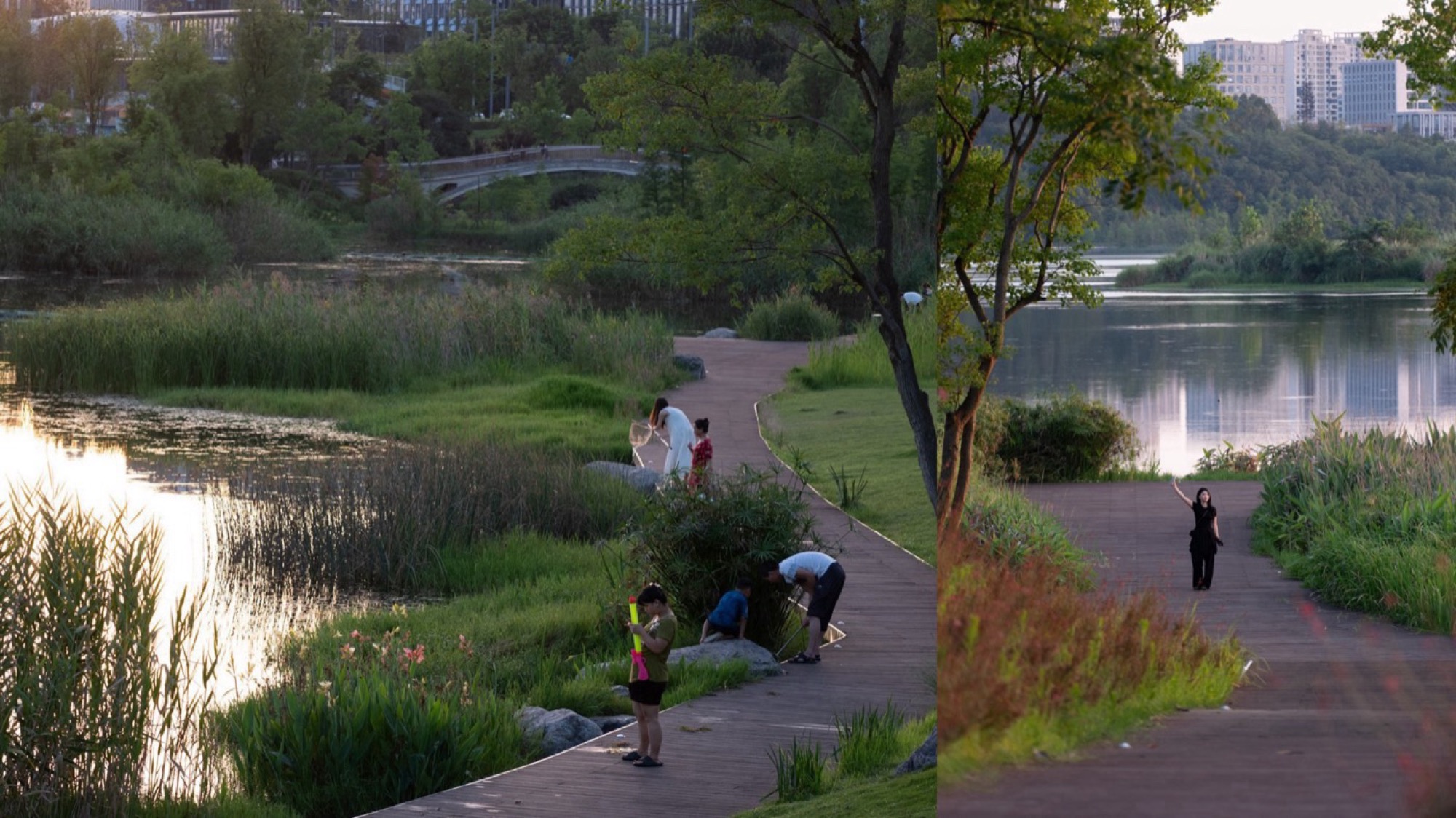
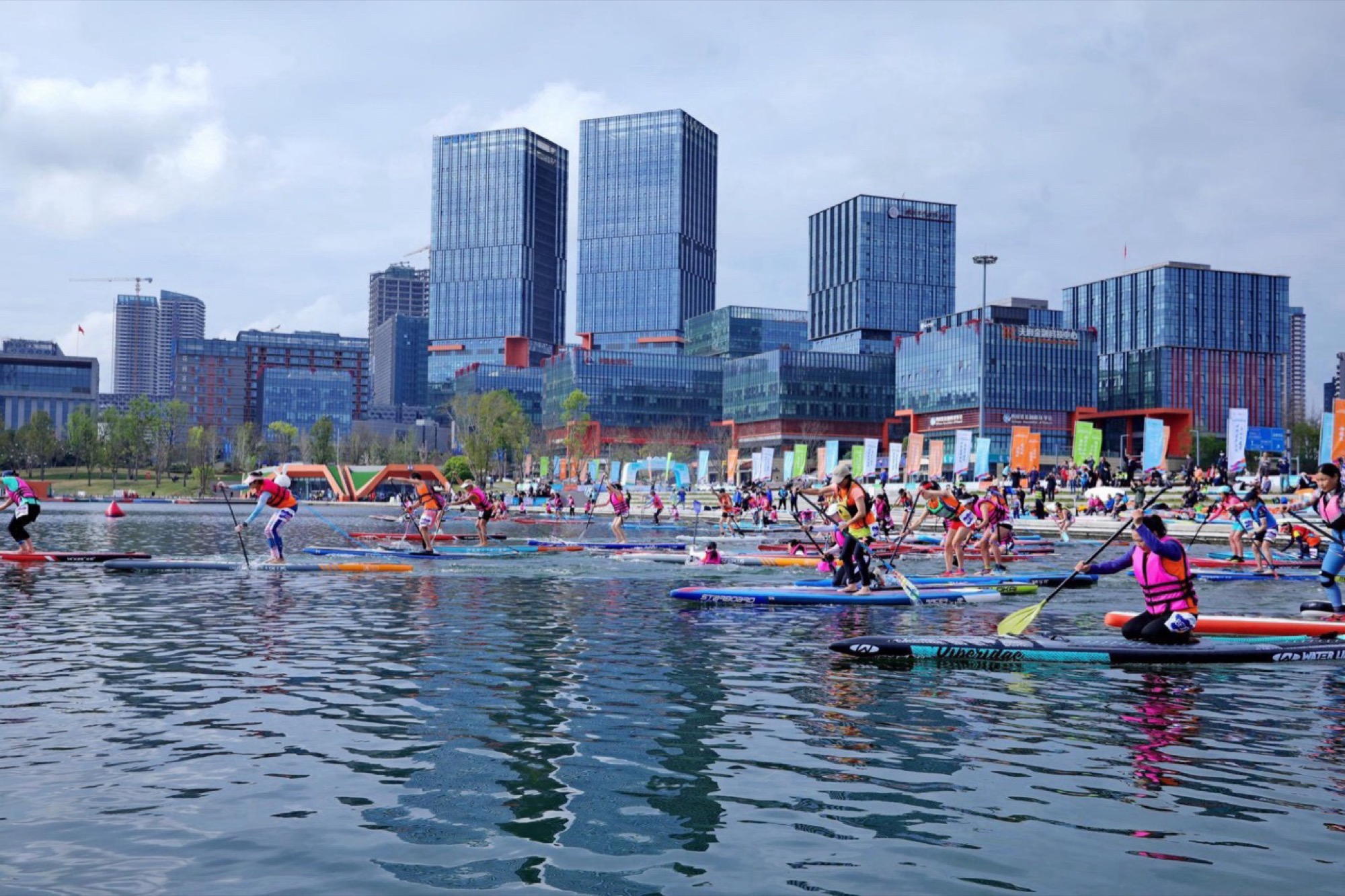
A healthy ecosystem need not be fenced off; it must be robust enough to accommodate people. Ecological restoration has become an engine for urban development, enabling the lake to host a rich mix of public activities. Recreational programs—children’s beaches, lakeside jogging trails, stargazing camping, water sports, outdoor performances, birdwatching education—all depend on ecological quality, and public use itself becomes the most widespread and lowest-cost form of ecological conservation.
This same ecological quality is the park city’s most valuable intangible asset: 27 national-level research institutions have settled around the lake, attracting 270 billion yuan in investment and giving rise to industrial clusters. Xinglong Lake didn’t trade ecology for economy—ecology itself is economy. Water quality and spatial conditions meet international competition standards; multiple world events will be held here, where wintering waterbirds share the waters with world-class athletes.
Urban-nature symbiosis means wild animals truly return to the city, and people can trust that this water is swimmable, this shore is safe to rest on, and nature thrives within the metropolis.
https://earth.google.com/web/search/xinglong+lake/@30.39644494,104.08858503,460.73692594a,3772.93353965d,35y,0h,0t,0r/data=CnwaThJICiUweDM2ZWZiYTAzNTM3YjFlNzc6MHg3NmVkYjg4NjFhODgyMmU1GVdUaTCyZT5AIQ7K6gzCBVpAKg14aW5nbG9uZyBsYWtlGAIgASImCiQJescDmi5rPkAR2ck74-RhPkAZHMlGiGEIWkAh9KMXoiADWkBCAggBQgIIAEoNCP___________wEQAA


LILA 2026 Sponsor